THE MEANING OF MISCARRIAGE: MEASUREMENT, REPRODUCTIVE FACTORS AND TRAJECTORIES IN COUPLE DYADS
Carolyn Susan Huffman
A dissertation submitted to the faculty at the University of North Carolina at Chapel Hill in partial fulfillment of the requirements for the degree of Doctor of Philosophy in the School of
Nursing.
Chapel Hill 2014
Approved by: Kristen Swanson Mary Lynn Suzanne Thoyre Todd Schwartz Jamie Crandell
ii © 2014
iii ABSTRACT
CAROLYN SUSAN HUFFMAN: The Meaning Of Miscarriage: Measurement, Reproductive Factors, and Trajectories In Couple Dyads
(Under the direction of Kristen M. Swanson, PHD, RN, FAAN)
Miscarriage impact has been studied regarding gendered emotional outcomes of coping. Lazarus and Folkman’s (1984) stress and coping theory provides a framework to explore miscarriage meaning. One measure used to quantify miscarriage appraisal is the Revised Impact of Miscarriage Scale (RIMS). This dissertation consisted of three separate analyses of RIMS data from the Couples Miscarriage Healing Project, a randomized controlled trial of the effects of three interventions on 341 couples’ emotional healing after miscarriage.
In the first analysis, the Impact of Miscarriage Scale (Swanson, 1999) was refactored resulting in the RIMS, a 3-factor, 16-item measure with sufficient reliability in both men and women. Factors identified were Isolation/guilt (I/G), Devastating event (D/E), and Loss of baby (LB). The instrument demonstrated good test-retest reliability over the course of a year and moderate correlations with grief and depression.
In the second analysis, reproductive and contextual factors were evaluated for their effect on I/G, DE, and LB in men, women, and couples. Age, mental health history,
iv
miscarriage history. However, as a couple, these gender differences were no longer apparent.
The third analysis used multi-level modeling with Bayesian inference to address whether I/G, DE, and LB were time variant phenomena and whether theory driven
interventions affected I/G, DE, and LB in men and women. There was a small decline over time in I/G, DE, and LB in women. There were no treatment effects on any of the subscales scores. However, in women who were the most devastated or isolated/guilty, one nurse caring visit with self-directed sessions at home, experienced a significant decrease in I/G
and DE compared to control.
v
vi
ACKNOWLEDGEMENTS
This pursuit would not have been possible without the support and guidance of many. I would first like to thank my patients, each of you have taught and propelled me to pursue a greater understanding of your experiences and needs. Throughout both my undergraduate and graduate career, many instructors and professors have had an impact on my professional practice and research endeavors. A sincere thank-you to Carol Durham for not only teaching a 20 year-old the skills needed to be an expert nurse but being a friend and confidant over the past 27 years. As a graduate student, Cathy Fogel opened my eyes to the forgotten women in our prison system, who not only struggle with drug addiction, abuse, and poverty, but also struggle as mothers separated from their children. That experience has informed my thought process not only as a nurse but as a human being. I also must pay tribute to Margaret Sandelowski. She has served as a mentor to me for many years and opened my eyes to the value of “well done” qualitative research. Her expertise and drive for excellence has had profound impact on me.
vii
your willingness to work with me as I have attempted to enter the Bayesian world. I am not sure I would have gotten through this without your calm demeanor and encouragement to keep going even though at times I wanted to throw in the towel. Mary, thank you for giving me a firm foundation in statistics on which to build. I also appreciate your willingness to serve on my committee and your thoughtful critiques of my work. You have pushed me …thank you.
Kristen, words cannot express my gratitude for taking me on as one of your students. Your guidance, knowledge, and belief in my work and me has been the key to my successful completion. I look forward to many years of collaboration as colleagues and friends.
And last but not least, I must thank my family. If it were not for all of you I would not have been able to do this. To my parents, Bob and Lee Huffman, thank you for your unconditional love and support over all of my years. You always knew when to say “no”, when to say “yes”, and when I must make the decision myself. If I am half the parent that you have
been to me, I will consider myself a success. Thank you for being a chauffeur for the kids, providing meals, and taking care of Charlie. To Charlie, our dog, for your unfailing company over the last two years. Your presence beside me as I wrote for hours at the computer was a great comfort. To my husband, Phil Ponder, who without fail has supported me in all my endeavors over the last 26 years. Thank you for your love and patience. This journey has been easier and more enjoyable with you at my side. And to my children Cam and Carly, you are the Spring in my life. Thank you for your sacrifices over the last five years and I promise to use the word “dissertation” sparingly from this point forward. I cannot imagine my life without you and
viii
TABLE OF CONTENTS
LIST OF TABLES ... x
LIST OF FIGURES ... xi
LIST OF ABBREVIATIONS ... xii
Chapter 1. Introduction: The Impact of Miscarriage ... 1
Background ... 1
Risk Factors for Maladaptive Responses to Miscarriage ... 10
Intervention after Miscarriage ... 12
Theory of Stress and Coping ... 14
Outline of Dissertation ... 23
References ... 33
Chapter 2. Measuring The Meaning of Miscarriage: Revision of the Impact of Miscarriage Scale ... 43
Introduction ... 43
Background and Conceptual Framework... 44
Method ... 49
Results ... 52
Discussion ... 53
ix
Chapter 3. Couples and Spontaneous Abortion: The Influence of Gender, Mental Health Treatment History, and Reproductive Factors
on The Meaning of Miscarriage... 72
Introduction ... 72
Materials and Method ... 74
Results ... 77
Discussion ... 82
References ... 95
Chapter 4. Appraisal of Miscarriage: A Bayesian Analysis of Couples’ Data in a Randomized Controlled Trial of Three Caring-Based Interventions ... 101
Introduction ... 101
Background ... 101
Materials and Method... 106
Results ... 111
Discussion ... 119
References ... 130
Chapter 5. Synthesis of Findings and Implications: Meaning of Miscarriage: From An Individual and Couple Persepective ... 136
Background ... 136
Summary of Findings ... 136
Strengths of Dissertation ... 141
Limitations ... 142
Implications for Research and Practice ... 143
Conclusion ... 152
x
LIST OF TABLES
2.1 Items on the Original and Revised IMS Scales ... 61
2.2 Results of Confirmatory Factor Analysis of the IMS ... 62
2.3 Revised IMS Scale Factor Loadings and Reliabilities ... 63
2.4 Correlations Between RIMSSubscales and the CES-D and Pure Grief Subscale of the Miscarriage Grief Inventory ...64
2.5 Revised IMS Mean Subscale Scores and Test-Retest Reliabilities for Control Group with Baseline Scores ... 65
3.1 Demographic Characteristics ...91
3.2 Least Squares Means from Multifactorial ANOVA in Women ... 92
3.3 Least Square Means from Multifactorial ANOVA in Men ... 93
3.4 Least Square Means from Multifactorial ANOVA in Couples ... 94
4.1 CMHP Sample Characteristics ...126
4.2 Baseline Equivalency by Gender and Group ...127
4.3 Model Selection ...128
xi
LIST OF FIGURES
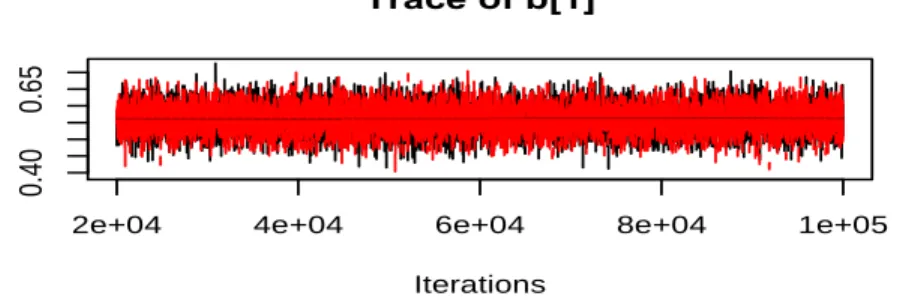
1.1 Example of traceplot in R with two chains showing convergence ...31
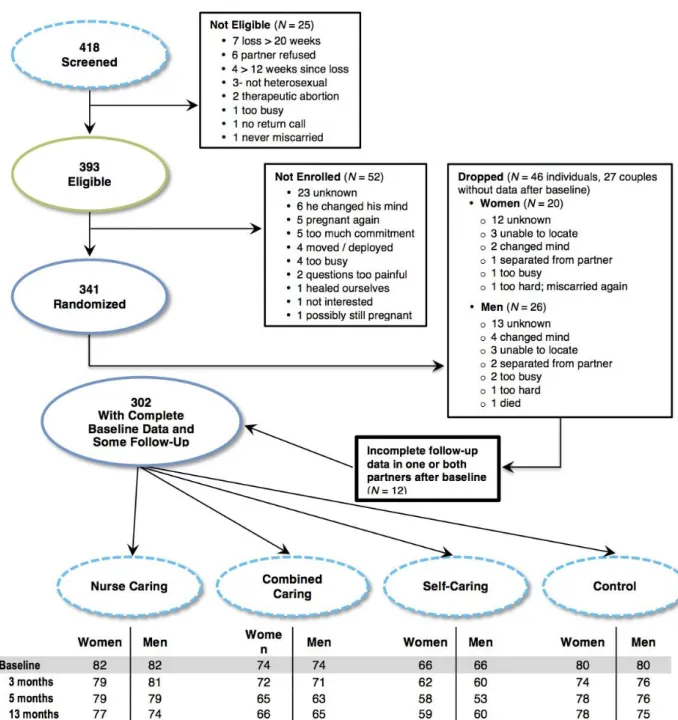
4.1 Subject flow from CMHP: Recruitment, eligibility, randomization, and RIMS completion by treatment group... 113
4.2 Predicted follow-up scores for Isolation/Guilt in women and men with mental health treatment history (+ MHT) and without ...115
4.3 Predicted follow-up DE scores in women and men ...116
4.4 Predicted follow-up scores for LB in women and men by age ...117
4.5 Predicted follow-up I/G scores in women by MHT and treatment group ...118
xii
LIST OF ABBREVIATIONS
ANOVA Analysis of Variance
BDI Beck Depression Inventory
CES-D Centers for Epidemiological Studies-Depression Scale CFA Confirmatory Factor Analysis
CMHP Couple Miscarriage Healing Project D&C Dilatation & Curettage
DE Devastating Event
EFA Exploratory Factor Analysis
I/G Isolation/Guilt
IMS Impact of Miscarriage Scale KMO Kaiser-Meyer-Olkin
LB Loss of Baby
MLE Maximum Likelihood Estimation MCMC Markov Chain Monte Carlo MC Medical Consultation MGI Miscarriage Grief Inventory MLM Multilevel Modeling
MMM Meaning of Miscarriage Model
MPC Medical Consultation Plus Psychological Counseling
NHST Null Hypothesis Significance Tests PAF Principal Axis Factoring
xiii PGS The Perinatal Grief Scale
PCA Principal Component Analysis
Pp Posterior Probabilities PS Personal Significance
RIMS Revised Impact of Miscarriage Scale
RMSEA Root Mean Square of Error of Approximation RPL Repeated Pregnancy Loss
SEM Structural Equation Modeling
1
CHAPTER 1: THE IMPACT OF MISCARRIAGE Background
Miscarriage is an emotionally difficult time for women and can have a major impact on their mental health (Bergner, Beyer, Klapp, & Rauchfuss, 2008; Blackmore et al., 2011; Brier, 2008; Klier, Geller, & Neugebauer, 2000; Lok & Neugebauer, 2007; Lok, Yip, Lee, Sahota, & Chung, 2010). The risk of miscarriage ranges from 7%-15% in women less than 30 to as high as 34-52% in women over the age of 40 (Hassold & Chiu, 1985; Maroulis, 1991; Stein, 1985; Warburton, Kline, Stein, & Strobino, 1986 as cited in Speroff & Fritz, 2005). Thus, miscarriage is a common experience, but one that is often dealt with privately (Adolfsson, Larsson, Wijma, & Bertero, 2004). When miscarriage takes place within a couple relationship, both members are affected (Abboud & Liamputtong, 2003; Beutel, Willner, Deckhardt, Von Rad, & Weiner, 1996; Puddifoot & Johnson, 1997) as well as the relationship (Beutel et al, 1996; Serrano & Lima, 2006; Swanson, Karmali, Powell, & Pulvermakher, 2003). Stress and coping theory (e.g., Lazarus, 1999; Lazarus & Folkman, 1984) postulates that the personal meaning/significance of an event, such as miscarriage, is predictive of how one adapts. Assessment of this meaning may be useful in identifying those who may have more difficulty in dealing with miscarriage.
2
difficult is important to the development, provision, and evaluation of services intended to diminish any negative impact miscarriage may have on the health of women, their partners, and future pregnancies.
The Impact of Miscarriage Scale (IMS) (Swanson, 1999a) is one measure designed to capture the significance and meaning of miscarriage in women. It was used in men for the first time in the Couples Miscarriage Healing Project (Swanson, Chen, Graham, Wojnar, & Petras, 2009). This chapter provides a framework for understanding how miscarriage impacts the lives of women and their partners and the potential for studying this impact using the IMS. Included in this chapter is the current literature related to the psychological impact of miscarriage, gender differences, risk factors for psychological morbidity, measures to quantify emotional reaction to perinatal loss, and an overview of stress and coping theory as it relates to miscarriage (i.e., Lazarus & Folkman, 1984; Lazarus, 1999). Each of these bodies of literature lay the foundation for evaluating the Impact of Miscarriage Scale (Swanson, 1999a) and its potential in providing a greater understanding of the miscarriage experience.
For this review, miscarriage is considered to be the spontaneous loss of a pregnancy prior to 22 weeks; however, many studies do not make this distinction and may include any perinatal losses at later gestational age (stillbirth) along with miscarriages. In the ensuing literature review, studies which included both miscarriage and stillbirth, will be referred to more generically as perinatal or pregnancy loss.
Psychological and Relational Impact of Miscarriage
3
and begin the attachment process to their unborn child, although gender differences may exist to the extent and timing of this process (Brandon, Pitts, Denton, Stringer, & Evans, 2009). Loss of a pregnancy interrupts this psychological transition from individual to parent (Gerber-Epstein, Leichtentritt, & Benyamini, 2009). It has been suggested that miscarriage is particularly difficult due to the ambiguous nature of the loss and our culture’s lack of accepted rituals in dealing with
the loss (Bennett, Litz, Lee, & Maguen, 2005; Kevin, 2011; Letherby, 1993). For many women, the loss is not of a pregnancy but of a child, motherhood, and dreams of the future with the child (Adolfsson et al., 2004; Côté-Arsenault & Dombeck, 2001; Gerber-Epstein, et al., 2009;
Swanson, 1999b; Wojnar, Swanson, & Adolfsson, 2011). Entwined within the loss of a
fantasized child may also be the perceived loss of social status in pronatalist cultures or failure, if miscarriage is perceived as a failure of one’s desired or culturally sanctioned gender role
(Kersting & Wagner, 2012; Layne, 1990; Letherby, 1993; Reinharz, 1988).
4
conscious and deliberate decision to get pregnant and stop practicing birth control.
Consequently, miscarriage has become for many in western culture an unwanted and unexpected event that forces one to confront the realities of mortality and limited control over their
childbearing goals (Cecil, 1994).
Miscarriage can represent a variety of losses and meanings not only for the woman but for her partner as well. For some, pregnancy loss is just that…pregnancy loss, not associated
with the loss of an actual child (Puddifoot & Johnson, 1997; Swanson-Kaufman, 1983). Women may feel down for a few weeks, but not all women are overwhelmed by the experience (Conway & Russell, 2000; Letherby, 1993; Wong, Crawford, Gask, & Grinyer, 2003). Miscarriage can also be seen as an opportunity for growth (Letherby, 1993; Swanson, Connor, Jolley, Pettinato, & Wang, 2007; Wojnar, Swanson, & Aldofsson, 2011). This growth may be experienced as a pride in self for getting through a tragedy and realizing heretofore-unknown strength. However, for many, miscarriage is experienced as a deeply emotional event and for some may have long-term consequences.
Emotional Symptomatology
Grief. Grief in response to miscarriage and other forms of perinatal loss has been
recognized as a true phenomenon for many decades (Peppers & Knapp 1980). The symptoms of grief following miscarriage are similar to those experienced by the other losses (i.e. intrusive thoughts, yearning, sadness, crying). The trajectory of grief has been shown to decrease
5
pregnancy loss may lead to a complicated grief, described as “…more disruptive, pervasive, and long-lasting...” (p. 188). The prevalence of complicated grief in women who have experienced miscarriage or other pregnancy losses is difficult to know, since there are no formal diagnostic criteria for complicated grief in the current Diagnostic Manual and Statistical Manual of Mental Disorders (American Psychiatric Association, 2013).
Anxiety. Anxiety has been found to be pronounced after miscarriage (Cumming et al., 2007; Nikcevic et al. 1999) and may appear in subsequent pregnancies (Bergner et al., 2008; Côté-Arsenault, 2007; Côté-Arsenault, Bidlack, & Humm, 2001; Geller, Klier, & Neugebauer, 2001). Cumming et al. (2007) found that 28.3% of their sample demonstrated anxiety levels at or above the clinical threshold for caseness (Hospital Anxiety and Depression Scale ≥ 11) in the
immediate weeks after miscarriage compared to age-matched normative data (15% caseness). Although anxiety levels were lower at 6 and 13 months, the mean level remained above the clinical threshold at 13 months. Bergner et al. (2008) found state and pregnancy related anxiety were elevated in women following a miscarriage compared to pregnant women with no history of miscarriage.
Depression. High levels of depression have been documented in the weeks after miscarriage with a significant decline over the course of a year (Beutel, Deckardt, von Rad, & Weiner, 1995; Cumming et al, 2007; Lok, et. al. 2010; Swanson, 1999a, Swanson, et al., 2009). In a longitudinal study of 280 women with a history of miscarriage and 150 nonpregnant
controls, 26.8% of the women who miscarried had elevated depression scores (≥ 12 on the Beck
Depression Inventory [BDI])(Beck, Steer, & Garbin, 1988) in the immediate period after
6
significantly different from controls. However, those who had scored highest on the BDI (range 12-23) at time of miscarriage were significantly more likely to be elevated at one-year compared to those with initial low scores (range 3-8). Compared to a community cohort, Neugebauer et al. (1997) found that women who had experienced a miscarriage were more than twice as likely to suffer either a new or recurrent major depressive episode within the following six months. Other Responses
Guilt often accompanies the grief felt by many women after miscarriage. Guilt has been attributed to multiple causes, including self-blame for the miscarriage because of either
something the woman feels she did to bring about the miscarriage, perceived past transgressions (i.e., abortion; Aldofsson et al., 2004), or having experienced negative feelings toward the pregnancy prior to loss (e.g., not wanted; Brier, 1999: Letherby, 1993). Some men have validated this guilt by blaming their partner for the miscarriage (Puddifoot & Johnson, 1997). For example, in a qualitative study, Puddifoot and Johnson (1997) interviewed 20 men in the United Kingdom and found that several blamed their partner’s actions (e.g., not getting enough
rest) for the miscarriage. Nikcevic et al. (1999) found that self-blame (author derived scale) at 4 months post-loss was significantly less in women who had received a medical diagnosis for the loss compared to those who did not.
7
a common experience (Adolfsson et al., 2004; Bennett, et al., 2005; Letherby, 1993; Puddifoot & Johnson, 1997; Wong, Crawford, Gask, & Grinyer, 2003). Social support in grief has been linked to better adaptation (Toedter, Lasker, & Janssen, 2001).
Men’s Response
Few studies have addressed the effect of miscarriage on men or partners. Men have often been “marginalized” in pregnancy (Jordan, 1990) and feelings of marginalization have
been expressed in miscarriage as well (Johnson & Puddifoot, 1996; Khan, Drudy, Sheehan, Harrison, & Geary, 2004; Murphy, 1998; Puddifoot & Johnson, 1997). Like women, men have reported shock and disbelief early in the experience and later a sense of loss, frustration, guilt, and isolation (Murphy, 1998; Puddifoot & Johnson, 1997). Studies in male partners have shown heightened grief, anxiety and/or depression, albeit significantly less than their partners (Beutel, Willner, Deckardt, Von Rad, & Weiner, 1996; Cumming et al., 2007; Swanson et al., 2009). Johnson and Baker (2004) followed 332 male partners of pregnant women through the course of pregnancy (baseline) and subsequent outcome (miscarriage or birth). Sixty-eight men reported that their partner suffered a miscarriage. At miscarriage, when compared to their baseline score, men showed a significant increase in depression (BDI) and stress as measured by the Impact of Event Scale (Horowitz, Wilner, & Alvarez, 1979). Although men whose wives gave birth, also demonstrated increased depression scores at birth, their scores were not as high as those whose wives miscarried. One year later, men whose partners had miscarried remained significantly more depressed than those whose partners had given birth. Anxiety levels did not differ between the two groups at pregnancy outcome or one year later.
Men also appear to resolve their grief and depression more quickly than women
8
need to conform to accepted male attributes and to provide support for their female partner (Doka & Martin, 2011; Letherby, 1993; Murphy, 1998). It should be noted, however, that lesbian partners have voiced the need to suppress grief in an effort to support their partner who had miscarried (Wojnar, 2007). Men have also expressed the need to be acknowledged as fellow sufferers in the loss (Puddifoot & Johnson, 1997). In addition, men have reported feeling helpless in dealing with their partner (Murphy, 1998), more uncomfortable talking about their feelings or expressing less need to “talk” than their partners (Beutel et al., 1995; Murphy, 1998; Puddifoot & Johnson, 1997), and feeling that their job was to suppress their own suffering to support their partner (Murphy, 1998; Puddifoot & Johnson, 1997). Stroebe and Schut (2010) postulate that perceived differences in grieving between men and women may not be due to the amount of grief experienced, but men being more focused on “restoration oriented” coping versus “loss oriented” coping more typical of women. Doka and Martin (2010) argue that
grieving styles should be seen as a continuum with some being more cognitive in their response (“instrumental grievers”) and others being more emotive (“intuitive grievers”). They speculate
the former style may be more common in men. The idea of restoration oriented grieving was supported by Beutel et al. (1996) with two-thirds of men in their sample (n = 56) reporting engagement in other activities in an effort to distract themselves from their grief.
Relationship
9
more loneliness and this persisted up to one-year post-loss. Swanson et al. (2007) found that 60% of women, who were actively grieving one-year post loss, felt “more distant” from their partners compared to 18.5% who stated they were “healing” (p = .001). Sexual intimacy is also
strained, with one study reporting 43% of women being classified as “more distant” in their sexual relationship at one year post miscarriage (Swanson et al. 2003). In a study of couples who were diagnosed with recurrent pregnancy loss (≥ 3 miscarriages), Serrano and Lima (2006)
found that 33% of women and 23% of men reported a decrease in sexual intimacy within the year since last miscarriage, with significantly more women reporting less desire to have sex than men.
Pregnancy Subsequent to Loss
Depression and anxiety/stress during pregnancy have been linked to a variety of adverse reproductive outcomes including preterm birth, low birth rate, and reduced conception (Fransson, Ortenstrand, & Hjelmstedt, 2011; Hobel, Goldstein, & Barrett, 2008; Louis et al., 2011) as well as behavioral or developmental disorders in children (Glover, 2014). Prior perinatal loss has been associated with elevated stress and anxiety in a subsequent pregnancy (Armstrong, 2007; Blackmore et al., 2011; Côté-Arsenault, 2007; Fertl, Bergner, Beyer, Klapp, & Rauchfuss, 2009; Woods-Giscombe, Lobel, & Crandell, 2010). Hutti, Armstrong, and Myers (2011) found that women who had experienced a perinatal loss in the previous pregnancy had an increased number of unscheduled visits to their healthcare provider and diagnostic procedures in the third trimester when compared to women with no previous loss history and those experiencing their first
10
Risk Factors for Maladaptive Responses to Miscarriage
Knowing that some women have difficulty resolving their loss, researchers have assessed various risk factors that may predict complicated grief or depression. A history of mental illness (e.g., depression, anxiety) has been consistently associated with difficult emotional recovery subsequent to miscarriage (Beutel, et al., 1995; Brier, 2008; Friedman & Gath, 1989; Janssen et al., 1997; Mann, McKeown, Bacon, Vesselinov & Bush, 2008; Neugebauer et al., 1997). Lok et al. (2010) reported that general psychological distress in women suffering a miscarriage
remained significantly elevated at 1 year compared to a nonpregnant comparison group even when controlling for a history of mental illness. Both neurotic personality traits (Janssen et al., 1997) and insecure attachment experiences (Scheidt et al, 2012) have been associated with higher depression, grief, and anxiety subsequent to miscarriage. Conflicting data exist as to whether an intention of pregnancy impacts psychological reaction to miscarriage or pregnancy loss. In a study of women who had undergone dilatation and curettage for spontaneous abortion, Thapar and Thapar (1992) found that loss of an unplanned pregnancy was associated with a significantly higher depression score (Hospital Anxiety and Depression Scale) compared to those women whose pregnancy was planned. However, Neugebauer et al. (1992), found there was no significant difference in depression scores after miscarriage between women who wanted the pregnancy and those who did not. Social and intimate support has been consistently linked with better psychological outcomes in women following miscarriage (Scheidt et al., 2012; Toedter et al., 2001).
11
2000), infertility (Cheung, Chan, & Ng, 2013; Freda, Devine, & Semelsberger, 2003), gestational age at loss (Franche, 2001; Janssen et al., 1997; Swanson, 2000), and age (Mann et al., 2008; Neugebauer, 2003; Swanson, 2000). However, these risk factors are not supported in all studies. In the case of age, results have shown increasing age to be protective (Mann et. al., 2008;
Neugebauer, 2003) as well as potentially detrimental to psychological morbidity (Swanson, 2000). Neugebauer et al. (1992) compared depression levels using the Centers for
Epidemiological Studies-Depression Scale (CES-D) in three groups of women: 1) those within four weeks of miscarriage, 2) pregnant women, and 3) a non-pregnant community cohort.
Compared to non-pregnant and pregnant women with children, women who miscarried, who also had children, were less likely to be depressed. This same study found that as the gestational age at loss increased, depression scores went up in women who miscarried; conversely as gestational age increased in pregnant women, depression decreased. Prior reproductive loss did not appear to affect depression scores within any of the study cohorts nor did age. Using path analysis, Swanson (2000) studied the direct and indirect effect of childlessness, number of children, previous miscarriage history, maternal age, and gestational age at loss on depression at 4 months and 1 year after loss within the framework of Lazarus and Folkman’s (1984) Stress and Coping
Theory. While none of these variables had a direct impact on depression at 4 months, they did have an indirect effect through the personal significance women attributed to miscarrying. Personal significance as measured by the Impact of Miscarriage Scale (Swanson, 1999a) had a direct positive impact on depression. Having children appeared to decrease the personal
12
and those who miscarried at later gestational age. Mann and colleagues (2008) prospectively studied 404 pregnant women seeking prenatal care, 30 of whom went on to experience
pregnancy loss. They found that amongst those with a pregnancy loss (average gestation age at loss ≈ 13 weeks) there was an inverse relationship of age with both depression and grief.
Infertility may increase the emotional burden of miscarriage due to the uncertainty regarding future conception (Freda et. al, 2003). In a recent report, Cheung et al. (2013) compared 75 women with natural conception to 75 women with assisted conception and found that the assisted reproductive group was more distressed at 4 and 12 weeks after a first-trimester loss compared to those who conceived naturally. This difference was not evident one-week after loss. Others have also reported greater distress at 4 months post miscarriage in women who conceived through assistive measures compared to those who conceived naturally (Nikcevic & Nicolaides, 2013).
Intervention after Miscarriage
Women are often dissatisfied with follow-up care after a miscarriage (Cuisinier,
Kuijpers, Hoogduin, de Graaw, & Janssen, 1993; Callahan & Chabrol, 2010; Wong et al., 2003). Geller et al. (2010) summarized the literature in regards to follow-up care and patient satisfaction after miscarriage; their findings suggest that dissatisfaction with care resulted from: 1) perceived lack of empathy from providers; 2) inadequate information in terms of miscarriage cause,
physical recovery, and future pregnancy prognosis; and 3) care that did not focus on their emotional needs. Intervention studies have mainly focused on diminishing emotional
13
al., 2009; Lee, Slade, & Lygo, 1996). These studies have found mixed results in terms of diminishing grief, depression, or other psychological morbidity.
Nikcevic et al. (2007) compared the effects of two types of counseling in women diagnosed with a missed miscarriage between 10-14 weeks (diagnosed by ultrasound with no symptoms experienced by woman). Women in the medical consultation group (MC, n = 33) learned the results of diagnostic testing as to the cause of the miscarriage and were able to discuss plans for future pregnancy. Those in medical plus psychological counseling group (MPC), received the medical consultation as described above, plus a 50-minute psychological counseling session (MPC, n = 33). The outcomes of grief, worry, anxiety, depression, and self-blame were compared to a convenience sample of women (n = 61) who were also diagnosed with missed miscarriage between 10-14 weeks gestation, but were not offered any formal diagnostic or counseling services (control group). Compared to the control group, the MC and MCP groups showed less self-blame. The MPC group also showed reduced grief and worry compared to both control and MC groups. Neither intervention had a significant impact on depression or anxiety. Adolfsson et al. (2006) randomized women 21-28 days after a miscarriage to either a 60-minute midwife visit based on Swanson’s Meaning of Miscarriage model (Swanson, 1999b) or routine care (30-minute midwife visit focusing general health/symptoms after the
miscarriage). Although it did not reach statistical significance, women randomized to the intervention group, had a 30% greater reduction in grief scores between 1 and 4 months post miscarriage than those in the routine care group.
14
2006; Lok, 2006; Nikcevic, Kuczmierczyk, Nicolaides, 2007; Lee et al., 1996; Swanson, 1999, & Swanson et al., 2009). However, only one of these studies included partners as part of the intervention (Swanson et al., 2009). Swanson et al. (2009) found that a theoretically derived counseling intervention was beneficial in hastening women’s and men’s resolution of grief and depression. Given that intimate and social support has been linked with better emotional outcomes, partner involvement may be a key component in the care of women who have miscarried.
Theory of Stress and Coping
Lazarus and Folkman (1984) in their book Stress, Appraisal, and Coping state: “In order to understand variation among individuals under comparable conditions, we must take into account the cognitive processes that intervene between encounter and the reaction, and the factors that affect the nature of this mediation” (p. 22). These cognitive processes are termed
primary and secondary appraisals and dictate if the event is viewed as irrelevant, benign-positive, or as stressful. Lazarus and Folkman go on to classify stress appraisals as being in three realms: 1) loss/harm –the event has already happened, 2) threat- the event has not yet taken place but may be imminent, and 3) challenge- the event is regarded as an opportunity for growth. It is within the primary and secondary appraisal process that individual differences in meaning and perceived ability to deal with stress are determined. Miscarriage can be experienced as both a loss and a threat, since not only is there loss of a current pregnancy but the experience may arouse concern over future pregnancies. The secondary appraisal involves the assessment of “…what might and can be done” to manage the situation and degree that they will be successful
15
belief in their ability to obtain a successful subsequent pregnancy. The interaction of the primary and secondary appraisal determines the outcome (i.e., successful or unsuccessful adaptation) of miscarriage. Thus, the meanings and experiences of miscarriage are relevant to coping and whether it is adaptive or maladaptive. Instruments that measure the meaning/experience of miscarriage may have potential in broadening our understanding of miscarriage and identifying those who need supportive care.
Measures Used in the Measurement of Psychological Reaction to Miscarriage Reaction to miscarriage has been assessed with various indices of depression (Beutel et al., 1996; Cumming et al., 2007; Kong, Chung, Lai, & Lok, 2010; Mann et al., 2008; Neugebauer et al., 1992; Swanson, 1999a, 2000; Swanson et al., 2009), anxiety (Beutel et al., 1996;
Cumming et al., 2007), and grief (Beutel et al., 1996; Mann et al., 2008; Serrano & Lima, 2006; Swanson, 1999a ; Swanson et al., 2009). Many of the studies have used measures for depression and anxiety that are designed for a variety of populations. In the case of grief, many have
employed measures that are more specific to the loss experienced by miscarriage. Measures Specific to Perinatal Loss
The Perinatal Bereavement Scale (Theut et al., 1989), as stated by the authors, was developed to assess the bereavement and unresolved grief from a previous perinatal loss, defined by these authors as miscarriage < 20 weeks gestation, stillbirth > 20 weeks gestation, or neonatal death-within 3 days of birth, during a subsequent pregnancy. It is based partly on interviews of 7 women and 3 spouses who had experienced a perinatal loss and also items adapted from other’s
16
an all white sample of couples (N=25) whose female partner was in her 8th month of pregnancy subsequent to an early loss (< 20 weeks gestation) or late loss (> 20 weeks gestation– stillbirth and neonatal death). The authors report internal consistency (Cronbach’s alphas between
.83-.91) for the instrument measured separately in men and women during the prenatal and postnatal period of the subsequent pregnancy. Based on a three factor repeated analysis of variance their findings showed only main effects: 1) women grieved more than men (p < 0.0005) across both time points, 2) grief diminished after the birth of a viable infant across men and women (p < 0.0001), and 3) parents in the late loss group grieved more than couples in the early loss group (p
< 0.001)
17
The Perinatal Grief Scale (PGS) (Toedter et al., 1988) and the Perinatal Grief Scale-Short Form (Potvin, 1989) were designed to study factors affecting grief resolution after a variety of perinatal losses including miscarriage, stillbirth, neonatal death, and ectopic pregnancy. It is one of the most widely used and studied perinatal grief scales. The PGS was adapted from the Texas Grief Inventory (Zisook, Devaul, & Click, 1982), input of experts in the field of perinatal grief counseling and research, and on the authors’ prior research in perinatal loss. The original scale
has 84 items and the short version was reduced to 33 items. Both the original and short version of the PGS index three components of grief: 1) “active grief”- crying, missing the baby, 2) “difficulty coping”- how one is dealing with other people and normal activities, and 3) “despair” – feelings of worthlessness and hopelessness (Toedter et al., 2001). Both scales report excellent
internal consistency for the three subscales in a variety of studies. One criticism that pertains to the PGS is that many of the items are synonymous with depression and not based on any
particular theory per se that could guide intervention (Hutti & dePacheo., 1998). In addition, the instrument references the loss as “baby”, which may be problematic in measuring grief
subsequent to miscarriage.
The Perinatal Grief Intensity Scale (PGIS)(Hutti & dePacheo, 1998) was designed for the purpose of predicting the intensity of grief response in early pregnancy loss using Dougherty’s Model of Cognitive Representation (1984) as the theoretical framework for the scale’s
development. Similar to stress and coping theory (Lazarus, 1999; Lazarus & Folkman, 1984), Dougherty’s model predicts behavior following an event to be based on how the event is
18
intensity: 1) the reality of the pregnancy or baby within, 2) congruence between how the miscarriage was experienced versus how one thinks it should be experienced, and 3) the ability to advocate for oneself in dealing with incongruence between the experience of the miscarriage and how one thinks it should be.
Psychometrics of the PGIS were performed on a sample of 186 women (96.1% white) who had miscarried (gestational age < 16 weeks) 12-18 months prior to enrollment and were between the ages of 15 and 45 (M = 29.28) with 44.5% being gravida I or II. Most women (71.7%) had at least one living child and 56.5% reported the miscarriage as their first. The scale was subjected to principal factor analysis using oblique rotation and resulted in a 3-factor
solution which reflected the author’s theoretical constructs: 1) “Reality, 2) “Congruence”, and 3) “Confront Others”- if the experience is not congruent with expectations of how it should be, the
person is able confront others to bring about congruence. Reliabilities for the three subscales were reported to be: .89 for “Reality”, .84 for “Congruence”, and .71 for “Confront Others”.
Hutti and DePacheo (1998) reported that the scales correlated with grief intensity and duration; however, this is based on participants rating their grief response and intensity retrospectively. Psychometrics for this scale were performed on a relatively small sample of women. In addition, the qualitative study that produced many of the items included only couples
experiencing their first pregnancy. Thus it does not necessarily index the experiences of those who have children or have had multiple miscarriages. Hutti, Armstrong, and Myers (2013) have recently reported on the scale’s reliability and validity in identifying grief intensity in pregnancy
19
intensity compared to both the stillbirth group and those whose previous pregnancy ended in miscarriage.
Except for the Perinatal Grief Intensity Scale, the above measures are designed to measure one component of miscarriage (grief) and may not index the experience or meaning of miscarriage as it relates to the appraisal of the event as a stressor. In regards to more general measures of psychological functioning (e.g., depression, anxiety) there is concern that measures not specific to the event or target population may not be sensitive in capturing the degree of morbidity (Côté-Arsenault & Marshall, 2000; Switzer, Wisniewski, Belle, Dew, & Schultz, 1999). Although the measures that have generally been employed have shown utility depending upon the reason for use, none fully index meaning of the miscarriage for the person and therefore may not fully capture the degree of impairment.
The Meaning of Miscarriage and the Impact of Miscarriage Scale
20
that capture the meaning inherent in the primary appraisal response and not just the clinical response may be of benefit in early detection of those for whom the miscarriage may be more problematic. Hinds, Chaves, and Cypress (1992) state that the “intent of health care
professionals is to understand human beings and to help create conditions that promote health and meaningful life experience” (p. 31). Within this context, it is only after understanding the meaning of what the miscarriage represents that researchers and clinicians can move forward and help make sense of this meaning. Accurately measuring the meaning of the miscarriage event is an important first step in identifying women, partners, and couples who may benefit from intervention as well as developing interventions to assist in the resolution and/or transition through the event.
Swanson-Kaufman (1983) explored the meaning of miscarriage in her phenomenological study of 20 women who had suffered a miscarriage within four months of being interviewed. The women’s ages ranged from 18-38, 12 of the 20 women had children (range 1-4), five had
experienced a previous miscarriage, and six had a history of infertility. Through this work, the Meaning of Miscarriage Model (MMM) was developed which identified six common
experiences: 1) “coming to know” - the realization of the loss in the face of hope for the pregnancy, 2) “losing and gaining”- identifying what was lost and gained in miscarriage, 3) “sharing the loss”- identifying who is and is not available for support and validation of the loss, 4) “going public”- entering the world again as a no longer expectant mother, 5) “getting through
21
Swanson (1999a) describes three phases of IMS development. In phase one, 105 emic statements were taken from the 20 interviews derived from the “losing and gaining” category. Phase two resulted in the 105 statements being converted to Likert or forced choice format and mailed along with demographic questions to 446 North American women within 10 years of miscarriage. Through evaluation of expert and user comments, item level variances, item-item, and item-to-total correlations, the 105 statements were reduced to 30 items with a Cronbach’s alpha of 0.93. Construct validity was tested by analyzing the instrument’s ability to distinguish between groups for which the meaning of miscarriage should vary, with significant differences found between women who were: fertile vs. infertile, childless vs. those with children, and experiencing their 1st or 2nd miscarriage vs. those experiencing their 3rd or greater miscarriage (medically referred to as repeated pregnancy loss). In phase three, the instrument was
administered to 188 women who had experienced a loss within one year. The instrument was further reduced by 6 items due to low variance or poor item-to-item, and item-to-total
correlations. The remaining 24 items were subjected to subscale determination through principal component factor analysis.
In its original form, the IMS is a 24-item scale that indexes four dimensions of the impact. The four dimensions or subscales as identified are: 1) “Personal Significance” (PS)- the meaning of the miscarriage for the person, 2) “Devastating Event” (DE)- the degree to which the event itself was viewed as a loss of hope or devastating, 3) “Loss of Baby” (LB)- the extent to which the person viewed the loss as a “loss of a baby” versus the loss of a pregnancy, and 4)
22
symptoms of depression at one year (e.g., context, coping strategies, emotional strength, support) and found that the primary appraisal of meaning as measured by the PS subscale of the IMS had the strongest direct effect on depressive symptoms at 4 months and 1-year post loss. This finding further lends support to the claim of construct validity of the IMS.
While the IMS was not developed to be used with male partners; in the Couples
Miscarriage Healing Project (CMHP) (Swanson et al., 2009), the IMS was used with men for the first time. The CMHP was a randomized controlled trial designed to evaluate the effectiveness of three theory-based interventions relative to no treatment (control). All three interventions were based on Swanson’s Theory of Caring and the Meaning of Miscarriage Model (Swanson 1999b)
with method of delivery differing between the three interventions. Both members of the 341 heterosexual couples filled out the IMS at 4 times over a 13-month period. Swanson et al.
(2009) reported the effects of three interventions on the trajectories of depression, grief, and grief related emotions but did not include the effect on miscarriage impact as measured by the IMS.
Measurement is paramount to the adequate analysis of phenomena. Whether physiologic or psychological states are measured, tools that accurately represent the state in question are needed. Often there is interest in capturing individual meanings and experiences of a
23
problematic, since it may not fully index the meaning of miscarriage for men. However, concepts included in the IMS (personal significance, loss, guilt, hopelessness) have been expressed by men in qualitative studies (Abboud & Liamputtong, 2003; Murphy, 1998; Puddifoot & Johnson, 1997).
Outline of Dissertation
This dissertation, reported as three separate but related papers, involves secondary data analyses from the Couples Miscarriage Healing Project (Swanson et al., 2009) and focuses on the meaning of miscarriage as measured by the IMS. This dissertation sought to: 1) revise the IMS for use in men and women, 2) discern if there were differences in meaning based on certain contextual and demographic variables as identified in the literature, and 3) determine if the meaning of miscarriage is a time and/or treatment variant phenomena. Descriptions of the three papers are presented focusing on the purposes of each paper and methods employed. In some cases, concern over publication constraints required limiting method description and/or theoretical underpinnings in the manuscript. In those cases, elaboration of methods employed and/or rationale is presented.
Paper 1: Evaluation of the Psychometric Properties of the IMS (Chapter 2: Measuring the Meaning of Miscarriage: Revision of the Impact of Miscarriage Scale)
The purpose of paper one was to psychometrically evaluate the IMS for use in both men and women. The first step was to confirm the original factor structure of the IMS using
24
subscales with depression and grief indices, and assessment of the test-retest reliability of the subscales over the course of 13 months.
Assessment of the original factor structure of the IMS was important in establishing structural construct validity (Harrington, 2009). Confirmatory factor analysis (CFA) is a method related to structural equation modeling (SEM) in that it tests for relationships between observed variables and latent variables (not measured), but unlike SEM it does not test for structural or causal pathways between latent variables (Harrington, 2009). CFA can be used to test a priori theoretical relationships between measured variables and unmeasured constructs or, as in this case, to confirm a prior identified factor structure. The original instrument was subjected to confirmatory factor analysis (CFA) using the baseline scores of women (n=341) from the CMHP. In the event that the original structure was confirmed, then male baseline scores would have also been subjected to CFA. However, the original factor structure was not confirmed in women and the analysis proceeded directly to exploratory factor analysis using baseline IMS data for both men and women.
There are several reasons that the original factor structure of the IMS may not have been valid. Originally, principal component analysis (PCA) was done on the 24-item IMS. This method is more of a data reduction tool and does not assume any theoretical structure in
25
between factors. However, correlation of factors is likely, if not expected. In the case of correlated data, oblique rotations are preferred (Ferketich & Muller, 1990). The original factor analysis was performed with data from 188 women. This may not have been an adequate sample size with a 24-item instrument; 10-20 subjects per item have been recommended (Costello & Osborne, 2005). Using data with a known factor structure, Costello & Osborne (2005) found a ratio of 20 subjects to 1 item yielded the solution closest to the actual factor structure when compared to 2:1, 5:1, and 10:1 sample ratios. Samples with fewer subjects per item yielded higher error values on factor loadings. Although factor analysis is not an exact science, a higher
N is considered to result in a factor structure that is more stable over time (MacCallum, Widaman, Zhang, & Hong, 1999). In the CMHP, the N for baseline data = 682, yielding a subject to item ratio of > 20:1.
Exploratory factor analysis was done using the total sample of baseline scores (N=682) with knowledge that dependency was an issue. The strength of this strategy was that the participant to item ratio was higher and in line with the recommendations of others (Costello & Osborne, 2005). This analysis resulted in the Revised Impact of Miscarriage Scale (RIMS) (Huffman, Swanson, & Lynn, 2014) which consists of 3 subscales.
Paper 2: Group Differences in the Impact of Miscarriage: (Chapter 3: Couples and Miscarriage: The Influence of Gender, Age, Mental Health History, Infertility, Miscarriage
History Children, and Gestational Age at Loss on the Impact of Miscarriage)
26
Knowledge of how contextual variables that are within the clinician’s purview affect appraisal of miscarriage is important to both the researcher and clinician. In addition, the ability of an
instrument to discern these differences provides support for the instrument’s utility and construct
validity.
Multi-factorial analysis of variance (ANOVA) was used to assess the effect of mental health history, gestational age at loss, number of children born living, infertility, female age, and gender on the impact of miscarriage as measured by the RIMS in men, women, and couples. These factors were selected since they are in the scope of assessment by health care providers and have been shown to impact emotional response to miscarriage. Although some of these factors are continuous in nature, grouping of these factors into clinically meaningful categories was performed. Initially the models were fitted to assess the effect of these variables in men and women separately and included all pairwise interactions and main effects. The models were then fitted to assess the impact of miscarriage in couples accounting for the correlation between the female and her partner’s scores. These models reflect a statistical averaging of the partnered men and women’s scores. The couple models included all pairwise interactions and all 3-way
27
constituent interaction effects, a sequential backward selection approach was used until only significant constituent interaction terms were retained.
Paper Three: Time and Treatment Effects: (Chapter 3: Appraisal of Miscarriage: A Bayesian Analysis in a Randomized Controlled Trial of Three Caring-Based Interventions)
The third paper addresses the effect of time and treatment on the impact of miscarriage as measured by the RIMS. In addition, two covariates, age and mental health treatment history, were added to the models to discern if they had any impact over time. Age and mental health were selected as covariates due to their impact at baseline (high F statistic) in Paper 2.
Swanson et al. (2009) in the Couples Miscarriage Healing Project found that grief and depression were influenced by both time and intervention. Evaluation of either time or
intervention’s influence on the meaning assigned to miscarriage was not done. In a prior study,
28
Multilevel modeling (MLM) was used to ascertain the effects of time and treatment on the resolution of miscarriage impact as measured by the RIMS subscales. MLM is uniquely suited to this analysis since it can model change over time (trajectory) within correlated groups (women and partners) (Atkins, 2005; Raudenbush, Brennan, & Barnett, 1995). Modeling change over time must take into account several factors: 1) the central tendency and variability around repeated measures, 2) central tendency and variability around individuals, and 3) central tendency and variability around the couples (Atkins, 2005). Moderating variables can be included at either the individual or couple level. MLM also allows for missing data. In longitudinal studies, missing data are common and to be expected. Instead of removing
participants from the analysis completely, participants with some missing data can be included in the analysis as long as the missing data conform to certain requirements (Atkins, 2005).
Although MLM allows for the modeling of complex scenarios as presented by CMHP data, addition of levels and variables to the model increase the random parameters that must be
estimated. This can compromise the solution. Thus, at every step, model selection was based on the principle of parsimony with the simplest model that best explains the data being used.
Multilevel modeling with Bayesian estimation was used to estimate the effect of time and intervention on subscale scores over a 13-month period for both men and women. Bayesian estimation is based on the probability theory attributed to Thomas Bayes and developed further by Pierre Simon LaPlace (McGrayne, 2011). Bayes theory states that probability of any future event can be estimated based on prior knowledge of the probability of the event and current data. In terms of hypothesis testing in scientific research, Bayes theorem can be summarized as
follows:
29
where p (H|D) is the posterior probability of the hypothesis, p(H) is the probability of the hypothesis before the data (prior), p(D|H) is the probability of the data under the hypothesis (likelihood) and p(D) is the marginal probability of the data, which serves as a normalizing constant to constrain the posterior probability between 0 and 1. For hierarchical models, such as repeated measures, Bayesian models allow for one to directly estimate the random effects within the model.
In typical null hypothesis significance tests (NHSTs), the statistical goal is to estimate a parameter and its standard error, from which a confidence interval may be formed. In Bayesian analysis, the goal is to characterize the distribution of a parameter. From this distribution, we can estimate the parameter using some measure of central tendency (often the mean or median), and we can obtain a credible interval for that estimate, specifying a range in which, e.g., 95% of the distribution lies. Unlike the confidence interval in NHST, the credible interval in Bayesian estimation allows probability statements about the true value of the parameter- i.e. one can say that there is a 95% chance that the value of the parameter falls within the specified interval. These types of statements violate the underlying assumptions of NHST. As with confidence intervals in NHST analysis, a crossing of 0 in the credible interval can be viewed as lack of evidence of an effect.
30
understand that as sample size increases, the influence of the prior becomes increasingly less. In addition, the use of an informative prior from sound previous studies allows one to update
knowledge in a rigorous and efficient manner. In situations where little is known regarding the distribution, a non-informative or vague prior can be specified. In this circumstance, the data contribute the most weight to the posterior distribution.
The posterior distributions of a set of parameters can be determined using Bayes theorem. However, in many circumstances the computation of the normalizing constant is very difficult or impossible. Rather than characterize the posterior distributions with equations, we instead use algorithms that can repetitively sample from the target distributions, relying on the resulting large sample to describe the distribution. One class of these algorithms is Markov chain Monte Carlo (MCMC) in which each parameter is sampled in turn, conditional on the observed data and on the current values of all the other parameters in the model- this is called sampling from the full conditional distributions. The resulting samples then reflect the posterior distributions of interest, both jointly (across a set of parameters) and marginally (within a single parameter).
In the current project, we used a Gibbs Sampler, a type of MCMC algorithm in which the full conditional distributions can be obtained directly for all parameters. This sampling
algorithm requires specification of a few components by the researcher including chain, burn-in, and thinning. A chain is the term given to the repetitive sampling of the multidimensional parameter space with its length (iterations) defined by the user to ensure adequate sampling of the space. This process has been described as a “walk” (Kruschke, 2011) with each step
31
“observation” in later analysis. Movement to the next iteration is conditioned on the current state
but not on previous states. As the chain or “walk” converges- that is, zeros in on the posterior distribution, the space covered by the walk becomes denser. When noninformative priors are used in the specification of a model, this walk in the parameter space must cover more territory and can be less efficient. However, when little is known regarding the prior distribution of the parameter space, a larger parameter space to sample from helps to ensure unbiased estimates. Convergence can be assessed by running two or more chains simultaneously, with convergence occurring as the ratio of between chain variance of the estimates to within chain variance of the estimates ̂ approaches 1 (little variance between chains when compared to within chain
variance). This convergence can be viewed as arrival of the two chains on the same posterior probability distribution and can be viewed visually through traceplots (Figure 1.1) as well as the ̂statistic. Recommendation for acceptable convergence is < 1.1 (Gelman, Carlin, Stern, Rubin,
2004).
Figure 1.1 Example of traceplot in R with two chains showing convergence.
Burn-in refers to the number of iterations that are discarded from the beginning of the chain. There is greater parameter space covered in the beginning of chain and the estimates from the early iterations are further from the posterior distribution, thus discarding the beginning of the chain “burn-in” is helpful. Thinning refers to keeping every nth
iteration. Thinning helps
!
DE1C_rev)
Traceplots)
11/06/2013)
)
)
)
)
2e+04 4e+04 6e+04 8e+04 1e+05
4
6
8
Iterations
Trace of a
3 4 5 6 7 8
0.
0
0.
4
Density of a
N = 8000 Bandwidth = 0.09111
2e+04 4e+04 6e+04 8e+04 1e+05
5
7
9
Iterations
Trace of af
5 6 7 8 9
0.
0
0.
4
Density of af
N = 8000 Bandwidth = 0.08719
2e+04 4e+04 6e+04 8e+04 1e+05
0.
40
0.
65
Iterations
Trace of b[1]
0.4 0.5 0.6 0.7
0
4
8
Density of b[1]
N = 8000 Bandwidth = 0.006321
2e+04 4e+04 6e+04 8e+04 1e+05
-0 .0 03 5 0. 00 00 Iterations
Trace of b[2]
-0.003 -0.002 -0.001 0.000
0
40
0
Density of b[2]
32
promote independence of the samples from the posterior distribution, as the “random walk”
sampling can produce significant autocorrelation of one iteration to the next. However, with a large number of samples after convergence, the effects of the autocorrelation become negligible, and thinning is unnecessary. Thinning can, however, lessen the computer memory required to store all the samples.
The end result of the MCMC algorithm is a large number of samples from the joint posterior distribution of all model parameters. These retained samples can be analyzed to obtain posterior probabilities characterizing the true parameter values. For example, the posterior probability of a certain parameter falling in a given range is simply the number of samples in which the parameter estimate is within the range divided by the total number of samples. Analysis of these posterior probabilities was done to discern the effect of baseline subscale scores, time, and intervention on the subscale scores over time. Random effects were included in the model to account for repeated measures of an individual as well as an individual’s
membership within a dyad. By accounting for couple membership in the model, we were able to calculate the average correlation of couples for each subscale.
Conclusion
Development of a measure that is reliable in capturing the meaning/significance of miscarriage and that can differentiate those for whom the meaning may be greater is important in the provision of services for those in greatest need. Understanding whether the significance of miscarriage can be reconstructed over time or through intervention is necessary for the proper employment of the measure. These steps, while providing a firm foundation for establishing the psychometric properties of the RIMS, also enhance our understanding of the impact of
33
REFERENCES
Abboud, L. N., & Liamputtong, P. (2008). Pregnancy loss. Social Work in Health Care, 36(3), 37-62. doi: 10.1300/J010v36n03_03
Adolfsson, A., Bertero, C., & Larsson, P. G. (2006). Effect of a structured follow-up visit to a midwife on women with early miscarriage: a randomized study. Acta Obstetricia et Gynecologica Scandinavica, 85, 330-335. doi: 10.1080/00016340500500709
Adolfsson, A., Larsson, P. G., Wijma, B., & Bertero, C. (2004). Guilt and emptiness: women's experiences of miscarriage. Health Care of Women International, 25(6), 543-560. doi: 10.1080/07399330490444821
American Psychiatric Association. (2013). Diagnostic and statistical manual of mental disorders (5th ed.). Arlington, VA: American Psychiatric Publishing.
Armstrong, D. S. (2007). Perinatal loss and parental distress after the birth of a healthy infant.
Advances in Neonatal Care, 7(4), 200-206. doi:
10.1097/01.ANC.0000286337.90799.7d00149525-200708000-00015 [pii]
Ashby, D. (2006). Bayesian statitics in medicine: a 25 year review. Statistics in Medicine, 25, 3589-3631. doi:10.1002/sim.2672
Atkins, D. C. (2005). Using multilevel models to analyze couple and family treatment data: basic and advanced issues. Journal of Family Psychology, 19(1), 98-110. doi: 10.1037/0893-3200.19.1.98
Beck, A. T., Steer, R. A., & Garbin, M. G. (1988). Psychometric properties of the Beck
Depression Inventory twenty-five years of evaluation. Clinical Psychology Review, 8, 77-100. doi: 10.1016/0272-7358(88)90050-5
Bennett, S. M., Litz, B. T., Lee, B. S., Maguen, S. (2005). The scope and impact of perinatal loss: current status and future directions. Professional Psychology: Research and Practice, 36(2), 180-187.
Bergner, A., Beyer, R., Klapp, B. F. & Rauchfuss, M. (2008). Pregnancy after early pregnancy loss: a prospective study of anxiety, depressive symptomatology and coping. Journal of Psychosomatic Obstetrics & Gynecology, 29(2), 105-113.
doi:10.1080/01674820701687521
Beutel, M., Deckardt, R., von Rad, M., & Weiner, H. (1995). Grief and depression after miscarriage: their separation, antecedents, and course.
Psychosomatic Medicine, 57(6), 517-526. Retreived from http://www.psychosomaticmedicine.org/content/57/6/517.long
34
study. Journal of Psychosomatic Research, 40(3), 245-253. doi: /10.1016/0022-3999(95)00520-X
Blackmore, E. R., Côté-Arsenault, D., Tang, W., Glover, V., Evans, J., Golding, J., & O'Connor, T. G. (2011). Previous prenatal loss as a predictor of perinatal depression and anxiety.
British Journal of Psychiatry, 198(5), 373-378. doi: 10.1192/bjp.bp.110.083105 Brandon, A. R., Pitts, S. Denton, W. H., Stringer, C. A., & Evans, H. M. (2009). A history of
the theory of prenatal attachment. Journal of Prental & Perinatal Psychology & Health, 23, 201-222.
Brier, N. (1999). Understanding and managing the emotional reactions to a miscarriage.
Obstetrics & Gynecology, 93, 151-155. doi: 10.1016/S0029-7844(98)00294-4 Brier, N. (2008). Grief following miscarriage: a comprehensive review of the literature.
[Review]. Journal of Women’s Health, 17(3), 451-464. doi: 10.1089/jwh.2007.0505 Carpenter, J., Gajewski, B., Teel, C. & Aaronson, L. S. (2008). Bayesian data analysis:
estimating the efficacy os T’ai Chi as a case study. Nursing Research, 57, 214-219. doi: 10.1097/01.NNR.0000319495.59746.b8
Cecil, R. (1994). “I wouldn’t have minded a wee one running about”: miscarriage and the family. Social Science & Medicine, 38(10), 1415-1422. Retrieved from
http://econpapers.repec.org
Cheung, C. S., Chan, C. H., & Ng, E. H., (2013). Stress and anxiety-depression levels following first-trimester miscarriage: a comparison between women who conceived naturally and women who conceived with assisted reproduction. British Journal of Obstetrics and Gynaecology, 120, 1090-1097. doi: 10.1111/1471-0528.12251
Costello, A. B. & Osborne, J. W. (2005). Best practices in exploratory factor analysis: four recommendations for getting the most from your analysis. Practical Assessment, Research, & Evaluation, 10(7), 1-7. Retrieved from
http://pareonline.net/getvn.asp?v=10&n=7
Conway, K. & Russell, G. (2000). Couples’ grief and experience of support in the aftermath of miscarriage. British Journal of Medical Psychology, 73, 531-545.
doi: 10.1348/000711200160714
Côté-Arsenault, D. (2007). Threat appraisal, coping, and emotions across pregnancy subsequent to perinatal loss. Nursing Research, 56(2), 108-116. doi:
10.1097/01.NNR.0000263970.08878.87
35
Côté-Arsenault, D, & Dombeck, M-T. B. (2001). Maternal assignment of fetal personhood to a previous pregnancy loss: realtionship to anxiety in the current pregnancy. Health Care for Women International, 22, 649-665. doi: 10.1080/07399330127171
Côté-Arsenault, D. & Marshall, R. (2000). One foot in-one foot out: weatehring the storm of pregnancy after perinatal loss. Research in Nursing & Health, 23, 473-485.
doi: 10.1002/1098-240X(200012)23:6<473::AID-NUR6>3.0.CO;2-I
Cuisinier, M. C., Kiijpers, J. C., Hoogduin, C. A., de Graauw, C. P., & Janssen, H. J. (1993). Miscarriage and stillbirth: time since loss, grief intensity, and satisfactio with care.
European Journal of Obstetrics & Gynecology, and Reproducitve Biology, 52(3), 163-8. doi: 10.1016/0028-2243(93)90066-L
Cumming, G. P., Klein, S., Bolsover, D., Lee, A. J., Alexander, D. A., Maclean, M., & Jurgens, J. D. (2007). The emotional burden of miscarriage for women and their partners:
trajectories of anxiety and depression over 13 months BJOG: An International Journal of Obstetrics and Gynecology, 114(9), 1138-1145. doi: 10.1111/j.1471-0528.2007.01452.x DeCoster, J. (1998). Overview of factor analysis. Retrieved September 15, 2012 from
http://www.stat-help.com/notes.html
Doka, K. J. & Martin, T. L., (2011). The influence of gender and socialization on grieving styles. In R. A. Neimeyer, D. L. Harris, H. R. Winokuer, & G. F. Thornton (Eds.) Grief and bereavement in contemporary society. New York: Routledge Taylor & Francis Group.
Dougherty, E. (1984). Cognitive models of face-to-face interaction: A semiotic approach. (unpublished doctoral dissertation). State University of New York at Buffalo.
Ferketich, S., & Muller, M. (1990). Factor analysis revisited. Nursing Research, 39(1), 59-62. doi:10.1097/00006199-199001000-00012
Fertl, K. L., Bergner, A., Beyer, R. Klapp, B. F., Rauchfuss, M. (2009). Levels and effects of different forms of anxiety during pregnancy after a prior miscarriage. European Journal of Obstetrics & Gynecology and Reproductive Biology, 142, 23-29.
doi:/10.1016/j.ejogrb.2008.09.009
Fleury, J. (1993). Preserving qualitative meaning in instrument development. Journal of Nursing Measurement, 1(2), 135-143.
Franche, R. L. (2001). Psychologic and obstetric predictors of couples' grief during pregnancy after miscarriage or perinatal death. Obstetrics and Gynecology, 97(4), 597-602. Retreived from http://journals.lww.com/greenjournal/