STUDENT ENGAGEMENT IN SELF-CONTAINED CLASSROOMS SERVING STUDENTS WITH AUTISM SPECTRUM DISORDERS
Jessica Ruth Dykstra
A dissertation submitted to the faculty of the University of North Carolina at Chapel Hill in partial fulfillment of the requirements for the degree of Doctor of Philosophy in the
Department of Allied Health Sciences.
Chapel Hill 2012
Approved by,
iii ABSTRACT
JESSICA R. DYKSTRA: Student Engagement in Self-Contained Classrooms Serving Students with Autism Spectrum Disorders
(Under the direction of Linda R. Watson)
Given the rising prevalence rates of autism spectrum disorders (ASD), schools are serving an increasing number of students with ASD (Scull & Winkler, 2011).
Researchers have highlighted active engagement as a critical component of effective interventions for students with ASD (National Research Council, 2001), yet there is limited research related to engagement in school-age children with ASD. Joint
engagement, which reflects the social nature of engagement, is a known area of deficit in young children with ASD (Adamson, Bakeman, Deckner, & Romski, 2009) and may be an ideal construct for assessing the engagement of older students with ASD in the classroom.
iv
directed practices, teacher interaction style and teacher report of burnout, and the student characteristics of autism severity, expressive communication, and receptive vocabulary.
Mixed level modeling was used to examine relationships between joint
engagement and the independent variables. Joint engagement was significantly related to group size, teachers’ use of student-directed practices, students’ autism severity, and students’ expressive communication skills. There were no significant relationships of joint engagement with teacher interaction styles, teacher report of burnout, and students’ receptive vocabulary skills. Additionally, the consistency of joint engagement as
v
ACKNOWLEDGEMENTS
Even as I type this, it is hard to believe that this phase of my life is coming to a close. Though it is most certainly cliché, it is also true – I feel truly blessed to have had this opportunity to follow my passion and pursue a doctoral degree. I must give credit first and foremost to the God who created me and sustains me, and it is my prayer that I will use the opportunities given to me to serve and love others well. All of this would not have become a reality for me with the help of many, many people along the way.
I most certainly would not have accomplished this without the strong mentorship I received from Dr. Linda Watson. Our countless conversations have been a source of both knowledge and encouragement to me throughout the program. In her, I have found a person who will indulge my inquisitive, and sometimes wandering mind as I explore research. We have spent much time talking over our collective curiosities, and she has been gracious to do so even in her busiest times. The devotion that she shows to each of her students is incredible, and I consider it an honor to be counted among them. She sees the best in every person – whether it is her colleagues, her mentees, or the families and teams she encounters in her research – and I hope that I can mirror that quality.
vi
clinical observation skills during my Master’s program, and I admire the way in which she integrates research with practice. Dr. Grace Baranek has been a model of critical thinking throughout my program. Our interactions, whether in class, team meetings or the hallways of Bondurant, have enriched my mind and guided my research. Dr. Karen Erickson has challenged me to always weigh internal and external validity when thinking about research. She has been a wonderful resource and encouragement in my pursuit of school-based research. Finally, Dr. Chris Wiesen, although not on my dissertation
committee, was instrumental in the completion of this dissertation. He patiently explained statistical concepts and procedures to me throughout my dissertation process.
I also could not have completed my research without the wonderful teachers, students, and families who participated in this study. The teachers were flexible and welcoming as I came to observe what they do each and every day in order to help their students.
I am indebted to my colleagues – both my co-workers from my time at Kennedy Krieger and my peers at UNC-Chapel Hill. It was my clinical experiences that led me back to my PhD program and I am especially thankful to Nikki, Joanna, Kathryn, Tara, and Terry – you influenced me in enormous ways. For my classmates – Kaitlyn, Lucia, Jessie, Hillary, Eric, Angela, Sara, Tom, Jessica, and Katie – I am so grateful that I went through this experience with people like you by my side, and I look forward to continuing our friendships as we move on in this profession.
vii
Trigger, Manda, Adam, Gretchen, Lisa, Jim, and Rachel, have been an incredible support system to me over the past few years. I am thankful for their prayers, listening ears, big hugs, encouraging words, and practical support.
Finally, my parents, Nancy and Bruce, have always provided an amazing example of selfless devotion to helping others. Whether it was directed towards me, an elderly neighbor, the youth group at church, or even a total stranger, they modeled the
compassion for people that pushed me into a helping profession. They encouraged me to find and follow my passion, and have helped me in more ways than I can even begin to share as I moved through my schooling. I am so grateful for their unconditional love and support, and I most certainly would not be where I am today without them.
viii
TABLE OF CONTENTS
LIST OF TABLES ... xii
LIST OF FIGURES AND ILLUSTRATIONS... xiv
CHAPTER 1 ...1
Statement of the Problem ... 1
Theoretical Foundations for Current Study ... 3
The Importance of Engagement ... 3
Engagement and School Environments ... 4
Engagement and Student Characteristics ... 4
Engagement in School-Aged Children with ASD ... 5
Joint Engagement in Children with ASD ... 6
Purpose ... 6
Research Aims... 7
Summary ... 9
CHAPTER 2 ...10
Ecological Systems Theory ... 12
Engagement ... 13
Measurement of Engagement ... 14
Joint engagement ... 18
Consistency of engagement ... 21
ix
Engagement and Classroom Ecological Factors ... 23
Classroom Features... 24
Instructional and Teacher Factors ... 26
Instructional practices and strategies. ... 26
Teacher interactions and attitudes. ... 31
Summary of Ecological Factors and Engagement ... 35
Engagement and Student Characteristics ... 36
Developmental Abilities ... 36
Types of Disability ... 40
Summary of Student Characteristics and Engagement ... 42
Summary ... 42
CHAPTER 3 ...44
Recruitment and Ascertainment ... 44
Participants ... 46
Teacher Participants ... 46
Student Participants ... 48
Procedures ... 50
Classroom Observation... 50
Student Assessments... 52
Autism severity. ... 52
Expressive communication. ... 54
Receptive vocabulary. ... 57
x
Joint engagement. ... 59
Classroom ecological factors. ... 60
Teacher Assessment ... 62
CHAPTER 4 ...64
Data Screening ... 64
Screening for Outliers ... 65
Data Assumptions ... 66
Descriptive Statistics ... 67
Classroom Ecological Features ... 67
Student Characteristics ... 71
Autism severity. ... 71
Expressive communication. ... 72
Receptive vocabulary. ... 73
Student Engagement ... 74
Analyses of Research Questions ... 75
Relationships between Joint Engagement and Classroom Ecological Features ... 76
Observation level variables. ... 76
Classroom level variables. ... 78
Relationships between Joint Engagement and Student Characteristics ... 79
Autism severity. ... 80
Expressive Communication. ... 80
Receptive Vocabulary. ... 81
xi
Summary ... 82
CHAPTER 5 ...84
Engagement in the Classroom ... 84
Engagement and Classroom Ecological Variables... 86
Engagement and Student Characteristics ... 91
Stability of Engagement ... 95
Limitations ... 96
Implications ... 98
Future Research Directions ... 103
Summary ... 106
Appendix A. Expressive communication assessment. ...107
Appendix B. Social-Communication Coding Manual. ...109
Appendix C. Expressive communication coding and scoring sheet. ...121
Appendix D. Classroom observation coding sheet. ...125
Appendix E. Definitions for student-directed practices. ...126
xii
LIST OF TABLES
Table 2.1. Definitions of engagement states. ...21
Table 3.1. Demographic information for teacher participants. ...47
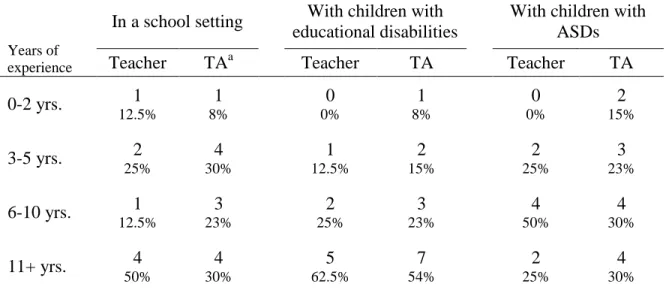
Table 3.2. Classroom staffs’ levels of experience. ...48
Table 3.3. Demographic information for student participants. ...48
Table 3.4. Caregiver levels of education. ...49
Table 3.5. Definitions of social-communication behaviors. ...55
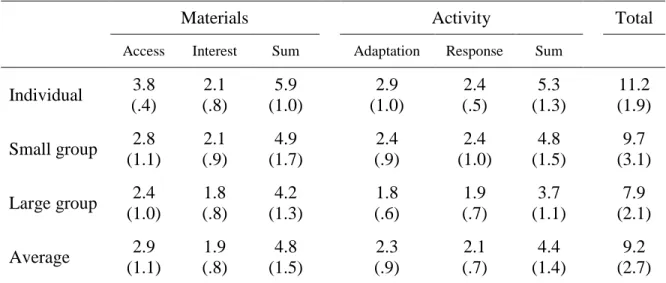
Table 4.1. Mean and standard deviation for student-directed practice scores across group settings. ...69
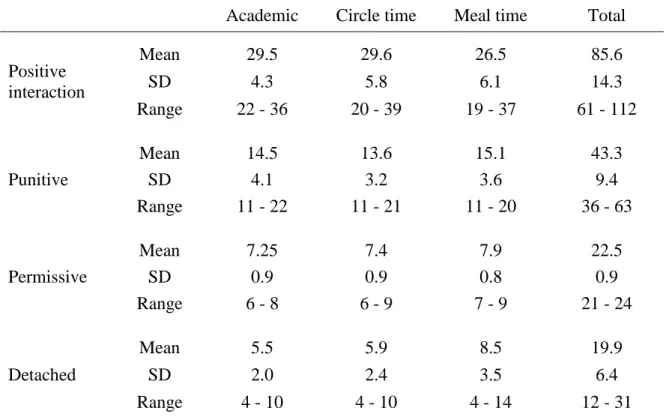
Table 4.2. Descriptive statistics for four factors of the CIS across settings. ...70
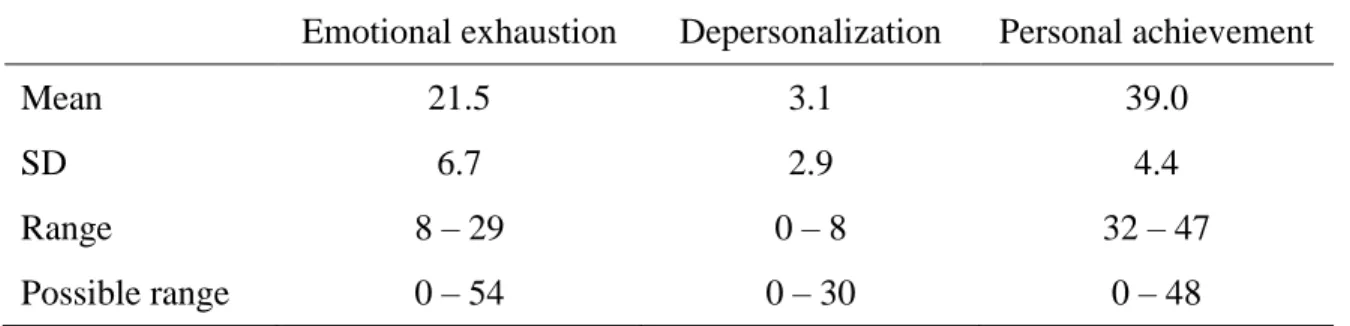
Table 4.3. Descriptive statistics for three factors of the MBI-ES. ...71
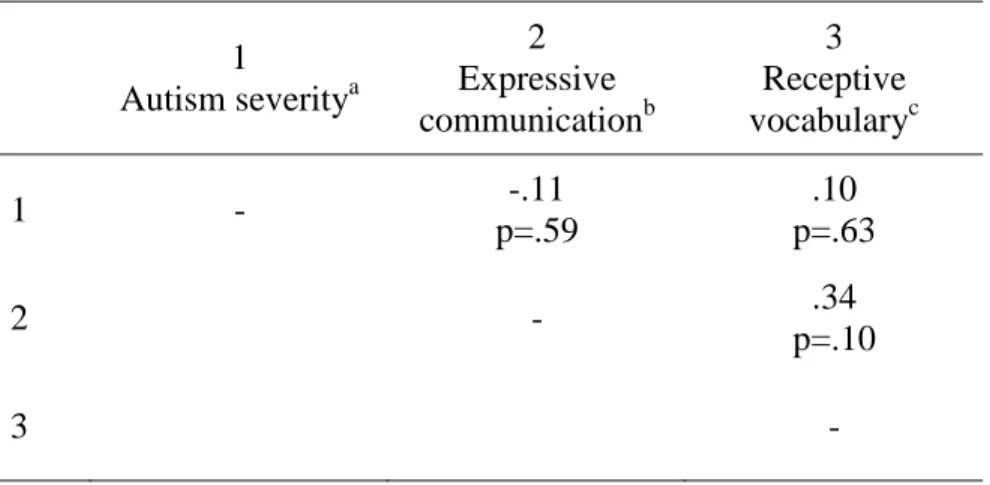
Table 4.4. Correlations between measures of student characteristics. ...72
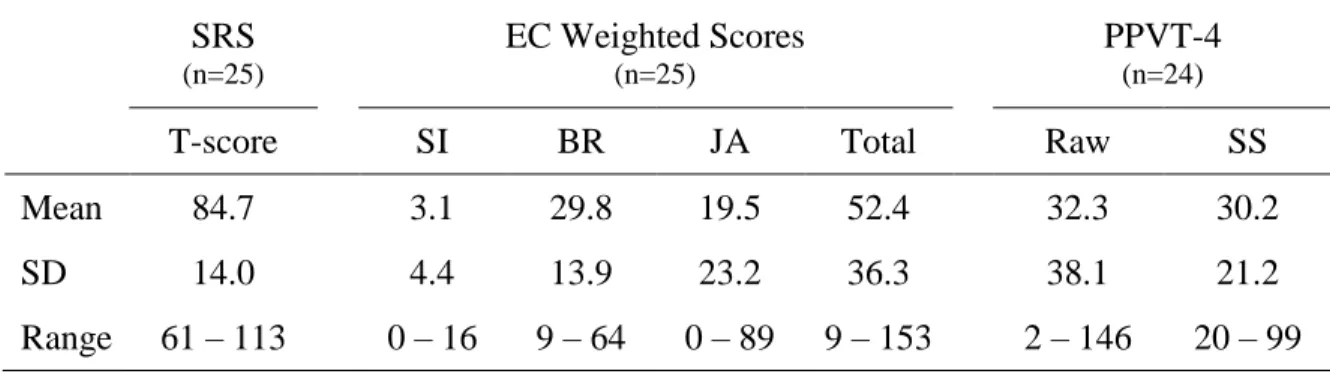
Table 4.5. Descriptive statistics for child characteristics. ...73
Table 4.6. Descriptive statistics for joint engagement observations. ...74
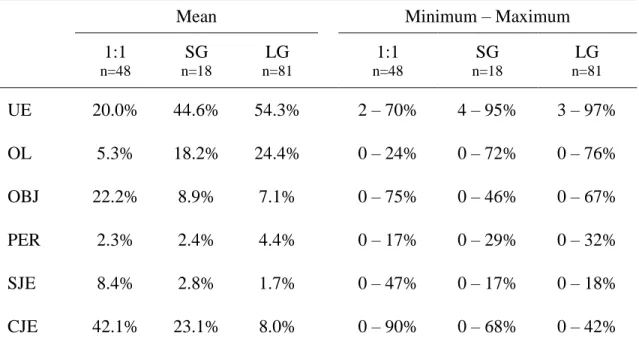
Table 4.7. Comparison of percentages in engagement states across group contexts. ...75
Table 4.8. Mixed model results for relationship between coordinated joint engagement and observation level classroom ecological features. ...77
Table 4.9. Mixed model results for relationship between joint engagement and teacher level classroom ecological features. ...79
xiii
Table 4.11. Consistency of coordinated joint engagement by group context
xiv
LIST OF FIGURES AND ILLUSTRATIONS
CHAPTER 1 INTRODUCTION
Autism spectrum disorder (ASD) is a developmental disorder characterized by language deficits, difficulties with social skills, and the presence of repetitive and restrictive behaviors or interests (American Psychiatric Association, 2000). Individuals with ASD exhibit a range of symptoms across these developmental areas which impact their participation in everyday activities in life. Recent estimates indicate that
approximately 1 in 88 children in the United States is diagnosed with ASD (Centers for Disease Control and Prevention, 2012), reflecting a prevalence that has grown at an alarming rate in the past decade.
Statement of the Problem
The increases in prevalence rates are paralleling increases of children with ASD in schools, as the number of students with a label of “autism” served in special education programs quadrupled from the 2000-2001 to the 2009-2010 school years (Scull &
Winkler, 2011). In 2010, United States schools served nearly 420,000 students with a primary educational label of autism between the ages of 3 and 21, with over half of those students in the elementary and middle school age range (Data Accountability Center, 2011). In addition to growing numbers of children with ASD, there are increasing concerns about the outcomes for adolescents and adults with ASD. As a group,
2
living independently (Beadle‐Brown, Murphy, & Wing, 2006; Billstedt, Gillberg, & Gillberg, 2005; Howlin, Goode, Hutton, & Rutter, 2004). These poor outcomes have a financial impact on families of individuals with ASD and society as a whole (Ganz, 2007). In addition, individuals with ASD seem to have poorer outcomes compared to individuals with other disabilities (Esbensen, Bishop, Seltzer, Greenberg, & Taylor, 2010; Seltzer, Shattuck, Abbeduto, & Greenberg, 2004), reflecting a need for educational programs that are specifically designed to address the needs of individuals with ASD. Given the increasing prevalence of the disorder and the concerning track record of adult outcomes thus far, developing methods to serve older students with ASD in the
educational system and improve outcomes among this population is a pressing concern. Despite this growing population of children with ASD, research has largely focused on early diagnosis and intervention (Lounds Taylor et al., 2012). Consequently, relatively little is known about how to serve these children once they are school aged. In order to provide educational interventions that optimize outcomes for school-aged
students with ASD, it is important that researchers examine student and classroom factors that impact the educational experiences of these students in the school environment. One potential influence on the educational outcomes of students with ASD is student
engagement.
3
engagement”. Given that engagement relates to the quality of education (McWilliam et al., 1985) and is predictive of children’s later skills (Greenwood, Carta, & Atwater, 1991; Logan, Bakeman, & Keefe, 1997), measuring and understanding engagement is a
necessary step in determining how to provide high quality, effective services for students with ASD.
Theoretical Foundations for Current Study
Researchers have long acknowledged that children are impacted by interactions within the environment. This contextual placement of learning or development is
exemplified in Bronfenbrenner’s ecological systems theory of development, which posits that each individual lives within a series of nested systems and develops through
proximal processes, or interactions that occur within and between systems
(Bronfenbrenner, 1994). In a school setting, the process of learning and development is impacted by the student, classroom environments, other people in the environment, and the proximal processes that occur between each of the parts of the ecological system. Given that engagement has been defined as developmentally and contextually appropriate participation in the environment (McWilliam et al., 1985), engagement is an ideal
concept for exploring learning in schools through the lens of ecological systems theory. The Importance of Engagement
4
and language skills (Adamson et al., 2009). Thus, measuring student engagement may be a useful method for predicting educational outcomes of students and monitoring ongoing quality of educational programming.
Engagement and School Environments
The school environment plays an integral role in promoting student engagement. Studies have demonstrated relationships between engagement and teacher behaviors (McDonnell, Thorson, & McQuivey, 1998; McWilliam, Scarborough, & Kim, 2003), instructional strategies or activities (Hamilton, 2005; Marks, 2000; McWilliam et al., 1985), and classroom features (Kishida & Kemp, 2009; Logan et al., 1997; McDonnell et al., 1998; McWilliam & Bailey Jr., 1995). For example, frequency of teachers’ academic interactions are related to higher levels of student engagement (McDonnell et al., 1998), and students with disabilities exhibit higher levels of engagement during one-to-one and small group instruction compared to whole group instruction (Logan et al., 1997;
McDonnell et al., 1998). Additionally, teacher interaction styles and teacher burnout have been relate to other areas of classroom performance such as student language and
academic acheivement (Girolametto & Weitzman, 2002; Jennings & Greenberg, 2009; Mirenda & Donnellan, 1986), and thus may be related to student engagement. The associations of engagement with teacher and classroom characteristics suggest student engagement is one measure that can tap into the quality of educational environments. Engagement and Student Characteristics
5
McWilliam, 1999). Presence and type of disability also appear to impact levels of engagement in children (Adamson et al., 2009; McWilliam & Bailey Jr., 1995; Ruble & Robson, 2007). Identifying relationships between student engagement and characteristics, and identifying student engagement profiles may provide valuable information for
making individualized decisions regarding educational placements, goals, and intervention strategies to optimize student outcomes.
Engagement in School-Aged Children with ASD
Despite relatively extensive research in engagement, few studies have examined the engagement of school-aged children with ASD. Kamps and colleagues explored the relationship between student engagement of children with ASD and naturally occurring instruction in a variety of classrooms (Kamps, Leonard, Dugan, Boland, & Greenwood, 1991). Small group instruction, frequent teacher interactions, and individualized sets of materials were associated with higher levels of engagement, which was quantified
through academic responding. In the second phase of the study, professional development that targeted increasing teachers’ use of some strategies showed promising effects on student performance in single-case design studies. Other single-case design studies have also demonstrated increased engagement for students with ASD through the addition of music and visual interactive materials in small group instruction (Carnahan, Musti-Rao, & Bailey, 2009), the use of child choice in play routines (Reinhartsen, Garfinkle, & Wolery, 2002), the use of structured teaching during independent play (Mavropoulou, Papadopoulou, & Kakana, 2011), and the implementation of cooperative learning groups in general education settings (Dugan et al., 1995). This limited research suggests
6 Joint Engagement in Children with ASD
One limitation of previous research on school-age children with ASD, as well as many of the studies of children with other disabilities, is that engagement was primarily quantified by focusing on academic responding or on-task behaviors. Although this is one important aspect of classroom engagement, it fails to capture other facets of engagement that may be more affected in ASD, namely joint engagement. Joint engagement is the ability to interact with materials and people simultaneously, and requires coordination of attention between others and the environment. This concept of engagement highlights the social, transactional nature of learning in school environments.
The ability to engage jointly emerges in the first 18 months of life in typically developing children (Bakeman & Adamson, 1984). However, 30-month old children with ASD show less engagement than younger typical children and age-matched peers with Down syndrome (Adamson et al., 2009). Importantly, joint engagement is linked to later language abilities (Adamson et al., 2004; Adamson et al., 2009), which in turn relate to adult outcomes for individuals with ASD (Howlin et al., 2004). In intervention research, joint engagement has proven to be sensitive to change targeting early communication and play skills in younger children with ASD (Kasari, Paparella, Freeman, & Jahromi, 2008). Thus, focusing on joint engagement captures aspects of participation in educational environments that are important to learning, but may be particularly challenging for students with ASD.
Purpose
7
ecological factors and student characteristics of individuals with ASD. The study marks the first known attempt to examine the relationship between joint engagement and student, teacher, and classroom characteristics for school-age children with ASD in classroom settings.
The long-term goal of this research is to use an understanding of student engagement to develop effective classroom practices and individualized instruction to improve outcomes for students with ASD. Characterizing the nature of and influences on joint engagement in classrooms will have practical significance for educators,
researchers, and other stakeholders in the fields of ASD and education. First, determining the relationship of teacher and instructional factors with the joint engagement of students with ASD will guide professional development efforts and offer information in the translation of interventions for educational settings. Second, ascertaining features of educational environments related to joint engagement will allow stakeholders to advocate for policies and funding to support the implementation of optimal practices in classrooms serving students with ASD. Finally, identifying student characteristics that are associated with joint engagement in classroom settings will aid in the development of differentiated intervention strategies and goals to increase individual engagement. Ultimately, the results of the proposed study will inform educational practices for students with ASD, identify potential avenues for improving educational outcomes for this population, and guide future research in this area.
Research Aims
8
activities for students with ASD. A secondary goal of the study is to examine the consistency of joint engagement in students with ASD. The specific aims and corresponding hypotheses of this study are as follows:
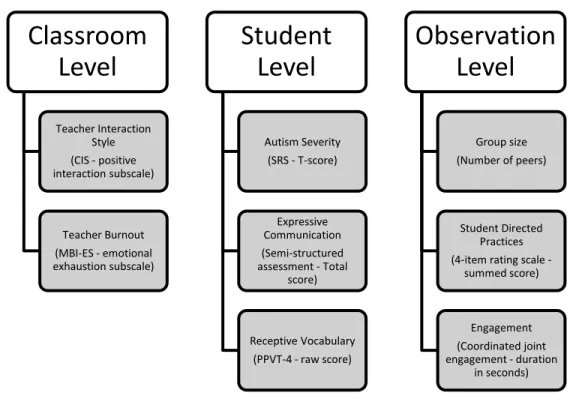
Research Aim 1: Examine the relationship between classroom ecological factors and student engagement during typical classroom activities. The working hypotheses for this aim are (1a) student engagement will be inversely associated with the group size during activities, (1b) student engagement will be positively associated with teachers’ use of student-directed practices during activities, (1c) student engagement will be positively associated with positive teacher interaction styles in the classroom, and (1d) student engagement will be inversely associated with teacher report of job burnout.
Research Aim 2: Examine the relationship between student characteristics and student engagement during typical classroom activities. The working hypothesis for this aim are (2a) student engagement will be inversely associated with autism severity, (2b) student engagement will be positively associated with level of expressive
communication, and (2c) student engagement will be positively associated with receptive vocabulary skills.
9 Summary
CHAPTER 2 BACKGROUND
Autism spectrum disorder (ASD) is estimated to occur in 1 out of 88 individuals (Centers for Disease Control and Prevention, 2012). It is a developmental disorder characterized by deficits in language, social difficulties, and repetitive and restrictive behaviors and/or interests (American Psychiatric Association, 2000). Although the presentation of ASD varies greatly across individuals, these core areas of difficulty impact many facets of development in individuals with ASD including social reciprocity and awareness, communication, executive functioning and cognition, adaptive
functioning, and behavior and emotional regulation, all of which can impact an individual’s experiences and success in daily life (American Psychiatric Association, 2000; American Speech-Language-Hearing Association, 2006). For school-age individuals with ASD, these core deficits could influence many areas important to educational experiences including peer relationships, academic achievement, communication, and successful navigation of the school environment.
In line with increases of prevalence rates for ASD, schools have seen increases in the number of students receiving special education services with an educational label of autism (Scull & Winkler, 2011). In one decade, schools in the United States saw a fourfold increase in the number of students with autism served in public schools,
11
students with ASD is the fact that professionals are underprepared to work with these students, who have unique and complex educational needs compared to students with many other disabilities (Scheuermann, Webber, Boutot, & Goodwin, 2003; Schwartz & Drager, 2008; Simpson, 2004). To date, many of the research efforts in intervention have focused on young children, leaving major gaps in research for school-aged students with ASD (Lounds Taylor et al., 2012). However, key advocacy and research organizations have acknowledged the need for research in school-aged children and adults with ASD by creating strategic plans and soliciting requests for applications to specifically address interventions for older individuals with ASD (e.g., Autism Speaks, Interagency Autism Coordinating Committee, Institute for Education Sciences, National Institutes of Health).
This research gap is even more alarming given the outcome research for
adolescents and adults with ASD. Several research teams followed individuals with ASD into their adult years and noted generally poor outcomes across this population (Beadle‐ Brown et al., 2006; Billstedt et al., 2005; Howlin et al., 2004). On the whole, individuals with ASD have small, but continued improvements in communication (Seltzer et al., 2003), repetitive behaviors and restrictive interests (McGovern & Sigman, 2005; Seltzer et al., 2003), self-care skills (Beadle‐Brown et al., 2006), and adaptive behaviors
12
(Beadle‐Brown et al., 2006; Howlin et al., 2004). Additionally, adolescents and adults with ASD have notably poorer outcomes compared to their peers with other disabilities, characterized by less independence, fewer social opportunities, and more behavioral difficulties (Anderson, Oti, Lord, & Welch, 2009; Esbensen et al., 2010). Overall, there seem to be some improvements in skills for adolescents and adults with ASD (Taylor & Seltzer, 2010), but these improvements have not translated to real-life outcomes. It is important, then, to focus on educational programs for school-aged children with ASD in order to implement effective interventions to improve adolescent and adult outcomes.
Active engagement has been highlighted as a critical feature of effective interventions for individuals with ASD (National Research Council, 2001). Therefore, finding ways to assess and improve engagement are key steps in developing and evaluating interventions for school-aged children with ASD. Engagement has been defined as “developmentally appropriate participation,” and, by its participatory nature, takes into account both the individual and the environment. As such, developmental and learning theories that take both the individual and the environment into account are ideal when researching the concept of engagement.
Ecological Systems Theory
13
characteristics of the individual, characteristics of the environment, and the nature of the developmental outcome itself. Thus, the process, person, and context interact in complex ways to produce developmental outcomes, and it is important to observe developmental phenomena within the natural environment.
Ecological systems theory has been widely applied in educational research. Within this framework, individual students are situated in a classroom environment, interacting with people, objects, and symbols within that environment, and developing or learning within the environment. Student characteristics, environmental characteristics, and the interactions between the student and the environment (i.e., proximal processes) are thought to impact the developmental outcomes of the student. Indeed, ecological systems theory has been identified as a useful framework for examining important issues in schools such as academic achievement (Eamon, 2005; Engle & Black, 2008), student behavior (Urdan, Midgley, & Anderman, 1998), inclusion (Odom et al., 1996), literacy (Pancsofar & Vernon-Feagans, 2006), and use of technology (Staples, Pugach, & Himes, 2005). Ecological systems theory has also been used as a foundation for measuring and studying engagement in school environments (Greenwood et al., 1991). In line with ecological systems theory, the current study will examine the engagement of students with ASD in relations to student characteristics, as well as ecological factors, including instructional strategies, teacher behaviors, and classroom groupings.
Engagement
Engagement has been studied in relation to educational environments, classroom quality, and student participation over several decades. At the most basic level,
14
1985). As theories and methodologies have progressed, the concept and measurement of engagement has evolved, resulting in refined definitions, as well as a variety of tools to capture student engagement. Despite the many transformations in definitions and alternatives in tools, engagement remains a valued variable in educational research and practice for its utility as a descriptor, predictor, and outcome variable.
Measurement of Engagement
The concept of engagement has been utilized in research in many different ways and for many different purposes. These various conceptualizations and purposes have resulted in differences, including measuring engagement at the classroom level versus student level, measuring distinctive types and levels of engagement (e.g., cognitive versus social engagement), and measuring engagement as a trait (i.e., global engagement) versus a state (i.e., observed engagement).
15
the percentage of children present who were engaged during a particular activity. Engagement was defined as a dichotomous variable, so each child was coded either unengaged or engaged. This measurement system for engagement allowed researchers to compare engagement of children across different types of preschool classrooms and classroom activities. Using classroom level measures of engagement and a dichotomous definition of engagement was an informative, yet simple measurement system for the purposes of evaluating educational programs. However, researchers were also interested in looking at individual children and more nuanced levels of engagement.
16
The increasingly complex coding system was an important advancement in measurement, allowing researchers to examine engagement across a hierarchy of levels.
Other researchers have developed ecobehavioral observation systems to assess engagement such as the Code for Instructional Structure and Student Academic Response (CISSAR; Stanley & Greenwood, 1981), the Code for Active Student Participation and Engagement (CASPER-III; Tsao, Odom, & Brown, 2001), and the Ecobehavioral System for the Complex Assessment of Student Environments (ESCAPE; Carta, Greenwood, & Atwater, 1985). These systems were developed as a direct result of the ecological systems theory, with capabilities for simultaneous assessment of student and teacher behaviors as well as environmental factors. Ecobehavioral coding has been used to study the engagement of students with disabilities in relation to teacher behaviors and
classroom features (Hamilton, 2005; Kamps et al., 1991; Wallace, Anderson,
Bartholomay, & Hupp, 2002). However, these systems focus on rather narrow types of engagement. The CISSAR focuses on behaviors during academic programming for measuring student engagement (e.g., academic response, task participation, competing behaviors), whereas the ESCAPE and CASPER-III focus on social interactions (e.g., negative social behavior directed to typically developing peer, social behavior directed to adult, social behavior from a peer with disabilities). Additionally, the systems are
17
interval (e.g., 28 seconds). Therefore, the actual time observing the students and environment are often very short even during relatively long observations (e.g., 120 seconds of observed behavior over an hour-long observation). Ecobehavioral assessment is a valuable form of measurement in the field of engagement, but can be difficult to use as it is resource-intensive, requiring extensive training and long observation times for effective use.
Although research moved towards increasingly complex measures of engagement with methodological and technological advancements, there were also attempts to re-simplify the collection of engagement data in order to make it more feasible for
practitioners and researchers. One research team focused on task engagement, measuring if students were actively or passively engaged in the classroom (Kishida & Kemp, 2006; Kishida, Kemp, & Carter, 2008). McWilliam, who had been instrumental in the
development of some of the more complex systems, and Casey used rating systems for several categories of engagement to scale back the intensity of data collection for
18
Although most of the research has focused on direct observation of engagement (which might be considered a state of engagement), there is a small body of research that has examined engagement as a trait, using teacher or parent report tools to tap into a child’s underlying capacity for engagement. McWilliam developed the Children’s
Engagement Questionnaire (CEQ; McWilliam, 1991), a caregiver report tool to assess the trait of engagement. The 32-item tool uses a 4-point rating system and provides four factors for child engagement: competence, persistence, undifferentiated behavior, and attention. Although these factors roughly correspond to several of the categories in McWilliam’s observational measure for states of engagement (E-Qual; McWilliam & de Kruif, 1998), the factors and corresponding observed behaviors had primarily low to moderate correlations between the two methods (de Kruif & McWilliam, 1999). In fact, only one engagement state, undifferentiated behaviors, had strong correlations across observed and global engagement. This study supports the notion that engagement can be conceptualized as both a state and trait, and that children’s performance (i.e., observed engagement) may not always match their general capacity for engagement (i.e., global engagement).
Joint engagement
19
object or an event that has just occurred and then looks back at his mother, who in turn labels the object or describes the event, is being exposed to language from an adult in the environment that relates to the infant’s focus of attention. Although these learning
opportunities become more complex as children develop, they are still asked to learn through these periods of joint engagement – whether it is a preschooler participating in circle time and learning the days of the week or a 3rd grader listening to her teacher read a book about Ancient Egypt and learning new vocabulary. Joint engagement arguably plays an important role in learning across the entire lifespan.
Joint engagement was initially explored in a longitudinal study of typically developing infants (Bakeman & Adamson, 1984). The two cohorts in the original study were followed from 6 to 15 months and 9 to 18 months, with observations scheduled every 3 months. At each time point, the infants were observed in play situations across three different conditions: with the infant’s mother, with another infant, and alone. The recorded observations were coded for six different engagement states: unengaged, onlooking, persons, objects, passive joint (labeled supported joint in subsequent studies) and coordinated joint engagement (see Table 2.1 for definitions). This initial study documented the development of joint engagement in late infancy and the importance of adult-infant interactions for achieving higher engagement states.
20
parents. The data were collected at 3-month intervals from around 18 to 30 months of age for the typically developing children and from around 30 to 42 months of age from the children with ASD and Down syndrome. The researchers coded engagement states similar to the earlier study, but expanded the codes to include non-symbol-infused and symbol-infused episodes of person, object, supported joint (formerly called passive joint) and coordinated joint engagement. Symbol-infused episodes were engagement states that included some type of symbolic representation such as high level pretend play or verbal language. The amount of time spent in the more advanced symbol-infused joint
engagement states was found to be related to concurrent language ability and predictive of later language ability (Adamson et al., 2004). In a follow-up study, children with ASD had significantly lower proportions of time spent in coordinated joint engagement
compared to their same-age peers with Down syndrome and younger typically developing children (Adamson et al., 2009). Symbol-infused joint engagement was predictive of later language abilities in children with ASD. Thus, joint engagement appears to be an important developmental measure and may tap into specific deficits in children with ASD.
Since Bakeman and Adamson’s seminal work on joint engagement, researchers have used the concept of joint engagement in a broad range of studies including work on the development of affect (Striano & Bertin, 2005), the impact of adult interactions (Bigelow et al., 2010), and parent-mediated interventions (Girolametto, Verbey, &
Tannock, 1994). Importantly, joint engagement has been used successfully as an outcome measure for intervention studies with preschoolers with ASD (Kaale, Smith, &
21
Locke, 2010; Kasari et al., 2008). Additionally, the joint engagement coding system has been used live in classroom settings with preschoolers with ASD (Wong & Kasari, 2012). Based on the collective body of research, joint engagement is influenced by early
language abilities, predictive of later language abilities, and especially impaired in children with ASD. As a measure, the joint engagement coding system has been effectively used across a wide variety of descriptive and experimental studies. Table 2.1. Definitions of engagement states.
Engagement State Definition
Unengaged Child exhibits no apparent engagement with a specific person or object
Onlooking Child watches another person who is engaged in an activity, intently observing the person or the objects the person is manipulating
Object only Child explores, plays with, or uses object(s) on his/her own, other people are not influencing the child’s actions with the object(s)
Person only Child interactions with another person and objects are not part of the interaction
Supported joint Child and other person engage in same activity with the person influencing the activity but the child not acknowledging the other person
Coordinated joint Child and other person engage in the same activity and the child coordinates attention to objects and people in an alternating or integrated manner
Consistency of engagement
22
have used observations as short as 5 minutes (Wong & Kasari, 2012) up to several hours (Kamps et al., 1991; Logan et al., 1997) with numbers of observations ranging from two per child (Kamps et al., 1991) to well over 10 per child (McDonnell et al., 1998; Wong & Kasari, 2012). However, there is limited information about ideal lengths or number of observations for capturing student engagement. In one study that focused on this issue, three observers coded four 15-minute observations for each of 47 children using a coding system that had five different levels of engagement and four different types of
engagement (McWilliam & Ware, 1994). The researchers conducted generalizability and decision analyses, designed to assess the minimum number of observations and coders needed to achieve consistency in the measure. The conclusions suggested that coders accounted for very little of the variance and were reliable. But, the sessions accounted for a great deal of variance, suggesting differences between sessions were resulting in
23 Summary of Engagement
Engagement, or participation in the environment, has proven to be a valuable measure in developmental and educational research. Although researchers have both conceptualized and measured engagement in a variety of ways, the concept of joint engagement could be especially relevant for students with ASD. It is a known area of difficulty for young children with ASD, and it is linked to language learning, which is an important part of the educational experience for school-aged children. However, there are no known studies that measure joint engagement in children with ASD beyond the
preschool years. The current study focuses on measuring joint engagement in school-aged children with ASD in the classroom setting.
Engagement and Classroom Ecological Factors
Engagement is a measure that captures the transactional nature of learning
24 Classroom Features
Classroom features such as types of groupings and group size during instruction have been studied in relation to child and student engagement (Kamps et al., 1991; Kishida & Kemp, 2009; Logan et al., 1997; McWilliam & Bailey Jr., 1995; Ruble & Robson, 2007), but this review focuses specifically on instructional group size because of its replicated support for its relevance for students with disabilities. In a study of 29 elementary students with disabilities included in general education classrooms, students demonstrated engagement 23% of the time in whole-class activities, whereas, the mean percentage of engagement ranged from 42 to 50% in small group and individual
instruction (Logan et al., 1997). McDonnell and colleagues (1998) measured the
academic engagement of six students with severe disabilities across 15 to 22 observations over a period of 5 months. They noted that academic responding, their indicator for engagement, was positively correlated with the amount of one-to-one instruction and independent work, but negatively correlated with the amount of whole group instruction. Another study noted increased engagement in small group sessions compared to whole group sessions for elementary students with disabilities, though this was based heavily on informal observations conducted after the more formalized ecobehavioral assessments so the methods preclude definitive results (Kamps et al., 1991). There is evidence among elementary students with disabilities that engagement is related to the number of students present during instruction, and seems to be lower in large group instructional settings.
25
compliant behavior (i.e., alignment with behavioral expectations), but low degrees of congruent behavior (i.e., alignment with academic expectations) in large group settings as well as independent work. So, although the students may have been exhibiting
appropriate behaviors and appeared on task, their academic participation was not matching up with teacher expectations for that task. They also found that students with ASD performed optimally in small group settings, with the highest combination of compliant and congruent behavior. Interestingly, the students in this study struggled with compliance the most in one-on-one settings.
Another study examined the engagement of preschool-aged children with ASD who attended both segregated and inclusive childcare settings, focusing on active and passive engagement and non-engagement (Kishida & Kemp, 2009). The study noted small to moderate, non-significant effects for engagement, with higher engagement in segregated settings compared to inclusive settings. Notably, the student to adult ratios differed between the settings, with a lower student to adult ratio in the segregated
settings. It is possible that the group size and ratios impacted engagement, since this was not isolated from the structure (segregated vs. inclusive) of the classroom.
26
cooperative learning group condition than the baseline condition of whole class
instruction. The students spent more time actively participating and less time passively attending in the cooperative learning groups compared to the whole class instruction and lectures. Collectively, these studies suggest that different group sizes and instructional practices that directly relate to group size, impact the engagement of students with ASD. Instructional and Teacher Factors
Instructional and teacher factors including teaching methods, teacher behaviors, and teacher attitudes, are malleable features in the educational environment, and thus are important ecological features to consider when examining engagement. Although there is a broad research base in this area, this section focuses on instructional practices and strategies, and teacher interactions and attitudes, variables that are specifically relevant for the current project.
Instructional practices and strategies. In general, instruction and activities with a focus on child- or student-directed practices seem to have a positive impact on
27
individual; Logan et al., 1997; McDonnell et al., 1998). Additionally, evidence from one study suggests that proximity of the teacher impacts student engagement (Conroy, Asmus, Ladwig, Sellers, & Valcante, 2004). Child engagement and adult proximity were coded during observations of six elementary school students with ASD, and five of the six students showed significantly more engagement during times when the teacher was in close proximity to the target student. A general level of focus on or even proximity to the target student could be considered some of the most basic indices of child-directed practices and seem to positively impact engagement.
28
Kamps and colleagues (1991) also explored relationships between specific types of instructional tasks and engagement, noting that engagement was higher in tasks involving paper and pencil or other media compared to discussion tasks. Following the ecobehavioral assessments of engagement, informal observations suggested higher levels of engagement with other instructional variables including access to individualized materials, shortened rotations of media and concept presentation, random order of response (i.e., not going in same order around the table or room), and choral responding. As part of the same study, the researchers also completed several single-case design studies in the same classrooms to examine the impact of using these interventions that showed changes in student engagement. However, several interventions were
implemented concurrently in each classroom so it is difficult to determine which student-directed instructional features were responsible for any evident changes in student engagement.
There are several studies that have looked at the impact of specific instructional practices on engagement in children or adults with ASD. Two studies focused
29
positive impact of offering choices on child engagement. The other study looked at the impact of individual choice on engagement during work tasks for adults with ASD at an adult services program (Watanabe & Sturmey, 2003). The work tasks were the same across the choice and non-choice conditions, but the choice condition allowed the participants to build their own schedule and the non-choice condition involved assigned schedules. Based on visual analysis of the multiple-baseline single-case design study, two of the three adult participants showed clear improvement in engagement as measured by on-task behavior in the choice condition compared to the non-choice condition. In addition, all three participants had higher average engagement in the choice condition. Based on these studies, it appears providing some level of choice during activities improves engagement for individuals with ASD.
30
independent work time in an ABAB single-case design (Mavropoulou et al., 2011). There were mixed results, with improvements in engagement for one participant, but no clear change for the other participant. Collectively, these studies suggest that using specific instructional strategies (i.e., activity schedules, structured teaching) could improve engagement during activities related to academics and play. Notably, these studies primarily defined engagement as on-task behavior and focused on engagement during independent activities rather than instructional time with a teacher. While increasing engagement in these types of activities is important, it neglects the more social aspects of engagement that are also characteristic of classroom instruction.
Finally, one study focused on the incorporation of materials and music in
31
In summary, the use of student-directed practices appears to have positive impacts on the engagement individuals across a wide age span in children with typical
development, as well as individuals with developmental disabilities including ASD. Specific student-directed practices with potential relationships to engagement include the consideration of student interest (e.g., student choice), usage of materials (e.g., interactive materials, individual materials for students), and specific instructional strategies or
supports (e.g., structured teaching, activity schedules).
Teacher interactions and attitudes. Interactions between adults and children are very powerful and have been associated with many important aspects of development including cognition, language development, and social-emotional development (Hart & Risley, 1992; Phillips, McCartney, & Scarr, 1987). Several studies have looked at the impact of adult interactions on child engagement. One study looked at the impact of adult interactions on the engagement of infants from 9 to 17 months of age (Lussier,
Crimmons, & Alberti, 1994). The researchers utilized the joint engagement coding scheme (Adamson, Bakeman, Russell, & Deckner, 1998) to examine infants behaviors in three contrived conditions with an unfamiliar adult and toys in a clinic room. The three conditions were (a) contingent, in which the adult used child-directed and warm
interactions; (b) unresponsive, in which the adult did not initiate or respond to
interactions with the infant; and (c) directive, in which the adult interacted with the infant but provided more directives rather than following the child’s lead. There was
32
the directive condition. These patterns seem to indicate that different styles of adult interaction impact joint engagement in very young children, with contingent styles eliciting higher levels of engagement.
Educational researchers have explored the relationships between adult or teacher interactions and child or student engagement. In one study, adult interactions within a childcare environment had a stronger association with observed levels of engagement than chronological age, developmental age, or child global engagement (McWilliam et al., 2003). In particular, the adults’ elaborations, a non-directive form of interaction, were strongly related to both attentional and participatory engagement. Another study
measured the engagement of 49 toddlers and preschoolers with developmental disabilities during free-play and instructional interactions with their teachers (Mahoney & Wheeden, 1999). Multiple regression analyses indicated that teacher interaction styles accounted for a significant amount of the variance in both the quality and frequency of child
engagement. Child-oriented or responsive styles were positively correlated with initiations. Interestingly, social involvement (one measure of engagement used in the study) was negatively correlated with responsive behaviors but positively correlated with performance orientation, which tended to be more directive in nature. These studies suggest that teacher interaction style plays a role in child engagement during the early childhood years for children with disabilities, with a tendency for responsive interactions to increase engagement.
33
engagement (Kamps et al., 1991; McDonnell et al., 1998). Classroom management and discipline-related interactions, which are more directive in nature, were associated with lower levels of engagement, whereas academic-related interactions were associated with higher levels of engagement. Other studies have focused more broadly on interactions within the school environment. For example, Marks (2000) found that students’ perceptions of a positive school environment and classroom supports significantly impacted school engagement in elementary, middle, and high school students. Based on these few studies, it seems that student engagement in the school-age years is associated with teacher interaction styles, and perhaps the classroom climates created by those interaction styles.
Although the research base related to teacher factors and engagement is somewhat small, adult and teacher factors, such as interaction style and feelings of job burnout, have been tied to other areas of child development and educational outcomes.
Girolametto and colleagues conducted studies that examined teacher interaction styles and child language in toddlers and preschoolers with and without disabilities across different activities in day care settings (Girolametto, Hoaken, Weitzman, & van Lieshout, 2000; Girolametto & Weitzman, 2002; Girolametto, Weitzman, van Lieshout, & Duff, 2000). They noted that teacher behaviors that were responsive in nature had positive correlations with a variety of child language measures such as number of utterances, number of different words, and number of multiword utterances (Girolametto & Weitzman, 2002). In contrast, teacher behaviors that were directive in nature were significantly negatively correlated with child language production (Girolametto,
34
with children who had developmental disabilities (Girolametto, Hoaken, et al., 2000). An experimental study that focused on 12 older children, six with ASD and six with
cognitive impairment, also examined language production of the child participants in relation to adult interaction styles (Mirenda & Donnellan, 1986). Each child interacted with the same six unfamiliar adults, three of whom used directive interaction styles and three of whom used facilitative interaction styles. The participants exhibited significantly more topic initiations, comments, and questions when interacting with the adults with the facilitative interaction styles. In sum, this research suggests that adult interaction styles impacts the language production of younger and older children with disabilities.
A great deal of research has focused on the impact of classroom climate on student behaviors and outcomes. One measure thought to be related to classroom climate is the social-emotional competence of teachers. Jennings and Greenberg (2009) proposed a model and offered an extensive literature review that highlighted the impact of the social-emotional competence of teachers on classroom climate and student outcomes. The authors acknowledged that teacher social-emotional competence may have
35
8th grade, though this was mediated by earlier behavioral performance. It seems that teacher-student relationships, which are exemplified in teacher-student interactions, have some impact on behavioral and academic performance in the school years.
Teacher burnout has also been studied in relation to social-emotional climate, with research suggesting that burnout is related to teacher-student relationships (Yoon, 2002), classroom climate (Byrne, 1994), and teacher’s social-emotional competence (Goddard, Hoy, & Hoy, 2004). Notably, teacher burnout has been particularly
problematic among teachers in special education (Wisniewski & Gargiulo, 1997). Thus, teacher burnout may be a salient measure for tapping into many of these social-emotional factors in classrooms, which may be particularly important in self-contained classrooms and special education.
Summary of Ecological Factors and Engagement
Engagement is related to a variety of ecological factors in the environment, including group size, instructional practices, and teachers’ interactions with students. Additionally, measures that tap into classroom climate, including teacher interaction style and teacher burnout, are related to other student behaviors and outcomes such as
36
factors: group size, student-directed instructional practices, teacher interaction styles, and teacher burnout.
Engagement and Student Characteristics
Although engagement has been linked to environmental factors, it has also been studied in relation to the individual, looking specifically at child or student characteristics that impact engagement. Indeed, a study of self-reported student engagement at the elementary, middle, and high school levels across 24 schools, 149 classrooms, and over 3,600 students found that over 80% of the variation in engagement occurs at the level of the student (Marks, 2000). Though self-reported engagement may differ from observed engagement, the level of variation at the student level is striking and clearly worthy of attention in research.
Researchers targeting early development and the early childhood age have posited that as children mature they have an increased capacity for engagement. Both cognitive (de Kruif & McWilliam, 1999) and social (Adamson et al., 2004) forms of engagement have been conceptualized as developmental hierarchies. In these bodies of research, two of the common areas of focus when examining individual characteristics that influence engagement are developmental abilities and type of disability.
Developmental Abilities
Researchers have long been interested in exploring the development of engagement. Since engagement is considered “developmentally appropriate
37
Eidelman, 2004; Tronick & Cohn, 1989), and object play (McCune, 1995), all of which could be considered precursors to or prerequisites for engagement in the preschool years and beyond.
McWilliam and colleagues (1985) noted their interest in exploring engagement at the individual level, tapping into the impact of individual factors by examining
engagement in children of different ages within child care settings, as well as in children with developmental disabilities (de Kruif & McWilliam, 1999; McWilliam & Bailey Jr., 1995; McWilliam et al., 2003). In one study, the researchers used the E-Qual-III
engagement coding system to focus on hierarchical levels of cognitive engagement (e.g., non-engagement, attention, participation, persistence; de Kruif & McWilliam, 1999). The researchers coded child engagement for 62 children between 9 and 63 months of age during structured and unstructured times with the teacher, as well as meal times with the teacher. They also examined global engagement using the Child Engagement
38
developmental age. Thus, it appears that developmental age plays a major role in cognitive engagement in children through the preschool years.
Bakeman and Adamson (1984) also examined engagement across developmental stages, using the joint engagement coding system. These studies used longitudinal
designs, measuring engagement in two cohorts of 14 children every three months, from 6 to 15 months in the first cohort and 9 to 18 months in the second cohort. Their research supported clear developmental progress in joint engagement across infancy, as these very young children were observed in free play alone, with peers, and with their mothers. The infants showed significant linear trends with less unengaged behavior and more
coordinated joint engagement over the course of development in both the peer and mother conditions.
Subsequent research showed continued developmental change in the toddler years, when children demonstrated an increased ability to engage in more advanced levels of joint engagement across the 18 to 30 month age range (Adamson et al., 2004). In this study, 56 children participated in a semi-structured protocol with a caregiver, which was repeated every 3 months during from ages 18 to 30 months. The researchers looked particularly at symbol-infused engagement states to capture the transition into the language learning period of development, in which children are beginning to understand and use symbolic representations such as words. All of the engagement states showed significant changes over time, with increases in symbol-infused supported and
39
In addition to the impact of age in typically developing children, language abilities also appear to play a role in joint engagement (Adamson et al., 2004). In the same study, Adamson and colleagues used the MacArthur Communicative Development Inventory (Fenson et al., 1993) and the receptive and expressive language sub-tests of the Mullen Scales for Early Learning (Mullen, 1995) to divide the children into early,
middle, and late language onset groups. Notably, growth over time in symbol-infused supported joint engagement was significantly higher in the early language onset group than in the middle and late language onset groups. Thus, language ability appears to have some impact on the growth trajectory of joint engagement in young children.
Other factors that have been examined in relation to engagement are the presence and severity of a disability. In a study with 32 children with typical development and 16 children with developmental disabilities in the same childcare center, the disability status of the child impacted engagement with adults, peers, and materials (McWilliam & Bailey Jr., 1995). Children with disabilities in this inclusive setting spent less time engaged in interactions with adults, and less time in higher levels of engagement with materials in the classroom. Additionally, older children with disabilities appeared to exhibit more attentional (i.e., passive) engagement with peers than did their typically developing peers.
40
were not significant once the researchers computed odds ratios that controlled for the overall amount of engagement. Based on these studies, it appears that the presence of disability has an impact on student engagement and the level of disability may have some associations with student engagement, though these associations are less clear in the research.
Types of Disability
Although developmental age has been clearly linked to engagement, researchers have also demonstrated differences in patterns of engagement across children with different types of disabilities. Much of the research that has explicitly looked at types of disability has focused on children with Down syndrome and/or children with ASD (Adamson et al., 2009; Hamilton, 2005; Ruble & Robson, 2007). Since both Down syndrome and ASD have been well-studied across different developmental areas, researchers have examined hypotheses that relate to these specific deficits and expected differences in engagement related to the well-studied characteristics of individuals within each of these populations.
41
more time unengaged and in object engagement than both the peers with Down syndrome and the younger cohort of children with typical development. The trajectories for
engagement across time in children with ASD did not differ significantly from their peers with Down syndrome, though their trajectories were less steep than the younger children with typical development for symbol-infused engagement (i.e., states that included some level of symbolic representation). Thus, children with ASD appear to have consistently lower levels of joint engagement compared to children with Down syndrome and younger typically-developing children.
A smaller study examined the engagement of four students with ASD and four students with Down syndrome in elementary school settings (Ruble & Robson, 2007). The data were collected during 2-hour observations in the students’ classrooms during typical classroom routines. This study examined engagement in a unique way, measuring congruent and non-congruent behaviors, as well as compliant and non-compliant
behaviors of the students during classroom instruction. Children with ASD produced 63% more compliant, but non-congruent engagement codes than their peers with Down
syndrome. This suggests that children with ASD may appear to be engaged based on their compliant behavior (i.e., appropriate in responding to behavioral expectations), but are not actually participating in the way that is expected during academic activities. The study, however, was very small, focusing on descriptive data rather than statistical comparisons, so the results, though interesting, should be interpreted cautiously. In sum, there is evidence on differences in engagement among children with ASD from a
42
Summary of Student Characteristics and Engagement
Across a variety of studies, engagement has been linked to age and developmental abilities. Other studies have noted that engagement differs based on the presence,
severity, and type of disability. Clearly, engagement is impacted by child characteristics. However, much of this research has been conducted with young children, with very little research examining the relationships of these individual characteristics for school-aged children with ASD. None of the research related to older children has used joint
engagement as the concept for measuring engagement. It seems likely that student characteristics would be related to joint engagement for school-aged children with ASD, but it is unclear exactly how these student characteristics will impact joint engagement in the classroom setting.
Summary
With the prevalence rates of ASD on the rise, schools are serving a growing number of students with this disorder (Scull & Winkler, 2011). The National Research Council has identified “active engagement” as a key ingredient for effective interventions for children with ASD (National Research Council, 2001), yet there are not clear methods for measuring active engagement. Studies in younger children have highlighted the importance of joint engagement in relation to language learning (Adamson et al., 2004), and studies that have measured joint engagement in young children with ASD have noted deficits in this important developmental area compared to children with typical
43
known study to examine joint engagement of elementary and middle school children with ASD in the classroom setting.
CHAPTER 3 METHODS
This descriptive study was designed to explore classroom ecological factors and student characteristics that may be related to engagement of students with ASD in naturally occurring classroom activities. A secondary goal of the study is to examine the consistency of joint engagement measures in individuals with ASD. Prior to initiation of the study, research approval was obtained from the Institutional Review Board at the University of North Carolina at Chapel Hill. The study included several phases of research, including recruitment and ascertainment, classroom observations, student assessments, student observations, and teacher assessments, which will be described in detail below.
Recruitment and Ascertainment
The recruitment process had several phases, including recruiting school districts, then classrooms and teachers, and finally, students. Because the study needed to be conducted in school settings, the first phase of recruitment involved getting approval to conduct research at the level of the school district. The researcher contacted
45
Following research approval, the school district personnel contacted principals and teachers serving in self-contained classrooms (i.e., classrooms that served only students with an identified disability) serving 8 to 12 year old students with ASD. In one district, the classrooms were recruited from a public separate day school, a school that only served children with disabilities. At this school, the researcher was in contact with the lead teacher who recruited five classrooms for participation. For the other two
districts, the researcher was given the email addresses of teachers who were interested in obtaining more information about the study. In the second school district, both teachers who were contacted agreed to participate, for a total of two classrooms. In the third district, the researcher received the email addresses of four teachers. One teacher declined to participate due to an impending maternity leave and two teachers did not respond to the recruitment emails. One teacher agreed to participate, so one classroom was enrolled from the final school district. Consent forms and demographic forms were completed by each of the teachers who agreed to participate. Additionally, consent forms and
demographic forms were completed for many of the teaching assistants across the eight classrooms. Since teaching assistants were not observed directly for the study, consent was not required for classroom participation. In total, eight classrooms were recruited from three different school districts.
46
Constantino & Gruber, 2005), which was used as a measure to confirm the educational label of autism and assess autism symptom severity.
Consent packets were returned to the classroom teacher and collected by the researcher. The teachers sent reminders to complete the consent packet to parents at their own discretion in efforts to recruit students for the study. The researcher received consent packets from 25 students across the eight classrooms. Due to incomplete SRS forms from caregivers, teachers completed the SRS for four students (described in detail in the Student Assessments section). All 25 students whose parents returned consent packets met criteria for ASD on the SRS, based on either parent or teacher report, and were enrolled in the study.
Participants
Teachers and students from eight self-contained classrooms participated in the study. Each classroom had a primary teacher and two teaching assistants. The classrooms served between six and ten students. Since five of the classrooms were in a separate school for students with disabilities, all of the students from that school were served exclusively in a self-contained classroom. The other three classrooms were in elementary schools, and at least some students in each class were included in some activities with general education classrooms. Based on observations and informal conversations, all of the classrooms used an eclectic approach, combining aspects of structured teaching and applied behavioral analysis, among other methods, in their teaching.
Teacher Participants