Enhancing Existing Health and Safety Processes in Public
Sector Construction Projects within Saudi Arabia using
Building Information Modelling Approaches
Yahya Balgheeth
School of Built Environment College of Science and Technology
University of Salford, Salford, UK
Submitted in Partial Fulfilment of the Requirements of the Degree of Doctor of Philosophy
I
Abstract
Current statistics on Health and Safety (H&S) outcomes the Kingdom of Saudi Arabia (KSA) public construction sector demonstrate the need for academic and practical assessment of the current environment for the purpose of improving outcomes. Even though the construction public sector in Saudi Arabia has been rapidly expanding, the H&S record of this industry remains considerably poor, as evidenced by the rising figures of injuries and deaths. The purpose of this research is to assess the current use of H&S technologies and, therefore, possibilities for the use of building information modelling (BIM) in the industry. The research aims to enhance H&S management in Saudi public sector construction projects by exploring integrated approaches to project design and delivery using BIM-based technologies and processes
This research uses a mixed method approach to assess the current H&S environment to develop a framework suitable for the unique environment aimed at improving the current outcomes. The data collected through a survey and interviews with subject matter experts has been analysed to outline the major issues facing the implementation of innovative technologies to improve current business processes and provide a roadmap to enhance the predominant H&S policies and activities in Saudi Arabia. Challenges identified through these efforts include the Saudi environment as having high levels of fragmentation, a low skilled, multilingual and multi-ethnic workforce and inefficient use of BIM technologies being made.
Abstract
II
III
Acknowledgements
In the name of God, the Most Merciful and the Most Gracious, I give praise and thanks to Him for supporting me with the strength to complete this research and for providing me with knowledgeable and caring individuals during the study process.
The researcher would like to express his deepest appreciation and gratitude to the research supervisor, Dr Zeeshan Aziz, whose encouragement, guidance and support from the initial to the final level, enabled me to develop an understanding of the subject and carry out the research.
Acknowledgements
IV
Table of Contents
ABSTRACT ... I ACKNOWLEDGEMENTS ... III LIST OF TABLES ... IX LIST OF FIGURES ... X ACRONYMS AND ABBREVIATIONS ... XII
CHAPTER 1. INTRODUCTION ... 1
1.1 INTRODUCTION ... 1
1.2 RESEARCH BACKGROUND ... 1
1.3 KEY H&SCHALLENGES IN KSACONSTRUCTION INDUSTRY... 3
1.4 RESEARCH RATIONALE ... 7
1.5 RESEARCH QUESTIONS... 7
1.6 RESEARCH AIMS AND OBJECTIVES ... 8
1.7 OUTLINE RESEARCH METHODOLOGY ... 8
1.8 ORGANISATION OF THESIS ... 11
1.9 SUMMARY ... 13
CHAPTER 2.LITERATURE REVIEW OF H&S MANAGEMENT PRACTICES IN KSA ... 14
2.1 INTRODUCTION ... 14
2.2 SEARCH STRATEGY AND METHOD ... 14
2.2.1 Research databases ... 14
2.3 KSA AND ITS CONSTRUCTION INDUSTRY ... 15
2.3.1 Construction projects and their organisation in KSA ... 16
2.4 CONSTRUCTION CHALLENGES IN BOTH DEVELOPED AND DEVELOPING COUNTRIES .... 18
2.4.1 Delays and organisational challenges ... 18
2.4.2 Environment, hazards and injuries ... 20
2.4.3 Regulation of H&S ... 26
2.5 SAFETY CULTURE IN KSACONSTRUCTION INDUSTRY ... 31
2.5.1 Kafala and working practices ... 33
V
2.6 POSITIVE WAYS FORWARD... 39
CHAPTER 3. RELEVANCE OF BIM FOR ENHANCING CONSTRUCTION H&S42 3.1 INTRODUCTION ... 42
3.2 ICT’S ROLE IN ENHANCING SAFETY AND REDUCING HAZARDS ... 42
3.2.1 Communication and Technology ... 42
3.3 BIM... 47
3.4 BIM AND SAFETY ... 53
3.5 BIM:PRE-CONSTRUCTION CONSIDERATIONS ... 55
3.6 CONSTRUCTION SAFETY MANAGEMENT BY VISUALISATION FOR A MIGRANT WORKFORCE ... 61
CHAPTER 4. EXISTING FRAMEWORKS OF H&S FACTORS ... 66
4.1 INTRODUCTION ... 66
4.2 CONCEPTUAL H&SFRAMEWORK ... 66
4.3 ADMINISTRATIVE AND MANAGEMENT COMMITMENT ... 70
4.4 SELECTION AND CONTROL OF SUBCONTRACTORS ... 71
4.5 ACCIDENT RECORD ... 72
4.6 SAFETY REVIEW ... 73
4.7 H&STRAINING ... 74
4.8 LEGISLATIVE CODES AND STANDARDS ... 75
4.9 ROLE OF BIM IN H&SOUTCOMES ... 76
4.10 IDENTIFYING GAPS IN THE LITERATURE ... 82
4.11 FINDING ... 83
4.12 SUMMARY ... 84
CHAPTER 5. RESEARCH METHODOLOGY ... 86
5.1 INTRODUCTION ... 86
5.2 RESEARCH DESIGN ... 86
5.2.1 Ontology ... 88
5.2.2 Epistemology ... 89
5.2.3 Axiology ... 90
5.3 RESEARCH APPROACH ... 91
Acknowledgements
VI
5.3.2 Mixed/Multi-method Research ... 93
5.3.3 Quantitative Data Collection and Analysis ... 94
5.3.4 Qualitative Data Collection and Analysis ... 95
5.4 RESEARCH STRATEGY AND APPROACH ... 96
5.4.1 The Survey as a Theoretical Approach ... 98
5.5 TIME CONSTRAINTS ... 99
5.6 QUALITATIVE DATA COLLECTION ... 99
5.6.1 Interview Method ... 100
5.6.2 Interview Sampling ... 101
5.7 QUESTIONNAIRE METHOD ... 104
5.7.1 Questionnaire Design ... 105
5.7.2 Questionnaire Layout ... 105
5.7.3 Questionnaire Administration and Pilot Study ... 106
5.7.4 Survey Sample ... 107
5.8 DATA ANALYSIS ... 111
5.9 QUANTITATIVE DATA COLLECTION AND ANALYSIS METHODS ... 111
5.9.1 Data collection ... 112
5.9.2 Qualitative data ... 114
5.10 CHOICE OF METHOD OF ANALYSIS ... 116
5.10.1 Manual Colour Coding ... 117
5.11 QUALITATIVE AND QUANTITATIVE METHODS COMPARED ... 117
CHAPTER 6. QUANTITATIVE AND QUALITATIVE DATA ANALYSIS ... 120
6.1 INTRODUCTION ... 120
6.2 QUANTITATIVE DATA ANALYSIS ... 120
6.2.1 Descriptive Statistics ... 120
6.2.2 Factor Analysis ... 127
6.2.3 Respondents’ Ratings of H&S in their Organisation ... 130
6.2.4 Factors considered responsible for H&S on Construction Sites ... 130
6.2.5 Safety Training ... 132
6.2.6 Impact of Investment in Safety Programmes ... 132
VII
6.2.8 Using BIM ... 134
6.2.9 BIM as an Important Tool for Site Induction ... 137
6.2.10 Integration of BIM into Building Regulation for Management ... 137
6.2.11 Benefits Derived from Implementation of BIM in Management of H&S ... 138
6.2.12 Barriers to Full Implementation of BIM in Management of H&S ... 139
6.2.13 Size of Organisation – Cross Tabulations ... 139
6.2.14 Nature of Business – Cross Tabulations ... 150
6.2.15 Most important Factors for H&S ... 155
6.2.16 OLS Regression Statistical Analysis ... 158
6.2.17 ANOVA Statistical Analysis ... 159
6.3 QUALITATIVE DATA ANALYSIS ... 165
6.3.1 Introduction ... 165
6.3.2 Regulation ... 166
6.3.3 Migrant Workforce ... 169
6.3.4 Training in H&S ... 172
6.3.5 Lack of Interest in and Understanding of H&S ... 175
6.3.6 Safety Equipment, Signage and Precautions ... 177
6.3.7 Environment ... 178
6.3.8 BIM ... 179
6.3.9 Relationship between Qualitative Themes ... 181
6.4 SUMMARY OF FINDINGS ... 182
6.4.1 Summary of Quantitative Findings... 182
6.4.2 Summary of Qualitative Findings ... 184
6.5 SUMMARY ... 192
CHAPTER 7.ENHANCING THE H&S FRAMEWORK ... 193
7.1 INTRODUCTION ... 193
7.2 EXISTING H&SFRAMEWORKS ... 193
7.3 ISM ... 193
7.4 CHARACTERISTICS OF ISM ... 194
7.5 STEPS IN ISMMETHODOLOGY ... 195
Acknowledgements
VIII
7.5.2 Conical matrix ... 197
7.6 ISMAPPROACH AND H&SMEASURES IN CONSTRUCTION INDUSTRY ... 197
7.6.1 Model development ... 197
7.7 INTERPRETATION OF FRAMEWORK ... 208
7.8 VALIDATION OF FRAMEWORK ... 214
7.9 SUMMARY ... 214
CHAPTER 8. DISCUSSION, CONCLUSION AND RECOMMENDATION 216 8.1 INTRODUCTION ... 216
8.2 ACHIEVEMENT OF RESEARCH AIMS AND OBJECTIVES ... 216
8.2.1 Objective 1: Explore existing practice of H&S ... 217
8.2.2 Objective 2: Identify relationship between BIM and H&S ... 217
8.2.3 Objective 3: Develop integrated framework ... 218
8.2.4 Objective 4: Test, evaluate and validate framework ... 219
8.3 CONTRIBUTION TO KNOWLEDGE ... 220
8.4 LIMITATIONS ... 221
8.5 RECOMMENDATIONS FOR KSACONSTRUCTION INDUSTRY ... 222
REFERENCES ... 224
APPENDICES ... 239
APPENDIX 1:ETHICAL APPROVAL ... 239
APPENDIX 2:PRELIMINARY SURVEY –ONLINE QUESTIONNAIRE 2015 ... 240
APPENDIX 3:PILOT STUDY ... 252
APPENDIX 4:INTERVIEW QUESTIONS ... 264
APPENDIX 5:MANUAL CODING BY COLOUR ... 271
IX
List of Tables
Table 1-1: Summary of key research objectives, research questions and outline methods ... 10
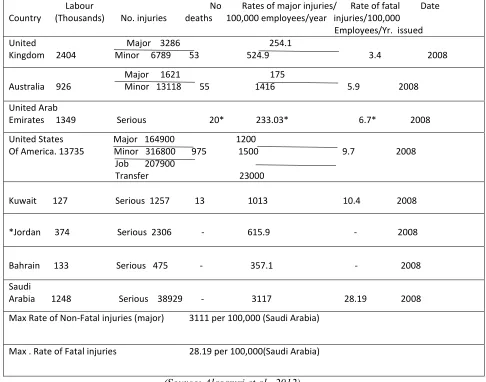
Table 2-1:Comparative study from 2008 ... 31
Table 4-1:Tabl: Key Health and Safety Factors (adapted from Ng et al., 2005)... 68
Table 4-2: Relation between H&S factors and literature (Ng et al., 2005) ... 69
Table 5-1:Assumptions of research philosophy (Sexton, 2003) ... 88
Table 5-2: Comparison of nomothetic (realism) and ideographic (idealism) methodologies . ... 89
Table 5-3:Contrasting implications of positivism and social constructionism. ... 90
Table 5-4:Differences between quantitative and qualitative research ... 94
Table 5-5: Strengths and weaknesses of quantitative and qualitative research. ... 95
Table 5-6: Reasons for using mixed method design ... 97
Table 5-7: Interviewee information ... 103
Table 5-8: Sample size of questionnaires ... 110
Table 5-9: Distinctions between quantitative and qualitative analysis ... 111
Table 6-1: Factor analysis... 129
Table 6-2: Impact of investment in safety programmes ... 133
Table 6-3: Size of organisation and factors considered responsible for H&S ... 148
Table 6-4: Size of organisation and H&S practices ... 149
Table 6-5: Size of organisation and perceived barriers to implementation of BIM ... 150
Table 6-6: Nature of business by H&S practices ... 152
Table 6-7: Barriers to implementation of BIM by nature of business ... 154
Table 6-8: Barriers to implementation of BIM by nature of business ... 155
Table 6-9: Total variance explained ... 156
Table 6-10: Component matrix ... 157
Table 6-11: Coefficients ... 158
Table 6-12: Coefficientsa ... 160
Table 6-13: Factor analysis ... 161
Table 6-14: Participant information ... 167
Table 7-1: SSIM ... 200
Table 7-2: Initial RM ... 202
Table 7-3: Partition of RM: interaction 1 ... 203
Table 7-4: Partition of RM: interaction 2 ... 204
Table 7-5: Partition of RM: interaction 3 ... 204
Table 7-6: Partition of RM: interaction 4 ... 205
Table 7-7: Partition of RM: interaction 5 ... 205
Table 7-8: Partition of RM: interaction 6 ... 206
Table 7-9: Partition of RM: interaction 7 ... 206
Table 7-10: Partition of RM: interaction 8 ... 206
Table 7-11: Partition of RM: interaction 9 ... 207
Table 7-12: Partition of RM: interaction 10 ... 207
Table 7-13: Partition of RM: interaction 11 ... 207
Table 7-14: Partition of RM: interaction 12 ... 207
Table 7-15: Driving power and dependent power for elements ... 212
List of Figures
Figure 1-1:KSA map ... 2Figure 1-2:Oil production as a percentage of world total as of 2009 (Euromonitor International from BP Statistical Review of World Energy) ... 3
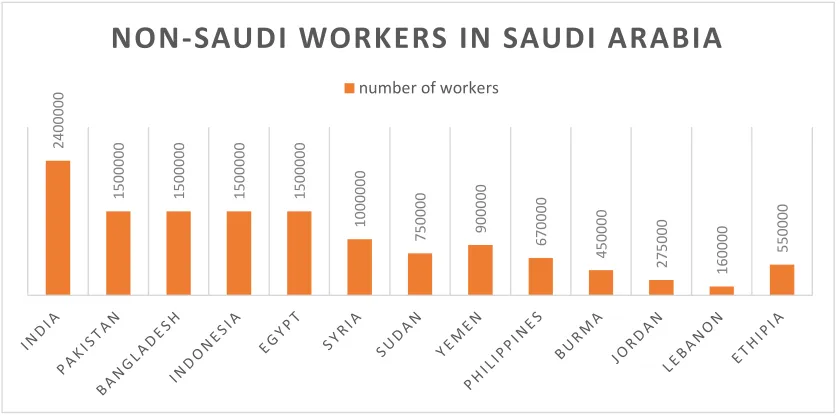
Figure 2-1: Non-Saudi workers in KSA ... 17
List of Figures
X
Figure 2-3: Worker injuries in construction, trade and manufacturing in KSA ... 22
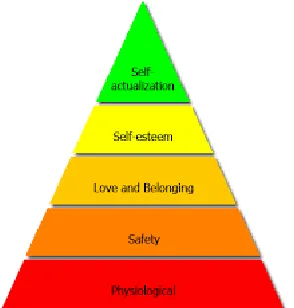
Figure 2-4:Bandura’s theory (1986) ... 32
Figure 3-1: On-site information management tools ... 44
Figure 3-2: Use and desired use of smart phone features among all mobile users... 45
Figure 3-3: Capital expenditure across a selection of industries ... 46
Figure 3-4: Mobile-enabled products and services in the developing world ... 47
Figure 3-5: BIM life cycle ... 49
Figure 3-6: Benefits of BIM ... 52
Figure 3-7: BIM showing all utilities ... 56
Figure 3-8: Hennesy Centre safety and site logistics planning ... 62
Figure 3-9: Visualisation of hazard identification using worker avatar ... 63
Figure 4-1: Organisation level H&S framework ... 67
Figure 4-2: Project level H&S framework ... 68
Figure 4-3: BIM and H&S in the Construction Industry ... 78
Figure 5-1:Research Process Onion ... 86
Figure 5-2: Research philosophy ... 91
Figure 5-3: Research choices ... 92
Figure 5-4: Questionnaire sections ... 104
Figure 5-5: Number of responses from different approaches ... 113
Figure 5-6: Response rate curve ... 114
Figure 5-7: Responses from different groups ... 114
Figure 6-1: Awareness of KSA H&S policies... 121
Figure 6-2: Size of construction companies ... 121
Figure 6-3: Nature of business ... 122
Figure 6-4: Kind of project ... 123
Figure 6-5: Years of experience ... 123
Figure 6-6: Experience of a H&S accident ... 123
Figure 6-7: Frequency of H&S safety issues ... 124
Figure 6-8: Common H&S hazards ... 125
Figure 6-9: Use of H&S ... 126
Figure 6-10: Current H&S practices ... 127
Figure 6-11: Provide H&S training ... 130
Figure 6-12: Factors considered responsible for H&S issues ... 131
Figure 6-13: Safety training – most effective method ... 132
Figure 6-14: Organisations preparing formal risk assessment ... 134
Figure 6-15: Organisations using BIM ... 134
Figure 6-16: Use of BIM technology among AEC ... 135
Figure 6-17: Current understanding and knowledge of BIM ... 136
Figure 6-18: Familiarity with BIM brands ... 136
Figure 6-19: Do you consider BIM an important tool for site induction? ... 137
Figure 6-20: Integration of BIM into building regulation to the management of H&S ... 138
Figure 6-21: Benefits of implementation of BIM in management of H&S ... 138
Figure 6-22: Barriers to BIM implementation in management of H&S ... 139
Figure 6-23: Size of organisation by nature of business ... 140
Figure 6-24: Sector of work by size of organisation ... 141
Figure 6-25: Years of experience by nature of business ... 141
Figure 6-26: Frequency of H&S issues by nature of business ... 142
Figure 6-27: Use of BIM by nature of business ... 143
Figure 6-28: Understanding of BIM by size of organisation ... 143
Figure 6-29:Nature of business by frequency of H&S issues ... 153
Figure 6-30: Factor analysis screen plot ... 157
Figure 6-31:Relationship between qualitative themes ... 181
Figure 7-1:H&S framework ... 208
Acronyms and Abbreviations
XII
Acronyms and Abbreviations
2D Two Dimensional
3D Three Dimensional
4D Four Dimensional
BCIM Building Construction Information Model
BIM Building Information Modelling
CAD Computer-aided Design
DBB Design-bid-build model
ECTP European Construction Technology Platform
GCC Corporation Council for the Arab States of the Gulf
GOSI General Organisation for Social Insurance in Saudi Arabia H&S Health and Safety
ICT Information and Communication Technology
ILO International Labour Organisation
ISM Interpretive Structural Modelling
KPI Key Performance Indicators
KSA Kingdom of Saudi Arabia
OOMT Objective oriented Modelling Technology
OPEC Organisation of the Petroleum Exporting Countries OSHA Occupational Safety and Health Administration
PPE Personal Protective Equipment
RFID Radio Frequency Identification
RQ1 Research Question 1
1
Chapter 1.
Introduction
1.1 Introduction
This chapter provides a discussion of the research gap relating to the context of health and safety (H&S) barriers in the public sector construction industry in the Kingdom of Saudi Arabia (KSA), as well as an analysis of related variables and considerations. A detailed literature review is introduced to link all the factors at play in a complex and perhaps interdependent series of problems and issues that may be discovered and explored in the construction industry in KSA. A background investigation is used to identify gaps in the literature, from which the research design is developed and presented, including the aims, objectives, research questions, data collection and analysis methodologies. The thesis structure is then presented.
1.2 Research Background
The geographic focus of this study is KSA, which is the second largest Arab country (after
Algeria) and the largest in the Arabian Peninsula, with an area of 2,150,000 km2, about
one-quarter the size of the USA (World Factbook, 2016; see Figure 1-1). Originally part of the Ottoman Empire, KSA has eastern boundaries on the Arabian Gulf and western boundaries on the Red Sea coast. To the north it is bordered by Iraq, Jordan and Kuwait and to the south by Yemen, Oman and the United Arab Emirates. Qatar and Bahrain border the country to the east. Of the country’s 28.83 million residents, 8 million are migrant workers, many of whom are from the developed world and are managers of global companies, but the majority are labourers from developing countries, particularly India and Pakistan. The KSA capital, Riyadh, lies on the central plateau and its second largest city is Jeddah, located on the Red Sea coast. It is primarily and geologically a desert environment, with three major deserts connected to the Sahara. The Rub’al Khali Desert—which translates as “the empty quarter” – is the largest continuous body of sand in the world, occupying the majority of the southeast of the country (World Factbook, 2016).
Introduction
2
Figure 1-1:KSA map
3
Figure 1-2:Oil production as a percentage of world total as of 2009 (Euromonitor International from BP Statistical Review of World Energy)
1.3 Key H&S Challenges in KSA Construction Industry
The construction industry in KSA is plagued by safety related accidents, ranging from minor trauma to major injuries and death (Alhaadir & Panuwatwanich, 2011). As of 2011, 3.5 million individuals were employed in the private sector construction workforce, accounting for 45.1% of the total construction workforce (Saudi Arabian Monetary Agency, 2013); this indicates that about 55% of KSA construction workforce are employed in the public sector. However, there is a lack of regulatory measures taken by government agencies to ensure construction safety in KSA (Alhaadir & Panuwatwanich, 2011). Accidents could have been prevented merely by implementing and following common safety policies and procedures. This lack of regulation, coupled with poor safety related training, leads to a high number of accidents (Alhaadir & Panuwatwanich, 2011).
Introduction
4
reduce the number of deaths and injuries occurring on construction sites. In KSA, 51% of all workplace accidents occur within the construction industry, a significant percentage for a single industry (Hamalainen & Saarela, 2006). The exact number of construction related injuries is difficult to ascertain for KSA, in that many injuries are not reported (Hamalainen & Saarela, 2006). This is often a consequence of poor enforcement and lack of regulations, as referenced above.
An examination of the literature indicates a prevalence of similar adverse H&S trends in construction industries across the world (e.g. Lingard & Rowlinson, 2005). According to the International Labour Organisation (ILO) statistics, an estimated 25%-40% of deaths in international occupational environments occur in the construction sector (ILO, 2005). Arndt et al. (2009) argue that in recent years, even though working conditions have been enhanced in a number of developed countries, some operations are still linked to a high risk of physical harm because of the physical tasks associated with the sector, such as lifting and carrying of heavy items and uncomfortable work positions, as well as the environment in which construction industry work is carried out; these include noisy conditions, vibration, dusty environments and weather impacts. Thus, the combination of physical labour and the hazardous environment in which it is performed likely contributes to workers’ deteriorating health and lack of safety. Hence, It is clear that the construction industry in general could be described as hazardous.
There are established international guidelines, representing consensus on H&S in construction, which include a common set of regulations, requirements and other considerations in the area of H&S. Many international human rights documents also address H&S. For instance, ILO identifies the most basic but necessary guidance to all nations in regard to H&S in the construction sector (ILO, 1992):
5
Regulation 2.1.2: The national laws and regulations adopted in pursuance of paragraph 2.1.1 above should provide for their practical application through technical standards or codes of practice, or by other appropriate methods consistent with national conditions and practices.
Regulation 2.1.3: In giving effect to paragraphs 2.1.1 and 2.1.2 above, each competent authority should have due regard to the relevant standards adopted by recognised international organisations in the field of standardisation (p. 5).
The essential components of H&S provisions on construction sites are, therefore, summarised as being guided by: 1) regulation in an awareness of hazard; 2) having a code of practice or technical standards established by law; and 3) provisions that are internationally applicable and adopted. The most important issue here is that they should be standardised within and across countries. All H&S practices throughout the world should be the result of international consensus as to exactly what standards should be adopted.
In the UK, H&S principles are enforced by the Health and Safety Executive (HSE), and its guiding principle for regulation is that those who create hazards are best placed to control them (HSE, 2013). This guidance emphasises a very simple understanding that risk management should be internally controlled by those aware of the risks a process creates and that if self-management were conducted responsibly through the industry, there would be no need for external intervention. It also contains the important factor that there should be a degree of trust towards the leaders of enterprises. In the USA, attention has recently been directed, as it has in many countries, to the establishment of a safety climate or a safety culture. This is, above all, built on the issues of communication throughout the industry, emphasising that documentation and information should be disseminated continually through signage and technology, as prescribed by internal H&S policies.
Introduction
6
al., 2007). Safety culture – “shared beliefs, practices and attitudes that exist at an establishment” (Department of Labor, 2016) – is above all a training culture, but training should have rewards for those who learn best and operationalise what they have learned. Finally, safety culture emphasises that safety is an omnipresent concern held by all actors and in all departments. Zhang et al. (2002) summarise the above in their definition of ‘safety culture’:
The enduring value and priority placed on worker and public safety by everyone in every group at every level of an organisation. It refers to the extent to which individuals and groups will commit to personal responsibility for safety; act to preserve, enhance and communicate safety concerns; strive to actively learn, adapt and modify (both individual and organisational) behaviour based on lessons learned from mistakes; and be rewarded in a manner consistent with these values. (Zhang et al. 2002, p. 3).
According to the USA Department of Labor (2016), there are sixteen attributes of building a strong safety culture to promote H&S in the workplace: 1) obtaining the buy-in of top management; 2) promoting continuous buy-in; 3) building trust; 4) conducting self-assessments using benchmarks; 5) providing initial training; 6) establishing a safety steering committee; 7) developing site-specific safety visions; 8) aligning the organisation to the safety vision; 9) defining and assigning specific roles; 10) developing an accountability system; 11) develop a safety measures system; 12) developing policies for rewards and recognition; 13) conducting awareness training, including a kick-off; 14) implementing process change, 15) continuously measuring, communicating and celebrating successes; and 16) providing on-going compliance support. These broad guidelines are suitable across all industries and countries, but given the high rate of injuries in the construction sector, are particularly needed to promote H&S in construction.
7
multilinguistic migrant workers with a low socioeconomic and educational level might not understand “the extent to which individuals and groups will commit to personal responsibility for safety”. In this case, along with other Arabian Gulf countries, the employment of these labourers, often uneducated and from poor rural communities in South Asia, working on temporary worksites might pose a challenge to the theory that within a company or an industry all employees can cooperatively create a safety culture in the construction industry. Safety considerations may be more of a priority for native employees in a more developed country, as these workers have a greater awareness of their contribution to the process, seek and can be offered promotion in a stable location, and are able to take up offers of training and welcome communicative approaches.
1.4 Research Rationale
The extant literature presents four issues relating to H&S in the construction industry in KSA: 1) the need to develop a performance measurement approach suited to the Saudi environment; 2) the need to understand better the perception of Saudi contractors; 3) the need for investigation into the potential of advanced information communication technology (ICT) in improving construction safety practices within KSA; and 4) the impact of advanced Building Information Modelling (BIM) tools to enhance construction H&S in the Saudi context needing further investigation. These four components are considered integral to improvement of H&S factors in the Saudi construction industry and, as so, are used to outline the research problem presented herein.
1.5 Research Questions
This research study is being undertaken to answer the following fundamental research questions relating to the overarching research problem of assessing the contextual phenomenon of H&S practices, including barriers to implementation, in KSA:
What are the best practices in terms of H&S management in a broader context?
What are the current practices in H&S in KSA construction sector? How do these
Introduction
8
What are the existing challenges in construction H&S performance management,
according to public sector construction contractors in KSA?
How is BIM currently used? How can BIM enhance the continuous improvement of
H&S on construction sites?
What are the key challenges in terms of BIM adoption for H&S within KSA context?
Using these research questions to develop the research design has provided the guide necessary to evaluate the safety concerns within the Saudi construction industry and allow for policy recommendations for the industry in terms of lowering H&S risks associated with it.
1.6 Research Aims and Objectives
The aim of this research is to look to enhance H&S management in Saudi public sector construction projects by exploring integrated approaches to project design and delivery using BIM-based technologies and processes. As such, the research objectives are:
To explore the existing practice of H&S in public sector construction projects in KSA
To identify the relationship between BIM and H&S in construction
To develop an integrated framework for using BIM in construction to address safety
issues in contractor organisations
To test, evaluate and validate the framework developed through expert feedback
To provide recommendations on best practice for H&S in public sector construction
projects in KSA
1.7 Outline Research Methodology
9
Data will be collected through questionnaires and interviews conducted with those working within the Saudi construction industry.
Table 1-1: Summary of key research objectives, research questions and outline methods
Objectives Research Questions
Liter ature re view S urve y Inte rvie w Inte rvie w (Va li da ti on )
To explore the existing practice of H&S
in the public sector construction projects within KSA.
What is best practice in terms of H&S
management?
What are the current practices in H&S in KSA
construction sector? How do these practices compare to the best practices established in RQ1?
What are the current practices in H&S in KSA
construction sites?
What are the existing challenges in construction
safety and health performance management, according to public sector construction contractors in KSA?
S P P
To identify the relationship between
BIM and H&S in construction.
How can BIM enhance the continuous
improvement of H&S on construction sites?
What are key challenges in terms of BIM
adoption for H&S within KSA context?
S P S
To develop the integrated framework for
using BIM in construction and address safety issues in contractor organisations.
To validate the framework for using
BIM in construction to address safety issues in contractor organisations.
To provide recommendations for best
practice in public sector construction projects within KSA
How benefits of construction safety framework
are perceived by Saudi contractors? P
11 1.8 Organisation of Thesis
Chapter 1 In this chapter, the research background, rationale, aims and objectives, and key research questions are provided, along with a brief outline of the research methodology. In addition, an overview of KSA is given with specific reference to its construction industry. A number of challenges encountered by construction workers within KSA are identified and the rationale behind this research is explained.
Chapter 2 introduces the literature that is relevant to the study, focusing on a review of H&S management practices within KSA.
Chapter 3 examines the literature relating to BIM in the construction industry in developed countries, as well as the relationship between BIM and H&S in construction. The chapter highlights the use of visualisation to promote identification of hazards in the design phase and eventual construction, including the tools used, to enhance H&S, particularly in KSA. The majority of the literature is examined in terms of the use of key performance indicators (KPI) and this concept are explored in greater depth within the literature review. Chapter 4 the finding from chapter 2&3.
Chapter 5 discuses aspects pertaining to the philosophy of methodology, and the paradigms and theoretical approaches considered for this study. Moreover, this chapter examines the methods of data collection and analysis employed to address the research questions; it also explains the rationale for choosing a mixed methods approach that collects both interview and survey questionnaire data. It explores sampling decisions, ethical considerations and an overview of how the methods are operationalised.
Chapter 5. Quantitative and Qualitative
Introduction
12
methodology, the two sets of analyses are considered collectively in addressing the research questions.
Chapter 7. Develop ISM Framework for KSA Construction Industry
Chapter 7 focuses on the development of a framework for enhancing H&S in the public construction sector in KSA. In this section, the rationale for framework development is examined with reference to the literature review and through results obtained from the questionnaire survey and interviews. Crucially, the study takes account of the contributions to this framework that could be made by BIM technology. The framework was built by using by ISM to support the evaluation of H&S measures in the construction industry.
The discussion of results creates the possibility of a framework built by ISM for construction projects to enhance the current H&S practices by means of a sustainable technology-driven system developed through industry consensus.
Chapter 8. Discussion, Conclusions and Recommendations
13 1.9 Summary
Literature Review of H&S Management Practices in KSA
14
Chapter 2.
Literature Review of H&S Management Practices in KSA
2.1 Introduction
This chapter discusses the strong economic position of KSA, which drives the construction industry, focusing on the current status of that industry and the issues that affect its projects. In this chapter, previous research is reviewed as it pertains to H&S in construction management in general and H&S in KSA in particular. Both positive and negative aspects of H&S within the construction industry are presented. In addition, this chapter presents a discussion of the importance of communication and personal behaviour on construction work sites, as these relate directly to an employee’s ability to remain safe and follow H&S regulations.
2.2 Search Strategy and Method
The main aim in carrying out the literature reviews is to gather information on the research topic. As will be mentioned in the references at the end of the dissertation, the principal sources are journal papers, seminar and conference articles, as well as archive material and governmental reports. The study begins with a detailed literature review. The nature and rationale of the Saudi Arabian construction industry is discussed, focusing firstly on its nature, scope and composition, and regulation and bureaucracy, as well as the activities involved in the workplace worldwide. The specific and unique challenges posed in KSA are examined. After investigating the scope, meaning and adoption of H&S precautions and regulations by countries in the developed and developing world, the literature review moves on to discuss possible documented challenges to H&S matters in construction management practices within KSA. It is hoped that the research questions develop through a rigorous examination of the literature and that these can also inform methodology chosen for the study.
2.2.1 Research databases
15
discovered that the journals referenced in these databases were available through the university. There was also considerable crossover between many online resources.
The bibliographic software chosen was Mendeley. One reason for this choice is that it allows direct export from the resources that were saved in the Mendeley account. Data can be exported as “abstract plus references”, so that the abstract can be read easily through accessing the references. Another advantage of using bibliographic software such as this is that it saves considerable time and permits far more extensive searches. Using Mendeley enables “hand-searching” through certain journals, for providing that these exist in electronic form, the journal itself can be searched electronically. Further, in contrast to the traditional method of preparing a list of likely titles, then accessing the abstracts of some of them and finally choosing a collection of abstracts, which process requires a full text version, the first two stages in a traditional search are bypassed. These electronic data were supported by inter-library loans and books borrowed and bought.
2.3 KSA and its Construction Industry
KSA is among the fastest-developing Arabian countries in the Middle East. It is the world’s largest oil exporter; therefore, its economy is growing day by day and the country is developing every industry, especially construction, in order to house, educate and provide for its population. Since 1970, KSA has established and implemented both medium- and long-term development plans to foster economic and population growth (Al-Farsy, 1990). Its medium-term plans are segmented into five-year-plans, the ninth of which has recently ended (Al-Farsy, 1990). The long-term aim is to reduce the nation’s reliance on its oil revenues and to build infrastructures that will diversify trade and provide options for economic, technological and educational enhancement. One major feature of current plans is the development of a high level of these programmes. As the population grows, due in part to immigration by foreign nationals who now
form 30% of the population (Alhaadir & Panuwatwanich, 2011), the government is focusing on
Literature Review of H&S Management Practices in KSA
16
non-oil economy. The Saudi government is committed to major spending on the public construction sector, with investments of up to $91.9 billion from 2012 to 2014. In addition, $16.5 billion has been spent to have the transport network in Mecca renewed and improved (GCC Powers of Construction, 2013).
2.3.1 Construction projects and their organisation in KSA
There are both public and private construction projects currently under tender or in the design or build phase. Public building projects account for over 60% of all building in the country
(Bubshait & Al‐Musaid, 1992). This study focuses on the public sector of the construction industry only. The country employs a design-bid-build model (DBB). Major projects can be designed by large, often multinational, design and engineering companies, then the drawings, specifications and quantity surveys are sent out to a number of contractors, usually in computer aided design (CAD) format which is two-dimensional (2D) or three-dimensional (3D). Contractors, if their classification allows it, bid for the work. Contractors are classified by the Ministry of Public Works and Housing into differently numbered groups based mainly on their financial capability. A classification of ‘1’ represents those allowed to undertake the largest projects that could be offered – any building contracts in excess of USD74.66M – but a grade-5 company is limited to projects no higher in allocation than USD1.86M. (Khalil & Al-Ghafly). The classification system also subdivides construction works into 12 categories, depending on the size of the project and its importance. The figures quoted above are for building construction but are different for all types of construction work. In KSA, regulations demand that the lowest bid is accepted and secures the contract (Shash & Abdul-Hadi, 1992). Then the project enters a construction phase, generally employing a variety of subcontractors. The bureaucratic issues surrounding the DBB process will, at this point, add another governmental ministry to the complexities involving building projects in KSA. The Ministry of Labour is the next route the contractors must navigate through.
17
[image:30.612.103.523.127.337.2]from rural communities suffering serious socio-economic deprivation. They are usually educated to a basic level only and many are barely literate.
Figure 2-1: Non-Saudi workers in KSA (Source: de Bel-Air, 2013)
They are employed on short-term contracts of three years or less and leave families behind in their own countries to take on this work that supports them. A recent review study by Salminen (2011) finds that immigrant workers, in a multi-country study, suffer disproportionately more injuries than native workers for the first five years of their tenure. After that, their accident rate drops and can be even more positive than expected and better in some cases than for native workers. One of the findings of that study was that immigrant workers appeared to be placed in the riskiest jobs (Lee & Wrench, 1980).
The Ministry of Labour has an additional responsibility that runs alongside the issue of visas to migrant workers. It is the issue of “Saudisation”. This policy (named Nitaqat), to support unemployed Saudi nationals to find employment, is said to place certain additional, quota-based demands on the private sector both of construction and other industries (Hertog, 2014). KSA has a particular unemployment problem with young people. The under 25s now compose over
50% of the population (de Bel-Air, 2013). If a work culture is embraced by these young adults
and suitable employment becomes available, that will place KSA in a demographically positive position in comparison with developed countries and China, which is experiencing problems of
2400000
1500000 1500000 1500000 1500000
1000000
750000 900000 670000
450000
275000 160000 550000
NON-SAUDI WORKERS IN SAUDI ARABIA
Literature Review of H&S Management Practices in KSA
18
the opposite kind, namely, that the elderly and retired, those who contribute least to the national economy, are becoming the highest proportion of the population.
2.4 Construction Challenges in both Developed and Developing Countries
The construction industry, with this complexity of demands and the number of interwoven responsibilities created through various ministries and contractors, may face challenges. These include the problems created by the bureaucracy, outlined above, required to navigate through the construction process. There are two interdependent results of this confusion: delays and accidents. Delays often lead to unsafe and hurried decision-making and behaviours as constructors try to make up for lost time. The carelessness resulting from this haste, in turn, can lead to accidents, which then create further delay. Sidawi (2012) highlights that the Saudi construction industry is liable to face many shortcomings, including mistakes in construction work, changes to the project’s scope and specifications, cost overruns and delays. Commonly cited challenges include factors such as ineffective planning and control, poor site management, labour productivity, communication and coordination problems, and material procurement. In all industries that might be regarded as dangerous, statistics reveal that the majority of workplace deaths and accidents are in the construction industry, well above what might be expected from the percentage of construction workers in the workforce. Although many of these problems may be highlighted in KSA, they are counted among challenges to the viability of the construction industry worldwide. It is believed to be one of the most hazardous globally, despite a regulatory climate in many developed countries.
2.4.1 Delays and organisational challenges
A detailed analysis of causes of delays in Saudi public sector construction projects was undertaken by Alkharashi and Skitmore (2009). They drew up the top five reasons for owner related causes of delays, which included those in revising and approving design documents by the owner and the owner’s poor communication with the construction parties and government
authorities. In addition, there may be slow decision-making and delays in the progress of
19
In addition, as revealed in the questionnaires employed by many of the researchers in the Saudi construction industry field, there appears to be a broad consensus of the importance of active communication and management to maintain construction processes. Nevertheless, it has also
been highlighted in the literature (Salleh et al., 2012). That issues resulting from the disjointed
nature of construction processes, poor data exchange and interoperability, as well as overdependence on documents and the written word to guide the workforce. Changes to the project’s scope and specifications during the construction itself are common but counter-productive. Also, cost overruns were emergent factors in the results obtained. All factors constitute challenges to working activities that may lead to delays in project completion.
Worldwide, the construction industry faces similar challenges, and governments are the biggest clients of the construction industry, as they sponsor huge infrastructure projects, particularly in developing countries. As identified by Jaselskis et al. (1996), there are several characteristics of the construction industry in developing countries, including long procedural requirements, evident in the Saudi Arabian context, interruptions to the work and a shortage of materials. In addition, Thomas (2002) underlines specific issues encountered by construction industries in emerging economies, which include failures to use technology, ineffective methods, complex cultural settings and the absence of regulatory systems. Further, as highlighted in several studies that pinpointed failed construction projects and delays, are performance related issues and failings (e.g. Government Construction Strategy, 2011; Ugwa & Haupt, 2007; Navon, 2005; Karim & Marosszeky, 1999).
One common cause of project delay identified by all project stakeholders is “change orders”. Also, Alsuliman et al. (2012) observe that variation of order management is not fully understood nor well applied in the Saudi construction industry. Other factors contributing to project delays, they claim, include delays in the progress of payments by the owner; and on the part of the
contractor, ineffective planning and scheduling of the project, poor site management and
supervision, shortage of labourers and difficulties in financing the project. Also, all three parties
agree that the following factors are the least important cause of delays: “changes in government
regulations and laws, traffic control and restrictions at job site, effect of social and cultural
Literature Review of H&S Management Practices in KSA
20
Al-Khahil and Al-Ghafly (1999) conducted a survey in the Saudi Arabian construction industry with questionnaires about delays in building projects sent to owners, engineers and contractors. The frequency of delays ranged from 16% in grade-2 companies surveyed to 56% in classification grade 4. The authors conclude that factors causing delay were principally cash flow problems and difficulties in obtaining work permits, but an important part of the discussion
of results was: “… the government practice of assigning contracts to the lowest bidder without
regards to qualification. The lowest bidder may not be able to work with the increased project complexity, or the increased demand on management expertise for large public utility projects” (Al-Khahil and Al-Ghafly 1999, P 102).
A similar conclusion on a major element in the KSA’s record of construction delays is reflected in the study undertaken by Albogamy et al. (2012), which concludes that “low performance of the lowest bidder contractor in the KSA government tendering system” was the most important factor in construction delays. Kartam et al. (1998) point to similar problems in Kuwait that concentrated, above all, on the safety of construction sites. Administration and organisation were poor, construction companies were often too small and, being subject to competitive tendering, had limited profit margins and, therefore, by-passed some responsibilities that might impact on cost effectiveness. This report reflects many of the concerns that occupy researchers in KSA.
This conclusion is important in developing aspects of the research questions in the current study, as it shows up a major problem in the DBB model that is widely used in the construction industry worldwide. Interestingly, too, this study cited “delay in preparation of shop drawings” and “design changes by the owner” as other delaying factors (Albogamy et al., 2012). The issues of design changes and “preparation of shop drawings” are discussed later in this chapter, which now moves to examining the challenges provided by the environment of construction sites.
2.4.2 Environment, hazards and injuries
21
construction sites. Physical hazards are almost unavoidable when it comes to working in fields such as construction and mining. However, with the passing of time, people have developed different methods to prevent as well as manage these hazards. A major reason for physical hazards is the employment of younger workers and the unskilled because often they cannot handle critical situations or lift heavy materials safely. The major causes of accidents are related to the unique nature of the industry, human behaviour, difficult work-site conditions and poor safety management (Jannadi et al., 2002).
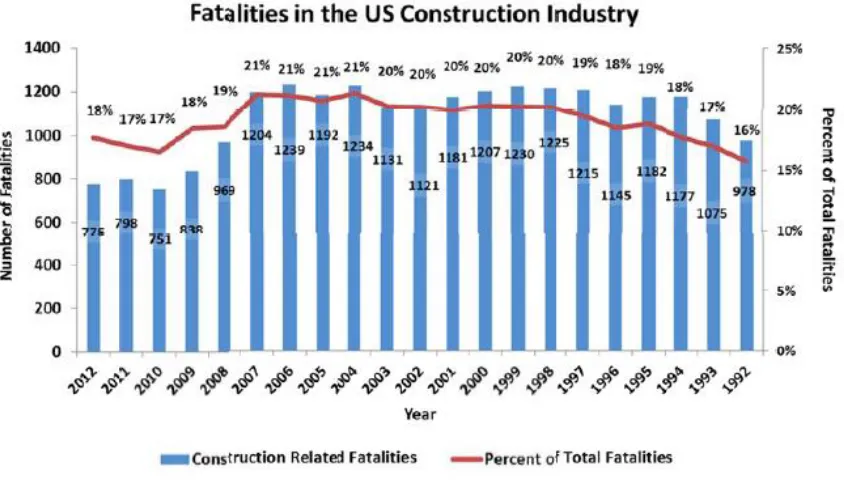
Even in developed countries, deaths and accidents occur in the construction industry. Davies and Tomasin (1996) state that there are many reasons why the rate of accidents in the construction industry is higher than expected, compared to accidents and injuries in other manufacturing industries. According to Zhang et al. (2013), the last two decades have seen more than 26,000 employees in the USA lose their lives in construction projects, which is equivalent to five people per day. There was an average of 1,089 deaths annually in the American construction industry between 1992 and 2012. During the same time period, the construction industry suffered an average of approximately 19% of all workplace related deaths, as shown in Figure 2-2 (Bureau of Labor Statistics, n.d.). These statistics make construction one of the most dangerous professions in the USA and it is consistently in the top five most dangerous professions in terms of deaths per capita. Moreover, 120 people died on construction sites in the UK, one of the safest and best-regulated construction industries in the world, while about 3,000
site workers experienced severe accidents on construction sites (Barnard, 1995).
Literature Review of H&S Management Practices in KSA
22
Figure 2-2:Accident data for the US construction industry (Source: Bureau of Labor Statistics, n.d.)
[image:35.612.87.509.91.335.2]In developing countries such as Saudi Arabia, as recorded by the General Organization for Social Insurance (2010, 2011), worker injuries in the construction sector is the highest amongst the compared sectors, topping at almost 60% (GOSI,2010-2011)(see Figure 2-3).
Figure 2-3: Worker injuries in construction, trade and manufacturing in KSA (Source: GOSI, 2011)
36.367
19.385
11.921
Number of Injuries
23
Several studies have been conducted over decades to identify further the different general causes of accidents on construction sites. While some studies share similar views on certain causes of accidents, some views differ completely. According to Wolf and Brick (1996), accidents occur due to poor project design, poor choice of materials, unsuitable equipment, poorly organised workplace, poor coordination of workers, simultaneous activities, poor training, non-observance of regulations and non-compliance with safety regulations. Similarly, Sawacha et al. (1999) suggest that the poor safety performance of the construction industry is due to a lack of knowledge, poor training, lack of supervision, lack of means to carry out the task safely, errors of judgment, carelessness, lack of concern and recklessness. They also cite the nature of the construction industry, the lack of a controlled working environment, the complexity and diversity of the organisations, unsafe behaviour, poor safety culture and poor management action. Nevertheless, the study by Bashir (2013) views the low level of education and lack of adequate safety training of workers as the main contributory factors. Ndekugri and Corbett (2004) further identify the fragmented nature of the industry as one of the causes of poor safety performance.
Literature Review of H&S Management Practices in KSA
24
organisation and must feel safe at work, if the organisation is to be successful (Lin & Mills, 2001).
Globally, hazards include a high number of falls from a height that cause injuries and sometimes deaths. In Kuwait, construction is the most hazardous industry, with accidents accounting for 48%, 38% and 34% of all disabling injuries and 62%, 38% and 42% of all deaths in 1994, 1995 and 1996, respectively, with falling from a height the main injury (Kartam & Bouz, 1998). A study of the admission rates for falls in a hospital in Benin, Nigeria, included the statement that “falls at construction sites and off the top of a moving lorry recorded in this study were not unconnected with alcohol consumption”. The consumption of alcohol on construction sites is allowed in Benin. In a study in that country, falls on construction sites from the top of a building accounted for 9.5% of hospital admissions in a 12-month period in 2007-2008 (Osifo et al., 2010). Falls are the cause of many serious injuries and deaths. More than half of falls in construction are related to environmental factors involving, to some extent, the working surface or facility layout conditions. Inadequate or inappropriate use of fall protection personal protective equipment (PPE) and removed or inoperative safety equipment contributed to more than 30% of falls (Huang & Hinze, 2003).
25
communications highlighted; and in the same vein, Donaghy (2009) notes missing or incorrect signs and attributes blame for this to a lack of knowledge.
In a survey of the safety issues on construction sites in KSA, Jannadi and Assaf (1998) examine practices at 14 randomly selected sites of projects undertaken by the Saudi Arabian Oil Company (Saudi Aramco). Results show that larger construction sites pay more attention than small sites to safety issues. Of the small sites surveyed, none had any means of fire protection, while on large sites this was also the most neglected area. Smaller sites also showed problems with health and welfare, and with safety administration. Al-Haadir and Panuwatwanich (2011) quote Berger’s (2008) results that 25% of construction sites surveyed provided no PPE. In a similar study to that conducted by Janaddi and Assaf (1998), Kumar and Kumar (2012) report on construction sites in Sri Lanka:
Usage of personal protective equipment is very minimal.Helmets are not familiar in most
of the sites. Awareness among the workers regarding the usage of PPE is lacking. The contractor / employer is not providing the PPE to the labourers at their site. In some sites, even though workers are provided with PPE, workers are not using it properly. For example, workers are using their helmets for storing and carrying oil (p. 30).
Literature Review of H&S Management Practices in KSA
26
This review now touches on the process and performance of H&S in the construction sector, including an overview of H&S management and recognition of other current management practices that may have an impact on and led to the establishment of H&S management in the construction industry. This section concludes by emphasising the issues and gaps in the current body of research, which has been utilised to explain and shape the course of the study.
2.4.3 Regulation of H&S
H&S in construction has been described by a number of researchers as the carrying out of work duties and activities following H&S guidelines which are aimed to minimise or remove hazards in the workplace. For example, Anton (1989) states that the adoption of H&S practices is decreasing work related injuries in the workplace by regulating working conditions. In addition, safety culture can impinge on professional behaviour in terms of increasing or decreasing the hazards faced by businesses. Decision-makers in the industry have favoured H&S programmes, since they protect workers and can be cost effective in terms of money and time. In the last ten years, a key aim of construction industry management has been to minimise the number of people injured, loss of life and sickness as a result of risks in that sector (Choudhry et al., 2007). As such, H&S is now one of the most important subjects for scholars, as its understandings can be responsible for avoiding serious threats to health in the workplace.
In developed countries, there is typically a governmental organisation that oversees H&S in the workplace. This organisation creates the safety standards for all industries, not only the construction industry. The latter, unsurprisingly, has more safety standards than any other industry. This organisation, no matter in which country it is located, has responsibility for ensuring that these safety regulations are met. This is effected through on-site inspections that are unannounced and through a system of leveraging fines and possible site shut-down if the
regulations are being violated in an extremely dangerous manner (Kohler & Hassler, 2002).
27
In the USA, the Occupational Safety and Health Administration (OSHA) oversees workplace safety in the construction field. This organisation was established in 1970 and provides training and training documentation, as well as instituting complete policies and regulations that all construction companies and their employees are expected to follow. OSHA also conducts unannounced inspections of construction sites to ensure all regulations are being followed. The majority of these regulations are focused on safety. Companies not following these regulations can receive fines which are sometimes quite large. They even run the risk of having their entire construction site shut down as presenting an unsafe environment.
The UK established construction safety and health regulations under the Health and Safety at Work Act, 1974. One of the most important aspects of this act is that when the regulations are not followed and there is a serious accident, it is considered a criminal offence. There are different levels, but the fines imposed can be unlimited. All this is enforced by HSE, which was set up in 1974 following the above act. A construction division was established in April 2002. While a company itself can be considered at fault and face the consequences, an individual, a director, a manager or another person found responsible can be held accountable for their actions (HSE, 2013). In construction, HSE is also responsible for training and site inspections. The UK H&S regulations have been modified a little in recent years to allow for an additional level of input from contractors. The regulations are currently more proactive and cooperative than they have been for many years.
H&S regulation, requirements and recommendations in these and other developed nations usually contain most of the following requirements within the remit of a H&S framework:
H&S guidelines issued through all industries
Training frameworks established, inspected and examined with designated trade
requirements
Practice codes established in agreement with professionals and workers in the industry
An awareness of hazard situations understood and communicated throughout the
workforce
Regular site inspections carried out though the industry
Literature Review of H&S Management Practices in KSA
28
Information and guidance provided by a central trade body
KPI agreed on, established and integrated into performance assessment
Regulation, where it applies, can be backed by legislative powers if necessary
Medical care and first aid supplied on site
Management-worker communication on all safety issues, including safety notices and
signage, safety warnings, safety meetings, safety equipment supplied, lines of communication established if emergencies should arise
Awareness by labourers of the layout and accessibility of the site
Site kept clear of all hazards
Training on the operation and maintenance of all machinery by those who might operate
it
H&S situation in developing countries
One of the major reasons behind the high number of incidents and accidents recorded, especially in the developing world, is a failure to apply stringent regulation of H&S standards. There is, it is claimed, an absence of H&S management in construction in some developing countries (Chaudhry et al., 2007). As referred to in previous sections, KSA has a confused and confusing range of ministerial responsibilities, with little evidence that approved H&S frameworks and recommendations are enforced on a regular and consistent basis; and there may be a number of irregularities on H&S grounds, especially in the practice of applying any national guidelines to H&S regulation on construction sites, particularly in those managed by smaller construction firms (Jannadi & Assaf, 1998).
29
no matter if it is paying less, workers will remain in that that company. Internationally, every company is currently considering appointing H&S professionals in order to maintain the H&S of valued workers.
The construction industry is specifically different all over the world and standards are not uniform. It should be taken into account that the construction industry plays a vital role in the developing economy of a country. It provides the infrastructure – transport, homes and business premises – required for other sectors of the economy to flourish. According to Coble and Haupt (1999), the construction industry reflects the level of economic development within the country. That sector, like any other, has its own challenges and problems. However, in the case of the developing economies, problems are more serious due to the vulnerability of the economic and social environment (Ofori, 2000). The construction industry is also the major source of employment, as it can employ those with a wide variety of skills, from labour, to semi-skilled, to skilled and specialised workers. However, research and development in this particular area is very poor and the training provided to the employees for safety and client satisfaction is increasing the costs of the industry while reducing the profit margin of the contractor.
As identified by Jaselskis, and Ashley (1991), there are several negative characteristics of the construction industry in developing countries, including long procedural requirements, interruptions and shortage of materials, as has been noted in other sections of this review. In addition, Thomas (2002) underlines specific issues encountered specifically by construction industries in emerging economies, which include the failure to use technology, ineffective methods, conflicting cultural settings and the absence of regulatory systems. Also highlighted in several previous studies when pinpointing failed construction projects are performance related issues and failings (Government Construction Strategy, 2011; Ugwa & Haupt, 2007; Navon, 2005; Karim & Marosszeky, 1999). In the case of KSA, there are several construction developments that fail to deliver in terms of performance. Moreover, current performance assessment systems are either absent or ineffectual.
Literature Review of H&S Management Practices in KSA
30
due to the absence of H&S laws. According to ILO (1987), the main reasons for the poor safety record in the construction industry of developing countries is the high number of self-employed workers, the very short life span of construction sites, very high labour turnover and a very high number of the seasonal and migrant workers.
According to Kim et al. (2013), in construction sites in most developing countries there are no training programmes for staff and workers; therefore, no orientation for new staff or workers is conducted, hazards are not pointed out and no safety meetings are held. Employees are left to learn from their own experience and the mistakes they make. This is very different from the situation in developed economies. The two main differences between the developing and the developed economies, as referenced in the previous section, are the developed nations’ strict laws, regulations and hazard awareness. Furthermore, in those countries, proper training and H&S equipment are provided to employees. There is a nominated H&S officer who provides training sessions to employees on how to be safe on site. However, in the case of developing countries, these laws are often ignored, with H&S practices used that are out of date, ineffective and based on conditions that prevailed while the country was still being colonised. Additionally, the regulatory authority is usually very weak in implementing rules effectively, and work hazards are either not perceived at all or to be less dangerous than they actually are (Larcher & Sohail, 1999; Hinze et al., 1999).
With its increasing economic progress, the Saudi construction industry has expanded enormously. It attracts millions of employees, not only from KSA but also from all corners of the globe. As highlighted by Haadir et al. (2011), despite its economic progress and financial growth, H&S in construction within KSA remains extremely poor, as referenced earlier. Table 2-1 presents the result of a comparative study indicating that Saudi injury rates are the highest amongst comparable countries.