HP.SW
IH
XP:
fitem»
European Institute for Transuranium Elements Paper presented at the 14th Meeting
lili :
of the Hot Laboratories Committeeif
H] I f " : This report is on sale at the addresses listed on cover page 4
ι 1
at the price of B.Fr. 50.—
mi
mim ÆliS
f' jfflfrU. ·*;·.!§
European Communities D.G. XIII C.I.D. 29, rue Aldringen L u x e m b o u r g April 1973
This document was reproduced on the basis of the best available rnnv.
EUR 4952 e
H A N D L I N G E X P E R I E N C E W I T H T R A N S P L U T O N I U M E L E M E N T S b y K. B U I J S and W. M U L L E R
Commission of t h e European Communities
Joint Nuclear Research Centre Karlsruhe Establishment (Germany) European I n s t i t u t e for Transuranium Elements
Luxembourg, April 1973 28 Pages 5 Figures B.Fr. 50.—
The h a n d ü n g of transplutonium elements of high specific activity is determined b y the decay properties of these nuclides; in general, criticality can be neglected. The most i m p o r t a n t transplutonium nuclides, especially those which can be used for practical applications, decay b y alpha particle emission or b y spon taneous fission. Alpha and neutron radiation are accompanied b y gamma and Xray emission.
Therefore, t h e handling and shielding requirements for transplutonium elements are different from those for plutonium or irradiated fuel. For nuclides with high specific αradioactivity, additional problems are caused by t h e interaction of alpha particles with m a t t e r : decay heat, radiolysis, corrosion or erosion, formation of neutrons b y (a, n) reactions.
EUR 4952 e
H A N D L I N G E X P E R I E N C E W I T H T R A N S P L U T O N I U M E L E M E N T S by K. B U I J S and W. M U L L E R
Commission of t h e European Communities
J o i n t Nuclear Research Centre Karlsruhe Establishment (Germany) European I n s t i t u t e for Transuranium Elements
Luxembourg, April 1973 28 Pages 5 Figures B.Fr. 50.—
The handling of transplutonium elements of high specific activity is determined by t h e decay properties of these nuclides; in general, criticality can be neglected. The most i m p o r t a n t transplutonium nuclides, especially those which can be used for practical applications, decay by alpha particle emission or b y spon taneous fission. Alpha and neutron radiation are accompanied b y gamma and Xray emission.
Some of the experience gained during the chemical processing of multigram quantities of Am-241, Am-243, Cm-242 and Cm-244 and the handling of a lmg Cf-252 source will be described.
E U R 4 9 5 2 e
COMMISSION OF THE EUROPEAN COMMUNITIES
HANDLING EXPERIENCE WITH TRANSPLUTONIUM
ELEMENTS
by
K. BUIJS and W. MULLER
1973
Joint Nuclear Research Centre Karlsruhe Establishment - Germany European Institute for Transuranium Elements
Paper presented at the 14th Meeting of the Hot Laboratories Committee
A B S T R A C T
The handling of transplutonium elements of high specific activity is determined by the decay properties of these nuclides; in general, criticality can be neglected. The most important transplutonium nuclides, especially those which can be used for practical applications, decay by alpha particle emission or by spon taneous fission. Alpha and neutron radiation are accompanied b y gamma and X-ray emission.
Therefore, the handling and shielding requirements for transplutonium elements are different from those for plutonium or irradiated fuel. For nuclides with high specific α-radioactivity, additional problems are caused b y the interaction of alpha particles with matter : decay heat, radiolysis, corrosion or erosion, formation of neutrons by (a, n) reactions.
Some of the experience gained during the chemical processing of multigram quantities of Am-241, Am-243, Cm-242 and Cm-244 and the handling of a lmg Cf-252 source will be described.
KEYWORDS
3
-C o n t e n t s
1. INTRODUCTION 5
2. NUCLEAR PROPERTIES OP TRANSPLUTONIUM ELEMENTS 5 2.1 Radioactive decay
2.2 Criticality
2.3 Shielding problems 2.4 Additional problems
3. EXAMPLES POR THE HANDLING OP THE TRANSPLUTONIUM NUCLIDES 6
3.1 Purification of 24"1Am 7
241
3.1.1 Properties of Am
3.1.2 Aim of the operation, description of the equipment
3.1.3 Handling problems and observations 241
3o2 Processing of irradiated Am 8 241
3.2.1 Properties of irradiated Am targets 3.2.2 Aim and description of the operation 3.2.3 Handling problems and observations
3.3 Separation of 243Am and 244Cm on a multigram scale 11 3o3«1 Properties of 2 4 5Am and 2 4 4Om
3.3.2 Aim of the operation, description of the equipment
3.3·3 Handling problems and observations
3.4 Demonstration of a Cf-source 13 3.4.1 Properties of 2 5 2Cf
3.4.2 Aim of the operation, description of the equipment
3.4.3 Problems and observations
15 4, PLANS OP A SHIELDED BOX LINE POR THE PREPARATION,
HAND-LING AND INVESTIGATION OP CURIUM SAMPLES ON THE GRAM SCALE
4.1 Aim of the operation 15 4.2 Experimental basis of the concept 15
4.3 Plans 15 5. SUMMARY 16 6. TABLES and LEGENDS TO FIGURES
7. REFERENCES
5
-1. INTRODUCTION
Transplutonium elements are produced in increasing amounts; moreover, they accumulate in the waste of ir-radiated nuclear fuel. These elements are the objects of fundamental studies, they serve as starting material for the synthesis of higher transuranium elements; but above all, there is a potential for the practical application of some of the transplutonium nuclides.
Transplutonium nuclides to be handled in quantity in re-search facilities or processing plants are:
2 4 1Am, 2^ A m , 2 4 2Cm, 2^ C m and 2 5 2Cf.
The problems associated with their handling depend less on the chemical or physical properties of the elements or compounds than on the nuclear properties of their atoms; more general, on the instability of their nuclei against neu-tron-induced fission and on their radioactivity.
2. NUCLEAR PROPERTIES OP TRANSPLUTONIUM ELEMENTS 2.1 Radioactive decay
Transplutonium nuclei decay predominantly by alpha-decay or spontaneous fission (Table 1) /~1_7» /~2_7·
2.2 Criticality
The most fissile transplutonium nuclides are hardly available in quantities attaining their minimum critical mas-ses (Table 2) /~3_7. Even for the more abundant nuclides (which are fissionable rather than fissile), the production up to now does not yet exceed the critical masses (Table 3) / 4_7· Eor nuclides with an even number of neutrons ( Am,
- 6
the amounts of transplutonium nuclides available. 2.3 Shielding problems
Handling problems are determined by alpha and neu-tron radiation which are accompanied by gamma and X-ray
emission·
The shielding requirements for transplutonium nu-clides are intermediate between those for plutonium and those for irradiated nuclear fuel: the transplutonics have, in general, higher specific alpha and neutron activities than plutonium; the average energy of their gamma radiation is lower than in the case of irradiated fuel.
2.4 Additional problems
The high specific alpha radioactivity causes problems due to the interaction of alpha particles with matter. These problems include: decay heat, radiolysis of solutions, radi-ation damage of solids, increased chemical reactivity, form-ation of ozone in the presence of oxygen, erosion of container material by recoil of decaying nuclei. In addition,
neu-trons are generated in (OC ,n) reactions of light elements.
3. EXAMPLES FOR THE HANDLING OP TRANSPLUTONIUM NUCLIDES Examples of the experience gained at the Institute for Transuranium Elements involve
the handling of Ci and kCi amounts of Am, Am, Cm, and 2 4 4Cm,
252
the handling of a 1 mg Cf neutron source«
7
241 the purification of Am
241
the processing of irradiated Am targets the separation of Am and Cm, and
252
the application of a 1 mg Cf neutron source to activation analysis.
3.1 Purification of 4 Am
(Low energy gamma radiation; alpha radiolysis; attack of gloves).
3.1.1 Prop_erties_of_2^Am ¿~1_7
5.5 MeV alpha radiation, Τ , = 433 a Specific alpha activity: 3*4 Ci/g
Specific gamma activity (60 KeVJ: 2.6x10 photons/min.g 241
Halfvalue layers for Amgamma radiation: 0.13 mm of Pb, 0,8 mm of Fe, 3.5 cm of H20 .
3.1.2 Aim_of _the_op_erationr_descrÍ2t ion_of _£he_equip_ment
In order to obtain the starting material for the pre 241
paration of high purity metal and compounds, Am has been purified at the multigram level / ~ 5 _ / .
5g batches of AmOp (^15 Ci) were purified in stan dard glove boxes shielded by 2 mm Pb equivalent lead glass. Dissolver vessel and chromatography columns were shielded by PVCPbPVC sandwich layers (2 mm Pb equivalent).
At first, the purification procedure was based on ion exchange in hydrochloric acid and thiocyanate medium« Normal neoprene gloves without lead were used.
The procedure was later replaced by a combination of extraction chromatography in nitrate medium and precipitation of K,Am0p(C0,)p from KpCO, solution after oxidation of the americium with ozone (see section 33.2) /~6_7.■ Here, hypalon
Dose rates were surveyed by body monitors, and radiation doses were determined with finger luminescence dosimeters and film badges.
3.1.3 Handling_p_roblems_and_observat ions
Work in chloride and thiocyanate media was hampered by formation of highly corrosive Cip and precipitation of
sulphur. In addition, the neoprene gloves were attacked by oxide powder. Purification campaigns carried out in nitrate media were free from corrosion problems nor were the hypa-lon-covered gloves affected.
The sums of the radiation doses received by all
technicians involved in typical purification runs (1-2 months) are:
1 0 - 1 6 Rem on the hands
0,1 Rem on the bodies of the technicians. Thus, during the purification of 5g batches of Am on a routine basis, the protection offered by lead glass and lead foils in a standard glove box does not prevent the finger doses from reaching the tolerance level (16 Rem/3 months).
241
In order to purify larger quantities of Am we decided, therefore, to use telemanipulators and a 25cm water shield available at the Institute (Fig.1). By these means
241
up to 30 g of Am were safely and successfully purified by extraction chromatography. On the basis of this experience, telemanipulators and wat er-shielded boxes are now routinely used for recycling and/or recovery of multigram quantities of 2 4 1Am.
241
3»2 Processing of irradiated Am
(Isolation of Cm in a high-energy and high-intens-ity gamma field; attack of manipulator bootings; decay heat
24-2
9
Ο λ 1
3.2.1
P
r oE2ï!ies_of_irradiated_ _L_Am_targets
N e u t r o n capture b y A m leads to A m w h i c h
ρ Λ ρ 24.? —
d e c a y s to Cm (beside decay to P u and f i s s i o n ) £~ΊJ·
Gradually, also heavier transplutonium nuclides, 243 244
such as Am and Cm, are formed« Although being a minor 24-2
constituent (by mass) of the heavy element fraction, Cm gives rise to the greater part of the alpha activity in i r
-24.1 —
radiated A m targets. Its characteristics are l^^J'
6,11 M e V alpha radiation, T1 /p = 163 d;
Specific alpha activity: 3·3 kCi/g Specific power: 122 W/g
Specific neutron activity ( r*> 2 M e V ) : 1.2x10 n/min.g
Table 4 presents data characterizing 2 sets of
Ο λ 1
targets ( A m O p - A l cermets in Al cladding) irradiated in BR2/Mol.
3.2.2 Aim_and_d es crin t ion_of _the_op_ erati on ¿~1_/
T h e a i m of the p r o c e s s i n g o f targets ( a ) and ( b )
w a s the i s o l a t i o n o f the t r a n s u r a n i u m e l e m e n t s . Part of the
241 242
A m Cm f r a c t i o n ( a ) w a s to serve a s fuel for the heat source p o w e r i n g a t h e r m o e l e c t r i c g e n e r a t o r .
The p r o c e s s i n g involved the removal o f cladding
and structure m a t e r i a l , the removal o f fission p r o d u c t s , the
separation o f p l u t o n i u m from t h e t r a n s p l u t o n i u m e l e m e n t s .
The same p r o c e s s i n g s c h e m e , based on i o n e x c h a n g e ,
extraction chromatography and oxalate p r e c i p i t a t i o n w a s a p
plied to both c a m p a i g n sβ
B e c a u s e of the fission p r o d u c t gamma r a d i a t i o n ,
d i s s o l u t i o n of the targets and removal o f the f i s s i o n p r o
ducts h a d to be carried out in a n alphatight 120 cm concrete
c e l l . O n the basis o f dose rate c a l c u l a t i o n s , 3 boxes w e r e
- 10
O A Λ O A O
wall for handling and encapsulating the purified Am- Cm fraction of campaign a.
3.2.3 Handl ing_p_robl ems _and_obs erva t ions
The most serious problems arose during the pro cessing of the targets from campaign a, when initially more than 0.5 g of 2 4 2Cm (1.7 kCi) were handled:
- Radiolysis of acid chloride solutions interrupted the ion exchange separation of Pu and some fis sion products (Zr),
during an interruption of the nitrogen ventilation system of the hot cell, the latex manipulator boot-ings were destroyed within minutes (probably by ozone formed from oxygen by alpha radiation). The latex parts had to be covered with a hypalon layer or replaced by PVC /~8_7·
241 242
Oxalate precipitates of the Am- Cm fraction were calcined by their own alpha-decay heat: the oxide pow
der formed became red hot despite water cooling of its Pt-container.
After removal of the fission products, the atten uation of the neutron and gamma dose rates of a mixture of 1g
241 242
Am and 0.1 g Cm were determined:
Thickness
of water
layer (cm)
Neutron dose
rate (mrem/h)
at 57 cm
distance
Gamma dose
rate (mrem/h)
at 57 cm
11
Despite the high gamma dose rate, the 25 cm water
shield proved sufficient for the safe handling and encapsul
atit
242,
241
ation of a mixture of approximately 5g of
Am and 0.5 g of
Cm.
243
244
3.3. Separation of
Am and
Cm on a multigram scale
ρ Λ "2 p "ZQ
(Shielding of the gamma radiation of
Am ( Np);
shielding of the spontaneous fission neutron radiation of
Cm; ozone oxidation of Am; behaviour of extraction chromato
graphy and ion exchange columns at high power density due to
sorbed
Cm).
3.3.1 Prop
ert
i
es_o
f
_^^Am_and_
2^Cm
¿~
1
J
24^Am 5 . 3 MeV a l p h a r a d i a t i o n , T., / p = 7 . 3 x 1 05a
S p e c i f i c gamma a c t i v i t y
2 4 5A m /2 5 9N p ( e q u i l i b r i u m ) : 3 x 1 01 1 p h o t o n s / m i n . g « ,
( 5 0 # > 0 . 2 MeV)
243
Halfvalue layer for
^Am gamma radiation: 0.2 cm Pb
2
^ 0 m
5.8 MeV alpha radiation, T.j /p=18 a
Specific alpha activity: 81 Ci/g
Specific power: 2.9 W/g
Q
Specific neutron activity (^2 MeV): 6.9x10 n/min.g
10
Specific gamma activity: 5x10
photons/min.g.
244
Halfvalue layer for
Cm neutron radiation:
5.2 cm HpO
3.3.2 Aim_o
f
_the_22
eration
Aâ£scrip_t
ion_o
f
_the
_®£HÌEz
ment
¿~9_J
D A A
An oxide mixture containing 5.9 g of
Cm and
5.1 g of
Am formed the starting material for the prepar
ation of high purity Cm oxide. After a preliminary. AmCm
separation by precipitation of K,AmO
0(CO
x)
0(Oxidation by
^
243
ozone) the Cm fraction containing 2.7
%
of
Am was purified
12
-CmOp was prepared by calcination of curium oxalate precipitated from slightly acid solution. Filtration of the oxalate had to be carried out in platinum filter crucibles, in order to avoid the introduction of impurities due to alpha
erosion.
Preliminary measurements showed that the whole oper ation could be carried out in the (25cm) water-shielded boxes equipped with telemanipulators (M 11) mentioned before (Fig.1).
The shielded boxes were freely accessible at the back side. Here, blocks of paraffine were stacked inside the
boxes to provide protection during short-time manipulations with gloves. Also, by this arrangement, semi-quantitative analyses could be carried out by gamma and neutron dose rate measure ments. Temporary storage of active materials was possible in storage pits, welded to the bottoms of the boxes and surrounded by layers of lead (3 cm) and water (25 cm). The boxes were ventilated with air«
Great care was taken to prevent the escape of ozone into the box atmosphere during ozonisation procedures: Ozone was generated outside the box and was passed to the inside in a 3 i* 0_-0 ρ stream through PVC tubing and a porous stainless steel filter. Excess ozone was passed through drying towers filled with finely divided MnOp which catalytically destroys ozone. No decrease of the efficiency of ozone decomposition could be detected after several days' operation.
3.3.3 ΐ52Ε!ί2£_Ε£22!£2ίΕ_§2£_2£5ΕϊΧ§Ϊί2ϊ§
Total neutron and gamma dose rates of the starting material at a distance of 50 cm were 250 and 200 mrem/h, re
spectively. At the rear side of the boxes, behind paraffine blocks, radiation dose rates of 16 mrem/h (n) and 55 mrem/h (y) were measured when the curium fraction was sorbed on the
13
Corrosion of the glove box was low due to the ab
sence of hydrochloric acid during the whole operation. Dur
ing sorption and elution of the curium fraction, the extract
ion chromatography columns were not affected by the high
power density (55 mW/ml) in the Cm band; on the other hand,
the cation exchange column was disturbed by big gas bubbles
above the curium containing zone which, however, did not
reduce the efficiency of the purification«
3.4
Demonstration of a Cfsource
3.4.1 Prop_erties_of_
2^
2Cf
¿"λ J
¿~ÌOj
6.11 MeV alpha radiation, T.,
,
2= 2.65 a
Specific power: 40 w/g
Ί A
Specific neutron activity (~ 2 MeV):1.4x10 n/min.g
Specific gamma activity (97%<1 MeV):
14 /
7*8x10 photons/min.g.
Results of neutron and gamma dose rate measurements
252
of 1 mg Cf encapsulated in stainless steel are summarized
in the following table (source and detector at 1.40 m from the
floor):
Distance
between
source and
detector (m)
0.50
1.00
2.00
3.00
4.00
5.00
Neutron
dose
rate
rem/h
6.80
2.40
0.67
0.33
0.20
0.14
Gamma dose rate ««0.1
Neutron dose rate
For neutrons
Half-value layer: 5 cm HpO
Neutron dose rate at
1 m distance, shielded with
40 cm of H O : 10 mRem/h
252
14
-3.4.2 Aim_o f _the_op_ erat 1οηΑ_άβ8θΓΐρ_ΐ ion_of _th e_ equip
ment
C^J
In order to demonstrate the application potential of (1 mg) Cf neutron sources,e.g. for the production of radio nuclides or activation analysis, a series of equipment and handling devices were conveived (Fig.2);
a mechanical handling device capable of gripping and releasing the (shipping) capsule, moving it vertically and along a circle of 2.5 m radius;
- a series of containers placed along a semicircle within reach of the handling device, including a MnSO. bathjòr calibration of the neutron source,
3
a 4.5 m water-filled basin accomodating various irradiation set-ups with different geometries, a storage container (same as shipping container) a 50 cm i.d. container shielded by an annular 50 cm
water layer for experiments with high energy neu-trons and for dose rate attenuation measurements. Free floor space is available for various experiments involving free air irradiations. These experiments so far in-cluded irradiations in a simulated neutron shielded glove-box, as well as irradiations of dummies aimed at the develop-ment of finger and body neutron dosimeters C^^-J·
3.4.3 Problems and_observations
When handling the 1 mg source with the device at a constant distance of 5 m, the operator is exposed to a (direct) neutron dose rate of 150 mRem/h. Neutron scattering from walls, floor or ceiling may considerably increase the neutron dose
rate in comparison to the value estimated from shielding cal-ulations. Estimation of the fast neutron dose rate from a
15
4. PLANS OF A SHIELDED BOX LINE FOR THE PREPARATION, HAND-LING AND INVESTIGATION OF CURIUM SAMPLES ON THE GRAM SCALE
(Neutron shield, double glove box system) 4.1 Aim of the operation
According to our Institute's research program we have the intention
- to prepare Cm metal, -alloys and -compounds of high purity;
to prepare samples of these materials by compacting, sintering and polishing of pellets or by evaporation;
- to handle and store such neutron emitting materials in inert, dry atmospheres.
4.2 Experimental basis of the concept
The general outline of the shielded box system is based on experience with
- the purification of Cm and the preparation of the oxide in water shielded telemanipulator boxes (3.3) /~9_/, - the preparation of americium metal in gram amounts /-5J7
via the vapour phase in a double box system (Fig.3) and the handling and storage of the metal in argon. An inner
stainless steel box is filled with circulating argon; the vacuum equipment and the induction furnace are contained in an outer nitrogen-filled glove box; since the nitrogen pressure is lower than those of the argon and laboratory atmospheres, diffusion of water vapour through the ozone resistant gloves is reduced, and water and oxygen content in the argon can be kept below 5 and 1 ppm, respectively. 4.3 Plans
The shielded box line suitable for the program out-lined before (4.1) will consist of 4 double boxes /~Fig.4_7
- 16
balance; polishing; vacuum deposition). The double boxes will be of 2 types: In the first type (e.g. microbalance
(Fig.5) the inner box is in a fixed position with 12 cm space between the front panels to allow renewal of the gloves.
This space is put to use by the installation of a removable perspex plate for neutron shielding. The inner box of the second type (e.g. induction furnace (Fig.3) can be rolled back when gloves are renewed.
Up to 20 cm of neutron shielding may be rather cumbersome for work in glove boxes. It is considered safest, however, as a rule to have the neutron shielding mounted in its pos-ition, and to remove it only in special cases.
5. SUMMARY
Gram amounts of Am and Cm are handled in (single or double) standard boxes; neutron and low energy gamma attenuation is
provided by plexiglas and lead glass.
For multigram amounts of americium and curium water shielded boxes with telemanipulators are used; manual intervention is possible from the rear through ozone resistant gloves.
17
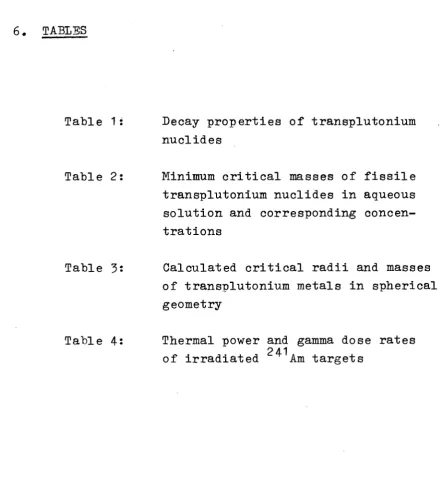
[image:21.595.57.501.66.565.2]-6. TABLES
Table 1: Decay properties of transplutonium nuclides
Table 2: Minimum critical masses of fissile transplutonium nuclides in aqueous solution and corresponding concen-trations
Table 3: Calculated critical radii and masses of transplutonium metals in spherical geometry
Table 4: Thermal power and gamma dose rates 241
18
-T A B L E 1
Decay properties of transplutonium nuclides
Nuclide
241Am
242Am
242mAm
2^ A m 242Cm
2^ C m
2^ C m 245Gm 246Cm 2 4 7Cm 248Cm 2^ B k
249cf
250Cf
2510f
252Cf
254Cf 2 5 5Es 257Em Half-life 433a 16h 144a 7340a 163d 32a 18.1a 8532a 4820a 1.6x10⁷a
3.6x10⁵a
314d 352a 13.1a 900a 2.646a 60.5d 20.5d 94d Decay 0C(5É) 100 0.43 100 100 99.7 100 100 100 100 89 0.0017 100 100 100 96.8 0.2 100 99.8
pm
84/5";16cT
I.T. 0.3^ 100/3" SF(#) 1.5X10⁻¹⁰ 1.6x10"8 2.3x10"8 6x10"6 1.3x10"4 0.03 11 6x10"7 0.08 3.2 99.8 8.6x10~6 0.21 Watt/g. 0.11 2000 3x10"2 6.5x10"5 122 1.68 2.83 5.7x10"3 9.8x10"3 2.8x10~6 5.2x10~4 0.36 0.15 4.1 5.8x10"2 39 10600 1010 ~> 200 Neutrons/ sec.g 0.7 2x10² 6.3 2x10⁷ 1.2x10⁷ 9.1x10⁶ 4.0x10⁷ 3x10⁵ 3.5x10⁹ 1 2 2.4x10 ¿
15 1.2x10 ° 3.3x10⁸
12 : ^1.5x10l¿ \
The most frequently handled nuclides are underlined I.T: isomeric transition
19
-T A B I E . 2
Minimum critical masses of fissile transplutonium nuclides
in aqueous solution and corresponding concentrations
239
(Value for Pu included for comparison)
Nuclide
«9pu
2
«»Am
2
« C m
2
«o
m2
*
7Cm
249«
251
0fCritical Mass
¿SJ
530
23
213
42
159
32
10
Concentration
Z"g/i_7
32
5
40
15
60
20
20
-T A B L E 3
Calculated critical radii and masses of transplutonium me-tals in spherical" geometry
(Value for ^Pu included for comparison)
N u c l i d e
2' 9P u
241Am
242mAm (+)
2 4 4C n
D e n s i t y
¿-g/cv?J
19.6
11.7
11.7
13.5
Critical radius
¿~cmj
bare
4 . 9
13.23
5.55
7.43
H20
r e f i .
4 . 0
12.90
4.26
7.30
Critical mass
Z"kgJ
bare
9 . 7
113.5
8.4
23.2
H20
r e f i .
5.2
105.2
3 . 8
22.0
(+) O A Om
Table 4 : Thermal power and gamma dose rates of irradiated 241 Am targets Campaign a b
g of Am irradiated
13.5
4.5
Neutron flux n/cm sec.
2-3 x 1 01 4
1.5-9 x 1 01 4
(increasing)
Integr. flux
ρ
n/cm
1 χ 102 1
1.7 x 1 02 2
Irradiation time 2 months 2 years Cooling period 250 days 1 year Thermal power V/g of Am irr.
12 - 15 (T 1/2=163d)
not deter mined
Average gamma dose rate (Eem/h) at 50 cm distance per g of Am irrad. (*)
200 (**)
20
I
to
(**) fission products
137 95
106 144,
Cs- 137m.
95, Ba
(*) extrapolated from measurements at 10 cm distance from the
ionization chamber (because of high gamma background at 50 cm)
Zr- -^Nb Ru- 1 0 6Rh
22
[image:26.595.103.542.68.783.2]-Legends to Figures
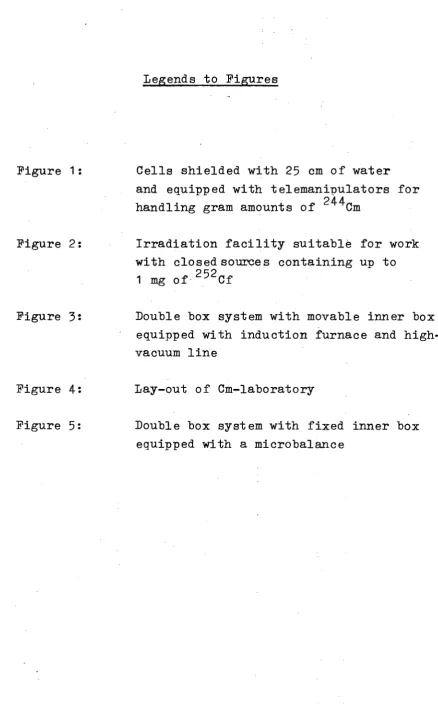
Figure 1: Cells shielded with 25 cm of water and equipped with telemanipulators for
244
handling gram amounts of Cm
Figure 2: Irradiation facility suitable for work with closed sources containing up to
252 1 mg of 5 Cf
Figure 3Î Double box system with movable inner box equipped with induction furnace and high-vacuum line
Figure 4: Lay-out of Cm-laboratory
23
REFERENCES
/"1_7
Report ORNL 4447 (1969)
/~2_7
K.W.MacMURDO, R.M, HARBOUR, R.W.BENJAMIN,
J.inorg.nucl.Chem. 33 (1971) 1241
/"3_7
E.D. CLAYTON, S.R. BIERMAN, Actinides Rev.,
J_
(1971) 409
/~4 7
S.R. BIERMAN, E.D. CLAYTON, Transactions Am.Nucl.
" "
Soc.
12
(1.969) 887 ..
¿~5_7
J.C.. SPIRLET, W. MULLER, J.Less Common Metals,
~
in .press
¿~SJ
K. BUIJS, F. MAINO, ¥. MÜLLER, J. REUL, J.C.TOUSSAINT,
Symposium on the Chemistry of the Transuranium
Elements, Moscow, 1972
/"7_7
W. MÜLLER, Atompraxis J ¿ (1969) 35
¿~Qj
¥. MÜLLER, F. MAINO, J.C. TOUSSAINT, EUR 4232 e (1969)
¿~9 7
K. BUIJS, F. MAINO,'¥. MÜLLER, J. REUL, J.C.TOUSSAINT,
Angew.Chemie 83 (1971) 766
¿~ÌOj
D.H. STODDARD, USAEC Report DP.986 (1965)
/~11 7
Californium252 Progress, USAEÇ, Aiken, S.O. Nr. 12,
p. 9, July 1972
/"12_7
K. BUIJS, J.P. VAANE¿ Β. BURCKHARDT, E. PIESCH,
24
-725cm Water Shielding
Water-Shielded Cells
25
Irradiation Facility
I Source Calibration II Activation Set-up
III Transport and Storage Container IV 50cm Shielded Container V Space for free-air irradiations
26
-Outlet for cooling water
Nj-Atmosphere
Filters for Inner Box Ventilation
Vacuum Lock
3
Ar-Atmosphere
S =
_s
Inner Box Mounting Track
3sOU
=B=
Inlet for liquid N2
(double walled)
Hg-Diffusion Pump
Curium Laboratory
Double Box w i t h Induction Furnace
tn
{ü
<<¡
ι o
Pi et
o
α
Β
ι
Η & Ο 4
C+ Ο 4
Balance (single)
Storage (single)
Ceramics (double)
-Vacuum ^-Preparation ^deposition \ (single)
(single)
to ~3
• Furnace
(double) Balance (double) -Multipurpose Box (single)
vn
Curium Laboratory Double Box with Microbalance
s; μ-ct tf Ρ Β H· O 4 O tf Ρ Η
ë
Ο α> . W ο S tf Η CD tf O IH ai H ω c+ CD Β s: Η · et tf H , μ-W CD Ρ* μ · CD 4 tf O M CD μΟ Pi μ · W y CD ΡFilters _
for
-Outer Box Ventilation JZL ^ XT Ξ Filters for Inner Box Ventilation
Ν 2 -Atmosphere
Vacuum Lock
Steelplates
Ar-Atmosphere
C
Micro-balance
(1/Ag.)
Heavy Balance Support
Damping Elements
co
¿nuijia
m
mi
All scientific a n d technical reports published b y t h e Commission of the European Communities are announced in t h e monthly periodical " e u r o - a b s t r a c t s " . For subscription (1 year: BF.1025) or free specimen
Offlct
l i l f l l l l i i s l
of,h
'
( G r a n
rm
t'ÍT**■ íilíftí- *· HiilmMl SH
ShäiiöiAiitfrtiBnh
muñirles
r ΙβρΙβ
;—
:
—A;;É»í
Office for Official Publications the European Communities
Case postale 1003 L u x e m b o u r g
(Grand-Duchy of L u x e m b o u r g )
;5¡K
mmhmaB^WtímMÊm
saisis»?
. j>üi*5i»nf*MK*iw,nK^..'. s*4 í'^rrai · LöläiiiWJliuti iÆilfHi 1*
i'lHr»R .Í.'ÍUI.SSNIIÍI.TII
lllll I
Militi $ 'ífUi'Cjil
JÉw€l$Ä
Jiri
'mmm
lii
i
I»
*
!ϋ«ί'!
■llillll liliali ¡ΙΠlil)ÍUllllÜ To disseminate knowledge is to disseminate prosperity — I mean =!ÌÌÌ!Ì:;!!iÌ=;P general prosperity and not individual riches — and with prosperity
disappears the greater III darker times
» W M
SÌ:
wMmwWM
mm
■^ïft
The Office for Official Publications sells all documents published by the Commission of the European Communities at the addresses listed below, at the price given on cover. When
Tel. (0221)21 03 48
Telex: Anzeiger Bonn 08 882 595 Postscheckkonto 834 00 Köln
GRAND DUCHY OF LUXEMBC
Stockholm 16
Post Giro 193, Bank Giro 73/4015
liefe»
Office for Official Publications of the European Communities Case postale 1003 — Luxembourg Tel. 4 79 41 — CCP 191-90
SPAIN
Libreria Mundi-Prensa Castello 37
Madrid 1 —Tel. 275 51 31
Stationery Office-The Controlle, Beggar's Bush
mmm
™
mmSmm
OTHER COUNTRIES
Office for Official Publications of the European Communities Case postale 1003 — Luxembourg Tel. 4 79 41 — CCP 191-90
»lì
mm
J "ȕ' 'irilN*,
Compte courant bancaire: BIL 8-109/6003/200
WWå
^ ^ V Æ ^ S ^ ™ *
0F THE EUROPEAN<»»™»™*
A l l ιΗ Β Η ! ' à « · .- * - » | Η ; Β · . ' ! Τ " "