Middle-Secondary Education and Instructional
Technology Dissertations Instructional Technology (no new uploads as of Jan. 2015)
Fall 1-10-2014
Process and Product: High School English Learners Redefined
Process and Product: High School English Learners Redefined
Sarah Mantegna Georgia State University
Follow this and additional works at: https://scholarworks.gsu.edu/msit_diss
Recommended Citation Recommended Citation
Mantegna, Sarah, "Process and Product: High School English Learners Redefined." Dissertation, Georgia State University, 2014.
https://scholarworks.gsu.edu/msit_diss/123
This Dissertation is brought to you for free and open access by the Department of Middle-Secondary Education and Instructional Technology (no new uploads as of Jan. 2015) at ScholarWorks @ Georgia State University. It has been accepted for inclusion in Middle-Secondary Education and Instructional Technology Dissertations by an authorized administrator of ScholarWorks @ Georgia State University. For more information, please contact
ACCEPTANCE
This dissertation, PROCESS AND PRODUCT: HIGH SCHOOL ENGLISH
LEARNERS REDEFINED, by SARAH TUMBLIN MANTEGNA, was prepared under the direction of the candidate's Dissertation Advisory Committee. It is accepted by the committee members in partial fulfillment of the requirements for the degree, Doctor of Philosophy, in the College of Education, Georgia State University.
The Dissertation Advisory Committee and the student's Department Chairperson, as representatives of the faculty, certify that this dissertation has met all standards of excellence and scholarship as determined by the faculty. The Dean of the College of Education concurs.
_____________________________ _____________________________ Gertrude Tinker Sachs, Ph.D. Peggy Albers, Ph.D.
Committee Chair Committee Member
_____________________________ _____________________________ Amy Seely Flint, Ph.D. Janice Fournillier, Ph.D.
Committee Member Committee Member
_____________________________ Date
_____________________________ Dana L. Fox, Ph.D.
Chair, Department of Middle and Secondary Education
_____________________________ Paul A. Alberto, Ph.D.
Interim Dean
AUTHOR'S STATEMENT
By presenting this dissertation as a partial fulfillment of the requirements for the
advanced degree from Georgia State University, I agree that the library of Georgia State University shall make it available for inspection and circulation in accordance with its regulations governing materials of this type. I agree that permission to quote, to copy from, or to publish this dissertation may be granted by the professor under whose
direction it was written, by the College of Education's Director of Graduate Studies, or by me. Such quoting, copying, or publishing must be solely for scholarly purposes and will not involved potential financial gain. It is understood that any copying from or
publication from this dissertation which involves potential financial gain will not be allowed without my written permission.
____________________________________________________________
NOTICE TO BORROWERS
All dissertations deposited in the Georgia State University library must be used in
accordance with the stipulations prescribed by the author in the preceding statement. The
author of this dissertation is
Sarah Tumblin Mantegna 240 Saddle Creek Trail Alpharetta, GA 30004
The director of this dissertation is
Dr. Gertrude Tinker Sachs
Department of Middle-Secondary Education and Instructional Technology College of Education
CURRICULUM VITAE
Sarah Tumblin Mantegna
ADDRESS: 240 Saddle Creek Trail Alpharetta, GA 30004
EDUCATION:
Ph.D. 2013 Georgia State University Teaching and Learning
M.A. 1997 Brenau University Education
B.A. 1981 University of Georgia
Anthropology & Latin American Studies
PROFESSIONAL EXPERIENCE:
2009 - present Secondary ESOL Resource Teacher Fulton County School System, GA
2004 - 2009 ESOL Teacher, ESOL Department Chairperson North Springs Charter High School, Fulton County School System, GA
1992 - 2004 Middle School Teacher of English Language Arts, Reading, and Mathematics
Taylor Road Middle School, Fulton County School System, GA
PUBLICATIONS
Mantegna, S.T. (2012). From wiki to wow! Student voice and agency in an American literature class. TESOL Journal, 3(2), 292-309. doi:10.1002/tesj.19.
INTERNATIONAL CONFERENCE PRESENTATIONS -, REFEREED
Mantegna, S. (2012, March). Building background for academic success through
interactive and visual learning. Presentation at International Teachers of English to Speakers of Other Languages Convention , Philadelphia, PA.
Mantegna, S. (2010, March). Re-imagining literacy: Story and wiki writing with English language learners. Electronic Village workshop at International Teachers of English to Speakers of Other Languages Convention, Boston, MA.
Tinker Sachs, G., Mantegna, S., Ruiz, A., Stocking, K. (2009, March). Balancing language and content in History and Social Studies lessons. Presentation at International Teachers of English to Speakers of Other Languages Convention, Denver, CO.
REGIONAL AND STATE CONFERENCE PRESENTATIONS - REFEREED
Mantegna, S. (2009, September). Passion + Voice = What it takes to succeed, an ELL student documentary. Presentation and panel discussion with ELL students at Southeastern Teachers of English to Speakers of Other Languages Conference, Atlanta, GA.
Mantegna, S. (2008, November). Questions and vocabulary: Optimizing instruction in the content area classroom. Presentation at Georgia Teachers of English to Speakers of Other Languages Conference, Jekyll Island, GA.
Mantegna, S. (2008, October). ESOL students in Social Studies class: What's a teacher to do? Presentation at Georgia Council on Social Studies Conference, Athens, GA.
Mantegna, S. & Ross, A. (2008, September). Cross-cultural connections: ELLs in the content area. Presentation at Southeastern Teachers of English to Speakers of Other Languages Conference, Birmingham, AL.
ABSTRACT
PROCESS AND PRODUCT: HIGH SCHOOL ENGLISH LEARNERS REDEFINED by
Sarah Tumblin Mantegna
Despite 21st Century technology, our nation’s high schools deliver a print-centric
curriculum driven by high-stakes tests. A majority of states have adopted Common Core
State Standards that incorporate producing and consuming multiple media texts. Some
teachers have begun to include multimodal activities but few are exploiting the
affordances of multimodal composition specifically for the benefit of English learners.
Public high school teachers hold deficit views of English learners and fail to offer them
challenging, creative tasks.
Framed by the complementary sociocultural theories of ecological linguistics (van
Lier, 2004), multimodality (Kress, 2010), and identity (Gee, 2001; Norton, 2000), this
qualitative case study examined the process and product of high school English learners
composing multimodally with digital video. Four questions guided the study: 1) What
can we learn from adolescent English learners engaged in composing with video? 2)
What identities do adolescent ELs explore while engaging in multimodal
communication? 3) What processes do ELs engage in as they compose multimodally? 4)
How do their multimodal compositions contribute to our understanding of ELs?
Participants were enrolled in an elective English to Speakers of Other Languages
(ESOL) class at a public high school during Spring semester of 2012. Data included
student generated lesson artifacts, audio/video recordings, researcher journal, and
participants' video compositions. Data were analyzed through an ongoing, recursive
through visual discourse analysis (Albers, 2007b; Kress & van Leeuwen, 2006) and
multimodal interaction analysis (Norris, 2004).
Addressing the process and product of learning to read and compose visual and
video texts, this dissertation examines 3 pairs of student participants and their video
compositions. It reveals English learners working collaboratively and creatively,
exploring imagined identities, showing investment in learning, engaging in critical
analysis, and effectively communicating through multiple modes. Multimodal analysis of
three student videos revealed four patterns of multimodal design; less is less, layered
modes, less is more, and overlapping modes. The study redefines English learners as
multilingual, multimodal communicators. It illustrates the complexity and reveals the
benefit of incorporating multimodal activities and provides a model for fostering
PROCESS AND PRODUCT: HIGH SCHOOL ENGLISH LEARNERS REDEFINED by
Sarah Tumblin Mantegna
A Dissertation
Presented in Partial Fulfillment of Requirements for the Degree of
Doctor of Philosophy in
Teaching and Learning in
the Department of Middle and Secondary Education in
the College of Education Georgia State University
Copyright by Sarah Tumblin Mantegna
ii
ACKNOWLEDGMENTS
I am grateful for the support and guidance I received from professors, family members and friends throughout my "gradual school" studies. I thank my dissertation committee members, for this study is rooted in the discussions and activities I
experienced in their classes. Dr. Amy Seely Flint introduced me to theories of reading and critical literacy. Dr. Janice Fournillier, my "queen of questions," introduced me to visual research methods and set me on the path that led to this study. Dr. Peggy Albers introduced me to visual discourse analysis and challenged me to plan a dissertation study that I would be passionate about. Dr. Gertrude Tinker Sachs, my advisor and dissertation committee chair, supported and guided me as I sought to focus my studies. She shared her insights (and hotel room), laughed with me and at me, and strengthened my resolve to persist in refusing to lower my standards for the education of English learners.
My family has been an ongoing source of strength and support, and I am grateful to each of my family members. I thank my parents, John and Alice Tumblin, for teaching me to always do my best, to finish what I start, and to love what I choose to do. They continue to serve as role models that guide my personal and professional life. My daughter, Bonnie, has been a cheerleader for me over these six years and I appreciate her enthusiasm and pride. My grandchildren and their parents have been patient and
understanding about my absence from soccer games; I look forward to having more time to spend with each of them. I would not have been able to complete this journey without my husband, Michael. His cooking nourished my body and his unerring confidence in my abilities as a scholar nourished my soul. I thank him for the million ways in which he made my life easier so that I could focus on my studies.
iii
TABLE OF CONTENTS
Page
List of Tables ...v
List of Figures ... vi
Abbreviations ... vii
Chapter 1 INTRODUCTION AND OVERVIEW ...1
Overview of the Study ... 4
Theoretical Framework ... 5
A Note on Terminology ... 13
World Migration Patterns ... 14
Sociohistorical and Political Context of Immigrant Education in the U.S.A. ... 15
2 REVIEW OF THE RELEVANT LITERATURE ...23
Educating K-12 immigrant origin ELs in the U.S.A. ... 24
Promoting Student “Voice” in the ESOL Classroom ... 36
Combining Multimodality and Visual Methods in Scholarly Work ... 45
3 METHODOLOGY ...72
My Positioning as Researcher ... 72
Study Design ... 75
Context ... 75
Data Sources and Data Collection Methods ... 82
Organizing, Classifying, and Analyzing Data ... 86
Standards of Quality in Research ... 88
4 RESULTS: ANALYZING THE PROCESS ...92
Pair One ... 97
Pair Two ... 115
Pair Three ... 138
Teacher's Response to Student Video Compositions. ... 154
Cross-pair Analysis ... 161
5 RESULTS: ANALYZING THE PRODUCT ...172
Multimodal Analysis ... 173
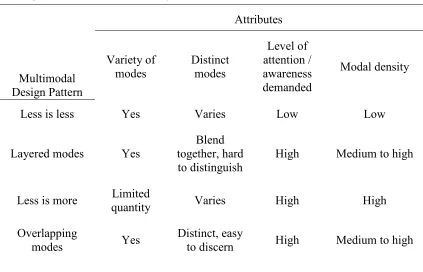
Four Patterns of Multimodal Design ... 181
Discussion ... 189
6 DISCUSSION ...196
Significance and Limitations ... 196
Cross-cutting Themes ... 199
iv
English Learners Redefined ... 210
Application to Practice ... 214
Further Research ... 222
Conclusion ... 223
References ...226
v LIST OF TABLES
Table Page
1 Timeline of study ...76
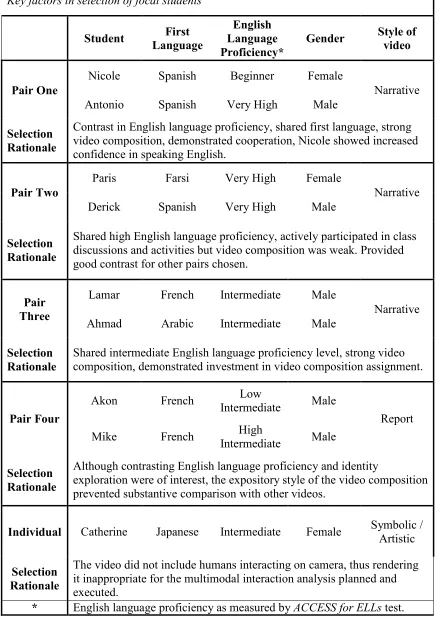
2 Key factors in selection of focal students ...93
3 Focal categories in multimodal design transcript ...175
4 Focal categories arranged by embodied vs. disembodied mode ...178
vi LIST OF FIGURES
Figure Page
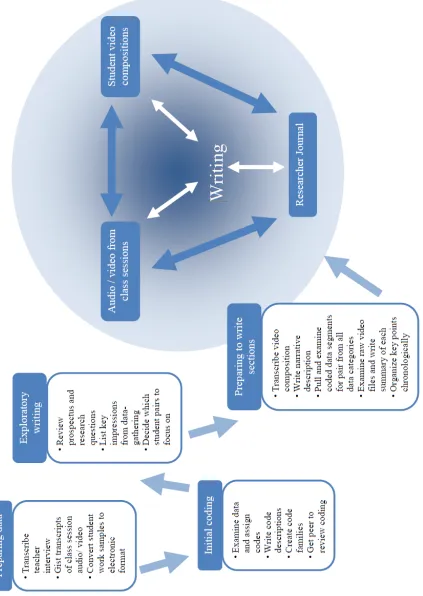
1 Preparing, describing, and analyzing data ... 95
2 Nicole and Antonio's storyboard ...106
3 Derick and Paris' original storyboard ...126
4 Derick and Paris' revised storyboard ...126
5 Lamar and Ahmad's storyboard ...146
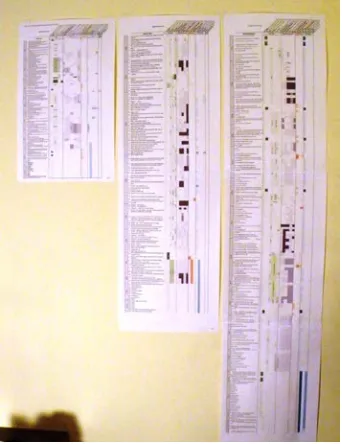
6 Modal density in multimodal design transcripts ...177
7 Comparison of multimodal design transcripts ...177
8 Proportional use of embodied and disembodied modes ...179
9 Final multimodal design transcript for Two Face ...184
10 Multimodal interaction transcript for The Stereotype ...186
11 Portion of multimodal design transcript for Reality Hurts ...190
12 Patterns of student collaboration ...204
13 Model for developing multilingual, multimodal communicators ...221
vii
ABBREVIATIONS AND ACRONYMS
EL English learner
ELL English language learner
DV Digital video
CHAPTER 1
INTRODUCTION AND OVERVIEW
I think a lot of us, we feel like we’re nothing, sometimes. Because we’re
immigrants and we … y’know, I dunno, it’s tough… We don’t speak English, and y’know sometimes you go to the store, and people treat you differently … so it’s tough, and I think we’re brave and most of us don’t realize that.
This quote is from an adolescent Latino about his experiences as a student in an
American high school. He speaks to the experience of any person who has lived in a
country where the native language is different from his own, the experience of having
difficulty making himself understood, of wondering whether he was being mocked or
unfairly judged, of not being able to fully express his thoughts, needs, or emotions. For
English learners (ELs), students whose first language is one other than English, the
limitations imposed by language differences are intensified in the classroom, where
English is the language of instruction and the only language spoken by the teacher or by
other students.
In the United States, school curriculum is print-centric (Wohlwend, 2009), and
our textbooks and other written instructional materials assume advanced levels of
academic English that can take 4 to 7 years for ELs to acquire (Hakuta, Butler, & Witt,
2000). Many students who are enrolled in American high schools and who are not
proficient in English find themselves in a hostile academic environment which requires
them to learn the English language while simultaneously learning the academic content of
math, science, literature and social studies taught in and through the English language
English learners are the fastest growing segment of the public school student
population in the United States, with the highest growth rates in grades 7-12 (All_4_Ed,
2007b; Aud et al., 2013) In the last 20 years, the number of students whose first language
is not English grew by 169%, while the general school population increased only 12%
(KewalRamani, Gilbertson, Fox, & Provasnik, 2007). At the same time that the number
of ELs entering public school is increasing, the dropout rate among ELs is cause for great
concern. Although it is difficult to be completely accurate about the dropout rate of ELs,
statistics show that in 2008 the dropout rate among Hispanic students was 18.3% , as
compared to the overall dropout rate of 8% among the total student population (USDOE,
2010). Whereas not all Hispanics are ELs, the high number of Hispanics who quit
school is presumed to include a majority of English learners (betterhighschools.org,
2009).
Despite the implementation of No Child Left Behind (2001), a federal law
intended to bring about improvements in education for all students, the instructional style
of high school teachers has not changed very much over the last 150 years (Nystrand,
2006). High schools now are being called on to improve instruction so as to better
prepare students for college (All_4_Ed, 2007a); to match education to the skills and
abilities needed in the 21st century workforce (NCTE, 2008; P21, 2006); to utilize
multiple modes of communication and instruction (NCTE, 2005); and to put more
technology into the hands of students (CDW, 2010). Additionally, the Common Core
State Standards for education (NGACBP & CCSSO, 2010), released in June 2010 and
adopted by 45 states and three territories as of July 2012, suggest that teachers utilize
information, and integrate assignments and activities that provide for evaluation of
content presented visually and through multimedia.
Recent studies and articles show that public school teachers are beginning to
include multimodal activities in their classrooms. Some incorporate the mode of visual
discourse in arts-based literacy instruction (Carger, 2004) using classic works of art, or
using children’s drawings to gain insight into their ideas and understandings (Albers,
Frederick, & Cowan, 2009; R. McKay & Kendrick, 2001). Others are putting technology
into the hands of students with projects such as digital storytelling (Ranker, 2008a,
2008b; Robin, 2008a; Sadik, 2008) and digital video composing (Bruce, 2009; Goulah,
2007; Kearney & Schuck, 2006; Miller, 2010) or engaging adolescents in these projects
outside of school (Fotenos & Rohatgi, 2007; Hull, 2003; Hull & Katz, 2006).
Although use of multimodal activities in classrooms is increasing, there has not
been a big focus on taking advantage of the benefits offered by multimodal instruction for
ELs. Twenty-eight states are members of the World-Class Instructional Design and
Assessment (WIDA) Consortium, which utilizes the WIDA standards and assessment
tools with English learners. An additional 4 states have adopted the WIDA standards but
do not utilize the assessment tools. The standards for EL instruction authored by WIDA
“center on the language needed and used by ELs to succeed in school” (WIDA
Consortium, 2007, p. i), but fail to address 21st Century skills, or to incorporate the visual
mode of communication as anything more than a support device. Such omission is
indicative of the current state of education for ELs and shows an unwillingness to push
for instruction of ELs to encompass anything beyond the minimal skills needed for
closely parallel the English proficiency standards (Gottlieb, Lynore, Ernst-Slavit, Katz, &
Snow, 2006) published by Teachers of English to Speakers of Other Languages
(TESOL), a global education association. The WIDA and TESOL standards share a
focus on listening, speaking, reading, and writing. However, they utilize visuals solely to
support these four skills rather than as a mode of communication; and they fail to address
the use of technology in language learning. TESOL attempts to address this omission by
providing a separate list of standards for technology (TESOL, n.d.) that call for the use of
technology-based tools to aid in language learning. Further, apparently TESOL
educators are beginning to recognize the valuable affordances of the visual mode, as
evidenced by a recent TESOL Quarterly article in which Susan Britsch (2009, p. 711)
asserts that much of the learning process is visual and calls upon ESOL teachers to “draw
upon multiple ways of representing mental images”. Nevertheless, there are no clearly
defined and widely used standards or frameworks for instruction and assessment of ELs
that include the visual mode as a key component of communication, or that call for
balanced instruction that utilizes multiple modes and incorporates the use of technology.
Overview of the Study
The purpose of this study was to examine the use of multimodal communication
by adolescent English learners engaged in composing with video. Grounded in
sociocultural learning theories, this study was characterized by attending to factors
including the following: language as relating, contexts of language use, patterns of
language, emergence of learning and language, quality of educational experience, and
activities of language learning. Guiding this study were four questions: 1. What can we
identities do adolescent ELs explore while engaging in multimodal communication? 3.
What processes do ELs engage in as they compose multimodally? 4. How do their
multimodal compositions contribute to our understanding?
Participants in this study were nine high school students enrolled in an elective
ESOL language support course. Data were collected during Spring semester of the
2011-12 school year and included student generated lesson artifacts such as storyboards, photos
and videos; audio recordings of class discussions; audio/video recorded discussions of
video clips; lesson plans and lesson support documents; audio recorded discussion with
the cooperating teacher; researcher field notes, audio memos, and journal; and final
versions of participant video compositions
Theoretical Framework
I approached this study from a sociocultural perspective, and sought to “explicate
the relationships between human action, on the one hand, and the cultural, institutional,
and historical situations in which this action occurs, on the other” (Wertsch, del Rio, &
Alvarez, 1995a, p. 11). The writings of Soviet psychologist and learning theorist Lev
Vygotsky underpin sociocultural theories of learning and bear a brief review here.
Vygotsky’s sociocultural theory is founded on a developmental, or genetic, approach that
considers both individual development within a human’s lifetime (ontogenesis) and
socio-cultural development of the human species in a historical sense (phylogenisis).
Vygotsky asserts that an individual’s higher mental functioning originates in and results
from social interactions and relationships, thus action is an important theme in his work.
Further, Vygotsky indicates that higher mental functioning is mediated by psychological
Wertsch, 1988). These psychological tools such as gestures, language, and sign systems
have a semiotic nature and are used in interpersonal relationships to structure and
organize lower human abilities and skills. The lower human abilities and skills are
building blocks that are transformed into higher mental functions (Vygotsky, 1986).
Vygotsky’s examination of the learning process led to his description of the Zone of
Proximal Development (ZPD), wherein collaboration with adults or more capable peers
facilitates a child’s development of higher mental functions (Vygotsky, 1986). The
concept of a ZPD underpins educators’ use of scaffolded instruction in school
classrooms.
I selected the complementary sociocultural theories of ecological linguistics,
multimodality, and identity to frame the study because of what my experiences as an
ESOL teacher have taught me. I have witnessed first-hand that the complex nature of
second language learning requires the language learner to participate in an array of
contexts, modes, and opportunities for language activity and interaction in order to
develop his or her communicative abilities in the second language. Further, I have
observed learners negotiate new and varied identities as they learn and use the target
language. Identity is inextricably tied to language use, and the addition of ecological
linguistics and multimodality theory provide a framework for studying language and
identity development in use and in context. This framework goes beyond the boundaries
of traditional print and speech based concepts of language, and thereby enables me to
consider and study adolescents learning language and negotiating identities within the
Ecological linguistics. Rooted in biological science, an ecological perspective
has been adopted by psychologists and linguists (van Lier, 2004), as well as by social
workers (Fong, 2004; Furuto, 2004) whose clients are immigrants. The branch of
biological science called ecology involves the study of the relationships between
organisms and their environments, and the systems of these relationships. Psychologist
Urie Bronfenbrenner (1979, 1993) presented an ecological model of human development
that posits a nested set of ecosystems. His model can be readily applied to the educational
setting, and is useful for examining the microsystem of a classroom as well as the
influence of related mesosystems (school, community) and exosystems (region, nation)
on the classroom and the students. Nancy Hornberger (2002) traces the history of
applying the metaphor of ecology to language planning, teaching, and learning, and
articulates an ecological model she calls the continua of biliteracy for situating research,
teaching and language planning. Margaret Hawkins points out that an ecological
framework is highly compatible with sociocultural theories of language development, and
is particularly useful in examining ELs in classrooms; which are “complex ecological
systems, with multiple, complex and often interdependent components and characteristics
that students must negotiate (both socially and academically) in order to come to
participate” (2004, p. 15).
Research on language and education undertaken from an ecological perspective is
carried out in the naturalistic environment of the classroom, with all of the complexity
and activity such a setting entails. Such research emphasizes the learning context; it
focuses on relationships and interactions among English learners, on patterns of
environment, but without seeking to reduce the complicated nature of these interrelated
factors that make up the classroom environment. Moreover, research undertaken from a
deep ecology perspective is critical and change-oriented by not seeking merely to find a
fix for the latest educational crisis, but instead, by striving for a sense of vision which
seeks to inspire and transform (van Lier, 2004). It is these special characteristics of an
ecological perspective on language and education which affected my unique experiences
as an ESOL teacher.
Ecological linguistics, as explained by Leo van Lier (2004), comes from a
sociocultural perspective on language and is “a way of thinking about teaching and
learning in all its complexity, a way of looking at language as a tool of many uses, and as
a key component of all human meaning-making activity” (2004, p. 224). Some important
tenets of the approach are:
• Language is meaning-making activity in the world; and, although it is used
systematically, it is constantly changing.
• Language is embedded in the world through sign systems in a variety of modes.
• The environment offers affordances, or opportunities for action. Affordances are
perceived and utilized by learners who are in tune with their environment.
• Meaning is made when there is an ongoing and reinforcing cycle of action,
perception, and interpretation.
• Language is emergent in the sense that it is a highly complex system constructed out
of simpler components, rather than merely an accumulation of individual building
blocks.
• Identities are not static; they are constantly shaped through social relationships and
through language, therefore speaking is a way of presenting oneself.
Multimodality. Based in social semiotics, the concept of multimodality is
particularly useful for this study of English learners. Social semiotics, as discussed by
Kress (2010), involves the study of sign-making and communication within the social
context . Meaning in all its forms is of interest to social semioticians as it arises in social
contexts, develops in communicative exchanges and is reshaped through social
interactions. Further, social semioticians approach communication from an inherently
critical stance, because they examine and consider the interests, motivation, power, and
agency of the sign-maker and others in the communicative context. Social semiotics is
compatible with the ecological framework explained by van Lier (2004) because both
approaches are built upon an examination of the communicative context, they share a
critical stance, and treat language or sign making as interactive, dialogic, and ever
evolving.
There are three key assumptions about communication that underpin social
semiotics, according to Kress (2010). One is that communication occurs in response to a
prompt; a message or sign is produced by an interested sign-maker and this message is
taken up by another participant as a prompt. Another is that communication occurs when
there is interpretation; the participant attends to and interprets or transforms the prompt
provided by the sign-maker. And the third is that communication is multimodal; it is
undertaken and accomplished through a variety of modes, such as images, spoken words,
text, music, sound, etc. in combination. Each mode has unique and inherent potentials
contribute partially to the overall meaning. Further, the choice of which mode or
combination of modes is used influences the efficiency and effect of communication.
Messages communicated multimodally can carry different or deeper meaning than
messages communicated through a single mode. For example, one can write to a friend
“I am sad” and communicate a simple message. However, if instead of a note, the friend
sees one’s tear-stained face and puffy eyes, hears one’s anguished sobs and raucous
nose-blowing, she knows much more than the limited message communicated by those three
written words.
Identity, voice, and language. Identity and voice are crucial components of any
study of language learners, because language use and identity construction are
inextricably intertwined. Grounding their explanation in the work of Vygotsky,
psychologists Penuel and Wertsch (1995) contend that identity formation involves a
person using language in interpersonal contexts to convince others and him/herself about
who he/she is. Consistent with this approach, Choi’s (Choi, 2009) study of adolescent
English language learners’ identity construction in an out of school club relied heavily on
the participants’ words in club meetings and in interviews. Norton asserts that language
is “constitutive of and constituted by a language learner’s identity” (Norton, 2000, p. 5)
and van Lier explains that “speaking is thus never the mere emission of a message, it is
always an act of presenting the self” (van Lier, 2004, p. 132).
Grounding his explanation in the work of Vygotsky, Peirce, Bakhtin, Wittgenstein
and others, van Lier (2004) explains that language is central to cognitive and social
activity, as it connects these aspects of our activity. He further explains that the notions
projection of the self, closely related to the social environment a person is in. Norton
(2000) characterizes identity as non-unitary, as a site of struggle, and as changing over
time. According to this view, a person can have a variety of identities to suit varied
contexts, can resist identities imposed by the social context, and that person’s identities
will change over time in response to the environment he lives in. This notion of identity
as in a state of flux will be particularly valuable in my work with adolescents who are
language learners. According to van Lier (2004), a person only has a voice when his
thoughts, identities and self are in alignment, when he has developed identities as a
speaker of the target language that do not conflict with or denigrate his existing identities.
While Penuel and Wertsch, Norton, and van Lier present theories of identity and
language that are complementary, Gee (2011) provides set of tools with which to
examine language-in-use and identity . Gee points out that we enact a variety of social
identities that are visible and recognizable in part through the language choices we make.
His approach to discourse analysis goes beyond examining the details of language
structure; he examines language in context and uses five theoretical tools to consider the
ways language is tied to the world and to culture. The situated meanings tool is used to
consider what words and phrases mean in a specific context and whether the situated
meanings are unique or nuanced by the speaker's background or outlook. Social
languages are "specific varieties of language used to enact specific identities and carry
out specific types of practices or activities" and are signaled by collocation patterns, or
word choices and grammatical structures (2011, p. 174). Gee points out that in a given
written or oral text more than one social language, or register, may be used. The social
expressing. The third tool, intertextuality, considers whether a text borrows from or
alludes to other texts, it looks for "echoes" of other texts. Intertextuality can include
direct or indirect quotations; allusion or reference to another text such as a Biblical story
or a work of Shakespeare. It can also mean using the grammatical style and phrasing of
another text such as presenting The Raven as a hip hop performance. Gee introduces the
fourth tool by explaining the term figured world as "a picture of a simplified world that
captures what is taken to be typical or normal" (2011, p. 185) that comes from an
individual's background context as well as from figured worlds portrayed in books,
television, and other media. The figured worlds tool asks us to consider what typical
stories a speaker assumes, or invites listeners to assume; this can be challenging because
figured worlds are "usually unconscious and taken-for-granted" (Gee, 2011, p. 187). The
fifth theoretical tool is the "big D Discourses" tool. According to Gee, a Discourse is the
entirety of speaking/listening, writing/reading, acting, interacting, valuing, feeling,
dressing, thinking, believing, synching with other people, objects, tools, and technologies
in order to enact a specific socially recognizable identity. We use Discourses to be
recognized as particular "kinds of people" (2011, p. 178) in order to do certain distinctive
activities; the big D Discourse tool asks us to consider how a person is using Discourse to
enact a particular socially recognizable identity, to engage in socially recognizable
activities.
These theoretical tools underpin my examination of the language-in-use of those
present in the classroom during my study. As Gee explains, language is one component
we use to "continually and actively build and rebuild our worlds" (2011, p. 102) and
give something value or emphasis; to carry out recognizable activities or practices such
as mentoring a student; to build an identity in a given context; to build and sustain
relationships. Some ways we use language are tied closely to power, including our use of
language to create and distribute social goods such as solidarity, respect, recognition; to
connect things or make connections visible; to privilege or devalue ways of knowing and
ways of communicating. Using the lens provided by these building tasks of language,
and the theoretical tools they are founded on, I can examine the ways in which speakers
use language to enact or get others to recognize an identity, the ways they use language to
position or invite others to take up an identity.
A Note on Terminology
I find there is an array of terms and acronyms used to refer to students whose first
language is not English. The Federal government used the label Limited English
Proficient (LEP) in the No Child Left Behind act, but our state Department of Education
has favored the more positive term English Language Learner (ELL) (Alston, Johnson,
Lacher, & Wlazlinski, 2010). Other terms used include PHLOTE (Primary or Home
Language Other Than English), or LOTE (Language Other Than English), and the term
recently adopted by Georgia, EL (English Learner) (Alston, Johnson, Lacher, &
Wlazlinski, 2011). In this dissertation I use the terms English Language Leaner (ELL)
and English Learner (EL) interchangeably.
Situating the Study: Contexts of Migration
In this section I situate the study by describing the background of migration
globally, the historical and sociopolitical patterns of migration to the United States, and
World Migration Patterns
The history of humans is a history of movement from one geographical location
to another. Collins World English Dictionary defines the word “migrate” as “to go from
one region, country or place of abode to settle in another, especially in a foreign country”
(dictionary.com, n.d.-a). According to the International Organization for Migration,
people migrate to escape socio-economic conditions such as poverty, warfare, and
famine; to improve their standard of living; and to give their children opportunities for a
better life (IOM, 2010). The IOM reports that more people are migrating today than at
any other time in human history, with fully 3% of the world’s population living outside
their countries of birth, and making migration “one of the defining issues of the early
twenty-first century” (2010). Regional patterns of migration are striking as reflected in
United Nations data on the percentage of populations comprised by international
migrants. According to UN statistics, Oceania counts international migrants as 16.8% of
the population, followed by Northern America with 14.2% and Europe with 9.5%. The
data are even more pronounced when examining the trend of international migration
between 1990 and the present. In the last twenty years, the proportion of population
composed of international migrants has grown 4.4% in Northern America, and 2.6% in
Europe. During this same period, all other world regions experienced either increases of
less than 0.6%, or decreases of up to 0.6% (UN, 2010). Clearly, North America, Europe,
and Oceania have international migrant populations that are bound to exert a huge
Sociohistorical and Political Context of Immigrant Education in the U.S.A.
Migration to the U.S.A. According to a report compiled by the Migration
Policy Institute (Terrazas & Batalova, 2009), over the past 30 years, the numbers of
foreign born individuals counted by the census bureau has risen steadily. Whereas the
1980 census counted 14.1 million foreign born individuals, this number rose to 19.8
million in 1990; and increased to 31.1 million in the 2000 census. By the year 2008, this
number had reached 38 million, meaning that 12.5 percent of the population in the United
States was foreign born. Among these foreign born individuals, 37.6 percent came from
just four Spanish-speaking countries: Mexico, El Salvador, Cuba, and the Dominican
Republic.
Responses to migration. In the United States, public response to migration has
followed a cyclical pattern in which it is “reviled when it is actually taking place and
celebrated after a period of time” (Portes & Rumbaut, 2006, p. 344). The nativist
resistance that typically arises in periods of high immigration often leads to calls for
government control in the belief that immigration can be ended by creating an
unwelcoming environment, and by stricter governmental enforcement of immigration
laws (Portes & Rumbaut, 2006). The federal government’s recent efforts to regulate
immigration through the Immigration and Nationality Act have met with only limited
success; two agencies of the Department of Homeland Security (DHS) oversee additional
measures intended to stem the tide of undocumented immigrants. The Immigration and
Customs Enforcement agency (ICE) targets criminal aliens, enacts worksite enforcement
programs, and deputizes local law enforcement officials to enforce immigration laws
(CBP) agency deploys round-the-clock armed border patrols which use unmanned aerial
observation drones and construct fences along the nation’s southern border (CPB.gov,
2010).
In the mass media, responses to migration are politically charged. Politicians
across the political spectrum appeal to voters’ emotions by sponsoring or opposing bills
such as the Development, Relief, and Education for Alien Minors (DREAM) act
(Fisseha, 2011) and comprehensive immigration reform bills with or without provisions
for legalization of undocumented immigrants (Uwimana, 2011). During political
campaigns, some candidates question their opponents’ commitment to border security
and immigration enforcement, and one even called her opponent “the best friend an
illegal alien ever had” (Chishti & Bergeron, 2010). In addition, the hosts of television
talk shows which purport to provide unbiased news and information frequently engage in
immigrant-bashing and fear-mongering. The website for the media watchdog
organization Media Matters for America contains an eleven page list of reports of media
misinformation on immigration dating back to 2004, and the site contains 36 reports in
the four month period ending October 13, 2010 (mediamatters.org, 2010).
Federal education policies. In 1974 the United States Supreme Court upheld an
interpretation of Title VI of the Civil Rights Act of 1964 that guarantees equal access to
education regardless of a student’s limited proficiency in English (Lau v. Nichols, 1974).
The Supreme Court later ruled that states must provide a free public education to
immigrant children regardless of their immigration status (Plyler v. Doe, 1982). In 2001,
the reauthorization of the Elementary and Secondary Education Act (ESEA) of 1965
requires states to set standards for student performance and teacher quality, and
establishes accountability for the results through measures such as Adequate Yearly
Progress (AYP).
As the number of children living in immigrant families rose from 6% in 1960 to
20% in 2000 (Hernandez, Denton, & Macartney, 2009), public schools have taken on the
task of educating large numbers of students who do not speak English. According to data
from the Annie E. Casey Foundation, in 2009 fully 21% of children in the USA speak a
language other than English at home (KidsCount, 2009). Many government documents
refer to these students as “LEP,” meaning limited English proficient, or as “ELs,” or
English learners. As Ruiz-de-Velasco and Fix note in their report Overlooked and
Underserved, secondary schools are experiencing rapid growth in numbers of students
labeled LEP at a time when far greater funding is being provided for the language
acquisition needs of students in elementary schools (Ruiz-de-Velasco, Fix, & Urban Inst,
2000). These students whose first language is not English, whether foreign- or
native-born, attend schools in which the only language of instruction is English.
English learners in secondary schools face the dual challenge of needing to
acquire a formal education while at the same time having to learn the language of
instruction. The situation is further complicated for some students by factors such as
limited formal schooling in their home country; low income or “economically
disadvantaged” status; or living in linguistically isolated communities (Capps et al.,
2005). Hence, the high school dropout rate among Hispanic students in 2008 was 18.3%,
in startling contrast to an overall dropout rate of 8% (USDOE, 2010). Although not all
students who speak a language other than English at home report that they speak English
with difficulty (KewalRamani, et al., 2007, p. 42), and thus are likely to be classified as
LEP.
Federal government policy directed at reforming public education via NCLB has
exerted a strong influence at the local school level. Linda Darling-Hammond points out
that the law’s critics contend its focus on multiple-choice test scores has “dumbed down”
the curriculum; encouraged a “drill and kill” teaching style; mistakenly labeled
successful schools as failing; harmed special education students and English learners
through inappropriate testing, and encouraged schools to force low-scoring students to
drop out so as to improve overall test scores (Darling-Hammond, 2007). Indeed, two
sections of this law simultaneously have improved and endangered the educational
opportunities available to ELs. For example, Title I of NCLB demands that schools pay
attention to meeting the needs of LEP students by requiring that they show increased
achievement on assessments of reading and mathematics. Title III of NCLB requires that
schools annually measure the English proficiency of LEP students, and demonstrate their
ongoing improvement in English proficiency. Although NCLB has forced schools to
stop ignoring the needs of these students, its emphasis on testing has served to narrow the
curriculum, particularly in schools which have difficulty meeting performance targets for
subjects covered on standardized tests. An additional side effect for ELs is the
devaluation of their primary languages due to NCLB’s focus on English language
proficiency (Capps, et al., 2005). Research shows that developmental bilingual education
achieves the best educational results for English learners; and suggests that “sound
implementation of bilingual education programs” (Rolstad, Mahoney, & Glass, 2005, p.
572). Despite such evidence, instruction of ELs in English is the predominant model
nationwide, with devaluation of home languages further exacerbated in areas such as
Arizona and California, where English-only policies are formalized by local regulations.
Social contexts. Aside from formal governmental policies, the education of ELs
is influenced by a host of contextual factors such as anti-immigrant sentiment; public
perception of all foreigners as illegal immigrants; and societal pressure on immigrants to
assimilate by adopting “mainstream” cultural, social, and language values. Meanwhile,
school age immigrant children are three times more likely to live in poverty than
non-Hispanic whites (Ruiz-de-Velasco, et al., 2000); and they overwhelmingly live in areas
segregated by race, ethnicity, language, and income (Capps, et al., 2005). Stressors for
recent immigrant ELs include high levels of poverty, unwelcoming contexts of reception,
experiences of racism and discrimination, and exposure to violence in their schools and
communities (Suárez-Orozco, Pimentel, & Martin, 2009).
Georgia Context. The political climate for immigrants in Georgia is
unfavorable, and Spanish-speaking immigrants are singled out for negative attention
(Williams, 2009). Indeed, since the 2006 passage of the Georgia Security and
Immigration Compliance Act (GSICA), regarded as one of the toughest immigration
enforcement laws at the time (Trevizo, 2010), a climate of mistrust and hostility towards
immigrants has grown and intensified in the state. Among the requirements of GSICA
(Georgia Security and Immigration Compliance Act, 2006) are that employers verify
information on new employees through the federal work authorization program provided
local public benefits must prove his or her citizenship or legal status. Further, the law
authorizes an agreement between the state of Georgia and the Department of Homeland
Security that provides for the training and use of local law enforcement officers to
enforce federal immigration and customs laws while in the performance of their duties by
investigating the nationality of persons who are “charged with a felony or with driving
under the influence,” and notifying Immigration and Customs Enforcement (ICE) when
the offenders are not lawfully admitted in the US (Georgia Security and Immigration
Compliance Act, 2006). Several Georgia counties partnered with the federal government
through this Title 287(g) agreement, and according to a recent report, two metropolitan
Atlanta counties transferred over 5,000 undocumented immigrants to ICE in the past
year, most of whom were jailed for traffic violations (Weinstock, 2010).
More recently, Governor Nathan Deal, whose 2010 campaign rhetoric included
allegedly misleading statements about the cost of illegal immigrants in Georgia (Mariano,
2010), signed a copycat version of Arizona’s anti-immigrant law, as anticipated before he
was elected to office (Goyette, 2010). The Georgia legislature’s Study Committee on
Immigration Reform received a long list of suggestions for a bill (Redmon, 2010), that
worsen the state’s existing “anti-immigrant and anti-Latino climate” (Wheatley, 2010).
The resulting Illegal Immigration Reform and Enforcement Act of 2011 (HB 87) was
passed by the Georgia legislature and signed by the Governor on May 13, 2011 (Illegal
Immigration Reform and Enforcement Act of 2011, 2011). Although the two most
controversial parts of the law were blocked from enforcement by an injunction granted in
U.S. District Court on June 27, 2011 (Judge blocks key parts of Georgia immigration law,
States ruled on Arizona's immigration law on June 25, 2012; the ruling led to a
resumption of the cases in the U.S. 11th District Court which had been on hold. On July
6, 2012 lawyers for Georgia argued that the portions of HB 87 being challenged are
similar to portions of the Arizona law upheld by the Supreme Court, and thus HB 87 is
constitutional under the recent Supreme Court ruling (Cremeans, 2012).
Meanwhile, the hostile climate for immigrants has extended to post-secondary
education in the state. A 2010 ruling by the University System of Georgia (USG) Board
of Regents directed USG institutions to “verify the lawful presence in the United States
of any applicant that is admitted” and bars admission of undocumented immigrants from
any university system schools which have been unable to accommodate all academically
qualified legal residents in the past two years (Roberts, 2010). In order to expand this
exclusion, state Senator Tom Rice proposed a bill in the Georgia legislature that would
bar undocumented students from all of the 35 public colleges in the state (Lawmaker
introduces bill to ban illegal immigrants at state public colleges, 2010), but the bill failed
to pass (NILC, 2011). Although the Department of Homeland Security in June 2012
announced a process to defer immigration enforcement action for young illegal
immigrants and allow them to work legally (Security, 2012) the USG Board of Regents
asserts that the new policy has no bearing on exclusion of illegal immigrants covered by
their 2010 rule (Bonner, 2012). Illegal immigrant students may attend all but a handful
of Georgia colleges and universities, but they must pay out-of-state tuition.
According to the Pew Hispanic Center (2010), the number of Hispanic students
enrolled in K-12 schools in Georgia places the state at the 10th ranked position on this
Hispanic, 83% of Hispanics aged 5 years and older live in a family where English is not
the primary language spoken in the home. Georgia’s public schools must accept the
challenge of educating these students; but the state lacks sufficient numbers of educators
trained to work with English learners and immigrant students (Doheny & Tinker Sachs,
2007; Wainer, 2006; Williams, 2009).
The aim of this study is to examine the use of multimodal communication by
adolescent English learners as they engage in composing with video. In the preceding
pages I presented an overview of the study and explained its grounding in the
complementary sociocultural theories of ecological linguistics, multimodality, and
identity development. I then situated the study within the context of global migration,
within the historical context of migration to the United States, and within the present day
context in our state. In chapter two I examine relevant literature about educating English
learners in K-12 public schools, promoting student “voice” and identity development, and
CHAPTER 2
REVIEW OF THE RELEVANT LITERATURE
In this chapter I describe theoretical and research literature that informs my
perspective, and review research that is relevant to the present study. My discussion of
research relevant to the study is presented in three sections: educating immigrant origin
English learners (ELs); promoting student “voice” in the ESOL classroom; and
examining youths composing multimodal digital texts.
I approach my teaching and my graduate studies from a language and literacy
perspective. I concur with Gee’s (2004) assertion that reading and writing cannot be
separated from speaking, listening and interacting, nor from using language to think
about and act upon the world. I contend therefore that any examination of language
presupposes an examination of literacy, and vice versa. Further, language and literacy
are interactive; they require a social context, whether immediate (such as a partner in
conversation) or imagined (the audience an author is writing for). The themes of
interactivity and social context are evident in the work of scholars and researchers whose
work is important to my study. Linguist Halliday (2004) explained that interactivity, in
the form of dialog about shared experience, is a crucial developmental component for
children constructing meaning, and Dyson (2004) examined the connections between
spoken language and written language among young students. Vygotsky demonstrated
the social nature of cognitive development and the necessity of instruction and
cooperation with adults, stating that “what the child can do in cooperation today he can
do alone tomorrow” (1986, p. 188). Classroom research done by Forman and Cazden
expert peer also led to cognitive growth. The work of these scholars is consistent with
my classroom experiences with adolescent ELs; creating an interactive classroom
environment in which language is ever present in a variety of forms and from a range of
sources is crucial for adolescents learning an additional language.
The work of literacy researchers who focus on English learners supports the value
of interactivity and social learning. The Boston Adult Literacy Fund’s literacy program
for adults was based upon community members with strong literacy skills in the first
language working with less skilled peers to build literacy in the first and second language
(Auerbach, 1994). The program was participatory, because the learners identified their
needs, set goals, selected learning activities and evaluated their progress alongside the
instructors, who were members of their community and shared the same culture, values
and experiences of the learners. Jiménez’ (2000) work with young adolescent English
learners underscored the importance of curriculum that is culturally congruent, making
connections to the students’ own experiences, as well as instruction that is cognitively
challenging while acknowledging and building upon the linguistic strengths and literate
abilities they possess. Furthermore, Jiménez’ work demonstrated how the students’
status as bilingual, bicultural, biliterate youngsters influenced their ongoing identity
construction and their literacy development.
Educating K-12 immigrant origin ELs in the U.S.A.
In the previous chapter I discussed the education of English learners in this
country at the macro-level; I examined demographics, government policy as enacted
through laws, and the social context. I considered the benchmarks and literacy goals set
tests. In this section, I move from a macro to a micro-level as I address factors that affect
the education of immigrant origin ELs in Georgia. I begin with school and system level
factors such as preparation and training of teachers, and models of instruction. Next I
address student factors and teacher pedagogy.
Among the many challenges for educating ELs is a lack of sufficient numbers of
educators who are adequately trained and qualified to meet the unique needs of these
students (Batt, 2008). Other factors include: lack of training for basic literacy instruction;
the need to accelerate subject area learning for ELs; time constraints imposed by the
school day, academic year, and high school completion timelines; isolation of EL
students and their teachers; lack of extra time to plan and collaborate with mainstream
teachers; and lack of “buy in” from mainstream teachers for serving the needs of ELs
(Ruiz-de-Velasco, et al., 2000).
Preparation of teachers. According to the web site of the Georgia Professional
Standards Commission, which regulates educator preparation programs and teacher
certification, only two universities in Georgia offer teacher certification programs in
ESOL. One provides add-on ESOL certification at both the Baccalaureate and Masters
level, whereas the second only provides add-on certification at the Masters level. In
contrast, the GAPSC lists 13 Regional Education Service Agencies, and four county
school districts with approved ESOL endorsement programs. These programs, which
allow certified teachers to add an ESOL endorsement to their current certification, are a
streamlined means of increasing the number of educators who are trained to work with
The state rule governing ESOL endorsement programs that was in effect until
April 2012 (GADOE, 2005b) listed nine requirements for certified teachers seeking
ESOL endorsement. In contrast, the state rule for initial certification (GADOE, 2005a)
listed 17 program requirements. Although these requirements for both programs covered
essentially the same broad categories, the initial certification requirements specifically
addressed the standards published by Teachers of English to Speakers of Other
Languages, Inc. (TESOL). Furthermore, the wording of initial certification program
requirements emphasized knowledge and use of fundamental language acquisition
principles, whereas the wording of endorsement program requirements were broadly
stated, and emphasized understanding rather than use of language acquisition principles.
Notably absent from initial certification were requirements that the teacher be able to
utilize technology for ESOL instruction, and that she can “listen, speak, read, and write in
standard English on technical, abstract, and non-technical or general topics” (GADOE,
2005b). Recently, the rule governing ESOL endorsement programs was revised to match
the requirements for initial certification; as of April 2012 the requirements are identical
(GADOE, 2012).
Despite their earlier differences, the Georgia rules for ESOL endorsement and
certification always indicated an understanding that effectively educating ELs cannot be
achieved by simply adding a few additional strategies to a repertoire of good teaching
skills (de Jong & Harper, 2005; Doheny & Tinker Sachs, 2007). Indeed, this common
misconception seems to be one of the key factors that dissuade many grade-level teachers
from pursuing an ESOL endorsement. When one colleague learned that the ESOL
hour class meeting throughout 36 weeks of the school year, plus class assignments and
readings outside of class meetings, he quickly declined the opportunity to enroll in the
program (E. Smith, personal communication, May 2009).
Mainstream teachers. The Georgia DOE asserts that “all instructional staff
should receive ongoing training regarding appropriate instructional strategies and
interventions for ELs” (Alston, et al., 2010, p. 9), and collects data on the number of
sessions and number of teachers in attendance each year. Although such training is
offered to grade level teachers (Wainer, 2006), it usually is optional; and the training
classes have been criticized as overly simplistic and strategy oriented (Harper & de Jong,
2004), or as piecemeal and inadequate (Dove & Honigsfeld, 2010). Properly preparing
mainstream teachers to effectively instruct ELs requires deeper and more thorough
training than a one day workshop can provide (de Jong & Harper, 2005). The need for
more extensive ESOL training for teachers is recognized, and several large school
districts in the state provide in-service training for their mainstream teachers on the
Sheltered Instruction Observation Protocol (SIOP) model for planning and delivering
instruction to ELs (Voss, 2011, personal communication). The SIOP model (Echevarria,
Short, & Vogt, 2004) is based on extensive research and has shown to be effective for
English learners in mainstream and ESOL classes. Training on the model involves
several days of classroom instruction and modeling, time outside the class to plan lessons
using SIOP tools, and classroom observations by SIOP coaches to give teachers feedback
and support as they begin to utilize the model with their students (Voss, 2011, personal
Instruction and assessment practices. Given that the requirements of NCLB
have a direct impact on the instruction and assessment of English learners, the Act also
requires that ELs receive “high-quality language instruction educational programs that
are designed to increase [their] English proficiency and academic achievement”(No Child
Left Behind Act, 2001) but leaves the details of instruction up to the individual states.
Georgia is one of the 24 member states in the WIDA consortium, and utilizes the WIDA
English language proficiency standards for instruction in combination with the Georgia
Performance Standards. As a WIDA consortium member, the state also administers the
ACCESS for ELs annually to comply with the NCLB accountability requirements to
measure language proficiency and to show progress in language acquisition among ELs.
Georgia has five approved models of instruction for ELs which include the pull-out
model in which students are taken out of a non academic class for the purpose of
receiving small group language instruction; the push-in model in which students remain
in their general education class where they receive content instruction from their content
area teacher along with language assistance from the ESOL teacher; the scheduled class
period model wherein students receive language instruction or content instruction in a
class composed of ELs only; the cluster center model in which students from two or more
schools are transported to a center where they receive intensive language assistance; and
the resource center/laboratory model in which students are given language assistance
supplemented by multi-media materials in a group setting (Alston, et al., 2010, pp.
17-18). In addition, school systems may design an alternative delivery model and submit it
Factors within a school or district such as quantity, language level and grade level
of ELs; variety of first languages represented; availability of ESOL teachers; and space
limitations within a school building influence the selection of instructional models that
are used. In schools with a small number of ELs, the most common models are pull-out
and push-in. For schools with larger EL populations and more ESOL teachers, scheduled
class periods for language arts/ESOL are common, and in some cases the content areas of
math, science, and social studies are taught to classes composed entirely of ELs as well.
The push-in model of instruction is being used more frequently in recent years (McClure
& Cahnmann-Taylor, 2010), despite objections from many teachers. While some studies
report that the model enhances student learning and provides opportunities for teacher
leadership (Dove & Honigsfeld, 2010), others caution that coteaching is marketed as
“unproblematic and inherently good”(McClure & Cahnmann-Taylor, 2010, p. 111)
despite the evidence to the contrary. McClure and Cahnmann-Taylor report that power
dynamics are an important part of coteaching relationships, that ESOL coteachers often
feel they are treated as aides or substitute teachers rather than as professionals and peers,
that they are paired up with multiple grade-level teachers in different classrooms and
given no time to co-plan. These researchers point out that coteaching is a “complicated,
multidimensional endeavor”(2010, p. 122) and suggest that administrative support such
as voluntary pairing of co-teachers, shared training on the model, and shared planning
time to prepare co-taught lessons, may contribute to realizing the potential effectiveness
of the model.
Effective ESOL Instruction. Regardless of the delivery model chosen for a
of ELs. The Carnegie report, Double the Work (Short & Fitzsimmons, 2007), identifies
nine broad areas of promising practices for developing literacy in adolescent ELs:
integrating the four language skills of listening, speaking, reading and writing into
instruction, teaching the components and processes of reading and writing, teaching
reading comprehension strategies, focusing on vocabulary development, building and
activating background knowledge, teaching language through content and themes, using
native language strategically, pairing technology with existing interventions, and
motivating ELs through choice. The SIOP model (Echevarria, Vogt, & Short, 2004),
mentioned earlier, provides a framework for decisions about instruction for English
learners and includes many of the promising practices identified in the Carnegie report.
Strong features of the SIOP model include preparation methods such as identifying key
vocabulary, providing supplementary materials, adaptation of content, explicit links to
background material and past learning, scaffolding measures such as modeling, guided
practice, independent practice, and comprehensible input. SIOP encourages the use of a
variety of grouping methods, whether whole group, small group, partners or individual
work; and integration of the processes of reading, writing, listening and speaking. It
emphasizes using applications that are hands-on, meaningful, linked to objectives, and
that promote engagement. Additionally, SIOP encourages using a variety of assessment
styles including individual, group, written, and oral assessment.
Aside from SIOP, there are numerous frameworks, strategies and approaches
being used and studied for instructing ELs (Cummins, 1980; Harper & de Jong, 2004;
Mora, 2006; Snow, 2005; Solomon, Lalas, & Franklin, 2006) and for combining content