
S T U D Y P R O T O C O L
Open Access
Effectiveness of a home-based re-injury
prevention program on motor control,
return to sport and recurrence rates after
anterior cruciate ligament reconstruction:
study protocol for a multicenter,
single-blind, randomized controlled trial (PReP)
Daniel Niederer
1*, Matthias Keller
2, Andrea Achtnich
3, Ralph Akoto
4, Atesch Ateschrang
5, Winfried Banzer
1,6,
Alexander Barié
7, Raymond Best
8,21, Andree Ellermann
9, Andreas Fischer
10, Daniel Guenther
11, Mirco Herbort
12,
Jürgen Höher
13, Maren Janko
14, Tobias M. Jung
15, Matthias Krause
16, Wolf Petersen
17, Thomas Stoffels
18,
Amelie Stöhr
19, Frederic Welsch
20and Thomas Stein
20Abstract
Background:Although anterior cruciate ligament (ACL) tear-prevention programs may be effective in the (secondary) prevention of a subsequent ACL injury, little is known, yet, on their effectiveness and feasibility. This study assesses the effects and implementation capacity of a secondary preventive motor-control training (the Stop-X program) after ACL reconstruction.
(Continued on next page)
© The Author(s). 2019Open AccessThis article is distributed under the terms of the Creative Commons Attribution 4.0 International License (http://creativecommons.org/licenses/by/4.0/), which permits unrestricted use, distribution, and reproduction in any medium, provided you give appropriate credit to the original author(s) and the source, provide a link to the Creative Commons license, and indicate if changes were made. The Creative Commons Public Domain Dedication waiver (http://creativecommons.org/publicdomain/zero/1.0/) applies to the data made available in this article, unless otherwise stated.
* Correspondence:[email protected]
1Department of Sports Medicine, Goethe University Frankfurt, Ginnheimer
Landstraße 39, 40487 Frankfurt am Main, Germany
(Continued from previous page)
Methods and design:A multicenter, single-blind, randomized controlled, prospective, superiority, two-arm design is adopted. Subsequent patients (18–35 years) with primary arthroscopic unilateral ACL reconstruction with autologous hamstring graft are enrolled. Postoperative guideline rehabilitation plus Classic follow-up treatment and guideline rehabilitation plus the Stop-X intervention will be compared. The onset of the Stop-X program as part of the postoperative follow-up treatment is individualized and function based. The participants must be released for the training components. The endpoint is the unrestricted return to sport (RTS) decision. Before (where applicable) reconstruction and after the clearance for the intervention (aimed at 4–8 months post surgery) until the unrestricted RTS decision (but at least until 12 months post surgery), all outcomes will be assessed once a month. Each participant is consequently measured at least five times to a maximum of 12 times. Twelve, 18 and 24 months after the surgery, follow-up-measurements and recurrence monitoring will follow. The primary
outcome assessement (normalized knee-separation distance at the Drop Jump Screening Test (DJST)) is followed by the functional secondary outcomes assessements. The latter consist of quality assessments during simple (combined) balance side, balance front and single-leg hops for distance. All hop/jump tests are self-administered and filmed from the frontal view (3-m distance). All videos are transferred using safe big content transfer and subsequently (and blinded) expertly video-rated. Secondary outcomes are questionnaires on patient-reported knee function, kinesiophobia, RTS after ACL injury and training/therapy volume (frequency–intensity–type and time). All questionnaires are completed online using the participants’pseudonym only.
Group allocation is executed randomly. The training intervention (Stop-X arm) consists of self-administered home-based exercises. The exercises are step-wise graduated and follow wound healing and functional restoration criteria. The training frequency for both arms is scheduled to be three times per week, each time for a 30 min duration. The program follows current (secondary) prevention guidelines.
Repeated measurements gain-score analyses using analyses of (co-)variance are performed for all outcomes.
Trial registration:German Clinical Trials Register, identification numberDRKS00015313. Registered on 1 October 2018.
Keywords:Return to sports, Return to play, RTS, Recurrence, Re-injury, ACL, Motor control, Secondary prevention, Therapy, Rehabilitation, Post treatment, Functional outcome,
Background
The risk of suffering from a subsequent anterior cruciate ligament (ACL) injury following ACL reconstruction is in-creased 10-fold in comparison to the first-incidence risk. A recurrence risk of 10–25% is specified in the current litera-ture [1,2]. Such re-injuries often occur in the first years fol-lowing the surgery [2], in particular during, or shortly after, the successful return to sport (RTS). It is a major goal of the RTS process to lead an athlete back to training and competition without exhibiting an excessively high risk for a subsequent rupture [3]. Important criteria to be fulfilled, beyond psychosocial readiness and (of course) morpho-logical graft healing, are, particularly, the restoration of neuromuscular and motor function. More precisely, a com-bination of dynamic strength and jump landing tests have been shown as being predictive for a second ACL injury [4,
5]. Enhancing and, thus, restoring these functional abilities may consequently lead to a decrease in the re-injury risk [6]. Beyond these quantitative measures, the quality of dy-namic jumping and cutting maneuvers, in particular the avoidance of a dynamic valgus position, are crucial for a positive RTS decision based on functional criteria [7, 8]. Qualitative assessments are used only infrequently [7, 8]. Furthermore, their responsiveness to functional changes as
well as predictive value for a subsequent ACL injury re-mains mostly unknown. A current systematic review with meta-analyses on biomechanics during single-leg landings concludes that both movement quality and performance of functional tasks should be examined as RTS tests [9]. Irre-spective of the evaluation goal or if they having been vali-dated or not, RTS tests are commonly performed at one single assessment at the hypothetical end of the RTS process [10]. Performing a series of measurements with the purpose of monitoring changes over time during the RTS process may be more promising [10].
a dynamic knee valgus) exists, the therapeutic focus after ACL reconstruction should shift from therapy to recurrence prevention after a certain rehabilitation time. Several prevention programs exist and have been validated in terms of preventive effects on a primary ACL rupture incidence [13]. Although the-oretical evidence exists that such programs may be effective in the prevention of a subsequent ACL injury [6], their effectiveness for primary and, in par-ticular, for secondary prophylaxis after successful ACL reconstruction, is still a matter of debate. Like-wise, the implementation capacity of such programs into everyday training after the prescribed rehabilita-tion is unknown.
The aim of the study is to assess the effects and implementation capacity of a preventive approach (Stop-X program [14]) after ACL reconstruction. Effects on re-injury-related motor-control/function, re-injury rates and time to successful RTS form the focus of this study.
The null hypothesis is as follows: the Stop-X program, as part of the evidence-based care and rehabilitation after ACL rupture and reconstruction, is not systematic-ally superior to standard rehabilitation in terms of its ef-fects on neuromuscular function, re-injury rate risk and time until RTS success.
Methods and design
Study design, ethics and informed consent
A multicenter, single-blind, randomized controlled, su-periority, two-arm trial will be adopted. The comparator arms are guideline rehabilitation plus Classic follow-up treatment versus guideline rehabilitation plus the Stop-X intervention.
Central ethical approval has been confirmed from the independent Ethics Committee of the Hessen Regional Medical Council (ref approval no. FF 104/2017) and we will not begin recruiting at other centers in the trial until local ethical approval has been obtained. The date of the central approval was 27 June 2018. The study was planned and is performed in agreement with the Declaration of Helsinki (Version Fortaleza 2013). The trial was registered in the German Clinical Trials Register (DRKS), registra-tion number DRKS00015313 (DRKS, drks.de; 01. October 2018). All adverse events will be reported. Each participant signs an informed consent prior to study enrollment.
The primary outcome is the normalized knee-separation distance (%) during a standardized Drop Jump Screening Test (DJST).
Participants
Sample size determination
No study to retrieve the minimal clinical relevant change for the primary outcome DJST has been
published. For the sample size calculation (G*Power version 3.1), we thus considered the values from an interventional randomized controlled trial (RCT) [12]. The mean post-intervention value was 66.4% (standard deviation (SD) = 14.2%). Considering a tar-get effect of Cohen’s d = 0.3 (= mean change of 0.3 × SD), a two-sided alpha-error level of 5% and beta-error level of = 50%; data from N = 174 (n = 87 per group) participants have to be analyzed to statistically find a between-group difference using gain-score analyses. Assuming a dropout-rate of 30%, a total of 250 (n = 125 per group) patients will be included.
Recruitment and screening
Potential participants are recruited by personal address-ing through one of the center heads (physicians) duraddress-ing or after a scheduled visit. Following application of the inclusion and exclusion criteria, patients are approved by the physician in charge.
Inclusion and exclusion criteria:
Adults (aged at surgery from 18 to 35 years) with remaining anterior knee instability after acute unilateral ACL rupture and having passed, or being scheduled for, an arthroscopically applied, anatomic single reconstruc-tion (< 3 months between rupture and reconstrucreconstruc-tion) with autologous hamstrings tendon, will be included. Only participants engaged in sport (self-reported) prior to the injury and with the aim to return to their previous sport-ing activity are included. Exclusion criteria for the multi-modal assessment protocol are: (1) meniscus lesion > 2 cm, (2) cartilage lesion > International Cartilage Regener-ation and Joint PreservRegener-ation Society (ICRS) grade II, (3) previous musculoskeletal surgery of the uninvolved (contralateral) leg, (4) leg mal-alignment > 5°, (5) multi-ligament injury pattern, (6) postoperative re-injury, (7) acute or chronic inflammation of the musculoskeletal sys-tem or muscle soreness and (8) pregnancy.
Randomization procedure and blinding
Experimental procedure
Study flow
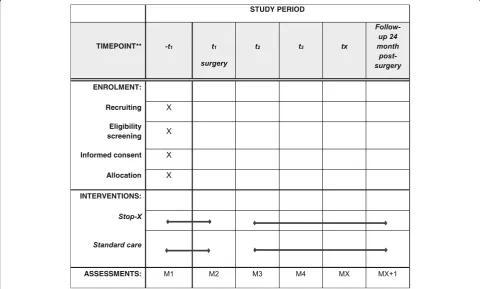
The onset of the Stop-X program, as a part of (where applicable) the pre-operative and/or the postoperative follow-up treatment, is individualized: a graduated, shared and criteria-based decision is underlying [10]. The participants must be released for the training com-ponents by their treating orthopedic specialist and by their physiotherapists. Likewise, the athletes, themselves, must indicate their physiological readiness. It is aimed to commence the Stop-X program at a time 4 to 8 months post surgery (Fig.1).
The end of the (scheduled) intervention is the unrestricted RTS decision (aimed at 12–18 months post surgery). After this time point, the participants may continue the intervention but no further functional assessments will be conducted. Before (where applicable) surgery and until the unrestricted RTS decision, but at least until 12 months post sur-gery, all outcomes are assessed once a month. Thus, each participant is measured at least five times to a maximum of 12 times. Twelve (12), 18 and 24 months post reconstruction, follow-up measurements and re-currence monitoring follow. For this purpose, all par-ticipants are contacted by means of a structured telephone interview (separate consent). Participants
are then asked for potential subsequent ACL re-injur-ies and other complaints/injurre-injur-ies. All measurements, except the structured telephone interviews, are per-formed by self-administration. The measures consist of jump landing tasks (10 min duration) and a ques-tionnaire battery (5 min duration). The DJST is followed by the functional secondary outcomes. The latter consists of quality assessments during simple (combined) balance side and front hops, as well as quantity (centimeters) assessments of single-leg hops for distance. All hop/jump tests are self-administered, filmed from the frontal view (3-m distance) using the participant’s own smartphone. Videos are than expert-rated using the blinded videos. This setup has been shown to be valid when compared to 3D motion-cap-ture systems for the analyses of sagittal-plane knee an-gles [15]. All videos are transferred using a safe big content transfer (PowerFolder Enterprise File Sync und Share; Düsseldorf; Germany). To assure blind as-sessment, only the participants’pseudonym is used.
Secondary patient-reported outcomes are assessed ques-tionnaire-based: knee function, kinesiophobia, RTS after ACL injury and training/therapy volume (frequency– in-tensity–type and time). All questionnaires are completed online at www.surveymonkey.de using the participant’s pseudonym.
[image:4.595.57.538.415.704.2]Both the training and measurements are instructed and supervized by means of (online) control of training, outcome assessment adherence and correct execution.
Primary outcome–Drop Jump Screening Test
The DJST is a common RTS criteria with a predictive value on an ACL rupture [8,16]. Following warm-up ex-ercises, patients take a bipedal hip-width stance on a box with a 32-cm target height. A bipedal drop jump follows: frontal step – drop – reactive jump with the shortest possible ground contact time. The knee position is rated at three pre-defined points during this drop-jump cycle: (1) initial ground contact at the end of the drop from the box, (2) lowest point of the body’s center of gravity at the jump’s reversal point and (3) ground take-off when the feet leave the surface for the reactive vertical jump. At each of these points, the distance between (a), the hip joints and (b), the centres of the patella of the two knees are measured. The percentage of the knee dis-tance in comparison to the hip disdis-tance was calculated to calculate the normalized knee distance. Knee-separ-ation and hip distance is analyzed using the video-ana-lysis software Kinovea (France). Three jumps are performed, the middle one to be further analyzed. This measurement setup and the subsequent analyses are highly inter-rater reliable (κ= .92; 95% confidence inter-val (CI) 0.829–0.969) and moderately intra-rater reliable (κ= .55; 95% CI 0.49–0.61) [17], respectively. In the same validation study, a sensitivity of 63% and a specifi-city of 83% for the classification of “high-risk” partici-pants (index group identified by expert observers) of the DJST was found.
Secondary outcomes: quality and quantity of the functional hop and jump tests
For sagittal-plane jumping-quality rating, the single Bal-anced Front Hop Test [18] was chosen. Participants have to hop over a square on the floor with a 40 × 40-cm edge length with hands on their hips; the end position after landing must be kept for at least three continuous sec-onds. The frontal-plane jumping-quality rating is under-taken using the Balanced Side Hop Test [18]; the participants hop over laterally (to the direction of the test foot (right or left) ) the same square and, immedi-ately after landing, a reactive hop back to the starting position is initiated. After each trial, the participants have, again, to maintain the controlled landing position for three consecutive seconds with their hands on their hips [18].
Three hops for each condition and leg (randomized order) are performed, the middle one for each condition and leg to be further analyzed. Quality rating criteria are (1) feet remain stable on the ground after landing, (2) knees remains in the sagittal plane during all movements
and (3) the trunk remains in the sagittal plane during all movements [18].
The single-leg hop for distance (SLHD) assesses (the quantity of) dynamic balance and single-leg-jumping performance ability. The participants stand on one leg with the toes behind the rear line of the square. They then hop as far as possible and have to land in a controlled manner. The whole hop must be performed one-legged. Three successful hops per leg (randomized order) are performed; each leg’s best trial (in centimeters) is selected for further analysis. The measurement properties for the SLHD are excel-lent, reliability is ICC = 0.97 (CI 0.9–0.99) and the standard error of measurement is 3.5% [19]. It is con-sidered valid in terms (as a major part of a testing battery) of predicting a subsequent ACL injury [4, 5].
Secondary outcomes: self-reported data
All questionnaires will be used in their validated German translation.
The Return-to-Sport after ACL injury (RSI-ACL) questionnaire assesses a participants’ fear of loading their reconstructed knee during their main sporting ac-tivity. Ten 11-point Likert-scale questions are used, a total score value of > 56 indicates sufficient confidence for RTS [20]. The sum score assessment is highly reli-able (Cronbach’s alpha = 0.92) [21] and valid [22].
Further (self-reported) control variables to be used will be the Tegner and Lysholm score, International Knee Documentation Committee knee evaluation form (IKDC-2000), Knee injury and Osteoarthritis Outcome Score (KOOS), subscale activities of all daily living (ADL), injury history, demographics, pain, and task-specific fear of movement/re-injury (visual analog scale (VAS) 10 cm) and kinesiophobia (Tampa Scale of Kinesiophobia; TSK).
The Tegner and Lysholm score [23] contains a
movement/(re-)injury”; it is scored using 4-point Likert scales. Internal consistency and structural validity were found to be sufficient [22].
By means of a structured telephone interview, the time/date of the consensus, evidence-based, shared, posi-tive return-to-play decision and potential re-injuries/ complications/adverse effects are inquired. Further, the participants will be asked on their individual implemen-tation capacity (barriers and chances) using a non-struc-tured survey.
Intervention
The training interventions (in particular the Stop-X arm) consist of self-administered home-based exer-cises which are step-wise graduated and follow wound-healing and functional restoration criteria. The training frequency for both arms is scheduled to be three times per week. A duration of 30 min is aimed for each session. The program follows current (sec-ondary) prevention guidelines [24–26]. The program (in German) can be found online (pdf): http:// deutsche-kniegesellschaft.de/wp-content/uploads/2017/ 02/DKG_Stop-X_Prävention-von-Sportverletzungen-am-Kniegelenk.pdf (permanent link, status 10/5/18) and (video description): https://stop-x.de/(permanent link, status 10/5/18). Details on the two training schemes (Stop-X versus Classic) are displayed in Table 1. All aspects of the training are divided into the wound-healing phases and the therapy goal. All similarities of and differences between the Classic and Stop-X exercise regimens are displayed.
All participants receive detailed information on the intervention scheduled. Classic intervention partici-pants receive a standard follow-up scheme with de-fined key points; the Stop-X participants receive the same Classic intervention scheme and, additionally, the detailed information in terms of information ma-terial and specific instructions (print mama-terial and links) for the Stop-X program. All participants discuss their program with the therapy team (physiothera-pists, athletic trainer).
Therapy monitoring
To monitor home-training accuracy and compliance, all patients fill in an exercise log during the home-based training (online). Frequency, intensity, type and time of the exercises are reported in a standardized procedure. Likewise, all functional/exercise measures beyond the scheduled training are reported. Using the 14-step Likert scale of Borg rates of perceived exhaus-tion (6 = extremely light intensity; 20 = extremely vig-orous), the intensity of the exercises is further rated.
Statistical analysis
Following range plausibility control based on potentially reachable physiological values, a visual control for non-plausible outliers will be performed. Afterwards, all analyses will be performed based on the underlying as-sumptions for parametric, or rather, non-parametric test-ing. In detail, for all difference testing, data and variance distribution (i.e., normality) are checked; for all correlation analyses, residuals, auto correlation, and heteroscedasticity, are checked. The alpha-error threshold is set at 5%, allp
values below are considered significant.
The analyses for the primary outcome, DJST, are done confirmatory, alpha-error corrections (Bonferroni-Holm for paired and Sidak-Holm for unpaired analyses) are performed for multiple used samples and post-hoc ana-lyses following significant omnibus testing, whilst the alpha-error remains unadjusted for the exploratory (sec-ondary) analyses.
The main statistics are performed twice (two different data structures): once on a time-based and once on a functional-based data structure. All repeated measures statistics are thus first performed for the time-based data structure where statistics are performed on all outcomes assessed at the same real-time after reconstruction. Sec-ondly, functional-based data-structure analyses are per-formed, where the first (baseline) measurement is the first“real” measurement at the time of being cleared for the assessment (varying times of 4–8 months post recon-struction). For each of the analyses on the two datasets, gain-score analyses are performed for differences from pre (baseline) to post (each following time point) of all outcomes using repeated-measures analyses of vari-ance (rmANCOVAs) with potential confounders as co-variates (baseline values, injury history, sex, type and amount of sport, age, co-morbidities). In case of a sys-tematic impact of confounders on statistics, z-trans-formed values are calculated and used for further analyses. Afterwards, survival analyses by means of Kaplan-Meier plotting plus between group-difference analyses using log-rank tests are performed. Hazard ratio estimations will be calculated. Events will be: (1) Time point of unrestricted RTS decision, (2) Time point of functional criterion RTS succeeded (> 60% normalized knee-separation distance at DJST) and (3) Time point of revision surgery, re-injury or subsequent injury.
All statistical analyses are performed using SPSS (SPSS Inc., IBM, Chicago, IL, USA) and BiAS (BiAS for Win-dows, Frankfurt, Germany).
Discussion
used. The intervention consists of exercises to target deficits in motor control and dynamic knee axis steadiness. A strength of this intervention is its practicability. Furthermore, all exercises can be performed without (or only with a little) additional material.
Recurrence prevention and the according diagnos-tics during and after RTS following ACL reconstruc-tion are, except in professional athletes, only adopted to a minor degree [30]. Even in professional sports, the athletes’ performance quality is decreased after return to competition [1] and the re-injury risk remains high for years after the ACL rupture [1, 2]. Consequently, and applicable in entire populations, developing and employing strategies for secondary prevention and appropriately adapted functional diagnostics are crucial. Beyond the focus on
recurrence prevention, the potential of the program in pre-operative training may be given. Pre-operative training strategies are highlighted to be of import-ance [31], yet, they are only carried out sparsely; therefore, a feasible intervention may be helpful.
[image:7.595.56.534.106.520.2]The heterogeneity of the participants may become a limitation for the results’ interpretation and the deduc-tion of the practical relevance of our trial. To minimize this potential bias, co-variate analyses are performed. Together with the randomized study design and the resulting respect of unknown confounders, considering the known and suggested confounders provides a suffi-cient statistical power. A common limitation in clinical exercise trials is the limited possibility of blinding the patients. This limitation is reduced by the superiority de-sign (no inactive control group) of our study. To further Table 1Therapy/intervention regimen for both study arms. Standard/Classic rehabilitation strategies were conducted according to grade-A guidelines [27,28]. The secondary preventive Stop-X program follows the recommendations in [24–26]
Wound-healing phase and/or time post surgery
Therapy goal Classic Stop-X
Inflammation phase Reduction of inflammation
Brace: range of motion restriction 0–0-90° at 20-kg partial knee load
Manual therapeutic, passive closed kinematic chain mobilization; hip and ankle integrated
Measures against post-operative swelling and temperature increase, home-based measures for auto-mobilization (under compression)
Trunk and scapula control; non-affected-side static motor control, i.e., single-leg stance
Proliferation phase Approximately weeks 3– 12 post reconstruction
Pain reduction and mobilization [27,29]
Knee-joint mobilization in restricted range of movement, patellar mobilization
Stretching: Mm. ischiocruales, M. gastrocnemius, M. iliopsoas, M. tractusiliotibialis
Motor control of trunk and scapula; non-affected-side static motor control, i.e., single-leg stance
Approximately after week 7 post reconstruction
Brace: range of motion unrestricted
Onset of motor-control training
Open kinetic (dorsal only) chain
Approximately after week 10 post reconstruction
Corrective exercise with the aim to prepare for return to sport (RTS) level I
Single-leg dynamic-stabilizing/motor-control exercises
Eccentric knee mobilization open frontal kinetic chain
Remodeling phase Level I function: Approximately after week 13 post reconstruction
Functional enhancement and recurrence prevention
Closed and open kinetic chain (ventral and dorsal)
Based on functional criteria, not time based. Information, risk assessment, correction of risky movement characteristics; teaching of basic preventive strategies; total program at/after RTS clearance Running exercises/agility exercises
Straight on running, hip external rotation, change of direction runs
Running with sagittal plane distance and vertical-jump components.
Self-perturbed balance exercises
Single-leg stance with (individually and combined) ball bouncing/unstable surface/passing a ball
Jumping exercises/plyometrics vertical and distance Strengthening exercises
Russian hamstrings
Dynamic and side planks with/without heel raising Hip abduction
One-legged squats Strength endurance training for (in
particular) the ischiocrural muscles
Dynamic-stabilizing motor-control exercises, including jump landings on unstable surfaces
Level II function: Approximately months 4–6 post reconstruction
Dynamic-stabilizing motor-control exercises, including single (affected) leg jump landings on unstable surfaces
Onset of impact exercises
Level III function: Approximately after month 7 post reconstruction
Dynamic exercises (frontal plane)
Side-cutting maneuvers
Level IV function: Not before 10th month post reconstruction
reduce the risk of bias as much as possible, all investiga-tors are blinded to intervention allocation.
Beyond this, the results of our study will be of import-ance not only for researchers and policy makers, but also for patients.
Trial status
Participant recruiting started on 25 October 2018. At the time of manuscript submission, we included six participants into the study. No participant has yet completed the intervention. Screening completion is anticipated to be 15 October 2019, measurement completion by 15 October 2020 and overall study completion is expected to be May 2021.
Appendix
Study sites, local principal investigators and scientific responsibilities
Principal investigator:
PD Dr. Dr. Stein, Thomas, Department of Sporttraumatology, Knee, and Shoulder Surgery, Berufsgenossenschaftliche Unfallklinik Frankfurt am Main, Frankfurt am Main, Germany
Co-principal investigator, statistics:
Dr. Niederer, Daniel, Department of Sports Medicine, Goethe University Frankfurt, Frankfurt am Main, Germany
Prof. Dr. Dr. Banzer, Winfried, Department of Preventive and Sports Medicine, Institute for Occupational, Social and Environmental Medicine, Goethe University Frankfurt, Frankfurt, Germany
Functional outcomes:
Keller, Matthias, OSINSTITUT, Munich, Germany Recruitment centers:
PD Dr. Achtnich, Andrea, Department for Orthopaedic Sports Medicine, Klinikum rechts der Isar, Munich, Germany
Dr. Akoto, Ralph, Chirurgisch-Traumatologisches Zentrum, Asklepios Klinik St. Georg, Hamburg, Germany
Prof. Dr. Ateschrang, Atesch, BG Trauma Center Tübingen, Eberhard Karls University Tübingen, Tübingen, Germany
Dr. Barié, Alexander, Clinic for Orthopedics and Trauma Surgery, Center for Orthopedics, Trauma Surgery and Spinal Cord Injury, Heidelberg University Hospital, Heidelberg, Germany
Dr. Best, Raymond, Department of Orthopaedic and Trauma Surgery, Sportsclinic Stuttgart,; Department of Orthopaedic Sportsmedicine, University of Tuebingen
Dr. Ellermann, Andree, Arcus Sportklinik, Pforzheim, Germany
Prof. Dr. Marzi, Ingo, Prof. Dr. Frank, Johannes, Department of Trauma, Hand, and Reconstructive Surgery, Goethe University Frankfurt, Frankfurt am Main, Germany
Prof. Dr. Herbort, Mirco, Department of Trauma, Hand and Reconstructive Surgery, University Hospital Muenster, Muenster, Germany
Prof. Dr. Höher, Jürgen, Sports Clinic Cologne at Co-logne Merheim Medical Center, CoCo-logne, University of Witten/Herdecke, Cologne, Germany
PD Dr. med. Daniel Guenther, Department of Orthopaedic Surgery, Trauma Surgery, and Sports Medicine, Cologne Merheim Medical Center, Witten/ Herdecke University
Dr. Jung, Tobias M, Center for Musculoskeletal Surgery, Charité-University Medicine Berlin, Berlin, Germany
PD Dr. Krause, Matthias, Department of Trauma, Hand and Reconstructive Surgery, University Medical Center Hamburg-Eppendorf, Hamburg, Germany
Prof. Dr. Müller, Peter E; Andreas Fischer, Department of Orthopedic Surgery, Physical Medicine and Rehabilitation, University Hospital, Ludwig-Maximilians-University (LMU), Munich, Germany
Prof. Dr. Petersen, Wolf, Klinik für Orthopädie und Unfallchirurgie, Berlin, Germany
Dr. Stoffels, Thomas, Department of Trauma and Orthopaedic Surgery, Unfallkrankenhaus Marzahn, Berlin, Germany
Dr. Stöhr, Amelie, Orthopedic Surgery Munich, Mun-ich, Germany
Dr. Welsch, Frederic, Department of Sporttraumatology, Knee, and Shoulder Surgery, Berufsgenossenschaftliche Unfallklinik Frankfurt am Main, Frankfurt am Main, Germany
Abbreviations
ACL:Anterior cruciate ligament; ADL: Activities of daily living; DJST: Drop Jump Screening Test; DRKS: German Clinical Trials Register; IKDC-2000: International Knee Documentation Committee knee evaluation form; KOOS: Knee injury and Osteoarthritis Outcome Score; RTS: Return to sport; SD: Standard deviation; SLHD: Single-leg hop for distance; TSK: Tampa Scale of Kinesiophobia
Acknowledgements
The study is supported by a grant from the German Knee Society (DKG). We further prospectively thank both the technical and medical staff at the study sites for their investment during study conduction.
Authors’contributions
DN wrote the first draft of this manuscript. TS conceived the study. All authors (DN, MK, AA, AR, AA, WB, AB, RB, AE, AF, DG, MH, JH, MJ, TJ, MK, WP, TS, AS, FW, TS) substantially contributed to the conception and design of the program (intervention), outcomes and/or study, participated in the conduction of the study and critically revised the protocol manuscript for important intellectual content, read and approved the final manuscript.
Authors’information
Funding
The study is supported by a grant from the German Knee Society (DKG).
Availability of data and materials Not applicable.
Ethics approval and consent to participate
Final ethical approval has been provided on 27 June 2018. (number FF104/ 2017). Clinical trial registration (registration date 1 October 2018) in the German Clinical Trials Register received the identification number DRKS00015313. All participants provided their informed consent.
Consent for publication Not applicable.
Competing interests
The authors declare that they have no competing interests.
Author details
1Department of Sports Medicine, Goethe University Frankfurt, Ginnheimer
Landstraße 39, 40487 Frankfurt am Main, Germany.2OSINSTITUT, Munich, Germany.3Department for Orthopaedic Sports Medicine, Klinikum rechts der Isar, Munich, Germany.4Chirurgisch-Traumatologisches Zentrum, Asklepios Klinik St. Georg, Hamburg, Germany.5BG Trauma Center Tübingen, Eberhard Karls University Tübingen, Tübingen, Germany.6Department of Preventive and Sports Medicine, Institute for Occupational, Social and Environmental Medicine, Goethe University Frankfurt, Frankfurt, Germany.7Clinic for Orthopedics and Trauma Surgery, Center for Orthopedics, Trauma Surgery and Spinal Cord Injury, Heidelberg University Hospital, Heidelberg, Germany. 8
Department of Orthopaedic and Trauma Surgery, Sportklinik Stuttgart, Stuttgart, Germany.9Arcus Sportklinik, Pforzheim, Germany.10Department of Orthopedic Surgery, Physical Medicine and Rehabilitation, University Hospital, Ludwig-Maximilians-University (LMU), Munich, Germany.11Department of Orthopaedic Surgery, Trauma Surgery, and Sports Medicine, Cologne Merheim Medical Center, Witten/Herdecke University, Cologne, Germany. 12Department of Trauma, Hand and Reconstructive Surgery, University
Hospital Muenster, Muenster, Germany.13Sports Clinic Cologne at Cologne Merheim Medical Center, Cologne, University of Witten/Herdecke, Cologne, Germany.14Department of Trauma, Hand, and Reconstructive Surgery, Goethe-University Frankfurt, Frankfurt am Main, Germany.15Center for Musculoskeletal Surgery, Charité-University Medicine Berlin, Berlin, Germany. 16
Department of Trauma, Hand and Reconstructive Surgery, University Medical Center Hamburg-Eppendorf, Hamburg, Germany.17Klinik für Orthopädie und Unfallchirurgie, Berlin, Germany.18Department of Trauma and Orthopaedic Surgery, Unfallkrankenhaus Marzahn, Berlin, Germany. 19
Orthopedic Surgery Munich, Munich, Germany.20Department of Sporttraumatology, Knee, and Shoulder Surgery, Berufsgenossenschaftliche Unfallklinik Frankfurt am Main, Frankfurt am Main, Germany.21Department of Orthopaedic Sportsmedicine, University of Tuebingen, Tuebingen, Germany.
Received: 29 November 2018 Accepted: 23 July 2019
References
1. Niederer D, Engeroff T, Wilke J, Vogt L, Banzer W. Return to play, performance and career duration after ACL rupture: a case-control study in Europe’s biggest football nation. Scand J Med Sci Sports. 2018;28:2226–33.
https://doi.org/10.1111/sms.13245.
2. Wiggins AJ, Grandhi RK, Schneider DK, Stanfield D, Webster KE, Myer GD. Risk of secondary injury in younger athletes after anterior cruciate ligament reconstruction: a systematic review and meta-analysis. Am J Sports Med. 2016;44:1861–76.https://doi.org/10.1177/0363546515621554. 3. Herring SA, Bergfeld JA, Boyd J. The team physician and return-to-play
issues: a consensus statement. Med Sci Sports Exerc. 2002;34:1212–4. 4. Kyritsis P, Bahr R, Landreau P, Miladi R, Witvrouw E. Likelihood of ACL graft
rupture: not meeting six clinical discharge criteria before return to sport is associated with a four times greater risk of rupture. Br J Sports Med. 2016; 50:946–51.https://doi.org/10.1136/bjsports-2015-095908.
5. Grindem H, Snyder-Mackler L, Moksnes H, Engebretsen L, Risberg MA. Simple decision rules can reduce reinjury risk by 84% after ACL
reconstruction: The Delaware-Oslo ACL cohort study. Br J Sports Med. 2016; 50:804–8.https://doi.org/10.1136/bjsports-2016-096031.
6. Hewett TE, Di Stasi SL, Myer GD. Current concepts for injury prevention in athletes after anterior cruciate ligament reconstruction. Am J Sports Med. 2013;41:216–24.https://doi.org/10.1177/0363546512459638.
7. Barber-Westin SD, Noyes FR. Factors used to determine return to unrestricted sports activities after anterior cruciate ligament reconstruction. Arthroscopy. 2011;27:1697–705.https://doi.org/10.1016/j.arthro.2011.09.009. 8. Barber-Westin SD, Noyes FR. Objective criteria for return to athletics after
anterior cruciate ligament reconstruction and subsequent reinjury rates: a systematic review. Phys Sportsmed. 2011;39:100–10.https://doi.org/10.3810/ psm.2011.09.1926.
9. Johnston PT, McClelland JA, Webster KE. Lower limb biomechanics during single-leg landings following anterior cruciate ligament reconstruction: a systematic review and meta-analysis. Sports Med. 2018;48:2103–26.https:// doi.org/10.1007/s40279-018-0942-0.
10. Dingenen B, Gokeler A. Optimization of the Return-to-Sport paradigm after anterior cruciate ligament reconstruction: a critical step back to move forward. Sports Med. 2017;47:1487–500.https://doi.org/10.1007/s40279-017-0674-6. 11. Nessler T, Denney L, Sampley J. ACL injury prevention: what does research
tell us? Curr Rev Musculoskelet Med. 2017;10:281–8.https://doi.org/10.1007/ s12178-017-9416-5.
12. Chimera NJ, Kremer K. Sportsmetrics training improves power and landing in high school rowers. Int J Sports Phys Ther. 2016;11:44–53.
13. Donnell-Fink LA, Klara K, Collins JE, Yang HY, Goczalk MG, Katz JN, Losina E. Effectiveness of knee injury and anterior cruciate ligament tear prevention programs: a meta-analysis. PLoS One. 2015;10:e0144063.https://doi.org/1 0.1371/journal.pone.0144063.
14. Petersen W, Diermeier T, Mehl J, Stöhr A, Ellermann A, Müller P, et al. Prävention von Knieverletzungen und VKB-Rupturen - Empfehlungen des DKG Komitees Ligamentverletzungen: OUP; 2016. p. 542–50.
15. Finkbiner MJ, Gaina KM, McRandall MC, Wolf MM, Pardo VM, Reid K, et al. Video Movement Analysis using Smartphones (ViMAS): a pilot study. J Vis Exp. 2017.https://doi.org/10.3791/54659.
16. Hewett TE. Anterior cruciate ligament injuries in female athletes: Part 2, A meta-analysis of neuromuscular interventions aimed at injury prevention. Am J Sports Med. 2005;34:490–8.https://doi.org/10.1177/0363546505282619. 17. Redler LH, Watling JP, Dennis ER, Swart E, Ahmad CS. Reliability of a
field-based drop vertical jump screening test for ACL injury risk assessment. Phys Sportsmed. 2016;44:46–52.https://doi.org/10.1080/ 00913847.2016.1131107.
18. Keller M, Kurz E, Schmidtlein O, Welsch G, Anders C. Interdisziplinäre Beurteilungskriterien für die Rehabilitation nach Verletzungen an der unteren Extremität: Ein funktionsbasierter Return to Activity Algorithmus. Sportverletz Sportschaden. 2016;30:38–49.https://doi.org/10.1055/s-0042-100966. 19. Kockum B, Heijne AI-LM. Hop performance and leg muscle power in
athletes: reliability of a test battery. Phys Ther Sport. 2015;16:222–7.https:// doi.org/10.1016/j.ptsp.2014.09.002.
20. Gokeler A, Welling W, Zaffagnini S, Seil R, Padua D. Development of a test battery to enhance safe return to sports after anterior cruciate ligament reconstruction. Knee Surg Sports Traumatol Arthrosc. 2017;25:192–9.https:// doi.org/10.1007/s00167-016-4246-3.
21. Webster KE, Feller JA, Lambros C. Development and preliminary validation of a scale to measure the psychological impact of returning to sport following anterior cruciate ligament reconstruction surgery. Phys Ther Sport. 2008;9:9–15.https://doi.org/10.1016/j.ptsp.2007.09.003.
22. Gagnier JJ, Shen Y, Huang H. Psychometric properties of Patient-Reported Outcome Measures for use in patients with anterior cruciate ligament injuries: a systematic review. JBJS Rev. 2018.https://doi.org/10.2106/JBJS.RVW.17.00114. 23. Tegner Y, Lysholm J. Rating systems in the evaluation of knee ligament
injuries. Clin Orthop Relat Res. 1985;198:43–9.
24. Petersen W, Stoffels T, Achtnich A. Prevention of knee injuries and ACL ruptures Systematic review and recommendations of the German Knee Society (DKG): The Stop-X program. Orthop J Sports Med. 2018;6: 2325967118S0001.https://doi.org/10.1177/2325967118S00018.
25. Stoffels T, Achtnich A, Petersen W. Prävention von Knieverletzungen–besteht da Evidenz? Sports Orthop Traumatol. 2017;33:344–52.https://doi.org/10.1016/ j.orthtr.2017.09.005.
27. van Melick N, van Cingel REH, Brooijmans F, Neeter C, van Tienen T, Hullegie W, Nijhuis-van der Sanden MWG. Evidence-based clinical practice update: practice guidelines for anterior cruciate ligament rehabilitation based on a systematic review and multidisciplinary consensus. Br J Sports Med. 2016;50:1506–15.https://doi.org/10.1136/bjsports-2015-095898. 28. Wilk KE, Arrigo CA. Rehabilitation principles of the anterior cruciate ligament
reconstructed knee: twelve steps for successful progression and return to play. Clin Sports Med. 2017;36:189–232.https://doi.org/10.1016/j.csm.2016.08.012. 29. Nyland J, Mattocks A, Kibbe S, Kalloub A, Greene JW, Caborn DNM.
Anterior cruciate ligament reconstruction, rehabilitation, and return to play: 2015 update. Open Access J Sports Med. 2016;7:21–32.https://doi. org/10.2147/OAJSM.S72332.
30. Niederer D, Wilke J, Vogt L, Banzer W. Return to play after injuries—A survey on the helpfulness of various forms of assistance in the shared decision-making process in semi-professional athletes in Germany. Arch Phys Med Rehabil. 2017: 690–8.https://doi.org/10.1016/j.apmr.2017.10.019.
31. Alshewaier S, Yeowell G, Fatoye F. The effectiveness of pre-operative exercise physiotherapy rehabilitation on the outcomes of treatment following anterior cruciate ligament injury: a systematic review. Clin Rehabil. 2017;31:34–44.https://doi.org/10.1177/0269215516628617.
Publisher’s Note
![Table 1 Therapy/intervention regimen for both study arms. Standard/Classic rehabilitation strategies were conducted according tograde-A guidelines [27, 28]](https://thumb-us.123doks.com/thumbv2/123dok_us/8928635.965249/7.595.56.534.106.520/therapy-intervention-standard-rehabilitation-strategies-conducted-according-guidelines.webp)
