152
EDGE DETECTION ALGORITHM FOR COLOR IMAGE
BASED ON QUANTUM SUPERPOSITION PRINCIPLE
1
DINI SUNDANI, 2A. BENNY MUTIARA, 3ASEP JUARNA, 4DEWI AGUSHINTA R.
1Department of Information Technology 2, 3 Department of Informatics 4 Department of Information System
Email : 1, 2, 3, 4 {dinisundani, amutiara, ajuarna, dewiar}@staff.gunadarma.ac.id
ABSTRACT
Edge detection is first stage of image analysis. Edge can produce information of an image used for pattern recognition or image retrieval. A problem encountered in the process of edge detection is the edge was not detected properly. This happens because the color image was being transformed into gray image. The development of method or edge detection algorithms has been carried out with the aim to obtain a clear and perfect edge. However, the development of algorithms performed by classical computing, where data is calculated in parallel. This paper proposed a development of edge detection algorithm on color images with transformation into gray image and without transformation where data is processed at each channel based on the RGB color space. Both are done based on the principles of quantum superposition. Superposition is one of the properties owned in quantum computing, where data can be calculated simultaneously which is the probability of the states. Stages of research are initiated by image enhancement to reduce noise or get a smoothing area. The second stage is to determine superposition of edge strength (magnitude value) using Sobel operator. The last stage is the edge localization to determine the exact location expressed as edge or to detect the edge where the detected edges must be close as the actual edge.
Keywords: Color Image, Edge Detection, Quantum Computing, Superposition, Probability
1. INTRODUCTION
Various edge detection algorithms have been developed with the aim to obtain a clear and perfect edge. Problems encountered in edge can not be detected because due to color image must be transformed into gray image. Research on color image edge detection have been carried out without transformation, and succeed to detect a thin edge that can not be detected in gray image [1]. Therefore, it is necessary modifications edge, so that the edge can be detected properly so as to produce accurate information [5]. Accuracy information of edge detection will increase performance in image processing including image segmentation and image retrieval [7].
The difference between color images and gray images is that the color image is processed in a color vector which consists of three channels, while the gray image is processed in a scalar function. Thus, additional information of edge can be more obtained on the color image than gray image.
Many algorithms and edge detection methods or algorithm have been developed on color image, but the research conducted by classical computing. The
development of computer technology is characterized by the rapid progress of computing model from classical computing to quantum computing. A computational model of quantum computing is based on the principle of superposition. Superposition is the probability of multiple events or states indicate that data can be calculated simultaneously [3]. In classical computing data is expressed in bit. If the binary image or edge detection is represented in one of bit, then the value generated in classical computing is 0 or 1. While in quantum computing, bit represented as a quantum bit (qubit), which can produce a state of 0 and 1 simultaneously. Quantum computing has superposition properties that can perform calculations simultaneously and resulting probability of states. Quantum measurement is required to impose the system is in a state, and then produce 0 or 1 state [8]
153 Research conducted on gray image object. The results showed that the proposed technique can detect quantum edge better than the classical image method. Xie Ke-Fu proposed edge detection quantum based on mathematical morphology [9]. The results showed that proposed method can detect edge of image corrupted by noise compared to the classical methods morphological gradient. In computing research will exponentially increase with an increase in the size of the processed morphological structure. Xiaowei Fu proposed image enhancement in medical gray image with complex characteristics of the image and blur [10].
These researches indicate that quantum computing can be used in image processing, especially in edge detection. However, in previous researches that more used in gray images so there are opportunities to do research in color images
Based on previous research, this research proposes an edge detection algorithm in color images based on the quantum superposition principle. Each pixel of the image will be mapped into qubits in value of 0, 1, or both. The purpose of this research is to obtain a clearer and proper edges. The algorithm is divided into two processes, color images with transformation into gray image where data is processed in one channel and without transformation where data is processed in each channel on RGB color spaces. The both results are able to produce clearer edges and properly than the classical algorithm.
This paper is organized as follows. Section 2 presents a brief introduction to the concept of image enhancement, edge detection and quantum computing. Section 3 presents edge detection algorithm based on quantum superposition principle. Section 4 shows experimental results. And section 5 discusses the conclusion.
2. RELATED WORK
2.1. Image Enhancement
Improving image quality is one of the initial process in image processing.
Image enhancement is made due to poor quality image such as noise, too dark or light image, less sharp image and blurred image. Image enhancement is the process of getting the image to capture easier by eyes.
Mathematically, image enhancement can be defined as the process of changing pixel f(x, y) becomes f'(x, y) so that the characteristics of f(x, y) is highlighted [6].
2.2. Edge Detection
Edge of image is generally defined as the boundary between an object with its background or the boundary between two objects. Based on the color and intensity, edge is defined as a significant change of intensity or color between two adjacent pixels [4]. Edge detection is a process that produces the image edges for various purposes such marking parts of detailed images to improve the detail of a blurred image, which occurs due to an error or effects of process image acquisition. In general edge detection methods (classical), the edge detection stage is image smoothing to reduce noise, the determination of the edge and not edge and the last stage is edge localization to determine the exact location expressed as edge [4].
2.3. Quantum Computing
Quantum computing is a computation based on the properties of quantum mechanics to operate the data. It is different from classical computing that only represent a state in the two conditions in bits 0 or 1, whereas in quantum computing, bit expressed in quantum bit or qubit denoted as |0〉 and |1〉. Qubit has capable to represent infinite states that combination of state 0 and 1, called superposition. Superposition is define as
|q〉 = p0 |0〉 + p1|1〉 (1) |q〉 is a superposition of states | 0〉 and | 1〉
p0 and p1 is the probability amplitudes of states |0〉
and |1>
which is bounded by
|p0|²+|p1|² = 1 (2) where |p0|², |p1|² is the measurement probability of state |0> and |1>.
3. PROPOSEDMETHOD
154
Figure 1.Stage of Proposed Method
3.1. Input Image
Input image will consists of "Airplanes" color images. Data will be processed by color image and gray image. Gray image is the image generated from the process of transformation color image to gray, while the image without transformation will be processed at each layer in the RGB color space.
3.2. Image Enhancement
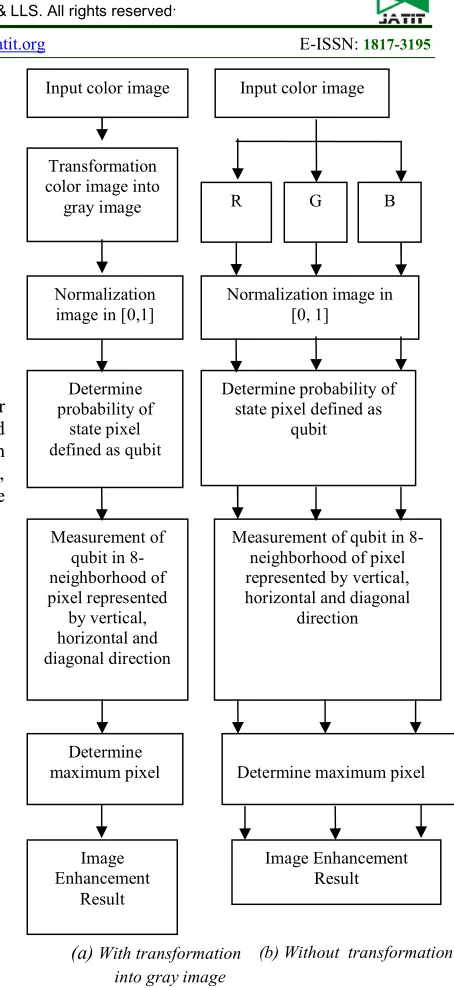
The stages of image enhancement will be shown in figure 2.
Image enhancement method is conducted based on quantum principle. In this stage, quantum principle is used when the qubit is mapped into 8-neighborhood of pixel. So it will allow for various combinations of states as a result of the number of qubits used in each direction.
Image enhancement is done to obtain smoothing area and sharp edge begins by performing normalization. Image is processed in two parts, with transformation that produces gray image in one channel and the image is processed without transformation processed by each channel in RGB. Process begins with normalization which aim to match with qubit values between 0 and 1. Then it determined the probability of state pixel defined as qubits. In this case three qubits used to represent 8-neigborhood pixels.
[image:3.595.292.519.93.587.2]Then the quantum measurement is based on the 8-neighborhood, represented vertically, horizontally and diagonal direction. Image enhancement results obtained based on the maximum measurement.
Figure 2. Image Enhancement Stages
3.3. Edge Detection
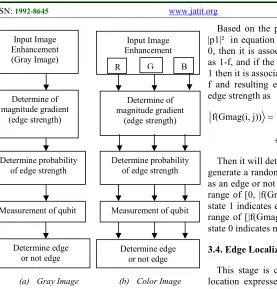
Edge detection stages are shown in figure 3. By using the quantum principle, each pixel will be mapped to qubit state that has a range of possible pixel values which can 0 (black) state, 1 (white) state or both of the states (0 and 1).
Input Image
Quantum Image Enhancement
Quantum Edge Detection
Edge Localization
Input color image
Transformation color image into gray image
Determine probability of
state pixel defined as qubit
Measurement of qubit in 8-neighborhood of pixel represented
by vertical, horizontal and diagonal direction
Determine maximum pixel
Input color image
Image Enhancement
Result
R G
Determine probability of state pixel defined as
qubit
Measurement of qubit in 8-neighborhood of pixel represented by vertical, horizontal and diagonal
direction
Determine maximum pixel
Image Enhancement Result
(a)With transformation into gray image
(b) Without transformation B
Normalization image in [0,1]
[image:4.595.97.374.104.393.2]
155
Figure 3. Edge Detection Stages
Process begins with reading the image enhancement result (IE) based on gray image in one channel and on color image. The process is in each channel RGB. Edge strength determined by the first derivative is Sobel operator. Then it will calculate the vertical edge gradient (Gver), horizontal gradient (Ghor), and magnitude gradient (Gmag). Vertical and horizontal gradient calculated based on convolution, multiplication image enhancement result and Sobel kernel (Kx for vertical kernel, Ky for horizontal kernel). Convolution of Gx or Gy values are as follows:
Gver(i,j)
= (IE(i,j)*Kx(1,1) + IE(i,j+1)*Kx(1,2) +
IE(i,j+2)*Kx(1,3) + IE(i+1,j)*Kx(2,1) (3) Ghor(i,,j)
= (IE(i,j)*Ky(1,1) + IE(i,j+1)*Ky(1,2) + IE(i,j+2)*Ky(1,3) + IE(i+1,j)*Ky(2,1) (4) Gmag(i, j)
= Gver(i,j)2+Ghor(i,j)2
(5)
Result of edge strength (Gmag) will determine the probability of the edge strength by function
f(Gmag) = (Gmag a)/b
e 1 1 − − + (6)
Based on the probability measurement |p0|² and |p1|² in equation (1), if the measurement is in state 0, then it is associated with p0 probability defined as 1-f, and if the result of the measurement is state 1 then it is associated with p1 probability defined as f and resulting equation will obtained probability edge strength as
=
j))
f(Gmag(i, 1−f(Gmag(i,j))0
+ f(Gmag(i,j))1
(8) Then it will determine quantum measurement with generate a random number to get a state represented as an edge or not edge. If the a random number is in range of [0, |f(Gmag)|2] then result measurement in state 1 indicates edge, and if a random number is in range of [|f(Gmag)|2, 1] then result measurement in state 0 indicates not edge.
3.4. Edge Localization
This stage is completed to determine the exact location expressed an edge or to detect edges as closely to possible actual edge. The determination is based on following conditions:
- In direction 0°, if (Ghor) > (Gver) and (Gmag(i,j)) > (Gmag(i-1,j)) and
(Gmag(i,j)) > (Gmag(i+1,j)) then expressed as “edge”
- In direction 45°, if (Gver) > (Ghor) and (Gmag(i,j)) > (Gmag(i+1,j-1)) and (Gmag(i,j)) > (Gmag(i-1,j+1)) then expressed as “edge”
- In direction 90°, if (Gver) > (Ghor) and (Gmag(i,j)) > (Gmag(i,j-1)) and (Gmag(i,j)) > (Gmag(i,j+1)) then expressed as “edge”
- In direction 135°, if (Ghor) > (Gver) and (Gmag(i,j)) > (Gmag(i-1,j-1)) and (Gmag(i,j)) > (Gmag(i+1,j+1)) then expressed as “edge” otherwise expressed as “not edge”.
In RGB image, edge normalization is made to get an edge value. If all three channels are combined, then it enables the occurrence of a value greater than 1. It is considered equal to 1, if else 0.
4. EXPERIMENTALRESULT
In this section we describe the results of proposed method. Input image is "airplanes" color image shown in Figure 4(a)-(e).
Input Image Enhancement (Gray Image) Input Image Enhancement Determine probability of edge strength
Measurement of qubit
Determine edge or not edge
(a) Gray Image (b) Color Image
Determine of magnitude gradient (edge strength) Determine of magnitude gradient (edge strength) Determine probability of edge strength
Measurement of qubit
Determine edge or not edge
156
(a) airplanes-1 (b) airplanes-2
(c) airplanes-3 (d) airplanes-4
(e) airplanes-5
Figure 4. Input Color Images
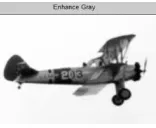
[image:5.595.93.345.99.356.2]Image enhancement on color images with transformation produces smoothing on gray image shown in figure (5), whereas the results of image enhancement in color images without transformation produces the image on gray image in each channel, shown in Figure 6(a)-(c). The image enhancement result of RGB channel that produces color images is shown in Figure 6(d). In Figure 4(a) and 6(d) it can be seen that the image enhancement in color images without transformation has an image with the same color as the original image. The image results are smooth than original image so that the difference between a color with another color with the limit edge is more obvious.
Figure 5. Gray Image Enhancement
(
a)R-Channel (b) G-Channel(c) B-Channel (d) RGB Channel
Figure 6. Color Image Enhancement
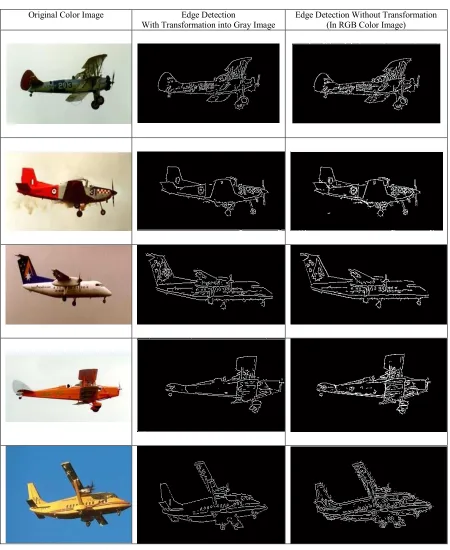
The proposed edge detection results are presented in Table 1. The table shows the result of edge detection with color images with transformation and without transformation. The edge detection algorithm on color image without transformation can produce clearer images. It can detect more and properly edges than color images with transformation edges.
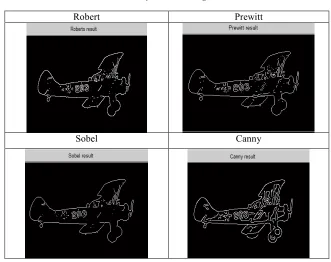
Table 2 shows edge detection algorithm based on classical computing. Table 2 is an image “airplane-1” which is processed into classical edge detection. The figures showed that the edge is only produced at the outer limits of the image, while the edges within the image have been lost.
5. CONCLUSION
In this research, a new algorithm is proposed to identify edges on color images based on quantum superposition principle. The algorithm is divided into two processes, color images with a transformation phase into gray image where the data is processed in one channel and without transformation phase where the data is processed in each channel on RGB color spaces.
The experimental results show that the image enhancement on color images with transformation produces image on gray level channel, while without transformation produces image on the RGB channel. The edge detection algorithm on color image without transformation can produces clearer images because the edges detected more than color images through transformation. The proposed algorithm on color images with transformation still has advantages over the classical edge detection algorithms Robert, Prewitt, Sobel and Canny, due to the superposition principle of quantum computation that can process data simultaneously.
[image:5.595.155.233.554.618.2]157 produce more accurate information from an image that can be used later for image analysis.
6. REFERENCES
[1] Anil Kamboj, Kavita Grewal, Ruchi Mittal, 2012, “Color Edge Detection in RGB Color Space Using Automatic Threshold Detection”,
International Journal of Innovative Technology
and Exploring Engineering (IJITEE), August
2012, ISSN: 2278-3075, Volume-1, Issue-3. [2] Chien-Chien Tseng and Tsung-Ming Hwang.
2003, “Quantum Digital Image Processing Algorithm”, Conference on Computer Vision,
Graphic and Image Processing.
[3] Eldar Y C, Oppenheim A V, 2001. “Quantum Signal Processing”, IEEE Signal Process Mag, 19(6). 12-32.
[4] Gonzalez, R.C. and R.E., Woods, 2002, Digital
Image Processing, Pearson Education Inc.
[5] Mohamed D. Almadhoun, 2013, “Improving and Measuring Color Edge Detection Algorithm in RGB Color Space”,
International Journal of Digital Information
and Wireless Communication (IJDIWC)3(1):
19-24, The Society of Digital Information and Wireless Communication (ISSN:2225-658X). [6] Rinaldi Munir, 2007, Pengolahan Citra
Digital. Bandung: Informatika.
[7] Soumya Dutta, Bidyut B. Chaudhuri, 2009. “A Color Edge Detection Algorithm in RGB Color Space”, International Conference on Advances in Recent Technologies in Communication and Computing.
[8] Salvador El´ıas Venegas-Andraca, 2005, Discrete Quantum Walks and Quantum, Image Processing, Thesis submitted for the degree of Doctor of Philosophy at the University of Oxford.
[9] Xie Ke-Fu, Luo An, 2005, “Research on Quantum-Inspired Mathematical Morphology”,
ACTA Electronica Sinica. 33(2,. 284-287
Brown, L. D., Hua, H., and Gao, C, 2003, A widget framework for augmented interaction in SCAPE.
[10] Xiaowei Fu, Mingyue Ding, Yangguang Sun, Shaobin Chen, 2009, “A New Quantum Edge Detection Algorithm For Medical Images”.
Proc of SPIE. Vol 7497, 749724.
[image:7.595.74.524.158.708.2]
158
Table 1 Result Proposed of Edge Detection
Original Color Image Edge Detection
With Transformation into Gray Image
Edge Detection Without Transformation (In RGB Color Image)
[image:8.595.131.462.158.420.2]
159
Table 2. Result of Classical Edge Detection
Robert Prewitt