Holding Still
Reflections on My Search for the Frozen Moment
ABSTRACT
Holding Still: Reflections on My Search for the Frozen Moment
Holding Still is a video installation and live performance that explores relationships between memory, photography, time, representation and the separation between self and image. This document presents an accumulation of research, reflections and personal anecdotes that have driven the artwork. Through Bartges’ search to understand her relationship with her deceased father’s image, she examines her old photos and home videos in the context of historical photography and discussions of transformation, mechanical reproduction and the psychology of the extended self. Bartges also discusses performance experiments of self-representation, labor, repetition and reen-actment as methods to resuscitate the media remnants left behind.
ACKNOWLEDGEMENTS
These last three years as a student in the Stamps School of Art & Design have been pivotal to my art practice and my life. I could not have accomplished this work without the support of the incredible faculty, staff and fellow graduate students here at the Stamps School. Ques-tions posed during studio visits and critiques will continue to drive and challenge my work for years to come.
Thank you to my incredible family, and especially to my Mom for thirty-one years of encouragement, and for believing in my dream to be an artist. Thank you to my loving, supportive husband Jesse for his patience, pep talks, home cooking, and sense of humor that gave me the strength to push myself, and the courage to fail.
Special thanks to my thesis committee chair and mentor, Rebekah Modrak, for her engaged and powerful questions, her high expec-tations, her push to always dig deeper, her encouragement and her friendship. I thank my dream-team thesis committee members: Seth Ellis for his tough questions and keen ability to distill and analyze a work in progress; Andy Kirshner for six semesters of critical insight, honest and thoughtful feedback and support; and EJ Westlake for her encouragement and for demystifying postmodernism. Thank you to Nick Tobier, Osman Khan, Matt Kenyon, David Chung, Holly Hughes, Jim Cogswell and Stephanie Rowden for many studio visits, rigorous questions and support. Many thanks to Tom Bray, Brad Smith, Elona Van Gent, Wendy Dignan and Jennifer Wubbenhorst for their guidance and lots of help along the way. A big thanks to my graduate cohort: Juliet, Parisa, Katie, Mia, Molly, John, Rolando and Pete for their friendship, community, and kindness. I am eternally grateful the Stamps School of Art & Design, the Smucker-Wagstaff family, and Rackham Graduate School for the generous financial support of my research.
TABLE OF CONTENTS
Forward
9
Introduction 9
For
Posterity 18
Memory
&
Media 19
Performance 31
Works
Cited 45
FORWARD
This thesis is an accumulation of research, reflections and personal anecdotes that inspired the artwork, Holding Still. The introduction opens the text with detailed descriptions of each work. I have divided the remainder of the book into two parts: Memory & Media and Performance. In the simplest terms, these parts address, respectively, content and method. However, like memory itself, the topics and stories within each part compose webs of relationships that resist linear structure. I have separated discussions of context and analysis of
the artwork from the personal accounts that have shaped and driven my research.
INTRODUCTION
10
a + A
video projection played on loop video duration: 00:11:25
projection: 36” x 19”
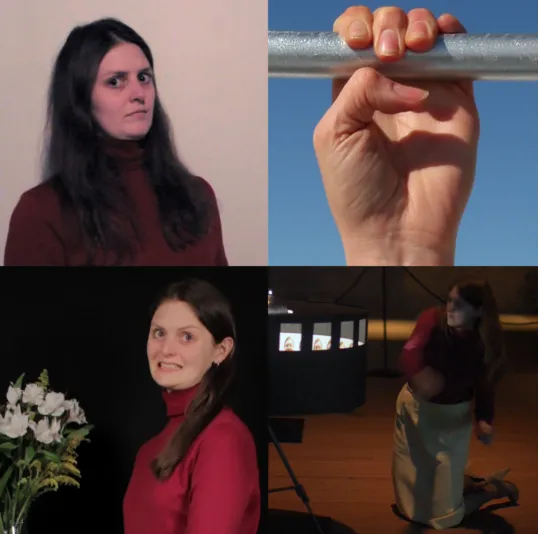
a + A is a video diptych projected at the height of a nine-year-old girl. On one side of the screen is an expressive 15-second looping clip of my nine-year-old self. The clip was extracted from a VHS home video that my Gramps made during my ninth birthday. On the other side is an 11-minute video of my current self, age 31, working to re-enact younger Ann’s expressions from the adjacent video.
Our Hands
video projection played on loop video duration: 00:02:00 projection: 84” x 110”
1414
Ann & Video Ann
video projection played on loop with live performance video duration: 00:12:12
performance space: 72” x 96”, projection screen: 52” x 84”
Ann & Video Ann is a video projection and live performance. On the left, a waist-high white pedestal stands in front of a black backdrop. A white tablecloth with a colorful grapevine pattern covers the pedestal. A vase with fresh white and yellow flowers sits on top. On the right, a video projection presents a scene identical to the set on the left, with the addition of a framed photograph of my deceased father (the frame is three-dimensional, and hangs on the projection screen).
Video Ann, my life-sized video double, prepares to take a portrait with my Dad’s framed photo. She arranges the set and poses for the portrait, but no picture is taken. Video Ann is left to hold her position for several minutes. Eventually, she gives up and tries anoth-er pose.
I enter the scene during Video Ann’s second pose. I attempt to stand in the beam of her projection and visually merge myself with Video Ann. After failing to do so, I step back and interact with her from the left side of the set. We move through a sequence of mirroring. I break our synchronization and steal Dad’s framed picture from her screen. The conflict is left unresolved with the mysterious disappearance of my Dad’s face from his photograph.
Blink
zoetrope, live feed video projection and looping performance
FOR POSTERITY
An Interview with My Dad on My 9th Birthday
(Transcribed from VHS)
Dad: Here we are at channel 5430 in Emmaus, PA, interviewing the famous Ann Margaret Bartges on the occasion of her ninth birthday. Now, you regular viewers may recall some other birth-days, birthdays where Ann Margaret had jumped into her cake and rubbed it all over herself, birthdays when she was 2 years old or birthdays where she was 3 years old. This, however, is the first time that we have had an opportunity to interview her at 9 years old. Now, Miss Bartges, what is it like to be a 9-year-old?
Ann: I hate to say it, but I’ve only been 9 years old for five or six or more hours so I really don’t know. I haven’t even been 9 years old for a day yet.
Dad: Well, how was the first hour of being 9 years old? Could you tell, like, at the time you were born? Did you tingle all over and just poof! turn 9? Or did it happen slowly over the first several hours?
Ann: Apparently slowly over the first several hours.
Dad: I see, so you’re still in shock. . . (several minutes later)
Dad: Well, as we wrap up this interview for this evening, are there any final words you’d like to pass on to posterity?
Ann: Umm, yes, once you get into 3rd grade. . .you don’t do any-thing but work. Head over heels work work work. I mean, it’s fun work, but you’re always doing more work. There’s never any time that you’re bored.
Dad: Isn’t it awful being a grown-up?
Ann: I don’t know.
Dad: Alright, well do you want to say goodbye to yourself?
Ann: No.
Dad: Because maybe on your 12th birthday whenever you go back and watch this from your 9th birthday you’ll want to say “hello” to yourself even though you’re not there yet, kind of like a hello for-ward into the past?
Ann: Hello to myself, forward in the past.
Dad: And thank you. That’s all the time we have right now from sta-tion 5430 here in. . . (video fades out).
MEMORY & MEDIA
Memory is a small word that contains entire worlds. With a minimal exertion of will, anyone can conjure up a vision
of places and people long since destroyed by the passage of time, whose impressions remain encoded along winding
synaptic paths.
Lewis, Amini & Lannon,
A General Theory of Love
Photography was invented so that Westerners could record and represent the world. The technology offers a unique way
to redeem the past—a highly realistic pictorial record of that which is no more. It provides us with a mechanical memory.
While photography is able to “permanently” record any place or event deemed memorable, it is Americans’ virtually
unlimited and insatiable need for human likeness that accounts for the enormous popularity of photography in the United
States. In a world where metaphysical hope for immortality is questioned by many, photographs promise a materialist
realization of eternity.
Jay Ruby,
Secure the Shadow: Death and Photography in America
I grew up in the era of the “Kodak moment” when any event worth remembering was worth taking a picture of. For my seventh birth-day, I received my first point and shoot film camera. Soon after, my mother taught me the ritual of arranging my prints in an album the way that she and my grandmother always did. Now, years later, it is difficult for me to separate the first-person memories of my experi-ences as a child from the third-person moments depicted in those freeze-frames. At the heart of my confusion is a conflict between internal and external modes of memory.
Last summer, my cousin’s wedding photographer delivered a DVD with 1200 images from the day’s events. Grandpa scoffed at the
THE MEDIATED IMAGE
I am interested in the photographic metamorphosis of a person from being to image. Whether through live video chat or old family photos, we increasingly rely on mediated versions of loved ones when absence, via distance or death, prevents physical presence. Roland Barthes discusses this moment of transformation in Camera Lucida. He writes, “In terms of image-repertoire, the Photograph (the one that I intend) represents that very subtle moment when, to tell the truth, I am neither subject nor object but a subject who feels he is becoming an object: I then experience a micro-version of death (of parenthesis): I am truly becoming a spectator” (14). But what, exactly, is carried through from the physical body to the copy? In the hands of a loved one, the media is at once cold and unresponsive, but also a proxy for a relationship filled with history, memory and emotion.
Walter Benjamin examines the value of the copy in his essay, The Work of Art in the Age of Mechanical Reproduction. He considers issues about the authenticity of an original artwork compared to its reproduction. He argues that the critical element missing from a reproduction is “its presence in time and space” (221). This divide between the source and its copy may come across as understated when comparing a person to their photograph, but Benjamin’s argument strikes true to the photographic portrait as he observes that “. . .technical reproduction can put the copy of the original into situations which would be out of reach for the
joke. I didn’t understand, the way that he did, that everyone in those tapes would one day be dead, unless he preserved them to exist in the VCR.
Watching these old tapes now stirs emotion. Recently, I found one from my 9th birthday. When I put the tape into the VCR, I had hoped to time travel and relive the party. But my experience turns out to be quite limited, nothing more than looking in through a window. I have no first-person memory of the birthday party unfold-ing before me on the screen. I find it easier to analyze my younger self than to relate to her. Twenty-two years has transformed me from this 9-year-old character into an omniscient narrator. I am like Alice and the chess pieces just after she passes through the looking glass: she can see them, but they have no knowledge of her pres-ence.
In a + A, I attempt to reunite with 9-year-old Ann through mimesis. In the studio, I watch the video clip on repeat and use a mirror to try and re-learn the facial expressions of my former self. After several hours of working to retrace my own steps, I am still un-able to achieve perfect synchronization, and I have not gotten any closer to 9-year-old Ann.
This image has become my lasting reference of my father. I took the picture during an afternoon out together. We took a tandem kayak up north to the lake. As we paddled, I took my camera and leaned back to take a picture of Dad, sitting directly behind me. It turned out to be my last snapshot of him. After he died, I found the print and framed. It has been sitting on my dresser for six years. I was behind the camera, so I know his eyes are looking at me.
22
After failing to become my own image, the focus of my performance with Video Ann shifts to the framed photograph of my Dad. I steal the photograph from her projection screen, hoping that if I take him out of the image world, I could have a piece of him back. The look on Video Ann’s face shows her distress. To make matters worse, the image of my Dad’s face on the stolen photo-graph has mysteriously disappeared. Video Ann and I have both lost access to the picture. As I developed this scene, I wanted to visualize how one re-experiences the loss of a loved one vicariously through the loss of their mediated image. The missing image itself causes emotional pain, suggesting that the photograph is more than just its material. In his article, Possessions and the Extended Self,
Russell Belk discusses the ways in which our possessions become part of our own extended sense of self. Belk’s definition of posses-sions extends to people, in the context of, for example, my father. Hence, “mourning for dead loved ones may also be interpreted as grieving for a loss of self” (144). Possessions that trigger happy memories, such as photographs of family and friends, are particu-larly valuable (148). Belk explains that, “If possessions are viewed as part of self, it follows that an unintentional loss of possessions should be regarded as a loss or lessening of self” (142). Following Belk’s argument, the loss of a photograph can trigger grief, not only for the loss of what the portrait image represented, but also for the loss of self that the image maintained.
Gramps set up his camcorder in the front row pew to record Dad’s funeral. I remember feeling disgusted. Not only did the idea of re-experiencing the event seem perverse, but also the legs of the tripod took up too much space in the crowded sanctuary. I resented that Gramps’s camcorder had a better view of Dad’s casket than I did.
DEATH, MEDIA, AND LIVENESS
In the Victorian era, due to the expense of the technology, many people had only one photograph taken during their lifetime, if at all. Sometimes, a photograph was not taken until after death. Some photographers specialized in post-mortem photography and wrote articles sharing the tricks of the trade, including helpful tips for positioning the body and keeping the eyes and mouth closed, and techniques to manipulate the light in the room to cast a life-like glow on the face of the deceased (Ruby 62). Families often posed for a final group picture with the lifeless body, especially in the case of deceased children (Ruby 44).
combined—the photographic plate and the Spiritualist seer—then an image of the spirit might be produced” (11). As the photographic process and techniques of double exposure became common knowledge, faith in spirit photography dwindled. The magic of the photograph remains in the immortality of the image itself.
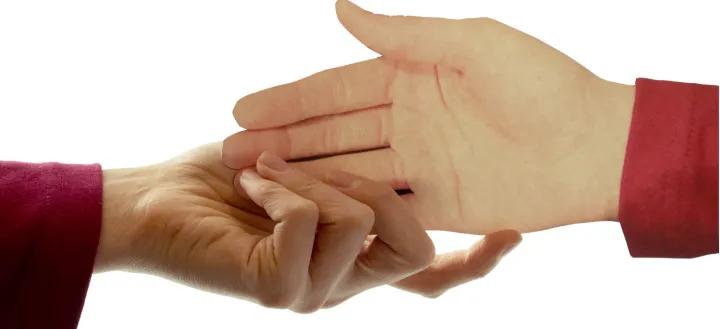
[image:14.1584.396.657.70.538.2]The immortality of the photographic image is bittersweet. One finds comfort in the stasis of a photo, but it seems unfair that the copy outlives the source. The condition of the copy outlasting its source is a recurring theme in Holding Still. In Our Hands, the photographic hand is a mere shadow of the hand it depicts. Yet the corporal hand falls under its own weight. The photographic hand foils the live hand, causing it to seem heavy, weak, and finite. The act of reaching, gripping, and holding onto the metal bar shows the desire to hold onto something concrete, and, in this case, the impossibility of doing so. In Ann & Video Ann, Video Ann wants to take a portrait with Dad’s photograph. She hopes to capture a new moment with him. She poses and smiles, but the moment never freezes. She works to mimic the still picture by trying not to move. The photograph of her father holds strong and unchanging. But Video Ann’s smile grows stale and tired, and her eyes begin to cross. Eventually, she gives up.
Figure 3: Rafael Lozano-Hemmer, Last Breath, 2012
My Dad passed away unexpectedly in 2008 when an aneurism burst in his brain. He spent the last two weeks of his life in a medically induced coma in the Neuro-ICU. I stood by his side and practiced a desperate hope that the machines maintaining his vital organs would keep him not dead. About a year after his death, I had a dis-turbing dream. In the dream, I learned that he was still in a coma and had been moved to the basement of the hospital. For months the hospital had let my family believe he was dead. I was regretful for all of the time that we had missed with him, that he had been alone, forgotten. But worse was that he was still stuck there in life support purgatory—not able to live, but not able to die.
26
As a character, Video Ann exists as both a mediated version of me, and also as an independent presence. When I’m not in the scene, she seems to live in contrast to my Dad’s photograph. How-ever, when I approach, I disrupt the illusion of her liveness. I foil her virtual image with my physical presence. But she foils my physicality with her effortless loop and her image immortality. Throughout the piece, Video Ann shifts from a seemingly independent character, to my mirror image, to a looping video of a captured moment. This fluid transformation from presence to mirror to image encapsulates the role of a photographic portrait in the mind’s eye.
I see a relationship between the medically induced coma and the photographic portrait, two forms of life support offering the comfort of partial presence. Whether ventilator or camera, technol-ogy holds the body in a static state of the existing self. On life sup-port, the body is mechanically preserved: functioning via machine, caught between the states of here and not here. On both a techni-cal and emotional level, induced coma saves the body from death, as does the photograph.
Rafael Lozano-Hemmer’s Last Breath addresses life support as preservation, while revealing the conspicuous absence of be-ing. The artwork is a machine made from a pump and repurposed ventilator parts. It maintains a captured breath from Cuban singer and cultural legend, Omara Portuondo. The exhaled air was trans-ported to Lozano-Hemmer’s studio in a paper bag. The bag was then fastened carefully to the Last Breath machine. The machine pumps and circulates the breath through a series of hoses, caus-ing the bag to rhythmically inflate and deflate, like a lung. When Portuondo passes away, the breath from her body will live on in this machine. The gesture of preservation here is poetic but limited. Like a ventilator in the ICU, the machine facilitates body-like function. The breath, the body, is preserved through automated motion. Conscious presence, however, has gone missing.
This past January, I had the opportunity to speak with Lozano-Hemmer about Last Breath. In his lecture, he had talked about the cultural significance of preserving Portuondo’s breath.
When I asked him about the piece, he said that the first version circulated his mother’s breath. “But,” he said, “then she died and it became very problematic.” He shared that her passing complicated the piece too much for him, and he had to let her breath go. He said that he had not considered exhibiting the piece with his mother’s breath. Lozano-Hemmer felt that in order for the artwork to be rel-evant, it had to preserve a cultural icon, someone the public already knew. But I disagree. Everyone knows mother. I feel the piece would have been even more relatable as Mother’s Last Breath. I believe in the power of the transitive property.
In Blink, I become a life-support machine by spinning a zoetrope, which animates my Dad’s photograph. I altered his photo to make the animation strip. Photoshopping my Dad’s portrait, mak-ing his eyes more visible by uppmak-ing the brightness/contrast levels, felt strange. I forced him to close his eyes with my crude use of the stamp tool. By creating a series of images and altering his eye-lids differently in each, I made him blink. It was thrilling to see this image, static for so long, have new life. For a fleeting moment, I felt as though I had resuscitated him. I maintain this illusion by playing
It has been two years since my Gramps passed away, and a year since my Gram’s death, but the piles and boxes of handwritten let-ters, photographs, newspaper clippings and other such memorabilia remain stubborn and unsorted in my mother’s basement. This past October, my Mom was going through some envelopes of pictures from Gram and Gramps’s house. Without the warning of a label or notation, she found herself holding prints of my deceased father in his open casket. She phoned me, shaken by an image she had tried to forget, and enraged by the posthumous inconsideration of my grandparents to leave them carelessly where she would find them. “Throw them away!” I said. “You don’t want to look at them—it’s not how you remember him.” “I can’t,” she said, “How can I part with any images of him, no matter how horrible, when I know there will never be any more?” She said she hid them away in a file where we, the kids, wouldn’t find them. But someday, I suspect that we will.
30
PERFORMANCE
“[Happenings] were real events rather than representations of events. This was important for two reasons. First. . . this
segued with the polemics of avant-garde theater, which gave rise to performance art. And, secondly, it corresponded to
the anti-illusionist bias of gallery aesthetics.”
Noel Carroll,
Performance
PERFORMING MYSELF
Performance is a form I have wrestled with in graduate school. I do not enjoy being ‘on stage.’ However, my work relies on contrast, and my interests in simulation and the material and psychological boundaries of virtual space have demanded I use the physical body to complicate illusions of mediated presence and captured time. In Holding Still, I explore personal narrative by performing in the work myself.
In earlier versions of Ann & Video Ann, I struggled with acting. The problem, I realized, was that I was trying to act, self conscious about performance. In First Kiss, by Tatia Pilieva, Pilieva records strangers sharing their first kiss together. Acting does not matter in this piece because there are no criteria for a success-ful response; any outcome is acceptable, whether it is awkward or sweet or forced. Janine Antoni plays with this ‘composed real’ scenario as well. In Slumber, Antoni sleeps in the gallery and then weaves her REM data into a long tapestry over the course of 28 days. She balances the composed use of tools and props (bed, elec-troencephalograph, loom, tapestry) and her actions (sleeping and weaving) with the unfolding experience of living in the space and working through her task. Through repetition and consistent dress, she exists in the work as both artist and character. Throughout the performance, she interacts candidly with the audience. She asks visi-tors about their own dreams, using conversation to avoid becoming another object within the piece (Spector 14).
the sequence of prompts, but the prompts themselves allowed me to simply fulfill a task. I designed my performance to work within well-known emotional territories of longing and determination, trusting my face and body language to reveal something honest.
[image:18.1584.1219.1541.125.396.2]
34
LABOR
As I developed my use of scores to guide my performances, I began to understand labor as a critical element within my artwork. I researched the early performance work of Marina Abramovic and Ulay (Frank Uwe Laysiepen). In their Relation Works series, 1976-79, Abramovic and Ulay determine a gesture and a set of rules as the score for each performance. They commit to the task of working through the experience of the gesture. Within each performance, the labor of their bodies dispels artifice. Traditional theater relies on the skilled representations of emotion and action to build a narrative arc. Abramovic and Ulay present intrinsic narrative: they are woman and man, they are partners, and they work together to complete a known task with an unknown outcome.
The score for Relation in Time, one of the best known works from the Relation Works series, reads: “Without Audience: We are sitting back to back, tied together by our hair without any move-ment. Time: 16 hours. Then the audience [comes] in. We continue sitting for one more hour.” (Abramovic 168). This performance appears at first passive, but the task of sitting still fatigues the body. For seventeen hours, Abramovic and Ulay worked to remain static. When the audience arrived, they saw the marks of passed time on
the performers through their posture, their expressions, and tangles in their hair from hours of slight movements. One has no need to feign exhaustion when the body is tired.
In Holding Still, I, too, use labor to bridge scripted gestures with unscripted experience. Gestures of work and labor visualize emotional efforts of desire and determination to achieve or main-tain stasis. In Ann & Video Ann, a + A and Our Hands, the simple tasks of holding a pose, replicating a short loop of action, and hanging from a bar are aggravated by duration. Gesture becomes struggle and test of strength as time passes, challenging my will and endurance to follow through with the score. In this way, actions of labor in my work illustrate the experiential suffering of the mind and body during phases of mourning and grief.
In Blink, the role of labor is a bit more complex. As I spin the zoetrope, I implicate myself in the construction of my own delusion. The zoetrope, a 19th-century pre-cinematic device, relies on the manual participation of the viewer to create the illusion of a mov-ing image. In his book, Techniques of the Observer, Jonathan Crary points out the significance of the “operational structure” of optical toys such as the zoetrope, thaumatrope, and stereoscope. Although the components of these Victorian devices were mass-produced, they required the physical participation of the viewer to fulfill the promise of the mechanism, activating the visual effect of “real” motion or depth (132). Crary argues, “Even though [these devices] provide access to “the real,” they make no claim that the real is any-thing other than mechanical production” (132). In Blink, the manual gesture of spinning the zoetrope invokes a signal of vitality in Dad’s photograph. Over the three-hour performance, maintaining my Dad’s blink gets harder. The zoetrope becomes heavy and my arm grows tired. When kneeling becomes too uncomfortable, I rear-range my body and crouch on my feet. When my feet tingle and fall asleep, I move back to my knees. The visual effect of the repetition reveals my emotional motivation to maintain the living image, while my body becomes just another component to the machine sustain-ing the illusion of life.
[image:19.1584.38.578.40.574.2]35 Figure 5: Marina
THE LOOP
In 2001, Klaus Biesenbach, chief curator of the KW Institute for Contemporary Art, curated the group exhibition Loop at MoMA PS1. The introduction to the exhibition discusses the psychological weight of the loop:
“Continuous return keeps everything in an agitated stillness, which leads nowhere and which raises the question of life’s purpose. Here time appears as the antithesis of the traditional notion of vanitas (the linear image of the candle that burns out). It no longer leads inevi-tably to an end, to death; rather, it seems to have been disempow-ered due to the fact that it is recyclable, as in the myth of Sysiphus.” (MoMA PS1).
This indefinite suspension of linear time is akin to the effect of a photograph, even with the significant addition of performed action. One of the works included in Loop was Schwimmerin, by Heike Baranowsky. In Baranowsky’s video, a swimmer in a pool completes one revolution of the freestyle stroke on repeat, never moving forward. Here, the looping repetition of the single stroke takes an ordinary act of labor and transforms it into a mythological story of perpetual work without gain. Despite her efforts, the swimmer is stuck in place, never even coming up to take a breath.
In Holding Still, I work with repetition and looping to mir-ror the continuity and stasis of the photograph, and to reference the emotional experience of a recurring memory. Our Hands loops
In a + A, two video loops play at once: 9-year-old Ann runs on a 15-second loop, and my reenactment plays on an 11 1/2-minute loop. The dual loops show an endless game of mimicry between the two of us. At times it is hard to tell who is imitating who, creating a confusing blurring between source and copy. Twice throughout the loop, 9-year-old Ann disappears, disrupting the illusion that young Ann and I can exist in the same space together. The absence is striking, leaving me to carry on alone. I appear to lose motivation for my repeated action, having lost a part of my extended self.
I first explored looping through live performance as a way to merge mediated and physical worlds. I wanted to show the weak-ness of the body in comparison to the resilience and immortality of the video clip. During the performance segment of Ann & Video Ann, I bring a mediated loop and a live loop together in the form of a confrontation between Video Ann and myself. My goal is to build the illusion that Video Ann and I are responding to each other candidly, in real time, despite the obvious hitches that the video has been pre-recorded, and the performance has already been per-formed. By performing my role over and over, keeping time with the video loop, I, too, appear to be automated. I take on this media-like quality to confuse the separation between actual and virtual worlds in pursuit of my yearning to suspend time.
mecha-38
off the screen in the same magenta turtleneck, yellow linen skirt and gray pumps. The color of my magenta top matches the one worn by 9-year-old Ann. The consistency of our outfits encourages the illusion of fluid metamorphosis from child to adult. The addition of the skirt and heels for Ann & Video Ann and Blink presents “busi-ness casual” attire—the kind of outfit my mom would wear to church or to get her picture taken. I make a visible effort at my appearance without crossing into the realm of glamour. I want to look like an average adult who is trying to look nice. The uniformity of my outfit plays with ‘duplicate image,’ pointing back to my interests in source and copy.
I miss the long conversations I used to have with my Grandmother, back when I lived just up the hill. One afternoon, we were talk-ing about feeltalk-ing young. She said, “You always feel the same, you know—you never feel any older on the inside. Sometimes I catch myself in the mirror unexpectedly and am surprised by my own face. How did I become such an old woman?”
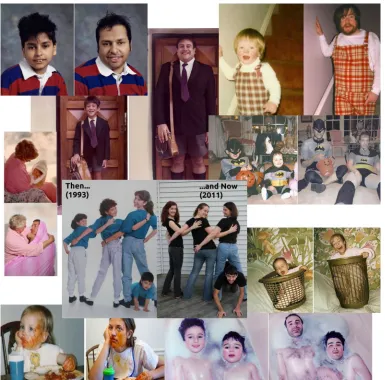
Figure 6: Google image search for “re-create childhood photo,” 2014
REENACTMENT
“A reenactment is the ultimate photographic act, the process of reproducing a living representation.”
Rebekah Modrak, Reframing Photography
A Google image search for “re-create childhood photo” yields many homemade side-by-side diptychs of adults dressed up as their childhood selves and posing to re-make an old photograph. But restaging an old family photo does more than confirm the effects of time on the body; it allows the reenactor to revive the image by reanimating the frozen gesture and expression. As Jennifer Allen writes, “. . . the body remains the vehicle that can carry the past into the present, that can give the past presence. After all, the reenactment is much closer to the zookeeper’s living charges than the taxidermist’s stilted creatures,” (181). Perhaps body language is the rosetta stone with which to translate the image and former self into the present moment.
[image:22.1584.278.663.171.551.2]appears to be visible in various photographs” (172). This form of therapy helps Spence dispel painful memories and find peace through newfound speculative understandings of her mother’s struggles. What interests me most about Spence’s photo therapy work is the way that she resuscitates the image via reenactment, changing her existing relationship to the person in the picture. In a + A, I reenact my younger self. This exercise was my solution to overcome the distance between 9-year-old Ann and my present self. The resulting video diptych combines the two clips in an urgent but futile attempt to reunite with my mediated self. Although there are short-lived moments of synchronization, my tendency to race ahead or lag behind substantiates the impos-sibility of retracing my own steps. To my surprise, my experience in making this piece connected me more with my grandfather than with my former self. Like Spence’s reenactments of her mother, this experience opened my speculative mind to the issues surrounding the moment that I was oblivious to as a child. Through the pres-ence of her media, 9-year-old Ann remained locked in time and unapproachable. Gramps, however, was absent from the image but present as both photographer and viewer. I related to him as a fel-low viewer of younger Ann, which led me to consider his emotional response to this captured moment. I considered his mild frustration with an obstinate granddaughter, and his practice of making these videotapes as a form of preservation, and perhaps memorial.
42
ONWARD
At the beginning of this project, I saw working with my personal experiences and archives as working with the facts. But as the piece progressed, I began to understand autobiography as another form of fiction. Phoebe Gloeckner prefaced a recent presentation of her autobiographical work by saying, “Any kind of narrative is artifice, whether or not it’s based on experience. . . .we only remember what’s important to us.” The longer I chased the absoluteness of a vivid memory, and the promise of a frozen moment, the further away I fell. The narrative goal in Holding Still is, first, to freeze the moment, and then, to resuscitate it—cryonic preservation through medi-ated image. In my next project, I must deal with my realizations of ever-present fiction in memory and retold personal stories. As in Holding Still, I will enter the ring as a believer, an idealist. I will work against what is already known to be impossible: to locate truth, to find something concrete. I construct my projects to move through the process of proving myself wrong. I take on the task of visual-izing a void not with expectations of success, but with the hope that, by putting up a good fight, my failure will help me understand my emotional resistance to letting go.
WORKS CITED
Abramović, Marina, and Velimir Abramović. Marina Abramović: Artist Body: Performances 1969-1998. Milano: Charta, 1998. 131-178. Print.
Allen, Jennifer. “Einmal ist keinmal: Observations on Reenactment.” Life, Once More: Forms of Reenactment In Contemporary Art. Ed. Sven Lütticken. Rotterdam: Witte de With, Center for Contemporary Art, 2005. 177-213. Print.
Barthes, Roland. Camera Lucida: Reflections On Photography. New York: Hill and Wang, 1981. Print.
Belk, Russell W. “Possessions and the Extended Self.” Journal of Consumer Research. 15.2 Sept. (1988): 139-168. Print.
Benjamin, Walter. “The Work of Art in the Age of Mechanical Reproduction.” Illuminalions. Ed. H. Arendt. London: Cape, 1970. 219-226. Print.
Carroll, Noel. “Performance.” Formations. 3.1 Spring (1987): 63-79. Print.
Crary, Jonathan. Techniques of the Observer: On Vision And Modernity In the Nineteenth Century. Cambridge, Mass.: MIT Press, 1990. 131-136. Print.
Ferris, Alison, and Tom Gunning. The Disembodied Spirit. Brunswick, Me.: Bowdoin College Museum of Art, 2003. 9-13. Print.
Lewis, Thomas, and Fari Amini. A General Theory of Love. New York: Random House, 2000. 100. Print.
46
CREDITS
Pages 4, 8, 10, 12, 14, 20, 23, 29, 34 and 42: Ann Bartges, Holding Still, 2014. Photographs by Alex Mandrila
Page 16: Ann Bartges, Holding Still, 2014. Photograph by Andrew Hanna. Pages 18 and 38: Stills from Ann’s 9th Birthday video, 1991. Video by
John Bartges.
Pages 22: Ann Bartges, photograph of Jeffrey Bartges, 2007.
Pages 24, 34, 36 and 38: Ann Bartges, stills from Holding Still source video, 2014. Pages 27, 32 and 39: Ann Bartges, work in progress, 2014.
FIGURES
Figure 1: Jay Ruby, Secure the Shadow: Death and Photography in America (Cambridge: MIT Press, 1995) 91. Print.
Figure 2: Alison Ferris and Tom Gunning, The Disembodied Spirit (Brunswick: Bowdoin College Museum of Art, 2003) 33. Print.
Figure 3: Shannon Christine Mattern, Tracks + Traces: More Art, Words in Space, 8 Jan. 2014, Web, 23 April 2014.
Figure 4: Janine Antoni, Ed., Janine Antoni (Küsnacht, Switzerland: Ink Tree, 2000) 18. Print.
[image:25.1584.829.1549.188.517.2]Figure 5: Marina Abramović and Velimir Abramović, Marina Abramović: Artist Body : Performances 1969-1998 (Milano: Charta, 1998) 169. Print. Figure 6: Images for “re-create childhood photo,” Google Images, Web, 17 April 2014.