Title:
“You don’t really have friends, you have acquaintances:” Exploring the experience of friendship for
‘Adult Third Culture Kids’ from the UK. An Interpretative Phenomenological Analysis.
Felicity Jane (Jay) McClellan
University of East London
i
Abstract
As globalisation increases more families than ever are relocating from their passport countries for
periods of temporary employment overseas. This has resulted in an increasing number of young
people being raised in overseas locations. These young people are collectively referred to as Third
Culture Kids (TCK) their adult counterparts are Adult Third Culture Kids (ATCKs). They are
different from immigrants, as they do not expect to permanently settle in the location in which they
have been residing. This lack of permanence has been criticised for engendering a variety of
difficulties that TCKs and ATCKs must face. Of interest to this study was the observation that
TCKs experience various difficulties with their friend relationships. This is problematic, as
friendship has been found to be crucial to indicators of well-being such as happiness, and longevity.
An interpretative phenomenological analysis of Adult Third Culture Kids’ experiences of friendship
was undertaken. Eight ATCKs from the UK, three men and five women, were interviewed using a
semi-structured interview schedule. Analysis revealed that participants’ experience of friendship
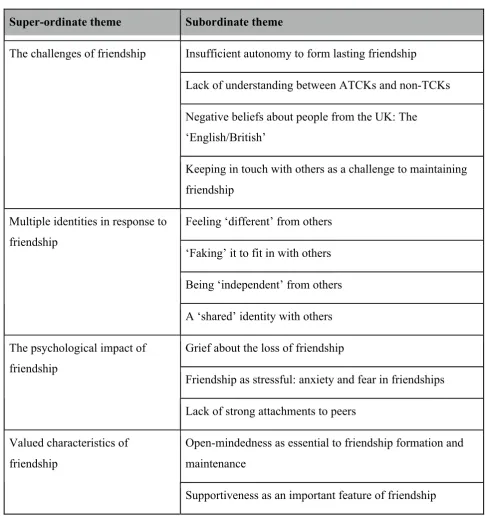
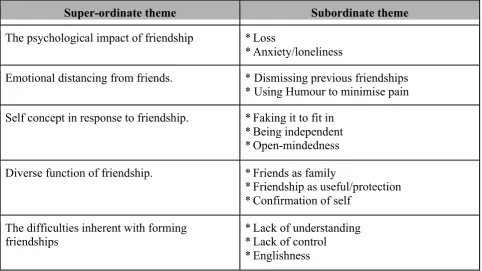
was situated in various themes. These included: the challenges of friendship; multiple identities in
response to friendship; the psychological impact of friendship; and valued characteristics of
friendship. Each theme was comprised of various subordinate themes that facilitated further
understanding of the super ordinate theme.
The findings were discussed with reference to the TCK literature and a wider review of
psychological theory. Particular attention was given to the discussion of attachment theory, as this
underscored several of the findings related to the Superordinate theme, the psychological impact of
friendship; particularly the finding that ATCKs experience anxiety in friendships, report negative
views of self and others and reveal a lack of strong attachments to their peers. In addition identity
theory was also utilised in the discussion as the findings indicated a high salience of identity issues
for ATCKs in relation to their friendship experiences, reflected in the theme, multiple identities in
response to friendship.
Acknowledgements
Thank you to Professor Rachel Tribe for her support throughout this research project. I am so
grateful for her faith in my abilities to be a ‘good enough’ scientist–practitioner.
Thank you also to David Kaposi who provided emergency support and much needed humour in the
final stages of writing.
Thank you to the eight ATCKs who participated in this project and allowed me to interpret their
stories. Without sharing their experiences with me I would not have been able to give voice to a
‘British’ contingent of ATCKs.
Thanks also to the friendships I have made, lost and held onto dearly throughout my own life
transitions. I have been fortunate in my experiences as a TCK, because of the friends I have
encountered. In particular, the ones I have kept since Primary school- my ‘Golden Girls’. The idea
for this thesis came partly from discussions I have had with the ATCKs whose loyalty and
commitment is my greatest source of support. Thank you to Eliza for being so enthusiastic way
back when we thought we came up with the term third culture! And to Heidi who’s thoughtfulness
encouraged me to pursue this line of inquiry.
Thank you to Rita and Mellissa who proof read drafts of my thesis. Having learned in 3 different
school systems, I never could get my head around ‘correct’ spelling and grammar- that’s my story
and I’m sticking with it...
Thank you to my Mom and Dad for raising a good TCK by encouraging me to be curious about the
world and compassionate towards the people in it.
iii
Dedication
List of abbreviations used
ATCK:
Adult Third Culture Kid
ATCKs:
Plural of ATCK
TCK:
Third Culture Kid
TCKs:
Plural of TCK
non-TCK:
Non-Third Culture Kid
v
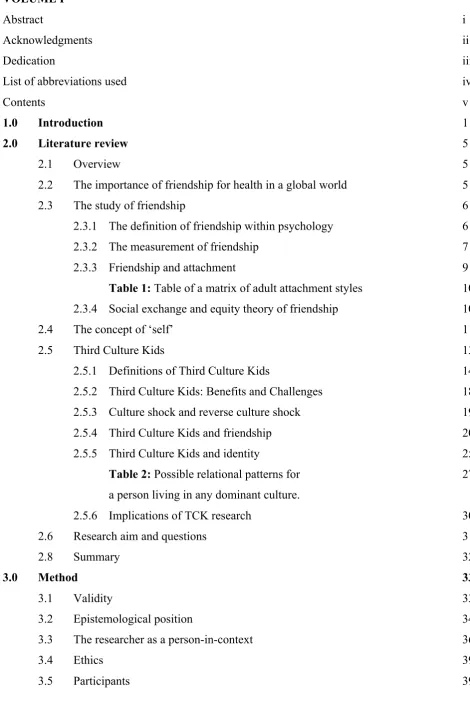
CONTENTS
VOLUME I
Abstract
i
Acknowledgments
ii
Dedication
iii
List of abbreviations used
iv
Contents
v
1.0
Introduction
1
2.0
Literature review
5
2.1
Overview
5
2.2
The importance of friendship for health in a global world
5
2.3
The study of friendship
6
2.3.1 The definition of friendship within psychology
6
2.3.2 The measurement of friendship
7
[image:6.595.54.525.86.799.2]2.3.3 Friendship and attachment
9
Table 1: Table of a matrix of adult attachment styles
10
2.3.4 Social exchange and equity theory of friendship
10
2.4
The concept of ‘self’
11
2.5
Third Culture Kids
13
2.5.1 Definitions of Third Culture Kids
14
2.5.2 Third Culture Kids: Benefits and Challenges
18
2.5.3 Culture shock and reverse culture shock
19
2.5.4 Third Culture Kids and friendship
20
2.5.5 Third Culture Kids and identity
25
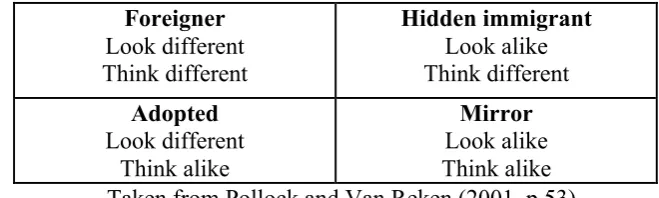
Table 2: Possible relational patterns for
27
a person living in any dominant culture.
2.5.6 Implications of TCK research
30
2.6
Research aim and questions
31
2.8
Summary
32
3.0
Method
33
3.1
Validity
33
3.2
Epistemological position
34
3.3
The researcher as a person-in-context
36
3.4
Ethics
39
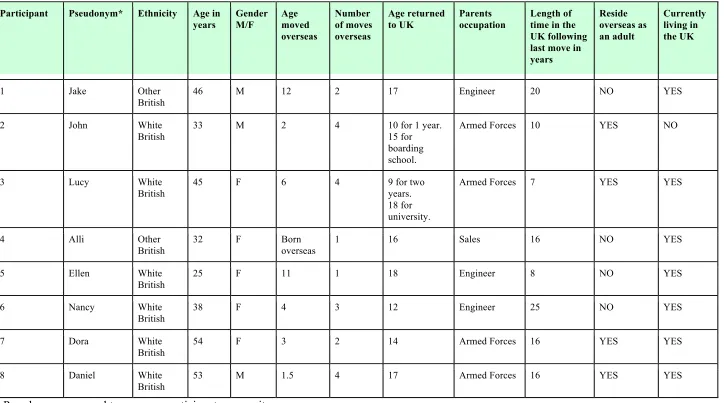
Table 3: Participant demographics
41
and TCK background.
4.0
Procedure
42
4.1
Recruitment
42
4.2
Informing and gaining consent
42
4.2.1 Confidentiality
42
4.2.2 Potential distress
43
4.3
Interviews
43
4.4
Data organisation
43
4.5
Convention for presenting excerpts
44
4.6
Data analysis
45
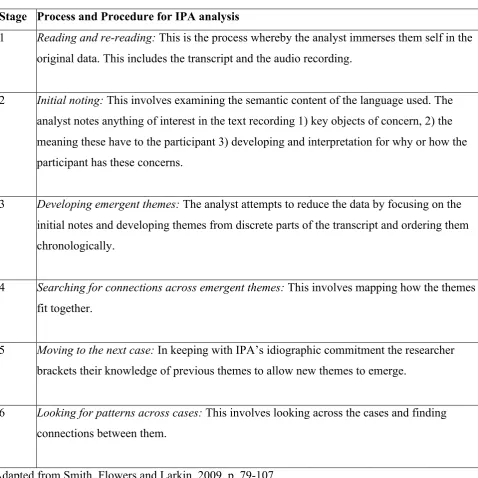
Table 4: The stages of IPA data analysis.
45
5.0
Findings
46
Table 5: Table of Super-ordinate themes
46
and the associated subordinate themes.
5.1
The challenges of friendship
47
5.1.1 Insufficient autonomy to form lasting friendships
47
5.1.2 Lack of understanding between ATCKs and non-TCKs
51
5.1.3 Negative beliefs about people from the UK: The ‘English/British’
54
5.1.4 Keeping in touch with other as a challenge to maintaining friendships
57
5.2
Multiple identities in response to friendship
59
5.2.1 Feeling ‘different’ from others
60
5.2.2 ‘Faking’ it to fit in with others
63
5.2.2 Being ‘independent’ from others
66
5.2.3 A ‘shared’ identity with others
69
5.3
The psychological impact of friendship
72
Diagram 1: Diagram showing a formulation of the theme
72
the psychological impact of friendship for ATCKs from the UK.
5.3.1 Grief about the loss of friendship
72
5.3.2 Friendship as stressful: anxiety and fear in friendships
74
5.3.3 Lack of strong attachments to peers
77
5.4
Valued characteristics of friendship
80
vii
6.1
Summary
86
6.2
The challenges of friendships and the psychological affect
86
6.2.1 Insufficient autonomy to form lasting friendships
86
6.2.2 Lack of understanding between ATCKs and non-TCKs
87
6.2.3 Negative beliefs about people from the UK: The ‘English/British’
88
6.2.4 Keeping in touch with others as a challenge to maintaining friendship
89
6.2.5 Grief about the loss of friendship
89
6.2.6 Friendship as stressful: anxiety and fear in friendships
90
Diagram 2: Diagram showing a formulation of the experience
91
of friendship for ATCK from the UK.
6.2.7 Lack of strong attachment to peers
91
6.3
Identity in response to friendship
93
6.3.1 Feeling ‘different’ from others
94
6.3.2 ‘Faking’ it to fit in with others
95
6.3.3 Being ‘independent’ from others
96
6.3.4 A ‘shared’ identity with others
97
6.4
Valued characteristics of friendship
98
6.5
Critique of this study
99
6.6
Recommendations for future research
100
6.7
Implications for clinical practice
102
Diagram 3: Dozier and Tyrell’s (1998) figure of therapeutic change
103
6.8
Conclusion
106
7.0
References
108
8.0
Appendices
Appendix 1 Research Ethics Committee proposal form
125
Appendix 2 Research Ethics Committee approval letter
139
Appendix 3 Email requesting Research Ethics Committee
140
consideration of changes to the research proposal
Appendix 4 Letter from Research Ethics Committee
141
confirming approval of changes to the research proposal
Appendix 5 Email notifying Research Ethics Committee
142
of changes to interview method
Appendix 6 Email from Research Ethics Committee
143
confirming approval of changes to interview method
Appendix 8 Participant recruitment letter via email
145
Appendix 9 Participant information sheet & consent form
146
Appendix 10 Participant debriefing form
148
Appendix 11 Participant information email
150
Appendix 12 Initial semi-structured interview schedule
151
Appendix 13 Revised semi-structured interview schedule
153
Appendix 14 Reflective journal
155
Appendix 15 First ten pages of a worked example of the IPA process
162
(The remainder can be found on the CD)
Appendix 16 Reflective journal for development of themes
173
Appendix 17 A humorous view of the TCK shared culture
208
1
1.0
Introduction.
This thesis is divided into six chapters. This first chapter gives a general introduction to the current
study and should orientate the reader to the overall research, including the research questions, the
epistemology, method and the main findings. Chapter two is a discussion of the literature relevant
to informing the current study. Friendship and identity theories relevant to psychology are
introduced and critiqued. The phenomenon of Third Culture Kids (TCKs) is also described in
chapter two, before citing and critiquing the TCK literature that informed the current study. Chapter
three describes the epistemological position and method utilised by this researcher to arrive at the
findings and chapter four the procedure I followed to obtain the data for this study. Chapter five
reports the main findings from my data analysis. Finally, chapter six considers my findings in light
of the available literature and offers a conclusion. A reflective journal was kept throughout the
process of conducting this study. An example of this can be found in Appendix 14, or in full on the
CD.
In today’s global climate, increasing numbers of people are making the transition to overseas living.
While it is difficult to ascertain the exact number of people living aboard, some figures suggest that
over half a million Britons were living abroad in 2006 for reasons related to temporary employment
(Finch, Andrew and Latorre, 2010). Data from the Office for National Statistics (2011) suggests
that the number of people working abroad was on the increase until recently. Between 1999 and
2008 there was a steady outflow of UK residents leaving for overseas opportunities (Office for
National Statistics, 2011). The length of time abroad varied from one to more than four years
overseas, with estimates that this is increasing steadily. In 2008, records indicated the highest
number of people leaving the UK for twelve months or more (Office for National Statistics, 2010).
This has recently slowed, but the implications for families are still considerable. It is not
uncommon for business people such as diplomats, missionaries and the military to take their
families abroad, creating what has become a sub-culture known as the Third Culture Kids (TCKs).
If we add the UK statistics to census data from other countries, it could be argued that there is a
significant number of TCKs residing overseas who will eventually return ‘home’ (Hervey, 2009;
Pollock and Van Reken, 2001; Stringham, 1993).
background.’ (Pollock and Van Reken, 2001, p 19). Research has indicated TCKs experience a
variety of challenges with their friend relationships. For example, some researchers have suggested
that when a TCK returns to their passport country they may feel a sense of neglect (Cottrell and
Useem, 1993b; Minami, 1993; Pollock and Van Reken, 2001; Useem, 1993) or social isolation
because they do not belong to a particular social group (Downie, 1976; Gerner, Perry, Moselle, and
Archbold, 1992). Some studies report that TCK experience feelings of insecurity within their
interpersonal relationships (Killham, 1990; Werkman, Farley, Butler and Quayhagen, 1981). Other
studies are largely quantitative, taking the form of large surveys (Cotrell and Useem, 1993) or
remain anecdotal without grounding in a rigorous methodology as would be done in a qualitative
study (e.g. Pollock and Van Reken, 2001).
Few studies have begun with questions about friendship itself, beginning with questions of identity
instead. This renders observations about friendship fragmented and thus lacking robust discussion,
which in turn leaves the reader wanting to know more and unsure where to find it or how much
influence to give it. A richer discussion of friendship would highlight the importance of friendship
for well-being and reveal the challenges, motivations and rewards that TCKs experience when
navigating peer relationships. In addition to a lack of robust discussion of friendship itself, the
majority of studies which make claims about friendship are American-centric; few have addressed a
British population. By studying a British cohort of ATCKs particularities to this population may be
found.
Research has suggested that individuals who experience difficulty forming and maintaining good
relationships with others are likely to experience unfulfilled social needs, manifesting in difficulties
such as loneliness, depression, anxiety and anger (Cacioppo, Ernst, Burleson, McClintock,
Malarkey, Hawkley, Kowalewski, Paulsen, Hobson, Hugdahl, Spiegel and Berntson, 2000;
Hagerty, Williams, Coyne, and Early, 1996; Heinrich and Gullone, 2006). Additionally, research
has described the necessity of friendship in managing transition experiences (Bochner, McLeod and
Lin, 1977; Harari, Jones and Sek, 1988; Goodman, Schlossberg and Anderson, 2006). The
maintenance of friendship may be particularly relevant for TCKs and ATCKs, as they make
3
The aim of this project is to articulate the friendship experiences of Adult Third Culture Kids
(ATCKs) from the UK, within a phenomenological framework. An ATCK refers to an adult Third
Culture Kid (TCK). The current research has its foundations in social psychology and more
specifically interpersonal relationships from a symbolic interactionist perspective. This perspective
acknowledges the role of identity in relationships, and relationships as having a role in identity. As
such both friendship research and identity theories were considered important to informing the
research questions. This was done without making assumptions about what may be relevant for
ATCKs, as the method adopted suggests the researcher must ‘bracket’ their existing knowledge
about a phenomenon in order to do it justice. This involves putting aside ones existing knowledge
of a phenomena to allow new information and ideas to emerge.
To answer the research question: what is the experience of friendship like for ATCKs from the UK?
Interpretative Phenomenological Analysis (IPA) was thought to be useful. IPA aims to explore and
understand how individuals make sense of their world and what various experiences, events and
states mean for participants (Smith, Flowers and Larkin, 2009). IPA holds its theoretical roots in
phenomenology and symbolic interactionism. Phenomenological psychology emphasises the
importance of a person’s perception of the world and does not attempt to produce objective
accounts (Smith, Flowers and Larkin, 2009); it is not concerned with an objective ‘truth’. Symbolic
interactionism recognises that individuals ascribe meanings to events but that these meanings occur
in interactions; in this way IPA takes a ‘light social constructionist’ position (Eatough and Smith,
2006, p. 485). This is further unpacked in chapter 3, section 3.2, on page 35.
In addition meanings can only be accessed through a process of interpretation by the researcher. As
such it is important to acknowledge the researchers own preconceived values, ideas and beliefs,
which may influence the interpretation (Smith, Flowers and Larkin, 2009). However, IPA engages
in the double hermetic whereby the researchers own experiences and interpretations of the
participants are made use of. Further discussion and unpacking of these concepts can be found
throughout chapter 3.
5
2.0 Literature review
2.1
Overview
Friendship research has developed from philosophical debate to grounding in empirical evidence, to
an interdisciplinary theory (Pearlman and Duck, 2006). Current friendship research recognises the
importance of the social and cultural contexts in which friendships occur as well as the analyses of
cognitive processes and communication strategies used in friendship (Perlman and Duck, 2006).
This review is concerned with a commentary on the literature on friendship and, more specifically,
the growing body of research dedicated to understanding the ‘Third Culture Kid’ (TCK) and the
‘Adult Third Culture Kid’ (ATCK) phenomena. I will begin by describing the importance of
friendship in modern society (section 2.2) before outlining some specific theoretical perspectives on
the study of friendship and its definition within psychology (section 2.3). I will also consider the
relationship between friendship and identity (section 2.4). My review will then provide an
introduction to the Third Culture Kid phenomena (section 2.5), before describing and critiquing the
TCK literature on friendship and identity. This chapter concludes with a rationale for the current
research and a statement of the research questions (section 2.6).
2.2
The importance of friendship for health in a global world
Research indicates that close social relationships are the first choice for most people for dealing
with personal problems and that seeking help from psychological services is a less desirable
alternative (Cameron, Leventhal, and Leventhal, 1993). It has been suggested that rather than this
being a problem with counselling services there is something more reassuring about confiding in a
friendship (Parham and Tinsley, 1980). A research review of university counselling services across
several countries, including South Africa, America, Indonesia, and the United Kingdom, suggested
that a limited number of students access such services. International students, in particular,
underutilize the services provided. This is argued to be because students prefer seeking help from
friends (and/or family) more than from professional sources (Raunic and Xenos, 2008). What
though, if there is a paucity of friendship in a person’s life?
2006). There is evidence that friendships are crucial to a variety of indicators of well-being, such as,
happiness, psychological and physical health and longevity (Berkman, Glass, Brissette and Seeman,
2000). In addition, researchers in the 1970’s suggested that individuals with strong social
relationships are protected from the potential pathogenic effects of stressful events, such as
depression (Cobb, 1976). Friendship, then, is vital for the health and well-being of individuals
(Heinrich and Gullone, 2006).
In addition evidence suggests that overseas transitions can result in culture shock; the experience of
psychological distress associated with migrating to an overseas location (Oberg, 1960; Taft, 1977)
and reverse culture shock; the experience of psychological distress associated with re-entry to ones
own passport country, (Uehara, 1986; Firestone, 1992). Research has described the necessity of
friendship in managing these experiences (Bochner, et al, 1977; Harari, et al, 1988; Goodman, et al,
2006). Research has also suggested that forming and maintaining friendships is problematic for
people making frequent transitions overseas (Werkman, Farley, Butler and Quayhagen, 1981). This
is of particular importance in understanding the TCK phenomena. I will return to these issues in
further detail when I introduce TCKs in section 2.5.3. To gain an understanding of friendship it is
necessary to consider how psychology has sought to understand this concept.
2.3
The study of friendship
The purpose of this section is to introduce an overview of the major theoretical perspectives of the
study of friendship and to provide grounding in the psychological literature on the study of
friendship thereby providing a framework for understanding how the current research was
informed.
2.3.1 The definition of friendship within psychology
7
It has been noted that friendships are more than isolated interactive moments, and scripted
role-relations—they have a holistic quality (Vangelisti and Perlman, 2006). As such, they can develop
over time and may be experienced differently at different times and under various circumstances
(Duck, 1990). For this reason, friendship has been a difficult concept to measure objectively and
thus meanings associated with the concept of friendship are subjective (Hinde, 1997). However,
research indicates that friends are individuals outside the family, who are liked and whose company
is enjoyed (Argyle, 1998). Typically, friendship is voluntary, (Blieszner and Adams, 1992), and
includes the notion of a reciprocity and mutual benefit, liking and enjoyment (Bukowski,
Newcombe and Hartup, 1996). When friends come together it is through choice, they enjoy each
other’s company and the activities they share (Hinde, 1997). In addition friendship shares the
essential element of talking (Hinde, 1997). Friendship depends on a shared body of knowledge,
which makes it possible for the members of the dyad to understand one another. Friendship is also
categorized by a number of features such as self-disclosure, trust, interpersonal perception, and
commitment, which may be present to varying degrees and in different proportions in different
friendship relationships. ‘Friendship implies more than mere acquaintance but need not necessarily
imply great intimacy’ (Hinde, 1997, p. 410).
Finally, friendship can also provide confirmation of self-value, beliefs and identity (Meill and
Dallos, 1996). It thus creates and sustains a mutual reality in which the identity of each member of
the friendship relationship confirms that of the other. According to symbolic interactionism the self
arises out of human interaction (Mead and Morris, 1934), a concept I will expand on as I discuss the
various theories of how friendships are established and maintained. The conventional wisdom is
that we choose friends because of who they are. However, research suggests that we are motivated
to form friendships because of the way they support who we are (Montoya, Horton and Kirchner,
2008). This concept brings us to the measurement of friendship.
2.3.2 The measurement of friendship
Studies of relationships have typically utilised one of four paradigms. Here, I present an overview
of each of these four paradigms while expanding on the two that inform the hermeneutic circle for
the current research.
constructivist perspective would argue that people develop their relationships through their
thoughts, feelings and interactions (Bem, 1993, cited by Harvey and Wenzel, 2006). This critique
may lead one to the cognitive behavioural approach to friendship. This approach informed the
present study.
Cognitive behavioural approaches consider the way we perceive and interpret relationships to have
a profound effect on our emotions and behaviour (cf. Beck, 1988). Cognitive processes reflect the
internal thoughts that each member of the friendship has about themselves, the friend and the
friendship. Affective processes reflect the emotional relations to friends and the friendship, which
can vary in frequency and strength depending on the relationship. Behavioural processes are the
actions that are taken in a friend relationship, such as communication, displays of affection and
social support for example. These three types of friendship processes interact with one another such
that they inform one another.
An important aspect of how we perceive friend relationships is considered within the similarity
theory of friendship. This theory focuses on the way people select friends and assesses how they
perceive that potential friends will meet their needs. These theories emphasise the role friendships
play in confirming and validating one’s competence, opinions and identity. The main finding of
similarity theory is that people select friends who are similar to them as a means to achieve
assurance of their own efficacy. For example, Festinger’s (1954) social comparison theory
suggested that people use others to confirm their own worldview, thus achieving validation. The
more similar two persons’ attitudes are the more they are likely to like one another (Byrne, 1971;
Montoya, et al, 2008).
In selecting similar friends, people are provided with a framework of how they ought to behave and
what they should be capable of. The ultimate goal of friendship is to achieve identity support
through establishing similarity (Duck, 1973). Old friends have been found to be essential in
9
similarity as accounting for their friendship (Blieszner, 1995). Thus identity forms an important
aspect of friendship and vice versa, and will be given further attention in section 2.4.
Much of the empirical evidence to support cognitive-behavioural approaches focuses on attributions
that individuals make for events that occur in their relationships (cf. Bradbury and Finchum, 1990).
Taken together these attributions form a category called ‘causal attributions’ which focus on who or
what caused a condition or event to occur. Typically studies utilize self-report measures and
observations (Charania and Ickes, 2006). These studies have been criticised for their heavy
emphasis on the cognitive over the behavioural element in relating (Harvey and Wenzel, 2006). In
addition researchers call for these theories to expand their parameters and include other ways of
including the cognitive component (Harvey and Wenzel, 2006). For example, attachment theory
provides a basis for considering how attachment models influence the way we perceive events in
adult relationships (cf. Baldwin, Keelan, Fehr, Enns and Koh-Rangarajoo, 1996).
2.3.3 Friendship and attachment.
Bowlby’s theory of attachment (1969, 1988) emphasised the importance of empathy and emotional
sensitivity in the development of secure attachments. Within this model a key attachment figure
provides a ‘secure base’ from which an infant can explore the world and later return to for
reassurance and ‘security’. Generally it is thought that these early experiences are the main
contributor to the development of an internal working model about the dependability and
trustworthiness of others and the worthiness of oneself to be included in a relationship (Harvey and
Wenzel, 2006). Originally this research addressed the parent-child relationship, but research has
developed the notion of attachment as a feature of adult relationships (Bartholomew and Horowitz,
1991; Hazan and Shaver, 1987; Rholes, and Simpson, 2004). That is, the functions of attachment
bonds identified in infant-caregiver studies are also apparent in adults’ committed close
relationships (Ainsworth, 1989). Thus adults desire to be with relationship partners (proximity
seeking), seek comfort from them in times of stress (safe haven), become distressed when they are
unavailable (separation protest), and derive a sense of security and confidence from their
relationships (secure base). More recently these functions have been identified in friend
relationships (Bartholomew and Horowitz, 1991; Welch and Houser, 2010; Fraley, Heffernan,
Vicary and Brumbaugh, 2011).
understand their social worlds. Attachment models have been found to account for a broad range of
individual differences in cognition, emotion and behaviour in relationships (Simpson and Rholes,
1998). Recent research suggests that people can develop attachment styles that are more
relationship-specific, thus the context of the relationship is an important determinant of attachment
behaviour and leads people to hold distinct working models in different relationships (Fraley, et al,
2011). As children gradually separate from their caregivers in adolescence peers take on significant
attachment relationships and in the absence of a significant life partner are often the most important
attachment figure in adulthood (Lieberman, Doyle & Markiewicz, 1999). Life circumstances have
also been shown to have an influence on attachment style and behaviour (Bar-Haim, Sutton, Fox
and Marvin, 2000). Bar-Haim et al (2000) found evidence that the Mothers of children who did not
exhibit stability of attachment reported more negative and less positive life events, supporting the
argument that attachment styles are not stable over time. This is a significant finding when we
consider the high mobility of TCKs families and the stress of culture shock for families in transition
(see section 2.5.3 for discussion of culture shock).
[image:19.595.57.542.491.585.2]Attachment is typically measured along dimensions of attachment anxiety and intimacy avoidance,
with individuals who are anxious about attachment displaying a negative view of self and those who
avoid intimacy displaying a negative view of others. Bartholomew and Horowitz’s (1991) model of
adult attachment utilised views of self or others as described in table 5:
Table 1: Table of a matrix of adult attachment styles
Attachment
style
Secure
Preoccupied
Dismissive
Fearful
View of self
Positive
Negative
Positive
Negative
View of other
Positive
Positive
Negative
Negative
Adapted from Bartholomew and Horowitz (1991).
Preoccupied, dismissive and fearful attachment styles are all seen as insecure patterns of
11
2.3.4 Social exchange and equity theory of friendship.
A final major paradigm in the study of friendship is social exchange and equity theory. This is the
view that people operate to gain rewards and avoid punishments (Canary and Stafford, 2001). An
equitable relationship as one in which the ratios of friendship outcomes divided by inputs are equal
for both parties (Canary and Stafford, 2001). People who perceive their friend relationships to be
inequitable may engage in strategies to restore the balance (Canary and Stafford, 2001). To the
individual making the assessment, the most satisfying relationships are equitable, followed by
‘over-benefitted’; where the perceiver gains more than is given, followed by ‘under-benefitted’;
where the perceiver gives more than receives (Hatfield, Utne, and Traupmann, 1979). Equity rules
do not always appear to dominate the exchange process and communal love theory was developed
to facilitate an understanding of relationships that do not follow equity rules (Mills and Clark, 1982,
cited by Harvey and Wenzel, 2006. p. 39). However, these theories are garnered from relationships
such as the parent-child relationship or studies of close romantic relationships, and as such, have a
different focus to this study. Instead this study is informed by the cognitive behavioural and
attachment paradigms in friendship research. Both these paradigms reflect the importance of the
interactional in forming friendships as well as views of self and others. It is to the concept of
identity that I now turn my discussion.
2.4
The concept of ‘self’.
‘As a very basic starting point identity is the human capacity - rooted in language - to know ‘who’s
who’ (and hence ‘what’s what’) (Jenkins, 2008, p. 5).
Early psychologists such as Freud (1926) viewed the self as personal and private, something wholly
individual. His central tenet was that identity was not stable or rational, but an ever-conflicted
tension between the id and ego, conscious and subconscious mind. Freud’s work was expanded by
researchers, such as Erikson (1980), whose concept of self is based on the notion that the self is
constantly changing due to social interactions. This early work formed the basis on which social
psychologists debate whether the self is something individual or collective.
individual-self hypothesis is ‘derived mostly from research on (a) self stability, (b)
self-enhancement, and (c) the individual as the unit of natural selection’ (Gaertner, Sedikides and
Graetz, 1999, p. 5). The research on individual and collective self, considered groups to be formed
of individuals interacting with each other rather than individuals with a collective sense of shared
identity and so advocates of the individual self tended to prevail in the literature until the
elaboration of social identity theory (Abrams and Hogg, 2001).
The central tenant of social identity theory is that individuals define their identities along two
dimensions, the social and the personal. The social dimension concerns the individual’s
membership in various social groups (Tajfel and Turner, 1986), whereas the personal concerns the
idiosyncratic attributes that distinguish an individual from others (Abrams and Hogg, 2001). Social
and personal identities are thought to lie at opposite ends of the identity continuum, becoming more
or less salient depending on the context. Verkuyten (1997) critiqued social identity theory by
showing that people do not always use fixed categories do define themselves. However, some
psychologists argue that the two dimensions cannot be separated and argue that there is interplay
between the two (Deaux, 1993). Other psychologists argue that there are more differences in
emphasis than in kind and that linking the two theories can help establish a more fully integrated
view of the self (Stets and Burke, 2000).
The idea that we have a variety of selves and that contextual factors can engender different selves
has a variety of ramifications. Social constructionists have argued that the self is completely
situation dependent. Taken to its extreme, this position argues that we construct multiple selves
through talk (Potter and Wetherall, 1987). A less extreme position suggests that situational factors
influence the self, but that cognitive representations of the self are present in people as organising
principles for perception, categorisation and action (Abrams and Hogg, 2001). It is at this symbolic
interactionist level that friendship and identity become interlinked. ‘Interaction between friends
creates and sustains a mutual reality in which each partner’s identity confirms that of the other’
(Hinde, 1997, p. 410).
13
researchers argue that self is not a single undifferentiated identity, but a repertoire of varied
identities rooted in our various social relationships (Gergen, 1971). Essentially, the self is not just
constructed in social context, but also has the capacity for self-reflection. In this way identity is not
fixed but ‘constantly changing and alive’ (Letourneau, 2001. p2), it is both individual and social.
This approach leads us to acknowledge the power of the interpretational element in determining our
self-concept (Spinelli, 2005) and aligns more closely with the phenomenological view approach
adopted in this study.
The phenomenological self is one that is temporary, interpretational and contextual. We thus have
as many social identities as there are groups that we feel we belong to and as many personal
identities as there are interpersonal relationships in which we are involved (Turner, 1982). This
suggests that knowing ‘who’s who’ and ‘what’s what’ (Jenkins, 2008) or vice versa has
implications for our self-concept. What if parts of our identity are being denied or are considerably
‘different’ from our immediate social group? What if our context is unstable and transient? How do
we cope when we lack information about who’s who, and what’s what? This will be discussed with
regard to the Third Culture Kid phenomena, where the interplay of friendship and identity is
approached as a crucial element in furthering our understanding of this group.
2.5
Third Culture Kids
The phenomena of Third Culture Kids can be traced as far back as the first traders and missionaries
on early overseas assignments that gave birth to the expatriate family and, ultimately, the TCK.
Only in the past fifty years have the numbers of TCKs emerged as a phenomenon of appreciable
size to become of interest to researchers with both large scale and smaller sample studies being
conducted (Cottrell and Useem, 1994).
In today’s global climate, increasing numbers of people are making the transition to overseas living.
While it is difficult to ascertain the number of people living aboard, it is evident that the number of
people working abroad was on the increase until recently (Office for National Statistics, 2011).
Data from the Office for National Statistics between 1999 and 2008 reports a steady outflow of UK
residents leaving for overseas opportunities. The length of time abroad varies from one to more than
four years overseas, with estimates that this is increasing steadily. 2008 records indicated the
uncommon for business people such as diplomats, missionaries and the military to take their
families abroad, creating what has become a sub-culture known as the TCK. If we add the UK
statistics to census data from other countries, it could be argued that there is a significant number of
children residing overseas who will eventually return ‘home’ (Hervey, 2009; Pollock and Van
Reken, 2001; Stringham, 1993).
A variety of empirical data has emerged within the past thirty years documenting the TCK
experience, with a number of specific topics emerging. The subjects of reverse culture shock (the
shock of returning to the passport country) identity and friendship have been considered to varying
degrees in the available literature. However, it is important to note that while the TCK literature is
beginning to consider an international sample, the majority of the work, to date, has focused on
American samples. The participants in the current research were all UK citizens, but in outlining
my argument I will draw from the existing material.
The term ‘third culture’ was first used by researchers to summarise their observations of
cross-cultural encounters in India (Useem, Donoghue and Useem, 1963). The authors’ central tenet was
that one culture residing in another culture eventually becomes part of a ‘third culture’. This ‘third
culture’ is regarded as more than the merger of the original and host cultures. Rather, it refers to the
lifestyles created, shared and learned by people in the process of relating to their societies, and thus
becomes a distinct group.
After returning to the USA, Useem extended her work to include young American adults who had
returned from overseas to attend university in the USA. Useem coined the term ‘Third Culture Kid’
to refer to the children who had accompanied their parents to live in another cultural society and
then returned to their country of origin. She suggested that for all the differences of background,
nationality, ethnicity, and purpose for living internationally, there were some fundamentals they all
shared such as cross-cultural lifestyle, high mobility and expected repatriation (Useem and Downie,
1976).
2.5.1 Definitions of Third Culture Kids
15
certain fundamentals, such as transience, change and mobility are consistent. Zorica (2012)
provides a humorous view of this ‘shared’ culture that resonates with the majority of TCKs as it is
often passed around TCK websites and online communities of TCKs (Appendix 17).
The term, Third Culture Kid (TCK), has evolved as a new way to distinguish and describe the
children of expatiates (Useem, 1993; Useem and Downie, 1976). In addition, the term ‘Adult Third
Culture Kid’ (ATCK) has come to identify the adults who TCKs become. Although Useem focused
on American TCKs, research has found the same features in young adults of other nationalities
(Cameron, 2003; Selmer and Lam, 2004; Willis, Enloe and Minoura, 1994); the common thread
being the shared experience of being internationally mobile during childhood (Pollock and Van
Reken, 2001).
McCaig (1994) coined the term ‘Global Nomad’ which is used interchangeably with TCK (Pollock
and Van Reken, 2001; Schaetti, 1993). However, the evolution of this definition includes children
who have gone abroad following armed conflict or children who have entered another culture
without leaving their own country (as occurs with children living on Native American Reservations
while their parents work there), as well as children who have a bicultural heritage, but remain in one
country their entire lives. As such the definition risks being diluted beyond use for researchers and
TCKs themselves. McCaig (2001) argues that if researchers are to share data without risk of
contamination they must be clear about whom it is they have been researching. This can only be
assured if ‘we maintain the integrity and continuity of past terminology’ (McCaig, 2001, p. xvi).
Thus a TCK or global nomad refers to:
‘Individuals of any age or nationality who have spent a significant part of their developmental
years living in one or more countries outside their passport country because of their parents’
occupation’ (Schaetti, 1993, p. 13).
There are several key themes within this definition that are addressed in the literature (Pollock and
Van Reken, 2001; Schaetti, 1998).
Age: Once a TCK, always a TCK. The developmental experiences of being a TCK continue to exert
an influence even if the TCK settles in one place as an adult and remains settled (Fail, 1995;
Nationality: While the majority of TCK research addressees an American population, TCKs are of
all nationalities with an emerging body of research to address TCK populations from countries such
as Australia, Japan and the UK (Cameron, 2003; Selmer and Lam, 2004; Willis, et al, 1994; Fail, et
al., 2004).
Significant: While there is some exploration of a correlation between the length of time spent
abroad and the influence of that experience on the TCKs identity (Downie, 1976; Eriksen, 1999).
The argument does not discount the effects of relatively short experiences overseas. Thus
‘significance’ is subjective and left to the individual to determine.
Developmental years: The TCK literature consistently adheres to the standard set in the
psychological literature as defining developmental years as the period spanning birth to adolescence
(Thornton, 2008). This suggests that international mobility is experienced while a person’s
fundamental self is developing (cf. Erickson, 1980; Schaetti, 2000). However, TCKs are often
presented with inconsistent worldviews, and thus are confronted with the extra task of sorting
through a variety of meaning systems, which they may utilize to define their sense of self.
Consequently, many TCKs are thought to experience a period of ‘delayed adolescence’ (Pollock &
Van Reken, 2001, p. 150). During this time the TCK may seem to have “no real convictions about
much of anything” (Pollock & Van Reken, 2001, p. 93). The concept of ‘emerging adulthood’
Phinney (2008, p. 48) was proposed to suggest that a multicultural childhood can extend the time
individuals spend exploring their sense of self to well into and even beyond their twenties. For
TCKs there is the additional sense that one’s home is everywhere and nowhere or rootlessness, and
the migratory instinct or restlessness stemming from early nomadic experiences (Fail et al., 2004;
Pollock and Van Reken, 2001). During adolescence ‘the young individual must learn to be most
himself [sic – universal male] where he means most to others – those others, to be sure, who have
come to mean most to him’ (Erikson, 1959, p. 102). TCKs may find this learning process
challenging because the people who ‘mean most’ to them are scattered around the world. The TCKs
introduction to various cultures and their highly mobile lifestyle creates challenges for TCKs in
establishing a sense of self. This can be unpacked using a phenomenological approach to identity,
where their sense of self is not a ‘core’ self but an ever evolving and reflective process. This is
further unpacked in section 2.5.5.
17
during their developmental years experience a sense of mobility as they and their families, as well
as others around them, come and go (Pollock and Van Reken, 2001; Useem and Downie, 1976).
Passport country: This term highlights a crucial theme for TCKs, that the parents’ country of
origin, the ‘home’ country, may be no more to the TCK than the passport with which they travel
(Bell, 1996; Cottrell and Useem, 1993; Downie, 1976; Pollock and Van Reken, 2001). Knowledge
of ‘home’ is indirect, mediated by parental memories, periodic family holidays, media, and other
expatriates. Thus while nationality is important to a TCK, it serves more as a cultural veneer, than a
foundation as it may for the parents (McCaig, 1994).
Parental occupation: While TCKs share some commonalities with immigrants and refugees,
mobility based on parental employment is particular to the TCK experience (Cottrell and Useem,
1993; Pollock and Van Reken, 2001). TCKs are not considered to be the same as immigrants or
refugees as they do not expect to permanently settle in the country to which they relocate (Useem
and Downie, 1976; Pollock and Van Reken, 2001). In addition they are expected to ‘fit in’ when the
(re)enter their ‘home’ country unlike the immigrant or refugee, who is afforded the status of
‘foreigner’ even though the TCK may feel like a ‘foreigner’ in their passport country (Killguss,
2008). Research has also indicated a direct influence of the sponsoring organisation on the TCK
experience (Peterson and Plamondon, 2009). The TCK may adopt certain institutionalized codes of
practice in line with the parents company that sponsors the overseas employment in order to help
maintain the parent’s employment (Pollock and Van Reken, 2001). The parents’ occupation most
typically falls into one of the following categories: international business, diplomatic service,
military service, missionary service, international NGO, international education of private business
(Downie, 1976).
The dynamics of the individual expatriate family, along with the degree of intercultural competence
and understanding the parents and guardian have, influences the TCK experience (Sussman, 1986).
The family is a crucial socialising agent with the potential to play a significant role in teaching the
TCK to successfully navigate their internationally mobile years (Pollock and Van Reken, 2001;
Schaetti and Ramsey, 1999a). However, friendships are also an important influence in making
successful transitions as will be discussed in section, 2.5.3.
rather than any single factor alone that leads to the evolution of both the benefits and the
challenges [of being a TCK]’ (Pollock and Van Reken, 2001, p. 39-40)
Revision of the term Third Culture Kid now refers to:
‘...a person who has spent a significant part of his or her developmental years outside the parents'
culture. The Third Culture Kid builds relationships to all of the cultures, while not having full
ownership in any. Although elements from each culture are assimilated into the Third Culture Kid's
life experience, the sense of belonging is in relationship to others of similar background.’ (Pollock
and Van Reken, 2001, p 19).
It was this particular quote that highlighted and propelled my interest in TCK research. I began to
question that if a sense of ‘belonging is in relationship to others’ who are the others and how are
we affected by them or their absence? In order to discuss this in depth I believed it was important to
heed McCaig’s advice not to dilute the TCK term beyond recognition. For that reason the current
research selected a population for study using characteristics identified by Useem and thus avoiding
confusing the data with variables such as refugee status. This is discussed in greater detail in the
method section, under participants (see page 28).
As discussed, there are several key themes involved in being a TCK. While the TCK experience is
not entirely unique, sharing some commonalities with international students and other sojourners, it
is not entirely typical either, when compared with those who spend all their developmental years in
their home country. Perhaps the most unique characteristic is that the TCK grows up in a truly
cross-cultural world. That is, they live in, rather than simply observe different cultural worlds. Their
worlds are also highly mobile. That is, not only is the TCK mobile, but others in their surroundings
are also in flux (Pollock and Van Reken, 2001). Change is really the only constant in the TCK
lifestyle.
2.5.2 Third Culture Kids: Benefits and Challenges
19
(Dewaele and Oudenhoven, 2009) and high levels of depression and suicide among TCKs have
been reported (Cottrell and Useem, 1993b; Devens, 2005). Research has also suggested that
forming and maintaining friendships is problematic for people making frequent transitions overseas
(Werkman, Farley, Butler and Quayhagen, 1981).
As mentioned, parental roles are important in enabling the TCK to successfully negotiate their
internationally mobile experiences (Pollock and Van Reken, 2001; Schaetti and Ramsey, 1999a).
Close family bonds are not uncommon and research has addressed the impact family ties have in
relation to coping with transition (Selby, Moulding, Clark, Jones, Braunack-Mayer, Beilby, 2009).
These authors suggest that support offered by the family during transition is crucial to successful
transitions. While parental relationships may be of interest, they are they are not currently under
review. Of greater relevance to the current research are the themes in the TCK literature that have
informed the current research, beginning with the evidence that change is constant and can have
deleterious effects.
2.5.3 Culture shock and reverse culture shock
The term ‘culture shock’ was originally used by Oberg (1960) to describe the psychological distress
associated with migrating to an overseas location. This work was extended by Taft (1977) who
conceptualised six distinct aspects of culture shock; the pressure of adapting to the new culture; the
experience of loss; confusion in role expectations and self-identity; the experience of being rejected
by people in the host culture; and the anxiety and experience of inadequacy associated with being
unable to cope in the new environment. These experiences can occur multiple times for the TCK.
The results of culture shock for TCKs have been well documented with research highlighting a
great deal of loss and unresolved grief (Gerner et al, 1992; Gilbert, 2008; Jordan, 2002; Pollock and
Van Reken, 2001; Werkman et al, 1981). Gilbert (2008) found that TCKs reported several
existential losses related to various aspects of themselves, specifically the loss of safety and trust as
well as the loss of personal identity.
The experience of reverse culture shock has also been frequently reported in the TCK literature
(Bell, 1996; Downie, 1976; Firestone, 1992; Pollock and Van Reken, 2001; Schulz, 1985).
cultural milieu of a country from which they have been absent for a number of years, or indeed may
never have lived in. The challenges they face in doing this can greatly affect their sense of
belonging (Fail, Thompson and Walker, 2004), which may have implications for their experience of
friendship and sense of self.
An inventory developed by a group of international students returning to their passport country
articulated a number of re-entry difficulties. Social adjustment was reported as the second biggest
concern for returning TCKs (Austin, 1986). There was uncertainty about interpersonal relationships
and fear of social alienation. There was also dissatisfaction with customary patterns of social
interaction and/or frustration with arising from conflicting attitudes. It is not clear if this is the case
with TCKs, but it seems worth exploring, as friendship is essential to managing change. An
internal support system composed of close relationships with friends and family has an important
influence on the ease or difficulty with which transitions are made (Goodman, et al, 2006). Culture
shock itself is lower for sojourners with bigger, more varied social networks, particularly when
there is at least one close, confiding relationship (Pantelidou and Craig, 2006). What, then is the
support system for TCKs like? In attempting to answer this question I will address the TCK
literature that considers friendship issues.
2.5.4 Third Culture Kids and friendship
A few years ago an article appeared in The Daily Beast, an online newspaper, about President
Obama’s choices for White House staff (Van Reken, 2008). President Obama is himself an ATCK
having resided in Indonesia for four years during his childhood. Van Reken noted that many of
President Obama’s staff were Adult Third Culture Kids, (ATCK). In addition, Van Reken conveyed
that President Obama had been judged by his colleagues at the Harvard Law Review to be
21
It is difficult to separate the link between friendship and identity if we consider a symbolic
interactionist perspective, and some of the literature has taken this position in discussing identity,
but not friendship itself (Sears 2011). I will begin with identifying features of friendship in the TCK
literature, before moving my discussion to identity and friendship and finally on to the symbolic
interactionist approach and a summary of the current research.
The literature on TCKs and friendship comes from a variety of sources, with various conclusions
drawn. Much of the evidence that TCKs struggle to be socially adaptable is anecdotal (Pollock and
Van Reken, 2001). Pollock and Van Reken (2001) are often quoted in the TCK literature as they
produced the seminal text on the TCK phenomena. Their book is widely regarded as sound and
research-based, but it is often not clear from where Pollock and Van Reken draw their conclusions.
Much of the text combines, anecdote, research and practical advice based on years of working with
TCKs. The authors do provide a bibliography at the end of their text, but make numerous claims
throughout their work that, unfortunately, they do not reference. Despite this is it possible to find
support for their observations in peer-reviewed work. For example, evidence that TCKs struggle to
be socially adaptable can be found in peer-reviewed work such as, Downie (1976) or Gerner, et al.
(1992). As such this text provides a useful reference for evaluating other TCK research.
Other work, which suggests TCKs struggle with friend relationships, begins with questions about
identity (Sears, 2011; Schaetti, 2000; Walters and Aston-Cuff, 2009; Willis, et al, 1994). Sears
(2011), for example, reported an investigation into the formation and maintenance of identity in
TCK children and young people in an international school setting. The findings suggested that
TCKs sustain composite identities that encompass their multiple experiences. This work was drawn
from the symbolic interactionist approach and usefully examined the formation of identities by
young people, but did not explore the experience of friend relationships itself. Despite this some
comments made about friend relationships were included, such as TCKs find comfort and
confidence by entering a school community where their peers consider their mobile way of life
normal and they can integrate their multiple identities. This is a useful finding when other research
suggests TCKs struggle to clarify who they are in relation to others when only one part of their
identity is being validated (Downie, 1976), discussed further on page, 26.
the differences between British adolescents living abroad and those living in the UK. They reported
differences that concerned international mobility, flexibility in ways of thinking, respect for others
and a national identity, which TCKs considered unimportant, and even a barrier to being
international. The British TCKs thought these differences between themselves and their non-TCK
peers were factors necessary for leading an internationally mobile lifestyle.
What seems clear from the existing literature is that TCKs encounter a variety of difficulties in their
friend relationships. For example, when a TCK returns to their passport country they may feel a
sense of neglect (Cotrell and Useem, 1993b; Minami, 1993; Pollock and Ven Reken, 2001; Useem,
1993), or social isolation that they do not belong to a particular social group (Downie, 1976;
Gerner, et al, 1992). There is a sense that non-TCKs do not understand or want to share the TCKs’
experiences of growing up internationally. The results of this seems split between one group of
TCKs dealing with neglect by becoming socially detached because they cannot use their
international experiences with the other group disowning their experiences and adopting the
passport countries cultural norms (Useem, 1993), this has implications for identity and is discussed
further in section 2.5.5.
Within the TCKs literature there seems to be a pervasive feeling of insecurity. Werkman et al,
(1981) used a sentence completion questionnaire to study selected attitudinal and personality
variables of TCKs compared with a matched-sample of non-TCKs from America. Results indicated,
among other things that the TCKs experienced more anxiety in their friend relationships than their
non-TCK counterparts. This observation was also made by Killham (1990, cited by Langford,
1998), but appears anecdotal. What seems to be missing from these studies is a clear description of
how the insecurity arises, instead there is hypothesising from various sources. Also absent, is a rich
description of the experience of friendship itself, instead there are a variety of fragmented
observations about friendship experiences made from studies of other phenomena.
In addition to their findings, Werkman et al (1981) reported that TCKs view their greatest strengths
as intrapersonal rather than interpersonal. The authors concluded that when TCKs feel less secure in
contemplating relationships with others they may cope with the challenge of transition by becoming
more inner-directed and less reliant on others, more independent and possibly less able to engage in
intimate relationships with others. Other research also supports this hypothesis (Huff, 2001). Huff,
(2001) also studied differences between TCKs and non-TCKs using measures of parental
23
scale on a parental attachment questionnaire. The authors suggest that while TCK parents facilitate
their independence this may mean that TCKs are less able to connect with others. The TCK score
on the measure of reverse culture shock also revealed significant differences. The TCKs reported
greater cultural and interpersonal distance than non-TCKs, which was attributed to their re-entry
experience. The authors concluded that TCKs experience more emotional distance from others than
non-TCKs. This study focused on a sample of Missionary Kids (a subgroup of TCKs), which makes
it a possibility that other TCK groups might not experience this interpersonal distance. In addition
the study was conducted on an American sample and related findings to other work that suggest that
American TCKs experience a negative reaction to America cultural values and have difficulty
re-adjusting to American life when they return to the USA. It also did not attend to the difficulties
experienced by ATCKs in their friend relationships, as it focused on young people. Finally, as the
focus was on parental attachment measures the study fails to consider that attachment styles can
change throughout the life-cycle (Fraley, et al, 2011)
Despite the interpersonal difficulties reported some research suggests that TCKs and ATCKs are
more welcoming of others into their community (Lewis, 2011). In one study 79 London
adolescents, half of whom were TCKs, born abroad and returned to the UK, completed
Multicultural Personality Questionnaire measures (MPQ) (Dewaele and Oudenhoven, 2009). This
measure was designed to assess multicultural effectiveness amongst expatriate employees and
students. Much like the Big Five personality inventory, the MPQ scale looks at five factors tailored
specifically to predictions regarding multicultural success rather than general personality. These
include cultural empathy, openmindedness, social initiative, emotional stability and flexibility. The
non-TCK group was compared with the TCK group and results indicated that TCKs scored more
highly in open-mindedness and cultural empathy than non-TCK peers. The authors concluded that
personality is shaped by social and biographical factors. Other studies support this finding. TCKs
identify themselves as having a broad world-view (Cameron, 2003) and demonstrate higher
cross-cultural sensitivity (Straffon, 2003). In contrast to this, TCKs have a ‘sharply expressed intolerance
of narrow minded people’ (Willis, et al, 1994, p. 35), or report ‘intolerance’ for
How friend relationships are formed and maintained is not described in any detail in the literature
that I can locate, however, some authors suggest that TCKs move quickly through the layers of
friendship formation described by social penetration theory (Edwards- Wertsch, 2011). Social
penetration theory describes how people move from acquaintance to close social relationship. This
is achieved though mutual exchanges of self-disclosure over a period of time. A reciprocal process
of disclosure from one member in a dyadic relationship followed by disclosure from the other
member of the dyad contributes to individuals’ knowledge about one other and furthers their
relationship (Dindia, 2000). Someone who never says anything about their own personal opinions,
inner thoughts, deeper feelings and intimate wishes will be cast aside as a closed and defensive
person (Jourard, 1971). There are, of course, cultural influences on the appropriate type of
self-disclosure. In the USA an open style of disclosure about ones feelings is expected and encouraged,
whereas in Japan this is considered inappropriate, but information about family, status and social
position is entirely suitable for disclosure (Duck, 1991).
One argument is that while non-TCK peers are at the early stage of self-disclosure, the TCK is
offering opinions on subjects at more intimate levels. When others do not reciprocate, the TCK may
characterise that person as ‘shallow’ (Pollock and Van Reken, 2001). Pollock and Van Reken
(2001), suggest this could be due to the overseas experiences, where the TCK has more experience
and therefore skill with entering into new relationships. The TCK may also have a store of
knowledge and experiences relating to various topics, so they may feel they have something
relevant to say about many topical issues. Additionally, they may have grown up in homes or
countries where politics or religious issues were openly discussed, or even experienced firsthand.
Finally, the TCK may feel a sense of urgency to discuss issues at a deeper level. Their experience of
high mobility may engender a sense that if the relationship does not move forward quickly, it may
not have time to develop. Unfortunately, it is unclear how Pollock and Van Reken arrived at these
observations, beyond a mention of a survey of over 300 participants (Van Reken, 1986). It appears
their observations are largely anecdotal and gleaned from various surveys, and perhaps not peer
reviewed.
25
with any potential negative consequences from these confessions. It is not clear if this theme can be
found in broader TCK communities and again appears largely anecdotal rather than grounded in
rigorous methodology and analysis.
The effect of multiple losses leaves TCKs unwilling to risk further losses, and the TCK may
distance themselves from other people in order to cope (Van Reken, 1986). Pollock and Van Reken
(2001) suggest that TCKs use a variety of techniques to achieve this distance, including denial that
the TCK cares for anyone else. The TCK may also let go of the friendship earlier than necessary or
they may use anger as a shield against the pain of impending separation. The TCK may even go as
far as refusing to feel the pain of separation and refuse to engage in good-byes. This can segue into
emotional detachment from others whereby TCKs ‘simply refuse to let themselves care about or
need anyone again’ (Pollock and Van Reken, 2001, p. 142). It is not entirely clear how the authors
arrived at these conclusions, but it does seem reflected in the work of other researchers (e.g.
Werkman et al, 1981; Huff, 2001). However, no one study seems to bring together these multiple
findings in a rich description of the friendship experience. Other research can further facilitate our
understanding to the features of friend relationships among TCKs. I will now turn my attention to
TCK identity research and what this has described about aspects of TCKs experience of friendship.
2.5.5 TCK and identity
A popular notion in the TCK literature is that TCKs gravitate to one another (Pollock and Van
Reken, 2001). This could be because a sense of belonging for the TCK exists among other TCKs
(Fail, et al, 2004; Greenholtz and Kim, 2009; Pollock and Van Reken, 2001), or because they tend
to identify more closely with others who have experienced an internationally mobile lifestyle
(Gregory, 2002). There could be greater security in these relationships, although this has not been
articulated. However, identity research can facilitate our understanding of friendship for TCKs and
has much to stimulate further inquiry and debate about friendship experiences.
A variety of studies articulating the TCK identity struggle have made broad statements about the
relationships between TCKs and others. For example, Walters and Aston-Cuff, (2009) interviewed
8 women about their life history, using ‘life story’ interviewing technique. They wanted to know
how the lived experience of being a TCK influenced the development of a sense of identity. The
researchers found six themes related to their experiences of being a TCK. These included:
identity they did not consider the multiple contexts in which identity could be affected. That is, they
did not consider other models of identity, such as social or individual. They did, however, point out
that those who are raised internationally might not follow the same developmental patterns as those
who are not raised internationally. They were concerned with whether current developmental
models provide appropriate ways to study TCKs, especially in the context of being a TCK woman.
Interestingly the researchers did find that the TCK participants discovered their ‘true’ selves in
forming relationships with other TCKs. This finding supports similarity theories of friendship, but
implies a core self rather than a flexible identity compatible with a symbolic interactionist view.
They did argue that the TCKs sense of belonging was stronger with other TCKs. This was where ‘a
common understanding, a common ground and a common culture were shared’ (Walters and
Aston-Cuff, 2009, p. 767