International Journal of Emerging Technology and Advanced Engineering
Website: www.ijetae.com (ISSN 2250-2459,ISO 9001:2008 Certified Journal, Volume 2, Issue 12, December 2012)
424
In Sync: Cloud Computing Solution and SME Industry IT
Requirement
Harinder Kaur
Assistant Professor, University College of Engineering, Punjabi University, Patiala - 147001
Abstract— Cloud Computing is a computational service
that provide user based access to computational resources. It has helped to convert a product based IT infrastructure requirement of an organisation to a service based approach. For SME industries with limited IT budgets and growing requirements for efficiency and quick customer response rate, the cloud computing will serve as an ideal platform for computational and data handling requirements. The paper presents a qualitative view of how investment decision can be made by the organisations based on parameters impacting investment decision making in IT Infrastructure from SME industry perspective.
Keywords— Cloud Computing, SME, Qualitative research,
Cloud Computing Features and Limitations
I. INTRODUCTION
Since the evolution of market driven economy, all organizations involved are more or less driven by similar basic needs of performance:
A.Customer Service
In a free market economy, customer is the king with choice to choose from where the perceived value is highest. More customer value the product or service, higher are the chances of survivability of an organizations in the market.
B.Shareholders Returns
Primary reason for existence of any business is to serve interest of its investors. The higher are the returns offered by a business, more likely is the long term investment by them in its growth.
Both the above concepts lead to two critical but generally divergent areas of business focus:
A.Agility of Service
How quick is the business to meet evolving and growing needs of its customer. Higher is the response rate more will be the value perceived and more likely is the customer satisfaction from the service or product consumed or used.
B.Cost to Serve
It measures the total cost incurred by an organization to serve its customer in a market with adequate level of satisfaction to sustain organization in long run. In conjugation with the concept of shareholders return, higher is cost to serve, higher will be the investment required and lower will be the returns for shareholders. This not only discourages investors to invest money on a business in long run but also serves as window to competition to serve same serve with lower cost to serve and hence enhance perceived value for the customers.
The business of information technology is the most dynamic of all types of industries. As per Sebastin Morris, marginal cost of serving an additional software is very low as compared to traditional industry types [3]. This leads to a quick dissemination of software platforms and shorter product shelf life of only few weeks in its original shape and form. The regular updates and patches act as mandatory requirement for up-to date performance of any software. These factors actually act as a detrimental from investment perspective for SME industry as described in paper „Scope of Cloud computing for SME in India‟, the gap between requirement vs. ERP package features [4], since ERP packages are bundled with multiple features and serve as of-the-shelf solution for almost all industries with their given set-of-features. For SMEs limited requirement these features are not useful and associated cost for an ER package acts as detrimental for adoption of ERP tools by Small and Medium Enterprises (SME‟s) [4]. However, as we look at Indian business scenario, there are two compelling factors acting as market forces for availability of a more SME friendly solutions:
About 95% of total Indian business establishments fall under SME category [5]
International Journal of Emerging Technology and Advanced Engineering
Website: www.ijetae.com (ISSN 2250-2459,ISO 9001:2008 Certified Journal, Volume 2, Issue 12, December 2012)
[image:2.612.54.284.118.258.2]425
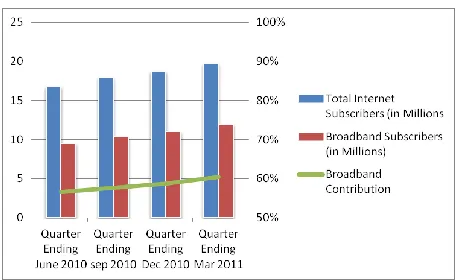
Fig 1: Indian Internet Growth Trend (Data Source: Trai Annual Report, 2011)
As observed the growth rate of broadband subscribers showcase an increasing trend moving from 57% in June 2010 to 60% in Mar 2011. With this expected growth rate, it will form the major subscriber base in future for internet users in India. Along with this Small and Medium Enterprises have sufficient amount of Budget allocations for buying bandwidth and paying for its usage [4].
II. CLOUD COMPUTING
United States Computer Emergency Readiness team defines Cloud Computing as „Cloud computing is a subscription-based service where you can obtain networked storage space and computer resources.‟ (Huth and James Cebula, 2011).
Cloud Computing is a service were the user can subscribe with a fee to use the resources for computational purposes. It‟s a paradigm shift that bridges the gap between Agility of Service and Cost to serve. As per the study Cloud based ERP system like „SAP Business ByDesign‟ saves about Rs. 37000 per user per year for SMEs [4].
A.Types of Cloud Computing
In their paper on cloud computing, (Alexa Huth and James Cebula, 2011) mention the following categories of cloud computing based on need:
Public Cloud: A public cloud can be accessed by any subscriber with an internet connection and access to the cloud space.
Private Cloud: A private cloud is established for a specific group or organization and limits access to just that group.
Community Cloud: A community cloud is shared among two or more organizations that have similar cloud requirements.
Hybrid Cloud: A hybrid cloud is essentially a combination of at least two clouds, where the clouds included are a mixture of public, private, or community.
An SME can derive maximum value by using a Public cloud based system.
B.Types of Cloud Computing
They also describe three types of cloud service providers:
Software as a Service (SaaS): SaaS provider give user based access for resources and applications. This help to almost eliminate software cost and licensing cost and greatly reduces hardware cost for the organization. However, the entire database of an organization in owned and held by the service provider and user have minimal control over cloud.
Platform as a Service: A PaaS system goes a level above the Software as a Service setup. Its a development platform that allows its user to create application that can be commercially used by the cloud users.
Infrastructure as a Service: In an IaaS agreement, all computational resources of an organization are managed by a cloud service provider and are used by organizations employees only. All cost related to computational resources are eliminated by the organization and user based subscription fee is paid.
From an SME perspective due to their limited requirements and small size SaaS brings maximum value to organization.
C.Main Features
Cost: It converts major capital expenditure into operational expenditure for an organization i.e. through cloud computing users can pay for using the software and computational resources available from the host on per user fee basis. This saves major expenses in terms of
Hardware Purchase
Hardware Maintenance cost
Software Cost
System Up-gradation Cost
Data storage cost
Licensing Cost
Easy of Usage: How user friendly is cloud computing to SME organizations? Any product or service that requires higher effort from customers from any of the following acts against value perceived by a customer.
International Journal of Emerging Technology and Advanced Engineering
Website: www.ijetae.com (ISSN 2250-2459,ISO 9001:2008 Certified Journal, Volume 2, Issue 12, December 2012)
426 However, in cloud based system, since all software are uploaded at the host server, can deliver a boot time of only 7 seconds, thus effectively wiping out wait time and greatly enhancing user experience for the customers.
Software Updating: All software available today on windows platform and hosted on user PCs carry a limited self life with regular updates required on almost weekly basis. This reduces the usability and impacts performance of host PCs. However, with cloud computing all updates are managed and upgraded at the host server by the service provider thus ensuring uptime of upto 99.99% (For GoGrid service provider).
Mobility: Cloud computing acts as a virtual machine that the user can access with user ID and password key from anywhere in the world through an internet connection. This greatly enhances the mobility of business and provides 24X7 accesses to information to the user. This removes the constraint and dependability on local PCs and hardware resources confined to user work place.
Scalability: Number of users subscribing to cloud services can be managed by an SME thus greatly improving both operational expenses and capital expenses of the organization. With the increase in users more Ids can be brought and with decrease in users the IDs can be surrendered. This saves cost to provide more hardware, software, licensing, training to the employees and saves on under-utilized resources in-case of reduction in requirement of ERP system users.
Storage Space: Through a virtual environment the storage space requirement for an organization can be managed on demand basis.
This saves a major cost head of providing more and more hardware space to store data for business purposes.
Implementation: Cloud computing require no implementation set-up at user site with only requirement of internet access and a user interface. This almost eliminates the Go-Live time for infrastructure set-up at client site and provides instant availability of user based computational resources.
All these factors tilt the scale strongly in favor of cloud computational resources utilization by SME industry in India. With a growth rate of 35% per annum (Assocham, 2009) and with more than 60% of SMEs (Assocham, 2009) moving toward technology platforms for bringing business efficiencies and quick customer response time to address dynamic business requirements, creates a compelling business case and win-win situation to both cloud service providers and SME industry.
D.Cloud Limitations:
However Cloud computing comes with its own set of issues that may impact an organization and its business. Major limitations are discussed below:
International Journal of Emerging Technology and Advanced Engineering
Website: www.ijetae.com (ISSN 2250-2459,ISO 9001:2008 Certified Journal, Volume 2, Issue 12, December 2012)
[image:4.612.102.523.114.436.2]427
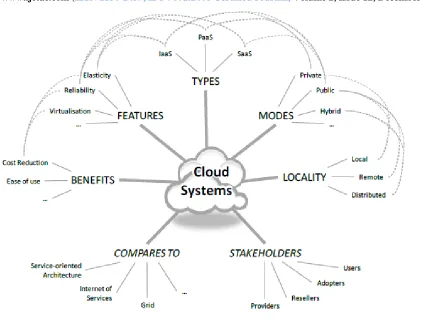
Figure 2: Cloud Computing Ecosystem (Image Courtesy: Future of Cloud Computing - Opportunities for European Cloud Computing beyond 2010 by European Commission Information Society and Media)
Lock-in: Once an organization has adopted for a given service provider, an organizations entire data infrastructure, set-up and working will happen as per system design provided by the service provider. Migration of data and workability of reports will be severely limited in case service provider is switched over. In long run this can carry negative cost impact where user is handicapped by the system provided by the host and will have to utilize its services at all quoted costs.
Uptime Guarantees: Host server uptime is controlled and managed by the service provider. Its highly dependent on maintenance and system architect developed by the host. Any user organization will have to trust on the market reputation of the host on uptime in the absence of any service Level Agreements (SLAs) on user uptime.
Performance Instability: As per Houfmann in „The Limits of Public Clouds for Business Applications‟, Performance of major cloud platforms is subject to variations and an area of research [9].
Network Limits: Data transfer is highly dependent upon media of transfer, since it defines the speed and capability of data volumes for transfer and analysis. This results in inevitable delay in data accessibility and information processing.
Of the seven limitations stated by Hoffmann in its paper „The Limits of Public Clouds for Business Applications‟, from SME industry perspective data security and service Uptime are the only major concern and generally is limited to proprietary datasets and trade secrets for data security. Lock-in with a service provider, Network limits, scalable storage issues are expected to carry only limited impact due to smaller data handling and analytical requirements for the industry.
International Journal of Emerging Technology and Advanced Engineering
Website: www.ijetae.com (ISSN 2250-2459,ISO 9001:2008 Certified Journal, Volume 2, Issue 12, December 2012)
428 III. FACTOR ANALYSIS
The study is a qualitative model to understand impact of various parameters impacting SMEs decision for cloud computing and identify overall benefit availability to them from it.
A.Key Definitions
Parameter: These are critical areas that drive a business decision for investment in a particular technology.
Traditional Approach: Company or organization owned data resources were entire data base is hosted on local servers or PCs.
Cloud Computing: Through which all services are accessed by an organization on SaaS basis.
B.Scoring Method:
Subject Knowledge based scoring involving IT department faculty from University College of Engineering (UCOE), Patiala.
Positive Impact (+): Parameter has a moderately positive impact on investment decision by the business.
Strong Positive Impact (+, +): Parameter has a moderately positive impact on investment decision by the business.
Negative Impact (-): Parameter has a moderately negative impact on investment decision by the business.
[image:5.612.317.570.110.328.2]Strong Negative Impact (-, -): Parameter has a moderately negative impact on investment decision by the business.
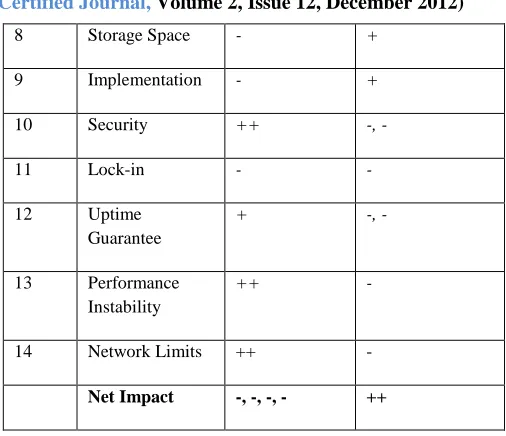
TABLE 1
S. No. Parameter Traditional Approach
Cloud Computation
1 Boot Time - ++
2 Internet Connectivity
++ -, -
3 Capital Expenses -, - ++
4 Operational Expenses
-, - -
5 Software Updating
-, - ++
6 Mobility -, - ++
7 Scalability - ++
8 Storage Space - +
9 Implementation - +
10 Security ++ -, -
11 Lock-in - -
12 Uptime Guarantee
+ -, -
13 Performance Instability
++ -
14 Network Limits ++ -
Net Impact -, -, -, - ++
As we see in the analysis, Traditional approach carries 4 negatives as compared to 2 positive for cloud computing on decision making for investment in cloud computing by SME industry. Over all, its 6 point in favor of Cloud computing to be adopted by SME industry. This gap will ensure to bring in technology shift and at affordable cost the way SME industry conducts its business. These benefits will not only make Indian SME Industry globally competitive but the improved information flow will also bridge gap between consumers aspirations and industries response rate to meet these aspirations.
IV. CONCLUSION
With the advent of cloud computing the SME businesses now have access to latest ERP systems accessible through SaaS media on user fee basis. This not only brings the benefit of technology at the door steps of SME industry but also helps them to carry lower investment cost on IT infrastructure.
International Journal of Emerging Technology and Advanced Engineering
Website: www.ijetae.com (ISSN 2250-2459,ISO 9001:2008 Certified Journal, Volume 2, Issue 12, December 2012)
429 REFERENCES
[1 ] Alexa Huth and James Cebula, “The Basics of Cloud Computing” [2 ] Yamini Indla, M. Sampath Kumar November 2012, “ Extended
Group Key Transfer Protocol for Authentication Using DES based on Secret Sharing in Cloud”
[3 ] Sebastian Morris, ”Competition, Regulation and Strategy: The Information Technology Industry”
[4 ] Monika Sharma, Ashwani Mehra, Haresh Jola, Anand Kumar Dr.Madhvendra Misra, Ms.Vijayshri Tiwari, “Scope of cloud computing for SMEs in India”
[5 ] http://pharmexcil.org/uploadfile/ufiles/FicciConferenceCloud31jul20 12.pdf
[6 ] Dr. A.P.Pandey & Shivesh, “Indian SMEs and Their Uniqueness in the Country”
[7 ] http://www.popularmechanics.com/technology/how-to/software/4306154
[8 ] http://www.channelinsider.com/c/a/Cloud-Computing/Google-Chrome-OS-to-Boot-PC-Within-7-Seconds-215142/
[9 ] Paul Hoffmann, “The Limits of Public Clouds for Business Applications”
[10 ]Trai Annual Report, 2011
[11 ]Future of Cloud Computing - Opportunities for European Cloud Computing beyond 2010 by European Commission Information Society and Media