ROLE OF HR IN NAVIGATING THE WORKFORCE FROM
NEGATIVE DEVIANCE TO POSITIVE DEVIANCE
Parul Malik1, Pooja Malik2
1
Research Scholar, Department of Humanities and Social Sciences, IIT Roorkee, India
2
Research Scholar, Department of Management Studies, IIT Roorkee, India
ABSTRACT
The research studies in the last years have focussed its attention on the negative form of
workplace deviant behaviour. However recent studies have shifted its focus towards positive
deviant behaviour. Literature review highlights that very few researches have integrated both
forms of deviant behaviour into their study. Moreover there lacks a connecting link between
both these forms of workplace deviance. HR policies play a significant role in promoting
positive workplace deviance and simultaneously reducing negative workplace deviance. The
purpose of this study is to demonstrate a shift in research from negative to positive forms of
deviance and to investigate the role of HRM policies in causing this shift. In addition this
study points out the various HR policies that can promote positive deviance and can
simultaneously reduce negative deviant behaviour.
Keywords: Causes of deviance, HR policies, Negative workplace deviance, Positive workplace deviance, Typology of deviance.
Introduction-
1982; Hollinger & Clark, 1983; Coccia, 1998)[8][9][10].The literature on workplace deviance has largely viewed deviance as destructive and antisocial. However, this viewpoint provides an incomplete outlook of employee deviance. Employee deviance may not always be harmful to the organization. There are two forms of deviant behaviour including destructive and constructive deviance (also known as positive deviance). However, fewer studies have examined constructive deviant behaviours. Economically speaking the cost of deviant activities of workforce is way too high including cost of recruitment, interviewing and hiring employee which is borne by the organisation. Thus, it is of significant importance that human resource (HR) practitioners are aware of these causes and their implications and therefore develop measures to restrain such behaviour which can blemish the organisation’s corporate image (Chirasha and Mahapa, 2012)[11]. This paper highlights the factors causing negative and positive deviance in organizations and discusses the role of HR policies as a connecting link between both the deviant behaviours.
Literature review
Research surveys have shown workplace deviance to be both a common and an expensive problem for organizations (Bennett & Robinson, 2000) [12] that add to financial, psychological and social cost of an organization (Bodankin & Tziner, 2009; Hollinger & Clark, 1982; Hollinger & Clark, 1983; Coccia, 1998) [13] [14] [15] [16]. The consequences of deviant workplace behaviour are critical because they can affect all levels of the organizations including decision-making, productivity and financial costs. However this is not a holistic view since researchers have focussed only on negative aspect of deviant behaviour. There also exists other type of deviance which is beneficial for organizations, known as positive deviance. Warren (2003) postulated that study of deviance should be undertaken with both forms of deviant behaviours i.e. constructive and destructive deviance [17].
deviance is a pervasive and expensive problem for organizations. For example, 75% of employees have reportedly stolen from their employer at least once (McGurn, 1988)[20], and it has been estimated that 33% to 75% of all employees have engaged in behaviour’s such as stealing in the organization, fraud, vandalising, sabotaging the property of the organization, and voluntary absenteeism (Harper, 1990)[21]. In recent studies, almost 25% of an employee sample indicated knowledge of illicit drug use among co-workers during the past year (Lehman, Wolcom and Simpson, 1990) [22], 42% of a surveyed sample of women reported experiencing sexual harassment at work and 7% of a sample of employees reported being victims of physical threats (North-western Life Insurance Company, 1993) [23]. The workplace deviance annual cost have been estimated to be as high as $4.2billion for workplace violence alone (Bensimon, 1994) [24], $40 to $120 billion for theft (Buss, 1993) [25].
The positive deviant workplace behaviour can be defined as ‘intentional behaviours that depart from the norms of a referent group in honourable ways” (Appelbaum & Matousek, 2007) [26]. Positive deviant behaviour must be praiseworthy and must focus on actions with honourable intentions, irrespective of the outcomes. This positive deviant workplace behaviour can be classified as a pro-social type of behaviour: organizational citizenship behaviours, whistle blowing, corporate social responsibility and creativity/innovation. Further, Spreitzer and Sonenshien (2004) also identified this positive deviant workplace as noncompliance with dysfunctional directives and criticizing incompetent superiors. Dimensions of positive deviant workplace behaviour are expected to benefit the organization [27].
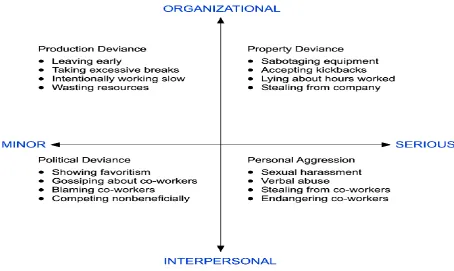
Figure. 1. Source: Robinson, S.L. and Bennett, R.J. (1995). A typology of deviant workplace behaviours: a multidimensional scaling study. Academy of Management
Journal, 38, 555-72.
Causes of Negative Workplace Deviance
Various causes to deviance have been identified in the past that can be divided into psychological, sociological and external factors. The study by Alias et al. in Malaysian context has classified causes of deviance into three broad categories i.e. individual (conscientiousness, negative affectivity, agreeableness, emotional intelligence), organizational (organisational climate, organisational justice, perceived organisational support, trust) and work related factors (work stress, job autonomy). The central question that scholars have been attempting to answer is what causes deviant behaviour. The various researchers have focussed on different perspectives responsible for causing deviant behaviour-
2005) [30]; emotional attachment (Galperin & Burke, 2006) [31]; internal motivation (Robinson and Bennett, 1995) [32]; personality (Colbert et al., 2004) [33]; fraudulent and aggressive behaviour (Appelbaum et al., 2005)[34]; negative reciprocity (Biron, 2010) [35] and lack of self-control (Gottfredson & Hirschi 1990) [36]. Thus one can treat deviance as psychological social phenomenon.
2. Sociological/ Organizational factors: Erikson (1962) points out that “Deviance leaks out where the social machinery is defective; it occurs where the social structure fails to communicate its needs to human actors” [37]. Therefore there is a shift of focus from inclusion of individual factors to organizational factors as antecedents of deviance (Glaser & Rice, 1959; Erikson, 1960; Hunt & Vitell, 1986) [38] [39] [40]. Deviance can hinder the normal functioning of an organization (Ford et al., 2008) [41] which is significantly affected by organizational change (Bryant & Higgins, 2010) [42]; fear of punishment and loss of job (Uhl-Bien &Carsten, 2007) [43]; performance appraisal system, reward system, organizational structure, organizational culture and organizational goals.
3. Job-related and environmental factors: Factors related with job including job design, work pressure, tasks associated with job (Kidwell and Martin, 2004) [44], and environmental conditions such as toxic organizational culture (Appelbaum et al., 2007) [45], injustice (Van Yperen et al., 2000) [46] and profit seeking organizations (Appelbaum & Shapiro, 2006) [47] can serve as an antecedents to deviance. Thus both the factors need to be studied in order to have a clear understanding of deviance (Bamberger & Biron, 2007) [48].
5. Organizational Culture: The culture of an organization is a very influential organizational factor. Thomas Watson, the founder of IBM, believed in building a culture that embraced failure and making mistakes which reflects in one of the Watson’s most famous quote, “The way to succeed is to double your error rate”. The organization’s culture develops over a period of time and it affects the behaviours of those who are already part of the organization and of those who are new to the organization.
6. Disengagement: According to a Gallup survey (2008) 55% of employees in organization are not engaged and 19% are actively disengaged. Meere (2005) classified the levels of engagement into “engaged, not engaged and actively disengaged” [49]. The employees who are engaged have high level of employment and passion towards job and the employees who are not engaged lacks that passion and “actively disengaged” employees are dissatisfied with their work. Therefore one can safely assume that this lack of engagement may cause employees involvement in deviant behaviour.
7. Diffusion of knowledge: According to Davis (1975) "the diffusion of new knowledge is a major cause of collective searches for new norms in the modern world" and thus one of the reason for violation of existing norms [50]. This diffusion of new knowledge can be attributed to the change in social structure of society or organization.
8. Technology: Cotgrove (1975) finds that the domination of “instrumental rationality” or “technical rationality” has overpowered the “value rationality” in every field which leads to ignorance of values and “threat to human freedom” [51]. Thus it can be assumed that such complexity may itself cause dominance of “technocrats” and thus deviance in organizations, shifting the focus from goals and norms towards the legal or illegal means to succeed in workplace.
Positive Deviance: Walking towards new mandate
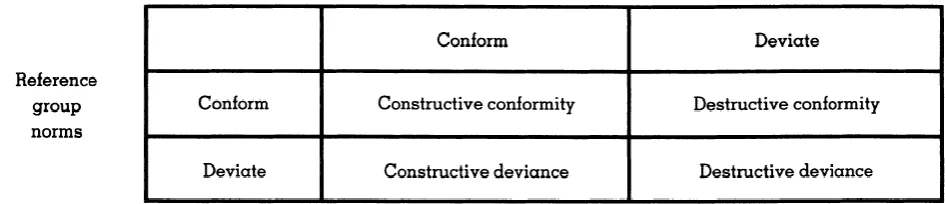
[image:7.595.91.564.219.321.2]According to Warren (2003) there are two streams of research on deviance in the management literature, one related to positive effects and other to its negative effects [55]. She developed an integrated framework of deviant behaviour by including both destructive and constructive form of deviant behaviour.
Figure. 2. Source: Warren, D.E. (2003). Constructive and Destructive Deviance in Organizations. The Academy of Management Review, 28, 622-632.
Employees who engage in nonconforming behaviours bring innovations in the organization and contribute in adding competitive advantage to the organizations. Organizations which are unable to tolerate deviation are often unable to adapt, and consequently are more likely to fail (Dehler &Welsh, 1994) [56]. Positive deviant actions help in changing common business norms and gear them more towards excellence. In turn, those revised business norms drive other organizations to catch up with the newly raised bar. As members within organizations positively deviate from an organisational practice, that deviant behaviour may indeed become the norm. Hence, positive deviance may lead to societal and organizational change through creative adaptation of norms (Ben-Yehuda, 1990) [57].
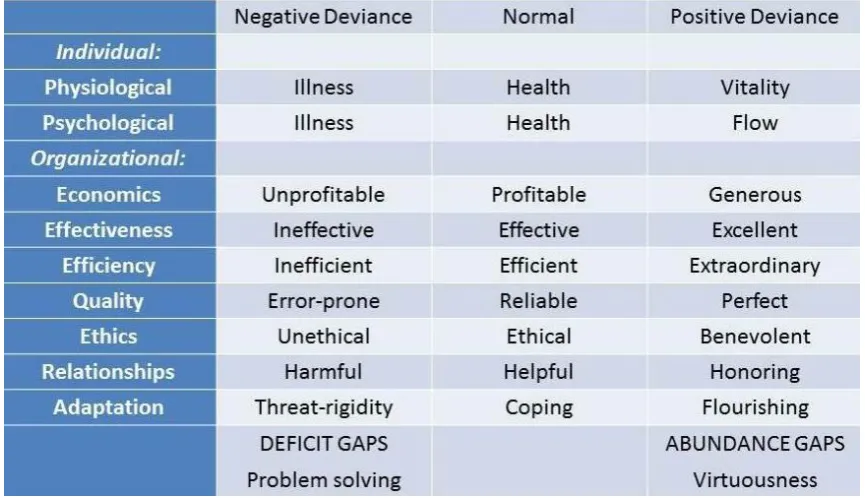
Figure. 3. Source: Cameron, K.S. (2008). Positively deviant organizational performance and the role of leadership values. Journal of Values Based Leadership, 1, 67-83.
The above continuum depicts that while on one side negative form of deviance leads to organizational inefficiency and is harmful to profitability, relationships, ethics and quality of an organization. On the other hand adapting positive deviance can prove to be beneficial for organizations in the above context.
Role of HR manager in causing a shift from negative to positive workplace deviance: Human resource management is a system of practices including staffing, training and development, performance appraisal compensation management, industrial relations and safety and health. These practices exert a great influence on individuals working in an organization.
favourable the HR practices will be the better will be the contribution of the employee’s towards their organizations. This contribution is expected to result in a higher level of commitment, and loyalty, which encourages employees to spend extra effort, and engage in positive behaviours that may benefit the organization (Karadal, Demirel and Çuhadar, 2008) [58].
Various HR policies that can contribute towards positive deviance and thereby reducing negative workplace deviance are discussed below:
1. Ethical climate: Individuals within organizations with a strong ethical climate are more likely to choose ethical behaviours when confronted with a dilemma (Victor and Cullen, 1987; Appelbaum et al., 2005) [59] [60].The HR manager should focus on creating a fair working environment that prevents such behaviour by providing their employees with ‘‘socio-cultural support and access to information’’ (Galperin, 2002) [61]. Workspace designs have a profound impact on workers and provides employees with the various opportunities to utilize their capabilities for advancement in their career and hence the employees shows high engagement with their jobs (Brill, Weidemann, Olsen, Keable and Bosti, 2001) [62].
2. Recruitment practices: The HR manager must conduct the Pre-integrity tests before hiring employees (Boye &Wasserman, 1996) [63] and more frequent background checks while hiring has proved to be useful in reduced level of negative workplace deviance (Appelbaum et al., 2005) [64].
3. Monitoring and control: To curb the employees from engaging in workplace deviance, HR practitioners should establish and promote appropriate rules, codes and procedures to be followed by employees (Chen, Chen and Liu, 2013) [65].
also necessary to maintain fairness of policies (Robinson & Bennett, 1995) [67].
5. Moral leadership: Supervisors’ role modelling non-abusive or ethical behaviour may contribute to the formation of a positive organizational culture (Shao et al., 2011) and thus positive form of behaviour at workplace including innovative activities [68].The findings by Brown and Trevino (2006) suggest that supervisors’ socialized charismatic leadership deters negative workplace deviance [69].
6. Career Development Opportunities: As employees are more conscious about their career so they prefer a job where they can get more opportunities to develop their skills. The HR manager can generate various measures to reduce the work place deviance such as creation of new opportunities for the employees for fulfilling their various needs of wealth, security, education, prestige, and self-esteem. The HR manager must take measures for the reduction of discrimination, favouritism, and nepotism in the reward channels; and can play a significant role in creating opportunity structure and personal space for every employee.
7. Supervisor Support: There is less likely for employees to leave an organization when they get support from their HR manager. The supportive environment helps in developing a good relationship and open communication with the supervisor (Greenhaus, 1990) [70]. When the HR manager focuses on the employee’s growth, other than the formal appraisal system; this helps in improving the employee’s commitment towards their organization (Freyermuth, 2007) [71].
9. Rewards: HR manager can play a big role in reducing the deviant behaviour of employees by utilising various rewards. Rewards can be financial or non-financial, intrinsic or extrinsic such as giving recognition to the workforce in the form of employee of the year award or by providing tangible incentives in response of the contribution of employees toward the growth of an organization (Pfeffer, 1998) [73].
10. Work Life Policies: The various work life policies generated by the HR manager for the welfare of employees leads to high employee commitment towards the organization. It involves redesigning work arrangements which leads to change in organization culture and careers, simultaneous changes in the areas of compensation, assignments and promotions. Researchers showed that there is greater organizational commitment if employees had access to work life policies and reduced turnover (Grover and Crooker, 1995) [74].
11. Justice: Fair treatment of employees by the HR manager impacts the employee justice perceptions at work. The research study of Everton, Jolton, and Mastrangelo (2007) finds that the workplace deviance can be curbed by increasing the participation of employees in various organizational programs accompanied by distribution of rewards. [75].
12. Transformation: HR manager can play a significant role in transforming the behaviour of employees in the work place from negative behaviour towards positive behaviour. Giordano et al. (2002) postulated four elements for discontinuing any negative behaviour [76]. These elements include “(becoming) mindful of the desirability of change; to be exposed to the pro-social elements of social environment; to initiate the change in one’s identity; and to acquire the view of criminal lifestyle as undesirable.”
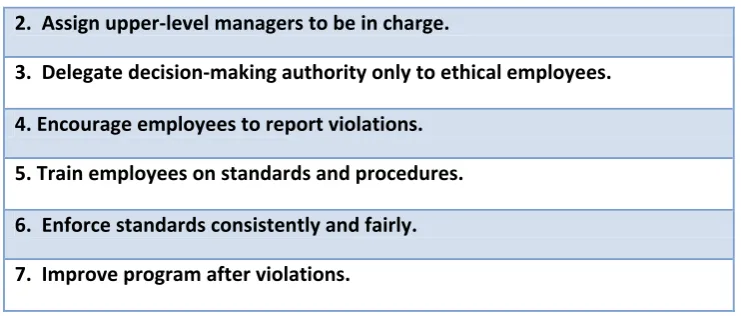
Dalton (1994) [77] proposed a compliance model to overcome norm violating behaviours in an organization that consists of following steps which can be implemented by the HR managers to overcome deviant behaviours in organizations:
3. Delegate decision-making authority only to ethical employees.
4. Encourage employees to report violations.
5. Train employees on standards and procedures.
6. Enforce standards consistently and fairly.
[image:12.595.113.484.83.241.2]7. Improve program after violations.
Figure. 4. Source: Dalton, D. R., Metzger, M. B., Hill, J. W., Simmers, W. W., Cobert, J. L., Conry, E. J. and Fox, K. H. (1994). The ‘New’ U.S. Sentencing Commission
Guidelines: A Wake-up Call for Corporate America. Academy of Management Executive, 8, 7-16.
Conclusion
This study shows that there exists two form of deviant behaviour in the workplace including negative and positive deviance. Earlier studies have emphasized more on the negative form of deviant behaviour that adds to various costs of organization. Recently the focus has shifted toward positive form of deviance that contributes toward better results in an organization. This study has identified the various underlying factors to workplace deviant behaviour including individual, psychological, organizational, situational, and technological factors. This study highlights the importance of HR policies in causing this clear demarcation from negative toward positive workplace deviance. The various HR policies have resulted in the positive workplace deviance and have significantly reduced the negative workplace deviant behaviour of employees.
REFERENCES
[1] Baron, R. A. and Neuman, J. H. (1996). Workplace violence and workplace aggression: Evidence on their relative frequency and potential causes. Aggressive Behavior, 22, 161-173. [2] Chen, C.C; Eastman, W. (1997).Toward a civic culture for multicultural organizations.
Journal of Applied Behavioral Science, 33, 454-470.
[4] Everton, W.J; Jolton, J.A. and Mastrangelo, P.M. (2007). Be nice and fair or else: understanding reasons for employees’ deviant behaviors. Journal of Management Development, 26(2), 117-131.
[5] Marks, J. (1996).The American uncivil wars.U.S. News & World Report, 66-72.
[6] Neuman, J. H; Baron, R. A. (1997).Aggression in the work-place. In Giacalone, R.A; Greenberg, J. (Eds.), Antisocial behavior in organizations, 37-67.
[7] Srivastava, S. (2012).Workplace Passion as a Moderator for Workplace Deviant Behaviour: Job Satisfaction Relationship: A Comparative Study between Public Sector and Private Sector Managers. Asia-Pacific Journal of Management Research and Innovation,
8(4), 517-523.
[8] Hollinger, R.C; Clark, J.P. (1982).Formal and informal social controls of employee deviance. Sociological quarterly, 23, 333-343.
[9] Hollinger, R.C., and Clark, J.P. (1983). Deterrence in the workplace: Perceived certainty, perceived severity, and employee theft. Social Force, 62(2), 398-417.
[10] Coccia, C. (1998). Avoiding a toxic organization. Nursing Management, 29(5), 32-40.
[11]Chirasha, V. and Mahapa, M. (2012). An Analysis of the Causes and Impact of Deviant Behaviour in the Workplace. The Case of Secretaries in State Universities. Journal of Emerging Trends in Economics and Management Sciences (JETEMS), 3(5), 415-421.
[12] Bennett, R.J. and Robinson, S.L. (2000).Development of a measure of workplace deviance. Journal of Applied Psychology, 85, 349-60.
[13] Bodankin, M. and Tziner, A. (2009). Constructive Deviance, Destructive Deviance and Personality: How do they interrelate? Economic Interferences, XI (26), 549-564.
[14]Hollinger, R.C; Clark, J.P. (1982).Formal and informal social controls of employee deviance. Sociological quarterly, 23, 333-343.
[15] Hollinger, R.C., and Clark, J.P. (1983). Deterrence in the workplace: Perceived certainty, perceived severity, and employee theft. Social Force, 62(2), 398-417.
[16] Coccia, C. (1998). Avoiding a toxic organization. Nursing Management, 29(5), 32-40.
[17] Warren, D.E. (2003). Constructive and Destructive Deviance in Organizations. The Academy of Management Review, 28, 622-632.
workplace behaviors: causes, impacts, and solutions. Corporate Governance, 7(5), 586 – 598. [20]McGurn, M. (1988). Spotting thieves who work among us. Wall Street Journal, 8, A16. [21] Harper, D. (1990). Spotlight abuse – save profits. Industrial Distribution, 79(3), 47-51. [22] Lehman, W. and Simpson, D. (1992). Employee substance abuse and on-the-job behaviors. Journal of Applied Psychology, 77, 309-321.
[23] Northwestern National Life Insurance Company. (1993). Fear and violence in the workplace. Research report, Minneapolis, MN. In Andersson, L. M. and Pearson, C. M. (2012). Effect of tit for tat? The spiraling in the workplace incivility. The Academy of Management Review, 24(3), 452-471.
[24]Bensimon, H. F. (1994). Crisis and disaster management: Violations in the workplace.
Training and Development, 28, 27-32.
[25] Buss, D. (1993). Ways to curtail employee theft. Nation’s Business, April, 36-38.
[26] Appelbaum, S.H; Iaconi, G.D and Matousek, A. (2007). Positive and negative deviant workplace behaviors: causes, impacts, and solutions. Corporate Governance, 7(5), 586 – 598. [27] Spreitzer, G. M. and Sonenshein, S. (2004). Toward the construct definition of positive deviance. American Behavioral Scientist, 47(6), 828–847.
[28]Rowe, D. C. and Osgood, D. W. (1984). Heredity and sociological theories of delinquency: reconsideration. American Sociological Review, 49, 526-540.
[29]Robinson, S. L. and Greenberg, J. (1998). Employees behaving badly: dimensions, determinants, and dilemmas in the study of workplace deviance. In Cooper, C. L. and Rousseau, D. M. (Eds), Trends in Organizational Behavior, Rousseau, New York, NY, 1-30. [30] Henle, C. (2005). Predicting workplace deviance from the interaction between organizational justice and personality. Journal of Managerial Issues, 2, 247–263.
[31] Galperin, B; Burke, R. (2006).Uncovering the relationship between workaholism and workplace destructive and constructive deviance: An exploratory study. International Journal of Human Resource Management, 17, 331–347.
[32] Robinson, S. and Bennett, R. (1995).A Typology of Deviant Workplace Behaviors: a Multidimensional Scaling Study. Academy of Management Journal, 38(2), 555-572.
[34] Appelbaum, D.K; Lay, M. (2005). The relationship of ethical climate to deviant workplace behavior. Corporate Governance, 5, 43–56.
[35] Biron, M. (2010).Negative reciprocity and the association between perceived organizational ethical values and organizational deviance. Human Relations, 63(6), 875–897. [36] Gottfredson, M; Hirschi, T. (1990).A general theory of crime. Stanford: Stanford univ.
Press.
[37] Erikson, K. T. (1962). Notes on the sociology of deviance. Social Problems, 9 (Spring), 307-314.
[38] Glaser, D; Rice, K. (1959). “Crime, age and employment”. American sociological review, 24, 679-686.
[39] Erikson, K.T. (1960).Notes on the sociology of deviance. Paper read at the 55th annual meetings of the American sociological association, New York.
[40] Hunt, S.D; Vitell, S. (1986).A general theory of marketing ethics. Journal of Macro marketing, 8(2), 5–16.
[41] Ford, J; Ford, L. and D’Amelio, A. (2008). Resistance to change: The rest of the story.
Academy of Management Review, 33, 362–377.
[42] Bryant, M; Higgins, V. (2010). Self-confessed troublemakers: An interactionist view of deviance during organizational change. Human relations, 63(2), 249–277.
[43] Uhl-Bien, M; Carsten, M.K. (2007).Being ethical when the boss is not. Organizational Dynamics 36(2), 187–201.
[44] Kidwell, R.E; Martin, C.L. (2004).Managing the ambiguity of workplace deviance: Lessons from the study of conflict. Paper presented at the meeting of the Academy of Management, New Orleans, LA.
[45] Appelbaum, S.H; Iaconi, G.D and Matousek, A. (2007). Positive and negative deviant workplace behaviors: causes, impacts, and solutions. Corporate Governance, 7(5), 586 – 598. [46] Van Yperen, N., Hagedoorn, M., Zweers, M. and Postma, S. (2000). Injustice and employees’ destructive responses: The mediating role of state negative effect. Social Justice Research, 13, 291–312.
[47] Appelbaum, S. and Shapiro, B. (2006).Diagnosis and remedies for deviant workplace behaviors. Journal of American Academy of Business, 9, 14–20.
(2011).Workforce Deviance and the Business Case for Employee Engagement. The Journal for Quality and Participation, 34(2), 11.
[50] Davis, F. J. (1975). Beliefs, values, power, and public definitions of deviance. 50-59. In Davis, F.J. and Stivers, R. eds., The Collective Definition of Deviance. New York: Free Press.
[51]Cotgrove, S. (1975).Technology, Rationality and Domination. Social Studies of Science,
5(1), 55-78.
[52] Farrington, D., Gundry, G. and West, D. (1975). The familial transmission of criminality. Medicine Science Law, 15, 177-186.
[53] Elder, G. H. Jr. (1986). Military times and turning points in men’s lives. Developmental psychology, 22, 233-245.
[54] Sampson, R. J. and Laub, J. H. (1990). Crime and deviance over the life course: the salience of adult social bonds. Annual sociology of review, 55, 609-627.
[55] Warren, D. E. (2003). Constructive and Destructive Deviance in Organizations. The Academy of Management Review, 28, 622-632.
[56] Dehler, G. E. and Welsh, M. A. (1994). Spirituality and organisational transformation.
Journal of Managerial Psychology, 9(6), 17-26.
[57] Ben-Yehuda, N. (1990). Positive and negative deviance: Morefuel for a controversy.
Deviant Behavior, 11(3), 221-243.
[58] Karadal, H., Demirel, Y. and Çuhadar, M. T. (2008). The study of differential relationships between human resource practices and organizational commitment. Gjana, 1(2),
363-379.
[59] Victor, B. and Cullen, J. B. (1988). The organizational bases of ethical work climates.
Administrative Science Quarterly, 33(1), 101-25.
[60] Appelbaum, S. H., Deguire, K. J. and Lay, M. (2005). The relationship of ethical climate to deviant workplace behavior. Corporate Governance, 5(4), 43-56.
[62] Brill, M., Weidemann, S., Olsen, J. and Keable. (2001). Disproving widespread myths about workplace design. The Buffalo Organization for Social & Technological Innovation Associates. Kimball International.
[63] Boye, M. and Wasserman, A. (1996). Predicting counter productivity among drug store applicants. Journal of Business and Psychology, 10(3), 337-349.
[64] Appelbaum, S. H., Deguire, K. J. and Lay, M. (2005). The relationship of ethical climate to deviant workplace behavior. Corporate Governance, 5(4), 43-56.
[65] Chen, C., Chen, M. and Liu, Y. (2013). Negative affectivity and workplace deviance: the moderating role of ethical climate. The International Journal of Human Resource Management, 24(15), 2894-2910.
[66] Trevino, L. K. and Brown, M. E. (2005). The role of leaders in influencing unethical behavior in the workplace. In Kidwell, R. E. and Martin, C. L. (Eds), Managing Organizational Deviance, Sage Publishing, London, 69-96.
[67] Robinson, S. and Bennett, R. (1995). A Typology of Deviant Workplace Behaviors: a Multidimensional Scaling Study. Academy of Management Journal, 38(2), 555-572.
[68] Shao, P., Resick, C. J. and Hargis, M. B. (2011). Helping and harming others in the workplace: The roles of personal values and abusive supervision. Human Relations, 64(8),
1051-1078.
[69] Brown, M. E. and Trevino, L. K. (2006). Socialized charismatic leadership, values congruences, and deviance in work groups. Journal of Applied Psychology, 91, 954-962.
[70] Greenhaus, J. H., Parasuraman, S. and Wormley, W. M. (1990). Effects of race on organizational experiences, job performance evaluations, and career outcomes. Academy of Management Journal, 33, 64–86.
[71] Freyermuth. (2007). Retaining employees in a tightening labor market, RSM McGladrey, website: www.cfo.com/whitepapers/index.cfm/ Display whitepaper/10308654? Topic id+10240327-22k.
[72] Johnson, M. (2011). Workforce Deviance and the Business Case for Employee Engagement. The Journal for Quality and Participation, 34(2), 11-15.
[73] Pfeffer, J. (1998). Seven practices of successful organisations. California Management Review, 40(2), 96.
Resource Policies: The Impact of Family-Friendly Policies on the Organizational Attachment of Parents and Non-Parents. Personnel Psychology, 48, 271-288.
[76] Everton, W.J., Mastrangelo, P.M. and Jolton, J.A. (2005). Personality correlates of employees’ personal use of work computers. Cyber Psychology and Behavior, 8(2), 143-53. [77] Giordano, P. C., Cernkovich, S. A. and Rudolph, J. L. (2002). Gender, crime, and desistance: Toward a theory of cognitive transformation. American Journal of Sociology, 107, 990–1064.