Journal of Chemical and Pharmaceutical Research, 2012, 4(1):365-374
Research Article
CODEN(USA) : JCPRC5
ISSN : 0975-7384
Evaluation of phytochemicals, antioxidant activity and elemental content of
Adiantum capillus veneris leaves
N. S. Rajurkar
*and Kunda Gaikwad
Department of Chemistry, University of Pune, Pune, India
_____________________________________________________________________________________________
ABSTRACT
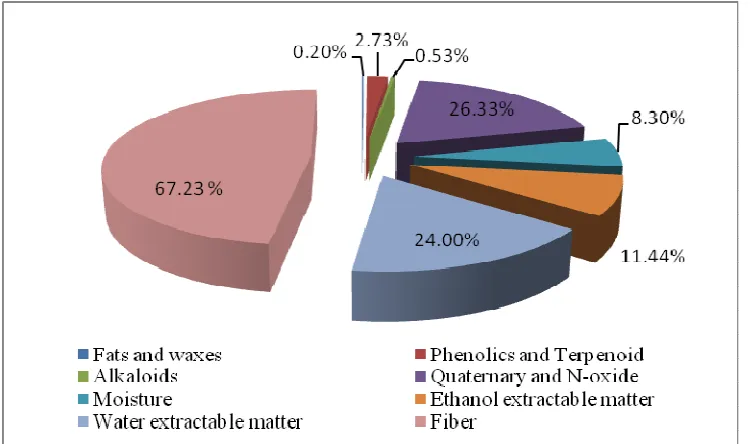
The Adiantum capillus veneris was screened for phytochemicals and metal content. The antioxidant activity was also determined by different methods. It was observed that it contains 8.3 % moisture, 11.44 % ethanol extractable matter and 24.00 % water extractable matter. The soxhlet extraction of Adiantum capillus veneris showed the presence of phenolics and terpenoids (2.73 %), fats and waxes (0.20 %), alkaloids (0.53 %), quaternary and N-oxides (26.33 %) and fiber (67.23 %). Ten elements Mg, Ca, K, Mn, Fe, Co, Na, Ni, Cu, and Zn were determined from plant sample using inductively coupled plasma atomic emission spectroscopy (ICP-AES) technique among which Ca and K were found to be at major level. Adiantum capillus veneris leaves contain 224.76 mg FA/gm dw of phenolics and 49.62 mg equi Rut/gm dw of flavonoids in aqueous extract. The ethanol extract showed good antioxidant activity as compared to standard i.e. ascorbic acid, it exhibits low IC50 value 0.3986 mg/gm for DPPH
assay and 0.695 mg/gm for ABTS assay. Results obtained indicated that Adiantum capillus veneris leaves are endowed with free radical scavenging molecules and it can be used as a potential source of natural antioxidants and nutrients.
Key words: Adiantum capillus veneris, phytochemicals, antioxidant activity, Elemental content, ICP-AES.
Abbreviations: FA: Ferulic acid, Rut: Rutin, DPPH: 1, 1-diphenyl, 2-picrylhydrazyl, ABTS: 2, 2- azino-bis-3-ethylbenzothiazoline-6-sulfonic acid, IC50: effective concentration at which the antioxidant activity was 50%, TPTZ:
Tripydyltriazin
_____________________________________________________________________________________________
INTRODUCTION
Reactive oxygen species (ROS) are generated by many redox processes that normally occur in the metabolism of aerobic cells. These species are highly reactive and harmful to the cells. If not eliminated, ROS can damage important molecules such as proteins, DNA and lipids. Cells express several defense mechanisms, including antioxidant enzymes and non-enzymatic compounds that help to prevent the damaging effects of ROS. However, these endogenous systems are often insufficient for complete scavenging of ROS. Their excess has been implicated in the development of chronic diseases, such as cancer, arteriosclerosis and rheumatism. A study shows that antioxidant substance with free radicals plays important role in prevention of free radical- induced diseases.
Adiantum capillus veneris (Family: Adiantaceae) is one on the most common species with potential importance for medicinal and nutritive purpose. Adiantum species were used for chest complaints, cough, expectorant, increase lactation, colds, aid kidney function, antiparasitic and dandruff. The fresh or dried leafy fronds are antidandruff, antitussive, astringent, demulcent, depurative, emetic, weakly emmenagogue, emollient, weakly expectorant, febrifuge, galactogogue, laxative, pectoral, refrigerant, stimulant, sudorific and tonic [6]. The dried fronds of the plants are used to make a tea [7, 8] and also used as a garnish on sweet dishes (Maybe R). Syrup is made from the plant - it makes a refreshing summer drink.
The objective of the research was to investigate the phytochemicals present in the sample qualitatively and quantitatively, determination of mineral content and to asses the antioxidant activity of Adiantum capillus veneris leaves in different solvents.
EXPERIMENTAL SECTION
2.1 Apparatus:
[image:2.595.226.372.450.534.2]Absorption spectra’s were recorded on UV-visible spectrophotometer (UV-1800, Shimadzu). The Karl Fischer Titration assembly (Model: VEEGO / MATIC-I, C-3828) with VEEGO/MATIC-I main unit solenoid valve assembly and One pair of platinum sensors was used for determination of moisture content. An ICP-AES instrument was used for determination of mineral content from the sample. Instrumental conditions used in the ICP -AES equipment are given in table 1.
Table 1: Instrumental conditions used in the ICP AES equipment
Nebulizer gas flow 0.8 L min−1 Auxiliary gas flow 1.0 L min−1 Coolant flow 12.0 L min−1
ICP RF power 1.6 KW
Sample uptake rate 1.5 mL min−1
Plasma power 1400 W
Reading time Auto
2.2 Chemicals:
All chemicals used for experiments were of analytical grade. The DPPH [1, 1-diphenyl, 2-picrylhydrazyl] and ABTS [2,2- azino-bis-3-ethylbenzothiazoline-6-sulfonic acid di-ammonium salt] were procured from Sigma chemicals (Bangalore, India), while methanol AR grade, ethanol, L-Ascorbic acid, F.C reagent (Folin-Ciocalteau reagent), Ferulic acid (FA), trichloroacetic acid (TCA), TPTZ (tripydyltriazine), potassium ferricyanide (K3Fe(CN)6), ferric chloride (FeCl3), sodium nitrite, aluminum chloride, sodium hydroxide and sodium acetate were
procured from Sisco Research Laboratories, Mumbai, India. The K. F. grade ethanol, Karl- Fisher reagent, chloroform and ethyl acetate were purchased from s d fine chemicals, India.
2.3 Sample preparation and extraction:
with different concentration (0.3 – 2.00 mg/mL). The extract prepared was stored in refrigerator at 4 0C and further used for different assays to measure the antioxidant activity.
2.4 Phytochemical screening:
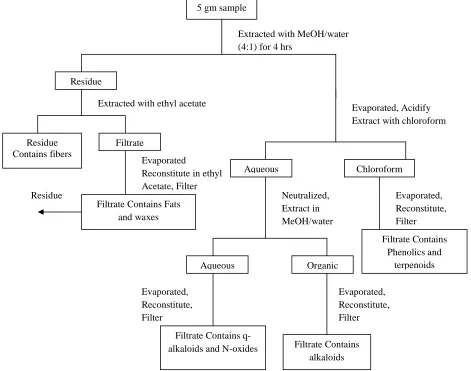
[image:3.595.62.533.232.603.2]Phytochemical screening of Adiantum capillus veneris leaves were performed according to the standard procedure suggested by Ayoola et al. [9]. The small amount of extracted sample was screened qualitatively for presence of terpenoids, flavonoids, saponins, tannins, anthraquinones, reducing sugar and cardiac glycoside. Further, the sample was extracted with soxhlet assembly for quantitative determination of alkaloids, phenolics, terpenoids, fibers, fats and waxes. The scheme for phytochemical screening by soxhlet extraction is shown in figure 1. Moisture content from the sample was then determined by using Karl-Fischer titrimetric method. Percentage of water and ethanol extractable matter was also determined.
Figure 1: Schematic representation of soxhlet extraction for quantitative estimation of phytochemicals from
Adiantum capillus veneris leaves
2.5 Total Phenolic:
Total phenolic content was measured by Folin-Ciocalteau method [10] with some modification. 1mL of extract was added to 1 ml distilled water and 0.2 ml of 1 N Folin-Ciocalteau reagent, incubated for 1 min at 23 0C and then 5 % Na2CO3 was added. Absorbance was measured at 765 nm on UV- visible spectrophotometer (PC-1600, Shimadzu
Co,) after incubation of 2 hrs at room temperature. The phenolic content was expressed as milligram equivalent of ferulic acid per gram dry weight of sample.
5 gm sample
Extracted with MeOH/water (4:1) for 4 hrs
Evaporated
Reconstitute in ethyl Acetate, Filter Residue
Extracted with ethyl acetate
Residue Contains fibers
Filtrate
Filtrate Contains Fats and waxes Residue
Evaporated, Acidify Extract with chloroform
Chloroform Aqueous
Evaporated, Reconstitute, Filter Neutralized,
Extract in MeOH/water
Filtrate Contains Phenolics and
terpenoids
Aqueous Organic
Evaporated, Reconstitute, Filter
Filtrate Contains alkaloids Filtrate Contains q-
alkaloids and N-oxides
2.6 Total flavonoids:
The determination of flavonoids was performed according to the colorimetric assay [11]. Distilled water (4 ml) was added to 1 ml of sample extract. Then, 5% sodium nitrite solution (0.3 ml) was added followed by 10% aluminum chloride solution (0.3 ml). Test tubes were incubated at ambient temperature for 5 min, and then 2 ml of 1 M sodium hydroxide were added to the mixture. Immediately, the volume of reaction mixture was made to 10 ml with distilled water. The absorbance of the pink colour developed was determined at 510 nm. A calibration curve was prepared with rutin and the results were expressed as mg rutin equivalents per gram dry weight of sample.
2.7 Antioxidant assay:
2.7.1 ABTS radical cation scavenging assay:
The ability of the test sample to scavenge ABTS·+ radical cation was compared to acetic acid standard. The assay was performed according to an improved method as described by Re et al, [12] with some minor modification. 3 ml of ABTS radical cation solution was mixed with 20 µl of the test sample (0.20–1.00 mg/ml) and the absorbance was measured at 734 nm after 1 min. The percentage inhibition of absorbance was calculated and plotted as a function of the concentration of standard. The inhibition percentage of ABTS was calculated using following equation,
ABTS cation radical scavenging activity (%) = [(A blank − A sample) / A blank] x 100
Where, A blank is the absorbance without extracts at 734 nm, and A sample is the absorbance of the test solution.
2.7.2 FRAP assay:
The antioxidant activity of extracts was determined using assay of ferric reducing/antioxidant power (FRAP). For that purpose, freshly prepared FRAP reagent (2.5 ml of a 10 mM tripydyltriazine (TPTZ) solution in 40 mM HCl add 2.5 ml of 20 mM FeCl3.6H2O and 25 ml of 0.3 M acetate buffer at pH 3.6.) was heated at 37 0C and mixed with
40 µL of sample extract and the reaction mixture was incubated at 37 0C for 15 min. Absorbance was measured at 593 nm on UV-Visible spectrophotometer detailed procedure explain elsewhere [13]. Aqueous solutions of known Fe (II) concentrations in the range of 100–2000 µM (FeSO4.7H2O) were used for calibration.
2.7.3 Scavenging effect of 1,1Diphenyl, 2-picrylhydrazyl (DPPH) radical:
The method given by Rajurkar and Gaikwad (2010) [13] was used to test for DPPH radical scavenging activity. 100 µL extracts of the sample at different concentration were mixed with 2 ml of freshly prepared DPPH solutions. The mixture was shaken and kept for 30 min in dark at room temperature. The absorbance was measured at 517 nm against blank on UV-Visible spectrophotometer. The radical scavenging activity was measured as a decrease in the absorbance of DPPH and calculated using the similar equation as that of ABTS scavenging assay. The calibration curve was prepared by using ascorbic acid as standard. The DPPH radical scavenging capacity was estimated from the difference in absorbance for the sample and blank and expressed as percentage of DPPH scavenging.
2.7.4 Reducing power assay:
The reducing power of extract was quantified by the method described by Rajurkar and Gaikwad (2010) [13]. 0.1 ml of reaction mixture with the conc. 0.3- 2.0 mg/ml in all extracts in phosphate buffer was incubated with potassium ferricyanide (2 ml, 1 % solution) for 20 min. The reaction was terminated by adding trichloroacetic acid solution (10 mg/100 ml) in reaction mixture. The mixture was centrifuged at 2500 rpm for 15 min. then 1.5 ml of above supernatant solution was mixed with 2 ml distilled water and 0.1 % ferric chloride solution and absorbance was measured at 700 nm. Increased absorbance of the reaction mixture indicated increased reducing power.
2.8 Elemental content:
RESULTS AND DISCUSSION
3.1 Phytochemical screening:
The ethanol extract of leaves of Adiantum capillus veneris showed the presence of flavonoids, terpenoids, saponins, tannins and reducing sugar. Whereas, the anthraquinones and cardiac glycosides were absent in ethanol extract of sample. A variety of herbs and herbal extracts contain different phytochemicals with biological activity that can be of valuable therapeutic index. Phytochemical screening of medicinal plants is very important in identifying new sources of therapeutically and industrially important compounds [14]. Different phytochemicals have been found to possess a wide range of activities, which may help in protection against chronic diseases. For example, Phytochemicals such as saponins, terpenoids, flavonoids, tannins, steroids and alkaloids have anti-inflammatory effects [15, 16, 17]. Rupasinghe et al., [18] have reported that saponins possess hypocholesterolemic and antidiabetic properties. The terpenoids have also been shown to decrease blood sugar level in animal studies [19]. Steroids and triterpenoids showed the analgesic properties [20]. The steroids and saponins are responsible for central nervous system activities.
[image:5.595.113.488.307.529.2]The results for soxhlet extraction of Adiantum capillus veneris leaves showed in Figure 2. It was also observed that, it contain 8.3 % moisture, 11.44 % ethanol extractable matter and 24.00 % water extractable matter.
Figure 2: Quantitative estimation of Adiantum capillus veneris leaves extract. All results were expressed as mean ± standard deviation (N=2)
3.2 Total phenolics:
Table 2: Total phenolics and flavonoids for Adiantum capillus veneris a
Solvent Total phenolics b Total flavonoids c Aqueous 224.76 ± 9.75 49.62 ± 0.875 Methanol 156.34 ± 9.70 78.18 ± 1.741 Ethanol 36.53 ± 3.65 50.15 ± 4.79
a
= All results were expressed as mean ± standard deviation (N=2)
b = Total phenolics were express as mg equi FA/gm dry weight of sample c = Total flavonoids were express as mg equi Rut/gm dry weight of samp
3.3 Total flavonoids:
Flavonoids are natural phenolic compounds and well known antioxidants. Total flavonoids can be determined in the sample extracts by reaction with sodium nitrite, followed by the development of coloured flavonoid-aluminum complex formation using aluminum chloride which can be monitored spectrophotometrically at 510 nm. The results showed that Adiantum capillus veneris leaves extract contain 49.62, 78.18 and 50.15 mg equi Rut/gm dw of sample in aqueous, methanol and ethanol extract respectively. The results are shown in table 2. In various studies, antioxidant activity of the plant extracts was found to be fairly high which are rich in flavonoids [23]. Some flavonoids were reported to exhibit potential for anti–human immunodeficiency virus functions [24].
3.4 Antioxidant assay:
3.4.1 ABTS cation radical scavenging assay:
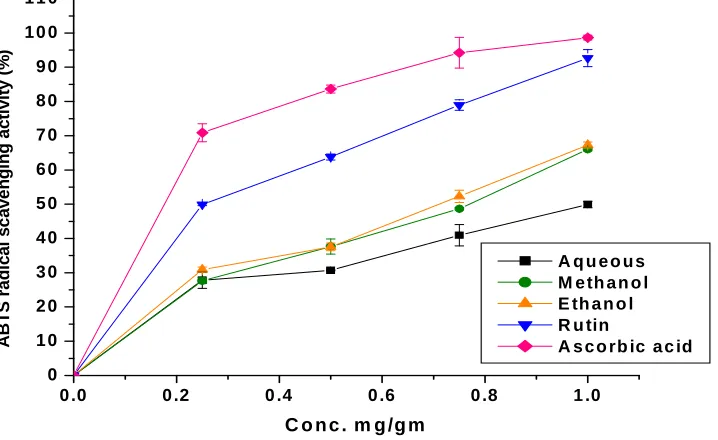
[image:6.595.123.482.433.653.2]The ability of the test sample to scavenge ABTS·+ radical cations was compared with acetic acid standard. The ABTS cation radical scavenging activity (%) of the water, methanol and ethanol extracts of Adiantum capillus veneris, compared to Ascorbic acid and rutin are shown in figure 3. The antioxidant activity was expressed as an effective concentration at 50%. The effective concentration (IC50) values of the extracts and standard are shown in
Table 3.
0 .0 0 .2 0 .4 0 .6 0 .8 1 .0
0 1 0 2 0 3 0 4 0 5 0 6 0 7 0 8 0 9 0 1 0 0 1 1 0
A
B
T
S
r
a
d
ic
a
l
s
c
a
v
e
n
g
in
g
a
c
ti
v
it
y
(
%
)
C o n c . m g /g m
A q u e o u s M e th a n o l E th a n o l R u tin
A s c o rb ic a c id
Figure 3: ABTS cation radical scavenging activity of the extract from Adiantum capillus veneris in different solvents. Ascorbic acid and rutin used as control. All results were expressed as mean ± standard deviation
0 .0 0 .2 0 .4 0 .6 0 .8 1 .0 1 .2 1 .4 1 .6 0
1 0 2 0 3 0 4 0 5 0 6 0 7 0 8 0 9 0 1 0 0
m
g
e
q
u
i
F
e
(I
II
)
re
d
/g
m
d
w
c o n c . ( m g /g m ) A q u e o u s
M e th a n o l E th a n o l R u t in
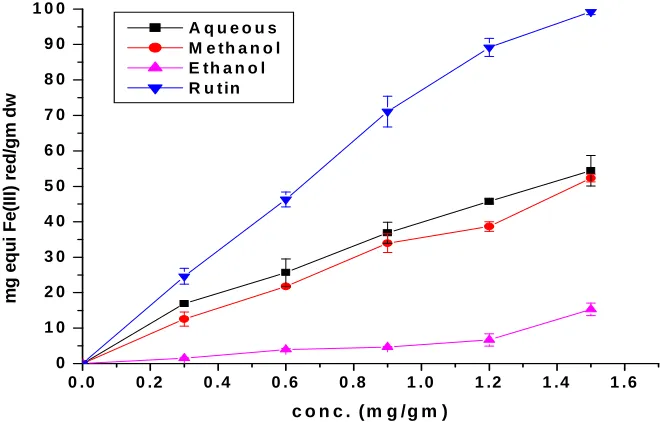
Figure 4: FRAP values of the extract from Adiantum capillus veneris in different solvents express in mg equi. of Fe (III) reduction per gram dry weight of sample. Rutin was used as control. All results were expressed as
[image:7.595.135.465.123.334.2]mean ± standard deviation (N=2). The vertical bars represent the standard deviation for each data.
Table 3: The IC50 values for Adiantum capillus veneris leaves in various extracts a
Solvent IC50 value
DPPH assay ABTS assay
Aqueous 1.448 0.973
Methanol 1.154 0.767
Ethanol 0.3986 0.695
Rutin 0.3253 0.25
Ascorbic acid 0.2969 0.174
a = IC
50 values was expressed as mg/gm
From the IC50 values of the extracts, it is seen that the ethanol extract (0.695 mg/gm) had the highest ABTS cation
radical scavenging activity as shown by the lowest value of IC50. However, when compared with standard i.e.
ascorbic acid (0.174 mg/gm) and control i.e. rutin (0.250 mg/gm), the extracts shows slightly less radical scavenging activity. For each sample, five concentrations (mg/ml) were tested. The highest ABTS radical scavenging rate was found to be 67.28 % for ethanol extract while, the lowest was found for water extract (49.91 %). The antioxidant activity values decreased in the order of ethanol > methanol > water extracts.
3.4.2 FRAP assay:
3.4.3 DPPH radical scavenging assay:
The degree of discoloration of violet colour of DPPH radical, as it gets reduced, indicates the radical scavenging potential of the antioxidant [26]. The radical-scavenging properties of the various extracts of Adiantum capillus veneris are given in Fig. 5. All extracts exhibited concentration-dependent DPPH radical scavenging activity. The results obtained for samples were compared with that of standard (Ascorbic acid) and control (Rutin). The antioxidant activity was expressed as an effective concentration at 50% Ethanol extract, with IC50 value of 0.3986
mg/gm, showed particulary high free-radical scavenging activity, close to the activity of standard i.e. ascorbic acid (0.2969 mg/gm) and control i.e.rutin (0.3253 mg/gm). The aqueous extract showed approximately four times lower activity with IC50 of 1.448 mg/gm (Table 3). The results suggested that the ethanol extract exhibited a good
antioxidant activity i.e. 66.61% with less IC50 value than other extract.
0 .0 0 .2 0 .4 0 .6 0 .8 1 .0 1 .2 1 .4 1 .6
0 1 0 2 0 3 0 4 0 5 0 6 0 7 0 8 0 9 0 1 0 0
D
P
P
H
r
a
d
ic
a
l
s
c
a
v
e
n
g
in
g
a
c
ti
v
it
y
(
%
)
C o n c . ( m g / g m )
A q u e o u s M e t h a n o l E t h a n o l R u t in
A s c o r b ic a c id
Figure 5: DPPH radical scavenging activity of the extract from Adiantum capillus veneris in different solvents. Ascorbic acid and rutin used as control. All results were expressed as mean ± standard deviation (N=2). The
vertical bars represent the standard deviation for each data
3.4.4 Reducing power assay:
The presence of reductants (antioxidants) in the herbal extracts causes the reduction of the Fe3+/ferricyanide complex to the ferrous form. Therefore, the concentration of Fe2+ was monitored by measuring the formation of Perl’s Prussian blue at 700 nm [27] and the results are presented in Figure 6. Ethanol extract in this assay also showed the highest activity than other extracts. The results showed that for Adiantum capillus veneris leaves extract the reducing power was in the order of the ethanol > methanol > aqueous with the values of 0.545, 0.33 and 0.322 (absorbance unit) respectively. The reducing power of the ethanol fraction was the highest among all the fractions and it increases linearly with increasing concentration. All extracts at all concentrations exhibited quite low activities than the control. The reducing properties are generally associated with presence of reductones which have been shown to exert antioxidant action by donating hydrogen atom and breaking the free radical chain reaction [28].
3.5 Mineral content:
[image:8.595.129.471.236.440.2]most abundant element in many medicinal plants and tea leaves [31, 32, 33]. The biological effects of estimated elements (Zn, Fe, Cu, Mn, Ca, Mg, Ni, Co, K and Na) in living systems strongly depend on their concentration [34]
and thus should be carefully controlled, especially when herbs and their products are used in human medicine as it is the case with Adiantum capillus veneris.
0 . 0 0 .3 0 .6 0 . 9 1 .2 1 .5
0 .0 0 .1 0 .2 0 .3 0 .4 0 .5 0 .6 0 .7 0 .8 0 .9 1 .0 1 .1 1 .2 1 .3
A
b
s
o
rb
a
n
c
e
c o n c . ( m g / g m ) A q u e o u s
M e t h a n o l E t h a n o l R u t i n
Figure 6: Reducing power of the extract from Adiantum capillus veneris in different solvents. Rutin was used as control. All results were expressed as mean ± standard deviation (N=2). The vertical bars represent the
[image:9.595.133.470.171.378.2]standard deviation for each data.
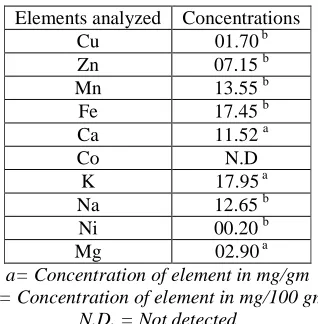
Table 4: Elemental concentrations from Adiantum capillus veneris leaves determined by ICP-AES instrument.
Elements analyzed Concentrations
Cu 01.70 b
Zn 07.15 b
Mn 13.55 b
Fe 17.45 b
Ca 11.52 a
Co N.D
K 17.95 a
Na 12.65 b
Ni 00.20 b
Mg 02.90 a
a= Concentration of element in mg/gm b= Concentration of element in mg/100 gm
N.D. = Not detected
Concentration of various elements estimated in the present studies decreases in the order, K > Ca > Mg > Fe > Mn > Na > Zn > Cu > Ni. Trace element concentrations in plants vary widely with the soil type, pH, fertilizer and organic content, climate, species, etc. If these plants are used as raw materials for the manufacture of health products, variations of nutrient levels should be closely monitored. The data on trace, minor and major elements in plants is of great importance to understand the pharmacological actions of these medicinal plants.
CONCLUSION
[image:9.595.219.378.458.620.2]capillus veneris leaves extract and found to be comparable with standard (Ascorbic acid) and control (Rutin). This study also provides the information on trace and heavy metal accumulation in plant under study. Some elements (Ca, K and Mg) were found to be significantly at high concentrations. Hence, Adiantum capillus veneris leaves are endowed with essential trace elements and free radical scavenging molecules. It can be used as a potential source of natural antioxidant and nutrient.
REFERENCES
[1]F Ahmed; A Urooj, J young pharm, 2010, 2, 160- 164.
[2]W Zheng; SY Wang, J. Agric. Food Chem., 2001, 49, 5165–5170. [3]SS Aloud, Pak J. of Bio. science, 2003, 6, 208-212.
[4] S Nookabkaew; N Rangkadilok; J Satayavivad, J. Agric. Food Chem., 2006, 54, 6939–6944. [5] A Kumar; AGC Nair; AVR Reddy; AN Garg, Food chem., 2005, 89, 441-448.
[6] M Grieve, A Modern Herbal. (Ed.) C.F. Leyel. Penguin. London. 1985.
[7] N Coon, The Dictionary of Useful Plants, Emmaus, pa: Rodale Press, Leicestershire, UK, 1974. [8]CP Johnson, The Useful Plants of Great Britain. London, 1867.
[9]GA Ayoola; HAB Coker; SA Adesegun; AA Adepoju-Bello; K. Obaweya; EC Ezennia; TO Atangbayil, Tropical J. of Pharmaceutical Research, 2008, 7, 1019-1024.
[10]SVL ingleton; JA Rossi, Amer, J. of Enol. Viticult., 1965, 16, 144-58. [11]DO Kim; SW Jeong; CY Lee, Food Chem., 2003, 81, 321–326.
[12]R Re; N Pellegrini; A Proteggente; A Pannala; M Yang; C Rice- Evans, Free Radical Biol. Med., 1999, 26, 1231–1237.
[13]NS Rajurkar; K Gaikwad, J. Indian Counc. Chem., 2010, 27, 1-4.
[14]N Savithramma; M Linga Rao; G Bhumi, J. Chem. Pharm. Res., 2011, 3(5), 28-34 [15]L Liu; Y Sun; T Laura; X Liang; H Ye; X Zeng, Food chem., 2009, 112, 35- 41. [16]AJ Akindele; OO Adeyemi, Fitoterapia., 2007, 78, 25-28.
[17]O Iikay; E Kupeli; B Sener; E Yesilada, J. Ethnopharmacol., 2007, 109, 146-150.
[18]HP Rupasinghe; CJ Jackson; V Poysa; C Di Berardo; JD Bewley; J Jenkinson, J. Agric. Food Chem., 2003, 51, 5888-5894.
[19]J Luo; J Cheung; E Yevich, J. Pharmacol. Exptl. Therapy, 1999, 288, 529-534.
[20]P Malairajan; G Gopalakrishnan; S Narasimhan; KJK Veni, J. Ethnopharmacol., 2006, 19, 425-428. [21]S Saboo; R. Tapadiya; SS Khadabadi; UA Deo, J. Chem. Pharm. Res., 2010, 2(3), 417-423. [22]F Shahidi; PK Janitha; PD Wanasundara, Food Sci. Nutr., 1992, 32, 67–103.
[23]A Cakir; A Mavi; A Yıldırım; ME Duru; M Harmandar; C Kazaz, J. Ethnopharmacol., 2003, 87, 73–83 [24]LH Yao; YM Jiang; J Shi; FA Tomas-baeberan; N Datta; R Singanusong; SS Chen, Plant Foods for Human Nutrition, 2004, 59, 113-122.
[25]IF Benzie; JJ Strain, Journal of Analytical Biochemistry, 1996, 239, 70–76. [26]RP Singh; KNC Murthy; GK Jayaprakasha, J. Agric. Food Chem. 2002, 50, 81–86.
[27]R Amarowicza; RB Peggb; P rahimi-moghaddam; B Barld; JA Weilc, Food Chem., 2004, 84, 551–562. [28]R Kumar; S Hemalatha, J. Chem. Pharm. Res., 2011, 3(1), 259-267
[29]SB Aidid, J. Radioanal. Nucl. Chem., 1988, 120, 335-344.
[30]MC Onojake; V Okonkwo, J. Chem. Pharm. Res., 2011, 3(6), 742-751.
[31]AMO Ajasa; MO Bello; AO Ibrahim; IA Ogunwande; NO Olawore, Food Chem., 2004, 85, 67-71. [32]S Razic; A Onjia; S Dogo; L Slavkovic; A Popovic, Talanta, 2005, 67, 233-239.
[33]SA Jona; IS Williams, Sci. Total Environ., 2000, 258, 205-208.