© 2017, IRJET | Impact Factor value: 6.171 | ISO 9001:2008 Certified Journal
| Page 1146
Bandwidth Efficient: On-Demand Multimedia Advertisements Using
Mobile Agents
Nagalaxmi NR
1, Mrs. Roopa GM
21
P.G. Student, Dept. of Computer Science and Engineering, B.I.E.T College, Karnataka, India
2
Assistant Professor, Dept. of Computer Science and Engineering, B.I.E.T College, Karnataka, India
---***---Abstract -
The increasing popularity and availability forthe multimedia-on-demand advertisements with a high social quotient is exponentially rising. Recent advances in storage and communication techniques have spurred a strong interest in on-demand multimedia systems. As the use of multimedia-on-demand advertisements increases, the demand for the resources required to support them also increases. Resource allocation should be done in a cost- effective manner. It is observed that such multimedia on-demand advertisements adopt the traditional approach like client-server model. Here we have explored that the traditional approach does not support the productive bandwidth distribution calculation for the on-demand media advertisements. The latency and network traffic increases as the number of requests for on-demand media applications goes on increases that seriously affect the quality of service. In order to overcome the drawbacks of the existing approach, we have proposed a mobile agent paradigm which effectively distributes the productive bandwidth for the high priority on-demand multimedia advertisements. In distributed environment the mobile agents paradigm has been identified as an alternate technology. Here the mobile agents migrates parallel to the registered public websites to retrieve the number of downloads and number of views for the requested on-demand multimedia advertisement and assign high weight for the high priority advertisement. We will classify the advertisements based on the weights assigned into three classes those are popular, medium and average by using classification algorithm. As the user make a request for the advertisement mobile agent check the associated weight for the corresponding on-demand multimedia advertisement and allocates bandwidth by using efficient bandwidth allocation algorithm. Which reduces advertisements rejection ratio also increases productive bandwidth distribution. The proposed work is implemented using ASDK(Aglets Software Development Toolkit )
Key Words: Mobile Agents, Aglet, Multimedia
Advertisement, On-Demand, Bandwidth, Social Media, Youtube API, Facebook
1. INTRODUCTION
On-demand multimedia advertisement content with the increasing availability and popularity (e.g., video files, television programs, movies, music, still images, image slideshows, etc.), for the advertisements with a high social
quotient is exponentially raising. Traditional methods of associating advertisements with media content may not be effective for the advertisers or economical for the media providers. For example, with traditional broadcast television, ad spots associated with a particular program are sold to advertisers based on predicted ratings for the program.
1.1 On-Demand Advertisements
Current asset distribution techniques can be ordered as either disconnected, or on-line. Disconnected techniques allotment sums before transmission starts. Such strategies allot the assets statically for the length of the application. The focal points are effortlessness and consistency. Be that as it may, the detriments are low asset use if the top to-mean proportion is high and furthermore, they may not be financially savvy. On-line strategies occasionally renegotiate the asset portion in light of the anticipated movement conduct. Predications are gotten from the estimations of the activity and Quality of Service perceptions. These on-line strategies don't have the issues related with disconnected methods. These techniques may experience the ill effects of an expansive number of renegotiations and need to depend on an exceptionally complex estimation and portion calculation.
1.2 Mobile Agent
© 2017, IRJET | Impact Factor value: 6.171 | ISO 9001:2008 Certified Journal
| Page 1147
1.3 Comparison between Client Server Model and
Mobile Agent Paradigm
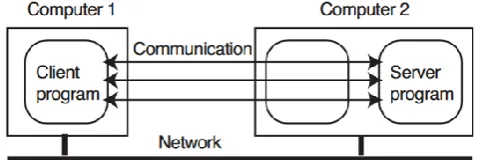
Customer server demonstrate involve no under two projects, i.e., a client side program and a server side program and regularly spare codes for trades, including remarkable dealing with. The issue of a beneficial data transfer capacity circulation figuring in which dispersed registering needs cooperation's between various computer networks through a system. The idleness and system movement of connections regularly truly impact the quality and coordination of two projects running on different diverse PCs.
Fig -1: Communication problem in client-server approach
As should be obvious from Figure 2, in the event that one of the projects is a versatile specialist, it can relocate to the PC the other is running on speak with it locally. That is, versatile specialist innovation empowers remote interchanges to work as nearby correspondences.
Fig -2: Agent migration helps in communication in mobile agent approach
1.4 System Design
User enters search query or keyword related to multimedia on demand advertisements in GUI. Video management system based on mobile agent will handle all sort of queries and yields appropriate result.
Fig -3: System Design
Video management system using mobile agent will send the user input to fetch social media statistical data. Data acquisition will be handled in background. Mobile agent will fetch the user search query based YouTube, Facebook social media channels details. Mobile agent will save the corresponding statistics data in the form of csv files. Mobile agent will sort the csv files data as most frequently viewed list by using VB macro to sort out the view count column. Mobile agent will display the appropriate result on GUI. User will select the required advertisements to construct download. Once user press the button construct download , mobile agent will navigate to the download links file and sort out the view count column. In this way we can prepare the most frequently viewed list and generates most popular and average videos. Mobile agent will download the construct download links.
After the text edit has been completed, the paper is ready for the template. Duplicate the template file by using the Save As command, and use the naming convention prescribed by your conference for the name of your paper. In this newly created file, highlight all of the contents and import your prepared text file. You are now ready to style your paper.
1.4 Methodology
There are four phases identified in this scenario.
[image:2.595.46.288.271.351.2] [image:2.595.44.284.465.551.2]© 2017, IRJET | Impact Factor value: 6.171 | ISO 9001:2008 Certified Journal
| Page 1148
2: To prioritize the on-demand multimedia advertisementcollected from the phase one.
3: To process phase second output , it might be containing errors, inaccurate values and redundant. Hence, cleaning and classification will be carried out. Here we apply any existing classification algorithm to classify on-demand multimedia advertisements like popular, medium and average.
4: To provide on-demand multimedia advertisements to the user by using mobile agents and bandwidth distribution.
2. Algorithms
On-Demand Multimedia Advertisements Requesting Segment:
Input :
Query/keyword :User requested search query or keyword.
Query CSV : CSV file consists of social media statistical data.
Selected Advertisements : Selected multimedia advertisements from the user to download .
Query CSV: Social media statistical data needs to be scheduled in such a way that, data in the csv files should be arranged in ascending order based on key factor view count. It can be sorted out based on key factor such as view count or comments count or like count etc., --mobile agent. VB macro can be run to sort the data in query csv.
Output: Selected advertisements will be added to construct download file based on scheduled manner.
On-Demand Multimedia Advertisements Sending Segment:
Input:
Download links : Construct download links file consist of requested multimedia advertisements.
No. of Advertisements : It consist of row count illustrating the number of multimedia advertisements.
View Count : It consist of view count statistical data for the corresponding advertisement.
URL : It consist of multimedia advertisements current active state of URL.
Description : It consist of description about the multimedia advertisement.
Scheduling : VB macro needs to run to sort out view count column to generate aggregated most frequently watched multimedia advertisements.
Output : Sorted download links file based on the key factor view count.
On-Demand Multimedia Advertisements Downloading Segment:
Input:
Download Links : File consist of all the details about download requests from the user and aggregated results.
Scheduling Bandwidth:
for(int i=0;i<download_links.length;i++)
if (download_links[i].exists())
System.out.println("Advertisement already exist and no need to download it
again from central media server");
else
if(download_links[i].isPopularList())
for(int j=0;j<downloadPopularList;j++)
// trigger mobile agents to download advertisements
Vget.ConstructDownload(download_links_popular list,download_links[i].URL);
else
for(int j=0;j<downloadAverageList;j++)
// trigger mobile agents to download advertisements
Vget.ConstructDownload(download_links_average list,download_links[i].URL);
//end
Output: Advertisements downloaded at the specified path.
3. Experimental Results
© 2017, IRJET | Impact Factor value: 6.171 | ISO 9001:2008 Certified Journal
| Page 1149
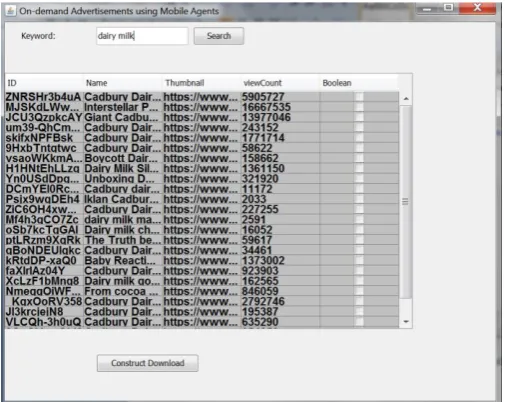
from the gui. Search button is pressed means , mobile agent [image:4.595.263.558.52.203.2]will read the corresponding specified text field keyword value and fetch statistical data which has been collected from the mobile agents from the previous step that is data fetching. Mobile agent will read the statistical data which has been collected and put it as Jtable format in the GUI. User can select the appropriate required files which needs to downloaded. Based on the key factor that is number of view counts is considered here as the main factor. Hence, csv file will be sorted out from the largest to shortest values from the view count column.
Fig - 4 : Aglet user interface with keyword = "dairy milk"
Once the advertisements chosen from the user, if these files needs to be downloaded means, construct download needs to be pushed. Here construct download is a pushbutton. Once the selection is done by the user means, construct download can be pushed. Mobile agents will create the downloadlinks.csv file. Which consist of download url and name, description. Format of downloadlinks.csv is as follows. Which consist of downloader url , view count and name description of the searched keyword. Mobile agents aglet will create the list of requested on demand multimedia advertisements corresponding download url link, view count and description in download links csv file in a structured manner.
3.1 Construct Download Links
[image:4.595.37.290.237.438.2]Mobile agent will construct the download. To arrange download links in an ordered manner we are using VB macro. By using vb macro we are sorting the view count column of download links file. Sorting will takes place from largest to shortest value. So it follows descending order to get the most popular on demand advertisements based on the key factor view count.
Fig - 5 : Download links csv file format with download url, view count and name description
Fig - 6: Illustrating the vb macro which has been used to sort the view count values of download links csv file
Fig - 7: Download links csv file after the sorting vb macro applied
© 2017, IRJET | Impact Factor value: 6.171 | ISO 9001:2008 Certified Journal
| Page 1150
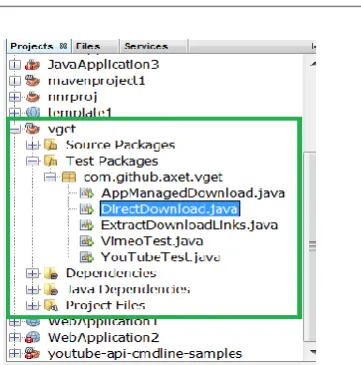
[image:5.595.36.287.305.457.2]Fig - 8: Tree hierarchical structure of vget download manager
Fig - 9: Illustrating the files which has been downloaded based on user demand
Fig - 10: Playing downloaded advertisements
4. Conclusions
In this work , we have made an attempt to apply the mobile agents paradigm for on-demand multimedia advertisements to distribute the productive bandwidth for the high priority advertisements. The proposed work efficiently utilizes the effective features of mobile agents
that parallel migrates to retrieve the statistical data of advertisement. For the given user search query , corresponding statistical data is used to categorize the advertisements. Search query process will display the populated statistical data to the user. Based on user requirements , mobile agent will construct the download and apply the efficient bandwidth allocation algorithm. The use of mobile agent paradigm, overcomes the drawback of the existing client/server model in terms of network traffic as it executes asynchronously and autonomously, efficient bandwidth utilization and reduces the network load. Hence mobile agent paradigm leads to most promising results of bandwidth allocation.
A mobile agent paradigm which effectively distributes the productive bandwidth for the high priority on-demand multimedia advertisements. Here the mobile agents migrates parallel to the registered public websites to retrieve the number of view counts, like counts, dislike counts and comments counts for the requested on-demand multimedia advertisement. Mobile agent will priorities the demanded advertisement. As the user make a request for the advertisement mobile agent efficiently check the associated view count for the corresponding on-demand multimedia advertisement and allocates bandwidth by using efficient bandwidth allocation algorithm. Which reduces advertisements rejection ratio also increases productive bandwidth distribution. Bandwidth will be initially assigned to most popular category based advertisements and at the same time portion of bandwidth will be assigned to average advertisements category as well. Hence mobile agent paradigm leads to most promising results of bandwidth allocation. So, mobile agent paradigm will reduce the video rejection ratio and leads to the efficient usage of bandwidth.
Acknowledgement
I take this humble opportunity to express my deep sense of gratitude to Project Guide Mrs. Roopa G M, Assistant Professor, Department of Computer Science and Engineering, B.I.E.T., Davangere, for her valuable guidance and continual encouragement and assistance provided for the completion of this project. I would also like to extend my gratitude to all my family members and friends especially for their advice and moral support.
REFERENCES
[1] H S Guruprasad, H D Maheshappa, “Efficient Channel
Allocation Based on the Weights of Videos using Agents” , JATIT [Journal of Theoretical and Applied Information technology] july-2009
[2] H S Guruprasad, H D Maheshappa “Dynamic Load
[image:5.595.38.291.499.652.2]© 2017, IRJET | Impact Factor value: 6.171 | ISO 9001:2008 Certified Journal
| Page 1151
Agent technology ” IJCSS [International Journal ofComputer Science and security] October-2008.
[3] Jun Guo, Eric W.M. Wong, Sammy Chan, Peter Taylor,
Moshe Zukerman, Kit-SangTang, “Combination Load Balancing for Video-on-Demand Systems”, IEEE transactions on circuits and systems for video technology, Vol 18, No 7, July 2008
[4] Yunpeng Chai, Lifeng Sun, Zhihui Du and Sanli Li,
“Load Sharing based on PSO Algorithm for Isolated Distributed Stream Servers” july-2008.
[5] Santosh Kulkarni “ Bandwidth Efficient Video on
Demand Algorithm (BEVA)” 10th International conference on Telecommunications, 2007 .
[6] Hongliang Yu, Dongdong Zheng, Ben Y. Zhao, Weimin
Zheng, “Understanding User Behavior in Large-Scale Video-on-Demand Systems”, Proceedings of the 2006 EuroSys conference, October 2006 .
[7] Y.C Tay and HweeHwa Pang, Load Sharing in
Distributed Multimedia-On-Demand Systems”, IEEE Transactions on Knowledge and data Engineering, Vol.12, No.3, May/June 2006.
[8] S. Gonzalez, A. Navarro, J. Lopez and E.L. Zapata, "Load
Sharing in Distributed VoD (Video on Demand) Systems". Int'l Conf. on Advances in Infrastructure for e-Business, e-Education, e-Science, and e-Medicine on the Internet (SSGRR 2002w), L'Aquila, Italy, January 21-27, 2006 .
[9] King-Man Ho, Wing-Fai Poon, Kwok-Tung Lo,
Video-on-Demand Systems With Cooperative Clients in Multicast Environment” , IEEE Transactions on circuits and systems for video technology, March 2006.
[10] Mohammed A. M. Ibrahim, “Distributed Network
Management with Secured Mobile Agent Support”, International Conference on Hybrid Information Technology (ICHIT'06), 2006 .
[11] Frederic Thouin, Mark Coates, Dominic Goodwill,
"Video-on-Demand Equipment allocation," Fifth IEEE International Symposium on Network Computing and Applications (NCA'06), pp 103-110, 2006 .
[12] S S Manvi and P Venkataram, “Mobile Agent based
online Bandwidth allocation Scheme in Multimedia Communications ” , IEEE GLOBECOM 2001 Conference USA.
[13] A Dan, D Sitaram and P Shabuddin, “Dynamic batching
policies for an on demand video server “, Multimedia Systems, pp 51-58, 1996 .
Nagalaxmi NR, Post Graduate student, Dept. Of Computer Science, BIET,Davangere, Karnataka, India
Mrs. Roopa GM, Assistant Professor, Dept. Of Computer Science, BIET, Davangere,Karnataka,India