
© 2017, IRJET | Impact Factor value: 6.171 | ISO 9001:2008 Certified Journal
| Page 1731
DESIGN OF FLYOVER TRANSVERSE VERTICALLY BY USING
HYDRAULIC JACK
M. Hari Sathish Kumar
1, K. S. Binitha
2, K. Balaji
31,2
Assistant Professor, Department of Civil Engineering, PERI Institute of Technology, Chennai 48.
3Student, Department of Civil Engineering, PERI Institute of Technology, Chennai 48
---***---
Abstract - This paper deals with the purpose of Passover in congested area. Now a day’s flyover plays a vital role in reducing and diverting the intensity of traffic on major cities. By using Hydraulic jack the over pass can be transverse vertically. The over pass is made up of composite materials i.e. concrete and steel structures. With the help of pile foundation, loads are transferred deep into the soil. The structural members of deck and pier are made up of Aluminium and steel structures. The proposal of this project is to implement the over pass where land acquisition cost is high and also in congested areas. In this project, analysis and design of flyover is done.
Keywords: Steel beams; Hydraulic jack; composite materials; nonlinear analysis; Passover; Finite element method.
1. INTRODUCTION
The difference between Bridge and Flyover is based on the purpose of its usage and the location where it is built. Bridges are built to connect two points separated by a naturally occurring region like valley, river, sea or any other water bodies, etc. Flyover is built to connect two points in congested areas or roads and intersection of roads. Bridge and flyovers are structures providing passage over an obstacle without closing the way beneath. The required passage may be for a road, railway or a valley. Flyover design is a complex problem, calling a creativity and practicability, while satisfying the basic requirement of safety and economy. The basic design philosophy governing the design is that a structure should be designed to sustain, with a defined probability, all action likely to occur within its intended life span. In addition, the structure should maintain stability during unprecedented action and should have the adequate durability during its life span.
India has a rich history of steel bridges and flyovers. These are generally road flyover over low terrains or roads or intersection joining long distance through single span or multiple span constructions. Steel bridge and flyover are ideal solution for long spans, construction in hilly areas or terrain conditions. For the short and medium span bridges
and flyovers Steel – concrete composite construction is gaining popularity. Some of steel bridges in India are about 100 years old and yet going steady, demonstrating the long life performance of steel bridges. In India due to high population density, most of the cities are saturated and traffic congestion is one of the major problems faced by these cities. Construction of flyovers is a solution to this problem. But construction of flyovers using R.C.C is time consuming, and will affect existing traffic and it has low seismic resistance. Construction of flyovers using steel sections can overcome these disadvantages, even though its initial cost is high. A flyover and bridge has three main elements. First, the substructure (foundation) transfers the loaded weight of the bridge and flyover to the ground; it consists of components such as columns (also called piers) and abutments. An abutment is the connection between the end of the bridge and road carried by earth; it provides support for the end sections of the bridge and flyover.
1.1 Objective
The project area is congested due to the presence of National highways inside the city, therefore the flyover is essentially required at this junction. Our project deals with the Design of steel flyover in the city. We have designed the longitudinal girder and composite deck slab are designed for this grade separator.
1.2 Site Study and Analysis
© 2017, IRJET | Impact Factor value: 6.171 | ISO 9001:2008 Certified Journal
| Page 1732
Fig -1: Location of the Project2. STRUCTURAL DETAILS OF THE FLYOVER
A minimum vertical clearance of 7metres above the ground level. The overall length of columns is 9m. The column is divided into 3 nos. Each column has 3m height. Overall length of the flyover is 500metres. The embankment length is 1/3rd portion of length of the flyover. Embankment length is 100m from each end of flyover. The vertical portion is 300m. Width of flyover is 7.6m. Flyovers have been designed as bi-directional (each two lane) with design speed of 50 kmph. It is located at the inner part of the city. The width of single lane is 3.5m. Kerb is provided at both ends 200mm wide. The width of the median is 200mm. The length of span is 10m. Super structure is consisting of PCC over the length. PCC placed over a profiled sheet. The overall thickness of slab is 350-500mm. The I-section member has been placed at end of the slab width act as a girder. Sub structure consists of pile foundation. Pier cap is 600mm deep. The length of pile is 6m. Each column has four piles and the safe bearing capacity of soil is 300KN/m2.
3. DESCRIPTION OF THE MATERIALS
3.1 Steel
Steel of I Section is adopted for the Deck Slab design and composite circular tube adopted for Pier design.
4. LOADS ON THE STRUCTURE
4.1 DEAD LOADS
The dead loads of the structure consists of the self-weight of the various components such as deck slab, intermediate girders, cross girders, pier (columns).
4.2 LIVE LOADS
The bridges loads can be assigned in the form of moving loads and impact loads, IRC: 6-2014 is used to verify all values. The governing loading is:
Class AA Wheeled Vehicle
4.3 VEHICLE LOAD
Vehicles are defined for Class AA Wheeled in accordance to IRC 6, 2014.
5. DESIGN STRUCTURES
Obligatory span is the central most portion of the fly-over. A minimum vertical clearance of 10m is allotted for the obligatory span
5.1 Beam Design
Length of the span = 10m
Dead load of P.C.C Slab = 30.24 KN/m Dead load of steel plate = 0.314 KN/m Live load (vehicle) = 36 KN/m
Live load = 2 KN/m
Total load = 68.554 KN/m
Factored load = 102.83 KN/m
Bending Moment = 102.83 x 10² / 8
= 1285.3875 KNm
To find zp = MU x mo /fy
= 2570.775 x 103 mm3. Section Properties
Refer sp-6 I-section
Weight = 145.1 Kg/m
Cross sectional area = 184.86 cm2
Depth of section = 600mm
Width of section = 250mm
Thickness of flange = 23.6mm
Thickness of web = 11.8mm
Moment of inertia = 115626.6 x 104 mm4
Radius of gyration = 53.5mm
© 2017, IRJET | Impact Factor value: 6.171 | ISO 9001:2008 Certified Journal
| Page 1733
Total load = 105 KN/m
Check for Buckling b/tf = 250 /(2 x 23.6) = 5.29 < 9
43.79 < 67
Hence it’s safe for buckling, not required for buckling
Shear force: = wl/2
= 105 x 10 / 2
= 525 KN
Bending moment = wl2 /8
= 105 x 102 /8
= 1312.5 KNm
= 4.05 mm
5.2. COLUMN DESIGN
Total load = 1728KN
Factor load = 2592KN
Find the section and properties
Assume buckling class “a” (Hot Rolled Steel Tube)
= 0.21
Refer Table IS 800 table “9a” fcd values, Refer member properties IS 1161 table 1 Hot Rolled Steel Tube properties:
NB = 350mm
OD = 355.6mm
T = 12mm
Mass = 101.68 kg/m
Area of cross section = 129.53cm2 Moment of Inertia = 19139.47cm4/m Modulus of section = 1076.46 cm3 Radius of gyration = 12.16cm Buckling class “a” α = 0.21 Along y-y axis Kl/r = 37 Refer Table IS 800 table “9a”
fcd = 215.1
Pd = fcd x Ae
= 2786.2 x 103 KN
5.3. Pile Design
Total load = 2518 KN
Length of Pile = 6m
Grade of concrete fck = 40 N/mm2 Yield strength of steel fy = 500 N/ mm2
Main Reinforcement:
h/D = 6/0.3
= 22 < 12
Since this is greater than 12, the pile behave as a long column,
Hence, Reduction co-efficient
= 1.25 – lef/48D
= 0.79
Pu = 1.5 x 2518 / 0.80
= 4721.25 KN
Asc = 4951.9 mm
Since the length of pile is less than 30 times the width, minimum reinforcement 1.2% of gross cross sectional area
= 1.2/100 x π x 5002 /4
= 2454.7 mm2
Provide 5 bars of 25mm ϕ bars,
Nominal cover of 50mm, assume stirrups 8mm ϕ bar, cover centre of reinforcement is,
= 50+8+25/2
= 70.5 mm
Lateral reinforcement in the body of the pile:
Lateral reinforcement in the body of the pile is provided at 0.2 % of gross volume
Volume needed per m length
= 0.2/100 x π x 5002 /4 x 1
= 392 mm3
Nominal cover of 50mm, assume stirrups 8mm ϕ bar, Length of each side of tie = 500 – 2 x 50 – 8
= 392 mm
Area Ap = π x 82 /4
= 50.3 mm2
Volume of each tie = π x 392 x 50.3
= 61944.66 mm3
Pitch = 61944.66/392
= 158 160 mm
Maximum pitch permissible
= 1/2 x 500
= 250 mm
Hence provided 8mm ϕ ties at 160 mm c/c throughout the length of the pile.
Lateral reinforcement near pile cap:
Near pile head, special spiral reinforcement provided, volume of spiral at 0.6% of gross volume
Per m length is = 0.6/100 x π x 5002 /4 x 1
= 1176 mm3
Use 8 mm ϕ spiral, Ap = 50.3 mm2
Pitch, S = π x 392 x 50.3/1176
= 52.6 55 mm
Lateral reinforcement near pile end:
Volume of tie per metre length 0.6 % of gross volume = 960mm
Volume of each tie = 61944.66 mm3
Pitch, S = 52.6 55 mm
Spacer forks and links:
© 2017, IRJET | Impact Factor value: 6.171 | ISO 9001:2008 Certified Journal
| Page 1734
Check for moment resistance:One hole at 1st end 0.293
L = 0.293 x 6.6
= 2 m
One hole either end 0.206
L = 0.206 x 6.6
= 1.36 m
Weight of pile = π x 5002 x 25 / 4
= 4900 N/m
M = 4900 x 22 /2
= 9800 N/m
Mu = 14.7 x 10⁶ Nmm
Effective depth of pile section
= 500 – 70.5
= 429.5 mm
Xu max = 0.479 D
= 205.73 mm
Xu = 0.5 x Xu max
= 102.86 105 mm
Asc = 2 x π x 252 / 4
= 981.7 mm2
sc = 0.0035 x ( Xu – d1) / Xu
= 0.00115
fsc = Es x sc
= 230 N/mm2
= 964286 N
Tu = 0.87 fy Asc
= 427039.5 N
Cru = 756000 N
Csu = 214291 N
Mur = 368.7 x 10⁶ Nmm
6. ANALYTICAL DESIGN
The analysis and design of flyover is done by STAAD Pro V8i. This software used to design composite beam, pier and the results are taken out.
6.1 Beam Reports
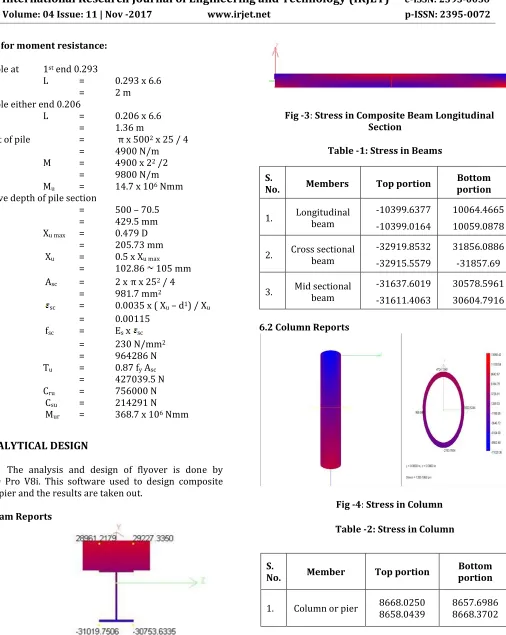
Fig -2: Stress in Composite Beam Cross Section
[image:4.612.65.571.45.680.2]Fig -3: Stress in Composite Beam Longitudinal Section
Table -1: Stress in Beams
S.
No. Members Top portion portion Bottom
1. Longitudinal beam -10399.6377 -10399.0164
10064.4665 10059.0878
2. Cross sectional beam -32919.8532 -32915.5579
31856.0886 -31857.69
3. Mid sectional beam -31637.6019 -31611.4063
30578.5961 30604.7916
6.2 Column Reports
Fig -4: Stress in Column
S.
No. Member Top portion portion Bottom
[image:4.612.319.575.200.536.2]© 2017, IRJET | Impact Factor value: 6.171 | ISO 9001:2008 Certified Journal
| Page 1735
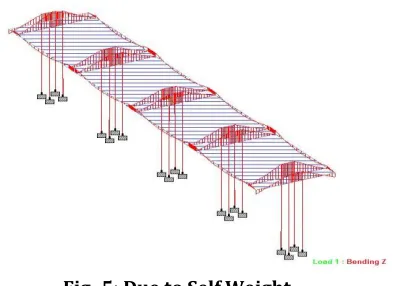
6.3 Bending MomentFig -5: Due to Self Weight
Live Load:
[image:5.612.78.276.99.242.2]2KN/m for during construction process. This type of load can be assigned to super structure. 2KN/m for parapet wall load. It assigned end of the beams only.
Fig -6: Due to Live Load
Vehicle Load:
Vehicle load is taken as 720 KN from IRC Class AA. The pressure is 7.523 kg/cm2 for single axle pressure. Overall slab pressure is 20.57 KN/m2.
Fig -7: Due to Vehicle Load
Load Combination 1:
[image:5.612.351.543.112.279.2]Load combination based on Indian standards. 1.7+1.7+1.7+1.7
Fig -8: Due to Load Combination 1
Load Combination 2:
Load combination based on Indian standards. 1.7 For only self weight of the structure.
Fig -9: Due to Combination Load 2
Load Combination 3:
Load combination based on Indian standards. 1.7+1.2+1.7+1.7
[image:5.612.72.273.326.464.2] [image:5.612.374.527.367.485.2] [image:5.612.54.557.550.722.2]© 2017, IRJET | Impact Factor value: 6.171 | ISO 9001:2008 Certified Journal
| Page 1736
7. RESULT
7.1. Beam Result
Longitudinal Beam
Fig -11: Longitudinal Beam
Cross Sectional Beam
Fig -12: Cross Sectional Beam
Mid Sectional beam
Fig -13: Mid Sectional Beam Results
Table No. 3. RESULTS OF BEAM
S.
No. Members
Bending Moment KN-m
Shear Force KN
Deflection Mm
1 Longitudinal Beam 3553.20 3085.06
-277.747 0
2 Sectional Cross Beam
10805.88
10963.78 -56.134 0
3 Sectional Mid Beam
11667.66 890.57
352.30
0 0
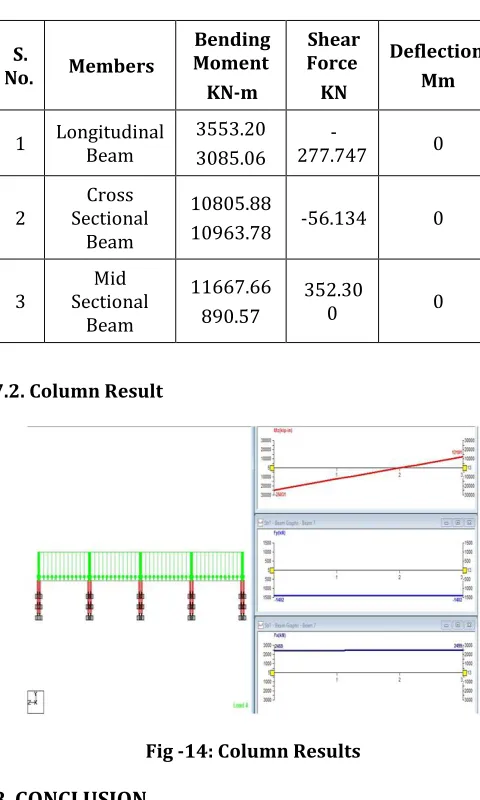
[image:6.612.328.568.96.496.2]7.2. Column Result
Fig -14: Column Results
8. CONCLUSION
© 2017, IRJET | Impact Factor value: 6.171 | ISO 9001:2008 Certified Journal
| Page 1737
REFERENCES
[1.] R.P.Johnson, “Composite Structure of Steel and Concrete” (Volume 1), Blackwell Scientific Publication (Second Edition), U.K., 1994. M. Young, The Technical Writer’s Handbook. Mill Valley, CA: University Science, 1989.
[2.] G. W. Owens and P. Knowles: Steel Designer’s Manual (Fifth edition), The steel construction Institute (U.K), Oxford Blackwell Scientific Publication,1992
[3.] IS: 11384-1985, Code of Practice for Composite Construction in Structural Steel and Concrete
[4.] Hossein Ghiasi, , Kazem Fayazbakhsh, Damiano Pasini, Larry Lessard “Optimum stacking sequence design of composite materials Part II: Variable stiffness design” published in Composite Structures Volume 93, Issue 1, December 2010, Pages 1–13
[5.] Wang, Y. (1998). "Deflection of Steel-Concrete Composite Beams with Partial Shear Interaction." J. Struct. Eng., 10.1061/
[6.] N.Subramanian, Design of Steel Structures, Oxford University Press, 2008, pp. 929 – 966
[7.] Dr. Ramchandra, Virendra Gehlot, Design of Steel Structures, Vol II, 9th ed,, Scientific Publishers, 2014, pp. 1 - 166
[8.] IRC: 6-2010 Standard Specifications and Code of Practice for Road Bridges Section: II Load stresses, Indian Road Congress, 2010
[9.] IRC: 21-2000 Standard Specifications and Code of Practice for Road Bridges Section: III, Cement Concrete (Plain and Reinforced), Indian Road Congress, 2000
[10.] IRC: 112-2011 Code of Practice for Road Bridges Indian Road Congress, 2008
[11.] IS: 456-2000 Indian Standard Plain and Reinforced Concrete - Code of Practice, Bureau of Indian Standards, Fourth revision, 2000
[12.] IRC: 24-2001 Standard Specifications and Code of Practice for Road Bridges Section: V Steel Road Bridges, Indian Road Congress, 2001
[13.] IRC: 22-2008 Standard Specifications and Code of Practice for Road Bridges Section: VI Composite Construction, Indian Road Congress, 2008

![An evaluation summary method based on combination of automatic and textual complexity metrics (Une méthode d’évaluation des résumés basée sur la combinaison de métriques automatiques et de complexité textuelle) [in French]](data:image/gif;base64,R0lGODlhAQABAIAAAP///wAAACH5BAEAAAAALAAAAAABAAEAAAICRAEAOw==)