health data and health services research to
measure and improve access, quality and efficiency
Hanna and Kangolle
D E B A T E
Open Access
Cancer control in developing countries:
using health data and health services
research to measure and improve access,
quality and efficiency
Timothy P Hanna
1*, Alfred CT Kangolle
2Abstract
Background:Cancer is a rapidly increasing problem in developing countries. Access, quality and efficiency of cancer services in developing countries must be understood to advance effective cancer control programs. Health services research can provide insights into these areas.
Discussion:This article provides an overview of oncology health services in developing countries. We use selected examples from peer-reviewed literature in health services research and relevant publicly available documents. In spite of significant limitations in the available data, it is clear there are substantial barriers to access to cancer control in developing countries. This includes prevention, early detection, diagnosis/treatment and palliation. There are also substantial limitations in the quality of cancer control and a great need to improve economic efficiency. We describe how the application of health data may assist in optimizing (1) Structure: strengthening planning, collaboration, transparency, research development, education and capacity building. (2) Process: enabling follow-up, knowledge translation, patient safety and quality assurance. (3) Outcome: facilitating evaluation, monitoring and improvement of national cancer control efforts. There is currently limited data and capacity to use this data in developing countries for these purposes.
Summary:There is an urgent need to improve health services for cancer control in developing countries. Current resources and much-needed investments must be optimally managed. To achieve this, we would recommend investment in four key priorities: (1) Capacity building in oncology health services research, policy and planning relevant to developing countries. (2) Development of high-quality health data sources. (3) More oncology-related economic evaluations in developing countries. (4) Exploration of high-quality models of cancer control in
developing countries. Meeting these needs will require national, regional and international collaboration as well as political leadership. Horizontal integration with programs for other diseases will be important.
Background
2005 estimates suggest 13% of all deaths globally are from cancer [1]. Of the estimated 7.6 million cancer deaths worldwide in 2007, 62% were in developing countries [2]. Given the population boom and aging of the population in developing countries, Parkin et al have projected a 75% increase in cancer incidence in the developing world between the year 2000 and 2020 [3].
In order to prevent and manage this change in cancer incidence, significant organization and infrastructure is required to prevent, screen, treat and palliate cancer. As a result, the implications to health services delivery in developing countries are enormous.
Health services research largely concerns itself with the factors influencing the need for health services, access to these services, quality and economic efficiency, in addition to the health outcomes of the individuals and populations involved [4]. Other health service ele-ments of great importance to developing countries are equity and sustainability. The purpose of this article is
* Correspondence: [email protected] 1
Cancer Centre of Southeastern Ontario 25 King Street West, Kingston, ON, K7L 5P9, Canada
Full list of author information is available at the end of the article
to provide an overview of what is known about oncology health services in developing countries and to highlight data needs and current gaps in knowledge. We will focus on elements of access, quality and efficiency. We will then illustrate how filling current gaps in knowledge can facilitate optimization of much-needed cancer-related investment in health care systems and national cancer control strategies.
Discussion
Describing Quality of Cancer Control in Developing Countries
We consider the four principal approaches of cancer control to be cancer prevention, early detection, diagno-sis/treatment and palliation, as described by the World Health Organization [5]. We will describe what is known about the quality of oncology services for cancer control in developing countries in terms of Donabe-dian’s framework [6]. Donabedian describes quality assessment in terms of structure, process and outcome [6]. Structure refers to the attributes of the setting where care is delivered. This includes material resources, human resources and organizational structure. To assess structure, one must consider how well the health care system interfaces with society and individuals in society [7]. For example, a current structural problem for devel-oping countries is a medical structure historically designed to manage communicable disease, nutritional deficiencies, child health and maternal health. These health care structures are now faced with the additional burden of chronic diseases such as cancer, cardiovascu-lar disease, diabetes and chronic respiratory disease. These chronic diseases share common risk factors, emphasizing the importance of integration between pre-vention programs targeting them.Processrefers to what is actually done while care is provided and received. This includes patient’s health care seeking activities, the diagnostic process, treatment recommendation and treatment delivery.Outcome refers to the effects of care on the health status of patients and populations. Out-comes may be medical parameters (e.g. survival after cancer treatment), quality of life, patient satisfaction, equity or economic efficiency [7]. Outcomes also include measures such as changes in patient knowledge and individual’s behaviour.
Structure of Oncology Services in Developing Countries
There is a limited but growing body of literature describing the current status of cancer treatment resources, particularly for radiation therapy, in develop-ing countries. The emergdevelop-ing picture demonstrates extreme limitation of human resources, physical resources and equipment. Taking into account the annual incidence of cancer in developing countries,
Barton et al found that radiation machine supply was in general inadequate to meet demand [8]. Machine supply in Africa was sufficient to meet an estimated 18% of the need for radiation (155 megavoltage machines available, 842 needed in total). For 12 countries in the Asia-Pacific region with available data (including India and China), machine supply was sufficient to meet an estimated 23% of the current need (1147 available, 4936 needed). Sig-nificant shortfalls were also found in Latin America and Eastern Europe. This data highlights just one example of the potential for mismatch between patient need and treatment availability.
Available information suggests there is an overall shortage of health care workers in Low- and Middle-Income Countries, as well as massive disparities between the rich and poor regions of the world. The World Bank defines Low-Income Countries as those with a 2008 gross national income (GNI) per capita of US$975 or less. Lower-Middle-Income and Upper-Middle-Income Countries are defined as those with a GNI per capita of US$976 - $3,855 and US$3,856 - $11,905 respectively [9]. These groupings provide an indication of the range of economic situations among developing countries. For reference, High-Income Countries are those with a GNI per capita of US$11,906 or more. High-Income coun-tries of the world are largely in North America and Eur-ope; other High-Income Countries include Japan and Australia. Europe has 11 times the number of nurses per population compared to South-East Asia and 7 times the number of doctors [10]. North America, on average, has 10 times more nurses per population than countries in South America [11].
Due to limited data in many developing countries, lit-tle is known regarding capacity for treatment with che-motherapy and surgery, capacity for cancer prevention, early detection and other services. It is reasonably assumed that human capacity for these activities is extremely limited given the global shortage of human resources for health care in developing countries.
Narcotics such as morphine are irreplaceable for con-trolling severe pain from cancer and other serious medi-cal conditions. However, global morphine consumption trends provide evidence of gross under-utilization of narcotics for pain control in many Low-Income and Middle-Income Countries [12]. For example, in 2004, Canada reported 64.180 mg morphine consumed per capita, compared to 0.420 mg per capita for Peru, 0.020 mg per capita for Indonesia and 0.001 mg per capita for Mozambique [12].
the Americas [13]. This compared to 91% in Europe. As there are significant limitations to access in many devel-oping countries to essential drugs for chronic diseases other than cancer, it is quite likely that access to cancer drugs is at least as significant a problem [14,15]. Addi-tional challenges unique to cancer drugs include the need for extra safety equipment for pharmacy staff pre-paring them for administration. This equipment can be quite costly. Also, some cancer drug therapies require predictive tests prior to use, for instance, the common need for hormone receptor status prior to hormone therapy for breast cancer. This poses an additional bar-rier due to issues of cost and quality control.
The exact number of men, women and children dying of cancer without appropriate diagnosis, treatment, early detection or palliative care is unknown. However, avail-able information suggests that the number is probably staggering. The role of social, economic and political factors such as the impact of a limited state presence in health issues or wide-spread poverty in explaining dispa-rities such as these is not always known. A political economy approach that considers the role of these fac-tors warrants careful thought.
An Illustration: The Situation in Tanzania
Tanzania is a Low-Income Country. In 2008, it had a population of 42.5 million people and an estimated 21,180 new cancers [16,17]. Resources to manage this significant burden of cancer are limited. For example, nation-wide, there is 1 medical oncologist, 4 radiation oncologists, 2 physicists and an estimated 7 pathologists. No surgeon’s practice is dedicated solely to oncology. These human resources are extremely limited compared to actual need. For perspective, in Canada, a radiation oncologist would typically see 250 new patients per year. Given at least half of East African cancer patients will need radiation by one conservative estimate, if each Tanzanian radiation oncologist saw 250 new patients per year, this would place the number of radiation oncologists in Tanzania dramatically below the esti-mated need [8].
Breast and cervix cancer are the most common killers due to cancer among Tanzanian women. They contri-bute approximately 40-50% of all new cancer cases seen at the Ocean Road Cancer Institute, the only specialized cancer treatment institute in Tanzania. At present, there is no national cancer screening program for cervix, breast or other types of cancer. There are only two radiotherapy machines in the country, even though one estimate suggests a need for 45 [8]. Capacity for cancer screening and staging is limited. There are only three mammography units, an estimated five CT scanners and one MRI nationwide. Palliative services are only avail-able in a few towns and three hospitals with the use of
morphine limited by national policies. Finally, there is no formal training program within Tanzania for any dis-cipline of oncology, forcing candidates to travel abroad, often to South Africa or Europe for training.
Fortunately, many agencies are partnering in the development of cancer control capacity in Tanzania. For instance, the International Atomic Energy Agency (IAEA) Program of Action for Cancer Therapy (PACT) has been involved in assessing needs for cancer control, planning, building human capacity and developing phy-sical resources.
Limitations in Quality and Access to Cancer Services in Developing Countries
In Low- and Middle-Income Countries, access to cancer care is often poor. The availability of trained human resources and physical resources are fundamental pro-blems in cancer control among developing countries. However, other factors also limit access to services in developing countries. Penchansky and Thomas’ frame-work of access to care fittingly describes some of these. In addition to availability, they describe spatial accessi-bility, acceptaaccessi-bility, affordability and accommodation [18]. Mackillop highlights a sixth dimension, awareness [19]. Equitable access to cancer control in developing countries is a prerequisite to equitable quality of care [20].
The dimensions of access described by Penchansky, Thomas and Mackillop must be further characterized on national and regional levels for cancer control efforts in limited-resource countries to be optimally suited to their environments. For instance, although the effect of geography on spatial accessibility to cancer treatments has not been sounded in developing countries, it is probably a significant barrier to access. Even in High-Income Countries, distances as short as dozens of kilo-metres from the patient’s home to the radiation therapy centre may be associated with less use of radiation or fewer daily treatments per patient treated [21,22]. In many poor countries, cancer treatments such as radia-tion are only available at a few sites naradia-tionally and often in just one city [23-25]. This is important to note as for the poor, travel costs may exhaust any financial reserve before the first cancer treatment is offered.
may also limit access to screening and prevention. For example, embarrassment or fear of pain may keep young Brazilian women from seeking cervical cancer screening [30].
Public awareness campaigns and government health programs for developing countries have often been lar-gely geared towards communicable diseases [31]. The potential impact of building awareness of principles of cancer treatment, prevention and early detection on access to care in developing countries may be tremen-dous. For example, in Lahore, Pakistan, only 5% of women surveyed at a tertiary care hospital were aware that screening existed for cervix cancer and only 2.6% had ever received a pap test [32]. Only one third of patients seeking medical attention for cancer at a large cancer clinic in Delhi, India believed that cancer could be cured [33]. The situation may be complicated by modest or limited health care worker training in basic principles of oncology and sometimes even a lack of awareness of the curability of cancer [34,35].
Beyond building awareness among the general public, creating an awareness of the need for cancer services in developing countries among government officials, medi-cal educators, policy makers and key advocates in the public and press is crucial. The health services research community has an important role to play in improving awareness on these fronts, informing communications and targeting messages as effectively as possible. Organi-zations such as the International Union Against Cancer (UICC), the IAEA, the American Cancer Society and the World Health Organization (WHO) have taken leader-ship in this area, though a substantial effort is still needed to expand awareness among all parties.
Process of Oncology Services in Developing Countries
Little is known about both the process and outcome of cancer control efforts in most developing countries despite the importance of this information (see below). Descriptions of patterns of cancer treatment in develop-ing countries are hard to find. For example, there is only one report in the indexed literature examining pal-liative radiation use in Africa. While there is extensive clinical trial evidence supporting shorter and less costly palliative treatments for bone metastases, this report suggests that 77% of surveyed centers use longer treat-ments, despite limited resources [36]. Information on the equity of the treatment process in this or other set-tings is not available in the literature to our knowledge.
An IAEA study of patterns of practice in developing Central and Eastern European countries found variations in use of radiation for lung cancer, including schedules of palliative radiation and approaches for radical treat-ment. Concurrent chemo-radiation is considered the optimal curative treatment for unresected advanced
non-small cell lung cancer [37]. Among the developing countries participating in this study, sequential chemo-radiation (57%) was used far more often than concur-rent chemo-radiation (10%) for non-small cell lung can-cer, the opposite of reported patterns of practice in the United States [38,39].
A patterns of care study from China found that 92% of radiation for breast cancer was given as post-mastect-omy radiation therapy (PMRT), suggesting little use of breast conserving therapy among clinicians surveyed [40]. Though low survey response rates limit interpreta-tion of these results, it appears that the non-standard indication of PMRT for centrally or medially located cancers ≤5 cm in size without lymph node spread is common, as is radiation to the internal mammary lymph nodes which is of unproven benefit.
There is little known regarding patient safety and quality control during cancer treatment in developing countries. Much of the available information comes from the IAEA. They have been involved for years in quality control efforts related to radiation therapy in developing countries as well as various other programs to improve cancer management in developing countries [41,42]. For example, an IAEA audit of radiation machine dosimetry found 16% of audited radiation beams in various developing countries did not meet the +/-5% dose acceptance limit on the first test of radiation dosimetric standards [41]. Doses beyond this +/-5% acceptance limit have been associated with severe and even lethal toxicity [43]. 93% of radiation beams met standards by the second iteration of the audit. These data highlight the importance of technical audit in developing countries, as in all countries. While dosime-try appears to be typically acceptable, a small minority of cases can be identified where patient safety is a con-cern and changes must be made to local practice.
Outcomes of Cancer Services in Developing Countries
Available data from developing countries suggests high mortality rates for patients with cancer compared to High-Income Countries [44]. Often five-year survival for Low-Income Countries is less than half that seen in more developed countries [44,45]. The variation in sur-vival may be related to differences in resource availabil-ity as well as other dimensions of access and qualavailabil-ity of cancer treatment, early detection and prevention [45]. Inequities in survival for groups within individual devel-oping countries have not been explored to our knowl-edge but are probably substantial.
are effective. This is relevant as one estimate suggests 1.7 million cancer deaths in Low- and Middle-Income Countries were due to potentially preventable causes in 2001 alone [52].
Little is known about other cancer-related outcomes in developing countries such as toxicity of treatment, quality of life, patient satisfaction, equity and economic efficiency. The lack of information on the economic effi-ciency of most cancer treatments and many preventive measures is of note. Resources are limited in developing countries and choosing the most cost-effective measures is a very important consideration.
Information Needs to Improve Cancer Control in Developing Countries
Clearly, investment in health care systems in developing countries is required. For oncology, this includes devel-oping a sustainable supply of trained oncology profes-sionals, expanding the supply of treatment equipment, improving drug supply, physical infrastructure and orga-nizational infrastructure for cancer control. Given lim-ited resources, health services researchers and policy makers must explore how these much-needed invest-ments can be best directed for optimal results. For example, the London Declaration on Cancer Control in Africa endorses national cancer control plans that are
‘evidence based, priority driven and resource appropri-ate’. This will require cancer-related health services research with broad local and international collabora-tions in addition to long-term investment from all par-ties [53].
The need for better health monitoring and evaluation data in developing countries is widely recognized. Tar-gets set by the International Union Against Cancer (UICC) World Cancer Declaration 2008 include improved measurement of the global cancer burden and measurement of the impact of cancer control interven-tions [54]. Notably, this year, eight of the largest global health agencies, including the World Health Organiza-tion, Bill and Melinda Gates Foundation and the World Bank reached a consensus on health data [55]. This con-sensus calls for increased investment in health informa-tion, efficiency of this investment, development of a common data architecture, strengthening of perfor-mance monitoring and evaluation, increased data use in developing countries and improved data access [55].
Common information sources in developing countries are health surveys, birth and death registration, census data, health facility reporting systems, health surveillance data and health administrative data [55]. These common information sources provide information on many dis-ease types. Given information needs across health sec-tors, we would emphasize the importance of horizontal integration between disease control initiatives in
contrast to solely focusing on vertical stand-alone pro-grams. This offers the promise of strengthening the sys-tem-wide structure of health care systems in developing countries.
Population-based cancer registries collect information on the occurrence of different types of cancer in a population. The information they contain may also include national or hospital-based information on cancer treatment and vital status. They are one unique form of cancer data of great importance to developing countries. Cancer registries provide the backbone of information infrastructure needed to perform a wide range of oncol-ogy health services research. The population-based information on cancer cases can be linked to other population-based and hospital-based health data sources to provide a rich tapestry of information on structure, process and outcome of cancer prevention, screening, palliation and treatment. Common sources of cancer registry information include hospital inpatient records, radiation treatment records, hospital records, pathology records, haematology lab reports, autopsies, death certi-ficates and screening programme records [56].
There are still many developing countries without a cancer registry of sufficient quality. For instance, the population coverage by cancer registries of sufficient quality for inclusion in the International Agency for Research on Cancer’s (IARC) 2007 report on global can-cer incidence was 1% for Africa, 4% for Asia, and 4% for South and Central America. This compares to 33% in Europe and 80% in North America [56].
Developing cancer registries and health databases do have their own significant costs. Stansfield et al estimate annual per capita costs of a comprehensive health infor-mation system of US$0.53 in Low-Income Countries [57]. This may represent a significant health expenditure for many Low-Income Countries, though there is evi-dence that this investment can be cost-effective [57]. Low-Income Countries may need to rely initially on basic estimates of cancer burden and health needs when developing their first national cancer control plan. How-ever, it is imperative even for these most limited resource countries to create a timeline and vision for the appropriate development of useful cancer data sources.
Health Data for Quality Cancer Control in Developing Countries: Structure
the need for cancer services and factors affecting access to these services. These methodologies provide a means for minimizing the dual problems of over-provision (unnecessary care) and under-provision (insufficient care) of cancer control resources. To date, this work has largely focused on radiation therapy [22,60-63]. These methodologies would assist developing countries in ensuring accessible and equitable cancer control. They have not been widely applied to cancer control in devel-oping countries to our knowledge.
Regularly collected health data also allows cancer con-trol planning to be flexible and iterative. Continuous data collection can reveal changes in needs and develop-ment of critical health issues [64]. By monitoring for these changes, the health care system can more effi-ciently change to match these needs. This is an impor-tant element for ensuring sustainability of the health care system. Continued data collection also allows for adjustment of the scale of programs to current capacity and need [64].
There are now often many local, national and interna-tional health agencies involved in health interventions in any given developing country. Effective collaboration is needed to ensure success. Health data on cancer pro-vides a means of harmonizing the efforts of all groups, most importantly in situations where opinions differ [65]. Collection of national health data can also be help-ful in determining how appropriate successhelp-ful models from other countries would be to national conditions [65].
Collection and evaluation of health information pro-motes transparency. For instance, this information can allow greater participation of the public and other par-ties in national and regional advocacy for changes to health policy. It also enables national, regional and inter-national agencies to effectively advocate for needed resources for national cancer control by building a clear picture of local needs [65]. It also allows for account-ability of parties involved in provision of cancer control to the public and funding agencies [59].
Cancer registry data and health data are crucial for supporting national and regional research structure. They can help define cancer research priorities, for instance, focusing research on cancers with the greatest burden of disease in the population or exploring the potential cost-effectiveness of a new cancer treatment or cancer control strategy to be studied [66]. Cancer regis-try data may serve as the basis for epidemiological stu-dies of cancer causation in developing countries or identify patients with cancer for other forms of cancer research. For instance, population-based cancer regis-tries can facilitate studies of access to cancer care.
Cancer registries and their linked data also serve as aids to educating health professionals such as by shaping medical curricula to local problems. They can also serve as an important tool in the local training of individuals in health policy, graduate level epidemiology and health services research. This can ultimately support an evi-dence-based, research-informed culture of medical prac-tice for participating developing countries. It can also ensure a sustainable supply of workers who can utilize health data in-country to improve the quality of national cancer control.
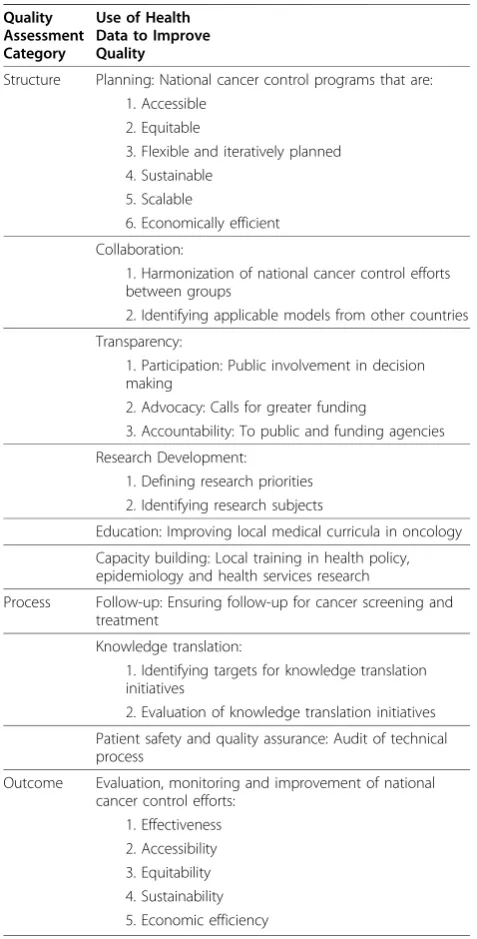
Table 1 Health Data for Quality Cancer Control in Developing Countries
Quality Assessment Category
Use of Health Data to Improve Quality
Structure Planning: National cancer control programs that are: 1. Accessible
2. Equitable
3. Flexible and iteratively planned 4. Sustainable
5. Scalable
6. Economically efficient
Collaboration:
1. Harmonization of national cancer control efforts between groups
2. Identifying applicable models from other countries
Transparency:
1. Participation: Public involvement in decision making
2. Advocacy: Calls for greater funding
3. Accountability: To public and funding agencies
Research Development: 1. Defining research priorities 2. Identifying research subjects
Education: Improving local medical curricula in oncology
Capacity building: Local training in health policy, epidemiology and health services research
Process Follow-up: Ensuring follow-up for cancer screening and treatment
Knowledge translation:
1. Identifying targets for knowledge translation initiatives
2. Evaluation of knowledge translation initiatives
Patient safety and quality assurance: Audit of technical process
Outcome Evaluation, monitoring and improvement of national cancer control efforts:
Health Data for Quality Cancer Control in Developing Countries: Process
In terms of process, cancer registries and integrated health data systems may facilitate follow-up of indivi-duals for screening or follow-up of cancer patients. They can also assist in understanding the medical deci-sion making process which can help identify opportu-nities for knowledge translation. For instance, the study of radiation use for bone metastasis in Africa suggests an opportunity to reduce the number of daily radiation treatments per patient. This would increase capacity to treat many more patients while still offering substantial benefit to all, with little added structural costs. Health data can also be used to evaluate promising knowledge translation initiatives.
Health data can be useful in auditing the technical process of cancer control for patient safety and quality control. A high level of technical expertise is required to perform cancer surgery, palliate cancer symptoms effec-tively, treat with radiation accurately and safely adminis-ter chemotherapy. Rates of medical error and factors associated with medical error in cancer treatment in developing countries are largely unknown. A compre-hensive review of the literature by the Radiotherapy Safety Team within the World Alliance for Patient Safety found no detailed reports from Africa or Asia on adverse events from radiotherapy [67]. One audit of a new radiotherapy centre in a developing country in Asia found that 52% of audited patients received sub-optimal radiation treatment, potentially leading to compromised cure or palliation or serious treatment toxicity [68]. Inadequate skills and knowledge, lack of a formal quality assurance process or peer review process and heavy workload were identified as barriers to quality. One approach to ameliorating deficiencies is regular treat-ment audit. This can be enabling for oncology staff and allow targeted continuing medical education [68].
Health Data for Quality Cancer Control in Developing Countries: Outcome
Collection of health care data allows outcome assess-ment of cancer control programs. This includes trending changes in an outcome such as cancer incidence or sur-vival over time, or following geographic variations in incidence of a given cancer. Health data can help assess effectiveness, access to care, equitability of structure, process and outcome, sustainability and economic effi-ciency. In the following section, we will discuss the assessment of effectiveness and economic efficiency as examples. Regarding access and equity, we would briefly mention that methodologies to identify the poor in developing countries do exist, though to our knowledge, they have not been used as part of outcome assessments of cancer control in developing countries [69].
Without health data collection on structure, process and outcome, it will not be possible to effectively evalu-ate innovative program’s effectiveness. For instance, Datta and Rajasekar suggest a three-tier model for pro-vision of radiotherapy services for India [70]. They describe three levels of treatment capacity with smaller centres in the periphery electronically linked to more comprehensively equipped centres. As another example, the role of primary community health care workers in improving cancer control deserves further investigation. Their beneficial roles could include coordinating cancer care, ensuring timely referral, optimizing access, ensur-ing equitability and maximizensur-ing prevention, early detec-tion, follow-up and palliative care of cancer patients.
Without health data on structure, process and out-come, we cannot know if all programs and protocols that have been successful in wealthy settings will work as well in limited-resource settings [71]. This highlights the need for population-based effectiveness studies in developing countries [72]. Early evidence suggests that developed world protocols are not always as successful in developing world settings, probably due to a mix of patient-related, tumour-related, treatment-related and system-related factors [73-75]. Magrath et al found a higher rate of toxic deaths in their experience treating acute lymphoblastic leukemia in India compared to ser-ies from developed countrser-ies [73]. They hypothesized this was due to a combination of more extensive disease at diagnosis, delay in diagnosis, co-morbidity such as infection, differences in achievable home hygiene and poor access to acute and supportive care. The authors also noted large differences in regional leukemia genet-ics compared to Western series.
With limited resources, achieving the greatest health benefit with available resources is an important outcome of health systems. The vast majority of economic ana-lyses for cancer treatment, palliation, screening and early detection are from developed countries [76]. Though there are clearly many cost-effective interven-tions that oncologists use in developed countries, their cost-effectiveness in specific resource-limited settings is usually not known [77]. As both cost and effectiveness of an intervention can be different in developing coun-tries compared to developed councoun-tries, these must be measured and taken into account before determining whether an intervention would be cost-effective for a specific limited-resource country.
$1960 per disability adjusted life-year (DALY) averted for the African, Asian and North American regions respectively [78]. A comprehensive breast cancer treat-ment program that treated early and advanced stages of breast cancer and involved early detection would cost $75, $75 and $915 per DALY averted in these respective regions.
Similarly, cost per fraction of radiation is highly sensi-tive to context. A single fraction of radiation has been estimated to cost $35 to deliver by a cobalt machine in the Netherlands versus $2 in China or India [79]. This relates to differences in the yearly number of fractions of radiation delivered per radiation machine, cost of quality assurance and machine maintenance as well as differences in capital cost of cobalt radiation machines. We would highlight the need for international coopera-tion and innovacoopera-tion to modify currently prohibitive radiation machine costs for developing countries.
Cost-effectiveness of cancer prevention and early detection in Low- and Middle-Income Countries has been assessed in some cases. Cervical cancer screening with visual inspection with acetic acid (VIA) with a one-visit twice-in-a-lifetime approach costs $91 per year of life saved in India and $319 per year of life saved in Kenya [80]. The authors place these figures in perspec-tive by noting that a single lifetime screening with VIA is as cost-effective as hepatitis B vaccination in India and malaria prevention using bed nets in Kenya.
Methods and criteria for economic assessment of can-cer treatments in low-resource settings are developing. As suggested by the Commission of Economics and Health, one approach is to assess the cost-appropriate-ness of a treatment by comparing the incremental cost per disability-adjusted life-year averted to the country’s per capita gross domestic product (GDP) [76,81]. Using a similar method, Rawlins found that none of the 26 modern chemotherapy regimens assessed were cost-effective in 12 of 13 Low- and Middle-Income Asia-Pacific countries [82]. It is important to note these cal-culations assume drug costs are the same in developing countries as in the UK. Rawlins’findings emphasize the need for global action on appropriate cancer drug prices for developing countries.
The WHO-CHOICE program has also developed a method referred to as generalized cost-effectiveness ana-lysis [83]. It allows for region-specific cost-effectiveness estimation. This can be of use to a developing country currently unable to afford the multiple economic ana-lyses needed on numerous health interventions. The analysis of cost-effectiveness of breast cancer interven-tions by BHGI is one example of such an analysis. As another example, four interventions for tobacco control requiring government action were found cost-effective in most world regions using this methodology: taxation,
clean indoor air laws, a comprehensive ban on advertis-ing and information dissemination on the risks to health of tobacco [84]. Nicotine replacement also fell within the realm of cost-effective for many regions using the cut-off of cost per DALY averted of less than three times GDP per capita [84]. These modeled results do not eliminate the need for country-specific cost-effec-tiveness analyses but can be complimentary to them, helping inform decision making and sectoral debates on resource allocation [85].
Health Data for Quality Cancer Control in Developing Countries: Summary
Greater investment in cancer control paired with the use of health data to guide and optimize investment holds the promise of improved cancer outcomes in developing countries. The benefits of health data for quality cancer control are summarized in table 1.
Capacity for Health Services Research in Developing Countries
In addition to limitations in data availability, there is limited human capacity in Low- and Middle-Income Countries to produce health services and policy research [86]. Organizations such as AfrOx, the International Agency for Research on Cancer (IARC), the Interna-tional Union Against Cancer (UICC) and others are sup-porting development of health services research capacity in developing countries. As mentioned previously, there has been a renewed commitment to improving health systems data in developing countries by many of the lar-gest global health agencies [55].
Gonzalez Block and Mills suggest that 0.1% of total health care expenditure should be spent on health ser-vices and policy research in developing countries [86]. On average, current expenditure in developing countries is estimated to be 0.007% of total health care expendi-ture, 14 times below this recommended norm. There is a great need for ongoing national and international sup-port to build health services research capacity in devel-oping countries. The international health services and policy research community has much to offer in helping achieve this.
Summary
services research, health policy and planning. (2) Informed investment in higher quality health data sources. (3) More economic evaluations relevant to oncology in developing countries. (4) Research into effective and cohesive models of cancer control appro-priate to developing countries. Achieving these will require increased national, regional and international collaboration and political leadership. These four priori-ties are similar to goals for the global cardiovascular research community and reflect the call to action of eight of the largest global health agencies on health data [55,87]. We strongly support achievement of these prio-rities within the scope of health information systems and research agendas that cover the full scope of health conditions afflicting developing countries (horizontal integration). Health services research has an irreplace-able role in oncology for developing countries, equip-ping health systems to optimally and efficiently prevent the preventable, detect cancer as early as possible, cure the curable, and to relieve the intense suffering caused by cancer among those in need.
Acknowledgements
Supported in part by the Transdisciplinary Cancer Research Program of the Queen’s Cancer Research Institute/Canadian Institute of Health Research, the Canadian Institute of Health Research Fellowship in the Area of Health Services and Policy Research and the World Conference on Breast Cancer Foundation. The authors wish to thank Dr. Dan Chisholm, World Health Organization, for information on the WHO-CHOICE program, Dr. Martha Maurer, Pain & Policy Studies Group - University of Wisconsin School of Medicine and Public Health for information on estimating need for narcotic analgesics in developing countries, UICC International Cancer Technology Transfer Fellowship (ICRETT) program for their support, Dr. Ruth McCaffrey, University of Oxford/AfrOx, Dr. Gillian Thomas, Odette Cancer Centre, University of Toronto for helpful comments on an earlier version of this manuscript. Jeanette Suurdt, Kingston General Hospital/Queen’s University and Dr. José Expósito, Department of Radiotherapy/Department of Health Management, Virgen de las Nieves University Hospital, Granada, Spain for their helpful comments on this manuscript.
Author details
1Cancer Centre of Southeastern Ontario 25 King Street West, Kingston, ON, K7L 5P9, Canada.2Ocean Road Cancer Institute P.O. Box 38158 Dar Es Salaam, Tanzania.
Authors’contributions
TPH contributed to concept development, format, content, editing and writing of the manuscript. ACTK contributed to concept development, content and editing of the manuscript.
Authors’Information
At the time of production of this article, TPH was a resident and clinical fellow in the Division of Radiation Oncology at the Cancer Centre of Southeastern Ontario. He was also a research fellow in oncology health services research at Queen’s University/ Queen’s Cancer Research Institute Division of Cancer Care and Epidemiology. ACTK is the Head of Epidemiology and Biostatistics at the Ocean Road Cancer Institute.
Competing interests
The authors declare that they have no competing interests.
Received: 16 September 2009 Accepted: 13 October 2010 Published: 13 October 2010
References
1. World Health Organization:World Health Statistics 2006France; 2006. 2. American Cancer Society:Global Cancer Facts & Figures 2007.Atlanta
2007.
3. Parkin DM, Bray FI, Devesa SS:Cancer burden in the year 2000. The global picture.Eur J Cancer2001,37(Suppl 8):S4-66.
4. Lohr KN, Steinwachs DM:Health services research: an evolving definition of the field.Health Serv Res2002,37(1):15-17.
5. World Health Organization:National cancer control programmes: policies and managerial guidelinesItaly; 2002.
6. Donabedian A:The quality of care. How can it be assessed?JAMA1988, 260(12):1743-1748.
7. van Driel ML, De Sutter AI, Christiaens TC, De Maeseneer JM:Quality of care: the need for medical, contextual and policy evidence in primary care.J Eval Clin Pract2005,11(5):417-429.
8. Barton MB, Frommer M, Shafiq J:Role of radiotherapy in cancer control in low-income and middle-income countries.Lancet Oncol2006,
7(7):584-595.
9. World Bank Country Classifications. [http://data.worldbank.org/about/ country-classifications].
10. World Health Organization:Human resources in health: Report by the Secretariat. Executive Board. EB 114/17. 2004.
11. Buchan J, Calman L:The global shortage of registered nurses: an overview of issues and actions.Geneva: International Council of Nurses
2004.
12. University of Wisconsin Pain & Policy Studies Group:Availability of morphine and pethidine in the world and Africa, with a special focus on: Botswana, Ethiopia, Kenya, Malawi, Nigeria, Rwanda, Tanzania, Zambia.Madison, Wisconsin: World Health Organization Collaborating Center for Policy and Communications in Cancer Care2008.
13. Alwan AD, Maclean D, Mandil A:Assessment of National Capacity for Noncommunicable Disease Prevention and Control: The Report of A Global SurveyWorld Health Organization; 2001.
14. Mendis S, Fukino K, Cameron A, Laing R, Filipe A Jr, Khatib O, Leowski J, Ewen M:The availability and affordability of selected essential medicines for chronic diseases in six low- and middle-income countries.Bull World Health Organ2007,85(4):279-288.
15. Cameron A, Ewen M, Ross-Degnan D, Ball D, Laing R:Medicine prices, availability, and affordability in 36 developing and middle-income countries: a secondary analysis.Lancet2009,373(9659):240-249. 16. GLOBOCAN 2008 Online World Cancer Database.[http://www-dep.iarc.fr/
].
17. World Development Indicators 2009 Data Query.[http://devdata. worldbank.org/data-query/].
18. Penchansky R, Thomas JW:The concept of access: definition and relationship to consumer satisfaction.Med Care1981,19(2):127-140. 19. Mackillop WJ:Health services research in radiation oncology: towards
achieving the achievable for patients with cancer.InClinical Radiation Oncology..2 edition. Edited by: Gunderson LL, Tepper JE. New York: Churchill Livingstone; 2006:215-237.
20. Wyszewianski L, Donabedian A:Equity in the distribution of quality of care.Med Care1981,19(12 Suppl):28-56.
21. Schroen AT, Brenin DR, Kelly MD, Knaus WA, Slingluff CL Jr:Impact of patient distance to radiation therapy on mastectomy use in early-stage breast cancer patients.J Clin Oncol2005,23(28):7074-7080.
22. Kong W, Zhang-Salomons J, Hanna TP, Mackillop WJ:A population-based study of the fractionation of palliative radiotherapy for bone metastasis in Ontario.Int J Radiat Oncol Biol Phys2007,69(4):1209-1217.
23. Zubizarreta EH, Poitevin A, Levin CV:Overview of radiotherapy resources in Latin America: a survey by the International Atomic Energy Agency (IAEA).Radiother Oncol2004,73(1):97-100.
24. Tatsuzaki H, Levin CV:Quantitative status of resources for radiation therapy in Asia and Pacific region.Radiother Oncol2001,60(1):81-89. 25. Levin CV, El Gueddari B, Meghzifene A:Radiation therapy in Africa:
distribution and equipment.Radiother Oncol1999,52(1):79-84. 26. Lantz PM, Dupuis L, Reding D, Krauska M, Lappe K:Peer discussions of
cancer among Hispanic migrant farm workers.Public Health Rep1994, 109(4):512-520.
28. Anderson BO, Shyyan R, Eniu A, Smith RA, Yip CH, Bese NS, Chow LW, Masood S, Ramsey SD, Carlson RW:Breast cancer in limited-resource countries: an overview of the Breast Health Global Initiative 2005 guidelines.Breast J2006,12(Suppl 1):S3-15.
29. Ekortarl A, Ndom P, Sacks A:A study of patients who appear with far advanced cancer at Yaounde General Hospital, Cameroon, Africa.
Psychooncology2007,16(3):255-257.
30. Moreira ED Jr, Oliveira BG, Ferraz FM, Costa S, Costa Filho JO, Karic G: Knowledge and attitudes about human papillomavirus, pap smears, and cervical cancer among young women in Brazil: implications for health education and prevention.Int J Gynecol Cancer2006,16(2):599-603. 31. Pezzatini M, Marino G, Conte S, Catracchia V:Oncology: a forgotten
territory in Africa.Ann Oncol2007,18(12):2046-2047.
32. Imam SZ, Rehman F, Zeeshan MM, Maqsood B, Asrar S, Fatima N, Aslam F, Khawaja MR:Perceptions and practices of a Pakistani population regarding cervical cancer screening.Asian Pac J Cancer Prev2008, 9(1):42-44.
33. Kishore J, Ahmad I, Kaur R, Pk M:Beliefs and perceptions about cancers among patients attending radiotherapy OPD in Delhi, India.Asian Pac J Cancer Prev2008,9(1):155-158.
34. Soliman AS, Raouf AA, Chamberlain RM:Knowledge of, attitudes toward, and barriers to cancer control and screening among primary care physicians in Egypt: the need for postgraduate medical education.J Cancer Educ1997,12(2):100-107.
35. Renner LA, Dakwa MO:Nurses’knowledge about childhood cancer in Accra, Ghana. 6th Africa Continental Meeting of SIOP/PAPSA, Mangochi, Malawi, May 3rd-6th, 2004: SIOP abstracts.Pediatric Blood & Cancer2005, 44(3):292-302.
36. Sharma V, Gaye PM, Wahab SA, Ndlovu N, Ngoma T, Vanderpuye V, Sowunmi A, Kigula-Mugambe J, Jeremic B:Patterns of practice of palliative radiotherapy in Africa, Part 1: Bone and brain metastases.Int J Radiat Oncol Biol Phys2008,70(4):1195-1201.
37. Okawara G, Mackay JA, Evans WK, Ung YC:Management of unresected stage III non-small cell lung cancer: a systematic review.J Thoracic Onc
2006,1(4):377-393.
38. Langer CJ, Moughan J, Movsas B, Komaki R, Ettinger D, Owen J, Wilson JF: Patterns of care survey (PCS) in lung cancer: how well does current U.S. practice with chemotherapy in the non-metastatic setting follow the literature?Lung Cancer2005,48(1):93-102.
39. Kepka L, Danilova V, Saghatelyan T, Bajcsay A, Utehina O, Stojanovic S, Yalman D, Demiral A, Bondaruk O, Kuddu M,et al:Resources and management strategies for the use of radiotherapy in the treatment of lung cancer in Central and Eastern European countries: results of an International Atomic Energy Agency (IAEA) survey.Lung Cancer2007, 56(2):235-245.
40. Hui Z, Li Y, Yu Z, Liao Z:Survey on use of postmastectomy radiotherapy for breast cancer in China.Int J Radiat Oncol Biol Phys2006,
66(4):1135-1142.
41. Izewska J, Andreo P, Vatnitsky S, Shortt KR:The IAEA/WHO TLD postal dose quality audits for radiotherapy: a perspective of dosimetry practices at hospitals in developing countries.Radiother Oncol2003, 69(1):91-97.
42. Salminen E, Izewska J, Andreo P:IAEA’s role in the global management of cancer-focus on upgrading radiotherapy services.Acta Oncol2005, 44(8):816-824.
43. Borras C:Overexposure of radiation therapy patients in Panama: problem recognition and follow-up measures.Rev Panam Salud Publica
2006,20(2-3):173-187.
44. Coleman MP, Quaresma M, Berrino F, Lutz JM, De Angelis R, Capocaccia R, Baili P, Rachet B, Gatta G, Hakulinen T,et al:Cancer survival in five continents: a worldwide population-based study (CONCORD).Lancet Oncol2008,9(8):730-756.
45. Sankaranarayanan R, Swaminathan R, Black RJ:Global variations in cancer survival. Study Group on Cancer Survival in Developing Countries.
Cancer1996,78(12):2461-2464.
46. Gaziano TA, Galea G, Reddy KS:Scaling up interventions for chronic disease prevention: the evidence.Lancet2007,370(9603):1939-1946. 47. Arbyn M, Sankaranarayanan R, Muwonge R, Keita N, Dolo A, Mbalawa CG,
Nouhou H, Sakande B, Wesley R, Somanathan T,et al:Pooled analysis of the accuracy of five cervical cancer screening tests assessed in eleven studies in Africa and India.Int J Cancer2008,123(1):153-160.
48. Roblyer D, Richards-Kortum R, Park SY, Adewole I, Follen M:Objective screening for cervical cancer in developing nations: lessons from Nigeria.Gynecol Oncol2007,107(1 Suppl 1):S94-97.
49. Reeler A, Qiao Y, Dare L, Li J, Zhang AL, Saba J:Women’s cancers in developing countries: from research to an integrated health systems approach.Asian Pac J Cancer Prev2009,10(3):519-526.
50. Mauad EC, Nicolau SM, Moreira LF, Haikel RL Jr, Longatto-Filho A, Baracat EC:Adherence to cervical and breast cancer programs is crucial to improving screening performance.Rural Remote Health2009,9(3):1241. 51. Jha P, Chaloupka FJ, Corrao M, Jacob B:Reducing the burden of smoking
world-wide: effectiveness of interventions and their coverage.Drug Alcohol Rev2006,25(6):597-609.
52. Danaei G, Vander Hoorn S, Lopez AD, Murray CJ, Ezzati M:Causes of cancer in the world: comparative risk assessment of nine behavioural and environmental risk factors.Lancet2005,366(9499):1784-1793. 53. AfrOx:London Declaration on Cancer Control in Africa.London2007. 54. International Union Against Cancer:UICC World Cancer Declaration 2008
Geneva; 2008.
55. Chan M, Kazatchkine M, Lob-Levyt J, Obaid T, Schweizer J, Sidibe M, Veneman A, Yamada T:Meeting the demand for results and
accountability: a call for action on health data from eight global health agencies.PLoS Med2010,7(1):e1000223.
56. Curado MP, Edwards B, Shin HR, Storm H, Ferlay J, Heanue M, Boyle P, (Eds):
Cancer incidence in five continents Vol. IX. IARC Scientific Publication No. 160
Lyon, France: International Agency for Research on Cancer; 2007. 57. Stansfield SK, Walsh J, Prata N, Evans T:Information to improve decision
making for health.InDisease Control Priorities in Developing Countries.
Edited by: Jamison DT, Breman JG, Measham AR, Alleyne G, Claeson M, Evans DB, Jha P, Mills A, Musgrove P. Washington, D.C.: World Bank and Oxford University Press; 2006:.
58. Jensen OM, Parkin DM, MacLennan R, Muir CS, Skeet RG, (Eds):Cancer Registration: Principles and Methods. IARC Scientific Publications No. 95Lyon, France: International Agency for Research on Cancer; 1991.
59. Reich MR, Takemi K, Roberts MJ, Hsiao WC:Global action on health systems: a proposal for the Toyako G8 summit.Lancet2008, 371(9615):865-869.
60. Tyldesley S, Boyd C, Schulze K, Walker H, Mackillop WJ:Estimating the need for radiotherapy for lung cancer: an evidence-based,
epidemiologic approach.Int J Radiat Oncol Biol Phys2001,49(4):973-985. 61. Barbera L, Zhang-Salomons J, Huang J, Tyldesley S, Mackillop W:Defining the need for radiotherapy for lung cancer in the general population: a criterion-based, benchmarking approach.Med Care2003,41(9):1074-1085. 62. Delaney G, Jacob S, Featherstone C, Barton M:The role of radiotherapy in
cancer treatment: estimating optimal utilization from a review of evidence-based clinical guidelines.Cancer2005,104(6):1129-1137. 63. Huang J, Zhou S, Groome P, Tyldesley S, Zhang-Solomans J, Mackillop WJ:
Factors affecting the use of palliative radiotherapy in Ontario.J Clin Oncol2001,19(1):137-144.
64. Abed J, Reilley B, Butler MO, Kean T, Wong F, Hohman K:Developing a framework for comprehensive cancer prevention and control in the United States: an initiative of the Centers for Disease Control and Prevention.J Public Health Manag Pract2000,6(2):67-78.
65. Frenk J:The global health system: strengthening national health systems as the next step for global progress.PLoS Med2010,7(1):e1000089. 66. de Francisco A:Progress in priority setting methodologies.InThe 10/90
report on health research.Edited by: Davey S. Geneva: The Global Forum for Health Research; 2002:45-86.
67. Barton M, Shafiq J, (Eds):Radiotherapy Risk Profile: Technical ManualGeneva: World Health Organization, Radiotherapy Safety Team within the World Alliance for Patient Safety; 2008.
68. Shakespeare TP, Back MF, Lu JJ, Lee KM, Mukherjee RK:External audit of clinical practice and medical decision making in a new Asian oncology center: results and implications for both developing and developed nations.Int J Radiat Oncol Biol Phys2006,64(3):941-947.
69. Waters H, Wagstaff A:How Were the Reaching the Poor Studies Done?In
Reaching the Poor with Health, Nutrition, and Population Services: What Works, What Doesn’t, and Why.Edited by: Gwatkin DR, Wagstaff A, Yazbeck AS. Washington, D.C.: World Bank; 2005:.
71. Buekens P, Keusch G, Belizan J, Bhutta ZA:Evidence-based global health.
JAMA2004,291(21):2639-2641.
72. Booth CM, Mackillop WJ:Translating new medical therapies into societal benefit: the role of population-based outcome studies.JAMA2008, 300(18):2177-2179.
73. Magrath I, Shanta V, Advani S, Adde M, Arya LS, Banavali S, Bhargava M, Bhatia K, Gutierrez M, Liewehr D,et al:Treatment of acute lymphoblastic leukaemia in countries with limited resources; lessons from use of a single protocol in India over a twenty year period [corrected].Eur J Cancer2005,41(11):1570-1583.
74. Grau C, Prakash Agarwal J, Jabeen K, Rab Khan A, Abeyakoon S, Hadjieva T, Wahid I, Turkan S, Tatsuzaki H, Dinshaw KA,et al:Radiotherapy with or without mitomycin c in the treatment of locally advanced head and neck cancer: results of the IAEA multicentre randomised trial.Radiother Oncol2003,67(1):17-26.
75. Maitland ML, DiRienzo A, Ratain MJ:Interpreting disparate responses to cancer therapy: the role of human population genetics.J Clin Oncol2006, 24(14):2151-2157.
76. Brown ML, Goldie SJ, Draisma G, Harford J, Lipscomb J:Health service interventions for cancer control in developing countries.InDisease Control Priorities in Developing Countries.Edited by: Jamison DT, Breman JG, Measham AR, Alleyne G, Claeson M, Evans DB, Jha P, Mills A, Musgrove P. Washington, D.C.: World Bank and Oxford University Press; 2006:569-589. 77. Barton MB, Gebski V, Manderson C, Langlands AO:Radiation therapy: are
we getting value for money?Clin Oncol (R Coll Radiol)1995,7(5):287-292. 78. Groot MT, Baltussen R, Uyl-de Groot CA, Anderson BO, Hortobagyi GN:
Costs and health effects of breast cancer interventions in
epidemiologically different regions of Africa, North America, and Asia.
Breast J2006,12(Suppl 1):S81-90.
79. Van Der Giessen PH, Alert J, Badri C, Bistrovic M, Deshpande D, Kardamakis D, Van Der Merwe D, Da Motta N, Pinillos L, Sajjad R,et al: Multinational assessment of some operational costs of teletherapy.
Radiother Oncol2004,71(3):347-355.
80. Goldie SJ, Gaffikin L, Goldhaber-Fiebert JD, Gordillo-Tobar A, Levin C, Mahe C, Wright TC:Cost-effectiveness of cervical-cancer screening in five developing countries.N Engl J Med2005,353(20):2158-2168.
81. Sachs JD:Macroeconomics and Health: Investing in Health for Economic Development.Canada: World Health Organization2001.
82. Rawlins M:Paying for modern cancer care–a global perspective.Lancet Oncol2007,8(9):749-751.
83. Tan-Torres Edejer T, Baltussen R, Adam T, Hutusbessy R, Acharya A, Evans DB, Murray CJL:Making choices in health: WHO guide to cost-effectiveness analysisGeneva: World Health Organization; 2003. 84. World Health Organization:The World Health Report 2002: Reducing Risks,
Promoting Healthy LifeGeneva; 2002.
85. Murray CJL, Evans DB, Acharya A, Baltussen RMPM:Development of WHO guidelines on generalized cost-effectiveness analysis.Health Econ2000, 9(3):235-251.
86. Gonzalez Block MA, Mills A:Assessing capacity for health policy and systems research in low and middle income countries*.Health Res Policy Syst2003,1(1):1.
87. Mark DB, Van de Werf FJ, Simes RJ, White HD, Wallentin LC, Califf RM, Armstrong PW:Cardiovascular disease on a global scale: defining the path forward for research and practice.Eur Heart J2007,
28(21):2678-2684.
Pre-publication history
The pre-publication history for this paper can be accessed here: http://www.biomedcentral.com/1472-698X/10/24/prepub
doi:10.1186/1472-698X-10-24
Cite this article as:Hanna and Kangolle:Cancer control in developing
countries: using health data and health services research to measure
and improve access, quality and efficiency.BMC International Health and
Human Rights201010:24.
Submit your next manuscript to BioMed Central and take full advantage of:
• Convenient online submission
• Thorough peer review
• No space constraints or color figure charges
• Immediate publication on acceptance
• Inclusion in PubMed, CAS, Scopus and Google Scholar
• Research which is freely available for redistribution