Effect of Drainage and Subgrade Compaction on Pavement Frosting
Performance in Construction Zone
Mohammad Mehdi khabiri 1,
1 Department of Civil Engineering, Faculty of Engineering, Yazd University, Safa-ieh, 89195741, Yazd,
Iran
*Corresponding E-mail: [email protected]
Received 17 May 2018; Revised 8 November 2018; Accepted 20 December 2018
DOI: https://10.30880/ijscet.2018.09.02.004
Abstract
The roughness in the construction site surrounding condition and the pavement of the paths of the workzones makes a decrease in the efficiency in executive operation. Increasing the rolling resistance due to the roughness, is one of the reasons for reducing the speed of operation and delay in that. In this study first, the fields of roughness appearance are recognized including inflation due to frost of subgrade and executive operations areas, then frost depth are calculated which is affected by the density conditions and moisture amount of workzone area’s surface. The different percentages of moisture 2, 5, 7, 15 and 20 and compaction ratio 100, 90, 75, 65 percent were considered in this study for density of workzones' top surface. Frost depth calculations are carried out in the US - Army method and by Pavem-Calc software. The results show that an increase in the density of 40 % is caused by a 25 % increase in frozen strain. Furthermore, the increase of 15 % of pavement moisture causes a 20 % increase in the frost depth and the increase of surface roughness. Statistical analyses were carried out to investigate the effectiveness of the research variables and the classification of results in the classification method of CART algorithm.
Keywords: Pavement, workzone area, inflation, freezing bed, subgrade density.
1.0 Introduction
Considering the importance of soil infiltration and surface roughness in construction workzones that reduce the efficiency of executive operations. In the present study, the numerical study is investigated in densities of 85.90 and 95% of the densified subgrade in Triple weather condition: very cold, cold and moderate (partial cold); till frost depth amount of surfaces subgrade are calculated in the construction workzones. This numerical study tries to emphasize the importance of the role of attention to the amount of moisture and the effect of drainage and the density amount of subgrade (strength) in the surfaces of construction workzones.
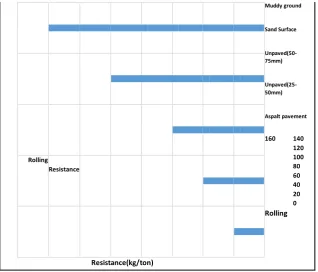
Rolling Resistance, resistance to movement of machinery on a rugged surface is achieved, in which the rolling Resistance coefficient (RR) in the rubber wheel is obtained according to the roughness of relation (1). In this relation δ the amount of surface roughness in the workzone environment is below the wheel of the construction machinery. RR, rolling resistance coefficient in kilograms per ton of weight of construction machinery and δ is the amount of surface roughness under the wheel of construction machinery in terms of centimeters [1]. In Figure 1, the rolling resistance coefficient is shown for different surfaces. As it is seen, whatever the bed of the workzone areas be harder and probability of roughness be less, amount of resistance to movement and rolling resistance will be less.
RR = 18 + 12δ (1)
Frost has two negative effects on the pavement of the workzones areas [2] that is as following:
A) Inflation of pavement cause to frost, which may lead to inflation and roughness and destruction of the pavement.
B) Reduce the power of bearing of the pavement during the melting of the ice (saturation of the soil)
C) Increasing the moisture of pavement materials and especially the subgrade soil may also lead to breakdown of pavement.
Muddy ground
Sand Surface
Unpaved(50-75mm)
Unpaved(25-50mm)
Aspalt pavement
160 140 120 100 80 60 40 20 0
Rolling
Resistance(kg/ton)
Rolling Resistance
Figure 1: Chart of rolling resistance versus movement in different workzones
Any movement of road machinery on the bed of the workzones should be accompanied by the safety and efficiency and smooth movement and suitable speed in workzone. Therefore, paying attention to the problems of the surfaces and the bed of the workzones, especially in seasons and situations with specific environmental conditions, is important in order to increase productivity and reduce the delay in work, as well as to avoid increasing the cost of executive operations. The main question of this study is to determine the effect of moisture and density on the inflation performance of workzones areas.
.
2.0 Literature Review
a region of Sweden, which was shown in their studies, the depth of penetration of ice depends into cold air and amount of penetrated Moisture, and The available moisture of the subgrade soil and also the value of the freezing index [7]. The use of soil additives such as rubber powder can also affect soil stabilization, especially in the side slopes of the roads and workzones [8]. In previous studies, the frost depth is due to continuous water supply and moisture and materials that are sensitive to freezing and low temperature infiltration. To study the effects of freezing on various pavement in a common location was designed. One of the objectives of this study was to determine the conditions of local frost in the direction of the paths and sites. Temperature sensors were installed to estimate the depth of ice penetration, the duration of freezing and opening, and the number of freezing periods at different depths. The results showed that the type of materials in the frost of bed has a major role [9]. Prediction of freezing for soft and fine soils was one of the most main issues in the field of frost soil mechanism. Based on the results of frost sensitivity experiments of this type of soils in the laboratory, a statistical model for prediction of frost is presented. The main factors affecting on freezing penetration are included primary values of water, initial dry weight, groundwater level, and PI (Plastic index) of soil [10].
In mountainous and snowy ways, the number of bridges in kilometer units and the high span bridges are often due to the high natural tolls is more. During the Frigidity air and starting of the cold, the surface of the asphalt axis is frozen at the location of the bridge span earlier than the rest of the axis. Due to the cooling of the asphalt surface in the bridge, earlier than asphalt way; frost is formed. Investigating the solutions that prevent the loss of the existing temperature and delay the exchange of heat at the surface of the asphalt, and slowing the heat transfer of the slab (concrete and reinforcement) materials will also be effective in the life of the materials [11]. Nowadays, due to the increase in traffic and the increasing number of cars, the issue of disposal of worn tires has also become more important. The use of these tires in road asphalt is one of the things that has been done in this direction to solve the problem of removing these tires, and using these materials, decreasing slipping of roads in cold areas and increasing the safety of slippery roads. In studies of the mechanism for the separation of ice from the mixture of asphalt with rubber particles, various experiments have been carried out and the cracking and freezing of these particles of rubber are described in the results of experiments [13, 12]. Regarding the study of the above studies, it was revealed that in the specific area of the workzones and the operation of the frozen surfaces in the area of executive activities, no comprehensive research was carried out, so paying attention to the freezing and inflation of the levels of construction works and road construction works could be the innovation of this study.
3.0 Research Methodology
Table 1: Different soil conditions (density, moisture content) used in this research
Ranks Percentage of
density)%(
Dry soil specific gravity(kg/cm3)
Moisture content )%( 1
100 2400 2
2 5
3 90 2160 2
4 7
5
75 1840 5
6 15
7
65 1600 5
8 20
3.1 Subgrade thermal variables
The volume specific heat of the workzone subgrade layers are defined thermal energy change of an object with unit volume due to a change in temperature of 1 ° C which depends on the moisture percentage (w) and the dry soil density (
γ
d), which is given by equation (2) follow. This relationship is derived from the integration of the relations of the Iran's pavement code [14], the unit of this variable is in Cal / cm3 ° c.C = γd(0.17 + 0.0075 W) (2)
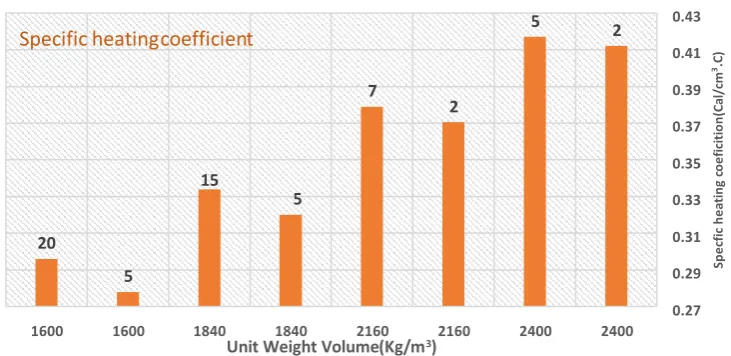
Figure 2: Characteristics of volumetric heat exchange variations in subgrade at different densities in construction workzones
Figure (3) shows the diagram of Volumetric specific thermal changes in the Subgrade, than soil Density changes in soil types on the Different moisture. Whatever the specific Weight increases and or soil moisture increases, the volumetric specific heat of the subgrade soil also increases. The melting’s hidden heat of subgrade soil is defined, the amount of energy required to convert a unit mass of matter from one state to another which is in that; since only the water in the ice freezes; So soil melting’s hidden heat change the temperature is constant and its unit Cal / cm3 is obtained from equation (3).
L = 0.8 × γd × W (3) 2 5 2 7 5 15 5 20 0.27 0.29 0.31 0.33 0.35 0.37 0.39 0.41 0.43 2400 2400 2160 2160 1840 1840 1600 1600
Unit Weight Volume(Kg/m 3)
coefficien heating
Figure (3), is shows diagram of melting’s hidden heat changes of subgrade soil for various moisture percentage in different densities. Whatever the moisture or density of the soil increase, the humidity and the amount of its hidden heat also increase.
Figure 3: Characteristics of the specific heat variations of volumetric melting in different concentrations in construction workzones
3.2 Introducing Numerical Analysis Software
There are several methods to calculate the depth of freezing, including the Stephen-Aldrich and the USARMY method. In this research, the US-Army method and the software designed for it were used [15, 16]. There is several methods for calculating freezing of area. The best method for determining the depth of freezing is the Berrigan modified method provided by US Army engineers. US Army Cold Field Research and Engineering Laboratory (CRREL) has provided a method for calculating the depth of freezing. This method is based on the heat transfer changes is based on the conversion of the liquid phase to the solid phase for the water in the Soil porous space. The process of calculating the exact depth of freezing in this method was very complicated and to avoid complexity of calculations is done with the help of the relevant software.
Figure 4: The display of the interface screen used in this research, Pave-Calc [16]
The data entry interface for this software is shown in Figure 4. In this software variables included:
i. Specific Weight of soil ii. Soil moisture amount iii. The freezing index is used.
2 5
2 7
5 15
5 20
1.5 3.5 5.5 7.5 9.5 11.5 13.5 15.5 17.5 19.5
2400 2400
2160 2160
1840 1840
1600 1600
In the form of the metric and English units, data can be entered and the depth of the freezing in millimeters is calculated and reported. In order to enter the data on the persistence amount and cold intensity in the computational relations, the index of frigorific is used, which in this research, of 3 numbers 150 (moderate regions), 200 (moderate regions partial cold regions) and 250 (cold regions) degrees Celsius-day were used. . In the ten-year period, the temperature data of Iran is changes of the index of freezing between 0 to 660 degrees Centigrade-day [17]. Due to the division of weather conditions into nine climate zones, average of these numbers were considered in the calculations of this study. Three simplifying assumptions for this computational method are as following:
i. All water in the soil pores freezes at zero degrees centigrade.
ii. Soil is considered homogeneous.
iii. Average minimum temperature of the area is used.
4.0 Results and Discussions
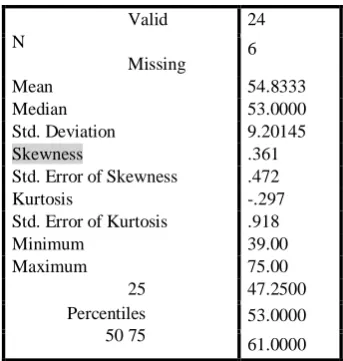
Due to the limited number of outputs of laboratory results, determining the normality of the results of the laboratory process is one of the essential elements of the research. Therefore, a graphical test was used for this purpose. According to Table 2, the skewness value of the results of the experiments shows the samples in the interval (-2 and +2) at the output of the SPSS software; in Fig. 5, the distribution of the variables has a normal elongation and can be used as criterion in being normal of Data.
Table 2
:
Summary of statistical analysis of the depth of freezing index in SPSS software
Valid N
Missing
24
6
Mean 54.8333
Median 53.0000
Std. Deviation 9.20145
Skewness .361
Std. Error of Skewness .472
Kurtosis -.297
Std. Error of Kurtosis .918
Minimum 39.00
Maximum 75.00
25 Percentiles 50 75
47.2500 53.0000
Figure 5: Histogram of statistical distribution of freezing depth-frequency in SPSS software
4.1 Moisture Effect on the Depth of Ice in the Bed of Construction Workzone
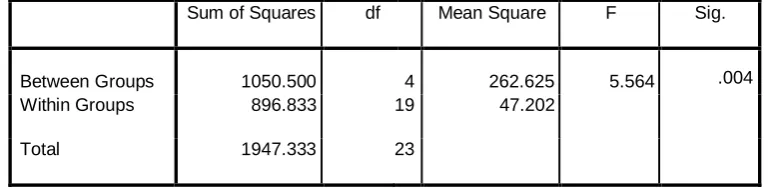
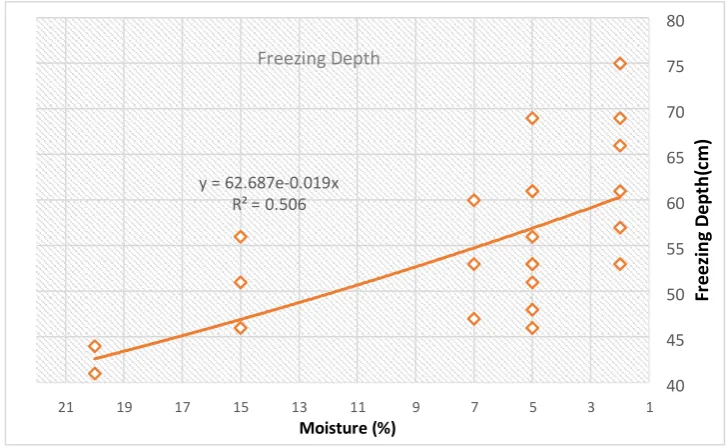
Anova-one-way statistical test was used to study the significance of frost depth changes in different states of moisture percentage, as shown in Table (3), the assumption of "equalizing the depth of freezing in different states" is rejected. In Fig. (6), the results of the calculation of the frost depth, which is proportional to the amount of soil infiltration, are shown in the diagram of variations in the percentage of moisture- frost depth in the workzone area. As you can see, in the workzone area in a very cold climate, on average is 20% more than any other workzone area. Therefore, consideration of the problem of freezing of the subgrade of workzones in these areas should be corrected with special interpretations. As you notice, by increasing the moisture percentage or penetration of water into the bed, the amount of freezing increases by about 20%. Therefore, Corrective remedy in such areas to increase the productivity in workzone areas is the principled drainage of bed and apply suitable soils, especially in cold climates.
Table 3: Significance analysis of changes in depth of freezing in different states (moisture content) using SPSS software
ANOVA
Sum of Squares df Mean Square F Sig.
Between Groups 1050.500 4 262.625 5.564 .004
Within Groups 896.833 19 47.202
Figure 6: Changes in freezing depth in different climatic conditions and the subgrade of the construction workzones site due to changes in moistures
4.2 The Effect of Density on the Depth of Bed Freezing of the Workzones
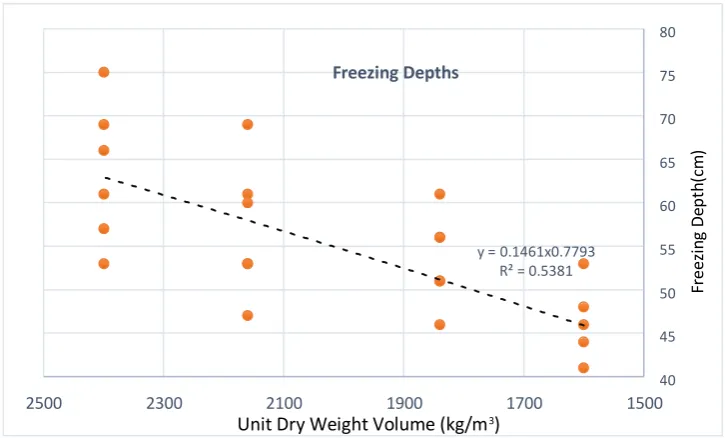
Anova-one-way statistical test was used to study the significance of frost depth changes in different states of density percentage (specific gravity). As shown in Table (4), the assumption of "equalizing the depth of freezing in different states" is rejected. By looking at similar data it can be seen with increasing density, the changes in the graph are aimed at reducing the depth of freezing. The resulting ripples and increase rolling resistance also decrease dramatically. Tabataba'i's research also confirms this conclusion in reducing the depth of freezing penetration [17]. Therefore, it is suggested that in unsuitable climatic conditions to control and limit the amount of soil inflammation and freezing of bedrocks in construction workzones, two methods for soil type modification and its density should be considered.
Table 4
:
Significance analysis of changes in depth of freezing in different scenarios (density percentage) using SPSS softwareSum of Squares df Mean Square F Sig.
Between Groups
Within Groups
1054.667 3 351.556
44.633 7.877 .001
892.667 20
Total 1947.333 23
y = 62.687e-0.019x R² =0.506
40 45 50 55 60 65 70 75 80
1 3 5 7 9 11 13 15 17 19 21
Freezing Depth
Figure 7: Changes in freezing depth in different climatic conditions and the subgrade of the construction workzone area due to changes in density (specific gravity)
4.3 Grouping Output Data Using CART Algorithm Method
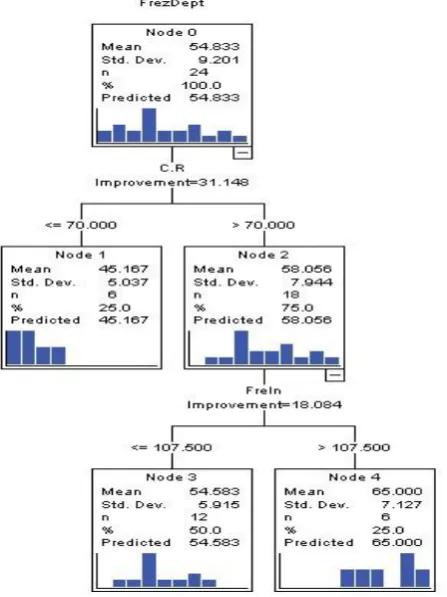
Considering the number of different states examined in this research, the division of analysis states, the results are possible with SPSS software using the grouping tree tool. Tree Grouping and CART Regression is a powerful tool for data mining. The resulting grouping tree of this research are presented in Fig. (8), where the best classification has been made for different situations due to the change in the frost depth in the Subgrade soil. In the first node, significantly the results of frost depth on the density showed a higher dependence than the percentage of the density. This figure also shows that if the subgrade density is less than 70%, the frost depth on average is 45 cm and in more density percentage, on average frost depth reaches to 58 cm. In this split is showed that if the freezing index become less than 107 degrees -day on average frost depth is 54 centimeters and for freezing index more than this number, the frost depth is 65 centimeters in this grouping tree.
y = 0.1461 x 0.7793
R ² = 0.5381
40 45 50 55 60 65 70 75 80
1500 1700
1900 2100
2300 2500
Freezing Depths
Figure 8: Grouping the depth of freezing under the influence of research variables by CART algorithm
5.0 Conclusions
Among the results of the calibration of the frost depths' Graphic models and other effective factors in it is that data and field experiences are considered more in studies. The increase density on the depth of the freezing penetration of the workzone subgrade is affected by the linear function, and the depth of freezing graphs increases upwards and is 25% on average. Moisture changes in the workzone areas will change due to different drainage methods, which will change the depth of freezing and frost inflation in the upper level of the workzones; these changes are up to 20% in some soils and climatic conditions. According to the present study and the results of previous research, the upper of workzone area with different subgrade types, drainage conditions, density percentage and environmental conditions, and in weather climates have different inflation, studies and field data and executive will provide more precise models in anticipation of better performance and productivity of road and construction machinery.
References
[1] Nunnally, S.W., 2000. Construction Methods and Management, 8th Edition, Pearson College Division. University of Florida, pp.1-360.
[2] Huang, Y. H. (2004), Pavement Analysis and Design, (2th Edition), Pearson Prentice Hall, 2004, 775 pages
[3] Kuemmel, D.A and Hanbali, R.M. (2007). "Accident Analysis of Ice Control Operations", Marquette University.
[4] Wright, M. (2013),"A Study Of The Effects Of Adding Ice Retardant Additives to Pavement Surface Course Materials" Thesis Submitted To The University Of Nottingham,pp.454.
[6] Thornes, J.E (2003). "A benefit/cost review of the use of Safe cote additives to rock salt for the winter maintenance of roads in the UK". JETMET services. Three Wells, Hadzor Droitwich Spa, Worcestershire, November 2003.
[7] Bäckström, M. (2000). "Ground temperature in porous pavement during freezing and thawing", Journal of transportation engineering, 126(5), pp.375-381.
[8] Khabiri, M. M., Khishdari, A., & Gheibi, E. (2017). Effect of tire powder penetration on stress and stability of the road embankments. Road Materials and Pavement Design, 18(4), 966-979.
[9] Zhang, Y., White, D.J., Vennapusa, P.K., Johnson, A.E. and Prokudin, M.M., (2018). Investigating Frost Heave Deterioration at Pavement Joint Locations. Journal of Performance of Constructed Facilities, 32(2), p.04018001.
[10] Luo, J., Tang, L., Ling, X. and Geng, L., (2018). Experimental and analytical investigation on frost heave characteristics of an unsaturated moderately expansive clay. Cold Regions Science and Technology, 155, pp.343-353.
[11] Fathi, B. M., Ehtashami, M., (2017), "Investigation of frost on bridges before freezing roads", Second National Conference on Sustainable Development in Construction with Environmental Conservation Approach, Shiraz, Pars Chogalesh Consulting Engineers, Industrial University Shiraz, 5 pages[In Persian].
[12] Sadrian Zadeh, M., Taborzadeh, A. , Bohmmehr, S. (2005), "The use of rubber particles to counteract the freezing of asphalt pavements", 12th student conference on civil engineering, Tehran, University of Science and Technology, Faculty of Civil Engineering, 10 pages[In Persian].
[13] Divinadari, h. , Abuzar Mousavi, A. (2017), "A Model for Estimating the Ice Index in Pavement Design Using Geographic Conditions", 2nd International Human, Architecture, Civil and Urban Conference, Tabriz, Center for Strategic Studies in Architecture and Urban Planning, 6 pages [In Persian].
[14] Organization of Management and Program Planning, Ministry of Road and Mines of Iran,(2011), Regulations of Asphalt pavement Roads of Iran, Act.No.234, First Appeal, 2011, p. 240. [In Persian]. [15] Unified Facilities Criteria (UFC) TM, A., (2004). Pavement Design for Roads, Streets, Walks and Open
Storage Areas. UFC 3-250-01FA, Departments of the Army and the Air Force pp.1-122.
[16] Civil Engineering Calculations, (2018), Calculate Frost Penetration Depth for Pavement Section, CECALC.com LLC - Copyright 2010 - 2018 - All rights reserved. http://www.cecalc.com/Index.aspx [access at 201.4.5]
![Figure 4: The display of the interface screen used in this research, Pave-Calc [16]](https://thumb-us.123doks.com/thumbv2/123dok_us/8448243.1704064/5.595.91.524.467.677/figure-display-interface-screen-used-research-pave-calc.webp)