R E S E A R C H A R T I C L E
Open Access
A systematic integrative review of
programmes addressing the social care
needs of older prisoners
Caroline Lee
1†, Samantha Treacy
1*†, Anna Haggith
1, Nuwan Darshana Wickramasinghe
1,2, Frances Cater
1,
Isla Kuhn
3and Tine Van Bortel
1Abstract
Background:The number of older prisoners has risen exponentially over the last two decades, especially in high-income countries. Due to the increased and somewhat inadequately met health and social care needs of this group of prisoners, coupled with their vulnerability arising from higher levels of isolation, poverty and exploitation, financial costs have spiralled and human rights concerns have grown. This review aimed to present an overview of programmes that addressed older prisoners’social care needs, a particularly underdeveloped area, with a view to assessing the extent to which they could inform policy and practice.
Methods:Following Whittemore and Knafl’s (J Adv Nurs 52:546-553, 2005) integrative review approach, a comprehensive search - including 16 electronic databases and hand searching - was undertaken up to May 2017 using search terms related to context, function and disability. The quality of included papers was assessed, data were extracted using a review-specific form based on the PICO formula, and research questions addressed using a narrative synthesis approach. Additionally, reporting followed PRISMA guidelines.
Results:A total of 29 papers were selected for inclusion, the majority of which focused on hospice programmes, with the remainder describing personal care-focused services, structured day programmes, and adaptations to prison operations (regime) and accommodation in support of prisoners’social care needs. Whilst the programmes were reported to have some positive impacts on prisoners and the prison overall, and programmes were perceived to be cost-effective or cost-neutral, outcomes regarding staff were more mixed. Findings were tempered by the methodological shortcomings of the included papers, with many assessed as low quality, with a lack of prisoner participation, and an absence of experimental studies.
Conclusions:The evidence base for programmes addressing older prisoners’social care needs appears to be at an embryonic stage. Further robust studies evaluating the effectiveness and cost-effectiveness of programmes addressing older prisoners’social care needs are imperative in better informing policy and practice in support of this highly vulnerable group.
Keywords:Prison, Older prisoners, Social care, Social work, Hospice, Prisoner peer support, Systematic review, Integrative review
© The Author(s). 2019Open AccessThis article is distributed under the terms of the Creative Commons Attribution 4.0 International License (http://creativecommons.org/licenses/by/4.0/), which permits unrestricted use, distribution, and reproduction in any medium, provided you give appropriate credit to the original author(s) and the source, provide a link to the Creative Commons license, and indicate if changes were made.
* Correspondence:[email protected]
†Caroline Lee and Samantha Treacy contributed equally to this work. 1Cambridge Institute of Public Health, University of Cambridge, Cambridge,
UK
Background
In many high-income countries, the population of older
prisoners (defined here as those over the age of 501) is
growing faster than any other age group (Atabay, 2009;
Enggist, Møller, Galea, & Udesen, 2014). For example,
older prisoner numbers have more than tripled in the USA, Japan, and England and Wales over the last couple
of decades and are growing (Allen & Watson, 2017;
Carson & Sabol, 2016; Ministry of Justice, 2018a; The
Ministry of Justice, 2017). This increase has been
attributed to the general ageing of populations, and to harsher and longer prison sentencing policies (Atabay,
2009; Hantke, Bretschneider, Elgar, & Wangmo, 2017).
More local contributions include increases in the pros-ecution of historic sex offences in the UK and Australia
(Justice Committee, 2013; O’Brien, Tewaniti, Hawley, &
Fleming, 2006), and increases in petty crime in Japan
and South Korea due to poverty (Allen, 2016; Kamigaki
& Yokotani,2014). The growth rate of older prisoners in
lower-income countries appears to be more varied
(Atabay,2009; Chitsawang,2017; Department of Prisons,
2017; Langat, Kabaji, & Poipoi, 2015; Srinivasan &
Ponnuswami,2015).
Concerns have been expressed about the spiralling costs of imprisoning large numbers of older people. These are estimated to be three times that of younger prisoners largely due to increased health and social care
needs (Bedard, Metzger, & Williams, 2016; Senior et al.,
2013), reportedly affecting around 85–90% of prisoners
over the age of 50 (Di Lorito, Völlm & Dening, 2018;
Hayes, Burns, Turnbull, & Shaw, 2012; Senior et al.,
2013). It has become an international policy norm that
prisons provide a standard of care equivalent to that of
the community (United Nations, 1990). However, the
quality of prison healthcare is thought to vary across the world, partly due to resources, and even in higher in-come countries it has been reported as patchy or
inad-equate (Enggist et al., 2014; Health and Social Care
Committee, 2018a; Jotterand & Wangmo, 2014). The
provision of prison social care has been described in even more parlous terms, with infrequent to non-exist-ent social care contact for prisoners, exacerbated by
un-clear lines of responsibility (Justice Committee, 2013;
Pettus-Davis, 2012; Scheyett, Pettus-Davis, McCarter, &
Brigham,2012; Scottish Prison Service,2017).
Whilst the line between health and social care is
por-ous, this review defines social care needs as: “needing
regular help looking after oneself because of illness,
dis-ability or old age”(Bottery, Varrow, Thorlby, & Wellings,
2018, p 29), alleviation of social isolation and
mainten-ance of independence (Department of Health, 2012), as
well as hospice and palliative care (Hughes, Firth, &
Oliviere, 2014). This is in contrast to the provision of
healthcare treatment-focused interventions such as
medication or psychotherapy. Older prisoners’ social
care difficulties reportedly include: functional and mobil-ity impairments (for example, difficulties with bathing facilities, problems with collecting meals or climbing stairs to reach activities) and increased social isolation (where regimes keep retired or disabled prisoners locked
in their cells if they do not work) (Enggist et al., 2014;
Hayes et al., 2012; Hayes, Burns, Turnbull, & Shaw,
2013; Joyce & Maschi, 2016; Snyder, van Wormer,
Chadha, & Jaggers, 2009). In addition, older prisoners
social care needs may be impacted by: loss of family con-tact (with increased likelihood of bereavement and visit-ing difficulties), bullyvisit-ing by younger prisoners, prison poverty (with less access to employment or family help), poor availability of appropriate activities (employment or gym sessions that are too physically demanding), and inadequate resettlement assistance (especially securing
accommodation for release) (Aday & Farney, 2014;
Cornish, Edgar, Hewson, & Ware, 2016; Hayes et al.,
2012,2013; Joyce & Maschi,2016; Snyder et al.,2009).
The literature has broadly defined four key ways in
which older prisoners’social care needs are or could be
met. These include (i) adaptations to prison environ-ments and systems, such as separate wings to safeguard from bullying, stair lifts to aid mobility or allowing non-working prisoners out of their cells through the day
to reduce isolation (Lee et al.,2016); (ii) personal care
-focused on assisting prisoners with their activities of
daily living [ADLs] (Lee et al., 2016), (iii) structured day
programmes (Stevens et al., 2017) which focus on the
ADLs, activities and social needs of older prisoners gen-erally, or those with more specific conditions such as dementia; and (iv) hospices which attend to dying
prisoners’ ADLs, family and social care needs, often
involving social workers in their development and
man-agement (Bronstein & Wright,2007).
There is a dearth of research and evaluations of social care practice in prisons generally, and for older prisoners specifically, with a lack of overarching programmes,
models or guidelines (Senior et al., 2013; Tucker et al.,
2017), and no systematic reviews found to support
development of the field. A systematic review of older
prisoner ‘care’ interventions only described two papers
which supported prisoners social care needs through
structured day programmes (Stevens et al., 2017). It has
been suggested that a lack of access to social care for older prisoners potentially breaches equalities and
hu-man rights legislation (Lee et al.,2016; Williams, 2013),
and partly triggered a parliamentary inquiry in one higher income country (Health and Social Care
Commit-tee,2018b). It is the intention of this paper to
and practice, and to identify directions for future research to better inform their evolution.
Research questions
In order to meet the overall aims of this review, the following questions were postulated:
1. What types of programmes were described in the research to address the social care needs of older prisoners?
2. What methods have been used in the reporting of programmes or interventions which support the social care needs of older prisoners, and what is the quality of that research?
3. What were the reported outcomes of programmes addressing older prisoners’social care needs?
Methods
Given the scarcity of research in this area, a brief pilot search was conducted upon which it was decided to employ a systematic integrative review methodology. This method offered the flexibility needed to incorporate a wide variety of study methodologies and provided a systematic approach to conducting the literature review, enabling us to meet the aims of the research. This particular integrative review primarily used an adapted
version of Whittemore and Knafl’s (2005) approach, with
reporting informed by PRISMA systematic review
guidelines and checklist (Moher et al., 2009) - see
Additional file1for the completed PRISMA 2009
check-list for this review. Following this process, four stages were completed for the review:
Literature search
The search strategy was formulated by the research team with a senior librarian, and refined by pilot searches. Systematic and iterative search techniques were used with 16 electronic databases related to clinical and social sciences, without date restriction. These were Medline, Embase, PsycINFO, CINAHL, Web of Science, SCIE,
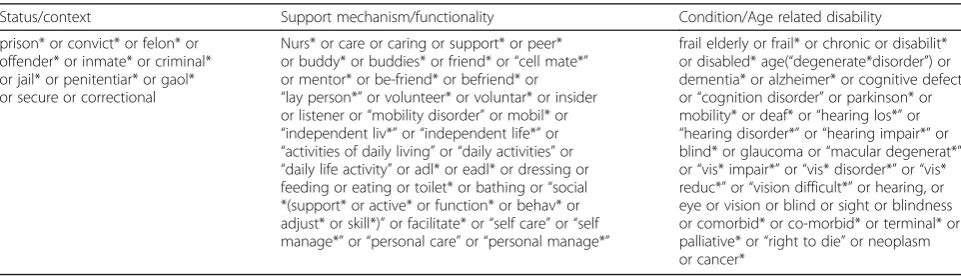
Cochrane Library, Campbell Collaboration, Sociological Abstracts, DARE, ASSIA, Social Services Abstracts, Na-tional Criminal Justice Reference Service, DoPHER, TRoPHI, and Health Evidence Canada. Search terms were split into three categories encompassing: (i) status/ context, (ii) support mechanism/functionality, and (iii)
condition/age-related disability as given in Table1–free
text and appropriate subject headings were used where possible. A search was then carried out in each database combining context/status AND support/functionality AND condition/age-related disability.
The electronic database search was supplemented by reference mining and hand searching of selected journals and industry publications. The searches covered the full range of publications up to May 2017, published in all languages. An example search strategy is given in
Additional file2.
Data evaluation
Papers identified by the search were screened by title, abstract and full-text by two independent reviewers, to check inter-rater reliability, as recommended by Social Care Institute for Excellence [SCIE] (Rutter, Francis,
Coren, & Fisher, 2010). Any discrepancies which arose
were discussed and resolved by the researchers, or were referred to the principal investigator of the study for final decision. The inclusion criteria used to evaluate the suitability of an article for this review were: (i) interven-tion populainterven-tion aged over 50, (ii) interveninterven-tion popula-tion in prison, (iii) intervenpopula-tions supporting the social care needs of older prisoners by any professional group, (iv) intervention explicitly involving social workers or other social care staff; and (v) published in English or French. Articles were therefore included if they detailed any interventions, activities or programmes addressing social care needs in a prison setting specifically related to age-related disability or end of life. Papers were ex-cluded if they: (i) focused on issues of ageing in prison but did not discuss specific interventions, programmes, or activities; (ii) solely focused on pharmacological or
Table 1Indicative search terms used in literature search
Status/context Support mechanism/functionality Condition/Age related disability
prison* or convict* or felon* or offender* or inmate* or criminal* or jail* or penitentiar* or gaol* or secure or correctional
Nurs* or care or caring or support* or peer* or buddy* or buddies* or friend* or“cell mate*” or mentor* or be-friend* or befriend* or
“lay person*”or volunteer* or voluntar* or insider or listener or“mobility disorder”or mobil* or
“independent liv*”or“independent life*”or
“activities of daily living”or“daily activities”or
“daily life activity”or adl* or eadl* or dressing or feeding or eating or toilet* or bathing or“social *(support* or active* or function* or behav* or adjust* or skill*)”or facilitate* or“self care”or“self manage*”or“personal care”or“personal manage*”
frail elderly or frail* or chronic or disabilit* or disabled* age(“degenerate*disorder”) or dementia* or alzheimer* or cognitive defect or“cognition disorder”or parkinson* or mobility* or deaf* or“hearing los*”or
psychotherapeutic interventions; (iii) related to prisoners of war or psychiatric inpatient units; and (iv) articles related to elder abuse, fear of crime, or crimes against
the elderly.
Three independent reviewers extracted information from the selected papers using a standardised data ex-traction form based on the Population, Intervention, Comparator and Outcomes (PICO) formula (Richardson,
Wilson, Nishikawa, & Hayward, 1995). Taking in
addition also: author(s), article date, country, type of intervention, who delivered the intervention (including prisoners), location, age of the intervention population, research design, research participants, summary of find-ings and study limitations. All of the studies were double extracted to check consistency.
Quality appraisal
Hawker, Payne, Kerr, Hardey, and Powell (2002) single
quality appraisal tool was used to assess all of the empir-ical studies, as it covered a variety of methodologies.
The Critical Appraisal Skills Programme [CASP]
Systematic Review Checklist was used to supplement the
assessment of reviews (Critical Appraisal Skills
Programme,2017). The appraisal was conducted only on
empirical studies to assess whether they met the stand-ard norms of empirical research. The GRADE criteria
(Ryan & Hill, 2016) was then adapted, by removing the
initial hierarchical appraisal following Blunt (2015), and
ratings from High to Low were applied to each study, based on whether there were no concerns, serious concerns or very serious concerns regarding each appraisal domain. The overall quality appraisal category assigned to each study comprised an average of the domain scores. Given the overall lack of studies in this area, no papers were excluded from synthesis on the basis of quality.
Data analysis
The variety of papers included in this review, and the range of methodologies employed, meant that it was not
feasible or appropriate to adopt a meta-analytic
approach to synthesise findings (Harden & Thomas,
2005). The focus of the review was therefore more
nar-rative, reflecting the predominantly descriptive nature of the studies returned by the search. Using the data extraction tool, each research question was answered
using a narrative synthesis approach (Popay et al.,2006).
Results
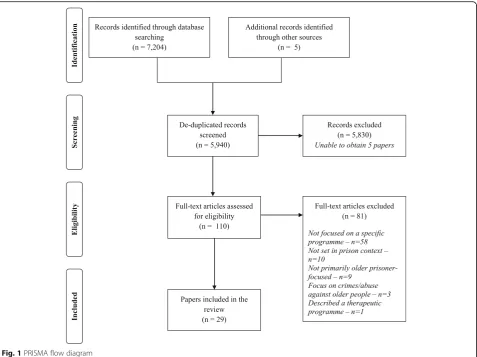
Twenty-nine papers were considered to meet the criteria
for inclusion in this review, and Fig.1depicts the stages
of the screening process undertaken to reach this selec-tion in PRISMA format:
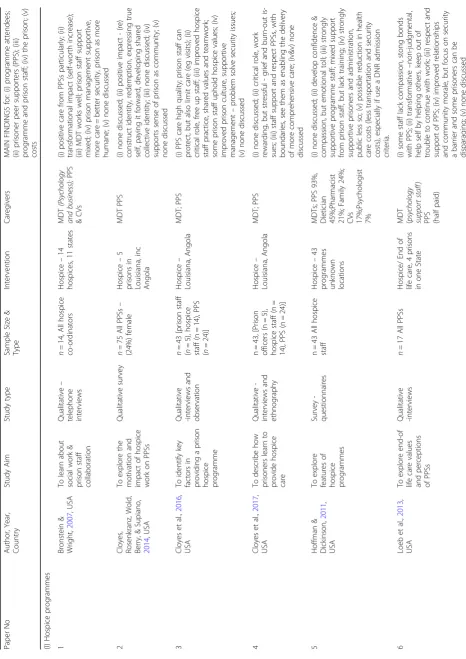
Table 2 gives an overview of the included papers,
categorised according to programme type: prison
hospices, structured programmes, personal care-focused programmes, and regime (standard operational practice) and accommodation adaptations. Key aspects of each paper are presented, with main findings.
The papers included predominantly came from the USA
(n= 26), or included prisons from the USA (n= 28), with
only one paper produced and focused exclusively on a French prison (no 26). Another paper also included prisons from the UK, Japan and Belgium (no 27). Whilst seven of the papers were not specific about the gender of the prisoners involved, all were situated fully or mostly in male prisons, with only four studies including a female prison. Further socio-demographic information was miss-ing from the majority of papers.
Research question one: what types of programme were available to support the social care needs of older prisoners?
The papers included in this review were primarily
cate-gorised into four types of programme: hospice, (n= 20;
nos 1–20), structured programmes (n= 4, nos 21–24);
personal care-focused (n = 2, nos 25–26); and regime
and accommodation adaptation (n= 3, nos 27–29). It is
of note that a couple of the papers also overlapped
categories (nos 24–25,27–29).
Hospice programmes
The prison hospice programmes provided end-of-life care, including pain management, comfort, psychological and social care, often with more flexible and frequent visits from family (nos 5,8,14,16,18), and prisoner friends (nos 5,8,15-16,18). All of the programmes described were situated within existing prison hospital or long-term care units in USA prisons only (nos 3,6,10-11,16),
and were on average 2–3-bed in size (nos 3,5,8,9,18,29).
The programmes were typically staffed by a core group
of prison, healthcare and social care staff – who were
often involved in the development and management of these programmes. One prison also included family as members of the care team (no 5).
Structured programmes
Three structured programmes were detailed in the
pa-pers, all located in the USA: True Grit (nos21–23,27),
the Special Needs Program for Inmate-Patients with Dementia (SNPID) (nos 24,27) and Living Skills (no 28). All of these involved a combination of individualised and group programmes which included: daily living skills, employment, socialising, exercise, and
misuse). Whilst one of the programmes was delivered off-wing by a psychologist with community volunteers
(nos 21–23,27), the other two were embedded in the
practices of the wings where the prisoners were accom-modated, including some environmental adapations, and involved prisoner peer support assistance to prison and
healthcare staff (nos 24,27–28).
Personal care-focused programmes
Both programmes (nos 25–26) described services which
supported prisoners with ADLs, with a view to maintain-ing independence and functionmaintain-ing. One was delivered by nurses and prisoner peer supporters in a healthcare unit in an American prison (no 25); the other was facilitated in-cell by care workers in a prison in France (no 26).
Regime and accommodation adaptation
The three papers included in this category all described prison accommodation adapted for older prisoners, mostly accompanied by an alteration in the prison
re-gime (nos 27–29). Two of the papers reported on USA
prisons (nos 28–29), and the other reported on prisons
in the UK, USA, Japan and Belgium (no 27).
Accommodation adaptation
Four papers detailed specialist accommodation for older prisoners, in the shape of separate units or wings (nos 24,27,29), or facilities (no 28), which typically provided 24-hour cover from nursing and prison staff, with some also employing peer supporters to assist older prisoners with personal care and ADLs (no 27). There were also reports of some prisons making renovations to aid pris-oners ADLs, mobility and functioning, such as: adapted bathing facilities, handrails and ramps (nos 24,27).
Regime adaptation
Many of the prisons operated more relaxed regimes with more time unlocked through the day, a variety of leisure activities and exercise, more appropriate employment, education, library materials and activities available
on-and off-wing– the latter largely facilitated by charitable
organisations (no 27).
Table 2 Key features of the programmes described in included papers Paper No Author, Year, Country Stud y Aim Study type Sampl e Size & Type Interven tion Care givers MAIN FINDI NGS for: (i) progr amme atten dees; (ii) pris oner pe er support ers (PPS); (iii) programme and prison st aff; (i v) the prison; (v) costs (I) Hosp ice progr amm es 1 Bronste in & Wright , 2007 , USA To learn abou t soc ial work & priso n st aff col laboratio n Qualitative – telephon e interview s n = 14, All hospice co-ord inato rs Hospic e – 14 hospices, 11 state s MDT (P sycho logy and bu siness); PP S & CVs (i) positive care from PP Ss particularly; (ii) transformational impact (sel f-worth increase); (iii) MDT work s well; priso n st aff support mixed; (iv) prison manageme nt suppo rtive, more care = better se curity, prison as more human e; (v) none disc ussed 2 Cloyes, Rosenkran z, Wol d, Berry, & Su piano, 2014 , USA To explore the mot ivation and impac t of hospi ce work on PP Ss Qualitative survey n = 75 All PPSs – (24%) fem ale Hospic e – 5 prisons in Louisiana, inc Angol a MDT PPS (i) none discuss ed; (ii) posi tive impac t -(re) constru ct iden tity, redem ption, exp ressing true self, pay ing it forward, de veloping shared collective iden tity; (iii) none discussed; (iv) supports sense of prison as com mun ity; (v) none discuss ed 3 Cloyes et al., 2016 , USA To identify key facto rs in provi ding a prison hospi ce progr amme Qualitative -interviews and observation n = 43 [pris on staff ( n = 5), hospice staf f (n = 14), PPS ( n =2 4 )] Hospic e – Louisiana, Angol a MDT; PPS (i) PPS car e high quality ; prison staf f can protect , but also limit care (eg vis its); (ii) critical role, free up staf f; (iii) improve d hospi ce staff pract ice, share d values an d team work; some prison staf f uphold hospi ce valu es; (iv) improve d priso n culture, sup portive managemen t – probl em solve security iss ues; (v) none disc ussed 4 Cloyes et al., 2017 , USA To describ e how priso ners learn to provi de hospi ce car e Qualitative -interview s and ethno graphy n = 43, [Prison office rs (n = 5), hospi ce staff (n = 14), PPS (n = 24)] Hospic e – Louisiana, Angol a MDT; PPS (i) none discuss ed; (ii) critical role , work rewardi ng, but stressful -grief an d bur n-out is-sues; (iii) staf f support and respe ct PP Ss, with bound aries, see the m as enab ling the de livery of more com prehens ive care; (iv&v) none discussed 5 Hoffman & Dickinson, 2011 , USA To explore feat ures of hospi ce progr amme s Survey -questionnaire s n = 43 All hospi ce staf f Hospic e – 43 programmes unkno wn locatio ns MDTs; P P S 93%, Die tician 45% ;Pharmacist 21% ; Famil y 24%; CVs 17% ;Psychol ogist 7% (i) none discuss ed; (ii) devel op confidenc e & compas sion, but em otiona l toll; (iii) stro ngly supportive progr amm e staf f; mi xed support from prison staf f, but lack train ing; (iv) strongly supportive pris oners and administrat ion, public less so; (v) possible red uctio n in heal th care cos ts (less trans portation and security costs), espe cially if use a D NR admission criteria. 6 Loeb et al., 2013 , USA To explore end -of life car e values and percept ions of PP Ss Qualitative -interviews n = 17 All PPSs Hospic e/ End of life care, 4 priso ns in one Stat e
MDT (ps
Table 2 Key features of the programmes described in included papers (Continued) Paper No Author, Year, Country Stud y Aim Study type Sampl e Size & Type Interven tion Care givers MAIN FINDI NGS for: (i) progr amme atten dees; (ii) pris oner pe er support ers (PPS); (iii) programme and prison st aff; (i v) the prison; (v) costs 7 Maull, 19 91 , USA To describ e the devel opm ent of a priso n hos pice and its six -month pilo t evaluation Survey -questionnaire s n = unk nown Hea lth & prison staf f; pat ients & PPSs Hospic e – Springfield MDT ( Psycho logist, no social w orker or Dr) PPS (i) univers ally posi tive – PPSs helpe d depression, inc reased activ eness ; (ii) positive about programme, essen tial, work as life -enhanc ing; (i ii) bridge s are in proces s of be ing built with medi cal st aff, with small maj ority of prison staf f supportive but mos t had no opinio n-apathy/lack of aware ness; (iv&v) none discussed. 8 Maull, 19 98 , USA To explore issue s affecting hospi ce car e delivery Mixed: Intervi ew s, Question naires; exper t opinio n n = unk nown. Hosp ice co-ordinators an d staf f, priso n staff, PPSs Hospic e programmes in 7 states
MDT (ps
Research question two: types of methodology and quality appraisal?
Sixteen of the papers included in this review were
re-ports of original research or reviews (nos 1–14,21,27).
The remaining 13 articles were descriptive papers (nos:
15–20,22-26,28–29). None of the studies involved
experimental or quasi-experimental designs, with the
majority using a qualitative methodology (n= 10; nos 1–
4,6,10,12-14,27), a further three using questionnaires (nos 5,7, and 21 which used standardised measures), and one employing a mixed-methods design (no 8). There was also an integrative and systematic review (nos 9 and 11 respectively). Four original research studies did not report sample sizes (nos 7,8,14,27), the rest ranged between 14 and 75 participants. Excluding the reviews, only two papers sampled prisoner programme attendees (nos 7,21), although one of these did not provide any further sample details (no 7), and only one study focused on programme participants primarily (no 21). Most of
the studies sampled hospice or healthcare staff (n= 10),
with eight including prisoner supporters, and four with
prison staff. None of the papers sampled prisoners’
family members or friends.
Each of the 16 original research papers were subject to
a quality appraisal (summarised in Table 3). The
remaining 13 descriptive papers were not fully appraised as they did not contain any methodological detail. The risk of these studies being biased was thus assumed to be high, and quality automatically categorised as low. Four of the 16 papers that were fully appraised were categorised as high quality (low risk of bias), with six categorised as of moderate quality, and six of a low qual-ity (high risk of bias). The main issues raised by the quality appraisal were around lack of methodological detail, description of the sample, sampling and analysis, lack of clarity in presentation of the findings, and little dis-cussion of bias. Mostly the abstract, aims and background contextual detail were clear and thorough, and the work was judged to be of value despite quality issues.
Research question three: what were the programme outcomes?
The papers included in this review described a number of ways in which older prisoner-focused programmes had an impact on prisoner programme attendees, prisoner peer supporters, programme and prison staff, the prison and wider prisoner community, the community outside, and costs. The section will present outcomes in each of these areas for each programme type, where reported.
Prisoner programme attendees
Hospice programmes - five papers did not discuss the
impact of the hospice on patients (nos 2,4-5,10,15), with the remaining papers reporting a mixed experience for
the prisoners. Some papers suggested staff provided compassionate care (nos 3,11,13), with others reporting a lack of staff compassion (nos 3,6,9,11,12), and of prisoner mistrust of staff and the hospice overall (nos 8,9,16), including the quality of pain management which reportedly varied from adequate to poor (nos 5,8-9,11,14). All of the papers reported positive experiences of prisoner peer support (nos 1,3,5,6,8-9,11,13-14,19), including the one paper which actually sampled prisoner-patients (no
7), and many of a lessening in prisoners’fear and
likeli-hood of dying alone (nos 10, 14,16,17,18), although one reported less access to friends and prison activities (no 8).
Structured programmes – positive outcomes were
re-ported regarding prisoners’ physical, mental and social
wellbeing for the True Grit and SNPID programmes
(nos 21–24,27), although only one paper sampled
pris-oner attendees (no 21). These included a reduction in
medication use, medical appointments (nos 22–23) and
behavioural problems (nos 24); and an increase in
active-ness (nos 22–23), quality of life (no 24), and confidence
(nos 23). The Life Skills programme did not report attendee outcomes (no 28).
Personal care-focused programmes–one paper did not
report outcomes (no 25), the other suggested enhanced
prisoner-patients’self-respect (no 26).
Regime/accommo-dation adaptations – there were no findings discussed
by two papers (nos 28–29). The remaining paper
sug-gested that adaptations could improve wellbeing (no 27).
Prisoner peer supporters
Hospice programmes – many of the papers explicitly
focused on prisoner peer supporters, describing them as
key to operations (nos 3–4,7-9,12-13,18). In addition,
the work reportedly had a transformative effect on their self-confidence (nos 1,5,11,13,16), sense of compassion
and community (nos 2–3,5,6,11,13,20), increasing
oppor-tunities for redemption and rehabilitation (nos 1–
2,6,9,13–14), and a predicted reduction in recidivism
(nos 7–8,13). Whilst, the prisoner peer supporters were
reported to find the work rewarding (nos 4–5,9–10),
some also reported grief and burnout (nos 4–5,10),
exac-erbated by inadequate training and supervision (no 11).
Structured programmes -peer supporters were deemed
successful within the SNPID programme (no 27), and reportedly found the work rewarding (no 24). There were no outcomes discussed (no 28) nor peer supporters
employed (nos 21–23) in the other two programmes.
Programme and wider prison staff
Hospice programmes– programme staff largely reported
positive experiences of hospice work, finding it reward-ing (nos 3,11-13,16) and impactreward-ing helpfully on morale and intra- and inter-team relationships (nos 1,5,11,19),
4,6,11,13-14,16). However, there were also reports of some programme staff being resistant to working with
prisoner peer supporters (nos 8–9,12), and of conflict
between programme and wider prison staff due to a clash of priorities between care and security (nos 1,3,11,14). Prison staff were described as more mixed in
their support of hospices (nos 1,4-6,8-9,12–13),
particu-larly with regard to prisoner peer supporters, however it was also suggested that this shifted across time and with greater exposure to programmes (nos 13,19). Staff outcomes were not discussed in five papers (nos 2,14-15,17,20).
Structured programmes – discussion of staff
experi-ences were minimal, with none in two papers (nos 21–
22). One paper did suggest that prison staff were sup-portive of one programme (no 23), and that programme staff found the work rewarding in another (no 24).
Personal care-focused programmes –communication
between programme and health staff reportedly im-proved in one programme (no 26). There was no discus-sion regarding staff impact in the other (no 25).
Regime and accommodation adaptation – two papers
reported that co-working between prison staff and staff from other prison departments such as health, was
hampered by low numbers – which negatively affected
making adaptations, although this was seemingly
amelio-rated somewhat by training (nos 27–28), such as health
awareness training for prison staff (no 27). One paper did not discuss outcomes in this area (no 29).
The wider prisoner community and prison infrastructure
Hospice programmes - these programmes appeared to
garner support from the wider prisoner community (nos
5,11,16) and prison management (nos 1,3,5,11–12), with
hospice-containing prisons perceived as more decent and humane, and linked with lower levels of violence (nos 1,2,3,6,11,12,13,17,19). However, some reported that
prisoners viewed hospices suspiciously, as de facto‘death
rows’(nos 6,8,10–11). There was also a report of mixed
managerial support (no 12), and of a clash of
philoso-phies between security and care (nos 3,6,8,14–15),
pos-sibly manifesting in hospice environments of “pervasive
drabness” (nos 8, p 65, 9,11,17). Some hospices were
deemed inappropriate, lacking resources and equipment
(nos 8–9,11), and others were found to be comfortable
(nos 9,11,17).
Structured programmes–two programmes highlighted
support provided by prison management (nos 21–23,28),
with one programme perceived as promoting a more humane prison (no 22). Two papers also reported the importance of programme location, including environ-mental adjustments or specialised units for prisoners with dementia (no 24) and situating programmes away
from medical wings (with some seen as“death row”, no
22).Regime and accommodation adaptation–one paper
reported restrictions to accommodation adaptation due to ageing buildings and budget limitations (no 27).
The‘outside’community
There were reports of positive media attention for one prison hospice (no 12), and a prison which had under-gone extensive renovations (no 28). Where reported, there appeared to be mixed public support for prison hospices, with suggestions that their existence improved
one prisons’ public image (no 16), but a lack of public
support associated with others (nos 6,11).
Costs
Hospice programmes - none of the included papers
con-ducted cost-effectiveness studies, and many presented
no cost information (nos 1–4,6,10,12-13,18). Some
sug-gested hospices could be cost-effective (nos 8–9,11), or
cost-neutral (nos 15–17,19–20) due to staff
redeploy-ment, volunteers, free training, and external donations
(nos 15–16,20). A couple of papers suggested that
hospices could save prisons money, with reduced trans-port, security and healthcare costs (nos 5,14,16,20).
Structured programmes - there were no
cost-effective-ness studies, and no costs presented for two pro-grammes (nos 24,28). The True Grit programme reported that there were no additional costs associated with running the programme, as it relied on redeployed
or voluntary labour, and donations (nos 21–23), with a
predicted overall reduction in costs as prisoner health
improved (no 21). Regime and accommodation
adapta-tions - no papers detailed cost-effectiveness, but all
pro-vided cost information. Adaptations or specialist units were reportedly costly (nos 27,29). For example, beds at one dementia-dedicated unit were double that of the average, although it was suggested that these costs could become cost-effective long-term (no 29).
Discussion
Table 3Quality appraisal of included papers
Paper No
Author(s) METHODOLOGICAL APPRAISAL SUMMARY Quality
Category
Strengths Limitations
1 Bronstein & Wright Structured and full abstract, background and aims; inclusion of interview protocol; clear data collection process; some discussion of analytic process and triangulation; secured appropriate ethical approval; structured results section
Questionable methodological
appropriateness;interviews not taped, but used quotes; lack of detail of sampling, informed consent & data analysis; conclusions made about prisoners limited by not talking to any; limitations & biases not discussed
LOW
2 Cloyes, Rosenkranz, Wold, et al Structured and full abstract, background and aims; full data analysis description; secured ethical permission and described informed consent process; clear presentation of results
Lack of explanation of method; patchy socio-demographics, although discussed; no reflections on researcher bias
HIGH
3 Cloyes, Rosenkranz, Berry et al Structured and full abstract, background and aims; interviews recorded; fairly large sample size; full data analysis description, validation & triangulation; ethics approval; thorough results section
Lack of detail about interviews; no interviews with prisoner patients; no socio-demographic information; no de-scription of informed consent process; as-sume programme is effective, no evidence presented; bias not discussed
MODERATE
4 Cloyes, Rosenkranz, Supiano, et al Structured and full abstract, background and aims; taped interviews; method appropriate; quite large sample size; full data analysis description, validation & triangulation; ethics approval; full discussion of study implications
Lack of detail about the interviews; did not interview prisoner patients; no socio-demographic detail presented; bias not discussed; results about prisoner volun-teers contained no detail from them and no quotes throughout; opinion presented as fact
MODERATE
5 Hoffman & Dickinson Clear and informative abstract and introduction; sampling strategy detailed, and good size and breadth, with high response rate
Aims not wholly clear; methodology detail scant, esp. on surveys used; no socio-demographic, data analysis, ethics or bias information; findings lack clarity; opinions stated as fact
LOW
6 Loeb, Hollenbeak, et al Structured and full abstract, background, aims, methods, sampling, data analysis and findings; presented discussion guide; thorough discussion of ethics and bias
Quite small sample size; interviews not taped but used quotes; prisoner patients not sampled
HIGH
7 Maull Report of one of the first in-prison hospice programmes, which influenced their de-velopment across the USA.
Lack of evaluation detail in abstract, lack of evidence for background; lack of information on methods, sampling, analysis, ethics and bias, and few findings presented.
LOW
8 Maull Fairly comprehensive background, guidelines resonate with later research, discussion of implications.
Lack of detail in abstract, literature review used only one database but information not synthesised, vague aim, inadequate method, sampling, data analysis, ethics & bias and findings.
LOW
9 Stone, Papadopoulos, et al Clear abstract and aims and method guideline; value as first review of hospices published
Justification of UK–USA comparison weak; some background lacking; no quality appraisal; data sampling confusing; search strategy not exhaustive; data extraction unclear; triangulation unmentioned; unclear results; conclusions overstated
LOW
10 Supiano, Cloyes & Berry Clear abstract and aims, full background, taped interviews, included interview guide, clear sampling, full data analysis description, socio-demographic and ethics information, clear results, discussion of limitations and transferability issues
Full confidentiality could not be guaranteed, was discussed as a limitation; hospice presented as‘thriving’with no evidence in support of that assertion, and
‘recent’even though in existence for 16 years.
HIGH
11 Wion & Loeb Clear abstract, methodological guidelines, quality appraisal & extraction method, as well as validation and triangulation; results detailed and easy to follow; discussed implications & limitations
Background brief, 6 research questions; searched 5 databases using 4 search terms only; author bias issue not fully justified; results not always well synthesised & very lengthy
support, and team functioning in the hospice pro-grammes, and some difficulties arising from blending care and security concerns. Some positive impacts on
prisoner’s wellbeing were reported by all programme
types, although most prominently for the structured
programmes. All programmes were hypothesised to be cost-effective or cost-neutral in the long-term. However, the evidence found in this review should be interpreted with caution, given the low quality of the majority of the reviewed papers, a marked lack of experimental or
Table 3Quality appraisal of included papers(Continued)
Paper No
Author(s) METHODOLOGICAL APPRAISAL SUMMARY Quality
Category
Strengths Limitations
12 Wright & Bronstein a Structured and full abstract, background and aims; discussion of bias affecting result; ethics permission obtained; structured findings
Only sampled hospice leads; no information on interview guide topics; sampling strategy not apparently comprehensive; brief analysis, did not tape interviews; no informed consent discussion; results not always synthesised; extensive quotes used–but not verbatim transcripts; v similar to previous study
MODERATE
13 Wright & Bronstein b Structured and full abstract, background and aims; discussion of bias affecting result; question used was presented; ethic approval granted
Only sampled hospice leads; lack of sampling and analysis detail; did not tape interviews but presented‘quotes’; no informed consent process described; findings brief relative to Introduction; results not always synthesised; similar results to previous work
MODERATE
14 Yampolskaya & Winston Fairly comprehensive abstract and background; attempt to contact‘all’prison hospices; findings have proved influential, especially the components identified
Some missing info from abstract, introduction lacked references; lack of methodological and sampling information; no socio-demographics; very basic analytic information, none on ethics nor bias; find-ings confused and lacked detail
LOW
15 Cichowlas & Chen No methodology to appraise LOW
16 Evans, Herzog et al No methodology to appraise LOW
17 Head,2005 No methodology to appraise LOW
18 Linder, Knauf et al No methodology to appraise LOW
19 Ratcliff & Craig No methodology to appraise LOW
20 Zimmermann No methodology to appraise LOW
21 Kopera-Frye, Harrison, et al Mostly full abstract, background and aims; good description of surveys (some standardised), data collection and sample with socio-demographics and response rate; ethics and informed consent dis-cussed; detailed findings; sampled prisoners
Not all assertions for background were evidenced; some lack of data analysis detail in methods section, especially qualitative; no bias discussion; results not presented in easiest way to follow, especially qualitative
HIGH
22 Harrison,2006 No methodology to appraise LOW
23 Harrison & Benedetti No methodology to appraise LOW
24 Hodel & Sanchez No methodology to appraise LOW
25 Chow No methodology to appraise LOW
26 Sannier, Danjour et al No methodology to appraise LOW
27 Moll Mostly full abstract, full background details on areas asked about in survey; some methodological and sample detail; detailed findings and recommendations
Lack of methodology detail, data collection, sampling strategy, and participant numbers; no prisoners sampled; analysis technique, informed consent & biases not presented; very difficult to follow findings which are mostly unsynthesised
MODERATE
28 Hunsberger No methodology to appraise LOW
quasi-experimental effectiveness or cost-effectiveness studies, together with the lack of participation of pris-oner programme attendees in all but one of the papers.
The limited evidence base appears to arise from a range of barriers including difficulties gaining consistent access to prisoners with often multiple layers of bureau-cracy to negotiate, and prisoner transfers around the
prison system (Ahalt, Haney, Kinner, & Williams, 2018;
Apa et al.,2012; Lučić-Ćatić,2011). Additionally,
spend-ing on prison research is relatively low in many coun-tries with less than 0.1% allocated to criminal justice health research in Canada and the USA for example
(Ahalt, Bolano, Wang, & Williams,2015; Kouyoumdjian,
McIsaac, Foran, & Matheson,2017). Against a backdrop
of overcrowding, and escalating violence in many prison
systems internationally (MacDonald,2018; Rope &
Shea-han,2018), the lack of attention may also be due to the
lack of ‘noise’generated by older prisoners who typically
reoffend less and pose fewer control problems than their
younger counterparts (Ministry of Justice, 2018b;
Omolade,2014; Psick, Simon, Brown, & Ahalt,2017).
Perhaps unsurprisingly few, if any, countries have a comprehensive policy or strategy focused on the growing numbers of older prisoners despite their clear
vulner-abilities and costly care needs (Atabay, 2009; Her
Majesty’s Inspectorate of Prisons, 2016; Williams et al.,
2012), a situation which has been described as a
“human-made disaster”(Maschi, Leibowitz, Rees, &
Pap-pacena,2016, p 167). In England and Wales,
parliamen-tary inquiries, inspection bodies and prison charities
have called for such a strategy to no avail (Her Majesty’s
Inspectorate of Prisons, 2004, 2016; Justice Committee,
2013; Prisons & Probation Ombudsman, 2016, 2017).
Although the policy-practice-research relationship is complex, these calls are likely to be strengthened by more robust research, particularly cost-effectiveness
studies (Qureshi, 2002; Whiteford & Weissman, 2017).
However, it is also of note that the establishment of the
SNPID programme (Hodel & Sánchez, 2013) was in
re-sponse to prisoner litigation regarding the inadequacy of care for those with cognitive impairments.
The extent to which the existing evidence base can prompt policy and practice shift in this area is limited, and highlights the embryonic stage that research into
support-ing the social care needs of older prisoners is at in its‘
evi-dence journey’(Nutley, Powell, & Davies,2013). However,
it is also of note that there are likely many effective initia-tives taking place within prisons which have not yet been reported on, which gives a further rationale for investment in research and evaluation in partnership with the prison staff, prisoners and the external (often charitable) organi-sations who developed them. Given the vulnerability of this prisoner group, further research with the following foci may be considered an ethical imperative:
Identifying older prisoners’social care needs–
important to establish for the development of policy and in commissioning services. This is also
consistent with recent government guidance in one country (Munday, Leaman, & O’Moore,2017)
End-of-life care and hospices- although
compassionate or early release may appear to be the most obvious route for prisoners reaching the end of their lives or with significant health and social care needs such as dementia, in many high income countries it is used sparingly for fear of public censure (Justice Committee,2013; Loeb, Penrod, McGhan, Kitt-Lewis, & Hollenbeak,2014).
Therefore, evaluations of various end of life options could be useful, potentially building upon the USA-based hospice work, but including cell-USA-based and community transfer options as well.
Personal care–this could include the
development and evaluation of a model of practice to reflect the main way that the social care needs of prisoners are likely to be assessed and attended (Tucker et al., 2017).
Structured programmes–the building and
evaluation of programmes of activities for prisoners, potentially by using successful community
programmes adapted for prison and for post-release reintegration–which is a particularly under-researched area regarding older prisoners (Cooney & Braggins,2010; Kamigaki & Yokotani,2014).
Regime and accommodation adaptation- there has
been considerable debate around the use of
segregated wings or units for older prisoners (Doron & Love,2013; Lee et al.,2016; Wangmo, Handtke, Bretschneider, & Elger,2017). Partial segregation, whereby prisoners live in a separate unit adapted for older prisoner needs in terms of rules, activities and environment, but mix with other prisoners if desired when accessing prison-wide activities and services, has been advocated more recently (Kerbs, Jolley, & Kanaboshi,2015; Wangmo et al.,2017). However, this debate would benefit from further evaluation.
Team working -given the different staff and prisoner
groupings involved in delivering social care in prisons, and associated security-care philosophy clashes, research exploring team working, and the negotiation and resolution of these tensions would be useful. Many of the programmes employed prisoners, but robust evaluations of peer support for older prisoners and their co-working with staff are lacking (Stewart & Edmond,2017).
Prisoner involvement and participation- there was a
likely be strengthened by the involvement of prisoners throughout the development of the research from conception to dissemination, in line with good research practice (INVOLVE,2012).
Family and other carer involvement–older
prisoners’loss of family contact has been reported as a social care need, and has been linked with a range of outcomes including rates of suicide, reoffending and post-release reintegration (Farmer,2017; The Howard League for Penal Reform,2016). Although not an explicit focus of any of the programmes, it would seem beneficial to develop and evaluate programmes aimed at maintaining or re-establishing older prisoners’family links and which help pris-oners’families cope with the deleterious impact that imprisonment has on them (Breen,2008). In addition, families and other carers typically provide large amounts of informal care to older adults in the community (Verbeek-Oudijk, Woittiez, Eggink, & Putnam,2014), but options to involve families further in supporting prisoners, particularly in transition back to the community, are under-explored.
Protected characteristics- most of the papers included were focused on male prisoners, while research has suggested that the size and type of support needs of older female prisoners differ (Aday & Krabill,2012; Trotter & Baidawi,2015). There was also a lack of socio-demographic detail available regarding other protected characteristics (such as race, religion and sexuality), and exploring the intersectionality of these characteristics regarding older prisoners, will be particularly important avenues for future research.
This is a systematic integrative review which was rigorously conducted and reported according to estab-lished guidelines. The review nevertheless included stud-ies with a range of methodologstud-ies, not appraised nor synthesised according to a hierarchy of evidence
(follow-ing Blunt, 2015), which diverges from typical systematic
review guidelines. This was partly in response to the sparseness of the research available. Additionally, adher-ing to a hierarchy of evidence which explicitly promotes positivist research over other research forms was not felt to be a tenable stance given the papers available (Blunt,
2015; Mallett, Hagen-Zanker, Slater, & Duvendack,
2012). The heterogeneity of the programmes identified
by the review made comparisons between them difficult. Additionally, adopting a narrative synthesis approach has the potential to introduce an element of bias in reporting, although the use of two reviewers to extract data using a structured tool was designed to provide some counterbalance to potential biases.
All of the studies included were from higher income countries, and most were either from or included, the
USA. The papers reflect the“northern epistemic
hegem-ony” (Aas, 2012) typical in many fields of research and
this, together with the penal outlier status of the USA
(Lacey, Soskice, & Hope, 2017), means that generalising
the review conclusions and implications beyond the USA in particular, and higher income countries in general, would need to be done with care.
Conclusion
This review detailed programmes which supported older
prisoners’social care needs, including hospice and
struc-tured programmes, personal care-focused services and regime and accommodation adaptations. Whilst the papers presented largely positive results regarding pris-oner peer supporters and the wider prison, there were mixed results for staff. Additionally, whilst there were positive claims made about the impact on the prisoners attending the programmes, only two papers actually sampled those prisoners. This together with the gener-ally low quality of the papers, and lack of any experi-mental effectiveness studies, to some extent limits their utility for policy and practice. There is a clear need for more robust effectiveness and cost-effectiveness studies to better support the development of social care for older prisoners at individual, policy and practice levels.
Endnotes
1
The age cut-off for ‘older prisoner’ varies across the
world, from 50, 55, 60, but is typically set at least 10 years younger than the general population, as prisoners are thought to age more rapidly due to more chaotic lifestyles, less healthcare access, substance misuse, and the stress of imprisonment (see Williams, Stern, Mellow,
Safer, & Greifinger,2012, for further discussion).
Additional files
Additional file 1:Completed PRISMA 2009 Checklist (DOCX 17 kb)
Additional file 2:Example Search Strategy (DOCX 13 kb)
Abbreviations
ADL:Activities of Daily Living; CASP: The Critical Appraisal Skills Programme;
HMIP: Her Majesty’s Inspectorate of Prisons; MDT: Multi-Disciplinary Team;
MOJ: Ministry of Justice; SCIE: Social Care Institute for Excellence; SNPID: Special Needs Program for Inmate-Patients with Dementia
Acknowledgements
We would like to thank Andy Cowan, Barney Eden and Natalie Mann for their contributions to this review.
Funding
Availability of data and materials
All data generated or analysed during this study are included in this published article and its supplementary information files.
Authors’contributions
CL was involved in conception, design, acquisition, analysis and interpretation of data and drafting the manuscript. ST reconceptualised, analysed and interpreted data, and led on the writing of the manuscript. AH analysed data and contributed to manuscript drafts, NDW analysed data and substantially contributed to manuscript drafts. FC acquired and analysed data, and IK conducted searches and contributed to manuscript drafts. TVB conceived of and supervised the review. All authors read and approved the final manuscript.
Ethics approval and consent to participate
Not applicable.
Consent for publication
Not applicable.
Competing interests
The authors declare that they have no competing interests.
Publisher’s Note
Springer Nature remains neutral with regard to jurisdictional claims in published maps and institutional affiliations.
Author details
1Cambridge Institute of Public Health, University of Cambridge, Cambridge,
UK.2Department of Community Medicine, Faculty of Medicine and Allied
Science, Rajarata University of Sri Lanka, Saliyapura, Sri Lanka.3Medical
Library, University of Cambridge, Cambridge, UK.
Received: 27 February 2019 Accepted: 30 April 2019
References
Aas, K. F. (2012).‘The earth is one but the world is not’: Criminological theory and
its geopolitical divisions.Theoretical Criminology, 16(1), 5–20.https://doi.org/
10.1177/1362480611433433.
Aday, R., & Farney, L. (2014). Malign neglect: Assessing older women’s health care
experiences in prison.Bioethical Inquiry, 11(1), 359–372.https://doi.org/10.
1007/s11673-014-9561-0.
Aday, R., & Krabill, J. (2012). Older and geriatric offenders: Critical issues for the
21st century. In L. Gideon (Ed.),Special needs offenders in correctional
institutions(pp. 203–232). Thousand Oaks: Sage.
Ahalt, C., Bolano, M., Wang, E. A., & Williams, B. (2015). The state of research funding
from the National Institutes of Health for criminal justice health research.Annals
of Internal Medicine, 162(5), 345–352.https://doi.org/10.7326/m14-2161. Ahalt, C., Haney, C., Kinner, S., & Williams, B. (2018). Balancing the rights to
protection and participation: A call for expanded access to ethically
conducted correctional health research.Journal of General Internal Medicine,
33(5), 764–768. https://doi.org/10.1007/s11606-018-4318-9.
Allen, G., & Watson, C. (2017).UK prison population statistics. London: House of
Commons Library.
Allen, R. (2016).Global prison trends 2016. London: Prison Reform International
Retrieved from
https://www.penalreform.org/resource/global-prison-trends-2016-2/.
Apa, Z. L., Bai, R., Mukherejee, D. V., Herzig, C. T. A., Koenigsmann, C., Lowy, F. D., &
Larson, E. L. (2012). Challenges and strategies for research in prisons.Public
Health Nursing, 29(5), 467–472.https://doi.org/10.1111/j.1525-1446.2012.01027.x.
Atabay, T. (2009).Handbook on prisoners with special needs. Vienna: United
Nations Office on Drugs and Crime Retrieved from https://www.unodc.org/
pdf/criminal_justice/Handbook_on_Prisoners_with_Special_Needs.pdf. Bedard, R., Metzger, L., & Williams, B. (2016). Ageing prisoners: An introduction to
geriatric health-care challenges in correctional facilities.International Review
of the Red Cross, 98(903), 917–939. https://doi.org/10.1017/ S1816383117000364.
Blunt, C. J. (2015).Hierarchies of evidence in evidence-based medicine (PhD thesis).
London: London School of Economics Retrieved fromhttp://etheses.lse.ac.
uk/3284/1/Blunt_heirachies_of_evidence.pdf.
Bottery, S., Varrow, M., Thorlby, R., & Wellings, D. (2018).A fork in the road: Next
steps for social funding reform. London: The Health Foundation Retrieved from https://www.kingsfund.org.uk/sites/default/files/2018-05/A-fork-in-the-road-next-steps-for-social-care-funding-reform-May-2018.pdf.
Breen, J. (2008). Prisoners’families and the ripple effects of imprisonment.Studies:
An Irish Quarterly Review, 97(385), 59–71.
Bronstein, L. R., & Wright, K. (2007). The impact of prison hospice.Journal of Social Work
in End-of-Life & Palliative Care, 2(4), 85–102.https://doi.org/10.1300/J457v02n04_05.
Carson, E. A., & Sabol, W. J. (2016).Aging of the state prison population, 1993-2013.
Washington, DC: Bureau of Justice Statistics Retrieved from http://www.bjs.
gov/index.cfm?ty=pbdetail&iid=5602.
Chitsawang, N. (2017). Offences committed by elderly criminals in Thailand.
Thailand Criminology and Corrections. Retrieved fromhttp://thaicriminology.
com/the-elderly-prison-population-in-thailand-keeps-climbing.html Chow, R. K. (2002). Initiating a long-term care nursing service for aging inmates.
Geriatric Nursing, 23(1), 24–27.
Cichowlas, J. A., & Chen, Y. J. (2010). Volunteer prisoners provide hospice to dying
inmates.Annals of Health Law, 19(1), 127–132.
Cloyes, K. G., Rosenkranz, S. J., Berry, P. H., Supiano, K. P., Routt, M., Shannon-Dorcy, K., & Llanque, S. M. (2016). Essential elements of an effective prison
hospice program.American Journal of Hospice and Palliative Medicine, 33(4),
390–402.https://doi.org/10.1177/1049909115574491.
Cloyes, K. G., Rosenkranz, S. J., Supiano, K. P., Berry, P. H., Routt, M., Llanque, S. M., & Shannon-Dorcy, K. (2017). Caring to learn and learning to care: Inmate
hospice volunteers and the delivery of prison end-of-life care.Journal of
Correctional Health Care, 23(1), 43–55.https://doi.org/10.1177/ 1078345816684833.
Cloyes, K. G., Rosenkranz, S. J., Wold, D., Berry, P. H., & Supiano, K. P. (2014). To be truly alive: Motivation among prison inmate hospice volunteers and the
transformative process of end-of-life peer care service.American Journal of
Hospice and Palliative Medicine, 31(7), 735–748.https://doi.org/10.1177/ 1049909113506035.
Cooney, F., & Braggins, J. (2010).Good practice with older people in prison: The
views of prison staff. London: Prison Reform Trust Retrieved from http:// www.prisonreformtrust.org.uk/uploads/documents/doingtimegoodpractice. pdf.
Cornish, N., Edgar, K., Hewson, A., & Ware, S. (2016).Social care or systematic
neglect? Older people on release from prison. London: Prison Reform Trust
Retrieved fromhttp://www.prisonreformtrust.org.uk/Portals/0/Documents/
Older-prisoner-resettlement.pdf.
Critical Appraisal Skills Programme. (2017). CASP systematic review checklist.
Retrieved fromhttp://docs.wixstatic.com/ugd/dded87_
7e983a320087439e94533f4697aa109c.pdf.
Department of Health. (2012).National Framework for NHS continuing healthcare
and NHS-funded nursing care. London: Department of Health Retrieved from: https://apexhealth.net/wp-content/uploads/2016/04/National-Framework-for-NHS-CHC-NHS-FNC-Nov-2012.pdf
Department of Prisons. (2017).Prison statistics of Sri Lanka Vol. 36. Colombo:
Department of Prisons Retrieved from http://www.prisons.gov.lk/Statistics/
Statistics-2017.pdf.
Di Lorito, C., Vӧllm, B., & Dening, T. (2018). Psychiatric disorders among older
prisoners: A systematic review and comparison study against older people in
the community.Aging & Mental Health, 22(1), 1–10.https://doi.org/10.1080/
13607863.2017.1286453.
Doron, I. I., & Love, H. (2013). Aging prisoners: A brief report of key legal and
policy dilemmas.International Journal of Criminology and Sociology, 2, 323–
327.https://doi.org/10.6000/1929-4409.2013.02.31.
Enggist, S., Møller, L., Galea, G., & Udesen, C. (2014).Prisons and health.
Copenhagen: World Health Organization Regional Office for Europe
Retrieved fromhttp://www.euro.who.int/__data/assets/pdf_file/0005/249188/
Prisons-and-Health.pdf.
Evans, C., Herzog, R., & Tillman, T. (2002). The Louisiana state penitentiary: Angola
prison hospice.Journal of Palliative Medicine, 5(4), 553–558.https://doi.org/10.
1089/109662102760269797.
Farmer, M. (2017).The importance of strengthening prisoners' family ties to prevent
reoffending and reduce intergenerational crime. London: Ministry of Justice
Retrieved from https://assets.publishing.service.gov.uk/government/uploads/
system/uploads/attachment_data/file/642244/farmer-review-report.pdf. Hantke, V., Bretschneider, W., Elgar, B., & Wangmo, T. (2017). The collision of care
and punishment: Ageing prisoners’views on compassionate release.