2017, Vol. 5, No. 3 DOI: 10.15678/EBER.2017.050311
A Case Analysis on the Adequacy of Work-Life Balance
Practices in UK Small- and Medium-Sized Enterprises
Babatunde Akanji
A B S T R A C T
Objective: The purpose of this study is to examine whether work-life balance (WLB) practices are satisfactorily provided in UK small and medium-sized enterprises (SMEs) and the impact of the availability of these work-life policies on turnover intentions. A review of extant literature reveals scarce knowledge in this area of research and this study presents a rudimentary effort to fill this gap.
Research Design & Methods: Using qualitative design, the data set comprised of in-depth interviews with thirty-six employees working in small and medium-sized UK con-venience stores and supermarkets with less than ninety employees.
Findings: Informal nature of human resource management policies emerged from the findings as one of the constraining forces impeding work-life agendas in SMEs and causing low staff retention in UK. Although other themes were found to con-tribute to retention challenges, however, these additional reasons were not inde-pendent, but all considered integrated.
Implications & Recommendations: Consequently, the practical implication of devising ways to overcome WLB and retention deficiencies in this context were also explored. Contribution & Value Added: The originality of this work lies in studying the im-portance of WLB practices to some of these grass root businesses that make up a large proportion of the economy in the UK. As the limitation of this study is that it is wholly qualitative in nature, it is suggested that future research should rely on quantitative designs that provides more internally valid tests via computational techniques. Article type: research paper
Keywords: UK SMEs; work-life balance; convenience supermarkets; low staff retention; turnover intentions
JEL codes: A20
Received: 17 March 2017 Revised: 21 April 2017 Accepted: 5 May 2017
Suggested citation:
INTRODUCTION
The delineation of work-life balance (WLB) initiatives has long been a topical issue in or-ganisational studies with extensive research on practices and policies in either multina-tionals or globalised companies. There remains a paucity of similar studies within small and medium-sized enterprises (SMEs). Focussing on the continent of Europe, comprising of the European Union (EU) countries, SMEs amount to 99% of all enterprises, with claims that almost 42% of working class people in any EU member country were employed in this private sector businesses as far back as the 1960s (Mihail, 2004). One can only imagine the extremely huge number of owners and employees now involved in SMEs spread across the continent of Europe. In the United Kingdom for instance, (comprising of England, Scot-land, Wales and Northern Ireland), there are about 4.5 million private small businesses of which 58.8% of the working population are in private sector employment, but with high records of 48.8% employee turnover rates (Barrett & Burgess, 2008).
In London alone there are approximately 876 000 SMEs and these small businesses have branches spread across the UK and contributing 67% to the nation’s gross domestic product (Mihail, 2004). Reports on the astronomical growth of these family and non-family owned businesses also revealed that about 4.5 million UK private sector SMEs employed an estimated 23.8 million people as at 2011, and produced an estimated com-bined annual profit turnover of 15 billion GBP (Statistical release on the Department for Business Innovation and Skills, 2011). Given the large entrepreneurial involvement of small businesses in the UK from the foregoing data, it is evident that the benefit of adopting of WLB practices in these small and medium-sized organisations will contribute to developing and strengthening their capability to attract, motivate and retain skilled, flexible and adaptive workforce (De Cieri, Holmes, Abbott, & Pettit, 2005).
There are a plethora of studies affirming ample research interest in WLB affairs of employees working in large corporations. This is because these big organisations are more visible and as a result, draw more attention of regulatory bodies, the media, academics and general public (De Kok, Uhlaner & Thurik, 2006). Similar studies remain scarce at the level of personal or family-owned enterprises. Lavoie (2004) argued that this may be the reason for the under achievement of UK SMEs.
and corporate entities to implement essential retention strategies. Sensibly, organisations that invest in creating supportive, comfortable and appealing working environment and work-life strategies can be said to tick the right boxes favourably in ensuring high levels of employee commitment and performance.
In light of the above, the research questions of this study are: 1. How do employees working in UK SMEs define and contextualise WLB?
2. What are the views of employees about the available of WLB policies in UK SMEs? 3. How do the (in) adequacy of work-life policies impact turnover intentions?
The research objectives of this paper run almost parallel to the questions stated above. Thus, the first objective is an attempt to enrich our understanding on the challenges of cre-ating WLB benefits and programmes in UK small firms. Second, is to assess the level of em-ployee withdrawal behaviours in reaction to work-life practices while the third relates to analysing work-life reforms that may impact retention strategies in small UK employments. Subsequently, the study is organised as follows. The next section is a literature review on WLB and SMEs. Following, is the section presenting the methodology used which is a quali-tative approach for data collection and analysis proceeded by a presentation of study find-ings. Thereafter, the next part covers a detailed discussion on the research contributions derived from the findings. The last section highlights the conclusions.
LITERATURE REVIEW
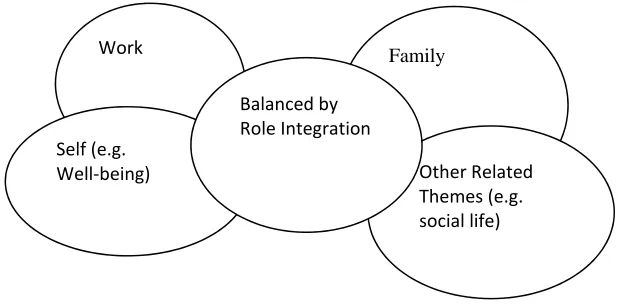
In its broadest sense, WLB is a social concept conceived to suggest that paid work and personal life of a working adult should be seen less as competing priorities and rather as complementary elements of a full life (Manfredi & Holliday, 2004). According to the general WLB framework diagrammatised in Figure 1, work-life integration underscores the extent to which an employee is equally engaged in and satisfied with his or her economic pursuits and active coordination of other domains of their life (Figure 1). In other words, it simply means an individual’s capability to find a ‘life rhythm’ that enables them to combine their work with other domains of life (Felstead, Jewson, Phizacklea, & Walters, 2002). This includes a state of ‘satisfaction and good functioning at work and at home, with a minimum of role conflict’ (Clark, 2000, p. 751). Therefore, from the perspective of SMEs, some of the advantages of adopting WLB policies is to accentuate positive outcomes for these small businesses in terms of employees’ work commit-ment, satisfaction, performance and reduced withdrawal behaviours.
that employees of SMEs work more unsocial working hours, receive less training, less con-sultation and participation in decision making processes and more vulnerable to occupa-tional stress. While it is known that in the United Kingdom, small firms make up the bulk of the business population (Barrett & Burgess, 2008), the degree of imbalance between work and private lives of workers in this sector is of great concern. The antecedent of these challenges emanates from demographic changes in the nature and structure of working systems and family life arising from the active participation of women in the contemporary workforce which is blurring traditional gender role perspective that subject the women to domestication and family care responsibilities only (Brotheridge & Lee, 2005).
Figure 1. General WLB framework
Source: own study.
However, there is increasing clamour by British workers for a higher quality of life, welfare support that points towards addressing WLB solutions despite media and pub-lic knowledge of the ongoing UK budget cuts by the present government. Records pro-vide that each year, job stress costs UK businesses an estimated 3.7 billion GBP and the loss of around 80 million working days (McVicar, Munn-Giddings, & Seebohm, 2013). Such stress related issues have been attributed to both work and family related factors because many employees experience difficulties balancing their work obliga-tions with home responsibilities (Özbilgin, Beauregard, Tatli, & Bell, 2010). Within the EU, the UK is known to have one of the longest working hours while Britons toil longer every week than other industrialised nations (Roberts, 2007). This invariably causes role pressures on employees working longer hours while some engage in ‘inflexible work schedules’ (Kossek, Kalliath, & Kalliath, 2012). Focusing on SMEs in the UK, liter-ature further reveals the lack of training and qualifications of managers’ places limits on the adoption, development and functional operation of WLB practices in conform-ity with the ‘EU/UK statutory minimum good practice guidelines’ (Malik, McKie, Be-atrie, & Hogg, 2010). More evidence from literature suggests that most UK SME man-agers may economically adopt WLB practices based on overarching demands from their workers but decisions to offer them may be based on reciprocal expectations of extreme commitment and loyalty to employment (Dex & Scheibl, 2001). Conse-quently, the rigid working conditions in SMEs across the UK breeds an environment
Work Family
Self (e.g.
Well-being) Other Related
Themes (e.g. social life) Balanced by
where role pressures and conflict are possibly inevitable. This inter-role conflict out-comes will definitely have significant impact on UK small businesses. Most times, such employees are typically dissatisfied resulting in considerations of alternative employ-ment (Ford, Heinen, & Langkamer, 2007). Therefore, competing demands of work and domestic life degenerates into a tug-of-war situation in the lives of SME workers cre-ating the notion that work-family conflict and intentions to leave are positively related with actual withdrawal from employment. Hence, the present study intends to provide further insights into the associated WLB challenges facing SMEs and explore retention solutions for this important sector to the UK economy.
MATERIAL AND METHODS
Semi-structured interviews were conducted and interpretative phenomenological analysis (IPA) used to gain ideographic insights of participants’ lived experiences (Smith & Osborn, 2003). The IPA like any other naturalistic research methodologies is designed to provide intricate and detailed understanding of how people construct meanings of social realities (Smith, 1996). This is a particularly useful interpretive design especially where there is little or no prior research enquiry on such topic (Cohen, Manion, & Morrisonet, 2011). In es-sence, the underlying philosophical assumption of following a social constructivist para-digm is the belief that peoples’ expressed thoughts are more vivid from verbal accounts as they try and make sense of their world (Gonzales, Brown, & Slate, 2008). The advantage of this design is that it provides depths of understanding of the social reality being studied while a known weakness is the subjective nature of qualitative method.
A purposive sampling method was used to recruit all study participants. This method of non-probabilistic sampling is applied where qualitative data is collected using semi or unstructured interview protocols within a business case context (Saunders, Lewis, & Thornhill, 2012). Thus, all key informants were selected based on their marital status, length of time at work (employed for a minimum of one year), age (20-49 years old) and educational status. The National Vocational Qualifications (NVQs) was the basic form of education that most participants had. Generally, NVQs is achieved through assessment and training based on the National Occupational Training Standards operational in the UK. The participants interviewed were all together (10 males and 26 females) of which 9 were unmarried, 5 were single parents, 8 were married with children and the rest divorced. Table 1 summaries the demographic data collected.
Table 1. Demographic characteristics of participants
Description Range Mean (SD)
Age 20-49 years 36 2.7
Work experience 1-2 years 4 1.2
Age of children 6-15 years 9 22.2
Level of education
primary school (n= 10) high school (n= 8) NVQs (n= 18)
- -
Before the research, formal permission was sort for site visits and granted by the man-agement personnel and other important ‘gate-keepers’ that were of valuable contacts. Once access was formalized, the approval of time, place and frequency of visits was granted with full support from some member of staff designated to help facilitate the lo-gistics needed to recruit subjects based on their availability and business convenience. Written consent, anonymity and confidentiality were strictly observed while each semi-structured interview lasted for 45-60 minutes with all participants in their respective work-places. The interviews were tape-recorded using predetermined but flexible interview pro-tocol. Interviews questions included: what do you understand as work-life balance within the context of your job? Are there formal policies protecting your work-life affairs? What do your employers think about your life outside work? Are there any constraining factors to work-life provisions? What causes people to change jobs in UK small businesses? What more do you think can be done to improve the quality of life of employees in SMEs? The interviews continued until saturation point was reached. Thereafter all the recorded inter-views were transcribed and afterwards read repeatedly for purposes of identifying the personal and situational themes that reflected points of interest from key descriptive words, comments and phrases from the interviews. In effect coding was pursued; emerg-ing themes and subthemes that best captures the essential qualities of the transcribed interviews were identified. The final stage was translating the themes into a narrative ac-count that then informed the main findings that emerged from the study.
RESULTS AND DISCUSSION
Initial inquiry were made on what the study participants understood by WLB and the following interpretations emerged.
Scheduling Time Sensibly
From the interview records, approximately 50% of the participants defined WLB as the ability to pay attention to family commitments as well as also succeeding at work. In other words, balancing work-life matters was viewed as having proportionate time for both life roles. Most of these participants here referred to the degree to which they can experience positive relationships between their work and family roles. This was said to arise from measuring the daily shifting weights of time allocated to work-life interjectory. The follow-ing quotations exemplify some shared views of the participants.
‘Achieving balanced life between working and personal life is spending time with your family […] and doing your own thing without compromising work. That's the best way I can describe WLB’. (Tony, convenience store attendant).
Another 40 year old shop keeper also iterated: ‘it means you are working, but at the same time you're not just at work every day from the moment you get up until it's time for you to sleep at night, but you still have time to spend with your family and other loved ones’.
lives, leading to productivity and labour efficiency. In addition, there was a common per-ception that life presents numerous demands; hence, individuals have to prioritise and make choices through a judicious use of their limited resource such as – time.
Staying Healthy
About 30% of the participant defined WLB in terms of having to deal with health-related issues. To these sets of interviewees, WLB was defined in relation to the state of health and wellbeing that should not be compromised during the involvement with multiples roles of life. There was a general belief that a good work-life balance can provide a range of mental health benefits, including greater satisfaction with the quality of life, lower lev-els of work stress and physical improvements, derived from improved energy levlev-els and longer life expectancy. For example, one of the female cashiers who works in a super-market express said that: ‘Although I work in a smaller supersuper-market when compared to the bigger ones such as Tescos, ASDA or Sainsbury’s which I believe will have better prac-tices in enhancing employees work-life integration, but I also think WLB means not com-promising the quality of one’s health and psychological wellness in a bid to create a lev-erage in both work-life activities…this is why I make sure my health is not compromised irrespective of the work-life policies provided by my employers’.
A few of the participants were of the view that when talking about a balanced work-life situation, discussions should not only centre on doing everything possible to produce com-pletion and achievement of multiple role tasks successfully, but also have to include acknowl-edging self-care so that the employee’s mind, soul and body are being refreshed in the pro-cess of engaging in daily work-life routines. One of the interviewees pointed out the possi-bility of trying to maintain a good work-life at the expense of staying healthy. In a particular interview, concerns were expressed about the pressures of an increasingly demanding work culture in the UK which was considered to be one of the biggest and most perhaps pressing challenge to mental health in the country. A supermarket attendant interviewed mentioned how the cumulative effect of increased working hours is impacting on the lifestyle of a huge number of British employees especially those working in small and medium scale businesses. Some of these key informants expressed their concerns of how they work overtime in order to meet financial obligations such as their mortgages and loans, but all these efforts also proves to damage their mental well-being. So these sets of participants conceptualized WLB as creating and maintaining supportive and healthy conditions.
Leisure and Social Life Involvement
In addition, some other participants spoke about WLB as having ‘fun time’ in life such as travelling abroad on holidays, meeting with friends at the pub for few drinks, going to concerts, cinemas, voluntary work participation and even personal development activi-ties. These various meanings ascribed to WLB presented insightful interpretations of the social concept regardless of individual demographics. Further enquiries on the extent to which WLB practices are available in SMEs revealed key barriers associated with satisfac-tory support for work-life integration in these UK SMEs. The main theme emerging from the findings centred on the informal nature of HRM policies influencing the range of WLB initiatives available to employees. It was revealed in some of the interviews that private or family enterprise owners prioritize business profits over the provision of well-docu-mented work-life offers. The limited availability of WLB policies was ascribed to the small size of business, the hierarchy of management structure and the low skilled nature of the workforce employed in these small businesses. For example, one of the participants who works as a till cashier said that: ‘We don’t enjoy elaborate WLB policies which I think it is just one of the small food supermarkets established by the owners of which you can see we have a very small workforce […] all I know is that I have 18 days holiday and work morning or night shifts based on business demands’.
Similar versions from other participants, especially from a few working in convenience stores, affirmed that their recruitment and working scheduling are marked by the absence of formalities. Most of the sales attendants at the counter narrated how staff retention is very low because of the feeling that they are often treated as a means to organizational ends because of the casual nature of their work. Further, some of these low-income work-ers especially the working parents expressed concerns of having little control over the way they manage to keep a balance between their jobs and family lives. A few participants felt most of them leave these small businesses once an opportunity is sighted to work in some of the biggest UK supermarkets such as Tesco, ASDA, Sainsbury’s etc. as these mega su-permarkets were perceived to offer more robust WLB packages. This findings resonates with earlier studies (e.g. Dex & Scheibl, 2001; Cassell, Nadin, Gray, & Clegg, 2002; Lavoie, 2004) whose findings reveal that firm size is an important predictor of the presence of work-life balance practices. For instance, Dex and Scheibl (2001) found that larger compa-nies tend to adopt more work-family policies than smaller ones and organizations with perceived superior human resource management record may certainly provide more flex-ible labour opportunities. One of the male participants working in an Asian food store spe-cifically mentioned the level of managerial favouritism as a major issue especially when worker’s try to adjust their shift patterns to suit their work-life needs. He said among other things that: ‘Sometimes my working shift is really a bottleneck because our manager pre-pare our job schedules on a weekly basis […] a times the store manager sentimentally ap-proves day shifts to some at the detriment of those of us with caring needs’.
and dependent care benefits perceived to be available, and if not available, the prefer-ences of participants towards policies that are non-existent in these SMEs.
Table 2. WLB agendas
WLB policies & practices Available Not available Will be interested if available F l e x i b l e w o r k o p t i o n s
Part-time Yes – –
Flexitime – No Yes
Compressed hours – No Yes
Job sharing – No Yes
Home commuting – No –
S p e c i a l i s e d l e a v e p o l i c i e s
Study leave – No Yes
Maternity leave Yes but minimal – –
Paternity leave – No Yes
Casual leave Yes – –
D e p e n d e n t c a r e b e n e f i t s
On site care facility (crèche) – No Yes
Care for sick dependent – No Yes
Professional counselling – No Yes
Source: own study.
From the results above, many participants expressed concerns about the limited range of different organizational WLB policies available under the three broad categories tabulated. The participants exposed a high rate of interest for these small-medium businesses to make available more interventions aimed at facilitating flexibility, making available various special-ized leave options, supporting employees with childcare responsibilities and rendering pro-fessional counselling to enhance workers’ work-life nexus. Consequently, almost all the par-ticipants felt that providing only part-time, minimal maternity and casual leave options (Table 1) were some of the resultant causes of high turnover in the UK SMEs. Almost 90% of the interviewees at some point voiced out how turnover is a major issue for their employers hav-ing to bear unplanned costs of hirhav-ing and trainhav-ing new personnel, as well as the costs of not having departed employees working toward organizational sales performance. For instance, one of the female sales attendant working in one of the supermarkets with 60 employees said that: ‘Since I have been working here for a year and a half now, some of the younger recruits hardly stay for six months before quitting […] I can just imagine the turnover cost for exit and replacement that business needs to deal with in order to stay in business’.
these small business owners. While the benefits of adopting work-life practices were said to be needful to increase employee morale, productivity, customer engagement and reduced staff turnover, the overburdening cost of implementing new family-friendly policy systems was perceived difficult if the net impact will be negative on the overall business.
In a similar vein, another theme identified as low levels of qualifications and training of managers in SMEs emerged from some interviews. Three of the participants working in a supermarket of 30 employees in their separate interviews were persuaded that these characteristics of managers in SMEs restrict the development of WLB practices in their firms. Some of these entrepreneurs are viewed as having the mentality that work-force problems such as absenteeism or performance levels can be closely monitored because of the greater proximity and visibility of employees in small businesses. Hence, there is a general notion that small business owners don’t see the need to implement the various WLB policies earlier highlighted (Table 1). Some of the participants gave ev-idence portraying some of these entrepreneurs as workaholics and adjudged to believe that working hard and long hours is the route to success. However, one of the male participant working in a grocery store felt business owners who engage in extreme busi-ness involvement to the detriment of their personal WLB needs is not only dangerous, but unhealthy. In addition, it was perceived as an inefficient way to run a business be-cause if stifles creativity, kills motivation and increases withdrawal behaviours. Overall, all the participants perceived that viable ways of addressing these problems of WLB shortages in UK SMEs is for entrepreneurs to create a supportive work culture.
While the interviews with participants revealed some nagging problems confronting the sample of UK SMEs selected for this study, further enquires seeking responses on how best work-life practices can enhance employee retention were made. Most of the participants believed that there a number of staff retention strategies that SMEs can draw from and adapt to suit small business needs. It was established from the interviews that the existence of a WLB supportive culture for employees is a key factor for decreas-ing attrition rate in UK small businesses. The first theme that emerged from the aggre-gate data (i.e. interviews) as a solution to this turnover problem is the need for strong leadership that appreciates the value of WLB. A handful of participants felt that a rela-tional approach to leadership should be embraced by UK business owners. Participants were of the opinion that this will go a long way to affect perceptions that allow employ-ees to integrate their work with leisure, family time, travel, study and careers success-fully. Some of the younger participants acknowledged the competitive pressures facing their employers, but at the same time think that UK entrepreneurs should exhibit pat-terns of affiliative leadership behaviours that puts people and their needs first. A few of the participants shared the belief that employees (whether skilled or unskilled labour) are more productive when allowed them to work flexible schedules.
bal-ance policies. The general assumption from the interviews was that work-life balbal-ance poli-cies will improve staff retention in SMEs. Most interviewees believed that reducing staff turnover will lead to lower costs, as recruiting new staff is a costly process. However, the key informants of the study firmly confirmed supporting employees’ work-life balance will im-prove performance, job satisfaction, and create positive employer branding.
This study mainly provided insights into an understanding of some challenges of WLB availability in UK SMEs. Evidence from the interviews revealed that the implementation of acceptable WLB practices are of major concern to study participants working in these small businesses. From the study, all the key informants defined work-life balance as a concept ranging from scheduling time appropriately for both work and family affairs, paying atten-tion to healthy living as well as participaatten-tion in social and leisure activities. This multiple meanings given to WLB broadens the interpretation of the concept that as for so long been restricted to focusing on the traditional family life and matrimonial household structures only. Emphases on WLB issues in literature are often placed on women with childcare re-sponsibilities. This study findings debunks the sentimental assumption that women are pri-mary targets of work-life balance debates (Gregory & Milner, 2009). Therefore, the study findings is consistent with the views of Özbilgin et al., (2010, p. 5), who argued that knowledge enlargement in work-life research has become imperative because the concept is by no means a working mother’s issue only. So irrespective of gender, WLB in its broadest sense, should mean an individual’s satisfactory ability to juggle work and non-work activities that covers a wider spectrum of life’s domain such as leisure activities, community participa-tion, social life activities, religious and spiritual engagements and so on (Guest, 2002).
This study unveiled perceptions of inadequate provisions of WLB policies in UK SMEs. The results showed that there are a variety of work-life interventions ranging from atypical working arrangements, specialized leave options and dependent care benefits described in table 1 that the interviewees would like UK small business to adopt. The assumption is that employees will avail themselves of arrangements that are most suitable to them if a variety of these policies are available. The findings revealed the provision of only part-time work, casual leave policies and very minimal maternity leave opportunities (Table 1) in the sampled UK businesses of this study. In sum, the study findings revealed that the reasons for work-life policy shortages in UK small businesses includes low level of training and qualifications of small business owners on WLB agendas, the costs associated with intro-ducing a wide range of WLB policies and lack of formalization of work-life practices.
between people’s paid work and the rest of their lives through the introduction of various forms of statutory leave options, large investments in childcare agendas and addressing working hours by ensuring that statutory rights for any worker to request flexible working patterns is not compromised (www.gov.uk/work+life+balance+in+SMEs). But it is clear from the study that the inadequacy of WLB in UK SMEs is the main cause for the high turnover which can potentially harm the productivity of these grass root businesses especially in the area of employee work commitment. According to Robbins (1998), turnover is one of the organizational variables most closely related to job dissatisfaction. Thus, employee job sat-isfaction is crucial for business success and often linked to performance, organizational productivity and other issues, including turnover. Dissatisfied employees are prone to in-dulge in absenteeism and thereby increasing negative turnover (Toker, 2011, p. 156). In ad-dition, Hughes and Bozionelos (2007) contested that current human resource practices most relevant to increasing work satisfaction have been found to be WLB practices, as they can help to foster the employees’ quality of life and, as a consequence, workers will be more motivated and committed to the organization.
When employees cannot find balance between their job and non-working life, they can experience role conflict. This conflict is defined in WLB literature as “an interference of work and family roles that creates tension or problems for the individuals or as the direct result of incompatible pressures from an individual’s work and family roles” (Moen, Kelly, & Huang, 2008). Subsequently, work-life conflict can lead to stress and negative spill-overs from the home and a consequence of this is a decrease in produc-tivity at work. Therefore, the variable significantly related to employee retention is the existence of a WLB supportive culture in UK SMEs. This result is consistent with previous literature that highlights the importance of organizational support for WLB in order to achieve high level of organizational and employee performance (Batt & Valcour, 2003). Thus, an interesting dynamic in the case study is that almost all the participants were of the view that they were not sufficiently rewarded with WLB practices. Hence, it is es-sential for UK small business owners to take WLB policies and practices seriously and make every effort to implement them in their businesses.
CONCLUSIONS
workers come together to find common WLB policies and practices for the common good of all. Ideally, this process should also be supported by the UK Government. Guidelines should be developed to ensure that employees working in SMEs are given duties that have realistic deadlines. The study also recommends that proper guidelines be developed for these low skilled workers to be incentivized for the extra number of hours or long working hours spent in such employments (Walker, Wang, & Redmond, 2008). There may also be a need to consider the demand for flexibility within working patterns such as flexible hours, compressed hours, job share and so on (Table 1). On the whole, there is a need to ensure fairness and consistency in the implementation of WLB policies as a part of human resource management that can affect performance and retention of employees in this im-portant sector of the UK economy. As the limitation of this study is that it is wholly quali-tative in nature, it is suggested that future research should rely on quantiquali-tative designs that provides more internally valid tests via computational techniques.
REFERENCES
Barrett, R., & Burgess, J. (2008). Small firms and the challenges of equality, diversity and difference.
Equal Opportunities International, 27(3), 213-220.
Batt, R., & Valcour, P.M. (2003). Human resource practices as predictors of work-family outcomes and employee turnover. Industrial Relations, 42(2), 189-220.
Brotheridge, C.M., & Lee, R.T. (2005). Impact of work-family interference on general well-being: a replication and extension. International Journal of Stress Management, 12(3), 203-221. Cassell, C., Nadin, S., Gray, M., & Clegg, C. (2002). Exploring human resource management practices
in small- and medium-sized enterprises. Personnel Review, 31(5), 671-695.
Cegarra-Leiva, D., Sanchez-Vidal, M., & Cegarra-Navarro, G. (2012). Understanding the link between work-life balance practices and organizational outcomes in SMES: The mediating effect of a sup-portive culture. Personnel Review, 41(3), 359-379.
Clark, S.C. (2000). Work-family border theory: a new theory of work-family balance. Human Relations, 53, 747-770.
Cohen, L., Manion, L., & Morrison, K. (2011). Research methods in education (7th ed.). Oxon: Routledge. De Cieri, H., Holmes, B., Abbott, J., & Pettit, T. (2005). Achievement and challenges for work-life balance
in Australian organizations. International Journal of Human Resources Management, 16(1), 90-103. De Kok, J.M.P., Uhlaner, L.M., & Thurik, A.R. (2006). Professional HRM practices in family owned –
managed enterprises. Journal of Small Business Management, 44(3), 441-460.
Dex, S., & Scheibl, F. (2001). Flexible and family-friendly working arrangements in UK-based SMEs: business cases. British Journal of Industrial Relations, 39(3), 411-431.
European Foundation Survey (2001). Jobs in EU Micro Firms: Summary, European Foundation for the Improvement of Living and Working Conditions. Dublin.
Felstead, A., Jewson, N., Phizacklea, A., & Walters, S. (2002). Opportunisms to work at home in the context of work-life balance. Human Resources Management, 12, 54-76.
Ford, M.T., Heinen, B.A., & Langkamer, K.L. (2007). Work and family satisfaction and conflict: a meta-analysis of cross-domain relations. Journal of Applied Psychology, 92(1), 57-80.
GOV.UK (2016). Work-life balance in SMEs. Retrieved on February 24, 2016 from www.gov.uk/work+life+balance+in+SMEs.
Gregory, A., & Milner, S. (2009). Work-Life Balance: A matter of Choice. Gender, Work and Organisation, 16(1), 1-20.
Guest, E.D. (2002). Perspectives on the Study of Work-life Balance. Social Science Information, 41(2), 255-279. Holt, M., & Powell, S. (2015). Health and well-being in small and medium-sized enterprises (SMEs). What public health support do SMEs really need?. Perspectives in Public Health, 135(1), 49-55. Hughes, J., & Bozionelos, N. (2007). Work life balance as a source of jog satisfaction and withdrawal
attitudes: An exploratory study on the views of male workers. Personnel Review, 36(1), 145-154 Kossek, E.E., Kalliath, T., & Kalliath, P. (2012). Achieving employee wellbeing in a changing work environment:
an expert commentary on current scholarship. International Journal of Manpower, 33(7), 738-753. Lavoie, A. (2004). Work-life balance and SMEs: avoiding the ‘one-sized-fits-all trap’. CFIB Research - July, 1-13. Lynch, J.E., & Tuckey, M. (2008). The policy turnover problem: fact or fiction?. Policing: An
Interna-tional Journal of Police Strategies & Management. 31(1), 6-18.
Malik, F., McKie, L., Beatrie, R., & Hogg, G. (2010). A toolkit to support human resource prac-tice. Personnel Review, 39(3), 287-307.
Manfredi, S., & Holliday, M. (2004). Work-life balance: an audit of staff experience at Oxford Brookes University. Oxford: The centre of diversity policy research, Oxford Brookes University.
McVicar, A., Munn-Giddings, C., & Seebohm, P. (2013). Workplace stress interventions using participa-tory action research designs. International Journal of Workplace Health Management, 6(1), 18-37. Mihail, D.M. (2004). Labour flexibility in Greek SMEs. Personnel Review, (33)5, 549-560.
Moen, P., Kelly, E., & Huang, R. (2008). Fit inside the work-family black box: an ecology of the life course, cycles of control reframing. Journal of Occupational and Organizational Psychology, 81, 411-433. Özbilgin, M.F., Beauregard, T.A., Tatli, A., & Bell, M.P. (2010). Work–Life, Diversity and Intersectionality:
A Critical Review and Research Agenda. International Journal of Management Reviews, 13(2), 1-22. Robbins S.P. (1998). Organizational Behaviour. New Jersey: Prentice-Hall International.
Saunders, M., Lewis, P., & Thornhill, A. (2012). Research methods for business students (6th ed.). London: Prentice Education Limited.
Statistical release on the Department for Business Innovation & Skills (2011). Statistical data. Re-trieved on August 4, 2015 from http://stats.bis.gov.uk/ed/bpe/ on 04/08/2015.
Smith, J.A., & Osborn, M. (2003). Interpretative phenomenological analysis. In J.A. Smith (Ed.), Qualita-tive Psychology: A practical guide to research methods (pp. 51-80). London: Sage Publications. Smith, J.A. (1996). Beyond the divide between cognition and discourse: using interpretative
phe-nomenological analysis in health psychology. Psychology and Health, 11, 261-271.
Toker, B. (2011). Job satisfaction of academic staff: an empirical study on Turkey. Quality As-surance in Education, 19(2), 156-169.
Author
Babatunde Akanji
Lecturer at the Department of Human Resource Management, Elizade University (Nigeria). He obtained his first degree in Law from the University of Ilorin (Nigeria). Thereafter a Mas-ters in International Strategic Management from Staffordshire University (UK) and PhD in Human Resource Management from the University of Wales (UK). His research interests in-cludes work-life balance, occupational stress, leadership and entrepreneurship.
Correspondence to: Dr. Babatunde Akanji, Elizade University, Wuraola Ojo Avenue, P.M.B 002; Ilara-Mokin, Ondo State, Nigeria; email: [email protected]
Copyright and License
This article is published under the terms of the Creative Commons Attribution – NoDerivs (CC BY- ND 4.0) License
http://creativecommons.org/licenses/by-nd/4.0/
Published by the Centre for Strategic and International Entrepreneurship – Krakow, Poland