Lincoln University Digital Dissertation
Copyright
Statement
The
digital
copy
of
this
dissertation
is
protected
by
the
Copyright
Act
1994
(New
Zealand).
This
dissertation
may
be
consulted
by
you,
provided
you
comply
with
the
provisions
of
the
Act
and
the
following
conditions
of
use:
you
will
use
the
copy
only
for
the
purposes
of
research
or
private
study
you
will
recognise
the
author's
right
to
be
identified
as
the
author
of
the
dissertation
and
due
acknowledgement
will
be
made
to
the
author
where
appropriate
OPTIMISING A WEIGHING PROTOCOL FOR SHEEP
__________________________________
A dissertation submitted in partial fulfilment of the requirements for the Degree
of
Bachelor of Agricultural Science (Honours)
at
Lincoln University by
R.
F.Wilson
_______________________________
Lincoln University
ii
Abstract of a dissertation submitted in partial fulfilment of the requirement
for the Degree of Bachelor of Agricultural Science (Honours)
Optimising a Weighing protocol for sheep
By
R.F. Wilson
A series of experiments designed to investigate live weight error and analyse the effect fasting and multiple weighing has on live weight measurements were carried out. In the first experiment 24
mixed aged ewes were fasted during a 24 hour period with live weight measurements taken at 0,
2, 4, 6, 8, 10, 12 and 24 hours fasted, with three measurements taken at each time point. At the
conclusion of weighing all animals were slaughtered and their gutfill was weighed to enable
calculation of their true (digesta-free) weight. In the second experiment 100 Coopworth ewes were
weighed as described above on two separate occasions in May and July. On all occasion animals were individually identifiable with either visual ear tags or electronic identification tags (EID).
In experiment one live weight of ewes at the start of fasting ranged from 34.4 – 79.6 kg with a mean
live weight of 61.3 kg. The mean live weight loss displayed a curvilinear response peaking at 4.1 ±
0.23 kg or 6.7% ± 0.348 at 24h fasting, with a significant effect of time. The regression equations y
= -0.0073x2 + 0.3445x for absolute live weight loss and y=-0.012x2+0.5636x for proportional live
weight loss both explained 98% of the variation. The proportion of true live weight relative to measured live weight over 24 hours fasted increased from 0.85 ± 0.006 to 0.91± 0.004. Despite
being fasted for 24h the animals were only able to reach 91% of their true live weight as final digesta
ranged from 2.5-7.3 kg with an average of 5.06 ± 0.27 kg. Therefore it was determined that attaining
a reliable estimation of an animal’s true body weight is unachievable when fasting them for 24 hours.
In experiment two, the live weight of 100 ewes was measured during a 24 hours fasting period with
measurements taken at 0, 2, 4, 6, 8, 10, 12 and 24 hours in May which was repeated again in July. The live weight loss peaked at 7.87% in May which was considerably greater than the maximum live
weight loss of 3.09% seen in the July experiment. The difference was likely due to a difference in
iii animals. The relationship between live weight loss (kg) and (%) ranking at 24 hours fasted and the live weight loss (kg) and (%) at fasting times 2, 4, 6, 8, 10, 12 for experiment 2 (May and July) was
analysed. The strongest relationships were seen at 12 hours fasted: y=0.9878x (R2 =0.8976); for
May, y=0.9567x (R2 =0.6623) for July when expressed in kg. As a proportion of weight loss the
greatest relationship was seen at 10 hours y=0.716x (R2 =0.8578) and y=0.8895x (R2 =0.8895) for
May and July respectively. Probit analysis to fit 95% of their 24hr weight showed no significant
difference was seen between the liveweight range from 0, 2 and 4 hours fasted; 4, 6, 8 hours fasted and 6, 8, 10, 12 hours fasted. In order to analyse the effect of multiple weighing a probit analysis
to determine the range in weight which 95% of average the of three weights would fall indicated
the only significant difference was at 10hrs fasted between one weight and the average of two
weights.
In summary, live weight is a fundamental measurement which is used to monitor the production in
the sheep industry. However live weight is only an estimate of an animal’s true live weight which is unable to be reliably determined even following 24h fasting due to the variation in digesta
weights. Relative to their 24h fasted live weights, fasting improved the accuracy and precision of
the live weight estimate with little advantage observed when animals were fasting for periods
greater than 8h. The method of multiple weighing had minimal effect on improving accuracy
iv
Table of Contents
1 General introduction ... 1
1.1 Introduction ... 1
2 Review of the Literature ... 3
2.1 Measuring Live weight ... 3
2.2 Measurement Error ... 4
2.2.1 Human Error ... 4
2.2.2 Scale Error ... 4
2.3 Live weight Error ... 6
2.3.1 Gutfill Variation ... 6
2.3.2 Diurnal Variation ... 6
2.3.3 Feed Type Factors ... 7
2.4 Reducing Live weight Error ... 8
2.4.1 Multiple Weighing ... 8
2.4.2 Fasting ... 10
2.5 Seasonal Changes in Live weight ... 11
2.6 Methods of estimating body composition ... 12
2.6.1 Body Condition Scoring ... 12
2.6.2 CT Scanner ... 13
2.7 Change in Tissue ... 14
2.8 Season Changes ... 14
2.9 Body Composition & Production ... 16
2.10 Live weight Gain or Loss ... 17
2.11 Body Condition Score and Live weight Relationship ... 18
2.12 Use of Live weight Measurements in Industry ... 19
v
2.12.2 Determining dose rates ... 20
2.12.3 Monitoring Progress ... 20
2.13 Summary ... 21
3 General Methodology ... 22
3.1 Experiment 1 ... 22
3.1.1 Weighing protocol ... 22
3.1.2 Slaughter procedure and true body weight estimates ... 22
3.2 Experiment 2 ... 23
3.3 Statistical Analysis ... 23
4 Results ... 24
4.1 Live weight loss relative to fasting time ... 24
4.1.1 Experiment 1 ... 24
4.1.2 Experiment 2 ... 28
4.2 Coefficient of Variation ... 29
4.2.1 Experiment 1 ... 29
4.2.2 Experiment 2 ... 32
4.3 Rank Comparison of initial live weight less the true live weight ranking ... 33
4.3.1 Experiment 1 ... 33
4.4 Relationship between Live weight Loss and 24hr Loss ... 35
4.4.1 Experiment 1 absolute (kg) ... 35
4.4.2 Experiment 2 absolute (kg) ... 36
4.4.3 Experiment 1 (%) ... 39
4.4.4 Experiment 2 (%) ... 40
4.5 Ranking at 24 hours fasted and ranking at various fasting times ... 42
4.5.1 Experiment 1 ... 42
4.5.2 Experiment 2 ... 43
vi
4.6 Probit Analysis of data within 95% of 24hr weight ... 46
4.6.1 Experiment 2 ... 46
4.7 Live weight relative to multiple weighing ... 47
4.7.1 Experiment 1 ... 47
4.8 Probit Analysis data within 95% of average of three weight ... 48
4.8.1 Experiment 2 ... 48
5 Discussion ... 49
6 Acknowledgements ... 52
vii
LIST OF TABLES
Table 2.2.1: Accuracy of scales tested by Kondinin Group ... 5
Table 2.3.1: Mean percentage loss in live weight relative to time off feed off various feeds ... 8
Table 2.4.1: Variation in live weight ± s.e.m (kg) from the best estimate of the true live weight of an animal, derived as the mean of three weighings, required to include a given percentage of the population for when the of the population for when the first recorded weight alone or the mean of the first two weights for animals fasted 0, 24 hours. ... 9
Table 2.5.1: Mean Live weight over each killing (kg) ... 11
Table 2.5.2: Live weight changes (kg) during different periods of the season of Carcass fat weight, internal fat weight and carcass weight. ... 12
Table 2.8.1: Proportional Changes between carcass fat weight, internal fat weight and carcass muscle weight between scanning events ... 15
Table 2.9.1: The association between BC and Ewe Output (Total Lamb Weaned kg) ... 17
Table 2.11.1: Change in liveweight to BCS (SCARM) ... 18
Table 4.5.1: 24 Hour Ranking Data: Live weight Loss (kg) of 24hr ... 45
Table 4.5.2: Live weight Loss (%) of 24hr ... 45
Table 4.5.3: 24 Hour Ranking Data ... 45
Table 4.6.1: The range of live weight (kg) (± s.e.m) within 95% of 24hr weight (kg) for average of 3 weights with time fasted 2, 4, 6, 8, 10 and 12 hours for experiment two May and July. ... 46
Table 4.7.1: R2 Values for Best Fit Regression for the estimated live weight vs. true liveweight over multiple weighing: one weight, average of 2 and 3 weights for the 24 ewe experiment. ... 47
viii
LIST OF FIGURES
Figure 2.1: Histogram showing the results of repeated weighing of one pig using the averaging method ... 5
Figure 2.2: The results of repeated weighing averaging simulating worst case scenario ... 6
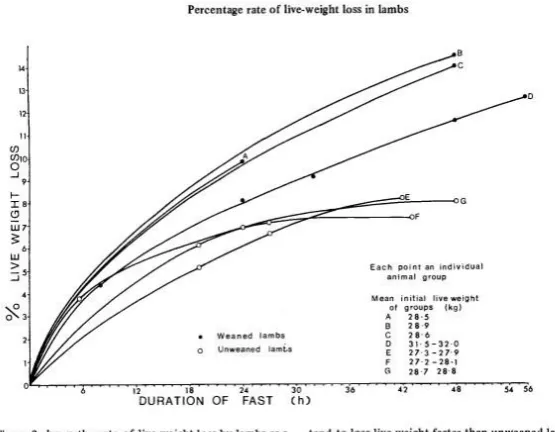
Figure 2.3: Percentage of live weight loss from initial live weight of weaned and unweaned lambs
during fasting. Source: (Hughes, 1976) ... 10
Figure 2.4: Body Condition Score Guide ... 13 Figure 2.5: Change in Live weight relative to condition score: Coopworth (2011-2012) & Rosebank
... 19
Figure 4.1: Mean of three repeated measurements of live weight (kg ± s.e.m) relative to time fasting
time from feed and water (h) for 24 ewes. The line of best fit represented the logarithmic equation
y=0.0062x2-0.3074x+61.074 (R2=0.988). ... 25 Figure 4.2: The Mean live weight loss of initial live weight in absolute terms (kg ± s.e.m) relative to
time fasting time from feed and water (h) for experiment one (24 ewes). The line of best fit
represented the logarithmic equation y=-0.0073x2+0.3445x (R2=0.9845). ... 26
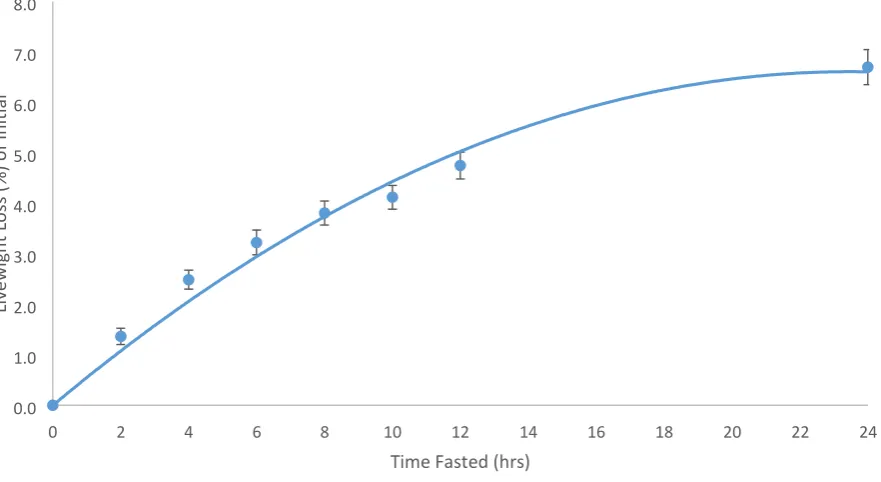
Figure 4.3: The Mean live weight loss as a percentage of initial live weight (% ± s.e.m) relative to
time fasting time from feed and water (h) for experiment one (24 ewes). The line of best fit
represented the logarithmic equation y=-0.012x2+0.5636x (R2 = 0.9823). ... 26
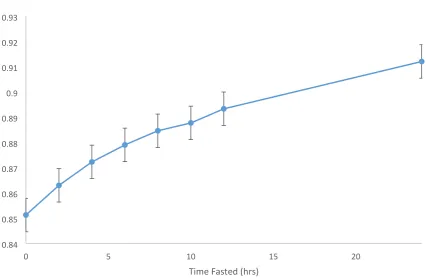
Figure 4.4: The Proportion of Measured Live weight is of True Live weight (proportion ± s.e.m)
relative to time fasting time from feed and water (h) for 24 ewes. ... 27
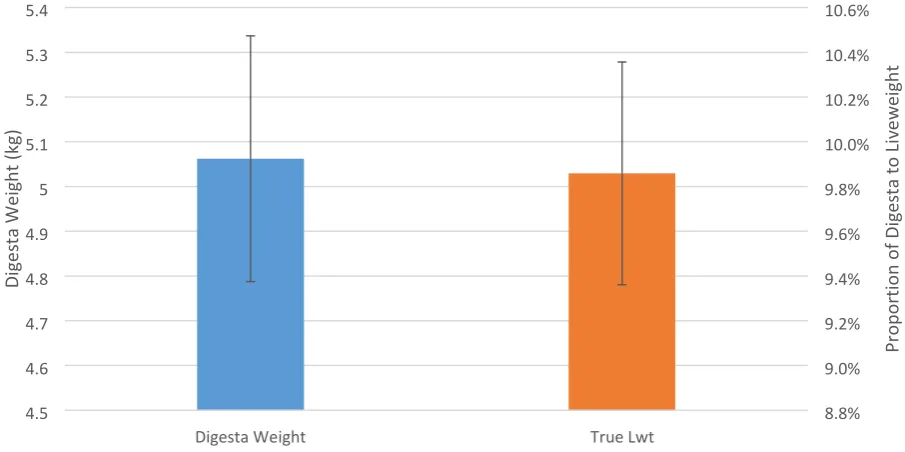
Figure 4.5: Mean final digesta weight at 24h fasted (kg ± s.e.m) along with the proportion of digesta
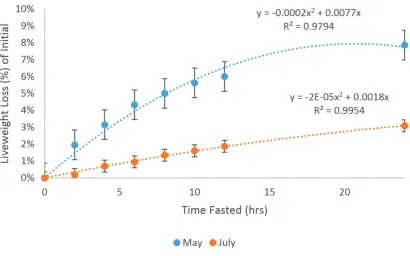
to true live weight (proportion ± s.e.) ... 28 Figure 4.6: The Mean live weight loss as a percentage of initial live weight (% ± s.e.m) relative to
time fasting time from feed and water (h) for 100 ewes in experiment two. The line of best fit for
the May Experiment represented the logarithmic equation y=0.0002x2+0.0077x (R2=0.9794) and
the line of best fit for the July Experiment represented the logarithmic equation y=-2E-05x2+0.0018x
(R2=0.9954). ... 29
Figure 4.7: The Coefficient of variation for the live weight loss (kg) and the live weight loss as a percentage of initial live weight for experiment one... 30
Figure 4.8: The overall coefficient of variation (± s.e.m) of the proportion of measured live weight is
of true live weight relative to time fasting time from feed and water (hrs) for 24 ewes. ... 31
Figure 4.9: The Coefficient of variation for the live weight loss as a percentage of initial live weight
ix Figure 4.10: Rank Comparison of initial live weight less the true live weight ranking with ranking of live weight loss (kg) for fasting times 2, 4, 6, 8, 10, 12, 24 hours for experiment one (24 ewes) ... 34
Figure 4.11: 24hr Live weight Loss (kg) comparison with live weight loss (kg) for fasting times 2, 4,
6, ... 35
Figure 4.12: 24hr Live weight Loss (kg) comparison with live weight loss (kg) for fasting times 2, 4,
6, 8, 10, 12, 24 hours for experiment two (May). ... 37
Figure 4.13: 24hr Live weight Loss (kg) comparison with live weight loss (kg) for fasting times 2, 4, 6, 8, 10, 12, 24 hours for experiment two (July). ... 38
Figure 4.14: 24 hours live weight loss proportion of initial live weight (%) comparison with live
weight loss proportion of initial live weight (%) for fasting times 2,4,6,8,10,12 24 hours for
experiment 1. ... 39
Figure 4.15: 24hr Live weight Loss proportion of initial live weight (%) comparison with live weight loss proportion of initial live weight (%) for fasting times 2, 4, 6, 8, 10, 12, 24 hours for experiment
two (May). ... 40
Figure 4.16: 24hr Live weight Loss proportion of initial live weight (%) comparison with live weight
loss proportion of initial live weight (%) for fasting times 2, 4, 6, 8, 10, 12, 24 hours for experiment
two (July). ... 41 Figure 4.17: Rank Comparison of 24 hour live weight loss (kg) ranking against ranking of live weight
loss for fasting times 2, 4, 6, 8, 10, 12, 24 hours for experiment one (24 ewes). ... 42
Figure 4.18: Rank Comparison of 24 hour live weight loss (kg) ranking against ranking of live weight
loss for fasting times 2, 4, 6, 8, 10, 12, 24 hours for the 100 ewe May experiment. ... 43
Figure 4.19: Rank Comparison of 24 hour live weight loss (kg) ranking against ranking of live weight loss for fasting times 2, 4, 6, 8, 10, 12, 24 hours for the 100 ewe July experiment. ... 44
Figure 4.20: The range of live weight (kg) (± s.e.m) within 95% of the average of three live weight
mean 24hr weight (kg) for average of 3 weights with time fasted 2, 4, 6, 8, 10 and 12 hours for the
x
List of Plates
1
1
General introduction
1.1
Introduction
Live weight measurements are fundamental for livestock production and breeding systems, as well
as experimental research (Allden, 1970; Lawrence, Fowler, & Ebrary, 2002). The live weight of a
living organism includes factors such as carcass composition of bone, muscle, fat, gut-fill content within the alimentary trait, internal organs, head content, pelt and wool. Recording and storing live
weight data has become an easy, cost effective measurement with the use of technologies such as
automated weighing setups, RFID and software systems. In practice and in experimental work it is
often important to determine the growth rate of an animal. Monitoring live weight records are
important for accurately meeting market specifications, reproduction performance, determining
grazing management and for animal health and welfare issues (Sheep CRC, 2012). However, estimating growth rates of animals through weighing live weight is dependent upon the validity of
live weight data (Hughes, 1976). Weighing an animal is an estimation of the animal’s live weight
measurement and therefore will always include some degree of error. According to Hughes (1976)
and Lawrence et al. (2002), there are three factors contributing to the validity of weighing animals; the precision of the weighing machine, human error and the accuracy in apparent changes of live
weight representing true changes in the animal’s actual weight. It appears the third factor has the
greatest influence on accuracy of measurements, as human error can be eliminated by the use of
automated weighing platforms and data storage, and the error associated with weighing machines
is constant and often minimal.
The change in live weight can be the result of increases and decreases in adipose and muscular
tissue although variation is also expected between animals and particularly between different feed
types and periods of weighing due to diurnal variation in gut fill. As expected, live weight fluctuates during the season depending on given nutritional stresses and environmental conditions. It appears
such changes in the body throughout the season are not truly aligned with live weight change with
subsequent changes in live weight over a season from premating, lambing, mid-lactation and
weaning not exactly reflecting the change in total live weight (Field, Suttle et al., 1968; Lambe et
al., 2003). Further, energy changes can be assessed through either Body Condition Scoring (BSC) or
Computed Tomography (CT) scanning and may not truly align with changes in live weight. It is suggested that some of this misalignment is due to weighing error and therefore defining an optimal
weighing protocol is important. Sources of error may include the weight measurement itself, which
2 the rumen contents, which may be expected to contribute up to 17% of the measured weight, and may be determined by fasting. This review will focus on the variation and error associated with live
weight measurements, the impact of fasting and multiple weighing, the seasonal changes in live
weight, the relationship between live weight and body composition and the uses of live weight
measurements in practice.
3
2
Review of the Literature
2.1
Measuring Live weight
The process of measuring live weight has made considerable developments from a manual system
to a highly efficient automated set-up, due to the use of Radio Frequency Identification (RFID) and
automated equipment. Historically, measuring live weight involved reading identification tags and weights from the scale and recording on paper, while manually operating weight crates and gates.
The excessive data handling involved in manually recording live weight has a greater risk of error
and inaccuracy of information. Advances in technology have led to the use of electronic, automated
systems, with minimal opportunity for translation errors.
The RFID system consists of 3 main components; an electronic tag, which is located on the animal
for identification; the RFID tag reader, capable of reading and writing data to a transponder, which can be fixed or handheld; and the data processing subsystem, which uses the data in some useful
manner (Engels, Scharfeld, & Sarma, 2007). As the animal approaches the weighing platform, the
RFID reader sends a radio signal which excites the electronic transponder located in the animal. This
then transmits a unique 16 digit number back to the reader. The electronic tag identifies the animal
which is picked up by the fixed EID reader panels via cables or bluetooth. The load bars are located
under the platform which send measurement signals to the weigh head unit from the electrical resistance placed on the bars by the animal (Nugent, 2005). This information is recorded and can
be transferred to a computer and entered into farm management software (Development., 2014).
Another variation on the weighing system explained above is manually operating the weight grate and entering each animal identification code into the head unit.
The resistance on the load bars located under the weight grate are used to determine an estimation
of an animal’s weight. There are two methods by which electronic weigh scales operate; a
measurement will be taken when it is detected that animal movement is stabilised; or a measurement is given by using a statistical process from which several readings taken by the
processor are averaged over a period of time (Smith & Turner, 1974). The first method relies on a
stable period, which is often hard to achieve with animal movement fluctuations resulting in
inaccuracies (Smith & Turner, 1974). The second method has proven to be more useful in practice,
4
2.2
Measurement Error
2.2.1
Human Error
Historically, weighing animals and recording live weight measurements was a manual and labour
intensive task. In a manual setup individual tag numbers are read and recorded with the resulting
live weight measurement. The data may then be further handled to make use of. This manual
system relies heavily on the operator’s ability to accurately record data while manually operating weighing equipment. The potential for human error has been reduced with the use of various
technologies available to measure live weight. The automated electronic weighing system, with the
use of RFID tags and computer software to clearly display data is probably the most effective system
that reduces the chance of human error.
2.2.2
Scale Error
There are two methods by which weigh scales interpret an animal’s live weight on the load bars
(Nugent, 2005). Either a single weight is recorded during a stable period, when the animal has
reduced movement, or a statistical process is used where the processor takes several readings over
a short time period and averages them. It is difficult in practice to have long durations of stable periods and minimal movement, so the second method is often used (Smith & Turner, 1974).
The variation associated with weighing scales is expected to be very minimal, as technology has
advanced. It is suggested that accuracies of ±1% of actual weight, or 0.91 kg for sheep is sufficient (Smith & Turner, 1974). Aiming for an accuracy of ±1% is desirable, given a 65 kg ewe variation can expect to fluctuate ±0.65 kg. There is little research on specific weighing equipment accuracy for sheep, however, in most cases the same scale will be used for all animals in a weighing session,
therefore the variation will be the same across all stock. A recent Australian study revealed that the variation of five commercial scales ranged from ±1.9 kg to 2.8 kg for ewe body weight, see Table 2.1 (Nugent, 2005). The results from the Australian trial showed scale variation was greater than
5
Table 2.2.1: Accuracy of scales tested by Kondinin Group
Scale type Average Weight (kg)
Correlation (Accuracy)
Precision 95% Confidence Interval
Iconix FX41 45.9 0.986 ± 1.9
Prattley draft crate 45.1 0.954 ± 2.2
Ruddweigh 600 45.7 0.981 ± 1.9
Thunderbird Ultrascale 44.9 0.957 ± 2.8
Tru-Test XR3000 44.9 0.38 ± 2.2
Source (Nugent, 2005)
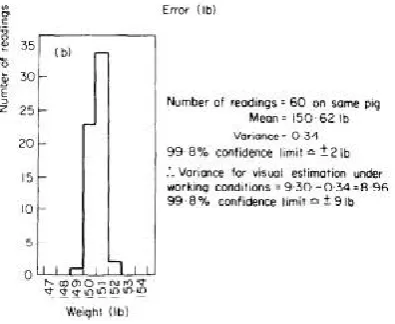
Another study in relation to pig scales reported 99.8% confidence limit of ± 2lb of the correct value using the averaging method, see Figure 2.1 (Smith & Turner, 1974). In addition a worst case scenario
Figure 2.2 was simulated using a 152.5lb man to violently shake the weighing crate. Weight variation
was calculated to be within ±2lb. Both live weight experiments had acceptable variations, around 1% proportional to body weight.
6
Figure 2.2: The results of repeated weighing averaging simulating worst case scenario
There is little research into scale error for commercial sheep scales including automatic weighing. The precision of a live weight is known as how close any weight is to the true live weight of an animal
(Nugent, 2005). However, a live weight measurement is only an estimate as it is impossible to attain
a true live weight reading on an animal at any given time. The accuracy of an estimated live weight
can be shown by the variation in a repeatable estimate. It is acknowledged that there will always be
a scales error which causes variation and it has been suggested that there is little advantage in obtaining fine precision; (Smith & Turner, 1974); (Hughes, 1976). Although attaining a greater
accuracy may be useful in scientific experiments or when animals are weighed on an individual
bases.
2.3
Live weight Error
2.3.1
Gutfill Variation
The digestive tract can make up a high proportion of an animal’s mass, with up to 17% of total live weight accounted for in the contents of the rumen and reticulum (Lawrence et al., 2002). The
amount of feed and water within the digestive tract is dependent on the time since the animal was
fed and the rate of food passage (Hughes, 1976). It should be considered that weighing live animals
will include an amount of gutfill, which will vary between animals, time of day measured, time off feed and previous feed type.
2.3.2
Diurnal Variation
The pattern of grazing events will dictate how much feed an animal has at any given point in time
and therefore will influence the live weight and live weight changes throughout the day. Ruminants
generally have three to five grazing events daily, with greatest intake periods to be in the early morning and late afternoon (Gregorini, Gunter, Beck, Soder, & Tamminga, 2008). Penning, Rook et
al. (1991) reported ewe grazing patterns with 70-99% of grazing occurring during daylight hours and
25-48% during the 4 hours prior to sunset. In comparison, cattle have been reported to have around
7
time at which the animals are weighed has a large effect on the amount of gut fill within an animal. Animals weighed at the start of the day will have a limited time grazing and therefore may have a
reduced gut fill status compared with animals weighed mid-afternoon. Grazing patterns vary
between animals depending on herbage quality, type of herbage and the environment. The timing
of grazing events in relation to the timing of weighing animals can have a significant impact on the
animal’s estimated live weight. Herbage DM % increased during a 12 hour period from 15-24% grass
and 12-18% clover. Starch content also increased 3-4.1% and 3.6-8.7%, for grass and clover respectively (Orr, Penning, Harvey, & Champion, 1997). In respect to grazing behaviour, animals are
more inclined to gorge themselves on lower dry matter and lower starch pastures. According to
Hamilton (1995), the greatest diurnal variation in estimated live weight was observed between
11am-1pm and the lowest variation reported at 9am and 4pm, with sunrise at 6am. In agreement,
Hughes (1976) suggested weights taken at the middle of the day from a grazing period on a limited area were least variable. It is also recommended to muster animals before grazing to minimise gutfill
error (Hughes, 1976). Diurnal variation should be considered when designing a weighing protocol,
however a system should be adopted that is practical to the situation.
2.3.3
Feed Type Factors
The feed type along with diurnal factors have a major impact on gutfill. Sheep on lower quality, high
fibrous feed have a low passage rate, which may lead to a reduced intake and gutfill. The greater the
Neutral Detergent Fibre (NDF) content, the slower the passage rate. Conversely, sheep on high
quality feed may have higher intakes, greater gutfill and passage rates. Therefore it can be assumed
that true body weight is often overestimated for animals on high quality feed, in comparison with animals on lower quality feed. Table 2.3.1 shows differences between feeds with the average
percentage of live weight lost greater in lupins and lucerne, in comparison with pasture in lambs.
However, it should be noted that there was large variation within data and between different stock
8
Table 2.3.1: Mean percentage loss in live weight relative to time off feed off various feeds
Time off Feed (hr)
2 3 4 5 6 8 10 12
Pasture -Lambs 1.18 1.54 1.41 2.07 3.05 2.52 2.75 3.22 4 4.31 3.07 6.21 6.21 4.83 4.71 6.36 8.96 Lupins -Lambs Lucerene -Lambs Pasture -Hogget Pasture - 70d pregnant
Source: (Greer, Logan, & Bywater, 2013)
Feed type factors are largely dependent on the environment and how the stock are managed. Sheep
stocked at a higher stocking rate will have a greater grazing pressure and therefore are likely to have
a lower average gutfill and digestibility. It is important to recognise feed quality and quantity factors between flocks prior to weighing, so that such factors are accounted for (Hughes, 1976).
2.4
Reducing Live weight Error
2.4.1
Multiple Weighing
In order to take a reliable live weight measurement of an experimental animal, Bean (1946) believes
it is necessary to take more than one measurement. Taking multiple weight measurements of an
animal over a period of time reduces the reliance on a single measurement and exposure to the
associated error. Lush et al, (1928) recommended to weigh cattle over three consecutive days to remove inaccuracies associated with live weight measurements. This practice was recommended as
a standard procedure for cattle in 1931 by a committee of the American Society of Animal
Production (1932) as cited in (Patterson, 1947). In the original cattle study (Lush & Black, 1927) it
was found the error of a three-day weight is only 57% that of a one-day weight. It is thought that
the improved accuracy is particularly important when analysing the change of live weight on an individual animal bases (Hughes, 1976). However, the theory that three-day weights are more
accurate than one-day weights has been challenged (Baker, Phillips, & Black, 1947); (H. W. Bean,
1946); (H. Bean, 1948). H. W. Bean (1946) found in swine, an increase in error with the use of a
9
difference was not significant. In agreement, Baker et al. (1947) showed no significant difference between the 3-day average weight of 424.6 pounds and the one day weight of 425.9 pounds on 178
heifer and steer calves. In the 420-439 pound group, the error increased throughout the trial, first
day weights (428.5 ± 1.19); second day (427.6 ± 1.75); third day (427.7 ± 2.35) with the threeday average (427.7 ±1.66). Bean (1946) also concluded, using swine, that there was no increase in accuracy with using three-day weight averages versus one single measurement. Bean (1946) showed
variation increased with multiple weighings with the 27-38 pound group weighing 31.47 ±.40 pounds on the first-day weights; second day 31.66 ±.45; third day 32.03 ±.43; three day averages 31.67 ± .42. Bean (1948) suggested that the weather conditions and physical conditions animals are under
prior to weighing determine the difference between one day and three day weighing’s averages. In
the trial of Bean (1946), the lambs were not accustomed to being handled or the weighing process
as they were brought in from the Western ranges just before the trial. It is expected animals will become familiar with the weighing environment with repeated weighing. However, it is accepted
that weighing animals over consecutive days is impractical, especially in a pasture grazing system. A
study by Galwey, Logan, and Greer (2013), quantified the variability of a live weight estimate over
24 hours fasting and with multiple weighing, shown in Error! Reference source not found.. The study
evealed that the average of two weights improved the accuracy of weight compared with the use of a single weight, however this is to be expected as the comparison of the best estimate was made to
the average of three weights. At 0 hours fasted 99% of data from the first live weight measurement
was within 0.69±0.16 kg of the best estimate and the average of the first two weights was within
0.31±0.09 kg of the best estimate, this was reduced to 0.43 ±0.02 and 0.22±0.06 kg after 24 hours
fasted respectively. The minimal improvement in accuracy of weights made by weighing multiple times, if any, may not be worth the effort involved in labour and handling stock multiple times.
Table 2.4.1: Variation in live weight ± s.e.m (kg) from the best estimate of the true live weight of an animal, derived as the mean of three weighings, required to include a given percentage of the population for when the of the population for when the first recorded weight alone or the mean of the first two weights for animals fasted 0, 24 hours.
Proportion of 0 hours fasted 24 hours fasted
samples (%)
1st Weight 1st and 2nd Weight
1st Weight 1st and 2nd Weight
50 85 95 99
0.08 ± 0.07 0.35 ± 0.10 0.52 ± 0.12 0.69 ± 0.16
0.01 ± 0.10 0.14 ± 0.05 0.22 ± 0.05 0.31 ± 0.09
0.08 ± 0.01 0.24 ± 0.01 0.33 ± 0.01 0.43 ± 0.02
0.04 ± 0.02 0.12 ± 0.02 0.16 ± 0.03 0.22 ± 0.06
10
2.4.2
Fasting
Fasting is a common practice in the sheep industry recommended before shearing, transport and
pregnancy scanning. Fasting results in a curvilinear loss in live weight, with gutfill the main
component of live-weight loss during the first 24 hours fasted, Figure 2.3. Thompson, O'Halloran,
McNeill, Jackson-Hope, and May (1987) also demonstrated this curvature response in lambs with
0.82% lost in the first 0-3hours; 0.47% in 3-6 hours; 0.39% from hours 9-12 and 0.25% between 2448
hours. There is little research conducted in the first 24 hours to compare percentage loss particularly in older stock. Live weight losses observed in fasting lambs equated to 5.25% of initial live weight
during the first 24 hours, with only 2.48% during the following 24 hours (Warriss, Brown, Bevis,
Kestin, & Young, 1987). However, it should be noted that water was not restricted during fasting,
possibly explaining the low values of live weight loss. The result of fasting within the first 24 hours is largely due to losses in gutfill, and therefore the diurnal pattern becomes a major factor in the
amount of live weight loss. Kirton, Quartermain, Uljee, Carter, and Pickering (1968) reported in
lambs a 33% reduction in the weight of the stomach contents in the first 24 hours of fasting,
confirming the loss is largely due to gutfill. Therefore by reducing gut fill, the animal is likely to be
closer to their ‘true’ live weight, which in turn may be expected to reduce live weight measurement
error.
Figure 2.3: Percentage of live weight loss from initial live weight of weaned and unweaned lambs during fasting. Source: (Hughes, 1976)
11
Fasting beyond 24 hours results in subsequent tissue loss and is much slower, which explains the tapering off to the curvature response. Previous research has showed live weight losses range from
3.5-15% of an animal’s initial live weight prior to 24 hours fasted. In comparison, live weight losses
in lambs were approximately 9% and 12% after 24 and 48 hours (Thompson et al., 1987). Similar
results were found in >24hr fasting trials with Cole (1995) reporting a 9.9% loss of body weight, of
which 80% was body water and 55.9% of the total weight loss was accounted for with stomach and
gastrointestinal trait contents and tissue. The differences between experiments is likely due to the different gutfill at the start of fasting.
2.5
Seasonal Changes in Live weight
As expected, live weight fluctuates throughout the season. This can be influenced by the environment and the energy demands placed on the animal at any given time. Table 2.5.1 indicates
the difference in Blackface ewes’ live weight during a given season as reported by Field, Suttle &
Gunn, (1968). Live weight declined from November through to May, during pregnancy and lactation.
However, not all live weight loss was represented by the change in body tissue.
Table 2.5.1: Mean Live weight over each killing (kg)
Source (Field, Suttle, & Gunn, 1968)
Another important factor to consider is the increase in conceptus weight as pregnancy increases.
This indicated that there is possibly some error associated with weighing the animals or the change
in tissue that is not fully represented by live weight changes. Similarly, NR Lambe et al. (2003) found
live weight fluctuations during the season in Scottish Blackface ewes, shown in Table 2.5.2 with predicted tissue weight changes in barren ewes An increase in live weight was reported from
midlactation to weaning, weaning to pre-mating across all animals and pre-lambing to mid-lactation
for barren 2 year old ewes (NR Lambe et al., 2003). The greatest loss was found in 2 year old ewes
carrying twin lambs, -3.16 kg at pre-mating to pre-lambing. This may be caused by the low feed
allowance over the winter time period. Table 2.5.2 shows that the amount of live weight loss or gain is varied across different ewe age and number of lambs.
Oct Nov Jan Apr May (L) May (B) July
12
Table 2.5.2: Live weight changes (kg) during different periods of the season of Carcass fat weight, internal fat weight and carcass weight.
2 Yr Old Ewes 3 Yr Old Ewes
Period in Season 0 Lambs 1 Lamb 2 Lambs 1 Lamb 2 Lamb
Pre-mating to pre-lambing -2.24 -2.99 -3.16 -1.53 -1.91
Pre-lambing to mid lactation 3.47 -2.64 -1.62 -3.65 -0.93
Mid lactation to weaning 4.67 2.95 2.45 3.89 1.70
Weaning to pre-mating 0.79 2.76 2.18 2.92 2.45
Source (NR Lambe et al., 2003)
2.6
Methods of estimating body composition
Estimation of body reserves is an important management tool which can give an idea of the nutritional status of the sheep. Farmers can then feed their animals based on whether they need to
improve their condition, which is particularly important in the lead up to tupping. Body condition
scoring and Computed Tomography are two methods that give an indication of body reserve tissue.
2.6.1
Body Condition Scoring
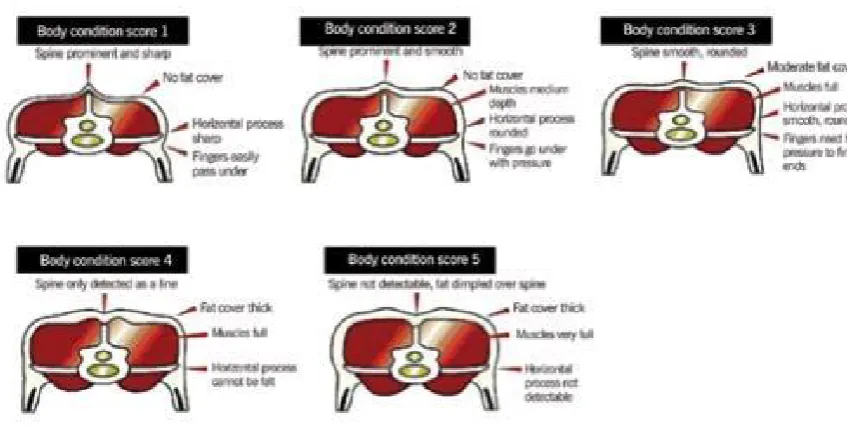
Body condition scoring (BCS) is a low cost management tool to compare sheep using the tissue
between the last rib and pelvis, ‘loin chop’ region. BCS is a measurement of an animal’s health status
relating to the production ability at one particular point in time. BCS is usually measured on a 1-5
score point scale, depending on the amount of fat tissue present on the last rib, see Figure 2.4: Body
Condition Score Guide (Beef+LambNZ, 2014). An advantage of BCS is that the assessment is independent from frame size, breed, gestation and gutfill. However, in a commercial setting it may
13
Figure 2.4: Body Condition Score Guide Source (Beef+LambNZ, 2014)
In order to achieve high production, BCS targets can be set at different times of the year, particularly
at tupping. An increase in one BCS at joining can result in an increase in ovulation rate by 0.13 to 0.19. Greater results have been reported of 0.56 of ovulation rate (Gunn and Doney) or 29% increase in
number of lambs (Pollott and Kilkenny) per BCS (SCARM, 1994).
2.6.2
CT Scanner
One method of measuring body composition is with use of a CT (Computed Tomography) scanner, see Plate 2.1. CT scanning was initialling developed for human medicine as a non-invasive way to collect
images and information on body tissue. The scanner works by sending out a series of shortduration,
very narrow, fan-shaped beams of radiation (CREDO., 2000). Detectors rotate a full 360 degree angle
around the animal and scan it. The detectors on the opposite side detect the absorbance of x-rays,
which is dependent on the type and density of the tissue as it passes through the circular cavity (Lincoln
University, 2011). One type of analysis is the Cavalieri, which takes cuts every 50mm with the density averaged out by the distance of each area. However, in most cases the seven reference slices are
accurate enough to estimate muscle and adipose tissue. The body composition is estimated using CT
14
Plate 2.1: CT scanner
2.7
Change in Tissue
The proportion each adipose tissue site adds to the total carcass weight varies in different breeds of
sheep, due to the final mature weight and the time taken to reach this weight, accounting for some of
the variation described above. The order of tissue development is firstly through bone deposition, then muscular and finally adipose fat. Changes in bone composition as total body composition are very
minimal, often the focus is towards protein and adipose distribution. It is thought that most
hyperplasia in the perennial tissue is complete at the birth of a lamb (Lawrence et al., 2002). After this,
hyperplasia is observed up to 100 days after birth, resulting in an increase of adipocytes in the
subcutaneous and intramuscular deposits. It has been reported that these adipocytes may increase by
2 to 3 fold right up to maturity (Lawrence et al., 2002). The rate the adipose tissue matures at varies between breeds and between different regions i.e. limbs, brisket, thorax, shoulders, loin and rump.
Generally the regions listed above are the last to deposit and the first to lose it in times of feed surplus
and deficit (Frutos, Mantecon, & Giráldez, 1997).
2.8
Season Changes
A major factor in the change in body composition is the stage of season or the physiological state of the
animal. During the season an animal faces different energy demands or different planes of nutrition
15
throughout the reproduction and lactation season. NR Lambe et al. (2003) found that both carcass and internal fat deposits were depleted during pregnancy and early lactation which were replenished mid
lactation to mating the following period. This may be expected as energy demands one week prior to
lambing for a 60 kg ewe are 16.5 and 20.0 MJME/kg DM for single and twin bearing ewes respectively
(Kenyon & Webby, 2007). Subcutaneous fat was mobilised in preference to inter-muscular fat in Scottish
Blackface ewes, with minimal reduction in muscular deposits (NR Lambe et al., 2003); (Cowan, Robinson, Greenhalgh, & McHattie, 1979). In contrast, Russel et al (1968) as cited in (NR Lambe et al., 2003) found
a reduction in protein and ash content of 20% from pre-mating to the final week of pregnancy. It is
assumed that fat deposits are first used as energy reserves followed by protein losses, which is
dependent on a ewe’s individual body composition. It is suggested that individual ewes hold different
compositions of deposits and therefore in times of nutritional stress different energy stores will be depleted. This could explain the large variation between live weight and body condition score described
above.
The seasonal change in body composition is largely explained by the carcass and internal fat weight, in
barren 2yr old ewes 99% of live weight change was explained by carcass fat. Collectively, carcass and
internal fat weight explained over 50% of live weight change (N. Lambe, Simm, Young, Conington, &
Brotherstone, 2004). From pre-lambing to mid lactation, barren 2 year old ewes have a greater
proportion of carcass muscle weight, which could be explained by the barren ewes having a lower energy demand so any excess net energy can be put towards fat and muscle deposition. The
proportion of different fat and muscle compositions vary largely throughout the season and across
different ages of ewes and number of lambs being carried. However, different body compositions
result in different live weights. The weight of adipose tissue was significantly different, averaging 9.19,
2.28 and 1.19 kg on days 12, 41 and 111 for ewe live weight 60.2, 58.9 and 55.8 kg, respectively. It appears that the ewes lose more adipose tissue than live weight which suggests that the other tissue
was mobilised over lactation and the relationship between adipose tissue and live weight is not
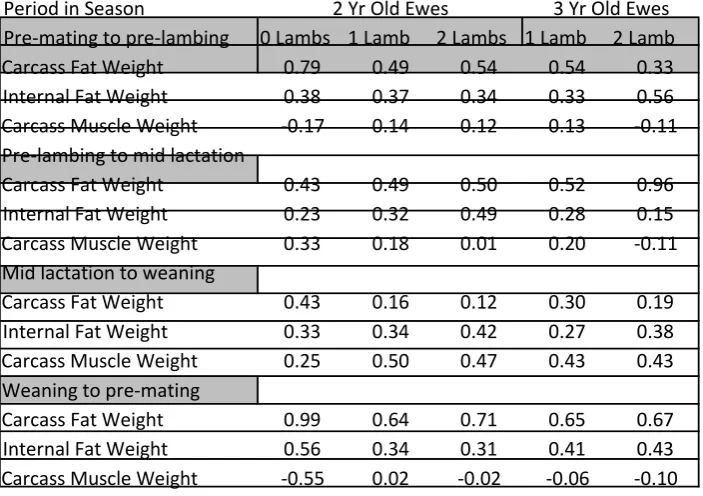
entirely direct and may change throughout the season. In agreement, Table 2.8.1 illustrates the
significant changes in carcass fat deposition between scanning events for barren ewes. In most cases,
a significant result was shown between barren ewes and ewes carrying 1 to 2 lambs, with some differences between 2 and 3 year old ewes. This provides evidence of differences between ewes which
16
Table 2.8.1: Proportional Changes between carcass fat weight, internal fat weight and carcass muscle weight between scanning events
Period in Season 2 Yr Old Ewes 3 Yr Old Ewes
Pre-mating to pre-lambing 0 Lambs 1 Lamb 2 Lambs 1 Lamb 2 Lamb
Carcass Fat Weight 0.79 0.49 0.54 0.54 0.33
Internal Fat Weight 0.38 0.37 0.34 0.33 0.56
Carcass Muscle Weight -0.17 0.14 0.12 0.13 -0.11
Pre-lambing to mid lactation
Carcass Fat Weight 0.43 0.49 0.50 0.52 0.96
Internal Fat Weight 0.23 0.32 0.49 0.28 0.15
Carcass Muscle Weight 0.33 0.18 0.01 0.20 -0.11
Mid lactation to weaning
Carcass Fat Weight 0.43 0.16 0.12 0.30 0.19
Internal Fat Weight 0.33 0.34 0.42 0.27 0.38
Carcass Muscle Weight 0.25 0.50 0.47 0.43 0.43
Weaning to pre-mating
Carcass Fat Weight 0.99 0.64 0.71 0.65 0.67
Internal Fat Weight 0.56 0.34 0.31 0.41 0.43
Carcass Muscle Weight -0.55 0.02 -0.02 -0.06 -0.10
Source: (NR Lambe et al., 2003)
2.9
Body Composition & Production
The energy demands at particular times of the season result in the mobilisation of tissue. Total energy
reserves are difficult to measure, particularly glycogen and intra-abdominal fat reserves (Kenyon, Maloney, & Blache, 2014). It is expected that a ewe will face body condition changes over the season
shown by fluctuations of BCS. The ability a ewe has to mobilise her energy reserves will in turn
influence the production output or the amount of lamb per ewe. Borg, Notter, and Kott (2009) and
Mathias-Davis, Shackell, Greer, and Everett-Hincks (2011) suggests that ewes which appear to be able
to hold their condition in early gestation and utilise reserves in lactation outperform their peers who cannot. Evidence of this is outlined below in Table 2.9.1, the highest performing ewes were shown to
have a condition score of <3 at weaning, presumably reflecting mobilisation of body reserves. Lamb
growth rates are significantly affected by the change in ewe BCS from pre-lambing BSC to the BCS in
lamb weaned (Mathias-Davis, Shackell, Greer, Bryant, & Everett-Hincks, 2013). These studies indicate
high performing ewes have a greater ability or willingness to mobilise their own energy reserves. This suggests that perhaps farmers should be looking to identify such animals and making the most of this
17
will undeniably lead to an increase in body mass. Therefore, there is potential to use live weight or change in live weight as an estimation of BSC, providing a more practical method for assessing changes
in body reserves.
Table 2.9.1: The association between BC and Ewe Output (Total Lamb Weaned kg)
Birth Rank
All 1 2 3
<3 48.4 35.4 52.5 60
BCSL 3-3.5 >3.5 48.8 49.7 35.1 34.9 53.3 53.1 61.4 65.2 BCSW <3 3-3.5 >3.5 50.9 48.9 43.8 36.6 35.3 33.8 55.2 52.6 46.8 64.4 62 52.6 BCSL = Body Condition Score Lambing
BCSW = Body Condition Score Weaning
Source (Mathias-Davis et al., 2011)
2.10
Live weight Gain or Loss
Reports have shown after periods of animal feed restriction, there has been an increased rate of fat
deposition (McMeekan 1941, Keys et al 1950, Osborn and Wilson 1960 as cited in (Allden, 1970)). This
suggests that fat tissue more readily deposits than other tissues, when an increase in feed plane is
exerted. However, another study showed weight gain did not really differ from the composition of live weight loss (Meyer and Clawson, 1964 as cited in (Allden, 1970)). There was a small significant result
between control and restricted diet treatments, however no significance was found within the
restricted groups with a range of treatments from 20-84% feed restriction from the control group.
Often animals are restricted from feed during periods where their energy demands outweigh the feed
available or the cost of feed is too high. However, animals are not often effected in the long term as compensatory growth follows periods of nutritional restriction (Ryan, Williams, & Moir, 1993).
The plane of nutrition is another factor that needs to be considered. Ewes which were fed to increase
or decrease by one body condition equated to a 8.72 kg and 8.65 kg in comparison with a static plane
18
It is obvious that there is large variation between breeds and even within breeds with the amount of live weight change per BCS. This variation has not really yet been explained in research, but it is likely
that changes in gutfill and body composition are major factors.
2.11
Body Condition Score and Live weight Relationship
There is an indisputable relationship between BCS and live weight, as changes in adipose and muscular
tissue will involve an increase in the mass of an animal. The relationship between live weight and BCS
for Merino ewes was 9.2 kg or 0.19 x standard reference weight increase in weight per unit of BCS.
However, there was considerable variation in this relationship even within breed with a range within
of 6.3 – 11.3 kg in merino sheep (Van Burgel et al., 2011). Similarly, Jefferies (1961) as cited in (SCARM, 1994) noted a change of 7 kg in Corriedales and Merinos per unit of BCS. The intercept, or kg of live
weight per body condition score is variable across individual sheep, physiological state and breed.
Table 2.11.1 shows the large variation between breeds, dry and lactating animals. The frame size of
the animal is an important factor to consider, with a greater live weight for 1 unit of BSC in the larger
frame animals. Dorset Down and Polwarth breeds have a greater mature weight resulting in a greater live weight between BCS compared to their smaller frame peers. With that said, considerable variation
in frame size can be expected within breeds as well as between breeds highlighting the difficulty of
providing breed-specific values.
Table 2.11.1: Change in liveweight to BCS (SCARM)
Source (SCARM, 1994)
There is also large variation within breeds between the change in live weight per condition score as
reflected by annual Coopworth and Rosebank data set, shown in Figure 2.5 (Greer et al., 2013). The
equation of best fit for the Coopworth data equated to y = 5.2937x + 4.1776 (R2 = 0.2) and y =
. :
Ewes (dry) Change in Lwt (kg) per BCS
Polwarth x SA Merino 6.5
Saxon Merino 5.6
Scottish Blackface 10.6
Ewes (lactating)
Sth Aust Merino 5
Saxon Merino 5.5
Corriedale 11.9
19
5.0075x + 2.1058 (R2 = 0.38). The overall change per condition score is 5 kg however, large variation is shown in Figure 2.5, with a range of 10 kg. In order to use live weight as an indicator of body tissue reserves this
variation needs to be minimised.
Figure 2.5: Change in Live weight relative to condition score: Coopworth (2011-2012) & Rosebank
(2012-2013) Data set
2.12
Use of Live weight Measurements in Industry
Live weight measurements are an easily attainable measurement which are commonly used in the
livestock industry, as outlined below. As outlined above, live weight measurements are exposed to error from a number of sources, all of which may affect both the precision and accuracy of the live
weight estimate. As may be expected, the accuracy and precision of the live weight required is
dependent on the purpose.
2.12.1
Marketing & Selection
Live weight information is collected and goes into the selection process on Sheep Improvement Ltd
(SIL) for the calculation of an animal’s genetic potential for growth targets. Live weight measurements are taken for the growth rates of lambs (g/day) and weaning weight at various ages. Live weight gains,
in particular lamb growth rates, are important to assist in optimising finishing systems and improve
the efficiency of the farming system. Alternatively, the selection of which animals are sent to market
can be made based on live weight and taking into account the expected dressing out percentage.
20
2.12.2
Determining dose rates
A live weight measurement is needed in order to accurately determine dose rates for drenches and pour on dips. It is recommended to separate mobs into similar weight ranges and drench to the
heaviest weight. The accuracy of the animal’s live weight is important to provide a sufficient dosage
of drench. Ensuring effective drench rates is an important factor in preventing drench resistance. It
can be effective to weigh stock into different lines and drench accordingly to ensure greater efficiency
of drench use.
2.12.3
Monitoring Progress
Monitoring ewe live weight gives an indication of sheep performance on a whole flock or individual
basis. Commonly, a sample of 10% of a flock is weighed to give an indication of flock progress (Edward, 2009). It is important that live weight during tupping period is monitored along with body condition.
Higher weights, along with adequate body condition ewes, have greater ovulation and conception
weights. Ovulation rate was significantly greater between ewes’ conditions 1 ½ and 3 (Gunn, Doney,
& Russel, 1969). As a result, it is expected that greater condition ewes have greater conception rates.
Research conducted by Rutherford, Nicol, and Logan (2003) suggested that the mean ovulation rate was effected by smaller-framed ewes (OR = 0.02616 x jLW + 0.463). However, no relationship was
found between ovulation rate and joining live weight of the larger framed ewes, with maximum
ovulation rate predicted to occur at 67.5 kg joining live weight. It is beneficial for farmers to have a set
target of live weight throughout times of the year, depending on the season and breed of stock. It is
important when setting target live weights that consideration is given to the mature weight of the breed and the availability of feed. It is recommended to aim for at least a 3 out of 5 BCS at tupping
(Rick & Peter Cameron, Southland pg 27 (PGG Wrightsons, 2013), although the optimum live weight
may be dependent on frame size. Measuring change in live weight may reflect change in nutrient
status which is useful from a farm management perspective. Thus the precision of a live weight
estimate becomes more important than accuracy to enable flux in live weight to be assessed. It is suggested that monitoring ewe live weight to identifying the elasticity of ewes could be beneficial for
farmers. As identified in 2.9, body composition and production (Mathias-Davis, 2011) showed ewes
that mobilised their own body reserves over lambing and lactation produced larger lambs, resulting in
a lower BCS. There is potential for live weight measurements to be used to identify high performing
21
2.13
Summary
The use of live weight measurements to monitor changes in body tissue reserves would be a useful
management tool. However, there is considerable variation within live weight measurements and live
weight changes between BCS. Body condition scoring does give a reliable assessment on energy
reserves, however, it is quite a slow, manual process. Live weight measuring is a quick, automated process which can be assessed in quite a short space of time. However, live weight is only an estimate
of the true live weight of an animal which can only be calculated on slaughter In order to reduce the
variation associated with live weight and the difference between BCS, it is important to uncover where
the variation is coming from. Designing a suitable weighing protocol could reduce some error and help
explain differences between BCS throughout the season.
22
3
General Methodology
3.1
Experiment 1
The live weights of twenty four mixed-age ewes with a mean initial (non-fasted) live weight of 61.3 ± SEM kg were compared at different times of fasting with their digesta-free weights (true live weight).
The ewes were identified individually with visual ear tags and had been grazing ryegrass white clover
pastures prior to housing. From housing, access to feed or water was withheld for a period of 24h prior to slaughter. This occurred on three separate occasions with ten, six and eight ewes respectively.
At the time of housing and during the 24 hour fasting period, the live weight of each ewe was
repeatedly recorded, as per the weighing protocol described below. Immediately prior to slaughter,
the live weight of each animal was recorded with the weight of digesta contained within the
alimentary tract also recorded post-slaughter, to enable calculation of the true live weight of each individual, as described below.
3.1.1
Weighing protocol
On each occasion, all animals were removed from pasture two hours post-sunrise. Live weight of each
individual was recorded with electronic scales with a sensitivity of 0.2 kg upon removal from pasture
(0hrs fasted) and every two hours thereafter until 12hrs fasting, and again after 24hrs fasting. To obtain a best estimate of live weight at each fasting time, the live weight was recorded three times,
with a maximum of 5 min between each weight recording (run). After 24 hours, fasting animals were
slaughtered. No attempt was made to influence the order in which animals were weighed. For each
fasting time the first recorded live weight was compared with the mean of the three weights to
determine the benefit of multiple weight recordings. The live weight at each fasting time was compared to evaluate the benefit of fasting on reducing the variation in live weight estimates.
3.1.2
Slaughter procedure and true body weight estimates
As described above, after 24 hours fasting animals were slaughtered and the weight of digesta was
measured to enable calculation of the true body weight of each individual. Due to the time taken to slaughter animals (up to two hours), each animal was again repeatedly weighed, as above,
immediately prior to slaughter. For slaughter, animals were stunned with the use of a captive bolt
followed by exsanguination caused by severance of the jugular vein and carotid artery. Immediately
upon death the internal organs including the gastrointestinal tract were ligated and removed. The
23
removed by running the intestinal material between the thumb and forefinger of the operator and were collected into the same bucket. Care was taken to ensure as much of the digesta was collected
as possible. The digesta contents were then weighed and subtracted from the live weight recorded
immediately prior to slaughter to give the estimate of the true body weight for each individual animal.
Plate 3.1: Emptying gutfill
3.2
Experiment 2
The change in live weight during fasting for a period of 24 hours was recorded in 100 pregnant
mixedage-ewes on two separate occasions (May and July). All ewes had been previously tagged with
individual electronic identification (EID) tags and were shorn 48h prior to the start of measurement to
remove fleece weight as a factor. In the May experiment the ewes were removed from feed, two hours
post-sunrise and deprived of feed and water. Due to poor weather conditions in July the ewes were kept in the yards after shearing and fed baleage prior to the experiment. Live weights were recorded
using an electronic tag reader and automated weighing and drafting unit at the time of removal from
pasture (time 0hrs) and every two hours until 12 hours and again at 24 hours. Fasting occurred in an
identical protocol to that described above, with the an exception being a maximum of 10 minutes
between each triplicate weight recording (run) due to the time taken to weigh all 100 animals. No attempt was made to influence the order in which animals were weighed.
3.3
Statistical Analysis
The statistical software used for analysis was GenStat (version 13, VSN International Limited) and
Minitab 15 (Minitab Inc, version 15, 2006). For Experiment 1, no difference in the profile of live weight
loss, either as absolute weight loss or as a percentage, between the three separate occasions was
24
fasting trial was considered as one rep, giving three replicates in total (one for Experiment 1 and two for Experiment 2). To determine the benefit of fasting on improving the accuracy of live weight
estimates, regression equations of live weight loss at each fasting time were compared with
digestafree live weight (for Experiment 1) and 24 hour fasted live weight (for Experiments 1 and 2)
using ANOVA. For each rep, the deviation of the first weight recorded from the 24 hour fasted weight
for each fasting time was compared using probit analysis to give the range in weight required to encompass 95% of the population (LD95). The LD95 values for each fasting time were then compared
using ANOVA with 95% least significant differences calculated. Further, the correlations between the
rank of live weight loss between time 0 hours and 2-12 hours (where 1=greatest LW loss) and the rank
of total live weight loss (0hrs less 24hrs) were compared to determine if the relative order of live
weight loss was constant between individuals.
To determine the benefit of multiple weight recordings within time periods, for each rep and for each
fasting time (0 hours to 24 hours) the variation between the first weight recorded or the mean of the
first two weights recorded and the mean of all three recorded weights was calculated. This was compared using probit analysis to calculate the weight variation required to encompass 95% of the
variation (LD95) which was then compared between multiple weighings for each fasting time using
ANOVA with 95% LSD calculated. Further, the regression equations when the y intercept was set to 0
and the regression co-efficient (R2) within each fasting time for either the first weight or the mean of
the first two weights compared with the mean of all three weights were calculated and compared using ANOVA.
4
Results
4.1
Live weight loss relative to fasting time
4.1.1
Experiment 1
Mean live weight of the ewes ± s.e.m. for the average of all three weights recorded at 0h, 2h, 4h, 6h,
8h, 10h, 12h and 24h of fasting is given in Figure 4.1. Live weight of the ewes at the start of fasting
ranged from 34.4 kg to 79.6 kg, with a mean of 61.3 kg.Overall, there was no effect of run (P>0.05)
but there was an effect of time (P<0.001), reflecting a decrease in mean live weight from 61.3 ± 2.53 kg at time 0 to 57.2 ± 2.42 kg at 24h fasting. This reduction was curvilinear, with an equation of best
fit being y = 0.0062x2 – 0.3074 + 61.074 (R2=98.8).
25
Figure 4.1: Mean of three repeated measurements of live weight (kg ± s.e.m) relative to time fasting time
from feed and water (h) for 24 ewes. The line of best fit represented the logarithmic equation
y=0.0062x2-0.3074x+61.074 (R2=0.988).
4.1.1.1. Live weight Loss- Experiment 1
Mean live weight lost during fasting for 24 hours for the 24 sheep using the average of three multiple
weights in absolute (kg) and as a proportion of initial live weight are shown in Figure 4.2 and Figure
4.3 respectively. Overall, for both absolute and proportional live weight loss there was no effect of
run (P>0.05) but there was an effect of time (P<0.001), with live weight loss displaying a curvilinear
response, peaking at 4.1 ± 0.23 kg and 6.7% ± 0.348, respectively, after 24 hours fasting. The regression
equations, y = -0.0073x2 + 0.3445x for absolute live weight loss and y=-0.012x2+0.5636x for
proportional live weight loss, both explained 98% of the variation.
26
Figure 4.2: The Mean live weight loss of initial live weight in absolute terms (kg ± s.e.m) relative to time fasting time from feed and water (h) for experiment one (24 ewes). The line of best fit represented the logarithmic equation y=-0.0073x2+0.3445x (R2=0.9845).
Figure 4.3: The Mean live weight loss as a percentage of initial live weight (% ± s.e.m) relative to time fasting time from feed and water (h) for experiment one (24 ewes). The line of best fit represented the logarithmic equation y=-0.012x2+0.5636x (R2 = 0.9823).
0.0 0.5 1.0 1.5 2.0 2.5 3.0 3.5 4.0 4.5 5.0
0 2 4 6 8 10 12 14 16 18 20 22 24
Time Fasted (hrs)
0.0 1.0 2.0 3.0 4.0 5.0 6.0 7.0 8.0
0 2 4 6 8 10 12 14 16 18 20 22 24
27
4.1.1.2. True Body Weight as Proportion
The proportion of true live weight relative to measured live weight over 24 hours fasted is given in Figure 4.4. True live weight was calculated by taking the 24 hours fasted live weight and subtracting
off the digesta weight measured at slaughter. Overall, there was a time x run interaction (P=0.043)
reflecting a difference between the run 1 and run 2 at 10h fasting only. Across all three runs, the mean
proportion of live weight recorded that was true live weight increased from 0.85 ± 0.0056 to 0.91±
0.0041 from 0 hours fasted to 24 hours, reflecting an increase in the accuracy of live weight estimate
with increased fasting.
Figure 4.4: The Proportion of Measured Live weight is of True Live weight (proportion ± s.e.m) relative to time
fasting time from feed and water (h) for 24 ewes.
4.1.1.3. Digesta at 24hr Fasted and Proportion of True Body Weight
Mean digesta weight after 24h fasting (kg) ± s.e.m. along with the digesta weight as a proportion of
true live weight, is given in Figure 4.6. Mean final digesta weight was 5.06 kg ± 0.27 kg, ranging
between 2.5 kg to 7.3 kg across the 24 ewes. The proportion the digesta was of the true live weight
0.84 0.85 0.86 0.87 0.88 0.89 0.9 0.91 0.92 0.93
0 5 10 15 20
28
(digesta-free) was 9.86 ± 0.498%, ranging from 6.29 to 15.4%. Expressing the digesta as a proportion of true live weight slightly decreased the coefficient of variation from 0.266 for the digesta weight to
0.248 for the proportion of true live weight.
Figure 4.5: Mean final digesta weight at 24h fasted (kg ± s.e.m) along with the proportion of digesta to true live weight (proportion ± s.e.)
4.1.2
Experiment 2
The live weight loss as a proportion of initial live weight is shown in Figure 4.3 for experiment one
(May and July). In the May experiment, live weight loss peaked at 7.87% of initial live weight which
was greater than the maximum loss of 3.09% seen in the July experiment. The May experiment
resulted in a regression equation of y=-0.0002x2+0.0077x representing 97.9% of the data and the regression equation for the July experiment was y=-2E-05x2+0.0018x (R2 = 0.9954).
% 8.8 9.0% 9.2% 9.4% % 9.6
% 9.8
% 10.0 10.2% 10.4% 10.6%
4.5 4.6 4.7 4.8 4.9 5 5.1 5.2 5.3 5.4