The effect of enzyme and protein source on laying hens
performance, eggshell and bone traits
Marta Kubiś1, Lidia Lewko2*, Sebastian Andrzej Kaczmarek1, Sebastian Nowaczewski3, Marcin Hejdysz1, Andrzej Rutkowski1
1Poznan University of Life Sciences, Department of Animal Nutrition and Feed Management, Wołyńska 33, 60-637 Poznań, 2National Research Institute of Animal Production, Experimental Station Kołuda Wielka, Waterfowl Genetic Resources Station in Dworzyska, 32-065 Kórnik, Poland, 3Poznan University of Life Sciences, Department of Animal Breeding and Product Quality Assessment, Złotniki, ul.
Słoneczna 1, 62-002 Suchy Las, Poland
INTRODUCTION
Soybean meal (SBM) is the best vegetable protein source used in livestock feed in the world. More than 50% of the world’s protein meals is SBM. This is due to the relatively high content of crude protein (CP) and very good amino
acid (AA) profile and high digestibility of them (Ravindran
et al., 2014). SBM has also ani-nutritional factors (ANF)
like protease and trypsin inhibitors, that affects adversely on protein digestibility and AA availability (Jahanian and
Rasouli, 2016). SBM is mostly genetically modified and
many of customers all over the world does not accept
the GMO products used in feed industry (Rutkowski
et al., 2015). It is expected that in 2020 on the earth will
live more than 10 billion people. This means increased demand for food which is associated with an increased demand for feed for livestock. For all this reasons it became
necessary to find new and alternative protein source that
could make up or replace SBM in poultry diets (Krawczyk et al., 2015; Mikulskiet al., 2012) In recent years interest in use of homegrown legume like yellow lupine increased (Smulikowskaet al., 2014; Viveroset al., 2007).
In the past use of yellow lupine in poultry diets was limited by the high alkaloid and non-starch polysaccharides (NSP) content which negatively affected on growth and production performance of birds (Kocheret al., 2000; Olkowskiet al.,
2001; Olkowski et al., 2005). Due to progress in plant
The aim of the study was to investigate the interaction between exogenous phytase with protease and protein source in laying hens diet. A completely randomised design study with a 2 × 4 factorial arrangement was conducted to observe effects of protein source (soybean vs. yellow lupine seeds diet) and enzyme addition (no enzyme vs. phytase or protease or both) on laying hens performance, bone mineralization and some egg traits. One hundred sixty Hy-Line Brown hens at the age of 18 weeks were weighed and randomly assigned to 10 treatments, each with 16 birds. According to the producer recommendation in diets containing enzymes reduced the level of available phosphorus (50% reduction) and digestible amino acids - 5% reduction. The egg production during the entire experiment was
similar in all groups without significant differences. The egg weight was also on an equal level in all treatments and it was about 58 g.
Birds fed different protein source were characterized by similar feed intake and feed conversion ratio during the whole experiment. The feed conversion ratio (FCR) was about 1.9-2.0 in all groups. Tibia ash was affected by enzymes supplementation. There was an interaction between protein source and enzymes addition. Birds from treatments fed with yellow lupine meal (YLM) diets reached highest tibia ash level in a group with phytase addition and in groups with SMB in a group with phytase and protease mix. The inclusion of enzymes improved the thickness of the shell. There was an interaction between protein source and enzyme inclusion. It was an interaction between experimental factors in shell breaking strength. Stronger eggshell was laid by hens from groups fed with the inclusion of yellow lupine
meal. Addition of phytase had a positive impact on increasing the strength of eggshell. Only inclusion of enzymes affected significantly
on shell elastic deformation in part I of eggs. Eggs from hens fed diets with inclusion of protease and phytase mix were most resistant to elastic deformation.
Keywords: Phytase; Lupines; Protease; Eggs; Tibia
A B S T R A C T
http://www.ejfa.me/
*Corresponding author:
Lidia Lewko, National Research Institute of Animal Production, Experimental Station Kołuda Wielka, Waterfowl Genetic Resources Station in Dworzyska, 32-065 Kórnik, Poland. E-mail: [email protected]
354
breeding, the level of antinutrients in lupine seeds had decreased, resulting in the development sweet lupines. Seeds of new Polish cultivars of yellow lupine characterized by high protein content (38% CP), a low alkaloid content and
high NSP concentration (Kaczmareket al., 2014; Rutkowski
et al., 2015). In recent years the use of lupine seed in the
broiler (Hammershoj and Steenfeldt, 2005; Olkowskiet al.,
2005) and laying hens (Krawczyk et al., 2015; Liebertet al.,
2005; Zdunczyket al., 2014) has become popular. Studies
are not conclusive about inclusion rate of lupine seed in poultry diets. Smulikowska et al. (2014) suggested that 15% is optimum inclusion rate in broiler chicken diets. On the
other hand, Orda et al. (2004) and van Barneveld (1999)
used 25-30% without a negative effect on broiler chickens
performance. Krawczyk et al. (2015) used 30% in laying
hens diets without any deterioration in egg production.
A variable but large proportion of the phosphorus (P) in plant material is in form of phytate-P (Sandberg, 2002). The capacity of poultry to utilize phytate-P by endogenous enzymes is very limited (Selle et al., 2012). Approximately 2/3 of total P in legume seeds are bonded to phytate (Steiner et al., 2007). Phytic acid forming insoluble slats of many mineral ions at intestinal pH, reducing the availability of mineral absorption (Sandberg, 2002; Selle et al., 2000).
The presence of phytate also influenced to the reduction
of availability of dietary AA and energy (Selle et al., 2000). There are several modes of action to explain the interaction between phytate and AA digestibility (Kies et al., 2001). The binary protein-phytate complex does not undergo enzymatic degradation in the digestive system and excreted in faeces. For the feed industry the most important is
phytate interaction with specific amino acids. It has been
sown that the most sensitive to the adverse effect of phytate are sulfur-containing AA (Selle et al., 2000).
Whole lupine seeds contain significant content of phytate
P witch limiting the use of lupine in poultry diets (Birk, 1994). In 1991 it was introduced the use of the enzyme phytase in poultry diets to reduce P concentrations in waste
from intensive poultry production (Selleet al., 2012). The
addition of microbial phytase significantly improves the
utilization of phytic phosphorus by poultry, which has
been proved in many studies (Simonset al., 1990; Snow
et al., 2004). This enzyme has also a positive effect on the
digestibility of protein and AA in broilers (Snow et al.,
2004) and laying hens (Liebertet al., 2005). The usefulness of exogenous phytate diets for laying hens are still subject to discussion. Studies have shown that supplementation with phytase in the corn-SMB diets improved feed intake,
FCR, the mass of eggs and had a positive impact on the
digestibility of Ca and P (Jalal and Scheideler, 2001). Later reports suggest that the addition of enzyme did not affect ileal digestibility of AA in hens (Snowet al., 2003).
For the reason of increasing costs of protein feedstuff and increased public concern of environmental pollution making by animal production, there was a need to reduce the amount of nutrient in the waste generated by animals
(Angel et al., 2011; Nir et al., 1993). However, studies
show that the feed components use in poultry diets are
not completely digested in birds organism (Parsonset al.,
1997). Protease is used to complement the action of digestive enzymes and improve productive results. Studies show that the addition of protease to diets for broilers resulted in improvement of production performance and better use of energy and nitrogen form feed material
(Ghaziet al., 2003). Earlier studies in which the protease
was used in diets for broiler chickens showed improvement
in FCR and the digestibility of protein and AA (Freitas
et al., 2011). The impact of exogenous protease on birds
performance are often inconsistent. Differences in the type of the protease and frequent use of multi-enzyme complexes may partially explain the different results (Cowieson, 2008).
The aim of the study was to investigate the interaction between exogenous phytase with protease and protein source in hens diet.
MATERIAL AND METHODS
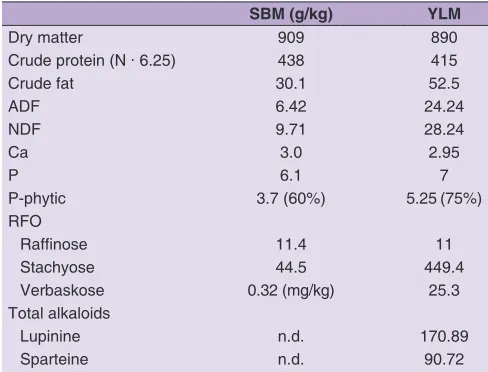
Lupin seeds and enzymesSeeds of yellow lupine (Lupinus luteus L., Mister cv.) were obtained from the Plant Breeding Stations in Wiatrowo (Poland). The chemical composition of seeds is presented in Table 1. In trial was used phytase (HiPhos) and protease
(Ronozyme ProAct) produced by DSM Nutritional
Products, Kaiseraugst, Switzerland.
Table 1: Chemical composition of SBM and yellow lupine seeds used in experiment
SBM (g/kg) YLM
Dry matter 909 890
Crude protein (N · 6.25) 438 415
Crude fat 30.1 52.5
ADF 6.42 24.24
NDF 9.71 28.24
Ca 3.0 2.95
P 6.1 7
P-phytic 3.7 (60%) 5.25 (75%)
RFO
Raffinose 11.4 11
Stachyose 44.5 449.4
Verbaskose 0.32 (mg/kg) 25.3
Total alkaloids
Lupinine n.d. 170.89
Sparteine n.d. 90.72
SBM - soybean meal, YLM - yellow lupine meal, ADF - acid detergent
fibre, NDF ‑ neutral detergent fibre, RFO ‑ raffinose family oligosaccharides,
Birds management
One hundred sixty Hy-Line Brown hens at the age of 18 weeks were weighed and randomly assigned to 10
treatments, each with 16 birds. Next hens were placed in
individual cages with free access to drinking water and fed. The lighting program was 14 h of light and 10 h of darkness. All animal procedures were conducted in accordance with the guidelines of the Polish Council of Animal Care. The protocol for this study was approved by the Local Animal Care Committee of the Poznan University of Life Sciences. After 18 weeks of experiment, birds were weighed again. On last day of the experiment, 8 hens from
each group were sacrificed by CO2 gas, according to the recommendations for euthanasia of experimental animals
(Close et al., 1997) and left tibiae was taken from them.
Tibiae were kept frozen until analysis.
Experimental diets
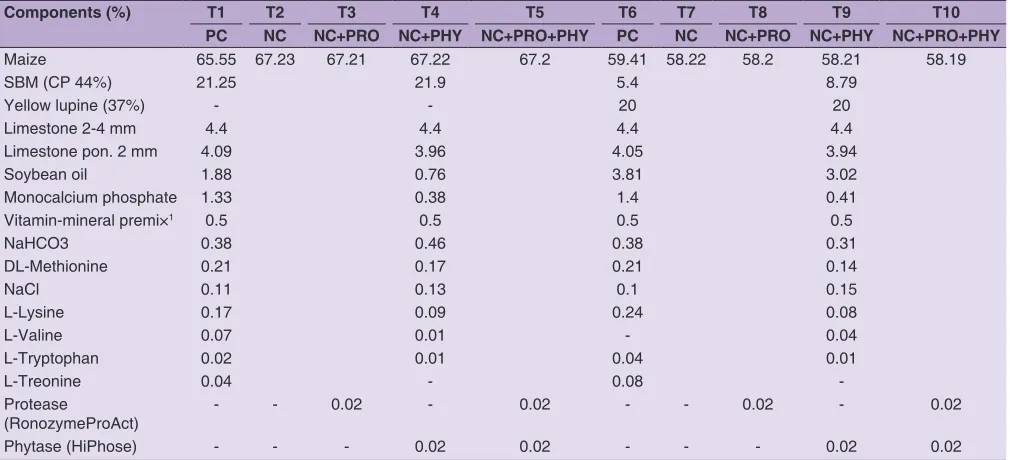
Experimental diets were isoenergetic and isonitrogenous and containing about 15% of crude protein and
11, 5MJ ME/kg feed (Table 2). First, five groups contained
only soybean meal (SBM) as a protein source. The diets
for treatments from 6 to 10 consisted SBM and 20% of
yellow lupine meal (YLM). In six groups used feed enzymes: phytase, protease or both. According to the producer recommendation in diets containing enzymes reduced the level of available phosphorus (50% reduction) and digestible amino acids - 5% reduction (Table 3).
Chemical analyses
For chemical analysis, the representative samples of yellow lupine seeds were ground to pass through a 0.5 mm sieve. Seeds were analyzed in duplicate for dry matter (DM), crude
protein (CP), ether extract (EE), crude fiber (CF), crude ash (CA), acid detergent fiber (ADF) and neutral detergent fiber (NDF) using methods 934.01, 976.05, 920.39, 978.10,
942.05, 973.18 respectively, according to AOAC (2007). The amino acid content was determined using a type AAA-400 Automatic Amino Acid Analyzer employing ninhydrin for post-column derivatization. Before the analysis, samples were hydrolyzed (procedure 994.12; AOAC (2007). Sugars
were analyzed according to PN-R-64784 method. Gross
energy was determined using an adiabatic bomb calorimeter
Table 2: Nutrition value of the diets
Components T1 i T6 T2‑T5
T7‑T10
Metabolizable enrgy (MJ/kg) 11.63 11.05
Crude protein (%) 15.4 15.3
P-available (%) 0.39 0.35
Ca (%) 3.54 3.19
Digestible AA (%)
Lys 0.75 0.71
Met+Cys 0.64 0.60
Tryp 0.16 0.15
Treo 0.53 0.50
General AA (%)
Arg 1.18 1.18
Val 0.6 0.6
Iso 0.55 0.55
Leu 1.33 1.33
Na (%) 0.16 0.16
Cl (%) 0.16 0.16
Phytic-P (g/kg) 2.35 2.35
Table 3: Composition of the experimental diets (g/kg as fed)
Components (%) T1 T2 T3 T4 T5 T6 T7 T8 T9 T10
PC NC NC+PRO NC+PHY NC+PRO+PHY PC NC NC+PRO NC+PHY NC+PRO+PHY
Maize 65.55 67.23 67.21 67.22 67.2 59.41 58.22 58.2 58.21 58.19
SBM (CP 44%) 21.25 21.9 5.4 8.79
Yellow lupine (37%) - - 20 20
Limestone 2-4 mm 4.4 4.4 4.4 4.4
Limestone pon. 2 mm 4.09 3.96 4.05 3.94
Soybean oil 1.88 0.76 3.81 3.02
Monocalcium phosphate 1.33 0.38 1.4 0.41
Vitamin-mineral premi×1 0.5 0.5 0.5 0.5
NaHCO3 0.38 0.46 0.38 0.31
DL-Methionine 0.21 0.17 0.21 0.14
NaCl 0.11 0.13 0.1 0.15
L-Lysine 0.17 0.09 0.24 0.08
L-Valine 0.07 0.01 - 0.04
L-Tryptophan 0.02 0.01 0.04 0.01
L-Treonine 0.04 - 0.08
-Protease
(RonozymeProAct) - - 0.02 - 0.02 - - 0.02 - 0.02
Phytase (HiPhose) - - - 0.02 0.02 - - - 0.02 0.02
PC - positive control, NC - negative control, PRO - protease, PHY - phytase
1Provided per kg diet: vit. A 10 000 IU, vit. D3 2000 IU, vit. E 20 mg, vit. K3 1.5 mg, vit. B1 1 mg, vit. B2 4 mg, vit. B3 20 mg, vit. B5 8 mg, vit. B6 1.5 mg, vit.
356
(KL 12 Mn, Precyzja-Bit PPHU, Poland) standardized with benzoic acid. Mineral composition (Ca, P, Na, K, Zn, Mg, Cu, Mn, Fe) was analyzed by ICP-OES (P.10I35-ICP method) after microwave mineralization. Lupine
alkaloids were extracted from flour by trichloroacetic acid
and methylene chloride. The determination was provided by gas chromatography method (Shimadzu GC17A)
with a capillary column (Phenomenex). Raffinose family oligosaccharides (RFO) were extracted and analyzed
by high-resolution gas chromatography as described
previously by Zalewskiet al. (2001). Phytate content was
analyzed according to AOAC (2007) (methods 986.11). The
absorbance was measured with Spectrophotometer Marcel at a wavelength of 519 nm (Table 1).
After defrosting of the left tibia (8 birds per each treatment) and removal of the muscle tissue percentage of tibia ash was determined on a fat-free dry-weight basis, in accordance with AOAC (2005).
Performance and egg quality
The laying performance was recorded weekly in the period
of 18 weeks of an experiment for each of 160 hens. The
feed consumption was registered in the same way.
The average egg weight was determined also weekly on the basis of collected all eggs from every hen. In the ninth and seventeenth weeks of the experiment, 30 eggs from each treatment were randomly selected (eggs were selected from all laid during all week). The eggshell quality was determined by taking into consideration the following parameters: thickness, elastic deformation and breaking strength.
Eggshell thickness (μm) together with shell membranes
at the sharp, blunt and equatorial part of the egg using a screw micrometer for this purpose. Examination of the eggshell elastic deformation and the breaking strength were performed using a TA.XT Plus Texture Analyzer (Stable Micro Systems) with a set of suitable starters. Measurement of elastic deformation (µm) was carried out with an accuracy of 0.1 µm in a three-point measurement of egg after application of three different loads, i.e. 0.50 kg, 1.00 kg and 1.50 kg. This study allowed to determine the degree of elastic deformation of the eggshell (microns)
under the influence of the applied pressure. Evaluation of
the breaking strength of eggshell was carried out applying pressure that was gradually increased until eggshell was
cracked. This measurement allowed to define force (N),
which cause the eggshell break, crush or puncture.
Calculations and statistical analyses
Two-way analysis of variance was performed using the R environment (R Development Core Team 2014) and using
the “agricolae” package (De Mendiburu 2014) according to the following general model:
Yij=μ+αi+βj+(αβ)ij+εij ,
where Yij is the measured dependent variable, µ is overall
mean, αi is the effect of diet βj is the effect of the enzyme (αβ) is the interaction between diet and enzyme and εij is
the random error. Means were compared pairwise using Duncan’s multiple range test. In the event of the absence
of interactions significances, main effects were discussed.
All data are presented as means with a pooled standard error of the mean (SEM).
RESULTS AND DISCUSSION
The diets used in this experiment had similar crude protein content. Fed with yellow lupine characterized by higher protein content (about 1.3%). The diets supplemented with YLM contained 1.5% more crude fat, 2.5 g/kg more ADF and 3.4 g/kg NDF. Level of Ca was very similar in all groups and was higher than expected when formulating diets (Table 4).
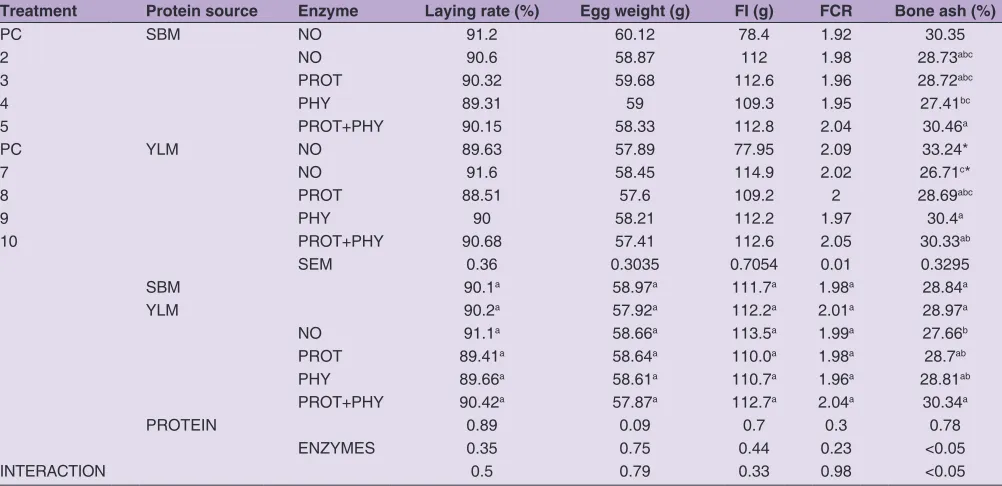
The egg production during the entire experiment was
similar in all groups without significant differences. The
egg weight was also on an equal level in all treatments and it was about 58 g. In these two parameters, there was no interaction between the source of protein and inclusion of
enzymes. Results in experimental treatments were similar to
control groups witch shows that reduced level of available phosphorus and digestible amino acids do not affect laying rate and egg weight. Birds fed different protein source were characterized by similar feed intake and feed conversion ratio during the whole experiment. The inclusion of
enzymes also had no effect on these parameters. The FCR
was about 1.9-2.0 in all groups (Table 4).
Protein source had no effect of tibia bone ash. Tibia ash was affected by enzymes supplementation. There was an interaction between protein source and enzymes addition. Birds from treatments fed with YLM diets reached highest tibia ash level in a group with phytase addition and in groups with SMB in a group with phytase and protease
mix (Table 5). Reducing the level of available phosphorus
and amino acids caused a decrease in ash content of the tibia bones of birds from group 7 compared to the control group.
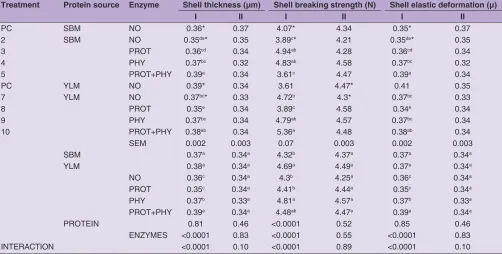
Shell thickness in eggs from part I was significantly different
eggshell was laid by hens from groups fed with the inclusion of YLM. Addition of phytase had a positive impact on increasing the strength of eggshell (Table 5). Only inclusion
of enzymes affected significantly on shell elastic deformation
in part I of eggs. Eggs from hens fed diets with inclusion of protease and phytase mix were most resistant to elastic
deformation (Table 5). In eggs, there were no significant
differences between groups in all egg parameter (Table 6).
The obtained results suggest that a 20% addition of yellow lupine did not affect egg laying performance and egg weight which is in agreement with previous research
(Krawczyket al., 2015; van Barneveld, 1999). Alternative
research has reported that the application of 25% sweet
lupine seeds to diets had a significant impact on reducing
the weight of the eggs (Hammershoj and Steenfeldt, 2005). Above authors suggested that decrees in egg weight were
caused by methionine deficiency. However, in this study,
the methionine content was corrected after the addition
of lupine. In the present study, the levels of amino acids in diets containing SMB and those with the addition of yellow lupine have been aligned. Besides, these differences may result from the use of different cultivar of lupine (Nalle
et al., 2011). It could be speculated that the reduction in
egg weight after YLM addition was caused by a reduction in AME of diets. Kaczmarek et al. (2015) found that 20% inclusion of YLM for broilers chickens, reduces dietary
AMEN for 0.8 MJ/kg of diet. Above authors speculated,
that lupin cultivars and species may differ with regard to their oligosaccharide and NSP content and may be characterized by different water extract viscosity, which
may undesirably affect AMEN, crude fat digestibility and,
subsequently, birds performance.
A previous study (Kaczmarek et al., 2015) shown that
effectiveness of phytase does not only depend on used
plant protein. Results of our study seem to confirm this
thesis. Almost in all group with low P level diets inclusion
Table 4: Chemical composition of diets
Treatment Protein source Enzyme Crude protein (%) Crude fat (%) ADF (g/kg) NDF (g/kg) Ca (%) Phytic‑P
PC SBM NO 15.8 2.78 3.72 6.69 4.43 2.84
2 NO 16.38 2.11 3.9 7.34 4.12 3.33
3 PROT 16.14 2.17 3.73 7.4 4.23 3.19
4 PHY 15.84 2.34 3.3 7.29 3.75 2.68
5 PROT+PHY 16.68 2.07 3.28 6.88 4.41 2.67
PC YLM NO 16.54 4.12 6.16 9.85 4.66 2.18
7 NO 17.9 4.04 7.27 10.35 4.17 2.79
8 PROT 17.74 3,0 7.31 10.84 3.81 3.25
9 PHY 17.61 3.5 6.38 10.1 4.17 3.32
10 PROT+PHY 17.4 3.78 6.24 11.7 4.21 2.6
Table 5: Laying rate, egg weight, FI, FCR and bone ash of birds fed with experimental diets
Treatment Protein source Enzyme Laying rate (%) Egg weight (g) FI (g) FCR Bone ash (%)
PC SBM NO 91.2 60.12 78.4 1.92 30.35
2 NO 90.6 58.87 112 1.98 28.73abc
3 PROT 90.32 59.68 112.6 1.96 28.72abc
4 PHY 89.31 59 109.3 1.95 27.41bc
5 PROT+PHY 90.15 58.33 112.8 2.04 30.46a
PC YLM NO 89.63 57.89 77.95 2.09 33.24*
7 NO 91.6 58.45 114.9 2.02 26.71c*
8 PROT 88.51 57.6 109.2 2 28.69abc
9 PHY 90 58.21 112.2 1.97 30.4a
10 PROT+PHY 90.68 57.41 112.6 2.05 30.33ab
SEM 0.36 0.3035 0.7054 0.01 0.3295
SBM 90.1a 58.97a 111.7a 1.98a 28.84a
YLM 90.2a 57.92a 112.2a 2.01a 28.97a
NO 91.1a 58.66a 113.5a 1.99a 27.66b
PROT 89.41a 58.64a 110.0a 1.98a 28.7ab
PHY 89.66a 58.61a 110.7a 1.96a 28.81ab
PROT+PHY 90.42a 57.87a 112.7a 2.04a 30.34a
PROTEIN 0.89 0.09 0.7 0.3 0.78
ENZYMES 0.35 0.75 0.44 0.23 <0.05
INTERACTION 0.5 0.79 0.33 0.98 <0.05
358
of enzymes improve the content of crude ash in tibia bone. Exogenous phytase caused dephosphorylation of inositol hexaphosphate, thanks to which minerals (P, Ca) previously bound in the phytate mineral complexes were released.
Released minerals could be absorbed in the digestive
tract and then participate in the bone mineralization process. (Qianet al., 1996). Reducing the level of available
phosphorus in diets f in groups fed with the addition of
YLM resulted in a significant decrease in ash content in the
bones. This may be due to the fact that the yellow lupine seeds like other legumes contain 75% of the phosphorus bound in phytate mineral complex which is no available to the animal organism. After the addition of the phytase, the negative effects of phosphorus reduction subsided. The addition of phytase to the diet with SBM as the only source of protein did not affect the increase of the ash content in
the tibia. This is confirmed in other studies (Hugheset al., 2009) in which the authors suggest that this is related to the
length of the laying period (36 weeks of age and 18 weeks
of laying period) and ability of the bird to utilize dietary P.
In these studies, significant differences in bone ash content was observed only in the 61 weeks of age. Eggs laid by hens
fed with the addition of yellow lupine characterized by a higher mechanical strength of the eggshell. According to Jalal and Scheideler (2001) source of protein have no effect on this parameter. The addition of phytase had a positive
influence on the mechanical strength of the shell, shell
thickness and elastic deformation of eggshells. This may be related to the breakdown of phytate-mineral complexes, which resulted in the higher availability of minerals that affect the construction of the shell (Selleet al., 2006). Use
of enzymes improved shell thickness and shell breaking strength, but the enzymes addition was more pronounce in
SBM than YLM diets which resulted in significant protein
source x enzyme interaction (P<0.05). The location of phytate salts in raw materials varies among sources (Steiner et al. 2007). In cereals such as maize, around 90% of phytate is located within the germ portion of the kernel, but in soybeans, phytate-P is associated with protein bodies, usually distributed throughout the seed (O’Dell et al. 1972;
O’Dell and De Boland 1976). Based on above could be
hypothesized that use of protease alone or in combination with phytase, degraded protein bodies and released some part of encapsulated phytate. According to Selle et al.
(2006), proteases could degrade protein bodies and in
that way improve the availability of phytate for hydrolysis
by phytase. Additionally, Kies et al. (2006), showed that
exogenous phytase prevents the creation of phytate-protein complexes. Insoluble phytate-protein-phytate complexes are formed at low pH, as present in the gizzard of birds
and this may affect protein digestibility significantly.
It is unknown why there were no differences in shell quality parameter in the seventeenth weeks of the experiment. It could be speculated that with the age of the bird’s diet was utilized better, resulting in higher P and Ca absorption because of higher digestive tract capacity.
Authors’ contributions
S. A. K and A. R. designed and directed the project; M. K.,
L. L., S. N., M. H. performed the experiments; M.K and S. A. K. wrote the article.
Table 6: Shell thickness, shell breaking strength and elastic deformation of eggs from birds fed experimental diets. I and II part Treatment Protein source Enzyme Shell thickness (µm) Shell breaking strength (N) Shell elastic deformation (µ)
I II I II I II
PC SBM NO 0.36* 0.37 4.07* 4.34 0.35* 0.37
2 SBM NO 0.35de* 0.35 3.89c* 4.21 0.35de* 0.35
3 PROT 0.36cd 0.34 4.94ab 4.28 0.36cd 0.34
4 PHY 0.37bc 0.32 4.83ab 4.58 0.37bc 0.32
5 PROT+PHY 0.39a 0.34 3.61c 4.47 0.39a 0.34
PC YLM NO 0.39* 0.34 3.61 4.47* 0.41 0.35
7 YLM NO 0.37bc* 0.33 4.72b 4.3* 0.37bc 0.33
8 PROT 0.35e 0.34 3.89c 4.58 0.34e 0.34
9 PHY 0.37bc 0.34 4.79ab 4.57 0.37bc 0.34
10 PROT+PHY 0.38ab 0.34 5.36a 4.48 0.38ab 0.34
SEM 0.002 0.003 0.07 0.003 0.002 0.003
SBM 0.37a 0.34a 4.32b 4.37a 0.37a 0.34a
YLM 0.38a 0.34a 4.69a 4.49a 0.37a 0.34a
NO 0.36c 0.34a 4.3b 4.25a 0.36c 0.34a
PROT 0.35c 0.34a 4.41b 4.44a 0.35c 0.34a
PHY 0.37b 0.33a 4.81a 4.57a 0.37b 0.33a
PROT+PHY 0.39a 0.34a 4.48ab 4.47a 0.39a 0.34a
PROTEIN 0.81 0.46 <0.0001 0.52 0.85 0.46
ENZYMES <0.0001 0.83 <0.0001 0.55 <0.0001 0.83
INTERACTION <0.0001 0.10 <0.0001 0.89 <0.0001 0.10
REFERENCES
Angel, C.R., W. Saylor, S. L Vieira. and N. Ward. 2011. Effects of a monocomponent protease on performance and protein utilization in 7 to 22-day-old broiler chickens. Poult. Sci. 90: 2281-2286. AOAC. 2007. Official Methods of Analysis of the Association Official
Analytical Chemists. 18th ed. AOAC, Arlington USA.
Birk, Y. 1994. Antinutritive Factors (ANFs) in Lupins and in Other Legume Seeds. Advances in Lupin Research. Proceedings of 7th International Lupin Conference, ISA Press, Evora, Portugal.
pp. 424-429.
Close, B., K. Banister, V. Baumans, E. M. Bernoth, N. Bromage, J. Bunyan, J. Erhardt, P. Flecknell, N. Gregory, H. Hackbarth, D. Morton. and C. Warwick. 1997. Recommendations for euthanasia of experimental animals: Part 2. DGXT of the European Commission. Lab. Anim. 31: 1-32.
Cowieson, A. J. 2008. The effect of phytase, protease and carbohydrase on ileal amino acid digestibility of corn/soy diets for broilers: Complimentary mode of action? Poult. Sci. 87: 64-64. Freitas, D.M., S. L. Vieira, C. R. Angel, A. Favero. and A. Maiorka.
2011. Performance and nutrient utilization of broilers fed diets supplemented with a novel mono-component protease. J. Appl. Poult. Res. 20: 322-334.
Ghazi, S., J. A. Rooke. and H. Galbraith. 2003. Improvement of the nutritive value of soybean meal by protease and a-galactosidase treatment in broiler cockerels and broiler chicks. Br. Poult. Sci. 44: 410-418.
Hammershoj, M. and S. Steenfeldt. 2005. Effects of blue lupin (Lupinus angustifolius) in organic layer diets and supplementation with foraging material on egg production and some egg quality parameters. Poult. Sci. 84: 723-733.
Hughes, A.L., J. P. Dahiya, C. L. Wyatt. and H. L. Classen. 2009. Effect of quantum phytase on nutrient digestibility and bone ash in white leghorn laying hens fed corn-soybean meal-based diets. Poult. Sci. 88: 1191-1198.
Jahanian, R. and E. Rasouli. 2016. Effect of extrusion processing of soybean meal on ileal amino acid digestibility and growth performance of broiler chicks. Poult. Sci. 95: 2871-2878. Jalal, M.A. and S. E. Scheideler. 2001. Effect of supplementation of
two different sources of phytase on egg production parameters in laying hens and nutrient digestiblity. Poult. Sci. 80: 1463-1471. Kaczmarek, S.A., A. J. Cowieson, M. Hejdysz. and A. Rutkowski.
2015. Microbial phytase improves performance and bone traits in broilers fed diets based on soybean meal and containing lupin meal. Anim. Prod. Sci. http://dx.doi.org/10.1071/AN14856. Kaczmarek, S.A., M. Kasprowicz-Potocka, M. Hejdysz, R Mikuła. and
A. Rutkowski. 2014. The nutritional value of narrow-leafed lupin (Lupinus angustifolius) for broilers. J. Anim. Feed Sci. 23: 160-166. Kies, A.K., K. H. F. van Hemert. and W. C. Sauer. 2001. Effect of
phytase on protein and amino acid digestibility and energy utilisation. Worlds Poult. Sci. J. 57: 109-126.
Kocher, A., M. Choct, R. J. Hughes. and J. Broz. 2000. Effect of food enzymes on utilisation of lupin carbohydrates by broilers. Br. Poult. Sci. 41: 75-82.
Krawczyk, M., M. Przywitowski. and D. Mikulski. 2015. Effect of yellow lupine (L. luteus) on the egg yolk fatty acid profile, the physicochemical and sensory properties of eggs, and laying hen performance. Poult. Sci. 94: 1360-1367.
Liebert, F., J. K. Htoo. and A. Sünder. 2005. Performance and nutrient utilization of laying hens fed low-phosphorus corn-soybean and wheat-soybean diets supplemented with microbial phytase. Poult. Sci. 84: 1576-1583.
Mikulski, D., J. Jankowski, Z. Zdunczyk, J. Juskiewicz. and B. A. Slominski. 2012. The effect of different dietary levels of rapeseed meal on growth performance, carcass traits, and meat quality in turkeys. Poult. Sci. 91: 215-223.
Nalle, C. L., V. Ravindran. and G. Ravindran. 2011. Nutritional value of narrow-leafed lupin (Lupinus angustifolius) for broilers. Br. Poult. Sci. 52: 775-781.
Nir, I., Z. Nitsan. and M. Mahagna. 1993. Comparative growth and development of the digestive organs and of some enzymes in broiler and egg type chicks after hatching. Br. Poult. Sci. 34: 523-532. O’Dell, B. L. and A. De Boland. 1976. Complexation of phytate with
proteins and cations in corn germ and oil seed meals. J. Agric. Food Chem. 24(4): 804-808.
O’Dell, B. L., A. R. De Boland. and S. R. Koirtyohann. 1972. Distribution of phytate and nutritionally important elements among the morphological components of cereal grains. J. Agric. Food Chem. 20(3): 718-723.
Olkowski, A. A., B. I. Olkowski, R. Amarowicz. and H. L. Classen. 2001. Adverse effects of dietary lupine in broiler chickens. Poult. Sci. 80: 621-625.
Olkowski, B.I., H. L. Classen, C. Wojnarowicz. and A. A. Olkowski. 2005. Feeding high levels of lupine seeds to broiler chickens: Plasma micronutrient status in the context of digesta viscosity and morphometric and ultrastructural changes in the gastrointestinal tract. Poult. Sci. 84: 1707-1715.
Orda, J., D. Jamroz, A. Wiliczkiewicz, T. Wertelecki, J. Skorupinska. and J. Broz. 2004. Effects of increased dietary inclusion of yellow lupins and enzyme supplementation on performance, ileal digestibility of nutrients and microbial status of large intestine in broiler chickens. Arch. Geflugelkunde 70: 14-21.
Parsons, C., F. Castanon. and Y. Han. 1997. Protein and amino acid quality of meat and bone meal. Poult. Sci. 76: 361-368. Qian, H., E. T. Kornegay. and D. M. Denbow. 1996. Phosphorus
equivalence of microbial phytase in turkey diets as influenced by calcium to phosphorus ratios and phosphorus levels. Poult. Sci. 75: 69-81.
Ravindran, V., M. R. Abdollahi. and S. M. Bootwalla. 2014. Nutrient analysis, metabolizable energy, and digestible amino acids of soybean meals of different origins for broilers. Poult. Sci. 93: 2567-2577.
Rutkowski, A., S. A. Kaczmarek, M. Hejdysz, S. Nowaczewski. and D. Jamroz. 2015. Concentrates made from legume seeds (Lupinus Angustifolius, Lupinus luteus and Pisum sativum) and rapeseed meal as protein sources in laying hen diets. Ann. Anim. Sci. 15: 129. Sandberg, A.S. 2002. Bioavailability of minerals in legumes. Br. J.
Nutr. 88: 281-285.
Selle, P.H., A. J. Cowieson, N. P. Cowieson. and V. Ravindran. 2012. Protein-phytate interactions in pig and poultry nutrition: A reappraisal. Nutr. Res. Rev. 25: 1-17.
Selle, P.H., V. Ravindran, W L. Bryden. and T. Scott. 2006. Influence of dietary phytate and exogenous phytase on amino acid digestibility in poultry: A review. J. Poult. Sci. 43: 89-103. Selle, P.H., V. Ravindran, A. Caldwell. and W. L. Bryden. 2000.
Phytate and phytase: Consequences for protein utilisation. Nutr. Res. Rev. 13: 255-278.
Simons, P.C.M., H. A. J. Versteegh, A. W. Jongbloed, P. A. Kemme, P. Slump, K. D. Bos, M. G. E. Wolters, R. F. Beudeker. and G. J. Verschoor. 1990. Improvement of phosphorus availability by microbial phytase in broilers and pigs. Br. J. Nutr. 64: 525-540. Smulikowska, S., P. Konieczka, J. Czerwinski, A. Mieczkowska. and
360
incorporation level and mannanase supplementation on growth performance, digesta viscosity, microbial fermentation and gut morphology. J. Anim. Feed Sci. 23: 64-72.
Snow, J., M. Douglas. and C. Parsons. 2003. Phytase effects on amino acid digestibility in molted laying hens. Poult. Sci. 82: 474-477. Snow, J. L., D. H. Baker. and C. M. Parsons. 2004. Phytase, citric
acid, and 1α-hydroxycholecalciferol improve phytate phosphorus utilization in chicks fed a corn-soybean meal diet. Poult. Sci. 83: 1187-1192.
Steiner, T., R. Mosenthin, B. Zimmermann, R. Greiner. and S. Roth. 2007. Distribution of phytase activity, total phosphorus and phytate phosphorus in legume seeds, cereals and cereal by-products as influenced by harvest year and cultivar. Anim. Feed Sci. Technol. 133: 320-334.
van Barneveld, R. J. 1999. Understanding the nutritional chemistry of lupin (Lupinus spp.) seed to improve livestock production efficiency. Nutr. Res. Rev. 12: 203-230.
Viveros, A., C. Centeno, I. Arija. and A. Brenes. 2007. Cholesterol-lowering effects of dietary lupin (Lupinus albus var Multolupa) in chicken diets. Poult. Sci. 86: 2631-2638.
Zalewski, K., L. Lahuta. and M. Horbowicz. 2001. The effect of soil drought on the composition of carbohydrates in yellow lupin seeds and triticale kernels. Acta Physiol. Plant. 23: 73-78. Zdunczyk, Z., J. Jankowski, A. Rutkowski, E. Sosnowska, A. Drazbo,