O R I G I N A L R E S E A R C H
Practices of Infection Control Among Dental
Care Providers: A Cross Sectional Study
This article was published in the following Dove Press journal: Clinical, Cosmetic and Investigational Dentistry
Arwa M Mahasneh 1
Maram Alakhras 2
Omar F Khabour 3
Amani G Al-Sa’di4
Dana S Al-Mousa 2
1Department of Applied Dental Sciences, Jordan University of Science and Technology, Irbid 22110, Jordan; 2Department of Allied Medical Sciences, Jordan University of Science and Technology, Irbid 22110, Jordan; 3Department of Medical Laboratory Sciences, Jordan University of Science & Technology, Irbid 22110, Jordan; 4Technical Coordination and Consumer Education Section of the Jordanian Food and Drug Administration, Irbid 22110, Jordan
Background: A wide range of microorganisms poses a threat to patients and dental care teams. Implementation of safety guidelines is thus essential to prevent infection in dental clinics.
Aim:To investigate the level of infection-control practices among dental health-care provi-ders in Jordan.
Methods: A self-administered questionnaire was distributed to dental care providers from hospitals, academic institutions, and dental centres. The questionnaire covered sociodemo-graphic variables, professional characteristics, and recommended guidelines of infection control.
Results:A total of 190 questionnaires were obtained out of 500 distributed questionnnaires (response rate: 38%). Females accounted for 62.6% of the sample and 64.7% were dentists. The majority was vaccinated against hepatitis B (82.1%) and wash their hands as usual behavior before (66.3%) and after (83.2%) treatment. Approximately 87.9% wear gloves and 78.9% wear masks while performing dental procedures. Autoclave sterilization and puncture-resistant containers for sharp instruments were used by 90.5% and 88.4%, respectively. The majority (81.0%) had protocols for emergency treatment of needle stick or other sharps accidents. High volume evacuation was used in 28.6% of public hospitals compared to 19.4% in academic institutions (P<0.01). In addition, surface barriers for dental unit surfaces were used by 70.2% of private dental clinics, 50% of public hospitals, and 36.1% of academic institutions (P<0.001). Finally, compared to dentists, dental support staff showed low compliance with infection-control guidelines.
Conclusion: The overall practice of infection-control measures among the participants is very good. Educational programs and training strategies should be implemented to maximize and enhance the compliance of the dental care providers with infection-control guidelines.
Keywords:infection control, dental care providers, vaccination, sterilization, disinfection
Introduction
In dentistry, a wide range of microorganisms poses a threat to patients and dental care providers such as Mycobacterium tuberculosis, hepatitis viruses, staphylo-cocci, streptostaphylo-cocci, herpes simplex virus types, human immunodeficiency virus, mumps, influenza, rubella and others.1 In dental environment, pathogens can be transmitted through direct contact with infected blood, saliva, or other bodyfluids; or indirectly via contaminated instruments, materials and surfaces.2 In addition, pathogens can be transmitted through inhalation of airborne pathogens in splattered droplets or aerosols from saliva and respiratory fluid.2,3 The Infection-Control Practices for Dentistry was among the first guidelines for the prevention of Correspondence: Arwa M Mahasneh
Department of Applied Dental Sciences, Jordan University of Science and Technology, P.O.Box 3030, Irbid 22110, Jordan
Tel + 962796357733
Email [email protected]
Clinical, Cosmetic and Investigational Dentistry
Dove
press
open access to scientific and medical research
Open Access Full Text Article
Clinical, Cosmetic and Investigational Dentistry downloaded from https://www.dovepress.com/ by 118.70.13.36 on 27-Aug-2020
infection by blood and bodyfluids of patients.1According to these guidelines, all patients should be treated as poten-tially infectious in order to prevent disease transmission.1,4 Therefore, implementing infection-control precautions is the standard of care to protect both patients and dental care professionals and to ensure a safe working environ-ment. Among such precautions are personal protective equipment (PPE), hand hygiene, waste management and sterilization.5
Preventing infection exposure in dental care settings can also be achieved efficiently by immunization.6 Therefore, many dental education institutions and dental care facilities have a comprehensive immunization policy for their students and dental care providers.7 However, most patients are not similarly protected, which may increase the risk of transmission of infectious diseases between patients.6 PPE such as gown, gloves, face mask and eye protection have been shown to be an effective means of preventing the transmission of pathogens.8,9 However, any failure to comply with implementing infec-tion-control measures can harm both patients and heath-care teams.4,5
In Jordan, few studies have evaluated the level of infec-tion control in dental practice. These studies were limited either to one institution,10 private dental clinics11 or to dental technicians in commercial dental laboratories.12 Therefore, the aim of this study was to evaluate the level of infection-control practices among dentists and dental care providers in the different dental sectors in Jordan. In addition, the study examined the association between socio-demographic and professional characteristics of the partici-pants and their practice of infection-control measures.
Materials and Methods
Study Design and Instrumentation
This cross-sectional survey was conducted between January and April 2019. Institutional Review Board approval was granted by the Jordan University of Science and Technology (305–2018). The study involved a self-administered questionnaire that was distributed to a convenient sample of the dentists, and dental care pro-viders from eight public hospitals (2 Military, 4 govern-mental and 2 University affiliated hospitals) and 30 public and private dental clinics from North Jordan and the capi-tal city. The questionnaire was developed in English and was based on the Guidelines for Infection Control in Dental Health Care Settings of the US Centers for
Disease Control and Prevention.13 The questionnaire was pilot tested on 20 participants to ensure its clarity and content validity. The questionnaire was divided into sev-eral sections. The first section collected personal socio-demographic variables (age, sex, specialty, and university degree). The second section collected information about the professional characteristics of participants. The last part was about the participants’ practice of vaccination, personal protective equipment, hand hygiene, waste man-agement and sterilization. Data entry was reviewed by random audit of 10% of the entered information. The questionnaire is available upon request from the corre-sponding author.
Participants
The target population of the current study is approximately 5000 dental care providers who are responsible for apply-ing the infection-control guidelines in the dental settapply-ing. To have a good representation of the target population, a total of five hundred subjects (10%) were invited to complete the questionnaire. One hundred and ninety parti-cipants agreed to complete the questionnaire by signing the consent form. Participation was voluntary and ques-tionnaires were not identified by name or code to maintain anonymity and confidentiality. Access to data was restricted to the research team.
Data Analysis
Data analysis was conducted using the Statistical Package for Social Sciences (SPSS) software version 21.0 (SPSS®: Inc., Chicago, IL, USA). Frequencies and percentages were produced. Chi- square test was used to compare between subgroups. The level of significance was set at (P≤0.05).
Results
Demographics and Work Characteristics
of the Study Sample
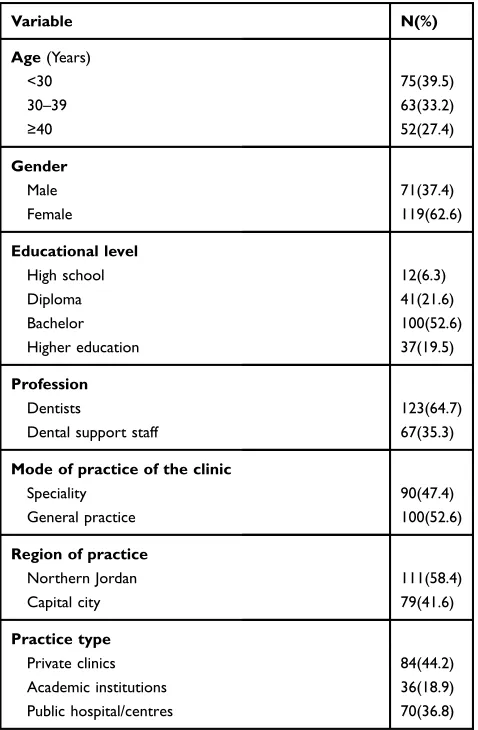
The response rate was 38% (190 out of 500). Table 1
shows the demographic characteristics of the study parti-cipants. About two third (60.5%) of the sample were older than 30 years. Females accounted for 62.6% of respon-dents and approximately 52.6% held bachelor degrees. Two thirds of respondents were dentists while the remain-der were members of the dental support staff. The mode of practice of the clinic showed that 52.6% worked in general dentistry and the remainder were from specialty practices.
Clinical, Cosmetic and Investigational Dentistry downloaded from https://www.dovepress.com/ by 118.70.13.36 on 27-Aug-2020
The majority of participants were from Northern Jordan (58.4%) and approximately one fifth (18.9%) were from academic institutions.
Practice of Infection Control Among
Study Participants
Vaccination Against Hepatitis B
Results revealed that 82.1% of participants were vacci-nated against hepatitis B. The distribution of the non-vaccinated fraction was 34.4% of dental support staff and 9.9% of dentists (χ2 = 19.15; P<0.0001). In addition, diploma/high school degree holders tended to be unvacci-nated compared with participants holding other degrees (31.7% vs 39.6%, respectively, χ2 = 25.83; P<0.001). With respect to other demographic variables, there were no statistical significant differences regarding hepatitis B vaccination.
Hand Hygiene Practices
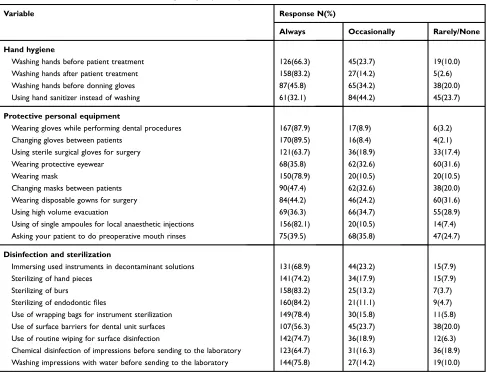
Table 2 summarizes the practice of hand hygiene, use of personal protective equipment, and sterilization and disin-fection among participants. The majority of respondents reported practiced hand washing after treatment (83.2%) and prior to starting treatment (66.3%). About one-half (45.8%) reported usually washing hands before wearing gloves. With respect to materials used in handwashing, 49.5%, 32.1%, and 27.9% reported washing their hands using plain soap, hand sanitizer and antiseptic solutions, respectively.
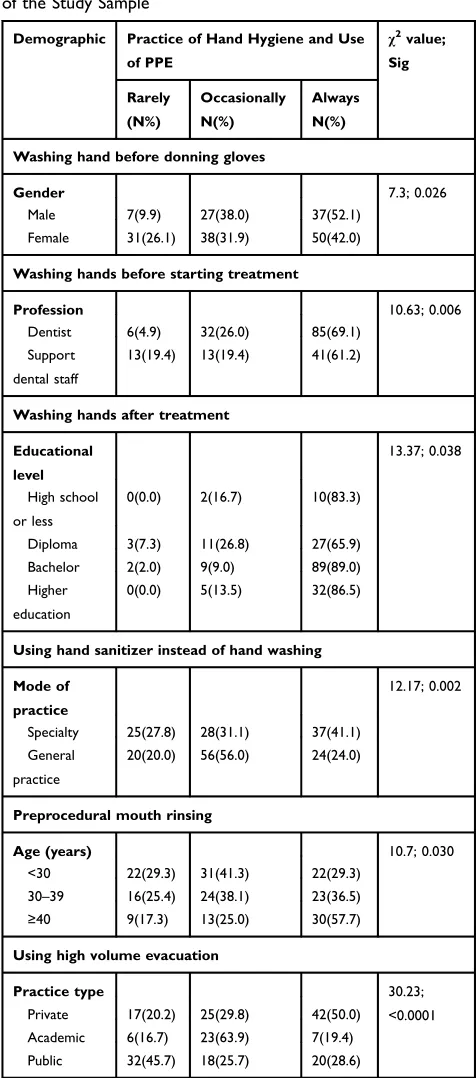
There was no statistically significant difference regard-ing practicregard-ing hand hygiene by demographic and work characteristics except in specific areas as shown by bi-variate analysis inTable 3. Females (26.1%) rarely washed their hands before wearing gloves compared with male (9.9%) subjects (χ2 =7.3; P=0.026). Dental support staff (19.4%) reported that they rarely wash their hands before starting patient care compared to only 4.9% of dentists (χ2 = 10.36; P=0.006). Participants with a diploma degree reported that they always wash their hands after patient treatment at a lower proportion compared with the others (χ2 value = 13.37; P=0.038). Approximately 41.0% of participants from specialty clinics reported that they always use hand sanitizer instead of washing hands com-pared with 24.0% of those in general practice clinics (χ2value = 12.17; P=0.002).
Using Personal Protective Equipment
The majority of participants reported an acceptable level of personal protective equipment use (Table 2). This includes constantly wearing gloves while performing den-tal procedures (87.9%), changing gloves between patients (89.5%), wearing sterile surgical gloves (63.7%) and masks (78.9%) while performing surgical dental opera-tions, and using single ampoules for local anaesthetic injections (82.1%).Table 3shows that approximately one-fourth of the study sample reported that they frequently use high volume evacuators, with significant differences between public hospitals (28.6%) and academic institu-tions (19.4%) (χ2=30.23; P<0.0001). In addition, about 40.0% of the sample employs preprocedural mouth rin-sing. In this regard, participants aged 40 years and older employ preprocedural mouth rinsing more frequently than those participants in other age ranges (χ2=10.71, P=0.030).Table 1Demographic and Work Characteristics (N=190)
Variable N(%)
Age(Years)
<30 75(39.5)
30–39 63(33.2)
≥40 52(27.4)
Gender
Male 71(37.4)
Female 119(62.6)
Educational level
High school 12(6.3)
Diploma 41(21.6)
Bachelor 100(52.6)
Higher education 37(19.5)
Profession
Dentists 123(64.7)
Dental support staff 67(35.3)
Mode of practice of the clinic
Speciality General practice
90(47.4) 100(52.6)
Region of practice
Northern Jordan 111(58.4)
Capital city 79(41.6)
Practice type
Private clinics 84(44.2)
Academic institutions 36(18.9)
Public hospital/centres 70(36.8)
Clinical, Cosmetic and Investigational Dentistry downloaded from https://www.dovepress.com/ by 118.70.13.36 on 27-Aug-2020
Practicing Disinfection and Sterilization
Table 2reveals that immersing used instruments in deconta-mination solution, sterilizing hand pieces, burs and endodon-tic files were performed frequently by the majority of the study sample (68.9%, 74.2%, 83.2% and 84.2%, respec-tively). About 78.0% of participants reported that they use wrapping bags for instrument sterilization; while a slightly less proportion (74.7%) use routine wiping for the disinfec-tion of surfaces in the dental care facility. Approximately, 56.0% of subjects reported that they use surface barriers for dental unit surfaces. Dental impressions were reported to be treated either by washing with water or chemical disinfection before sending to the laboratories by 76.0% and 64.7% of participants, respectively.
Table 4 presents practices of instrument sterilization and management of sharps waste. The majority of respon-dents (90.5%) reported that they use an autoclave to ster-ilize instruments in their dental clinics. Moreover, 72.6% of participants immerse the used instruments in
decontamination solution after treatment. About one half of respondents (51.1%) reported that 1 week was the time since last maintenance of the sterilization devices. One week as a preferred time to use sterilized, wrapped packed instruments were reported by 72.1% of participants.
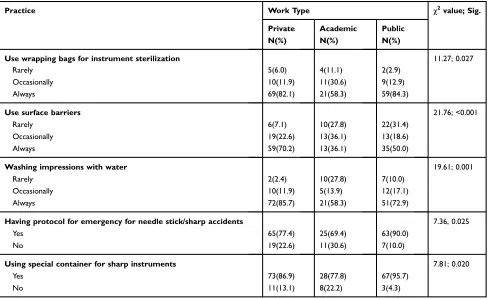
Table 5shows that the participants from academic insti-tutions use wrapping bags for instrument sterilization (χ2=11.27; P=0.027), surface barriers for dental unit surfaces (χ2=21.76; P<0.0001), and wash impressions with water before sending to laboratories (χ2=19.61; P<0.001) in lower frequencies compared to public and private dental clinics.
Dealing with Sharp Instruments
Table 4shows that approximately (81.0%) of participants reported that they have an appropriate protocol for emer-gency treatment of needle stick and other sharp accidents with significant differences between public hospitals (90%) and academic institutions (69.4%, χ2=7.36, P=0.025) (Table 5). About 65.0% reported that they
Table 2Infection-Control Practices in the Study Sample (N=190)
Variable Response N(%)
Always Occasionally Rarely/None
Hand hygiene
Washing hands before patient treatment 126(66.3) 45(23.7) 19(10.0)
Washing hands after patient treatment 158(83.2) 27(14.2) 5(2.6)
Washing hands before donning gloves 87(45.8) 65(34.2) 38(20.0)
Using hand sanitizer instead of washing 61(32.1) 84(44.2) 45(23.7)
Protective personal equipment
Wearing gloves while performing dental procedures 167(87.9) 17(8.9) 6(3.2)
Changing gloves between patients 170(89.5) 16(8.4) 4(2.1)
Using sterile surgical gloves for surgery 121(63.7) 36(18.9) 33(17.4)
Wearing protective eyewear 68(35.8) 62(32.6) 60(31.6)
Wearing mask 150(78.9) 20(10.5) 20(10.5)
Changing masks between patients 90(47.4) 62(32.6) 38(20.0)
Wearing disposable gowns for surgery 84(44.2) 46(24.2) 60(31.6)
Using high volume evacuation 69(36.3) 66(34.7) 55(28.9)
Using of single ampoules for local anaesthetic injections 156(82.1) 20(10.5) 14(7.4)
Asking your patient to do preoperative mouth rinses 75(39.5) 68(35.8) 47(24.7)
Disinfection and sterilization
Immersing used instruments in decontaminant solutions 131(68.9) 44(23.2) 15(7.9)
Sterilizing of hand pieces 141(74.2) 34(17.9) 15(7.9)
Sterilizing of burs 158(83.2) 25(13.2) 7(3.7)
Sterilizing of endodonticfiles 160(84.2) 21(11.1) 9(4.7)
Use of wrapping bags for instrument sterilization 149(78.4) 30(15.8) 11(5.8)
Use of surface barriers for dental unit surfaces 107(56.3) 45(23.7) 38(20.0)
Use of routine wiping for surface disinfection 142(74.7) 36(18.9) 12(6.3)
Chemical disinfection of impressions before sending to the laboratory 123(64.7) 31(16.3) 36(18.9) Washing impressions with water before sending to the laboratory 144(75.8) 27(14.2) 19(10.0)
Clinical, Cosmetic and Investigational Dentistry downloaded from https://www.dovepress.com/ by 118.70.13.36 on 27-Aug-2020
maintain detailed records of such incidents. Furthermore, 88.4% of participants use puncture-resistant containers for sharp instruments with a significantly higher proportion of those who work in public hospitals (95.7%) compared to those who work in academic institutions (77.8%,χ2=7.81; P=0.020) (Table 5).
Discussion
In dental practices, an infectious disease can be trans-mitted in many routes such as direct contact with blood, oralfluids and other body secretions. Also, indirect contact with contaminated instruments, operatory equipment and environmental surfaces is very possible.14 Therefore, it is essential to adhere to the universally recommended guide-lines in order to prevent cross-infection among dental health-care providers and patients as well as between patients themselves. This comprehensive study aimed to
Table 3Practice of Hand Hygiene and Use of PPE by Subgroups of the Study Sample
Demographic Practice of Hand Hygiene and Use
of PPE
χ2value; Sig
Rarely
(N%)
Occasionally
N(%)
Always
N(%)
Washing hand before donning gloves
Gender 7.3; 0.026
Male 7(9.9) 27(38.0) 37(52.1)
Female 31(26.1) 38(31.9) 50(42.0)
Washing hands before starting treatment
Profession 10.63; 0.006
Dentist 6(4.9) 32(26.0) 85(69.1) Support
dental staff
13(19.4) 13(19.4) 41(61.2)
Washing hands after treatment
Educational
level
13.37; 0.038
High school or less
0(0.0) 2(16.7) 10(83.3)
Diploma 3(7.3) 11(26.8) 27(65.9)
Bachelor 2(2.0) 9(9.0) 89(89.0)
Higher education
0(0.0) 5(13.5) 32(86.5)
Using hand sanitizer instead of hand washing
Mode of
practice
12.17; 0.002
Specialty 25(27.8) 28(31.1) 37(41.1) General
practice
20(20.0) 56(56.0) 24(24.0)
Preprocedural mouth rinsing
Age (years) 10.7; 0.030
<30 22(29.3) 31(41.3) 22(29.3) 30–39 16(25.4) 24(38.1) 23(36.5)
≥40 9(17.3) 13(25.0) 30(57.7)
Using high volume evacuation
Practice type 30.23;
<0.0001 Private 17(20.2) 25(29.8) 42(50.0)
Academic 6(16.7) 23(63.9) 7(19.4) Public 32(45.7) 18(25.7) 20(28.6)
Table 4Sterilization, and Management of Sharps Waste (N=190)
Variable Response
N(%)
Which of the following do you use to sterilize instruments in dental clinic
Autoclave 172(90.5)
Boiling 9(4.7)
Washing 6(3.2)
Disinfectant solution 3(1.6)
When do you immerse the used instruments in decontaminant solutions?
Before treatment 52(27.4)
After treatment 138(72.6)
Time since last maintenance of the sterilization devices
One week 97(51.1)
Four weeks 53(27.9)
Six weeks 20(10.5)
Twelve or more weeks 20(10.5)
Preferred time of use of sterilized, wrapped packed instruments
One week 137(72.1)
Four weeks 39(20.5)
Six weeks 8(4.2)
Twelve or more weeks 6(3.2)
Having an appropriate protocol for emergency treatment of needle stick or other sharp accidents?
Yes 153(80.5)
No 37(19.5)
Do you keep detailed records of these accidents?
Yes 123(64.7)
No 67(35.3)
Do you use puncture resistant container for sharp instruments?
Yes 168(88.4)
No 22(11.6)
Clinical, Cosmetic and Investigational Dentistry downloaded from https://www.dovepress.com/ by 118.70.13.36 on 27-Aug-2020
assess the level of infection-control practices of dental health-care providers including vaccination, hand hygiene, use of PPE, sterilization and disinfection in public hospi-tals, private clinics, and academic institutions in Jordan. In addition, the current study examined the correlations between socio-demographic and professional characteris-tics of the participants and their practice of infection-control measures. In general, the study findings showed that the majority of the participants follow universal guide-lines regarding vaccination against hepatitis B virus, using PPE, disinfection and sterilization, and dealing with sharp instruments. However, the self-reported infection-control practices did not reach optimal-desired levels.
Hepatitis B Virus is a well-recognized occupational risk in dental professionals, since it can be transmitted by exposure to blood and bodyfluids of an infected person.4 In this study, the majority of participants were vaccinated against hepatitis B (82.1%), this is higher than that was reported by previous studies from Jordan (36%)11 and Pakistan15 (71.6%), and less than the findings of a study from New Zealand16 (94.2%), Italy (85.7%)6 and Saudi Arabia17 (90.6%). The majority of hepatitis B non-vaccinated individuals was from dental support staff.
Lower frequency of hepatitis B vaccinations in dental support staff may be explained by lack of formal training and more frequent on-the-job training by dentists, espe-cially in Jordan’s private sectors.11
Good hand hygiene performed by dental practitioner is considered an effective method to prevent and control infection transmission in dental practice environment.4,18 This study showed that the majority of participants prac-tice handwashing following patient treatment more than before starting treatment. Finding of this study is lower than a study conducted in Saudi Arabia that showed about 96.7% and 89.4% of the participants perform hand hygiene before and after contacting patients, respectively.17 However, in Pakistan, Ch et al15 reported that 79% of the participants wash their hands before and after treat-ment. The results of the current study showed that washing hands are affected by gender and academic degree. Males reported washing their hands before wearing gloves more than do females. In a study from Germany, it was reported that males conducted better hand hygiene than females after treatment, while females conduct correct hand hygiene more than males before treatment.18 However, some previous studies19–21 showed that females reported
Table 5Sterilization, and Management of Sharp Wastes by Work Type
Practice Work Type χ2value; Sig.
Private N(%)
Academic N(%)
Public N(%)
Use wrapping bags for instrument sterilization 11.27; 0.027
Rarely 5(6.0) 4(11.1) 2(2.9)
Occasionally 10(11.9) 11(30.6) 9(12.9)
Always 69(82.1) 21(58.3) 59(84.3)
Use surface barriers 21.76; <0.001
Rarely 6(7.1) 10(27.8) 22(31.4)
Occasionally 19(22.6) 13(36.1) 13(18.6)
Always 59(70.2) 13(36.1) 35(50.0)
Washing impressions with water 19.61; 0.001
Rarely 2(2.4) 10(27.8) 7(10.0)
Occasionally 10(11.9) 5(13.9) 12(17.1)
Always 72(85.7) 21(58.3) 51(72.9)
Having protocol for emergency for needle stick/sharp accidents 7.36, 0.025
Yes 65(77.4) 25(69.4) 63(90.0)
No 19(22.6) 11(30.6) 7(10.0)
Using special container for sharp instruments 7.81; 0.020
Yes 73(86.9) 28(77.8) 67(95.7)
No 11(13.1) 8(22.2) 3(4.3)
Clinical, Cosmetic and Investigational Dentistry downloaded from https://www.dovepress.com/ by 118.70.13.36 on 27-Aug-2020
better hand hygiene practices than males. Dental support staff wash hands before treatment less frequently com-pared to dentists, and those with a diploma degree reported washing their hands after patient treatment less frequently than others in accordance with the conclusions of Mutters et al,18who reported a lower compliance of dental assis-tants with infection-control procedures due to insufficient knowledge. The current findings showed dental care pro-viders in specialty clinics use hand sanitizer for washing hands more than who work in general dental practice. In addition, participants who work in academic settings reported practicing handwashing less than those who work in private and public dental settings. The reason for such differences could be due to the pressure of work as a result of variations in the number of patient-care visits between the various settings.
Generating aerosols, droplets of water, saliva, blood, microorganisms, and other debris are very common during the performance of dental procedures. Therefore, disease transmission via travelling droplets and aerosol, which remain for a long time in the air, is a major concern in the dental environment. To minimize the susceptibility to airborne and blood born infections, dental care providers should adequately use PPE such as gloves, protective gowns, and face mask.1,4,18 The majority of respondents reported wearing gloves (87.9%) and masks (78.9%) fre-quently while performing dental procedures. The majority of participants (89.5%) reported changing gloves between patients, however only 47.4% of them reported changing masks. Thisfinding is similar to that of other studies.1,15,22 However, the reported proportions of the current study are higher than the findings of a previous study in Jordan, where 81.8% of participants reported that they wear and change gloves and 54.5% wear masks.11Whereas a study from a South African Province23 shows that only 52.2% and 65.25% of dental care providers reported wearing gloves and masks, respectively, while only 8.7% change gloves after each patient. The presentfindings also showed that wearing sterile surgical gloves, protective disposable surgical gown and use of high volume evacuation were reported to be less frequently practiced by participants. Yadav et al1reported that 20% of the studied dentists use sterile surgical gloves, 10% use high volume evacuation, and 3.3% use protective gown. Using of high volume evacuation by the participants in private clinics is higher than that in public hospitals and academic institutions. This could be due to the fact that private clinics are usually more frequently inspected than public ones.
Patient-care items should be categorized and sterilized or disinfected depending on the potential risk for infection associated with their use. The studyfindings revealed that the majority of participants always perform disinfection and sterilization. Sterilization of hand pieces is performed by 74.2% of the participants, which is higher than that reported in a study from Tanzania (54.2%)24 and lower than that in a study from New Zealand (99.5%).16 In addition, results showed that surface disinfection for rou-tine wiping was reported by 74.7%, which is less than the findings that were reported in a study from Saudi Arabia (95.1%)17 and higher than that reported from India.1 Participants from academic institutions reported that they use surface barriers less than reported by public hospitals and private clinics. This could be due to the unavailability of the materials or budget restrictions. Furthermore, 65% of the participants reported disinfecting impressions. This percentage is less than the findings from Saudi Arabia (95.1%)17 and New Zealand (71.8%).16 Significantly higher proportions of those worked at public hospitals and private clinics reported that they wash impressions with water before sending to laboratories more than those who worked at academic institutions. In general, the safety practices with respect to sterilization procedures were more adequate in public and private sectors than academic institutions. More investigations are needed to uncover the reasons behind such observation. In addition, frequent inspection of academic dental centres by the government is recommended.
Participants who are 40 years old and greater were more eager to perform disinfection and sterilization peri-odically in comparison with those younger than 30 years old. Participants with bachelor degree or higher showed significantly better disinfection and sterilization practices than those without certification, and work in private dental clinics.11 Thus, more training on safety guidelines should be applied to dental care providers, especially young and less educated.
Using autoclave for instrument sterilization is the pre-ferred method due to its safety, rapid and lethal effect of pressurized steam on all microorganisms.1The majority of participants reported using autoclave sterilization of dental instruments. This is in accordance with other studies,15,25 and higher than what was reported in a previous study in Jordan by Al-Omari and Al-Dawiri 63%,11 whereas the findings of a study conducted by Banglani et al26 show that 76% of dental practitioners were using an autoclave.
Clinical, Cosmetic and Investigational Dentistry downloaded from https://www.dovepress.com/ by 118.70.13.36 on 27-Aug-2020
Although performing maintenance and monitoring of autoclaves is very important to ensure perfect sterilization cycle,1 only half of the participants reported performing the last maintenance of the sterilization devices within a period of 1 week. Therefore, it is recommended to increase the training and education in autoclave biosafety measures and periodic maintenance.
Many dental instruments are sharp and can cause injuries when handled such as needle sticks. This type of accident can be a potential source of infections. Needle stick injuries and sharp accidents should be prevented by following the recom-mended measures including implementing an emergency protocol, maintaining detailed reports, and safely disposing of sharp objects.1,4 The majority of participants reported appropriate protocol for emergency treatment of needle stick and sharp accidents. However, approximately 65% reported that they keep detailed records of those accidents compared to 10% in India1and in Germany 35% by dentists and dental assistants 42%, respectively.18 Using puncture-resistant containers for sharp instruments was reported by most of the participants (88.4%) which is higher than that was reported in a previous study in Jordan (31.8%)11and less than that was reported in Saudi Arabia (99.2%).17Although the overall practice in dealing with sharp objects among the study sample is good, it is recommended to optimize the performance of appropriate disposing protocols of sharp objects, compliance to the recommended guidelines during needle stick emergency, and maintaining detailed records of the accidents in the dental environment. Among the limita-tions of the current study is that the frequency of occupa-tional infection and sharp injuries among examined population were not assessed. Therefore, future studies that include such measures are strongly recommended. Moreover, future similar studies should be conducted on a larger sample size.
Conclusion
The overall practice level of infection-control measures among dental care providers in Jordan is good. There is an improvement in the adherence of dental care providers to the universal guidelines of infection control compared to previous studies in Jordan. However, this level is not abso-lute as other studies have shown in various countries. Dental support staff showed less compliance with infection-control guidelines. Therefore, educational programs and training strategies should be implemented to maximize the compli-ance of dentists, as well as enhancing the complicompli-ance of dental support staff with infection-control guidelines.
Academic curricula should emphasize on infection-control practice, by including comprehensive theoretical and prac-tical courses of the most current infection-control measures. Also, dental support staff should be certified in order to practice dental assisting and dental hygiene. Finally, con-sistent infection-control compliance evaluations of various dental environments by well-trained persons/specialized committee is highly recommended.
Data Sharing Statement
The data sets used during the current study are available from the corresponding author on reasonable request.
Acknowledgment
This project was supported by the Deanship of Research at Jordan University of Science and Technology. The authors declare that there is no conflict of interests.
Disclosure
The authors report no conflicts of interest in this work.
References
1. Yadav BK, Rai AK, Agarwal S, Yadav B. Assessment of infection control practice in private dental hospital.Int J Res Med Sci.2017;5 (11):4737–4742. doi:10.18203/2320-6012.ijrms20174687
2. Taiwo J, Aderinokun G. Assessing cross infection prevention mea-sures at the Dental Clinic, University College Hospital, Ibadan.Afr J Med Med Sci.2002;31(3):213–217.
3. Aurangjeb AM, Zaman T, Badruddoza M. Practice of dental surgeons about dental splatter and aerosol.City Dent Coll J.2013;10(2):10–16. doi:10.3329/cdcj.v10i2.16314
4. Kazi MM, Saxena R. Infection control practices in dental settings-a review. J Dent Allied Sci. 2012;1(2):67–71. doi:10.4103/2277-4696.159148
5. Gordon B, Burke F, Bagg J, Marlborough H, McHugh E. Systematic review of adherence to infection control guidelines in dentistry. J Dent.2001;29(8):509–516. doi:10.1016/S0300-5712(01)00043-4 6. Di Giuseppe G, Nobile CG, Marinelli P, Angelillo IF. A survey of
knowledge, attitudes, and behavior of Italian dentists toward immunization. Vaccine. 2007;25(9):1669–1675. doi:10.1016/j. vaccine.2006.10.056
7. DeCastro MG, Denys GA, Fauerbach LL, et al. APIC position paper: immunization.Am J Infect.1999;27(1):52–53.
8. Mitchell R, Russell J. The elimination of cross-infection in dental practice–a 5-year follow-up. Br Dent J. 1989;166(6):209–211. doi:10.1038/sj.bdj.4806775
9. Gershon RR, Karkashian C, Vlahov D, Grimes M, Spannhake E. Correlates of infection control practices in dentistry. Am J Infect. 1998;26(1):29–34.
10. Qudeimat MA, Farrah RY, Owais AI. Infection control knowledge and practices among dentists and dental nurses at a Jordanian uni-versity teaching center.Am J Infect.2006;34(4):218–222.
11. Al-Omari MA, Al-Dwairi ZN. Compliance with infection control programs in private dental clinics in Jordan.J Dent Educ.2005;69 (6):693–698. doi:10.1002/j.0022-0337.2005.69.6.tb03953.x
Clinical, Cosmetic and Investigational Dentistry downloaded from https://www.dovepress.com/ by 118.70.13.36 on 27-Aug-2020
12. Al-Dwairi ZN. Infection control procedures in commercial dental laboratories in Jordan. J Dent Educ. 2007;71(9):1223–1227. doi:10.1002/j.0022-0337.2007.71.9.tb04388.x
13. Centers for Disease Control and Prevention.Guidelines for Infection Control in Dental Health-Care Settings. MMWR: Centers for Disease Control and Prevention. US Department of Health;2003.
14. Ahmad IA, Rehan EA, Pani SC. Compliance of Saudi dental students with infection control guidelines.Int Dent J. 2013;63(4):196–201. doi:10.1111/idj.12030
15. Ch AN, Usman N, Kiran S, Zahra T, Khalid H, Akhtar MU. Cross infection control in dental institutions. Pak Oral Dent J. 2018;38 (4):419–422.
16. Lamb A, Hong C, De Silva H, Thomson W, Broadbent J. New Zealand oral health practitioners’ cross-infection control practices. N Z Dent J.2019;115(1):5–10.
17. AlAhdal A, Aljehani W, Ali G, Bayoumi A. Knowledge, attitude and practice of infection control measures in private dental clinics in Jeddah, Saudi Arabia.Int J Dent Oral Health.2019;5(1):1–6. 18. Mutters NT, Hägele U, Hagenfeld D, Hellwig E, Frank U.
Compliance with infection control practices in an university hospital dental clinic.GMS Hyg Infect Control.2014;9(3):1–5.
19. McCarthy GM, Koval JJ, MacDonald JK, John MA. The role of age-and population-based differences in the attitudes, knowledge and infection control practices of Canadian dentists.Community Dent Oral Epidemiol. 1999;27(4):298–304. doi:10.1111/j.1600-0528.1999.tb02024.x
20. McCarthy GM, MacDonald JK. Gender differences in characteristics, infection control practices, knowledge and attitudes related to HIV among Ontario dentists.Community Dent Oral Epidemiol.1996;24 (6):412–415. doi:10.1111/j.1600-0528.1996.tb00890.x
21. Osazuwa-Peters N, Chinedu Azodo C, Oluyemisi Ehizele A, Ndubuisi Obuekwe O. Gender differences in characteristics, occupa-tional exposure, and infection control practices among dental profes-sionals in Edo State, Nigeria.South Afr J Epidemiol Infect.2012;27 (2):61–65. doi:10.1080/10158782.2012.11441486
22. Sukumaran P, Pin CW, Hong OZ, Mariam A. An audit of infection control practices amongst dental students in University of Malaya, Malaysia.Arch Orofac Sci.2017;12(1):1–13.
23. Mehtar S, Shisana O, Mosala T, Dunbar R. Infection control practices in public dental care services: findings from one South African Province. J Hosp Infect. 2007;66(1):65–70. doi:10.1016/j.jhin. 2007.02.008
24. Christian M, Kikwilu EN. Knowledge, attitude, reported behaviour and perceived challenges to adhering to infection control measures in dental practice among dental practitioners in Tanzania.Tanzan Dent J.2014;18(2):64–71.
25. Ahmed H. Methods of sterilization and monitoring of sterilization across selected dental practices in Karachi, Pakistan. J Coll Physicians Surg Pak Oct.2015;10:713–716.
26. Banglani MA, Punjabi SK, Banglani M. Cross infection control-A study.Pak Oral Dent J.2016;36(2):286–288.
Clinical, Cosmetic and Investigational Dentistry
Dove
press
Publish your work in this journal
Clinical, Cosmetic and Investigational Dentistry is an international, peer-reviewed, open access, online journal focusing on the latest clinical and experimental research in dentistry with specific empha-sis on cosmetic interventions. Innovative developments in dental materials, techniques and devices that improve outcomes and patient
satisfaction and preference will be highlighted. The manuscript management system is completely online and includes a very quick and fair peer-review system, which is all easy to use. Visit http://www.dovepress.com/testimonials.php to read real quotes from published authors.
Submit your manuscript here:https://www.dovepress.com/clinical-cosmetic-and-investigational-dentistry-journal
Clinical, Cosmetic and Investigational Dentistry downloaded from https://www.dovepress.com/ by 118.70.13.36 on 27-Aug-2020