World Maritime University World Maritime University
The Maritime Commons: Digital Repository of the World Maritime
The Maritime Commons: Digital Repository of the World Maritime
University
University
World Maritime University Dissertations Dissertations
11-5-2017
Enhancement of seafarers career development through lifelong
Enhancement of seafarers career development through lifelong
learning: a case study of Namibia
learning: a case study of Namibia
Leena Ndahafa Kagola
Follow this and additional works at: https://commons.wmu.se/all_dissertations
Part of the Education Commons, and the Transportation Commons
Recommended Citation Recommended Citation
Kagola, Leena Ndahafa, "Enhancement of seafarers career development through lifelong learning: a case study of Namibia" (2017). World Maritime University Dissertations. 567.
https://commons.wmu.se/all_dissertations/567
WORLD MARITIME UNIVERSITY
Malmö, Sweden
ENHANCEMENT OF SEAFARERS CAREER
DEVELOPMENT THROUGH LIFELONG
LEARNING
A case study of Namibia
By
LEENA NDAHAFA KAGOLA
Namibia
A dissertation submitted to the World Maritime University in partial
Fulfilment of the requirements for the award of the degree of
MASTER OF SCIENCE
In
MARITIME AFFAIRS
(MARITIME EDUCATION AND TRAINING)
2017
ii
Declaration
I certify that all the material in this dissertation that is not my own work has been
identified, and that no material is included for which a degree has previously been
conferred on me.
The contents of this dissertation reflect my own personal views, and are not necessarily
endorsed by the University.
Supervised by: Dr. Lisa L. Froholdt
Assistant Professor
iii
Acknowledgement
I thank God for providing me with strength, well-being, wisdom, energy and
perseverance to start, withstand and complete my work successfully. Without Him,
nothing would have been possible.
Philippians 4:13
“I can do all things through Christ which strengthened me.”
Many thanks to Dr. Yohei Sasakawa, the Chairman of the Nippon Foundation and the
Sasakawa Peace Foundation for selecting me amongst others and provided me with a
full-funded scholarship to pursue my studies at the World Maritime University
(WMU). My sincere appreciation to my supervisor Dr. Lisa Froholdt, Assistant
Professor at WMU for all the support, patience, suggestions and time spent to proof
read my work. Her encouragement motivated me to remain focused and committed
throughout. Special thanks to Dr. Michael Ekow Manuel, Associate Professor and
Head of the Maritime Education and Training (MET) Specialisation, the entire MET
faculty and MET class of 2017 at WMU for their support and ideas shared in relation
to this study. I would also like to thank Mr. Christopher Hoebeke, the Librarian &
Head, Information Technology Services, together with the library and information
technology staffs for their support and ensuring that I have adequate resources to
complete this study.
I recognise the support of my employer, the Namibian Ports Authority (Namport),
specifically the Marine Department employees for sharing their experiences and
knowledge without hesitation. To all Namibian seafarers that took time to answer my
questionnaires, I am delighted for making it possible to obtain data that has drawn me
iv
My deepest thanks to my parents for good upbringing, it is because of the strong
foundation you have laid for me that I am thriving in life. Thank you for permitting
me to study fulltime and be away from home for 14 months. It is through your love
v
Abstract
Title of Dissertation: Enhancement of Seafarers Career Development through Lifelong Learning: A case study of Namibia
Degree: MSc
Namibia acknowledge the need to enhance seafarer’s career development through lifelong learning. This is because the concept is fundamental to the entire Namibian maritime industry success. Considering the fact that the maritime industry is changing rapidly, lifelong learning is becoming a wider concept worldwide, and it is no longer just about education and training, rather, it is more about ensuring that there is provision and strong participation across the full range of learning contexts. Lifelong learning will help seafarers acquire more knowledge and be able to upgrade their skills to remain effective, competitive, employable and relevant to the industry.
This study assessed the need of enhancing seafarer’s career development through lifelong learning using questionnaires and interviews. The study assessed the benefits and challenges of lifelong learning in Namibia together with the theories of adult learning and motivation. Moreover, the study identified the methods used and considered the best ways to optimize them. Data obtained were analysed to supplement the literature used in the study. The study findings depict a deficiency in lack of proper methods to enhance seafarer’s career development. Therefore, a need to assess and develop useful methods is vital and require urgent consideration.
Based on the findings of the study and the literature reviewed, the study has drawn its conclusions and proposed recommendations that will help Namibia to enhance its seafarer’s career development effectively. Further, the findings of this research will serve as an advice and recommendation to the International Maritime Organization (IMO) with its ongoing role to consider the concept of seafarers’ lifelong learning. This research will also serve as an integral part of a boarder dissertation research conducted at the World Maritime University (WMU).
vi
Table of Contents
Declaration ... ii
Acknowledgement ... iii
Abstract ... v
Table of Contents ... vi
List of Tables ... x
List of Figures ... x
CHAPTER 1 ... 1
1.0 INTRODUCTION ... 1
1.1 Background ... 1
1.2 Statement of the problem ... 5
1.3 Purpose and objectives ... 6
1.4 Research Questions ... 7
1.5 Significance of the study ... 7
1.6 Research methodology ... 8
1.7 Use of words/Definitions ... 9
1.7.1 Seafarer ... 9
1.7.2 Career Development ... 9
1.7.3 Lifelong learning ... 9
1.7.4 Training ... 10
1.7.5 Education ... 10
1.8 Organisation of the dissertation Structure ... 10
CHAPTER 2 ... 11
2.0 LITERATURE RIVIEW ... 11
vii
2.2 Historical and contemporary overview of lifelong learning in Namibia .... 12
2.3 Benefits of lifelong learning... 13
2.4 Challenges of lifelong learning ... 15
2.5 Promotion of lifelong learning in Namibia ... 16
2.6 Methods of enhancing career development ... 19
2.6.1 Training ... 19
2.6.2 Succession planning ... 22
2.6.3 Mentorship ... 23
2.6.4 Job Rotation ... 23
2.7 Impact of technology on career development ... 25
2.8 Impact of technology on lifelong learning ... 25
2.9 Theories of adult learning ... 25
2.9.1 Constructivism learning theory ... 26
2.9.2 Experiential learning theory ... 26
2.9.3 Kolb’s learning cycle ... 28
2.10 Theories of Motivation ... 29
2.10.1 Maslow’s Hierarchy of needs ... 29
2.10.2 Self-determination theory ... 30
2.11 Sub-conclusion ... 31
CHAPTER 3 ... 32
3.0 RESEARCH METHODOLOGY ... 32
3.1 Introduction ... 32
3.2 Sources of data ... 32
viii
3.2.2 Interviews ... 34
3.3 Method of Data Analysis ... 34
3.4 Methods of data presentation ... 34
3.5 Pilot study... 35
3.6 Targeted population ... 35
3.7 Limitation of the study ... 36
3.8 Ethical consideration ... 36
3.9 Sub-conclusion ... 37
CHAPTER FOUR ... 38
4.0 DATA PRESENTATION AND ANALYSIS ... 38
4.1 Introduction ... 38
4.2 Framework of the questionnaire and interview guide structure ... 38
4.3 Questionnaire data presentation ... 39
4.3.1 Factors influencing the seafarers career development ... 39
4.3.2 Method used in Namibia to enhance seafarer’s career development ... 40
4.3.3 Challenges facing Namibia with the seafarers career development and how can they be improved. ... 41
4.3.4 Statements over seafarers career development in Namibia ... 42
4.3.5 Career Development ... 43
4.3.6 Lifelong learning ... 47
4.4 Interview Data presentation ... 51
4.4.1 Methods used in Namibia to enhance seafarers career development .. 51
4.4.2 Benefits of lifelong learning on seafarers career development ... 52
4.4.3 How effective and relevant are the techniques used ... 53
ix
4.4.5 Optimised methods for lifelong learning ... 55
CHAPTER 5 ... 56
5.0 DISCUSSIONS OF FINDINGS ... 56
5.1 Introduction ... 56
5.2 What are the methods used to enhance seafarers career development in Namibia? ... 56
5.3 What are the benefits of lifelong learning on seafarer’s career development? 57 5.4 How effective and relevant are the technique used to ensure that seafarer’s career development is enhanced? ... 58
5.5 What are the challenges Namibia is facing with the seafarers career development and how can they be improved? ... 58
5.6 How to optimize the current lifelong learning methods? ... 60
CHAPTER 6 ... 61
6.0 RECOMMENDATIONS AND CONCLUSION ... 61
6.1 Introduction ... 61
6.2 Conclusion... 61
6.3 Recommendations ... 62
6.4 Area of future research ... 63
References ... 64
Appendix 1- Research questionnaire ... 69
x
List of Tables
Table 1: Strategic training and development initiatives and implications ... 21
List of Figures Figure 1: Four pillars of lifelong learning ... 18
Figure 2: Training need process model ... 20
Figure 3: The strategic training and development process ... 21
Figure 4: Conceptual framework for job rotation and career development relationships ... 24
Figure 5: Kolb's Learning styles ... 28
Figure 6: Maslow's hierarchy of needs ... 30
Figure 7: Factors that has influence over the seafarers career development ... 40
Figure 8: Methods used in Namibia to enhance the seafarers career development .. 41
Figure 9: Statements over seafarer’s career development in Namibia ... 43
Figure 10: Short courses and in house development programmes for seafarers ... 44
Figure 11: Mentoring and Coaching ... 45
Figure 12: Acquiring of new knowledge and skills ... 45
Figure 13: Competent instructors and mentors available ... 46
Figure 14: Determination of seafarer’s career path and use of E-learning ... 47
Figure 15: Establishment of career centers where employees can access useful materials ... 48
Figure 16: Promotion of adult education ... 49
Figure 17: Motivation and succession planning ... 50
1
CHAPTER 1
1.0 INTRODUCTION
1.1 Background
In a continuous changing industry, seafarer’s knowledge and skills become critical and
require constant update. It is for this reason that continuous learning is vital for their
career development. “The impression portrayed is that in the past, organizations had a
rigid hierarchical structure, and operated within a stable environment, thus, careers
were predictable, secure, and linear. In contrast, the organizational system is now in a
mode of all change, all dynamic, total fluidity, and thus careers are unpredictable,
vulnerable, and multidirectional” (Baruch, 2006, p. 125). Having a workforce that
learn throughout life, organizations are able to forecast their future, optimize their
systems to meet their customers’ expectations and achieve their strategic goals and
objectives. The same principle applies in the maritime industry. In order for seafarers
to remain effective, competitive, employable and relevant in the industry, it is
important they continue to learn. This will help them to expand their knowledge,
become more competent1 at what they do, develop their career path and enhance the
quality of service provided within the industry.
The maritime industry is changing rapidly. Thus, the industry is looking at possible
ways to ensure shipping is efficient and safe at all time. Recently, member states
proposed that the International Maritime Organization (IMO) includes the autonomous
1 “Competence is strategically important in meeting corporate business goals whilst also being a key
2
ships on its agenda. Although it is not yet evident that autonomous ships are coming
eventually, it is clear that technology will change the traditional way of doing things.
However, “the success of this ever-changing industry rests on two essential factors: technology and the human element.” (Manuel, 2005, p. 1). In order for seafarers to
survive and thrive, they need to take advantage of lifelong learning in order for them
to gain more knowledge on the new technological trends, be able to adjust and evolve.
In addition, the future of the industry will not only require technical skills, rather, more
people that will be able to create, be analytical, add value and able to resolve the issues
the industry is facing.
“Lifelong learning is becoming a wider concept worldwide, and it is no longer just
about education and training, rather, it is more about ensuring that there is provision
and strong participation across the full range of learning contexts” (European Commission, 2000, p. 3). This ensure that the development of seafarer’s career is
optimized in order for them to take up shore management positions or becoming
masters and chief engineers or diversify within the industry. Of equal importance,
instructors also need to be appropriately qualified in line with the International
Convention on Standards of Training, Certification and Watchkeeping for Seafarers
(STCW)2 in order to ensure that they are competent in teaching, mentoring and
coaching (Nautical Institute, 2009, p. 1).
The maritime industry depends on seafarers that are well equipped and proficient in
terms of knowledge and technical knowhow. Thus, lifelong learning is about learning
throughout life and keeping up with all changes facing the industry. “The recent focus
is the realisation that learning must be more active than passive to attract more learners
and also to ensure that it is more structured and long term and all the pieces must
interlock” Luker, 1996 as cited by (Laal, 2013, p. 937). Although lifelong learning is
3
voluntary, in maritime it is critical to ensure all seafarers continue to refresh their
knowledge and search for new information and independently gain the knowledge,
which will allow them to gain more insight on all new trends that concerns their career.
This has a direct impact on their career path because they will be open to greater
opportunity if they learn the right way and acquire necessary knowledge. Career
development allows them to remain engaged and retained so that they take up better
positions in future. Thus, seafarers have to be well motivated enough to ensure that
they remain self-driven and understand the importance of continuous learning towards
their career.
Since independence in 1990, Namibia continues to progress by providing quality
education for capacity development. In 2006, Namibia has adopted vision 2030, and
commits to its strategies in ensuring that it achieves its national objective (Government
of Namibia: Hosted by the Office of the Prime Minister, n.d.). Amongst other area of
focus, Namibia’s maritime industry is growing. Thus, Namibia remain committed to
ensure that seafarers that are at sea and ashore are well developed and skilled in order
to ensure that they provide excellent service delivery for the maritime organisations to
achieve their strategic goals and remain competitive. Besides Namport and other
maritime designated organizations, fishing is one of the largest contributors to the
Namibian economy. Thus, with all the changes in the industry, there is a need to ensure
that career development of seafarers is encouraged in order for them to remain engaged
and be able to take up their roles earnestly. When seafarers are competent, it is easier
for them not to be restricted to be either at sea or ashore, rather, for them to be flexible,
work wherever they feel comfortable, and build confidence that they will excel at what
they do. Although Namibia does not own ships, there are Namibian seafarers that
work on flag states ships and its focus is to ensure they provide competent seafarers to
4
Namibia has to start identifying the future needs of the industry, make provision for
seafarer’s career and skills development by introducing relevant programs and ensure
that there is provision made for employment opportunities. In addition, the country
should ensure that there are policies to strengthen and support seafarer’s career and
skill development opportunities in order to provide the maritime sector with a stable
and a competent workforce. The national policies will allow the country to have a
strong maritime education and training, which will help seafarers to be more
competent, have the right qualifications, and be employable. Consultation with ship
owners, seafarers’ organization and all the stakeholders need to be established and
sustained and then establish clear goals that will enhance and govern the education and
training of seafarers including ongoing training and funding opportunities.
The reality is change is life, and in order to deal with change successfully, seafarers
need to choose to develop and upgrade themselves professionally and academically
throughout life. It is indisputable that seafarers cannot control much of the world, but
they have control over how they respond. Nowadays, “It is vital for people to upgrade
their skills throughout life considering the globalization and the growth of the
fast-changing knowledge economy and also for them to be able to cope with modern life,
both in their work and in their private lives” (OECD, 2007 as cited in Laal & Laal,
2012, p. 937).
This dissertation aims to assess how lifelong learning enhance the seafarer’s career
development. The study will identify the methods that can be used in order for all
seafarers to be involved and remain motivated at all time during their learning process.
The study will identify the gaps that are within the industry concerning lifelong
learning and make proper recommendations as to how seafarer’s career can be
developed effectively. The outcome of this study will help Namibia introduce better
learning techniques for seafarers continuous learning, implement them, monitor
5
1.2 Statement of the problem
Namibia has long realized the need of seafarer’s career development, but there are
challenges such as the shortage of skills and resources in achieving this goal. There is
a need to develop professional education and expand the technical institutions that are
available to ensure that the country provide quality education and training to seafarers.
Now, Namibia has limited certified institutions to fulfil this need. However, there is a
need to make provision for all seafarers that are able to continue learning through short
courses or any other form of education. Many seafarers have taken it upon themselves
to partake in training programs, learn from others by chance or through itinerant
opportunities, and in most cases it is not part of their personal development plan nor
in line with their career needs.
One of the main challenge Namibia is facing is attracting young seafarers, therefore,
the current pool consist of older seafarers who are not willing to take up continuous
education. Hence, there is a need to develop mechanisms to attract both young and old
seafarers to continuous education and training so that they are able to grow and
advance their career. There is no doubt that the maritime industry is unique and with
all the changes that are happening around the globe, it is expected to open up more
possibility to have diverse career paths either operational or professional. Having an
educated pool of seafarers is the only way Namibia will be able to eliminate or
minimize accidents within the industry and improve its services. However, lack of
knowledge management is another key issue that the country is facing. It is for this
reason that it is important for the industry to have knowledge retention mechanism
because seafaring career ought to learn from experiences. A need to develop a system
in which seafarers learn from each other most specifically from those who have been
in service for quite a long time is vital. Given all that, the success of the Namibian
maritime industry depends on the seafarers who are committed, competent enough and
6
Although career development has a direct impact on employment, it can be either
negative or positive depending on the quality of knowledge provided and how an
individual learn. Lifelong learning empower the seafarers to excel at what they do and
makes their career more attractive hence it open up new doors for them to grow and it
provide multiple choices for them either to work at sea or ashore. Despite the
challenges to develop a learning culture, Namibia has limited qualified maritime
instructors or trainers to provide quality education and training. So far, the seafarers
are obtaining their training in South Africa, which is costly for the country, especially
when the country have to send more seafarers in one year. This has limited the
optimization of the seafarer’s career development and reduced the number of seafarers
to be trained in a particular year. Thus, a need to address this holistically will assist the
country to achieve its capacity building goals. Given all the issues, there is a need to
make proper lifelong learning recommendations that will help the country enhance the
seafarer’s career development.
1.3 Purpose and objectives
The purpose of this study is to assess and look at possible ways as to how the seafarer’s
career development through lifelong learning can be enhanced in Namibia in order to
improve job performance, retention and engagement of high potential seafarers with
critical skills. The specific objectives of this study are:
To evaluate and discuss the need of lifelong learning techniques in Namibia To identify the methods used to enhance seafarer’s career development To measure and assess the readiness of employees to participate in lifelong
learning programs
Examine the challenges faced with seafarer’s career development and how they can be improved
7
1.4 Research Questions
The study assessed how seafarer’s career development enhanced through lifelong
learning. In order to meet the research objectives, the study was driven by the
following questions to obtain data;
What are the methods used to enhance seafarers career development in Namibia?
What are the benefits of lifelong learning on seafarer’s career development? How effective and relevant are the technique used to ensure that seafarer’s
career development is enhanced?
What are the challenges Namibia is facing with the seafarers career development and how can they be improved?
How to optimize the current lifelong learning methods?
1.5 Significance of the study
Seafarer’s career development is a concern in many countries considering the fact that
the maritime industry continue to change. With all the technological changes, there is
a need to assess as to what will happen to seafarer’s career path, and if their jobs are
affected. This study is fundamental to conduct hence it will assess how the seafarers
career development can be enhanced. Besides education and training, there is a need
to make sure that they are motivated to learn continuously and independently.
Therefore, maritime organizations need to work together to ensure that they provide
excellent education and training to all seafarers. Further, the need to establish
knowledge management systems such as the E-learning systems will assist seafarers
to learn by themselves and at any time convenient to them.
Many seafarers would like to take up senior positions such as Capitan or Chief
engineer, but there is a need to ensure that they are given opportunities and get
adequate support to pursue their studies. The digital revolution has brought about
8
initiatives that promote an enabling environment for continuous training and
development. It is important to take advantage of technology and go beyond the
classroom walls to deliver online programs and courses to seafarers while at home,
on-board or travelling.
The study will benefit the seafarers, maritime organizations, the port and the country
at large. The results of this study will be used to make recommendations in order for
Namibia to plan the career development matrixes and programmes for the Namibian
seafarers. The information obtained can be used as the basis for future research.
1.6 Research methodology
The study aim to gain in-depth knowledge and understanding on the enhancement of
seafarer’s career development through lifelong learning in Namibia. The study
employed a mixed method of qualitative and quantitative to meet the objectives
successfully. The combination of these methods is beneficial because besides the
approach, the methods provide a complete understanding of a research problem
(Creswell, 2014, p. 4). The study targeted the Namibian seafarers and collected data
through open and closed questionnaires. Provision of an open questionnaire drawn
in-depth information from the participants, which allowed them to add their views
independently. Moreover, the study conducted semi-structured interviews with some
seafarers to draw more information. The researcher sent the electronic questionnaires
to participants in Namibia and received them back for analysing.
In order to ensure that the study is feasible, the study conducted a pilot study with the
seafarers studying at the World Maritime University (WMU). Students were selected
randomly using the snowball method to answer the questions developed in assessing
the enhancement of seafarer’s career development through lifelong learning. The pilot
9
in achieving the objectives of the study. Therefore, the methods used ensured that all
seafarers at all level partake and provide their views on seafarer’s career development.
Upon completion of data collection process, all findings were gathered, presented,
analysed, and discussed. Before recommendations were made, all data were
scrutinized since there are always possibilities for human error and information can be
misinterpreted.
1.7 Use of words/Definitions 1.7.1 Seafarer
Seafarer means, “any person who is employed or engaged or works in any capacity on board a ship” (International Labour Organization, 2006).
1.7.2 Career Development
Niles, Bowlsbey, & Corso (2013, p. 10) referred to career development as “a lifelong
psychological and behavioural processes intertwined with contextual influences that
shape an employee’s career over a lifetime.”
1.7.3 Lifelong learning
Lifelong Learning means “the continuous development and improvement of the
knowledge and skills needed for employment and personal fulfilment through formal
and informal learning opportunities. Learning is therefore part of life which takes place
at all times and in all places” (Chitiba, 2012, p. 1944). “It is an ongoing process of
learning and development of an individual, which does not have a clear beginning and
end; however, at the end it has to benefit the individuals’ professional career and/or
10
1.7.4 Training
Buckley & Caple (2000, p. 1) defined training as a “planned and systematic effort to
modify or develop knowledge/skills/attitude through learning experience, to achieve
affective performance in an activity or range of activities.” They further, stated that
training should enable an individual to acquire abilities to perform a given task
adequately.
1.7.5 Education
Education is “a system which aim to develop people’s intellectual capability,
conceptual and social understating and work performance through the learning
process” (Marchington & Wilkinson , 2002, p. 382).
1.8 Organisation of the dissertation Structure
This dissertation is structured in six chapters. The first chapter provides an
introduction, overview of the seafarer’s career development and the importance of
lifelong learning. It includes the problem statement, research aims and objectives,
significance of the study, the research methodology and definition of terms. The
second chapter reviewed the literature related to the study, chapter three provided the
information on the methodology used in the study, methods used to collect data, and
how the study reviewed the data. Chapter four presents and analyses the data. Chapter
five discussed the findings of the study while chapter six provide the study conclusion
11
CHAPTER 2
2.0 LITERATURE RIVIEW
2.1 Introduction
In today’s world, career development is about lifelong learning whereby seafarers need
to manage their own competencies and development proactively. Now, the concern is
no longer about those “who cannot read and write rather, those who cannot learn,
unlearn and relearn” (Soni, 2012, p. 1). The necessity to promote this concept is vital
to ensure that seafarers are able to survive the dynamic and ever changing industry.
This is supported by Laal & Salamati (2011, p. 1) that it is important to sharpen the
skills and keep them up to date continuously, be able to adapt to change, be enriched
and have a fulfilled life.
In order to appreciate this study essence and its influence to the maritime industry, this
chapter present literature on lifelong learning and its contribution to seafarer’s career
development as viewed by many authors. It will specifically discuss the concept of
lifelong learning, provide the contemporary overview in Namibia, and recognize the
benefits and challenges of lifelong learning on seafarer’s career development. In
addition, this chapter promotes the concept of lifelong learning, examine the literature
on the impact of technology on career development and lifelong learning and explore
12
2.2 Historical and contemporary overview of lifelong learning in Namibia
Namibia become independent in 1990. Since then, the Government of the Republic of
Namibia (GRN) has been working closely together to ensure that all Namibians are
educated and encouraged to develop their career in all possible ways. Namibian
understands the value of lifelong learning, which is learning from cradle to grave or
from womb to tomb. However, this does not necessarily mean that there is a common
understanding of the term lifelong learning. Since then, comprehensive education
systems have been developed to ensure that everyone receives quality education while
promoting the notion of lifelong learning as the principle mean of human capital
development. In addition, to encourage learning at work and for work. Later, after
independence, Namibia adopted vision 2030 in 2004 with the aim of transforming its
people’s lives through education. Therefore, Namibia is committed to fulfil its plans
towards vision 2030 and that of the sustainable development goal (SDG) 4, which is
to “ensure inclusive and equitable quality education and promote lifelong learning opportunities for all”.
Amongst other industries, the maritime industry is vital to the Namibian economy.
However, the industry can only be productive by having a workforce of competent and
professional seafarers. With all the changes happening within the industry, the demand
to promote lifelong learning for seafarers has increased. Hence, provision of flexible
learning pathways has to be encouraged, recognized to ensure that, the knowledge and
skills made available through non-formal and informal education are validated
(UNESCO, 2015). Other organizations such as the Namibian Port Authority
(Namport)3, University of Namibia (Unam) and other maritime organizations remain
committed to ensure that the development of seafarer’s career is in line with the
industry needs. So far, Namibia relies more on South Africa in terms of maritime
education and training, however, the government has recently approved the
13
establishment the new maritime institute in Namibia as from 20184. Despite its
national obligations, it is also within the interest of the International Maritime
Organization (IMO) goal to ensure that “all seafarers are appropriately trained and
qualified”.
2.3 Benefits of lifelong learning
Throughout life, it is vital for seafarers to adopt the concept of continuous learning in
order for them to have a wide understanding of information, be able to interpret and
effectively process them. It is more productive to have a workforce that understands
the impact and benefits of lifelong learning towards their career path. Lifelong learning
sharpens the mind, improve memory and build confidence and interpersonal skills
(Hilderbrand in 2008 as cited by Laal, 2012, p. 2). Moreover, it allows people to accept
new challenges and reach for new horizons. With lifelong learning, adults have the
freedom to learn from one another, share ideas and teach one another based on their
experiences (Mascle in 2007 as cited by Laal, 2012, p. 2). Thus, it is about providing
a second chance to seafarers to update what they already know and offer advanced
learning opportunities (European Commission, 2007). Lifelong learning provide
individuals to learn about their culture and other cultures in the continuum of the
individual's learning throughout the lifespan (UNESCO Institute for Education, 2001).
Lifelong learning takes place beyond the initial phase of formal education and it has
the acquisition of new skills and knowledge (Biesta, 2006, p. 5). Based on that
statement, he argued that lifelong learning is elusive and can mean many things such
as personal development and fulfilment. However, what is necessary is to ensure that,
it’s through learning that seafarers are able to pick up in-depth knowledge and gain
more insight on how to manage cultural diversity and have excellent communication
skills. Further, this will not only benefit them on how to run the day-to-day businesses
14
rather to enhance their career progression (The Nautical Institute, 2015, p. 6). Having
an elderly workforce is an advantage considering the fact that the transfer of
knowledge to the youngsters bridge the gap in terms of understanding and bring a
positive social impact (Kovacs, 2014, p. 79). This will allow seafarers to have a
common understanding and improve their abilities to execute their duties
exceptionally. Lifelong learning will help the industry to be more proactive, productive
and innovative hence seafarers continue to develop new ideas and abilities (Laal &
Salamati, 2011, p. 400). In addition, lifelong learning is significant for both individuals
and organizations for their short and long-term success (Jain & Martindale, 2012, p.
288).
Lifelong learning is essential because it is concerned with promotions of competencies
required to develop capabilities for great job performance, which is vital for
adaptability to new tasks and tackling job responsibilities (Aspin, 2001, p. 1).
However, among other benefits, lifelong leaning “help individuals to learn new things,
be more competitive in the job market and in expanding global economy and enhance
their ability to meet organizational goals and objectives” (Jain & Martindale, 2012, p.
288).
The future of any successful industry relies on employees that are lifelong learners and
continuously upgrading their competencies (Eggelmeyer, S. 2010 as cited by Laal,
2012, p. 3). Lifelong learning enhances self-fulfilment through academic learning or
lifetime exposure. It increases wisdom, allow people to adapt to change and actively
contribute to the industry (Nordstrom and his son 2006 as cited by Laal, 2012, p.3).
Altogether, lifelong learning “creates the challenge to understand, explore, and support
new essential dimensions of learning such as self-directed learning, learning on
demand, collaborative learning, and organizational learning” (Fischer, 2000, p. 265).
15
and manage uncertainty, therefore, the emphasis is on learning throughout life and
learning to learn (Chitiba, 2012, p. 1944).
2.4 Challenges of lifelong learning
There is always a need for one to learn considering the modern technology, knowledge
explosion, demand for new skills, and interest and promotion of cooperation for
lifelong learning among all stakeholders (UNESCO, 2002, p. 35). Rapid change
around the globe require a society that learn continuously, to upgrade the knowledge,
skills and stay sharp mentally. Chitiba (2012, p. 1944) pointed out some main
challenges for lifelong learning:
Inducement of informal learning opportunities
Stimulation of self-motivated learning
Acceptance of self-funded learning
Stimulation of universal participation in the learning process
Another challenge with lifelong learning is to learn about diversity (Clements & Jones,
2006, p. 9). Further, it is a challenge to attract and motivate seafarers to partake in
lifelong learning programs and be able to understand the value and impact lifelong
learning has on their career.
Cross K. P. (1981), identifies three main barriers to adult participation, which are:
Situational – “those that arise from one’s situation or environment at a given point”;
16
Dispositional – “those related to the attitudes and self-perceptions about one-self as a learner”
Moreover, challenges to lifelong learning can be funding, “low aspiration and less self-esteem,” provision of inadequate information to make the learning process more
attractive and failure monitor and ensure that there are coaching methods available for
learners to gain good-quality advice about learning opportunities throughout their lives
(Laal, 2011, p. 614). In addition, time, adequate support, exploring the continuum and
engaging with the possibilities of change are also challenges to lifelong learning (Day,
1999, pp. 37-41).
2.5 Promotion of lifelong learning in Namibia
Lifelong learning is an old concept, endorsed by many organizations such as the United
Nations Educational, Scientific and Cultural Organization (UNESCO) and the
Organization for Economic Co-operation and Development (OECD). Countries
internationally have adopted the concept to keep up with professional development
and opportunities that might arise, and take hold of the benefits entailed to span the
entire career path. The necessity of lifelong learning in Namibia is emphasized by
change. This entails change in the information domain, technological, social,
economic, and cultural change (Knapper & Cropley, 2000, p. 13). Amongst other
factors, what drive change is technological development, customer demand and
expectations, innovation, global competition, skills demand and change in
demographics (Jain & Martindale, 2012, p. 290). Many seafarers are still doing their
best to ensure that they learn and upgrade specifically their theoretical knowledge. This
has become a norm, but there is a need to ensure that all seafarers learn the right way
and in a uniform and a structured manner. However, what is required is to have a strong
leadership that is strategic oriented at all organizational levels to develop a culture of
17
In order to have strong human capital development programs, universities and other
higher education institutions are key and fundamental to innovate and ensure that
success is attained. Thus, besides education and research, they must do more and
provide vast opportunities for lifelong learning (Chitiba, 2012, p. 1943). According to
the Nautical Institute (2015, p. 6) STCW requirements are just minimum. There is a
need to expand seafarer’s career for them to learn and develop the skills that are
required for day-to-day operations with the support of their respective organizations.
Further, “for seafarers to be suitably qualified for a type-specific ship or any shipping
organization, they must have the right qualifications, appropriate training and possess
necessary experience to hone their knowledge and practical skill.”
With all the interest in lifelong learning, Namibian universities and training institutes
have to play a significant role by promoting lifelong learning across the board. This is
supported by Cropley & Knapper (1983, p. 15) that promotion of lifelong learning in
educational institutes require a change in teaching methods to accommodate all
learners at all levels. It is essential to ensure that they are motivated, have the right
attitude and skills set that will help them to be excellent lifelong learners. Although
many will be interested in learning, there is a need to have a strong support and
adequate resources to ensure the process of lifelong learning is successful. In order to
promote the concept of learning effectively, Devici (2013, p. 10) indicated that it is
important to recognize that individuals need to have strong curiosity and a fully
understanding of lifelong learning. This will also close the gaps in terms of skills
because although the number of seafarers continues to increase, their career
development and progress continue to decrease. According to Gvaramadze (2007, p.
1) Lifelong learning create a strong employability pool of seafarers hence they learn
and upgrade their knowledge which also helps them to be more competent at what they
do and be able to meet the labour market demand and by increasing international
competitiveness. While the Nautical Institute (2015, p. 6) stated, “the need of the hour
18
new regulations and latest technology.” The institute added that, there are so many
factors to consider, such as global warming, protection of the environment,
sustainability etc. Therefore, seafarers should be aware and continue to keep up with
all the trends within the industry in order to have an understanding of all the global
and operational challenges facing them. Further, there are four pillars as to why they
should continue learning.
Figure 1: Four pillars of lifelong learning
(Laal, Benefits of lifelong learning, 2012)
Namibia recognize that older seafarers have a lot to contribute by sharing their
experiences and exposure of all kinds. Measures to manage their knowledge are
required to ensure there is transmission of that knowledge to the young seafarers that
are entering the industry. Besides age or gender, seafarers should have equal
opportunity to learn. It is for this reason that “lifelong learning should be embedded in
education systems through institutional strategies and policies, adequately resourced
programs, and robust partnerships at the local, regional, national and international
19
2.6 Methods of enhancing career development
Following the new trends in technology and change in business conduct, a need to
enhance and develop the seafarer’s career has evolved. Career development has been defined “as an ongoing, lifelong process and that involves work related activities to enhance employee’s knowledge on topics related to their work” Hall, (2002) Omair
(2010) as cited by (Khan, Rajasekar, & Al-Asfour, 2015, p. 89). While career is
defined as “a process of development of the employee along a path of experience and jobs in one or more organizations” (Baruch, 2006, p. 125).
2.6.1 Training
Employee training is one of the essential factor organizations invest in not only to
retain their employees but also to develop their career. Training is a narrower concept
therefore besides the involvement of planned activities; it entails other developmental
activities and process (Harrison, 2000 as cited by Marchington & Wilkinson, 2002, p.
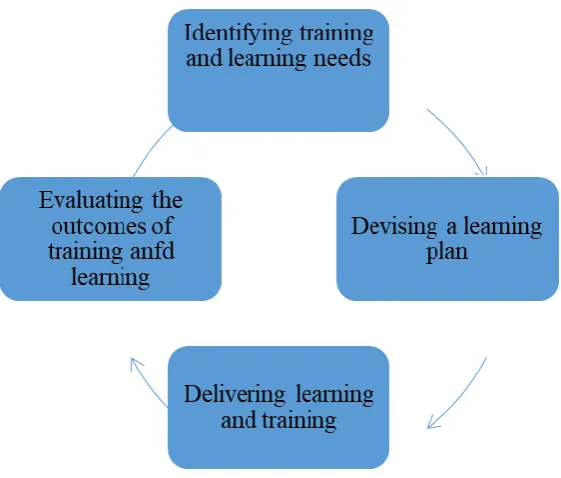
382). Training is critical in every person’s career development. However, to ensure
that training is effective, below are the initial stages of identifying the learning
requirements (Leigh, 1991, p. 15).
Identifying the problem
Seeking a solution
Applying training
Setting objectives
20
Figure 2: Training need process model
Adopted from (Marchington & Wilkinson, 2002, p. 394)
Seafarers can be either trained through e-learning platforms or face to face. Moreover,
E-learning is more advantageous because it is accessible at any time, consistence,
methodical and does not rely on variation between trainers (Marchington & Wilkinson,
2002, p. 407). Despite its importance, the quality of previous educational experiences
has a direct or indirect ability on individuals to acquire knowledge, skills and attitudes
(Buckley & Caple, 2000, p. 3). They added that, besides training and education, the
knowledge and skills gained through experience should not be over looked.
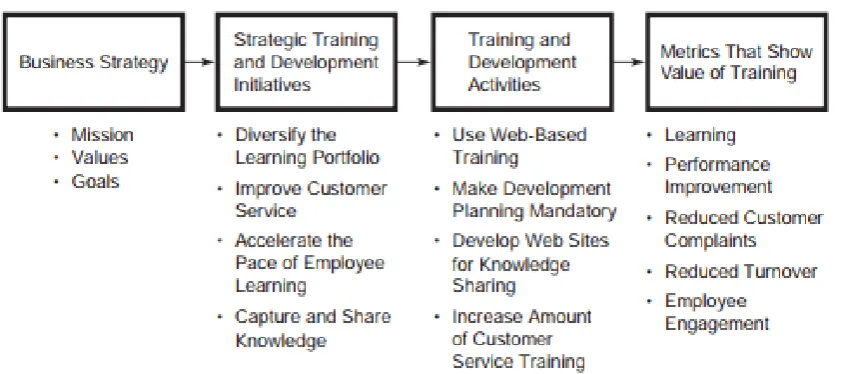
Training is vital not only to individuals, but also to the organizations. Figure 3 below
provides the concept of business strategy and how it is supported by training. Having
a clear mission, values and goals helps the organization to align the training activities
and metrics required for the organizational success. Further, it will help employees to
have a clear picture of how their future looks like and be able to identify areas of focus
21
Figure 3: The strategic training and development process
https://www.google.se/search?q=the+strategic+training+and+development+process
&rlz=1C1CHZL_enSE710SE711&source=lnms&tbm=isch&sa=X&ved=0ahUKEwj
t6uypgKLWAhULmrQKHYkCCnAQ_AUICigB#imgrc=Yod0H1_8FFZcMM:
Moreover, Table 1 below shows strategic training and development initiatives and
their implications for training practices. It is vital to diversify the learning portfolio in
order for organizations to avoid and move away from providing traditional training
programs rather than to provide more learning opportunities that suits more seafarers.
Further, opportunities can be such as, “informal learning that occurs on the job through
interactions with peers, use of technology, including web-based training, new job
experiences, personalized learning opportunities using mentors, coaching, and
feedback customized to the employee needs” (Noe, 2010, p. 69). Organizations require
well-trained employees in order for them to gain and maintain competitive advantage.
22
(Noe, 2010, p. 70)
https://www.google.se/search?rlz=1C1CHZL_enSE710SE711&tbm=isch&sa=1&q=
Strategic+training+and+development+initiatives+and+implications&oq=Strategic+tr
aining+and+development+initiatives+and+implications&gs_l=psy-
ab.3...321008.321008.0.321875.1.1.0.0.0.0.105.105.0j1.1.0....0...1.2.64.psy-ab..0.0.0.Po_PdxUP_CI#imgrc=kd0eh2MYhUloCM:
2.6.2 Succession planning
Mehrabani & Mohamad (2011, p. 371) acknowledged that, today’s world is dynamic
where competition continue to increase, unpredictable environment and work is fluid.
They pointed out that organizations need high potential employees at all levels,
develop more competencies and empower employees for leadership positions. Further,
23
“organization are using succession planning more as a development tool for
employees.” Organization should identify potential employees with the skills for the
future roles, however, this should not neglect those that are still learning and acquiring
knowledge rather be an opportunity to develop them (Estedadi, Shahhoseini, &
Hamidi, 2015, pp. 41-42). Succession planning has a greater impact on seafarer’s
career development if implemented correctly. This will serve as a motivation tool for
seafarers to work harder at ensuring that they will be potential candidates for the
positions they are shadowing. Succession planning has to be applied to all positions
irrespective of the level. It is now vital to have a successor for each job to empower all
employees rather than limiting it to top positions only (Barzinpour, Jafari, & Biuki,
2014).
2.6.3 Mentorship
According to Hunt & Michael (1983, p. 476) mentorship is one of the useful tool for
training and development of individuals to enhance their performance. Further,
mentoring in reality should be about helping, coaching and empowering rather than
supervising, assessing and managing (Braimoh, 2008, p. 5). For a number of years, the
experiential knowledge has not been transferred between seafarers on board, but
today’s merchant ships are using mentoring as a tool to transmit the knowledge
(Goubin, 2012, p. 1). He further noted that, if experiential knowledge is not transferred
appropriately, it could form one of the contributing factor to marine accidents. The
concern with mentoring is about time, but (Goubin, 2012) emphasized that the time it
takes to drink a cup of coffee or smoke a cigarette should be the same time used to
mentor the team. This form as a good method for seafarers to learn on the job.
2.6.4 Job Rotation
Job rotation foster employee learning and increases employee exposure to different
tasks, it enhance curiosity to learn, build a mutual bond amongst employees to work
24
400). Job rotation is used as a mechanism to reduce the employee’s boredom and
ensure that their job is active and interesting. Moreover, it helps employees with
learning and for them to remain motivated at what they do (Ortega, 2001, p. 1363).
Considering the fact, that career recognize the value of work experience, job rotation
is essential to career development, hence, it increases working experience and provide
individuals with adequate exposure (Campion, Cheraskin , & Stevens, 1994, p. 1518).
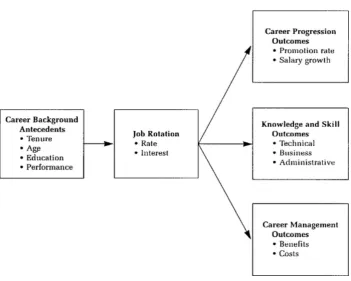
There is a strong relationship between job rotation and career development. Figure 4
below illustrate the conceptual framework for job rotation and career development
relationships.
Figure 4: Conceptual framework for job rotation and career development relationships
https://www.google.se/search?q=Conceptual+framework+for+job+rotation+and+car
eer+development+relationships&rlz=1C1CHZL_enSE710SE711&source=lnms&tb
m=isch&sa=X&ved=0ahUKEwj6_MTppYbWAhWMIpoKHTLyCigQ_AUICigB&b
25
2.7 Impact of technology on career development
It is undeniable that technology is changing things globally and all the changes have
implications on career development, specifically the seafaring career. It has become
crucial to ensure the development of each person’s career considering the “rapid
change, emergence of new technologies, and an increasing rate of knowledge
acquisition” (Baruch, 2006 as cited by Khan, Rajasekar, & Al-Asfour, 2015, p. 88).
Technological changes such as the introduction of unmanned ships has an impact on
seafarer’s career development. This will have an effect on most of the jobs, some might
be eliminated, such as the technical work and some will completely change the usual
way of doing things. A change in how seafarers are trained is required and to introduce
developmental programs that align with such changes. Developing employee career
promotes human capital of any organization. Therefore, organisations should build
talent by employing the right kind of career development practices in order to provide
opportunity for employees to learn and grow (Baruch, 2006).
2.8 Impact of technology on lifelong learning
The influence of technology on lifelong learning enhance creativity, empower and
create a strong support in learning, teaching, and research (Laal, 2013, p. 980). It's
more effective and efficient to transfer knowledge, be able to collaborate with the
others and dissemination of information. Technology promotes efficiency and allows
organizations to retain the knowledge when they have the right tools. Lifelong learning
become more active with the technology whereby people can learn at any time and
make use of electronic tools and remain engaged. Moreover, technology makes
learning a private and personal experience and seems to motivate learners” (Edward,
1997 as cited by Laal, 2011, p. 441).
2.9 Theories of adult learning
Learning is vital to every individual, but the process of learning differ from childhood
26
need theories to describe their learning principles and process. This section discusses
some of the adult education theories. The theories below are selected because they are
suitable and serve as a base of adult learning and it is vital to ensure that they are
considered at all time. The section could not consider more theories due to word
limitation.
2.9.1 Constructivism learning theory
Constructivism learning theory is about self-construction of knowledge (Hein, 1991).
Learners can learn by themselves based on their prior knowledge (Huang, 2002). This
theory allows learners to engage with the environment and build their knowledge on
what they have experienced. It allows them to be open-minded and have more interest
in discovering new ideas. Instead of acquiring the knowledge, the learners have an
opportunity to create the knowledge they consider best for their interest. Besides, this
serve as a motive, retain, and engage the learners. Huang (2002, p.29) noted,
“knowledge is dynamic and is built around the process of discovery”. Vygotsky
believed that individual mental structures and processes can be traced to our
interactions with others and create our thinking processes (Froholdt, 2017). Bruner
believed that learner selects and transforms information, constructs hypotheses, and
makes decisions, relying on a cognitive structure to do so (Froholdt, 2017).
Limitations to this theory is that not every learner is good at making and assessing
conclusions or reflection. Some experts suggest that humans aren’t naturally disposed
to think critically, and high achievers often think more critically than low achievers
(Macpherson and Stanovich, 2007 as cited by Froholdt, 2017).
2.9.2 Experiential learning theory
Experiential learning theory provides a “holistic model of the learning process and a
27
know about how people learn, grow, and develop” (Kolb, Boyatzis, & Mainemelis,
1999, p. 2). Fundamentally, lifelong learning require learning from experiences. Kolb
& Kolb (2005, p. 194) supported the theory, adding that learning is rather a process
than an outcome, therefore, the primary focus should be engaging them and providing
feedback on their effectiveness of learning to enhance their learning process. Although
people do not learn the same way, this theory is applicable to adult learning
(Marchington & Wilkinson, 2002, p. 390). They further stated that this theory will
require skillful management of learning while citing Mumford (1998, p. 2) that
experiential learning can be ineffective, therefore there is a need to have proper
guidance to ensure that the process is quicker and easier (Marchington & Wilkinson ,
2002, p. 390)
Many factors can influence learning. Kolb, Boyatzis, & Mainemelis (1999, p. 7)
pointed out the following:
Personality
Educational specialisation
Extraverted sensing type
Professional career choice
Adaptive competencies
Current job role
Although the theory encourage learning by experience, this theory is limited hence not
all experiences are advantageous for learning and there are possibilities for learners to
learn the wrong way. Further, some learners might underestimate to learn from the
28
2.9.3 Kolb’s learning cycle
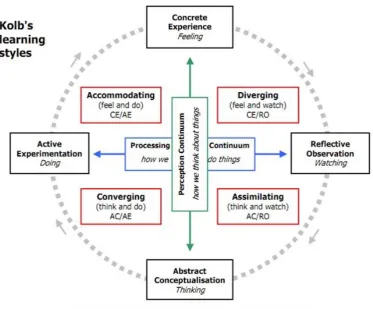
This is the learning cycle, which “reflect the reality of the complex social process of human learning” (Illeris, 2009, p. 223). Kolb , Boyatzis , & Mainemelis (1999, p. 228)
indicated that, there is a need to have abilities that are polar opposite for learners to
choose which set of learning abilities to use in a specific learning situation.
Figure 5: Kolb's Learning styles Source: (Illeris, 2009, p. 23)
During this process, “learners touch all the bases experiencing, reflecting, thinking,
and acting in a recursive process that is responsive to the learning situation and what
29
theory posits, “learning is the major determinant of human development, and how individuals learn shapes the course of their personal development” (Kolb & Kolb,
2005, p. 194). According them, learning is more dynamic than fixed. Limitations to
this theory is that the learners has to rate themselves for their results but does not rate
the learning styles preferences through standards and behaviours, it only give strength
to individuals and not to a group (Kelly, 1997).
2.10 Theories of Motivation
Dixon (2003, p.115) as cited by Manuel (2005, p.25) described motivation as “the total
propensity or level of desire of an individual to behave in a certain manner at a certain
time.” Motivation is “the psychological and social process that starts and maintains goal directed performance” (Pershing, 2006, p. 480). He further stated that it is
motivation that help us generate a mental effort to seek for opportunity. For learning
to take place, mostly specifically adult learning, it is vital to ensure that learners are
motivated to be more self-driven and determined.
2.10.1 Maslow’s Hierarchy of needs
Lifelong learning cause learners to become preoccupied and began to worry about their
psychological needs, and until their needs are met, they remain concerned and their
behaviour remains centered on meeting those needs and sometimes it affect their
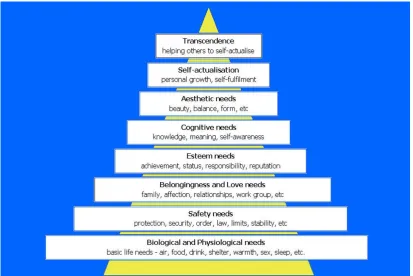
attitudes (Burleson & Thoron, 2013, p. 1). Further, Maslow's (1943, 1954) five stage
model has been expanded to include cognitive and aesthetic needs (Maslow, 1970a)
30
Figure 6: Maslow's hierarchy of needs Source:
https://www.google.se/search?q=the+expanded+hierarchy+of+needs&rlz=1C1CHZL
_enSE710SE711&source=lnms&tbm=isch&sa=X&ved=0ahUKEwiVipjkhrHWAhV
IG5oKHcmdB_UQ_AUICigB#imgrc=awhFikGItZzblM:
In general, individuals are motivated differently, thus, seafarers can only take up the
lifelong learning concept when they are motivated to do so, further they will be more
committed if there are benefits to it. What motivates seafarers in their career is different
from that of other professionals. “Adults are goal-oriented and they like to know how
the educational activity will help them reach their goals” (Collins, 2004, p. 1487).
2.10.2 Self-determination theory
According to Ryan & Deci (2000, p. 68) “Human beings can be proactive and engaged
or, alternatively, passive and alienated, largely as a function of the social conditions in
31
motivate human, particularly their personality and behaviour. Seafarers can be
motivated either intrinsic or extrinsic. This theory is useful especially when learners
try to avoid some academic activities, it helps them to remain driven, committed and
work to get a reward or to avoid punishment further as skills develop and learners
believe they are becoming more competent, “they perceive a sense of control and
self-determination over learning” (Schunk, 2012, p. 389). In maritime, seafarers would
want to abandon learning, but the fact that the industry is changing, they would have
to participate in lifelong learning.
2.11 Sub-conclusion
The literature review acknowledged that lifelong learning is vital to all seafarers. The
maritime industry is changing and continue to change; therefore considering the
concept of lifelong learning would help the industry to have seafarers that are
knowledgeable and skilled. Maritime organisation can consider developing programs
or methods that will assist the seafarers to learn independently and effectively.
Furthermore, cooperation between the maritime institutes and industry can enhance
the process of lifelong learning, accommodating all the seafarers and motivating them
equally to take up their learning process seriously despite the level of profession or
age. This will contribute to their career development and minimise the number of
accidents and incidents. More review is required to identify and design specific
programs that will assist seafarers to acquire what is relevant and critical to their career.
32
CHAPTER 3
3.0 RESEARCH METHODOLOGY
3.1 Introduction
This chapter introduces the methodology used to answer the research questions of this
study. The study employed the quantitative and qualitative research method to collect
data. The chapter discusses and justifies the method used. The chapter further goes to
describe the sources of data, the methods of data analysis and presentation, pilot study,
targeted population, limitation of the study and ethical considerations that the research
addressed.
3.2 Sources of data
In research, data means those facts collected for further investigation (Iro Sani Cln,
2013, p. 40). This study relied on primary data as a source of data collection because
primary data enable the researcher to obtain data from the experts in the field, hence
they are well exposed to the environment and understand the business fully. The study
constructed open-ended questionnaires, which were sent to Namibia and
semi-structured interviews conducted telephonically to gain information on the seafarer's
career development through lifelong learning in Namibia.
3.2.1 Questionnaires
The study has developed an open-ended questionnaire that was sent to Namibia via
33
easiest way of getting more participants. Open-ended questions provided the
respondents with the opportunity to explore their opinions or expertise in detail as
identified by (Malcolm, 2012 as cited by Afful, 2016, p.36). The questionnaire
developed was to accommodate seafarers who do not have access to the internet to be
able to partake in the study. The questionnaires were presented to responders with clear
instructions on how to complete. Further, the flow of questions is designed to keep the
respondent moving toward completion of the questionnaire with interest.
All completed questionnaires were sent back to the researcher for research
proceedings. The researcher captured all the received questionnaires on a google sheet
to be able to put together all the findings and analyze the data. This instrument has
been chosen because it was easier to obtain data from seafarers at all levels and be able
to obtain views that have answered the research questions and met the study objectives.
Using questionnaire is advantageous because it is cost effective in terms of money and
time, and it is convenient hence, responders had to complete the questionnaire at their
most suitable time, give less pressure for immediate response and reduce interviewer’s
bias (Gillham, 2008 as cited by Mabuti, 2013, p.57). Further, it is free from the bias of
the researcher.
Responders had adequate time to provide answers within their own space, and those
who are not easily approachable, we reached conveniently. Their feedback provided a
greater view and understanding on how to enhance the seafarer’s career development
in Namibia. Therefore, the questionnaire was developed only to assess if Namibia
seafarers accept the notion of lifelong learning, or propose new strategies to enhance