Available online on 15.09.2017 athttp://jddtonline.info
Journal of Drug Delivery and Therapeutics
Open Access to Pharmaceutical and Medical Research© 2011-17, publisher and licensee JDDT, This is an Open Access article which permits unrestricted noncommercial use, provided the original work is properly cited
Open
Access Research Article
FORMULATION, EVALUATION AND OPTIMIZATION OF RANITIDINE
HYDROCHLORIDE FLOATING TABLETS WITH IMPROVED GI ABSORPTION
Arun Kumar1*, Anil Midda2, Mahesh Jhanjharia2
1
Research Scholar, Jaipur School of Pharmacy, Maharaj Vinayak Global University, Jaipur, Rajasthan, India 2
Professor, OPJS University, Churu, Rajasthan, India
ABSTRACT
Oral drug delivery system represents one of the main areas of sustained drug delivery system. Floating drug delivery system related to oral sustained drug delivery system group, which is capable of floating in the stomach for an exteneded period of time. Ranitidine hydrochloride is a histamine H2-receptor antagonist. It is widely prescribed in active duodenal ulcers, gastric ulcers, Zollinger-Ellison syndrome and GERD. A traditional oral sustained release formulation releases most of the drug at the colon, thus the drug should have absorption window either in the colon or throughout the gastrointestinal tract. Ranitidine is absorbed only in the initial part of the small intestine and has 50% absolute bioavailability. The aim of the present research is to provide a gastroretentive system for sustained release of Ranitidine hydrochloride in the upper part of the gastrointestinal tract in the form of floating tablet. Gastroretentive tablets of Ranitidine Hydrochloride were prepared by direct compression technique using polymers like Carbopol, Chitosan, Styrene-divinylbenzene and the mixture of Magnesium stearate as a lubricant, Talc as a glidant and Lactose as fillers. The results of the present research show that the chitosan and carbopol 940 mixed matrices can be used to modify release rates in hydrophilic matrix tablets prepared by direct compression. Incorporation of the highly porous low-density copolymer in the matrix tablets provides densities that are lower than the density of the release medium. 17% w/w low density copolymer (based on the mass of the tablet) was sufficient to achieve proper in vitro floating behavior for at least 8 h.
Keywords: Floating drug delivery system, Ranitidine hydrochloride, Gastrointestinal tract, Carbopol, Chitosan
Article Info:Received 20 July, 2017; Review Completed 14 Sep, 2017; Accepted 14 Sep, 2017; Available online 15 Sep, 2017
Cite this article as:
Kumar A, Midda A, Jhanjharia M, Formulation, evaluation and optimization of ranitidine hydrochloride floating tablets with improved gi absorption, Journal of Drug Delivery and Therapeutics. 2017; 7(5):114-119
*Address for Correspondence
Arun Kumar, Research Scholar, Jaipur School of Pharmacy, Jaipur, Rajasthan, India, Email: [email protected]
INTRODUCTION
Gastro retentive drug delivery systems provide dosage forms with a longer residence time in the stomach and
sustained-release behavior, which can increase
bioavailability as well as has local action on the stomach1,2. Increasing gastric residence time can be achieved either by floating systems that cause buoyancy above gastric fluid3, 4, 5 high-density systems that sink to the bottom of the stomach6, bioadhesive systems that adhere to mucosal surfaces7, or by expandable systems that have limited emptying through the stomach pylorus due to swelling or unfolding to a larger size8.
Floating Drug delivery system (FDDS) is an effective technology to prolong the gastric retention time in order to improve the bioavailability of drug. FDDS are the systems that float immediately upon contact with gastric
fluid present promising approaches for increasing the bioavailability of drugs with absorption windows in the upper intestine.
Ranitidine hydrochloride is a histamine H2-receptor antagonist. It is widely prescribed in active duodenal ulcers, gastric ulcers, Zollinger-Ellison syndrome and GERD. A traditional oral sustained release formulation releases most of the drug at the colon, thus the drug should have absorption window either in the colon or throughout the gastrointestinal tract. Ranitidine is absorbed only in the initial part of the small intestine
and has 50% absolute bioavailability.9 Moreover,
dosage forms of ranitidine hydrochloride prepared with conventional technology may not be successful.
Landgraf et al. discovered that certain Cavilink
polymers exhibit surprising release characteristics. When used as carriers for active pharmaceuticals, these polymers released their contents over a 24-hour period, following near zero-order kinetics. Thus, these materials are ideally suited for providing constant blood levels of many drugs. It appears the zero order release is independent of drug composition or form, and entirely
dependent upon morphology of particular Cavilink
polymers. The low density material used in this research
work is CavilinkTM PSDVB Powder, i.e. Poly (Styrene-divinylbenzene Copolymer).
The present investigation concerns the Gastroretentive tablets of Ranitidine Hydrochloride were by direct compression technique using polymers like Carbopol, Carbopol 940, sodium CMC, Styrene-divinylbenzene and the mixture of Magnesium stearate as a lubricant, Talc as a glidant and Lactose as fillers.
MATERIALS
Following materials have used in this study and all other materials used were of pharmaceutical grade.
Material supplier
Ranitidine hydrochloride Mann Pharmaceuticals Pvt. Ltd., Mehsana, India.
Poly (Styrene Divinyl Benzene) (PSDVB) Polygenetics Inc. (CA, USA)
Ethanol S.D Fine Chemicals Ltd., Mumbai, India
Hdrochloric Acid Qualigen Chemicals, India.
Carbopol 940 S. D. Fine Chemicals Ltd., Mumbai, India.
Dibasic calcium phosphate S. D. Fine Chemicals Ltd.
Lactose S. D. Fine Chemicals Ltd.
Talc S. D. Fine Chemicals Ltd.
Magnesium stearate S. D. Fine Chemicals Ltd.
METHODS
Estimation of ranitidine hydrochloride
A solution of ranitidine hydrochloride was prepared in 0.1 N HCl (pH 1.2) and UV spectrum was taken using Shimadzu UV-1601 UV/Vis double beam
spectrophotometer. The UV maxima of ranitidine hydrochloride were found to be 314 nm in 0.1 N HCl.
Preparation of standard calibration curve of ranitidine hydrochloride
Ranitidine Hydrochloride (10 mg) was dissolved in 0.1 N HCl and volume was made up to 100 ml in 100 ml volumetric flask. This solution (100 mcg/ml) was further diluted with 0.1 N HCl to obtain solution of 10 to 100 mcg/ml. Absorbance of each solution was measured at 314 nm using UV/Vis double beam spectrophotometer and 0.1 N HCl as reference standard. The r2 of the calibration curve was found to be 0.997. The results of standard curve preparation are shown in the figure 1.
Figure 1: standard curve of ranitidine hydrochloride
Preparation of floating tablets
Different tablets formulations were prepared using direct compression technique. All the powders were passed though 80 mesh sieve. Required quantity of drug, matrix polymer and low-density copolymer were mixed thoroughly. Talc and magnesium stearate were finally added as glident and lubricant respectively. The blend was compressed (12 mm diameter, flat punches) using multipunch tablet compression machine. Each tablet contained 336 mg of ranitidine hydrochloride (336 mg equivalent to 300 mg of ranitidine) and other pharmaceutical ingredients as listed in table in each section.
Evaluation of powder blend 6.8
Angle of repose
The angle of repose of the powder blend was determined by using funnel method. The accurately weighed powder were taken in a funnel. The height of the funnel was adjusted in such a way that the tip of the funnel just touched the apex of the heap of the powder. The diameter of the powder cone was measured and angle of repose was calculated by using the equation3
Where h and r are the height and radius of the powder cone.
Average values are shown in Table
Bulk density
Both untapped bulk density, ρu (often called loose or
aerated bulk density) and tapped bulk density, ρb were
determined. A amount of powder blend was introduced in a 10 ml measuring cylinder up to 9 ml volume.Then the weight of powder blend was determined by
y = 0.036x + 0.065 R² = 0.997
0 0.2 0.4 0.6 0.8 1 1.2 1.4
0 10 20 30 40
A
B
SO
R
B
A
NC
E.
CONC.(µg/ml)
ABS.
substracting the weight of empty measuring cylinder from final weight of measuring cylinder. The cylinder was allowed to fall onto a hard surface from a height of 2.5 cm at 2 sec intervals. The tapping was continued till no volume change was noted. ρu and ρb were determined
by following formulas; 3
Compressibility Index
An important measure that can be obtained from bulk density determinations is the percent compressibility C, which is defined as follows 3
Total Porosity
Total porosity was determined by measuring the volume occupied by a selected weight of a powder (Vbulk) and the true volume of the powder blend (The space occupied by the powder exclusive of spaces greater than the intermolecular spaces, V)
Porosity (%)=Vbulk-V/Vbulk x 100
Drug Content
An accurately weight amount of ranitidine
hydrochloride powder blend (100 mg) was extracted with 0.1 N HCl and the solution was filter through 0.45 membrane. The absorbance was measured at 314 nm after suitable dilution using a UV/Vis double beam spectrophotometer.
Evaluation of tablets
Weight variation test
Weigh 20 tablets selected at random and calculate the average weight. Not more than two of the individual weights deviate from the average weight by more than the percentage limits. As per Indian Pharmacopoeia specification.J2
Drug content
Five tablets were weighed and powdered. The quantity equivalent to 500 mg of Ranitidine axetil was weighed accurately and taken in 500-ml volumetric flask. 200 milliliters of 0.1N HCl was added, sonicated for 5 min, made up to 500 ml with 0.1 N HCl, and filtered. From above solution further dilution was made and the drug concentration was determined at 314 nm by using UV spectrophotometer. Drug content was calculated by
using absorbance at wavelength 314 nm. 3
Hardness
The hardness of tablet was carried out by using Pfizer type hardness tester. The hardness of the tablet kg / cm² was measured.4
Thickness
Control of physical dimension of the tablets such as sizes and thickness is essential for consumer acceptance and to maintain tablet to tablet uniformity. The dimensional specifications were measured using verniar calipers. Six tablets from each batch were tested and average values were calculated. The thickness of the tablet is mostly related to the tablet hardness can be uses as initial control parameter. 4
In Vitro dissolution studies
The release rate of drug from floating tablets was
determined using The United States Pharmacopoeia
(USP) XXIV dissolution testing apparatus II (paddle method). The dissolution test was performed using 900 ml of 0.1 N HCl, at 37 0.5C and 75 rpm.9 A sample (10 ml) of the solution was withdrawn from the dissolution apparatus hourly for 8 hours, and the samples were replaced with fresh dissolution medium. The samples were filtered through a 0.45 membrane filter and diluted to a suitable concentration with 0.1N HCl. Absorbance of these solutions was measured at
314 nm using a UV/Vis double beam
spectrophotometer. Cumulative percentage of drug release was calculated using the equation obtained from a standard curve.6
In vitro buoyancy studies
The tablets were placed in 100 ml beaker containing 0.1 N HCl. The time required for the tablets to rise to the surface and float was determined as floating lag time. The pictorial results of in vitro buoyancy study of the best batch is shown in figure 5
Swelling index
The swelling index of tablets was determined n 0.1 N HCl (pH 1.2) at room temperature. The swollen weight of the tablets was determined at predefined time intervals. The swelling index was calculated by the following equation:
Swelling index = –
Where, W0 is the initial weight of tablet, and Wt is the weight of the tablet at time t.
RESULTS AND DISCUSSIONS
The micromeritic properties of the powder blend of the best batch formulation were checked, wherein the angle of repose was found to be around 28.610, which shows good flowing property of the blend. The loose bulk density and the tapped bulk density were found to be 0.117 g/ml and 0.139 g/ml respectively which is good. The compressibility index and total porosity was observed to be 16.80 % and 16.44 %. The drug content was in the range of 99.89 – 100.06 %, which passes the official requirement. The drug content in all the batches of ranitidine hydrochloride floating tablets was in the range of 98.69 to 101.25 %. This ensured the uniformity of the drug content in the tablets. Weight variation data of the prepared tablets indicated no significant difference in the weight of individual tablet from the average value. Hardness of the prepared tablets was
Thickness of all the tablets was found in the range of 5.25 ± 0.01 mm.
In an attempt to determine drug: polymer ratio formulation batch F1 was prepared. Dissolution of the tablets was carried out using 0.1 N HCl at 37 0.5C (900 ml using USP apparatus II at 75 rpm.) The drug release was measured. The formulated batch was evaluated for the in vitro buoyancy test.
Table 1: Composition of formulation F1 and F2 of floating tablets
Ingredients F1 F2
Ranitidine hydrochloride 336 336
Chitosan 150 -
Carbopol 940 - 200
Magnesium stearate 5 5
Talc 10 10
* All the quantities are in mg.
Chitosan was selected as matrix forming polymer since the polymer has been investigated as a potential adjuvant for swellable controlled drug delivery systems. Chitosan was taken as matrixing polymer in the concentration of 30 % w/w. The dissolution of batch F1 in the first hour was 93.56 %. It was thus concluded that chitosan alone was not a proper choice to produce required integrity of the tablet and prolonged drug release. Further it was decided to select carbopol 940 as the matrix forming polymer. 11
Formulation batch F2 was prepared using carbopol 940 as the matrix forming agent. It is a polymer of acrylic
acid and forms hydrogel in water or alkaline solution due to hydration of the carboxyl groups in its structure. For drugs that are primarily released in the acidic region of the gastrointestinal tract (GIT), carbopol 940 seemed to be most suitable polymer.11 Carbopol 940 in the concentration of approximately 36 % in the formulated tablets led to gradual swelling of the tablet. The drug release was in a controlled manner for a period of >12 hours. The dissolution profile obtained in the first hour was very less which was 22.26 %. The reading obtained at 8 hours was 74.56 % which was much below our requirement. But at the same time the problem of erosion and loss of integrity was over come with the use of carbopol 940.
Figure 2: % CPR of Formulation F1 and F2
Effect of drug: polymer ratio on drug release
To determine drug: polymer ratio formulation batch F3, F4 and F5 were prepared with a blend of chitosan and carbopol 940 in different ratios.
Table 2: Composition of formulation F3, F4 and F5 of floating tablets
Ingredients F3 F4 F5
Ranitidine hydrochloride 336 336 336
Chitosan 100 25 50
Carbopol 940 100 100 100
Magnesium stearate 5 5 5
Talc 10 10 10
* All the quantities are in mg.
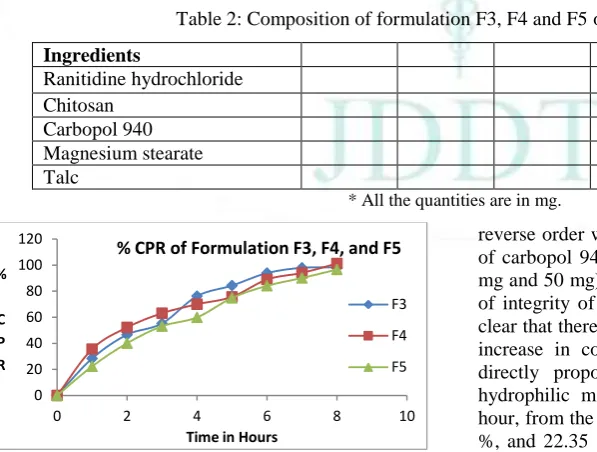
Figure 3: % CPR of Formulation F3, F4, and F5
Various ratios of chitosan and carbopol 940 (1:1, 1:4, 1:2) were taken in Formulation in F3, F4 and F5 respectively. At the same time batch F3 dispersed completely in 7 hours and batch F4 and F5 dispersed completely in 8 hours. In the batches containing more concentration of chitosan (100 mg) compared to carbopol 940 (25 mg, 50 mg and 100 mg) there was erosion of the tablets because of the chitosan. Then a
reverse order was followed i.e. with more concentration of carbopol 940 (100 mg) as compared to chitosan (25 mg and 50 mg) as batches F4 and F5. There was no loss of integrity of the tablets in this case. Thus, it became clear that there was decrease in loss of integrity with the increase in concentration of carbopol 940. This was directly proportional to the drug release from the hydrophilic matrices. The drug release after the first hour, from the formulation batches F4 and F5 was 35.58 %, and 22.35 % respectively. The in vitro drug release after 8 hours, from the formulation batches F4 and F5 was 101.23 %, and 96.66 % respectively.
Effect of buoyancy by low density copolymer (PSDVB)
To study the effect of buoyancy by low density copolymer i.e. PSDVB on in vitro buoyancy and drug
dissolution profile different formulation batches
containing 70 and 100 mg PSDVB copolymer i.e. approximately 12 % and 17 % were formulated.
0 20 40 60 80 100 120
0 2 4 6 8 10 12 14
%
C
PR
Time in Hours
% CPR of Formulation F1, F2
F1
F2
0 20 40 60 80 100 120
0 2 4 6 8 10
%
C P R
Time in Hours
% CPR of Formulation F3, F4, and F5
F3
F4
Table 3: Composition of formulation F6 and F7 of floating tablets
Ingredients F6 F7
Ranitidine hydrochloride 336 336
Chitosan Carbopol 940
50 100
50 100
Poly (Styrene-divinylbenzene) 70 100
Magnesium stearate 5 5
Talc 10 10
* All the quantities are in mg
Table 4: Micromeritic properties of powder blend
Powder blend
Angle of Repose (0)
Loose Bulk Density (g/ml)
Tapped Bulk Density (g/ml)
Compressibility Index (%)
Total Porosity (%)
Drug Content (%)
F7 28.61 0.117 0.139 16.68 16.44 98.69 – 101.25
Table 5: Various evaluation parameter of tablets
Tablets Batch Weight variation test (%) Drug content (%) Hardness (kg/cm2) Thickness (mm)
F7 Av. ± 1.58 100 ± 1.25 5.9 ± 0.2 5.25 ± 0.01
All the values are expressed as mean SE.
Figure 4: % CPR of Formulation F6, and F7
The effect of PSDVB copolymer on drug release profile
was checked out on formulations containing
approximately 12 % and 17 % of the copolymer. The results obtained from in vitro dissolution study revealed that there is no significant change in drug dissolution profile with increase or decrease in PSDVB low density copolymer concentration. During the in vitro buoyancy test, a significant change was observed in the floating lag time of the formulation with increased amount of PSDVB. No floating of the tablets was achieved in
lower concentrations of PSDVB copolymer ie. upto 12 %. Evaluating all the parameters batch F7 was selected as the optimized batch since it had the minimum concentration of low density copolymer required to float the tablets.
In vitro Floating Behaviour of batch F7
The pictorial results of in vitro buoyancy study of the best batch is shown in figure 5, which clearly depicts the floating lag time, stable and persistent buoyancy and swelling characteristic of tablet.
Swelling index of batch F7
Tablets composed of polymeric matrices build a gel layer around the tablet core when they come in contact with water this gel layer governs the drug release. Kinetics of swelling is important because the gel barrier is formed with water penetration. Swelling is also vital factor to ensure floating. To obtain floating, the balance between swelling and water acceptance must be restored. The swelling index of the best batch after 8 hours was 1.31 which may be because of high viscosity and high water retention property of carbopol 940.
At initial time After 8 hour
Figure 5: Swelling index of batch F7
0 50 100 150
0 2 4 6 8 10
%
C
P
R
Time in Hours
% CPR of Formulation F6 and F7
Kinetic modeling of drug release of batch F7
The dissolution profile of the best batch was fitted to zero-order, first-order, Higuchi and Hixon-Crowell models to ascertain the kinetic modeling of drug release. The method of Bamba et al was adopted for deciding the most appropriate model. To analyze the mechanism of drug release from the matrix tablets, the release data were fitted to the following equations:
Zero-order equation:
m = k0t
Where m is the % drug unreleased at time t, and k0 is the
release rate.
First-order equation:
m = ea x e-bt
Where a is the intercept and b is the slope
Higuchi’s equation:
m = 100 – q x sq root of time
Where q is the Higuchi constant (% per sq root of time)
Hixon – Crowell equation:
m = ((100) x (1/3) – k x t) 3
Where k is Hixon Crowell constant (mass/(time))1/3
Table 6: Results of model fitting of batch F7
Intercept Slope R2 F-value
Zero-order plot First-order plot Higuchi plot Hixon Crowell
+ 18.518 + 4.843 - 1.511 + 5.571
+ 0.188 + 0.756 + 4.655 + 0.384
0.9115 0.5297 0.9944 0.9584
106.72 141.17 6.81 10.06
CONCLUSION
In the curreny research work blend of the chitosan – carbopol 940 can be used to modify rate of release in prepared tablets. Addition of the porous low density copolymer in the tablets provides densities that are lower than the density of the release medium. Around 16 % w/w this low density copolyme was sufficient to obtain desired in vitro floating behavior for at least 8 h. Extended floating times are achieved due to the air entrapped within the low density copolymer particles, which is only slowly removed from the system upon contact with the release medium. As expected, tablets without low density copolymer (e.g., consisting of 50 mg chitosan, 100 mg carbopol 940 and 336 mg ranitidine hydrochloride first sank before floating, showing no floating lag times. Adding only 17% w/w (based on the mass of the tablet) of the PSDVB copolymer reduced the lag times to 10 seconds. The other most important thing that can be concluded from the study was that the formulation and process variables play sole role in the release behavior of the matrices. Faster release of the drug from the hydrophilic matrix was probably due to faster dissolution of the highly water-soluble drug from the core and its diffusion out of the matrix forming the pores for entry of solvent molecules. So, we can obtain a formulation that has desired release profile by adjusting different parameters that ultimately effect release behavior of the matrices.
REFERENCES
1. Kagan L, Lapidot N, Afargan M, et al. Gastroretentive accordion pill: enhancement of riboflavin bioavailability in humans. J Control Release. 2006; 113:208–215.
2. Murphy CS, Pillay V, Choonara YE, Du Toit LC. Gastroretentive drug delivery systems: current developments in novel system design and evaluation. Curr Drug Deliv. 2009; 6:451-460.
3. Gurjar GS, Bhowmick M, Rathi V, Rathi J, Design and evaluation of extended release cefuroxime axetil floating tablets with improved G.I. absorption, Journal of Drug Delivery and Therapeutics. 2017; 7(1):49-59, DOI: http://dx.doi.org/10.22270/jddt.v7i1.1352
4. Rao NGR, Laharika M, Kistayya C, Design and development of simvastatin gastroretentive tablets for controlled release, Journal of Drug Delivery and Therapeutics. 2017; 7(1):30-36. DOI: http://dx.doi.org/10.22270/jddt.v7i1.1353
5. Pandya K, Agrawal P, Dashora A, Sahu D, Garg R, Pareta KL, Menaria M, Joshi B, Formulation and evaluation of oral floatable in-situ gel of ranitidine hydrochloride, Journal of Drug Delivery & Therapeutics, 2013; 3(3):90-97
6. Hwang SJ, Park H, Park K. Gastric retentive drug-delivery systems. Crit Rev Ther Drug Carrier Syst. 1998; 15(3):243– 284.
7. Kapoor D, Sharma S, Patel M, Vyas RB, Lad C, Fabrication Development, Optimization and Characterization of Gastroretentive Microspheres of An Antihypertensive Drug, Journal of drug delivery and therapeutics. 2014; 4(1):31-35 8. Deshpande AA, Shah NH, Rhodes CT, Malick W.
Development of a novel controlled release system for gastric retention. Pharm Res. 1997; 14:815-819.
9. Grant S. Ranitidine: an updated review of its pharmacodynamic and pharmacokinetic properties and therapeutic use in peptic ulcer and other allied diseases. Drugs. 1989; 37:801-870.
10. Basit Abdul W. and Lacey Larry L., Colonic metabolism of ranitidine: implications for its delivery and absorption. Int. J. Pharm. Sci. 2001; 227(1-2):157 – 165.