http://www.sciencepublishinggroup.com/j/ijde doi: 10.11648/j.ijde.20170204.11
Determination of Knowledge Levels of Nurses on Insulin
Applications
Ülkü Saygılı
1, Serap Parlar Kılıç
21
Health Care Services Department, Selcuk University, Konya, Turkey
2
Nursing Department, Fırat University, Elazığ, Turkey
Email address:
[email protected] (Ü. Saygılı)
*
Corresponding author
To cite this article:
Ülkü Saygılı, Serap Parlar Kılıç. Determination of Knowledge Levels of Nurses on Insulin Applications. International Journal of Diabetes and Endocrinology. Vol. 2, No. 4, 2017, pp. 50-54. doi: 10.11648/j.ijde.20170204.11
Received: December 10, 2017; Accepted: December 25, 2017; Published: January 15, 2018
Abstract:
Diabetes Mellitus (DM) is a complex and common metabolic disease involved multiple organs disorders. Diabetes Mellitus characteristics features is high blood glucose level, leading to morbidity and mortality in world wide. In the current study, we aimed to assess the level of knowledge about insulin treatment and determination of educational requirements of the nurses who provide treatment and care for the diabetic individual. 101 nurses who agreed to fill out the questionnaire were included for this descriptive and cross sectional study. The obtained data wase valuated with number, percentage and average. Nurses; average age is 32.95±6.21, average of working years is 8.5±1.32 years, 62.4% are married, 37.6% are single and 67.3 % are undergraduate. It was determined that 60.4% of the nurses had received in-service training for diabetes treatment and 81.2% of them had regularly followed the diabetes treatment. It has been identified that 92.1% of the nurses knew the effects of insulin treatment, 95.1% knew the insulin administration routes, 87.1% knew the insulin injection application areas, 90.1% knew the proper storage conditions of insulin, 85.0% knew the normal value of blood sugar. According to the results of the study, it is identified that the know ledge level of the nurses about diabetes is fairly enough. They are aware of the fact that the insulin treatment education (vocational school of health, university) should be given entirely during occupational training. It is also important that the education need so f the nurses should be identified and supported by in service training. This will be surely helpful for the nurses especially for those who are new at their jobs.Keywords:
Diabetes Mellitus, Insulin Treatment, Nurse1. Introduction
Chronic diseases are the major cause of morbidity and mortality all over the World [1, 2, 3]. Diabetes Mellitus is a chronic disease and its prevalence is rapidly increasing [2]. Existing studies have revealed definite global increase in DM incidence and prevalence [3-6]. According to the International Diabetes Federation it is estimated that there were 44.3 million people in North America, 29.6 million people in South and Central America, 59.8 million people in Europe, 415 million people worldwide in 2015, and is going to be 642 million people by 2040 [4]. According to the World Health Organization data, while the visibility incidence of DM below the age of 18 is 4.7% in 1980, it is reported that this rate has increased 8.5% in 2014 [5]. According to the results of the Turkish Diabetes Epidemiology study
conducted in Turkey in 1997-1998, it was found that prevalence of type 2 diabetes was %7.2 and impaired glucose tolerance frequency 6% [7]. In Recently published Turkish Diabetes Epidemiology study II; 26,499 people over the age of 20 are examined across the country and the frequency of type 2 diabetes has increased significantly over the past years and the rate has reached 13.7% [8].
It is indicated that the main causes of this increase in DM prevalence are population aging, unhealthy nutrition, obesity and sedentary lifestyle [2, 9].
DM; is a multi-factor disease that involves complex interactions between genes, the environment and individual characteristics and represents a serious public health problem in many developed countries [12]. Diabetes Mellitus is divided into four groups as Type 1, Type 2, gestational diabetes and diabetes mellitus. The part 90% constitute non- insulin dependent diabetes [13-15]. In Type 1 Diabetes there is insulin deficiency resulting from auto immune destruction of insulin-releasing beta cells. Insulin level is normal in Type 2 Diabetes but blood glucose levels cannot be normalized due to receptor resistance. Environmental factors such as low physical activity and obesity are important risk factors for the development of this type of diabetes [14, 16].
The main purpose of Diabetes Mellitus treatment is; prevent the development of diabetic complications that worsen the quality of life or even cause deaths [17]. At the same time, keeping blood sugar at a normal or near-normal level, the elimination of symptoms, the prevention of acute and chronic complications and thus the improvement of the quality of life are also among the main aims. Insulin therapy is used in diabetes treatment in many cases, especially in the later stages of Type 1 and Type 2 diabetes. The best way to keep blood sugar at normal levels in individuals with insulin-dependent diabetes is the effective administration of insulin therapy [18, 19]. Insulin is the highest order on World Health Organization main drug list and It is used in almost all countries with both short and immediate effect. The proportion of Type 2 diabetes patients treated with insulin is between 10 % and 25% [3, 20].
It is the responsibility of the entire health team to provide better control and comfort by administering insulin therapy for diabetic individual. With an effective
patient education, the negative consequences of
incomplete or in correct administration of diabetes treatment will reduce, the quality of life of diabetic individuals will be affected positively and the financial burden both on the country and the person will also be reduced. One of the most important factors in providing metabolic control on diabetic individuals using insulin is the correct application of insulin therapy. Health care workers and diabetic patients need to be educated about new developments on benefits of insulin, as well as insulin preparations and insulin injection system. Nurses should have information about how insulin works, when and why insulin is needed, how dosing regimens and how changes are made [19, 21]. In this study; it is aimed to determine the level of know ledge about insulin treatment and to determine the educational needs in this direction of nurses who provide treatment and care for sick individuals.
2.Materials and Methods
This descriptive and cross-sectional study was conducted with nurses working a university hospital. In the universe of work was formed by 405 nurses working in university hospital and sampling was enabled by 101 nurses
volunteering to participate in the survey. As a means of data collection in research; as a result of the necessary literature search, a questionnaire form composed of researchers and composed of various questions was used [22-25]. The questionnaire consists of two parts:
In the first part, socio-demographic data consisting of 6 questions including age, gender, marital status, education status, clinical study and study period of nurses were obtained. In the second part, there were 20 questions that questioned the know ledge of nurses about diabetes and insulin treatment. There is some information such as insulin
effects, complications of insulin treatment, insulin
administration routes, type according to duration of action, points to be considered when insulin is administered, how insulin is maintained hypoglycaemia indications and treatment, normal value of fasting blood sugar. Completing the questionnaire form collected by face-to-face interview method is completed in approximately 10-15 minutes. For the execution of the work the official authorization was obtained from the head of the hospital where there search was conducted. Ethical principles were taken into consideration during the implementation of the research. Nurses who participated in the study and there search were informed about the results obtained from there search. S PSS18 package program was used in the evaluation of the data. The obtained data were evaluated by number, percent distributions and average.
3. Results
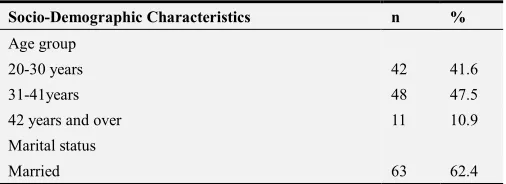
When the findings obtained from the socio-demographic characteristics of the nurses are examined; it is observed that average age of them was 32.95±6.21, average of the study year was 8.5±1.32, 62.4% were married and the majority had graduated (67.3%) (Table 1).
In the study, 60.4% of the nurses stated that they had received in-service training for diabetes treatment, 81.2% had regularly followed the diabetes treatment and 75.2% wanted to receive training in diabetes treatment (Table 2).
When the distribution of answers given by nurses to information question s about insulin treatment is examined, it has been determined that the majority of nurses know the effects of insulin treatment, the causes of hypoglycaemia, insulin administration routes, insulin injection administration sites, proper storage conditions of insulin and the normal value of blood sugar (95.1%, 81.2%, 92.1%, 87.1%, 90.1%, 85.0%, respectively) (Table 3).
Table 1. Classification of Nurses by Socio-Demographic Characteristics
Socio-Demographic Characteristics n %
Age group
20-30 years 42 41.6
31-41years 48 47.5
42 years and over 11 10.9
Marital status
Socio-Demographic Characteristics n %
Single 38 37.6
Education status
Health Vocational High School Graduation 4 4.0
Associate Degree 25 24.8
Undergraduate degree 68 67.2
Master Degree 4 4.0
Year of study
0-5years 42 41.6
6-11years 38 37.6
12 years and over 21 20.8
Total 101 100
Table 2. Classification of Nurses according to Education Status of Diabetes
Treatment
Features n %
In-service training for DM treatment
Yes 61 60.4
No 40 39.9
For DM Treatment Posting Status
Yes 82 81.2
No 19 18.8
For DM Treatment Education Demand Status
Yes 76 75.2
No 25 24.8
Total 101 100
Table 3. Classification of Nurses According to the Answers to Information Questions about Insulin Therapy.
Known Unknown Partiallyknown
n % n % n %
Effectsofinsulin 96 95.1 5 4.9 -
Complications of insulin therapy 51 50.4 13 12.8 37 36.6
Hypoglycaemia indications 59 58.4 6 5.9 36 35.7
Causes of hypoglycemia 82 81.2 8 7.9 11 10.9
Hypoglycemia treatment 81 80.2 10 9.9 10 9.9
Insulin administration routes 93 92.0 4 4.0 4 4.0
Insulin infusion pump 11 10.9 90 89.1 -
Insulin injection applicationareas 88 87.1 12 11.9 1 1.0
Variation according to duration of insulin action 52 51.5 15 14.9 34 33.7
Insulin mixing 87 86.1 14 13.9 - -
Insulin hiding 91 90.0 4 3.9 6 5.9
The normal value of fasting blood sugar 85 84.2 15 14.8 - -
Equality of cc insulin to unit 45 44.6 56 55.4 - -
4. Discussion
One of the most important factors in achieving metabolic control in diabetic individuals using insulin is the correct application of insulin therapy [6]. If insulin therapy is not applied correctly, skin complications, hyperglycaemia or hypoglycaemia develop is inevitable [22]. Although the majority of nurses in the study indicated that their knowledge of insulin treatment was adequate, it was determined that the majority wanted to receive training in diabetes and treatment. This result is important in that nurses ' knowledge is not only sufficient but also indicates that they want to update their knowledge. Nurses found themselves to be inadequate in relation to diabetic patient care and education [26]. Ongun and colleagues (2013) also found that all diabetic nurses wanted to receive more education about the care of diabetic sand that this education should be privatized for the subject areas. It was determined that 58.4% of the nurses knew hypoglycaemia symptoms. This shows us that although more than half of the nurses are aware of signs of hypoglycaemia, the other half is partially or completely inadequate. In Uçan and his friends’ (2007) study, the inadequate response is an indication that the patients are at risk for this complication [24].
In our study, 50.4% of the nurses knew the complications of insulin therapy. Many complications can develop in the stage of treatment of diabetic individuals. In the study of Aslan and Korkmaz (2015); 33.6% of the patients were found to have pain /pain when using insulin, 32.7% of stiffness/
swelling, 54.5% of bruises, 79.1% of hypoglycaemia and 66.4% of hyperglycaemia [27]. It is recommended to use the needle once to prevent painful injection and damage to the skin [28]. Another reason why the pen needles should be disposable is the prevention of block age of pencil needles. In other work; it has been reported that higher dose insulin administration may lead to a faster leak, and it has been proposed to divide large doses. Higher insulin doses slow down insulin absorption, and It is also stated that subcutaneous administration of insulin over 50 lU may lead to more pain and leak age [27]. In another study interfering with insulin injection therapy, 20% of diabetics were found to have an injection anxiety or scar, 27% had injection sensitivity, and 37% had injection pain [29].
Significant duties fall in to diabetes educators, especially diabetes nurses. First, the diabetic individual, who will start insulin therapy or follow his or her own blood sugar, should be included in individual and group education programs and enabled to express feeling sand thoughts about the process; treatments and practices and also the patients' will and ability to do so must be assessed prior to treatment and administration [15, 30]. In our country studies among the professional errors faced by the nurses, drug applications are ranked first in the rate of 47%. Errors in drug applications occur during prescribing, requesting preparing the drug, dispensing and administration. Lack of information, lack of communication, time insufficiency, night shift and work load are factors that affect the occurrence of drug mistakes [31-34].
primary responsible for their health for prevention of hypoglycaemia without further development and in case of a development, the necessary treatment and care can be applied quickly. It was founded that very few of the nurses knew about the insulin infusion pumps in the study. The use of the insulin pump provides the patient with the flexibility to change the insulin dosage according to the situation in the treatment of insulin. More than 300,000 diabetic patients use insulin pumps and most of them are Type 1 diabetic individuals [34]. In the study; ¼ of the patients had a hypoglycaemia problem within the past month and this problem was found on rate 37.2% of the number three and above [2]. When the causes of patients experiencing hypoglycaemia according to their own expressions in the same study, patient sex pressed some reasons such as making too much insulin, skipping breakout meals and eating too little food. Again in the same study, while the blood sugar level of half of the patients did not exceed 250mg/dl in the last month, about 29.2% of them had blood sugar levels of 1 to 3 times greater than 250mg/dl. It is supported by many studies that there is a vital relationship between tight glycaemic control and well-coordinated disease management by avoiding complications of diabetes [35].
Insulin infusion pumps have been used in the management of approximately 375,000 diabetic patients in the United States. It is stated that nurses have very important roles on illness education such as how to give intensive insulin treatment to a diabetic individual using insulin pump, how the insulin pump works, advantages- disadvantages, fixing the problem in the case of problems with insulin pump [12, 35].
5. Conclusion and Contribution
Nursing care and interventions are very important in patients with diabetes mellitus. Especially; prevention of complications can be provided with good care. Therefore,
more effective, educated, autonomous professional
professions should be supported. In- service training should be done by considering the knowledge status of the nurse. Continuous feedback is an important part of training.
Nurses in diabetic individuals need educational, supportive and developing nursing practices. These applications include; support, guidance, environmental regulation and teaching of disease treatment. Thus, these facts participate in the treatment of the individual, maintain glycaemic control, prevent acute and chronic complications, and increase the quality of life of the individual.
References
[1] Demirtaş A, Akbayrak N. Determination of Compliance and Acceptance Criteria for Patients with Type 2 Diabetes Mellitus. Anatol J Clin Investig. 2009 :3(1):10-18.10-18.
[2] Baykal A, Kapucu S. Tip 2 Evaluation of Compliance with the Treatment of Type 2 Diabetes Mellitus Patients. Hacettepe University Journal of Nursing Faculty. 2015:41-49.
[3] Chan PF, Lai LK, Wong SN, Chao DV, LauI T. Review on the use of insulin in primary care. Hong Kong Med J. 2013; 19(1):52-60.
[4] International Diabetes Federation.
http://www.diabetesatlas.org/ Date of access: 22.10.2016.
[5] World Health Organization. World Health Day 2016: Beat diabetes http://www.who.int/diabetes/en/ Date of access: 20.10.2016.
[6] American Diabetes Association (ADA) National Standards for diabetes self-management education. Diabetes Care. 2009;32,13–61.
[7] Satman I, Yilmaz T, Sengül A, Salman S, Salman F, Uygur S, Bastar I, Tütüncü Y, Sargin M, Dinççag N, Karsidag K, Kalaça S, Ozcan C, King H. Population-based study of diabetes and risk characteristics in Turkey: results of the Turkish diabetes epidemiology study (TURDEP). Diabetes Care. 2002; 25(9):1551-1556.
[8] Satman I, Omer B, Tutuncu Y, Kalaca S, Gedik S, Dinccag N, Karsidag K, Genc S, Telci A, Canbaz B, Turker F, Yilmaz T, Cakir B, Tuomilehto J; TURDEP-II Study Group. Twelve-year trends in the prevalence and risk factors of diabetes and prediabetes in Turkish adults. Eur J Epidemiol. 2013;28(2):169-180.
[9] Wild S, Roglic G, Greene A. Global prevalence of diabetes: estimates for the year 2000 and projections for 2030. Diabetes Care, 2004.27:1047-1053.
[10] Sevinç E. Can Nurses Use Risk Management in Foot Care Risk Management in Patients with Diabetes? Anatol J Clin Investig. 2015:9(4):225-228.
[11] Olgun N, Yalın H, Demir H. Determination of Diabetes Risk in Diabetes Mellitus and Diagnosis. The Journal of Turkish Family Physician 2013;2(2):41-49.
[12] Erol Ö. The Role of The Nurse In The Fear and Management of Hypoglycemia. JournalofClinicalTurkey.2012:4(1):37-44.
[13] Tanrıverdi MH, Çelepkolu T, Aslanhan H. Diabetes mellitus and primary healthcare. JClinExpInvest2013.4562-567.
[14] Eser B, Yazgan Ü, Gürses S, Aydın M. Diabetes Mellitus and Epigenetic Mechanisms, Dicle Tıp Dergisi, 2016;43(2):375-382.
[15] Klein H, Klein G, Jackson S, Street K, Whitacre J. Diabetes Self-Management Education: Miles to Go, Nurs Res Pract. 2013.
[16] Yazgan Ü. C, Taşdemir E, Bilgin H. M, Comparison of the anti-diabetic effects of resveratrol, gliclazide and losartanin streptozotocin-induced experimental diabetes. Arch Physiol Biochem 2015;121:157-161.
[17] AvdalE, Kızılcı S, Concept Analysis Of Diabetesand Lack Of Self-Efficacy Nursing Theory. Dokuz Eylül University School of Nursing Electronic Journal, 2010;3(3):164-168.
[18] Tanrıverdi MH, Çelepkolu T, Aslanhan H, 2013. Diyabet ve birinci basamak sağlık hizmetleri. J Clin ExpInvest 2013;4(4): 562-567.
[20] Beran D, Ewen M, Laing R. Insulin in 2016. Challenge and Constraınts to Access. Diabetes Voice. 2016, 62(2):21-23.
[21] Halifeoğlu İ, Karataş F, Çolak R, Canatan H, Telo S. Before and After Treatment Treatment of Type 2 Diabetic Patients Oxidant and Antioxidant Status, Firat Medical Journal 2005; 10(3):117-122.
[22] Zendjabil M. Biological Diagnosis of Diabetes Mellitus. Current Research in Translational Medicine, 2016; 64,1,49-52.
[23] İnal S, Erdim L. Çocuklarda Diyabet Yönetimi. Atatürk Ünv. Hemşirelik Yüksekokulu Dergisi. 2005;8(2):105-116.
[24] Uçan Ö, Ovayolu N, Torun S. Determination of Information on Blood Sugar Control and Insulin Usage of Patients with Diabetes Mellitus, Ataturk University Journal of Nursing School, 2007;10(1):89-96.
[25] Soran N. Yüksek Lisans Tezi;“Determination of knowledge levels of nurses working in internal medicine clinics about insulin treatment "Selçuk University Institute of Health Sciences Nursing Department, Thesis Manager; Asst. Assoc . Dr. Emine Cakircalı, Konya-1996.
[26] Erdoğan S, Oktay S, Durna Z. Türkiyede diyabet hastasına bakım verenlerin durumu, 35. Ulusal Diyabet Kongresi, 4. Uluslararası Obezite Sempozyumu Bildiri Kitabı, İstanbul-1999. Ss:125-126.
[27] Aslan Ü, Korkmaz M. Insulin Application Knowledge-Skill Levels of Diabetic Individuals: True and False, Dokuz Eylul University Faculty of Nursing Electronic Journal, 2015;8(1):18-26.
[28] Hansen, B., Kirketerp, G., Ehlers. G., Nordentoft, E., Hansen, G. (2007). Evidence-based clinical guidelines for injection of insulin for adults with diyabetes mellitus. Danish Nurses Organization, 2007, 14-48.
[29] Rubin RR, Peyrot M, Kruger DF, Travis LB. Barriersto insulin injection therapy: patient and health care provider perspectives. Diabetes Educ. 2009; 35:1014-22.
[30] Çelik S, Pınar R. Diyabetli Bireylerde İnsülin Enjeksiyon ve Parmak Delme Korkusu, Journal of Psychiatric Nursing 2014; 5(2):104-108.
[31] Ersoy C, Tuncel E, Özdemir B, Ertürk E, İmamoğlu Ş, Diabetes Education and Metabolic Control in Patients with Type 2 Diabetes Mellitus Using Insulin, Journal of Uludag University Faculty of Medicine 2006: 32(2)43-47.
[32] Çırpı F, Merih YD, Kocabey MY. Nursing Practice for Patient Safety and Determination of Nurses 'Opinions in this Subject. Maltepe University Nursing Science and Arts Journal, 2009; 2:26-34.
[33] Uzun Ş, Arslan F. Drug Application Errors. Turkey Clinics, 2008.28.217-222.
[34] McCrea D. Management of the hospitalized diabetes patient with an insulin pump. Crit Care Nurs Clin North Am. 2013; 25(1):111-21.