R E S E A R C H
Open Access
Development and validation of a
patient-reported questionnaire assessing systemic
therapy induced diarrhea in oncology
patients
Michelle Lui
1*, Daniela Gallo-Hershberg
2,3and Carlo DeAngelis
2,4Abstract
Background:Systemic therapy-induced diarrhea (STID) is a common side effect experienced by more than half of cancer patients. Despite STID-associated complications and poorer quality of life (QoL), no validated assessment tools exist to accurately assess STID occurrence and severity to guide clinical management. Therefore, we developed and validated a patient-reported questionnaire (STIDAT).
Methods:The STIDAT was developed using the FDA iterative process for patient-reported outcomes. A literature search uncovered potential items and questions for questionnaire construction used by oncology clinicians to develop questions for the preliminary instrument. The instrument was evaluated on its face validity and content validity by patient interviews. Repetitive, similar and different themes uncovered from patient interviews were implemented to revise the instrument to the version used for validation. Patients starting high-risk STID treatments were monitored using the STIDAT, bowel diaries and EORTC QLQ-C30. The STIDAT was evaluated for construct validity using exploratory factor analysis (EFA) using minimal residual method with Promax rotation, reliability and consistency. A weighted scoring system was developed and a receiver-operating characteristic (ROC) curve evaluated the tool’s ability to detect STID occurrence. Median scores and variability were analysed to determine how well it differentiates between diarrhea severities. A post-hoc analysis determined how diarrhea severity impacted QoL of cancer patients.
Results:Patients defined diarrhea based on presence of watery stool. The STIDAT assessed patient’s perception of having diarrhea, daily number of bowel movements, daily number of diarrhea episodes, antidiarrheal medication use, the presence of urgency, abdominal pain, abdominal spasms or fecal incontinence, patient’s perception of diarrhea severity, and QoL. These dimensions were sorted into four clusters using EFA–patient’s perception of diarrhea, frequency of diarrhea, fecal incontinence and abdominal symptoms. Cronbach’s alpha was 0.78; kappa ranged from 0.934–0.952, except for abdominal spasms (κ= 0.0455). The positive predictive value was 96.4%, with the minimum score of 1.35 predicting a positive STID occurrence. Patients with moderate or severe diarrhea experience significant decreases in QoL compared to those with no diarrhea.
Conclusions:This is the first patient-reported questionnaire that accurately predicts the occurrence and severity of diarrhea in oncology patients via assessing several bowel habit dimensions.
Keywords:Diarrhea, Assessment, Patient-reported, Questionnaire, Validation, Supportive care, Quality of life
* Correspondence:[email protected]
1Hamilton Health Sciences Centre, Hamilton, ON, Canada
Full list of author information is available at the end of the article
Background
Systemic therapy-induced diarrhea (STID) is a common side effect experienced by cancer patients. While the in-cidence varies among regimens, it is estimated that up to 50% to 96% of patients treated with high-risk chemo-therapies or targeted agents (agents in which diarrhea is among the most common side effects experienced by patients) experience STID, with up to 5–30% of those patients suffering from Grade 3 or higher diarrhea. [1–4] In many patients, STID can worsen patients’ quality of life by causing emotional distress, decreased level of social functioning, hindering work attendance and prevent travel. [1, 5] Patients with severe STID are at particularly high risk of dehydration and electrolyte disturbances [1, 6, 7], which frequently lead to treatment delays or dose re-ductions that may make treatments less efficacious. [5, 8] Diarrhea-associated mortality has been reported to be up to 3.5% in studies in which colorectal cancer pa-tients treated with irinotecan and 5-fluorouracil. [9, 10] Therefore, prompt and accurate assessment of STID is warranted to prevent complications and deterioration of quality of life, and optimize patient outcomes.
Currently, the National Cancer Institute - Common Terminology Criteria for Adverse Events (NCI-CTCAE) is the accepted scale in evaluating severity of STID in clinical trials. It evaluates severity based on increases in bowel movement frequency or ostomy output, the pres-ence of incontinpres-ence or the inability to perform self-care activities of daily living. [5, 8, 11] However, there are multiple limitations restricting its use in clinical practice. It does not consider the presence of other diarrhea-related signs and symptoms, including stool form, duration of diarrhea, abdominal pain, urgency or a crease in quality of life scores. The CTCAE was also de-signed as a clinician-reported questionnaire, which have two main drawbacks. Clinician-reported questionnaires are thought to overestimate or underestimate diarrhea severity in 73% of cancer patients compared to patient-reported diarrhea severity. [12] Moreover, they elicit less information about toxicities compared to patient-reported questionnaires. [13–15] Furthermore, the CTCAE has never been formally validated despite being widely used for more than thirty years.
The absence of other assessment tools to address these issues prompted institutions to create their own algo-rithms in attempts to standardize a comprehensive ap-proach to assess STID. While they identify other criteria in addition to those in the CTCAE to guide clinicians in their assessments, it is not known whether they give rise to valid evaluations of diarrhea severity, as these algo-rithms also have not been validated. In addition, these algorithms were not designed to perform the assessment themselves, but were intended to act as prompts to as-sist clinicians in their practice. This also leads to
considerable practice variation in identifying the occur-rence and evaluating the severity of STID, which contributes further towards the assessment inaccuracies of STID severity.
Evidently, there is a need for a standardized tool that can accurately and reliably determine the presence and severity of STID. [8] Besides stool frequency or presence of incontinence, bowel habits should also be evaluated based on assessment of stool consistency, urgency, ab-dominal pain, duration of diarrhea and accompanying symptoms, impact on self-care, use and effect of medica-tions and assessment of impact of STID on quality of life. [8] The tool should be patient-reported to overcome challenges of accuracy in evaluating severity of STID in clinician-reported tools. [12, 14–16] Finally, the tool must be constructed to meet the needs of patients and subsequently validated in cancer patients using a wide variety of systemic therapies to ensure robustness and validity in the information gathered from the tool. To address the need for a new STID assessment tool, we de-veloped a patient-reported diarrhea assessment tool to be used in cancer patients actively treated with chemotherapy or systemic therapies that are considered high-risk to cause diarrhea. We report the development and internal validation of the Systemic Therapy Induced Diarrhea As-sessment Tool (STIDAT).
Methods
This prospective study was designed in two phases using the Iterative Process used to develop a patient-reported outcome (PRO) instrument. [17] The development phase aimed to create the STIDAT and to gain the patient per-spective in their assessment of STID. It consisted of hy-pothesizing the conceptual framework, drafting the instrument and confirming the framework. Findings from the development phase were used to complete the validation phase in which the STIDAT was internally validated in cancer patients actively treated on systemic therapy. The study was performed in accordance with the ethical standards of the Research Ethics Board com-mittees of Sunnybrook Health Sciences Centre and North York General Hospital, as well as with the 1964 Helsinki declaration and its later amendments or com-parable ethical standards. Informed consent was ob-tained from all individual participants included in the study, which includes consent to participate in the study, and to publish the data collected from participants.
Development phase (phase I): Study design and participants
interviews with clinicians and patient interviews. A lit-erature search was conducted to determine published diarrhea assessment tools used in any patient popula-tion, and to identify potential bowel assessment dimen-sions that can be used to construct the assessment tool. The search was conducted in PubMed and EMBASE using [diarrhea AND assess* AND question*] OR [diar-rhea AND clinical assessment tool*] as MeSH words. References of selected papers were scanned for add-itional tools that may not have surfaced from the search. The literature search was also extended to include any unpublished tools that other institutions or associations may have developed and made available for clinical use. The search was limited to studies in the English lan-guage. The tools were initially selected by the primary author (ML) and subsequently reviewed by the last au-thor (CDA). Studies that provided only general guide-lines, criteria or algorithm of diarrhea assessment rather than the questions from a tool were excluded.
An expert panel of oncology healthcare practitioners reviewed the findings from the literature review to select bowel assessment dimensions important for bowel habit assessment, develop questions for each dimension that clinicians collectively perceived as important for bowel habits assessment and agree upon appropriate wording and format of questions. Furthermore, the panel reviewed how well the questions individually and together evalu-ated the presence and severity of diarrhea. This process was used to develop the preliminary framework, as well as its face validity and construct validity from the clini-cians’perspective.
To adjust the preliminary framework, the investigators conducted patient interviews to evaluate face and content validity of the preliminary instrument from the patient perspective. Actively treated patients over eighteen years of age with a cancer diagnosis who had a history of STID within the last seven days were eligible to be interviewed. Patients experiencing diarrhea before starting treatment, had a gastrointestinal stoma or had cognitive impairment were excluded. A series of questions were asked regarding each item by the primary author to elicit information about patients’ understanding of the questions’ meaning, clarity of questions, criteria perceived to be important or unimportant for the assessment of STID and other ques-tions that should be added or excluded from the question-naire. Face validity was evaluated by questions like, “Would these questions be important for us to better understand your diarrhea?” while content validity was evaluated by questions like,“What do you think this ques-tion is trying to ask you?”Patients were instructed to an-swer the questions based on the preliminary instrument, which was reviewed during the interview.
Answers were transcribed and compared by two inves-tigators to identify themes that would be used for
revisions of the draft STIDAT. The authors performed thematic analyses by finding repetitions, similarities and differences within the answers of the patient interviews. [18] More patients were recruited if additional ideas were elicited from the most recent interview. Once saturation has been reached, no more patients were recruited and all revisions were made to the preliminary instrument. The final version was subsequently used for internal validation in the validation phase.
Validation phase (phase II)
Study design and participants
The validation phase was designed to confirm the prelim-inary instrument designed in the development phase and to assess its reliability and validity. Adult patients starting on a regimen that included at least one high-risk chemo-therapy (irinotecan, 5-fluorouracil, capecitabine) or tar-geted agent (erlotinib, gefitinib, afatinib). Patients who had diarrhea before the start of treatment were included. Pa-tients were excluded if they had a gastrointestinal stoma, had cognitive impairment, had limited language profi-ciency in English, or had already been on a regimen that included a high-risk chemotherapy or targeted therapy. Patients completed the baseline STIDAT on the first day of treatment and the follow-up STIDAT on a weekly basis for the first cycle. The frequency of completing the STI-DAT in the first cycle differed based on the treatment regimen the patient underwent. For example, patients had completed the questionnaire three times in treatment cy-cles that were three weeks long. Patients completed the STIDAT for the entire treatment regimen if their treat-ment only had one cycle. In addition, patients completed a diarrhea diary daily and the EORTC QLQ-C30 weekly. Any cases of diarrhea identified and assessed using the STIDAT were communicated and managed by the attend-ing physician of the patients.
Statistical analyses
Given the ratio of observations to each item is generally accepted to be at least 5 to 1 to prevent overfitting [19], the number of dimensions assessed in the STIDAT was expected to be ten based on the preliminary instrument, and a dropout rate of 40%, the number of patients who needed to be recruited was calculated to be 70 and the number of patients who needed to complete the valid-ation phase was 50.
bowel habit assessment, Pearson’s coefficient of correl-ation for continuous parameters and Kendall’s tau for ordinal parameters. A Fleiss’ kappa of at least 0.70 suggests acceptable inter-rater reliability among binary parameters, a large value of Pearson’s coefficient of correlation represents good correlation of continuous variables, and a high Kendall’s tau signifies high prob-ability of concordant pairs of ordinal data. Concurrent validity of the STIDAT was evaluated by using Chi-Square test to compare STID occurrence during treat-ment reported in the STIDAT and EORTC QLQ-C30.
A weighted scoring system of the STIDAT was con-structed using exploratory factor analysis (EFA) using the minimal residual method using“Promax” as the ob-lique rotation method. [20, 21] The number of factors were initially determined using eigenvalues greater than one method and confirmed using parallel analysis, with eigenvalues generated using principal components ana-lysis (PCA). EFA was used to determine the total weight that each dimension had on the STIDAT’s ability to detect the occurrence of diarrhea. The score of each di-mension was calculated by multiplying the weight with the value that corresponds to the result of its STIDAT question(s) and the total STIDAT score was determined by summing the scores of each dimension.
The median STIDAT scores of patients with and with-out diarrhea, as well as those by each level of patient-reported STID severity were determined. The Welch’s T-test was used to determine whether STIDAT scores of pa-tients with and without diarrhea were significantly differ-ent from each other. To evaluate the predictive ability of the STIDAT, a receiver-operating characteristic (ROC) curve was constructed to determine the threshold (mini-mum STIDAT score) that predicts for STID occurrence with the highest possible values of sensitivity and specifi-city. The corresponding values of threshold score, sensitiv-ity, specificsensitiv-ity, positive predictive value (PPV) and negative predictive value (NPV) are also reported. All stat-istical analyses were performed using R (version 3.3.1).
As a post-hoc analysis to determine how patients perceive severity of diarrhea, we investigated whether there were any differences in quality of life among patients with no diar-rhea, mild diardiar-rhea, moderate diarrhea and severe diarrhea. Multiple comparisons were adjusted using the Bonferroni correction method. Furthermore, we determined whether there was a difference in diarrheal episodes among patients with different severities of diarrhea using the Dunnett-Tukey-Kramer multiple comparison test that was adjusted for unequal variances and unequal sample sizes.
Results
Development phase (phase I)
From the 16 tools uncovered from the literature re-view (Fig. 1), the expert panel determined the following
dimensions to be relevant to assessing the presence and severity of diarrhea: patient’s perception of having diar-rhea, daily number of bowel movements, daily number of diarrhea episodes, use of antidiarrheal medications, the presence of urgency, abdominal pain, abdominal spasms, fecal incontinence, patient’s perception of diar-rhea severity, and quality of life. Quality of life was eval-uated based on the impact of having diarrhea on the patient’s social life, mood, family life, ability to perform daily activities of living and energy level. In addition, the expert panel had included a checklist of foods and bev-erages that were thought to influence bowel habits by ei-ther helping or exacerbating ongoing diarrhea, with the thought that the presence of such items in patients’diets may influence the severity of their diarrhea. A list of additional symptoms indicative of severe diarrhea, in-cluding the presence of nausea, fever and melena, was included in the questionnaire, as the members perceived these symptoms to be important in assessing severity of diarrhea.
Five patients were interviewed; saturation was achieved from their collective data. Patients generally understood why the questions were asked and correctly interpreted that they were to assess different“aspects”of their diarrhea, therefore confirming the tool’s face valid-ity. With respect to the clarity of questions, all patients perceived the wording to be clear and provided interpre-tations akin to the intent of each question. Patients agreed unanimously that the questionnaire had included
all the dimensions required to evaluate the incidence and severity of STID and was thus perceived to be com-prehensive in STID assessment. All patients answered that each question was important to assess for the pres-ence and severity of diarrhea, and that they would not eliminate any question from the questionnaire. Further-more, none of the patients had additional questions to the questionnaire.
In addition, 80% of patients agreed that the definition of diarrhea was mostly driven by the presence of watery stool rather than by stool frequency. Patient 1, who re-ported having 5 to 6 bowel movements daily, commen-ted that he “would have diarrhea every day if the definition was based on number of stools”, but under-stands that “they [were] still normal bowel movements given that [he] has normal stool each time”. Further-more, 2 patients commented that evaluation of stool form should include forms associated with constipation in addition to diarrhea.
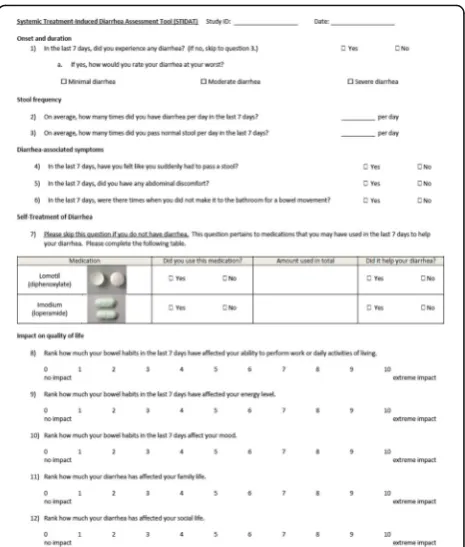
While the panel members initially perceived a list of foods and beverages that help or exacerbate diar-rhea included in the questionnaire to be helpful to patients to evaluate their bowel habits, most patients found it difficult determining how their diet could have influenced their bowel habits. Furthermore, pa-tients also found the checklist of symptoms of severe diarrhea to be confusing with other treatment-related toxicities. Therefore, both sections were eliminated from the preliminary instrument. The final instrument is illustrated in Fig. 2.
Validation phase (phase II)
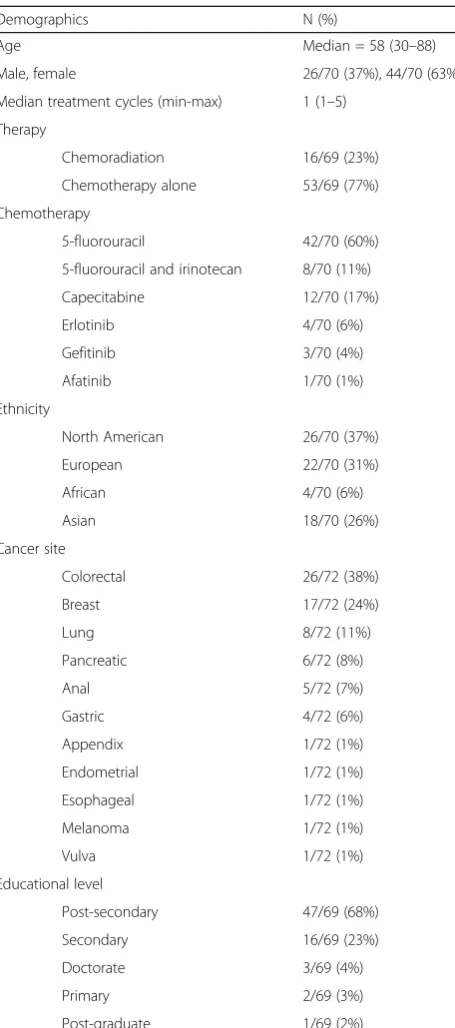
Eighty–nine patients were enrolled and 52 patients com-pleted the STIDAT (Table 1). 12 withdrew consent, 20 did not complete the questionnaire and 5 were lost to follow-up.
Construct validity of questionnaire
Table 2 summarizes the reliability and consistency of the STIDAT. The questionnaire has an overall raw Cron-bach’s alpha of 0.78 (95% CI = 0.74–0.83). Regarding the reliability of STIDAT, high kappa values were calculated between the questionnaire and diaries for the patient’s perception of diarrhea (κ = 0.934) and a positive history of antidiarrheal medication use (κ = 0.952) and a low kappa value was calculated for the dimension of abdom-inal spasms (κ = 0.0455). Good correlation between the questionnaire and diaries was noted for the dimensions of diarrhea severity and quality of life. Furthermore, STID occurrence reported in the STIDAT and EORTC QLQ-C30 are significantly related to each other (χ2= 79.71,p< 0.05).
Analysis of diarrhea symptoms and quality of life
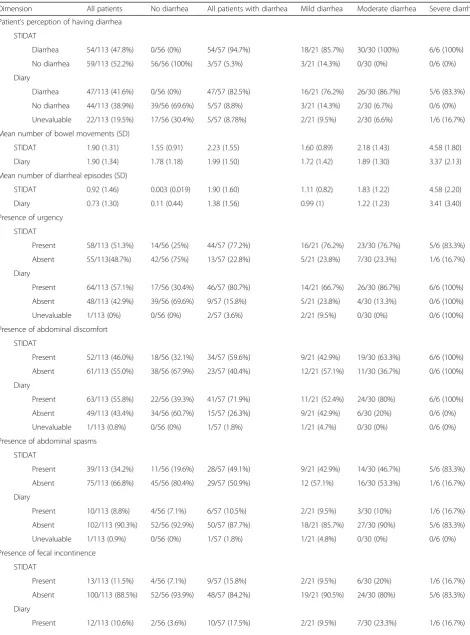
A breakdown of signs and symptoms based on the severity of diarrhea (no to severe diarrhea) is available in Table 3. Of note, the mean overall quality of life scores (calculated as the average of the five quality of life dimensions mea-sured in the STIDAT) were 8.95 (95% CI = 8.50–9.40) in the no diarrhea group, 8.12 (95% CI = 7.38–8.87,
p= 0.6164) in the mild diarrhea group, 7.1 (95% CI = 6.18– 8.02) in the moderate diarrhea group and 4.44 (95% CI = 1.53–7.35) in the severe diarrhea group.
Using the Dunnett-Tukey-Kramer test, it was deter-mined that there were significant decreases in quality of life experienced by patients with moderate diarrhea (−1.86, 95% CI = −3.05, −0.67, p < 0.001) and severe diarrhea (−3.64, 95% CI =−5.91,−1.38, p < 0.001) com-pared to patients with no diarrhea. There was a trend to-wards a decrease in quality of life in patients with severe diarrhea compared to those with mild diarrhea (−2.82, 95% CI = −5.3, −0.37, p= 0.017). There was no differ-ence in quality of life between mild and no diarrhea, mild and moderate diarrhea, and moderate and severe diarrhea patients (Table 4).
Factor analysis
Using the eigenvalues greater than one rule, the number of factors was determined to be 4. This was confirmed with the parallel analysis approach. Using the minimal residual method with Promax rotation, the factor
loadings of each dimension to each factor were gener-ated. The dimensions were grouped into four clusters. The dimensions of patient’s report of the occurrence and severity of diarrhea, and the presence of urgency were re-lated conceptually by the patient’s perception of having diarrhea, or Cluster 1. Cluster 2–frequency of diarrhea– comprised of total number of bowel movements, number of diarrhea episodes, quality of life and medication use. Fecal incontinence is the sole dimension of Cluster 3.
Finally, abdominal spasms and abdominal pain were grouped together as abdominal symptoms – Cluster 4. Figure 3 and Table 5 shows the relationships of the dimen-sions assessed by the STIDAT.
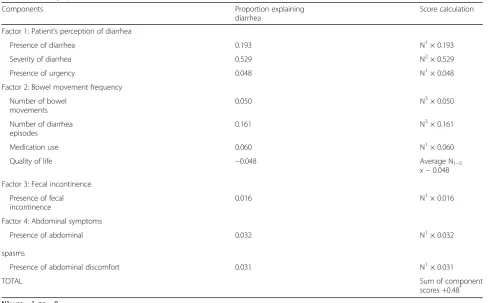
Scoring system of STIDAT
Table 6 is the weighted scoring system from EFA using an eigenvalue of 4, as per the initial PCA. The multipli-cation of each component score with its corresponding component weight, followed by the addition of an ad-justment factor, yields a total score. Patients without diarrhea had a mean score of 0.72 (SD = 0.21), while pa-tients with diarrhea had a significantly higher score of 2.25 (SD = 0.73) (t= 15.04, 95% CI = 1.33–1.73).
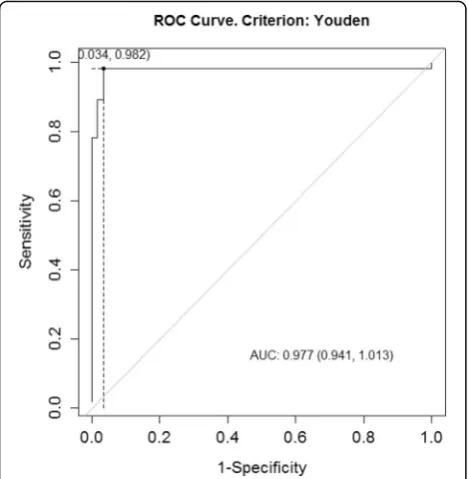
ROC analysis yielded an area-under-the-curve (AUC) of 0.977 (95% CI = 0.941–1.013) at the cut-off score of 1.35 in predicting the occurrence of diarrhea (Fig. 4). Sensitivity, specificity, PPV and NPV were 0.982, 0.966, 0.964 and 0.983, respectively.
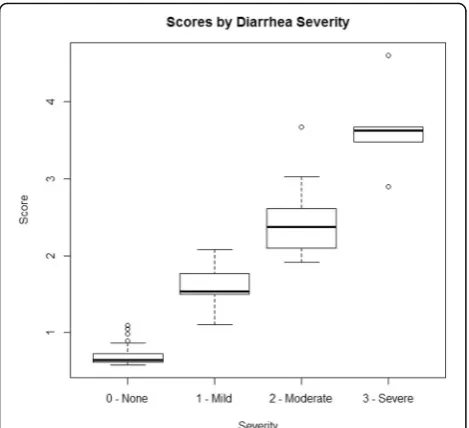
Table 7 and Fig. 5 show STIDAT scores stratified by diarrhea severity. Median scores of no, mild, moderate and severe diarrhea cohorts were 0.64, 1.54, 2.38 and 3.63, respectively. Based on the ranges of scores for each severity (Table 7 and Fig. 5), clinicians may categorize scores from 0 to 1.1 as no diarrhea, greater than 1.1 to 2 as mild diarrhea, greater than 2 to 3 as moderate diar-rhea and greater than 3 as severe diardiar-rhea.
Discussion
To our knowledge, this is the first standardized patient-reported questionnaire used to assess STID in cancer patients. A wide range of cancer sites and systemic ther-apies were represented in this study, indicating that the STIDAT was robust enough to be used in the entire Table 1Baseline characteristics
Demographics N (%)
Age Median = 58 (30–88)
Male, female 26/70 (37%), 44/70 (63%)
Median treatment cycles (min-max) 1 (1–5)
Therapy
Chemoradiation 16/69 (23%)
Chemotherapy alone 53/69 (77%)
Chemotherapy
5-fluorouracil 42/70 (60%)
5-fluorouracil and irinotecan 8/70 (11%)
Capecitabine 12/70 (17%)
Erlotinib 4/70 (6%)
Gefitinib 3/70 (4%)
Afatinib 1/70 (1%)
Ethnicity
North American 26/70 (37%)
European 22/70 (31%)
African 4/70 (6%)
Asian 18/70 (26%)
Cancer site
Colorectal 26/72 (38%)
Breast 17/72 (24%)
Lung 8/72 (11%)
Pancreatic 6/72 (8%)
Anal 5/72 (7%)
Gastric 4/72 (6%)
Appendix 1/72 (1%)
Endometrial 1/72 (1%)
Esophageal 1/72 (1%)
Melanoma 1/72 (1%)
Vulva 1/72 (1%)
Educational level
Post-secondary 47/69 (68%)
Secondary 16/69 (23%)
Doctorate 3/69 (4%)
Primary 2/69 (3%)
Post-graduate 1/69 (2%)
Table 2Interrater reliability and consistency of STIDAT
Fleiss’kappa
Variable N Kappa p-value
Diarrhea 91 0.934 p= 0
Urgency 113 0.623 P< 0.05
Spasms 113 0.0455 P= 0.63
Abdominal pain 113 0.571 P< 0.05
Fecal incontinence 113 0.685 P< 0.05
Medications for diarrhea 113 0.952 P= 0
Cronbach’s alpha
Raw Cronbach’s alpha 0.78 (0.74–0.83)
Standard Cronbach’s alpha 0.85
Pearson’s Coefficient of Correlation (r2)
Number of diarrhea episodes 0.377
Total number of bowel movements 0.262
Table 3Signs and symptoms of diarrhea by STIDAT dimension
Dimension All patients No diarrhea All patients with diarrhea Mild diarrhea Moderate diarrhea Severe diarrhea
Patient’s perception of having diarrhea
STIDAT
Diarrhea 54/113 (47.8%) 0/56 (0%) 54/57 (94.7%) 18/21 (85.7%) 30/30 (100%) 6/6 (100%)
No diarrhea 59/113 (52.2%) 56/56 (100%) 3/57 (5.3%) 3/21 (14.3%) 0/30 (0%) 0/6 (0%)
Diary
Diarrhea 47/113 (41.6%) 0/56 (0%) 47/57 (82.5%) 16/21 (76.2%) 26/30 (86.7%) 5/6 (83.3%)
No diarrhea 44/113 (38.9%) 39/56 (69.6%) 5/57 (8.8%) 3/21 (14.3%) 2/30 (6.7%) 0/6 (0%)
Unevaluable 22/113 (19.5%) 17/56 (30.4%) 5/57 (8.78%) 2/21 (9.5%) 2/30 (6.6%) 1/6 (16.7%)
Mean number of bowel movements (SD)
STIDAT 1.90 (1.31) 1.55 (0.91) 2.23 (1.55) 1.60 (0.89) 2.18 (1.43) 4.58 (1.80)
Diary 1.90 (1.34) 1.78 (1.18) 1.99 (1.50) 1.72 (1.42) 1.89 (1.30) 3.37 (2.13)
Mean number of diarrheal episodes (SD)
STIDAT 0.92 (1.46) 0.003 (0.019) 1.90 (1.60) 1.11 (0.82) 1.83 (1.22) 4.58 (2.20)
Diary 0.73 (1.30) 0.11 (0.44) 1.38 (1.56) 0.99 (1) 1.22 (1.23) 3.41 (3.40)
Presence of urgency
STIDAT
Present 58/113 (51.3%) 14/56 (25%) 44/57 (77.2%) 16/21 (76.2%) 23/30 (76.7%) 5/6 (83.3%)
Absent 55/113(48.7%) 42/56 (75%) 13/57 (22.8%) 5/21 (23.8%) 7/30 (23.3%) 1/6 (16.7%)
Diary
Present 64/113 (57.1%) 17/56 (30.4%) 46/57 (80.7%) 14/21 (66.7%) 26/30 (86.7%) 6/6 (100%)
Absent 48/113 (42.9%) 39/56 (69.6%) 9/57 (15.8%) 5/21 (23.8%) 4/30 (13.3%) 0/6 (100%)
Unevaluable 1/113 (0%) 0/56 (0%) 2/57 (3.6%) 2/21 (9.5%) 0/30 (0%) 0/6 (100%)
Presence of abdominal discomfort
STIDAT
Present 52/113 (46.0%) 18/56 (32.1%) 34/57 (59.6%) 9/21 (42.9%) 19/30 (63.3%) 6/6 (100%)
Absent 61/113 (55.0%) 38/56 (67.9%) 23/57 (40.4%) 12/21 (57.1%) 11/30 (36.7%) 0/6 (100%)
Diary
Present 63/113 (55.8%) 22/56 (39.3%) 41/57 (71.9%) 11/21 (52.4%) 24/30 (80%) 6/6 (100%)
Absent 49/113 (43.4%) 34/56 (60.7%) 15/57 (26.3%) 9/21 (42.9%) 6/30 (20%) 0/6 (0%)
Unevaluable 1/113 (0.8%) 0/56 (0%) 1/57 (1.8%) 1/21 (4.7%) 0/30 (0%) 0/6 (0%)
Presence of abdominal spasms
STIDAT
Present 39/113 (34.2%) 11/56 (19.6%) 28/57 (49.1%) 9/21 (42.9%) 14/30 (46.7%) 5/6 (83.3%)
Absent 75/113 (66.8%) 45/56 (80.4%) 29/57 (50.9%) 12 (57.1%) 16/30 (53.3%) 1/6 (16.7%)
Diary
Present 10/113 (8.8%) 4/56 (7.1%) 6/57 (10.5%) 2/21 (9.5%) 3/30 (10%) 1/6 (16.7%)
Absent 102/113 (90.3%) 52/56 (92.9%) 50/57 (87.7%) 18/21 (85.7%) 27/30 (90%) 5/6 (83.3%)
Unevaluable 1/113 (0.9%) 0/56 (0%) 1/57 (1.8%) 1/21 (4.8%) 0/30 (0%) 0/6 (0%)
Presence of fecal incontinence
STIDAT
Present 13/113 (11.5%) 4/56 (7.1%) 9/57 (15.8%) 2/21 (9.5%) 6/30 (20%) 1/6 (16.7%)
Absent 100/113 (88.5%) 52/56 (93.9%) 48/57 (84.2%) 19/21 (90.5%) 24/30 (80%) 5/6 (83.3%)
Diary
cancer patient population actively treated with any systemic therapy. Furthermore, the study also reported patients of various educational levels and ethnicities, suggesting that the STIDAT was also valid across differ-ent levels of education and ethnicities. Patidiffer-ents who received concurrent chemoradiation were included, as radiation has a role in intensifying the damage that chemotherapy has, including diarrhea if the radiation were directed in the lower gastrointestinal tract. There-fore, the STIDAT could also be used in patients who are treated with radiation while receiving systemic therapy.
Study findings
The patient interviews revealed that most patients de-fined diarrhea based on the presence of watery stool without mention of increased stool frequency, which is a departure to how the CTCAE assesses diarrhea mostly through an increase in stool frequency. This discrepancy
Table 3Signs and symptoms of diarrhea by STIDAT dimension(Continued)
Dimension All patients No diarrhea All patients with diarrhea Mild diarrhea Moderate diarrhea Severe diarrhea
Absent 100/113 (88.5%) 54/56 (96.4%) 45/57 (79.0%) 17/21 (81.0%) 23/30 (76.7%) 5/6 (83.3%)
Unevaluable 1/113 (0.9%) 0/56 (0%) 2/57 (3.5%) 2/21 (9.5%) 0/30 (0%) 0/6 (0%)
Positive use of anti-diarrheals
STIDAT
Present 7/113 (6.2%) 0/56 (0%) 7/57 (12.3%) 0/21 (0%) 6/30 (20%) 1/6 (16.7%)
Absent 106/113 (93.8%) 56/56 (100%) 50/57 (87.7%) 21/21 (100%) 24/30 (80%) 5/6 (83.3%)
Diary
Present 8/113 (7.1%) 0/56 (0%) 8/57 (14%) 0/21 (0%) 7/30 (23.3%) 1/6 (16.7%)
Absent 103/113 (91.2%) 56/56 (100%) 47 (82.5%) 19/21 (90.5%) 23/30 (76.7%) 5/6 (83.3%)
Unevaluable 2/113 (1.7%) 0/56 (0%) 2/57 (3.5%) 2/21 (9.5%) 0/30 (0%) 0/6 (0%)
Mean quality of life score (SD)
STIDAT 8.1 (2.24) 8.95 (1.70) 7.34 (2.40) 8.12 (1.63) 7.1 (2.46) 4.44 (2.77)
EORTC QLQ-C30 6.7 (2.45) 7.25 (2.40) 6.12 (2.39) 6.57 (2.44) 6.20 (2.25) 4.36 (2.50)
Table 4Differences in STIDAT quality of life scores based on severity of diarrhea
Comparison Difference in quality of life score
95% confidence interval
p-value
Mild to no diarrhea −0.83 −2.18, 0.52 p= 0.38
Moderate to no diarrhea
−1.86 −3.05,−0.67 p< 0.001
Severe to no
diarrhea −
3.64 −5.91,−1.38 p< 0.001
Moderate to mild diarrhea
−1.04 −2.54, 0.46 p= 0.27
Severe to mild
diarrhea −
2.82 −5.26,−0.37 p= 0.17
Severe to moderate diarrhea
−1.78 −4.13, 0.58 p= 0.21
among the clinician and patient definitions of diarrhea may in part account for the difference in the evaluation of diarrhea severity by patients and the clinicians via the CTCAE. This finding suggests the need to choose one definition of diarrhea that patients use when reporting the occurrence and severity of STID to ensure clarity and standardization in the assessment of STID. To ad-dress this discrepancy, the STIDAT uses the patient
definition in which diarrhea was identified based on the presence of watery stool.
The STIDAT was observed to have good internal consistency with a raw Cronbach’s alpha of 0.78, which far exceeded 0.7. It has similar degrees of internal consistency with other validated diarrhea assessment tools used in other disease states, including the SSC-HIV (α = 0.749), Irritable Bowel Syndrome Quality of Life (α = 0.963), Table 5Factor loadings and communalities for the Systemic Treatment Induced Diarrhea Assessment Test (STIDAT)
PPD BHF FI AbS H2 U2
Presence of diarrhea 0.98 −0.01 −0.01 0.01 0.95 0.053
Severity of diarrhea 0.77 0.39 −0.01 −0.13 0.92 0.077
Number of diarrhea episodes 0.32 0.71 −0.10 0.07 0.80 0.197
Total bowel movement episodes −0.16 0.67 −0.09 0.39 0.62 0.382
Presence of urgency 0.37 −0.13 0.16 0.38 0.43 0.566
Presence of abdominal spasms −0.05 0.06 0.57 0.05 0.37 0.628
Presence of abdominal pain −0.02 −0.07 0.80 −0.10 0.52 0.478
Presence of fecal incontinence −0.08 0.05 −0.10 0.63 0.35 0.647
Quality of life 0.02 −0.40 −0.17 −0.23 0.42 0.576
Medication use −0.02 0.67 0.20 −0.12 0.56 0.440
PPD = patient’s perception of diarrhea, BHF = bowel habit frequency, FI = fecal incontinence, AbS = abdominal symptoms, H2 = communality, U2 = uniqueness
Table 6Scoring system of STIDAT
Components Proportion explaining
diarrhea
Score calculation
Factor 1: Patient’s perception of diarrhea
Presence of diarrhea 0.193 N1× 0.193
Severity of diarrhea 0.529 N2× 0.529
Presence of urgency 0.048 N1× 0.048
Factor 2: Bowel movement frequency
Number of bowel movements
0.050 N3× 0.050
Number of diarrhea episodes
0.161 N3× 0.161
Medication use 0.060 N1× 0.060
Quality of life −0.048 Average N1–5
x−0.048
Factor 3: Fecal incontinence
Presence of fecal incontinence
0.016 N1× 0.016
Factor 4: Abdominal symptoms
Presence of abdominal
spasms
0.032 N1× 0.032
Presence of abdominal discomfort 0.031 N1× 0.031
TOTAL Sum of component
scores +0.48*
N1: yes = 1, no = 0
N2: no = 0, mild = 1, moderate = 2, severe = 3 N3: an integer ofn≥0
DAPonDEN (α= 0.67–0.717) and Birmingham IBS symp-tom questionnaire (α = 0.74–0.90). [22–24] It also had good inter-rater reliability, particularly in the dimensions of patient’s report of the occurrence and severity of diar-rhea, urgency, fecal incontinence and antidiarrheal medi-cation use, suggesting that the STIDAT is particularly robust in evaluating diarrhea based on those dimensions. The STIDAT exhibited poor reliability in reporting ab-dominal spasms, suggesting that patients may not under-stand what spasms are, or are not able to differentiate between spasms and abdominal discomfort.
The weighted scoring system is based on how much each component contributes towards the incidence of diarrhea as predicted by EFA. The score of each question corresponding to its component would be multiplied by its component weight. Scores of binary variables (yes/no questions) would be either 0 (no) or 1 (yes), scores for diarrhea severity vary from 0 (no diarrhea) to 3 (severe diarrhea) and scores of questions pertaining to episode frequency would be an integer starting from 0. The qual-ity of life score is the average of the five scores corre-sponding to the five dimensions of quality of life in the
STIDAT. The component score for quality of life has a negative sign because the quality of life questions are ranked in reverse. The total STIDAT score is the sum of all component scores and the adjustment factor (0.48), which offsets the minimum quality of life score that a patient may reach to prevent a negative STIDAT score.
The STIDAT dimensions were grouped based on their relationships with each other. A heightened increased sense of urgency to have a bowel movement increases the perception of having diarrhea that may be more se-vere, hence the potential rationale for urgency, patient report of diarrhea occurrence and severity to be connected via Cluster 1. While it is apparent that total number of bowel movements and number of diarrhea episodes are related to Cluster 2, medication use can reduce bowel movement frequency and quality of life can be negatively affected from increased frequency of bowel movements. Therefore, medication use and qual-ity of life are also grouped together into Cluster 2. While fecal incontinence is a diarrhea symptom along with ab-dominal spasms and pain, the former may happen inde-pendently of diarrhea occurrence. This is observed by the low component weight of fecal incontinence in the scoring system in determining the presence and severity of diarrhea in patients.
A score of 1.35 is the minimum for the STIDAT to de-tect whether a patient objectively has diarrhea or not with excellent sensitivity and specificity. Furthermore, the STIDAT scoring system can identify the severity level of STIDAT of patients. There was a distinct separ-ation of scores in patients of each group of diarrhea se-verity. While there is some overlap between mild and moderate diarrhea, it is sufficiently small such that the potential error in differentiation is small. Because the management of mild and moderate diarrhea is similar, the potential harm on the patient is not expected to be significant. Therefore, this STIDAT can accurately iden-tify the occurrence and severity of diarrhea through a comprehensive assessment and appropriate weighting of various bowel habit dimensions.
Benefits and applications of STIDAT
The development of the STIDAT also highlighted the significant differences in quality of life among patients with different severities of diarrhea. Patients with severe diarrhea had significantly worse quality of life compared Fig. 4Receiver-operating characteristic (ROC) curve analysis for
STIDAT’s ability to detect diarrhea occurrence
Table 7STIDAT scores by diarrhea severity
Median Interquartile range Minimum Maximum
No diarrhea 0.643984 0.726803–0.618736 = 0.108067 0.57867 1.095777
Mild diarrhea 1.540987 1.774623–1.483602 = 0.291021 1.107415 2.076253
Moderate diarrhea 2.375934 2.388316–2.363551 = 0.024764 1.909746 3.674208
to patients with no or mild diarrhea. While there was no difference among patients with moderate and mild diarrhea, a significant decrease in quality of life was observed among patients with moderate and no diarrhea. Therefore, clinicians should aim to improve diarrhea management of patients with moderate to severe diarrhea with the therapeutic goal to decrease it to at least mild diarrhea, not simply to prevent dehydra-tion and potential treatment delays, but to maintain pa-tients’quality of life throughout their treatment journey.
The STIDAT is superior to the CTCAE as an oncology-based clinical bowel assessment tool. As a patient-reported questionnaire, it circumvents potential underreporting or inaccuracies in clinician-based assess-ments in the occurrence and severity of diarrhea. This in-creases the likelihood of patients’ STID in being assessed and managed appropriately, which may decrease negative consequences associated with STID, including dehydration-associated hospitalizations, treatment dose reductions or delays, and decreases of quality of life associated with undermanaged STID. It assesses beyond stool frequency and presence of fecal incontinence to include frequency of diarrhea episodes, quality of life, stool form and other symptoms of diarrhea to provide comprehensive insight on the presence and severity of diarrhea. This enables clini-cians to better understand the toxicity and provide more appropriate management for it. It also uses a weighted scor-ing system to objectively assess the presence and severity of STID using patient-reported data, which contrasts sharply from the arbitrarily set stool frequency intervals that define each CTCAE severity grade. The use of a weighted scoring system allows for objective stratification of diarrhea severity that considers multiple dimensions. In addition to
providing a total score that characterizes the severity of diarrhea, it provides a score for each item to provide insight for what may drive the score, which the CTCAE cannot do with an overall grade. The STIDAT was also developed using the presence of watery stool as the definition of diarrhea – as per patient interviews – compared to the presence of increased stool frequency in the CTCAE. The use of stool form to define diarrhea seems effective in detecting diarrhea occurrence, as reflected by its excellent specificity and sensitivity. Furthermore, the STIDAT has undergone a formal development and validation process, unlike the CTCAE.
Limitations
This study has some limitations. The validation phase was conducted in two Centres with a small, albeit varied, patient population that lacked patients with hematologic malignancies. While around 60% of recruited patients had completed the questionnaire, these patients may be particularly motivated and self-efficacious and therefore, the use of the questionnaire may be biased towards such individuals. It is not designed to be used in patients with an ostomy; thus, the STIDAT cannot assess the bowel habits of these patients. It is restricted for patients with adequate working English and cognitive ability to self-report his or her bowel habits. Finally, this assessment requires external valid-ation to further characterize validity and predictive ability. Future validation efforts will be focused on in-cluding more centres, amassing a larger sample size, including hematology patients and modifying the questionnaire to accommodate patients with ostomies and patients speaking other languages.
Conclusion
The STIDAT is the first validated, patient-reported assessment tool designed to accurately identify the presence of diarrhea and its severity using multiple bowel habit dimensions in patients with STID of mul-tiple solid tumours who received systemic therapy with or without radiation. Patients with a STIDAT score of 1.35 or higher are identified to have diarrhea. Patients with a STIDAT score of 0 to 1.1 have no diarrhea, greater than 1.1 to 2 have mild diarrhea, greater than 2 to 3 have moderate diarrhea and greater than 3 have se-vere diarrhea. Clinicians must aim to treat cancer pa-tients to have no or mild diarrhea to prevent a detrimental impact on quality of life.
Abbreviations
value; ROC: Receiver-operator characteristic; STID: Systemic therapy-induced diarrhea; STIDAT: Systemic Therapy-Induced Diarrhea Assessment Test
Acknowledgements
We would like to thank Soha Ahrari, Dr. Sunil Verma and Jacques Raphael for their help in study design and input in developing the questionnaire. We thank the pharmacy students and staff at the Odette Cancer Centre in helping with study accrual. We also thank Katherine Bouris for helping with data collection in North York General Hospital.
Funding
There are no sources of funding for this study.
Availability of data and materials
Please contact the corresponding author for data requests.
Authors’contributions
ML and CDA planned the study protocol. ML performed the literature search of bowel assessment tools, conducted patient interviews, collected, transcribed and analysed data from patient interviews, recruited and consented patients, performed all data collection in Sunnybrook Odette Cancer Centre, performed all data entry and analysis, and wrote the first draft of the manuscript. CDA reviewed bowel assessment tools for review, reviewed data and themes analysed from patient interviews, oversaw patient recruitment and data collection in Sunnybrook Odette Cancer Centre and reviewed and edited all versions of the manuscript. DG planned the study logistics in North York General Hospital, recruited and consented patients for study participation, performed and oversaw data collection in North York General Hospital and reviewed and edited all versions of the manuscript. All authors have approved the final version of the manuscript.
Ethics approval and consent to participate
The study was performed in accordance with the ethical standards of the Research Ethics Board committees of Sunnybrook Health Sciences Centre and North York General Hospital, as well as with the 1964 Helsinki declaration and its later amendments or comparable ethical standards. Informed consent was obtained from all individual participants included in the study to participate in the study.
Consent for publication
Informed consent was obtained from all individual study participants to publish data collected from participants.
Competing interests
The authors declare that they have no competing interests.
Publisher’s Note
Springer Nature remains neutral with regard to jurisdictional claims in published maps and institutional affiliations.
Author details 1
Hamilton Health Sciences Centre, Hamilton, ON, Canada.2Leslie Dan Faculty of Pharmacy, University of Toronto, Toronto, ON, Canada.3North York General Hospital, Toronto, ON, Canada.4Sunnybrook Odette Cancer Centre, Toronto, ON, Canada.
Received: 27 April 2017 Accepted: 1 November 2017
References
1. Benson III, AB, Ajani JA, Catalano RB, Engelking C, Kornblau SM, Martenson JA Jr. et al. recommended guidelines for the treatment of cancer treatment-induced diarrhea. J Clin Oncol 2004;22:2918–2926.
2. Sequist LV, Yang JCH, Yamamoto B, O’Byrne K, Hirsh V, Mok T, et al. Phase III study of afatinib or cisplatin plus pemetrexed in patients with metastatic lung adenocarcinoma with EGFR mutations. J Clin Oncol. 2013;31:3327–34. 3. Mok TS, Thongprasert S, Yang CH, Chu DT, Saijo N, Sunpaweravong P, et al.
Gefitinib or carboplatin-paclitaxel in pulmonary adenocarcinoma. N Engl J Med. 2009;361:947–57.
4. Rosell R, Carcereny E, Gervais R, Vergnenegre A, Massuti B, Palmero R, et al. Erlotinib versus standard chemotherapy as first-line treatment for European
patients with advanced EGFR mutation-positive non-small-cell lung cancer (EURTAC): a multicentre, open-label, randomised phase 3 trial. Lancet Oncol. 2012;13:239–46.
5. O’Brien BE, Kaklamani VG and Benson III AB. (2005) The assessment and treatment of cancer treatment-related diarrhea. Clin Colorectal Cancer. 2005; 4:375–381.
6. Viele CS. Overview of chemotherapy-induced diarrhea. Semin Oncol Nurs. 2003;19:2–5.
7. Cherny NI, Werman B. Diarrhea and constipation. In: DeVita VT, Lawrence TS, Rosenberg SA, editors. Devita, Hellman, and Rosenberg's cancer: principles & practice of oncology. Philadelphia: Wolters Kluwer Health; 2015. p. 1984–91. 8. Kornblau S, Benson IIIAB, Catalano R, et al. Management of cancer
treatment-related diarrhea: issues and therapeutic strategies. Journal of pain and symptomatic management. 2000;19(2):118–29.
9. Maroun JA, Anthony LB, Blais N, Burkes R, Dowden SD, Dranitsaris G, et al. Prevention and management of chemotherapy-induced diarrhea in patients with colorectal cancer: a consensus statement by the Canadian working group on chemotherapy-induced diarrhea. Curr Oncol. 2007;14:13–20. 10. Delaunoit T, Goldberg RM, Sargent DJ, Morton RF, Fuchs CS, Findlay BP, et
al. Mortality associated with daily bolus 5-fluorouracil/leucovorin administered in combination with either irinotecan or oxaliplatin: results from intergroup trial N9741. Cancer. 2004;101:2170–6.
11. U.S. Department of Health and Human Services. Common Terminology Criteria for Adverse Events (CTCAE). Version 4.0. National Institutes of Health, National Cancer Institute. 2010. https://evs.nci.nih.gov/ftp1/CTCAE/CTCAE_4. 03_2010-06-14_QuickReference_8.5x11.pdf. Accessed 15 Jan 2017. 12. Atkinson TM, Li Y, Coffey CW, et al. Reliability of adverse symptom event
reporting by clinicians. Qual Life Res. 2012;21:1159–64.
13. Cirillo M, Venturini M, Circcarelli L, Coati F, Bortolami O, Verlato G. Clinician versus nurse symptom reporting using the National Cancer Institute– common terminology criteria for adverse events during chemotherapy: results of a comparison based on patient’s self-reported questionnaire. Ann Oncol. 2009;20:1929–35.
14. Basch E, Iasonos A, McDonough T, Barz A, Culkin A, Scher H, et al. Patient versus clinician symptom reporting using the National Cancer Institute common terminology criteria for adverse effects: results of a questionnaire-based study. Lancet Oncol. 2006;7:903–9.
15. Fromme EK, Eilers KM, Mori M, Hsieh Y, Beer TM. How accurate is clinician reporting of chemotherapy adverse effects? A comparison with patient-reported symptoms from the quality-of-life questionnaire C30. J Clin Oncol. 2004;22:3485–90.
16. Basch E. Perspective: the missing voice of patients in drug-safety reporting. N Engl J Med. 2010;362:865–9.
17. US Food and Drug Administration Guidance for Industry: Patient-reported outcome measures: use in medical product development to support labeling claims. Rockville, MD: Department of Health and Human Services, Food and Drug Administration, Center for Drug Evaluation and Research, 2009.
18. Ryan GW, Bernard HR. Techniques to identify themes. Field Methods. 2003; 15:85–109.
19. Barlett IIJE, Kotrlik JW, Higgins CC. Organizational research: determining appropriate sample size in survey research. Inf Technol Learn Perform J. 2001;19:43–50.
20. Matsunaga M. How to factor-analyze your data right: Do’s, Don’ts, and how-To’s. International Journal of Psychological Research. 2010;3:97–110. 21. Henson RK, Roberts JK. Use of exploratory factor analysis in published
research: common errors and some comment on improved practice. Educ Psychol Meas. 2006;66:393–416.
22. Klebert MK. STOP-IT: an intervention for chronic diarrhea in people with HIV. Louis: Dissertation. University of Missouri- St; 2008.
23. Andrae DA, Patrick DL, Drossman DA, Covington PS. Evaluation of the irritable bowel syndrome quality of life (IBS-QOL) questionnaire in diarrhea-predominant irritable bowel syndrome patients. Health Qual Life Outcomes. 2013;11:208.