A Survey of Anticipatory Mobile Networking:
Context-Based Classification, Prediction
Methodologies, and Optimization Techniques
Nicola Bui,
Student Member, IEEE,
Matteo Cesana,
Member, IEEE,
S. Amir Hosseini,
Student Member, IEEE,
Qi Liao,
Member, IEEE,
Ilaria Malanchini,
Member, IEEE,
and Joerg Widmer,
Senior Member, IEEE
Abstract—A growing trend for information technology is to not just react to changes, but anticipate them as much as possible. This paradigm made modern solutions, such as recommendation systems, a ubiquitous presence in today’s digital transactions. Anticipatory networking extends the idea to communication tech-nologies by studying patterns and periodicity in human behavior and network dynamics to optimize network performance. This survey collects and analyzes recent papers leveraging context information to forecast the evolution of network conditions and, in turn, to improve network performance. In particular, we identify the main prediction and optimization tools adopted in this body of work and link them with objectives and constraints of the typical applications and scenarios. Finally, we consider open challenges and research directions to make anticipatory networking part of next generation networks.
Index Terms—Anticipatory, Prediction, Optimization, 5G, Mo-bile Networks.
I. INTRODUCTION
Evolving from one generation to the next, wireless networks have been constantly increasing their performance in many different ways and for diverse purposes. Among them, commu-nication efficiency has always been paramount to increase the network capabilities without updating the entire infrastructure. This survey investigates anticipatory networking, a recent research direction that supports network optimization through system state prediction.
The core concept of anticipatory networking is that, nowa-days, tools exist to make reliable prediction about network status and performance. Moreover, information availability is increasing every day as human behavior is becoming more socially and digitally interconnected. In addition, data centers are becoming more and more important in providing services and tools to access and analyze huge amounts of data.
As a consequence, not only can researchers tailor their solutions to specific places and users, but also they can anticipate the sequence of locations a user is going to visit or
Nicola Bui and Joerg Widmer are with IMDEA Networks Institute, Madrid, Spain. email:{nicola.bui, joerg.widmer}@imdea.org. Matteo Ce-sana is with Politecnico di Milano, Italy. email:[email protected]. S. Amir Hosseini is with NYU Tandon School of Engineering, US. email:[email protected]. Qi Liao and Ilaria Malanchini are with Nokia Bell Labs, Stuttgart, Germany. email:{qi.liao, ilaria.malanchini} @nokia-bell-labs.com. This work has been has been supported in part by the Euro-pean Union ICT grant 644399 (MONROE), EuroEuro-pean Union H2020-MSCA-ITN grant 643002 (ACT5G), by the Madrid Regional Government through the TIGRE5-CM program (S2013/ICE-2919), the Ramon y Cajal grant from the Spanish Ministry of Economy and Competitiveness RYC-2012-10788 and grant TEC2014-55713-R.
to forecast whether connectivity might be worsening, and to exploit the forecast information to take action before the event happens. This enables the possibility to take full advantage of good future conditions (such as getting closer to a base station or entering a less loaded cell) and to mitigate the impact of negative events (e.g., entering a tunnel).
This survey covers a body of recent works on anticipatory networking, which share two common aspects:
• Anticipation: they either explore prediction techniques directly or consider some future knowledge as given.
• Networking: they aim to optimize communications in mobile networks.
In addition, this survey delves into the following questions: How can prediction support wireless networks? Which type of information is possible to predict and which applications can take advantage of it? Which tools are the best for a given scenario or application? Which scenarios, among the ones envisioned for 5G networks, can benefit the most from anticipatory networking? What is yet to be studied in order for anticipatory networking to be implemented in 5G networks?
The main contributions of this survey are the following:
• A thorough context-based analysis of the literature classified according to the information exploited in the predictive framework.
• Two handbooks on the prediction and optimization
techniques used in the literature, which allow the reader to get familiar with them and critically assess the different approaches.
• An analysis of the applicability of anticipatory network-ing techniques to different types of wireless networks and at different layers of theprotocol stack.
• Summaries of all the main parts of the survey, highlight-ingmost popular choices and best practices.
• A final section analyzingopen challenges and potential issues to the adoption of anticipatory networking solu-tions in future generation mobile networks.
A. Background and Guidelines
TABLE I
SURVEY CLASSIFICATION AND STRUCTURE
Prediction(Section IV) Optimization(Section V)
Context
(Section
III)
Geo
Ideal:[31, 42, 43, 45] ConvOpta:[43]
Time series:[13, 28, 29, 32, 37, 38, 41] MDPb/MPCc:[24, 26]
Regression, classification:[14, 15, 22, 33-35, 44, 46] Game theory:[131]
Probabilistic:[11, 12, 16-21, 23-26] Heuristic:[25, 32, 41, 42, 44-46]
Link
Ideal:[56, 57, 65-70, 72-79] ConvOpt:[64-70 72-79]
Time series:[54, 58, 59, 63] MDP/MPC:[50, 60, 62, 158]
Regression, classification:[47-49, 51, 52, 55, 64] Game theory:[129]
Probabilistic:[30, 50, 53, 60-62, 158] Heuristic:[30, 47, 51, 54, 58, 59, 61, 63]
T
raf
fic
Ideal:[95-97, 111, 112, 115, 118, 138] ConvOpt:[103-107, 111, 118-120, 138]
Time series:[100, 108-110, 113, 119, 145, 165] MDP/MPC:[100, 115, 116, 165]
Regression, classification:[92-94, 98, 99, 101, 104-107, 114, 117, 156] Game theory:[117]
Probabilistic:[93, 102, 116] Heuristic:[96-99, 101, 112, 117]
Social
Ideal:[121, 124, 137, 140] ConvOpt:[126, 127, 137, 140, 159]
Time series:[40] MDP/MPC:[157]
Regression, classification:[122, 123, 134, 139, 148, 149, 154] Game theory:[128-131, 133]
Probabilistic:[125-127, 129, 130, 132, 135, 136, 157, 159] Heuristic:[40, 121-125, 132, 148, 149]
aconvex optimizationbMarkov decision processcmodel predictive control
be served in the next time frames given the predicted evolution of their channel condition and service requirements?”
A typical anticipatory networking solution is usually charac-terized by the following three attributes, which also determine the structure of this survey:
• Context defines the type of information considered to forecast the system evolution.
• Predictionspecifies how the system evolution is forecast from the current and past context.
• Optimization describes how prediction is exploited to meet the application objectives.
To continue with the access selection example, the an-ticipatory networking solution might exploit the history of Global Positioning System (GPS) information (the context) to train an AutoRegressive (AR) model (the prediction) to predict the future positions of the users and their channel conditions to solve an Integer Linear Programming (ILP) problem (the optimization) that maximizes their Quality-of-Experience (QoE).
The main body of the anticipatory networking literature can be split into four categories based on the context used to characterize the system state and to determine its evolution:
geographic, such as human mobility patterns derived from location-based information; link, such as channel gain, noise and interference levels obtained from reference signal feed-back; traffic, such as network load, throughput, and occupied physical resource blocks based on higher-layer performance indicators;social, such as user’s behavior, profile, and informa-tion derived from user-generated contents and social networks. In order to determine which techniques are the most suitable to solve a given problem, it is important to analyze the following:
• Properties of the context:
1)Dimensiondescribes the number of variables predicted by the model, which can be uni- or multivariate. 2)Granularity and precisiondefine the smallest variation of the parameter considered by the context and the accuracy of the data: the lower the granularity, the higher the precision and vice versa. Temporal and spatial granu-larities are crucial to strike a balance between efficiency
and accuracy.
3) Range characterizes the distance (usually time or space) between known data samples and the farthest predicted sample. It is also known as prediction (or optimization) horizon.
• Constraintsof the prediction or optimization model:
1)Availability of physical modelstates whether a closed-form expression exists to describe the phenomenon. 2)Linearityexpresses the quality of the functions linking inputs and outputs of a problem.
3)Side informationdetermines whether the main context can be supported by auxiliary information.
4) Reliability and validity of information specifies the noisiness of the data set, depending on which the pre-diction robustness should be calibrated.
The classification section will help the reader to understand the link between the different contexts and the solutions adopted to satisfy the given application requirements. Also, it is meant to provide a complete panorama of anticipatory networking. The two handbooks have the twofold objective of providing the reader with a short overview of the tools adopted in the literature and to analyze them in terms of variables of interest and constraints of the models. We believe that not only will this survey help researchers studying anticipatory net-working, but also it will ease its adoption in future generation networks by providing a comprehensive overview of research directions, available solutions and application scenarios.
Table I provides a mapping between the techniques de-scribed in Section IV and V (columns) and the context discussed in Section III (rows). Each main category is further split into subcategories according to its internal structure. Namely, the prediction category is subdivided into ideal (per-fect prediction is assumed to be available), time series pre-dictive modeling, similarity-based classification and regression analysis, and probabilistic methods. The optimization category is split into Convex Optimization (ConvOpt), Markov Decision Process (MDP) and Model Predictive Control (MPC), game theoretic and, heuristic approaches.
classi-TABLE II RELATED WORKS
Topic Content
Big Data [1] studies big data analytics for network optimization.
Context Information [2], [3] discuss acquisition, modeling, exchange and usage of contextual information for different scenarios.
Data Classification [4] surveys a variety of classifiers and uses them to predict unknown data.
Traffic & Throughput [5] uses trace-driven simulation to compare prediction errors obtained using different techniques. [6] uses real network traffic to evaluate prediction techniques and to discuss their practical challenges.
Social Patterns [7] uses social network information to study traffic patterns.[8] investigates the impact of prediction on QoE
Cognitive Radios [9] investigates spectrum occupancy models and their reliability. [10] focus on spectrum occupancy and channel status prediction.
fication of the anticipatory networking literature in Section III, two handbooks on prediction and optimization techniques in Section IV and Section V, respectively. Section VI and VII discuss how the anticipatory networking paradigm can be applied in a variety of network types and at different layers of the protocol stack. Section VIII and IX conclude the survey reporting the impact of anticipatory networking on future networks, the envisioned hindrances to its implementation and the open challenges.
II. RELATEDWORK
This section discusses a few recent survey on topics close to anticipatory networking and is summarized in Table II.
Applying big data analytics for network optimization is studied in [1]. Based on the papers they reviewed, the authors propose a generic framework to support big data based opti-mization of mobile networks. Using traffic patterns derived from case studies, they argue that their framework can be used to optimize resource allocation, base station deployment, and interference coordination in such networks. In [2], [3], the ability to extract and process contextual information by entities in a network is identified as a key factor in improving network performance. In [2], the procedure of using context information in wireless networks is broken down into acqui-sition, modeling, exchanging and evaluating stages, where the first two deal with gathering information and predicting the future behavior, and the latter two perform self-optimization and decision making. A similar taxonomy is provided in [3] and various examples of different techniques are reviewed for each phase. In addition to that, the authors provide a thorough survey on potential use cases of anticipatory networks and their respective challenges.
Predicting future states of network attributes is an essential task in designing anticipatory networks. Data classification, a popular prediction technique, has been thoroughly surveyed in [4]. Among other attributes, the prediction of data traffic and throughput has been the subject of [5], [6]. In [5], the authors consider seven algorithms for throughput prediction, ranging from mean-based and linear regression methods to Ar-tificial Neural Networks (ANNs) and Support Vector Machines (SVMs) and compare their performance using a trace-driven simulator. Furthermore, they develop an information theoretic lower bound for the prediction error. In a similar attempt, [6] reviews real time Internet traffic classification. Here, the au-thors not only review prediction algorithms, but also try to
shed light on practical challenges in deploying different kinds of techniques under different network scenarios. For instance, they argue that algorithms that require packet inspection either in the form of port number or payload, might have limited applicability due to potential encryption compared to methods that rely on statistical traffic properties.
The capability to extract user behavior in online social networks and use it to learn the evolution of traffic patterns in mobile networks is the subject of another survey [7]. The general approach of the papers included in that review is to use social graphs and classify different types of interactions between users on social networks in order to monitor the corresponding network traffic. Another important attribute for network performance is modeling the Quality of Experience (QoE) or how the service is perceived by the user. The authors of [8] provide a thorough survey including various methods for modeling QoE for different applications and also discuss tools for estimating and predicting QoE values by probing network parameters.
Cognitive Radio (CR) and Radio Environment Map (REM) are two very important technologies to measure, estimate and predict spectrum availability and occupancy. For instance, [9], [10] provide two independent taxonomies of methodologies, campaigns and models. In addition, they review the reliability of these types of measurements [9] and they illustrate how to predict the system evolution thanks to available information and regression analysis [10].
To the best of our knowledge, this survey is the first to specifically address anticipatory techniques for mobile net-works. We believe that, while the topic is undeniably hot, an overarching review of the body of work is still missing and greatly needed to facilitate the adoption of such a promising direction.
III. A CONTEXT-BASEDCLASSIFICATION OF ANTICIPATORYNETWORKINGSOLUTIONS
In this section, we classify the different types of context that can be predicted and exploited. For each one, we highlight the most popular prediction techniques as well as the applications for which an anticipatory optimization is performed.
A. Geographic Context
12 12.2 12.4 12.6 12.8 13
Longitude
41.4 41.6 41.8 42 42.2 42.4
Latitude
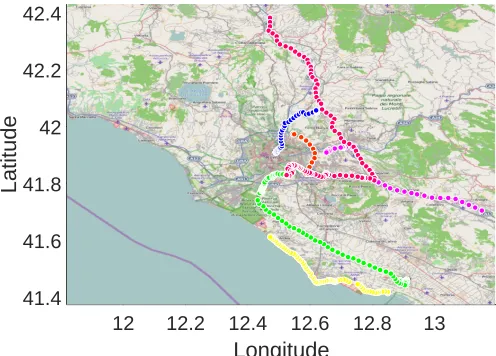
Fig. 1. Geographic context example: an example of estimated trajectories of 6 mobile users.
it refers to the location of the mobile users, often enriched with speed information as well as past and future trajectories. Understanding human mobility is an emergent research field that especially in the last few years has significantly benefited from the rapid proliferation of wireless devices that frequently report status and location updates. Fig. 1 illustrates an example of estimated trajectories of 6 mobile users.
The potential predictability in user mobility can be as high as 93%[11]1. Along the same line, [12] investigates both the maximal predictability and how close to this value practical algorithms can come when applied to a large mobile phone dataset. Those results indicate that human mobility is very far from being random. Therefore, collecting, predicting and exploiting geographic context is of crucial importance.
In the rest of this section we organize the papers dealing with geographic context according to their main focus: the majority of them deals with pure geographical prediction and differs on secondary aspects such as whether they predict a single future location, a sequence of places or a trajectory. The second largest group of papers deals with multimedia streaming optimization.
1) Next location prediction: The simplest approach is to forecast where a given user will be at a predetermined instant of time in the future. The authors of [13] propose to track mobile nodes using topological coordinates and topology preserving maps. Nodes’ location is identified with a vector of distances (in hops) from a set of nodes called anchors and a linear predictor is used to estimate the mobile nodes’ future positions. Evaluation is performed on synthetic data and nodes are assumed to move at constant speed. Results show that the proposed method approaches an accuracy above 90% for a prediction horizon of some tens of seconds.
A more general approach that exploits ANNs is discussed in [14]. Extreme Learning Machines (ELMs), which do not require any parameter tuning, are used to speed up the learning
1Value obtained for a high-income country with stable social conditions.
The percentage can decrease for different countries, e.g., low-income country or natural disaster situation.
process. The method is evaluated using synthetic data over different mobility models.
To extend the prediction horizon [15] exploits users’ loca-tions and short-term trajectories to predict the next handover. The authors use Channel State Information (CSI) and han-dover history to solve a classification problem via supervised learning, i.e., employing a multi-class SVM. In particular, each classifier corresponds to a possible previous cell and predicts the next cell. A real-time prediction scheme is proposed and the feedback is used to improve the accuracy over time. Simulation results have been derived using both synthetic and real datasets. The longer moves along a given path, the higher the accuracy of forecasting the rest.
Location information can be extracted from cellular network records. In this way the granularity of the prediction is coarser, but positioning can be obtained with little extra energy. In particular, [16] aims at predicting a given user location from those of similar users. Collective behavioral patterns and a Markovian predictor are used to compute the next six locations of a user with a one-hour granularity, i.e., a six-hour prediction horizon. Evaluation is done using a real dataset and shows that an accuracy of about70% can be achieved in the first hour, decreasing to40−50% for the sixth hour of prediction.
2) Space and time prediction: Prediction of mobility in a combined space-time domain is often modeled using statistical methods. In [17], the idea is to predict not only the future location a user will reach, but also when and for how long
the user will stay there. To incorporate the sojourn time during which a user remains in a certain location, mobility is modeled as a semi-Markov process. In particular, the transition probability matrix and the sojourn time distribution are derived from the previous association history. Evaluation is done on a real dataset and shows approximately80%accuracy. A similar approach is presented in [18], where the prediction is extended from single to multi-transitions (estimating the likelihood of the future event after an arbitrary number of transitions). Both papers provide also some preliminary results on the benefits of the prediction on resource allocation and balancing.
In [19], the authors represent the network coverage and movements using graph theory. The user mobility is modeled using a Continuous Time Markov (CTM) process where the prediction of the next node to be visited depends not only on the current node but also on the previous one (i.e., second-order Markovian predictor). Considering both local as well as global users’ profiles, [20] extends the previous Markovian predictor and improves accuracy by about 30%. As pointed out in [21], sojourn times and transition probabilities are inhomogeneous. Thus, an inhomogeneous CTM process is exploited to predict user mobility. Evaluation on a real dataset shows an accuracy of67% for long time scale prediction.
SmartDC, is presented in [24]–[26]. SmartDC comprises a mobility learner, a mobility predictor and an adaptive duty cycling. The proposed location monitoring scheme optimizes the sensing interval for a given energy budget. The system has been implemented and tested in a real environment. Notably, this is also one of the few papers that takes into account the
cost of prediction, which in this case is evaluated in terms of energy. Namely, the authors detect approximately 90% of location changes, while reducing energy consumption at the expense of higher detection delay.
3) Location sequences and trajectories: A natural exten-sion of the spatio-temporal perspective is the prediction of the location patterns and trajectories of the users. User mo-bility profiles have been introduced in [27] to optimize call admission control, resource management and location updates. Statistical predictors are used to forecast the next cell to which a mobile phone is going to connect. The validation of the so-lution is done via simulation. In [28], an approach for location prediction based on nonlinear time series analysis is presented. The framework focuses on thetemporalpredictability of users’ location, considering their arrival and dwell time in relevant places. The evaluation is done considering four different real datasets. The authors evaluate first the predictability of the considered data and then show that the proposed nonlinear pre-dictor outperforms both linear and Markov-based prepre-dictors. Precision approaches 70−90% for medium scale prediction (5 minutes) and decreases to 20−40% for long scale (up to
8 hours).
In order to improve the accuracy of time series techniques, in [29] the authors exploit the movement of friends, people, and, in general, entities, with correlated mobility patterns. By means of multivariate nonlinear time series prediction techniques, they show that forecasting accuracy approaches
95% for medium time scale prediction (5 to10minutes) and is approximately50%for3hour prediction. Confidence bands show a significant improvement when prediction exploits patterns with high correlation. Evaluation is done considering two different real datasets.
Trajectory analysis and prediction also benefit from exploit-ing specific constraints such as streets, roads, traffic lights and public transportation routes. In [30] the authors adapt the local Markovian prediction model for a specific coverage area in terms of a set of roads, moving directions, and traffic densities. When applying Markov prediction schemes, the authors consider a road compression approach to avoid dealing with a large number of locations, reduce the size of the state space, and minimize the approximation error. A more attractive candidate for trajectory prediction is the public transportation system, because of known routes and stops, and the large amount of generated mobile data traffic. In [31], the authors investigate the predictability of mobility and signal variations along public transportation routes, to examine the viability of predictive content delivery. The analysis on a real dataset of a bus route, covering both urban and sub-urban areas, shows that modeling prediction uncertainty is paramount due to the high variability observed, which depends on combined effects of geographical area, time, forecasting window and contextual factors such as signal lights and bus stops.
Moving from discrete to continuous trajectories, Kalman filtering is used to predict the future velocity and moving trends of vehicles and to improve the performance of broad-casting [32]. The main idea is that each node should send the message to be broadcast to the fastest candidate based on its neighbors’ future mobility. Simulation results show modest gains, in terms of percentage of packet delivery and end-to-end delay, with respect to non-predictive methods.
An alternative to Kalman filters is the use of regression techniques [33], which analyze GPS observations of past trips. A systematic methodology, based on geometrical structures and data-mining techniques, is proposed to extract meaningful information for location patterns. This work characterizes the location patterns, i.e., the set of locations visited, for several millions of users using nationwide call data records. The analysis highlights statistical properties of the typical covered area and route, such as its size, average length and spatial correlation.
Along the same line, [34] shows how the regularity of driver’s behavior can be exploited to predict the current end-to-end route. The prediction is done by exploiting clustering techniques and is evaluated on a real dataset. A similar approach, namedWhereNext, is proposed in [35]. This method predicts the next location of a moving object using past movement patterns that are based on both spatial and temporal information. The prediction is done by building a decision tree, whose nodes are the regions frequently visited. It is then used to predict the future location of a moving object. Results are shown using a real dataset provided by the GeoPKDD project [36]. The authors show the trade-off between the fraction of predicted trajectories and the accuracy. Both [34] and [35] show similar performance with an accuracy of approximately 40% and medium time scale prediction (order of minutes).
4) Dealing with errors: The impact of estimation and prediction errors is modeled in [37]. The authors propose a comprehensive overview of several mobility predictors and associated errors and investigate the main error sources and their impact on prediction. Based on this, they propose a stochastic model to predict user throughput that accounts for uncertainty. The method is evaluated using synthetic data while assuming that prediction’s errors have a truncated Gaussian distribution. The joint analysis on the predictability of location and signal strength, which in this case is simply quantified by the standard deviation of the random variable, shown in [31] indicates that location-awareness is a key factor to enable accurate signal strength predictions. Location errors are also considered in [38] where both temporal and spatial correlation are exploited to predict the average channel gain. The proposed method combines an AR model with functional linear regression and relies on location information. Results are derived using real data taken from the MOMENTUM project [39] and show that the proposed method outperforms SVM and AR processes.
the service continuity for mobile users, the conventional in-advance resource reservation schemes make a bandwidth reservation over all the cells that a mobile host will visit during its active connection. With mobility pattern prediction, it is possible to prepare resources in the most probable cells for the moving users. Using a Markov chain-based pattern prediction scheme, the authors in [30] propose a statistical bandwidth management algorithm to handle proactive resource reservations to reduce bandwidth waste. Along similar lines, [19], [40] investigate mobility prediction schemes, considering not only location information but also user profiles, time-of-day, and duration characteristics, to improve the handover per-formance in terms of resource utilization, handover accuracy, call dropping and call blocking probabilities.
6) Geographically-assisted video optimization: One of the main applications that has been used to show the benefits of geographic context is video streaming. A pioneer work showing the benefit of a long-term location-based scheduling for streaming is [41]. The authors propose a system for bandwidth prediction based on geographic location and past network conditions. Specifically, the streaming device can use a GPS-based bandwidth-lookup service in order to predict the expected bandwidth availability and to optimally schedule the video playout. The authors present simulation as well as experimental results, where the prediction is performed for the upcoming 100 meters. The predictive algorithm reduces the number of buffer underruns and provides stable video quality. Application-layer video optimization based on prediction of user’s mobility and expected capacity, is proposed also in [42]–[44]. In [42], the authors minimize a utility function based on system utilization and rebuffering time. For the single user case they propose an online scheme based on partial knowledge, whereas the multiuser case is studied assuming complete future knowledge. In [43], different types of traffic are considered: full buffer, file download and buffered video. Prediction is assumed to be available and accurate over a limited time window. Three different utility functions are com-pared: maximization of the network throughput, maximization of the minimum user throughput, and minimization of the degradations of buffered video streams. Both works show results using synthetic data and assuming perfect prediction of the future wireless capacity variations over a time window with size ranging from tens to hundreds of seconds. In contrast, [44] introduces a data rate prediction mechanism that exploits mobility information and is used by an enhanced Proportionally Fair (PF) scheduler. The performance gain is evaluated using a real dataset and shows a throughput increase of 15%-55%.
Delay tolerant traffic can also benefit from offloading and prefetching as shown in [45]. The authors propose methods to minimize the data transfer over a mobile network by increasing the traffic offloaded to WiFi hotspots. Three different algo-rithms are proposed for both delay tolerant and delay sensitive traffic. They are evaluated using empirical measurements and assuming errors in the prediction. Results show that offloaded traffic is maximized when using prediction, even when this is affected by errors.
A geo-predictive streaming system called GTube, is
pre-sented in [46]. The application obtains the user’s GPS loca-tions and informs a server which provides the expected con-nection quality for future locations. The streaming parameters are adjusted accordingly. In particular, two quality adaptation algorithms are presented, where the video quality level is adapted for the upcoming 1 and n steps, respectively, based on the estimated bandwidth. The system is tested using a real dataset and shows that accuracy reaches almost90% for very short time scale prediction (few seconds), but it decreases very fast approaching zero for medium time scale prediction (few minutes). However, the proposed n-step algorithm improves the stability of the video quality and increases bandwidth utilization.
B. Link Context
Link context refers to the prediction of the evolution of the physical wireless channel, i.e., the channel quality and its specific parameters, so that it is possible either to take advantage of future link improvements or to counter bad conditions before they impact the system. As an example of link context, Fig. 2 shows a pathloss map of the center of Berlin realized with the data of the MOMENTUM [39] project.
1) Channel parameter prediction: One possible approach to anticipate the evolution of the physical channel state is to predict the specific parameters that characterize it. In general, the variations of the physical channel can be caused by large-scale and small-large-scale fading. While predicting small-large-scale fading is quite challenging, if not impossible, several papers focuses on predicting path loss and shadowing effects. In [47], the time-varying nonlinear wireless channel model is adopted to predict the channel quality variation anticipating distance and pathloss exponent. The performance evaluation is done using both an indoor and an outdoor testbed. The goodput obtained with the proposed bitrate control scheme can be almost doubled compared to other approaches.
Pathloss prediction in urban environments is investigated in [48]. The authors propose a two-step approach that com-bines machine learning and dimensional reduction techniques. Specifically, they propose a new model for generating the input vector, the dimension of which is reduced by apply-ing linear and nonlinear principal component analysis. The reduced vector is then given to a trained learning machine. The authors compare ANNs and SVMs using real measurements and conclude that slightly better results can be achieved using the ANN regressors.
13.38 13.4 13.42 13.44 13.46
Longitude
52.49 52.5 52.51 52.52 52.53 52.54
Latitude
-120 -110 -100 -90 -80 -70
Fig. 2. Link context example: a pathloss map of Berlin downtown obtained from the data of the MOMENTUM project [39], where the triangles represent base stations. Pathloss maps are frequently used to predict the evolution of the connection quality in mobile networks.
MDP. In particular, the predicted channel availability is used to maximize the throughput and to reduce the time overhead of channel sensing. Predictors robust to channel variations are investigated also in [51]. A clustering method with supervised SVM classification is proposed. The performance is shown for bulk data transport via Transport Control Protocol (TCP) and it is also shown that the predictive approach outperforms non-predictive ones.
Finally, maps can be used to summarize predicted infor-mation; for instance, algorithms to build pathloss maps are proposed in [52]. In this paper, the authors propose two kernel-based adaptive algorithms, namely the adaptive projected sub-gradient method and the multikernel approach with adaptive model selection. Numerical evaluation is done for both a urban scenario and a campus network scenario, using real measurements. The performance of the algorithms is evaluated assuming perfect knowledge of the users’ trajectories.
2) Combined channel and mobility context: Channel qual-ity and mobilqual-ity information are jointly predicted in [53]. The authors combine information on visited locations and corresponding achieved link quality to provide connectivity forecast. A Markov model is implemented in order to forecast future channel conditions. Location prediction accuracy is approximately 70% for a prediction window of 20 seconds. However, the location information has quite a coarse granu-larity (of about 100 m). In terms of bandwidth, the proposed model, evaluated on a real dataset, shows an accuracy within
10KB/s for over50%of the evaluation period, and within50
KB/s for over80%of the time. In [54], prediction is employed to adjust the routing metrics in ad hoc wireless networks. In particular, the metrics considered in the paper are the average number of retransmissions needed and the time expected to transmit a data packet. The solution anticipates the future signal strength using linear regression on the history of the link quality measurements. Simulations show that the packet delivery ratio is close to 100%, even though it drops to 20%
using classical methods.
When the information used to drive the prediction is affected by errors, it is important to account for the magnitude of the error. This has been considered, for instance, in [55] and [56], where the impact of location uncertainties is taken into ac-count. Namely, the authors of [55] show that classical Gaussian
Process (GP) wrongly predicts the channel gain in presence of errors, while uncertain GP, which explicitly accounts for location uncertainty, outperforms the former in both learning and predicting the received power. Gains are shown also for a simple proactive resource allocation scenario. Similarly, the same authors propose in [57] a proactive scheduling mech-anism that exploits the statistical properties of user demand and channel conditions. Furthermore, the model captures the impact of prediction uncertainties and assesses the optimal gain obtained by the proactive resource scheduler. The authors also propose an asymptotically optimal policy that attains the optimal gain rapidly as the prediction window size increases. Uncertainties are also dealt with in [58], where a resource allocation algorithm for mobile networks that leverages link quality prediction is proposed. Time series filtering techniques (AutoRegressive and Moving Average (ARMA)) are used to predict near term link quality, whereas medium to long term prediction is based on statistical models. The authors propose a resource allocation optimization framework under imperfect prediction of future available capacity. Simulations are done using a real dataset and show that the proposed solution outperforms the limited horizon optimizer (i.e., when the prediction is done only for the upcoming few seconds) by
10−15%. Resource allocation is also addressed in [44], which extends the standard PF scheduler of 4G networks to account for data rate prediction obtained through adaptive radio maps.
3) Channel-assisted video optimization: In [59], the authors propose an adaptive mobile video streaming framework, which stores video in the cloud and offers to each user a continuous video streaming adapted to the fluctuations of the link quality. The paper proposes a mechanism to predict the potential avail-able bandwidth in the next time window (of a duration of a few seconds) based on the measurements of the link quality done in the previous time window. A prototype implementation of the proposed framework is used to evaluate the performance. This shows that the prediction has a relative error of about
10% for very short time windows (a couple of seconds) but becomes relatively poor for larger time windows. The video performance is evaluated in terms of “click-to-play” delay, which is halved with the proposed approach. A Markov model is used in [60], where information on both channel and buffer states is combined to optimize mobile video streaming. Both an optimal policy as well as a fast heuristic are proposed. A drive test was conducted to evaluate the performance of the proposed solution. In particular, the authors show the proportional dependency between utility and buffer size, as well as the complexity of the two algorithms. Furthermore, a Markov model is adopted to represent different user’s achievable rates [61] and channel states [62]. The transition matrix is derived empirically to minimize the number of video stalls and their duration over a 10-second horizon.
respect to today’s solutions are given for both a testbed and a real cellular network. In [64], the authors propose a hop-by-hop video quality adaptation scheme at the router level to improve the performance of adaptive video streaming in Content Centric Networks (CCNs). In this context, the routers monitor network conditions by estimating the end-to-end bandwidth and proactively decrease the video quality when network congestion occurs. Performance is evaluated considering a realistic large-scale network topology and it is shown that the proposed solution outperforms state of the art schemes in terms of both playback quality and average delay.
4) Video optimization under uncertainty: For the video optimization use case, some works also assess the impact of uncertain predictions. In [65], the authors propose a stochastic model of prediction errors, based on [37], and introduce an online scheduler that is aware of prediction errors. Namely, based on the expected prediction accuracy, the algorithm de-termines whether to consider or discard the predicted data rate. A similar model for prediction errors is introduced in [66]. In this case, a Linear Programming (LP) formulation is proposed to trade off spectral efficiency and stalling time. The proposed solution shows good gains with respect to the case without prediction, even when errors occur. LP is used also in [67] to minimize the base station airtime with the constraint of no video interruption. In this case, uncertainties are modeled by using a fuzzy approach. Furthermore, in order to keep track of the previous values of the error, a Kalman filter is used. Simulations are run using synthetic data and show the effect of channel variability on video degradation and average airtime. In [68], bandwidth prediction is exploited to increase the quality of video streaming. Both perfect and uncertain prediction are considered and a robust heuristic is proposed to mitigate the effect of prediction errors when adapting the video bitrate. In [69], [70], a predictive resource allocation robust to rate uncertainties is proposed. The authors propose a framework that provides quality guarantees with the objective of minimizing energy consumption. Both optimal gradient-based and real-time guided heuristic solutions are presented. In [69] both Gaussian and Bernstein approximation are used to model rate uncertainties, whereas [70] considers only the former one. Similarly, [71] provides predictive Quality-of-Service (QoS) over wireless Asynchronous Transfer Mode (ATM) networks: given the TDMA nature of these networks, these schemes optimize the number of allocated time slots depending on the characteristics of the traffic stream and the wireless link.
5) Efficiency bounds and approximations for multimedia streaming applications: A few papers ([72]–[79]) investigate resource allocation optimization assuming that the future channel state is perfectly known. While addressing different objectives, these papers share similar methods: they first devise a problem formulation from which an optimal solution can be obtained (using standard optimization techniques), then they propose sub-optimal approaches and on-line algorithms to obtain an approximation of the optimal solution. Furthermore, all these papers leverage a buffer to counteract the randomness of the channel. For instance, in case a given amount of information has to be gathered within a deadline, the buffer
allows the system to optimize (for a given objective function) the resource allocation while meeting the deadline.
In this regard, energy-efficiency is the primary objective in [72], [73], which is optimized by allowing the network base stations to be switched off once the users’ streaming requirements have been satisfied. Simulations show that an energy saving up to80%with respect to the baseline approach can be achieved and that the performance of the heuristic solution is quite close to the optimal (but impractical) Mixed-Integer Linear Programming (MILP) approach. Buffer size is investigated in [78], where the author introduces a linear formulation that minimizes the amount for resources assigned to non-real time video streaming with constraints on the user’s playout buffer. Results are shown for a scenario with both video and best effort users and highlight the gain in terms of required resources to serve the video users as well as data rate for the best effort users.
The trade-off between streaming interruption time and av-erage quality is investigated in [76], [77] by devising a mixed-integer quadratically constrained problem which computes the optimal download time and quality for video segments. Then, the authors propose a set of heuristics tailored to greedily optimize segment scheduling according to a specific objective function, e.g., maximum quality, minimum streaming interrup-tion, or fairness. Similar objectives are tackled in [74], [75] in a lexicographic approach, so that streaming continuity is always prioritized over quality. They first propose a heuristic for the lateness-quality problem that performs almost as good as the MILP formulation. Then, they extend the MILP formulation to include QoS guarantees and they introduce an iterative approximation based on a simpler LP formulation. A further heuristic approach is devised in [79] and accounts for the buffer and channel state prediction. The proposed approach maximizes the streaming quality while guaranteeing that there are no interruptions.
6) Cognitive radio maps: CRs are context-aware wireless devices that adapt their functionalities to changes in the envi-ronment. They have been recently used [80]–[82] to obtained the so-called REM: a multi-dimensional database containing a wide set of information ranging from regulations to spectrum usage.
For instance, REM are used to predict spectrum availability in CR [80]: the paper exploits cognitive maps to provide con-textual information for predictive machine learning approaches such as Hidden Markov Models (HMM), ANN and regression techniques. The construction of these maps is discussed in [81] and the references therein, while their use as enabler for CR networks is analyzed in [82].
channel availability.
Imperfect measurements are dealt with in [84], which mod-els the problem as a repeated game and maximizes the total network payoff. However, in cognitive networks, the channel status depends on the activity of primary users. [85] surveys the models proposed so far to describe primary users activity and that can be used to drive prediction in this area. Once the activity of primary users is available or predicted, it is possible to control the activity of secondary users in order to guarantee the agreed QoS to the former [86], [87]. These papers compute the feasible cognitive interference region in order to allow secondary users’ communication respecting primary users’ rights. The utilization of spectrum opportunity describes the probability of a secondary user to exploit a free communication slot [88].
A similar form of opportunistic spectrum usage goes under the name of white space [89]: i.e., channels that are unused at specific location and time. CRs can take advantage of these frequencies thanks to dynamic spectrum access. Finally, [90] describes how to exploit CR to realize a complete smart grid scenario; [91] describes how to exploit channel bonding to increase the bandwidth and decrease the delay of CR.
C. Traffic Context
This section overviews some of the approaches that focus on traffic and throughput prediction. Although related to the previous context, the papers discussed in this section leverage information collected from higher layers of the protocol stack. For instance, solutions falling in this category try to predict, among other parameters, the number of active users in the network and the amount of traffic they are going to produce. Similarly, but from the perspective of a single user, the prediction can target the data rate that a streaming application is going to achieve in the near term.
We grouped these papers in three main classes: pure analysis of mobile traffic; traffic prediction for networking optimiza-tion; and direct throughput prediction.
1) Traffic analysis and characterization: The analysis of mobile traffic is fundamental for long-term network optimiza-tion and re-configuraoptimiza-tion. To this end, several pieces of work have addressed such research topics in the recent past.
The work in [92] targets the creation of regressors for different performance indicators at different spatio-temporal granularity for mobile cellular networks. Namely, the authors focus on the characterization of per-device throughput, base station throughput and device mobility. A one-week nation-wide cellular network dataset is collected through proprietary traffic inspection tools placed in the operator network and are used to characterize the per-user traffic, cell-aggregate traffic and to perform further spatio-temporal correlation analysis.
A similar scope is addressed by [93] which, on the other hand, focuses more on core network measurements. Flow level mobile device traffic data are collected from a cellular operator’s core network and are used to characterize the IP traffic patterns of mobile cellular devices.
More recently, the authors of [94] studied traffic predic-tion in cloud analytics and prove that optimizing the choice
of metrics and parameters can lead to accurate prediction even under high latency. This prediction is exploited at the application/TCP layer to improve the performance of the application avoiding buffer overflows and/or congestion.
2) Traffic prediction: Several applications can benefit from the prediction of traffic performance features. For instance, a predictive framework that anticipates the arrival of upcoming requests is used in [95] to prefetch the needed content at the mobile terminal. The authors propose a theoretical framework to assess how the outage probability scales with the prediction horizon. The theoretical framework accounts for prediction errors and multicast delivery. Along the same line, queue modeling [96] and analysis [97] is used to predict the up-coming workloads in a lookahead time window. Leveraging the workload prediction, a multi-slot joint power control and scheduling problem is formulated to find the optimal assignment that minimizes the total cost [96] or maximizes the QoS [97].
Multimedia optimization is the focus in [98]. By predicting throughput, packet loss and transmission delay half a sec-ond in advance, the authors propose to dynamically adjust application-level parameters of the reference video streaming or video conferencing services including the compression ratio of the video codec, the forward error correction code rate and the size of the de-jittering buffer. Traffic prediction is also addressed in [99], where the authors propose to use a database of events (concerts, gatherings, etc.) to improve the quality of the traffic prediction in case of unexpected traffic patterns and in [100], where a general predictive control framework along with Kalman filter is proposed to counteract the impact of network delay and packet loss. The objective of [101] is to build a model for user engagement as a function of performance metrics in the context of video streaming services. The authors use a supervised learning approach based on average bitrate, join time, buffering ratio and buffering to estimate the user engagement. Finally, inter-download time can be modeled [102] and subsequently predicted for quality optimization.
The work in [103] targets energy-efficient resource schedul-ing in mobile radio networks. The authors introduce a Mixed Non-Linear Program (MNLP) which returns on a slot basis the optimal allocation of resources to users and the optimal users-cell association pattern. The proposed model leverages optimal traffic predictors to obtain the expected traffic conditions in the following slots. Radio resource allocation in mobile radio networks is addressed also in [104] and later by the same authors in [105]; the target is to design a predictive framework to optimally orchestrate the resource allocation and network selection in case one operator owns multiple access networks. The predictive framework aims at minimizing the expected time average power consumption while keeping the network (user queues) stable. The core contribution of [106], [107] is the use of deep learning techniques to predict the upcoming video traffic sessions; the prediction outcome is then used to proactively allocate the resources of video servers to these future traffic demands.
traf-fic prediction, the work in this section targets the predic-tion/optimization based on the expected throughput. A com-mon characteristic of the work described here is that the spatio-temporal correlation is exploited in the prediction phase of the expected throughput.
Quite a few early works studied how to effectively dict the obtainable data rate. In particular, long term pre-diction [108] with 12-hour granularity allows to estimate aggregate demands up to 6 months in advance. Shorter and variable time scales are studied in [109], [110] adopting AutoRegressive Integrated and Moving Average (ARIMA) and Generalized AutoRegressive Conditionally Heteroskedas-tic (GARCH) techniques.
In [111], the authors propose a dynamic framework to allocate downlink radio resources across multiple cells of 4G systems. The proposed framework leverages context informa-tion of three types: radio maps, user’s locainforma-tion and mobility, as well as application-related information. The authors assume that a forecast of this information is available and can be used to optimize the resource allocation in the network. The performance of the proposed solution is evaluated through simulation for the specific use case of video streaming. Geo-localized radio maps are also exploited in [112]. Here the optimization is performed at the application layer by letting adaptive video streaming clients and servers dynamically change the streaming rate on the basis of the current bandwidth prediction from the bandwidth maps. The empirical collection of geo-localized data rate measures is also addressed in [113] which introduces a dataset of adaptive Hypertext Transfer Protocol (HTTP) sessions performed by mobile users.
The work in [114] considers the problem of predicting end-to-end quality of multi-hop paths in community WiFi networks. The end-to-end quality is measured by a linear combination of the expected transmission count across all the links composing the multi-hop path. The authors resort to a real data set of a WiFi community network and test several predictors for the end-to-end quality.
The anticipation of the upcoming throughput values is often applied to the optimization of adaptive video streaming services. In this context, Yin et al. [115] leverage throughput prediction to optimally adapt the bit rate of video encoders; here, prediction is based on the harmonic mean of the last k
throughput samples.
In [116], [117] the authors build on the conjecture that video sessions sharing the same critical features have similar QoE (e.g., re-buffering, startup latency, etc.). Consequently, first clustering techniques are applied to group similar video sessions, and then throughput predictors based on HMMs are applied to each cluster to dynamically adapt the bit rate of the video encoder to the predicted throughput samples.
The work in [118] resorts to a model-based throughput predictor in which the throughput of a Dynamic Adaptive Streaming over HTTP (DASH)-based video streaming service is assumed to be a random variable with Beta-like distribution whose parameters are empirically estimated within an obser-vation time window. Building on this estimate, the authors propose a MNLP with a concave objective function and linear constraints. The program is implemented as a multiple choice
knapsack problem and solved using commercial solvers. Along the same lines, the optimization of a DASH-based video streaming service is addressed in [119], where the authors propose an adaptive video streaming framework based on a smoothed rate estimate for the video sessions.
The work in [120] considers the scenario where a small cell is used to deliver video content to a highly dense set of users. The video delivery can also be supported in a distributed way by end-user devices storing content locally. A control-theoretic framework is proposed to dynamically set the video quality of the downloaded content while enforcing stability of the system.
D. Social Context
The work on anticipatory networking leveraging social context exploitsex anteorex postinformation on social-type relationships between agents in the networking environment. Such information may include: the network of social ties and connections, the user’s preference on contents, measures on user’s centrality in a social network, and measures on users’ mobility habits. The aforementioned context information is leveraged in three main application scenarios: caching at the edge of mobile networks, mobility prediction, and downlink resource allocation in mobile networks.
1) Social-assisted caching: Motivated by the need of limit-ing the load in the backhaul of 5G networks, references [121]– [123] propose two schemes to proactively move contents closer to the end users. In [121], caching happens at the small cells, whereas in [122], [123] contents can be proactively downloaded by a subset of end users which then re-distribute them via device-to-device (D2D) communication. The authors first define two optimization problems which target the load reduction in the backhaul (caching at small cells) and in the small cell (caching at end users), respectively, then heuristic algorithms based on machine learning tools are proposed to obtain sub-optimal solutions in reasonable processing time. The heuristic first collects users’ content rating/preferences to predict the popularity matrix Pm. Then, content is placed at
each small cell in a greedy way starting from the most popular ones until a storage budget is hit. The first algorithmic step of caching at the end users is to identify theK most connected users and to cluster the remaining ones in communities. Then it is possible to characterize the content preference distributions within each community and greedily place contents at the cluster heads. In [123], the prediction leverages additional information on the underlying structure of content popularity within the communities of users. Joint mobility and popularity prediction for content caching at small cell base stations is studied in [124]. Here, the authors propose a heuristic caching scheme that determines whether a particular content item should be cached at a particular base station by jointly predicting the mobility pattern of users that request that item as well as its popularity, where popularity prediction is performed using the inter-arrival times of consecutive requests for that object. They conclude that the joint scheme outperforms caching with only mobility and only popularity models.
be leveraged to cache videos. The authors study where to cache videos such that the average sum delay across all the end users is minimized for a given video content popularity distribution, a given storage capacity and an arbitrary model for the wireless link. A greedy heuristic is then proposed to reduce the computational complexity.
In [126], [127], it is argued that proactive caching of delay intolerant content based on user preferences is subject to prediction uncertainties that affect the performance of any caching scheme. In [126], these uncertainties are modeled as probability distributions of content requests over a given time period. The authors provide lower bounds on the content delivery cost given that the probability distribution for the requests is available. They also derive caching policies that achieve this lower bound asymptotically. It is shown that under uniform uncertainty, the proposed policy breaks down to equally spreading the amount of predicted content data over the horizon of the prediction window. Another approach to solve the same problem is used in [127], where personalized content pricing schemes are deployed by the service provider based on user preferences in order to enhance the certainty about future demand. The authors model the pricing problem as an optimization problem. Due to the non-convex nature of their model, they use an iterative sub-optimal solution that separates price allocation and proactive download decisions.
2) Social-assisted matching game theory: Matching game theory [128] can be used to allocate networks resources between users and base stations, when social attributes are used to profile users. For instance, by letting users and base stations rank one another to capture users’ similarities in terms of interests, activities and interactions, it is possible to cre-ate social utility functions controlling a distributed matching game. In [129], a self-organizing, context-aware framework for D2D resource allocation is proposed that exploits the like-lihood of strongly connected users to request similar contents. The solution is shown to be computationally feasible and to offer substantial benefits when users’ social similarities are present. A similar approach is used in [130] to deal with joint millimeter and micro wave dual base station resource allocation, in [131] for user base station association in small cell networks, and in [132] to optimize D2D offloading tech-niques. Caching in small cell networks can also be addressed as a many-to-many matching game [133]: by matching video popularity among users most frequently served by a given server it is possible to devise caching policies that minimize end-users’ delays. Simulations show the approach is effective in small cell networks.
3) Social-assisted mobility prediction: Motivated by the need to reduce the active scanning overhead in IEEE 802.11 networks, the authors of [40] propose a mobility prediction tool to anticipate the next access point a WiFi user is moving to. The proposed solution is based on context information on the handoffs which were performed in the past; specifically, the system stores centrally a time varying handoff table which is then fed into an ARIMA predictor which returns the likelihood of a given user to handoff to a specific access point. The quality of the predictor is measured in terms of signaling reduction due to active scanning.
The prediction of user mobility is also addressed in [134]. The authors leverage information coming from the social plat-form Foursquare to predict user mobility on coarse granularity. The next check-in problem is formulated to determine the next place in an urban environment which will be most likely visited by a user. The authors build a time-stamped dataset of “check-ins” performed by Foursquare users over a period of one month across several venues worldwide. A set of features is then defined to represent user mobility including user mobility features (e.g., number of historical visits to specific venues or categories of venues, number of historical visits that friends have done to specific venues), global mobility features (e.g., popularity of venues, distance between venues, transition frequency between couples of venues), and temporal features which measures the historical check-ins over specific time periods. Such a feature set is then used to train a supervised classification problem to predict the next check-in venue. Lcheck-inear regression and M5 decision trees are used in this regard. The work is mostly speculative and does not address directly any specific application/use of the proposed mobility prediction tool.
Along the same lines, the mobility of users in urban environments is characterized in [135]. Different from the previous work which only exploits social information, the authors also leverage physical information about the current position of moving users. A probabilistic model of the mobile users’ behavior is built and trained on a real life dataset of user mobility traces. A social-assisted mobility prediction model is proposed in [136], where a variable-order Markov model is developed and trained on both temporal features (i.e., when users were at specific locations) and social ones (i.e., when friends of specific users were at a given location). The accuracy of the proposed model is cross-validated on two user-mobility datasets.
TABLE III
CONTEXTCLASSIFICATIONSUMMARY:EACH CONTEXT IS ASSOCIATED TO ITS MOST POPULAR APPLICATIONS,PREDICTION TECHNIQUES,
OPTIMIZATION METHODS AND MAIN NOTABLE CHARACTERISTICS.
Context Applications Predictiona Optimization Remarks Geographic
[11-26, 28, 29, 31-35, 37, 38, 41-46, 131]
Mobility prediction Multimedia streaming Broadcast
Resource allocation Duty cycling
1stProbabilistic 2ndRegression
3rd Time series
4th Classification
1) Prediction to define convex optimization problems
2) Prediction as the optimization objective
1) Prediction accuracy is inversely proportional to the time scale and granularity
2) High prediction accuracy can be obtained on long time scales if periodicity and/or trends are present 3) Prediction is more effectively used in delay tolerant applications
Link [30, 47-70, 72-79, 129, 158]
Channel forecast Resource allocation Network mapping Routing
Multimedia streaming
1stRegression
2ndTime series 3rd Probabilistic
4th Classification
1) Markov decision process is used when statistical knowledge of the system is available 2) Convex optimization is pre-ferred when it is possible to per-form accurate forecast
1) Channel quality maps can be effectively used to improve networking
2) Mobility dynamics affect the prediction effective-ness
3) Channel is most often predicted by means of functional regression or Markovian models Traffic
[92-102, 104-120, 138, 145, 156, 165]
Traffic analysis Resource allocation Multimedia streaming
1stRegression 2ndClassification
3rd Probabilistic
1) Maps are used to deterministi-cally guide the optimization 2) Convex optimization prob-lems can be formulated to obtain bounds
1) Improved long-term network optimization and reconfiguration
2) Traffic distribution is skewed both with regards to users and locations
3) Traffic has a strong time periodicity
4) Geo-localized information can be used as inputs for optimization
Social [40, 121-140, 148, 149, 154, 157, 159]
Network caching Mobility prediction Resource allocation Multimedia streaming
1stClassification
2ndRegression
3rd Time series 4th Probabilistic
1) Formal optimization problems can be defined, but they are usu-ally impractical to be solved 2) Game theory and heuristics are the preferable online solutions
1) A fraction of social information can be accurately predicted
2) Prediction obtained from social information is usually coarse
3) Social information prediction can effectively im-prove application performance
aRanking based on the number of papers reviewed in this survey using the predictor.
optimization problem to maximize the sum utility across all the users and transactions in a given mobile radio cell and design a greedy heuristic to obtain a sub-optimal solution in reasonable computing time. The proposed algorithm is validated against state-of-the-art scheduling solutions (PF / weighted PF scheduling) through simulation on synthetic data mimicking realistic user distributions, mobility patterns and traffic patterns.
In order to predict the spatial traffic of base stations in a cellular network, [139] applies the idea of social networks to base stations. Here, the base stations themselves create a social network and a social graph is created between them based on the spatial correlation of the traffic of each of them. The correlation is calculated using the Pearson coefficient. Based on the topology of the social graph, the most important base stations are identified and used for traffic prediction of the entire network, which is done using SVM. The authors conclude that with the traffic data of less than 10% of the base stations, effective prediction with less than 20% mean error can be achieved.
Social-oriented techniques related to the popularity of the end users are leveraged also in [140] where the authors target the performance optimization of downlink resource allocation in future generation networks. The utility maximization prob-lem is formulated with the utility being a combination (prod-uct) of a network-oriented term (available bandwidth) and a social-oriented term (social distance). The social-oriented term is defined to be the degree centrality measure [141] for a specific user. The proposed problem is sub-optimally solved through a heuristic which is finally validated using synthetic data.
E. Summary
Hereafter, we summarize the main takeaways of the section in terms of application and objective for which different context types can be used. Table III provides a synthesis of the main considerations: each context is associated with its typical applications, prediction methodologies (ordered by decreasing popularity), optimization approaches and general remarks.
1) Mobility prediction: It has been shown that predictability of user mobility can be potentially very high (93% potential predictability in user mobility as stated in [11]), despite the significant differences in the travel patterns. As a matter of fact, many papers study how to forecast users’ mobility by means of a variety of techniques. For predicting trajectories, characterized by sequences of discretized locations indicated by cell identities (IDs) or road segments, fixed-order Markov models or variable-order Markov models are the most promis-ing tools, while for continuous trajectories, regression tech-niques are widely used. To enhance the prediction accuracy, the most popular ones leverage geographic information: GPS data, cell records and received signal strength are used to obtain precise and frequent data sampling to locate users on a map. However, the movements of an individual are largely influenced by those of other individuals via social relations. Several papers analyze social information and location check-ins to find recurrent patterns. For this second case usually a sparser dataset is available and may limit the accuracy of the prediction.
exploiting all four types of context to achieve this. As such, objectives and constraints cover the whole attribute space. Improving network efficiency is likely to become the main driver for including anticipatory networking solutions in next generation networks.
3) Multimedia streaming: The main source of data traffic in 4G networks has been multimedia streaming and, in particular, video on demand. 5G networks are expected to continue and even increase this trend. As a consequence, several anticipatory networking solutions focus on the optimization of this service. All the context types have been used to this extent and each has a different merit: social information is needed to predict when a given user is going to request a given content, combined geographic and social information allows the network to cache that content closer to where it will be required and physical channel information can be used to optimize the resource assignment.
4) Network offloading: Mobility prediction can be used to handover communications between different technologies to decrease network congestion, improve user experience, reduce users’ costs and increase energy efficiency.
5) Cognitive networking: Physical channel prediction can be exploited for cognitive networking and for network map-ping. The former application allows secondary users to access a shared medium when primary subscribers left resource un-used, thus, predicting when this is going to happen will highly improve the effectiveness of the solution. The latter, instead, exploits link information to build networking maps that can provide other applications with an estimate of communication quality at a given time and place.
6) Throughput- and traffic-based applications: Traffic in-formation is usually studied to be, first, modeled and, sub-sequently, predicted. Traffic models and predictors are then used to improve networking efficiency by means of resource allocation, traffic shaping and network planning.
IV. PREDICTIONMETHODOLOGIES FORANTICIPATORY NETWORKING
In this section, we present some selected prediction methods for the types of context introduced in Section I-A. The selected methods are classified into four main categories: time series methods, similarity-based classification, regression analysis, andstatistical methods for probabilistic modeling. Their math-ematical principles and the application to inferring and predict-ing the aforementioned contextual information are introduced in Sections IV-A, IV-B, IV-C, and IV-D, respectively.
The goal of the prediction handbook is to showwhich meth-ods work in which situation. In fact, selecting the appropriate prediction method requires to analyze the prediction variables and the model constraints with respect to the application scenario (see Section I-A). This section concludes with a series of takeaways that summarize some general principles for selection of prediction methods based on the scenario analysis.
A. Time Series Predictive Modeling
A time series is a set of time-stamped data entries which allows a natural association of data collected on a regular or
01/Mar 02/Mar 03/Mar 04/Mar 05/Mar 06/Mar 07/Mar 08/Mar Time
0 200 400 600 800
Data volume in GB
Cell #21: UL data traffic Cell #21: DL data traffic
(a) Uplink and downlink traffic load in a cell grid in Rome, Italy.
01/Mar 02/Mar 03/Mar 04/Mar 05/Mar 06/Mar 07/Mar 08/Mar Time
0 2 4 6 8
Data volume in GB
#105
Aggregate UL traffic Aggregate DL traffic
(b) Aggregated uplink and downlink traffic load in Rome, Italy.
Fig. 3. Example of time series: Traffic load (aggregated every 15 minutes) for a week in March 2015 in Rome, Italy. Data source from Telecom Italia’s Big Data Challenge [142].
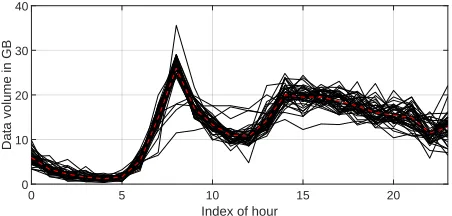
irregular time basis. In wireless networks, large volumes of data are stored as time series and frequently show temporal correlation. For example, the trajectory of the mobile device can be characterized by successive time-stamped locations obtained from geographical measurements; individual social behavior can be expressed through time-evolving events; traffic loads modeled in time series can be leveraged for network planning and controlling. Fig. 3(a) and 3(b) illustrate two time series of per-cell and per-city aggregated uplink and downlink data traffic, where temporal correlation is clearly recognizable. In the following, we introduce the two most widely used time series models based on linear dynamic systems: 1) AutoRegressive and Moving Average (ARMA), and 2) Kalman filters. Examples of context prediction in wireless networks are given and their extensions to nonlinear systems are briefly discussed.
1) Autoregressive and moving average models: Consider a univariate time series {Xt : t ∈ T }, where T denotes the
set of time indices. The general ARMA model, denoted by
ARMA(p, q), has p AR terms and q Moving Average (MA) terms, given by
Xt=Zt+ p X
i=1
φiXt−i+ q X
j=1
θjZt−j (1)
![Fig. 2. Link context example: a pathloss map of Berlin downtown obtainedfrom the data of the MOMENTUM project [39], where the triangles representbase stations](https://thumb-us.123doks.com/thumbv2/123dok_us/1109477.1612131/7.612.61.263.63.176/context-pathloss-downtown-obtainedfrom-momentum-triangles-representbase-stations.webp)