DOI 10.1007/s13173-013-0101-2 O R I G I NA L PA P E R
A conceptual-driven survey on future internet requirements,
technologies, and challenges
Antonio Marcos Alberti
Received: 12 April 2012 / Accepted: 5 February 2013 / Published online: 3 March 2013 © The Brazilian Computer Society 2013
Abstract Nowadays, research initiatives to redesign the Internet are popping up around the world. Each of these projects has a particular focus and its own set of design requirements and key technologies. The panorama shows a wide diversity of pre-requirements and arguments, some very specific and superficial, others more general and deep. Despite this diversity, a conceptual-driven analysis of such scenario could reveal the current state-of-the-art on future Internet research, the common aspects that permeate all ini-tiatives, and the open issues to be addressed in future work. This paper provides a comprehensive overview of the con-temporary research from an abstract point of view, cover-ing the design requirements and cover-ingredients that are becover-ing adopted, interrelating, and analyzing them.
Keywords Future internet · Future networks · New generation · Architecture · Requirements · Challenges·Technologies·Concepts
1 Introduction
Nowadays, research projects to redesign the Internet are pop-ping up around the world [1]. This is happening as many people have begun to question the capability of the current Internet architecture to continue meeting the desires of our society [2]. In fact, we are trying to continue using an archi-tecture that was designed in the 1970s to meet a different scenario of requirements and applications. The uncertainty behind this continuity elucidates why many research projects are aimed at redesigning the Internet: they are looking for
A.M. Alberti (
B
)Instituto Nacional de Telecomunicações–INATEL, Santa Rita do Sapucaí, Minas Gerais 37540-000, Brazil e-mail: [email protected]
innovative architectures that can better achieve our informa-tion and communicainforma-tion demands. That was exactly what researchers at Stanford University were doing when they asked: What if we could redesign the Internet with the cur-rent technologies and resources? What would it look like? The movement arising from these questions became known asclean-slatedesign [3] and gave rise to the impressive wave of research that we are witnessing today.
In this context, what could people expect from a clean-slateInternet? Nowadays, people put on the Internet a sig-nificant portion of their expectations regarding the evolution of information and communication technologies (ICT). The Internet infrastructure is already a basic need for individuals, organizations, and even governments. Everything indicates that the role of the Internet will continue to be of much rele-vance in our society. The desires for a new Internet are very diverse and complex [4,5], with aspects ranging from socioe-conomic, energetic, cultural, environmental, educational, and entertainment up to political, climatic, and health, among oth-ers. People expect a network that is more trustworthy, secure, efficient, resilient, pervasive, and open for innovative appli-cations, with higher capacity, connectivity, mobility, auto-nomicity, diversity, and quality.
It worths to mention that theclean-slateapproach is not the only one possible. There are those that believe that significant changes can be obtained by evolving the current Internet pro-tocols. The debate between evolutionary versusclean-slate approaches called a lot of attention on the community [6]. The fact is that Internet technology will continue evolving not only by means of incremental steps, but also by revolu-tionary ideas. Both paths are equally important.
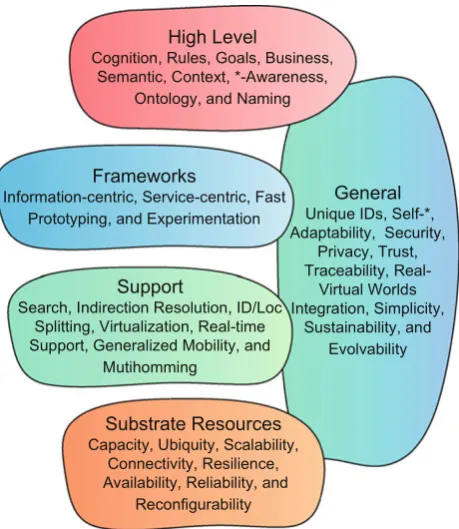
Fig. 1 Future internet requirements and concepts selected from the current proposals
specific and include very particular requirements. Others are more general, with pre-requirements spread over several areas. Such diversity creates the impression that a general-ized understanding of the technical issues adopted in overall approaches is an impossible goal. This is exactly the focus of this paper: to summarize the core ideas, concepts, and tech-nologies behind the current state-of-the-art on future Internet design. Compared to the previous surveys on future Internet research (which are driven mainly by geographical and fund-ing issues [1,7,8]), this paper relies on a conceptual-driven approach. It focuses on relating ideas and concepts behind those approaches from an abstract point view.
1.1 Paper organization
This conceptual review started with the selection of the most representative requirements and indirectly the con-cepts behind contemporary proposals for the future Inter-net. The selection was made through a critical analysis based on the following criteria: (1) how frequently each prereq-uisite appeared in current approaches for the future Inter-net; (2) how deep each requirement contributes to achieve our societal aspirations; and (3) what the architectural gains are behind each requirement. Figure1presents the selected requirements. At the bottom are the substrate resources and their requirements. Above there are some support systems that hold broader frameworks. At the top are the high-level
aspects. On the right side are general requirements that cover all previous scopes.
In order to cover Fig. 1 landscape, the remainder of the paper was organized as follows: Sect. 2 concentrates on the requirements behind substrate resources (i.e., hard-ware), including capacity, ubiquity, interactivity, and traffic growth. Section3covers the integration of real and virtual worlds. Section4is focused on the virtualization paradigm, while the Sect.5covers the innovative paradigm of software-defined networking (SDN). Section6focuses on adaptability, autonomicity, and manageability. Section 7 discusses ser-vice and application-level requirements, such as architec-ture neutrality, openness, diversity, extendibility, flexibility, compose-ability, and usability. Section8tackles the support for persistent information representation and innovative com-munication models. Section 9 concentrates on indirection resolution. Section 10 looks into the support for mobility and multihoming, including the identification (ID)/location (LOC) splitting paradigm. Section 11 delineates the secu-rity, privacy, trust, and transparency requirements. Section
12focuses on designing for simplicity, evolvability, and sus-tainability.
2 Technology evolution and its impact on capacity, ubiquity, and traffic
For a long time, people have been talking about technological evolution and the rate at which it occurs. Very often, people cite Moore’s Law [9] as an example of law being capable of predicting technological developments in computing power.1 More recently, Kurzweil [10] presented a theory for techno-logical evolution: the Law of Accelerated Returns. It states that two positive feedback loops occur during some tech-nology evolution process. The result is that an evolutionary process starts to reduce faster and faster the time interval between important returns (outcomes).
In his book, Kurzweil [10] presents a series of figures that show exponential growth trends for memory capac-ity (DRAM in bits per dollar), microprocessor clock speed (Hz), transistors per chip, processor performance in million instructions per second (MIPS), and magnetic storage (bits per dollar). For example, the decrease in the ratio of cost per MIPS is about 8 million to 1 from 1967 up to 2004 [10]. In the same period, memory capacity improved approximately 2,000 times. Saracco [11] argued that technological devel-opments in digital storage and processing have been consis-tent in recent years. The number of hosts on the Internet has also been progressing exponentially, at least for now. High-performance computing based on supercomputers (or com-puter clusters) has already achieved petaflops (1015) floating
1 The number of transistors in an integrated circuit doubles every 2
point operations per second [12] and evolution proceeds to exaflops (1018). Moreover, display technology has advanced enormously in recent years, allowing ameliorated quality and larger screens, substantially improving the quality of expe-rience and allowing new forms of digital interactivity [11]. The advance of consumer electronics in the form of handsets, laptops, HDTVs, e-books, video games, GPS, etc., pleads for exponential growth in these technologies. Besides being interesting, this estimatives are important to characterize how substrate technologies capacity will evolve in the next decades. In other words, they help to answer the question: which is the capacity available to the design of future ICT? To know the available capacity is important to any project.
However, the exponential growths are also valid for traffic [10]. The Minnesota Internet Traffic Studies (MINTS) [13] estimate that the annual Internet traffic growth rates were about 50–60 % in 2008 and about 40–50 % in 2009. With this number, we can contemplate a growth of roughly 30–100 times in the next decade. Moreover, the monthly Internet traf-fic estimated by MINTS was circa 7,500–12,000 petabytes, i.e., 7.5−12×1018bytes or exabytes. Another estimate made by researchers from the Japanese Akari project [2] indicates that traffic could increase 1.7 times per year in Japan in the next years. Therefore, network architects need to consider exponential growths in traffic.
Also, according to [14], North Americans spent approxi-mately 60 h online every month in 2010. People are spend-ing more and more time online. Many people would like to be always online, aware of their received e-mails, agenda, Skype, MSN, and social networks posts. Therefore, new architectures need to provide improved reliability. In addi-tion, people would like to enjoy the augmenting diversity of applications that are becoming available on mobile devices, e.g., social networks, blogs, forums, etc., with very high qual-ity of service and experience. We could expect exponential growths on interactivity as well.
2.1 Initiatives
More research is being undertaken to find ways to meet such capacity requirements in various portions of the network. At the mobile access, cognitive radio (CR) [15,16] (Sect.6) and other reconfigurable radio standards are candidate technolo-gies. At fixed access, the candidate technology is fiber-to-the-home (FTTH) technology.
At the network core, state-of-the-art optical transmission and switching are promising technologies [2]; they include ultra-dense wavelength division multiplexing, optical time division multiplexing, and optical packet switching. The Akari project adopted such technology combination to move towards petabit per second capacity in 2015.
The scalable and adaptive Internet solutions (SAIL) con-sortium [17] approach is based on three tiers: open
connec-tivity services (OConS), cloud networking (CloNe) (Sect.4), and network of information (NetInf) (Sect. 8). OConS adopted an open multi-layer transport perspective, where overspread allocation of integrated resources (computing and networking) takes place. Supported transport technologies include all-optical networking, optically switched network-ing (OTN), multiprotocol label switchnetwork-ing (MPLS), WiFi, and third generation/long term evolution (3G/LTE). OConsS also includes the support for cooperative spectrum sensing, a typ-ical feature of CRs.
Besides high capacity, the core network must have ade-quate availability, resilience, robustness, and reliability. Akari project focuses on distributed control to improve scal-ability. Another related requirement is electrical power con-sumption [4]. Akari adopted the optical packet and circuit switching to reduce the consumption of electricity.
2.2 Analysis
We increasingly connect using mobile devices [18,19] and, of course, would like to become online while moving. Thus, mobile devices require a higher bandwidth and degrees of connectivity. Failures and intermittence must be dealt with, traffic must be redirected, and availability must be improved. In fact, the technology evolution of available computing is changing the degrees of connectivity and interactivity. The deflation of computing price is leading us towards ubiqui-tous computing [20], leading to computing that is every-where, every time. Therefore, each device will probably have more neighbors where connections can be maintained, thus improving connectivity. New designs need to take advan-tage of pervasive and ubiquitous computing to increase availability.
As a result of the exponential growths on quantity of devices, connectivity, interactivity, and traffic appears to be a huge scalability challenge. Inexpensive computing leads to more and more devices that are computationally capable. If they connect to the Internet (e.g., through clothing, build-ings), they could become the majority of connected devices, as discussed in the next section. Smart environments and ambient intelligence could emerge to ameliorate the quality of our lives, but they could also produce more pressure on network scalability. More ubiquity leads to more scalability problems, mainly regarding identification, location, routing, mobility, multihoming, and other issues, as discussed in the other sections of this paper.
3 Integration of real and virtual worlds
as a network-enabled device (NED) [21]. This trend has been coined as the Internet of things (IoT) [22,23]. The IoT idea is frequently assigned to the Massachusetts Institute of Tech-nology (MIT) Auto-ID center. Examples of things are house-hold appliances, security equipment, sensors and actuators, bottles of wine, surveillance equipment, goods in a super-market, etc.
Sensors and identification devices could provide real-time information to enrich virtual-world applications, allowing changes in real-world objects to be reflected in virtual envi-ronments. The reverse is also a significant requirement. Through actuators, changes made to virtual objects can become real. For instance, people could close a virtual garage door of a 3D virtual model of their home. This action reflects in a real-world event through an actuator. This scenario is also interesting to illustrate another RWI challenge: the contextualized/semantics-rich discovery of sensors and actu-ators [24]. For instance, in a fire, an application can query whether there are any anti-fire actuators or sensors that can measure the temperature of the residence rooms. In this sce-nario, sensors and actuators need to be precisely described to enable a contextualized search by emergency applications. Security, traceability, and privacy are also crucial.
3.1 Initiatives
Some technologies that are already used in IoT are radio fre-quency identification [25], near field communications [26], and wireless sensor and actuator networks (WSAN) [27]. Examples of WSAN applications are the monitoring of indus-trial plants, manufacturing processes, houses, cars, environ-ment, climate, and healthcare.
According to the European Union Future Internet Assem-bly activities, the real world will become increasingly inte-grated with the virtual one, making it possible to greatly increase the interaction between them. Such approach is called real-world Internet (RWI) [21,24]. There are several initiatives under the RWI umbrella. SENSEI [24] aims at realizing the RWI vision by integrating real world informa-tion and devices with virtual world services and applicainforma-tions. The idea is to integrate heterogenous WSANs by means of a global common framework, exposing obtained information via universal interfaces. It aims at creating a secure, trustable, real-time, open, sensorial information market, where con-textualized information is disseminated, managed, and rea-soned. The SENSEI architecture employs service oriented architecture (SOA) (Sect.7) concepts to provide resource discovery and composition.
In the Akari proposal, the real-world information is col-lected by a sensorial network called “NerveNet”, which sup-ports a diversity of NEDs.
3.2 Analysis
The application of the Law of Accelerated Returns in the scope of NEDs could impact current ICT in several ways [28]. First, a tremendous growth in the number of sensors collecting real-world information could generate a veritable flood of traffic on the network. According to Akari [4] and Cross-ETP [5], the amount of NEDs plugged into the Internet could reach billions.
Another point is how to make this information securely available to services, applications, and other entities. Sensor networks carry information that is sensible for user privacy, such as identity, location, and other contextualized informa-tion. Traceability to a particular sensor node will require greater transparency from the network, without compromis-ing the security and privacy of individuals. Other security aspects are trust relations among nodes, and data integrity and confidentiality. Trust and reputation mechanisms are inter-esting for NEDs, since traditional security could expend too much energy [29].
In addition, there is the challenge of how to address bil-lions of new nodes. How do we locate them geographically? The collected information needs to be successfully contex-tualized to allow delivery to the right destination, at the right time (information freshness). Data description based on ontology is necessary to facilitate classification and contextu-alization. As summarized by Presser et al. [21], NEDs need to be uniquely identified, and they should be capable of collabo-rating with each other, of semantically and contextually inter-preting information, of establishing trusted relations, and of exchanging ascertained knowledge. Furthermore, the mobil-ity of NEDs needs to be supported, since some sensor or actuators could be mobile, e.g., cars and clothes.
This flurry of sensitive information will push network scal-ability to new limits, especially regarding security, traceabil-ity, privacy, location, addressing, identification, semantics, and context. We cannot imagine thousands of networked sen-sors and actuators that rely on human intervention to perform their tasks. Therefore, these devices need to be originally designed to organize, configure, optimize, self-protect, and self-heal. On the other side, sensoring is relevant to collect real-world information needed for autonomic and cognitive decision-making processes, while acting is impor-tant to reflect high-level decisions in the real world.
In addition, the sensors and actuators have to deal with internal limitations, i.e., limited energy, transmission power, receiver sensitivity, transmission rates, etc. There-fore, network devices require *-awareness2 properties, c.f. self-awareness, energy-awareness, and service-awareness (Sect.6). They also need to be aware of their environment
2 The asterisk is used to represent awareness to several aspects of the
(c.f. situation-awareness). In summary, in a simplistic ogy with humans, the RWI role on future Internet is anal-ogous to our sensory or somatic nervous systems, i.e., they provide raw data to be further contextualized for autonomic functionalities.
4 Virtualization
The exponential growth in ICT created a diffuse substrate of digital technologies composed mainly of processing, storage, display, and communication resources. Today, most pieces of telecommunications equipment are turning into computers, with CPUs, operating systems, etc. The same is occurring to our network terminals. There is a perceptible convergence towards multi-core generic hardware. In this context, some questions arise: how to make this diffuse substrate of hard-ware resources transparently and uniformly available to soft-ware? How can these substrate resources be exposed and shared by virtual versions of entities that perform as if they are real? What is necessary for these purposes?
Interestingly, in the late 1970s, a technology was proposed for this aim: computer virtualization [30–32]. It was a heated topic thereat, after IBM set up the virtual machine monitor (VMM) in the 1960s. The goal was to make a mainframe that could perform more than one operating system (OS). Then arose the virtual machine (VM), which is software made machine. A single mainframe could run multiple VMs, each with its own OS. In this context, to virtualize means to cre-ate an abstraction layer between the hardware and the OS. This abstraction layer “hides” and “homogenizes” hardware resources, allowing any OS to run concurrently in the same physical machine. In a broader sense, to virtualize can be defined as the act of creating the necessary conditions to support virtual versions of entities that perform as the orig-inal ones. According to this definition, the VMM creates a virtual machine abstraction, which performs like the real one from the operating system point of view.
Nowadays, computer virtualization is back in the spotlight with the so-called cloud computing [33,34]. Cloud comput-ing uses virtualization paradigm to share physical machines, creating and migrating virtual machines according to cus-tomers’ need. The idea is to reduce costs by sharing existing physical infrastructures. The virtualization is not restricted to processing facilities. It can be applied to storage resources (virtual disks), software frameworks [e.g. virtual enterprise resource planning (ERP)], and even for individual applica-tions (e.g. virtual text editor).
In the context of communication networks, virtualization started with the advent of the virtual private networks (VPNs) and virtual local area networks (VLANs). However, Peterson et al. [35] proposed to create virtualized networks to over-come traditional Internet protocol (IP) testbed limitations.
This led to the emergence of the overlay networks and Plan-etLab [36,37], which is a virtual testbed network over tradi-tional IP networks. Since then, virtualization has been used as a tool to create distributed experimentation environments. The idea is to design by experimenting, or to do experimen-tally driven research [38–42].
Virtualization of wireless networks is also possible [43–45]. However, wireless networks have characteristics that make such networks harder to virtualize, e.g., inter-ference, shadowing, multipaths, multiple access, and other aspects of the propagation environment. These difficulties do not mean that radio resources are an exception. Virtu-alization can expose radio resources to software. Wireless virtualization is also explored on the context of the software-defined radio (SDR) [46]. SDR is a radio where hardware resources are exposed and reconfigured by software. Almost all signal processing can be done in software, creating the so-called virtual radio [43] or software radio [46]. One can expect this kind of mobile terminals on the future Internet.
In summary, network virtualization [47] allows multiple virtual networks (VN) to share the same substrate network (SN). A VN has several virtual nodes connected by physical and/or virtual links, thus forming a virtual topology. Link virtualization enables the network to share one physical link among two or more virtual links. Therefore, the SN can be sliced to enable simultaneous VNs.
More recently, the role of virtualization on future Inter-net has been expanded. Now, it is being considered as a key ingredient in the core of many approaches. Peterson et al. [35] contended that virtualization can be an elementary aspect of the architecture itself, instead of just a way to test new archi-tectures. Many efforts to reengineer the Internet consider virtualization as the solution to offer generality, isolation, transparency, and programmability of substrate resources.
4.1 Initiatives
Another initiative called generalised architecture for dynamic infrastructure services (GEYSERS) [57] aims at extending 4WARD VNet scope to consider optical network-ing and information technology (IT) infrastructure resources. It deals with the placement of VMs.
The resources and services virtualization without barriers (RESERVOIR) project [58] adopted a virtual entity lifecy-cle management approach based on service-oriented archi-tecture (SOA). The project proposes to interwork clouds of partner providers to better use available virtualized resources. All the technologies required for collaborating clouds are in the scope of the project. The proposal covers service level agreement (SLA) and lifecycle management.
Another initiative is called SLA at service-oriented infra-structure (SLA@SOI) [59]. It is focused on lifecycle man-agement considering a SLA-based approach. Contracts cover relationships among clients, real and virtual infrastructure providers, and service and software providers.
The NEBULA project [60] proposes a new architecture for the Internet that is based on the high capacity, reliable, and policy-driven interconnection of clouds.
The SAIL and Akari adopt virtualization as core architec-tural ingredient. SAIL proposes a cloud networking (CloNe) paradigm. The idea is to create dynamic slices of networking that are shared by providers to connect data centers. Network virtualization seems as a tool to facilitate migration and co-existence of legacy and future technologies. Akari provides support for recursive network virtualization.
The Autonomic Network Architecture (ANA) [61] pro-vides recursive support for virtualization based on some generic core ingredients. It enables the federation of virtual-ized resources, e.g. virtual links.
4.2 Analysis
To discuss the requirements and challenges behind vir-tualization, let’s assume an hypothetical scenario where computational substrate resources are shared among VMs customized for a certain client needs, let’s say a video server. A first step on the VMs lifecycle would be to dis-cover and select the appropriate real-world resources that can properly host the VMs. It is desirable that the search for a suitable substrate involves automated solutions, since we are experiencing exponential growths in the number of substrate resources. A possible approach to overcome this challenge is to expose the hardware functionalities, attributes, descriptors, states, configurations, etc., to soft-ware. This can be done by means of substrate resources descriptors.
After the selection of an appropriate substrate, it is nec-essary to check if the selected physical resources can admit or not the new virtual entities. Some negotiation could take place to facilitate admission. If accepted, the VM needs to
be installed and configured. Physical resources need to be reserved. Scheduling and management of processing, stor-age, and transportation resources should be done according to established contracts.
During operation, the virtual entities demand isolation, security, privacy, and stability. Such requirements give rise to some additional issues: how to balance quality and utilization of real world resources for concurrent vir-tual entities? How to secure slices from threats coming from other slices? How to make software controls private and secure? How to avoid stability problems caused by other virtual entities? How to isolate effects of software bugs?
Virtual entities also need to be policed, managed, modi-fied, and optimized. Virtual entities can be policed to avoid misbehavior and unfairness. Also, the quality of service (QoS) provided needs to be monitored. Fault situations could be transparently managed. Virtual entities can be optimized to reflect client needs, i.e., service awareness. Finally, the reserved physical resources need to be released when they are no longer needed, such as in the case of the virtual entity movement.
An additional concern is related to the real-time support for virtual entities. It is important to enable deployment of time-sensitive functionalities on software, such as advocated by SDR and CR, i.e. some physical and link layer function-alities (e.g., signal processing, frame delineation, timeout control, and retransmission) require real-time support. This approach uses real-time hypervisors that enable the creation of real-time VMs. Another approach is to use a real-time operating system (RTOS) to implement network functional-ities as real-time processes.
Ideally, virtualization of resources should be as broad as possible, covering every type of resources, i.e. not only from the network but also from the cloud. 4WARD covers the virtu-alization of wired and wireless resources. GEYSERS extend the support for IT and optical networking. SAIL does the same with the CloNe approach. NEBULA and Akari provide a similar scope. However, it is unclear at this time how deep is the support for real-time virtual entities on these approaches. The virtual entities lifecycle is implemented differently in each of the initiatives presented. RESERVOIR con-siders a service-centric approach. SAIL combines NetInf (information-centric) and CloNe. Some projects adopt SDN-based solutions. However, in this case virtualization is limited to network resources. Horizon project adopts an autonomic, multi-agent solution. A future direction could be to generalize the lifecycle management to any type of resource, through combining autonomic, virtualiza-tion, software-controlled, service- and information-centric approaches.
decou-ples evolution of overlay information networks from sub-strate resources. It homogenizes, generalizes, and exposes hardware resources to accommodate in software the acceler-ated technological evolution. However, the abstraction layer created by substrate resource virtualization brings new chal-lenging tasks in terms of scalability, efficiency, virtual entity life-cycling, interoperability, real-time support, isolation, and security.
5 Software-defined networking
The software-defined networking is a new paradigm to redesign communication networks considering a software engineering point of view. The argument is that current networks are essentially designed to “master the complex-ity” behind existing technologies, rather than to “extract simplicity” from the learned lessons [62]. Shenker defends the idea that abstractions play a big role on computer sci-ence, shielding high level software from the complexity existing in the lower levels. Thus, why not to define good abstractions for networking? In this context, SDN means to rethink network architectures considering the important role of abstractions [62]. It is important to notice that in the context of SDR and CR, defined (or software-controlled) means that some functionality is defined by soft-ware, i.e. it works accordingly to some controlling software. Thus, in SDR and CR context, SDN means to establishment networks where equipment functionalities are controlled by software. This definition comprehends any equipment that could be used to do networking as well as any network func-tionality. To conclude, both definitions share the software-controllability aspect, since Shenker et al. proposal is also based on software-controlled equipment.
The Shenker et al. SDN paradigm [62] is based on the premise that we have never developed the right abstractions for networking. Thus, SDN proposes four abstractions to simplify network control: (1) forwarding; (2) state distrib-ution; (3) configuration; and (4) specification. The forward-ing abstraction encompasses a flexible, software-controlled, frame forwarding model. The state distribution abstraction comprehends a centralized control program that operates over a summarized network view. It avoids the complicated distributed states approach used today in many networks. The output of the control program is a networking configuration map. To create the required network view, a network operat-ing system (NOS) is used. The NOS communicates with the forwarding equipment to obtain state information, as well as to send controls—the realization of the configuration abstrac-tion. The specification abstraction enables the generation of abstract configurations for network devices. Such abstract configurations need to be mapped to the physical ones.
5.1 Initiatives
OpenFlow is probably the best well-known SDN initiative [63]. It is a standard that covers SDN forwarding and config-uration abstractions. More specifically, it covers the structure of an OpenFlow switch as well as the protocol used by the control program (controller) to generate the network view and to configure forwarding tables. A diversity of controllers can be used together with OpenFlow: NOX [64], HyperFlow [65], DevoFlow [66], and Onix [67].
A special controller called FlowVisor [68] enables the cre-ation of isolated slices of resources through the orchestrcre-ation of OpenFlow switches and controllers. In Brazil, a CPqD ini-tiative called RouteFlow [69] enables the creation of virtual IP networks over OpenFlow switches. OpenRoute enables the interoperability with IP networks without the need to required protocols in a centralized way. On wireless media, OpenRadio [70] applies the SDN paradigm to create a wire-less network operating system that controls forwarding in an heterogeneous radio environment.
And, if the software-defined networks are programmable, why not to develop a programming language for them? This is the objective of the Frenetic language [71]. Rexford recently presented a discussion on programming languages for SDN [72]. Other recent projects include SDN compilers [73] and debuggers [74].
5.2 Analysis
Virtually all abstractions of Shenker et al. SDN paradigm are currently being investigated. More specifically, the scal-ability of the centralized-control model is being evaluated [75,76]. New controllers are being proposed to overcome emerging limitations [75]. Controller placement problem is also being explored [77]. The OpenFlow forwarding model has received some criticisms regarding its generality, i.e. lim-ited framing support. Nonetheless, new versions are address-ing this limitation. New controller applications enable virtual networks orchestration, but integrated ICT resources orches-tration is still missing. The just emerged networking pro-gramming languages (and tools) are an exciting new frontier for research. In summary, the current OpenFlow versions can be seen as a first implementation of the SDN idea. Future approaches could emerge considering alternative abstrac-tions and implementaabstrac-tions. The SDN paradigm is more deep and broad than what we have implemented today.
6 Autonomicity and manageability
computational systems. Moreover, the pace of technologi-cal progress is requiring more adaptable systems, capable of self-adapting to the environment in which they operate. To implement, integrate, install, configure, and maintain large software systems manually is an eminently stressful job and often brings to us a deep sense of failure averse to the prob-lem.
Concerned with this scenario, some IBM researchers pub-lished a manifesto in 2001 that gave rise to the so-called autonomic computing. The IBM researchers claimed that the complexity of computing systems is approaching the limits of our capacity to deal with such complexity. Like the human autonomic nervous system, which governs var-ious functions without our awareness, the IBM researchers proposed that computational systems should manage them-selves according to high-level objectives outlined by human operators. The idea was to reduce human interference in the system’s operation, administration, and maintenance, keep-ing the system’s complexity tractable, reduckeep-ing operational expenditures (OPEX), and allowing the information tech-nology industry to continue evolving. Therefore, autonomic computing can be seen as a technology to manage complex-ity, as defended by Strassner [78]. Autonomic technologies frequently emerge as a candidate solution to deal with the increasing complexity on future networks.
The autonomic computing defined by Kephart and Chess [79] has four autonomic properties: configuration, self-optimization, self-healing, and self-protection. They are col-lectively denoted as self-*.3 Autonomous managers imple-ment these properties and interact with each other and with human operators to obtain the expected behavior for the sys-tem: the so-called self-emergent or “social” behavior.
Autonomous elements use communication resources to exchange obtained knowledge. Dobson et al. [80] cite this as one of the most notable omissions from the original vision of Kephart and Chess: How do autonomous elements com-municate with each other? In the same vein, Clark et al. [81] have proposed incorporating more autonomy in communi-cation networks, creating the so-called network knowledge plane. This idea influenced Fraunhofer FOKUS researcher Smirnov to propose the idea of autonomic communications in 2004 [82,83]. Both approaches make evident the conver-gence of ICT. The two things are very close: information and its transfer to enable communication.
Besides the four original autonomic properties, Sterrit and Bustard [84] argued that to achieve the goal of auto-nomicity, the system must be aware of its internal state (self-awareness) and the conditions of the external environment (self-situation); it should also be able to automatically detect changes in circumstances (self-monitoring) and to adapt
3The asterisk is used to generalize all self-management and self-control
properties of autonomic and cognitive systems.
appropriately to them (self-adjustment). The autonomous system must then be aware of its skills, available/unavailable resources, internal and external status, communication pro-cedures, and status, as well as its rules, goals, and other high-level information necessary to operate [84]. Context-aware policies and ontologies can be used to deal with high-level objectives [85]. Rules and goals must reflect exactly what infrastructure owners want to obtain. Adjustments are nec-essary to improve efficacy and avoid instability, modifying existing feedback control loops.
The relationship between autonomic properties and con-text/situation is captured in the form of *-aware properties. *-aware can be seen as a generalization of contextualized actions in ICT. Take, for example, a service enablement plat-form as will be discussed in Sect.7. It is said to be network-aware if it considers the network condition (situation) in its actions.
6.1 Initiatives
In 2003, Clark et al. [81] addressed the need for a new net-work research objective towards more autonomicity and pro-posed the concept of network knowledge plane. The idea is to create a self-organizing network that follows high-level goals, reorganizes itself to adapt to changes, self-monitors to detect problems, and self-heals to fix such problems (or explains why it was unable to fix them).
In the following year, the Fraunhofer FOKUS institute established a research initiative in autonomic communica-tions aimed to develop self-* properties for communication networks [86]. Smirnov [83] presented the vision of situated and autonomic communications (SAC) as a paradigm shift towards self-* and *-aware networks to deal with the growing complexity and demands of our information society.
In 2007, the Foundation, Observation, Comparison, Action, and Learning Environment (FOCALE) [87] proposed an entire framework to perform autonomic networking manage-ment. The authors of FOCALE proposed two control loops: a maintenance control loop and an adjustment control loop. The approach uses the former loop if policy adjustments are required, while the architecture activates the maintenance loop when it does not detect an abnormal behavior.
can self-adapt to context changes. Some CASCADAS func-tionalities are related to the RWI, such as knowledge net-works, information contextualization, context handling, self-monitoring, self-adjustment, and self-management.
ANA is a self-organizing approach for network elements and its functionalities [61,89]. Functional blocks can coop-erate each other to achieve high level tasks. ANA provides: (1) autonomic monitoring and healing; (2) the dynamic evo-lution and adaptation of functionalities; (3) an event notifi-cation system to provide network- and context-awareness. Importantly, ANA architecture was implemented and tested. The Akari project employs an automatic locator num-bering as well as the optical self-organized control. Self-emergent property is one of the design pillars of the project. Akari aims to create energy-aware solutions.
SAIL is focused on the cross-layer coordination across multiple domains. The aim is to provide service-, network-, cache-, flow-, and energy-awareness. However, it is not clear to which extent it employs autonomic technologies.
Horizon [90] aims to create an automatic management sys-tem capable to learn and adapt networking protocols accord-ingly to network conditions. The project encompasses an “autopilot plane” aimed to help network entities in achieving improved levels of situation-awareness. Thus, entities can better decide on how they will support client virtual over-lay networks. It is an autonomic solution to the problem of allocating virtualized resources. Multi agent systems (MAS) were adopted to implement the project’s “autopilot plane”.
Autonomic technologies are also being used in wireless networks, especially in the context of the so-called cogni-tive radio (CR). Cognicogni-tive radio [15,16] is a flexible wireless communication platform that is aware of its environment (sit-uation awareness), capabilities, and status (self-awareness), and is capable of sensing, analyzing, learning, planning, act-ing, experimentact-ing, and self-adapting to its environment, spectrum opportunities, and user requirements, according to desired goals, rules, regulations, and policies. Cognitive radio networks (CRN) are self-organizing, cooperative, competi-tive, dynamic, and efficient spectrum utilization networks that make use of autonomic and cognitive technologies.
6.2 Analysis
Distributed, self-*, and *-aware architectures and frame-works have already been demonstrated and evaluated. Clear examples are ANA and CASCADAS. While the autonomic design is being adopted to a multitude of specific problems, designing a new Internet deeply employing autonomic ideas is a quite challenging task.
Autonomic control and management requires a clear vision not only of the internal states of the managed enti-ties but also from the environment where they are inserted.
Therefore, there is a strong relationship with the real-virtual world integration aspect discussed on the Sect.3. Autonomic functionalities can be seen as a client of the rich and contex-tualized information obtained at the real world.
Autonomic technology is a candidate approach to man-age the exponential growths on future Internet numbers. The “autopilot” is already a reality in many knowledgment areas. Therefore, it is an important candidate to deal with the scale and complexity we can expect on future networks. The role of autonomicity as an antidote for complexity is discussed on [91].
7 Services and applications: extendibility, flexibility, compose-ability, and usability
The end-to-end principle is one of the central principles of the current Internet. It states that no application level functional-ity can be placed at the network layer. IP design was minimal: the “dumb network” with “smart hosts” model. This model favored the neutrality, innovation potential, openness, diver-sity, extendibility, and flexibility of network applications. The Akari project [4] defends the world wide web (WWW) as perhaps the most important outcome of this principle.
Such history can repeat itself, but in another scale! Nobody knows for sure what will be the most successful applications in a few decades. Therefore, a generic (usage-independent) information processing and exchanging infrastructure is required, where the coexistence of evolvable, extendible, flexible service/application frameworks over such generic information network is achieved.
Software design is changing from component-based to service-oriented design, giving rise to what has been called service-centrism, e.g., service-oriented architecture (SOA) [92]. The idea is that applications can be flexibly and dynam-ically constructed by the composition of distributed software services or utilities.
The life cycling of service/applications is dynamic, distributed, and cross-domain. It starts when a new service-based application is invoked. It also involves the search, discovery, and selection of candidate services. Third-party software, which would not be under the control of develop-ers, can be used.
Besides service selection, negotiation will be necessary to establish a service-level agreement (SLA) or a service binding. During the negotiation phase, an admission control should be performed to verify if resources are available to attach the desired service to one more application. If yes, admission installation proceeds to configure the service.
To assure that the desired quality is met, service moni-toring is necessary, as are logging and exception handling. Thus, a lot of service management functionality is required, e.g., to deal with failures, accountability, quality, availability, resilience, etc. Therefore, autonomic service management is indicated to reduce human intervention and OPEX.
Finally, changes in the application behavior can be reflected in the inclusion or elimination of participating ser-vices, as well as in SLA changes. When the application turns off, used resources must be released. Notice how this life cycle looks like the cycle of virtual entities in Sect.4.
7.1 Initiatives
For many people, the service-centrism paradigm will be dom-inant in the upper portion of a new Internet. The main reason is that above some level of abstraction, any functionality can be viewed as a service, leading to the concept of the Internet of services (IoS) [94–96]. The IoS is of great importance to the service sector of the economy. In Europe, for example, approximately 70 % of gross domestic product is related to services [97].
The IoS is an umbrella to the related concepts of every-thing as a service (XaaS) [98], e.g., from cloud computing; software as a service (SaaS) [99], which delivers cloud appli-cations as a service; platform as a service (PaaS) [98], which delivers a platform and/or solution stack as a service; and infrastructure as a service (IaaS) [100], which delivers com-puter infrastructure (cloud of virtualized resources) as a ser-vice.
The networked european software and services initia-tive (NESSI) [101] is committed to realize the IoS para-digm by implementing an open service framework (OSF). The OSF relies on the combination of SOA, virtualization, and autonomous software [5]. In a nutshell, the objectives are: (1) to enable the dynamic composition of context-aware services and XaaS; (2) to decouple software components from the substrate resources; (3) to facilitate deployment and reduce human interference; (4) to deal with cross domain (seamless) services and infrastructures; (5) to enable service self-adaptation according to context and semantics; (6) to enable context-aware personalized experience for users; (7) to improve security, trust, and dependability; (8) to manage service-lifecycle.
The first step in implementing the OSF was under the responsibility of the NESSI open framework reference archi-tecture (NEXOF-RA) project [102]. This project
speci-fied a reference architecture to be used on NESSI compli-ant designs. Other NESSI projects are: SOA4ALL [103], RESERVOIR [58], and SLA@SOI [59].
The SOA4ALL approach integrates context-aware tech-nologies, semantic web, and web 2.0 with SOA in order to create a framework and software infrastructure for seamless and transparent service delivery [103]. The idea is to cre-ate a scalable “service web”—a global service delivery plat-form, where a huge number of stakeholders can expose and consume services. SOA4ALL Studio encompasses services life-cycling management, user friendly service composition, provisioning, and analysis. The idea is to support the light-weight process modeling (LPM) paradigm to enable ease-to-use business process modeling, search for appropriated services, and automatic composition.
CASCADAS offers a versatile service-framework focused on the self-organization and self-adaptation of services. The framework was designed considering a set of fun-damental ingredients: situation-awareness, semantics self-organization, and self-similar modular design. Services can form topic-specific clusters through dynamic SLAs, giv-ing rise to service-based, self-assembly applications. In other words, services can synchronize actions to provide the desired self-emergent behavior. Services can adapt them-selves to changes in context. Through this feature, services can become specialized in a certain topic. They can also self-monitor, self-heal, and self-protect agains threats. Whenever they are instantiated, services can establish connections with other services and initialize self-* algorithms.
Akari project provides the support for service overlays and context-aware services fed by sensor networks. ANA facilitates service searching, placement, and advertisement towards self-organizing applications. SAIL offers support for generic service frameworks that will run over the cloud net-working (CloNe) with network-awareness support.
Finally, there is the semantic web effort. It is an idea advo-cated by Berners-Lee [104]. It aims to define the meaning for information and how to treat it, so that the web can “understand” what people and machines want. The idea is to make an autonomous knowledge web, which includes context-aware applications and service compose-ability. The proposal argues that to enable customized experience, the web needs to evolve to the semantic level.
7.2 Analysis
customized to adequately support service needs, creating resource-aware services and applications. Every information processing functionality is seen as a service, including net-work functionalities. The integrated and synergistic resource, service, and application orchestration creates a bottom-up environment better aligned with the overall needs of our information society. Considering this vision, one can say that NESSI, CASCADAS, and SAIL initiatives are aligned to it. However, many other proposals presented in this paper are misaligned with this vision—posing an insurmountable barrier between services and network. For many people, it is difficult to accept the vision that some networking fea-tures can be implemented as any other service, therefore sub-ject to search, discovery, negotiation, contracting, etc. More-over, many software solutions are superficial to address the required support for this purpose. Support for real-time and high performance computing are some of the concerns. Thus, it is still unclear today how the joint orchestration of physical and virtual resources will take place in a future Internet.
From a user’s perspective, the benefits of the IoS are very promising: (1) self-servicing capabilities—users can themselves configure exactly what they want; (2) improved usability—personalization and contextualization (context awareness) can be achieved in applications, varying features according to user preferences; (3) semantic invocation— services are invoked, managed, and adapted depending on semantic information; (4) user-designed applications—users will be able to create their own applications and export them to their friends; (5) diversity—some research projects expect a huge diversity of services, e.g., billions of customized ser-vices and applications [105]; (6) better resource usage, reduc-ing energy freduc-ingerprints.
In summary, the idea of dynamic service compose-ability could be used to integrate business processes with applica-tions, services and exposed substrate resources, creating what is being called digital business ecosystems (DBE) [106]. The DBEs could evolve to a “digital savannah”, where a diver-sity of services, applications, business processes, operators, users, enterprises, stakeholders, and other entities will “arti-ficially live”, compete, collaborate, exchange information, “die”, and evolve together.
8 Information
The current Internet was designed in an era in which tech-nological development was completely different from that of today. Memory, processing, and communication resources were very limited when compared with present resources [107].
In this scenario, the principles selected to guide the design of the Internet focused on inter-terminal connectivity through routers (host-centrism); designing of a simple (but robust)
forwarding network, in which more complex features were left to the upper layers at the terminals (end-to-end princi-ple); and on end-to-end communications among computer applications.
The openness, flexibility, neutrality, diversity, and exten-dibility of applications generated by such principles led to the emergence of the WWW and the popularization of the Internet. This movement led to the transformation of the Internet as the main infrastructure for information exchange, and it is considerably changing the way we interact with content [108]. As Internet designer Van Jacobson recently declared [109], the web changed the way people communi-cate forever—what matters is the content, not how to take it or where it is.
While the endpoint-centrism has produced tremendous success in the last decades, many researchers believe it is now time to put the spotlight on the information, originating the so called information-centric approach [110]. The idea is to consider information as a key ingredient in design, since information is everywhere, i.e., contracts, location, police, IDs, descriptors, naming, etc. The motivation is to over-come Internet limitations to support content distribution and exchange in a coherent way.
8.1 Initiatives
Since 2006, many info-centric approaches have emerged to overcome the limitations and distortions caused by host-centrism. Some examples are the network of information (NetInf) [17,56,111,112], publish/subscribe Internet rout-ing paradigm (PSIRP) [113] and content-centric networking (CCN) [114].
The main idea behind such blueprints is to make informa-tion the center of design [115], representing it persistently and consistently. Such representation could be done indirectly by means of information objects (IO) [111,113] or directly by means of immutable names as done in CCN design [114]. IOs could contain information metadata such as digital signa-tures, checksums, access rights, formats, and ontology. CCN names have three portions: a flat portion that contains the data itself or a checksum, a versioning and segmentation portion, and a hierarchical portion contemplating the domain name where the information is, i.e., provenance information. On the other hand, NetInf and PSIRP use flat names. Flat names are typically opaque (non-legible). The core idea behind such naming schemes is to allow access to information indepen-dently to where it is located as well as to adequately manage content with different versions and encodings. The matter of content copies is also a concern. Therefore, at some point, the mapping between the information name and the location of their copies will need to be resolved.
alter-natives to the current “receiver-accepts-all” communication model. PSIRP [115] proposes a publish/subscribe (pub/sub) paradigm. The goal is to enable efficient anycast and mul-tipath routing of previously located information, to improve multicast and to efficiently distribute content, customizing, and improving quality of experience (QoE). Anycast sup-port can be achieved by locating the nearest copy of a pub-lished content. NetInf also adopts the pub/sub paradigm. IOs are published/subscribed based on global unique IDs. On the other hand, CNN adopts an approach that resembles the hypertext transfer protocol (HTTP). However, it is imple-mented at the network layer. Interest packets disseminate the desire for some specific content (resembles the “get” method in http). The response packet contains the desired data (sim-ilar to the http “response” method). The packets do not tain addresses, but names. The CCN protocol delivers con-tent, instead of connecting hosts. Packets are cached at CCN routers. Thus, future interest packets can be answered by the closest cached packets.
CASCADAS, Akari, and ANA can support overlaid con-tent networks, but they are not information-centric designs. The CASCADAS service discovery mechanism is based on a publish/subscribe protocol—it employs self-description mechanisms to enable semantics orchestration of services.
8.2 Analysis
NetInf, PSIRP, CCN, among other information-centric ini-tiatives are proposing solutions to many of the challenges behind this paradigm shift. A highly abbreviated list would be the following: (1) to temporarily store information in the net-work, c.f. caching; (2) to allow semantics-rich and context-based information search and manipulation; (3) to deal with locality, provenance, ontology, and coherence of informa-tion; (4) to rethink security from the point of view of infor-mation, securing information per se as a means to improve information reliability, integrity, and traceability; (5) to pro-vide secure rendezvous among information producers and consumers, using trust relations; (6) to verify publisher pri-vacy before content publishing as well as to authenticate and authorize subscribers during rendezvous; (7) to solve indi-rections dynamically, efficiently, and robustly; (8) to deal with content on multilevel, multidomain environments; (9) to deal with the scalability of all these mechanisms; (10) to enable anycast and multipath routing of previously located content; (11) to uniquely identify information; (12) to explore self-certifying names, i.e., names that contain the result of a cryptographic hash function over the binary data.; and (13) to provide autonomic manipulation of content based on high-level policies, goals, privacy, objectives, etc. [114,116].
Note that these information-centric approaches require dozens of information-related software functionalities. From the service-centric point of view, such functionalities are no
longer different from any other service. On the other hand, the service-centric approaches require dozens of specific infor-mation, such as descriptors, identifiers, names, contracts, goals, etc. It is clear that both approaches are complementary. Thus, what could we expect from the current panorama of research? More synergy among them! However, this is not the case. Apparently, there is very little interaction between the two proposals, leading to establishment of non-optimal solutions. Every side is reinventing the wheel when covering aspects from the other side.
Recently, a convergent paradigm was proposed to merge both approaches: the Internet of information and services (IoIS) [117]. In fact, this paper is the first step of a broader work that aims to create a new architecture integrating service- and information-centric approaches. This research project is called NovaGenesis and started in 2008 at Inatel, Brazil.
9 Indirection resolution
Computer scientists have long discussed the role of indirec-tion in software development. In 1972, Butler Lampson con-tended that all problems in computing can be addressed by including another level of indirection. The problem is that the number of levels can be very large and hence efficiency drops. Another impact may be in scalability, since the greater the number of levels, the greater the need to store and to resolve indirections.
9.1 Initiatives
9.2 Analysis
Indirection resolution is present everywhere on ICT architec-tures. It is present on domain name service mappings, on open systems interconnection layers’ service access points, on dif-ferent technologies’ address mappings, on input–output port mappings, etc. It is also present on approaches to the future Internet: (1) when decoupling the hosts’ identification from location; (2) on information-centric approaches to resolve information ID/Loc mappings; (3) on substrate resource vir-tualization to store mappings among real-virtual entities; and (4) on service-based applications to map among participants entities. Therefore, designs need to consider indirection reso-lution in a more comprehensive way, creating mechanisms to generically store mappings among entities, services, identi-ties, locators, etc. Indirection resolution is also important to facilitate the search and discovery of functionalities, enti-ties, and information. By resolving indirections and ana-lyzing mappings, architectural functionalities can search for resources, applications, and event content.
10 Identification, location, mobility, and multihoming
Another important point today is that not only hosts are identified and located based on IP addresses, but also that information is, since uniform resource locators (URL) have domain names, which in essence lead to IP addresses. The reason is that current Internet design defined a dual func-tionality for IP addresses: to identify hosts, nodes interfaces or content servers, and to locate them into the network. The original Internet design does not support mobile hosts.
The shortage of valid IPv4 addresses in the Internet give origin to the network address translator (NAT) as a solution to enable the reuse of IP addresses. As a consequence, IP addresses are frequently changed, generating some sort of “identity loss” that ultimately may lead to inconsistencies in information and host localization. User, information, and host traceability is greatly affected by this situation, since the relation between user profiles and IP addresses is difficult to obtain. In addition, such frequent changes limit mobil-ity, localization, roaming, and multihoming support on the Internet [121].
As discussed in Sect.2, who would not want to move and take all services and information with no loss of quality of experience? The rapid growth in the number of mobile devices puts support mobility as one of key issues in future Internet design. The requirement is to comprehensively sup-port user, terminal, service, application, virtual network, information, and other real and virtual entity mobility. The challenge behind this idea justifies why unique identifiers are needed: it is because we want to move real or virtual entities as well as information, without loss of identity, and we want
to continue finding them during and/or after movement. Peo-ple want to move without loss of identity and functionality. Services and applications need to follow users as they move. Moreover, it is necessary to support redundant connectiv-ity for fixed and mobile devices, i.e. to provide multihom-ing support. Multihommultihom-ing is limited on the current Inter-net and is based on four pillars: physical link redundancy, switching/routing redundancy, routing path redundancy, and host functionality duplication. In future Internet, multihom-ing needs to be rethought to more generally accommodate redundancy on network access.
10.1 Initiatives
In the last years, several initiatives appeared to support host mobility on the Internet [122]. Mobile IP approach [123] pro-poses two IP addresses for the hosts: a home-address, which is static and works as an identifier (ID) for the application layer; and a care-of-address, which is dynamic, dependent on node’s location. Mobile IP requires two components: a home-agent, which allocates the home-address and maintains a mapping to current location; and a foreign-agent, which allocates the care-of-address, informing the home-agent in case of mobility. Instead of using just one IP address to iden-tify and locate the host on the network, Mobile IP decouples identification from location functionality, using one address to identify the host (home-address), and another one to locate it (care-of-address). This functionality decoupling is noted as ID/Loc splitting. Another approach, host identity protocol (HIP) [124] creates a new namespace between Internet net-work and transport layers. The identifier is a flat public key attributed to the host. The locator is an IP address.
There is also the locator ID separation protocol (LISP) [125]. It is based on an address mapping system between edge and core IP networks. Edge datagrams are encapsulated on UDP messages and further accommodated on core network datagrams. Two IP addresses are used: endpoint identifiers (EIDs), which are persistent and used as an ID for the hosts; and routing locators (RLOCs), which are used to locate the edge routers. Ingress tunnel routers maps EIDs on RLOCs, while egress tunnel routers maps RLOCs on EIDs.
The Mobile IP and LISP approaches can be classified as patches to the current Internet, since they are intrinsically tied to its design. However, in the recent years, new approaches appeared to rethink the mobility problem more deeply, no longer being necessarily tied to TCP/IP stack. In fact, some of them can be used with IP addresses, non-IP, or post-IP. Nonetheless, identifier-based solutions are being preferred to support mobility in future Internet [126].
by a readable, unique local name; or by an identifier obtained as the result of a hash function. The names can be local or global. Local names are unique on the local network and are used for host identification and network management. Local names are generated by the combination of representative host-related words, i.e. their function in context, owner, serial number or date and time of installation. Global names include the local names, as well as additional hierarchical topology information. The overall solution is based on three mapping systems: identity management server (IMS), name mapping server (NMS), and location management server (LMS). The IMS holds the local dynamic mapping among names, IDs, and locators. The NMS deals with global static information mapping, like in the current DNS. More specifically, the NMS provides the mapping between the global part of the nodes names to the locators of domain specific identity management servers (IMSs). The LMS maps IDs to global locators.
MobilityFirst aims to redesign the Internet through the comprehensive support for mobility, trust, robustness, usabil-ity, and manageability [1,127,128]. The approach adopts a global name resolution service called direct mapping (DMap) [129]. Entities are supposed to have a flat ID that is bound to one or more locators. The DMap service maps an ID to a list of network addresses where the ID/Loc bindings are stored. Thus, every autonomous system (AS) will have ID/Loc bind-ings of other ASs, sharing the load of the bindbind-ings hosting.
The mobile-oriented future Internet (MOFI) proposes mobility as a central aspect on future Internet design. It encompasses the integration of ID/Loc splitting, host ID-based communications, dynamic and distributed mapping system (DDMS), and a query-first data delivery (QFDD) [130]. Hosts are identified by 128-bits IDs, while layer 2 or 3 addresses can be used as locators. End-to-end commu-nication is based on host IDs (HIDs). Locators only need to be unique in the local network. The DDMS has two-levels: intra-domain and inter-domain. If communication is restricted to a domain, the search for the appropriate locator is done among edge routers (ERs). On the contrary, search-ing is performed by domain gateway ERs. On initialization or in the case of movement, every host should inform its loca-tion to the DDMS. Thus, when data delivery takes place, the sending host queries the DDMS about the destination host before sending any data.
SAIL adopts an ubiquitous, seamless, and transparent mobility approach. Mobility support is not restricted to hosts, it covers content (based on NetInf) and virtual entities (based on CloNe), e.g. processes and VMs. NetInf employs unique identification and decoupling from locators. Names are flat, persistent, non-legible, authenticated, and self-certifiable. At the open connectivity services (OConS) level, SAIL employs a dynamic, distributed mobility management solution. The solution is flow-based and includes information collection, network selection, path selection, handover decision making,
execution, enforcement, and optimization. More specifically, a modified dynamic mobility anchoring technique is adopted [131].
ANA proposes a global identifier management framework called iMark, which enables decoupling of resources identi-fiers from locators.
10.2 Analysis
When identifiers are decoupled from locators, it is possi-ble to move things without “loss of identification”. Thus, when a terminal moves from a geographic region A to B, locators change, but identifiers remain the same, allowing all the other functions to work properly [132]. This idea could be extended to uniquely identify every logical or physical entity in the network as well as information, so they can be moved, searched, and located without changing their iden-tifiers. This means that identifier-based mobility solutions demand ID/Loc splitting as well as indirection resolution, i.e. dynamic mapping between identifiers and locators.
The benefits of ID/Loc splitting are many: IDs become persistent, enhancing accountability; traceability based on persistent IDs discourage network misuse; unique IDs enhance digital credentials; IDs help to authenticate and authorize entities; persistent IDs enable autonomic secu-rity mechanisms; granted trust relations could be established among entities based on IDs; and mobility support becomes ubiquitous.
However, ID/Loc splitting brings important challenges: (1) how to generate unique digital identifiers for real or virtual entities; (2) how to comprehensively manage ID/Loc bind-ings in order to provide mobility for real or virtual entities; (3) how to manage the large number of IDs, their relation-ships, and life cycles; and (4) how to manage credentials and their relations to IDs, including how to discovery the IDs of real or virtual entities.
Many of these challenges are being addressed by the cited projects. Identifier generation is frequently related to nam-ing, since legible and hashed names can be used as iden-tifiers if they are unique in some scope [133]. In addition, self-certifying identifiers are preferred due to their intrinsic security properties. Akari, MobilityFirst, MOFI, and SAIL adopt this approach. However, the ID/Loc splitting should cover all inhabiting entities. In this regard, many approaches are limited. Akari, MobilityFirst, and MOFI limit the ID/Loc splitting support to the physical devices. ANA covers virtual network entities. But, only SAIL covers physical devices, vir-tual networking, services, and information ID/Loc support in the same architecture. SOA4ALL and CASCADAS does not support ID/Loc splitting.
map-ping system is adopted for inter-domain ID/Loc binding storage/recovery. SAIL considers the idea of hierarchical name resolution systems and provides a specific implemen-tation for the problem: the multi-level distributed hash table (MDHT) system. Akari divides the problem in three distrib-uted systems: IMS, NMS, and LMS. They provide dynamic local mappings among names, IDs, and locators (IMS); sta-tic global mapping between names and IMS locators (NMS); and identifier to global locators mapping (LMS). Mobili-tyFirst DMap’s approach shares ID/Loc bindings storage responsibility among autonomous systems using current net-work addresses. The global scalability of these solutions still demands to be demonstrated in practice.
Regarding multihoming, new designs need to cover it comprehensively. Functionality redundancy can be achieved by means of virtualization, i.e., virtual links and nodes. In this case, virtual nodes need to be duplicated to allow hot swapping. Link layer connectivity needs to be improved, taking advantage of pervasive and ubiquitous computing. SAIL, Akari, MOFI, MobilityFirst, among others support improved physical connectivity. Cognitive radio is also inter-esting as a means of establishing multiple physical links to other radios. SAIL and Akari consider cognitive radio sup-port. Multipath, concast, and anycast routing are also neces-sary. Concast routing enables information transfer from mul-tiple sources, through mulmul-tiple paths, improving user expe-riences. The anycast routing allows transfer of the desired content from the nearest source, reducing delay. SAIL pro-vides a multipath/point/protocol (Multi-p*) routing.
11 Security, privacy, trust, and transparency
It is nothing new to claim that the current Internet has critical deficiencies with respect to security, privacy, transparency, and accountability. In its early days, the Internet was con-trolled by a small group of trusted institutions with restricted access. The institutions and their computers were consid-ered reliable. Today, the Internet has reached an unprece-dented scale and the computers that are part of this network are mostly untrustworthy. The list of vulnerabilities, weak-nesses, and attacks is long: computer viruses, worms, trojans, spyware, dishonest adware, phishing, spam, exploits, spoof-ing, code injection, fraud, etc. Everyone is a victim of such threats, despite existent protection tools. There is a grow-ing sense of powerlessness in the face of so many problems. Few know what to do when the operating system displays a window indicating a problem—often people are unaware of the risks. Attackers have already affected large networks, creating unavailability, loss of revenue, and fines.
The challenge behind security and privacy support in future networks is getting worse because people are increas-ingly exposing themselves through social networks, videos, photos, instant messaging, blogs, etc. Moreover, there is the
increasing monitoring of the real world as expected on the IoT and RWI. Real- and virtual-world information is being massively cached and used without permission on the Inter-net, leading to loss of privacy, freedom, and security. Imag-ine what could happen if the attackers began to exploit RWI vulnerabilities—damages could affect real-world appliances.
11.1 Initiatives
Security issues are considered a key aspect for all future Internet initiatives. Therefore, all projects somehow cover the subject. Let’s consider first the Akari project. It defines a general framework for network security, which is divided in three levels: device, infrastructure, and service security. Akari’s framework adopts host ID-based security associa-tions to improve traceability. Transport security includes con-fidentiality and integrity of packets, as well as sender authen-tication. Trust formation and enforcement is also supported. Cooperative mechanisms are embraced to deal with distrib-uted threats.
On the other hand, ANA provides public and private (authenticated) access to information dispatch points. It sup-ports autonomic security, i.e. allows the dynamic compose-ability of security mechanisms. The iMark framework pro-vides ID-based traceability among physical and virtual net-work entities.
However, SAIL considers security and privacy as a “theme” that permeates the entire architecture. Security objectives are expressed by security services taking into account that security and privacy can impose contradict-ing issues. Security services encompass security policies (goals, action methods), security modeling (entities and their relationships), architectural security principles, and secu-rity mechanisms. The initiative also tries to avoid over-dimensioning the security support. OConS allocates sub-strate resources among clouds in a seamless, isolated, and secure way; while NetInf secures information per se.
CASCADAS embraces an autonomic social security as a service paradigm. It offers mechanisms for trust, reputa-tion, preservareputa-tion, healing, intrusion detecreputa-tion, self-monitoring, and self-protection.