Scholarly Productivity In Developing
Countries: An Analysis Of Levels
And Patterns Among Doctoral Holders
In Uganda
Robert Wamala, Makerere University, Uganda Vincent A. Ssembatya, Makerere University, UgandaABSTRACT
Doctoral holders are considered to be key actors in the creation of innovation and knowledge. However, this generalization may not hold true for doctoral holders in all countries. This study sought to assess the scholarly productivity of these highly qualified individuals in Uganda. The investigation is based on data sourced from the 2012 Careers and Productivity of Doctoral Holders (CDH) Survey conducted in the country. The data adopted comprise a total of 534 records of doctoral holders who were 70 years or younger by 2010 and living permanently or domiciled in Uganda. Journal Article(s) and book(s) (co)authored were adopted in this study as measures of productivity of a doctoral holder. The status and pattern of (co)authored journal article(s) and/or book(s) were assessed by doctoral holder characteristics using the Pearson Chi-square Test and Complementary Log-log regression. The number of (co)authored journal articles and books (including book chapters and monographs) was assessed by doctoral holder characteristics using the Kruskal-Wallis test and Poisson regression. In the results, the proportion of doctoral holders (29.2%) who had (co)authored journal article(s) and/or book(s) by the time of the study points to low scholarly productivity of these highly qualified individuals in the country. Though doctoral graduates of other African universities and those from international universities were more likely to have (co)authored article(s) and/or book(s), the number of (co)authored articles was significantly higher among graduates of Ugandan institutions. Further, the number of (co)authored articles was significantly higher among the males and doctoral holders who graduated before 2000. However, no significant variations in the number of (co)authored books were noted among doctoral holder characteristics. Nevertheless, the low scholarly productivity of doctoral holders in Uganda is certainly a mirror reflection of the situation in many developing countries.
Keywords: Scholarly Productivity; Doctoral Holders; Uganda; Publication Output
INTRODUCTION
164 http://www.cluteinstitute.com/ 2013 The Clute Institute recent global research study relates the gross domestic product (GDP) of a country to its publication output. In their assessment of the linkages between GDP and publication output, Adam et al. (2010, pp.5) argue that “proportionate investment in the knowledge economy is a good index of a government’s commitment to maximize the longer term benefit of resource development and exploitation for the general wealth of its people.” The 2012 release of Scimago Institutions Rankings (SIR) regarding the total number of documents published in scholarly journals indexed in Scopus does not show otherwise. The findings show that world research output rankings are commanded by the developed wealthy world - Western Europe and North America (SIR, 2012).
In Africa, the share of publication output falls far lower than the rest of the world (e.g., UNESCO, 2010; Yonge et al., 2005; Muula, 2007). According to the Science Citation Index (SCI), the 2002-2008 share of Africa’s publication is estimated at 25% (UNESCO, 2010). Yonge et al.’s study of nursing education research does not report otherwise – the vast majority of articles on nursing education published in major journals between 1991 and 2000 were from North America and Europe. In Malawi, Muula’s (2007) study of the status of scholarly productivity among nursing academics confirms low publication output in southern Africa. The findings in the 2010 Global Research Report on scholarly productivity in the central African region gives similar results. The central region produced the smallest number of articles during the period 1999-2008 despite being the region with the greatest number of countries (Jonathan et al., 2010). Uganda’s situation is not any different from the rest of Central Africa and Africa as a whole. In confirming this, a recent Careers and Productivity of Doctoral Holders (CDH) survey reveals low publication output (journal articles and books) among doctoral holders in the country (UNCST, 2012). Specifically, about 66% of the doctoral holders aged below 70 years (graduation cohorts in the period 1990 - 2010) who (co)authored journal articles by December 2010 had less than 10 publications. The low publication output is certainly an indication of the low level of research activity conducted in the country and the region as a whole. Furthermore, the CDH study reveals a similar situation with regard to (co)authored books, book chapters, and/or monographs. Though pointing to a low publication output in the country, the CDH findings do not show the patterns of publication output according to the characteristics of the researchers, among other factors. In other words, the variations in publication output by doctoral holders’ characteristics are never addressed. With the exception of the CDH study, there is no documented evidence of scholarly productivity and related issues in the country. This study therefore sought to obtain an understanding of this matter, focusing on a representative sample of doctoral holders in Uganda. In other words, this study investigates variations in publication output by the characteristics of doctoral holders in Uganda. The characteristics of doctoral holders investigated in this study include age, gender, location of doctoral degree awarding institution (Ugandan, other African, and international university), year of doctoral degree award, and arts versus science in terms of discipline area.
DATA AND METHODS
This study is based on data sourced from the 2012 Careers and Productivity of Doctoral Holders (CDH) survey conducted by the Uganda National Council for Science and Technology (UNCST). The study population consisted of all doctoral holders who were 70 years or younger (graduation cohorts during the period 1990-2010) and living permanently or domiciled in Uganda in December 2010. The sampling frame of doctoral holders was drawn from the databases of universities for doctoral holders, university academic staff registers and libraries (PhD theses), UNCST databases of researchers and research groups, government department registers, Ministry of Education and Sports (MoES), and professional and alumni association memberships. A sample of 534 doctoral holders was randomly drawn from the population of doctoral holders – a triangulation of the various sources was carried out to ensure that there was no double counting of respondents in the survey. The data were compiled using a predesigned questionnaire assessing several attributes and academic achievements of doctoral holders.
In this study, the productivity of a doctoral holder is assessed by (co)authored publications (journal articles and books, including book chapters and monographs). In the analysis, the status and number of (co)authored publications was investigated. The status of (co)authored publications by a doctoral holder was assessed in three stages:
1. A summary of the status of (co)authored publications was made using a frequency distribution. In the analysis, the status of (co)authored publications was investigated using three outcomes:
b. doctoral holder had either (co)authored journal article(s) or book(s) c. doctoral holder had (co)authored both journal article and book
2. An investigation of the status of (co)authored publications by doctoral holder characteristics was made using the Pearson Chi-square test. Doctoral holder characteristics in this study include age, gender, PhD awarding institution, date of completion of studies, and discipline area. The distinction between science and arts is adopted for discipline areas in the investigations. The categorization of this variable is based on the Organization for Economic Co-Operation and Development (OECD) Frascati Manual adopted by the National Experts on Science and Technology Indicators (NESTI) group (OECD, 2002). Unlike the status of (co)authored publications in the first stage, the outcome of the variable was investigated using a binary outcome – whether or not a doctoral holder had (co)authored publications (journal article(s) and/or book(s)). The analysis was focused toward assessing independent influences of the PhD holder characteristics by the status of (co)authored publications.
3. To establish the net influence of PhD holder characteristics on (co)authored publications established in the prior section (at bivariate), the associations were investigated in a multivariate analysis using a complementary log-log regression. Specification diagnostic tests were carried out for the appropriateness of the model compared to the logistics and probability link functions.
Likewise, the number and pattern of (co)authored publications (either journal articles or books) was assessed at three stages:
1. A distribution of the number of (co)authored publications was presented using summary statistics.
2. An investigation of the number of (co)authored publications by doctoral holder characteristics was made using the non-parametric Kruskal-Wallis test. The analysis was focused on assessing whether the variations in the number of (co)authored publications by PhD holder characteristics were significant. The outcome of the analysis at this stage would indicate whether there existed any need to carry out further investigation of the variables.
3. Where applicable, the rate of (co)authored publications was investigated at the multivariate state using the Poisson regression.
All associations in the investigations were established at the five percent (5%) level of significance, unless stated otherwise. The subsequent sections present the results based on the approaches presented in prior text – a discussion of the findings is made thereafter.
RESULTS
As stated earlier, the scholarly productivity of a doctoral holder was assessed by two major forms of publications - journal articles and books, including book chapters and/or monographs. The analysis and presentation in this study is made in two stages. First, an assessment of the status of scholarly productivity is made through comparisons investigated by doctoral holder characteristics. Second, an assessment of the number of (co)authored publications (either journal articles or books) was made also through comparisons investigated by doctoral holder characteristics. The characteristics of doctoral holders assessed in this study are summarized as follows:
1. predominantly male (76.7%)
2. in science disciplines (80.2%)
3. The highest proportion was doctoral graduates of Ugandan universities (52.7%), followed by international universities (38.3%), and the rest obtained their PhDs from other African Universities.
4. The median age of doctoral holders is 47 years (age range of 29-69).
The subsequent sections present an analysis with regard to the aforementioned stages.
Status of Scholarly Productivity
166 http://www.cluteinstitute.com/ 2013 The Clute Institute and/or monographs. A further assessment of the two forms of publications is made and the results are presented in Table 1.
Table 1: Distribution of the Status of Publications
Publications n Percentage (%)
None 378 70.8
Either Journal Article(s) or Book(s) 55 10.3
Both Journal Article(s) and Book(s) 101 18.9
Total 534 100
About 71% of the doctoral holders in the study had neither journal articles nor books (including book chapters and monographs) that they had (co)authored. The findings point to a low productivity of doctoral degree holders in the country. In other words, about one in every ten PhD holders (10.3%) had either (co)authored journal article(s) or book(s) while the rest had (co)authored both forms of publications.
Further analysis of the status of publications was made to ascertain whether there were significant variations in estimates by doctoral holder characteristics. In the analysis, the status of publications of doctoral holders was modeled using a binary outcome; i.e., whether or not a doctoral graduate had (co)authored a publication (journal articles and books). As stated earlier, the investigations were done in two stages: 1) an assessment of the status of (co)authored publications by doctoral holder characteristics was made using the Pearson Chi-square test and 2) only variables with a probability value of 0.5 and below were considered for further investigation at the multivariate assessment. Tables 2 and 3 present the results of the bivariate and multivariate assessments of the status and likelihood of scholarly productivity by doctoral holder characteristics.
Table 2: Status of Scholarly Productivity by Doctoral Holder Characteristics
Characteristics n a (Co)authored Publication (%)
No Yes
Awarding Institution
Ugandan 271 80.4 19.6
Other African 46 43.5 56.5
International 197 61.4 38.6
2
= 36.3, p = 0.000 Discipline bSciences 428 72.2 27.8
Arts 76 84.2 15.8
2
= 4.8, p = 0.028 GenderMale 384 73.4 26.6
Female 118 76.3 23.7
2
= 0.4, p = 0.539 Age CategoryBelow 39 70 70.0 30.0
40 - 49 226 73.4 26.6
Above 50 198 78.3 21.7
2
= 2.3, p = 0.309Note. Productivity relates to doctoral holders (co)authoring journal articles and/or books (including book chapters and monographs)
a
Variation in total responses is due to missing data
b
Categorization is based on the New Fields of Science Classification of the Frascati Manual, adopted by OECD (2002)
assessment of productivity of doctoral holders using a complementary link function. Compared to the logistic and probability regression, the complementary log-log transformation fit the data better on the basis of the Akaike information criterion (AIC).
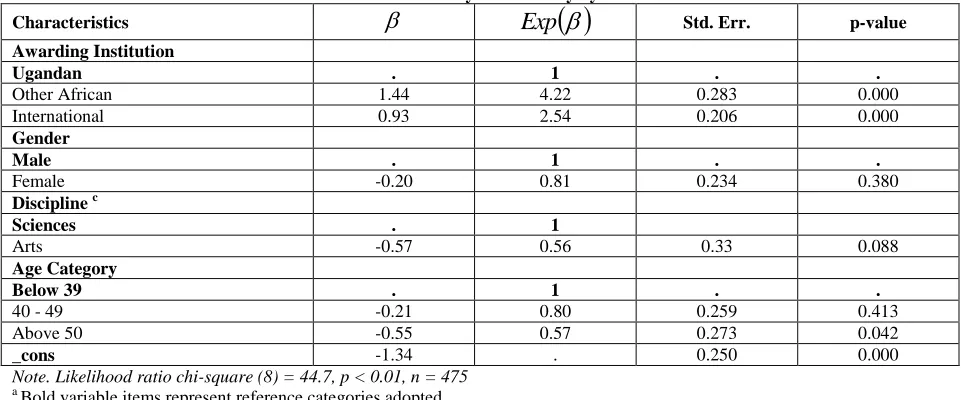
Table 3: Likelihood Estimates of Scholarly Productivity by PhD Holder Characteristics
Characteristics
Exp
Std. Err. p-valueAwarding Institution
Ugandan . 1 . .
Other African 1.44 4.22 0.283 0.000
International 0.93 2.54 0.206 0.000
Gender
Male . 1 . .
Female -0.20 0.81 0.234 0.380
Discipline c
Sciences . 1
Arts -0.57 0.56 0.33 0.088
Age Category
Below 39 . 1 . .
40 - 49 -0.21 0.80 0.259 0.413
Above 50 -0.55 0.57 0.273 0.042
_cons -1.34 . 0.250 0.000
Note. Likelihood ratio chi-square (8) = 44.7, p < 0.01, n = 475
a
Bold variable items represent reference categories adopted
b Exponentiated coefficients (relative risk (RR)) and their 95% confidence intervals c
Categorization is based on the New Fields of Science Classification of the Frascati Manual, adopted by OECD (2002)
Regression diagnostics made on the complementary link functions reveal that the model is well specified as predicted by the Hat-statistic (p < 0.05). The Hat-square statistic shows that no additional variables were significant (p > 0.05). Thus, a linear combination of doctoral holder characteristics on the complementary log-log transformation function of the outcome variable is an appropriate specification for data adopted in the investigations. In light of this evidence, the results, according to Table 3 are summarized as follows:
1. The probability of (co)authored article(s) and/or book(s) was higher among doctoral graduates of other African universities (RR = 4.2) and those from international universities (RR = 2.5) compared to graduates from Ugandan universities (p < 0.05).
2. Doctoral holders older than 50 years had a reduced risk of (co)authored article(s) and/or book(s) compared to those younger than 40 years (p < 0.05). There were no significant variations with regard to subject matter by doctoral holders younger than 40 years (p > 0.05).
3. There is no significant variation in the likelihood of (co)authoring article(s) and/or book(s) by discipline area and gender (p > 0.05).
Number and Pattern of (Co)authored Articles
Similar to the analysis of the status of publications presented in the prior section, an analysis of the number of (co)authored journal articles published is made through investigations by doctoral holder characteristics. The assessment of variations in the number of articles by doctoral holder characteristics is made using the non-parametric Kruskal-Wallis test. The choice of the approach is based on the fact that the number of publications is highly skewed to the right. In other words, using the Analysis of Variance (ANOVA) parametric alternative may yield misleading results and conclusions about the data. To this end, Table 4 presents a descriptive summary of the number of (co)authored articles while Tables 5 and 6 show investigations of differentials by PhD holder characteristics in bivariate and multivariate assessments, respectively.
Table 4: Descriptive Summary of the Number of (Co)authored Articles
Publications n Min Max Median
Journal Article(s) 149 1 50 8
168 http://www.cluteinstitute.com/ 2013 The Clute Institute Table 5: Bivariate Assessment of (Co)authored Articles by PhD Holder Characteristics
PhD Holder Characteristics n a Rank Sum b Average Rank c
Gender
Male 117 9266.5 79.2
Female 31 1759.5 56.7
0.0095
p
6.7,
2
Year PhD Received
1999 and Earlier 30 2898.5 96.6
2000 - 2005 58 4041.0 69.7
2006 - 2011 61 4235.5 69.4
0.0090
p
9.4,
2
PhD Awarding Institution
Ugandan 50 4279.0 85.6
Other African 25 1525.0 61.0
International 73 5222.0 71.5
0.0451
p
6.2,
2
Age of PhD Holder
Below 39 23 1549.0 67.3
40-49 65 4280.5 65.8
Above 50 50 3761.5 75.2
0.4417
p
1.6,
2
Discipline d
Science 114 7360.5 64.6
Arts 11 514.5 46.7
0.1198
p
2.4,
2
a n represents doctoral holders who (co)authored journal articles; a variation in total is due to missing data b Sum of ranks generated in each of the categories following a Kruskal-Wallis test
c Average rank is estimated by the sum of ranks divided by the number of students (n) in each enrollment cohort d Categorization is based on the New Fields of Science Classification of the Frascati Manual, adopted by OECD (2002)
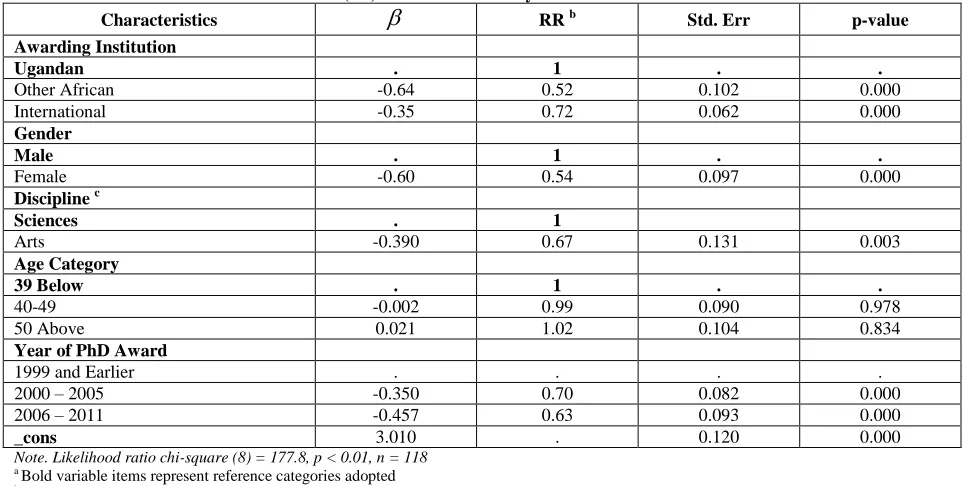
Table 6: Rate of (Co)authored Articles by PhD Holder Characteristics
Characteristics
RR b Std. Err p-valueAwarding Institution
Ugandan . 1 . .
Other African -0.64 0.52 0.102 0.000
International -0.35 0.72 0.062 0.000
Gender
Male . 1 . .
Female -0.60 0.54 0.097 0.000
Discipline c
Sciences . 1
Arts -0.390 0.67 0.131 0.003
Age Category
39 Below . 1 . .
40-49 -0.002 0.99 0.090 0.978
50 Above 0.021 1.02 0.104 0.834
Year of PhD Award
1999 and Earlier . . . .
2000 – 2005 -0.350 0.70 0.082 0.000
2006 – 2011 -0.457 0.63 0.093 0.000
_cons 3.010 . 0.120 0.000
Note. Likelihood ratio chi-square (8) = 177.8, p < 0.01, n = 118
a Bold variable items represent reference categories adopted b Incidence rate ratio (RR)
In the descriptive summary in Table 4, the median number of journal articles (co)authored was 8 (range of 1-50). Based on the fact that the data is based on graduation cohorts of doctoral holders during the period 1990-2010, the figure points to low research activity and/or capacity in the country. A bivariate assessment of variations in the number of (co)authored articles by doctoral holder characteristics using the Kruskal-Wallis test suggests independent associations with the variables gender, year doctoral degree received, and doctoral awarding institution (p < 0.05). Further assessment by controlling for all the variables in the multivariate analysis using a Poisson regression confirms the influence of these variables on the number of (co)authored articles (p < 0.05). The results in Table 5 may be summarized as follows.
1. Doctoral graduates from other African universities (RR = 0.52) and those from international universities (RR = 0.72) had lower rates of (co)authored articles compared to graduates of Ugandan institutions. 2. Females doctoral holders had a 0.54 lower rate of (co)authored articles compared to males
3. Doctoral holders in the arts/humanities had a 0.67 lower rate of (co)authored articles compared to their counterparts in the science disciplines.
4. Doctoral holders who graduated during the periods 2000-2005 (RR = 0.70) and 2006-2011 (RR = 0.63) had a lower rate of (co)authored journal articles compared to those who graduated before 2000.
5. No significant variations were noted in the rate of (co)authored journal articles by the age of the doctoral holder (p > 0.05).
Number and Pattern of (Co)authored Books
The assessment of the number of (co)authored books (including book chapters and monographs) is made through investigations by doctoral holder characteristics. The assessment of variations in the number of books by doctoral holder characteristics is made using the non-parametric Kruskal-Wallis test. Similarly, the choice of approach is based on the fact that the number of books is highly skewed to the right.
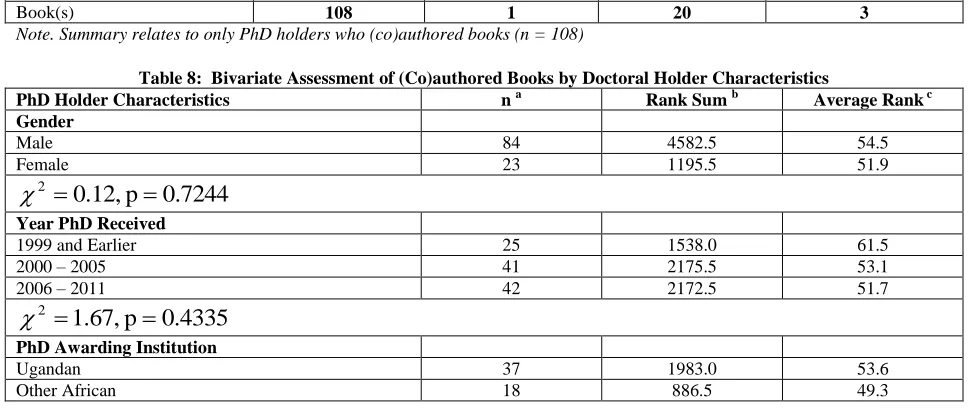
In the descriptive summary in Table 7, the median number of (co)authored books was 3 (range of 1-20). A bivariate assessment of variations in the number of (co)authored articles by doctoral holder characteristics using the Kruskal-Wallis test reveals no significant variations for all the variables (p > 0.05). The results suggest no further multivariate assessment of the rate of (co)authored books because the analysis will not yield any significant results. In other words, the rate of (co)authored books does not vary by doctoral holder characteristics of age, gender, discipline area (broad field of study), doctoral degree awarding institution, and the year PhD received (p > 0.05). Table 7 presents a descriptive summary of the number of (co)authoredbooks while Table 8 shows investigations of differentials by PhD holder characteristics in bivariate assessments.
Table 7: Descriptive Summary of the Number of (Co)authored Books
Publications n Min Max Median
Book(s) 108 1 20 3
Note. Summary relates to only PhD holders who (co)authored books (n = 108)
Table 8: Bivariate Assessment of (Co)authored Books by Doctoral Holder Characteristics
PhD Holder Characteristics n a Rank Sum b Average Rank c
Gender
Male 84 4582.5 54.5
Female 23 1195.5 51.9
0.7244
p
0.12,
2
Year PhD Received
1999 and Earlier 25 1538.0 61.5
2000 – 2005 41 2175.5 53.1
2006 – 2011 42 2172.5 51.7
0.4335
p
1.67,
2
PhD Awarding Institution
Ugandan 37 1983.0 53.6
170 http://www.cluteinstitute.com/ 2013 The Clute Institute
International 52 2908.5 55.9
0.7299
p
0.63,
2
Age of PhD Holder
Below 39 16 793.5 49.6
40-49 48 2613.5 54.4
Above 50 38 1846.0 48.6
0.6334
p
0.91,
2
Discipline d
Science 85 4015.5 47.2
Arts 10 544.5 54.5
0.4341
p
0.62,
2
a
n represents doctoral holders who (co)authored journal articles; a variation in total is due to missing data
b
Sum of ranks generated in each of the categories following a Kruskal-Wallis test
c
Average rank is estimated by the sum of ranks divided by the number of students (n) in each enrollment cohort
d
Categorization is based on the New Fields of Science Classification of the Frascati Manual, adopted by OECD (2002)
DISCUSSION
In the study, slightly less than three-in-every ten doctoral holders had (co)authored journal article(s) and/or book(s). The fact that a publication (journal articles and books) is, in most cases, associated with more than one individual suggests that the situation could be much worse than it seems. Nevertheless, the evidence of low publication output confirms the literature that suggests low scholarly productivity in African countries (e.g., UNESCO, 2010; Yonge et al., 2005; Muula, 2007; Jonathan et al., 2010). Despite a high productivity of doctoral holders in Uganda with regard to teaching and research supervision (UNCST, 2012), the scholarly productivity situation presented in this study points to a low level of research activity conducted in the country. The argument that the heavy teaching and supervisory workload faced by these highly qualified individuals (doctoral holders) works counter to scholarly productivity (e.g., Mugimu, Nakabugo, & Katunguka, 2007) is highly supported. The situation is worsened by the poor remuneration and welfare of these highly qualified individuals in many African countries (e.g., Tettey, 2008; Mugimu, Nakabugo, & Katunguka, 2007). Therefore, it is no surprise that a considerable number of these highly qualified individuals spend a substantial amount of time carrying out consultancy work. To this end, suggestions for increased funding to support research in the developingcountries (e.g., Mugimu et al., 2007; UNCST, 2012) are highly supported.
Further analysis in this study regarding the pattern of publication output not only adds to the literature of scholarly productivity among doctoral holders in Uganda but also allows for comparisons of variations (if any) to be investigated in research carried out elsewhere. In the results, the likelihood of (co)authored article(s) and/or book(s) were significantly higher among doctoral graduates of other African universities and those from international universities compared to graduates from Ugandan universities (p < 0.05). In light of the fact that doctoral holders assessed in this study are consensually regarded to be highly qualified individuals, the lower publication output noted in the results, when compared to peers in other African and international universities, points to a low level of quality research undertaken in the country.
In the results, it is no surprise that the number of (co)authored articles was significantly higher among graduates from Ugandan institutions. This could be attributed to the fact that the highest proportion of doctoral graduates was from Ugandan institutions, which reflects the local capacity to conduct research at the highest level (UNCST, 2012). In other words, most of the doctoral holders in the country work in higher education institutions where there is greater access to global networks that facilitate training both locally and internationally compared to the situation in other sectors of employment.
The significant variation in the number of (co)authored journal articles established in the results by discipline area, particularly in favor of doctoral holders in science disciplines, is no surprise. Similar evidence regarding the dominance of the science disciplines with regard to publication output is shown by the Global Research Report on Africa (Jonathan et al., 2010). A Uganda study of the factors affecting research output among staff at Makerere University (Mugimu et al., 2007) attempts to provide an explanation for the pattern of publication output with regard to discipline area. In their argument, Mugimu et al. (2007) suggest that virtually all publications in the sciences are undertaken through collaborative efforts of either two or more authors. By contrast, publications in the arts are predominantly single authored. Considering that it takes an enormous amount of time to get an article published, the fact that several researchers typically work jointly on a publication is highly advantageous. Furthermore, the joint research approach adopted by scholars in the science disciplines allows for the development of valuable connections that facilitate the continuity of scholarly productivity in the discipline. In light of the predominance of single authorship in the arts, the issue of social and academic isolation of faculty and/or students in the discipline (Mugimu et al., 2007) is no surprise as well. Further, science disciplines are noted to have a wider variety of funding sources for research compared to the arts/humanities (Mugimu et al., 2007). This allows for academic workshops and seminars among researchers in the sciences, which creates opportunities to network with colleagues from other institutions across the world. For example, Makerere University’s academic staff from the Faculty of Agriculture, who are considered to be extremely productive with regard to publication output, were observed to have attended more workshops at the local, regional, and international levels (Mugimu et al., 2007). In any case, the fact that respondents investigated in the study are predominantly Ugandan and employed at Makerere University, Mugimu et al.’s (2007) suggestions about the limitations to scholarly productivity apply largely to doctoral holders in the country.
CONCLUSION
In summary, the findings of this study affirm suggestions of low scholarly productivity (journal articles and/or books) in Uganda. The situation in the country is certainly no different from the rest of Central Africa and Africa as a whole, with the exception of a few well-performing countries in the continent with regard to the subject area – Egypt in the northern region, Nigeria in the center, and South Africa in the south (Jonathan et al., 2010). Overall, the low publication output realized in the results is certainly an indication of low research activity and/or research capacity in the country and region as a whole. Nevertheless, progress has been made in the region in this regard despite the low achievement levels compared to international standards. However, more effort is required to support research activity and scholarly productivity at the individual, institutional, and national levels to sustain progress particularly in academia.
AUTHOR INFORMATION
Robert Wamala, Ph.D. School of Statistics and Planning, Makerere University, Uganda. E-mail: [email protected] (Corresponding author)
Vincent A. Ssembatya, Ph.D. Director, Quality Assurance Directorate, Makerere University, Uganda E-mail: [email protected]
REFERENCES
172 http://www.cluteinstitute.com/ 2013 The Clute Institute 2. Jonathan, A., Christopher, K., & Daniel, H. (2010). The Global Research Report: Africa. Leeds, UK.
Evidence, a Thomson Reuters business.
3. Mugimu, C. B., Nakabugo, M. G., & Katunguka-Rwakishaya, E. (2007). Exploring the factors affecting staff research output and completion rates of graduate students in Makerere University. Kampala: Makerere University.
4. Muula, A. S. (2007). Status of Scholarly Productivity among Nursing Academics in Malawi. Croatian Medical Journal, 48(4), 568.
5. OECD (2002). Frascati Manual: Proposed standard practice for surveys on research and experimental development. Organization for Economic Co-Operation and Development (OECD). Retrieved November 2012 from http://browse.oecdbookshop.org/oecd/pdfs/free/9202081e.pdf
6. SIR (2012). Scimago Institutions Ranking (SIR) World Report: Global Ranking. SCImago Research Group. Retrieved from www.scimagoir.com/pdf/sir_2012_world_report.pdf
7. Tettey, W. J. (2008). Comparative Analysis of Next Generation of Academics Indicators. The University Leaders’ Forum. Accra, Ghana.
8. UNCST (2012). The Careers and Productivity of Doctoral Holders (CDH) Survey. Uganda Report 2012. Uganda National Council for Science and Technology (UNCST).
9. UNESCO (2010). The current Status of Science around the World. Science Report. United Nations Education, Science and Cultural Organization (UNESCO).