1178
Design Module Of Learning With Rme
Approach To Improve Creative Thinking Ability
Tantri Badengo, SuparmanAbstract: The most important thing in learning mathematics is understanding the concept of material delivered. To understand the mathematical concepts students must have special competencies, the competencies in question are creative thinking. The purpose of this study is to develop teaching materials in the form of modules using the Realistic Mathematics Education (RME) approach. For the method, researchers use the stages of 4-D development research, where the stages start from defining, designing, developing and disseminating. This study uses two instruments to collect data. The first is an interview related to module teaching materials. The second is the test questions in the benthic description given to students. Because this research is still in the stage of analyzing the needs of teaching materials. So not yet the instrument used to collect data is still limited. The results of this study indicate that there has never been a module for learning mathematics. Based on the results above, the researcher designed an RME-based learning module which was then validated by media and material experts and showed that this design could be continued with notes that had to be revised according to the advice given. Based on the above calculations, the assessment carried out by material experts and media experts reached 76%.
Index Terms: Modules, RME, Creative Thinking
—————————— ——————————
1.
INTRODUCTION
In the 21st century we are required to have skills according to the demands of the times. 21st century skills consist of problem solving skills, critical thinking, creative and innovative thinking. And now all learning processes in schools are required to make students have all these skills or at least one or two skills [1]. However, in mathematics learning it is very difficult if there are no instruments that trigger to have abab 21 skills. In this study the skills that will be improved are creative thinking skills [2]. Because by thinking creatively students are able to create something new and also be able to innovate. Even though creative thinking skills are very important but to achieve that is very difficult and problems often occur with students' creative thinking [3]. This can be seen from the way students solve problems given related to mathematics subjects. as we know that mathematics is very important, that's why mathematics is always taught at every level of education. Even though mathematics is important but there are often problems with the results of learning mathematics, this is caused by material that tends to be too abstract and difficult to understand. So from that, the teacher's role in teaching is very important [4]. The learning process carried out by the teacher is very influential on student learning outcomes, because the methods, models, media, and strategies used by the teacher have an impact on the way students learn. And effective ways of learning can affect learning outcomes [5]. Therefore the teacher has an obligation and responsibility to make the learning process fun and effective. To do that, the teacher needs an instrument that fits the needs of students. the instruments that researchers offer in this study are learning modules that are made using the Realistic Mathematics Education (RME) approach [6][7]. Why is the module, because based on the results of observations and interviews that researchers conducted at Muhammadiyah Middle School 1
Depok teachers in the process of learning mathematics have never used the module as an instrument in learning. As we know that modules really help the learning process, this is because the module contains important points that students need[8]. Like the Digest of the material, examples of questions and discussion, and problem exercises. However, there are important things to consider when making a module, the important thing is that the module must be made in accordance with the characteristics of the students, in accordance with the values or norms that apply. And the most important is the approach used in making modules, because this greatly affects the skills to be improve [9]. Why is it important for a learning approach to make modules? Because the learning approach is an important variable that can affect learning. So in designing this module the researchers used the Realistic Mathematics Education (RME) learning approach. Because based on previous research, it is proven that making modules made using the RME approach is very effective in helping the learning process in the classroom [10]. Realistic Mathematics Education (RME) is considered as a good approach used in the mathematics learning process because it is in accordance with the curriculum objectives. Learning using RME also focuses on making students have problem solving skills, creative thinking skills, critical, and innovative. This is because the RME is different from the traditional learning model that makes students passive when learning takes place, the opposite is true. RME makes students become active and creative in learning, especially for new things newly discovered in the learning process. This is because RME is a learning approach that connects with real life or everyday life that students often experience [11]. Based on this, the researchers feel that RME is very suitable and effective in making mathematics learning modules in integer material. This module is designed for use in class VII Muhammadiyah 1 Junior High School Depok. Hopefully with this module the process of learning mathematics can be done better.
2
METHOD
This research is development research in the field of mathematics, with the aim of producing learning instruments in the form of modules. Made using the Realistic Mathematics Education (RME) approach. In this study there are stages that will be carried out by researchers, namely, defining, designing,
————————————————
Tantri Badengo is currently pursuing master’s degree program in mathematics education in University Ahmad Dahlan, Indonesia Suparman is an associate professor in mathematics education at
1179 developing and disseminating. Because, this study uses a 4-D
research method [12]. Stages are shown in figure 1.
Figure 1. Stages of Development of 4-D researchers
This research was conducted on students of class VII A SMP Muhammadiyah 1 Depok, Sleman, Yogyakarta, Indonesia. For the analysis of the needs of teaching materials the instruments used were interviews and initial tests in the form of description test questions. Interviews were conducted to find out the learning problems that occurred in the classroom and the initial tests were conducted to ascertain the truth of the problems that occurred [3]. At the stage of developing the instruments to be used are validation sheets and student response questionnaires. The learning module validation sheet will be validated by a lecturer (material expert), as well as the student response questionnaire. the student questionnaire aims to find out how much the module is useful. instruments for validating modules are prepared and adjusted to the curriculum where measurements are made by filling out questionnaires in the form of rankings and by using qualitative advice from experts to consider product revisions. The level of validity of learning products is seen through scores obtained from device validity questionnaires filled by material experts.
3.
RESULTS
AND
DISCUSSION
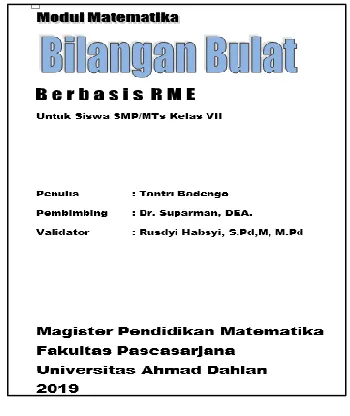
Modules are one form of teaching material that is packaged intact and systematically, in which it contains a set of planned learning experiences and is designed to help students master specific learning goals. Minimum modules contain learning objectives, material/substance learning, and evaluation. The module functions as a learning tool that is independent, so students can learn according to their own pace[14][15]. The following are pictures of module designs made by researchers, ranging from kafers to instructions on modules used. Figure 2 is the kafer of the module that will be created.
Figure 2. Cover
Contains, among other things: module code label, state-owned label, field/study program expertise and competency expertise, module title, illustration image (representing activities carried out in the module discussion), writing institutions such as the Ministry of National Education, Director General of Basic Education Management and Medium, Directorate of Vocational Development, year of the module is compiled. After the next cover there is a French page, shown in Figure 3 below.
Figure 3. French Page
1180
Figure 4. Preface
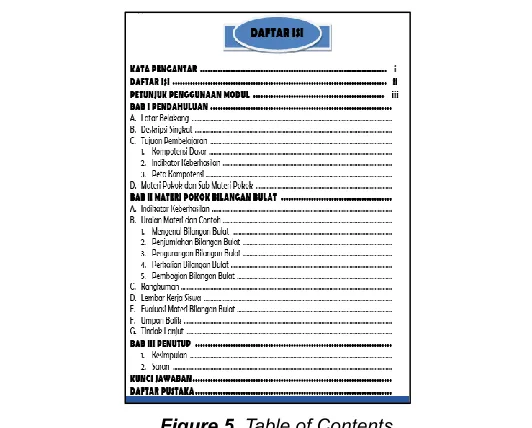
Preface is placed on the page after the book cover as the opening point of communication between the compiler and the user. This aims to give the impression that the modules compiled are important to read and learn, also have advantages in their presentation and contain constituent expectations related to the perfection of the module. Next picture 5 which is the table of contents of the module.
Figure 5. Table of Contents
The table of contents lists the learning chapters that will
be discussed on the content page and contains a list of pages from all parts of learning contained in the module with the aim that users easily find the subject matter they are looking for. Then there is picture 6 which is the introduction of the module that will be made.
Figure 6. Introduction and Description
Introduction and Description of a brief explanation of the name and scope of the module content, the relation of the module to other modules, the learning outcomes to be achieved after completing the module, and the benefits of these competencies in the learning and life process in general. The amount of time needed to master the competencies that are the target of learning. The initial ability required to study the module, both based on proof of mastery of other modules and by mentioning. The syllabus used is shown in figure 7 below.
Figure 7. Syllabus
1181
Figure 8. Indicator
Indicator Module contains procedure guidelines using modules, namely; steps that must be taken to study the module correctly, and equipment, such as facilities/infrastructure/ facilities that must be prepared according to learning needs.
3.1 Analysis of Product Validation and Practical Use
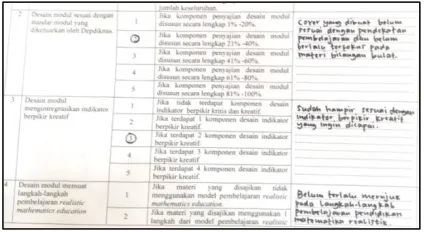
Before the module developed was validated by experts, researchers conducted a validation process for product quality assessment instruments which included product quality assessment sheets for material experts, media experts and student responses. In this development research, the expert who validated the product quality assessment instrument was Rusdyi Habsyi, M.Pd. He is a lecturer in mathematics education at STKIP KieRaha Ternate. The following are comments and suggestions for product quality assessment instruments for media experts, material experts and student responses that were completed on 2 April 2019 in figure 9.
Figure 9. The Result of Validation
After the validation of the instrument for assessing the quality of the processed product concludes that the product quality assessment instrument for media experts, material experts is "feasible to use with revision". The next step is to test validity based on the revised instrument in the module developed by the researcher. The the comments and suggestions of the two experts are shown in table 1.
Table 1.
Comments and Suggestions for Assessment Instrument Validators
3. 2 Validation Results
After the validation of the instrument for assessing the quality of the processed product concludes that the product quality assessment instrument for media experts, material experts is "feasible to use with revision". The next step is to test validity based on the revised instrument in the module developed by the researcher. All data from the review, assessment and discussion are used as the basis for revising the developed
modules before being tested on students. Based on the results of the scoring also input and advice from material experts, improvements are needed. Therefore the module is revised according to the input and advice of material experts. The results of the validation of the two experts are shown in table 2.
Table 2. Expert Validation Results
𝑃 =
=
= 76%
Based on the above calculations, the assessment carried out by material experts and media experts reached 76%. By submitting to the eligibility criteria table, then this value is included in the criteria valid or feasible. However, it is still necessary to revise some sections, according to the comments given, so that they are appropriate to be used as
guidelines for making good modules.
4.
C
ONCLUSIONBased on the description of the results of the interview and the results of the above tests, the purpose of this study was finally answered, that the teacher needed a learning approach to create module-like teaching materials that would support the learning process. The approach in question is Realistic Mathematics Education (RME. And to make a module the researcher needs to make a design first to be validated, and based on the results of validation, the development design of this module can be developed with notes that need to be revised in advance.
A
CKNOWLEDGMENTAcknowledgments from the researchers convey to the school that has provided opportunities for researchers to conduct
No Validators Comments and Suggestions
1
2
Media Expert
Material Expert
Cover that is made is not in accordance with the material and learning model. Make it as attractive as possible and adjust it to RME.
Module design is almost in accordance with the indicators of creative thinking. But it still needs to be improved again and adjusted to the methods used and the competencies to be improved Indicators of achievement of competencies are in accordance with core competencies and basic competencies.
Examples of questions are still lacking and less specific to the ability to be improved
No Validators Job Scor Criteria for
Quantitative data 1 Nurmina N.
Bayan S.Pd Mathematics teacher of MA Nurul Huda Gotalamo
18 Good
2 Rusdyi Habsyi,
M. Pd Head of the Mathematics Education Study Program of STKIP Kie Raha
20 Good
Sum 38
1182 research, also helps a lot in providing information regarding
the problems experienced by learning. Also to the validator who is willing to provide comments and suggestions for improvement of the module to be developed.
REFERANCE
[1] Siswono, Tatag Yuli Eko. "Developing teacher performances to improving students creative thinking capabilities in mathematics." International Conference on Research, Implementation and Education of Mathematics and Sciences. 2014.
[2] Goldman, K. H., Yalowitz, S., & Wilcox, E. (2016). The Impact of Arts-Based Innovation Training on the Creative Thinking Skills, Collaborative Behaviors and Innovation Outcomes of Adolescents and Adults. Research Study Report Art of Science Learning (Harvey Seifter, Principal Investigator). The Art of Science Learning, 4-7.
[3] Yoon, Heojeong, et al. "The efficacy of problem-based learning in an analytical laboratory course for pre-service chemistry teachers." International Journal of Science Education 36.1 (2014): 79-102.English, Lyn D.
[4] Jonas Bergman Ärlebäck, and Nicholas Mousoulides. "Reflections on progress in mathematical modelling research." The second handbook of research on the psychology of math ematics education. SensePublishers, Rotterdam, 2016. 383-413.
[5] Kadir, Kadir, LucyanaLucyana, and Gusni Satriawati. "The Implementation Of Open-Inquiry Approach To Improve Students’ Learning Activities, Responses, And Mathematical Creative Thinking Skills." Journal on Mathematics Education 8.1 (2017): 103-114.
[6] Zaranis, Nicholas, Michail Kalogiannakis, and Stamatios Papadakis. "Using mobile devices for teaching realistic mathematics in kindergarten education." Creative Education4.7 (2013): 1-10.
[7] Van den Heuvel-Panhuizen, Marja, and Paul Drijvers. "Realistic mathematics education." Encyclopedia of mathematics education. Springer, Dordrecht, 2014. 521-525.
[8] Pratama, Angga Yuda, and Mega Teguh Budiarto. "Creative Thinking Ability of Students in Grade VIII Jhs to Solve Higher Order Thinking Problem Considered by Mathematics Ability." MATHEdunesa 3.6 (2017).
[9] Godino, Juan D., et al. "Didactic engineering as design-based research in mathematics education." Proceedings of the Eight Congress of the European Society for Research in Mathematics Education. 2013.
[10] Yuniarti, Yeni, et al. "The Effectiveness of Open-Ended Problems Based Analytic-Synthetic Learning on the Mathematical Creative Thinking Ability of Pre-Service Elementary School Teachers." International Electronic Journal of Mathematics Education 12.3 (2017): 655-666.
[11] Subroto, Waspodo Tjipto. "Creative thinking development to foster economic creative: Evidence of state university of surabaya." International Review of Management and Marketing 5.3 (2015): 108-113.
[12] Buckley, Jennifer, et al. "Embedding quantitative skills into the Social Science curriculum: Case studies from Manchester." International Journal of Social Research Methodology 18.5 (2015): 495-510.
[13] Ndlovu, Mdutshekelwa. "The effectiveness of a teacher professional learning programme: The perceptions and performance of mathematics teachers." Pythagoras 35.2
(2014): 1-10 Stacey, Kaye, et al. "PISA’s influence on thought and action in mathematics education." Assessing Mathematical Literacy. Springer, Cham, 2015. 275-306.
[14] Gueudet, G., and L. Trouche. Re-sourcing teacher work and interaction: new perspectives on resource design, use and teacher collaboration. Ed. Birgit Pepin. Springer, 2013.