Mildly Non-Projective Dependency Structures
Marco Kuhlmann Programming Systems Lab
Saarland University Germany
Joakim Nivre Växjö University and
Uppsala University Sweden
Abstract
Syntactic parsing requires a fine balance between expressivity and complexity, so that naturally occurring structures can be accurately parsed without compromising efficiency. In dependency-based parsing, several constraints have been proposed that restrict the class of permissible structures, such as projectivity, planarity, multi-pla-narity, well-nestedness, gap degree, and edge degree. While projectivity is gener-ally taken to be too restrictive for natural language syntax, it is not clear which of the other proposals strikes the best balance be-tween expressivity and complexity. In this paper, we review and compare the different constraints theoretically, and provide an ex-perimental evaluation using data from two treebanks, investigating how large a propor-tion of the structures found in the treebanks are permitted under different constraints. The results indicate that a combination of the well-nestedness constraint and a para-metric constraint on discontinuity gives a very good fit with the linguistic data.
1 Introduction
Dependency-based representations have become in-creasingly popular in syntactic parsing, especially for languages that exhibit free or flexible word or-der, such as Czech (Collins et al., 1999), Bulgarian (Marinov and Nivre, 2005), and Turkish (Eryi˘git and Oflazer, 2006). Many practical implementa-tions of dependency parsing are restricted to pro-jectivestructures, where the projection of a head word has to form a continuous substring of the sentence. While this constraint guarantees good parsing complexity, it is well-known that certain
syntactic constructions can only be adequately rep-resented bynon-projectivedependency structures,
where the projection of a head can be discontinu-ous. This is especially relevant for languages with free or flexible word order.
However, recent results in non-projective depen-dency parsing, especially using data-driven meth-ods, indicate that most non-projective structures required for the analysis of natural language are very nearly projective, differing only minimally from the best projective approximation (Nivre and Nilsson, 2005; Hall and Novák, 2005; McDon-ald and Pereira, 2006). This raises the question of whether it is possible to characterize a class of mildlynon-projective dependency structures that is rich enough to account for naturally occurring syn-tactic constructions, yet restricted enough to enable efficient parsing.
In this paper, we review a number of propos-als for classes of dependency structures that lie between strictly projective and completely unre-stricted non-projective structures. These classes have in common that they can be characterized in terms of properties of the dependency structures themselves, rather than in terms of grammar
for-malisms that generate the structures. We compare
the proposals from a theoretical point of view, and evaluate a subset of them empirically by testing their representational adequacy with respect to two dependency treebanks: the Prague Dependency Treebank (PDT) (Hajiˇc et al., 2001), and the Danish Dependency Treebank (DDT) (Kromann, 2003).
The rest of the paper is structured as follows. In section 2, we provide a formal definition of de-pendency structures as a special kind of directed
graphs, and characterize the notion of projectivity.
In section 3, we define and compare five different constraints on mildly non-projective dependency structures that can be found in the literature: pla-narity, multiplapla-narity, well-nestedness, gap degree, and edge degree. In section 4, we provide an ex-perimental evaluation of the notions of planarity, well-nestedness, gap degree, and edge degree, by
investigating how large a proportion of the depen-dency structures found in PDT and DDT are al-lowed under the different constraints. In section 5, we present our conclusions and suggestions for fur-ther research.
2 Dependency graphs
For the purposes of this paper, adependency graph is a directed graph on the set of indices correspond-ing to the tokens of a sentence. We writeŒnto refer to the set of positive integers up to and includingn.
Definition 1 Adependency graphfor a sentence xDw1; : : : ; wnis a directed graph1
GD.V I E/; whereV DŒnandEV V.
Throughout this paper, we use standard terminol-ogy and notation from graph theory to talk about dependency graphs. In particular, we refer to the elements of the setV asnodes, and to the elements of the setEasedges. We writei !j to mean that
there is an edge from the nodeito the nodej (i.e.,
.i;j/2 E), andi ! j to mean that the nodei
dominatesthe nodej, i.e., that there is a (possibly empty) path fromitoj. For a given nodei, the set of nodes dominated byi is theyieldofi. We use the notation.i/to refer to theprojectionofi: the yield ofi, arranged in ascending order.
2.1 Dependency forests
Most of the literature on dependency grammar and
dependency parsing does not allow arbitrary de-pendency graphs, but imposes certain structural constraints on them. In this paper, we restrict our-selves to dependency graphs that formforests.
Definition 2 Adependency forestis a dependency
graph with two additional properties:
1. it is acyclic (i.e., ifi !j, then notj ! i);
2. each of its nodes has at most one incoming edge (i.e., ifi !j, then there is no nodek such thatk ¤i andk!j).
Nodes in a forest without an incoming edge are
calledroots. A dependency forest with exactly one
root is adependency tree.
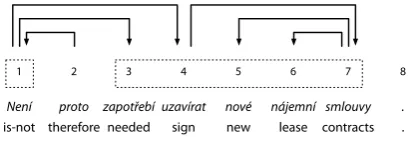
Figure 1 shows a dependency forest taken from
PDT. It has two roots: node2(corresponding to the complementizerproto) and node8(corresponding to the final punctuation mark).
1We only consider unlabelled dependency graphs.
1 2 3 4 5 6 7 8
Není proto zapotřebí uzavírat nové nájemní smlouvy .
contracts lease new sign needed
is-not therefore .
[image:2.595.312.521.68.141.2]‘It is therefore not needed to sign new lease contracts.’
Figure 1: Dependency forest for a Czech sentence from the Prague Dependency Treebank
Some authors extend dependency forests by a special root node with position0, and add an edge .0;i/for every root nodei of the remaining graph (McDonald et al., 2005). This ensures that the ex-tended graph always is a tree. Although such a definition can be useful, we do not follow it here, since it obscures the distinction between projectiv-ity and planarprojectiv-ity to be discussed in section 3.
2.2 Projectivity
In contrast to acyclicity and the indegree constraint, both of which impose restrictions on the depen-dency relation as such, theprojectivity constraint concerns the interaction between the dependency relation and the positions of the nodes in the sen-tence: it says that the nodes in a subtree of a de-pendency graph must form aninterval, where an interval (with endpointsi andj) is the set
Œi;j WD fk2V ji kandkjg:
Definition 3 A dependency graph isprojective, if
the yields of its nodes are intervals.
Since projectivity requires each node to dominate a continuous substring of the sentence, it corresponds to a ban on discontinuous constituents in phrase structure representations.
Projectivity is an interesting constraint on de-pendency structures both from a theoretical and a practical perspective. Dependency grammars that only allow projective structures are closely
related to context-free grammars (Gaifman, 1965;
Obre¸bski and Grali´nski, 2004); among other things, they have the same (weak) expressivity. The pro-jectivity constraint also leads to favourable
pars-ing complexities: chart-based parspars-ing of projective
3 Relaxations of projectivity
While the restriction to projective analyses has a number of advantages, there is clear evidence that it cannot be maintained for real-world data (Zeman, 2004; Nivre, 2006). For example, the graph in
Figure 1 is non-projective: the yield of the node1 (marked by the dashed rectangles) does not form an interval—the node2is ‘missing’. In this sec-tion, we present several proposals for structural constraints that relax projectivity, and relate them to each other.
3.1 Planarity and multiplanarity
The notion ofplanarityappears in work on Link Grammar (Sleator and Temperley, 1993), where it is traced back to Mel’ˇcuk (1988). Informally, a dependency graph isplanar, if its edges can be drawn above the sentence without crossing. We emphasize the wordabove, because planarity as it is understood here does not coincide with the standard graph-theoretic concept of the same name, where one would be allowed to also use the area below the sentence to disentangle the edges.
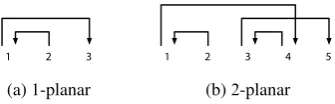
Figure 2a shows a dependency graph that is
pla-nar but not projective: while there are no crossing
edges, the yield of the node1(the setf1;3g) does not form an interval.
Using the notationlinked.i;j/as an abbrevia-tion for the statement ‘there is an edge fromi toj, or vice versa’, we formalize planarity as follows:
Definition 4 A dependency graph isplanar, if it does not contain nodesa;b;c;dsuch that
linked.a;c/ ^ linked.b;d/ ^ a<b<c<d:
Yli-Jyrä (2003) proposesmultiplanarityas a gen-eralization of planarity suitable for modelling
de-pendency analyses, and evaluates it experimentally
using data from DDT.
Definition 5 A dependency graphG D.V I E/is
m-planar, if it can be split intomplanar graphs
G1D.V I E1/; : : : ;GmD.V I Em/
such thatEDE1] ]Em. The planar graphsGi
are calledplanes.
As an example of a dependency forest that is 2-planar but not 2-planar, consider the graph depicted in
Figure 2b. In this graph, the edges.1;4/and.3;5/ are crossing. Moving either edge to a separate graph partitions the original graph into two planes.
1 2 3
(a)1-planar
1 2 3 4 5
[image:3.595.332.500.68.120.2](b)2-planar
Figure 2: Planarity and multi-planarity
3.2 Gap degree and well-nestedness
Bodirsky et al. (2005) present two structural con-straints on dependency graphs that characterize analyses corresponding to derivations in Tree Ad-joining Grammar: thegap degree restrictionand thewell-nestedness constraint.
Agapis a discontinuity in the projection of a node in a dependency graph (Plátek et al., 2001). More precisely, let i be the projection of the
nodei. Then a gap is a pair.jk;jkC1/of nodes
adjacent ini such thatjkC1 jk >1.
Definition 6 Thegap degreeof a nodei in a de-pendency graph,gd.i/, is the number of gaps ini.
As an example, consider the node labelledi in the dependency graphs in Figure 3. In Graph 3a, the projection ofiis an interval (.2;3;4/), soihas gap degree0. In Graph 3b, i D .2;3;6/contains a
single gap (.3;6/), so the gap degree ofi is1. In the rightmost graph, the gap degree ofi is2, since i D.2;4;6/contains two gaps (.2;4/and.4;6/). Definition 7 The gap degree of a dependency graphG,gd.G/, is the maximum among the gap degrees of its nodes.
Thus, the gap degree of the graphs in Figure 3 is0,1and2, respectively, since the nodeihas the maximum gap degree in all three cases.
Thewell-nestedness constraintrestricts the posi-tioning of disjoint subtrees in a dependency forest.
Two subtrees are called disjoint, if neither of their
roots dominates the other.
Definition 8 Two subtrees T1;T2 interleave, if
there are nodesl1;r1 2 T1 andl2;r2 2 T2 such
thatl1 < l2 < r1 < r2. A dependency graph is
well-nested, if no two of its disjoint subtrees inter-leave.
Both Graph 3a and Graph 3b are well-nested. Graph 3c is not well-nested. To see this, let T1
be the subtree rooted at the node labelledi, and letT2 be the subtree rooted atj. These subtrees
interleave, asT1contains the nodes2and4, andT2
j i
1 2 3 4 5 6
(a)gdD0,edD0,wnC
j i
1 2 3 4 5 6
(b)gdD1,edD1,wnC
j i
1 2 3 4 5 6
[image:4.595.98.498.67.127.2](c)gdD2,edD1,wn
Figure 3: Gap degree, edge degree, and well-nestedness
3.3 Edge degree
The notion ofedge degreewas introduced by Nivre (2006) in order to allow mildly non-projective struc-tures while maintaining good parsing efficiency in data-driven dependency parsing.2
Define thespanof an edge.i;j/as the interval
S..i;j// WD Œmin.i;j/;max.i;j/ :
Definition 9 Let G D .V I E/be a dependency forest, lete D .i;j/be an edge inE, and letGe
be the subgraph ofGthat is induced by the nodes contained in the span ofe.
Thedegreeof an edgee 2 E, ed.e/, is the number of connected components c in Ge
such that the root ofc is not dominated by the head ofe.
Theedge degreeofG,ed.G/, is the maximum among the degrees of the edges inG.
To illustrate the notion of edge degree, we return to Figure 3. Graph 3a has edge degree0: the only edge that spans more nodes than its head and its de-pendent is.1;5/, but the root of the connected com-ponentf2;3;4gis dominated by1. Both Graph 3b and 3c have edge degree 1: the edge .3;6/ in Graph 3b and the edges.2;4/,.3;5/and.4;6/in Graph 3c each span a single connected component that is not dominated by the respective head.
3.4 Related work
Apart from proposals for structural constraints re-laxing projectivity, there are dependency frame-works that in principle allow unrestricted graphs, but provide mechanisms to control the actually per-mitted forms of non-projectivity in the grammar.
The non-projective dependency grammar of Ka-hane et al. (1998) is based on an operation on de-pendency trees calledlifting: a ‘lift’ of a treeT is the new tree that is obtained when one replaces one
2We use the termedge degreeinstead of the original simple
termdegreefrom Nivre (2006) to mark the distinction from the notion of gap degree.
or more edges.i;k/inT by edges.j;k/, where j ! i. The exact conditions under which a cer-tain lifting may take place are specified in the rules of the grammar. A dependency tree is acceptable, if it can be lifted to form a projective graph.3
A similar design is pursued in Topological De-pendency Grammar (Duchier and Debusmann, 2001), where a dependency analysis consists of two, mutually constraining graphs: theID graph represents information about immediate domi-nance, theLP graphmodels the topological struc-ture of a sentence. As a principle of the grammar, the LP graph is required to be a lift of the ID graph; this lifting can be constrained in the lexicon.
3.5 Discussion
The structural conditions we have presented here naturally fall into two groups: multiplanarity, gap degree and edge degree areparametric constraints
with an infinite scale of possible values; planarity and well-nestedness come as binary constraints. We discuss these two groups in turn.
Parametric constraints With respect to the graded constraints, we find that multiplanarity is different from both gap degree and edge degree in that it involves a notion of optimization: since every dependency graph ism-planar for some suf-ficiently large m (put each edge onto a separate plane), the interesting question in the context of multiplanarity is about theminimalvalues form that occur in real-world data. But then, one not only needs to show that a dependency graphcanbe decomposed intomplanar graphs, but also that this
decomposition is the one with the smallest number
of planes among all possible decompositions. Up
to now, no tractable algorithm to find the minimal
decomposition has been given, so it is not clear how to evaluate the significance of the concept as such. The evaluation presented by Yli-Jyrä (2003) makes use of additional constraints that are sufficient to make the decomposition unique.
3We remark that, without restrictions on the lifting,every
1 2 3 4 5 6
(a)gdD2,edD1
1 2 3 4 5
[image:5.595.81.283.67.133.2](b)gdD1,edD2
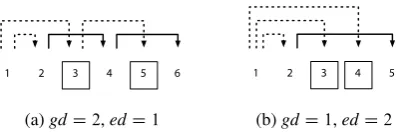
Figure 4: Comparing gap degree and edge degree
The fundamental difference between gap degree and edge degree is that the gap degree measures the number of discontinuities within a subtree, while the edge degree measures the number of interven-ing constituents spanned by a sinterven-ingle edge. This difference is illustrated by the graphs displayed in Figure 4. Graph 4a has gap degree2but edge de-gree1: the subtree rooted at node2(marked by the solid edges) has two gaps, but each of its edges only spans one connected component not domi-nated by2 (marked by the squares). In contrast, Graph 4b has gap degree1but edge degree2: the subtree rooted at node2has one gap, but this gap contains two components not dominated by2.
Nivre (2006) shows experimentally that limiting
the permissible edge degree to1or2can reduce the average parsing time for a deterministic algorithm from quadratic to linear, while omitting less than 1%of the structures found in DDT and PDT. It can be expected that constraints on the gap degree would have very similar effects.
Binary constraints For the two binary con-straints, we find that well-nestedness subsumes planarity: a graph that contains interleaving sub-trees cannot be drawn without crossing edges, so every planar graph must also be well-nested. To see that the converse does not hold, consider Graph 3b, which is well-nested, but not planar.
Since both planarity and well-nestedness are proper extensions of projectivity, we get the fol-lowing hierarchy for sets of dependency graphs:
projectiveplanarwell-nestedunrestricted
The planarity constraint appears like a very natural
one at first sight, as it expresses the intuition that ‘crossing edges are bad’, but still allows a limited form of non-projectivity. However, many authors use planarity in conjunction with a special repre-sentation of the root node: either as an artificial
node at the sentence boundary, as we mentioned in
section 2, or as the target of an infinitely long per-pendicular edge coming ‘from the outside’, as in
earlier versions of Word Grammar (Hudson, 2003).
In these situations, planarity reduces to projectivity, so nothing is gained.
Even in cases where planarity is used without a special representation of the root node, it remains a peculiar concept. When we compare it with the notion of gaps, for example, we find that, in a planar dependency tree, every gap.i;j/must contain the root noder, in the sense thati <r <j: if the gap would only contain non-root nodesk, then the two paths fromrtokand fromitoj would cross. This particular property does not seem to be mirrored in any linguistic prediction.
In contrast to planarity, well-nestedness is
inde-pendent from both gap degree and edge degree in the sense that for everyd >0, there are both well-nested and non-well-well-nested dependency graphs with gap degree or edge degreed. All projective de-pendency graphs (dD0) are trivially well-nested. Well-nestedness also brings computational bene-fits. In particular, chart-based parsers for grammar formalisms in which derivations obey the well-nest-edness constraint (such as Tree Adjoining Gram-mar) are not hampered by the ‘crossing configu-rations’ to which Satta (1992) attributes the fact that the universal recognition problem of Linear Context-Free Rewriting Systems isNP-complete.
4 Experimental evaluation
In this section, we present an experimental eval-uation of planarity, well-nestedness, gap degree, and edge degree, by examining how large a pro-portion of the structures found in two dependency treebanks are allowed under different constraints. Assuming that the treebank structures are sampled from naturally occurring structures in natural lan-guage, this provides an indirect evaluation of the linguistic adequacy of the different proposals.
4.1 Experimental setup
Table 1: Experimental results for DDT and PDT
property DDT PDT
all structures nD4393 nD73088
gap degree0 3732 84.95% 56168 76.85%
gap degree1 654 14.89% 16608 22.72%
gap degree2 7 0.16% 307 0.42%
gap degree3 – – 4 0.01%
gap degree4 – – 1 < 0.01%
edge degree0 3732 84.95% 56168 76.85%
edge degree1 584 13.29% 16585 22.69%
edge degree2 58 1.32% 259 0.35%
edge degree3 17 0.39% 63 0.09%
edge degree4 2 0.05% 10 0.01%
edge degree5 – – 2 < 0.01%
edge degree6 – – 1 < 0.01%
projective 3732 84.95% 56168 76.85%
planar 3796 86.41% 60048 82.16%
well-nested 4388 99.89% 73010 99.89%
non-projective structures only nD661 nD16920
planar 64 9.68% 3880 22.93%
well-nested 656 99.24% 16842 99.54%
of primary and secondary dependencies based on Discontinuous Grammar (Kromann, 2003). Only primary dependencies are considered in the experi-ments, which are based on the entire treebank.4
4.2 Results
The results of our experiments are given in Table 1. For the binary constraints (planarity, well-nested-ness), we simply report the number and percentage of structures in each data set that satisfy the con-straint. For the parametric constraints (gap degree, edge degree), we report the number and percentage of structures having degreed (d 0), where de-gree0is equivalent (for both gap degree and edge degree) to projectivity.
For DDT, we see that about15%of all analyses are non-projective. The minimal degree of non-pro-jectivity required to cover all of the data is2in the case of gap degree and4in the case of edge degree. For both measures, the number of structures drops quickly as the degree increases. (As an example, only7or0:17%of the analyses in DDT have gap
4A total number of17analyses in DDT were excluded
because they either had more than one root node, or violated
the indegree constraint. (Both cases are annotation errors.)
degree 2.) Regarding the binary constraints, we find that planarity accounts for slightly more than
the projective structures (86:41%of the data is pla-nar), while almost all structures in DDT (99:89%)
meet the well-nestedness constraint. The differ-ence between the two constraints becomes clearer when we base the figures on the set of non-projec-tive structures only: out of these, less than10%are planar, while more than99%are well-nested.
For PDT, both the number of non-projective structures (around23%) and the minimal degrees of non-projectivity required to cover the full data (gap degree4and edge degree6) are higher than in DDT. The proportion of planar analyses is smaller than in DDT if we base it on the set of all structures (82:16%), but significantly larger when based on the set of non-projective structures only (22:93%). However, this is still very far from the well-nested-ness constraint, which has almost perfect coverage on both data sets.
4.3 Discussion
McDonald and Pereira, 2006): The phenomenon of non-projectivity cannot be ignored without also ignoring a significant portion of real-world data (around15%for DDT, and23%for PDT). At the same time, already a small step beyond projectivity
accounts for almost all of the structures occurring
in these treebanks.
More specifically, we find that already an edge
degree restriction ofd 1covers98:24%of DDT
and 99:54% of PDT, while the same restriction on the gap degree scale achieves a coverage of 99:84%(DDT) and99:57%(PDT). Together with the previous evidence that both measures also have computational advantages, this provides a strong
indication for the usefulness of these constraints in
the context of non-projective dependency parsing.
When we compare the two graded constraints to each other, we find that the gap degree measure
partitions the data into less and larger clusters than
the edge degree, which may be an advantage in the
context of using the degree constraints as features
in a data-driven approach towards parsing. How-ever, our purely quantitative experiments cannot answer the question, which of the two measures yields the more informative clusters.
The planarity constraint appears to be of little use as a generalization of projectivity: enforcing it excludes more than75%of the non-projective data in PDT, and90%of the data in DDT. The rela-tively large difference in coverage between the two treebanks may at least partially be explained with their different annotation schemes for sentence-fi-nal punctuation. In DDT, sentence-fisentence-fi-nal punctua-tion marks are annotated as dependents of the main verb of a dependency nexus. This, as we have discussed above, places severe restrictions on per-mitted forms of non-projectivity in the remaining sentence, as every discontinuity that includes the main verb must also include the dependent punctu-ation marks. On the other hand, in PDT, a sentence-final punctuation mark is annotated as a separate root node with no dependents. This scheme does not restrict the remaining discontinuities at all.
In contrast to planarity, the well-nestedness con-straint appears to constitute a very attractive exten-sion of projectivity. For one thing, the almost per-fect coverage of well-nestedness on DDT and PDT (99:89%) could by no means be expected on purely combinatorial grounds—only 7%of all possible dependency structures for sentences of length17 (the average sentence length in PDT), and only
slightly more than5%of all possible dependency structures for sentences of length18(the average sentence length in DDT) are well-nested.5 More-over, a cursory inspection of the few problematic
cases in DDT indicates that violations of the
well-nestedness constraint may, at least in part, be due to properties of the annotation scheme, such as the analysis of punctuation in quotations. However, a more detailed analysis of the data from both tree-banks is needed before any stronger conclusions can be drawn concerning well-nestedness.
5 Conclusion
In this paper, we have reviewed a number of pro-posals for the characterization of mildly non-pro-jective dependency structures, motivated by the
need to find a better balance between expressivity
and complexity than that offered by either strictly projective or unrestricted non-projective structures. Experimental evaluation based on data from two treebanks shows, that a combination of the well-nestedness constraint and parametric constraints on discontinuity (formalized either as gap degree or edge degree) gives a very good fit with the em-pirical linguistic data. Important goals for future work are to widen the empirical basis by inves-tigating more languages, and to perform a more detailed analysis of linguistic phenomena that vio-late certain constraints. Another important line of research is the integration of these constraints into parsing algorithms for non-projective dependency structures, potentially leading to a better trade-off between accuracy and efficiency than that obtained with existing methods.
Acknowledgements We thank three anonymous reviewers of this paper for their comments. The work of Marco Kuhlmann is funded by the Collab-orative Research Centre 378 ‘Resource-Adaptive Cognitive Processes’ of the Deutsche Forschungs-gemeinschaft. The work of Joakim Nivre is par-tially supported by the Swedish Research Council.
5The number of unrestricted dependency trees onnnodes
References
Manuel Bodirsky, Marco Kuhlmann, and Mathias Möhl. 2005. Well-nested drawings as models of
syntactic structure. In Tenth Conference on
For-mal Grammar and Ninth Meeting on Mathematics of Language.
Alena Böhmová, Jan Hajiˇc, Eva Hajiˇcová, and Barbora Hladká. 2003. The Prague Dependency Treebank: A three-level annotation scenario. In Anne Abeillé,
editor,Treebanks: Building and Using Parsed
Cor-pora, pages 103–127. Kluwer Academic Publishers.
Michael Collins, Jan Hajiˇc, Eric Brill, Lance Ramshaw, and Christoph Tillmann. 1999. A statistical parser
for Czech. In 37th Annual Meeting of the
Associ-ation for ComputAssoci-ational Linguistics (ACL), pages 505–512.
Denys Duchier and Ralph Debusmann. 2001. Topo-logical dependency trees: A constraint-based
ac-count of linear precedence. In 39th Annual
Meet-ing of the Association for Computational LMeet-inguistics (ACL), pages 180–187.
Jason Eisner. 1996. Three new probabilistic models
for dependency parsing: An exploration. In 16th
International Conference on Computational Linguis-tics (COLING), pages 340–345.
Gülsen Eryi˘git and Kemal Oflazer. 2006. Statistical
dependency parsing of turkish. InEleventh
Confer-ence of the European Chapter of the Association for Computational Linguistics (EACL).
Haim Gaifman. 1965. Dependency systems and
phrase-structure systems. Information and Control,
8:304–337.
Jan Hajiˇc, Barbora Vidova Hladka, Jarmila Panevová,
Eva Hajiˇcová, Petr Sgall, and Petr Pajas. 2001.
Prague Dependency Treebank 1.0. LDC, 2001T10.
Keith Hall and Vaclav Novák. 2005. Corrective
mod-eling for non-projective dependency parsing. In
Ninth International Workshop on Parsing Technolo-gies (IWPT).
Richard Hudson. 2003. An encyclopedia
of English grammar and Word Grammar.
http://www.phon.ucl.ac.uk/home/dick/enc/intro.htm, January.
Sylvain Kahane, Alexis Nasr, and Owen Rambow. 1998. Pseudo-projectivity: A polynomially parsable
non-projective dependency grammar. In 36th
An-nual Meeting of the Association for Computational Linguistics and 18th International Conference on Computational Linguistics (COLING-ACL), pages 646–652.
Matthias Trautner Kromann. 2003. The Danish De-pendency Treebank and the DTAG treebank tool. In
Second Workshop on Treebanks and Linguistic The-ories (TLT), pages 217–220.
Svetoslav Marinov and Joakim Nivre. 2005. A
data-driven parser for Bulgarian. InFourth Workshop on
Treebanks and Linguistic Theories (TLT), pages 89– 100.
Ryan McDonald and Fernando Pereira. 2006.
On-line learning of approximate dependency parsing
al-gorithms. InEleventh Conference of the European
Chapter of the Association for Computational Lin-guistics (EACL).
Ryan McDonald, Fernando Pereira, Kiril Ribarov, and Jan Hajiˇc. 2005. Non-projective dependency
pars-ing uspars-ing spannpars-ing tree algorithms. In43rd Annual
Meeting of the Association for Computational Lin-guistics (ACL).
Igor Mel’ˇcuk. 1988. Dependency Syntax: Theory and
Practice. State University of New York Press, Al-bany, New York, USA.
Joakim Nivre and Jens Nilsson. 2005.
Pseudo-projective dependency parsing. In 43rd Annual
Meeting of the Association for Computational Lin-guistics (ACL), pages 99–106.
Joakim Nivre. 2003. An efficient algorithm for
pro-jective dependency parsing. InEigth International
Workshop on Parsing Technologies (IWPT), pages 149–160.
Joakim Nivre. 2006. Constraints on non-projective
de-pendency parsing. In Eleventh Conference of the
European Chapter of the Association for Computa-tional Linguistics (EACL).
T. Obre¸bski and F. Grali´nski. 2004. Some notes
on generative capacity of dependency grammar. In
COLING 2004 Workshop on Recent Advances in De-pendency Grammar Workshop on Recent Advances in Dependency Grammar.
Martin Plátek, Tomáš Holan, and Vladislav Kuboˇn. 2001. On relax-ability of word order by d-grammars. InThird International Conference on Discrete Math-ematics and Theoretical Computer Science.
Giorgio Satta. 1992. Recognition of linear
context-free rewriting systems. In30th Meeting of the
Asso-ciation for Computational Linguistics (ACL), pages 89–95, Newark, Delaware, USA.
Daniel Sleator and Davy Temperley. 1993. Parsing
English with a link grammar. InThird International
Workshop on Parsing Technologies.
Neil J. A. Sloane. 2006. The on-line encyclopedia
of integer sequences. Published electronically at
http://www.research.att.com/ njas/sequences/.
Anssi Yli-Jyrä. 2003. Multiplanarity – a model for
de-pendency structures in treebanks. InSecond
Work-shop on Treebanks and Linguistic Theories (TLT), pages 189–200.
Daniel Zeman. 2004. Parsing With a Statistical