MONETARY FRAMEWORKS IN DEVELOPING COUNTRIES:
CENTRAL BANK INDEPENDENCE AND EXCHANGE RATE
MECHANISMS
Samar Maziad
A Thesis Submitted for the Degree of PhD
at the
University of St. Andrews
2008
Full metadata for this item is available in the St Andrews
Digital Research Repository
at:
https://research-repository.st-andrews.ac.uk/
Please use this identifier to cite or link to this item:
http://hdl.handle.net/10023/476
M
ONETARY
F
RAMEWORKS IN
D
EVELOPING
C
OUNTRIES
:
C
ENTRAL
B
ANK
I
NDEPENDENCE AND
E
XCHANGE
R
ATE
A
RRANGEMENTS
Ph.D. Dissertation
By
Samar Maziad
Supervisor:
Prof. David Cobham
School of Economics and Finance
University of St. Andrews
Scotland
A
BSTRACTThe objective of the thesis was to study monetary policy frameworks in developing countries. The thesis focused on three aspects of the monetary framework; the degree of central bank independence, the monetary policy strategy and the exchange rate regime. The research applied quantitative empirical analysis and in-depth case studies on Egypt, Jordan and Lebanon.
The empirical research investigated three areas: 1) the phenomenon of ‘fear of floating’ and the correlation between exchange rate and macroeconomic volatility; 2) the degree of monetary policy independence in developing countries in the context of their increased integration into the global economic system; and 3) the degree of central bank independence and how it impacts both ‘fear of floating’ and monetary policy independence. The case studies allowed for an in-depth understanding of the process of setting monetary policy and the constraints under which it is formulated in developing countries.
The results that emerged from the quantitative analysis highlight the impact of central bank independence in influencing the other aspects of the monetary framework, as it can mitigate fear of floating and contribute to increased monetary policy independence of world interest rates in developing countries.
The case studies detailed the evolution of monetary frameworks in three countries with varying degrees of central bank independence. The degree of central bank independence increased in Egypt and Jordan as a result of sever currency crises in each country, while Lebanon provides a very different example of a developing country with an independent central bank since its inception.
D
ECLARATIONSI, Samar Maziad, hereby certify that this thesis, which is approximately 73,500 words in length, has been written by me, that it is the record of work carried out by me and that it has not been submitted in any previous application for a higher degree.
Date: October, 2007 signature of candidate ………
I was admitted as a research student in September, 2002 and as a candidate for the degree of Ph.D. in September 2003; the higher study for which this is a record was carried out in the University of St Andrews between 2003 and 2007.
Date: October, 2007 signature of candidate ………
In submitting this thesis to the University of St Andrews I understand that I am giving permission for it to be made available for use in accordance with the regulations of the University Library for the time being in force, subject to any copyright vested in the work not being affected thereby. I also understand that the title and abstract will be published, and that a copy of the work may be made and supplied to any bona fide library or research worker, that my thesis will be electronically accessible for personal or research use, and that the library has the right to migrate my thesis into new electronic forms as required to ensure continued access to the thesis. I have obtained any third-party copyright permissions that may be required in order to allow such access and migration.
Date: October, 2007 signature of candidate ………
I hereby certify that the candidate has fulfilled the conditions of the
Resolution and Regulations appropriate for the degree of Ph.D. in the University of St Andrews and that the candidate is qualified to submit this thesis in application for that degree.
Table of Contents
Abstract ...ii
Declarations...iii
List of Tables...vi
List of Figures ...vii
List of Abbreviations...viii
Acknowledgment ...ix
Introduction ...1
Chapter One: Time Inconsistency, Credibility of Monetary Policy, and Central Bank Independence ...5
A. The Basic Model ...7
Government Motivations, Lack of Credibility, and Solutions...9
Alternative Motivation: The Revenue Motive for Monetary Expansion...15
B. Measuring Central Bank Independence...19
Grilli, Masciandaro and Tabellini’s (1991) CBI Index:...21
Cukierman’s (1992) Index:...23
Mahadeva and Sterne (2000): Bank of England Survey...26
Jacome’s Survey (2001):...29
Arnone, Laurens and Segalotto (2006): Updated GMT Index:...30
New CBI Index:...31
C. Central Bank Independence and Inflation ...35
D. Central Bank Independence Country Classification...46
E. Conclusion ...50
Chapter Two: Volatility of Fundamentals and Fear of Floating ...51
A. Introduction ...51
B. Literature Review ...53
C. Fear of Floating ...59
D. Fundamentals and Exchange Rates ...74
E. Conclusion ...80
Chapter Three: Monetary Independence in Developing Countries...82
A. Introduction ...82
B. Literature Review ...84
C. Data and Methodology ...89
D. Main Results...94
E. Policy Implications and Conclusion ...102
Chapter Four: The Monetary Framework in Egypt...106
A. Introduction ...108
B. Pre-Reform Period: 1980s ...109
C. Economic Reform and Structural Adjustment: 1991-1999 ...118
D. Exchange Rate Crisis and Monetary Framework Reform: 2000-2005 ...134
E. Conclusion: ...145
Chapter Five: The Monetary Framework in Jordan ...152
B. Pre-Reform and Exchange Rate Crisis: 1980s ...154
C. Post-Crisis Reform: 1990-2004 ...163
D. Conclusion...171
Chapter six: The Monetary Framework in Lebanon ...178
A. Introduction ...179
B. The Pre-War Period ...183
C. The War Years: 1975-1990 ...189
D. The Post-War Period: 1991-2004...197
E. Dollarization: The War and Post-War Period...213
F. Conclusion ...217
Conclusion...227
Appendix 1: Note on Fieldwork and Interviews ...236
L
IST OFT
ABLESTable 1.1: CBI Sample Scores ...49
Table 2.1: Probability of Percentage change over 2.5% under different exchange rate arrangements, 1971-2005 ...64
Table 2.2: Probability of percentage change over 2.5% under different exchange rate arrangements, 1995-2005 ...69
Table 2.3: Probability of percentage change over 2.5% by exchange rate arrangements and CBI categories, 1995-2005 ...72
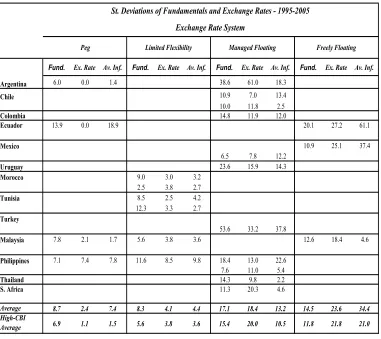
Table 2.4: St. Deviation of Fundamentals and Exchange Rates ...77
Table 2.5: Deviation of Fundamentals and Exchange Rates, 1995 - 2005 ...79
Table 3.2: List of Country-Exchange rate episodes ...105
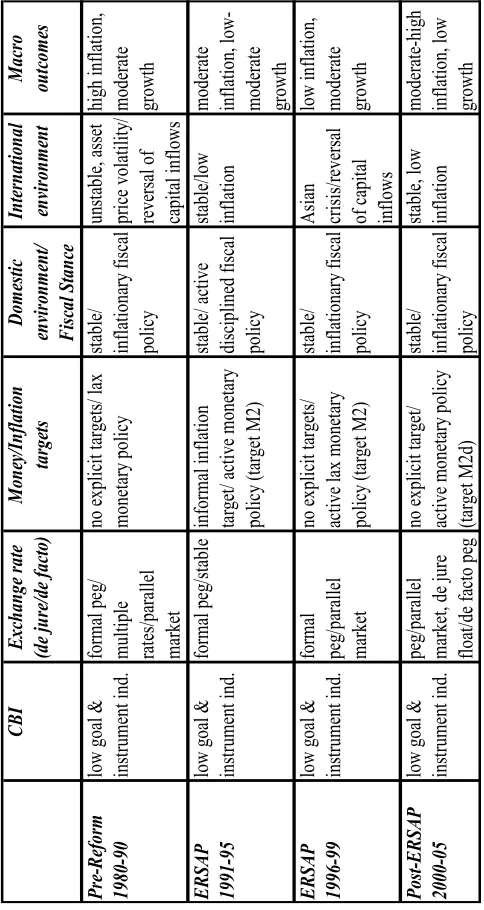
Table 4.1 Summary of Monetary Framework in Egypt ...146
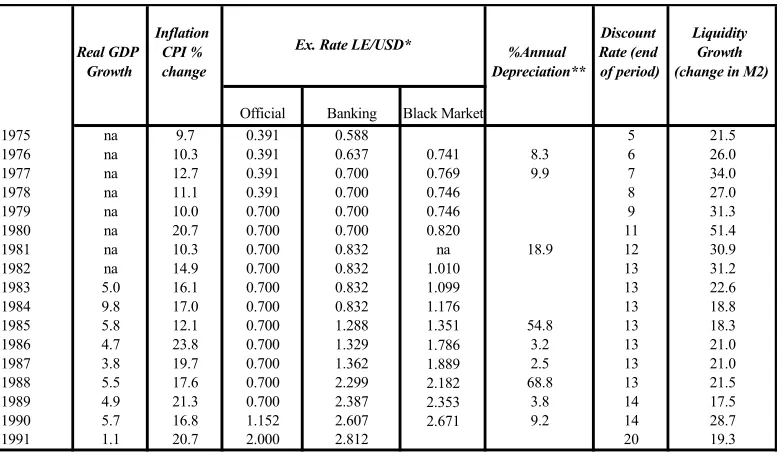
Table 4.2-A: Exchange Rate and Macroeconomic Data: 1975-1991...147
Table 4.2-B: Exchange Rate and Macroeconomic Data: 1992-2004...147
Table 4.3-A: Fiscal Operations: 1975 – 1990 ...148
Table 4.3-B: Fiscal Operations: 1991 – 2004 ...149
Table 4.4-A: Public Debt: 1980-1990 ...150
Table 4.4-B: Public Debt: 1991-2004 ...151
Table 5.1: Summary of Monetary Framework in Jordan ...173
Table 5.2-A: Macroeconomic and Exchange Rate Data, 1975 – 1990 ...174
Table 5.2-B: Macroeconomic and Exchange Rate Data, 1991 – 2004 ...175
Table 5.3-A: Government Fiscal Operations, 1975 –1990 ...176
Table 5.3-B: Government Fiscal Operations, 1991 – 2004...177
Table 6.1 Summary of Monetary Framework in Lebanon...220
Table 6.2-A: Macroeconomic Data, Pre-War Period ...221
Table 6.2-B: Macroeconomic Data, 1975 - 1982...221
Table 6.2-C: Macroeconomic Data, 1983 - 1990...222
Table 6.2-D: Macroeconomic Data, Post-War Period ...222
Table 6.3: Exchange Rate and Inflation 1970-2004...223
Table 6.4-A: Government Fiscal Operations, Pre-War Period ...224
Table 6.4-B: Government Fiscal Operations, Post-War Period ...225
L
IST OFF
IGURESChart 1.1: CBI Scores...47
Chart 2.1: Volatility of Fundamentals and Ex. Rates...76
Chart 3.1: Oil Price, Output and Capital Inflows...155
Chart 4.1: CBJ Interest Rate and Federal Fund Rate ...168
Chart 6.1: Depreciation and Inflation, 1972-2004 ...187
L
IST OFA
BBREVIATIONSABL Association of Lebanese Banks ASL Arnone, Laurens and Segalotto Index BdL Banque du Liban
BoE Bank of England CBE Central Bank of Egypt CBI Central Bank Independence CBJ Central Bank of Jordan
CD Certificates of Deposit
EMS Exchange Rate System
ERM Exchange Rate Mechanism
GASC Egyptian General Authority for Strategic Commodities GMT Grilli, Masciandaro and Tebellini Index
IFS International Financial Statistics
IMF International Monetary Fund
IV Instrumental Variables
LOLR Lender of Last Resort
LR Long Run
NBE National Bank of Egypt NDA Net Domestic Assets
NFA Net Foreign Assets
OLS Ordinary Least Squares
PPP Purchasing Power Parity
REER Real Effective Exchange Rate
TB Treasury Bills
TOR Turnover Rate
A
CKNOWLEDGMENTI
NTRODUCTIONThe thesis focuses on empirical and practical aspects of monetary frameworks and their evolution in developing countries; namely the degree of central bank independence, the conduct of monetary policy and the management of the exchange rate regime. A common theme that runs through the thesis is how those three aspects interact and how they could be designed to achieve adequate macroeconomic outcomes in terms of inflation and growth rates. The research will
also distinguish between de facto and de jure exchange rate regimes and between
legal and actual central bank independence (CBI).
The thesis involves both quantitative empirical research and detailed case studies of three developing countries; those are Egypt, Jordan and Lebanon. The quantitative research is based on a sample of 30 middle-income countries and investigates three areas: 1) the phenomenon of ‘fear of floating’ documented by Calvo and Reinhart (2000) using an improved classification/periodisation of exchange rate regimes, and the relationship between macroeconomic fundamentals and exchange rate volatility; 2) the degree of monetary policy independence and the ability of developing countries to achieve domestic monetary objectives in the context of increased integration into the global economic system; and 3) the degree of central bank independence in the sample and how it affects both ‘fear of floating’ and monetary policy independence.
the case studies draw on a series of interviews conducted with central bank and government officials and other experts in each country. The appendix provides details on those interviews.
The thesis is organised in six chapters. Chapter one presents the theoretical foundation for central bank independence (CBI) and reviews the literature on the relationship between the degree of CBI and macroeconomic outcomes in terms of inflation and growth. It also reviews in detail several studies that measure CBI, including the results of a questionnaire designed to produce a new index of CBI, and uses these to provide a broad classification of CBI for the sample countries.
Chapter two investigates the issue of fear of floating and the volatility of fundamentals and exchange rates in the sample. Calvo and Reinhart (2000) have documented a phenomenon which they referred to as ‘fear of floating’, in which governments announce floating exchange rate regimes, while actively intervening in the exchange rate market or actively pursuing exchange rate targeting. The authors have identified poor monetary policy credibility as an explanation for this phenomenon. Research has also found that the volatility of exchange rates is not closely related to that of the ‘fundamentals’ of the economy. Flood and Rose (1999) examined this issue for a number of industrialised countries and found that floating exchange rates were a lot more volatile than fixed rates while macroeconomic fundamentals were equally volatile across exchange rate systems.
Chapter two tries to assess fear of floating in the sample of countries covered in the thesis and examines whether monetary policy credibility as measured by the degree of CBI has any influence in this area. Similarly, the chapter will examine whether the sample countries exhibit the same divergence between fundamentals and exchange rate volatility as Flood and Rose (1999) identified for industrial countries. The research will apply the methodology of Calvo and Reinhart (2000, 2002) and
that of Flood and Rose (1999), using the de facto exchange rate classification
provided by Reinhart and Rogoff (2002). The results show that fear of floating can
be detected even when an improved (de facto) periodisation of exchange rate
associated with lower volatility of both the exchange rate and fundamentals. However, it is not sufficient to eliminate those phenomena altogether.
Chapter three investigates the ability of developing countries to operate an independent monetary policy despite the strong influence of world interest rates. This research brings together the emerging literature on monetary policy independence and the main insights of the Taylor rules literature to present a more comprehensive understanding of the way monetary policy is conducted in developing countries.
Recent literature has documented that operating a flexible exchange rate does not always enable a country to implement an independent monetary policy (Frankel, 1999; Frankel; Schmukler and Serven, 2002; and Fratzscher, 2002). The literature has proceeded on the assumption that monetary independence should allow countries to avoid responding to world interest rates, and any influence from foreign interest rates has been taken to imply lack of autonomy for domestic monetary policy. The current work, however, employs a more nuanced definition of monetary independence. World interest rates cannot be ignored as an important influence on monetary policy in developing countries, and the definition of monetary independence put forward accepts the fact that as developing countries integrate further in world markets, the impact of world interest rates is going to increase. However, this phenomenon does not necessarily preclude the operation of a monetary policy that is geared towards achieving domestic objectives. Therefore, the chapter will re-examine the response of interest rates in developing countries to world interest rates, inflation and the output gap in a single equation error correction model. The main results indicate that monetary policy in developing economies responds to world interest rates but in some countries (particularly those with high central bank independence) is also able to respond to domestic objectives relating to inflation and output. Thus the influence of world interest rates does not necessarily imply a lack of monetary independence as has been suggested in the literature but rather a central bank reaction function that includes world interest rates as well as domestic variables.
each country, specific sub-periods are identified according to significant changes in the monetary framework or in the environment in which the central bank operates.
In the case of Egypt, the evolution of the monetary framework will be discussed over three phases: the pre-economic reform phase focusing on the 1980s, the economic reform and structural adjustment programme over the period 1991-1999 and the attempts to reform the monetary framework in the early 2000s following the prolonged currency crisis in the late 1990s. The chapter will explain in detail the process of monetary policy setting in the context of a subservient central bank and how this set-up may have contributed to the currency crisis in 1998-2002. In the light of historical experience, the chapter will also try to evaluate the authorities’ attempts to adopt a more coherent and modern monetary framework.
In the case of Jordan, the monetary framework will be examined over two distinct sub-periods separated by the currency crisis in 1989. This chapter will discuss the details of the currency crisis, which saw the exchange rate devalued by over 100%, and how it triggered a significant change in policy and a shift towards fiscal discipline and greater independence for the Central Bank of Jordan.
Unlike both Egypt and Jordan, Lebanon provides an exceptional case of a developing country where the central bank has enjoyed a high degree of legal and actual independence since its inception. The evolution of the monetary framework in Lebanon will be examined before, during and after the civil war, which radically changed the strategy for monetary and fiscal policies and put special limitations on the central bank’s ability to pursue its objectives.
C
HAPTERO
NE:
T
IMEI
NCONSISTENCY,
C
REDIBILITY OFM
ONETARYP
OLICY,
ANDC
ENTRALB
ANKI
NDEPENDENCEThe degree of Central Bank Independence (CBI) has become a key issue in designing and reforming monetary institutions both in developed and developing countries. The interest in the issue finds its roots in the literature of rational expectations and the time inconsistency of monetary policy first discussed by Kydland and Prescott (1977) and later elaborated by the two seminal papers of Barro and Gordon published in 1983.
Over the past twenty years, there has been a large literature devoted to analysing the time inconsistency problem under various assumptions, constraints and policymakers’ objectives. The following section gives a brief and selective review of this literature and shows how it provides the rationale for the delegation of monetary policy and central bank independence as a solution for the time inconsistency and credibility problems.
A. The Basic Model
Based on the original papers of Kydland and Prescott (1977), Barro and Gordon (1983a), Rogoff (1985) and others, Bean (1998) provides a single coherent model to present the theoretical foundation of the time-inconsistency problem, its outcomes and possible solutions. The discussion of the literature in this section is based on Bean’s analysis.
As in the original Barro and Gordon (1983a), the government seeks to minimise a
loss function that is a linear combination of inflation (
π
) and a target output (y*),where
π
is the deviation from zero-inflation, y is the deviation of output from thenatural rate and the target rate, y*, is assumed to be greater than zero1. The output
level and the government’s loss function are given by the following equations:
2 *
2 (y y )
L=π +β − (1)
0 , )) (
( − + >
=α π E π ε α
y (2)
where ε is a random supply shock with zero mean and E(π) is the public’s
expectation of inflation, which is set before the realisation of the supply shock and the actual inflation rate. Apart from the supply shock, the government is assumed to
have full control over inflation. In the absence of a shock, at E(π) = (π) the output
level will be equal to the natural rate and thus the deviation of output from the
natural rate, y, will be zero. Therefore setting y* greater than zero implies a target
rate of activity greater than the natural rate.
The loss function (1) shows that any amount of inflation is undesirable and any
deviation of y from y* increases the government loss. It is assumed that the target
rate of inflation is zero, and any other rate contributes to the government loss.
However, it is possible to consider a positive target for inflation, in which case (π)
in equations (1) and (2) can be understood as the deviation from that target inflation rate.
1 Barro and Gordon (1983a) use unemployment explicitly in the loss function, while Bean (1998)
The government minimises its loss function given the output constraint in equation (2) and taking private expectations as given. Substituting (2) into (1) and
minimising the loss functions with respect to (π) gives:
0 *] ) ( [ 2
2 + − + − =
= E y
d
dL π αβ απ α π ε
π (3)
hence β α αβε π β α αβ
π 2 2
1 ) ( * + − +
= y E (4)
The public understands the government’s minimisation problem and uses equation (4) to form its inflation expectations, which then determine the actual inflation rate as follows: * 1 ) ( * ) ( 2 2 y E y E αβ β α π β α αβ π = + + = (5)
Substituting inflation expectations (5) into (4) determines the equilibrium inflation rate as follows:
β α αβε αβ π 2 1 * + −
= y (6)
This equilibrium inflation rate has two components: the first term is the inflation bias and the second term is the effect of the realisation of the random supply shock. However, in the absence of the inflation bias, i.e. if a credible ‘commitment technology’ to a zero-inflation target is available; the expected inflation rate reduces to zero, with the equilibrium inflation rate as follows:
β α αβε π 2 1+ −
= (7)
Equation (7) represents the best policy outcome, where a government is able to commit to a zero-inflation monetary policy that is believed by the public. In this case, the realisation of an inflation rate other than the expected zero rate will depend only on the presence of a supply shock. Thus the best policy outcome can
be achieved only if the government sets y* = 0 in the loss function (equation 1), and
Government Motivations, Lack of Credibility, and Solutions
So far, it is not clear why the government would set its target level of economic activity higher than the equilibrium rate and try to achieve it by engineering higher inflation. The two main motivations for such policy could be summarized as the competence-signalling motive and the monetization motive to generate additional government revenue. The first motive is more relevant in advanced economies, where governments, particularly around election time try to signal their competence in managing the economy; while the second motive is more relevant in developing countries, where governments rely on seignorage revenue and on inflation to erode the value of public debt.
The following discussion will present those two motives in detail and analyze how the delegation of monetary policy and central bank independence can provide a solution for the time inconsistency problem in light of the government motivations to inflate.
Barro and Gordon (1983b) explain that the government’s motivation is to stimulate economic activity to its potential level, which is higher than the natural rate of economic activity. The natural rate is believed to be lower than the potential of the economy due to the presence of various fiscal distortions and imperfections in the labour and goods markets.
However, the role of the ‘social planner’ as an explanation for the time-inconsistency problem is not very convincing, since the government itself should be assumed to be rational and should fully understand the public’s reaction to its loss function. In addition, some societies have been successful in instituting the socially optimal policy in other situations. In the previous model, the superiority of the zero-inflation policy is obvious and it is difficult to maintain that it will not be implemented in reality (Taylor, 1983). A more convincing explanation is presented by Bean (1998). He argues that governments face regular electoral pressures and are expected to deliver high levels of output and employment as a signal of their competence, for which they may be re-elected. Moreover, the natural level of economic activity is not known with any accuracy. Thus, as Bean (1998, p. 1799)
put it “governments, particularly near election time, may be prepared to risk a more
not likely to be inflationary, but rather is consistent with their successful effects to raise the output potential of the economy.”
Under this new interpretation of the loss function, only electoral pressures motivate governments to deliver a high level of economic activity. Therefore, the objective
of achieving some positive output target y* corresponding to the potential of the
economy drops out of the equation. The loss function reflects this new government
motivation, where the term ζy represents the potential reward to the government
from raising output:
y y
L=π2+β 2−ζ (8)
The first-order condition gives the equilibrium level of
π
as:β α αβε αζ
π 2
1 2 /
+ −
= (9)
where the first term on the RHS is the inflation bias, which depends on the size of ζ
(the potential reward to the government or the degree to which it values higher output). In this interpretation of the loss function, an independent central bank would not share the same loss function as the elected government. The central
bank’s loss function would not include the term, ζy, and thus the equilibrium
inflation rate would not have an inflation bias. The central bank is independent of
the government and is required by law to pursue price stability. In this case, the act
of delegation of monetary policy to an independent central bank eliminates the time
inconsistency problem.2
In earlier literature, Rogoff (1985) suggested the appointment of a ‘conservative’ central banker as a solution for the time-inconsistency problem. The conservative central banker is defined as one whose loss function differs from that of society in placing a larger weight on stabilising inflation. In the present framework, the independent central banker has a loss function like that in equation (1), but with a
lower relative weight on output stabilisation, i.e. a smaller value of β. Although this
solution does not eliminate the time-inconsistency problem, it provides a better
2 The assumption here is that the central bank has a sole objective of pursuing price stability. In
outcome than the complete discretion situation. The smaller value of β reduces the inflation bias term in equation (6). However, Rogoff (1985) also demonstrates that the appointment of this ‘conservative’ central banker leads to larger output variability. This can be shown in the present framework by substituting the results
in (5) and (6) into (2) and taking the variance of output, y, which is as follows:
2 2 2 ) 1 (
1 )
( σε
β α + = y
Var (10)
Intuitively, the change in the relative weights of inflation and output stabilisation in the loss function affects the monetary authority’s response to unanticipated supply and employment shocks (Rogoff, 1995). The importance of Rogoff’s recommendation, however, is that it emphasised the importance of the institutional set-up in the design of monetary policy. The independence of the central bank as a solution to the credibility problem is a result of this emphasis, especially since the susceptibility of governments to electoral pressures has been recognised in recent research as the main motivation to stimulate the economy beyond its equilibrium.
Within the framework of central bank independence, Persson and Tabellini (1993) and Walsh (1995) suggested tying the remuneration of the central bank to the
inflation rate.3
In this case, the central bank’s loss function contains a linear payment schedule that is tied to inflation. The loss function now becomes:
δπ γ β
π + − − +
= 2 (y y*)2
L (11)
where γ - δπ is the payment the central bank receives (from the government).
Minimising (11) gives:
β α δ β
α
αβε π β α βα
π 2 2 2
1 2 1
) ( *
+ − +
− +
= y E (12)
and
2 * )
(π =αβy −δ
E (13)
3 This approach assumes that the main (statutory) objective of the central bank is to maintain price
Substituting (13) into (12) produces the following equilibrium inflation rate:
β α αβε δ
αβ
π 2
1 2 *
+ − −
= y (14)
In equation (14), setting the central bank’s penalty, δ, equal to 2αβy* will eliminate
the inflation bias. However, if one believes Bean’s interpretation of the government’s loss function, then the act of delegation itself becomes a solution for the time-inconsistency problem and there is no need to include a penalty in the central bank’s loss function.
Walsh (1995) shows that an optimal contract between the government and the central bank exists, whereby the trade-off between inflationary bias and output variability disappears and full flexibility and credibility can be achieved simultaneously. He shows that this trade-off as discussed by Rogoff (1985) stems from the arbitrary restrictions imposed on the central banker and the suboptimal incentives that he faces. The optimal contract is shown to resemble an inflation-targeting rule, where the monetary authority responds with full flexibility to output shocks while maintaining full credibility.
The literature has also discussed the optimal degree of CBI, whether there could be too much independence and what CBI can actually achieve in practice. These issues were examined both theoretically and empirically. In a theoretical model, Lohmann (1992) argued that partial independence is optimal as it provides sufficient credibility for monetary policy while maintaining the necessary flexibility to respond to supply shocks. In her model, the policymaker grants partial independence to a conservative central banker, who places a higher weight on stable inflation than on output stabilisation, and this produces lower time-consistent inflation on average at the cost of higher output volatility, as in the Rogoff result. At the same time, the policymaker keeps the option of overriding the decisions of the central banker in case of excessively large supply shocks or extreme circumstances. The policymaker also incurs some cost in overriding the central bank.
the larger the supply shock the larger the accommodation, which prevents the central banker from ever being overridden at equilibrium. Lohmann (1992) thus argued that this arrangement leads to a better credibility-flexibility trade off compared with the full discretion or full independence solutions.
Neumann (1991) developed in detail the institutional requirements that would ensure full legal independence, which included the prohibition of lending to the government; instrument independence; central bank control over exchange rate policy; personal independence of the governor and board members (or political independence as labelled by Grilli, Masciandaro and Tabellini, 1991); and constitutional status of the central bank law, requiring more than a simple majority to change its charter. Neumann (1997) explained that in terms of achieving zero inflation, the fully independent central bank dominates any other institutional arrangement, including Lohmann’s partially independent central bank and Rogoff’s independent central bank, since the fully independent bank is only concerned with price stability and does not place any weight on output stabilisation. He explained
that “by eliminating the variable y* from his loss function, the independent central
banker frees the government from the self-created problem of unnecessary
time-consistent inflation” (Neumann, 1997, p. 25). In this formulation, as y* is
eliminated, the loss function becomes the same as that of Bean’s independent central bank. In another paper, Neumann (1991) showed that a fully independent central banker who shared the preferences of the government for inflation and output stabilisation (i.e. not a conservative central banker) is still able to deliver zero inflation if he is able to observe shocks to output without error. Thus, this non-conservative but fully independent central banker is the optimal institutional arrangement. This arrangement delivers zero-inflation and at the same time stabilises output relative to its natural level. In addition, if the independence of the central bank was protected in the constitution, it would be the most costly arrangement on which to renege and thus would provide the highest degree of pre-commitment to low inflation (Neumann, 1997).
(1998) explored this issue in depth conceptually, while Posen (1998) empirically examined the channels through which CBI may affect inflation.
Forder (1998) distinguished between the two problems of time inconsistency and credibility, which are often lumped together in the literature. He emphasised that the time inconsistency problem as presented by Kydland and Prescott (1977) was a problem faced by policy-makers who shared the same social objective function with the public and did not intend to deviate from the socially-agreed objectives. In the framework of this original formulation of the problem, the solution to the time inconsistency problem was to adopt and announce rules that were not dependent on the state of the world. Such rules when understood fully by the public would lead to the socially optimal outcome. In the case of monetary policy, the adoption of a monetary rule would eliminate the inflation bias and the outcome would be lower inflation compared with the discretionary situation where no rules are announced. This is where the credibility problem was brought in by Barro and Gordon (1983a, 1983b), when they questioned the credibility of the announced rules, as the policymaker would have more of an incentive to renege on the rule once it had come to be believed by the public. Forder (1998) applied the same logic to CBI and questioned the credibility of delegation since it could also be optimal to undo it once low inflation expectations are formed. He also emphasised the universality of the objective function which is shared by the public and the policymaker, thus the problem did not stem from diverging sectional interests and in his view could not be solved simply by reinventing and eliminating such interests. McCallum (1995) argued along similar lines when criticising the contractual solution to the time-inconsistency problem put forward by Persson and Tabellini (1993) and Walsh (1995). McCallum argued that the incentive structure could not eliminate the problem as it simply transferred it back to the authority to which the central bank is accountable. If the government is responsible for enforcing that contract, it still may have an incentive not to do so.
forward by Forder is the one provided by Neumann (1997) where he showed that the most costly arrangement to undo is the one of a fully credible central bank, especially when such independence is embodied in the constitution. If a government were to revoke the independence of the central bank, inflation expectations would immediately be adjusted upwards. The central bank has no incentive to inflate; an independent central bank does not face electoral pressures in the same way governments do. In addition, if the central bank would like to signal its competence – as a government might by inflating to achieve some employment gains – it would
do so by achieving and maintaining a low inflation record. Thus the act of
delegation to an independent body whose task is to maintain low inflation
eliminates both the time inconsistency and the credibility problems.
Alternative Motivation: The Revenue Motive for Monetary Expansion
Output and/or employment motives are one explanation for inflationary monetary expansion and the time inconsistency problem. Cukierman (1992) discusses government revenue and seigniorage gains as an alternative motivation. The government loss function is now minimised when it is able to generate additional revenue through seigniorage (rather than issuing debt or taxation). The public determines the level of money balances they are willing to hold based on expected inflation. The government can then engineer a level of ‘surprise’ inflation higher than that expected by the public in order to generate additional revenues. Thus, in the short run and in the absence of a commitment technology, the government is able to use the inflation tax to increase revenues. However, the public is aware of this motivation and they take it into account when determining the level of money balances they are willing to hold, which results in excessive rates of inflation, similar to the situation where the government’s motivation of higher employment/output is considered.
Monetary seigniorage is defined as:
P M P
M M dM
SE= =μ (15)
where μ is the growth rate of the nominal money supply and M/P is the real money
components: the rate of change in the equilibrium money stock due to rising per
capita income (g) and that due to the inflation rate (
π
), and so (15) can be rewrittenas:
P M P M g
SE= +π (16)
The government generates non-inflationary seigniorage revenues on an on-going basis by the amount of g (M/P); however any nominal monetary growth beyond the increased demand for liquidity generated by increased income will result in higher prices and inflation. In a steady-state situation, where real money balances are constant and g is equal to zero, seigniorage revenues could only be generated
through higher inflation, i.e. μ is equal to π.
The same basic model used to analyse the output/employment motive for inflation
could be used to discuss the revenue/seigniorage motive, with s replacing y in the
government loss function, where s is deviations from steady-state seigniorage gains
and s* is the government’s target, assumed to be greater than zero. The
government’s loss function can be rewritten as follows:
2 *
2 (s s )
L=π +β − (17)
1 , )) (
( − + =
=α π E π ε α
s (18)
Equation (18) shows that positive seigniorage revenues can be generated in the steady-state only if the actual inflation rate is greater than expected inflation, i.e. if the government chooses the inflation rate after the public has chosen the level of
real money balances they are willing to hold. The term ε is still a random shock.
The same results discussed with regards to the output/employment motive still hold if a revenue motive is considered instead.
the inflation bias and convincing the public to maintain inflation expectations at the target level.
Cukierman (1992) used Cagan’s (1956) framework to discuss the optimum level of seigniorage revenue a government is able to generate. In a situation of high inflation, where real GDP growth and interest rates are no longer important for determining the demand for liquidity, it is appropriate to use the following money demand function (Cagan, 1956):
e e L
P
M = (πe)= −απ (19)
Substituting (19) into (16), seigniorage revenue becomes:
αμ π − = e
SE (20)
The maximum seigniorage is obtained by differentiating equation (20) with respect
to μ and setting it equal to zero. The maximum seigniorage is generated when the
rate of monetary growth is equal to the reciprocal of the semi-elasticity of money demand:
μ* = 1/α (21)
Initially, seigniorage increases as money supply expands and it decreases again
beyond the rate 1/α; however, it never reduces to zero. Governments often operate
beyond the level of monetary growth that maximises their revenues. Cukierman (1992) highlights this observation and explains this seemingly irrational behaviour using the dynamic inconsistency framework. He explains that this behaviour implies that the inflating government values seigniorage revenues much more highly than it values the costs of inflation and the subsequent reduction in seigniorage revenues in the next period, when the public adjusts their inflation
expectations upwards. During periods of hyperinflation, the value of β in the
government’s loss function (equation 17) is thus sufficiently high that it outweighs the costs of inflation; this also implies that the public will adjust their inflation expectations accordingly, which helps fuel an episode of hyperinflation.
B. Measuring Central Bank Independence
With a few exceptions, a consensus has emerged in the theoretical literature regarding the importance of central bank independence in solving the time inconsistency problem and enhancing the credibility of monetary policy. This consensus encouraged further empirical literature on the determinants of CBI, measures of CBI and on the link between CBI and inflation. This section will discuss a number of the major indices that measure CBI, followed by a discussion of some empirical findings that are based on those major indices.
knowledge of a particular country or region. This in-depth knowledge allows for a better interpretation of central bank laws and how they are enforced in practice, which points again to the importance of studying CBI through detailed case-studies. Finally, studies that attempt to measure CBI and relate it to inflation reach similar results regarding independence in practice and how it affects the conduct of monetary policy. This will be demonstrated further in the following discussion of the results for specific indices.
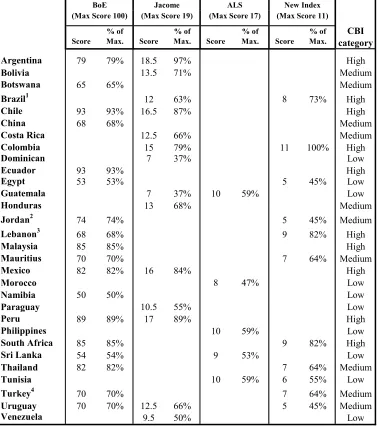
This section will focus on analysing the results of some of the most influential and widely cited indices, and those dealing with developing countries, namely GMT (1991), Cukierman (1992), Mahadeva and Sterne (2000) and Jacome (2001). A new index is developed later in this chapter and used to collect additional information about CBI in the countries studied in the thesis. The new index draws heavily on the indicators used in GMT (1991), but it focuses on the aspects of independence that central bankers themselves identified as more relevant to developing countries
(Masciandaro and Spinelli, 1994; Mahadeva and Sterne 2000; Beblavy, 2003)4. The
data for the new index were collected using a questionnaire administered to each of
the countries in the sample. The questionnaire was returned by 11 central banks5
and the information collected from those countries was used, along with information from published indices, to produce a broad classification of the 30 countries according to their degree of CBI. The sample of countries was drawn from the group of middle-income countries as classified by the World Bank in 2002, excluding those in Eastern Europe and small Caribbean islands, in addition to some countries for which data on monetary policy and central banking was unavailable. The sample consists of 30 countries: Argentina, Bolivia, Botswana, Brazil, Chile, China, Colombia, Costa Rica, Dominican Republic, Ecuador, Egypt, Guatemala, Honduras, Jordan, Lebanon, Malaysia, Mauritius, Mexico, Morocco, Namibia, Paraguay, Peru, Philippines, Sri Lanka, South Africa, Thailand, Tunisia, Turkey, Uruguay and Venezuela.
4 Central bankers’ perceptions of what constitutes independence will be discussed in more detail
later in the chapter.
5 A questionnaire was sent to the research departments of the central banks in the sample and was
The information collected directly from central banks and that available through the
indices developed by Cukierman (1992),6 Mahadeva and Sterne (2000),7 Jacome
(2001),8 and Arnone, Laurens and Segalotto (2006)9 were used to classify the
sample of countries according to the degree of independence of their central banks. This classification formed the basis for some of the empirical work in the coming chapters. The following sections will provide details on the indices mentioned above before classifying the 30 countries into three groups of high, medium and low independence.
Grilli, Masciandaro and Tabellini’s (1991) CBI Index:
In designing their index for central bank independence, GMT (1991) distinguished between the political and economic independence of central banks. They defined political independence as the capacity to choose the final goals of monetary policy, such as inflation or the level of economic activity and economic independence as the capacity to choose the instruments with which to pursue these goals. Each of the two aspects of independence is measured using a number of indicators (see below) so that each central bank is given two scores; one for political independence and the other for economic independence.
The later literature on central banking often discusses CBI in terms of goal/target independence and instrument independence (for example, Bofinger, 2000; Mahadeva and Sterne, 2000). This distinction is also useful when assessing the
6 Twenty out of the 30 countries are included in the data set of Cukierman (1992); those countries
are Argentina, Bolivia, Botswana, Chile, China, Colombia, Costa Rica, Egypt, Honduras, Lebanon, Malaysia, Mexico, Panama, Peru, Philippines, South Africa, Thailand, Turkey, Uruguay and Venezuela.
7 Mahadeva and Sterne (2000) provided scores for a number of the indicators included in the GMT
indices for the 1990s in a sample of 124 countries, including 44 developing ones. Eighteen out of the 30 countries in my sample are included in Mahadeva and Sterne (2000). Those are: Argentina, Botswana, Chile, China, Ecuador, Egypt, Jordan, Lebanon, Malaysia, Mauritius, Mexico, Namibia, Peru, Sri Lanka, South Africa, Thailand, Turkey and Uruguay.
8 Jacome (2001) includes indicators on central bank independence in 14 Latin American countries
during the 1990s.
9 Arnone, Laurens and Segalotto (2006) updated the GMT index for the 18 OECD countries and
impact of CBI on economic performance and whether the two aspects of independence exert different influences on inflation.
Political Independence: In this context, political independence is defined as the
freedom to pursue the goal of low inflation, which is equivalent to goal or target independence. Therefore, any institutional aspects that would enhance the political independence of the central bank are also assumed to enhance the ability of the central bank to pursue its goal of low inflation. The index of political independence is composed of eight indicators with scores awarded on a binary scale of 0 and 1 and the overall score for each country is the total number of points (1s) assigned to each indicator. The eight indicators are: 1) Governor not appointed by government; 2) Governor appointed for > 5 years; 3) board not appointed by the government; 4) Board appointed for >5 years; 5) No mandatory participation of government representative on the board; 6) No government approval of monetary policy required; 7) Statutory requirements that central bank pursue monetary stability amongst its goals; 8) Legal provisions that strengthen the central bank position in case of conflict with the government.
Economic Independence: This aspect of independence is measured using two sets
of questions about the limitation on government borrowing from the CB and the instruments available to the CB to pursue its goal of low inflation. The specific questions that form this index are whether: 1) direct credit to the government is automatic; 2) direct credit is extended at market interest rates; 3) direct credit is temporary; 4) direct credit is of limited amount; 5) the CB does not participate in the primary market for government debt; 6) discount rate is set by CB; 7) banking supervision not or only partly entrusted to the CB. The scores for each question are also assigned on the same binary scale and the overall index is calculated in the same way as the political independence index with the exception that indicator (7) can take the values of 0, 1, or 2.
between the index of economic independence and inflation rates, especially during periods of high inflation, while political independence was only significant during the 1970s.
Debelle and Fischer (1995) also document similar empirical results when they find that inflation performance is better if the central bank has a mandate for monetary stability.
Cukierman’s (1992) Index:
Cukierman (1992) developed an index for CBI according to the legal charter of the central banks in his sample of 72 countries, including 49 developing countries. Cukierman’s index is one of the earliest and most widely used indices for measuring CBI and relating it to macroeconomic outcomes. It is also one of the very few that include a large sample of developing countries. The index includes aspects of legal independence in four categories, which are the statutory objectives of the central bank, the appointment and dismissal of the governor, the role of the central bank in policy formulation, and the provisions for budget deficit finance and limitations on lending to the government. The questions in each category are assigned scores between zero and one, which are then used to calculate an aggregate score for each category as well as an overall index of CBI. Although the classification does not distinguish between political and economic independence, many of the indicators used in the GMT index to assess the two aspects are present in Cukierman’s index for overall legal independence. The indicators in each category are the following:
Governor’s appointment: 1) Term of office, 2) Who appoints the governor, 3)
Provisions for dismissal, 4) Is the governor allowed to hold another office?
Policy formulation: 1) Who formulates monetary policy, 2) Government directives
and conflict resolution, 3) Is the central bank given an active role in the formulation of government budget?
Limitations on lending: 1) Limitations on advances, 2) Limitations on securitized lending, 3) How wide is the circle of potential borrowers from the central bank, 3) Type of limit on lending when such limits exist, 4) Maturity of loans, 5) Restrictions on interest rates, 6) Prohibition on lending in primary market.
The index was used to rank central banks in the sample according to their degree of independence and to test the correlation between CBI and inflation. Cukierman (1992) developed two types of indicator to test both legal and actual independence. The first type is constructed according to the legal charter of the central bank and includes the aspects of legal independence detailed above. The first index is a simple average of the scores in each of the categories of indicators, while the second is a weighted average of the scores in the four categories designed to emphasise the questions in each category researchers deemed more important, such as the governor’s term in office, policy formulation, central bank objectives, and limitation on lending. The indices were used to rank central banks in the sample according to their degree of independence during the four sub-periods from the 1950s to the 1980s. Both indices provide very similar results.
The ranking shows that developed countries were concentrated in the top 10% of the ranking while developing countries were mostly in the bottom 10%. Within the group of developing countries, CBI was not inversely correlated to the inflation rate. For example, countries with the highest inflation rates, such as Argentina, Peru and Nicaragua have rankings of legal independence above the median.
that the median level of independence in developing countries is less than that for developed countries.
Regression results indicated that the legal term for the governors influenced the actual tenure term in office, however the goodness of fit was low, indicating the presence of other variables that influence the actual tenure period.
The correlation coefficients on the different indices of CBI were very low, showing that they are complementary with each including different information from the other. This also reflects the fact that legal independence is only weakly indicative of actual independence. This is more the case for the group of developing countries. The previous result is highlighted by the simple coefficient (regression coefficient) between the legal limitations on central bank lending to the government and this type of lending in practice according to the questionnaire results. The legal limitations explain 46% of the variation in actual limitations on lending. Although this coefficient is not very low, it still shows that over 50% of the variation in central bank finance to the government is influenced by practical considerations rather than statutory constraints. This result complements and supports the findings from case-studies examined in later chapters.
In assessing the impact of CBI on inflation, Cukierman (1992) regressed the rate of depreciation of the real value of money, as a measure of inflation, on both legal CBI and governor turnover variables. The turnover rate is significant while the contributions of individual legal measures of independence are not. When distinguishing between high and low turnover rates (cut off point of 0.25/year or an average tenure of 4 years), the high rate has a positive and significant impact on inflation, while the low turnover rate is insignificant. This suggests that the significance of the turnover rate in the earlier regressions stemmed from the observations with higher turnover rates, which are mostly in developing countries.
relations with inflation; especially the questions related to the presence of an intermediate monetary target and the limitation on lending. The overall goodness of fit in that regression was reasonably high at 0.42. When the governors’ turnover rate variable was added, it was significant and positively correlated with inflation. The addition of the aggregate legal independence index did not improve the regression results in the presence of the questionnaire variables.
Cukierman assesses how the previous results compare with other similar work, namely Alesina (1988) and GMT (1991). In these studies, the results suggest a significant negative relation between CBI and inflation. Cukierman (1992) then repeats the previous regressions using the group of countries in the earlier studies (already a subset of the 70 countries in his sample). Surprisingly, the goodness of fit substantially improves using the new sample from only 0.11 to 0.49, and 0.55 when the turnover rate of central bank governors is included. This shows that while the indices for CBI are comparable across the three studies and while the results are consistent across studies, when used to explain variations in inflation rates, the goodness of fit of such regressions can be susceptible to the sample of countries included in the regression. Even the distinction between developed and developing countries is not sufficient to minimise such susceptibility; within a group of developed (or developing) countries adding or omitting specific countries can change the results considerably.
Mahadeva and Sterne (2000): Bank of England Survey
available for specific questions, namely: governor’s term in office, statutory objective of price stability, target independence, instrument independence and the central bank’s financing of the budget deficit.
The results of the survey show that stable inflation is strongly associated with periods of very low inflation, which is defined as inflation less than 3.8%, where 20% of the observations fell. When defining inflation stability as inflation remaining within a certain range for 5 consecutive years with only 70 episodes meeting this criterion, 27 observations (out of 70) were episodes of very low inflation. The survey found that countries operating an exchange rate targeting framework made up the majority of those achieving episodes of stable inflation: 39 out of 70 episodes. Excluding very high inflation observations (very high stable inflation), two thirds of the stable-inflation episodes were achieved through exchange rate targeting. This result is more striking for developing countries, as the 14 episodes of low and very low stable inflation in developing countries were achieved through exchange rate targeting. There is no precedent in the sample for a developing country to have achieved low inflation (low inflation defined as <
7.4%10) through relying on domestic policy anchors, which according to the authors
provides a counterbalance for the problems of exiting smoothly from exchange rate pegs.
The survey distinguished between target and instrument independence. In the survey, central bankers tended to regard instrument independence as a very important aspect of their independence (80% of respondents mentioned instrument independence), while target independence was considered important to central bankers in particular circumstances. Countries that have domestic nominal targets were more concerned with target independence. It also acquires special importance in situations of disinflation. The relation between the central bank and the government is strongly influenced by the acceptability of the inflation level. Central banks in inflation-targeting countries with low inflation did not regard target independence as particularly important, unlike those in developing countries with
10 The thresholds of low and very low inflation were determined by dividing the entire sample of
high inflation and those who are obliged to pursue goals set by the government (which may involve financing budget deficits).
Generally central bankers feel independent when they pursue clear statutory objectives. The 38% of respondents who mentioned statutory objectives were central bankers whose constitutions had recently been revised to reflect the explicit goals of price stability. Similarly, central bankers in money and exchange rate targeting countries found statutory objectives to be of importance. Since money and exchange rate targets are regarded as ‘intermediate targets’, they complement the statutory objective of price stability. In contrast, the central bankers who did not mention statutory objectives were those from inflation targeting countries and those in developing countries whose regulations do not defend them against government intervention in monetary policy or the obligation to finance a budget deficit. The central bankers’ self-assessment of independence is well-explained by the degree of instrument independence and the limits on budget deficit finance. Limits on deficit finance are particularly important for central bankers in developing and transitional countries.
With respect to the relation between the central bank and the government, the survey found government involvement in setting monetary policy targets is highest when the framework is one of exchange rate targeting. The government plays a role in target setting in 80% of the economies with exchange rate targeting either independently or jointly with the central bank. The corresponding percentages were 30% for monetary targeting frameworks and 70% for inflation targeting.
Exchange rate targeting is the least discretionary framework. In the survey, there was a high negative correlation of -0.46 between exchange rate focus and
discretion.11 The correlation between exchange rate focus and inflation focus was
-0.68 while that between exchange rate and money focus was -0.54, suggesting maybe that exchange rate focus is a substitute for other policy frameworks rather
11 Mahadeva and Sterne use a specific definition of discretion. It is based on their assessment of the
than a complement. Cukierman (1992) reached a similar conclusion, stating that fixed exchange rates are associated with less independence for the central bank.
Monetary policy targets have become much more explicit in the 1990s. From 1990 to 1998, the percentage of economies with explicit exchange rate targets increased from 37% to 54%, those with monetary targets increased from 17% to 43% and those with inflation targets increased from 5% to 58% in the survey sample. Many countries have more than one explicit target. In 1998, nearly half the economies announced an explicit target or a monitoring range for more than one variable, compared with 8% in 1980. However, the authors note that policymakers regard it as acceptable to miss their target. Targets sometimes represent benchmarks for policy performance and communication devices to the public. The use of dual targets is consistent with the view that targets sometimes represent benchmarks, which allows policymakers to compromise between strict targeting and flexibility. This particular result is a valuable empirical contribution to the academic debate on the trade-off between credibility and flexibility discussed earlier.
Changes to monetary frameworks have been frequent over the past three decades. Such changes, however, seem to have been forced on the countries concerned when it was no longer possible to maintain the existing system. Officials tend to regard any change to the monetary framework as costly; however, delay increases the costs of system change. This observation is consistent with the analysis of the country case studies detailed in later chapters.
Jacome’s Survey (2001):
of last resort (LOLR) (its role in achieving financial stability), financial independence, and accountability and transparency of the central bank. In addition, the country-specific details used in assessing legal CBI and information on CBI as it evolved in practice are also provided in the paper. Fourteen Latin American countries were ranked according to these criteria and the correlation of the degree of CBI with inflation and its volatility was examined and found to be negative. In addition, the paper found a positive correlation between greater CBI and disinflation. The author constructed a simple index to measure the reduction in inflation in all 14 countries by dividing the number of years in which inflation fell by the total number of years after the adoption of central bank reforms. A value of one implies successful disinflation. This result supports the hypothesis that central banks with stronger independence can be more successful in reducing inflation. The paper also examines the relative importance of the different set of criteria included in the composition of the index. It finds that key elements driving the correlations are the indicators of economic independence, which include lending to the government and the LOLR function, while political independence alone seems to weaken the correlation and the criteria for accountability and transparency do not seem to affect the results. The paper also included information on the governor turnover rate as a proxy for effective independence and found a weak positive correlation between that and inflation. This result was explained on the basis that the turnover rate reflects the degree of political independence only, which is one aspect of CBI but a less critical aspect as mentioned earlier. In general, the turnover rate – as a proxy for actual CBI – should be considered carefully as it does not take into account the changes in governors taking place according to the established legal procedures, which may not necessarily reflect political influence exerted by the government. Also, a very low turnover rate may signal lack of independence rather than independence as originally intended, since there is little benefit in changing a completely subservient governor.
Arnone, Laurens and Segalotto (2006): Updated GMT Index:
same index to assess CBI in a sample of 22 developing countries and they distinguished between emerging markets and poor countries. In order to compare the evolution of CBI in the sample of developing countries, ALS used the information available in Cukierman (1992) to calculate a streamlined version of the GMT index. Thus, the paper was able to compare CBI in their sample of developing countries at two points in time; 1992 and 2003. Their results showed a significant improvement in the degree of CBI in developing countries over the decade, as some central banks have reached levels of autonomy comparable to those in OECD countries. The authors explained that this was achieved through strong political will for reform and generally took place in three stages. The first stage was laying the foundation for CBI through the adoption of appropriate legislation, the second stage was the development of autonomous operational capacity at the central banks, and the final stage involved increased political independence in terms of policy formulation and appointment of senior management.
The paper also provided detailed classification and ranking of the countries in their sample using the GMT index.
New CBI Index:
The objective of constructing a new index was to collect consistent and complete information on CBI over several decades for the 30 countries studied in this thesis. The aim was to facilitate comparison over time and allow for complete assessment of the evolution of CBI over time. A questionnaire was administered to all central banks in the sample; however only 11 countries returned the questionnaire. Nevertheless, the responses received provided valuable additional information and complemented the assessments of CBI available from the other published sources discussed earlier.
to measuring ‘actual’ CBI as opposed to legal CBI in developing countries is highly desirable since research has shown the divergence between legal and actual CBI in developing countries (Cukierman, 1992; Fry et. al, 1996). In addition, central bankers’ perception of what constitutes independence varies a great deal between developed and developing countries and even within subgroups of developing countries. For instance central bankers in developed countries view the statutory objectives of the central bank as a decisive factor in their independence (Masciandaro and Spinelli, 1994), while their counterparts in developing countries regard legal objectives as less crucial but put more emphasis on instrument independence (Fry et al. 1996; Mahadeva and Sterne, 2000; Beblavy, 2003). Generally, the political and institutional set-up is very different in developing countries from that in developed ones; therefore, what in reality constitutes independence is different between the two groups. A vivid illustration of this was discussed earlier in the results of Fry et al. (1996), where the number of government officials on the board of the central bank was positively (although marginally) significant in explaining central bankers’ self-assessment of independence in developing countries. This may seem counter-intuitive, but the authors explain it as a sign of co-operation between the government and an independent central bank in developing countries. Otherwise, there is little point in having a member of the government on the board of a totally subservient central bank. This co-operation boosts central bankers’ perception of their independence.
The literature on CBI stresses the importance of distinguishing between goal and instrument independence and the empirical results shown by GMT (1991) also highlight the difference between the two. The new index maintained this distinction, and thus assessing CBI in this sample will be conducted on the basis of the two criteria of political and economic independence as defined above. Although the new index is modelled after the GMT indices, some of the questions were not included because of data availability constraints as well as their limited relevance to developing countries and limited importance in assessing CBI as shown in other empirical studies. Specifically, the indicators for political independence have been streamlined.