http://www.scirp.org/journal/ajac ISSN Online: 2156-8278
ISSN Print: 2156-8251
DOI: 10.4236/ajac.2018.91005 Jan. 18, 2018 52 American Journal of Analytical Chemistry
Application of Capillary Electrophoretic
On-Line Sequential Concentration Based on
Micelle to Solvent Stacking
Shan Sun
1,2,3,4, Yuanqi Lu
4*, Zhe Yuan
1,2,3,4, Qingqiang Yao
21School of Medicine and Life Sciences, University of Jinan-Shandong Academy of Medical Sciences, Jinan, China
2Institute of Materia Medica, Shandong Academy of Medical Sciences, Jinan, China 3Key Laboratory for Rare & Uncommon Diseases of Shandong Province, Jinan, China
4Analysis and Testing Centre, Dezhou University, Dezhou, China
Abstract
To take advantage of micelle to solvent stacking (MSS) to achieve more sensi-tivity enhancement with enough selecsensi-tivity, the application of capillary elec-trophoretic on-line sequential concentration based on the MSS was reviewed. MSS has been coupled to sweeping FASS, FASI and normal EKI. Furthermore, multiple stacking by coupling MSS with more than one stacking method has also been reported. It is more sensitive and selective than solely used of one or two stacking methods and is very suitable for complex and trace sample anal-ysis.
Keywords
Capillary Electrophoresis (CE), On-Line Sequential Concentration, Micelle to Solvent Stacking (MSS)
1. Introduction
Due to its small volume and the narrow optical path, CE suffers from poor con-centration sensitivity, especially when on-line UV detection is utilized [1][2]. To enhance the detection ability of CE, a number of on-line concentration tech-niques have been developed. These techtech-niques are based on the changes in the analyte migration velocity at the boundary between sample zone and the back-ground electrolyte [3] [4]. Of these techniques, stacking based on association between the analytes and the surfactants are very useful. MSS is a kind of tech-nique based on this principle, in which the sample is prepared in a micellar solu-How to cite this paper: Sun, S., Lu, Y.Q.,
Yuan, Z. and Yao, Q.Q. (2018) Application of Capillary Electrophoretic On-Line Se-quential Concentration Based on Micelle to Solvent Stacking. American Journal of Ana- lytical Chemistry, 9, 52-63.
https://doi.org/10.4236/ajac.2018.91005
Received: September 22, 2017 Accepted: January 15, 2018 Published: January 18, 2018
Copyright © 2018 by authors and Scientific Research Publishing Inc. This work is licensed under the Creative Commons Attribution International License (CC BY 4.0).
http://creativecommons.org/licenses/by/4.0/
DOI: 10.4236/ajac.2018.91005 53 American Journal of Analytical Chemistry tion without an organic solvent or its aqueous solution. Because the organic sol-vent in the background electrolyte (BGE) affects the micellar interaction with the analytes, the effective electrophoretic directions of the analytes will reverse at the micellar to solvent stacking boundary (MSSB), therefore causing the analytes focusing [5] [6]. It was first introduced by Quirino and co-workers for the stacking of small organic cations [7] and has already been widely used to analyze organic cations and anions in waste water [8], traditional Chinese medicine [9]
and biological fluids [10][11][12] analysis. Although sensitivity enhancements of 40 - 1000-fold and detection limits of 0.1 - 0.001 mg/L have been achieved with MSS, its selectivity and sensitivity still can’t meet the requirements of real sample analysis. To acquire additional detection ability enhancements, sequen-tial capillary electrophoretic stacking by coupling MSS with other CE on-line concentration techniques has been developed. These sequential on-line tech-niques include coupling MSS with sweeping (sweeping-MSS) [13][14][15], field amplified sample stacking (FASS-MSS) [16] [17], field amplified sample injec-tion (FASI-MSS) [18][19][20][21][22], MSS via normal EKI sample injections with the assistance of micelles [23][24][25] as well as field amplified sample in-jection and sweeping (FASI-sweeping-MSS) [26][27]. Compared to single used of MSS, the sequential stacking techniques can enhance the sensitivity 2 - 10 more times and these methods can be more selective to specific analytes. The developments of these sequential techniques have been included in the review of Yang et al. [28]. But it is not comprehensive and the works of these techniques after 2013 were not included. In this paper, the application of sequential on-line concentration methods based MSS was reviewed.
2. Sweeping-MSS
Recently, a novel two-step stacking strategy of sweeping-MSS was introduced. In such strategy, the sample matrix was free of the micelles and a plug of anionic (cationic analytes) or cationic (anionic analytes) micellar solution was injected before sample solution in order to perform sweeping [13]. After the sweeping step, the enriched analyte bound to the micelles were transported to the MSSB where they experienced an organic solvent in the BGE. The solvent reduced the interaction between the micelles and the analytes. The direction of the effective electrophoretic mobility reverses at the MSSB. This caused the focusing of the analytes at the MSSB. Compared to single MSS stacking, sweeping-MSS can en-hance the sensitivity of analytes 2 - 5 times further. Sweeping-MSS was first in-troduced by Quirino to determine four β-blockers and two tricyclic antidepres-sant drugs with capillary zone electrophoresis (CZE)separation [13] and now they have been widely used in organic cations [13][14][15] and anions [29][30]
DOI: 10.4236/ajac.2018.91005 54 American Journal of Analytical Chemistry fold range [14]. Yang et al. proposed a sweeping-MSS method for fast stacking of nitroimidazoles in CZE. With this method, dimetridazole, metronidazole and secnidazole can be determined in 9 min. The detection limits and sensitivity en-hancements are in the 2.3 - 3.0 ng/mL and 12 - 38-fold range, respectively [15]. Yang et al. developed a sweeping-MSS on-line concentration method in CZE to determine strychine and brucine in traditional Chinese herbal medicines. The detection limits for the two analytes were 0.01 µg/mL. Compared with typical CZE, 38 - 51-fold sensitivity enhancement were achieved [31]. Quirino et al. have developed a sweeping-MSS method using cationic cetyltrimethylammo-nium micelles in CZE to determine hypolipidemic drugs, herbicides and non- steroidal anti-inflammatory drugs. In their work, the direction of electroosmotic flow (EOF) was the same as the anions which were achieved by positive dynamic coating of a fused silica capillary with hexadimethrine bromide. The sensitivity enhancements based on peak height were in the 17 - 33-fold range. The limits of detections (LODs) were from 0.05 - 0.55 µg/mL range [29]. Wang et al. devel-oped a long-chain ionic liquid (LCIL)-based sweeping-MSS method in CZE for anionic compounds analysis. In their work, N-Cetyl-N-methylpyrrolidinium bromide (C16MPYBr) was used as a novel cationic surfactant. The capillary
col-umn was conditioned with poly (1-vinyl-3-butylimidazolium) bromide, a kind of polymeric ionic liquid, to obtain the anodic EOF. Under the optimized condi-tions, the peak areas of benzoic acid and 2-nitrophenol were increased 34 and 25 times and the peak height of 4-chlorophenol was increased 60 times [30].
3. Micelle to Solvent Stacking via Sample Injection under
Field Enhanced Conditions
DOI: 10.4236/ajac.2018.91005 55 American Journal of Analytical Chemistry solvent zone with a low conductivity in which a high electric field is provided, resulting in a high analyte migration velocity. When the ionized analytes arrive at the boundary between the organic solvent zone and BGE zone, the electric field strength suddenly decreases, and the migration velocities of the analytes become slower resulting in the gathering of the analytes near the boundary [16]. As the MSS step is before the FASS step, this sequential method is called micelle to solvent stacking-field amplified sampling stacking (MSS-FASS). But when the conductivity of TS is higher than the sample matrix and the EOF is negligible, the organic solvent in the TS solution can’t react with the micellar first. On the contrary, the SDS micelles in the sample zone rapidly moved into TS under high electric field intensity. Due to the electric filed strength of TS is lower than that of sample solution, the analytes slowed down quickly and accumulated at the border between sample zone and the TS zone, which is a FASS process. Thereaf-ter, once the mixed micelles have access into the organic solvent zone, the mi-celles would collapse and release the analytes, in which a MSS process occurred. As the FASS step is before the MSS step, this sequential method is called micelle to solvent stacking-field amplified sampling stacking (FASS-MSS). Liu et al. have poposed a MSS-FASS method in CZE to determine trimethoprim and sulfame-thoxazole in animal-originated foodstuffs. LODs of 7.7 - 8.5 ng/mL were achieved which were 301 and 329 times better compared to a typical injection, respectively [16]. Wan et al. [17] have developed FASS-MSS method with the aid of β-cyelodextrin (β-CD) to determine the contents of atenolol and metoprolol in human urine by CE. Improvement in the sensitivity for analytes is achieved up to 200-fold compared with conventional CE method. The LODs can be reached 3.3 and 3.7 ng/mL, respectively.
DOI: 10.4236/ajac.2018.91005 56 American Journal of Analytical Chemistry
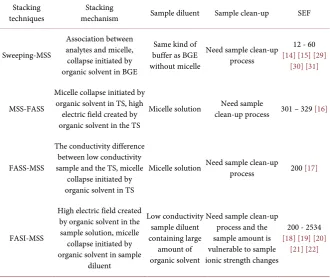
Table 1. Comparison between sweeping-MSS and coupling field enhancement with MSS.
Stacking
techniques mechanism Stacking Sample diluent Sample clean-up SEF
Sweeping-MSS
Association between analytes and micelle, collapse initiated by organic solvent in BGE
Same kind of buffer as BGE without micelle
Need sample clean-up process
12 - 60 [14] [15] [29]
[30] [31]
MSS-FASS
Micelle collapse initiated by organic solvent in TS, high electric field created by organic solvent in the TS
Micelle solution clean-up process 301 – 329 Need sample [16]
FASS-MSS
The conductivity difference between low conductivity sample and the TS, micelle
collapse initiated by organic solvent in TS
Micelle solution Need sample clean-up process 200 [17]
FASI-MSS
High electric field created by organic solvent in the sample solution, micelle collapse initiated by organic solvent in sample
diluent Low conductivity sample diluent containing large amount of organic solvent
Need sample clean-up process and the sample amount is vulnerable to sample ionic strength changes
200 - 2534 [18] [19] [20]
[21] [22]
introduced in FASI-MSS, which can permit much bigger sensitivity enhance-ments. Besides, it is the organic solvent in the sample matrix rather than that in the BGE or TS that initiated the MSS process in FASI-MSS. Although these stacking techniques all need sample clean-up, the stacking efficiency is more vulnerable to ionic strength changes in the sample matrix for its low conductivi-ty requirement. Rabanes et al. have developed a FASI-MSS method in CZE to determine cationic drugs in urine. Using a sample diluent with one-tenth the conductivity of the background solution, the strategy afforded as high as 2479- fold improvements in peak height and LODs of as low as 1.1 - 1.8 ng/mL [19]. Tubaon et al. developed a FASI-MSS method in CZE to determine anionic sulfonamides in river water samples. Cationic cetyltrimethylammonium bro-mide (CTAB) was used as the surfactant. Compared to typical hydrostatic in-jection, SEFs of 397 - 1024 have been achieved. Limits of quantitation were in the 0.01 - 0.3 µg/mL range [18]. Thang et al. has developed a FASI-MSS me-thod in nonaqueous capillary electrophoresis to determine anticancer drugs in major metablites. The proposed method allowed a 214 - 625-fold SEF which is 2 - 5 times better than with FASI only [20]. Mohd Azmi et al. [21] have devel-oped and validated a FASI-MSS method to determine paraquat and bromhex-ine in river water. The sensitivity was enhanced 1000-fold in comparison to normal CZE. Chong et al. [22] developed a FASI-MSS method in the microchip electrophoresis (MCE) coupled with on-chip contactless conductivity detection (C4D) system to determine vancomycin in human plasma. A SEF of up to
DOI: 10.4236/ajac.2018.91005 57 American Journal of Analytical Chemistry µg/mL.
4. Micelle to Solvent Stacking via Normal Electrokinetic
Injection
If there is no apparent difference in conductivity between the sample zone and the BGE, the samples can be introduced with the aid of micelles, during which the effects of EOF can be attenuated by introducing acidic buffer solution [23] [24] or with the assistance of pressure during EKI [25]. Dong et al. combined MSS with large amount sample electrokinetic stacking injection (LASEKSI) in CZE for the analysis of cationic molecules. In this developed MSS-LASEKSI method, after a large amount of sample solution was introduced from the outlet hydrodynamically, co-solvent buffer was injected with pressure from the inlet. And then sample stacking was performed by applying a 10 kV voltage in the normal polarity through the acidic buffer solution (pH 3.0) vial and the sample vial for a period of time, during which the integral EOF was attenuated, and when the velocity of EOF and the micelles are equal, a equilibrium state was formed and can be maintained for a long time, leading to the continuous stack-ing of the analytes on the basis of MSS. Therefore, an extremely large amount sample was permitted to be injected into the capillary which allowed as high as 6.3 × 10³-fold sensitivity enhancement [23]. The developed method has been
DOI: 10.4236/ajac.2018.91005 58 American Journal of Analytical Chemistry 81% - 87%, range.
5. MSS Based Multiple Stacking
Coupling MSS with more than one stacking method, which is called MSS based multiple stacking, can further enhance the sensitivity and selectivity. In Sweep-ing-MSS, if the sample was injected with FASI, triple stacking by coupling FASI, Sweeping and MSS (FASI-sweeping-MSS) can be achieved. Grochocki et al. have developed a FASI-sweeping-MSS triple stacking method in CZE to determine four penicillins in plasma samples [26]. In their work, the sample was solved in diluted BGE and introduced into the capillary by FASI at negative voltage. Then the CTAB micelles were introduced at positive voltage and the the positively charged micelles swept the stacked anionic analytes at the sweeping boundary. And then a small plug of 60% methonal was introduced hydrodynamically, the MSSB was created between the MeOH and swept analyte zone with micelles. As the negative separation voltage was applied, it resulted in the stacking of the analytes at the MSSB. The SEFs were 146 - 279 and 519 - 954 for conductivity ra-tio of 10 and 100, respectively. The SEF enhancement factors were 16 - 32 and 6 - 10 times better than solely use of FASI. Recoveries of analytes under different concentration levels were in the 72% - 101% range. Grochocki et al. [27] have developed a three-step stacking procedure of combining FASI with sweeping and MSS using model cationic drugs. The sensitivity enhancements of this three- step stacking techniques were in the 308 - 891, 2188 - 6463 and 3088 - 6499-fold range, when the conductivity of sample diluent is 10,100, and 1000× lower than
the BGE, respectively. The method has been applied to plasma sample analysis with recoveries in the 81% - 124% range.
6. Conclusion
DOI: 10.4236/ajac.2018.91005 59 American Journal of Analytical Chemistry
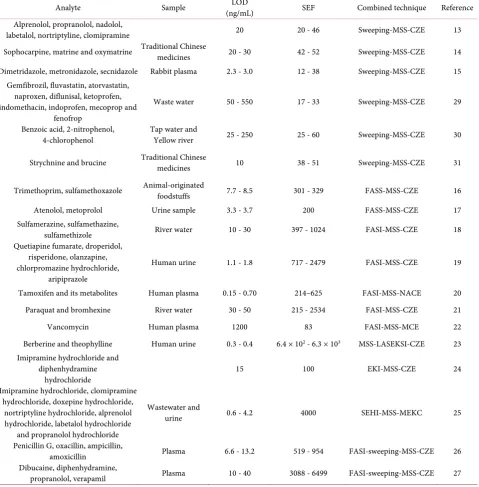
Table 2. Application of MSS based sequential CE stacking techniques.
Analyte Sample (ng/mL) LOD SEF Combined technique Reference
Alprenolol, propranolol, nadolol,
labetalol, nortriptyline, clomipramine 20 20 - 46 Sweeping-MSS-CZE 13
Sophocarpine, matrine and oxymatrine Traditional Chinese medicines 20 - 30 42 - 52 Sweeping-MSS-CZE 14
Dimetridazole, metronidazole, secnidazole Rabbit plasma 2.3 - 3.0 12 - 38 Sweeping-MSS-CZE 15
Gemfibrozil, fluvastatin, atorvastatin, naproxen, diflunisal, ketoprofen, indomethacin, indoprofen, mecoprop and
fenofrop
Waste water 50 - 550 17 - 33 Sweeping-MSS-CZE 29
Benzoic acid, 2-nitrophenol,
4-chlorophenol Tap water and Yellow river 25 - 250 25 - 60 Sweeping-MSS-CZE 30
Strychnine and brucine Traditional Chinese medicines 10 38 - 51 Sweeping-MSS-CZE 31
Trimethoprim, sulfamethoxazole Animal-originated foodstuffs 7.7 - 8.5 301 - 329 FASS-MSS-CZE 16
Atenolol, metoprolol Urine sample 3.3 - 3.7 200 FASS-MSS-CZE 17
Sulfamerazine, sulfamethazine,
sulfamethizole River water 10 - 30 397 - 1024 FASI-MSS-CZE 18
Quetiapine fumarate, droperidol, risperidone, olanzapine, chlorpromazine hydrochloride,
aripiprazole
Human urine 1.1 - 1.8 717 - 2479 FASI-MSS-CZE 19
Tamoxifen and its metabolites Human plasma 0.15 - 0.70 214–625 FASI-MSS-NACE 20
Paraquat and bromhexine River water 30 - 50 215 - 2534 FASI-MSS-CZE 21
Vancomycin Human plasma 1200 83 FASI-MSS-MCE 22
Berberine and theophylline Human urine 0.3 - 0.4 6.4 × 10² - 6.3 × 10³ MSS-LASEKSI-CZE 23
Imipramine hydrochloride and diphenhydramine
hydrochloride 15 100 EKI-MSS-CZE 24
Imipramine hydrochloride, clomipramine hydrochloride, doxepine hydrochloride,
nortriptyline hydrochloride, alprenolol hydrochloride, labetalol hydrochloride
and propranolol hydrochloride
Wastewater and
urine 0.6 - 4.2 4000 SEHI-MSS-MEKC 25
Penicillin G, oxacillin, ampicillin,
amoxicillin Plasma 6.6 - 13.2 519 - 954 FASI-sweeping-MSS-CZE 26
Dibucaine, diphenhydramine,
propranolol, verapamil Plasma 10 - 40 3088 - 6499 FASI-sweeping-MSS-CZE 27
Acknowledgements
This work was supported by funding from the Science Foundation of Shandong Province (No. ZR2014JL007).
References
DOI: 10.4236/ajac.2018.91005 60 American Journal of Analytical Chemistry Line Sample Preconcentration Techniques in Capillary Electrophoresis. Analytical and Bioanalytical Chemistry, 394, 175-185.
https://doi.org/10.1007/s00216-009-2646-7
[3] Kitagawa, F. and Otsuka, K. (2014) Recent Applications of On-Line Sample Precon- centration Techniques in Capillary Electrophoresis. Journal of Chromatography A, 1335, 43-60. https://doi.org/10.1016/j.chroma.2013.10.066
[4] Chen, Y.L., Lü, W.J., Chen, F.G. and Teng, M. (2012) Review of Recent Develop-ments of On-Line Sample Stacking Techniques and Their Application in Capillary Electrophoresis. Central European Journal of Chemistry, 3, 611-638.
[5] Thang, L.Y., See, H.H. and Quirino, J.P. (2016) Determination of Tamoxifen and Its Metabolites Using Micelle to Solvent Stacking in Nonaqueous Capillary Electro-phoresis. Electrophoresis, 37, 1166-1169. https://doi.org/10.1002/elps.201600010 [6] Zhu, H.D., Lü, W.J., Li, H.H., Ma, Y.H., Hu, S.Q., Chen, H.L. and Chen, X.G. (2011)
Micelle to Solvent Stacking of Two Alkaloids in Nonaqueous Capillary Electropho-resis. Journal of Chromatography A, 1218, 5867-5871.
https://doi.org/10.1016/j.chroma.2011.06.106
[7] Quirino, J.P. (2009) Micelle to Solvent Stacking of Organic Cations in Capillary Zone Electrophoresis with Electrospray Ionization Mass Spectrometry. Journal of Chromatography A, 1216, 294-299. https://doi.org/10.1016/j.chroma.2008.11.062 [8] Guidote Jr., A.M. and Quirino, J.P. (2010) On-Line Sample Concentration of
Or-ganic Anions in Capillary Zone Electrophoresis by Micelle to Solvent Stacking. Journal of Chromatography A, 1217, 6290-6295.
https://doi.org/10.1016/j.chroma.2010.07.077
[9] Liu, L.H., Deng, X.X. and Chen, X.G. (2010) Micelle to Trapping Solution Stacking in Micellar Electrokinetic Chromatography. Journal of Chromatography A, 1217, 175-178. https://doi.org/10.1016/j.chroma.2009.11.038
[10] Zhang, S.H., Ma, R.Y., Ma, X.M., Wang, C. and Wang, Z. (2012) On-Line Sample Concentration and Determination of Cationic Alkaloids in Human Plasma by Mi-celle to Solvent Stacking in Capillary Zone Electrophoresis. Journal of Chromato-graphy B, 906, 41-47. https://doi.org/10.1016/j.jchromb.2012.08.017
[11] Yang, X.M., Liu, S.J., Wang, C. and Wang, Z. (2014) On-Line Micelle to Solvent Stacking in Capillary Electrophoresis for the Preconcentration of Three Antihista-mines from Human Plasma. Analytical Methods, 6, 8640-8644.
https://doi.org/10.1039/C4AY01218F
[12] Zhu, H.D., Ren, C.L., Hu, S.Q., Zhou, X.-M., Chen, H.-L. and Chen, X.G. (2011) Thousand Fold Concentration of an Alkaloids in Capillary Zone Electrophoresis by Micelle to Solvent Stacking. Journal of Chromatography A, 1218, 733-738. https://doi.org/10.1016/j.chroma.2010.11.060
[13] Quirino, J.P. (2010) Two-Step Stacking in Capillary Zone Electrophoresis Featuring Sweeping and Micelle to Solvent Stacking: I. Organic Cations. Journal of Chroma-tography A, 1271, 7776-7780. https://doi.org/10.1016/j.chroma.2010.10.020
[14] Yang, X.M., Liu, S.J., Zhang, S.H. and Wang, Z. (2014) On-Line Two-Step Stacking for the Preconcentration and Determination of Quinolizidine Alkaloids by Capillary Electrophoresis. Analytical Methods, 6, 6066-6072.
https://doi.org/10.1039/C4AY00808A
DOI: 10.4236/ajac.2018.91005 61 American Journal of Analytical Chemistry https://doi.org/10.1016/j.chroma.2013.11.053
[16] Liu, L., Wan, Q., Xu, X., Duan, S. and Yang, C. (2017) Combination of Micelle Col-lapse and Field-Amplified Sample Stacking in Capillary Electrophoresis for Deter-mination of Trimethoprim and Sulfamethoxazole in Animal-Originated Foodstuffs. Food Chemistry, 219, 7-12.https://doi.org/10.1016/j.foodchem.2016.09.118
[17] Wan, Q., Liu, Y., Yang, C. and Liu, L. (2017) On-Line Double Focusing of Atenolol and Metoprolol in Human Urine using Capillary Electrophoresis with the Aid of β-Cyclodextrin. Analytica Chimica Acta, 978, 61-67.
https://doi.org/10.1016/j.aca.2017.04.052
[18] Tubaon, R.M., Haddad, P.R. and Quirino, J.P. (2014) High-Sensitivity Analysis of Anionicsulfonamides by Capillary Electrophoresis using a Synergistic Stackingap-proach. Journal of Chromatography A, 1349, 129-134.
[19] Rabanes, H.R., Aranas, A.T., Benbow, N.L. and Quirino, J.P. (2012) Synergistic Ef-fect of Field Enhanced Sample Injection on Micelle to Solventstacking in Capillary Electrophoresis. Journal of Chromatography A, 1267, 74-79.
https://doi.org/10.1016/j.chroma.2012.08.073
[20] Thang, L.Y., See, H.H. and Quirino, J.P. (2016) Field-Enhanced Sample Injection- Micelleto Solvent Stacking in Nonaqueous Capillary Electrophoresis. Talanta, 161, 165-169.https://doi.org/10.1016/j.talanta.2016.08.054
[21] Azmi, U.Z.M. and Jaafar, J. (2016) Two-Step Stacking of Cationic Analytes by Field Enhanced Sample Injection and Micelle to Solvent Stacking in Capillary Electro-phoresis. Proceedings Chemistry, 1, 107-110.
[22] Chong, K.C., Thang, L.Y., Quirino, J.P. and See, H.H. (2017) Monitoring of Van-comycin in Human Plasma via Portable Microchip Electrophoresis with Contactless Conductivity Detector and Multi-Stacking Strategy. Journal of Chromatography A, 1485, 142-146.https://doi.org/10.1016/j.chroma.2017.01.012
[23] Dong, Y., Zhang, H., Rahman, Z.U., Zhang, H. and Chen, X. (2012) A New On-Line Concentration Method of Cationic Molecules in Capillary Electrophoresis by a Hy-phenated Micelle to Solvent Stacking Coupling with Large Amount Sample Electro-kinetic Stacking Injection. Journal of Chromatography A, 1265, 176-180.
https://doi.org/10.1016/j.chroma.2012.09.082
[24] Wuethrich, A. and Quirino, J.P. (2016) Unusual Stacking with Electrokinetic Injec-tion of CaInjec-tionic Analytes from Micellar SoluInjec-tions in Capillary Zone Electrophoresis. Analytical and Bioanalytical Chemistry, 408, 8663-8668.
https://doi.org/10.1007/s00216-016-9735-1
[25] Quirino, J.P. and Aranas, A.T. (2012) Simultaneous Electrokinetic and Hydrody-namic Injection with On-Line Sample Concentration via Micelle to Solvent Stacking in Micellar Electrokinetic Chromatography. Analytica Chimica Acta, 733, 84-89. https://doi.org/10.1016/j.aca.2012.04.032
[26] Grochocki, W., Markuszewski, M.J. and Quirino, J.P. (2016) Three-Step Stacking by Field-Enhanced Sample Injection, Sweeping, and Micelle to Solvent Stacking in Ca-pillary Electrophoresis: Anionic Analytes. Journal of Chromatography A, 1442, 140- 143.https://doi.org/10.1016/j.chroma.2016.03.002
[27] Grochocki, W., Markuszewski, M.J. and Quirino, J.P. (2015) Three-Step Stacking of Cationic Analytes by Field-Enhanced Sample Injection, Sweeping, and Micelle to Solvent Stacking in Capillary Electrophoresis. Journal of Chromatography A, 1424, 111-117.https://doi.org/10.1016/j.chroma.2015.10.089
DOI: 10.4236/ajac.2018.91005 62 American Journal of Analytical Chemistry Chinese Journal of Analytical Chemistry, 41, 1939-1946.
https://doi.org/10.1016/S1872-2040(13)60698-2
[29] Quirino, J.P. and Guidote, A.M. (2011) Two-Step Stacking in Capillary Zone Elec-trophoresis Featuring Sweeping and Micelle to Solvent Stacking: II. Organic anions. Journal of Chromatography A, 1218, 1004-1010.
https://doi.org/10.1016/j.chroma.2010.12.095
[30] Wang, Q., Qiu, D.H., Han, H.F., Liu, X. and Jiang, S.X. (2012) Two-Step Stacking by Sweeping and Micelle to Solvent Stacking using a Long-Chaincationic Ionic Liquid Surfactant. Journal of Separation Science, 35, 589-595.
https://doi.org/10.1002/jssc.201100759
[31] Yang, X., Zhang, S., Wang, J., Wang, C. and Wang, Z. (2014) On-Line Two-Step Stacking in Capillary Zone Electrophoresis for the Preconcentration of Strychnine and Brucine. Analytica Chimica Acta, 814, 63-68.
https://doi.org/10.1016/j.aca.2014.01.027
[32] Breadmore, M.C., Shallan, A.I., Rabanes, H.R., Gstoettenmayr, D., Abdul Keyon, A.S., Gaspar, A., Dawod, M. and Quirino, J.P. (2013) Recent Advances in Enhanc-ing the Sensitivity of Electrophoresis and Electrochromatography in Capillaries and Microchips (2010-2012). Electrophoresis, 34, 29-54.
DOI: 10.4236/ajac.2018.91005 63 American Journal of Analytical Chemistry
Abbreviations
β-CD: β-Cyclodextrin BGE: Background Electrolyte CMC: Critical Micelle Concentration CTAB: Cetyltrimethylammonium Bromide CZE: Capillary Zone Electrophoresis EKI: Electrokinetic Injection EOF: Electroosmotic Flow
FASI: Field Amplified Sample Injection
FASI-MSS: Field Amplified Sample Injection-Micelle to Solvent Stacking
FASI-Sweeping-MSS: Field Amplified Sample Injection-Sweeping-Micelle to Solvent Stacking
FASS: Field Amplified Sample Stacking
FASS-MSS: Field Amplified Sample Stacking-Micelle to Solvent Stacking LASEKSI: Large Amount Sample Electrokinetic Stacking Injection LOD: Limit of Detection
MCE: Microchip Electrophoresis
MEKC: Micellar Electrokinetic Chromatography MS: Micelle Solution
MSS: Micelle to Solvent Stacking
MSSB: Micelle to Solvent Stacking Boundary
MSS-FASS: Micelle to Solvent Stacking-Field Amplified Sample Stacking MSS-LASEKSI: Micelle to Solvent Stacking-Large Amount Sample Electrokinetic Stacking Injection
SDS: Sodium Dodecyl Sulfate SEF: Sensitivity Enhancement Factor
SEHI: Simultaneous Electrokinetic and Hydrodynamic Injection Sweeping-MSS: Sweeping-Micelle to Solvent Stacking