
The influence of need for closure and decision aids on online purchase behavior
80
0
0
Full text
(2) T.T. RAU – MASTER’S THESIS. Table of Content ABSTRACT ........................................................................................................................................................ 4 SAMENVATTING ............................................................................................................................................. 5 INTRODUCTION .............................................................................................................................................. 7 THEORETICAL BACKGROUND ........................................................................................................................................... 7 Decision-‐Making and Information Processing .................................................................................................. 9 Behavior Analysis ........................................................................................................................................................ 16 METHODS ....................................................................................................................................................... 17 PARTICIPANTS ................................................................................................................................................................... 17 MATERIALS ........................................................................................................................................................................ 17 Experimental Materials ............................................................................................................................................ 17 Analysis Materials ....................................................................................................................................................... 17 PROCEDURE ....................................................................................................................................................................... 17 Research Design and Manipulation .................................................................................................................... 18 Variables and operationalization of the constructs ..................................................................................... 18 Behavior Analysis – Coding Scheme .................................................................................................................... 20 Relevant variables from the Behavior Analysis ............................................................................................. 22 Validity and Reliability of the Data ..................................................................................................................... 23 RESULTS .......................................................................................................................................................... 24 QUANTITATIVE DATA ANALYSIS ..................................................................................................................................... 24 Influence of Need for Closure on Decision-‐Making and Confidence ...................................................... 24 Influence of Need for Closure and Experience on Search Effort ............................................................. 26 Influence of Need for Closure and Experience on Decision Aids Usage ............................................... 30 DISCUSSION .................................................................................................................................................... 33 INFLUENCE OF NEED FOR CLOSURE ON DECISION-‐MAKING AND CONFIDENCE ................................................... 33 INFLUENCE OF NEED FOR CLOSURE AND EXPERIENCE ON SEARCH EFFORT ........................................................ 33 INFLUENCE OF NEED FOR CLOSURE AND EXPERIENCE ON DECISION AIDS USAGE .............................................. 35 CONCLUSIONS ................................................................................................................................................ 36 POSSIBLE EXPLANATIONS ............................................................................................................................................... 36 Need for Closure ........................................................................................................................................................... 36 Experience ...................................................................................................................................................................... 37 Need for Closure x Experience ............................................................................................................................... 38 Behavior Analysis: Search and Evaluation Strategies ................................................................................ 38 FUTURE RESEARCH DIRECTIONS .................................................................................................................................... 39 New Approach: Combining Need for Closure and Maximizers/Satisficers ........................................ 40 Need for Closure x Need for Cognition ............................................................................................................... 41 LIMITATIONS OF THIS STUDY .......................................................................................................................................... 42 REFERENCES .................................................................................................................................................. 44 APPENDIX ....................................................................................................................................................... 48 . 2 THE INFLUENCE OF NEED FOR CLOSURE AND DECISION AIDS ON ONLINE PURCHASE BEHAVIOR.
(3) T.T. RAU – MASTER’S THESIS. 1 APPENDIX A: CODING SCHEME WITH GUIDELINE ..................................................................... 48 1.1 ORIGINAL CODING SCHEME ................................................................................................................................ 48 1.2 GUIDELINE FOR CODING SCHEME ...................................................................................................................... 50 1.2.1 Tasks .................................................................................................................................................................. 51 1.2.2 Markers ............................................................................................................................................................ 52 1.2.3 Shortcuts Morae Manager ....................................................................................................................... 56 1.2.4 Scenario 1 ........................................................................................................................................................ 57 1.2.5 Scenario 2 ........................................................................................................................................................ 57 1.2.6 Scenario 3 ........................................................................................................................................................ 58 1.2.7 Scenario 4 ........................................................................................................................................................ 58 1.2.8 Scenario 5 ........................................................................................................................................................ 59 1.2.9 Scenario 6 ........................................................................................................................................................ 59 1.2.10 Scenario 7 – Difference between Code U and Code V ................................................................. 60 2 APPENDIX B: ADDITIONAL ANALYSES ........................................................................................... 61 2.1 MANIPULATION CHECK DECISION AIDS ........................................................................................................... 61 2.2 DIFFERENCES IN EVALUATION STRATEGIES AND EFFORT ............................................................................ 61 Search and information-‐seeking strategies ..................................................................................................... 64 Funneling vs. Consumer Decision Journey ........................................................................................................ 67 3 APPENDIX C: PLOTS FOR PROTOCOL BY ZUUR ET AL. (2010) .............................................. 68 3.1 BOXPLOTS TO CHECK FOR OUTLIERS AND HOMOGENEITY (CONDITIONAL BOXPLOTS) ........................... 68 3.2 NORMALITY ............................................................................................................................................................ 70 3.3 CORRELATION MATRIX ........................................................................................................................................ 73 4 APPENDIX D: SYNTAX OF THE ANALYSES ..................................................................................... 74 4.1 HYPOTHESIS 1: ...................................................................................................................................................... 74 4.1.1 Hypothesis 1a: Choice ................................................................................................................................ 74 4.1.2 Hypothesis 1b: Confidence ....................................................................................................................... 74 4.2 HYPOTHESIS 2: ...................................................................................................................................................... 74 4.2.1 ResuPage .......................................................................................................................................................... 74 4.2.2 AllAtt .................................................................................................................................................................. 75 4.2.3 TTS ...................................................................................................................................................................... 75 4.2.4 CSS ...................................................................................................................................................................... 75 4.3 HYPOTHESIS 3: ...................................................................................................................................................... 75 4.3.1 RelCR ................................................................................................................................................................. 75 4.3.2 PreCR ................................................................................................................................................................. 76 4.3.3 PreRS ................................................................................................................................................................. 76 4.4 ADDITIONAL ANALYSES ....................................................................................................................................... 76 4.4.1 Evaluation Strategies / SiteInte ............................................................................................................ 76 5 APPENDIX E: UNUSED SCALES AND MEASURES .......................................................................... 78 5.1 PREFERENCES OR EXPECTATIONS OF A BACKPACK ......................................................................................... 78 5.2 DICHOTOMOUS QUESTIONS REGARDING BRANDS AND BACKPACKS ............................................................ 78 5.3 CONSUMER SUSCEPTIBILITY TO INTERPERSONAL INFLUENCE ..................................................................... 78 5.4 ATTITUDE TOWARD CONSUMER REVIEWS AND RECOMMENDATION SYSTEMS ....................................... 79 5.5 MISSED FEATURES ................................................................................................................................................ 79 5.6 HISTORY AND PURPOSE OF AMAZON USE ........................................................................................................ 79 5.7 SPECIFIC PREFERENCES OF A BACKPACK ......................................................................................................... 80 . 3 THE INFLUENCE OF NEED FOR CLOSURE AND DECISION AIDS ON ONLINE PURCHASE BEHAVIOR.
(4) T.T. RAU – MASTER’S THESIS. Abstract The overall purpose of this study is twofold. On the one hand, an experiment has been carried out in order to investigate the influence of the need for closure [NFC] and product category experience on online decision-making and information processing, in general, and on online decision aids, search effort and the consideration set size, in particular. On the other hand, the analysis of the online behavior using video screen recordings in a simulated online purchase situation, will additionally function as a basis to develop a behavior analysis’ coding scheme for online consumer decision-making and information processing and searching in the ecommerce context. A total of 60 German subjects participated in this study. The manipulated decision aids were the consumer reviews and the recommendation system of the German Amazon website. The chosen product category in which participants had to search a suitable product was leisure backpacks. The data resulting from questionnaires during the experiment and the behavior analysis have been analyzed by carrying out Poisson loglinear and Gamma loglink regression analysis using generalized linear models. The results indicated that the influence of NFC and the experience in the product category as well as the interaction between the two predictor variables on the product choice, confidence in the product choice, search effort, and usage of recommendation system was generally not relevant. However, an increase of the product category experience also led to an increase of the number of used search attempts of the participants, thus different approaches such as different search terms or categories and product sorting. Additionally, the usage and reliance on the consumer reviews increased significantly with an increase of the NFC of the participants. Furthermore, a marginal significant influence of the NFC was found, showing that with an increase of the NFC of the participants the consideration set size of the participants increased as well. The proposed idea of using the experience with the product category as a predictor to indicate whether high NFC participants reside in the seizing or freezing state did not show the expected effect. However, the results showed a tendency with marginal statistical significance that low NFC participants consideration set size increased with increasing product category experience, whereas for high NFC participants the consideration set size just decreased with increasing product category experience.. 4 THE INFLUENCE OF NEED FOR CLOSURE AND DECISION AIDS ON ONLINE PURCHASE BEHAVIOR.
(5) T.T. RAU – MASTER’S THESIS. Due to the lack of significant results, future studies should search for other latent variables or predictors such as the interplay between the NFC and the need for cognition for example. Additional implications and future research directions have been discussed.. Samenvatting Het thema van deze afstudeeropdracht hoort globaal bij de categorieën e-commerce en online keuzegedrag (ofwel decision-making) thuis. Specifieker gaat het erom de invloed van zowel de gedragsdeterminant en persoonlijkheidsvariabele “need for closure” [NFC] en de ervaring met. een. product. categorie. op. zogenoemde. decision aids. (klantenrecensies. en. aanbevelingssystem) van Amazon en op het keuzegedrag en onderliggende strategieën te onderzoeken. Eerdere onderzoeken hebben aangetoond dat de NFC een geschikte voorspeller en determinant van keuzegedrag, en uiteindelijk ook koopgedrag, is. Op basis hiervan werd voor een ander aanpak gekozen, door naast een gesimuleerde aankoopsituatie op Amazon ook een gedragsanalyse aan de hand van tijdens de studie opgenomen video’s uit te voeren. Voor de gedragsanalyse werd een nieuw codeerschema opgesteld en toegepast, om het gedrag te standaardiseren en te operationaliseren, waardoor proefpersonen met elkaar vergeleken kunnen worden. In totaal hebben 60 Duitse proefpersonen deelgenomen aan het experiment. De vergaarde data van vragenlijsten tijdens de studie en data van de gedragsanalyse werd vervolgens onderzocht door Poisson loglinear en Gamma loglink regressie analyses met generalized linear models toe te passen. De resultaten laten zien dat er zowel geen hoofdeffecten door de NFC en de ervaring met de product categorie als interactie-effecten tussen de twee voorspeller waren op zowel de productkeuze, tevredenheid met hun keuze, erin gestoken moeite om te zoeken (search effort), als gebruik van de aanbevelingssysteem. Echter, een toename aan ervaring met de product categorie liet een toename in de hoeveelheid van verschillende aanpakken om te zoeken zien, zoals het gebruik van nieuwe zoektermen of zoeken binnen categorieën. Verder werd een significant effect gevonden dat een toename van de NFC ook in een toename van het gebruik van de klantenrecensies resulteerde. Bovendien werd een marginale significante invloed van de NFC gevonden betreffend de hoeveelheid van overwogen producten (consideration set size), die relatief toenaam naar mate de NFC ook toenam. De idee dat de product ervaring als een voorspeller gebruikt zou kunnen worden om aan te tonen of de proefpersonen met een 5 THE INFLUENCE OF NEED FOR CLOSURE AND DECISION AIDS ON ONLINE PURCHASE BEHAVIOR.
(6) T.T. RAU – MASTER’S THESIS. hoge NFC nog steeds in een toestand van seizing of freezing zijn, kon helaas niet helemaal bevestigt worden. Toch lieten de resultaten een tendens zien van marginale statistische significantie. De hoeveelheid van overwogen producten van proefpersonen met een lage NFC nam toe naarmate de productervaring ook toe nam. Voor proefpersonen met een hoge NFC was het echter precies tegenovergesteld, want de hoeveelheid van overwogen product nam juist af naarmate de productervaring toe nam. Aangezien het ontbreken van statistisch significante resultaten wordt aanbevolen in de toekomst naar ander veelbelovende en latente factoren te kijken. Een mogelijke manier zou de verbinding van NFC en de behoefte aan cognitie (need for cognition) zijn, zoals besproken in de discussie. Verder aanbevelingen en conclusies zijn bediscussieert.. 6 THE INFLUENCE OF NEED FOR CLOSURE AND DECISION AIDS ON ONLINE PURCHASE BEHAVIOR.
(7) T.T. RAU – MASTER’S THESIS. Introduction The competitive character and still ongoing growth of e-commerce and online retailing (Ivanova, Scholz, & Dorner, 2013) increases also the need for a deeper understanding of consumer behavior, in general, and individual differences regarding decision making and its factors, in particular (Hargittai, 2004; van der Merwe & Bekker, 2003; Vermeir, van Kenhove, & Hendrickx, 2002). The relationship between decision-making and information processing, on the one side, and psychological traits, such as motivation, on the other side, is of particular interest here. Especially within the online context, where e-vendors try to help the costumers to reach a decision by providing them with decision-aids, such as the commonly used consumer reviews and recommendation systems (Kumar & Benbasat, 2006). However, decision aids have to be noticed, used, and adopted by the costumer in order to be effective (Ivanova et al., 2013; Mudambi & Schuff, 2010; Wang & Benbasat, 2005). Therefore, it remains very interesting whether and to which extent individual characteristics, in this particular case an individual’s need for closure, play a key role regarding the effectiveness of decision aids and ultimately decision-making (Kruglanski, 1990; Vermeir et al., 2002; Vermeir & Van Kenhove, 2005). The overall purpose of this study is twofold. On the one hand, an experiment has been carried out in order to investigate the influence of the need for closure on online decisionmaking and information processing, in general, and on online decision aids and the number of considered products, in particular. On the other hand, the analysis of the online behavior using video screen recordings in a simulated online purchase situation, will additionally function as a basis to develop a behavior analysis’ coding scheme for online consumer decision-making and information processing and searching in the e-commerce context.. Theoretical Background From a consumer perspective, having numerous alternatives from which to choose in an electronic shopping environment may seem desirable at first, however, limited cognitive resources and processing of its vast amounts of information may influence the decision making process negatively (Brown, Pope, & Voges, 2003; Häubl & Trifts, 2000). According to Vermeir et al. (2002), the decision-making process consists of different stages: the first stage consists of information search, the second regards the applying of a specific decision rule to the gained results, and the third stage refers to the use of information cues in order to make the actual product choice. Also, the traditional funnel analogy, which suggest that the 7 THE INFLUENCE OF NEED FOR CLOSURE AND DECISION AIDS ON ONLINE PURCHASE BEHAVIOR.
(8) T.T. RAU – MASTER’S THESIS. initial size of the considered products, usually called the consideration set, will decrease systematically until a purchase or choice has been made, resembles generally the stages of Vermeir et al. (2002). However, there has been critique that the consumer decision journey is more complicated than the parsimonious funnel metaphor describes and that it fails to capture the complexity of the product consideration process and its various factors (Haven, 2007). Furthermore, contrary to the original metaphor, Court, Elzinga, Mulder, and Vetvik (2009) proposed that the process of consumer decision-making can be rather compared to a circular journey than to a funnel. Hence, they state that the constant narrowing of the funnel does not describe the process adequately. Moreover, Court et al. (2009) distinguish between the initial considerations set, which indicates the general brand preferences, and the active consideration set, thus the accumulation of the initial brand preferences and the given products at hand. Therefore, they stress that the number of brands within the consideration set may actually increase from the initial consideration set to the active consideration set rather than decrease. Furthermore, in order to reach closure, as Court et al. (2009) describe the purchase action, consumer-driven marketing plays an increasingly important role from which consumers actively acquire helpful information. The earlier described decision aids can be also assigned to the consumer-driven marketing content among word-of-mouth recommendations, online research and reviews, but also past experiences. Earlier research also confirmed that, generally, prior knowledge and experience with a product category can have an affect on the kind of evaluative processing carried out in decision-making situations (Bettman, Johnson, & Payne, 1991). However, the active acquisition and processing of the given information in order to come up with a decision depends on the motivation of the consumer (Vermeir et al., 2002). There are several theories, models, and classifications that deal with an individual’s motivation and help to describe and predict its influence on decision-making and information processing. For example, earlier studies successfully tested the applicability of need for cognition (Cacioppo, Petty, Feinstein, & Jarvis, 1996; Levin, Huneke, & Jasper, 2000), maximizing versus satisficing (Polman, 2010; Schwartz et al., 2002) or the reflectiveimpulsive model (Strack, Werth, & Deutsch, 2006) in this context. However, earlier studies regarding the usage and adoption of decision aids suggested that an individual’s need for closure might shed more light on this issue (Havinga, Schmettow, & Scholz, 2013). Also, the motivation to process information seems to be related to the need for closure (i.e., Kruglanski, 1990). Further, the study of Vermeir et al. (2002) successfully showed that the need for 8 THE INFLUENCE OF NEED FOR CLOSURE AND DECISION AIDS ON ONLINE PURCHASE BEHAVIOR.
(9) T.T. RAU – MASTER’S THESIS. closure is an appropriate indicator of the amount of sought and used information, the appliance of decision rules, and also the confidence in their decisions. Therefore, this study can be seen as a replication of the study of Vermeir et al. (2002) and as a justification for the choice of the need for closure as one of the predictors. Furthermore, the influence of the concept of need for closure on the ambiguity aversion effect of consumers in decision-making situations has been confirmed (Schlink & Walther, 2007), which might be also highly probable and therefore relevant in the online context. Additionally, the rationale behind the usage of decision aids in the online context could be partially due to the intention to resolve the ambiguity and uncertainty. Hence, it can be argued that an individual’s need for closure, past experiences, and decision aids can be seen as valuable potential determinants for and moderating variables of decision-making. Therefore, the focus of the present study lies on the deeper relationship between these determinants and their particular influence. Decision-Making and Information Processing On the basis of the above described decision-making stages of Vermeir et al. (2002) and Court et al. (2009), the following paragraphs will describe relevant constructs and their relation to each other in more detail. Furthermore, the research questions and hypotheses will be derived. Need for Closure As already stated above, individual differences regarding the motivation for information search and usage seem to be related to an individual’s need for closure [NFC] (Kruglanski, 1990; Vermeir et al., 2002; Vermeir & Van Kenhove, 2005). According to Kruglanski and Webster (1996), “the need for cognitive closure refers to individuals' desire for a firm answer to a question and an aversion toward ambiguity” (p. 264). The validation of their need for closure scale by Schlink and Walther (2007) showed a high negative correlation with the tolerance of ambiguity (r = -.51), indicating the applicability for decision-making situations with high uncertainty. However, the need for closure is not a dichotomous concept, but varies along a motivational continuum anchored at one end with a high need for closure and at the other end with a low need for closure or avoidance of closure (Kruglanski & Webster, 1996). Therefore, the following description of the characteristics of individuals high and low in need for closure only gives a global indication about the two extreme ends of the continuum. As a modern personality construct, the need for closure takes also situational or 9 THE INFLUENCE OF NEED FOR CLOSURE AND DECISION AIDS ON ONLINE PURCHASE BEHAVIOR.
(10) T.T. RAU – MASTER’S THESIS. contextual influences and factors into account (Schlink & Walther, 2007). Thus, although the NFC of a person is a relatively stable individual characteristic, it can vary due to contextual or situational factors (Webster & Kruglanski, 1994). For example, both the accountability for one’s actions (Webster, Richter, & Kruglanski, 1996) and an attractive or enjoyable cognitive task can decrease the NFC (Houghton & Grewal, 2000). Further, the actual need for closure depends on the perceived advantages and disadvantages of reaching closure in the particular situation (Schlink & Walther, 2007). Unfortunately, the literature lacks meta-analyses regarding the effect sizes of the need for closure as well as most literature lacks implications about the explained and unexplained variance. Generally, individuals with a high NFC seem to be highly motivated to reach a conclusion or goal quickly and have a higher tendency to terminate cognitive processing related to the issue at hand (Webster & Kruglanski, 1994). Further, the disposition toward closure can also influence the decision-making patterns (Vermeir & Van Kenhove, 2005) or different aspects of the decision-making process (Vermeir et al., 2002). According to Kruglanski and Webster (1996), an individual with a high need for closure have a tendency to reside in either one of two oppositional states regarding relevant issues. These are called “seize” or the urgency tendency, and “freeze” or the permanency tendency. Thus, either the individual tries to reach closure regarding a specific topic or situation, thus “seizing” it as long as it takes to reach closure (urgency tendency); or the individual already reached a state of closure and “freezes” his/her attitude, knowledge, heuristics, and strategies regarding this topic, which were once suitable to succeed in reaching closure to remain in this state or reach it again as fast as possible (permanency tendency) (Kruglanski & Webster, 1996; Vermeir & Van Kenhove, 2005). Hence, the state of “freeze” is generally desired by individuals with a high need for closure for relevant situations and issues. Therefore, they usually refuse to accept new or differing evidence in order to remain in a state of closure and avoid uncertainty (Kruglanski & Webster, 1996). Concluding, the need for closure can give an indication about why people differ regarding their preference to use different types of information (Houghton & Grewal, 2000) and affects how they think, feel, and act (Vermeir & Van Kenhove, 2005). Furthermore, it will be tested whether the self-reported confidence of and satisfaction with a product choice increases with the need for closure as Vermeir et al. (2002) found in their study. This leads to the first hypotheses: H1a: The chance of ultimately making a product choice increases relevantly with the need for closure of the participants. 10 THE INFLUENCE OF NEED FOR CLOSURE AND DECISION AIDS ON ONLINE PURCHASE BEHAVIOR.
(11) T.T. RAU – MASTER’S THESIS. H1b: Participants with a high need for closure will be relevantly more confident of their product choice than low need for closure participants. Additionally, once individuals with a high or heightened NFC obtained closure, they seem to show reduced levels of information processing regarding the issue at hand (Mayseless & Kruglanski, 1987). Furthermore, the threatening or undermining of closure may induce negative feelings, as well as positive feelings are evoked when closure is facilitated or attained (Vermeir & Van Kenhove, 2005). Hence, individuals with a high NFC, who are residing in a state of freezing, seem to be less willing to engage in time and energy consuming processing of large amounts of information and seem to prefer widely applicable knowledge, such as heuristic decision cues (Vermeir et al., 2002; Vermeir & Van Kenhove, 2005) or in the consumer context already formed attitudes about brand (Houghton & Grewal, 2000). However, this does not seem to hold true for high NFC individuals, who are still seizing and trying to reach a state of closure (Vermeir et al., 2002). Thus, individuals with a high need for closure in the “seizing” state might engage in increased information seeking activities in order to resolve the ambiguity of the situation (Vermeir et al., 2002). Therefore, the experience with a subject or an issue at hand might give an indication of the search effort of high NFC individuals and their willingness to engage in time-consuming activities to come up with a decision. Hence, the crux or the decisive factor for search effort of high need for closure individuals might be their experience with a, for example, product category. By approaching this in a deductive manner, it can be expected that having no or little experience indicates that a person is still residing in the seizing state, whereas already existing experience indicates the freezing state. However, consumers with a low NFC seem to enjoy uncertainty and deliberately postpone judgment until they are either satisfied with the information uptake, which incorporates alternative views to their own, or (cognitive) resources are depleted (Vermeir & Van Kenhove, 2005; Webster & Kruglanski, 1994). Consideration Set During the product information gathering and evaluation stage (Vermeir et al., 2002) are several more concepts, strategies, and personal characteristics of interest. The creation of the consideration set of the consumer takes place during this stage (Vermeir et al., 2002) and can be defined as the set of options that survive the product screening process (Häubl & Trifts, 2000). However, as Nedungadi (1990) and Court et al. (2009) pointed out, the creation of the consideration set is a continuous process, which incorporates the constant addition and subtraction as well as the evaluation of potential products. Furthermore, the consumer usually 11 THE INFLUENCE OF NEED FOR CLOSURE AND DECISION AIDS ON ONLINE PURCHASE BEHAVIOR.
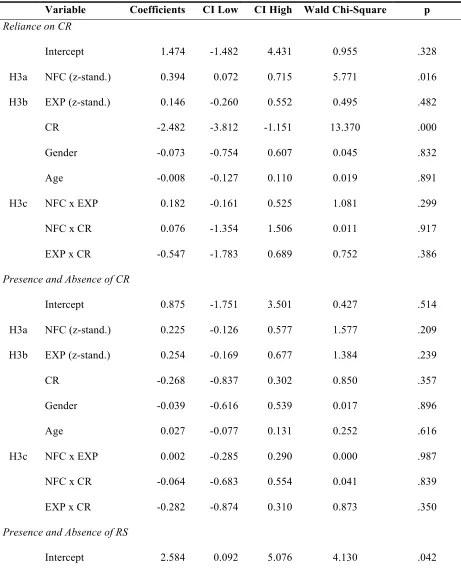
(12) T.T. RAU – MASTER’S THESIS. starts with an initial consideration set, consisting of preferred brands and general preferences. The initial consideration set will be transformed into an active consideration set including the newly added products from the search to the general set from which the consumer goes on to evaluate and add and remove further products (Court et al., 2009). Thus, the experience of a consumer with a product category might lead to a general bigger initial consideration set. Generally, in order to construct a consideration set, consumers can either use an include- or exclude-strategy. In situations with large assortments of products at hand, the consideration set of the consumer serves as an important factor to determine decision-making strategies (Goodman, 2013). This is also in line with the observation of Court et al. (2009) regarding consideration set formation. In order to reduce the size of the consideration set and thereby the choice difficulty, Goodman, Broniarczyk, Griffin and McAlister (2013) tried to determine the possible effects of providing the consumer with recommendations. However, the consideration set and choice difficulty only increased rather than decreased. In the literature, the term consideration set and choice set often have been used interchangeably and no clear definition or distinction has been given. Here, the difference between the consideration set and the choice set is that the former describes the complete number of products ever considered during the product search, whereas the latter describes the set of products from which the choice has been made. Therefore, this study will only use the consideration set of the participants, because the choice set size is rather difficult to determine objectively due to the described consumer decision journey, thus the continuous searching, adding, evaluating and removing of potential products (consistent with Court et al., 2009; Nedungadi, 1990). The total search effort is used as an umbrella term for the several measured concepts indicating the search activity of the participants. According to Beatty and Smith (1987), measures of search effort often include the time spent on the decision, number of used information sources and types of information sought, as well as the number of considered alternatives. Furthermore, Moorthy, Ratchford, and Talukdar (1997) used the summation of obtained information as indicator for search effort and Häubl and Trifts (2000) used the number of product alternatives for which detailed information was obtained as indicator. Therefore, several measures resulting from the behavior analysis were used to give an indication of the total search effort. See table 1 for the different measurement concepts. Table 1: Conceptualization of the Total Search Effort of the participants. 12 THE INFLUENCE OF NEED FOR CLOSURE AND DECISION AIDS ON ONLINE PURCHASE BEHAVIOR.
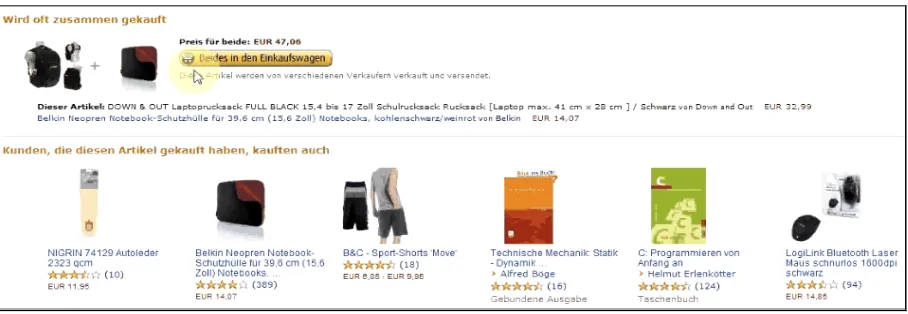
(13) T.T. RAU – MASTER’S THESIS. Concept. Description. Abbreviation. Search Effort. Number of opened search result pages. ResuPage. All Search Attempts. AllAtt. Total time searching for products. TTS. Consideration Set Size. CSS. Based on the literature review and earlier described constructs, the following hypotheses have been proposed: H2a: The higher the need for closure of the participants, the relevantly less search effort the participants will show. H2b: The more experienced the participants are with the product category, the relevantly less search effort the participants will show. H2c: Participants with a high NFC and experience with the product category do show significantly less search effort than high NFC participants without experience. Decision Aids In an attempt to help the consumer to make (purchase) decisions and effectively manage enormous amounts of information, e-vendors, such as Amazon, implemented various decision aids or decision support systems, such as consumer reviews [CR; see figure 1] and recommendation systems [RS; see figure 2], which were also used in this study (Häubl & Trifts, 2000; Vermeir et al., 2002). Ivanova and colleagues (2013) describe online consumer reviews as means of virtual knowledge transfer due to the given indication of product quality through the opinions and experiences of other consumers. In other words, online consumer reviews can be seen as a substitute for “first-hand product usage experience” (Ivanova et al., 2013, p. 2). The recommendation system provided by Amazon.de collects data from the browsing behavior of the consumer from various sources, such as Cookies and click-stream data for example, to detect patterns, make assumptions, and give future consumers recommendations based on their own or comparable past behaviors (Kumar & Benbasat, 2006). However, the product recommendations for consumers based on the visited product pages are for this context of special interest, because of the manipulated and artificially created product search and purchase situation. These product recommendations are based on 13 THE INFLUENCE OF NEED FOR CLOSURE AND DECISION AIDS ON ONLINE PURCHASE BEHAVIOR.
(14) T.T. RAU – MASTER’S THESIS. both the similarity to the visited product and specific assumptions made by Amazon about the consumer and his/her recent browsing history (Kumar & Benbasat, 2006). Furthermore, they are arranged according to their relational proximity to the visited product and again are derived from using implicit click-stream data (Kumar & Benbasat, 2006).. Figure 1: Screenshot from the experiment of a participant with consumer reviews. Decision aids can be considered effective, when they succeed to capitalize on the strengths and compensate for the weaknesses of the user (Hoch & Schkade, 1996). Among the proposed compensation of weaknesses is the filtering of the information into smaller and more relevant sets, providing the user with useful anchors in situations of judgment under uncertainty, and support and guide the user in situations with low predictability. Hence, an individual’s need for closure can also give insight into the usefulness of the decision aids due to its measurement of uncertainty avoidance and predictability, which can hinder reaching closure (Houghton & Grewal, 2000). Moreover, the successful support and ability of consumers to find products that match their personal preferences should be enhanced by decision aids in online shopping environments (Häubl & Trifts, 2000). Thus, the content on an e-vendors website regarding the product descriptions is very important and has to be supportive for the consumer, as well as be high in quality and yield the right amount of information (van der Merwe & Bekker, 2003).. 14 THE INFLUENCE OF NEED FOR CLOSURE AND DECISION AIDS ON ONLINE PURCHASE BEHAVIOR.
(15) T.T. RAU – MASTER’S THESIS. Figure 2: Screenshot from the experiment of a participant with recommendation system. In order to understand the influence of consumer reviews, it is crucial to determine whether the consumers actually read the reviews before purchasing a product, and whether they were the decisive factor for their decision (Mudambi & Schuff, 2010). Ivanova et al. (2013) studied the effects of “spotlight reviews” on Amazon (see figure 1) on the purchase intention of consumers by controlling for valence of the review and its valence intensity, as well as the adoption of the review by the consumer. The adoption of the review is a crucial moderator in this context, because only reviews that are adopted by the consumer have an impact on purchase intention, and adopted positive reviews had a greater influence than adopted negative reviews (Ivanova et al., 2013). This was explained by the fact that the consumer attributed the negative opinions of the reviewer to their preferences and attitudes, rather than the product quality, which results in a decreased trust (Ivanova et al., 2013). Based on the literature review and earlier concepts, the following hypotheses have been created: H3a: The use of the decision aids increases relevantly with the need for closure of the participants. H3b: The use of the decision aids decreases relevantly with increasing experience of the participants with the product category. H3c: Participants with a high need for closure without experience with the product category use the decision aids relevantly more compared to participants with a high need for closure with product category experience.. 15 THE INFLUENCE OF NEED FOR CLOSURE AND DECISION AIDS ON ONLINE PURCHASE BEHAVIOR.
(16) T.T. RAU – MASTER’S THESIS. Behavior Analysis Earlier studies regarding the effects of decision aids in online purchase situations did show that the self-reports of the participants were highly unreliable (see Havinga, Schmettow, & Scholz, 2013). Therefore, a behavior analysis was also carried out besides the standard quantitative part of the study following the concept of triangulation. In order to collect the data for the behavior analysis, the screen of the participants was recorded during the whole process of decision-making, including online information collection and processing. The video analysis makes it possible to monitor, rate, and evaluate the behavior of the participants (Benbunan-Fich, 2001; Hargittai, 2004; Rubin & Chisnell, 2008). Furthermore, it allows to draw conclusions and to get more insights into the decision-making process and its determinants in an online context (Hargittai, 2004; van der Merwe & Bekker, 2003). Additionally, screen recordings allow collecting rich, empirical data of natural behavior in an online context and the interaction of the user with the system in an unobtrusive way (Tang, Liu, Muller, Lin, & Drews, 2006). According to Hargittai (2004), the combination of quantitative and qualitative research tools allows for aggregation of the collected data, which is especially desirable given the purpose of this paper. Furthermore, the use of qualitative research methods, such as video recordings of online behavior, can also help to detect unnoticed problems, user-related solutions or new functionalities, and ideas for implementation, which would not be found with solely standardized questions and manipulations or log-file evaluation (Benbunan-Fich, 2001; Rubin & Chisnell, 2008; Thatcher, 2006). Additionally, by following and recording all the performed actions of a consumer during the product search and decision-making process, a comprehensive evaluation of the important and relevant aspects can be ensured and guaranteed (Thatcher, 2006; van der Merwe & Bekker, 2003). As Benbunan-Fich (2001) stated, the direct observation of the interaction of an user with a website is the most feasible and efficient approach to evaluate its usability. Therefore, the observation of the consumer’s behavior and evaluation of the website’s usability gives an indication whether user requirements are successfully implemented in order to reach a satisfying decision, and give possible implications for optimization if needed. Furthermore, the longitudinal study of Venkatesh and Agarwal (2006) supports the causal relationship between usability and usage of a website as well as between usability and purchase behavior. In sum, the behavior analysis will function as a way to detect the used search strategies and applied decision rules of the consumers, thus explain the second stage of the decision-making process described by Vermeir et al. (2002). Additionally, the results of the behavior analysis will be used to take a closer look at the 16 THE INFLUENCE OF NEED FOR CLOSURE AND DECISION AIDS ON ONLINE PURCHASE BEHAVIOR.
(17) T.T. RAU – MASTER’S THESIS. applicability of the funneling metaphor and its possible more suitable successor, the consumer decision journey (Court et al., 2009).. Methods Participants A total of 60 subjects aged between 19 and 32 (M = 24.17, SD = 2.631) participated in this study. The study stems from a cooperation between the Dutch University of Twente and the German University of Passau. The participants were German-speaking students from the University of Passau with 36 women and 24 men. There were two manipulations present in this study regarding the presence or absence of the decision aids, thus consumer reviews [CR] and the recommendation system [RS]. This resulted in a group of 31 participants that were in the condition with consumer reviews present [CR], opposed to 29 that were in the condition without consumer reviews [nCR]. For the recommendation system, there were 28 in the condition with [RS] and 32 in the condition without [nRS] the product recommendations.. Materials In this section, the used materials will be described. This section is split into the experiment relevant materials and the analysis relevant materials. Experimental Materials The participants completed the experiment on a computer running Microsoft’s Windows 7 as operating system and Opera as an Internet browser from Opera Software ASA. For the capture or recording of the screen RenderSoft’s CamStudio Recorder was used. Analysis Materials The analysis of the data gained by the questionnaires was analyzed with IBM’s statistical analysis software SPSS, Version 20. The analysis of the video recordings and the coding of the screen recordings were done with Techsmith’s usability testing software Morae Manager.. Procedure In this section, the research design and manipulation, the various variables and constructs and their operationalization, as well as the psychometric properties of the measurements will be described in detail. Furthermore, the coding scheme for the behavior 17 THE INFLUENCE OF NEED FOR CLOSURE AND DECISION AIDS ON ONLINE PURCHASE BEHAVIOR.
(18) T.T. RAU – MASTER’S THESIS. analysis will be introduced and explained. The variables of the coding scheme relevant for the quantitative analysis will be discussed at the end of this section as well. Research Design and Manipulation This study is a between-subjects 2x2 mixed-design experiment with quantitative and qualitative elements. The participants were randomly assigned to either one of the two respective conditions, which were earlier described, differing regarding the presence or absence of either of the two decision aids, namely consumer reviews (see figure 1) and recommendation systems (see figure 2). The manipulation check will be described in detail in the next section. The approximate time to complete the whole experiment was 30 minutes. Between the two questionnaires, the participants had to visit the German website of Amazon and complete an instructed task. The experiment started with a questionnaire about the level of experience with the product category of leisure backpacks. Then, the participants were instructed to search for a leisure backpack and had to open every potential product in a new tab. Further, there were no additional restrictions how to accomplish this task in order to prevent risking that certain types of search strategies or approaches were ruled-out upfront as recommended by Thatcher (2006) as well as not risking limiting the validity of the study. This instruction resembles the “parallel hub-and-spoke” search strategy, where users keep their main tab with search results open in order to simplify the search as well as in this case allowing for easier comparison between the participants and within their product search and evaluation (Thatcher, 2006). At the end of the product search, which was also deliberately chosen by the participants, they had to click on a link to get to the second part of the questionnaire. After they deliberately ended the product search, the participants had to indicate whether they chose a product or not. By answering this question with yes, the participants also had to indicate their individual confidence level with the product choice. This was followed by the manipulation check of the decision aids, thus recommendation system and consumer reviews. In the end, the participants had to answer the German need for closure scale (Schlink & Walther, 2007). Variables and operationalization of the constructs The variables and the operationalization of the constructs will be described and explained in this section. The questions regarding demographic statistics, such as age and gender, will not be explained any further. The guideline of the American Psychological Association (2010) recommends to include all outcome measures even if they only were collected and further not included into the data analysis. Therefore, all variables and scales 18 THE INFLUENCE OF NEED FOR CLOSURE AND DECISION AIDS ON ONLINE PURCHASE BEHAVIOR.
(19) T.T. RAU – MASTER’S THESIS. that were examined, but not further elaborated or used in this study, were moved to the appendix E in order to enhance the overall structure and readability. Experience The participants had to indicate their personal level of experience with the given product category of backpacks by rating statements on a 7-point Likert scale ranging from completely wrong to completely right. The four statements regarded their overall knowledge, experience, competence, and expertise with backpacks. The scale had a Cronbach’s alpha of 0.954, which shows an almost perfect internal consistency of interrelatedness of items (Cortina, 1993; Peterson, 1994). Choice and Confidence in the Choice Right after the search for a product on Amazon, the participants had to indicate whether they had found a suitable product and thus, either made a choice or postpone the decision. In case of a successful decision, the participants had to give the link to the chosen product and also give an indication of their confidence in the made decision. Again, the questions were given on a 7-point Likert scale ranging from completely wrong to completely right. The scale consisted of five questions about their overall confidence and satisfaction regarding their product choice. The confidence scale had a Cronbach’s alpha of 0.842, which indicates a good internal consistency of interrelatedness of the items (Cortina, 1993). Manipulation Check for Recommendation Systems and Consumer Reviews In order to test whether the participants noticed the manipulation in form of the decision aids, the participants had to answer three questions regarding the presence of recommendation systems and three questions regarding the presence of consumer reviews. For a screenshot of the manipulation see figure 1 and 2. Again, the questions were given on a 7-point Likert scale ranging from completely wrong to completely right. The scale regarding the manipulation check of recommendation systems had an acceptable Cronbach’s alpha of 0.788 and the scale regarding the manipulation check of consumer reviews had a sufficient Cronbach’s alpha of 0.941 (Cortina, 1993). See the appendix B for the results of the manipulation check. Need for Closure In order to test the participant’s individual need for closure, a validated German questionnaire with 16 questions was given to them (Schlink & Walther, 2007). Again, the questions were given on a 7-point Likert scale ranging from completely wrong to completely 19 THE INFLUENCE OF NEED FOR CLOSURE AND DECISION AIDS ON ONLINE PURCHASE BEHAVIOR.
(20) T.T. RAU – MASTER’S THESIS. right. The scores of three of the sixteen questions were inverted, which measured low need for closure characteristics rather than high need for closure. The scale had a Cronbach’s alpha of 0.858, which is quite good (Cortina, 1993). An individual’s need for closure is originally measured through five subscales regarding the preference for order, preference for predictability, decisiveness, discomfort with ambiguity, and closed mindedness (Webster & Kruglanski, 1994). Behavior Analysis – Coding Scheme In this section, the development and application of the coding scheme for the behavior analysis will be described in detail. Todd and Benbasat (1987) recommend the development of an a priori coding scheme, which ensures that the interpretations are not data-driven. Therefore, the participants have been rated and evaluated first without knowing about their assigned condition, personal characteristics or preferences, to rule out any rater biases, such as confirmation bias or hindsight bias, as much as possible. In order to develop the coding scheme, the videos of five of the 60 participants have been randomly chosen, and every action and interaction has been transcribed, described, and marked with time indications. Subsequently, the generated data has been compared, merged, and complemented based on the frequency of occurrence, noteworthy incidences, and repeating behavior patterns. Since the participants were asked to open every potential product in a new tab in the browser using the “parallel hub-and-spoke” strategy (Thatcher, 2006), the comparison of the individual behavioral patterns and decision-making strategies, as well as the clear separation between product search and evaluation were easier to capture and monitor. Another benefit is the comparison between the several products, which entered the consideration set. Hence, the coding scheme includes codes to describe both the general search strategies and various attempts of approaches of the participants as well as the initial evaluation strategies for the particular products. In order to enhance the general understanding, the codes have been translated into abbreviations for the analyses, which are also enlisted in the coding scheme in the Appendix A. The general search strategies were globally divided based on the chosen approach referring to the chosen category and/or restrictions (i.e., all or specific categories, excluding and including brands, consumer reviews, volume, price range, etc.) as well as the sorting of the products (i.e., price ascending/descending, popularity, consumer reviews). Regarding the initial evaluation style of the products, the observed behavior can be roughly described based on the simple twostage decision-making process of Häubl and Trifts (2000), which also resembles the funneling 20 THE INFLUENCE OF NEED FOR CLOSURE AND DECISION AIDS ON ONLINE PURCHASE BEHAVIOR.
(21) T.T. RAU – MASTER’S THESIS. analogy. In the first stage, the consumer does an initial screening of the products in order to determine which are worth further consideration and evaluation, thus in this case ideally opens them in a new tab. In the second stage, the consumer does an in-depth comparison based on the selected products to decide, which product will actually be purchased. Or by referring to the work of Goodman (2013), the participants used an include-strategy for the search phase, but an exclude-strategy for the evaluation of the products in the consideration sets. The videos confirmed the proposed stages, however as expected, there were differences between the participants regarding the completion of the stages. Some participants completed stage 1 first and then moved to stage 2 just as described above (LatEva; funneling), but other’s moved back and forth between the two stages until they made a decision (QuiEva or DirEva), for example for each product or product page. The latter phenomenon was also found by both Court et al. (2009), thus resembling the consumer decision journey description, and Thatcher (2006). In more detail, Thatcher (2006) described that participants seamlessly switched from analytical search behavior to browsing behavior using hub-and-spoke behaviors within one strategy. Still, others used a mix out of the two just described strategies. This lead to different strategies of decision-making and online search behavior. Therefore, the proposed stages (Häubl & Trifts, 2000) were used as a reference point to analyze the behavior and narrow down more precisely strategies. The strategies were also included into the coding scheme to count the number of times each strategy was used per participant and thereby being able to discover general patterns and preferences. The coding scheme has been inspired by the work of Hargittai (2004), but has been extended and applied to the given context. Hargittai (2004) provides a general method and instructions how to code and classify the online information-seeking behavior of the user in order to describe their online navigation properly. The proposed coding and classification system of Hargittai (2004) facilitates the quantification of online actions and allowing the aggregation of the resulting rich data, which is also relevant for this study. Therefore, the different contexts of usage as well as the underlying goals and actions have to be included into the description in order to detect patterns and differentiate between various situations and users. However, Hargittai's (2004) work followed a global approach regarding online information-seeking behavior, including search engines and directly accessing websites via URLs, whereas in this study the behavior analysis is restricted to one single website. Hence, the main ideas and frames of the proposed coding and classification scheme were adopted and if necessary transformed to the purpose of this study. Adopted constructs were, for example, 21 THE INFLUENCE OF NEED FOR CLOSURE AND DECISION AIDS ON ONLINE PURCHASE BEHAVIOR.
(22) T.T. RAU – MASTER’S THESIS. the description of the various actions with codes and additional context-relevant information; such as categorizing the behavior in either product search or product evaluation; on which page the user is residing; how and whether the user is interacting with the site or given information and features as the decision aids or photos; or writing down each product name and assigned running numbers as well as general browser features such as scrolling behavior or the back button In order to structure the gathered data appropriately, the present coding scheme is divided into several subcategories: Search duration, search strategies and dispersion, search metrics, evaluation strategies, and search behavior on product page. The complete coding scheme and a guideline how to use and apply the coding scheme can be found in the appendix A. Relevant variables from the Behavior Analysis The additional relevant variables resulting from the behavior analysis can be globally divided into product search- and product evaluation-related and their different approaches and strategies. The remaining variables resulting from the behavior analysis, which were not further used for the analysis here, can be found in the complete coding scheme in appendix A. Product Search Strategies and Approaches As already described, the users showed an initial number of three different strategies or approaches in order to find suitable products. The descriptions in the parentheses give the used abbreviations, which will be also used in the results section. For all full overview and translation of the abbreviation see the appendix A. They either used “all categories” provided by Amazon (AllCat), “specific categories” of Amazon (SpCat), or made use of the “sorting options” provided by Amazon (Sort). The usage of the sorting option (Sort) was therefore only possibly, when either a search attempt including all (AllCat) or specific categories (SpCat) were preceding, but the use of sorting option nevertheless counts as a new approach. The total number of opened pages as well as the number within each attempt was also counted (ResuPage). Search Effort and Consideration Set The search effort was described by the time of the participant spent searching. However, additional data was collected to give more insights regarding the effort. Therefore, the described attempts or approaches (AllAtt) and opened pages (ResuPage) were used as additional indications of search effort. Furthermore, the number of opened products (CSS) 22 THE INFLUENCE OF NEED FOR CLOSURE AND DECISION AIDS ON ONLINE PURCHASE BEHAVIOR.
(23) T.T. RAU – MASTER’S THESIS. gave an indication about the consideration set of the participants, which is actually also an indication of the search effort, but will be analyzed separately. Product Evaluation Strategies and Approaches There were three different approaches or strategies of the participants for the product evaluation and how they divide the search and evaluation phases. Further, the three strategies give an indication about the way the participants approach each single product and whether they evaluate right away (DirEva), only pre-screen (QuiEva) or directly went back to the search to evaluate later (LatEva). Indication of Evaluation Effort The effort of the participants in order to evaluate a product besides reading or interacting with the decision aids has been additionally measured. The clicks on the product photos (Photo), reading or interacting with the product description and information (PDI), i.e. also stopping scrolling or marking or moving with the mouse arrow slowly over text fragments, and further interaction with the product features, such as price information, colors, and further information (ProFeat) have been counted and ultimately added up. Decision Aids The variables for the decision aids were split into consumer review- and recommendation system-related. Thus, one set of variables was applicable in cases of a high probability of noticing the presence (or absence) of the consumer reviews (PreCR) or the recommendation system (PreRS). Another set was applicable in cases of reliance or interaction, such as reading or clicking to see more of the consumer reviews (RelCR) or the recommendation system (RelRS). An additional variable was created to count the number of times participants clicked on the recommended products (click-through; ClickR). Validity and Reliability of the Data In order to enhance the overall validity and reliability of the study and its measurements, the whole dataset was double-checked by the researcher using all the videorecordings of the participants. Thereby, all possible errors due to transfer of the data, double or missing data, and measurement errors were successfully discovered and corrected. The transferred data of the behavior analysis stemming from the Morae Manager was also first transformed and subsequently double-checked.. 23 THE INFLUENCE OF NEED FOR CLOSURE AND DECISION AIDS ON ONLINE PURCHASE BEHAVIOR.
(24) T.T. RAU – MASTER’S THESIS. Results This section contains the results of the analyses to check the derived hypotheses. The additional analyses of the data regarding, the manipulation check of the conditions of consumer reviews and recommendation system, the search and evaluation strategies, and funneling metaphor can be found in the Appendix B.. Quantitative data analysis The two main predictors for the hypothesis testing were the need for closure and the experience of the participants. The NFC-score ranged from 1.19 to 6.44 (M = 4.08; SD = 0.92) and the score of their experience from 1.00 to 6.00 (M = 3.09; SD = 1.46). For all subsequent analysis, the two predictor variables need for closure and experience have been zstandardized in order to get an equal range and increase the interpretability for interaction effects (Enders & Tofighi, 2007; McClelland & Judd, 1993). Furthermore, following the protocol of Zuur, Ieno, and Elphick (2010) the data was visually screened to avoid statistical problems and detect possible pitfalls during the data analysis. The resulting plots and graphs resulting from the protocol with higher relevance can be found in the Appendix C. Although for most of the hypotheses the main focus lies on the interaction effects between the experience and the need for closure respectively the moderating effect of the need for closure, the main effects were included in the models (independent of their significance) in order to avoid confusions between the simple main effects and interactions (e.g. Cohen, Cohen, West, & Aiken, 2003). In order to test the various hypotheses, different regression analyses using generalized linear models have been carried out. Furthermore, the potential for overdispersion was controlled by using deviance to estimate the scale parameter. Influence of Need for Closure on Decision-Making and Confidence In order to get an answer to hypothesis 1a, a binary logistic regression analysis using generalized linear models has been carried out. The chosen model had need for closure (zstandardized) and age as continuous variables and gender as categorical variable. Furthermore, the answer no was used as the response and yes was treated as the reference category. According to the resulting data (see table 2), there was no relevant difference found, which can be assigned to the need for closure of the participants (β = -0.235).. 24 THE INFLUENCE OF NEED FOR CLOSURE AND DECISION AIDS ON ONLINE PURCHASE BEHAVIOR.
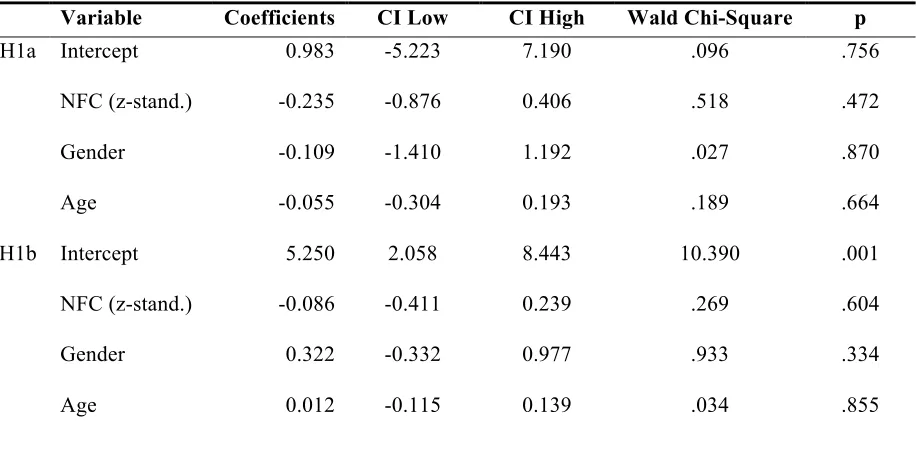
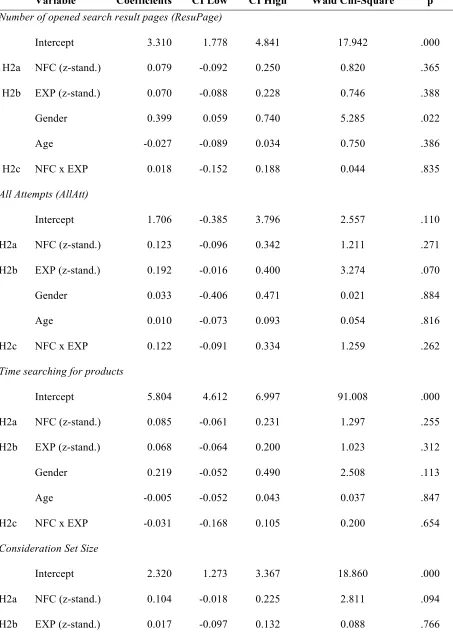
(25) T.T. RAU – MASTER’S THESIS. Figure 3: Boxplot and mean of NFC plotted on the binary choice variable. Table 2. Estimated fixed effects coefficients with 95% Wald confidence interval and alpha error for H1a and H1b. Reference group for gender is female.. H1a. H1b. Variable. Coefficients. CI Low. CI High. Wald Chi-Square. p. Intercept. 0.983. -5.223. 7.190. .096. .756. NFC (z-stand.). -0.235. -0.876. 0.406. .518. .472. Gender. -0.109. -1.410. 1.192. .027. .870. Age. -0.055. -0.304. 0.193. .189. .664. 5.250. 2.058. 8.443. 10.390. .001. -0.086. -0.411. 0.239. .269. .604. Gender. 0.322. -0.332. 0.977. .933. .334. Age. 0.012. -0.115. 0.139. .034. .855. Intercept NFC (z-stand.). For hypothesis 1b, a linear regression analysis using generalized linear models has been carried out (see table 2). Again, the chosen model had need for closure (z-standardized) and age as continuous variables and gender as categorical variable. The response variable was the continuous variable of the average confidence score of the participants. Additionally, the participants who did not chose a product (N = 24) were excluded from this regression analysis, because only participants who made a product choice were asked about their 25 THE INFLUENCE OF NEED FOR CLOSURE AND DECISION AIDS ON ONLINE PURCHASE BEHAVIOR.
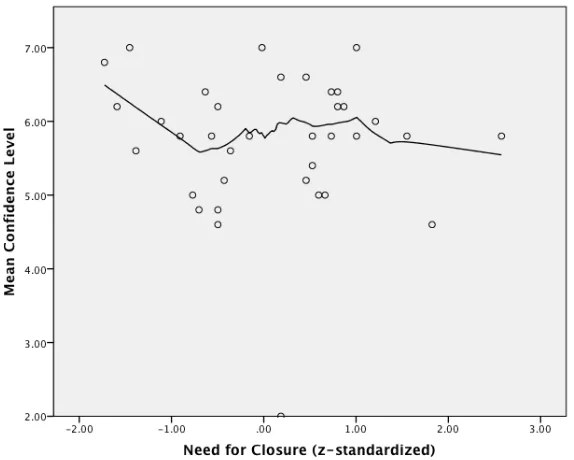
(26) T.T. RAU – MASTER’S THESIS. confidence, resulting in a sample size of 36 participants. Again, the results show there is no relevant influence of the need for closure variable on the confidence rating of the participants (β = -0.086). However, the plotted results (see figure 4) show that generally, except for one outlier, all 36 participants that chose a product had high confidence in their choice [M = 5.73, SD = 0.93].. Figure 4: Mean of Confidence Level plotted on NFC (z-standardized) with Loess Line. Influence of Need for Closure and Experience on Search Effort The second group of hypotheses measures the search effort of the participants and the influence of the need for closure and experience. The collected data resulting from the behavior analysis gives several measures and therefore indications for the search effort. Thus, the number of opened pages with results on Amazon (ResuPage), the total number of different search attempts (AllAtt), the time indications spent searching for products (TTS), and the consideration set size (CSS). All respective regression analyses were carried out with the same chosen model, except for the response variables, with need for closure and experience (both z-standardized), and age as continuous variables and gender as categorical variable. The different search effort indicators will be discussed one after another and are also shown in table 1. For all search effort indicators consisting of count-data, except for the time measure (TTS), Poisson loglinear regression analyses using a generalized linear model have been carried out. Further, in order to analyze the influence of the NFC and experience on the spent time searching for products (TTS), a Gamma regression analysis with log link using a generalized linear model was carried out. 26 THE INFLUENCE OF NEED FOR CLOSURE AND DECISION AIDS ON ONLINE PURCHASE BEHAVIOR.
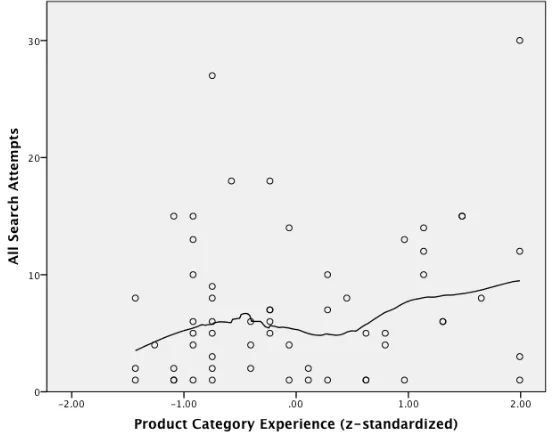
(27) T.T. RAU – MASTER’S THESIS. Number of opened search result pages (ResuPage) The results indicate that none of the predictors had an influence on the number of opened search result pages (M = 18.53, SD = 11.71). Neither the need for closure (β = 0.079) and product category experience (β = 0.070) showed main effects, nor was an interaction effect between the two variables (β = 0.018). Therefore, for this particular indicator of the search effort, it can be stated that the hypotheses 2a, 2b, and 2c can be rejected. However, additional analyses showed a main effect for gender (β = 0.399). The regression parameters can be seen in table 3. All Attempts (AllAtt) The three different search attempts have been summed up to create the response variable. Again, the results indicate that none of the predictors had a relevant influence on the number of used search attempts (M = 7.20, SD = 6.29). Neither the need for closure (β = 0.123) and the experience (β = 0.192) showed main effects (see figure 5), nor showed the two variables an interaction effect (β = 0.122). The regression parameters can be seen in table 3.. Figure 5: All Search Attempts (AllAtt) plotted on Experience (z-standardized) with Loess Line. Time searching for products The results indicate that both predictors, thus the need for closure (β = 0.085) and their experience (β = 0.068), did not reach statistical significance regarding their influence on the time spent to search for products (M = 343.80, SD = 157.39) as main effects as well as jointly as an interaction effect (β = -0.031). The regression parameters can be seen in table 3. 27 THE INFLUENCE OF NEED FOR CLOSURE AND DECISION AIDS ON ONLINE PURCHASE BEHAVIOR.
(28) T.T. RAU – MASTER’S THESIS. Table 3. Estimated fixed effects coefficients with 95% Wald confidence interval and alpha error for H2a, H2b and H2c. Reference group for gender is female. Variable. Coefficients. CI Low. CI High. Wald Chi-Square. p. Number of opened search result pages (ResuPage) Intercept. 3.310. 1.778. 4.841. 17.942. .000. H2a. NFC (z-stand.). 0.079. -0.092. 0.250. 0.820. .365. H2b. EXP (z-stand.). 0.070. -0.088. 0.228. 0.746. .388. Gender. 0.399. 0.059. 0.740. 5.285. .022. -0.027. -0.089. 0.034. 0.750. .386. 0.018. -0.152. 0.188. 0.044. .835. Intercept. 1.706. -0.385. 3.796. 2.557. .110. H2a. NFC (z-stand.). 0.123. -0.096. 0.342. 1.211. .271. H2b. EXP (z-stand.). 0.192. -0.016. 0.400. 3.274. .070. Gender. 0.033. -0.406. 0.471. 0.021. .884. Age. 0.010. -0.073. 0.093. 0.054. .816. NFC x EXP. 0.122. -0.091. 0.334. 1.259. .262. Intercept. 5.804. 4.612. 6.997. 91.008. .000. H2a. NFC (z-stand.). 0.085. -0.061. 0.231. 1.297. .255. H2b. EXP (z-stand.). 0.068. -0.064. 0.200. 1.023. .312. Gender. 0.219. -0.052. 0.490. 2.508. .113. Age. -0.005. -0.052. 0.043. 0.037. .847. NFC x EXP. -0.031. -0.168. 0.105. 0.200. .654. Intercept. 2.320. 1.273. 3.367. 18.860. .000. H2a. NFC (z-stand.). 0.104. -0.018. 0.225. 2.811. .094. H2b. EXP (z-stand.). 0.017. -0.097. 0.132. 0.088. .766. Age H2c. NFC x EXP. All Attempts (AllAtt). H2c. Time searching for products. H2c. Consideration Set Size. 28 THE INFLUENCE OF NEED FOR CLOSURE AND DECISION AIDS ON ONLINE PURCHASE BEHAVIOR.
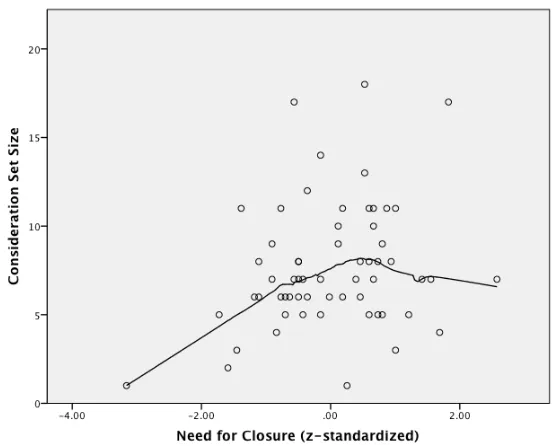
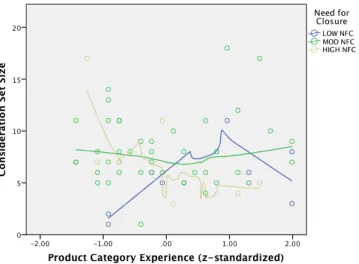
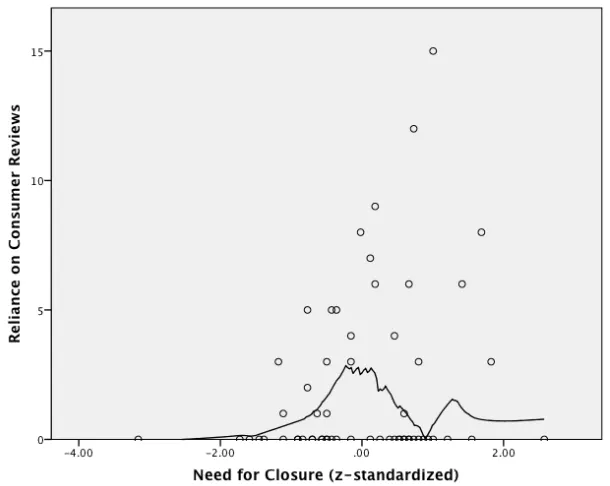
(29) T.T. RAU – MASTER’S THESIS. Gender. H2c. 0.286. 0.052. 0.520. 5.739. .017. Age. -0.020. -0.062. 0.022. 0.913. .339. NFC x EXP. -0.095. -0.213. 0.023. 2.480. .115. Consideration Set Size The results indicate some relevant findings regarding the influence on the consideration set size (M = 7.65, SD = 3.55). The regression parameters can be seen in table 3. Again, the results indicate that the influence of the need for closure (β = 0.104; see figure 6) and of the product category experience (β = 0.017) were not statistically significant, as well as the interaction between the two variables (β = -0.095). Furthermore, additional analyses showed a main effect for gender (β = 0.286).. Figure 6: Consideration Set Size plotted on NFC (z-standardized) with Loess Line. 29 THE INFLUENCE OF NEED FOR CLOSURE AND DECISION AIDS ON ONLINE PURCHASE BEHAVIOR.
Figure
+7
Related documents
After Day, in the lighting of Moon Night wakens under a prayer to call hush to Day, time to commune. with Night, windswept under
This new delivery system is supported by a financial in- centive system for high performance (pay-for-perform- ance, capitation payment and global budget) and by an
Transformants carrying this mul- ticopy plasmid, however, did not allow a glucose- insensitive ADH2 phenotype (data not shown). These results indicate that
There are infinitely many principles of justice (conclusion). 24 “These, Socrates, said Parmenides, are a few, and only a few of the difficulties in which we are involved if
Background and Objectives: Serratia marcescens , a potentially pathogenic bacterium, benefits from its swarming motility and resistance to antibiotic as two important
observed that among all the compounds tested on these three cell lines, most of the compounds showed maximum activity on prostate cancer cell lines (DU- 145).. This
This article presents the results from a range site survey and estimation of the live- stock production capacity in the sisal areas of the Tanga Region.. Also,
verabreichter Dosis und gemessener Konzentration im Blut von r = - 0,08 bei Methadon und r = -0,37 bei l-Polamidon für die weiblichen und r = - 0,29 bei Methadon und r = -0,35
