BY PARALLEL REASONING WITH BIOETHICS:
TOWARD UNITY AND EFFECTIVENESS
IN THE THEORY AND PRACTICE OF
ENVIRONMENTAL ETHICS
A thesis submitted in fulfilment of the requirements
of the Degree of Doctor of Philosophy in Philosophy
at the University of Canterbury
by
J. E. Eggleston
University of Canterbury
Abstract of a thesis submitted in fulfilment of the requirements of the Degree of
Doctor of Philosophy in Philosophy
BY PARALLEL REASONING WITH BIOETHICS:
TOWARD UNITY AND EFFECTIVENESS IN THE THEORY AND PRACTICE
OF ENVIRONMENTAL ETHICS
By J.E. Eggleston
Whether philosophy can contribute decisively towards alleviating humanity‟s pressing environmental predicament I here argue in the affirmative. There are many considerations that challenge my case. Specifically, I show that environmental ethics, the subdiscipline of moral
philosophy which was founded on the presumption of this possibility, has faltered. The field threatens to divide between “impractical theoretical” discourses within the academy, and “pragmatic” and largely atheoretical “practical” engagements with environmental science, policy and management.
To help environmental ethics advance beyond this dysfunctional division, I explore methodological comparisons with bioethics, the “most successful field of applied ethics”. My deliberations apply in novel ways Bartha‟s model for evaluating the plausibility of scientific
hypotheses that incorporate analogies. In an initial test application of Bartha‟s model, I evaluate the relevance to environmental ethics of the failure of the “top-down” applied ethics approach in bioethics. I present good reasons to conclude that environmental ethics can indeed learn from this failure. I also conclude that my trial application of Bartha‟s model is promising.
I then evaluate two proposals for reforms towards the greater practical effectiveness of
environmental ethics. First I evaluate the plausibility of the proposal of Minteer and Collins for a new field of “ecological ethics”. They argue for the adoption of the broadly pragmatic methodological commitments now prevailing in bioethics. Because they focus primarily on supporting individual rather than collaborative processes of ethical judgment, I argue they risk facilitating an ethically pernicious “ecological paternalism” on analogy with the widely condemned practice of medical paternalism.
I argue that his model provides a thought experiment which illustrates the conceptual and practical incoherence of the primary liberal mechanisms for managing ethical conflict once these are applied to the sustainability challenge. Those mechanisms are the separation of public and private spheres and the simultaneous pursuit within private spaces of mutually exclusive conceptions of the good (and biophysically sustainable) life. I argue that rectifying this failure defines a vital, albeit daunting, theoretical and practical challenge for environmental ethics. That is to reconceptualise ethical conflict and to help design and facilitate practical processes to achieve sufficient common ethical agreement. Addressing this challenge is beyond the scope of this dissertation. However, some promising work and possibilities for further research are outlined.
Table of Contents
List of figures and tables ... v
Acknowledgments ... vi
Introduction ... 1
Chapter 1 The rise and falter of nonanthropocentricenvironmental ethics ... 13
1.1 Overview ... 13
1.2 The origins of academic environmental ethics ... 13
1.3 The “methodology wars” of environmental ethics ... 28
1.4 Chapter conclusion ... 45
Chapter 2 The engagement of liberal moral philosophywith biomedicine ... 47
2.1 Overview ... 47
2.2 Defining the field ... 47
2.3 The beginnings of bioethics ... 50
2.4 The “methodology wars” of bioethics ... 63
2.5 Chapter conclusion ... 89
Chapter 3 Bartha‟s model and its trialapplication to the “top-down” analogy ... 93
3.1 Overview ... 93
3.2 The vital but chequered role of analogical reason ... 93
3.3 Bartha‟s model for constructing and evaluating analogical argument ... 98
3.4 An illustration: the failure of the “top-down” applied ethics model ... 109
3.5 Chapter conclusion ... 125
Chapter 4 The pragmatic “ecological ethics”of Minteer and Collins ... 127
4.1 Overview ... 127
4.2 A proposal for a new field – “Ecological Ethics” ... 127
4.3 Evaluating the implicit analogical argument ... 130
4.4 Identifying critical factors and possible negative analogies ... 140
4.5 The relevance of “originary” historical-cultural factors... 142
4.6 Critical differences between biomedical and „ecological patients‟ ... 145
4.7 The relevance of on-going social-political influences ... 159
Chapter 5 Norton‟s Sustainability:Integrating environmental pragmatismand adaptive
ecosystem management ... 163
5.1 Overview ... 163
5.2 Norton‟s theoretical model for “Sustainability” ... 163
5.3 Adaptive ecosystem management ... 173
5.4 Evaluating Norton‟s model ... 181
5.5 Identifying critical factors ... 195
5.6 Chapter conclusion ... 216
Conclusion ... 220
List of figures and tables
Figures
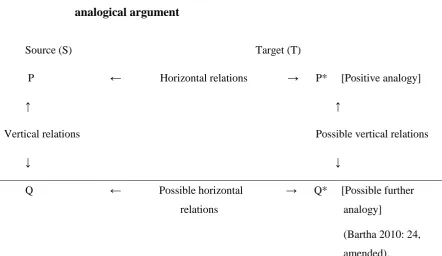
3.1: Bartha‟s simple tabular representation of the relation of terms within an analogical argument
106
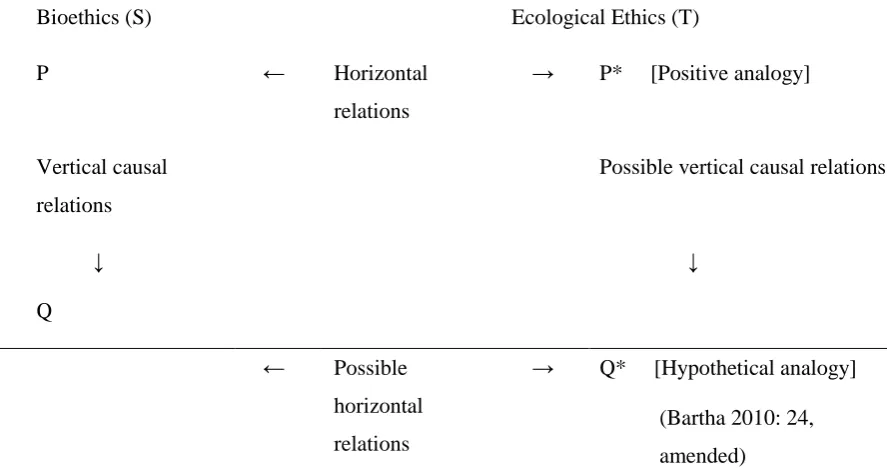
4.1: Tabular representation of the causal direction of the prior association 133 5.1 Tabular representation of the causal and analogical relations in
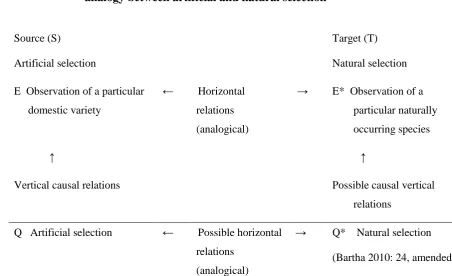
Darwin‟s analogy between artificial and natural selection
193
Tables
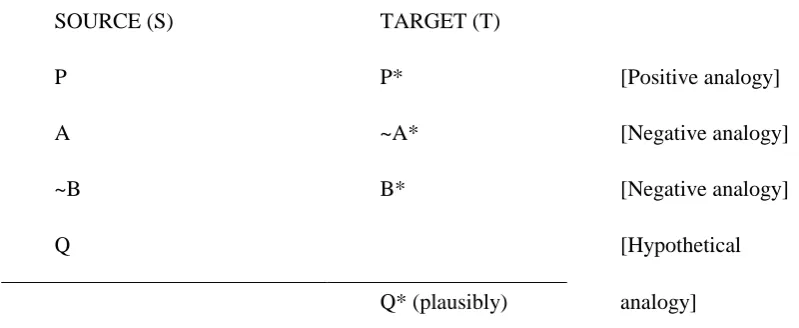
3.1 An example of Hesse‟s tabular representation of an analogical argument
99
3.2 Bartha‟s “augmented tabular representation” of an analogical argument”
101
3.3 Schematic tabular representation of the “top-down analogy” 113 4.1 Tabular reconstruction of Minteer & Collins‟ informal analogical
argument
131
Acknowledgments
I would most especially like to thank Philip Catton for his enduring enthusiasm and support for this project. Philip provided helpful discussions once he came to replace Graham MacDonald as my co-supervisor. I was then very fortunate that he was later willing to take on the additional
responsibilities of principal supervisor from April 2009. The significance of his influence predates the formal beginnings of this thesis. In particular, discussions with Philip regarding New Zealand conservation policy and animal ethics first alerted me to the relevant interests of Stan Godlovitch. I then later benefited from Stan‟s expertise as a supervisor on my Master of Resource Studies Degree at Lincoln University along with contributions from ecologist Graham Hickling and social scientist Stefanie Rixecker.
Derek Browne was my principal supervisor when I took up this thesis and I am grateful to him for his assistance, particularly the early discussions regarding bioethics methodology and also for directing me to the writings of both MacIntyre and Habermas. I am greatly indebted to Peter Wenz who joined Philip and me for enjoyable and very informative three-way discussions from April to June 2010. I was then fortunate to gain in Peter a reader well versed in both fields addressed in this thesis, bioethics and environmental ethics. He has read and provided very prompt and insightful comments on all the main chapters and his input has been greatly appreciated.
I have been especially fortunate to have a remarkably patient and supportive wife, Anne. She must have quite reasonably doubted this thesis would ever be completed but remained loyal and kept the household financially afloat. My children, Kate and Thomas have also been patient and
supportive of their forever-student father. They have also continued to teach me as much as the books. I am also grateful to Ian Hodges, Jane Cooper and my cousin nine who each proof-read full versions of this work and suggested minor corrections. My Ph.D examiners, Professors Grant Gillett and Sahotra Sarkar, suggested some helpful minor improvements to the final document which were much appreciated.
conversation and debate I enjoyed with him, but also for his belief in me and encouragement during the darkest times. Alan Broomhall‟s practical support and encouragement during my extended writing retreats at Waiau from July 2010 onwards have been much appreciated as has been the bemused encouragement of a number of other Waiau locals.
Finally, but certainly not least, I would also like to acknowledge the invaluable assistance of the University of Canterbury library staff during the difficult times since the September 2010
Introduction
We live in a world confronted by mounting environmental problems. We read of increasing global deforestation and desertification, loss of species diversity, pollution and global warming. In everyday life people mourn the loss of valued landscapes and urban spaces. Underlying these problems are conflicting priorities and values. Yet dominant approaches to policy making seem ill-equipped to capture the various ways in which the environment matters to us.
(O'Neill, Holland, and Light 2008: i)1
This dissertation investigates the hypothesis that philosophy may be able to help solve the “mounting environmental problems” that confront humanity. It documents a novel but also systematic approach to evaluating this possibility. That philosophy can be of help, or perhaps that philosophical work may somehow be especially necessary to the success of attempts to alleviate humanity‟s environmental predicament is certainly a contentious claim. There are very many considerations that challenge this suggestion and this present work does not presume to answer them all. Rather, the focus is more specifically on evaluating the success or otherwise of existing work by philosophers taking this possibility seriously. Significant recent proposals to enhance the relevance and effectiveness of such philosophical work are also evaluated.
Environmental ethics is an academic field in which the hypothesis that philosophy can, and indeed many have said, ought to contribute to solving these great problems has been presupposed and pursued with considerable rigor since the 1970s. Bucking the established commitments of analytic moral philosophy to maintain a stance of rational impartiality in all matters, many philosophers contributing to environmental ethics have identified with a public mission toward addressing the “environmental crisis”2
. It might then seem that the hypothesis that philosophy can make a vital contribution to addressing environmental problems has already been answered in the affirmative simply through the emergence of that field. This is after all the subdiscipline of philosophical ethics in which fundamental ethical and philosophical questions regarding human relations with the natural
1
I am grateful to Taylor and Francis Group for permission to reproduce this paratext.
environment have already been explored for some 40 years. The field has produced a good deal of creative philosophical work and many interesting debates have been generated. It might then be argued that there is surely no need for a “novel and systematic approach” to evaluating this hypothesis as proposed in this dissertation.
However, one does not have to study the literature of environmental ethics for long in order to become concerned that there may be something seriously amiss. An indication that something is indeed “amiss” with environmental ethics has come from a person no less qualified to make such an evaluation than Eugene Hargrove, the editor of the journal which gave the field its name. Hargrove laments the way in which environmental ethics continues to be marginalised both within academic philosophy and within the domains of environmental management and policy where it could be expected to have had most relevance and influence. He notes that the field has been criticised for being both too practically-oriented to be good philosophy according to “mainstream” academic philosophers and too theoretical to be of any relevance to the practice of environmental scientists, policy professionals and managers (Hargrove 2004: 5) 3. I acknowledge that this state of affairs is not necessarily a consequence of systemic problems within the field so much as the very great practical and theoretical challenges that have been taken up. It can of course be argued that the field is merely in its early or “originary stages” of academic development4
. It may then simply be too early to conclude that there is some fundamental inadequacy reflected in this deep division between the theoretical preoccupations of the field and the immediate concerns of those engaged in the practices of the environmental science, policy and management disciplines.
The present dissertation assumes a critical stance toward the field of environmental ethics, not because I lack respect for the good intentions and hard work of contributors to this field. I must express here from the outset that I have the greatest admiration for the genuine concern and true intellectual dedication and personal fortitude of so many of the best contributors to the field. Taking up environmental ethics as the focus of a career in academic philosophy has not been an easy option as Hargrove‟s struggle to establish the journal Environmental Ethics and win academic tenure reflects (Hargrove 2004: 4-5). Indeed, Claire Palmer‟s recent comments on the continuing difficulties facing
3
Political theorists concerned with the environmental crisis such as Andrew Dobson also emphasise the impracticality of the theoretical discourse of environmental ethics for political discourse regarding the natural environment and environmental problems more generally (See Dobson 2000: 55-61).
individuals pursuing postgraduate programmes in environmental philosophy5 suggests that choosing to commit to a career in this field remains very challenging (Palmer 2007: 137-139). I thus do not mean to criticise particular individuals or examples of philosophical writing in this area. Rather, my concern has been to re-evaluate the theoretical orientation and practical strategy of the field at a quite general level. I believe that my overarching objective remains the same as that which has motivated so many drawn to the field. That is the mission to define and contribute toward what might yet prove a vital and even necessary philosophical response to the environmental crisis.
The title of my dissertation reflects its contents. It is primarily structured around the evaluation of three reconstructed analogical arguments. Each of these analogical arguments draws some parallel between methodological commitments and experience in bioethics and similar methodological presumptions and prescriptions in environmental ethics. Paul Bartha‟s recent book; By parallel reason: The construction and evaluation of analogical arguments has been essential to the final structure and mode of analysis employed and this debt has been directly acknowledged in the dissertation title (Bartha 2010). Another significant but very different debt is acknowledged to the work of environmental philosopher Bryan Norton in my secondary title. This involves a more partial trading on the title of one of his most significant books. That book is Toward unity among
environmentalists (Norton 1991). However, his more recent work, Sustainability: A philosophy of
adaptive ecosystem management (Norton 2005a) is of most direct and critical relevance to the present study.
The subtitle highlights the central commitment of this dissertation towards the achievement of both “effective theory and practice in environmental ethics”. This emphasis on a potentially critical role for effective theory in environmental ethics reflects an important difference I have with Norton. His career as an environmental philosopher is most notable for his insistence on practicality in environmental ethics above theory or at least the form of theory that has prevailed in environmental ethics. My emphasis on the continuing centrality of theory to the “mission of environmental ethics” is shared with another philosopher whose work I likewise give significant consideration. And very relevantly as I will soon elaborate, that philosopher, J. Baird Callicott, has long been engaged in an instructive disagreement in the environmental ethics literature with Norton regarding the role of theory and practice for this field.
5 There has been an increasing tendency for contributors to major journals of the field such as Environmental Ethics, Environmental Values,Ethics and the Environment and Environmental Philosophy to refer to themselves as environmental philosophers rather than environmental ethicists and to their field as “environmental
While most contemporary academic philosophers may have some familiarity with at least the major debates and figures in the bioethics literature, this is less likely to be the case with regards to environmental ethics. No doubt also, all philosophers now have some reasonable awareness of the serious environmental problems that confront humanity in the 21st Century. However, the continuing marginal status of environmental ethics within academic philosophy6 makes it much less likely that philosophers will have a similar degree of familiarity with the key figures and debates of the environmental ethics literature. The present dissertation is very much centred on the concerns and fortunes of this marginal field, but as the strategy of engaging in analogical comparison with bioethics should make immediately apparent, my scope is broader than that field. Environmental ethics defines the problem or “target domain” conditioning the essential practical concerns of this dissertation. But an insistence on the centrality of philosophical theory holds open the possibility of arguing for conclusions of wider relevance, perhaps even to moral and political philosophy more generally. Such have been the ambitions of many contributors to environmental ethics over the course of the last 30-40 years. The continuing marginal status of the field bears witness to their limited success to date. It has also motivated methodological criticism directed at environmental ethics from the so-called “environmental pragmatists” such as Norton. And moving beyond this criticism, a number of environmental pragmatists, along with some other environmental philosophers such as Robert Frodeman, have more recently argued for fundamental changes in the methods and orientation of environmental ethics.
Many environmental ethics books and texts begin with an extended description of worsening environmental problems both locally and globally. For example, Andrew Light and Holmes Rolston III provide such a list of „symptoms‟ of “environmental crisis” in the introduction to their
Environmental ethics: an anthology. Their list of symptoms of environmental dysfunction is as follows: “. . . deforestation, soil loss, water and air pollution, desertification, loss of species habitat, loss of biodiversity, suburban sprawl, escalating population, escalating consumption, global warming and endless other concerns” (Light and Rolston 2003: 2).
After suitably alarming and likely also rather depressing the reader, environmental ethics texts generally move quite abruptly to the question of the potential direct moral status of non-human species and even of biophysical systems. They then outline taxonomies of the variety of
philosophical ethical positions developed by academic philosophers in response to the environmental crisis since the early the 1970s. Seminal articles, book excerpts and related philosophical debates are
6
provided which together, effectively illustrate what Alasdair MacIntyre has labelled as the strikingly “interminable character” of contemporary moral disagreement (MacIntyre 1981: 6). Of course MacIntyre was not referring to the debates of environmental ethics and the novel moral desiderata and theoretical devices that have come to define this field. Nevertheless, I believe his description remains highly appropriate to the debates of environmental ethics as much as it does to moral disagreement more generally.
I will not labour the matter of the seriousness of contemporary environmental problems which is by now extremely well documented. Just one instance of authoritative statements about the scale and significance of our “mounting environmental problems” is a 1994 warning signed by some 1,500 of the world‟s most prominent scientists, including a majority of Nobel Prize winners (Speth 2008: 39). More recently the United Nations commissioned Millennium Ecological Assessment project has provided an authoritative international audit of the status of global ecosystems. This report has reinforced earlier warnings about the seriousness of the world‟s ecological problems7. The report emphasises that since the Second World War, the rate of ecological degradation has dramatically increased due to very rapid population growth, urbanisation and industrialisation and the related ecological consequences of massive clearance of forests, loss of productive land, water shortage, over fishing, pollution and toxic waste problems, all contributed to serious anthropogenic biodiversity loss. The Millennium Ecological Assessment reports call for urgent action to prevent worsening localised ecological problems in many regions, as well as global-scale threats such as that posed by global anthropogenic climate change. Warnings of the dire consequences of anthropogenic climate change have also become commonplace since the early 2000s. Most notably, the reports of the
Intergovernmental Panel on Climate Change (IPCC) document a strengthening and now very considerable scientific consensus on this very worrying problem which has finally received greater media and political acknowledgment in recent years (Speth 2008: 21-24).
What requires more explanation is the particular form of the philosophical ethical discourse that arose in response to the modern environmental crisis and which rapidly came to define the field of environmental ethics. That is the primary metaethical and axiological focus of environmental ethics on the question of the possibility of the direct rather than purely instrumental moral value of non-human entities. This is a focus much concerned with the possibility of nonanthropocentric values in general and of the intrinsic value of nonhuman nature or at least certain aspects of it in particular. The discourse of nonanthropocentrism continues to hold centre stage in environmental ethics as is evident in most contemporary textbooks in environmental ethics even though their scope has broadened in recent years (See for examples: DesJardins 2001; Keller 2010; Light and Rolston 2003; Pojman and Pojman 2008). It is also this prevailing metaethical and metaphysical focus that has increasingly
7
become the subject of a concerted internal critique from a number of environmental philosophers (For example Brennan 1988, 1992; Cheney and Weston 1999; Light 2003a; Wenz 1993; Weston 1985). Many of these critics, but not all8, consider themselves pragmatists although their debt to the canon of classical American pragmatism or neo-pragmatism varies considerably (Light and Katz 1996: 4-5). I will thus explain and evaluate this prevailing nonanthropocentric response to the environmental crisis in Chapter 1. I will then also introduce the critique of nonanthropocentrism coming from the so-called “environmental pragmatists” and the proposals they offer to reform the field towards greater practical relevance and effectiveness.
Norton has been one of the most vociferous critics of the central role of nonanthropocentric theorising within environmental ethics. But of particular relevance to this dissertation, he has also led a career-long campaign seeking to redefine environmental philosophy toward greater unity and effectiveness. Norton and others have challenged both the philosophical integrity and wisdom of the pursuit of comprehensive ethical frameworks and “grand narratives” given post-modern
understandings. And they have linked these criticisms to their concerns about the lack of practical utility of this prevailing approach given concern about the very real and pressing nature of
environmental problems (Cheney 1991; Norton 1995).
Norton argues for a refocusing of work in environmental ethics onto a practical and problem solving emphasis on particular environmental problems rather than grand theory. Along with other environmental pragmatists such as Light, Norton advocates a pragmatic engagement with the existing anthropocentric discourse of environmental management and policy. They call for environmental philosophers to develop arguments appealing to existing norms and values. In particular, they emphasise the rhetorical power of the widely accepted anthropocentric concern with protecting the natural environment for future human generations. On this account, environmental philosophers need to be less concerned with developing and defending comprehensive philosophical ethical theories and more concerned with helping design and facilitate public policy and decision-making processes that will achieve environmentally benign consensus. Considering the pragmatist critique of
nonanthropocentric environmental ethics and the related proposals of Norton and some others for alternative approaches which are claimed to be more effective, represents the central work of this dissertation.
However, the internal critique from pragmatists and others has not gone unanswered from proponents of a nonanthropocentric and substantive theoretical programme in environmental ethics. Just as Norton has been the most outspoken internal critic of nonanthropocentric environmental ethics, Callicott has been one of the most persistent and eloquent defenders of the original theoretical
mission of environmental ethics in response to this critique9. Callicott accepts the value of so-called “bottom-up” methods and of some direct engaging of environmental philosophers with particular environmental problems and policy and decision-making processes. However, he rejects the suggestion that such approaches should become the primary focus of the field at the expense of a continuing concern with the development and promotion of comprehensive ethical frameworks. Callicott argues strongly that maintaining a central focus on metaethics and metaphysics as well as normative ethics holds the promise of making the most truly distinctive and vital philosophical contributions towards addressing the environmental crisis (Callicott 2002b; 2005). He argues that to abandon concern with defending the possibility and significance of nonanthropocentric values and to focus instead on facilitating consensus on particular environmental problems would be a seriously insufficient philosophical contribution. Callicott accepts that a theoretically pluralist or even
atheoretical and consensus-focused approach to particular cases does hold the promise of much more immediate and tangible results for environmental philosophers. But Callicott and others argue that Norton‟s purely practical focus, without the aid of adequate (theoretical) normative ethical resources will be quite lacking in rational grounds capable of resisting the continued unsustainable degrading of the natural environment (See Eckersley 2002).
Callicott and Norton have directly and prolifically engaged the question of whether environmental ethics properly concerns the sweeping reorientation of theoretical thinking or alternatively more properly should be primarily concerned with practice in what may be a quite atheoretical and pragmatic manner. A central aim of this dissertation is to identify why environmental ethics appears to have failed to provide a fully adequate response to our “mounting environmental problems”. The debate between Callicott and Norton is thus very pertinent to my purposes.
This debate and the contrasting proposals for the future direction of the field provided by these authors certainly provide a context within which the possibilities for a more effective philosophical response to the challenge of the environmental crisis may be considered. It would seem little can be done to evaluate the merits of either Callicott‟s claims for the importance of a grand theoretical mission or Norton‟s practical and case-focused approach to environmental ethics other than to observe the outcomes achieved through their respective approaches over the course of coming years. Of course this is not an attractive option given the sense of urgency many now recognise regarding the need for much more effective responses to environmental problems. As Light advocates, the most obvious response to this sense of urgency is to adopt those approaches which offer the most likely and immediate results. The obvious choice on this criterion would seem to be Norton‟s emphasis on more
pragmatic and practice-focused approaches. However, Light does not cajole environmental philosophers to relinquish their concerns with grand theory in the manner in which Norton tends to do10. Rather, he simply argues that environmental philosophers should devote a significant proportion of their professional efforts towards the type of practical philosophy that Norton advocates (Light 1996: 325-338).
At the same time, some environmental philosophers such as Throop have become concerned that the demands of both achieving and maintaining an adequate grasp of the academic philosophical literature and also being sufficiently knowledgeable and skilled to engage in environmental
management and policy discourse may be unreasonably demanding on individual philosophers. To develop and retain competence in the academic philosophical literature, not only specifically within the now extensive literature of environmental philosophy but also in terms of relevant developments in the wider philosophical work in ethics, metaphysics and epistemology is a sufficient challenge. Also seeking competence in practical discourses regarding particular environmental problems and an ability to engage with professionals from the environmental and policy sciences involves a
considerable additional challenge achieved by very few environmental philosophers, Norton notwithstanding. Throop suggests in future it may be necessary for environmental philosophers to choose between achieving sufficient competence in a more pure academic environmental philosophy, or in more applied, practically focused and engaged pragmatic approaches (Throop 2007: 147-149).
The tension and demands that Throop attempts to address by recommending such a division between pure and applied environmental philosophy are certainly real. But I question his solution which would effectively institutionalise a division between theory and practice. In the context of my concern with the possibility of further philosophical (theoretical) developments of practical relevancy regarding the environmental predicament, Throop‟s proposal is simply an admission of defeat. There is also an obvious challenge to his proposal. If environmental philosophers can specialise to engage effectively alongside other disciplines in addressing particular environmental problems without a deep concern with philosophical theory, then perhaps there may be no need whatsoever for the retention of a significant number of purely academic environmental philosophers, given that the essential mission of the field was always practically motivated.
In reply it can obviously be argued that environmental ethics has now created a literature with a sufficient set of interesting philosophical issues. These issues can now entertain the research and publishing needs of a privileged small group of professional academic philosophers who may bring no more direct concern with the amelioration of environmental problems to their professional endeavours
than say logicians or metaphysicians (Samuelsson 2010). This is not an outcome for environmental ethics that I regard as desirable. I agree with the sense of urgency and the demand for practical relevance coming from the environmental pragmatists and Frodeman. But I am wary of Norton‟s insistence that the grand-theory inquiries and aspirations of environmental ethics defended by Callicott can simply be shed without the risk of losing a crucial source of normative guidance toward the vital task of defining sustainable approaches to living in a biodiverse world. On Throop‟s advice, environmental ethics is to separately embrace both sides of a seemingly unattractive dichotomy. That is for environmental philosophers to choose to further specialise between what British environmental philosopher Peter Lucas has previously warned may be no more than “an inconsequential philosophy and an unphilosophical consequentialism” (Lucas 2002: 353).
In this dissertation I have sought a practical but yet philosophical approach to move beyond this unhelpful impasse within environmental ethics. I explore an alternative and more immediate
approach towards evaluating the most promising possibilities for a more effective environmental ethics. This approach begins with the observation that environmental philosophers quite frequently draw comparisons, perhaps even with a certain degree of envy, regarding the seemingly more impressive example of a practically effective contribution being made by moral philosophy in bioethics (See for example Hargrove 2004: 5). There are obviously very considerable differences in the concerns and approaches of bioethics and environmental ethics. Nevertheless, I have been struck by the possibility that comparative analysis between the two fields may offer the prospect of some advance on what may otherwise remain inconclusive debates regarding the relative significance of theoretically versus practically-oriented approaches to environmental ethics defended respectively by Callicott and Norton.
The proposed advantage of such a cross-field comparison rests on the fact that while
environmental ethics has remained largely only an academic and theoretical endeavour, bioethics has seen a much more direct engagement between moral philosophers, abstract moral theory and principle and the ethical issues arising within the practices of biomedical healthcare and research. Bioethics therefore affords examples in which the presumptions of moral philosophy and of moral philosophers have been challenged by the empirical disciplines of practice. My ambition is then to draw on practical experience from this quite different applied domain, in the attempt to bring additional rational and empirical discipline to my considerations of the “theory-practice” debate in environmental ethics. That discipline will be in the form of a series of extended analogical
comparisons between methodological commitments adopted and challenged by practice in bioethics and those of environmental ethics, where there has generally been no similar practical discipline.
primarily to assist with, the evaluation of analogical reason and argument in mathematics and the sciences. Consequently the general model and detailed submodels that he develops for the evaluation of particular forms of analogical argument are most directly relevant to mathematics and the sciences. Nevertheless, Bartha argues that his approach may be of value for the evaluation of analogical
reasoning more broadly. With regard specifically to philosophy, Bartha notes the considerable reliance placed on conceptual or thought experiments. Bartha suggests that his theory may help add rigor to such reasoning processes given the significant role that analogy usually plays in linking conclusions obtained from a hypothetical (source) domain to an empirical (target) domain (Bartha 2010: 320-326).
I will argue that the major analogical evaluation of Norton‟s work conducted in Chapter 5 is best understood as an extended thought experiment. I will also argue that each of the evaluations of analogical argument conducted in the various chapters below may have an advantage over the usual form of pure thought experiment conducted by analytic philosophers through being conditioned by philosophical experience in the source domain of bioethics.
Bartha‟s theory is introduced and explained in some detail in the first part of Chapter 3. In the second part of that chapter I illustrate how I propose to apply Bartha‟s model to conduct analogical comparisons between bioethics and environmental ethics. This example considers the relevance of a significant early experience for moral philosophers contributing to bioethics. That experience concerns the common initial presumption of the effectiveness of a deductive or “top-down” applied ethics understanding of the relationship between abstract moral theory, principle and practice. The presumption was rapidly found in practice to be inadequate. I argue that this is the most decisive example of the relevance of analogical comparison between the two fields. I also acknowledge that the conclusion reached should be of no great surprise to thoughtful environmental philosophers. But the conformity of the conclusions reached in this chapter with an emerging well-informed consensus on this issue within environmental ethics is taken to lend greater assurance to my further application of Bartha‟s model to more nuanced and challenging comparisons in Chapters 4 and 5.
Bartha emphasises the importance of seeking the best possible understanding of relevant
phenomena in both source and target domains prior to evaluating analogical arguments seeking to link the two domains. In Bartha‟s terms, both the advocate and the hypothetical critic of an analogical argument ideally should share the same knowledge of the source and target domains. In the text I take on the role of advocate and critic for each of the analogical arguments considered. In order for the reader to critically evaluate my reasoning, they require a shared understanding of the relevant
Chapter 1 provides an overview of the origins and the methodological debates of environmental ethics. This material should afford readers otherwise unfamiliar with the literature of environmental ethics sufficient background understanding of the relevant issues and developments in this field. Necessary background information is therefore provided regarding the target domain for the analogical arguments evaluated in Chapters 3 to 5.
Similarly, Chapter 2 provides an overview of the origins and the methodological debates of bioethics. This material allows the reader unfamiliar with the methodological literature of bioethics to gain sufficient background understanding of the field which functions as the source domain for the analogical arguments evaluated in the later chapters.
Chapter 4 involves the evaluation of the proposal of philosopher Ben Minteer and ecologist James Collins for a new field that they refer to as “ecological ethics” (Minteer and Collins 2005, 2008; Minteer, Collins, and Bird 2008). Their proposal draws quite explicitly on analogy with the existing example provided by pragmatic methodological trends in bioethics. I employ a reconstructed analogical argument that draws on experience in bioethics to evaluate their proposal. On the basis of this evaluation I defend some significant reservations about their proposals. In particular I identify a concern with the potential of their “ecological ethics” to support what I refer to as “ecological
paternalism”. I also argue that their proposal currently demonstrates insufficient consideration for the essential role of participative processes in responding to environmental problems.
In Chapter 5, I evaluate Norton‟s very extensive but almost entirely hypothetical model for a more practical role for environmental ethics. The model he defends involves a complex integrating of environmental ethics within the adaptive ecosystem management model, the paradigm that has more recently come to prevail in the environmental management sciences. Considerable background description of Norton‟s approach is required before the evaluation can be undertaken, including a short description of the adaptive ecosystem management model itself. Norton‟s model does not rely on any significant parallel with bioethics to support the plausibility of his approach equivalent to the role bioethics plays for Minteer and Collins. Thus the reconstructed analogical argument I use to evaluate Norton‟s approach is considerably more nuanced than those of Chapters 3 and 4.
Nevertheless it is argued that the evaluation helps to identify a central theoretical challenge for Norton‟s model which is tied to his presupposition of certain liberal-pragmatic commitments. This theoretical challenge in no way implies that Norton‟s model lacks overall significance or relevance for environmental ethics. On the contrary, I argue that his approach has much to offer both
environmental ethics, and perhaps even moral and political philosophy more broadly. Rather
paradoxically, Norton as the environmental philosopher most concerned with practical relevance, has pursued practicality in environmental ethics through what amounts to an extended thought
pressing challenge requiring further theoretical work in philosophical ethics combined with transdisciplinary research.
Chapter 1
The rise and falter of nonanthropocentric
environmental ethics
1.1 Overview
This chapter begins with a short overview of the manner in which environmental ethics emerged as a new subdiscipline of academic philosophy. Perhaps the most significant aspect of this brief account is the manner in which the concerns of the field were defined in the first instance by non-philosophers. The field did not emerge as the result of attempts to provide novel answers to time-honoured
philosophical problems. But of course existing philosophical models and theories, particularly from moral philosophy, rapidly came to influence the shape the field took thereafter.
I then provide a reasonably extensive discussion of the main methodological debates of the field leading up to the strong internal critique delivered by environmental pragmatists such as Norton. More recent alternative approaches such as environmental virtue ethics as well as longer established alternatives to the otherwise prevailing concern with nonanthropocentric ethics such as environmental aesthetics are also briefly discussed.
The overall purpose of the chapter is to familiarise the reader with the methodological debates of this field. The aim is to ensure they have sufficient understanding to consider the analogical
arguments evaluated in Chapters 3 to 5 in which environmental ethics constitutes the target domain in Bartha‟s terminology (Bartha 2010: 13). Readers already familiar with the methodological literature of environmental ethics may wish to skip directly to the final section of the chapter.
1.2 The origins of academic environmental ethics
1.2.1 The problem – wider recognition of “environmental crisis” in the 1960s
through the work of scientists rather than philosophers (See for example; Brennan and Lo 2008: 4-5; Palmer 2003: 15; Centre for Environmental Philosophy 2002).
Some recent introductory accounts of the field such as that provided by Light make no direct reference to the motivational basis for the origins of environmental ethics. Rather, Light launches into a discussion of the key metaethical debates of the field, seeking to show a contrast with other fields of so-called “applied ethics” such as biomedical ethics. It would seem that from the perspective of Light, the theoretical debates of the field have already taken on much of the character of other perennial and essentially ahistorical philosophical subjects open to interminable debate. Light seeks to contrast this initial metaethical focus of environmental ethics with what he understands has been attempted in other fields of applied ethics. He regrets the fact that environmental ethics has not followed what he considers to be a standard model of applied ethics, taking biomedical ethics as supposedly the paradigmatic example of this model (Light 2003b: 633). I will comment further on this suggestion in the last section of this chapter.
Light‟s article is not intended to dismiss the significance of the environmental crisis as the focus of work in environmental ethics, but rather to bring into question the utility of so great a focus on metaethical debate within the field (Light 2003b: 634, 640-647). Nevertheless, I believe it is important to emphasise the significance of the initial critical assumptions that were made. I believe that we should remember that such assumptions were necessary for the rise of environmental ethics as an applied field of philosophy in the first place, quite independently of other fields such as biomedical ethics and all the other domains of professional ethics that have emerged in recent times. This
historical assumption has been essential to the whole enterprise in which a philosophical response first came to be considered as relevant and perhaps even necessary. Thus a belief that there is indeed a serious environmental crisis and that practically efficacious responses are required from many fields, including philosophy, is central to the origins of the field, and remains so. And Light later
acknowledges this. He states
. . . this field of ethics was formed, and continues to draw thinkers to it, out of concern to find a role for philosophical reflection (not simply a role for professional philosophers) in the resolution of environmental problems rather than simply their discussion and elucidation.
(Light 2003b: 634) Thus the grounding role of the environmental crisis or at least environmental problems remains for Light, even if he does not focus greatly on this grounding.
great dangers for both human health and the integrity of ecosystems resulting from a massive increase in the use of synthetic toxins after World War II. The use of such toxins was promoted for the more efficient control of plant and insect „pest‟ species. The expectation was that agricultural production was to be increased and surely this would benefit human well-being. Carson warned that there were accumulating harms from these practices which were either not understood or acknowledged, or both. In any case, the net result of the heavy use of such newly synthesised substances was to pose a
considerable threat to the well-being of all life, both human and non-human. An alarmed and increasingly better informed public started to become motivated to take some kind of ameliorative action. Thus Carson‟s work is widely recognized as having played a vital role in mobilising the modern environmental movement (Palmer 2003: 15).
Other accessible works such as Paul Erhlich‟s The Population Bomb represented dramatic warnings from scientists of serious threats to the viability of the Earth‟s life-supporting biophysical processes if rapid human population growth was not brought under control (Ehrlich 1968: 69-80)1. Similar warnings continued to be issued into the 1970s (Goldsmith 1972: 4, 133). The Limits to Growth reports of the Club of Rome were also very influential with their Malthusian focus on global
problems tied to exponential population increase and unsustainable natural resource consumption. Catastrophic consequences were predicted for civilisation during the 21st century unless major
changes to policy were made that would take into account the biological and physical limits of a finite and ecologically fragile Earth (Meadows and Club of Rome. 1972)2. Meadows also made a claim of considerable relevance for the fledgling interest of philosophers regarding the problems of the environment at that time. He claimed in the summary of the Limits to Growth report that a basic change of values in relation to the environment was required in response to the environmental crisis. In the commentary to the report, the authors wrote:
We affirm finally that any deliberate attempt to reach a rational and enduring state of equilibrium by planned measures, rather than by chance or catastrophe, must ultimately be founded on a basic change of values and goals at individual, national and world levels.
(Meadows and Club of Rome. 1972: 195)
1 The focus of the widely influential writing of the biologist Gareth Hardin was also on human population. He offered his „Life Boat Ethics‟ as a supposedly necessary response from wealthy nations to the need for population control in poorer nations (Hardin 1968, 1972, 1977, 1993, 1999).
2
“The Club of Rome‟ was an elite and so-called „invisible college‟ of executives, civil servants and
Environmentally minded philosophers could surely not ignore the challenge provided by this urgent call for basic change in values. This rapid emergence of environmental concern during the 1960s and early 1970s thus defined the social and political challenge which a new field of
environmental ethics would seek to address (Brennan and Lo 2008: 5).
During this same period the fledgling global emergence of ecological concern was further reinforced by striking visual images. NASA released the first photographic image of the Earth taken from space and a new perspective entered popular consciousness. Ordinary people and not just astronomers and astronauts could from then on imagine the beauty of their planet as observed from space. These new images of the Earth encouraged the public to begin to comprehend the ecological interconnection and potential fragility of their planet which was now subject to unprecedented pressure from technological humanity (Brennan and Lo 2008: 5).
Complementing this greater awareness of the ecological impact of human expansion at a global level was a proliferation of localized battles to protect particular natural areas from development and the impacts of polluting industries. In New Zealand for example, popular awareness of environmental issues grew rapidly during the nation-wide campaign to stop the raising of the level of Lake
Manapouri. This scenic lake, much of which was within the Fiordland National Park, was to be raised to increase the output of a hydro-electricity scheme, developed primarily to provide low cost energy for a large overseas-owned aluminium smelter (Galbreath 1993: 143-145). During the late 1960s and 1970s this newly emerged environmental movement became a significant social force in numerous similar campaigns in First World countries (Galbreath 1993: 146).
Professional philosophers inevitably became aware of the growing scientific and public concern about environmental problems and some joined environmentalist groups. In the United States, the events and discussions of the first Earth Day on 22 April 1970 are credited with providing a critical catalyst that encouraged a number of philosophers to begin to consider how their private concerns about the environmental crisis could be integrated with their professional philosophical work. Over 20 million Americans joined in Earth Day demonstrations and lectures aimed at bringing
environmental concerns into the mainstream political agenda. Philosophers attending these events were urged by their students and other environmental activists to begin disciplined work on the ethics of human relations with nature (Centre for Environmental Philosophy 2002: 1). The first
philosophical conference addressing environmental concerns followed soon after Earth Day and was held at the University of Georgia in 1971 (Palmer 2003: 15).
ethic? Sylvan answered this question in the affirmative, suggesting that a distinctively
nonanthropocentric ethical focus was required to properly address the ethical questions raised by the environmental crisis (Palmer 2003: 15). The Australian philosopher John Passmore came to a quite different but also highly influential conclusion in his monograph Man’s responsibility for nature (Passmore 1974). Passmore argued that existing humanistic ethical theory, adequately applied, was all that was needed to respond to this newly acknowledged challenge for academic philosophy (Palmer 2003: 16).
Norwegian philosopher and climber Arne Naess and colleagues also began to discuss the philosophical questions raised by the environmental crisis during this period. In 1973 Naess published an article that was to be influential, both amongst environmental philosophers, and also perhaps even more so for those concerned with environmental politics and activism (Brennan and Lo 2008: 5). In that paper titled The shallow and the deep, long range ecology movements: a summary (Naess 1973), Naess argued that there were two quite different strands to the emerging environmental movement; a shallow anthropocentric approach concerned with pollution and resource depletion; and what he labelled as the “deep ecology” movement. The deep ecology movement had very different commitments in terms of metaphysics, ethics and politics. Metaphysically, deep ecologists reject the common assumption of the separation of humans from their natural environment, and emphasise the complex interrelations between all living beings. Ethically, deep ecologists are committed to a biocentric equality which does not privilege human interests but is concerned with the interests of all living organisms in survival and flourishing. Naess proposed that deep ecologists should also be committed to political action favouring the diversity and decentralisation of human communities (Palmer 2003: 29-30).
1.2.2 White‟s diagnosis – historical values dysfunction needing religious or philosophical
„cure‟?
As with the identification of the criticality of the environmental crisis, again it was not a philosopher that performed this critical step in preparing the way for the emergence of the field of environmental ethics. Two non-philosophers have been widely recognized as having been most influential in defining the philosophical character of the environmental dysfunction of modern civilization. They were the forester and conservationist, Aldo Leopold and the historian Lynn White Jr. The main impact of their respective contributions to the development of environmental ethics differ
chronologically from the original publication dates of their most relevant work, so that I shall first consider the influence of White‟s much cited article, The Historical Roots of our Ecologic Crisis (White 1967).
Firstly however, I will briefly note the contribution of a third non-philosopher, the biologist Gareth Hardin. Hardin also made a seminal contribution to understanding of the environmental crisis during the period that the field of environmental ethics was emerging (see Hardin 1968: 68). Hardin outlined a simple parable in which a common resource, in his example the grazing commons of the Middle Age village, would supposedly be progressively degraded, to the detriment of all users of commons, as the inevitable outcome of the logic of individual rational self-interest. He then argued that this “tragedy of the commons” model describes the underlying dynamics of inevitable decline for all natural resources held in common in circumstances where there is no adequate external regulation of individual self-interest.
Significantly, the implications of Hardin‟s discussion of the tragedy of the commons parable does not seem to have had a defining influence in the development of environmental ethics despite having had an essential role in the development of environmentalism (O'Riordan 1976: 27-36). At the very least, little influence is attributed to Hardin in many contemporary standard accounts of the origins of the field (for example, see Brennan and Lo 2008; Palmer 2003; Centre for Environmental Philosophy 2002; Light 2003b).
Hardin‟s thesis has continued to have considerable influence on environmental thought to this day, although the conclusions he drew from his analysis have later been shown to have significant flaws as I will explain further in Chapter 4 (see Ostrom 2002). Further, the policy recommendations that Hardin draws from his thesis are considered by many people, I believe rightly, to be ethically pernicious. For example, writing around the same critical time period in the formation of
To resolve the environmental crisis, we shall need to forego, at last, the luxury of tolerating poverty, racial discrimination and war. In our unwitting march toward ecological suicide we have run out of options. Now that the bill for the environmental debt has been presented, our options have been reduced to two: either the rational, social organization of the use and distribution of the earth‟s resources, or a new barbarism.
(Commoner 1971: 296) „The new barbarism‟ that Commoner warns lies ahead for civilization if a more rational and just social organization is not achieved is precisely the so-called „lifeboat ethics‟ developed initially by the biologist Ehrlich and later expounded with great tenacity by Hardin (O'Riordan 1976: 68; Hardin 1972, 1977, 1993, 1999). This was Hardin‟s purported „solution‟ to the particular global tragedy of the commons problem which he believed was most pressing. Hardin judged this problem to be exponential human population growth (see O'Riordan 1976: 30-32, 68). Contributors to the newly emerging field of environmental ethics rightly questioned Hardin‟s callous „solution‟ of letting poor individuals and poor countries languish and even perish for the sake of posterity. However, failing to take „on board‟ centrally the implications of Hardin‟s generic tragedy parable has been problematic for the field. The insight in question is that environmental problems are primarily challenges of collective choice and action. Instead, the field has pursued a surprisingly traditional focus on the ethical duties of the individual. I believe that this focus, and the scant concern for the social and political problems of collective choice and action implicated by the environmental crisis, has greatly contributed to the irrelevance of much work in environmental ethics for practice. This, at least, is the position that I will argue.
White‟s major impact on the field came through his seminal article on the historical background to the contemporary “ecologic crisis”. His central claim was that a prevailing Judeo-Christian belief in the moral superiority of humanity over other species and natural objects represents the critical historical root of the environmental crisis of today. White concluded on the basis of his professional work as a medieval historian that it has been the unquestionable belief in the moral superiority of humans that has allowed the over-exploitation of Nature by modern nations, an over-exploitation that now threatens the very viability of human civilisation. Essential to his thesis is a reasonable claim that the way humans interact with Nature3 is shaped at a very deep level by the understanding that prevails regarding the ultimate role and status of humans (Gare 1993; 39-40). In the West, our relationship with Nature has inevitably been deeply conditioned by the beliefs about human nature and human destiny that have been promulgated by that defining religion of Western civilization, Christianity (White 1967: 1205-1206).
White notes that Christianity, or at least Western Christianity4, has been an extremely
anthropocentric religion that has presumed the moral superiority of humans over the rest of „God‟s creation‟. Medieval Christian dogma placed humans and their spiritual destinies in a privileged relationship to a transcendent God. The earth and all other living things had meaning and purpose only insofar as they contributed to the biological and material environment within which the great drama of personal spiritual destiny was enacted. The only relationships of moral significance in this drama were then generally only those amongst humans themselves and between humans and their transcendent God5. Unlike some pre-Christian pagan beliefs, Christian dogma thus denied the presence of any spiritual or direct ethical value in other species or natural objects which might otherwise need to be placated or accommodated before the modification or use of such an object or organism. White argues that Christian rejection of spiritual or ethical restrictions on the use of nature placed no sufficient moral barrier to the development and application of ever more powerful
technologies. And it was these powerful technologies that made possible the ruthlessly successful exploitation of other species, peoples and „natural resources‟ around the globe by the countries of the former Christendom6. Although White acknowledges there have also been Christian traditions that have encouraged more benign relations with nature such as that of the Greek Eastern Church, the long-prevailing tradition in the West has been that of despotic anthropocentrism and of human dominion of Nature (White 1967: 1205-1206).
Many people would argue that Christian dogma regarding nature is now of little significance to their thought and action in an increasingly pluralist and secular world. White argues directly against this assumption. He claims that an unreflective moral anthropocentrism7 grounded in the belief that:
. . . no item in the physical creation had any purpose save to serve man‟s purposes . . . continues to be the default and behaviourally decisive attitude of the majority whether or not they are committed to other aspects of Christian dogma.
(White 1967: 1205)
4
Quite different traditions have prevailed in the Greek Eastern Church (White 1967: 1206).
5 As White argues, there have been exceptions to this rule, most notably provided by his spiritual hero St Francis of Assisi (White 1967: 1206-1207).
6 Bryan Norton notes that White highlighted an important factor here regarding the origins of modern environmental problems largely overlooked in the newly emerging environmental ethics due to the almost exclusive focus given to the significance of attitudes and values regarding nature. That factor was the centrality of changes in technology allowing humans greater powers to manipulate natural forces and resources.
Significantly, White had noted that major technological changes were already underway in Christendom well before the rise of science (Norton 2003: 35-36). This omission is now being corrected by some contemporary environmental philosophers such as Paul Thompson. Interestingly, Thompson provides a definition of the subject matter and task of a comprehensive bioethics which would incorporate environmental ethics as being concerned with “. . . the cumulative effects of industrial technology on global and local ecosystems and on human health” (Thompson 2002: 199).
He argues that modern science and the technology that science has made possible, continues to be fundamentally shaped by this original dogma regarding the relationship between humans and Nature. That is, a despotic orientation towards the rest of Nature has been presupposed at a deep level within the now globally influential science and the more powerful technology it has spawned.
White‟s conclusion is then that if the human-Nature relationship presupposed by modern science is fundamentally despotic, then against the common assumption, “more science and technology is not going to get us out of the present ecological crisis” (White 1967: 1206). To the contrary, White suggests that “since the roots of our trouble are so largely religious, the remedy must also be essentially religious, whether we call it that or not” (White 1967: 1207). By this I take White to be referring to the possibility of secular philosophical positions that might address the same level of fundamental concern regarding the human-Nature relationship that had been the province of theology before the Enlightenment. However, the solution he preferred was not secular. As a Christian, White advocated the adoption of an alternative Christian framework inspired by the thought and action of the man he describes as „the greatest spiritual revolutionary‟, St Francis of Assisi. According to White, St Francis:
. . . tried to substitute the idea of the equality of all creatures, including man, for the orthodox belief in „man‟s limitless rule of creation‟. He failed. Both our present science and our present technology are so tinctured with orthodox Christian arrogance toward nature that no solution to the ecological crisis can be expected from them alone . . . We must rethink and refeel our nature and destiny.
(White 1967: 1207) Of course, St Francis‟s ideas clearly failed to exert any significant or lasting influence on the
prevailing Christian orthodoxy of his time. It is also apparent now over 40 years after White
recommended the Franciscan model to his contemporaries, that a „second coming‟ of this benevolent theology has had no greater influence on the march of Western civilisation towards ecocide than the first.
White‟s claims regarding the despotic anthropocentrism of the dominant historical Judeo-Christian tradition were confirmed in the later assessment of Passmore (Passmore 1974: 6-27). Passmore and others noted that the historical fact that a culturally prevalent Judeo-Christian doctrine regarding nature was despotic in character does not establish Christianity as the primary cause of our contemporary environmental problems8. White had consciously sought to avoid the criticism of oversimplification by not simply identifying a single fundamental cause of the environmental crisis. He thus quite deliberately chose the term “historical roots” to that end. However, as Gare argues, White‟s primary focus on despotic anthropocentrism nevertheless readily matched the simple model of a singular disability – anthropocentrism, and singular cure – non-anthropocentrism (Gare 1993: 40). And as others have noted, previous civilizations with quite different religious beliefs have also catastrophically over-exploited Nature (See for example Diamond 2005). Thus the causes of environmental degradation cannot be limited purely to central aspects of Judeo-Christian doctrine.
Moncrief has argued more plausibly that a combination of factors contributed to the historical development of our contemporary environmental crisis. Moncrief identifies the role of capitalism with the related developments in science and technology, a shift towards democracy, urbanization, increased wealth and the distribution of this wealth, increased population and individual property ownership as the key factors (Moncrief 1970: 511-512). Gare concludes his historical review of the precursors to the environmental crisis by accepting White‟s claim that Christianity has played a critical role in the development of despotic anthropocentric attitudes. However, he claims that a more comprehensive understanding of the driving forces of the environmental crisis identifies other quite different social, economic and political factors as being decisively implicated (Gare 1993: 70).
White‟s thesis on the historical origins of the ecological crisis is thus far from uncontested and may well have overstated the role of Christian dogma at the expense of other significant factors, including notably the role of Western philosophy itself (Hargrove 1989; 16-45). The article nevertheless served a critical role in the early development of the academic field of environmental ethics9. White had brought to academic notice the question of the historical cause or causes of the environmental crisis. By claiming that despotic anthropocentrism was a significant, if not sufficient, causal factor in the development of the environmental crisis, his work could be taken to suggest that philosophical work might have some significant role to play in amending this problematic
anthropocentric attitude. White had looked to religion for his preferred solution to the environmental crisis. After a period of almost a decade mostly on the „sidelines‟ (Centre for Environmental
Philosophy 2002: 1), a number of philosophers began to see the possibility that work in academic
philosophy might also be able to contribute towards a rational and effective response to the environmental crisis (Callicott 2002b: 4-5).
1.2.3 Aldo Leopold
–
a forester defines a role for secular „philosophy‟?
North American forester, conservationist and homespun philosopher Aldo Leopold was the second crucial contributor to the process of establishing the environmental crisis as needing some level of philosophical solution. Leopold continued a tradition of North American literature expressing reverence for wilderness and concern with nature conservation that had begun during the 19th and early 20th centuries with authors such as Thoreau and Muir (Muir, Engberg, and Wesling 1999; Thoreau and Anderson 1973). Leopold‟s most important contribution to the development of
environmental concern came through his promotion of the concept of a “land ethic” in his last book, A Sand County Almanac published in the year of his untimely death,1949. This book was reprinted in 1970, coinciding with the Earth Day events that year previously mentioned (Leopold 1970 / 1949). This reprint allowed a much greater readership of Leopold‟s ideas regarding nature conservation and of his advocacy for the development of a land ethic. Thus posthumously, Leopold became an even more influential and inspirational figure for the environmental movement (Centre for Environmental Philosophy 2002: 1). Indeed he is frequently referred to as the modern prophet of environmentalism (Callicott 1987b: 186).
The overall purpose of Leopold‟s A Sand County Almanac is to persuade the reader that our generally exploitative and purely economic relationship with “land” or the biotic community needs to be revised to include ethical and aesthetic considerations. Leopold, like White, believed that the environmental problems confronting modern industrial society result from ill-informed and despotic attitudes to land, or nature. Unlike White however, he did not see potential solutions coming from the adoption of new religious frameworks. Instead Leopold hoped that secular ethical consideration could be extended beyond established limits within the human community, to take in the wider biotic community.
Leopold embraced a kind of proto-sociobiology through which he understood ethical systems as having co-evolved within interdependent human communities. On this understanding, ethical beliefs provide guides and limitations on acceptable behaviour that serve to facilitate greater mutual
cooperation and interdependence. In the evolutionary context, the effectiveness of ethical systems has thus been vital to the flourishing and survival of human communities and only secondarily that of human individuals. Ethical systems are not on this count the result of a negotiated and consciously adopted social contract as much as a co-evolved dimension of cultures (Callicott 1987b: 190-195).
advances in the modern science of ecology. Leopold‟s vision was that if more people could become ecologically well-informed they would recognise that humans are simply “plain members” rather than “conquerors” of this more extensive biotic community. He hoped that a change of perspective would emerge, encouraging people to take greater care and responsibility for their actions within this expanded „community‟ of interdependence. His land ethic was above all a call to move beyond the prevailing model that has portrayed the use of land and other species as simply a matter for economic consideration. Leopold urged instead that we:
. . . examine each question in terms of what is ethically and aesthetically right, as well as what is economically expedient. A thing is right when it tends to preserve the integrity, stability, and beauty of the biotic community. It is wrong when it tends otherwise.
(Leopold 1987: 224-225)
1.2.4 Richard Routley – a role for analytic moral philosophy?
Both White and Leopold emphasised the significance of ethical beliefs and attitudes towards nature in the rise of environmental problems. Likewise, they both suggested that effective solutions to the environmental crisis would require changes at this level. As already noted, because White‟s thesis focused on the contribution of Christian dogma to the development of our environmental ills, an academic debate was initially encouraged on the culpability of religion in this regard (Centre for Environmental Philosophy 2002: 1). Leopold‟s land ethic, however, was a direct invitation to explore the prospects for a secular environmental ethics. It is then not surprising to find that the first
published article on the subject of environmental ethics by a professional philosopher, the New Zealander born but primarily Australian based philosopher Richard Routley (later Richard Sylvan), began with reference to Leopold‟s land ethic (Routley 2001/1973; 17-18).
Routley, like most environmental philosophers that followed him, referred to Leopold as an inspirational source for a new philosophical focus on environmental ethics. But he did not