
Healthcare professionals' self directed learning at the workplace
42
0
0
Full text
(2) Healthcare professionals’ self-directed learning at the workplace. – “Education is the most powerful weapon which you can use to change the world” – N. Mandela. D. Aagten. ©The author 2016.. Abstract Self-directed learning is a well-known concept that is widely accepted as a pre-requisite for the life-long learning skills employees’ need nowadays. The same applies for healthcare professionals, since the healthcare sector is a constantly changing environment. Self-directed learning skills enhance motivation and autonomy, which subsequently improve employees’ professional performance at the workplace. Research revealed that workplace learning experiences mostly consists of multiple learning strategies, where employees direct their learning process in advance, during, or after their learning experience. Although workplace learning is often unintentional, it seems that people can still direct their learning process in a retrospective way. In this study the actual self-directed learning (SDL) behaviour of healthcare employees is examined, in which a distinction is made between fully and no SDL behaviour. To explore specific SDL behaviour of healthcare employees, two different measurement instruments are used. First, employees’ SDL attitude in relation to some demographic factors are measured, which in earlier research revealed to be an influencing factor on employees’ SDL behaviour at the workplace. Second, a structured learning log, which is a multiple-event measurement tool, measured the concrete SDL behaviour of healthcare employees. Results showed a significant relation between employees’ employment, occupational category and someone’s SDL attitude. Healthcare professionals who worked more hours, and were in the occupational category of nurses possessed a more positive attitude towards SDL than employees’ working less hours and in other occupational categories. Overall, employees had an above average positive attitude regarding SDL. For that reason, it was expected that employees would show a high degree of SDL behaviour at the workplace. However, no significant relation is found between employees’ SDL attitude and their actual SDL behaviour. Meaning that there is no evidence to assume that someone’s attitude regarding SDL predicts the extent to which employees direct their learning at the workplace. Nevertheless, in this study employees showed above average monitoring and future planning behaviour. As a result, outcomes revealed that people who learn in a reactive and non-deliberative way, can still direct their learning process, which is in line with previous research. In addition, results showed significant relations between certain SDL behaviour and specific learning strategies and learning outcomes. For example, in planned learning experiences, strategies like experimenting and information searching were deployed significantly more often than other strategies. These results gave more empirical grounding for specific workplace-related SDL behaviour, and underlying patterns in learning processes. Further research is recommended to get more insight into the relation between people’s SDL attitude and their actual SDL behaviour at the workplace. In depth interviews and observations might add value to the underlying processes and relationships in SDL in the work context. Keywords self-directed learning · healthcare · self-directed learning attitude · learning behaviour 1.
(3) Preface (Dutch) Het avontuur van mijn afstuderen begon in de zomer van 2015. Na onze zeer welkome verassing, Jort onze zoon, was het tijd om de draad weer op te pakken. Heerlijk voelde dat, maar ook raar. Ik was nu niet alleen meer student en partner, maar ook moeder. Verantwoordelijk voor mijn gezin, maar ook voor het uiteindelijk slagen van mijn master studie. Waar moest ik beginnen? Dat was de eerste twijfel, maar zeker niet de laatste. Het afstudeer avontuur heeft mij meerdere malen aan het denken gezet waarin twijfel, onzekerheid en een wirwar aan gedachten een vast terugkomend onderdeel waren. Het combineren van wetenschap en praktijk is een hele uitdaging, soms lastig, maar ook zeker leuk. Gedurende het proces heeft mijn onuitputtelijke energie me doen verbazen. Zo blijkt maar weer, dat wanneer je iets doet wat je leuk vindt dit ook energie geeft en niet alleen energie kost. Daarnaast verleg ik mijn grenzen en ga ik er voor de volle 100% voor als ik iets heel graag wil. Dit spannende en waardevolle avontuur had ik alleen niet kunnen volbrengen zonder de steun van sommige anderen. Om die reden zou ik daarom graag verschillende personen willen bedanken. Allereerst Maaike, ontzettend bedankt voor jouw goede en fijne begeleiding. Jouw altijd kritische maar ook nuchtere houding, waarbij je vaak geen blad voor de mond neemt. Ik houd ervan! Jouw expertise, gedrevenheid en enthousiasme heeft het beste uit mij naar boven gehaald. Tim, jij ook heel erg bedankt. Jouw ervaringen als pasafgestudeerde en kersverse docent heeft mij geholpen in praktische zaken, maar ook vooral in het geloof van mijn kunnen. De geruststellende en complimenterende houding heeft mij tijdens het proces erg goed gedaan. Daarnaast, de intervisie groep, in wisselende samenstelling, dank jullie wel voor jullie feedback en input tijdens waardevolle discussies. Medewerkers van Carintreggeland, in het speciaal afdeling ‘opleidingen’, bedankt voor de mogelijkheid die jullie mij hebben geboden om mijn onderzoek uit te voeren binnen jullie organisatie, maar ook vooral de kans om mee te kijken in het leer- en werkproces van zorg professionals. Daarbij wil ik zeggen dat ik mij enorm gewaardeerd heb gevoeld en als collega heb genoten van zowel formeel als informeel samenzijn. Met name Corina, bedankt voor de vrijheid die je me hebt gegeven en je open- en vriendelijkheid. Serieuze, maar ook gezellige gesprekken maakte onze samenwerking zeer prettig. Daarnaast wil ik graag de studenten / alumnus Saskia Dannenberg, Ilse Jolij, en Marit Hoekman bedanken voor hun input betrekkend op mijn onderzoek. Zij waren erg open over hun afstudeerproject wat mij op sommige punten erg heeft voort geholpen. Ook mijn medestudenten en vrienden wil ik bedanken voor de steun, hulp en interesse tijdens mijn studie. Elke & Daan, en Merijn & Annelot, bedankt voor de oppasmomentjes, aangeboden studieruimte en jullie luisterend oor. Vriendinnen en medestudenten, bedankt voor jullie gezelligheid en ondersteuning. Ook al was ik soms weinig bereikbaar en had ik vaak geen tijd, ik ben jullie zeker niet vergeten! Tijd om wat in te halen. In het speciaal, Maria, wie als mijn zwangerschapsbuddy veel vertrouwen in mij had. (Maria, thanks for being my pregnancy buddy and for the faith you had in me). Als laatst wil ik mijn familie heel erg bedanken voor alles. Mam, heel erg bedankt voor het oppassen op Jort, maar ook dat je mijn moeder bent. Je vertrouwen, complimenten, luisterende oor en liefde heeft mij erg gesteund. Ook de rest, Ton, Tom, Laura, Joep, Kees en Liesbeth, bedankt voor jullie vertrouwen en positiviteit. En als allerlaatst, Daan, bedankt voor jouw geduld, vertrouwen, liefde, het meedenken, discussiëren en vooral bedankt voor de momenten dat ik mijn verhaal bij jou kwijt kon. Niet te vergeten, ook bedankt voor het stofzuigen, dweilen, schoonmaken en het soms volledig zorgen voor Jort, ik moet zeggen: dit deed je erg goed ;-)!. 2.
(4) Contents 1. Introduction ............................................................................................................................................. 4 2. Conceptual framework ........................................................................................................................... 5 2.1 self-directed learning at the workplace................................................................................................ 5 2.2 Self-directed learning attitude ............................................................................................................. 5 2.3 Self-directed learning behaviour at the workplace .............................................................................. 6 3. Present study ............................................................................................................................................ 7 3.1. Research Question .............................................................................................................................. 7 3.2 Method ................................................................................................................................................ 8 3.2.1 Context ......................................................................................................................................... 8 3.2.2 Research methodology ................................................................................................................. 8 3.2.3 Procedure ...................................................................................................................................... 9 3.2.4 Sample .......................................................................................................................................... 9 3.2.5 Instrumentation ........................................................................................................................... 10 3.2.6 Data analysis............................................................................................................................... 13 4. Results .................................................................................................................................................... 16 5. Conclusion and discussion .................................................................................................................... 23 5.1 Limitations......................................................................................................................................... 26 5.2 Practical implications ........................................................................................................................ 27 References .................................................................................................................................................. 29 Appendix A ................................................................................................................................................ 31 Appendix B................................................................................................................................................. 32 Appendix C ................................................................................................................................................ 36 Appendix D ................................................................................................................................................ 40. 3.
(5) 1. Introduction In modern healthcare organizations the world of work is continuously in motion because of rapidly changing aspects (Cadorin et al., 2012). For example, healthcare organizations are required to provide more insight into care content and processes, in which a certain associated responsibility has to be taken (Dalen, 2006). Moreover, they face deregulation accompanied by market forces, privatization, competition, and self-regulation of the society (Dalen, 2006; REGERINGSBELEID, 2004). As a consequence, the care question and therefore care processes have changed. Clients become more selfconscious, and have different needs and wishes nowadays. In addition, clients’ independent functioning received much attention recently, in which they need to be autonomous to manage their own care processes. In other words, working in healthcare has become more demand-driven and client-centred (Berings, Gelissen, & Poell, 2005). As a result, it is expected that work content becomes more complex, varied and diverse for healthcare professionals (Schober, 2007). To be able to adapt to and anticipate on these rapid developments, healthcare professionals need to be flexible, capable to acquire, develop, and share knowledge (Lundgren, 2011), resulting in employees who maintain competent through lifelong learning. Moreover, they need to have a proactive approach, which will prepare them for organizational changes (Cadorin et al., 2012). People who take initiative in learning, learn more, better and more purposeful (Knowles, 1975). Hence, taking responsibility for their own professional development is required from healthcare employees, in which a certain self-directedness in learning is indispensable (Cadorin et al., 2012). Knowles (1975) defines self-directed learning (SDL) as: a process in which individuals take the initiative, with or without the help of others, in diagnosing their learning needs, formulating learning goals, identifying human and material resources for learning, choosing and implementing appropriate learning strategies, and evaluating learning outcomes (p.18). In recent years, the workplace is increasingly seen as a potential place for self-directed learning (Gijbels, Raemdonck, & Vervecken, 2010). Nevertheless, research into SDL at the workplace is still scarce. Scholars state that more research is needed to explore SDL in the work context, especially on the micro-level where insight into specific learning activities and behaviour can be given (Endedijk, Brekelmans, Sleegers, & Vermunt, 2015; Endedijk & Vermunt, 2013; Jolij, 2014). However, some studies do provide understanding of workplace learning processes on the micro-level. For example, the study of Lisman, Natte, and Poell (2007) has contributed to insights in learning activities and outcomes of hospital staff, but provides no understanding of their used self-directed learning behaviour. Additionally, there are studies that examined people’s self-directed learning behaviour in relation to learning activities and outcomes, but are conducted in another research field (Dannenberg, 2015; Endedijk & Bronkhorst, 2014; Endedijk, Hoekman, & Sleegers, 2014). Based on the current gap in literature, the purpose of this study is to contribute to a better understanding of SDL at the workplace in healthcare, focusing on the micro-level. The research will be conducted at a large healthcare organization (Carintreggeland), more precisely in residential care, where the whole transformation and ongoing changes also had, and still have a significant impact. Their employees are struggling with the constantly changing expectations, and find it hard to recognize learning opportunities beneficial for their work process. In addition, the organization acknowledges the importance of self-directed learning at the workplace, but have minimum information on the current learning behaviour of their employees. Results of this study can contribute to a better understanding of employees’ self-directed learning process at the workplace, which can give them the opportunity to respond to potential challenges and possibilities for workplace learning.. 4.
(6) 2. Conceptual framework 2.1 self-directed learning at the workplace Research revealed that being able to direct your own learning is not only important and a prerequisite for academic performance but also for employees’ professional development (Onstenk, 1999). Moreover, According to O’shea (2003) self-directed learning enhances motivation, confidence, autonomy, and increases the development of lifelong learning skills, which are essential nowadays when you work in healthcare. In order to understand SDL at the workplace, hereafter the main features are discussed. First, when employees have a certain level of self-directedness in learning they are able to recognize opportunities in the environment, are persistent in overcoming barriers to reach their goals, and use selfinitiated, deliberate and sustained learning activities (Raemdonck, 2006). In other words, they are actively engaged in shaping and controlling their learning process. Second, someone can show SDL to varying degrees, depending on the context. For example, an employee can be very self-directed in personal situations but less self-directed in workplace settings (Raemdonck, 2006). Third, SDL refers to the ability to react on and anticipate to future difficulties and opportunities (Raemdonck, 2006). Fourth, the process of self-directing encompasses constant adaptation to the environment in order to function properly (Raemdonck, 2006). Lastly, the concept is open for education (Raemdonck, 2006). Meaning that employees’ level of SDL can be modified. The latter is the most important characteristic for educators in an organization, as this suggests that there are possibilities to foster and facilitate SDL at the workplace. According to Gijbels et al. (2010), in SDL there is a relation between someone’s learning attitude and the actual learning behaviour at the workplace. Employees with a self-directed learning attitude show more self-directed learning behaviour like; searching for new information, find solutions for new problems, and trying something new (Gijbels et al., 2010). For that reason, in the present study the complete SDL process at the workplace will be operationalized as a ‘characteristic adaptation’ (Raemdonck, 2006), where characteristic reflects the SDL attitude, and adaptation the SDL behaviour of employees. In the following sections, first the concept of SDL attitude will be explained, after which a comprehensive elaboration of SDL behaviour will be given. 2.2 Self-directed learning attitude SDL behaviour is driven by certain cognitive (beliefs), affective (attitudes), and volitional (intentions) aspects (Raemdonck, 2006). Hereafter, these aspects are summarized as someone’s selfdirected learning attitude. Based on literature, someone’s SDL attitude seems to influence their concrete SDL behaviour (Gijbels et al., 2010), therefore it is very important to take this aspect into account when measuring SDL behaviour among employees working in residential care. Trait-like aspects, like someone’s SDL attitude, are mostly measured with off-line aptitude measuring instruments (Endedijk et al., 2015). These instruments are frequently criticized for its restrictive understanding of SDL (van Hout-Wolters, 2000). Scholars state that it is hard to pinpoint which learning situations participants have in mind, and which concrete SDL behaviour they possess. This is due to the fact that these measurements are often self-reports, measured at one single point in time (van HoutWolters, 2000). Nevertheless, SDL aptitude measurements are valuable to establish someone’s general attitude and motivation for self-directing their learning at the workplace (Perry & Winne, 2006; Zimmerman, 2008). An example of an aptitude measurement is the scale ‘self-direction in learning processes’ developed by Raemdonck (2006). In addition to the assumption that someone’s SDL attitude is related to their concrete SDL behaviour, research revealed that people’s SDL attitude might be influenced by their personal background variables. Consequently, in this study the following background variables will be taken into account to explore a possible correlation: age, gender, educational level, years of work experience, employment, and occupational categories.. 5.
(7) First, regarding age, research showed different outcomes, in which Reio (2004) revealed that younger people are more self-directed in their learning than older people. Second, diverse studies exposed a relationship between gender and self-directed learning, where females showed a higher degree of selfdirectedness (Stockdale, 2003). Third, it seems that individuals with a higher educational level are more self-directed learners than individuals with a lower educational level (Stockdale, 2003). Fourth, according to Raemdonck (2006), employees who have more years of work experience are more confident and execute their work more independently, whereby a higher level of self-directed learning at the workplace is assumed. Fifth, research revealed that employment, expressed in the amount of hours employees work, is related to SDL. Employees who work more hours have more face to face contact which has a positive influence on interpersonal relations, collaboration, and devotion of employees (Hallowell, 1999). In other words, employees who work fulltime are more connected to the organization, in which a higher level of self-directed learning is expected. Last, the research of Durr, Guglielmino, and Guglielmino (1996) revealed differences between occupational categories in their readiness in SDL. Although this research was not conducted in healthcare, this variable might influence employees’ SDL in different sectors. 2.3 Self-directed learning behaviour at the workplace Learners are active participants who, to some extent, can control their own learning process (Pintrich, 2004). Based on the model of Pintrich (2000) and Zimmerman (2000) the SDL process in a learning experience consists of three main phases; forethought, performance, and self-reflection. First, in the forethought phase the learning activity can be planned or unplanned (Eraut, 2004). Moreover, learning can start with pre-defined goals and time planned for the learning activity (deliberative), as a reaction where there is little time to think (reactive) or unconsciously where implicit linkages are made (Eraut, 2004). In addition, the learner can have a certain learning orientation, which motivates the learner to take a certain path to reach his learning goal (Pintrich, 2000; Zimmerman, 2000). Summarized, this phase encompasses planning and learning goal orientation, where the learner might activate prior knowledge (Endedijk, Vermunt, Verloop, & Brekelmans, 2012). Second, the performance phase is focused on the meta-cognitive awareness of the employee, that can be related to the self, task, or context (Pintrich, 2004). In other words, an employee can reflect on the learning experience to pursue his learning process. SDL behaviours in this phase are strategy choice, strategy control, and monitoring (Zimmerman, 2008). Strategy choice are the actual learning activities used in a learning experience. For example, information searching, reflection, observing others, or analysing with colleagues. Thereafter, if the learning strategy was consciously chosen, learners might control their learning strategy, which reflects the reason for the chosen strategy. Eventually, when learners recognize that they have learned something, and therefore keep track of reaching their learning goal, they are able to monitor their learning process (Cheng, Kuo, Lin, & Lee-Hsieh, 2010). Third, reflection on the learning outcome, evaluation on the overall learning experience, and future planning are part of the self-reflection phase (Endedijk et al., 2015; Pintrich, 2000; Zimmerman, 2000). Based on findings and conclusions made during this phase, employees are able to adapt their further work and learning process (Endedijk et al., 2015). First, they are able to reflect and evaluate on their learning outcome. In other words, what they exactly learned from the complete learning experience. For example, they might learn something in the communication / collaboration with their colleague, or something specifically focused on the expert content of their profession. Subsequently, people can evaluate their learning experience and outcome in words of contentment to determine their further learning path (Raemdonck, 2006). Accordingly, in future planning people present the way they continue with their learning experience. For example, by setting a new learning goal (Endedijk et al., 2012). These phases and related learning behaviours are understudied in workplace learning. Nevertheless, some studies have used Pintrich’s (2000) and Zimmerman’s (2000) model as a starting point to explore the concrete learning processes at the workplace. These studies indicate that certain SDL behaviour is related to specific learning strategies and outcomes. For example, it seems that there is a difference in the followed learning path of employees when they had planned their learning experience or not (Dannenberg, 2015). Furthermore, a study with engineers revealed that learning processes at the 6.
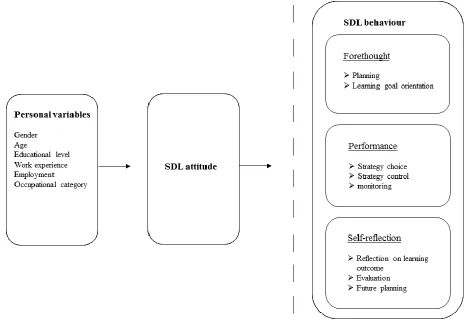
(8) workplace consists of a longer chain of learning activities, in which a certain order can be discerned (Endedijk et al., 2014). Moreover, it appears that certain SDL behaviour is more related to institutional settings, whilst others are more related to workplace settings. For example, monitoring by feedback, reflection, and new information were not frequently used as monitoring behaviour at the workplace (Endedijk & Bronkhorst, 2014). The present research builds upon these previously mentioned studies into workplace learning processes. This will give more empirical basis for measuring SDL at the workplace on a micro-level. Additionally, it will provide detailed insights into employees’ specifically used SDL behaviour in the work context. To measure the specific SDL behaviours, event measuring instruments are suitable (Endedijk et al., 2015). On-line event measurements at the workplace (during the learning performance) are difficult due to the unplanned and unstructured nature of learning experiences in workplace learning (Tynjälä, 2008). For that reason, in the present study use will be made of an off-line measurement technique. In this manner, a concrete learning experience will be measured not during but independent from or after the learning performance. An example of an instrument measuring various learning experiences in multiple contexts off-line, is the Structured Learning Report, develop by Endedijk (2010). This instrument is a structured diary log aiming to examine concrete SDL activities on the micro-level (Endedijk et al., 2015). This multiple-event instrument showed that concrete SDL activities can be measured in a valid and reliable way (Endedijk et al., 2015).. 3. Present study The aim of this study is to examine how healthcare employees, working in residential care, selfdirect their learning in their daily work at the workplace, and to what extent they use the different aspects of SDL behaviour at the workplace. Consequently, in this study the personal background variables, SDL attitude, and variables covered by SDL behaviour will be taken into account. In the research model (Figure 1) an overview is given of the included concepts, possible relations, and the overall learning process of employees’ SDL at the workplace. 3.1. Research Question In order to guide this research, the following research question is posed: How do healthcare employees, working in residential care, self-direct their learning in their daily work at the workplace? In addition, the following sub questions are formulated: 1. What is the level of the self-directed learning attitude of employees working in residential care and the relation with their personal background? 2. How do employees, working in residential care, specifically self-direct their learning at the workplace? 2a. What concrete SDL behaviours are frequently demonstrated by healthcare professionals when they direct their learning at the workplace? 2b. What are typical combinations of SDL behaviour in the successive phases of employees’ learning process when they direct their learning at the workplace? 3. What is the relation between employees’ SDL attitude and their concrete SDL behaviour in multiple learning experiences at the workplace? Based on literature it is predicted that employees’ age, years of work experience, employment and educational level is positively related to the level of their SDL attitude. Additionally, it is expected that a difference in employees’ SDL attitude will be present in gender and occupational categories. Lastly, healthcare professionals with a high level of SDL attitude are expected to demonstrate more self-directed learning behaviour at the workplace. 7.
(9) Figure 1. The research model of self-directed workplace learning. The dashed line in the model presents the distinction between employees’ personal characteristics and the specific SDL behaviour used in their learning experience, in which the firstmentioned influences the latter.. 3.2 Method 3.2.1 Context This study is conducted within the organization of Carintreggeland. Carintreggeland is a healthcare organization focusing on housing, welfare, and care. Providing assistance to the elderly and people with physical or mental disabilities is their core business. The organization has approximately 4300 employees of which 3000 are working in residential care, and the other 1300 in home care services. Carintreggeland organizes her care client-centred and question-based, where the aim is to encourage clients’ independency, and foster their social quality of life. Therefore, it is essential that employees also take personal control in their work- and learning processes. As a result, teams as well as individual employees need to be more self-directed in their work- and learning development. 3.2.2 Research methodology This study is a descriptive case study, as it is the purpose to see how the theory of self-directed workplace learning works in this specific organization. In addition, a relational element is included in the third research question to examine the possible relation between SDL attitude and SDL behaviour. Moreover, the data will be gathered by a multi-method approach using a survey and a digital structured learning log (Endedijk, 2010). This log file consists of one open question and eighteen closed questions, which is a so called mixed intra method. Overall, this design will give a detailed insight into the extent which employees self-direct their learning at the workplace. According to Babbie (2010) surveys, and especially diary logs, are an appropriate method to examine attitudes and orientations of a large population 8.
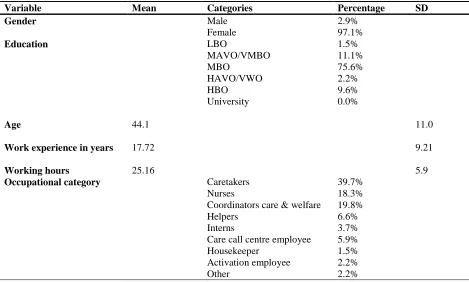
(10) that cannot be observed directly. In addition, data gathering by surveys make it possible to generalize results of the sample to broader groups beyond the sample (Swanson & Holton, 2005). 3.2.3 Procedure As a starting point, for this research several managers were informed and asked to cooperate voluntarily with their teams. Subsequently, teams received information about the content of the study by e-mail of their manager. Thereafter, they were invited to a meeting with the researcher at their work location, in which explanation and instructions orally were given, and afterwards on paper. They were told that the purpose of this study was to see what and how employees’ of Carintreggeland learn at the workplace. In the instruction it was explained what kind of learning experiences and activities one could think of, that learning experiences at the workplace can vary in length, and that it could include learning outcomes changing skills, knowledge, or someone’s attitude. Moreover, they were told it is desirable that they describe different kind of learning experiences. In this study, the distribution of the survey and the learning log file took place in two phases. First, participants received the survey (by e-mail) regarding their personal background and SDL attitude. On Monday, 5 days after they received this survey, their first digital learning log concerning SDL behaviour was sent to their e-mail address. The days after, until Sunday, they received this digital learning log in which they could describe each day a different learning experience from the workplace (in total 7 working days). In addition to the link in their personal e-mail address, the survey and learning log were also available on the intranet of Carintreggeland, their team mail, and on Facebook. As a result of open access to the survey, it could be that more people eventually participate than the invited 165 employees, but the several options to access the link were really appreciated by the employees. The main reason that the data collection took place via the internet, is that more response was expected by this method of data collection. In addition, this data collection method would give the least chance of data loss, and the data could be transmitted directly to the analysis program. In contrast, there was a risk for non-response, because it depends on how often employees check their personal and team email address if they filled in the surveys on time. To minimize this risk, posters of the study were distributed, messages were placed on the intranet, and reminder e-mails were sent every day during the research period. Finally, the research was approved by the Ethic Commission of the University of Twente, and informed consent was obtained from all participating employees. In addition, all previously invited employees have received the procedures of the study in writing. 3.2.4 Sample This study was aimed at data gathering on the individual level. To prevent that groups of employees were overrepresented, employees of diverse locations, different age, work experience, gender, and occupational categories were approached. When employees met the prerequisite of a minimum halftime employment, of each team half of the team members were selected to participate in this study. The reason for this kind of selection, is the inappropriate and unstable circumstances in some areas of the organization due to reorganization (e.g. uncertainty about the ability to maintain jobs, problems within teams, departing managers). All the selected employees who met the determined conditions, were considered to be an accurate reflection of the entire organization. In total 165 employees were personal invited to participate in this study. Eventually, 160 fully participated in the first part measuring employees SDL attitude and their personal background variables (response rate = 96.97%), 147 in the second part, measuring SDL behaviour (response rate = 89.1%), and 136 respondents participated in both parts (82.42%). The following descriptive results concern the overall dataset of 136 participants who completed both surveys. As expected, more women (97.1%) than men (2.9%) participated, which is common in healthcare. The majority of the respondents completed secondary vocational education on MBO level (75.6%), 15 respondents achieved the MAVO/VMBO (11.1%), and 13 finished higher professional education (9.6%), one was missing. Of these respondents 54 are caretakers (39.7%), 27 coordinator care & welfare (19.8%), 25 nurses (18.3%), and others were; helpers, activation & welfare employees, interns, 9.
(11) call centre employees, and housekeepers (1 missing). In the various job profiles, nurses were the largest group with a higher educational level. Of the nurses 30.8% completed a higher educational level, and in the other categories only 3.3%. The age arranged from 21 to 62 and the average age can be determined at 44.1 years (SD=11.0, 1 missing). In addition, the participating employees have an average of 17.72 years of work experience (SD=9.21, 13 missing) and work on average 25.16 hours a week (SD=5.9, no missing values). In Table 1 a complete overview of the descriptive statistics is given. Table 1. Overview Respondents’ Personal Background Variables Variable Gender. Mean. Education. Categories Male Female LBO MAVO/VMBO MBO HAVO/VWO HBO University. Percentage 2.9% 97.1% 1.5% 11.1% 75.6% 2.2% 9.6% 0.0%. SD. Age. 44.1. 11.0. Work experience in years. 17.72. 9.21. Working hours Occupational category. 25.16. 5.9 Caretakers Nurses Coordinators care & welfare Helpers Interns Care call centre employee Housekeeper Activation employee Other. 39.7% 18.3% 19.8% 6.6% 3.7% 5.9% 1.5% 2.2% 2.2%. 3.2.5 Instrumentation In this research, two different measurement tools are used to examine how healthcare employees, working in residential care, direct their learning in their daily work at the workplace. Below these two instruments are explained in detail. Survey SDL attitude and personal background. To measure the level of employees’ SDL attitude in relation to their personal background variables, an aptitude measuring instrument (trait-like) was used. In total the survey consisted of 18 questions, of which six questions concerned background variables, namely: age, work experience, employment, educational level, gender, and occupational categories. It should be noted that for the categorical questions educational level and occupational categories, the answer possibility other, namely was added. The other 14 items were aimed at measuring the level of employees’ SDL attitude, for which the scale ‘self-direction in learning processes’ developed by Raemdonck (2006) was used. The 14 items with a five point Likert-scale (ranging from 1= totally disagree to 5 = totally agree), has proven to be suitable for high-qualified and low-qualified employees, which was a prerequisite for this study given the variety of employees’ educational level in the sample. Additionally, the scale was adapted to the language of the organization, where Flemish expressions are adapted to the Dutch context. See Appendix A for the complete survey.. 10.
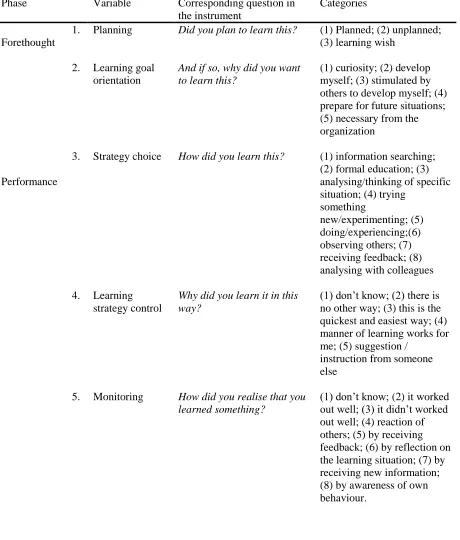
(12) Factor- and reliability analysis. Validity and reliability of the instrument was ensured by an exploratory factor analysis and reliability analysis. Factor analysis with an oblique rotation (using the principal component analysis) revealed two factors, but Kaiser’s criterion of the second factor is just above the value of 1.00 and only explains 8.891% of the variance. Moreover, the scree plot shows one clear factor. Consequently, it can be concluded that this scale has one factor measuring SDL attitude, which is also in line with previous literature regarding this measurement scale. Eventually, a reliability analysis revealed a Cronbach’s alpha of .88, meaning that the scale has a good internal consistency. Digital structured learning log. To measure frequently used SDL behaviours in the work context of healthcare professionals and typical combinations of these behaviours in their learning process, an offline multiple event measurement is used. The instrument is a so-called digital structured learning log based on the ‘Structured Learning Report’ developed by Endedijk (2010). This tool is a repeated measurement providing multiple measurements per respondent over a predefined period of seven days. In total, the learning log consisted of 19 questions, but there were different answer routes, depending on previous responses, causing a various length of the questionnaire. The learning log was adapted to the context of the research, and a pilot study was conducted beforehand to ensure the log would give meaningful results. A group of 15 employees of different occupational categories, locations, and age were asked to fill in the digital log once, and were interviewed for possible feedback. From this pilot study it appeared that no adjustments had to be made. The log consists of one open and more categorical questions including the variables: planning, goal orientation, strategy choice (activities), learning strategy control, monitoring, reflection on the learning outcome, evaluation, and future planning. The answer options in each variable reflect different degrees of self-directed learning behaviour at the workplace. For example, regarding learning goal orientation, when their goal was to develop themselves it was valued as a higher level of SDL than when the learning was stimulated by others. This classification of SDL behaviour is based on literature revealing that self-directed learning can be demonstrated in varying degrees (Endedijk et al., 2012; Schunk & Zimmerman, 1998). Below, in Table 2, each variable, the corresponding question and the answer options / categories are presented. It should be noted that every variable had the option other, namely. In appendix B the complete questionnaire can be found.. 11.
(13) Table 2. SDL Behaviour Measured by the Structured Digital Learning Log Phase. Variable 1.. Planning. Corresponding question in the instrument Did you plan to learn this?. 2.. Learning goal orientation. And if so, why did you want to learn this?. (1) curiosity; (2) develop myself; (3) stimulated by others to develop myself; (4) prepare for future situations; (5) necessary from the organization. 3.. Strategy choice. How did you learn this?. (1) information searching; (2) formal education; (3) analysing/thinking of specific situation; (4) trying something new/experimenting; (5) doing/experiencing;(6) observing others; (7) receiving feedback; (8) analysing with colleagues. 4.. Learning strategy control. Why did you learn it in this way?. (1) don’t know; (2) there is no other way; (3) this is the quickest and easiest way; (4) manner of learning works for me; (5) suggestion / instruction from someone else. 5.. Monitoring. How did you realise that you learned something?. (1) don’t know; (2) it worked out well; (3) it didn’t worked out well; (4) reaction of others; (5) by receiving feedback; (6) by reflection on the learning situation; (7) by receiving new information; (8) by awareness of own behaviour.. Forethought. Performance. 12. Categories (1) Planned; (2) unplanned; (3) learning wish.
(14) 6.. Reflection on the learning outcome. What did you learn?. (1) subject matter expertise; (2) communication / collaboration; (3) personal development; (4) organization of work content; (5) other. 7.. Evaluation. (1)didn’t think about; (2) satisfied; (3) unsatisfied. 8.. Future planning. Are you completely satisfied with your learning experience? How will you proceed with this learning experience?. Selfreflection. (1) No new plans; (2) try again; (3) concrete action plan; (4) continue with learned content / consolidate; (5) improve what is learned; (6) apply in practice; (7) new learning goal / wish. First, in the forethought phase employees’ learning goal orientation was only asked if their learning experience was planned or a learning wish existed. Second, in the performance phase in total three strategy choices could be mentioned. Hence, after the first and second question regarding strategy choice, it was asked if more strategy choices were part of their learning experience. A maximum of three strategy choices was chosen because earlier studies showed that four or more strategy choices in one learning experience was exceptional in workplace learning (Dannenberg, 2015; Endedijk et al., 2014). The categorization of these strategy choices is based on previous research into healthcare (Berings, Poell, & Simons, 2008; Lisman et al., 2007), and studies focusing on the micro-level of SDL in other research fields (Dannenberg, 2015; Endedijk et al., 2014; Endedijk & Vermunt, 2013). Subsequently, strategy control was a follow-up question if participants thought in advance to learn that way. Third, in the selfreflection phase the reflection of the learning outcome was asked by an open question supported by several suggestions for workplace learning experiences. The classification of learning outcomes, performed by the researcher, was based on literature (Berings, Poell, & Simons, 2008), including the V&VN competence profiles (van Hooft, Dwarswaard, & van Staa, 2015), and Can Meds roles (Frank, 2005). Two second coders were used to ensure the reliability of the coding of learning outcomes. Coding of the learning outcomes resulted in a good inter-rater reliability (Kappa = .86). The codebook is presented in appendix C. 3.2.6 Data analysis Procedure. The data was gathered in a non-anonymous way, because this information was needed to connect repeated data of one person, and to be able to analyse a possible relation between participants’ SDL attitude and their SDL behaviour. After connecting the data of a person, the data was processed anonymously. Data analysis. To answer the first sub question; What is the level of the self-directed learning attitude of employees working in residential care and the relation with their personal background, a descriptive analysis was performed. Additionally, to explore the possible relation with employees’ background variables, a multiple regression analysis was accomplished. In this analysis categorical data (gender, job profile, educational level) were transformed into dummy variables. To answer the second sub question; How are learning processes at the workplace actually directed by healthcare employees working in residential care? firstly some conditional procedures were performed. To begin, the open question regarding learning outcomes was coded and checked by two second coders, which was satisfactory (Kappa = .86). Second, the answer option, other namely, which was included in several questions in the survey, was analysed. It appeared that employees who filled in this 13.
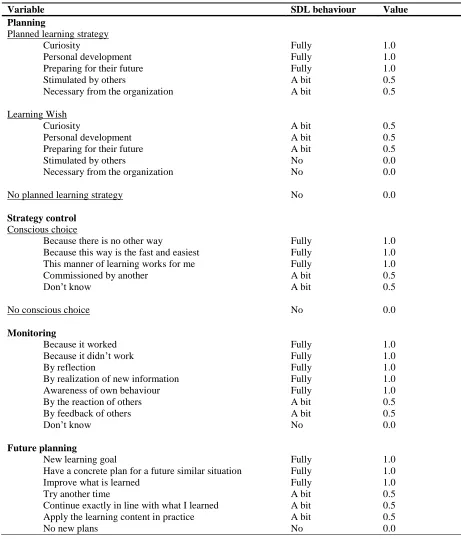
(15) option often liked to say something in their own words, but the answers could be ascribed to one of the existing categories of the variable. Except for future planning, where thirteen employees have expressed their plans to go further with their learning experience by sharing or discussing the information with others. These answers, plus the answers which could not be attributed to the other answer options, were excluded from analysis. Creating a new category in future planning was no option, because other respondents might have answered this also when the option was available. The analysis regarding the second sub question started with creating frequency tables of each variable to reveal notable differences, which consequently give the answer to the question; What concrete SDL behaviours are frequently demonstrated by healthcare professionals when they direct their learning at the workplace? Subsequently, to answer the following question; What are typical combinations of SDL behaviour in the successive stages of employees’ learning process when they direct their learning at the workplace?, the relationship between the different variables of SDL behaviour are analysed with chisquare analyses. These chi-square analyses were supplemented with post-hoc adjusted residuals (AR) analyses, to reveal cells which show deviation from the expected frequency (Haberman, 1973). When adjusted residuals had at least a difference of plus two or minus two standard deviations, it was considered that a difference of two qualitative answer options was statistically significant (Field, 2009). In the chi-square analysis of learning strategies in relation to other variables of SDL behaviour, three categories in the variable strategy choice were merged into one. The classification of learning strategies is adopted from other studies (Dannenberg, 2015; Endedijk et al., 2014), and provides a clearer overview of the kind of learning strategies employees used. Following this procedure the variable reduced from 9 to 5 categories in which other, namely is excluded. First, information searching, analysing/thinking of the learning situation, experimenting/trying, and doing/experiencing have remained the same. Second, feedback of others, observing others and reflection with colleagues are transformed to social learning. Last, formal education is excluded, because this category had a low frequency (4.8%) and is not of interest in this analysis. To answer the third sub question; What is the relation between employees’ SDL attitude and their concrete SDL behaviour in multiple learning experiences at the workplace? SDL behaviour had to be ordered from a low degree of SDL behaviour to a high degree of SDL behaviour. Therefore, some aspects of SDL behaviour covered by the same concept were merged into one variable (e.g. planning and learning goal orientation). In the answer options of each of these variables (except strategy choice and learning outcome), a distinction is made between no self-directed learning behaviour, a bit of self-directed learning behaviour (mostly external stimulated or not consciously chosen), and fully self-directed learning behaviour (self-initiated). Eventually respondents could gain four points in one learning experience regarding SDL behaviour: (1) one in the learning intention (planning and learning goal orientation); (2) one in learning strategy control; (3) one in monitoring; and (4) one in future planning. Evaluation is excluded from this ranking method, because approximately 80% of the answers were in one category. The total score was divided by the number of learning experiences, so that it was not taken for granted that participants with more learning experiences are more self-directed in their learning. In this way, it was possible to analyse the relation between various aspects of SDL behaviour and participant’s SDL attitude. In the table below (Table 3) the different answer options of the variables are presented, in which the distinction and given values are presented.. 14.
(16) Table 3. SDL Behaviour to Different Extents Variable Planning Planned learning strategy Curiosity Personal development Preparing for their future Stimulated by others Necessary from the organization. SDL behaviour. Value. Fully Fully Fully A bit A bit. 1.0 1.0 1.0 0.5 0.5. Learning Wish Curiosity Personal development Preparing for their future Stimulated by others Necessary from the organization. A bit A bit A bit No No. 0.5 0.5 0.5 0.0 0.0. No planned learning strategy. No. 0.0. Strategy control Conscious choice Because there is no other way Because this way is the fast and easiest This manner of learning works for me Commissioned by another Don’t know. Fully Fully Fully A bit A bit. 1.0 1.0 1.0 0.5 0.5. No conscious choice. No. 0.0. Monitoring Because it worked Because it didn’t work By reflection By realization of new information Awareness of own behaviour By the reaction of others By feedback of others Don’t know. Fully Fully Fully Fully Fully A bit A bit No. 1.0 1.0 1.0 1.0 1.0 0.5 0.5 0.0. Future planning New learning goal Have a concrete plan for a future similar situation Improve what is learned Try another time Continue exactly in line with what I learned Apply the learning content in practice No new plans. Fully Fully Fully A bit A bit A bit No. 1.0 1.0 1.0 0.5 0.5 0.5 0.0. 15.
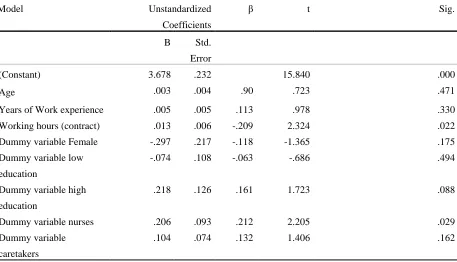
(17) The variables strategy choice and reflection on the learning outcome were not analysed in terms of the level of SDL behaviour. Moreover, it was not possible to assume that one strategy choice was more self-directed than the other, and the same is true for learning outcomes. However, these two variables have been included in the learning log to make one’s learning experience complete, expose possible relations with other SDL behaviour, and makes it possible to compare results with other studies.. 4. Results In the following section the results will be presented in order of the research questions, starting with results regarding participants’ SDL attitude in relation to their personal factors. Subsequently, an elaboration on the outcomes regarding participants’ concrete SDL behaviour will be given. Lastly, the relation between participants SDL attitude and their concrete learning behaviour at the workplace is explored and will be further elucidated. The level of employees’ SDL attitude and the relation to their personal background variables From the first part of this research, in which respondents’ SDL attitude was measured with the five point Likert-scale of Raemdonck (2010), outcomes revealed that the mean score of the sample’s (N = 160) SDL attitude was 4.26 (SD = 0.51). This means that on average they answered between partially agree and fully agree on the 14 statements about self-directed learning at the workplace. Moreover, a ttest, t(159) = 31.44, p = < .001, showed that the average of the sample’s SDL attitude differs significantly from the centre of the scale. In other words, they answered above average. Additionally, compared to the study of Jolij (2014), which made use of the same scale in a similar organization, in the current study sample’s average was .41 points higher (M = 3.85). See appendix A for the SDL attitude scale and corresponding items. The statement I will never be too old to learn something for my work showed the highest score (M = 4.92), and I like to undertake learning activities on my own demonstrated the lowest score (M = 3.79). To analyse a possible relation with personal background variables, a multiple linear regression was calculated to predict participants’ SDL attitude based upon their age, years of work experience, working hours, gender, educational level, and job profile. Preliminary analyses were performed to ensure there was no violation of the assumption of normality, linearity, and multicollinearity. A significant regression equation was found, F(8.120) = 2.749, p = .008, with an R² of .155. Meaning that 15.5% of the variance in SDL attitude is explained by the model. Participants’ SDL attitude increased .013 points for each hour of work, and nurses scored on average .206 higher on the SDL attitude scale than other occupational categories. Both employment (t = 2.234, p = .022) and job profile (t = 2.205, p = .029) were significant predictors of participants’ SDL attitude. Although higher educational level didn’t show to be a significant predictor of someone’s SDL attitude (t = 1.723, p = .088), the p-value is close to the significance level (p ≤ .05). See Table 4 for the overall regression table.. 16.
(18) Table 4 Multiple Regression Analysis Model. β. Unstandardized. t. Sig.. 15.840. .000. Coefficients B. Std. Error. (Constant). 3.678. .232. Age. .003. .004. .90. .723. .471. Years of Work experience. .005. .005. .113. .978. .330. Working hours (contract). .013. .006. -.209. 2.324. .022. Dummy variable Female. -.297. .217. -.118. -1.365. .175. Dummy variable low. -.074. .108. -.063. -.686. .494. .218. .126. .161. 1.723. .088. Dummy variable nurses. .206. .093. .212. 2.205. .029. Dummy variable. .104. .074. .132. 1.406. .162. education Dummy variable high education. caretakers. Self-directed learning behaviour at the workplace From the second part of this research, the overall data presented a total of 695 logs obtained by 147 respondents. This gives an average of 4.7 logs a person. A learning experience was reported 466 times (3 missing), so 229 times employees of Carintreggeland could not come up with a learning experience that day. Below, results regarding the second sub question; How do employees, working in residential care, specifically direct their learning at the workplace? are given. First, frequency tables of each aspect concerning SDL behaviour and the related categories are presented, in which a distinction is made in a low and high level of SDL behaviour. This elaboration will follow the structure of the SDL process: (1) planning; (2) strategy choice; (3) strategy control; (4) monitoring; (5) reflection on the learning outcome; (6) evaluation; and (7) future planning. Second, in line with previous research, typical combinations of SDL behaviour in the successive stages of employees’ SDL learning process will be given, in which results in form of chi-square analyses are presented in the appendix D. The manner and extent to which employees self-direct their learning Planning Table 5 presents the planning behaviour of employees in their learning experiences at the workplace (other, namely excluded = 2). The data shows that 65.5% of the employees showed no selfdirected learning behaviour in planning, 19.3% a bit, and 15.2% of the employees planned their learning conscious and on their own initiative. Employees who fully directed their learning in planning mostly did that because they had the purpose to develop themselves (8.5%). Of the 19.3% of employees who showed a bit of planning behaviour mostly did that because they were obliged by the organization (11.9%).. 17.
(19) Table 5 Frequency Table Planning Behaviour Planning Planned learning strategy Curiosity Personal development Preparing for their future Stimulated by others Necessary from the organization. Fully Fully Fully A bit A bit. 11 39 20 5 55. 2.4% 8.5% 4.3% 1.1% 11.9%. Learning Wish Curiosity Personal development Preparing for their future Stimulated by others Necessary from the organization. A bit A bit A bit No No. 3 19 7 2 11. .7% 4.1% 1.5% .4% 2.4%. No planned learning strategy. No. 289. 62.7%. 461. 100%. Total. Strategy choice Of the final set of 463 learning experiences, 690 strategy choices were reported, of which the variables other, namely (.6%) and formal learning (4.8%) were excluded resulting in 653 strategy choices in total. On average the learning processes entailed M = 1.50 strategy choices, in which 67.4% contained a single strategy choice, 22.5% a sequence of two strategy choices, and 10.1% three strategy choices. From the overall dataset results show that social learning strategies took place most frequently (48.8%), and information searching less frequently (6.3%). Although, social learning strategies are commonly used in employees’ learning experiences at the workplace, the high proportion of this category may also be caused by the fact that three categories related to social learning are merged into one. In this category 34.8% learned by feedback of others, 48.3% by analysing with colleagues, and 16.9% by observing others. Table 6 shows an overview of employees’ strategy choices. Table 6 Frequency Table Strategy Choices Learning strategy choice Social learning Feedback of others (34.8%) Analysing with colleagues (48.3%) Observing others (16.9%) Doing/experiencing Analysing/thinking Experimenting/trying out Information searching. Frequency 319. Percentage 48.8%. 152 72 69 41. 23.3% 11.0% 10.6% 6.3%. Total. 653. 100%. 18.
(20) Learning strategy control Table 7 presents the SDL behaviour regarding employees’ strategy control (other, namely excluded = 1). It can be stated that the vast majority of employees did not determined their learning strategy in advance. In other words, 63.4% of the employees didn’t show any self-directed learning behaviour in their strategy choice. In contrast, 134 (29.4%) employees do have deliberately chosen their learning strategy, in which they mostly selected the manner of learning based on their personal preference. Only 7.2% of the employees showed a bit of self-directed learning behaviour regarding strategy control, in which 1.7% answered they didn’t know why they have chosen a specific learning strategy. Table 7 Frequency Table Strategy Control Strategy control Conscious choice This manner of learning works for me Because there is no other way Because this way is the fast and easiest Commissioned by another Don’t know. Fully Fully Fully A bit A bit. 50 46 38 25 8. 11.0% 10.1% 8.3% 5.5% 1.7%. No conscious choice. No. 289. 63.4%. 456. 100%. Total. Monitoring Monitoring was a frequently used SDL behaviour in employees’ learning experience. Only 11 employees (2.4%) showed no monitoring behaviour, and 96 (20.7%) a bit. The other 76.9% of the employees showed fully SDL behaviour in monitoring. Mostly they monitored by realizing that something worked out well (24.2%), and the least by experiences in which they became aware of their own behaviour (5.8%) or because something didn’t work out (6.9%). In Table 8 the outcomes regarding monitoring behaviour are presented (other, namely excluded = 2). Table 8 Frequency Table Monitoring Monitoring Because it worked By realization of new information By reflection Because it didn’t work Awareness of own behaviour By the reaction of others By feedback of others Don’t know. Fully Fully Fully Fully Fully A bit A bit No. Total. 19. 112 110 75 32 27 63 33 11. 24.2% 23.8% 16.2% 6.9% 5.8% 13.6% 7.1% 2.4%. 463. 100%.
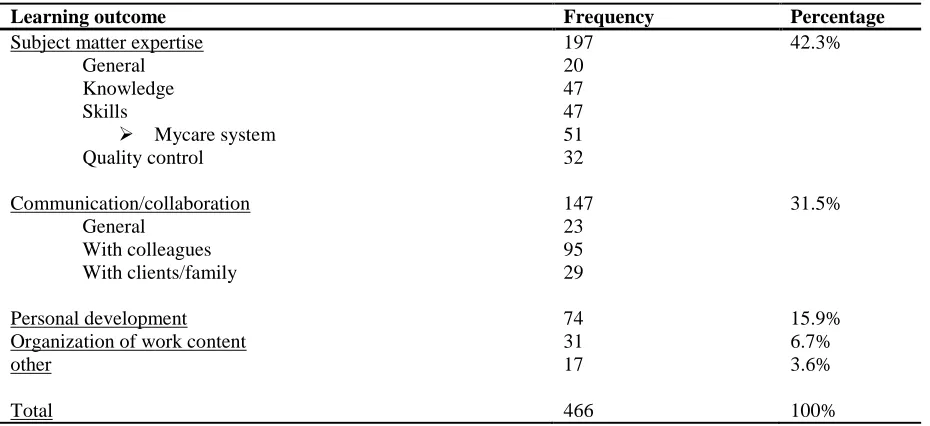
(21) Learning outcomes In the reflection on their learning outcome, employees mostly indicated that they learned something in terms of professional expertise. Results showed that professional knowledge and skills are most prevalent (42.3%). In the subcategory of expertise skills can be seen that a large part consists of skills regarding working with the new my care computer system. Subsequently, communication / collaboration is a common learning outcome (31.5%), where communication / collaboration with colleagues (64.6%) represents the largest part. Employees’ learning outcomes concerning the organization of their work content were mentioned least frequently (6.7%). See Table 9 for the results. Table 9 Learning Outcomes Learning outcome Subject matter expertise General Knowledge Skills Mycare system Quality control. Frequency 197 20 47 47 51 32. Percentage 42.3%. Communication/collaboration General With colleagues With clients/family. 147 23 95 29. 31.5%. Personal development Organization of work content other. 74 31 17. 15.9% 6.7% 3.6%. Total. 466. 100%. Evaluation After filling in the learning log participants were also asked if they were satisfied or not when reflecting on their complete learning experience. In total 389 (83.8%) employees stated that they were satisfied with their learning experience, 47 (10.2%) would do things differently next time, and 28 (6.0%) participants didn’t thought of it. For evaluation behaviour in SDL no values are specified because of the high percentage in one category (satisfied). In Table 10 the percentages are presented (1 missing). Table 10 Frequency Table Evaluation Evaluation I am satisfied I would do things differently next time I didn’t think about it. Frequency 389 47 28. Percentage 83.8% 10.2% 6.0%. Total. 464. 100%. 20.
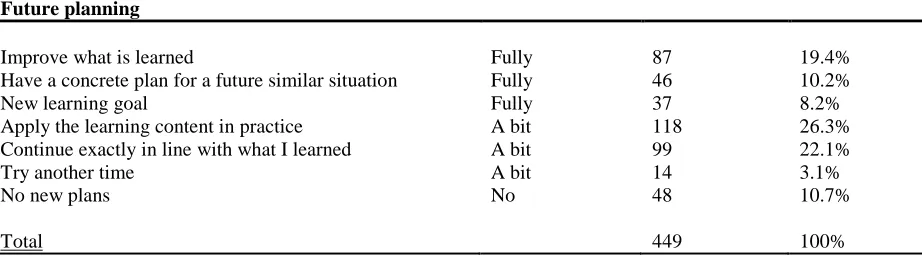
(22) Future planning In Table 11, the frequencies of future planning behaviour is presented. In total 170 (37.8%) employees fully directed their learning in words of future planning. They showed initiative and had the aim to boost their learning to a higher level. Most of them wanted to improve what they had learned (19.4%), and only 8.2% had a new learning goal. Employees who showed a bit of future planning behaviour (51.5%) also self-initiated their future planning, but wished to continue on the same learning level. Most of them wanted to apply the learning content in practice (26.3%). In total 48 (10.7%) employees out of 449 showed no future planning behaviour. It must be noted that, in this SDL behaviour aspect, 13 employees stated by the option other, namely that their purpose is to discuss or share their knowledge/skills with others In order to avoid validity problems no new category was created and they are covered by missing values (in total 17 missing). Table 11 Future Planning Future planning Improve what is learned Have a concrete plan for a future similar situation New learning goal Apply the learning content in practice Continue exactly in line with what I learned Try another time No new plans. Fully Fully Fully A bit A bit A bit No. Total. 87 46 37 118 99 14 48. 19.4% 10.2% 8.2% 26.3% 22.1% 3.1% 10.7%. 449. 100%. Typical SDL behaviour combinations in the successive stages of employees’ SDL process Planning A relation is explored between employees’ planning behaviour and the kind of strategy choice which subsequently is used. A chi-square analysis showed a significant difference, X²(8) = 22.987, p = .003, in strategy choices when their learning was planned, unplanned or a learning wish existed. Results showed that social learning mostly took place in unplanned learning experiences (AR = 2.8). Further, experimenting/trying out (AR = 3.3) was applied more often in planned learning situations than expected, and in a learning wish only a significant relation was found with doing/experiencing (AR = 2.3) as employees’ first strategy choice in their learning process. The chi-square is presented in Appendix D. The table shows that three expected counts are below 5 (20%). According to Stern (2010) this is acceptable. Learning goal orientation In employees’ learning orientation to reach their goal a distinction was made between: (1) intrinsic learning goal; (2) extrinsic learning goal; (3) and long term intrinsic learning goal. A chi-square analysis showed a significant relation, X²(8) = 22.160, p = .005, in which the strategy choice analysing/thinking (AR = 3.3) was often applied when employees had an intrinsic learning goal orientation. In contrast, experimenting/trying out (AR = 2.5) seems to be a frequently chosen strategy when participants’ had an extrinsic learning goal orientation. In Appendix D the chi-square analysis is presented. The table shows that three expected counts are below 5 (20%). According to Stern (2010) this is acceptable.. 21.
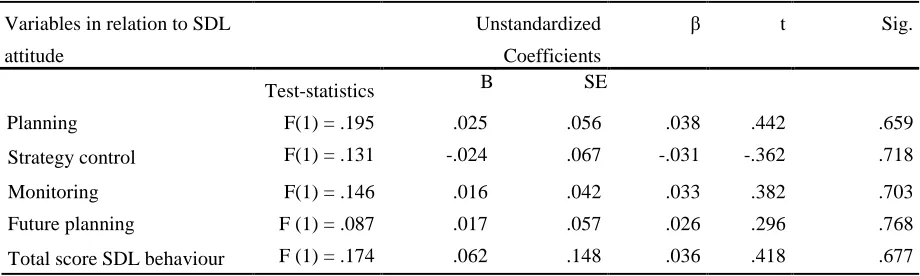
(23) Learning strategy choice Earlier studies have proven that a certain pattern can be recognized in the type of strategy choices and the position in the sequence of the strategy choices in the complete SDL process. In this study a chisquare analysis showed a significant relationship, X²(4 )= 10.259, p = .036, in which social strategy choices were applied more often in the second or third position in the sequence of strategy choices (AR = 3.2). In contrast, doing/experiencing (AR = 2.1) was more often used as expected as employees’ first strategy choice. In Appendix D the results are demonstrated in a chi-square analysis. Reflection on the learning outcome In line with earlier research, a possible relation between the nature of strategy choices and employees’ reflection on their learning outcome is explored. A chi-square analysis showed a significant relation, X²(12) = 27.403, p = .007, in which post-hoc analysis showed that strategy choices like information searching (AR = 3.1) and experimenting/trying (AR = 2.2) were deployed significantly more when employees’ stated that their learning outcome concerned subject matter expertise, and analysing/thinking significantly less (AR = -2.9). On the other hand, analysing/thinking was more often used when employees have stated that their learning outcome concerned personal development (AR = 2.2). In Appendix D the chi-square analysis is presented. The table shows that four expected counts are below 5 (20%). According to Stern (2010) this is acceptable. Self-directed learning attitude in relation to self-directed behaviour at the workplace For the analysis of a possible relation between participants’ SDL attitude and the specific used SDL behaviour, a linear regression analysis was performed. It was expected to find a positive linear relationship between employees’ SDL attitude and their SDL behaviour demonstrated in workplace learning experiences. More specific, employees with a positive SDL attitude are expected to demonstrate more deliberate and self-iniated behaviour in tracking their learning process. Employees could score between zero and four points on the total SDL behaviour scale (1 point for each aspect), consisting of planning, learning strategy control, monitoring and future planning. Overall, participants’ (N = 136) mean score on SDL behaviour was below the average of two (M = 1.9, SD = .64632), in which 50% scored between 1.5 and 2.25. In the analysis of every single aspect of SDL behaviour, employees showed low planning behaviour (M = .2676, SD = .24738), in which 75% scored between 0 and .40. Additionally, their learning strategy control also revealed a low average (M = .2826, SD = .29311). In constrast, employees did show more monitoring (M = .8589, SD = 18192) and future planning behaviour (M = .5946, SD = 24759). In monitoring 50% of the participants scored between .75 and 1, and 50% of the employees scored between .50 and .75 in future planning. In the analysis of SDL behaviour as a whole in relation to employees’ SDL attitude no significant relationship was found. Additionally, to see if someone’s SDL attitude was only related to one of the aspects of SDL behaviour, regression analyses of each aspect; planning, learning strategy control, monitoring, and future planning in relation to SDL attitude were performed. However, again no significant relationships are found. See Table 12 for the statistical outcomes.. 22.
(24) Table 12 Regression Analysis of Each Aspect of SDL Behaviour in Relation to SDL Attitude Variables in relation to SDL. Unstandardized. attitude. β. t. Sig.. Test-statistics. B. Coefficients SE. Planning. F(1) = .195. .025. .056. .038. .442. .659. Strategy control. F(1) = .131. -.024. .067. -.031. -.362. .718. Monitoring. F(1) = .146. .016. .042. .033. .382. .703. Future planning. F (1) = .087. .017. .057. .026. .296. .768. Total score SDL behaviour. F (1) = .174. .062. .148. .036. .418. .677. 5. Conclusion and discussion The aim of this study was to explore how employees, working in healthcare organizations, are self-directing their learning at the workplace. Three questions were posed, regarding individuals’ SDL attitude, SDL behaviour and the possible relation between those constructs, to guide this study. In total 457 learning experiences, and different self-directed learning behaviours were analysed in relation to individuals’ SDL attitude. In this section the most important findings, in relation to the research question, will be presented. Later on, limitations, suggestions for further research, and practical implications will be discussed. Employees’ SDL attitude. To answer the first research question; What is the level of the selfdirected learning attitude of employees working in residential care and the relation with their personal background? this section will focus on employees’ SDL attitude and the relation with their personal background variables. Firstly, salient results regarding employees self-directed learning attitude were found. Participants in this study showed an above average positive attitude towards self-directed learning at the workplace, and also a higher average than another study in a similar context (Jolij, 2014). This may be due to the fact that the organization highlights the importance of learning in the organization. They believe that welldeveloped employees provide a higher quality of care. In addition, Carintreggeland recently implemented self-directed work teams, which seems to create a meaningful work environment where the self-managing character stimulates the learning behaviour of individuals (Kessels, 2004). Moreover, the study of Jolij (2014) revealed a positive relation between self-directed work teams and the self-directed learning attitude of employees. Second, regarding employees’ personal background variables, it became clear that two variables had a significant influence on employees’ attitude of SDL. For working hours, it seems that employees who work more hours possess a more positive attitude towards SDL than employees’ who work less hours for the organization. This is in line with earlier research stating that employees who work more hours are more attached to the organization and their profession than employees who work less hours (Hallowell, 1999). As a result, employees with a larger contract show a more positive SDL attitude than employees with a smaller contract. In addition, the occupational category nurse, showed a more positive attitude regarding SDL than other occupational categories, which is in line with the research of Durr et al. (1996). Nevertheless, it seems that this relationship is influenced by employees’ educational level, because nurses have a relatively higher educational level than other job profiles. Unfortunately, this relationship was difficult to prove because of the skewed distribution in educational level, where higher educated employees only represented a small number in the total sample. However, based on the results it is 23.
(25) suspected that educational level influences the SDL attitude of employees, which is consistent with outcomes of Stockdale’s (2003) study. Consequently, for further research it is recommended to include this variable. In contrast, no significant relations were found between participants’ SDL attitude and their age (Reio, 2004), gender (Stockdale, 2003), and years of work experience (Raemdonck, 2006). This could be caused by the lack of diversity in the sample. A large part of the employees were working for more than 10 years at the organization, were above 40 years old, and only a few were male workers. Employees SDL behaviour. To answer the second research question; How do employees, working in residential care, specifically self-direct their learning at the workplace? This section will be divided in two parts. First, an elaboration of the outcomes regarding employees’ specific SDL behaviour will be presented, following the phases of the SDL process: (1) forethought; (2) performance; (3) self-reflection. Second, typical combinations of SDL behaviour in the SDL process of healthcare employees will be explained, compared to previous research. Forethought. Workplace learning is often unintended, which is in line with the results of this study. In almost two thirds of the learning experiences employees’ didn’t show any self-directed planning behaviour. When employees did show a bit of self-directedness in their planning behaviour, it was mostly because it was necessary from the organization. This is a remarkable result, which implies that a lot of employees have the feeling that they should meet a certain requirement from the organization when it is related to their learning. Employees who showed fully self-directed learning behaviour mostly planned their learning experience for their personal development, and less out of curiosity or to prepare for future situations. The latter is an important detail, because from literature it is stated that being able to react on and anticipate to future situations is essential in self-directed learning behaviour (Raemdonck, 2006). Additionally, the organization also wishes that employees have a long-term vision regarding learning, in which they are able to anticipate potential challenges. Performance. In workplace learning healthcare employees frequently chose strategy choices with a social learning aspect. Mostly by analysing with colleagues, then, by feedback from others, and as least by observing others. Two thirds of the employees have indicated that a colleague from the team was involved in this social learning strategy, some said that a colleague not from the team but in the organization was involved, and only a few stated that it was someone outside the organization. Subsequent to social learning strategies, learning by doing/experiencing was often chosen in employees’ learning experiences. These outcomes are in line with previous research of Berings, Poell, and Gelissen (2008), stating that nurses learned the most by interaction and doing their daily work. Moreover, consistent with the study of Dannenberg (2015), information searching was used least frequently as strategy choice. In controlling their strategy employees showed a low level of self-directed learning behaviour. In other words, most of them have not deliberately chosen their learning strategy. It can be stated that most employees have learned in a reactive way, in which conscious planning and choosing strategies do not apply. When employees showed a bit of SDL behaviour in controlling their learning strategy it was often commissioned by someone else, whilst employees who fully controlled their learning strategy did this because of their personal preference. In contrast to the low level of SDL behaviour in strategy control, the average level of employees’ monitoring behaviour was high. Three quarters of the employees showed fully SDL behaviour in monitoring. Most of them realized that they learned by something that worked out well or by receiving new information. The opposite was found in a study in teacher education, where most student teachers indicated that they learned a lot at the workplace by unsuccessful learning situations, and not often because they had received new information (Endedijk & Bronkhorst, 2014). These diverse outcomes can be caused by the fact that the study of Endedijk and Bronkhorst (2014) is a comparison study between contexts, and is conducted in a student teacher education curriculum. Most healthcare employees in this study are not following formal education, are expected to avoid making mistakes at the workplace instead of learning from them, and learn in order to keep functioning on a professional level, in contrast to students who are learning to ‘become’ a professional. However, there are also some similarities, namely feedback and awareness of own behaviour 24.
Figure
+7


Related documents
Abstract —The Quick Easy Cheap Effective Rugged and Safe multiresidue method (QuEChERS) has been validated for the extraction of 9 organochlorine pesticides (OCPs) in
Exports 157 billion USD (2014) Imports 242 billion USD (2014) Tourism Income 34.3 billion USD (2014)
Podium& Hyatt Regency Towers Makkah Commercial Building Saudi Arabia 170.000 Ongoing 2015 Al Maktoum Site Development Phase 2 Residential and Social Building UAE 141.000
Market Analysis Marketing Plan Facility and Equipment Management and Organization Financial
Note 2: Make sure the 7188XW.exe and autoexec.bat program files exist on the same folder. If not, update firmware can’t be successful. there is no response to a ping
The key of the proof is to exhibit a testing procedure minimax in the inverse setting (7) that may fail in certain situations for the direct testing issue. We deal in this paper with
Follow-ups were scheduled at 48 hours after each session (via telephone interview with the patient), during the second visit, prior to the second treatment session
In view that ERK and p38 MAPKs participate in the antiapoptotic effects of the hormone, we next examined the role of both MAPKs in AKT and BAD phosphorylation stimulated by the
