http://wrap.warwick.ac.uk/
Original citation:
Young, Mark S. and Birrell, Stewart A. (2012.) Ecological interface design for
eco-driving. In: European conference on Human Centred Design for Intelligent Transport
Systems, Valencia, Spain, 14-15 Jun 2012.
Permanent WRAP url:
http://wrap.warwick.ac.uk/53217
Copyright and reuse:
The Warwick Research Archive Portal (WRAP) makes this work of researchers of the
University of Warwick available open access under the following conditions. Copyright ©
and all moral rights to the version of the paper presented here belong to the individual
author(s) and/or other copyright owners. To the extent reasonable and practicable the
material made available in WRAP has been checked for eligibility before being made
available.
Copies of full items can be used for personal research or study, educational, or
not-for-profit purposes without prior permission or charge. Provided that the authors, title and
full bibliographic details are credited, a hyperlink and/or URL is given for the original
metadata page and the content is not changed in any way.
A note on versions:
The version presented in WRAP is the published version or, version of record, and may
be cited as it appears here.
ECOLOGICAL INTERFACE DESIGN FOR
ECO-DRIVING
Mark S. Young and Stewart A. Birrell
ABSTRACT:
Eco-driving issues are of high priority at the moment. Research suggests that a change in driving style can reduce fuel consumption and emissions by around 15% in many cases. In response to this need, the UK Foot-LITE project developed an in-car feedback system to encourage safer and greener driving behaviours. In order to balance positive behaviour change against the potential negative effects of distraction, an Ecological Interface Design approach was adopted. The current paper presents an overview of the human-centred design process adopted in the Foot-LITE project, as well as a review of other similar systems on the market.
1
ECO-DRIVING
Eco-driving has become a regularly used phase in the motorised transport arena; it is used to describe a driving style which results in an increase in fuel economy. Reducing the unit fuel consumption for a journey not only results in a financial saving for the driver, but also helps to reduce their carbon footprint and the impact of other emissions.
Eco-driving is thus an area of great interest at the moment, with concerns about vehicle emissions as well as fuel prices being top priorities for private motorists and fleet managers alike.
On the basis of this need, there is now a growing market for in-car feedback on driving style. Some major vehicle manufacturers have already attempted to exploit this opportunity, offering models with some form of eco-driving information integrated into the vehicle’s instrument panel. Such fuel efficiency support tools hold the greatest potential to positively influence driver behaviour [2]. Whilst many of these are offered on low-carbon vehicles (hybrid or electric drive), the displays represent an interesting trend in driver-machine interface design.
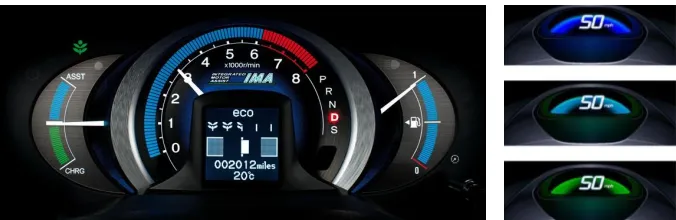
Examples of these ‘smart’ or ‘green’ meters include the Honda Insight (Figure 1) and Ford Fusion (Figure 2) instrument panels. Honda’s Eco Assist
system is designed to show how efficiently the car is being driven. It does this firstly by providing real time, fuel efficient driving guidance (e.g., if the brake or accelerator is applied aggressively then the speedometer display changes colour from green to blue). It also provides an ‘Eco’ score (depicted by the number of leaves on the flowers in the centre of the main display) during the drive and at the end of each journey. Similarly, the Ford SmartGauge cluster with Eco Guide can display to the driver instantaneous and historical fuel economy, as well as feedback regarding their efficiency via the quantity of leaves that grow on the dashboard – more leaves means better fuel economy.
Fig. 1 Honda Insight hybrid dashboard and speedometer
[image:3.454.58.396.411.521.2]changing colour as braking and acceleration levels deviate from the optimal. The centre console display will show historical information about driving performance and will also give efficiency tips to the driver.
Fig. 2 Ford Fusion hybrid SmartGauge dashboard
Fig. 3 Chevrolet Volt hybrid display
Fig. 4 Screenshots from the 2010 (left) and 2000 (right) Toyota Prius
hybrid instrument cluster
[image:4.454.51.398.111.514.2]in which the technology works [3]. Whilst these types of displays very effectively reflect current vehicle state, they do not directly educate the driver to improve their driving performance. Performance can only be inferred by trying to maintain the vehicle in electric mode and by using the historical fuel efficiency data. Research has shown that users report that the usefulness of such information degrades with time once the novelty has worn off and drivers become less interested [3].
As well as the original manufacturer offerings, there are also various aftermarket options available for eco-driving information. For instance, a selection of satellite navigation products offer eco-routing options, some of which also connect with the vehicle’s on-board diagnostics (OBD) to provide
real-time feedback on driving. More recently, one or two smartphone applications have also emerged using the handset’s own GPS and accelerometers to detect driving behaviour and provide feedback on the display.
However, regardless of the medium, the design of these interfaces must take into account (and support) the primary information needs of the driver. One criticism of some of the existing displays is that they only state the current performance of the car, and provide little feedback as to how the driver might improve their behaviour. Moreover, road safety remains a top priority alongside eco-driving concerns, and managing any potential conflicts between safe and eco-driving should be a key objective of any such system. Finally, with the visual modality being by far the primary information source for driving (e.g., [4]), in-car interface designs must not present an excessive visual demand for the driver.
3
HUMAN-CENTRED DESIGN FOR ECO-DRIVING
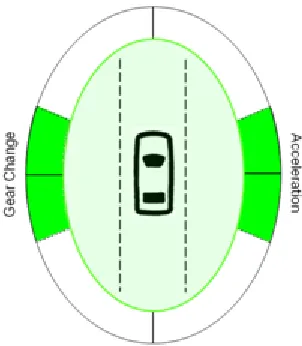
Fig. 5 Foot-LITE EID display (UK RD 4017134-41)
Figure 5 shows one aspect of the EID developed for the Foot-LITE project. The car is mobile in the central oval of the display, and currently sits within a ‘green zone’ in terms of lane positioning, cornering speeds, and headway to
vehicles in front. Meanwhile, eco-driving parameters are presented in the outer oval, with acceleration/braking and appropriate gear use being displayed dynamically (again in a ‘green zone’ in this example). Any behaviours which exceed set tolerances in the system result in amber or red indicators on the relevant aspect of the display, providing the driver with direct feedback about how their driving affects each parameter. Returning to the ‘green zone’ offers positive reinforcement to the driver about their
behaviour. This design, plus several derivatives of it, has been protected by a UK Registered Design (4017134-41). A key feature of the EID was the integration of complex information from two priorities (eco-driving and safe driving) onto a single direct perception display, in order to facilitate behaviour change while not distracting the driver or causing an unacceptable increase in workload.
3.1
Design process
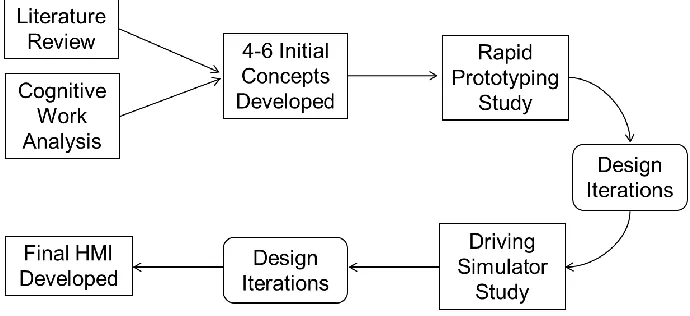
[image:6.454.149.300.64.237.2]ISO standards. Alongside the literature review, a Cognitive Work Analysis (CWA; [7]) established the functional and user requirements that would be reflected on the interface. Naikar and Lintern [8] suggested that CWA offers a formative (as opposed to normative) design methodology, supporting revolutionary rather than evolutionary design. Vicente [9] further makes the argument that CWA is particularly useful for systems that have no precedent. Foot-LITE, as a first-of-a-kind vehicle system, warranted a formative approach, and so the project offered an excellent opportunity to apply CWA from idea conception to interface design.
Figure 6: Design cycle process
An initial set of four to six design concepts was generated from these requirements, which were evaluated by subject matter experts as well as potential users in a rapid prototyping study. Through questionnaires and desktop evaluations, the number of concepts was reduced to two – a conventional ‘dashboard’-type concept, and the more novel EID display (see
participants in the study. Thus the EID was recommended for use in the Foot-LITE system.
4
CONCLUSIONS
The rapid development of in-vehicle interface technologies, coupled with the prominence of eco-driving, has resulted in numerous products to give drivers feedback about their performance. However, few of these actually offer advice about how to improve behaviour. Moreover, any in-car display must protect the primary driving task by avoiding excessive visual demand.
The Foot-LITE project adopted a user-centred approach to in-vehicle interface design, with user feedback and evaluation throughout the design process. The use of CWA to inform the design ensured that a novel and innovative concept was established, which has proved effective in promoting smart driving behaviours as well as minimising additional driver workload and distraction. The EID display was considered to be a successful contribution to the Foot-LITE project, as delivering smart driving feedback and driver coaching advice in real-time to the driver was an essential aspect of the project. The distinct benefit of the EID is that it combines complex information onto one direct perception display, with both safety and eco-driving advice integrated on the same interface.
5
ACKNOWLEDGEMENTS
Foot-LITE was sponsored by the TSB, DfT and EPSRC under the Future Intelligent Transport Systems initiative. The Foot-LITE consortium is comprised of: MIRA, TRW Conekt, Auto-txt, HW Communications, Ricardo, Zettlex, Hampshire County Council, Institute of Advanced Motorists, Transport for London, Southampton University, Newcastle University and Brunel University.
6
REFERENCES
2. Gonder, J., Earleywine, M., and Sparks, W.: ‘Final Report on the Fuel Saving Effectiveness of Various Driver Feedback Approaches’. National
Renewable Energy Laboratory, US Department of Energy, Office of Energy Efficiency and Renewable Energy, 2011
3. Wellings, T., Binnersley, J., Robertson, D., and Khan, T.: ‘Human Machine Interfaces in Low Carbon Vehicles: Market Trends and User Issues’. Document number HMI 2.1, Low Carbon Vehicle Technology
Project: Workstream 13, Warwick Manufacturing Group, University of Warwick, 2011
4. Kramer, U., and Rohr, G.: ‘A model of driver behaviour’, Ergonomics, 1982 25, pp. 891-907.
5. Vicente, K.: ‘Ecological Interface Design: Supporting operator adaptation, continuous learning, distributed, collaborative work’. Proceedings of the Human Centered Processes Conference, 1999, pp. 93-97
6. Young, M. S., and Birrell, S. A.: ‘Ecological IVIS Design: Using EID to develop a novel in-vehicle information system’, Theoretical Issues in
Ergonomics Science, 2012, 13, (2), pp. 225-239
7. Birrell, S. A., Young, M. S., Jenkins, D. P., and Stanton, N. A.: ‘Cognitive work analysis for safe and efficient driving’, Theoretical Issues in
Ergonomics Science, in press
8. Naikar, N., and Lintern, G.: ‘A review of "Cognitive Work Analysis: Towards safe, productive, and healthy computer-based work" by Kim J. Vicente’, The International Journal of Aviation Psychology, 2002, 12, (4), pp. 391-400
9. Vicente, K.: ‘Cognitive Work Analysis: Toward safe, productive, and healthy computer-based work’ (Lawrence Erlbaum Associates, 1999)
10. Birrell, S. A., and Young, M. S.: ‘The impact of smart driving aids on driving performance and driver distraction’, Transportation Research Part