Abstract— A study was conducted to investigate the effects
of local metallic salts (banana peel ash and coconut fiber ash) on thermal and physico-chemical properties of tropical Thevetia peruviana and Jatropha curcas for biodiesel production through transesterification process. This was conducted at the same reaction times and temperatures. Eight samples of biodiesel were produced (four from each) of the two seed oils and analyzed by instrumentation and gravimetrically. Results revealed that T. peruviana and J. curcas seed oils have oil yields of 48% and 46% respectively. Biodiesel yields from the biodiesel produced from standard KOH (89% and 85%) as catalyst were higher than those produced from the local ashes (72%, 70%, 74.5%, and 73.8%). Densities/specific gravities of all biodiesel samples were comparable with conventional diesel (AGO) and also fell within the ASTM (0.88 limits). Flash points of samples (biodiesels from T. peruviana and J. curcas seed oils) were higher and better than conventional AGO and within standards (130oC minimum). All samples were up to 130oC except those made using banana ash which were slightly lower but higher than reference diesel. The predominant fatty acids present in T oleander seed oils are palmitic, linoleic, linolenic, oleic, myristic and stearic acids while Jatropha seed oil is made up of palmitic, linoleic, linolenic, oleic, myristic and stearic acids at different respective proportions. The heating values were quite lower than the standard reference diesel. This work may be advanced further in exploring the use of other locally sourced bio-materials as catalysts.
Index Terms— Biodiesel, production, properties, Thevetia
peruviana, Jatropha, feedstock, catalyst, metallic salts
I. INTRODUCTION
HE production and consumption of bio-fuels continues to increase as more attention is paid to the environment which leads to the depletion of fossil-fuel resources [1]. Biodiesel, a fuel from natural oils such as soybean oil, rapeseed oil, animal fats or used cooking oil and fats can be used as substitute for petrol diesel. And also as additive to mineral-based diesel fuel since they meet the International standard specifications. Standards include: American Society of Testing and Material (ASTM D6751),
Manuscript received June 20, 2017; revised July 28, 2017.
A.C. Eloka-Eboka is with the Discipline of Mechanical Engineering, University of KwaZulu-Natal, Durban, South Africa (corresponding author: +27738257444; e-mail: [email protected])
F.L. Inambao is with the Discipline of Mechanical Engineering, University of KwaZulu-Natal, Durban, South Africa (e-mail:
European Norm (EN14214), Japan Industrial Standards, South African National Standards (SANS) and so on [2]. Biodiesel fuels have received considerable attention in recent years as an oxygenated fuel, as they are biodegradable, renewable and non-toxic. Their contribution to net carbon dioxide or sulphur to the atmosphere are relatively low and sometimes zero with very low emission profiles. They are therefore environmentally beneficial [3] and pose no form of threat to global warming or greenhouse gases accumulation. Currently, the production of biodiesel and utilization is already generating paradigm shifts in the modern industrial revolution globally [4]. Stakeholders are keying into new ventures especially in Africa where they are huge potentials. The United States of America’s primary feedstock interest is on soybeans and sunflower oil as biodiesel sources [5, 6] but in Africa where there are abundant resources, feedstocks of choices are unlimited. The indicator of choice lies on the end use of fuel and the type and nature of feedstock which has to be of low processing lost and availability. Edibility and non-edibility of feedstock is also an important criterion. Africa may not be ready to accommodate fuel vs food competition economically.
Most countries in Europe and America are concerned with rapeseed oil; Asian countries especially India prefers to utilize coconut oil or palm oil and Jatropha. African countries like Nigeria, Kenya, Mali, Mozambique, Zimbabwe and South Africa are focusing on Jatropha, sunflower, soya, used vegetable oil, corn and more recently Moringa. Plantations of Moringa and Jatropha have been established in Malawi and Mozambique for biodiesel production. Yellow oleander (T. peruviana) is just a new discovery in Nigeria while continued search for more energy crops are ongoing within various provenances [3].
Vegetable oils such as jojoba have also been investigated and found out to have potentials as biodiesel feedstock [7, 8]. For some time, researchers have paid more attention to shrub borne oil such as the oil of J. curcas, L. pistace,
Chinensis burge and even yellow oleander amongst others due to their non-edibility, high oil content and wide geographical and climatic spreads [4]. The current production of biodiesel in the US is estimated at approximately 50,000 tons per year (57 million liters) with a potential to produce about 1.5 billion liters per year. In
Production Properties Studies of Tropical
Thevetia peruviana
and
Jatropha curcas
Biodiesel using Biometallic-salts as Catalysts
A.C. Eloka-Eboka, Member, IAENG and F. L. Inambao
Europe, production capacity is estimated at 665,000 tons (755 million litres) per year with a planned production capacity of about 2 million tons (2.77 billion) per year [9]. In Nigeria and South Africa especially the KwaZulu-Natal province, vegetation distribution and rainfall activities supports agricultural pursuits that can produce the feedstock for biofuels production and presently research works are at several stages in developing and commercializing energy crops for biofuels [10]. Dependence on fossil fuels is no longer fashionable as the global oil prices have declined exponentially within the last few years. The major oil producers of the world are at the mercy of dwindling crude oil prices such that economic stagnation has crept in. At current production level, oil reserves will be depleted in the next few decades of less than fifty years [11, 12] and so it was estimated that Nigeria which is Africa’s main crude oil producer would have exploited about 21.5 billion barrel of her 22 billion barrels of crude oil in 35 years at its current export rate of about 2.1 million barrel per day [13] which has also drastically reduced due to low prices, militancy, terrorism and restiveness in the oil producing regions. Production level has drastically reduced as huge investments are being withdrawn.
From the production of clean fuels from renewable energy resources, the country will improve and upgrade facilities by creating more jobs and stimulating related industries in the downstream sector of the economy. This can be achieved by improving the socio-economic indicators of the country [13] and betterment of essential facilities and infrastructure. In line with the Nigerian government energy policy, biofuels will create and recreate jobs for more than 1 million Nigerians in less than five years with a GDP impact of nearly 30.4 billion dollars [13]. With the development of modern technology, vegetable oil feedstocks can be utilized to produce various clean fuels, alternative mineral fuels which can sustainably replace fossil fuels. Fossil fuels such as petroleum, coal and natural gas, which have been used to meet the energy needs of man, are associated with negative environmental impacts such as global warming, environmental pollution and others [14]. It has been widely reported that not less than ten (10) major oil fields from the 20 largest world oil producers are already experiencing decline in oil reserves [14].
Recently published data also revealed a total of 29 major world oil producing countries already experiencing declining oil reserves from 2010 to 2016 [12, 15]. Commercially, biodiesel is produced by transesterification [16]. As fuel properties are closely related to the components of fatty acids of the vegetable oil stock, monitoring the reaction mixture is very important in controlling the quality of biodiesel [17]. Some of the important quality parameters as established by the ASTM D6751 for 100% biodiesel (B100) are flash point, kinematic viscosity, specific gravity, cloud point, free glycerin, total glycerin etc. and must meet the values established by the specifications [17, 18] thus, it can be used in internal diesel combustion engines with little or no modifications [17-19]. Also, since it is produced from renewable, domestically
grown feedstocks, it can reduce the use of petroleum-based fuel and possibly lower the greenhouse gas contribution from the use of internal combustion [20].
Long before these resources are finally exhausted, oil in particular will become scarce and heading for extinction and of course more expensive. In Nigeria, bulk and sustainable production of biodiesel is yet to be explored to a greater extent. With the turn of events in Nigeria where the refineries are almost down and have been heavily dependent on importation of fuel, the development of this promising biofuels sector to improve the economic fundamentals for biodiesel production is imperative. Biodiesel can meet growing energy demands in a sustainable manner, since it can be produced in large quantities, it is environmentally friendly and the cost of production can be encouraged by promoting the agricultural sector. This sector can also provide job opportunities and reduce dependence on foreign oil and also improve domestic African economies. The production of biodiesel fuels primarily and commercially employs transesterification reaction usually with methanol and ethanol as transesterification agents and metallic bases mainly sodium and potassium hydroxides as catalysts. These are synthetic catalysts and have found uses in other chemical industries. These may be available but having to utilize localized catalysts such as ashes from coconut fiber, banana peels, fuel woods, plantain wastes and others may be a new research approach as it will open up new avenue to recycling/re-use of wastes. Also, other attendant benefits of renewable and alternative energy resource will also be reaped as the final products will maintain biodegradability and environmental friendliness. The objective of this present research work is to comparatively evaluate the chemo-physical, thermal, and biodiesel potentials of the feedstocks of J. curcas and T. peruviana oil seeds. Selected local materials will be used as catalysts to serve as substitute to the conventional synthetic catalysts thus bringing to bear local content initiative in renewable energy production. Considering the huge benefits derivable in the world of biodiesel from different feedstocks, this research work is basically significant. The possibility of utilizing local ashes from organic matters as transesterifying catalysts or agent will help reduce the cost of production. It will also crash down the general selling price of biodiesel fuels and their derivatives/blends.
II. MATERIALS/METHODS
A. Seed Collection and preparation
seed oils were used to produce biodiesel through transesterification process using methanol but the method used in this study, was employing the use of different local salts and alkalis as catalysts. They were potassium hydroxide (KOH), an alkali; banana peels ash and coconut fibre ash which were metallic salt. These three reagents were used as catalysts for the biodiesel production. Eight different samples and AGO were finally produced in the study. They were: AGO/conventional diesel fuel, sample A, biodiesel produced from Jatropha seed oil using potassium hydroxide (KOH) as catalyst, sample B, biodiesel produced from Thevetia seed oil using KOH as catalyst, sample C, biodiesel produced from Jatropha seed oil using coconut fiber ash as catalyst, sample D, biodiesel produced from Thevetia seed oil using coconut fiber as catalyst, sample E and sample F, biodiesel fuels produced from Jatropha and T. peruviana using banana peels ash as catalysts respectively and samples G and H which represent vegetable oils extracted from Jatropha and T. peruviana respectively.
B. Extraction of oils from Thevetia peruviana and Jatropha curcas seeds
Similar extraction procedures were adopted for the two oils studied. Two hundred millilitres (200 ml) of normal hexane was charged into 500 ml round bottom flasks of the soxhlet apparatus and heated to between 65 -100 0C which is within the limit of the boiling point range of hexane solvent. The evaporating n-hexane was condensed into a thimble by the condenser where the oil is leached out. The oil rich solvent after reaching a level in the condenser refluxes continuously to extract the lipids out of the cell matrixes of the seeds. The solvent was thereafter recovered using the rotary evaporator, leaving behind oils from both seeds. This procedure was adopted from Firestone and Yuraweez [25] and Olisakwe et al. [26] and modified for this study.
C. Preparation of Catalysts
Transesterification catalysts were prepared by dissolving 1% w/w of potassium hydroxide in 26ml of methanol to produce potassium methoxide solution in a conical flask and covered to avoid ambient reaction. This was used for the transesterification of the extracted oils. Banana peel ash and coconut fiber ash solutions of 0.1M were also prepared by dissolving the ashes of both plant wastes in distilled water and made up to 100ml mark in a conical flask. The ashes were obtained by burning the wastes in a controlled set-up operation to obtain the ashes after combustion completion. The 0.1M solutions of both ashes were then dissolved in 26ml of methanol to form methoxides of banana ash salt and coconut ash respectively. This preparation is actually a deviation of what is obtainable and it is indeed the modification/novelty that this work intends to present by employing local metallic salts as catalyst for biodiesel production. It was not adopted from any study but a modification of existing procedure using new bio-materials.
D. Production of Biodiesel
Extracted Jatropha and T. peruviana seed oils, 100 ml each were used to produce eight samples of biodiesel fuels using potassium methoxide from banana peels and coconut
fibers prepared earlier and kept in two beakers. The mixtures were blended in an electric blender after thorough mixing for five minutes at a temperature of 80oC (above the boiling point of methanol) and poured into a crucible. The oil was preheated to a temperature of 700oC and monitored using a thermocouple until it drops to a temperature of 60oC and blended for between 30 to 60 minutes reaction time for complete reaction and homogeneity as adopted by Igbum et al. [27] and modified. The mixtures were immediately transferred from the blender to a one litre pet bottle and closed tightly. The pet bottle was occasionally opened to allow for some air into the pet bottle in order to avoid contraction due to the cooling of the oil. The mixture settled for 24 hours and a dark colour glycerin which was a by-product was observed being separated from the pale liquid above it; which is the bio-diesel at the top layer. Biodiesel varies somewhat in colour according to the nature of the oil feedstock used and so does the dense by-product at the bottom [28].
E. Physico-chemical and thermal analysis of oils
Physico-chemical properties which include: density, flash point, pour point, cloud point kinematic viscosity, appearance/colour, refractive index, fatty acid profile, percentage free fatty acid (FFA), cetane index, degree of saturation and un-saturation, heating value, saponification value, iodine value, acid content, total and free glycerin of the oils and their respective produced biodiesel were evaluated as recommended by the American Society for Testing and Materials (ASTM), American Oil Analytical Chemists (AOAC), American Oil Chemical Society (AOCS), American Petroleum Institute (API). The samples evaluated are oils of T. Peruviana, Jatropha, their biodiesel and the conventional diesel fuel (AGO) which was used as blend and as control. All the properties evaluated were adopted and modified from the studies of Eloka-Eboka [24], Olisakwe, et al. [26] and Igbum, et al. [27].
F. Data Analysis
Quantitative data analysis using Inferential and Descriptive Statistics were conducted on all obtained data. The experimental procedures were conducted in replicates and their individual means were obtained for the evaluated parameters and variables which are thus presented. Relationships amongst dependent and independent variables were presented in tables, graphs and charts. Comparisons of some important properties were further tested for significant difference (hypothesis testing) using the analysis of variance (ANOVA) at 5% (95 % confidence) significant levels and regression analysis.
III. RESULTS AND DISCUSSION
The results of the oil and biodiesel yields, physico-chemical analysis and thermal properties of the eight seed oils and control (AGO) with their fatty-acid compositions and biodiesel samples studied are presented in the following sub sections.
A. Oil and Biodiesel yields
biodiesel counterparts using different catalysts. Percentage oil yields were found to be higher in T. peruviana (48%) than in Jatropha seeds (46%). The obtained value showed high oil yields of both seed oils. Jatropha however has extensively been reported by researchers and the percentage yields have never been found less than the values obtained from this study. Ibiyemi [29] however in his study found an appreciable percentage oil yield of 64% T. peruviana who earlier studied the oil seed. Olisakwe, et al. [26] also reported a higher yield in Jatropha and T. peruviana (54.6% and 58.5%) respectively. For the biodiesel yields, samples produced from KOH (89% and 85%) were higher than those produced from the local ashes (72%, 70%, 74.5%, and 73.8%). This is plausible because the ashes were unprocessed, not optimized in production and also from the fact that potassium based catalysts are usually less effective than sodium base in transesterification which usually gives up to maximum 99% yields. The works of Igbum et al. [27] in their study of the effects of transesterification variables on the yields and properties of biodiesel confirms the higher efficacy of sodium base catalysts in transeterifation of oils into esters and methyl esters. In the analysis of percentage yields in Figure 1, the regression model is y = - 0.487x2 - 1.2804x + 87.98 with the coefficient of determination, R2 value of 0.8248 where y = the percentage oil yield and x = the various oil and biodiesel samples from A to H. The sample with the maximum value is A which is the KOH based Jatropha biodiesel while H has the least yield which is T. peruviana oil. The regression model shows a balance appreciable percentage oil yield as earlier elucidated.
Table 1: Percentage oil and biodiesel samples yields
Sample s Weight of dried Oil seed (kg) Weight of oil after dehuling (kg)
Vol. of sample before transesterification
(ml)
Yields of oil after transesterificatio
n (%)
A 2 1 100 89.0
B 2 1 100 85.0
C 2 1 100 72.0
D 2 1 100 70.0
E 2 1 100 74.5
F 2 1 100 73.8
G 2 1 100 48.0
H 2 1 100 46.0
A= KOH based Jatropha biodiesel; B= KOH based T. peruviana biodiesel; C= Coconut Ash based Jatropha biodiesel; D= Coconut Ash based T. peruviana
biodiesel; E= Banana Ash based Jatropha biodiesel; F= Banana based T. peruviana
biodiesel; G= Jatropha oil and H= T. peruviana oil
0 20 40 60 80 100
ABCDEFGH y = -0.4875x^2-1.2804x+87.980 R^2 = 0.8248
Figure 1: Percentage biodiesel Comparison
Table 2: Physico-chemical properties of seed oils and biodiesels Samples of Raw oil and biodiesel from different catalysts
Properties AGO A B C D E F G H
Flash Point (oC )
98 137 133 131 136 12 1
119 139 129
Fire Point (oC)
136 147 140 139 148 14 8
138 150 149
Cloud Point (oC)
-2 12 10 11 9 5 7 12 5
Pour Point (oC)
-8 6 6 6 4 -2 3 5 -2
FFA (%) N/D 0.2 7 0.2 5 0.2 6 0.2 3 0.1 7 0.2 3 0.2 6 0.1 8 Carbon Residue (%)
0.42 2.2 9 0.2 4 0.3 0 0.2 5 0.2 1 0.2 9 0.2 8 0.2 1
Cu (ppm) 0.09 0.0 8 0.0 4 0.0 5 0.0 7 0.0 3 0.0 6 0.0 8 0.0 4 Fe (ppm) 0.41 0.2
6 0.2 6 0.2 8 0.2 1 0.1 8 0.3 1 0.2 4 0.1 8 Viscosity
@ 40oC (cSt) 12.6 3 16. 03 15. 88 15. 67 15. 98 15. 81 15. 76 15. 99 15. 97 Iodine value (wijs)
N/D 189 183 182 181 21 0
184 188 196
Ash content (ppm)
0.33 0.2 2 0.2 1 0.2 1 0.2 4 0.1 3 0.1 9 0.2 1 0.1 6 Sulphur content (ppm) <0.0 5 <0. 05 <0. 05 <0. 05 <0. 05 <0. 05 <0. 05 <0. 05 <0. 05 Density (kg/m3)
0.87 00 0.8 724 0.8 562 0.8 496 0.8 822 0.8 74 0.9 001 0.9 102 0.8 862 Moisture content (%wt)
0.03 0.0 3 0.0 2 0.0 45 0.0 3 0.0 35 0.0 4 0.0 4 0.0 5 Refractive Index 1.32 5 1.4 35 1.4 77 1.4 63 1.3 92 1.4 42 1.3 68 1.4 51 1.4 62 Saponifica tion value (KOH/g)
N/D 189 183 182 181 21 0
184 188 196
* N/D - Not Determined * N/A - Not Available
Table 3: Analysis of variance of specific physico-chemical properties
ANOVA
Source of Variation SS df MS F P-value F crit
Rows 64541460 3 21513820 3781.573 2.21E-25 3.159908 Columns 233684.4 6 38947.41 6.845946 0.000657 2.661305 Error 102404.2 18 5689.12
Total 64877548 27
Ho: F Fcrit; =0.05
Ha: F Fcrit
Table 4: Thermal properties of the seed oils and biodiesel
Samples of Raw oil and biodiesel from different catalysts Properties AG
O
A B C D E F G H
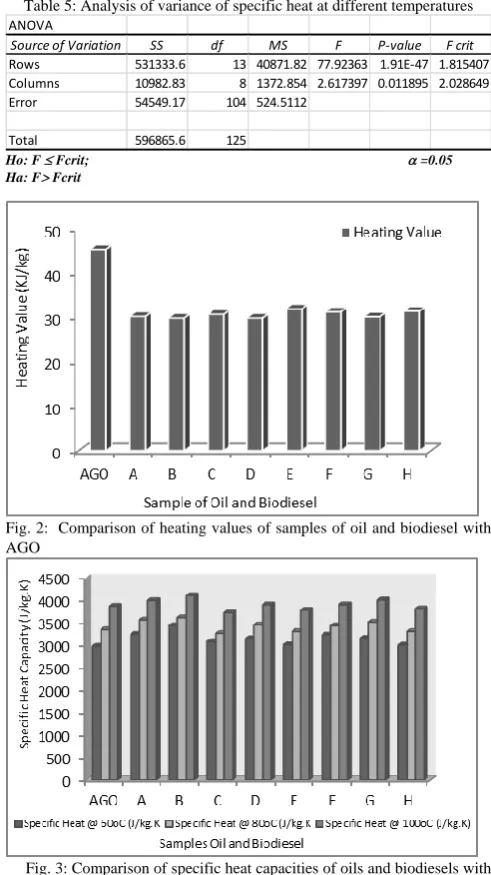
[image:4.595.41.281.438.561.2]Table 5: Analysis of variance of specific heat at different temperatures
ANOVA
Source of Variation SS df MS F P-value F crit
Rows 531333.6 13 40871.82 77.92363 1.91E-47 1.815407 Columns 10982.83 8 1372.854 2.617397 0.011895 2.028649 Error 54549.17 104 524.5112
Total 596865.6 125
Ho: F Fcrit; =0.05
Ha: F Fcrit
[image:5.595.304.553.61.225.2]Fig. 2: Comparison of heating values of samples of oil and biodiesel with AGO
[image:5.595.44.290.62.500.2]Fig. 3: Comparison of specific heat capacities of oils and biodiesels with AGO
Table 6: Fatty acid composition/profile of seed oils and biodiesels Fatty
Acids
Acronyms A B C D E F G
(JVO) H (TVO)
Stearic Acid
C18:0 0.02 0.03 0.02 0.03 0.01 0.01 0.02 0.01
Myristic Acid
C14:0 3.56 4.08 2.56 3.57 2.13 2.34 3.14 2.19
Palmitic Acid
C16:0 12.28 13.51 10.14 13.3 8.16 9.86 11.13 8.24
Linolenic Acid
C18:3 4.74 5.09 4.34 4.89 3.24 4.18 4.56 3.51
Linoleic Acid
C18:2 11.22 12.14 10.18 11.56 7.18 9.24 10.28 8.64
Oleic Acid
C18:1 4.13 5.91 3.96 4.28 2.14 3.81 4.06 3.22
Total 35.95 40.75 31.2 37.46 22.86 29.43 33.19 25.81 ∑SFA 15.86 17.6 12.72 16.73 10.3 12.2 14.29 10.44 ∑UFA 20.09 23.14 18.48 20.73 12.56 17.23 18.9 15.37 U/S
L/L
1.27 0.42
1.32 0.42
1.45 0.43
1.24 0.42
1.22 0.45
1.41 0.45
1.32 0.44
1.47 0.41
SFA = saturated fatty acids; UFA = Unsaturated fatty acids; U/S = unsaturated/unsaturated; L/L = linolenic/linoleic
B. Physico-chemical Properties of the Oils and Biodiesel
The physico-chemical properties are presented in Table 2 while the analysis of the test of hypothesis for selected
Fig. 4: Fatty acid profile/composition of oils and produced biodiesels
selected important parameters of free fatty acids, viscosity at 40oC, fire and cloud points, carbon residue, ash content, moisture content and saponification value is presented in Table 3. The densities/specific gravities of all the biodiesel samples were comparable with AGO and were within the ASTM (0.88 limit) as evident in Table 2. The flash points of the samples (biodiesels from T. peruviana and Jatrophaseed oils) were higher and better than that of AGO and within standards (130oC minimum). All samples were up to 130oC except samples E and F (made using banana ash) which were slightly lower but higher than AGO. Fuels with high flash points can withstand high temperature operations and safe for handling and haulage. The same is applicable with the fire points. The pour and cloud points of the samples were not quite encouraging compared to AGO and standards. This suggests that AGO can withstand extreme cold condition more than all the biodiesel produced; this is an indication that AGO will thrive better in temperate region and can transverse across regions without been affected by cold climates better than all the biodiesels produced [30]. The kinematic viscosities at 40oC designated for biodiesels across the samples were quite high for the produced biodiesel fuels and the two seed oils without much difference. AGO in this case is very high (12.63cSt) and beyond the value of what AGO should give. AGOs generally have low viscosities and that is the advantage fossil fuels have over bio-fuels. Other works saw AGO with much lower values: 2.00cSt [31], 1.62 [28], with 1.69 - 6.0cSt was recommended [18] as good viscosity range for biodiesels. The percentage free fatty acid composition (FFA) of all the samples fell within the ASTM recommendation (0.80 maximum) and this is quite interesting as the highest value was 0.26. AGO is not a bio-product and therefore has no business with the parameter of free fatty acid as shown in Table 6. The selected specific parameters of free fatty acids, viscosity and saponification values are all significantly different at 95% confidence level in their contribution to the transesterification process and as biodiesel fuels for all the samples evaluated.
[image:5.595.33.300.532.713.2]Jatropha seed oil is made up of palmitic, linoleic, linolenic, oleic, myristic and stearic acids at (11.3, 10.28, 4.56, 4.06, 3.14 and 0.02%) respectively. Stearic, myristic and palmitic acids are saturated while linoleic and linolenic acids are poly-unsaturated fatty acids. Oleic acid is a mono-unsaturated fatty acid and it is desirable for biodiesel production for less soot/NOx formation. The profile of fatty acids is important in the business of biodiesel because it determines the suitability of any oil or fuel for use as biodiesel and can be used also an indicator to estimate the cetane number and index of any biodiesel [3]. The chromatograms that generated the values depicted the various peaks of radiation from where the functional groups of the fatty acids where determined with time which are useful tool in chromatography which is indispensable in determining unknown chemical components. The ratios of saturated to un-saturation, linolenic to linoleic as presented are quite low and within the ASTM recommendation. The analysis of the ratio of total unsaturation to total saturation in the fatty acid profile as presented in Table 7 shows significant difference at 5% significance level of the interaction. The degree of saturation is higher in all the eight samples (pre and post transesterification) mostly of mono-unsaturated acids show-casing their potential and application as biodiesel. An earlier study of Jingura, et al. [32] indicated that Jatropha has higher unsaturated fatty acid than saturated fatty acids.
C. Thermal properties of Oils and Biodiesel
The results of the thermal properties which include the heating values and the specific heat capacities at temperatures of 60oC, 80oC and 100oC for all the samples of the produced biodiesel fuels are presented in Table 4 while the interactions/comparisons with AGO at the mentioned temperatures are in Figures 2 and 3. The analysis of variation (ANOVA) at specified temperature is in Table 5. The heating values of the biodiesel fuels produced using the catalysts of study are quite lower than the standards nor the AGO tested. AGO has 45, 280kJ/kg, ASTM standards recommends 38,000 to 40,000 minimum but none of the samples attained this minimum value. The highest has 32, 930kJ/kg. The calorific /heating value is the energy content of any fuels, be it fossil or non-fossil (bio-based). The heat capacities at the temperatures as shown in Figure 3 projected the biodiesel samples as having better heat capacities than AGO with increase temperature trends showing higher degree of heat retention and as such can serve automotive or similar engines better. The ANOVA indicates significant difference at 95% confidence level at different temperatures and for the eight different samples (amongst rows and within columns) which is an indication of the effect of transesterification of the oil to biodiesel and the complexities of their thermal properties in accordance to the nature of the base oil feedstock. These all showed better heat retention than the conventional diesel fuels (AGO) for use in the compression ignition engines.
IV. CONCLUSION
The results of the analysis clearly show that all the biodiesel produced are suitable for use as biodiesel fuels. The physico-chemical and thermal properties of the produced samples of biodiesel fell within the ASTM specifications
hence they can be subjected to engine performance tests. The seed oil contents of both Thevetia peruviana and
Jatropha curcas are relatively high; also the percentage yields of biodiesel using the local catalysts are quite satisfactory. The densities/specific gravities of all the biodiesel samples were comparable with AGO and also fell within the ASTM (0.88 limit) standards. The flash points of the samples (biodiesels from T. peruviana and Jatrophaseed oils were higher and better than that of AGO and acceptable to standards (130oC minimum). The heat capacities at the different temperatures tested projected the biodiesel samples as having better heat capacities than the conventional diesel (AGO) with increase temperature trends showing higher degree of heat retention and as such can serve automotive or similar engines better. The indispensability of biodiesel application in the modern demands for bio based products can no longer be ignored as the urgent needs for technological shift from fossil fuels continue to be an imperative.
REFERENCES
[1] HLPE. Biofuels and food security. A report by the High Level Panel of Experts on Food Security and Nutrition of the Committee on World Food Security. Rome2013.
[2] SANS, 1935. Automotive biodiesel – Fatty Acid Methyl Esters (FAME) for diesel engines – Requirements and test Methods: South African National Standards (2nd Edition). 2011.
[3] Eloka-Eboka AC. A book of biodiesel fuel: African mesquite seed oil – A test of pyrolysis experimental methods Saarbrucken, Deutschland, Germany: Lambert Academic Publishing.; 2012. [4] Yuam-gang Zu Y, Nai-jing Zhang L. Determination of main fatty acid
methyl esters in Biodiesel product from yellow Horn (Xanthoceras surbitolia Burge.) oil with RP-LC-RID. China: Laboratory of Forest plant Ecology; 2010.
[5] Liltz A, Pordiesimo L, J. W. Food Resources International 2004;37. [6] Kinney AJ, Clements TE. Fuel Process Technology. 2005;86:1137 -
47.
[7] Canoria L, Alcantera R, Garcia-Mantiwez MJ, Carasco J. Biomass and Bioenergy. 2006;30:76 - 81.
[8] Meler LC, Dharmagadda USS, Naik SN. Bioresource Technology 2008;97:1390 - 7.
[9] Chadra B. The critical review of biodiesel as a transportation fuel in Canada. Principle of GCSI-Global change strategies International Incorporation. Canada.2004.
[10] Eloka-Eboka and Inambao FL. Green Energy Solution: Focus on bio- renewable energy in Africa – Research insights. 2013.
[11] AEI. The GIGR Journal. Agricultural Engineering International2007.
[12] Alamu OJ, Waheed MA, Jekayinfa SO. Biodiesel production in Nigeria PKO: Effect of KOH Concentration on yield. Energy for sustainable Development. 2007;11:77 -9.
[13] NNPC. Technical Feasibility Study Report. National Petroleum Cooperation, Abuja.: Renewable Energy Division, Nigeria 2006. [14] Munack A, Schroder O, Krah IJ, Bmger J. Comparison of relevant
exhaust gas, emission from biodiesel and fossil diesel fuel: Agricultural Engineering International. The GIGR Journal of Science Resource Development 2001;3.
[15] EIA., Administration EI. World Proved resources of oil and natural gas: Most recent estimates. 2007.
[16] Dude MA, Tremslay AY, Lin J. Bio-resource Technology. 2007;98:639 - 46.
[17] Knothe G. JAOCS. 2000;77.
[18] ASTM D-. Standard Test Method for determination of total mono-, di and triglycerides. 2010.
[19] McCormick TL, Alleman M, Ratcliff P, Moens L. Survey of the quality and stability of Biodiesel and biodiesel blends in the United States in 2004. USA: NREL Technical Report; 2005.
[20] Fausto M, Daniela C. An Overview of Biodiesel Test Methods: John Wiley, ; 2008.
[21] Ibiyemi SA. Thevetia plant cconomic potential, chemistry'skey position. University of Ilorin, Nigeria2008. p. 3-34.
[23] Ibiyemi SA, Fadipe VO, Akinremi OO, Bako SS. J Appl Sci Environ Manage. 2002;6.
[24] Eloka-Eboka AC. Production and testing of biodiesel from Prosopis africana seed oil using pyrolysis. Makurdi.: University of Agriculture; 2010.
[25] Firestone D, Yuraweez MP. Oil and Fats. JAOAC. In: Official Methods of Analysis of AOAC International (18th edition). AOAC International, Maryland, USA.2006.
[26] Olisakwe HC, Tuleun LT, Eloka-Eboka AC. Comparative Study of Thevetia peruviana and Jatropha curcas seed oils as feedstock for grease production. International Journal of Engineering Research and Applications (IJERA) 2011;1:793 - 806.
[27] Igbum O, Eloka-Eboka A, Nwadinigwe C. Effects of
transesterification variables on yields and properties of biodiesel fuels produced from four virgin tropical seeds oils. International Journal of Energy and Bioenergy. 2012;1:119-30.
[28] Igbum OG, Ejila AA, Eloka-Eboka AC. Effects of Transesterification variables on the yields and properties of biodiesel fuels from four virgin tropical seeds oils. Proceedings of ISOTPAND. Abuja, Nigeria2011.
[29] Ibiyemi SA. Thevetia Plant Economic Potential, Chemistry’s Key Position. Unpublished: University of Ilorin, Ilorin; 2008. p. 3 - 34. [30] Spencer T. Review of Lubricants and Lubrication. Magazine of
Society of Chemical Industry No 352002. p. 21 - 35.
[31] Eloka-Eboka AC, Ibrahim JS. Engine performance test of Biodiesel produced from African mesquite Seed oil using pyrolysis. African Journal of Physics. 2010;3.