Bat Optimization Algorithm for Preamble Separation and
Allocation using Prioritization Method
T. Kanchana
Research Scholar Department of Computer ScienceProvidence College for Women Coonoor, Tamilnadu, India
K. Deepa
Assistant Professor Department of Computer ScienceProvidence College for Women Coonoor, Tamilnadu, India
ABSTRACT
Cellular networks will play an important role in realizing the newly emerging. One of the challenging issues is to support the quality of service (QoS) during the access phase. The random access (RA) mechanism of Long Term Evolution (LTE) networks is prone to congestion when a large number of devices attempt RA simultaneously, due to the limited set of preambles. If each RA attempt is made by means of transmission of multiple consecutive preambles (Code words) picked from a subset of preambles by priority classes, collision probability can be significantly reduced. Selection of an optimal preamble set size can maximize RA success probability in the presence of a trade-off between codeword ambiguity and code collision probability, depending on load conditions. In recent work developed the Load-Adaptive Throughput-Maximizing Preamble Allocation (LATMAPA). LATMAPA automatically adjusts the preamble allocation to the priority classes according to the random access load and a priority tuning parameter. However the latest researches are unsuccessful in the assignment of regulating the parameters of load balancing and delay reducing algorithm and hence, to overcome this issue, a novel approach termed Improved Load-Adaptive Throughput-Maximizing Preamble Allocation (ILATMAPA) is been introduced in this research work. Bat optimization algorithm based parameter tuning is employed to improve the throughput and an analysis is carried out to quantify the throughput, delay and drop ratio trade-offs of parting the preambles into two disjoint sets. For under loaded systems, realise a “safe” allocating region, in which class I prioritization is comparatively harmless for class II. An experimental result reveals that the proposed method decreases the delay access and increases the throughput.
Keywords
Random Access, Collision Probability, Throughput-Maximizing, Preamble Allocation and Prioritization.
1.
INTRODUCTION
THE fifth generation (5G) networks will support tens of thousands user equipments (UEs) per cell in the near future .Each UE performs a random access (RA) procedure for initial uplink access to connect and synchronize with its base station. When the number of UEs is tremendous, the RA procedure is inefficient due to the frequent transmission collisions, which lead to network congestion , unexpected delay, high power consumption, and radio resource wastage. Hence, the RA procedure becomes the bottleneck of 5G networks’ performance [1, 2].
In current LTE systems, the RA procedure consists of a four message handshake between the UE and the eNodeB. The four messages include Preamble, Random Access Response
(RAR), Initial Layer 3 message (Msg3) and Contention Resolution (CR) . A periodic sequence of time-frequency resources called random access slots (RA slots) are reserved in the Physical Random Access Channel (PRACH) for preamble transmission.
Whenever a UE triggers the RA procedure, it transmits a preamble randomly chosen from the available orthogonal pseudo-random preambles periodically broadcast by the eNodeB in the next available RA slot [3,4].
There are up to 64 available preambles within each cell. So if more than 64 UEs make RA attempts in one specific RA slot, the collision is inevitable. The UEs whose preambles have been successfully recognized by the eNodeB will receive RAR and transmit Msg3 on the Physical Uplink Shared Channel (PUSCH). In 3GPP RA operation, collision happens if more than one UE select the same preamble. The UEs that experience collision will not be scheduled for Msg3 transmission, and will return to preamble transmission [5, 6]. As the number of UEs grows, the collision becomes more and more frequent and finally leads to congestion. To avoid this issue in recent work developed the Load-Adaptive Throughput-Maximizing Preamble Allocation (LATMAPA). LATMAPA automatically adjusts the preamble allocation to the priority classes according to the random access load and a priority tuning parameter. However the latest researches are unsuccessful in the assignment of regulating the parameters of load balancing and delay reducing algorithm [7,8].
To overcome this issue, a novel approach termed Improved Load-Adaptive Throughput-Maximizing Preamble Allocation (ILATMAPA) is been introduced in this research work. Bat optimization algorithm based parameter tuning is employed to improve the throughput and an analysis is carried out to quantify the throughput, delay and drop ratio trade-offs of parting the preambles into two disjoint sets. For under loaded systems, realise a “safe” allocating region, in which class I prioritization is comparatively harmless for class II. An experimental result reveals that the proposed method decreases the delay access and increases the throughput [9, 10].
2.
LITRATURE REVIEW
preamble. A simulation result proves the analysis and further indicates that NORA scheme can develop the number of the supported UEs by more than 30%.
Du et al (2016)[12] offered an effective methodology for enormous access control over differentiated M2M services, comprising delay-tolerant and delay-sensitive services. Purposely, grounded on the traffic loads of the two categories of services, the proposed scheme dynamically partitions and allocates the Random Access Channel (RACH) resource to each class of services. The designed approach can perform better than the baseline Access Class Barring (ACB) strategy, which disregards service kinds in access control, in terms of access success probability and the average access delay. Astudillo et al (2017)[13]presented the Preamble Priority Aware (PPA) Packet Downlink Control Channel (PDCCH) resources allocation algorithm to offer Quality of Service (QoS) differentiation in the Random Access (RA) procedure of the LTE-Advanced technology. The PPA algorithm utilises the preamble priority outlined by the RA process and Radio Access Network (RAN) overload control methods to create decisions on scheduling. Results attained through simulation indicates that the proposed PDCCH algorithm appreciably multiplies the possibility of accessing the network and also decreasing random-access delays for user equipment applying prioritized preamble sequences. The devised algorithm thus presents enriched QoS support to prioritized users during extreme RA endeavours.
Kim and Lee(2017)[14] showed the possibility of exploiting the capture effects that have been identified to have a positive influence on the wireless network system, on RA procedure for enhancing the RA performance of M2M devices. For this need, an RA procedure is analysed through a capture model. In this analysis, the impact of capture on RA performance is assessed and proposed an Msg3 power-ramping (Msg3 PR) scheme to enhance the capture probability though when critical RACH congestion problem happens. By experimental simulations, the designed analysis models are justified. The result prove that with suitable parameters, the designed scheme, still better the RA throughput and lowers the probability of connection failure, by slightly rising the energy consumption.
Saur et al (2015)[15] associated one-stage and two- stage radio access protocol options for sporadic transmissions of small data packets in uplink with regard to throughput and delay necessities. A significant feature is strong and efficient resource preamble design so as to reduce the missed detection and false alarm possibilities of service requests. Compromise between performance and needed quantity of downlink feedback bits is also taken into consideration in the analysis. With computer simulation of a multi-cell system, the concluding assessment is carried out.
Wunder et al (2015)[16] related advanced MAC protocols with Compressed Sensing (CS) based multiuser detection. A notion for sparse joint activity, channel and data detection in the framework of the Coded ALOHA (FDMA) protocol is introduced in this work.
The system demonstrates that a simple sparse activity and data detection is not adequate since the control resources are in the order of the data. Furthermore, the system upgrade the performance of such protocols in terms of reduced requirement of resources for the user activity, channel estimation and data detection. The proposed system analyse mathematically the system and correspondingly grant
expressions for the capture probabilities of the underlying sparse multiuser detector. CS algorithms for the purpose of joint estimation scheme are also provided and its performance is gauged.
Wu et al (2016)[17] presented an improved Random Access (RA) scheme for Machine-to-Machine (M2M) communications. The improved RA scheme is performed in two stages. In the first stage, the improved RA scheme attains an acceptable resource compromise amongst Physical Random Access Channel (PRACH) and Physical Uplink Shared Channel (PUSCH). In the second stage, the access barring on arrival rate of new UEs is presented in the improved RA scheme to decrease the expected delay. Mathematical results demonstrate that the designed improved RA scheme can recognise a low-complexity resource allocation between PRACH and PUSCH. The expected delay can be efficiently decreased in the meantime by access barring on arriving rate of new M2M UEs.
Wu et al (2017)[18] proposed a novel hybrid protocol for random access and data transmission grounded on two-phase mechanisms for m2m communications. With the purpose of developing the number of successful accesses for M2M communications in the current Long Term Evolution (LTE) systems, a new hybrid protocol for Random Access (RA) and data transmission based on two-phase Access Class Barring (ACB) mechanisms is proposed in this research work. Moreover, the joint optimization algorithm of the two-phase ACB factors and the quantity of Resource Blocks (RBs) assigned for RA and data transmission is devised to maximize the successful access number. Conclusively, simulation results validate that the approach can appreciably enhance the quantity of successful accesses and in terms of reduction in grant time realises performance enhancement.
3.
PROPOSED METHODOLOGY
During this segment projected Preamble Allocation aimed at ranking in 5G Random Access is portrayed that contains 3procedures. At first, as foundation, break down the arbitrary access framework without introduction partition. At that point, continue to look at preface partition. Furthermore dependent on the knowledge apportioning the preambling aimed at arbitrary entrance ranking. Lastly introductory qualities are tweaked utilizing bat optimization calculation.
3.1.Lte-A Rach
space otherwise opening as the time between the starting time moments of two back to back PRACH sub frames. A while later, the UE chooses an introduction from the accessible set, as well as sends the chose preface succession to the eNB. On the off chance that more than one UE had chosen a similar prelude, a crash will happen and none of the impacted UEs will be allowed get to. Assuming, in any case, a UE had chosen an interesting preface for sending, no impact happens at this progression and the UE will get the essential association arrangement reaction [21].
3.2. Modeling Lte-A Rach
For the most part, the LTE RACH can be spoken to as a multichannel opened Aloha framework, with a space demonstrating to one time-area RACH chance, then a station demonstrating to one RACH preface [69], [70]. In this model, think through two gadget classes, both with an endless number of UEs as well as reliable solicitation appearance rates. That is, the quantities of showing up demands per space are demonstrated by autonomous Poisson disseminations, with the normal qualities λI and λIIaimed at class I (delay-intolerant devices) and class II (delay-tolerant devices), separately.
The UEs of the two classes endeavor to send a RACH MSG1, that comprises of a RACH introduction picked consistently out of the accessible sets MI as well as MII, individually. Whichever solicitation that has crashed in a first transmission endeavor is retransmitted again up to the limit of W transmission endeavors. The re-transmission continues after a back-off time that is consistently browsed the interim 0 to Bmax. On the off chance that a solicitation has impacted W times, it is considered as dropped. Signify δ for the solicitation drop likelihood.
Indicate f for the likelihood of accomplishment in one endeavor. The normal defer D quantifies the normal number of openings from the main solicitation transmission endeavour until the fruitful gathering of the solicitation. Note that the defer D doesn't take the ineffective (dropped) demands into account. Meanwhile think about boundless arrangements of gadgets, the appearance paces of the underlying (new) demands stay consistent, while the retransmissions increment the all-out number of UEs endeavouring access up to x for the unfaltering state. A rundown of framework model documentations in exhibited in the Tab. I. note that some MAC and physical layer contemplations have not been caught in framework model, since center around the introduction conflict angle. Recognize that, as a rule, the dismissed parameters, for example, UE area, between cell impedance, and access notwithstanding, can impact the RACH performance [22, 23].
Analysis of Random Access System
3.3. Without Preamble Separation
In steady-state,
(1) = (2) The acquired f as well as x esteems are utilized to ascertain the presentation measurements as Throughput T, Delay D: Drop proportion δ. speculation is that the preface detachment hooked on two gadget classes has various impacts as well as includes various tradeoffs relying upon whether the absolute framework load is in the under loaded or else over-burden area. Henceforth, it is essential to precisely realize the heap an incentive at the outskirt between these two areas [24].
3.4. With Preamble Separation
Look at the split of the prefaces into two non-covering sets MI and MII. As the two sets remain non-covering, can think about them as two free frameworks. Along these lines, their exhibition measurements can be acquired by f and x esteems whereby Replace M in Eqns. by mI and mII, separately.
Allocation Methods
The objectives of ranking on the RACH can be mutually to expand the number acknowledged UEs (throughput), just as to diminish the entrance delay. Now this segment think about two methodologies for ascertaining the number mI of prefaces for the organized class I: in light of postpone necessity coordinating and dependent on throughput boost.
3.4.1. Matching the Target Average Delay
In the off chance that the gadgets in a postponement narrow minded class have a typical defer prerequisite, at that point it very well may be helpful to measurement the RACH as per this necessity. In this examination, think about postponement in spaces, thusly interpretation into the real time area requires information on the PRACH design parameters. For example, the PRACH arrangement record 7 [25,26], brings about one RACH opportunity for each casing; hence, the length of one opening is 10 ms. Following the examination can figure the necessary least number of prefaces m_I^min so as to accomplish an objective normal postponement. In particular, replacing x acquired from Eqn. (2) into Eqn. (1) gives
=
(3) There is no closed-form connection among f plus a given defer prerequisite D. Nonetheless, for assumed postpone necessity D, can be tackled mathematically for f.
The strategy for utilizing objective postponement for designating introductions experiences a few disadvantages. The postpone parameter doesn't represent dropped demands δ, and, therefore, doesn't speak to a decent independent measurement for the presentation: for given framework parameters W and Bmax, the objective defer prerequisite can be situated in the over-burden area (on the privilege from the highest load postpone D and, in this manner, can be joined by a high drop proportion. On the off chance that m_I^min> M (see M = 54) the objective postponement can't be accomplished at all for a given λI . In addition, since Bmax has no effect on the throughput otherwise fall proportion a superior change for the normal deferral can be accomplished through an appropriate Bmaxsituation.
Throughput Maximization: ILATMAPA
Then again, the prelude based prioritization can focus on the throughput (then comparing drop proportion) as execution metric. The objective for setting the base fundamental number of preludes mmin is to retain the throughput of the relating class at its most elevated worth. The most extreme throughput per preface is accomplished if λ standardized by the quantity of assigned preludes mmin is equivalent to the pinnacle throughput load ( ρ) , i.e., if
= (4)
From Eqn in analyzing the loads
(5)
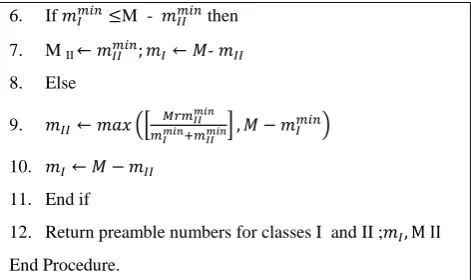
pinnacle throughput. In any case, if designate more than m_I^min introductions to class I, the general throughput diminishes while having no impact on the throughput and drop proportion of class I. Along these lines, by picking mI>m_I^min , the presentation of class II is superfluously debased. Succeeding these perceptions, recommend the Load-Adaptive Throughput maximizing Preamble Allocation (LATMAPA) aimed at deciding the vital measure of preludes (see Algorithm 1).I LATMAPA needs UE demand appearance rate gauges which can be gotten with blends of existing short and long , timescale expectation systems. The center thought of LATMAPA is that for the given appearance rates λI ,λII figure the separate vital number of introductions m_I^min , m_II^min utilizing Eqn. (6). On the off chance that there are sufficient assets to fulfil the need of the two classes ,i.e., t M >m_I^min +m_II^min ,, at that point designate to class II its necessary number of preambles,i.e., mII = m_II^min , and assign the rest of the introductions to class I:
mI =M- (6)
Subsequently, the number mI of introductions apportioned to class I is a least as huge as important Hence, class I is organized contrasted with class II.
Then, consider the over-burden situation while there are insufficient introductions to fulfill the interest of the two classes, i.e., M <m_I^min +m_II^min. So as to keep up a recommended degree of execution for class II, Familiarise a prioritization factor r; r ϵ [0; 1], that directs the base number of preludes apportioned to class II.
Specifically, designate to class II the part r of the relative portion of the M preludes as indicated by the proportion m_II^min/(m_I^min +m_II^min )of the necessary introductions for classes I and II, i.e., dispense r M m_II^min/(m_I^min +m_II^min ) prefaces to class II. Then again, if the ranking factor r is small to such an extent that the portion as per r would gives less prefaces to class II than are left in the wake of allotting m_I^min preludes to class I, at that point designate the rest of the M - m_I^min introductions to class II.
In this way, by and large, distribute the quantity of preludes indicated in Step 9. of Algorithm 1 to class. As indicated in Step 10. of Algorithm 1, at that point distribute the rest of the M-m_I^min introductions to class II. Then again, if the prioritization factor r is low to the point that the assignment as per r would gives less introductions to class II than are left in the wake of distributing m_I^min preambles to class I, at that point apportion the rest of the M - m_I^min preambles to class II. In this manner, by and large, allot the quantity of preludes determined in Step 9. of Algorithm 1 to class. As indicated in Step 10. of Algorithm 1, Then apportion the rest of the M - m_I^min introductions to class I.
Algorithm 1: Load Adaptive Throughput –Maximization Preamble Allocation (ILATMAPA)
1. Precedure I LATMAPA
2. UE req. arrival
rates: for low ;
3. RACH parameters; Wtransm. attempts, M preambles; 4. Prioritization factor r,r ;
5. Compute for 10
6. If M - then
7. M II -
8. Else
9.
10.
11. End if
12. Return preamble numbers for classes I and II ; End Procedure.
3.4. Fine-Tuning Method using Bat
Optimization Method
Bat streamlining calculation to redressing the constraint regulation in Load versatile throughput augmenting introduction designation that comprise constraint W broadcast endeavours as well as M preludes .to progress the throughput outcomes thru the ranking.
The creature Bat as well as its advanced capability of echolocation devises an intriguing region for the analysts. The significant element of bat is echolocation system which is only a sound is made and the separation of an item (ideal parameter esteem) are assessed by methods for the reverberation signal created by the bat.
This reverberation recognition technique helps in identifying the contrast between an impediment (superfluous worth ) and a prey (ideal worth), which enables them to chase even in entire haziness .
This inspiration of the system of the bat prompts another meta-heuristic streamlining strategy called Bat Algorithm. The situation is structured so that it executes as a group of bats scanning for prey/food(best constraint esteem )utilizing echolocation abilities .The accompanying standards are illustrated in BA echolocation uniqueness by the highlights of bats:
All bats can recognize the distinction between nourishment/prey as well as environments hindrances in some great way while detecting the separation in echolocation; The subjective speed with which the bats(features) flies is signified as speed vi at area xi with a recurrence fmin, variable wavelength γ and clamor A0 while looking prey(optimal esteem ).
The calibrating of wavelength (or recurrence) of their discharged heartbeats, the pace of heartbeat outflow, r∈[0,1] relying upon the confidence of their objective(optimal include);
In spite of the fact that there is a likelihood of variance of tumult in a few methods, expect that the noise varies from an enormous (positive) A0 to a least steady worth Amin[27,28]. In this effort bat populace are doled out as highlights of dataset. The standard Bat calculation is as per the following: Give the beginning position a chance to be xi, speed vi ,as well as frequency fi are instated for each bat bi .
[image:4.595.311.547.71.211.2]their speed and position by methods for conditions 1, 2, and 3 as pursues:
(7 )
(8)
(9)
Where β ∈ [0, 1] is an irregular vector drawn from a identical conveyance fi , means frequency of each bat, here x* is the existing worldwide finest arrangement (ideal worth ) which is situated subsequent to looking at all the solutions(all parameters ) among all n bats, at every emphasis.
An irregular number age is cultivated by the situating of refreshing of bats, if the arbitrary number is bigger than the beat emanation rate r I , another position will be produced around the present best arrangements, and it tends to be spoken to by condition (10)
= ∈ (10)
Where, ∈ [-1,1] , is an arbitrary number, whereas At is the normal uproar of the considerable number of bats at current emphasis.
Moreover, the clamor Ai as well as(xi)<f(x). Man-made intelligence the beat outflow rate riwill be refreshed then in the event that an arbitrary number is not as much as commotion Ai, at that point just arrangement will be acknowledged and f(xi)<f(x). Artificial intelligence and ri are refreshed by (11)
(11)
Where, are constants. The algorithm iterates until the termination criteria is met.
Bat Algorithm
Objective function (throughput) f(x ),x= (x1,………xd ) T
Set the bat population (constraints) xi ( i=1,2,….n)and vi
Describe pulse frequency fi at xi
Set pulse rates ri and the loudness Ai While (t <Max number of iterations)
Create new solutions ( optimal constraint value ) by adjusting frequency,
As well as updating velocities and locations/solutions [equations (8) to (10)]
if (r and >ri )
Select a solution among the best solutions Create a local solution around the selected best solution (
optimal parameter value )
end if
Generate a new solution by flying randomly
If (rand < Ai &f (xi )< f ( x*))
Accept the new solutions (optimal parameter value) Increase riand reduce Ai
end if
Rank the bats and find the current best x*
end while
Post process results and visualization
4.
RESULTS AND DISCUSSION
The proposed Improved Load-Adaptive Throughput- Maximizing Preamble Allocation (ILATMAPA) with Bat optimization.
ILATMAPA automatically adjusts the preamble allocation to the priority classes according to the random access load and a priority tuning parameter using BAT.
Extensive analytical and simulation evaluations indicate that ILATMAPA provides effective QoS differentiation across a wide range of random access loads, which are expected in 5G systems than the existing LATMAPA.
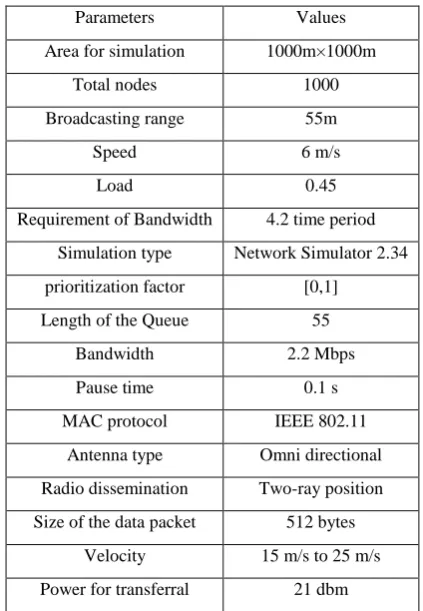
[image:5.595.322.534.369.675.2]The constraints of recreation are shown in Table 1.
Table 1: Parameters for Experiment
Parameters Values
Area for simulation 1000m×1000m
Total nodes 1000
Broadcasting range 55m
Speed 6 m/s
Load 0.45
Requirement of Bandwidth 4.2 time period Simulation type Network Simulator 2.34
prioritization factor [0,1]
Length of the Queue 55
Bandwidth 2.2 Mbps
Pause time 0.1 s
MAC protocol IEEE 802.11
Antenna type Omni directional Radio dissemination Two-ray position
Size of the data packet 512 bytes Velocity 15 m/s to 25 m/s Power for transferral 21 dbm
The exhibition measurements for the reproduction are
Packet delivery ratio is defined as the ratio of data packets received by the destinations to those generated by the sources.
Throughput: ratio of successfully received requests to the total number of transmission opportunities.
Packet loss: Packet loss is the failure of one or more transmitted packets to arrive at their destination.
[image:6.595.324.535.70.246.2] Delay: The delay of a network specifies how long it takes for a bit of data to travel across the network from one communication endpoint to another.
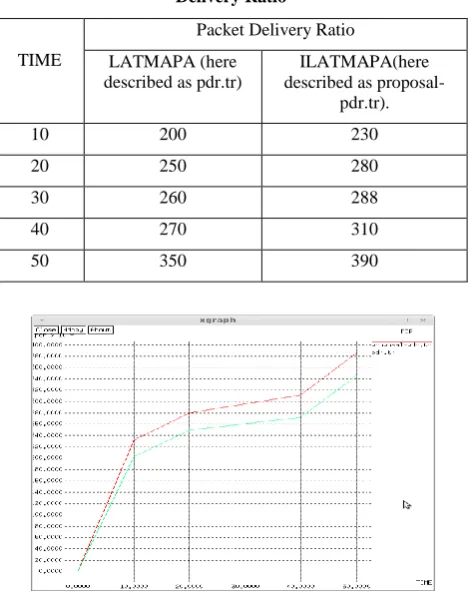
Table 2: Performance Comparison Results for Packet Delivery Ratio
TIME
Packet Delivery Ratio LATMAPA (here
described as pdr.tr)
ILATMAPA(here described as
proposal-pdr.tr).
10 200 230
20 250 280
30 260 288
40 270 310
50 350 390
Figure 1: Time v/s Packet Delivery Ratio
[image:6.595.51.288.182.484.2]Figure 1 depicts the time v/s packet delivery ration for existing LATMAPA (here described as pdr.tr) and proposed ILATMAPA(here described as proposal-pdr.tr).The delivery ratio is described in the Figure 5.1.It can be said that the proposed ILATMAPA approach have a higher ration of transmitting the packets when compared with the LATMAPA approach. From the figure, when number of nodes increases with respect to time the appropriate delivery ration also increases gradually.
Table 3: Performance Comparison Results for Routing Overhead
TIME
Routing Overhead LATMAPA (here
described as pdr.tr)
ILATMAPA (here described as
proposal-pdr.tr).
10 0.60 0.55
20 0.78 0.63
30 0.85 0.70
40 0.92 0.78
50 1.10 0.81
Figure 2: Time v/s Routing Overhead
Figure 2 compares the routing overhead between proposed ILATMAPA (here described as proposal-overhead.tr), and the existing LATMAPA(here described as overhead.tr) method. If the time increases, the overhead is increases linearly. In the existing method the routing overhead is increases than the proposed method as shown in Figure 2.
In contrast, ILATMAPA requires only average load as an input, and provides a closed-form expression for the optimal split.
Table 4: Performance Comparison Results for Throughput
TIME
Throughput LATMAPA (here
described as pdr.tr)
ILATMAPA (here described as
proposal-pdr.tr).
10 290 400
20 450 690
30 540 760
40 630 850
[image:6.595.313.548.381.723.2]50 890 1000
Figure 3: Time v/s Throughput
[image:6.595.53.286.620.765.2]It is noted that the proposed ILATMAPA attains higher throughput when compared with all the existing approach. It is important to exactly know the load value at the border between these two regions.
Therefore, the proposed method attains maximum throughput of 900×105 at the time of 50s.
Table 5: Performance Comparison Results for Packet Loss
TIME
Packet loss LATMAPA (here
described as pdr.tr)
ILATMAPA (here described as
proposal-pdr.tr).
10 790 650
20 810 730
30 830 750
40 840 770
[image:7.595.315.545.70.382.2]50 880 850
Figure: 4. Time v/s Packet Loss
Figure .4 shows the comparison result of packet loss for proposed ILATMAPA (here described as proposal-lost.tr), and the existing LATMAPA (here described as lost.tr) method. When the time increases then the corresponding packet loss ratio gets increases linearly. The proposed work has less packet loss rate of 850×105 at the time of 50s. At the same time the existing method has packet loss rate of 870×105. Following these observations, it is concluded that the proposed ILATMAPA is highly effective for determining the necessary amount of preambles with the use of evolutionary algorithm.
Table 6: Performance Comparison Results for Delay
TIME
Delay LATMAPA (here
described as pdr.tr)
ILATMAPA (here described as
proposal-pdr.tr).
10 1.1 0.89
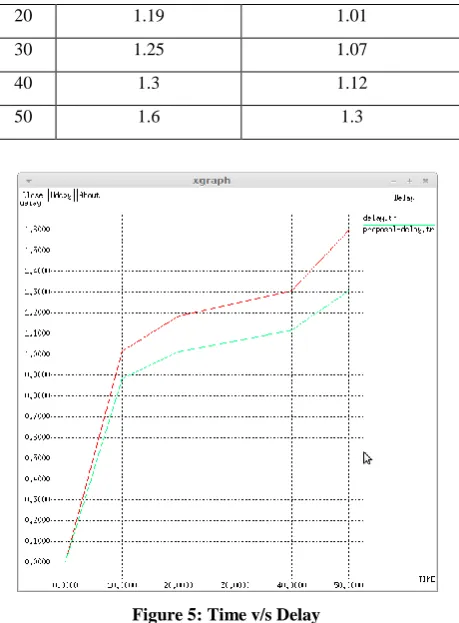
20 1.19 1.01
30 1.25 1.07
40 1.3 1.12
50 1.6 1.3
Figure 5: Time v/s Delay
Figure 5 shows the comparison result of delay for proposed ILATMAPA (here described as proposal-delay.tr), and the existing LATMAPA (here described as delay.tr) method. Moreover, when the time is increased, the proposed method established a reduction in delay by than in existing method. In proposed work, still maintains low drop ratio for the prioritized request class using BAT. This leads to the proposed work have lesser delay when compared with the existing work LATMAPA method. Because the proposed method has delay rate of 1.30slots at the time of 50s, at the same time the existing method has 1.60slots. From these results, it is obvious that the proposed method gives optimal performance up to the exhaustion of available preambles by the prioritized class.
5.
CONCLUSION
[image:7.595.50.286.171.552.2]6.
REFERENCES
[1] Priller, P., Entinger, A., & Berger, A. (2019). U.S. Patent No. 10,193,572. Washington, DC: U.S. Patent and Trademark Office.
[2] Khan, I., Belqasmi, F., Glitho, R., Crespi, N., Morrow, M., & Polakos, P. (2015). Wireless sensor network virtualization: A survey. IEEE Communications Surveys & Tutorials, 18(1): 553-576.
[3] Yao, Y., Cao, Q., & Vasilakos, A. V. (2013). EDAL: An energy-efficient, delay-aware, and lifetime-balancing data collection protocol for wireless sensor networks. IEEE 10th international conference on mobile ad-hoc and sensor systems, pp. 182-190.
[4] Liu, Q., Wang, Z., He, X., & Zhou, D. H. (2015). Event-based recursive distributed filtering over wireless sensor networks. IEEE Transactions on Automatic Control, 60(9):2470-2475.
[5] Yang, X., Deng, D., & Liu, M. (2015). An overview of routing protocols on Wireless Sensor Network. IEEE International Conference on Computer Science and Network Technology (ICCSNT) 1: 1000-1003.
[6] Ghosh, R.K. (2017). Mobile Distributed Systems: Networking and Data Management. In Wireless Networking and Mobile Data Management, pp. 3-20.
[7] Elhoseny, M., & Hassanien, A. E. (2019). Mobile object tracking in wide environments using WSNs. Dynamic Wireless Sensor Networks, pp. 3-28.
[8] Marikkannu, P., & Priyanka, R. (2015). Dynamic Environment Monitoring and Alerting System in WSN. International Research Journal of Engineering and Technology (IRJET), 2(3):156-158.
[9] Hassan, F., Roy, A., & Saxena, N. (2016). Convergence of WSN and cognitive cellular network using maximum frequency reuse. IET Communications, 11(5): 664-672.
[10]Jin, R., Xu, H., Cai, Y., Hua, Z., Zhu, M., & Wang, L. (2016). A localisation algorithm based on region partition of cellular network in wireless sensor networks. International Journal of Sensor Networks, 20(2): 63-69.
[11]Liang, Y., Li, X., Zhang, J., & Ding, Z. (2017). Non-orthogonal random access for 5G networks. IEEE Transactions on Wireless Communications, 16(7): 4817-4831.
[12]Du, Q., Li, W., Liu, L., Ren, P., Wang, Y., & Sun, L. (2016). Dynamic RACH partition for massive access of differentiated M2M services. Sensors, 16(4): 1-19.
[13]Astudillo, C. A., de Andrade, T. P., & da Fonseca, N. L. (2017). Allocation of control resources with preamble priority awareness for human and machine type communications in LTE-Advanced networks. IEEE International Conference on Communications (ICC), pp. 1-6.
[14]Kim, J., & Lee, J. (2017). Exploiting the capture effect to enhance RACH performance in cellular-based M2M communications. Sensors, 17(10):1-22.
[15] Saur, S., Weber, A., & Schreiber, G. (2015). Radio access protocols and preamble design for machine type communications in 5G. In 2015 49th Asilomar Conference on Signals, Systems and Computers, pp. 8-12.
[16] Wunder, G., Stefanović, Č., Popovski, P., & Thiele, L. (2015). Compressive coded random access for massive MTC traffic in 5G systems. IEEE Asilomar Conference on Signals, Systems and Computers , pp. 13-17.
[17] Wu, Y., Kang, G., Guo, Y., Zhu, X., & Zhang, N. (2016). An improved random access scheme for M2M communications. China Communications, 13(6): 12-21.
[18] Wu, Y., Zhang, N., & Kang, G. (2017). A new hybrid protocol for random access and data transmission based on two-phase ACB mechanisms for M2M communications. Mobile Information Systems, pp.1-.12.
[19] Cherkaoui, S., Keskes, I., Rivano, H., & Stanica, R. (2016). LTE-A random access channel capacity evaluation for M2M communications. IEEE Wireless Days (WD), pp. 1-6.
[20] Du, Q., Li, W., Liu, L., Ren, P., Wang, Y., & Sun, L. (2016). Dynamic RACH partition for massive access of differentiated M2M services. Sensors, 16(4):1-19.
[21] Bello, L. M., Mitchell, P. D., & Grace, D. (2018). Intelligent RACH Access Techniques to Support M2M Traffic in Cellular Networks. IEEE Transactions on Vehicular Technology, 67(9): 8905-8918.
[22] Chatterjee, D., Heo, Y. H., Niu, H., Xiong, G., He, H., Khoryaev, A., & Panteleev, S. (2017). U.S. Patent No. 9,788,186. Washington, DC: U.S. Patent and Trademark Office, pp.1-22.
[23] Fwu, J. K., Niu, H., Wang, P., Yang, X., & Etemad, K. (2016). U.S. Patent No. 9,398,551. Washington, DC: U.S. Patent and Trademark Office, pp. 1-21.
[24] Novlan, T. D., Majmundar, M., & Ghosh, A. (2019). U.S. Patent No. 10,206,232. Washington, DC: U.S. Patent and Trademark Office, pp. 1-32.
[25] Vilgelm, M., Guersu, H. M., Kellerer, W., & Reisslein, M. (2017). LATMAPA: Load-adaptive throughput-maximizing preamble allocation for prioritization in 5G random access. IEEE Access, 5: 1103-1116.
[26] Yuvaraj, T., Devabalaji, K. R., & Ravi, K. (2018). Optimal Allocation of DG in the Radial Distribution Network Using Bat Optimization Algorithm. In Advances in Power Systems and Energy Management, pp. 563-569.
[27] Chakri, A., Khelif, R., Benouaret, M., & Yang, X. S. (2017). New directional bat algorithm for continuous optimization problems. Expert Systems with Applications, 69: 159-175.