Development of Six Inches Solid/Hollow Block
Mould using Saw Dust as Composite Material for
Moulding
Gbasouzor Austin Ikechukwu Member IAENG, Ikenga Emmanuel, Owuama Kennedy Chinedu
Abstract – This project aims to convince that sawdust blocks can be seen as an alternative to sand made blocks. Experimental study was carried out on sawdust blocks prepared by completely replacing sand with sawdust, water retained and Polyvinyl Acetate (PVA) as binding agent. Influence on compressive strength, water absorption capacity and density characteristics were studied. Effect of type of curing on compressive strength, density etc. was carried out on the molded sawdust blocks. Blocks of 6 inches were considered under test. The results of the various tests: water content not exceeding 40%, the moisture content of the molded block, 26.58% and the optimum compressive strength of the block 4.5 N/m were sufficiently encouraging and it is suggested that sawdust blocks are suitable for structural applications, and can be an alternative to sand mould block.
Keywords: wood saw dust, mould, solid and hollow block, polyvinyl acetate, structural application, water absorption, optimum compressive strength.
I.INTRODUCTION
Sawdust, in normal term is called wood dust. Saw dust is generally considered as a timber industrial waste that pollutes the environment but can become a valuable commodity either as a raw material in manufacturing industries for wood boards light construction materials such as shelves, notice board wall and roof sheeting for mobile houses as an insulator.
Sawdust or wood dust is a by-product or waste product of woodworking operations such as sawing, milling, planning, routing, drilling and sanding. It is composed of fine particles of wood. These operations can be performed by woodworking machinery, portable power tools or by use of hand tools. Wood dust is also the byproduct of certain animals, birds and insects which live in wood, such as the woodpecker and carpenter ant. It can present a hazard in manufacturing industries, especially in terms of its flammability. Sawdust is the main component of particleboard and has been wildly regarded as a sand replacement material use in erecting building in Northern Nigeria. Wood dust is a form of particulate matter, or particulates. Research on wood dust health hazards comes within the field of occupational health science, and study of wood dust control comes within the field of indoor air
Gbasouzor Austin Ikechukwu is a PhD Researcher a senior lecturer in the Department of Mechanical Engineering. Chukwuemeka Odumegwu Ojukwu University, P. M. B. 02 Uli. Nigeria, Phone: +2348034247458 E-mail:[email protected], [email protected],
Ikenna Emmanuel is a Post Graduate Researcher and a Lecturer in the Department of Mechanical Engineering, Federal Polytechnic Nekede, P. M. B. 1036 Owerri, Imo State. Nigeria. E-mail: [email protected]
Owuama Kenndy Chinedu is a Senior Lecturer in the Department of Mechanical Engineering. Chukwuemeka Odumegwu Ojukwu University, P. M. B. 02 Uli. Nigeria. E-mail: [email protected]
quality engineering. (Zhang, 2004) Two waste products, dust and chips, form at the working surface during woodworking operations such as sawing, milling and sanding. These operations both shatter lignified wood cells and break out whole cells and groups of cells. Shattering of wood cells creates dust, while breaking out of whole groups of wood cells creates chips. The more cell-shattering occurs, the finer the dust particles that are produced. For example, sawing and milling are mixed cell shattering and chip forming processes, whereas sanding is almost exclusively cell shattering. (Felman et al, 2005) (Baran et al, 2007). Questions about the science behind the determination of sawdust being an environmental hazard remain for sawmill operators (though this is mainly with finer particles), who compare wood residuals to dead trees in a forest. Technical advisors have reviewed some of the environmental studies, but say most lack standardized methodology or evidence of a direct impact on wildlife. They don’t take into account large drainage areas, so the amount of material that is getting into the water from the site in relation to the total drainage area is minuscule. Other scientists have a different view, saying the "dilution is the solution to pollution" argument is no longer accepted in environmental science. The decomposition of a tree in a forest is similar to the impact of sawdust, but the difference is of scale. Sawmills may be storing thousands of cubic meters of wood residues in one place, so the issue becomes one of concentration. But of larger concern are substances such as lignin and fatty acids that protect trees from predators while they are alive, but can leach into water and poison wildlife. Those types of things remain in the tree and, as the tree decays, they slowly are broken down. But when sawyers are processing a large volume of wood and large concentrations of these materials permeate into the runoff, the toxicity they cause is harmful to a broad range of organisms. (Canadian Geography, 2006).
A. Background of Study
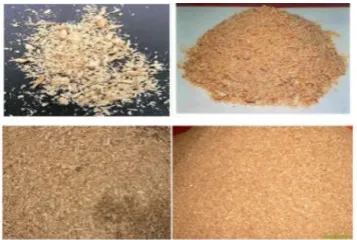
oxide, can cause environmental pollution issues. Saw dust is industrial waste material which is obtained from sawdust refuse dump from timber shade & saw mills, in various shapes and sizes as shown in plate 1. 0. This by product of saw mills, unless reprocessed in to particle board, are burned in a saw dust burner and are use to make heat for other milling operation, saw dust may collect in pipes and add harmful leaching into local water systems, creating an environmental hazard. In Nigeria a proper utilization of saw mill waste has not been given due attention. This saw dust constitutes an environmental nuisance as they form refuse heaps in the premises of saw mills and shades. Similarly sand is naturally occurring granular material composed of finely divided rock and minerals particles obtained from Perennial River. Huge consumption of sand in concrete structures is also facing an acute shortage of sand. According to the environmentalist (Canadian Geography, 2006) removal of sand from river may create environmental problems in future to come hence a need for sawdust blocks.
Fig. 1 Different particles of Saw Dust
Density of saw dust varies from 650 kg/m3 to 1650 kg/m3. If this is completely used in manufacturing the mortar blocks, it will reduce the density to a considerable extent. Compressive strength of blocks is a measure of their resistance to load application when placed in the crushing machine. I.S / B.S recommend 3.45 N/mm2 mean strength and 2.59N/mm2 lowest strength (Weinaah, 2007).
B. Aims
This research aimed at the following below
To mould sawdust block to replace sand made blocks for structural applications.
To fabricate six inches mould suitable for sawdust composite materials.
C. Objectives
The objectives of the study are identified as follows:
To develop optimum composition of sawdust composite material from wood waste, sawdust and coconut oil as coupling agent.
To determine the material strength and physio-chemical parameters of the composite material produced.
To determine the moisture content of the composites.
To determine the density of sawdust molded block and it economic benefit.
D. Justification
This project helps to address some of the pertinent issues relating to industrial and urban waste management in Nigeria. The project proposes a key measure to prevent indiscriminate disposal of these principal wastes, apart from punitive enforcement of legislature. This is to develop technological solutions by providing alternative use for these waste materials which will place a value on them. Identifying the potential use of waste to create job and inadvertently help in shaping public attitude towards its disposal and create job in the long term.
E. Scope of Research
This research work is limited to the experimental study of sawdust as a means of controlling wood waste in our environment and how it can be used to generate income. This research work covers the fabrication and molding of 6 inches block mould using sawdust as a major material. However, fire resistance, weather, resistance, thermal and sound insulation though important are beyond the scope of this study and needs separate investigation.
F. Limitations of the Research
The problem is that no much work has been done to develop sawdust reinforced composite products in the field. To ensure sustainable consumption and production patterns in the timber industry, processing of downstream waste to profitable wood products is of essence both economically and environmentally.
II LITERATURE REVIEW
Burgess et al (2004) carried out a study to discover wood dust extractors and they concluded that low volume and high velocity extractors, designed as an integral to the cutting tool is the appropriate device for controlling wood dust. Yuanhui (2004) proves that wood particles below 50µm are not normally visible to the naked eye. Zhang (2004), studied and defined the size of indoor and wood particles according to fractional size range.
Felman et al. (2005) carried out an experiment to explore the uses of wood dust and he concluded that wood dust could be used to produce cutler’s resin when mixed with water and frozen. Green et al. (2006), claims that sawdust could be used for manufacturing of charcoal briquettes for automobile applications after several research. Kaupinnen et al (2006), carried out a study to estimate occupational exposure to inhalable wood dust by country and concluded that the highest exposure level were estimated to occur in construction sector and furniture industry. Baran et al. (2007), carried out an intense research on saw dust and discovered that sawdust is carcinogenic in nature. Sekyere et al (2007), carried out a study to determine sources of sawdust and concluded that Nigerian saw mills generate an average annual wood residue of 33.3 %. Weinaah (2007), the waste sawdust constitutes about 18 % of 1500 tones of solid waste generated in Nigeria daily. Most of this sawdust tends to be low density.
Nyiszli (2011), characterized dust emitted in wood industry into dimensional disintegration of particles up to 5um and said that is why they precipitate mostly in nasal cavity. Wood dust exposure (2012), discovered that airborne wood dust when accumulated, presents a high health and safety hazard. Nigeria Budget (2013), currently, the contribution of the timber/lumbering industry to Gross Domestic Product accounts for 5 % GDP and 11% of National export revenue.
A. History of Sawdust
In the 19th Century, Oshkosh, Wisconsin became known as 'Sawdust City' thanks to its 24 sawmills. Today's Oshkosh residents hold the annual Sawdust Days festival, which won the 'People's Choice Award' in 2005 and 2006. 'Beehive' burners 1, which are not legal to operate in Canada anymore, were once used to burn up sawdust at lumber mills. They still exist but are a lot more attractive now that they are not zooming smoke.
In the olden days when barbers, dentists and also surgeons, there's no doubt that the floors of their premises were sawdust-strewn for ease of mopping up gory spills. Buckets of sawdust would have been a necessary cargo on board old sailing ships, just in case any passengers or crew members suffered a bout of mal-de-mer (seasickness). Sawdust would most likely be spread on the floor of the 'square circle' (a boxing ring) in the event of either sparring athlete having to spit out any loosened teeth complete with accompanying blood. Mixing together two parts sawdust with one part dry wallpaper paste and water makes a clay recipe suitable for children to model (under adult supervision). Once the shapes – which can be anything from dinosaurs to aliens – are crafted, they should be left to dry for more than 24 hours before being painted.
B. Uses of Saw dust
Sawdust can be used in your Garden to:
Amend Your Soil: Add small amounts of sawdust to your soil to increase organic matter and improve its texture. Because sawdust is very slow to decompose, it works especially well in moist, heavy soils like clay, where soil amendments tend to break down quickly.
Compost It: For composting purposes, sawdust is considered a "brown" (carbon) material, which can be added in alternating layers to balance out the "green" (nitrogen) materials like grass clipping and food scraps. Sawdust also acts as a bulking agent, allowing air into the pile. It takes approximately a year to transform raw sawdust into finished compost. (Baran et al, 2007)
Discourage Weeds: Not many gardeners know this, but sawdust (especially from hardwoods like walnut trees) is a natural weed killer. Sweep it between the cracks and crevices of concrete sidewalks and in between stepping stones to help prevent weeds from popping through.
Grow Mushrooms: If you have ever considered growing your own mushrooms, sawdust can make a good growing medium. Unlike green garden plants, mushrooms lack chlorophyll and rely on other organic materials for their food. In nature, logs work well for this. In the garden, you can use a mixture of sawdust and woodchips. Growing mushrooms successfully requires monitoring temperature and light.
Mulching: Sawdust has an acidifying effect on the soil, and is a good choice for mulching around acidloving plants like conifers, blueberries, strawberries and rhododendrons. Keep in mind that fresh, non-composted sawdust will hog nitrogen as it decomposes, so using too much of it without adding supplemental fertilizer to the soil can cause a nitrogen deficiency in your plants. (Tyagher, 2011).
Pave a Path: Sawdust is the ideal material for creating an inexpensive garden path. It's soft, looks natural, helps control erosion, and it smells really great! Start by marking out your path. Clear away existing grass and weeds to expose the soil. Apply a thick layer of sawdust and tamp it firmly into place. Walked-on sawdust compacts quickly, so expect to refresh your path every few years.
Repel Slugs: Sawdust (especially coarser sawdust) can help keep slugs at bay. Raise the foliage around susceptible plants and apply several inches around the base of stems.
Soak Up Spills: Sawdust is highly absorbent, which great for cleaning up occasional drips and leaks from lawn and garden equipment. Keep a bucket handy in your garage or garden shed. Toss a handful of sawdust over the spillage, wait for it to be absorbed, and then sweep it up cleanly with a broom.
Store Root Crops: Root vegetables like carrots, beets, and turnips can be placed in a single layer and kept over the winter in a box filled with fresh sawdust. To maximize their shelf-life, store the box in a cool place like a semi-heated garage or unsemi-heated basement at approximately 35-40 degrees F. ( David, 2005)
III MATERIALS & METHOD
A. Materials
The materials used to manufacture light weight sawdust block consist of PVA (Polyvinyl Acetelyn), red oxide, Sawdust (mix of teak and mango and other species trees etc.) obtained from saw mills (fineness modules 3.636 inches solid blocks were produced under laboratory condition. The mix ratio used was 1:4 to 1:8. 4 blocks sample were casted. The sawdust percentage and water ratio to make workable mixture at each level is shown in table 1.
The required quantities of material were weighted as per proportions and mixing was done as per IS specification. Drum type mixer was used for mixing the material.
B. Molding: - Casting was affected as per IS specification and compacted with the help of rammer.
C. Curing: Specimens were divided into two sets for curing under sprinkling method and wet gunny bag method and was affected up to 6 days, 13 days & 27 days, for testing the blocks for 7 days, 14 days & 28 days. The molding was affected after 48 hours.
Fineness modulus of saw dust was found to be 3.69. Moisture content of sawdust was found to be 9.3% which is within the permissible limit.
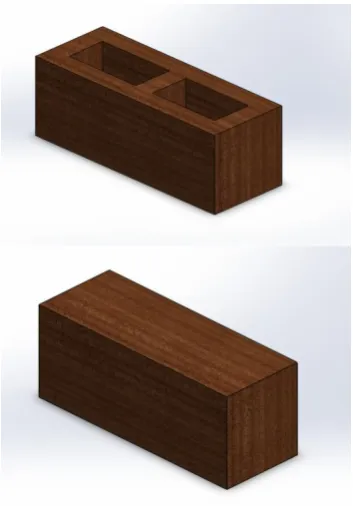
[image:4.595.300.555.78.137.2]Curing and its types plays vital role on the effect of compressive strength. The main objective of curing is to keep sawdust saturated or nearly saturated so as to support the hydration of the white glue, eliminating problem likes plastic shrinkage cracking. Sprinkler curing and Gunny bag curing are tested for compressive strength at 7, 14 and 28 days.
Fig 2: Solid and Hollow Mould
[image:4.595.298.553.173.250.2]Fig 3: Solid and Hollow Saw Dust Block
[image:4.595.95.256.185.418.2]Table 1: Compressive strength of block with days for various ratio of saw dust, water and curing
Table 2: Moisture content reduction with days
Moisture content, %
% Reduction
Mass (g)
% Reduction in Mass
Day 1 9 3 98 7
Day 7 6 2 74 5
Day 14
4 2 61 3
Day 21
2 0 32 1
Fig 4: Compressive Strength and Mass
Sawdust Water Compressive Strength (Nmm2) Type of
Curing 7 days 14 days 21 days
1 400g 0.3 litres 2 2.2 2.2 S.C
1.79 1.8 1.8 G.C
2 200g 0.25litres 2.1 2.0 2.2 S.C
1.89 1.8 2.1 G.C
0 0.5 1 1.5 2 2.5
0 1 2 3 4 5 6 7
Compressive Strength
7 days
14 days
21 days
0 100 200 300 400 500 600
0 1 2 3 4 5
Moisture content
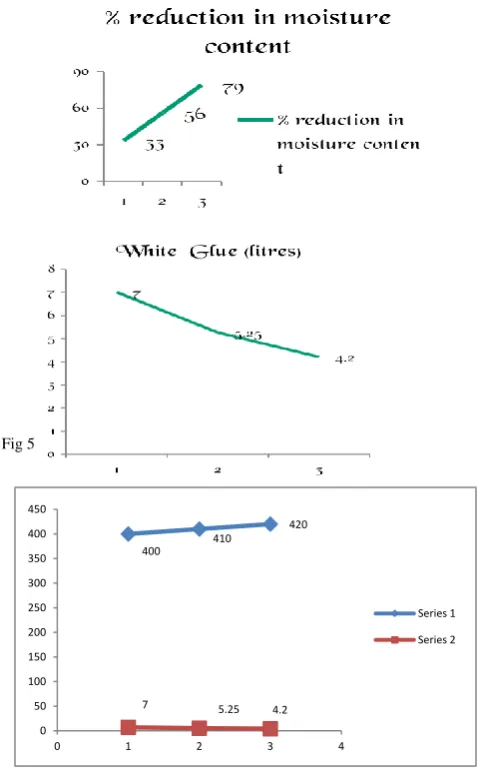
[image:4.595.309.561.283.671.2] [image:4.595.58.235.459.712.2]Fig 5: Saw dust with white glue
Fig 6: Sawdust with Polyvinyl Acetate (PVA)
IV RESULT
To introduce the use of sawdust in blocks, the experimental analysis has been carried out. All experimental data and their results have been presented in the form of Tables and Graphs. The Table 1 and typical nature of graph shown in Fig. 4 to 6 shows that as the percentage of water increases, there is reduction in compressive strength significantly. As the study emphasizes on the partition wall of the framed structure, the reasonable low compressive strength blocks can also be used in the construction work. The behavior of block in compression as shown in fig. 4 to 6 reveals that compressive strength is more under gunny bag curing as compared to sprinkler curing. This may be due to the fact that, the gunny bag provides higher range of hydration to the block, that lead to desirable results. The average value of the strength required for partition wall varies from 3 to 5 N/mm2. It is worth noting here that the gunny bag curing to 3:1 (1 part of sawdust to 3 part) provides sufficient compressive strength (4.5.N/mm2) to meet practically any requirement in the partition wall construction in framed structure multi-storied building. Density analysis shows that as % of sawdust increases, the density is greatly reduced. The results are shown in Table 2. As sawdust increases in the block, the density of the mortar decreases. The proportions of 3:1 of sawdust and PVA have the observed valued of density as
2000 kg/m3. The absorption of water to some extent is appreciable and advisable, but excessive of it causes various defects in the block. Rain water, shrinkage of block after drying, thus cracking of blocks, opening of the joints are few points to be taken in to consideration. The addition of sawdust to the block raises the limit of its water absorption to significant extent. It is noted that it is the % of sawdust causing the increase in water absorption capacity. For sawdust, water absorption capacity was found to be only 4%, which is within permissible limit. As compared to conventional concrete blocks, 15 to 20% saving in terms of cost of material is possible if saw dust blocks are used as masonry material in frame structure building.
Apparatus
Balance allowing a reading to an accuracy of 0.1% of the specimen’s dry mass. Ventilated oven, holding a temperature of 105 ± 2 º C and test samples.
I. Procedure
The specimen was weighed in air ( ) with the actual moisture content. The specimen was then immediately placed in a ventilated oven holding a temperature of 105 ± 2 º C and dried to constant mass ( . Constant mass was considered to be reached when the mass over a period of 2 hours does not differ more than 0.1%.
II. C. Expression of Results
The moisture content of each test specimen was calculated by the formula:
Moisture Content for Solid block = x100 (1) Where:
Is the measured mass when wet
Mass of solid mould containing block- mass of empty mould
25.2kg – 10.6kg = 14.6kg and = mass after drying = 11.534kg
Moisture Content for Solid block = x100 =
x100 = 26.58%
Moisture Content for Hollow block = x 100 (2)
Mass of hollow mould containing block- mass of empty mould
21.2kg -12.6kg =8.6kg and = 6.794kg =mass after drying hollow block.
Moisture Content of hollow block = x100 =
x100 =26.58%
The possible Sources of Errors during the test include:
Error due to inaccurate mass measurement.
Zero error from the beam used
Partial drying of the saw dust may make it difficult to actually as certain the moisture content
Time factor
. 4.5 Preparation of the composite material
400
410
420
7 5.25 4.2
0 50 100 150 200 250 300 350 400 450
0 1 2 3 4
Series 1
The coupling agent (coconut oil) was added at varied proportion of 0,5,10,15,20 wt% on shredded PE plastic at the proportion of 30 to 55 wt % mixed and heated in a beaker till melted to the molten state at 120oC. The required quantity of saw dust was added to the melted plastic and stirred continuously until uniformly mixed at 140oC for 10 min. The total weight of each sample was 30 g. Temperature was measured using K-type thermocouples.
The molten mixture was poured into a rectangular metal mould of dimension 132 mm x 37 mm x 7 mm and pressed to a maximum pressure of 10 MPa whilst still hot using a 10 tonnes laboratory press (Apex Construction Ltd, London and Dartford).
E. Determination of sawdust particle density
Particle density of saw dust sample was determined by the methods employed by (Araki et al, 2004). An empty 10 ml density flask was initially weighed and subsequently filled to the 10 ml volume mark with sawdust. Its combined weight was then recorded. The weight of the empty density flask was subtracted from the combined weight. The density was then calculated using the formula:
Where:
Wb = Weight of sawdust and flask (g). Wa =Weight of empty
flask (g).
Vo = Volume of the flask (cm3).
Sawdust Particle density = (3) F. Selection of oil Quantity
A typical formulation of a sample weighed 30 g. The oil content was varied as follows: 0, 5, 10, 15, and 20 wt % using 63 µm-90 µm particle sizes as recommended in literature by Sark et al, (1997). The remainder of the proportion was equally split between sawdust to plastic ratio. The material preparation is referred according to the process detailed in section 3.1. The density, porosity and flexural strength were determined to ascertain the optimum oil ratio.
Table 3 Sample formulation for sieve size selection
V. CONCLUSIONS
From the results so far, it could be concluded that:
a) The volume of sawdust required to meet up with the complete replacement required proper mixing and made it very tedious.
b) Increase in the sawdust also increases the water ratio used.
c) The research work confirms that the presence of tannin in sawdust acts as retarder, adversely affecting block strength.
d) Though, as the percentage water content increases in the mixture, the compressive strength decreases. But, for the blocks manufactured with less water mixture however, it did not appear to have a significant effect on the compressive strength of the sawdust blocks.
e) The water ratio increases as the percentage of sawdust increases.
f) There was significant reduction in weight. It could, therefore, be concluded that:
To achieve a better result in the use of sawdust for blocks production, the water content should not be more than 40%.
Whenever building weight is an important factor, then sawdust blocks could be a good option.
Sawdust blocks are eco-friendly product.
However, there is need for further studies on the fire resistance and standardization of sawdust blocks.
REFERENCES
[1] Adebakin I. H.,(2012), “Uses of sawdust and mixture in production of low-cost and light-weight hollow sandcrete blocks. American journal of scientific and industrial research. volume 3, issue 6 page no. 458-463.
[2] Atis C.D., (2005), “Influence of dry and wet curing conditions on compressive strength of silica fume concrete”, Building and environment, 2005, Vol. 40 p.p. 1678-1683
[3] Baran, S., & Teul, I. (2007). Wood Dust: An Occupational Hazard Which Increases the Risk of Respiratory Disease. Journal of Physiology and Pharmacology 58, Suppl. 5, pp.43–-50.
[4] Baran, S., & Teul, I. (2007). Wood Dust: An Occupational Hazard Which Increases the Risk of Respiratory Disease. Journal of Physiology and Pharmacology 58, Suppl. 5, pp.43–-50.
[5] Canadian Geographic Online Archived 2006-04-28 at the Wayback Machine.
[6] Ettu L. O. , (2013). Variation of OPC- Rice Husk Ash- Saw Dust Ash composites strength with mix proportion ISSN:2277-9655 Impact factor: 1.852 Ettu. 2(8): August,2013)
[7] Felman, D. (2005) "Why Did Bars Used to Put Sawdust on the Floor? Why Don't They Anymore?" Why Do Elephant's Jump? HarperCollins, New York, page 118, ISBN 978-0-06-053914-6, quoting Christopher Halleron, bartender and beer columnist.
[8] https://en.m.wikipedia.org/wiki/Sawdust Jump up^ Green, Harvey (2006) Wood: Craft, Culture, History Penguin Books, New York, page 403, ISBN 978-1-1012-0185-5
[9] Jump up^ "Report on Carcinogens, Twelfth Edition, Wood Dust"(PDF). Retrieved July 12, 2014.
[10] Jump up^ "Wood Dust Exposure". State Compensation Insurance Fund. Retrieved April 30, 2012.
[11] Kaupinnen, T., (2006). Occupational Exposure to Inhalable Wood Dust in the Member States of the European Union. Ann Occup Hyg (2006) 50 (6): 549-561.
[12] Nassauer S., (2011). "Why Wood Pulp Makes Ice Cream Creamier". The Wall Street Journal.
[13] Neville A. M.,(1983). “Proportion of concrete” 3rd edition, long man science & Technology, Horrow esses, U. K.
Nyiszli, M., (2011). "3". Auschwitz: A Doctor's Eyewitness Account. New York: Arcade Publishing. p. 34.
[14] Parkar T. W., (1997). Sawdust cement and sawdust products, Journal of light weight concrete 1,2 p.p. 41,108 Dec. 1997. [15] Tyagher S.T., (2011). “Suitability of Saw Dust ash-lime mixture for
Production of Sandcrete Hollow Blocks”, Nigerian Journal of Technology Vol. 30, No. 1, March 2011.
[16] Yuanhui Z., (2004). Indoor Air Quality Engineering. Boca Raton, Florida: CRC Press, p.18
[17] Yuanhui Z., (2004). Indoor Air Quality Engineering. Boca Raton, Florida: CRC Press, p.14