Engineer Manual 1110-1-4009
Washington, DC 20314-1000
23 June 2000
Engineering and Design ORDNANCE AND EXPLOSIVES RESPONSE
Distribution Restriction Statement
Approved for public release;ENGINEERING AND DESIGN
ORDNANCE AND EXPLOSIVES RESPONSE
ENGINEER MANUAL
AVAILABILITY
CEMP-RA Washington, DC 203 14- 1000
Mamlal
No. 11 lo- l-4009
23 June 2000
Engineering and Design ORDNANCE AND EXPLOSIVES
1. Purpose. This manual provides the U.S. Army Corps of Engineers (USACE) personnel with the procedures to be used to perform engineering and design activities for all phases of Ordnance and Explosives (OE) response actions.
2. Auulicabilitv. This manual applies to all Headquarters, USACE (HQUSACE) elements and all USACE commands having responsibility for performing OE response activities.
3. Distribution Statement. Approved for public release; distribution is unlimited.
4. References. Required and related references are at Appendix A.
5. Explanation of Abbreviations and Terms. Abbreviations/acronyms and special terms used in this manual are explained in the glossary.
FOR THE COMMANDER:
1 Appendix
CEMP-RA Washington, DC 20314-1000
Manual 23 June 2000 No. 1110-1-4009
Engineering and Design
ORDNANCE AND EXPLOSIVES RESPONSE TABLE OF CONTENTS
Paragraph Page
CHAPTER 1. INTRODUCTION
Introduction 1-1 1-1
Project Team Members 1-2 1-1
Safety 1-3 1-2
Data Quality Objectives 1-4 1-2
CHAPTER 2. PROJECT PLANNING
Introduction 2-1 2-1
Statement of Work 2-2 2-1
Cost Estimating 2-3 2-4
Project Schedule 2-4 2-6
CHAPTER 3. SITE VISIT
Introduction 3-1 3-1
Performance Objectives 3-2 3-1
Types of Site Visits 3-3 3-1
Site Visit Attendees 3-4 3-2
Site Visit Requirements 3-5 3-3
Site Visit Information 3-6 3-3
CHAPTER 4. WORK PLANS
Introduction 4-1 4-1
Performance Objectives 4-2 4-1
Work Plan Review 4-3 4-1
Work Plan Contents 4-4 4-1
TABLE OF CONTENTS
Paragraph Page
CHAPTER 5. REGULATORY COMPLIANCE
Introduction 5-1 5-1
Performance Objectives 5-2 5-1
OE Response Regulatory Authorities 5-3 5-1 Applicable or Relevant and Appropriate Requirements 5-4 5-1 Environmental Considerations 5-5 5-1
Environmental Survey 5-6 5-1
Environmental Protection Plan 5-7 5-2
CHAPTER 6. SITE RECONNAISSANCE
Introduction 6-1 6-1
Data Quality Objectives 6-2 6-1
Statement of Work 6-3 6-3
Planning Considerations 6-4 6-4
CHAPTER 7. GEOPHYSICAL INVESTIGATIONS FOR UNEXPLODED ORDNANCE (UXO)
Introduction 7-1 7-1
Objective 7-2 7-1
Initial Geophysical Planning 7-3 7-1
Geophysical Instruments 7-4 7-2
UXO Detection Rates and Detection Depths 7-5 7-8
Geophysical Instruments and Electric Fuze Safety 7-6 7-13
Analysis Software 7-7 7-13
Navigation 7-8 7-13
Site Preparation and Vegetation Removal 7-9 7-14
Geophysical Prove-out 7-10 7-15
Geophysical Investigation Plan 7-11 7-20
Geophysical Sampling 7-12 7-21
Sampling Within a Sector 7-13 7-22
Sampling Anomalies within a Grid 7-14 7-27
Data Interpretation, Resectorization and Decision Making 7-15 7-28
Geophysical Mapping 7-16 7-28
Digital Data Format and Storage 7-17 7-30
TABLE OF CONTENTS
Paragraph Page
CHAPTER 8. LOCATION SURVEYING AND MAPPING
Introduction 8-1 8-1
Overview 8-2 8-1
Data Quality Objectives 8-3 8-1
Statement of Work 8-4 8-3
Location Surveys and Mapping Plan 8-5 8-4
Planning Considerations 8-6 8-5
Mapping 8-7 8-7
Deliverables 8-8 8-8
CHAPTER 9. GEOSPATIAL DATA AND SYSTEMS
Introduction 9-1 9-1
Requirements for the Acquisition and Access of
Geospatial Data 9-2 9-1
Data Quality Objectives 9-3 9-1
Statement of Work 9-4 9-3
Planning Considerations 9-5 9-3
Deliverables 9-6 9-5
CHAPTER 10. RISK CHARACTERIZATION
Introduction 10-1 10-1
Data Quality Objectives 10-2 10-1
Total Assessment Strategy 10-3 10-1
Selection of Risk Characterization Tools 10-4 10-1
Qualitative Tools 10-5 10-2
Quantitative Tools 10-6 10-3
Statistical Tools 10-7 10-4
TABLE OF CONTENTS
Paragraph Page
CHAPTER 11. BLAST AND FRAGMENT PROTECTION
Introduction 11-1 11-1
Data Quality Objectives 11-2 11-1
Explosives Safety Considerations 11-3 11-1
Explosion Effects 11-4 11-3
Minimum Separation Distances 11-5 11-5 Unintentional Versus Intentional Detonation Minimum
Separation Criteria 11-6 11-5
Unintentional Detonations 11-7 11-6
Intentional Detonations 11-8 11-6
Explosives Siting Plan 11-9 11-7
Engineering Controls 11-10 11-10
CHAPTER 12. QUALITY ASSURANCE/QUALITY CONTROL
Introduction 12-1 12-1
Performance Objectives 12-2 12-1
Project Management 12-3 12-1
OE Assistance Visits 12-4 12-1
Lessons Learned Program 12-5 12-2
Contractor Quality Control Plan 12-6 12-2 CHAPTER 13. CHEMICAL WARFARE MATERIEL (CWM)
Introduction 13-1 13-1
Responsibilities 13-2 13-1
Project Considerations Specific to Non-Stockpile CWM Sites 13-3 13-1 CHAPTER 14. PROJECT COMPLETION
Introduction 14-1 14-1
Performance Objectives 14-2 14-1
Requirements for Completions of OE Removal Action
Projects at Formerly Used Defense Sites 14-3 14-1 Requirements for Completion of OE Removal Action
Projects at Base Realignment and Closure/Installation
TABLE OF CONTENTS
Page
APPENDIX A – REFERENCES A-1
GLOSSARY Glossary-1
TABLES
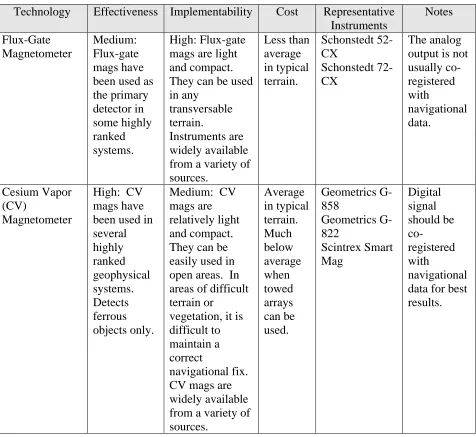
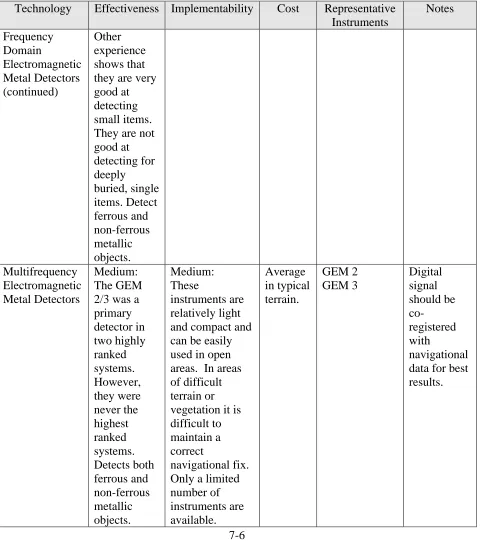
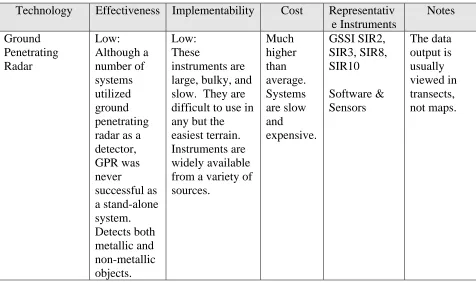
Table 7.1 Geophysical Detection Technologies as of January 2000 7-4 Table 7.2 Maximum Detection Depth Estimating Formulas 7-9
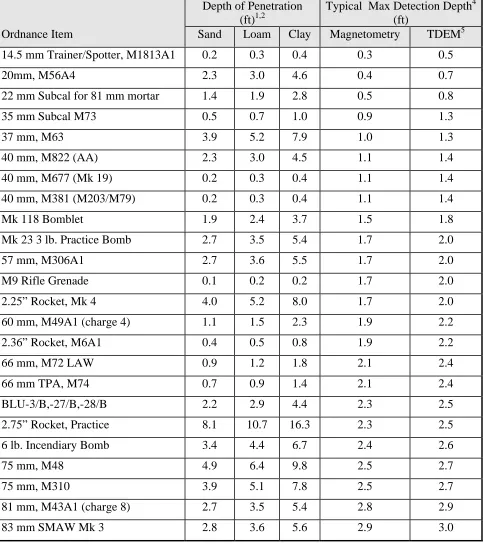
Table 7.3 Ordnance Penetration/Detection 7-10
Table 7.4 Typical Geophysical Sampling Requirements 7-24
FIGURES
Figure 7-1 Actual Depth of Recovery of Fired UXO 7-12
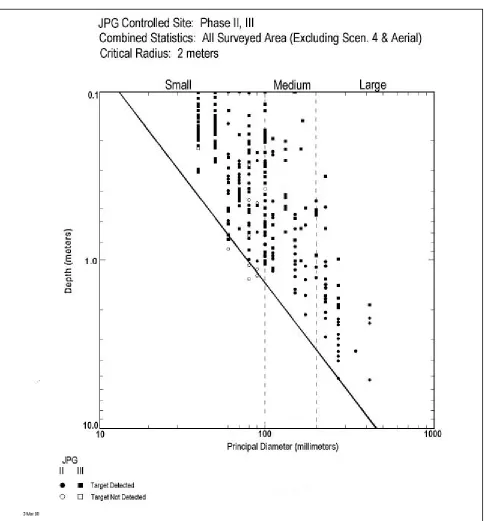
Figure 7-2 UXO Detection at Jefferson Proving Ground 7-18
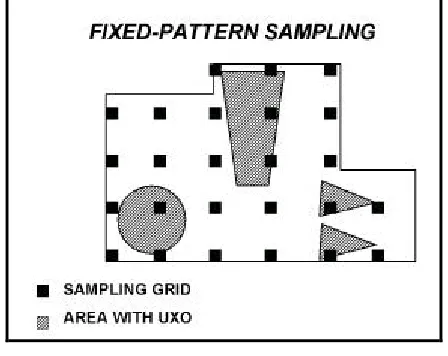
Figure 7-3 Fixed Pattern Grid Sampling 7-24
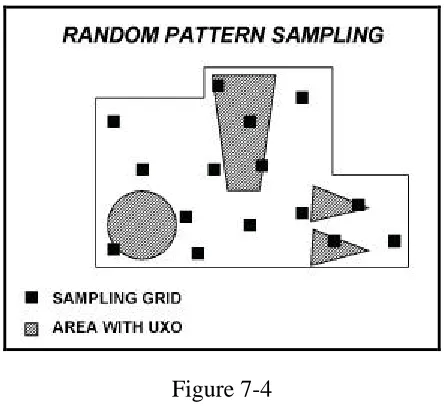
Figure 7-4 Random Pattern Grid Sampling 7-25
Figure 7-5 Hybrid Sampling 7-26
Figure 7-6 Transect Sampling 7-26
Figure 7-7 Meandering Path Sampling 7-27
Figure 7-8 Quality Management Process at OE Removal Sites
Where Digital Geophysical Mapping is used 7-32
TABLE OF CONTENTS
Page ATTACHMENTS
Attachment 2-1 Statement of Work Preparation Checklist 2-7
Attachment 2-2 Cost Estimate Preparation Checklist 2-11
Attachment 3-1 Site Visit Review Checklist 3-5
Attachment 4-1 Work Plan Review Checklist 4-8
Attachment 5-1 Environmental Protection Plan Review Checklist 5-4
Attachment 6-1 Site Reconnaissance Checklist 6-7
Attachment 7-1 Geophysical Investigation Checklist 7-34
Attachment 8-1 Location Surveying and Mapping Checklist 8-9 Attachment 9-1 Geospatial Data and Systems Checklist 9-6
Attachment 10-1 Risk Characterization Checklist 10-7
Attachment 11-1 Blast and Fragmentation Protection Review Checklist 11-12 Attachment 12-1 Quality Control Plan Review Checklist 12-4
Attachment 13-1 CWM Checklist 13-4
CHAPTER 1 INTRODUCTION
1-1. Introduction.
a. USACE conducts OE response actions consistent with the Comprehensive Environmental Response, Compensation and Liability Act (CERCLA) and the National Oil and Hazardous
Substance Pollution Contingency Plan (NCP). While USACE prefers to use Engineering Evaluation/Cost Analyses (EE/CA) to evaluate OE sites, other types of investigations may be implemented at particular sites. Regardless of the type of investigation implemented, the guidance provided in this EM applies to all USACE OE response actions.
b. This EM guides a project team through the engineering and design requirements that should be addressed while planning an OE response project. This EM is subdivided into chapters representing the major components of an OE project that require project team consideration. Following each chapter, checklists are provided to assist the project team in assuring that all necessary items have been considered.
c. The engineering considerations presented in this EM primarily address the actions taken to reduce the safety risks to human health and the environment from OE. For additional
information on the procedures for USACE personnel to follow when planning and executing an OE response action, contact the OE MCX.
1-2. Project Team Members.
a. The project team responsible for the OE project design process is normally composed of the following members:
(1) Design Center Point of Contact. The Design Center Point of Contact (POC) is the single POC responsible for coordination between the Project Manager (PM), the project team and the OE Mandatory Center of Expertise (MCX). The Design Center POC is responsible for the overall interdisciplinary coordination, definition and development of project requirements.
(2) OE Safety Specialist. The OE Safety Specialist is located within the USACE element executing the OE response project. The functions of the OE Safety Specialist include:
(a) Provide on-site safety support for OE activities.
(b) Verify unexploded ordnance (UXO) qualifications of contractor employees. (c) Advise the contractor on safety procedures.
(e) Facilitate military Explosive Ordnance Disposal (EOD) response, when needed. (f) Provide technical OE safety support to USACE districts and contractors.
(g) Conduct government quality assurance inspections of completed work.
(h) If located at a district, the OE Safety Specialist will assist with the review of Statements of Work (SOW), Work Plans, Site Safety and Health Plans (SSHP) and, if required, Explosives Safety Submissions (ESS). If located at an OE Design Center, the OE Safety Specialist will assist with the execution and approval of SOWs, Work Plans, SSHPs and ESSs (if required).
(3) Project Engineers. The project engineers are responsible for the technical aspects of the design and execution of OE projects in their respective areas of expertise.
b. The project team members are responsible for executing the functions discussed in this document. For additional information on the roles and responsibilities of USACE personnel during an OE response project, refer to Engineer Regulation (ER) 1110-1-8153, OE Response. 1-3. Safety. Safety is a critical component of all USACE activities and operations. Not all safety requirements for OE response projects are addressed in this document, but are discussed in detail in other USACE guidance documents. The OE MCX may also be contacted for assistance. 1-4. Data Quality Objectives.
a. Data Quality Objectives (DQO) are qualitative and quantitative statements developed to clarify study objectives, define the type of data needed, and specify the tolerable levels of
potential decision errors. DQOs are used as the basis for establishing the type, quality and quantity of data needed to support the decisions that will be made.
CHAPTER 2 PROJECT PLANNING
2-1. Introduction.
a. This chapter presents guidance for the project team on government planning activities for OE projects. The purpose of government planning is to develop a strategy for each project that will ensure the achievement of project goals in a manner that is safe, timely, and cost-effective. Topics discussed in this chapter include the SOW, cost estimate, and project schedule.
b. Government planning activities require input from many different disciplines and should therefore be prepared in a manner that fully involves all affected disciplines. Quality excellence is achieved in government planning activities through the conscientious and cooperative efforts of each project team member.
2-2. Statement of Work. A SOW should be prepared for each project, whether it will be completed as a delivery order/task order to a contractor or as a work effort for an Army element.
a. Performance Objectives. The SOW identifies the specific work requirements for a particular project. The project team’s performance objective is to develop a SOW that will serve as the basis for:
(1) Developing a cost estimate either for budgetary purposes or for use in contract negotiations;
(2) Defining clear, achievable, and contractually enforceable project requirements; (3) Obtaining successful project performance; and
(4) Ensuring fair and effective administration of a contract or delivery order/task order. b. Preparation.
(1) The project team is responsible for preparation of SOWs for site visits, EE/CAs, Removal Actions, UXO Support, and Time Critical Removal Actions (TCRAs) in coordination with the PM. The Design Center POC should ensure that the PM and all members of the project team are included in the preparation of the SOW. The OE MCX may be consulted to provide the appropriate statements or paragraphs concerning background and authority for the work
described in the SOW.
during the site visit (see Chapter 4 of this manual) for site-specific information. Attachment 2-1 is a checklist to aid in the preparation of the SOW.
c. Contents. The contents of a SOW depend on the type of OE project, the type of OE response action, and site-specific requirements. The following topics should generally be included in a SOW:
(1) General responsibilities; (2) Project description; (3) Scope of services;
(4) Schedule and deliverables; (5) Reviews and conferences;
(6) Technical criteria and standards, including government-furnished information; (7) Administrative instructions;
(8) General provisions; and (9) References.
d. SOW for Project Phases. The project team may need to develop a SOW for specific phases of a project. Project team considerations for site visit, EE/CA, and Removal Action SOWs are discussed below. More detailed information on SOW preparation is provided in subsequent chapters of this manual.
(1) SOW for Site Visit. A site visit may be required prior to the initiation of or as the first task of an OE project. Site visits are discussed in more detail in Chapter 4 of this manual.
(2) SOW for EE/CA Reconnaissance (RECON). Once funds have been received and following an evaluation of the site-specific data gathered during the Preliminary Assessment of Eligibility (PAE) and Site Inspection (SI) phases, the project team may decide to implement the optional RECON task. RECON is discussed in Chapter 6 of this manual. If the RECON task will be implemented, the project team will prepare a RECON SOW. Typical tasks included in a RECON SOW are:
(c) Spatial analysis (aerial survey); (d) Ground reconnaissance;
(e) Technology evaluation; and (f) Analysis report/data archive.
(3) SOW for EE/CA. Once funds have been received, the project team may begin preparation of the SOW for the EE/CA phase. The SOW may not be awarded until the Approval Memorandum has been signed. If the EE/CA RECON task is implemented, the project team may use the results to modify/refine the EE/CA SOW or make a decision to move directly to the removal action without further study. Typical tasks included in an EE/CA SOW are:
(a) Records review and land restriction assessment;
(b) Work Plan, including SSHP and Institutional Analysis Plan (see Chapter 3); (c) Site preparation;
(d) Site characterization (see Chapters 7 and 8);
(e) Safety and public risk evaluation (see Chapters 10 and 11); (f) Preparation of the EE/CA report;
(g) Preparation of the Action Memorandum; and (h) Community relations.
(4) SOW for Removal Action. Once funds have been received, the project team may begin preparation of the SOW for the Removal Action. The SOW may not be awarded until the Action Memorandum has been signed. It should comply with the approved Action
Memorandum. Typical tasks included in an OE Removal Action SOW include: (a) Site visit (see Chapter 4);
(b) Work Plan development (see Chapter 3);
(e) Geophysical investigation prove-out (see Chapter 7); (f) Geophysical investigations (see Chapter 7);
(g) Anomaly reacquisition (see Chapter 7); (h) Clearance action;
(i) Institutional control activities and recurring reviews; (j) Turn-in; and
(k) Preparation of the site-specific removal report.
e. Review and Approval. The Design Center POC should ensure that the SOW is in compliance with the signed Approval Memorandum (EE/CAs) or Action Memorandum
(Removal Actions). The Design Center POC should direct SOWs to the appropriate personnel, including the PM and appropriate members of the project team, for review. Review comments should be provided in writing to the Design Center POC. Following review and approval in accordance with ER 1110-1-8153, the Design Center POC should submit the final SOW to the Contracting Officer (CO). The PM should provide the final SOW to the customer and
stakeholders for review. 2-3. Cost Estimating.
a. General.
(1) Once the SOW is approved, a cost estimate should be prepared by personnel having expertise in the type of work involved on the project. The cost estimator should develop the estimate based on a detailed analysis of the SOW, assuming reasonable economy and
efficiency, and modern and effective methods.
(2) In developing cost estimates, whether for budgets or contractor procurement purposes, a number of tools are available. Cost engineering offices at each district have cost estimating software, databases, and documents available to use in developing cost estimates at various phases. The recommended USACE software programs are Remedial Action Cost Engineering and Requirements System (RACER) 99 for parametric estimating and Micro Computer Aided Cost Engineering System (MCACES) Gold Version 5.3, MCACES for Windows, or Excel™ or LOTUS 123™ spreadsheets for detailed estimating.
(1) Obtain program funding; or
(2) Negotiate the award of a contract at a price that is fair and reasonable to the government.
c. Project Team Considerations and Cost Estimating Checklist.
(1) The project team should first identify the purpose of the cost estimate. If the purpose of the cost estimate is to obtain program funding, then a rough order of magnitude estimate may be prepared. If the purpose of the cost estimate is to award a contract, then a detailed cost estimate is required.
(2) Once the intended use of the estimate is identified, the cost estimator should consider the phase of the project and the following items which will impact project cost (this list is not intended to be all inclusive):
(a) Size of areas of concern; (b) Site risk;
(c) Type of ordnance; (d) Soil type;
(e) Topography; (f) Vegetation type; (g) Ordnance density;
(h) Required depth of clearance; (i) Amount of scrap;
(j) Special environmental and safety concerns (e.g., presence of Chemical Warfare Materiel [CWM], requirements for engineering controls, sampling and analysis requirements such as air monitoring, etc.);
(k) Production rates; (l) In-house or contracted;
(n) Surveying methods (e.g., mag and flag, geophysical); (o) Data format requirements (i.e., digital or non-digital); (p) Personal Protective Equipment (PPE) level required;
(q) Type of operation to be performed (e.g., search only or search and recovery); (r) Number and type of UXO technicians required;
(s) Equipment and vehicles required (e.g., magnetometer, towed array, earth moving machinery, recovery vehicles);
(t) Expected time duration; (u) Access restrictions;
(v) Political considerations; and (w) Start date.
(3) This information may be derived from historical reports (e.g., the INPR and ASR) and previous investigations at the site. This information should also be compiled in the SOW, from which the estimate will be developed. Attachment 2-2 is a checklist that may be used by the cost estimator to aid in preparing a cost estimate for an OE project.
ATTACHMENT 2-1
STATEMENT OF WORK PREPARATION CHECKLIST
Project Name: Project Location: Design Center POC: Preparer’s Name and Title: Date of Preparation:
Y N N/A
All SOWs:
1. Has the authorization and funding been received for SOW preparation?
2. Has the Design Center POC held a pre-scoping meeting with the project team to discuss project requirements and to determine required resources?
3. Have project requirements been identified through interfacing with the PM?
4. Do the personnel responsible for preparing the SOW have a detailed knowledge of the project history, site conditions, characteristics of UXO anticipated and of geophysical methods?
5. Has existing site information been provided to the project team (may include ASR, previous site investigation reports, information from site visits, information from district contractors that have worked on the site in the past, etc.)?
6. Have the requirements for the site visit been met (i.e., right of entry, ASSHP, etc. - see Chapter 4 of this manual)?
Y N N/A
8. Has an appropriate schedule has been included in the SOW?
9. Has the OE MCX reviewed the SOW?
10. Are the following general included in the SOW: • General responsibilities of the contractor? • Project description?
• Scope of services?
• Schedule and deliverables? • Reviews and conferences?
• Technical criteria and standards, including government furnished information?
• Administrative instructions? • General provisions?
• References?
11. Have review comments been obtained from appropriate personnel, including PM and project team members, in accordance with ER 1110-1-8153?
12. Has the SOW been approved in accordance with ER 1110-1-8153 and submitted final SOW to the Contracting Officer?
13. Was an external review of the SOW performed? 14. If the SOW is prepared for a removal action, did it
Y N N/A SOW for EE/CA RECON
1. Have the following tasks, as applicable, been included in the EE/CA RECON SOW: (See Chapter 6 of this manual for additional information)
• Work Plan and ASSHP (see Chapter 3 of this manual)?
• Analysis of the ASR?
• Spatial Analysis (aerial survey)? • Ground reconnaissance?
• Technology evaluation? • Analysis report/data archive?
SOW for EE/CA
1. Have the following typical tasks, as applicable, been included in the EE/CA SOW:
• Records review and land restriction assessment? • Project Work Plan, including SSHP and
Institutional Analysis Plan (see Chapter 3 of this manual)?
• Site preparation?
• Site characterization (see Chapters 7 and 8 of this manual)?
• Safety and public risk evaluation (see Chapters 10 and 11 of this manual)?
• Preparation of the EE/CA report?
• Preparation of the Action Memorandum? • Community relations?
Y N N/A SOW for Removal Action
1. Have the following typical tasks, as applicable, been included in a Removal Action SOW:
• Site visit (see Chapter 4 of this manual)?
• Work Plan development (see Chapter 3 of this manual)?
• Location surveying and mapping (see Chapters 8 and 9 of this manual)?
• Site preparation (see Chapter 7 of this manual)? • Geophysical investigation prove-out (see
Chapter 7 of this manual)?
• Geophysical investigation (see Chapters 7 of this manual)?
• Anomaly reacquisition (see Chapter 7 of this manual)?
• Clearance action?
• Institutional control activities and recurring reviews?
• Scrap turn-in?
• Preparation of site-specific removal report? 2. Is the SOW in compliance with the Action
ATTACHMENT 2-2
COST ESTIMATE PREPARATION CHECKLIST
Project Name: Project Location: Design Center POC: Preparer’s Name and Title: Date of Preparation:
Y N N/A
Prior to beginning work on cost estimate
1. Is the cost estimate being prepared for internal
budgetary purposes (i.e., to obtain program funding)? If yes, a rough order of magnitude estimate may be
prepared.
2. Is the cost estimate being prepared for contract
procurement (i.e., for use in contract negotiations)? If yes, a detailed cost estimate is required.
3. Has the SOW been developed and approved?
4. Have the phase of the project and the following items which will impact project cost (this list is not intended to be all inclusive) been considered:
• Size of areas of concern? • Site risk?
• Type of ordnance? • Soil type?
• Topography? • Vegetation type? • Ordnance density?
Y N N/A
• Special environmental and safety concerns (e.g., presence of CWM, requirements for engineering controls, sampling and analysis requirements such as air monitoring, etc.)?
• Production rates? • In-house or contracted?
• Percent of property to be investigated? • Surveying methods?
• Data format requirements (i.e., digital of non-digital)?
• PPE level required?
• Type of operation to be performed (e.g., search only or search and recovery)?
• Number and type of UXO technicians required? • Equipment and vehicles required (e.g.,
magnetometer, towed array, earth moving machinery, recovery vehicles)?
CHAPTER 3 SITE VISIT
3-1. Introduction.
a. This chapter describes the elements that should be addressed by the project team when planning and conducting a site visit. The purpose of the site visit is to:
(1) Gather current information on site conditions; (2) Fill any data gaps; and
(3) Make more informed decisions about project requirements. b. All site visits will be conducted using avoidance techniques.
3-2. Performance Objectives. The project team should consider the following performance objectives when planning and executing the site visit:
a. Identify specific elements which should be discussed in the SOW; b. Identify stakeholder requirements;
c. Identify and review existing information on past activities at the site including site-specific reports, aerial photos, maps and geospatial data and systems information;
d. Coordinate with local and/or state entities to discuss data sharing if data gaps have been identified;
e. Determine the appropriate type of response action for the site or sections of the site; f. Determine the appropriate type of contractor (service or Architect-Engineer [A-E]) for the response action, if not previously determined;
g. Perform sector prioritization, if possible; and
h. Identify factors influencing the cost estimate and project schedule.
3-3. Types of Site Visits. Depending on the project, a government and/or a contractor site visit may be conducted.
identified at the time of the initial government site visit, the PM may invite contractor personnel to attend.
b. Contractor Site Visit. A contractor site visit is conducted to allow contractor personnel to gather pertinent site information for use in preparing the cost estimate and project planning documents. The contractor site visit may take place under two scenarios:
(1) Contractor personnel may be invited to accompany the government team during the initial site visit; or
(2) The government may coordinate a second site visit with contractor personnel. During this site visit, the government team would accompany the contractor attendees.
c. EP 1110-1-18 describes government and contractor site visits in further detail. Attachment 3-1 provides a checklist to assist the project team with planning a site visit. 3-4. Site Visit Attendees. The project team should ensure that the appropriate personnel are represented at the site visit. The personnel requirements for the government and contractor site visits are discussed below.
a. Government Site Visit Attendees.
(1) The primary attendees for the government site visit include: (a) PM;
(b) Design Center POC; (c) OE Safety Specialist; (d) Project engineers; and (e) Cost estimator.
(2) If the prospective contractor is known at the time of the government site visit, then contractor personnel may also be invited to attend.
3-5. Site Visit Requirements. The project team should ensure that the following requirements for the site visit are fulfilled.
a. Site-Specific Reports. Prior to the site visit, the project team should review existing site information and identify data gaps. Sources of site data available to the project team include:
(1) ASR;
(2) Previous site investigation reports; and
(3) Information from previous district contractors that have worked on the site.
b. Site Visit SOW. Once a contractor is selected, the Design Center may authorize the site visit as either a purchase order or as the first task of an incrementally funded contract/task order. In either case, the contractor will be issued a site visit SOW prior to the actual site visit. Sample SOWs for both the stand-alone site visit and the site visit included as a task in a larger task order are found on the OE MCX website at http://www.hnd.usace.army.mil/oew.
c. Right-of-Entry. As applicable, the PM is responsible for contacting the property owner/operator to determine the need for and to arrange for the preparation of a right-of-entry.
d. ASSHP. Since the site visit is conducted in avoidance mode (i.e., intrusive work is not permitted), an ASSHP is sufficient for site visits. EP 1110-1-18 discusses the ASSHP in further detail.
e. Training. Site visit participants are not required to have Hazardous Waste Operations and Emergency Response (HAZWOPER) training.
3-6. Site Visit Information. During the site visit, the project team should ensure that
information needed to prepare the SOW, cost estimate, and planning documents is gathered. The project team, in conjunction with the other attendees, should obtain information on:
a. Site topography, soil type and vegetation;
b. Preliminary identification of environmental concerns and environmental resources data (e.g., wetlands, endangered species, archaeological and cultural resources);
c. Accessibility to the site; d. Utility locations;
f. Clear distances to inhabited buildings;
g. Location of and coordination with the nearest hospital and fire station; h. Coordination with local airport and Federal Aviation Administration;
i. Coordination with local police/sheriff/military police to assess security and fencing requirements for explosives storage magazines;
j. Location for support zone and explosives storage magazines;
k. Logistical coordination for lodging, equipment and vehicle rental, office space, explosives dealers, etc.; and
ATTACHMENT 3-1
SITE VISIT REVIEW CHECKLIST
Project Name: Project Location: Design Center POC: Preparer’s Name and Title: Date of Preparation:
Y N N/A
General
1. Will the initial site visit be a: • Government site visit? • Contractor site visit?
• Combined government and contractor site visit? Government Site Visit Attendees
1. Are the following personnel, at a minimum, attending the government site visit:
• PM?
• Design Center POC? • OE Safety Specialist? Contractor Site Visit Attendees
1. Are the following personnel, at a minimum, attending the government site visit:
• Contractor PM?
• Senior UXO Supervisor? • PM (government)? • Design Center POC? • OE Safety Specialist?
Y N N/A 3. Has the project team confirmed that the contractor
personnel are qualified in accordance with USACE Personnel Work Standards?
Site Visit Requirements. Prior to the site visit, the project team should ensure that the following requirements are fulfilled:
• Have site-specific reports been reviewed? • Have any data gaps in the existing site data been
identified?
• Has the PM issued a site visit SOW to the contractor?
• Has the PM obtained Rights-of-Entry, if applicable?
CHAPTER 4 WORK PLANS
4-1. Introduction.
a. This chapter presents guidance for the project team regarding the preparation and review of EE/CA and Removal Action Work Plans. The purpose of developing Work Plans is to ensure that project goals will be achieved in a safe, timely, and cost-effective manner.
b. A Work Plan is required for all OE response projects. The contractor following the site visit will prepare the Work Plan, which is the basis for all contractor activities during the
execution of the OE response action.
4-2. Performance Objectives. The project team should ensure that the Work Plan addresses the following:
a. Project requirements in accordance with the SOW; b. Stakeholder requirements; and
c. The approach, methods and operational procedures to be employed at the project site. 4-3. Work Plan Review. The contractor will submit the draft Work Plan to the PM and the Design Center POC for review and comment. Each project should be assessed individually to determine which specific areas of expertise should be involved in the review and approval process. As a minimum, the draft Work Plan should be reviewed by the:
a. PM;
b. Design Center POC; c. Project engineers; d. OE Safety Specialists; e. Industrial hygienist; and f. Cost engineers.
4-4. Work Plan Contents. The project team should ensure that the following components, as applicable, have been adequately presented in the Work Plan. Not all requirements will be applicable to all projects. It is the responsibility of the entity preparing the Work Plan to
Attachment 4-1 presents a checklist of general requirements for the Work Plan. Additional details on Work Plan requirements are provided in subsequent chapters of this manual.
a. EE/CA RECON Work Plan. The EE/CA RECON is an optional task within the EE/CA phase. If the project team has determined that the RECON task should be implemented for a specific project, a RECON Work Plan and ASSHP should be prepared. Chapter 6 of this manual provides additional details on the RECON task. The contents of the EE/CA RECON Work Plan are:
(1) Chapter 1 – Introduction. This chapter should include a brief description of the project authorization, purpose and scope.
(2) Chapter 2 – Analysis of ASR. This chapter should discuss how the information provided in the ASR will be supplemented with additional information and how the ASR data will be converted into a spatially coincident digital format. The resulting digital format should allow the historical and site information to be used throughout the project.
(3) Chapter 3 – Spatial Analysis (Aerial Survey). This chapter should describe the procedures that will be used to perform a detailed analysis of spatial data to assist in making decisions regarding predicted areas of interest at the site. If an aerial survey is considered necessary, this chapter should describe the procedures for either conducting the survey or obtaining a recent survey from a local air survey company.
(4) Chapter 4 – Ground Reconnaissance. This chapter should discuss the procedures that will be used to conduct a ground reconnaissance to verify the results of the spatial analysis.
(5) Chapter 5 – Technology Evaluation. This chapter should present the procedures that will be used to evaluate various OE detection instruments using a test grid.
(6) Chapter 6 – Analysis Report and Data Archive. This chapter should describe the preparation of the analysis report documenting the results of the RECON task as well as the procedures for establishing a data archive.
b. EE/CA Work Plan. The contents of the EE/CA Work Plan are:
(1) Chapter 1 - Introduction. This chapter should include a brief description of the project authorization, purpose and scope.
(2) Chapter 2 - Site Description. This chapter should discuss the site characteristics,
including location, physical description, and history; a summary of previous investigations; and an initial summary of OE risk.
deliverables, schedule, public relations support, subcontractor management procedures, and field operation management procedures.
(4) Chapter 4 – Overall Approach of the EE/CA. This chapter should include a discussion of the preliminary removal action goals, identification of data quality objectives, required data, data reduction and evaluation, data incorporation into EE/CA reports, OE exposure analysis, alternatives identification and analysis (including institutional control options), EE/CA report, EE/CA Approval Memorandum, EE/CA completion and close-out, use of TCRAs during the EE/CA process, and follow-on activities.
(5) Chapter 5 - Site Layout and Control. This chapter should provide a map; zone delineation; and procedures for on/off-site communications, site access controls, and security (physical and procedural). If applicable, this chapter should discuss exclusion, contamination reduction and support zones for each work site in accordance with the requirements of 29 CFR 1910.
(6) Chapter 6 - Site Characterization. This chapter should include a description of how the site will be investigated. This chapter should describe the goals, methods, procedures and personnel used for field sampling and data gathering activities. The topics that should be
specifically addressed in this chapter are listed below and discussed in more detail in Chapters 7 and 8.
(a) Use of statistical sampling tools; (b) OE sampling grid locations;
(c) Geophysical investigation procedures; (d) Surveying and mapping procedures;
(e) Risk characterization and analysis procedures; (e) Institutional analysis procedures;
(f) Geographic Information System (GIS) requirements; and (g) Data management and data backup procedures.
(7) Chapter 7 - OE Planning and Operations. This chapter should describe how OE operations would be planned and implemented utilizing appropriately qualified personnel, equipment and procedures. No substitute experience or qualifications will be accepted for personnel requirements. This chapter should specifically address the following:
(b) OE accountability and records management; (c) OE identification;
(d) OE removal; (e) OE transportation; (f) OE storage;
(g) OE disposal procedures; (h) OE disposal range, if used;
(i) OE personnel and qualifications; and (j) Disposal alternatives.
(8) Chapter 8 - Explosives Management Plan. This chapter should describe how demolition explosives would be managed, planned and implemented during OE operations utilizing
appropriately qualified personnel, equipment and procedures. This chapter should also describe management of recovered OE.
(9) Chapter 9 - Environmental Protection Plan. This chapter should provide details of the approach, methods, and operational procedures to be employed to perform all delivery tasks in compliance with environmental regulations at a project site. Additional information on the Environmental Protection Plan is provided in Chapter 5 of this manual.
(10) Chapter 10 - Quality Control Plan. This chapter should discuss quality control procedures for the project. Additional information on the contents of the Quality Control Plan is provided in Chapter 12 of this manual.
(11) Chapter 11 – SSHP. This chapter should discuss the health and safety procedures that will be implemented at the site.
c. Removal Action Work Plan. The contents of the Removal Action Work Plan are: (1) Chapter 1 – Introduction. This chapter should provide information on the site location, site history, topography, climate and other general information deemed appropriate.
(2) Chapter 2 – Technical Management Plan. This chapter should document the approach and procedures to be used to execute the tasks included in the SOW. Data management and data backup procedures should be included.
(3) Chapter 3 – Explosives Management Plan. This chapter should provide a description of the procedures and materials to be used for the management of explosives at the site. This should include procedures for acquisition, receipt, storage, security, transportation and inventory of explosives.
(4) Chapter 4 - Explosives Siting Plan. This chapter should describe the safety criteria for siting explosives operations at the site. This should include a description of explosives storage magazines including the Net Explosive Weight (NEW) and Quantity-Distance (Q-D) criteria, OE areas including separation distances, and planned or established demolitions areas. These explosives operations should be identified on a site map. The Explosives Siting Plan should also address footprint areas for blow-in-place, collection points, and in-grid consolidated shots,
although these footprint areas do not need to be shown on the site map. When a project requires an ESS, the data from the Explosives Siting Plan will be incorporated into the Q-D section of the ESS. Additional detail is provided in paragraph 11-9 of this manual.
(5) Chapter 5 - Geophysical Investigation Plan. This chapter should describe the requirements for all geophysical activities that will occur during the project. Additional information on the contents of this plan is provided in paragraph 7-11 of this manual.
(6) Chapter 6 - SSHP. This chapter should discuss the safety and health program that will be implemented at the site. The SSHP should be prepared in accordance with Occupational Safety and Health Administration (OSHA) and USACE requirements. The project team should refer to safety guidance documents for specific requirements.
(7) Chapter 7 – Location Surveys and Mapping Plan. This chapter should document the site-specific survey, mapping, aerial photography and GIS requirements for the project. Additional details on this chapter are provided in paragraph 8-5 of this manual.
(8) Chapter 8 – Work, Data, and Cost Management Plan. This chapter should describe how the work will be managed and accomplished, and how costs will be controlled.
(10) Chapter 10 – Sampling and Analysis Plan. This chapter should describe site-specific procedures, equipment and methods to be used for the collection, preservation, analysis, shipment, quality assurance (QA)/quality control (QC) and reporting for soil, sludge, sediment, ash and/or water samples. This plan should also identify the laboratory that will be used, the number and locations of samples, and the rationale used to design the sampling approach.
(11) Chapter 11 – Quality Control Plan. This chapter should document the approach and procedures to be used to ensure quality throughout the execution of project. Additional details on the Quality Control Plan are provided in paragraph 12-6 of this manual.
(12) Chapter 12 – Environmental Protection Plan. This chapter should describe the
procedures and methods to be implemented during site activities to minimize pollution, protect and conserve natural resources, restore damage, and control noise and dust within reasonable limits. Additional information on the Environmental Protection Plan is provided in paragraph 5-7 of this manual.
(13) Chapter 13 – Investigative Derived Waste Plan. This chapter should describe how investigative derived waste (IDW) will be handled on the work site. Issues that should be
addressed include requirements for containerization, sampling and analysis, disposal, manifesting and storage time limits.
(14) Chapter 14 – Appendices. The Removal Action Work Plan should include the following documents as appendices:
(a) SOW; (b) Site Maps; (c) Local POCs;
(d) Contractor’s QC log form;
(e) Contractor’s safety meeting attendance log form; (f) Contractor’s site visitors log form;
(g) Contractor’s safety inspections log form; and (h) Contractor’s daily report of OE operations form.
ATTACHMENT 4-1
WORK PLAN REVIEW CHECKLIST
Project Name: Project Location: Design Center POC:
Reviewer’s Name and Title: Date of Review:
Y N N/A
General
1. Have the following project team members, at a minimum, reviewed the Work Plan:
• PM?
• Design Center POC? • OE Safety Specialist?
• Project engineers in relevant subject matter areas?
• Industrial hygienist? • Cost Engineer?
2. Is the Work Plan in compliance with the project SOW? 3. Is the Work Plan in compliance with contract
requirements?
EE/CA RECON Work Plan
The project team should ensure that the RECON Work Plan has been prepared in accordance with the SOW and
contract specifications. The RECON Work Plan will generally include the following chapters:
1. Chapter 1 - Introduction. Are the following topics discussed in this chapter:
Y N N/A • Project purpose?
• Project scope?
2. Chapter 2 - Analysis of ASR. Are the following topics discussed in this chapter:
• Procedures for supplementing the existing ASR data?
• Procedures for converting the ASR data into a spatially coincident digital format that will allow the information to be used throughout the
project?
3. Chapter 3 - Spatial Analysis (Aerial Survey). Are the following topics discussed in this chapter:
• Procedures for completing a detailed analysis of spatial data in order to differentiate potentially contaminated areas from contaminated areas? • If necessary, procedures for completing an aerial
survey of the site or obtaining a recent aerial survey from a local air survey company? 4. Chapter 4 - Ground Reconnaissance. Are the
following topics discussed in this chapter:
• Procedures for verifying the results of the spatial analysis in the field?
• Obtaining a ROE?
5. Chapter 5 - Technology Evaluation. Is the following topic discussed in this chapter:
• Procedures evaluating various OE detection instruments using a test grid? (See Chapter 7 of this manual for additional detail.)
6. Chapter 6 - Analysis Report and Data Archive. Are the following topics discussed in this chapter:
Y N N/A
EE/CA Work Plan
The project team should ensure that the EE/CA Work Plan has been prepared in accordance with the SOW and
contract specifications. The EE/CA Work Plan will generally include the following chapters:
1. Chapter 1 - Introduction. Are the following topics discussed in this chapter:
• Project authorization? • Project purpose? • Project scope?
2. Chapter 2 - Site Description. Are the following topics discussed in this chapter?
• Site characteristics including location, physical description and history?
• Summary of previous site investigations? • Initial summary of OE risk at the site?
3. Chapter 3 - Project Management. Are the following topics discussed in this chapter:
• Project organization? • Project organization? • Project personnel?
• Project communication and reporting? • Deliverables?
• Schedule?
• Public relations support?
Y N N/A
4. Chapter 4 - EE/CA Approach. Are the following topics discussed in this chapter:
• Preliminary removal action goals? • Data quality objectives?
• Required data?
• Data reduction and evaluation?
• Data incorporation into the EE/CA report? • OE exposure analysis?
• Alternatives identification and analysis? • EE/CA report?
• EE/CA approval memorandum? • EE/CA completion and close-out? • Use of TCRA during EE/CA process? • Follow-on activities?
5. Chapter 5 - Site Layout and Control. Are the following topics included in this chapter:
• Is a site map provided? • Are zones delineated?
• Are procedures for on/off site communications discussed?
• Are procedures for site access control discussed?
• Are security procedures discussed?
6. Chapter 6 - Site Characterization. Are the following topics included in this chapter:
• Site characterization goals?
Y N N/A • OE sampling grid locations?
• Surveying and mapping procedures? • Geophysical investigation procedures?
• Data management and data backup procedures? • Risk characterization procedures?
• Institutional analysis? • GIS requirements?
7. Chapter 7 – OE Planning and Operations. Does this chapter discuss the planning and implementation of the following:
• Operations in OE area?
• OE accountability and record management? • OE identification?
• OE removal? • OE transportation? • OE storage?
• OE disposal procedures? • OE disposal range, if used? • OE disposal alternatives:
• OE personnel and qualifications?
• Is this chapter in accordance with CEHND 1105-3-14?
8. Chapter 8 - Explosives Management Plan. • Does this chapter describe how demolition
Y N N/A
9. Chapter 9 - Environmental Protection Plan. • Does this chapter provide details on the
approach, methods and operational procedures employed to ensure all tasks are performed in compliance with environmental regulations at the site? (See Chapter 5 for additional review criteria.)
10. Chapter 10 - Quality Control.
• Does this chapter adequately discuss quality control procedures for the OE project? (See Chapter 12 of this manual.)
11. Chapter 11 – Site Safety and Health Plan.
• Does this chapter adequately discuss the health and safety procedures to be implemented at the site? (See safety guidance documents for specific criteria.)
12. Other items.
• Does the Work Plan include any additional information required in the SOW?
• Does the Work Plan include appropriate references and appendices?
Removal Action Work Plan
The project team should ensure that the Removal Action Work Plan has been prepared in accordance with the SOW and contract specifications. The Removal Action Work Plan will generally include the following chapters: 1. Chapter 1 - Introduction. Are the following topics
Y N N/A • Other appropriate information?
2. Chapter 2 - Technical Management Plan. Are the following topics discussed in this chapter:
• Approach to be used to execute the tasks included in the SOW?
• Procedures to be used to execute the tasks included in the SOW?
• Data management and data backup procedures? 3. Chapter 3 - Explosives Management Plan. Are the
following topics discussed in this chapter:
• Acquisition of explosives, including source? • Type of explosives to be used?
• Quantity of explosives to be used? • Procedures for receipt of explosives? • Procedures for resolving discrepancies in
quantities shipped and quantities received? • Establishment of explosive storage facilities? • Physical security of explosive storage facilities? • Transportation procedures from storage to
disposal locations on-site?
• Requirements for on-site transport vehicles? • Names of personnel authorized to receive, issue,
transport and use explosives? • Inventory procedures?
• Procedures for issuance of explosives on-site? • Procedures for daily return to storage of unused
explosives?
Y N N/A • Compliance with FAR 45.5, local and state laws
and regulations, ATFP 5400.7, DOD 6055.9-STD, DOT regulations and AR 190-11?
4. Chapter 4 - Explosives Siting Plan. Are the following topics discussed in this chapter:
• Type of explosive storage magazines to be used?
• NEW and hazard division to be stored in each magazine?
• Use of Q-D criteria to site magazines? • Design criteria for engineering controls to be
used to mitigate exposures to public when required Q-D criteria cannot be met?
• Determination of appropriate safe separation distances for the public during intrusive operations?
• Determination of planned or established demolition areas?
• Footprint areas for blow-in-place operations using the criteria for established demolition areas?
• Footprint areas for collection areas based on the same public separation distances as the Most Probable Munition (MPM)?
• Footprint areas for in-grid consolidated shots using the criteria for established demolition areas?
• Site map(s) showing Q-D arcs for public separation distances and personnel safe
Y N N/A
5. Chapter 5 – Geophysical Investigation Plan. • Does this chapter adequately discuss the
requirements for project geophysical activities? (See chapter 7 of this manual for additional review criteria.)
6. Chapter 6 - Site Safety and Health Plan.
• Does this chapter adequately discuss the health and safety procedures to be implemented at the site? (See safety guidance documents for specific criteria.)
7. Chapter 7 - Location Surveys and Mapping Plan. Are the following topics discussed in this chapter?
• Survey requirements/procedures as specified in SOW/contract?
• Mapping requirements/procedures as specified in SOW/contract?
• Aerial photography requirements/procedures as specified in SOW/contract?
• GIS requirements as specified in SOW/contract? 8. Chapter 8 - Work, Data and Cost Management Plan.
Are the following topics discussed in this chapter? • Description of the project management approach
for all tasks including controls to ensure timely performance and use of correct procedures? • Schedule including milestones for deliverables,
chronology of tasks, number of working days between milestones, and associated costs and human resources required?
• Description of cost control and tracking methodology to be used?
• List of recurring deliverables to be submitted which relate to work, data and cost
Y N N/A
9. Chapter 9 - Property Management Plan. Are the following topics discussed in this chapter?
• Description and quantity of materials to be used?
• Source and estimated rental/acquisition costs of all materials?
• Documentation of the contractor’s process to acquire 3 quotes for each item and a comparison of rental versus purchase cost for each item? • Basis of selection to be used by the contractor to
recommend the source for leased vehicles? • List of consumable supplies and personal
property that are included in the Contractor’s overhead rate?
• Proposed storage plan, including the method of separation of government property from contractor property?
• Ultimate disposal plan covering salvage,
turnover to the government, or other disposition of material upon contract termination?
• Plan for submitting a property tracking log report which lists all contractor acquired property that is directly charged to the project? • Procedures for notifying the Contracting Officer
of loss, damage, or destruction of accountable government property?
10. Chapter 10 - Sampling and Analysis Plan. Are the following topics discussed in this chapter?
• Procedures, equipment and methods for: − Collection and preservation of samples? − Field and Laboratory analyses?
Y N N/A • Contaminants of concern and associated
detection limits?
• Number and locations of samples, including QA/QC samples?
• Data reporting methods?
• Identification of analytical laboratory and copies of the appropriate validations/certifications? 11. Chapter 11 - Quality Control Plan.
• Does this chapter adequately discuss quality control procedures for the OE project? (See Chapter 12 of this manual for specific review criteria.)
12. Chapter 12 – Environmental Protection Plan. • Does this chapter adequately describe
procedures to minimize pollution, protect and conserve natural resources, restore damage, and control noise and dust within reasonable limits? (See Chapter 5 manual for specific review criteria.)
13. Chapter 13 - Investigative Derived Waste Plan. Are the following topics discussed in this chapter:
• Handling of IDW at the site?
• Type of containerization, if required? • Description of the sampling and analytical
strategy utilized?
• List of acceptable disposal facilities? • Description of site storage and security? • Description of transportation requirements and
procedures?
• Description of manifesting requirements and procedures?
Y N N/A • Is regulatory acceptance of the IDW Plan
required? If so, has regulatory acceptance been received?
14. Appendices. Are the following documents included as appendices to the Work Plan:
• SOW? • Site maps?
• Local points of contact?
• Resumes for key personnel and personnel filling core labor categories, EOD school graduation certificates if applicable?
• Contractor forms for collecting the following data:
− Quality Control Log?
− Safety Meeting Attendance Log? − Site Visitors Log?
− Safety Inspections Log?
CHAPTER 5
REGULATORY COMPLIANCE
5-1. Introduction. This chapter presents guidance on regulatory compliance issues the project team should consider during an OE response project.
5-2. Performance Objectives. The project team’s performance objectives for regulatory compliance on OE projects are to:
a. Execute OE projects in accordance with federal, state and local regulatory requirements; and
b. Develop planning documents adequately addressing environmental considerations. 5-3. OE Response Regulatory Authorities. The OE response process at Formerly Used Defense Sites (FUDS) is consistent with the CERCLA and the NCP. The determination of the governing laws and regulations for any specific OE project will be made by the District Office of Counsel in consultation with counsel supporting the OE MCX for FUDS, or the appropriate legal
representative of the sponsoring agency for work performed by USACE under a different program or authority (e.g., Base Realignment and Closure [BRAC], Installation Restoration Program [IRP], or Work for Others). EP 1110-1-18 provides an overview of the legal authorities governing OE response actions.
5-4. Applicable or Relevant and Appropriate Requirements. The project team should consider applicable or relevant and appropriate requirements (ARARs) under federal or state laws to the extent practicable considering the urgency of the situation and the scope of the response. Therefore, ARARs should be considered prior to selecting the most suitable OE response for a particular site. EP 1110-1-18 provides additional information regarding ARARs on OE response actions.
5-5. Environmental Considerations. EP 1110-1-18 provides a discussion of environmental considerations that should be addressed by the project team before and during an OE response action. Summary tables of environmental laws and regulations as well as DOD Directives, Instructions and Regulations relevant to OE response actions are also provided.
5-6. Environmental Survey. Prior to the start of on-site activities, an environmental survey will be conducted jointly by the contractor and the CO/CO Representative (COR) or other
areas, and access routes. Both the contractor and CO will sign this report prior to the start of on-site activities upon mutual agreement as to its accuracy and completeness.
5-7. Environmental Protection Plan. The project team should review the Environmental Protection Plan (EPP) included as part of the Work Plan. The EPP should provide details of the approach, methods, and operational procedures to be employed at a project site to minimize pollution, protect and conserve natural resources, restore damage and control noise and dust within reasonable limits.
a. Contents. The project team should ensure that the EPP contains the elements described in the following paragraphs. Attachment 5-1 is an EPP review checklist.
(1) A list of potential ARARs should be provided as well as an initial determination as to their actual applicability to the project. The procedure by which ARARs will be identified and complied with during field investigation activities should be described. The EPP should also note that evaluation of ARARs is an iterative process to be performed throughout the life of the project, particularly when evaluating and recommending an appropriate removal response.
(2) The EPP should detail the identification and location of, as well as provide procedures to protect and/or mitigate the impact to, the following:
(a) Endangered or protected species; (b) Cultural or historical resources; (c) Wetlands;
(d) Water resources; (e) Coastal zones;
(f) Trees and shrubs that will be removed within the project site; and (g) Existing waste disposal sites within the project site.
(3) The EPP should discuss the environmental protection strategy which describes the potential for occurrence of adverse impacts and the protective, avoidance or mitigative actions the contractor will take in the following areas:
(a) Land areas affected by the work; (b) Work site;
(d) Temporary facilities; (e) Access routes;
(f) Trees and shrubs protection and restoration;
(g) Water resources - control of water used on-site, control of run-on water, and control of run-off water and sediment;
(h) Waste disposal - uncontaminated waste, contaminated waste, packaging, labeling, storage and disposal, manifesting and transportation, compliance with 40 CFR 262, subpart b, compliance with Department of Transportation (DOT) shipping regulations;
(i) Burning;
(j) Dust and emission control; (k) Spill control and prevention;
(l) Decontamination and disposal of equipment; and (m) Minimization of areas of disturbance.
(3) The EPP should also include procedures for post-activity cleanup.
b. Environmental Documentation. The contractor may be required to prepare
environmental documentation prior to any field work for Non-Time Critical Removal Actions (NTCRAs). The environmental documentation should conform to the requirements of Army Regulation (AR) 200-2, Environmental Effects of Army Actions. The environmental
ATTACHMENT 5-1
ENVIRONMENTAL PROTECTION PLAN REVIEW CHECKLIST
Project Name: Project Location: Design Center POC:
Reviewer’s Name and Title: Date of Review:
Y N N/A
Review of the Environmental Protection Plan
The project team should ensure that the Environmental Protection Plan, a chapter to the Work Plan, has been prepared in accordance with the SOW and contract specifications. The project team should ensure that the following items are discussed in the EPP:
1. Is a list of potential ARARs provided?
2. Is an initial determination provided as to the actual applicability of these ARARs to the project?
3. Is the procedure by which ARARs will be identified and complied with during field investigation activities described?
4. Does the EPP note that evaluation of ARARs is an iterative process to be performed throughout the life of the project?
5. Does the EPP detail the identification and location of, as well as provide procedures and methods to protect and/or mitigate the impacts to, the following:
• Endangered or protected species? • Cultural or historical resources? • Wetlands?
Y N N/A
• Trees and shrubs that will be removed within the project site?
• Existing waste disposal sites within the project site?
6. Does the EPP include a description of the joint
environmental survey conducted prior to the start of any on-site work by the contractor and CO/COR or other government personnel?
7. Does the EPP include an environmental protection strategy describing the potential for occurrence of adverse impacts and the protective or avoidance actions the contractor will take in the following areas:
• Land areas affected by the work? • Work site?
• Storage areas? • Temporary facilities? • Access routes?
• Trees and shrubs protection and restoration? • Water resources:
− Control of water used on-site? − Control of run-on water?
− Control of run-off water and sediment? • Waste disposal:
− Uncontaminated waste? − Contaminated waste? − Packaging, labeling? − Storage and disposal?
− Manifesting and transportation?
Y N N/A
• Burning?
• Dust and emission control? • Spill control and prevention?
• Decontamination and disposal of equipment? • Minimization of areas of disturbance?
8. Does the EPP describe procedures for post-activity clean-up?
CHAPTER 6
SITE RECONNAISSANCE
6-1. Introduction.
a. This chapter discusses the elements of an OE response Site Reconnaissance (RECON) tasking that should be addressed by the project team. The RECON tasking is an optional element within the EE/CA phase of the OE response process. If implemented, RECON is the first task of the EE/CA phase. The purpose of the RECON tasking is to:
(1) Build upon site-specific data gathered during the PAE and SI phases in an effort to save costs associated with the EE/CA investigation;
(2) Provide detailed information that can be used by the project team to refine the SOW and cost estimate for the subsequent EE/CA investigation; and
(3) Identify any areas of concern with imminent OE hazards requiring implementation of a TCRA.
b. Based on the adequacy of existing site information for development of a definitive EE/CA SOW, the project team should include RECON in the project schedule. The government may complete the RECON task and supply the result to the EE/CA contractor as Government Furnished Information or the RECON task may be conducted by the EE/CA contractor as an independent task.
6-2. Data Quality Objectives.
a. The project team should consider data quality objectives for each of the following areas during the preparation of the RECON SOW.
(1) Geospatial Data and Geospatial Data Systems (GD&S). The project team should develop project-specific GD&S requirements for inclusion in the SOW for each OE project in accordance with Chapter 9, “Geospatial Data and Systems”. GD&S requirements should include site-specific standards for the format, transfer, and storage of all geospatial data. Factors
influencing formulation of data standards include:
(a) Compatibility with current OE MCX and district hardware and software platforms; (b) Existing digital data and geo-spatial referenced mapping; and
(2) Spatial Data Reference System. Unless otherwise specified, all horizontal control will be based on either the English or metric system and reference to the North American Datum of 1983 (NAD83) and the State Plane Grid System for the project location. Vertical control, if required, will also be based on either the English or metric system and referenced to the North American Datum of 1988 (NAVD88).
(3) Base Mapping. Aerial photography provides a cost-effective means of developing a base map for an OE response project. The process of developing historic site use and
characterization requires a level of detail that is generally well within the normal resolving power of aerial photography collected under normal conditions. Resolution values of one meter or less are desired for identification of features and boundaries between former as well as current land uses.
(4) Composite Data Modeling. Geographic positioning of interpreted features from one time frame or photography scale to another should be carefully monitored. A good-quality scale-compatible base map will serve to minimize this problem. Enlargements of orthophotography and other scale-controlled photography for map production should not exceed an upper scale limit of twice the original scale. Enlargements greater than two times require some degree of field verification of resulting solutions.
(5) Scale and Resolution. The original data scale and resolution or detection properties of the data should be clearly identified with each data set in order to ensure that no misleading detail is implied.
(6) Imaging/Remote Sensing. Airborne geophysical surveys for gross characterization of potential OE contaminated sites are advancing technology procedures. The nature, scope, and cost of these methods dictate that specialized contractors should provide these services, if utilized. The airborne geophysical contractor should have experience, equipment, and documented results from prior airborne services.
(7) Probability of Detection (Pd). The project team developing the SOW should determine the minimum criteria and level of confidence the contractor should meet to have an acceptable Pd performance for any airborne geophysical mapping.
(8) Horizontal Accuracy. The project team should state in the SOW the horizontal accuracy required for any geophysical mapping and reacquisition of data. The horizontal accuracy statements should address the minimum percentile(s) of all identified point targets that should lie within defined radii of their surveyed surface position.
(9) Spatial Analysis/Stratification. Correlated geospatial data should be used by the project team to assist in making informed decisions on delineation of area of concern footprints. A reduction in the area of concern footprints could result from using spatial analysis and