The International Journal of Distance Education Technologies is indexed or listed in the following: ABI/Inform; ACM Digital Library; Aluminium Industry Abstracts; Australian Education Index; Bacon’s Media Directory; Burrelle’s Media Directory; Cabell’s Directories; Ceramic Abstracts; Compendex (Elsevier Engineering Index); Computer & Information Systems Abstracts; Corrosion Abstracts; CSA Civil Engineering Abstracts; CSA Illumina; CSA Mechanical & Transportation Engineering Abstracts; DBLP; DEST Register of Refereed Journals; EBSCOhost’s Academic Search; EBSCOhost’s Academic Source; EBSCOhost’s Business Source; EBSCOhost’s Computer & Applied Sciences Complete; EBSCOhost’s Computer Science Index; EBSCOhost’s Computer Source; EBSCOhost’s Current Abstracts; EBSCOhost’s Science & Technology Collection; Electronics & Communications Abstracts; Engineered Materials Abstracts; ERIC – Education Resources Information Center; GetCited; Google Scholar; INSPEC; JournalTOCs; KnowledgeBoard; Library & Information Science Abstracts (LISA); Materials Business File - Steels Alerts; MediaFinder; Norwegian Social Science Data Services (NSD); PsycINFO®; PubList.com; SCOPUS; Solid State & Superconductivity Abstracts; The Index of Information Systems Copyright
The International Journal of Distance Education Technologies (IJDET) (ISSN 1539-3100; eISSN 1539-3119), Copyright © 2015 IGI Global. All rights, including translation into other languages reserved by the publisher. No part of this journal may be reproduced or used in any form or by any means without written permission from the publisher, except for noncommercial, educational use including classroom teaching purposes. Product or company names used in this journal are for identifi cation purposes only. Inclusion of the names of the products or companies does not indicate a claim of ownership by IGI Global of the trademark or registered trademark. The views expressed in this journal are those of the authors but not necessarily of IGI Global.
RESEARCH ARTICLES
1 Architecture for an Adaptive and Intelligent Tutoring System that Considers the Learner’s Multiple Intelligences Mohamed Hafi di, LRS Laboratory, University of Badji Moktar, Annaba, Algeria
Taher Bensebaa, LRI Laboratory, University of Badji Moktar, Annaba, Algeria
22 A Review of Personalised E-Learning: Towards Supporting Learner Diversity
Eileen O’Donnell, School of Computer Science and Statistics, Trinity College Dublin, Dublin, Ireland Séamus Lawless, School of Computer Science and Statistics, Trinity College Dublin, Dublin, Ireland Mary Sharp, School of Computer Science and Statistics, Trinity College Dublin, Dublin, Ireland Vincent P. Wade, School of Computer Science and Statistics, Trinity College Dublin, Dublin, Ireland
48 Investigating Faculty Members’ Beliefs about Distance Education: The Case of Sultan Qaboos University, Oman Naifa Eid Saleem, Sultan Qaboos University, Muscat, Oman
Mohammed Nasser Al-Suqri, Sultan Qaboos University, Muscat, Oman
70 Cross-Sectional Evaluation of Distance Education Students’ Learning Styles and Critical Thinking Dispositions in Turkey İsmail Yüksel, Faculty of Education, Eskişehir Osmangazi University, Eskişehir, Turkey
Ercüment Türkses, Department of Foreign Languages, Kırklareli University, Kırklareli, Turkey
87 Effects of the Digital Game-Development Approach on Elementary School Students’ Learning Motivation, Problem Solving, and Learning Achievement
Hui-Chun Chu, Department of Computer Science and Information Management, Soochow University, Taipei, Taiwan Chun-Ming Hung, Director of Academic Affairs, Tainan Municipal Haidong Elementary School, Tainan, Taiwan
103 The MORPG-based Learning System for Multiple Courses: A Case Study on Computer Science Curriculum Kuo-Yu Liu, Department of Computer Science and Communication Engineering, Providence University, Taichung City, Taiwan
Table of Contents
January-March 2015, Vol. 13, No. 1
International Journal
of Distance Education
ABSTRACT
The realisation of personalised e-learning to suit an individual learner’s diverse learning needs is a concept which has been explored for decades, at great expense, but is still not achievable by non-technical authors. This research reviews the area of personalised e-learning and notes some of the technological challenges which developers may encounter in creating authoring tools for personalised e-learning and some of the pedagogical challenges which authors may encounter when creating personalised e-learning activities to enhance the learning experience of their students. At present educators who wish to create personalised e-learning activities require the assistance of technical experts who are knowledgeable in the area. Even with the help of an expert the creation of personalised e-learning activities still remains a complex process to authors who are new to the concept of tailoring e-learning to suit learner diversity. Before the successful utilisation of adaptive authoring tools can be realised, academic authors need to learn how to effectively use these tools. All learners come to education with a diverse set of characteristics; educators need to decide which learner characteristic(s) they wish to focus on addressing through the use of personalised e-learning activities. Further investigation, evaluation and analyses of authoring tools is required before personalised e-learning to support learner diversity can be achieved by many academics. Research members of the AMAS (2013) project team are currently involved in developing an authoring tool for adaptive activities for e-learning.
A Review of Personalised
E-Learning:
Towards Supporting Learner Diversity
Eileen O’Donnell, School of Computer Science and Statistics, Trinity College Dublin, Dublin, Ireland
Séamus Lawless, School of Computer Science and Statistics, Trinity College Dublin, Dublin, Ireland
Mary Sharp, School of Computer Science and Statistics, Trinity College Dublin, Dublin, Ireland
Vincent P. Wade, School of Computer Science and Statistics, Trinity College Dublin, Dublin, Ireland
Keywords: Academics, Adaptive Technologies, Authoring Tools, Educators, E-Learning, Higher Education, Learner Diversity, Personalised E-Learning, Personalised E-Learning Activities, Role Playing, Students, User Profiles
1. INTRODUCTION
This review focuses on personalised e-learning. The term personalisation in the context of this article means: to provide each user of a system or the World Wide Web (WWW) with content or an experience which has been tailored to suit their specific needs based on implicit or explicit information about that user, this is often derived from their previous engagement with the system. “There must also be sufficient content and ser-vices to satisfy the range of possible experiences that can be generated by the system to meet the user’s objectives” (Conlan, Staikopouslos, Hampson, Lawless, & O’Keeffe, 2013, p. 154). The term personalised e-learning in the context of this article means: to present each learner with personalised e-learning activities appropriate to their diverse learning needs. Learning activities facilitate student engagement with concepts and processes, alternatively, referred to as active learning or activity based learning.
The motivation for personalised e-learning is to present each student with e-learning activi-ties, specifically selected to suit their diverse learning needs. As authors progress from achieving personalisation, to personalising e-learning, to personalising e-learning activities, the complexity of authoring is increased for each of these additional features.
Many research studies have been conducted on the personalisation of learning activities, yet, this remains a complex process. Granić & Ćukušić (2011) suggest that the poor design of e-learning systems is one of the contributory factors to the slow uptake of e-learning If this is true, then such design problems could also be at fault for the slow uptake of personalising e-learning, which is a more complex and time consuming authoring process, as well as of per-sonalised e-learning activities, which involves further complexities in the design process.
Jung & Latchem (2011), suggest that information and communications technology (ICT), can facilitate active learning to suit the individual learning requirements of students. “Active learners tend to retain and understand information best by doing something active with
it – discussing or applying it or explaining it to others.” (Felder & Soloman, 2009, p. 1). In larger class groups, active learning experiences could be achieved by students engaging with ICT and suitable learning activities. A sound pedagogical approach and appropriate use of instructional design techniques are required to ensure adaptive content is useful to learn-ers (Cheung, Lam, Szeto, & Yau, 2008). The creation of personalised e-learning activities would perhaps facilitate active learning.
The concept of personalised e-learning will be reviewed and discussed is an attempt to improve the usability of authoring tools for creating personalised e-learning. An Intelligent Tutoring System (ITS) “authoring system” or “authoring tool” enables non-programmers to arrange their knowledge in visual format in a fixed structure through a user interface con-nected to an ITS shell (Murray, 1999). Author-ing tools enable non-programmers to create educational courses to be used online. Adaptive authoring tools enable non-programmers or non-technical authors to create personalised educational courses. Authoring tools for person-alised e-learning are software programs which enable non-technical academic authors to link multimedia objects together to create learning activities. “An adaptive engine performs the actual adaptation by adapting or dynamically generating the content of nodes and the destina-tion and “class” of links in order to guide each individual user differently” (De Bra, Houben, & Wu, 1999, p. 148).
2010). Currently however, there are only a few ‘learning activity design’ tools to help educa-tors design appropriate learning activities for online delivery. Some are based within Virtual Learning Environments (VLE), or Learning Management Systems (LMS).
This article is divided into a number of sections as follows. The background section provides the reader with a review of the concept of personalised e-learning, followed by a section on authoring tools for creating personalised e-learning activities. The next section reviews the concept of personalised e-learning activities in educational environments followed by a discus-sion of pedagogical considerations. The use of role playing to improve learner engagement is then used as an example of how personalised e-learning activities can be used to improve the educational experience for the individual and how the appropriate re-use of learning objects can be achieved. Some authoring tools are then introduced and discussed. A summary of some of the technological and pedagogical challenges encountered are presented and the article con-cludes that further investigation, evaluation and analyses of authoring tools is required.
2. BACKGROUND
Personalisation is proving itself very useful both in the motivation and the adaptation of learning to suit individual learners, but only in small lab experiments (Armani, 2005), despite the fact that “a lot of effort was put into the field of adaptive VLEs” (Georgouli, 2011, p. 66) over the last fifteen to twenty years none of these systems are “widely used outside the educational research area” (Georgouli, 2011, p. 66). “The most popular LMSs like Moodle, Sakai or Blackboard still do not support personalization as found in existing adaptive educational hypermedia systems and applica-tions” (Oneto, Abel, Herder, & Smits, 2009, p. 1). Personalised e-learning activities once realised and achieved by many academics could go further in achieving improvements in student learning and engagement. However, there are
no authoring tools for creating personalised e-learning activities currently freely available online in the Technology Enhanced Learning (TEL) sector. Research has emerged over the last number of years on the tools required for authoring/designing personalised e-learning activities, for example: GRAPPLE (2008), Joint Information Systems Committee (JISC) CETIS - the Centre for Educational Technology and Interoperability Standards (JISC, 2013), AMAS (2013), and Personalised Learning Environments (PLE). The GRAPPLE FP7 funded research project aimed to bridge the gap between activity authoring tools and per-sonalisation authoring tools. Research members of the AMAS (2013) project team are currently involved in developing an authoring tool for adaptive activities for e-learning. The E-APEL project was funded by the United Kingdom’s Joint Information Systems Committee (JISC) to design and test authoring tools to facilitate the accreditation of prior and experiential learning (Haldane & Wallace, 2009).
3. AUTHORING TOOLS FOR
CREATING PERSONALISED
E-LEARNING ACTIVITIES
Authoring tools for creating personalised e-learning activities are not suitable for use by non-computer specialists (Armani, 2005). In fact, these tools would overwhelm the majority of academics due to the complexity in authoring. In a survey of academics, Harrigan, Kravcik, Steiner, & Wade (2009), found “Procedural knowledge, interactive services and activities are difficult, if not impossible, to model.” (Har-rigan et al., 2009, p. 1). This research reviews the challenges in creating personalised e-learning activities, and the improvements required in such authoring tools to assist non-technical authors understanding and use of these tools.
research considers personalised e-learning activities and innovative approaches which could be made in this area, to bring the poten-tial use of TEL closer to realisation. Littlejohn (2009), suggests that technology in education is predominantly used for e-administration and e-dissemination. The creation of personalised e-learning activities would extend the use of technology in higher education beyond these areas in an attempt to realise the full potential impact of technology on the learning experience by offering an alternative to using the same user profile for all learners. Donnelly & O’Rourke (2007), suggested that the potential use of technology in higher education has not yet been realised, this perhaps is due to lack of time on the part of educators, lack of funding and resources, and lack of commitment. This has changed in recent years with the emergence of the flipped classroom model (Enfield, 2013; Flumerfelt & Green, 2013; Pierce & Fox, 2012), which “is one possible step towards a more customized learning environment” (Enfield, 2013, p. 27), and Massive Open Online Courses (MOOCs) (Clarà & Barberà, 2013; Mackness, Mak, & Williams, 2010; Mak, Williams, & Mackness, 2010) which“offer extensive diversity, connec-tivity and opportunities for sharing knowledge” (Mackness et al., 2010, p. 266).
Hauger and Köck (2007), state that a prob-lem of common e-learning systems is that the same user profile is used for all students engag-ing with the e-learnengag-ing system. The realisation of personalised e-learning activities would alleviate the problem of using the same user profile for all students which does not account for the prior experience, level of achievement and motivation of individual students. “Adap-tive technologies in the field of education have proven so far their effectiveness only in small lab experiments, thus they are still waiting for being presented to the large community of educators.” (Armani, 2005, p. 36). Adap-tive technologies are the technologies which facilitate the personalisation of educational activities. Authoring tools for these technolo-gies are insufficiently developed to present to educators generally.
This article discusses the challenges encountered in various systems, engines and authoring tools designed for the authoring of adaptive/personalised e-learning activities. Ar-mani (2004), states that a steep learning curve is necessary to use platforms for creating adaptive learning activities and therefore it is difficult for non-technical authors to produce person-alised e-learning activities. An understanding of personalising e-learning activities may assist potential authors in this steep learning curve and support them in the effective and efficient use of adaptive authoring tools.
Vassileva, Bontchev, Chavkova, & Mitev (2009), suggest authoring systems for adaptive e-learning platforms are rather complicated to use and interoperability features are insuf-ficiently developed. Educators in general will not engage with such authoring systems until such time as the complexities in authoring are reduced, and the interoperability features are addressed. Compatibility issues must be resolved before software becomes platform independent and portability means that a user model can be used on machines with different configurations (Nikoukaran, Hlupic, & Paul, 1998). Portability of personalised e-learning activities is crucial to educators’ acceptance of these authoring tools. Instructional designers would not be in favour of spending many hours developing personalised e-learning activities which were subject to restricted use due to portability constraints. Dagger, Wade & Conlan (2004), suggest providing a support-oriented environment for creating, testing and publishing adaptive courses, to alleviate the complexity of developing such courses. Alleviating the complexity of developing such personalised courses is paramount to engaging educators’ use of these authoring tools.
3.1. Evaluation of Authoring Tools
ad-dressed before non-technical academic authors will engage with adaptive learning systems. Jelfs & Kelly (2007) recommend a range of evaluation strategies are required to measure the success of online learning resources. Non-technical academic authors would be encour-aged to use adaptive online learning resources if clear evidence was available regarding the successful use of these resources.
The case study methodology is possibly the most appropriate approach to apply to the complex research question of the evaluation of personalised e-learning. Although originally intended for use in the social sciences the case study methodology is also suitable for use in the field of education and other disciplines (Johansson, 2003). Vukelja, Opwis, & Müller (2010), used the case study method with no predefined hypotheses, the research evolved as a direct result of the participants responses. Case studies can be used to achieve a deeper understanding of complex issues (Zainal, 2007). The pedagogical challenges in creating personalised e-learning activities are complex issues which require investigation to achieve a deeper understanding. Further evaluations are required with both educators and students as participants to advance researchers knowledge in this complex research area. Perhaps develop-ers skills in creating adaptive authoring tools to facilitate personalised e-learning activities will improve as a result of feedback received from educators, and educators’ use of adaptive systems will evolve as a result of students’ feed-back collected through evaluations (Lawless, O’Connor, & Mulwa, 2010; Mulwa, Lawless, Sharp, & Wade, 2011).
4. PERSONALISED
E-LEARNING ACTIVITIES
IN EDUCATIONAL
ENVIRONMENTS
This section reviews the perceived need for the personalisation of learning activities in the educational environment. Brusilovsky, Kobas, & Nejdl (2007) suggest that students would not
suffer from information overload, if they were presented with personalised learning activities. Information overload is a concern due to the easy access to an abundance of online informa-tion sources. Academic input is necessary to ensure learners are engaging with good quality online learning resources. Personalisation has a role to play in directing the users path through hyperspace (De Bra & Brusilovksky, 2009). Personalised learning activities are required to: reduce information overload; tailor content to suit the level of achievement of individual learners; and select appropriate learning ac-tivities to match students’ diverse learning needs. Personalisation of e-learning activities is determined from metadata which is stored in a “user profile”, alternatively referred to as a “user model” or “learner model”.
4.1. Prior Knowledge
The achievement of effective personalisation is dependent on the prior knowledge of the user and the appropriateness of the data stored in the user profile (Paireekreng & Wong, 2010). In a survey of academics on personalised e-learning in higher education conducted by O’Donnell, Sharp, Wade & O’Donnell (2012) 55% of respondents were of the opinion that prior knowledge was the most important student characteristic on which to base personalisation, and 48% were of the opinion that personalisa-tion based on prior knowledge would be the easiest to achieve.
Prior knowledge influences future under-standing (Donovan & Bransford, 2005). Bennet and Bennet (2008) suggest that memory is en-hanced when learning includes understanding. By recording students’ performance, a set of parameters can be collated and used in formative or summative evaluations (Burgos, Tattersall, & Koper, 2007). Prior experience in a domain could be assessed using rapid tests of knowl-edge and cognition in order to allocate learners to appropriate stages of instruction (Kalyuga & Sweller, 2005). A pre-course questionnaire can be dynamically generated in line with tu-tor restrictions and curriculum requirements (Dagger et al., 2004).
4.2. User Modelling/Profiling
Brusilovsky et al. (2008) state that one of the problems yet to be resolved is how to adequately assess a student’s current knowledge, when de-tails of this knowledge exists in various different incompatible systems, linked data approaches may go some way to alleviating this issue. When appropriate methods are determined by the author to assess learners’ prior experience the resulting metadata is stored in a user profile. A user profile is a collection of keywords or concepts representative of a user’s interests (P. Brusilovsky & Millan, 2007), and a place to store data on students’ grades and test results. To meet ethical requirements students should be asked for their permission to engage with adaptive
systems before the author commences tracking their progress. Each University or Educational Institution will have a set of guidelines for the collection, storage and usage of data stored in student user models/profiles.
4.3. Adaptation Rules
Knutov, De Bra, & Pechenizkiy (2009) suggest that a user model (UM) or user profile should be maintained for each student which stores and updates information on individual students levels of achievement in the system to date and their learning preferences. Learners progress will be monitored by the adaptive system and user models or profiles will be updated accord-ingly (Bajraktarevic, Hall, & Fullick, 2003). Adaptation rules should be devised, which adaptively select appropriate learning resources, to suit the cognitive style, and preferences of in-dividual students (Karampiperis, Lin, Sampson, & Kinshuk, 2006). The adaptation model has to tailor the content, and the navigational path to suit the user’s requirements, based on the data collected on the user which is stored in the user model/profile (Knutov et al., 2009). In addition, the adaptive system is responsible for updating the user model/profile as changes in the user’s knowledge are noted (P. Brusilovsky & Millan, 2007, p. 6). The adaptation engine executes rules which control the adaptation process to suit the user model which stores information on the learners’ knowledge and performance (Vassileva et al., 2009). At run time the adaptive engine decides which personalised e-learning activities are appropriate to each student’s individual learning requirements.
4.4. Supporting Learner Diversity
of students and all kinds of learning styles. The authors are in accordance with the view that learning materials should be designed to suit a diverse range of learning requirements. However, the one size fits all (Hauger & Köck, 2007), approach to the design of learning materi-als may not necessarily suit the diverse learning requirements of all students. Advanced students may get bored if the learning materials delivered are too simplified, and weaker students may get lost if the learning materials delivered are too cryptic for their level of understanding.
From ancient wall drawings to today’s technologically afforded visual representations, the value of visualisation is well recognised as a form of communication, affording the meaningful portrayal of information in easy to understand formats (Padda, Mudur, Seffah, & Joshi, 2008). An authoring tool for personalised e-learning would facilitate the use of a range of learning activities including both visual and verbal activities to increase learning in accor-dance with the findings of Felder & Soloman (2009), more learning takes place as a result of the subject being presented both visually and verbally.
Pange & Pange (2011) suggest that there is a requirement for a pedagogic background to support e-learning solutions. “Several suc-cessful applications and application frameworks exist, but mass employment of adaptive hyper-media in education is still lacking. We believe that authoring difficulties are the main problem that remains.” (De Bra, Aroyo, & Cristea, 2004, p. 24).
“The IMS Learning Design specifica-tion brings many pedagogical benefits when compared with earlier open specifications for eLearning. It is not, however, easy for teach-ers to undteach-erstand and work with.” (Griffiths & Blat, 2005, p. 1). A learning design to support learner diversity is required which is easy for teachers to understand and utilise to improve the learning experience of a diverse range of students. “The use of the Web to deliver open, distance, and flexible learning has opened up the potential for social interaction and adaptive learning, but the usability, expressivity, and in-teroperability of the available tools leave much
to be desired.” (Griffiths, Beauvoir, Liber, & Barrett-Baxendale, 2009, p. 201). The usability, expressivity, and interoperability of the avail-able tools require further improvements and implementations before personalised e-learning can be achieved for all students.
5. PEDAGOGICAL
CONSIDERATIONS
5.1. PedagogyPedagogy is the art and skill of teaching. There are many pedagogical challenges which educa-tors will encounter when using technology in their teaching methodologies to enhance the learning experience of their students. Fetherston (2001), stresses the importance of pedagogical and technological considerations and issues when using the world wide web as a teaching methodology in higher education. It is not suf-ficient for authors to be prosuf-ficient in the use of authoring tools and technology; authors must consider the learning opportunities which they are affording learners and the desired learning outcomes they hope the students will achieve as a result of engaging with the personalised e-learning activities. Portability, inoperability and complexity of development were mentioned as challenges to the development of personalised e-learning activities in the previous section, but instructional design considerations also pose challenges to educators. The use of the World Wide Web (WWW) facilitates real-time interaction (Peterson, 2010). The WWW enables ubiquitous access to learning activities which enable learners to learn, any time, any place. Educators and instructional designers must consider the required learning outcomes when identifying appropriate personalised e-learning activities.
adaptation rules to achieve personalisation. The objective is to create a freely available online authoring tool to enable non-technical academic authors create personalised e-learning activities without the assistance of a computer specialist who is expert in adaptive educational activity design. Such an authoring tool should facilitate the academic’s determination of the type of personalisation they require and the student characteristics the adaptation rules are to apply.
5.2. Identification of
E-Learning Activities Suitable for Personalisation
Instructional Design (ID) is not a procedure to be followed by design experts but a problem-solving process (Alvino, Asensio-Perez, Dimi-triadis, & Hernandez-Leo, 2009). Identifying suitable learning activities for presentation to specific cohorts of students is an instructional design challenge for academics. Identifying suitable learning activities to present to each individual student is an even more challeng-ing issue.
The Web enables the opportunity to dis-seminate educational resources to a broader audience, but the effective usability of these resources is not easily achievable (Griffiths et al., 2009). The proposed innovative instruc-tional design approaches aim to assist academic authors when using web enabled educational activities. Authoring tools facilitate various pedagogical strategies to create personalised e-learning activities, based on the characteristics stored in the user profile (Dagger et al., 2004). User profiles alternatively known as learner profiles (O’Donnell et al., 2013) must be cre-ated and maintained to facilitate the creation of web based personalised e-learning by linking the learner profiles with appropriate learning activities. Effective re-use of good quality peer reviewed educational activities can then be achieved. Educators are responsible for resourc-ing, updatresourc-ing, and actualising a broad range of suitable good quality educational activities. The lack of appropriate educational resources online creates a barrier to adoption (Lawless, 2009).
5.3. Determination of Suitable Discussion Topics to
Support Learner Diversity
The determination of suitable discussion top-ics to support learner diversity is a challenge to educators because if they do not get it right, the students will not realise any benefits from engaging with online discussions. Participation in interactive dialogue with peers is known as scaffolding (Peterson, 2010), this notion is simi-lar in concept to Vygotsky’s notion of the zone of proximal development (Cole, John-Steiner, Scribner, & Souberman, 1978). Learners’ knowledge can develop as a result of collabora-tion with peers and more capable others which can be achieved through the use of web based discussion boards. A key factor for improv-ing learnimprov-ing is computer mediated interaction which is facilitated through computer-supported collaborative learning (CSCL) (Alvino et al., 2009). The inclusion of personalised e-learning activities in the form of topics to be discussed using video conferencing, discussion boards, and chat facilities at the end of each learning experience would facilitate CSCL.
5.4. Diversification in Teaching Approaches
5.5. Students’ Views
Bellows & Jankowski (2009) comment that student input is overlooked in the design of learning environments. Students views of e-learning environments are discussed by various authors in the book “Student reactions to learning with technologies: Perceptions and outcomes” (Moyle & Wijngaards, 2012). “Students’ views of e-learning: The impact of technologies on learning in higher education in Ireland.” (O’Donnell & Sharp, 2012, p. 204), discusses the perceptions of three-hundred and twenty students on the technology enhanced learning environments which they have expe-rienced. The main findings were as follows: in excess of 90%; 80%; and 75% of the stu-dents surveyed agreed the use of technology in education; makes a positive difference to studying; effectively enhances the learning experience; and improves student engagement with course material, respectively (O’Donnell & Sharp, 2012).
Research conducted by Herington & Weaven (2008) found evidence which sug-gests that a more positive learning experience is achieved for both students and teachers from student centred and self regulated learning. Experimental results gathered by (Chen, 2009) indicated that their proposed solution to plan-ning a personalised learplan-ning path can produce higher quality learning paths and promote learn-ing performance. The creation of personalised e-learning activities would facilitate student centred and self regulated learning. Student feedback on their experiences with personalised e-learning activities will help to inform and improve the process.
5.6. Limited Access to Enabling Resources and Time Constraints
An authoring tool for creating personalised e-learning activities could be used to create procedural simulations as an alternative teach-ing strategy to use with students to help them to achieve an in-depth understanding of new concepts or threshold concepts. Simulations are
a specialisation of learning activities. Clapper (2010) found that the biggest barriers to using simulations in education include: lack of time to develop educational simulations; ignorance of methods available; and limited access to enabling resources to create simulations. In-structional designers would require: (i) clear guidelines to demonstrate the most appropri-ate uses for procedural simulations, (ii) access to easy to use authoring tools to create these activities, and (iii) supporting documentation and training. Until such authoring tools are developed to a high standard, instructional designers will not be motivated to engage with creating personalised e-learning activities.
Tai & Ting (2007) suggest that even if ap-propriate technologies were developed, lack of time would inhibit the development of learning resources. The results of research undertaken by O’Donnell (2008) found that as few as 29% of lecturers claimed to have received adequate training to enable them to develop an effective e-learning presence, and only 15% of lecturers had sufficient time available to create e-learning material. Insufficient training and lack of time available for educators to engage with e-learning would suggest that educators may not yet be in a position to use authoring tools to create personalised e-learning activities. Therefore, the challenge is to develop authoring tools which are easy to use, require little training and produce personalised e-learning activities in a short space of time.
5.7. Training in the Effective use of Information and
Communications Technology (ICT) in Higher Education
before they can successfully employ the use of personalised e-learning activities. Another bar-rier to using personalised e-learning activities in education is the lack of appropriate training in the use of authoring tools for personalisa-tion, suitable for use by non-technical authors. When authoring tools are developed for use by non-technical authors, suitable training materi-als and training courses would be necessary to ensure the effective and efficient use of these tools. Authors need to understand the concept of personalisation and how personalisation is achieved by using adaptation rules. The termi-nology in existing authoring tools for adaptive learning requires amendment, so pedagogues can easily understand the functionality of authoring tools, and more quickly learn how to effectively use these tools. Reduction in the complexity involved in using authoring tools for personalisation is required.
6. THE USE OF ROLE
PLAYING TO IMPROVE
LEARNER ENGAGEMENT
This section on the use of role playing is one example of how personalised e-learning ac-tivities can be used to improve the educational experience for the individual. This example also illustrates how peer reviewed learning activi-ties can be re-used to suit individual learning requirements. Sims (2007) suggests that learn-ers’ motivational levels can be significantly improved through role playing. Recognition of appropriate uses for role playing activities is necessary prior to engaging with author-ing tools to create personalised role playauthor-ing activities, for example: a video recording of a member of staff who is showing and explain-ing how to correctly use the cash register could be used for training purposes for many other members of staff. The simple example chosen to portray how role playing could be used to improve learner engagement is not discipline specific, rather a coffee shop scenario is used, as everyone is familiar with the activities of staff in a coffee shop.
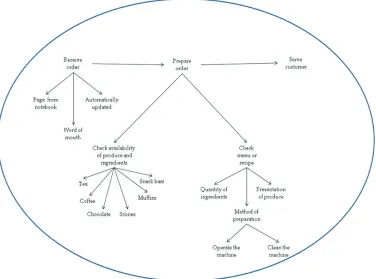
In this example, personalised e-learning is not based on the individual student and their diverse learning needs but on the role of a specific type of employment and the neces-sary knowledge and skills which are required to correctly fulfil that role within the organisa-tion. Figure 1 portrays a number of different learning activities which could be used to train a waiter to work in a coffee shop. Each activity would include a variety of different units of learning related to the topic. As the potential waiter/learner/student works their way through the various units of learning in each learning activity, their knowledge of the topic should increase, thereby enabling them to become more productive workers in a shorter period of time.
Figure 2 portrays some sample learning activities with which a potential cashier could engage to learn the necessary knowledge, skills, and processes to effectively conduct their du-ties as a cashier in a coffee shop. Again, each learning activity will have a number of units of learning associated with the topic. Even though the waiter and cashier have different jobs within the coffee shop, they would both need a working knowledge of some topics which overlap. Therefore, some units of learning used in the learning activities for the waiter would be re-used in the learning activities for the cashier, facilitating the re-use of good quality peer reviewed e-learning educational resources.
Figure 3 illustrates some possible learn-ing activities which would be necessary to train a member of staff in a coffee shop who is responsible for preparing the beverages and ordering produce and ingredients. Again, there would be some overlap in the knowledge or skill set required to do this job and the jobs of waiter and cashier. Therefore, some units of learning previously used to train the waiter and the cashier could be re-used to train the preparer. The preparer would also require ad-ditional e-learning activities particular to their job description which would not be necessary for the waiter or cashier to learn.
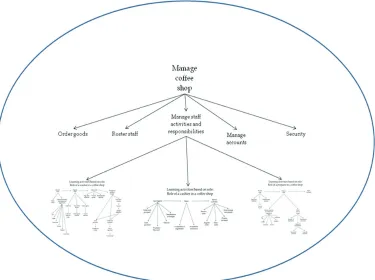
knowledge of the activities performed by the “waiter”, “cashier”, and “preparer”. Figures 1, 2, 3 and 4 illustrate how educators can re-use personalised e-learning activities based on role playing. Some, but not all of the educational activities required for the role of “waiter” are also used for the role of “cashier”, “preparer” and “manager”. The above scenario depicts how personalised e-learning activities could be provided for different roles in a coffee shop. Similar scenarios could be created to show how personalised e-learning activities could be created and used to educate students on differ-ent roles of responsibility in any organisation. Personalised e-learning activities could also be created to train employees in new roles of responsibility when new processes are required due to Business Process Re-engineering in the workplace. The challenges in designing personalised e-learning activities for use in educational settings are similar to the challenges
encountered by organisational trainers when: a) training existing staff in new processes; b) performing mandatory training for compli-ance purposes; and c) training new staff in the procedures of the organisation.
[image:12.504.75.449.105.384.2]7. AUTHORING TOOLS
In order to achieve personalised e-learning activities adaptive authoring tools are required to run in the background. Some of the adaptive authoring tools are based on the concepts of abstract designs or reference models. Adaptive authoring tools adapt the selection of learning activities or units of learning at run time to suit the diverse learning requirements of individual students based on information gathered from the student’s user model/profile. Several authoring tools which were developed to achieve adaptive educational content are reviewed below.
8. AHAM
Abstract reference model (AHAM) (Aroyo, De Bra, Houben, & Vdovjak, 2004) is an abstract
design to separate the responsibilities of com-ponents in an engine. AHAM, it is an abstract architecture not an adaptation engine (AE) (Knutov et al., 2009). AHAM is a reference model for adaptive hypermedia applications and authoring tools (Conlan, 2004). The AHAM reference model interprets the adaptation rules contained in the adaptation model (AM), in order to generate the relevant information presentation units (Knutov et al., 2009). Many engines have been based or are built based on the architecture, for example: AHA. AHA is an adaptive engine (in fact it has four different versions with differing architectures), where adaptation and content are separated into dif-ferent layers (Hendrix, De Bra, Pechenizkiy, Smits, & Cristea, 2008).
[image:13.504.59.431.106.383.2]Model (Aroyo et al., 2004). Resources are de-fined in the Domain Model and can be re-used for numerous different personalised e-learning activities or adaptive courses. Personalised e-learning activities, adaptive courses and simulated processes are authored in the Adapta-tion Model, by linking together concepts and services, which have previously been defined in the Domain Model. The User Model is used to store metadata gathered on each individual learner. The adaptation is performed through the co-operation of the User Model (UM), Domain Model (DM) and Adaptation Model (AM) (Aroyo et al., 2004). One important function of the Adaptation Model is to interpret the set of rules and instructions provided in order to link the Domain Model with the User Model, to provide the relevant content to the user (Aroyo et al., 2004).
9. AHA!
[image:14.504.75.451.107.386.2]2004). There are no design tools available for authors to use to create Concept Relationship Types (CRTs), so authors would have to use the CRTs already created by experts (Hendrix et al., 2008). The unavailability of design tools for authors to create Concept Relationship Types (CRTs) would restrict the use of this tool to technical experts who are familiar with this reference model. From exploring knowl-edge to exploring other areas such as: interest; goal; or learning styles (Aroyo et al., 2004), the objective being to make authoring more user-friendly and to facilitate a more flexible approach for including fragments and objects (Aroyo et al., 2004). Therefore, providing the functionality to direct students to the most relevant links/Web pages to visit next within the AHA! system (Romero, Ventura, Zafra, & De Bra, 2009). The AHA! reference model unified the Adaptive Hypermedia research community by providing a generic architecture
which then inspired other researchers to explore different directions (Knutov et al., 2009). The GRAPPLE Adaptive Learning Environment (GALE) adaptation engine is a follow-up of the AHA! adaptation engine (Foss & Cristea, 2009), “Although GALE offers many adaptation possibilities we do not advocate using many adaptation possibilities in a single application” (Smits & De Bra, 2011, p. 72).
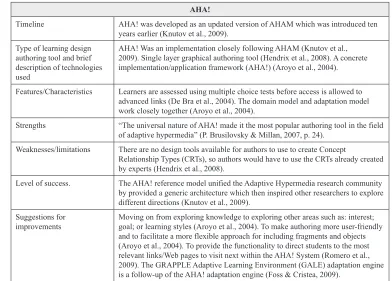
Table 1 provides a summary of the AHA! authoring tool.
10. ACCT
[image:15.504.57.432.93.373.2]which has been adaptively formulated to suit their unique learning requirements. Authors engaging with authoring tools should consider their pedagogical strategies when creating per-sonalised e-learning activities and the process narratives which they are aiming to achieve.
11. MOT (MY ONLINE
TEACHER)
MOT has been gradually developed since 2000 (Foss & Cristea, 2009). MOT3.0 authoring tool is a complete rewrite of MOT1.0 (Foss & Cristea, 2009). MOT is a collection of authoring tools for creating adaptive hypermedia learning resources (Foss & Cristea, 2009). MOT is one of the only authoring tools created for develop-ing adaptive hypermedia that allows users to author for a range of subjects which can then be
used on a variety of adaptation engines (Foss & Cristea, 2009). In MOT the content is separated from the learning goals (Foss & Cristea, 2009). MOT is a flexible authoring system but the ad-aptation specification usability is low (Hendrix et al., 2008). Evaluation showed that the user interface is insufficient (Foss & Cristea, 2009). MOT+ as an authoring tool is geared towards expert instructional designers, it is not suitable for use by non-technical authors (Griffiths & Blat, 2005). MOT was designed to ensure that users can create domain map hierarchies quickly and intuitively, and create multiple concepts at once (Foss & Cristea, 2009), but as mentioned previously evaluation showed the user interface was insufficient for use by any but expert in-structional designers.
[image:16.504.61.453.91.372.2]Table 2 provides a summary of the MOT authoring tool.
Table 1. AHA! authoring tool
AHA!
Timeline AHA! was developed as an updated version of AHAM which was introduced ten years earlier (Knutov et al., 2009).
Type of learning design authoring tool and brief description of technologies used
AHA! Was an implementation closely following AHAM (Knutov et al., 2009). Single layer graphical authoring tool (Hendrix et al., 2008). A concrete implementation/application framework (AHA!) (Aroyo et al., 2004).
Features/Characteristics Learners are assessed using multiple choice tests before access is allowed to advanced links (De Bra et al., 2004). The domain model and adaptation model work closely together (Aroyo et al., 2004).
Strengths “The universal nature of AHA! made it the most popular authoring tool in the field of adaptive hypermedia” (P. Brusilovsky & Millan, 2007, p. 24).
Weaknesses/limitations There are no design tools available for authors to use to create Concept
Relationship Types (CRTs), so authors would have to use the CRTs already created by experts (Hendrix et al., 2008).
Level of success. The AHA! reference model unified the Adaptive Hypermedia research community by provided a generic architecture which then inspired other researchers to explore different directions (Knutov et al., 2009).
Suggestions for
11.1. Learning Activity Design in Education (LADIE)
LADIE was a JISC (2013) funded project which investigated the specification of learning activi-ties. The author of the original LADIE project is Conole (2010) from Southampton. No authoring tool was involved, but there was an assumption that authoring tools could be built subsequently. This learning design approach encompasses a broad set of use case scenarios for showcasing and creating activity-based e-learning (Har-rigan et al., 2009). There were other projects by Conole which focused on authoring tools (Dialog plus etc.) (Bailey, Zalfan, Davis, Fill, & Conole, 2006). In a paper published by Open Learning in June 2010, Conole (2010) suggests what teachers find most helpful are: examples of technological uses relevant to their subject area, and contact information for people who have used these technologies. Conole et al. (2010) also suggest that the use of technology in edu-cation poses several challenges and dilemmas.
11.2. Instructional
Management System (IMS)
Angeli & Valanides (2009) suggest that teacher training courses do not adequately prepare teachers to create course content, with pedagogic connections, from the technological tools available. When designing educational re-sources, educators should consider the processes of learning students undergo when engaging in multi-user environments (Oliver & Carr, 2009). Granić, Mifsud, & Ćukušić (2009) recommend that educators should have clear pedagogical ob-jectives when designing content for e-learning systems. The Instructional Management System (IMS) specification guide provides a structure for the design process which enables educators to create units of learning with pedagogical benefits (Griffiths & Blat, 2005).
11.3. Intelligent Tutoring Systems (ITS)
Personalisation of e-learning resources to improve students’ learning experiences has evolved from the studies of Intelligent Tutor-Table 2. MOT authoring tool
MOT
Timeline MOT (My Online Teacher) has been gradually developed since 2000 (Foss & Cristea, 2009). MOT3.0 authoring tool is a complete rewrite of MOT1.0 (Foss & Cristea, 2009).
Type of learning design authoring tool and brief description of technologies used
MOT is a collection of authoring tools for creating adaptive hypermedia learning resources (Foss & Cristea, 2009).
Features/Characteristics MOT is one of the only authoring tools created for developing adaptive hypermedia that allows users to author for a range of subjects which can then be used on a variety of adaptation engines (Foss & Cristea, 2009).
Strengths In MOT the content is separated from the learning goals (Foss & Cristea, 2009). Weaknesses/limitations MOT is a flexible authoring system but the adaptation specification usability is
low (Hendrix et al., 2008). Evaluation showed that the user interface is insufficient (Foss & Cristea, 2009).
Level of success MOT+ as an authoring tool is geared towards expert learning designers, it is not suitable for use by non-technical authors (Griffiths & Blat, 2005)
Suggestions for
[image:17.504.53.432.91.315.2]ing Systems (ITS) and Adaptive Hypermedia Systems (AHS) (Dagger, 2006). The objective of Intelligent tutoring systems (ITS) is to select learning activities which are most appropriate for individual students learning requirements relevant to their existing level of knowledge (P. Brusilovsky & Millan, 2007, p. 4). Harrigan, Kravcik, Steiner & Wade (2009) suggest that Adaptive Learning Systems (ALSs) are particu-larly well suited to structured learning activities. Chiu & Yu (2002) note that the limitations of appropriate software, hardware and network infrastructure has often hindered the use of authoring systems in education. Ocak (2010) suggest that incorporating the use of Technology Enhanced Learning (TEL) into standard courses can be a highly complex process which in turn may impact the successful implementation of blended courses. Aleven, McLaren, & Sewall (2006) suggest that fully-functional intelligent tutors should run on student machines connected to a web browser running freely-available Flash player (Adobe, 2010). Katuk, Sarrafzadeh, & Dadgostar (2009) recommend intelligent tutoring systems (ITS) should be easy to use, designed to suit standard user interfaces and suitable for use by non-skilled authors. Bovey & Dunand (2006) suggest that the use of interoper-able e-learning units is not a viinteroper-able possibility as long as coding specialists are still involved in the production process.
11.4. CopperCore Service Integration (CCSI)
CCSI is an instructional design authoring tool which aims at integrating a mixture of online e-learning services, for example, assessment opportunities, facilitation of online collabora-tive activities and communication affordances (Vogten et al., 2007). CopperCore Service Inte-gration (CCSI) is a generic integrative service framework (Vogten et al., 2007). Assessment Provision through Interoperable Segments (APIS) is an Instructional Management System (IMS) question and test interoperability service (Vogten et al., 2007). There is a requirement to use an Application Programming Interface (API) with CopperCore as it has no user interface
of its own (Vogten et al., 2007). The CopperCore engine provides a basic rendering layer to run learning scenarios, which could be incorporated into a virtual learning environment (Bovey & Dunand, 2006).
The use of a Learning Management System (LMS) or larger e-learning framework is neces-sary to use CopperCore as it was not developed to run as a standalone application (Vogten et al., 2007). Some of the runtime inter-specification operability issues have not been resolved because they are not as yet understood (Vogten et al., 2007). Users have to be manually added using the command line interface (Bovey & Dunand, 2006), this interface would not be suit-able for use by non-technical authors. Students test results can be used as the basic input to the system which determines the flow of learning activities to be directed to the student to pursue (Vogten et al., 2007). At the time of develop-ment two asynchronous forum adapters were developed, one to suit the Moodle e-learning platform and the other one to suit the Knowledge Network which caters for adult education and recreation classes and is a proprietary system of The Open University (Vogten et al., 2007). The work on CCSI (Vogten et al., 2007) was taken up by the European Commission funded TENCompetence programme (TENCompe-tence, 2010).
(Chudnovskyy et al., 2012) worked towards finding a trade off between automation and end user suitability. Evaluations of new features with end-users using the OMELETTE Platform are ongoing (Chudnovskyy et al., 2013).
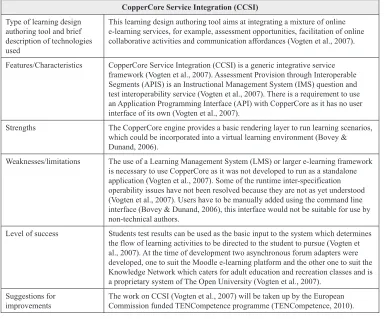
Table 3 provides a summary of the Cop-perCore Service Integration (CCSI) framework.
12. GRAPPLE
The Generic Responsive Adaptive Personalized Learning Environment (GRAPPLE) project aimed at delivering to learners a technology enhanced learning (TEL) environment that automatically adapts to personal preferences, prior knowledge, skills and competences, learn-ing goals and the personal or social context in which the learning takes place (GRAPPLE,
2008). In this model adaptation is represented by relationships between concepts (Hendrix et al., 2008). This system approach contains an arbitrary number of layers, for example: Domain Model; User Model; Prerequisite layer (Hendrix et al., 2008).
The findings of researchers who evaluate their own systems can be biased (Gena & Wei-belzahl, 2007) that is why it was so important to get feedback from impartial participants and incorporate their recommendations in future implementations of authoring tools. One of the principles of good design is to involve the participants at all stages during development (Griffiths & Blat, 2005), participant involve-ment was encouraged at various stages during the GRAPPLE project. The training (Glahn, Steiner, De Bra, Docq, & O’Donnell, 2010) and
Table 3. State of the art technological solution – CCSI framework
CopperCore Service Integration (CCSI)
Type of learning design authoring tool and brief description of technologies used
This learning design authoring tool aims at integrating a mixture of online e-learning services, for example, assessment opportunities, facilitation of online collaborative activities and communication affordances (Vogten et al., 2007).
Features/Characteristics CopperCore Service Integration (CCSI) is a generic integrative service framework (Vogten et al., 2007). Assessment Provision through Interoperable Segments (APIS) is an Instructional Management System (IMS) question and test interoperability service (Vogten et al., 2007). There is a requirement to use an Application Programming Interface (API) with CopperCore as it has no user interface of its own (Vogten et al., 2007).
Strengths The CopperCore engine provides a basic rendering layer to run learning scenarios, which could be incorporated into a virtual learning environment (Bovey & Dunand, 2006).
Weaknesses/limitations The use of a Learning Management System (LMS) or larger e-learning framework is necessary to use CopperCore as it was not developed to run as a standalone application (Vogten et al., 2007). Some of the runtime inter-specification operability issues have not been resolved because they are not as yet understood (Vogten et al., 2007). Users have to be manually added using the command line interface (Bovey & Dunand, 2006), this interface would not be suitable for use by non-technical authors.
Level of success Students test results can be used as the basic input to the system which determines the flow of learning activities to be directed to the student to pursue (Vogten et al., 2007). At the time of development two asynchronous forum adapters were developed, one to suit the Moodle e-learning platform and the other one to suit the Knowledge Network which caters for adult education and recreation classes and is a proprietary system of The Open University (Vogten et al., 2007).
Suggestions for
[image:19.504.53.437.335.654.2]evaluation (Glahn et al., 2010; Steiner et al., 2010) of the GRAPPLE project was conducted, and the second empirical evaluation in academic settings (Glahn et al., 2011) was published online in March 2011. The final version of the GRAPPLE Authoring Tools (GAT) involved a very intensive authoring process which “makes the development of adaptive course material only cost efficient for relatively short courses with a large throughput of students” (Glahn et al., 2011, p. 2).
13. SUMMARY OF THE
TECHNOLOGICAL AND
PEDAGOGICAL CHALLENGES
Table 4 provides a summary of some of the technological challenges to the realisation of personalised e-learning which have been mentioned in this article.
Table 5 provides a summary of some of the pedagogical challenges to the realisation of personalised e-learning.
14. CONCLUSION
Authoring tools for designing personalised e-learning activities are not freely available
online or widely used by academics in higher education. Many research studies suggest that existing authoring tools are not suitable for use by non-technical authors due to various limitations, such as: authors would have to use concept relationship types created by experts (Hendrix et al., 2008); the adaptation specifi-cation usability is low (Hendrix et al., 2008); not suitable for use by non-technical authors (Griffiths & Blat, 2005); teacher training courses do not adequately prepare teachers to use the technological tools available (Angeli & Valan-ides, 2009); some runtime inter-specification operability issues remain unresolved (Vogten et al., 2007); and the limitations of software, hardware and infrastructure has often hindered the use of authoring systems in education (Chiu & Yu, 2002).
Armani (2005) mentions that adaptive technologies have so far only been tested in lab experiments and are yet to be tested by many academics. Overall, personalised e-learning may support learner diversity in the future to reduce the burden of information overload and increase learner satisfaction, but, further inves-tigation, evaluation and analyses of authoring tools is required before personalised e-learning to support learner diversity can be achieved by many academics.
Table 4. Technological challenges to the realisation of personalised e-learning
• Usability of authoring tools by non-technical authors • Complexity of development and authoring • Creation and Maintenance of user models/profiles
• Expressivity – the degree to which these tools express the desired effect of authors • Interoperability – ability to interact seamlessly with other information systems • Portability – ability to function across different e-learning platforms
Table 5. Pedagogical challenges to the realisation of personalised e-learning
• Clear pedagogical objectives • Awareness of instructional design
REFERENCES
Adobe. (2010). Adobe Flash Player. Retrieved Sep-tember 30, 2010, from http://download.cnet.com/ Adobe-Flash-Player/3000-2378_4-10001055.html Aleven, V., McLaren, B., & Sewall, J. (2006). Tutorial on rapid development of intelligent tutors using the cognitive tutor authoring tools (CTAT). Paper presented at the Proceedings of the Sixth international conference on advanced learning tech-nologies (ICALT ‘06), Kerkrade, The Netherlands. doi:10.1109/ICALT.2006.1652640
Alvino, S., Asensio-Perez, J., Dimitriadis, Y., & Hernandez-Leo, D. (2009). Supporting the reuse of effective CSCL learning designs through social structure representations. Distance Education, 30(2), 239–258. doi:10.1080/01587910903023215 AMAS. (2013). Adaptive Media and Services for Dynamic Personalisation and Contextualisation. Retrieved January 30, 2013, from http://kdeg.scss. tcd.ie/amas
Angeli, C., & Valanides, N. (2009). Epistemological and methodological issues for the conceptualiza-tion, development, and assessment of ECT-TPCK: Advances in technological pedagogical content knowledge (TPCK). Computers & Education, 52(1), 154–168. doi:10.1016/j.compedu.2008.07.006 Armani, J. (2004). Shaping learning adaptive tech-nologies for teachers: A proposal for an adaptive learning management system. Paper presented at the Proceedings of the IEEE International Conference on Advanced Learning Technologies, Joensuu, Finland. doi:10.1109/ICALT.2004.1357656
Armani, J. (2005). VIDET: A Visual Authoring Tool for Adaptive Websites Tailored to Non-Programmer Teachers. Journal of Educational Technology & Society, 8(3), 36–52.
Aroyo, L., De Bra, P., Houben, G., & Vdovjak, R. (2004). Embedding information retrieval in adap-tive hypermedia: IR meets AHA! New Review of Hypermedia and Multimedia, 10(1), 53–76. doi:10 .1080/13614560410001728146
Bailey, C., Zalfan, M., Davis, H., Fill, K., & Conole, G. (2006). Panning for gold: Designing pedagogical-ly-inspired learning nuggets. Journal of Educational Technology & Society, 9(1), 113–122.
Bajraktarevic, N., Hall, W., & Fullick, P. (2003, May 20, 2003). Incorporating learning styles in hypermedia environments: Empirical evaluation. Paper presented at the Workshop on Adaptive Hypermedia and Adaptive Web-Based Systems, Budapest, Hungary.
Bellows, S., & Jankowski, J. (2009). Live and learn. Contract (New York, N.Y.), 50(2), 32–33.
Bender, T. (2005). Role playing in online educa-tion: A teaching tool to enhance student engage-ment and sustained learning. Retrieved October 28, 2010, from http://www.innovateonline.info/index. php?view=article&id=57
Bennet, A., & Bennet, D. (2008). e-learning as energetic learning. The journal of information and knowledge management systems, 38(2), 206-220. Bovey, N., & Dunand, N. (2006). Seamless produc-tion of interoperable e-learning units: stakes and pitfalls. Paper presented at the Workshop in Learning Networks for Lifelong Competence Development, Sofia, Bulgaria.
Brusilovsky, P. (2001). Adaptive Hypermedia. User Modeling and User-Adapted Interaction, 11(1/2), 87–110. doi:10.1023/A:1011143116306
Brusilovsky, P., Karagiannidis, C., & Sampson, D. (2004). Layered evaluation of adaptive learning systems. International Journal of Continuing Engi-neering Education and Lifelong Learning, 14(4/5), 402–421. doi:10.1504/IJCEELL.2004.005729 Brusilovsky, P., Kobas, A., & Nejdl, W. (Eds.). (2007). The adaptive web, methods and strategies of web personalisation. Verlag Berlin Heidelberg. Springer. Brusilovsky, P., & Millan, E. (2007). User models for adaptive hypermedia and adaptive educational sys-tems. In P. Brusilovsky, A. Kobsa, & W. Nejdl (Eds.), The Adaptive Web. Berlin: Springer. doi:10.1007/978-3-540-72079-9_1
Cheung, K., Lam, J., Szeto, R., & Yau, J. (2008). Exploring a pedagogy-driven approach to e-courses development. Paper presented at the 2008 IEEE International Workshop on Education Technology and Training & 2008 International Workshop on Geoscience and Remote Sensing. doi:10.1109/ET-TandGRS.2008.267
Chiu, B., & Yu, Y. (2002). Promoting the use of information technology in education via lightweight authoring tools. Paper presented at the Proceedings of the International Conference on Computers in Education (ICCE ‘02), Auckland, New Zealand. doi:10.1109/CIE.2002.1185990
Chudnovskyy, O., Nestler, T., Gaedke, M., Daniel, F., & Ignacio, J. (2012). End-User-Oriented Telco Mashups: The OMELETTE Approach. Paper pre-sented at the WWW 2012 Companion Volume. Chudnovskyy, O., Pietschmann, S., Niederhausen, M., Chepegin, V., Griffiths, D., & Gaedke, M. (2013). Awareness and control for inter-widget communica-tion: Challenges and solutions. Paper presented at the 13th International Conference on Web Engineering (ICWE2013). doi:10.1007/978-3-642-39200-9_11 Clapper, T. (2010). Role play and simulation. Educa-tion Digest, 75(8), 39–43.
Clarà, M., & Barberà, E. (2013). Learning online: Massive open online courses (MOOCs), connectiv-ism, and cultural psychology. Distance Education, 34(1), 129–136. doi:10.1080/01587919.2013.77 0428
Cole, M., John-Steiner, V., Scribner, S., & Souber-man, E. (Eds.). (1978). Vygotsky, Lev.: Mind in Society: The development of higher psychological processes. Cambridge, Massachusetts: Harvard University Press.
Conlan, O. (2004). The multi-model, metadata driven approach to personalised elearning services. (Doc-tor of Philosophy). Dublin, Ireland: University of Dublin, Trinity College.
Conlan, O., Staikopouslos, A., Hampson, C., Lawless, S., & O’Keeffe, I. (2013). The narrative approach to personalisation. New Review of Hypermedia and Multimedia, 19(2), 132–157. doi:10.1080/1361456 8.2013.812150
Conole, G. (2010). Facilitating new forms of dis-course for learning and teaching: Harnessing the power of Web 2.0 practices. Open Learning, 25(2), 141–151. doi:10.1080/02680511003787438
Conole, G., Scanlon, E., Littleton, K., Kerawalla, L., & Mulholland, P. (2010). Personal inquiry: Innova-tions in participatory design and models for inquiry learning. Educational Media International, 47(4), 277–292. doi:10.1080/09523987.2010.535328 Dagger, D. (2006). Personalised e-learning development environments. (Doctor in Philoso-phy), Trinity College Dublin, Dublin. Retrieved from http://books.google.ie/books/about/Person-alised_ELearning_Development_Envir.html?id=t_ tPMwEACAAJ&redir_esc=y
Dagger, D., Wade, V., & Conlan, O. (2004). De-veloping active learning experiences for adaptive personalised e-learning. In W. Nejdl & P. De Bra (Eds.), AH 2004, LNCS 3137. Berlin, Heidelberg: Springer-Verlag.
De Bra, P., Aroyo, L., & Cristea, A. (2004). Adaptive web-based educational hypermedia. In M. Levene & A. Poulovassilis (Eds.), Web Dynamics, Adaptive to Change in Content, Size, Topology and Use (pp. 387–410). Springer.
De Bra, P., & Brusilovksky, P. (2009). Introductiion to special issue on adaptive hypermedia. New Re-view of Hypermedia and Multimedia, 15(1), 1–3. doi:10.1080/13614560902944168
De Bra, P., Houben, G., & Wu, H. (1999). AHAM: A Dexter-based reference model for adaptive hypermedia. Paper presented at the Hypertext 99 - Proceedings of the Tenth ACM Conference on Hypertext and Hypermedia, Darmstadt, Germany. doi:10.1145/294469.294508
De Bra, P., & Stash, N. (2002). AHA! A general-purpose tool for adaptive websites. Paper presented at the World Wide Web Conference.
Donnelly, R., & O’Rourke, K. (2007). What now? Evaluating e-learning CPD practice in Irish third-lev-el education. Journal of Further and Higher Educa-tion, 31(1), 31–40. doi:10.1080/03098770601167864 Donovan, M., & Bransford, J. (Eds.). (2005). How students learn: History, mathematics, and science in the classroom. Washington, D.C.: National Aca-demic Press.