Soil is an important component of all terrestrial ecosystems, as well as a main source of production in agriculture and forestry. its function is essential for maintenance of the global biogeochemical cycles for all important nutrients, and thus, the processes in soils affect many other components of ecosystems, both biotic and abiotic. to un-derstand the functioning of soils and to prevent soil damage due to anthropogenic and climatic factors, it is important to have suitable instru-ments for the assessment and quantification of soil processes performed by soil microorganisms and other members of the soil biota.
Microbial processes in soils catalyzed by enzymes
Enzymes are major components of biological soil processes, such as the degradation of organic
compounds, their mineralization and the libera-tion or recycling of nutrients including nitrogen, phosphorus, sulphur and other essential metals. the activity of hydrolytic enzymes and lignino-lytic oxidases and peroxidases directly affects the rates of transformation of soil biopolymers into compounds that are accessible for microorganisms and plants. the study of enzymatic activities in environmental samples (soil, litter, lignocellulose or other matrices) is a useful tool for assessing the functional diversity of soil microbial communi-ties or soil organic mass turnover (Kandeler et al. 1999). Measuring enzyme activities in soil has a long tradition in connection with evaluating soil fertility and quantifying processes in natural and seminatural ecosystems with a high turnover of organic compounds, such as in forest and grassland soils. an overview of enzymes targeted in soils is summarized in table 1. the list includes enzymes involved in the mobilization of nutrients, n, P or S,
Microbial enzyme-catalyzed processes in soils and their
analysis
P. Baldrian
Laboratory of Environmental Microbiology, Institute of Microbiology of the ASCR,
Prague, Czech Republic
ABstrAct
Currently, measuring enzyme activities in soils or other lignocellulose-based materials is technically feasible; this measurement is particularly suitable for evaluating soil processes of biopolymer (cellulose, hemicelluloses, lignin, chitin and others) degradation by microbes and for assessing cycling and mobilization of principal nutrients includ-ing nitrogen, phosphorus and sulfur. With some considerations, assay methods can provide reliable information on the concentration of enzymes in soil or the rates of enzyme-catalyzed processes. Enzyme analyses in recent studies demonstrated a high level of spatial variability of soil enzyme activity both in depth and in space. The vertical gra-dients of enzyme activities are most developed in forest soils. Furthermore, enzyme activity in soils is regulated by seasonally-dependent variables such as temperature, moisture and the input of fresh litter. While several enzymes are widely produced by different groups of soil microorganisms, some of them can be used as indicators of the pres-ence or activity of specific microbial taxa.
Keywords: assay methods; ecology; extracellular enzymes; fungi; lignocellulose; litter; soil microorganisms
from complex organic substrates and an intricate array of enzymes that participate in transforming biopolymers, including plant cell wall polymers such as cellulose and hemicelluloses along with other polysaccharides available in soils and litter. While the first group of enzymes is produced by a wide variety of soil microorganisms and some of them also secreted by plant roots, the production of several polymer-degrading enzymes is often ascribed to fungi (Miller et al. 1998, de Boer et al. 2005, Hättenschwiler et al. 2005, Steffen et al.
2007, Baldrian 2008a, Šnajdr et al. 2008a). Some ligninolytic enzymes, namely Mn-peroxidase and lignin peroxidase, are produced exclusively by saprotrophic species of fungi from Basidiomycota. Enzyme activity measurements can thus be an indirect assessment of the activity of a specific group of microorganisms in the soil (Hofrichter 2002, Baldrian 2008a).
[image:2.595.63.534.281.722.2]Due to the effects of external disturbance on their activity, enzymes can serve as sensitive indi-cators of soil quality (Dick 1994, Dick et al. 1996,
table 1. overview of enzymes studied in soil and litter. abbreviations: aBtS - 2,2'-azinobis-3-ethylbenzo-thiazoline-6-sulfonic acid; aMC – amidomethylcoumarin; DMaB - 3,3-dimethylaminobenzoic acid; MUF – methylumbellyferone; pnP – p-nitrophenol; vaoH – veratrylalcohol
Process Enzyme1 EC assay Method2reference
Cellulose degradation
endoglucanase 3.2.1.4 depolymerization E lynd et al. (2002), Baldrian and valášková (2008)
cellobiohydrolase 3.2.1.91 pnP, MUF D lynd et al. (2002), Baldrian and valášková (2008)
β-glucosidase 3.2.1.21 pnP, MUF D lynd et al. (2002), Baldrian and valášková (2008)
Degradation of hemicellu- loses
endoxylanase 3.2.1.8 depolymerization E Collins et al. (2005), Biely and Puchart (2006)
endomannanase 3.2.1.78 depolymerization E Collins et al. (2005), Biely andPuchart (2006)
β-glycosidases 3.2.1.XX pnP, MUF D Collins et al. (2005); Biely and Puchart (2006)
esterases 3.2.1.XX pnP, MUF D Biely and Puchart (2006)
Polysaccharide degradation
endochitinase 3.2.1.14 depolymerization E Seidl (2008) n-acetlyglucosaminidase 3.2.1.52 pnP, MUF D Seidl (2008)
α-glucosidase 3.2.1.3 pnP, MUF D Seidl (2008)
lignin transformation
Mn-peroxidase 1.11.1.13 Mn2+, DMaB, aBtS E Hofrichter (2002) lignin peroxidase 1.11.1.14 vaoH E Martínez et al. (2005) laccase (phenoloxidase) 1.10.3.2 aBtS, guaiacol E Baldrian (2006) H2o2-producing enzymes 1.1.3.XX various compounds E Martínez et al. (2005)
n acquisition
proteases 3.4.21.XX depolymerization E rao et al. (1998) aminopeptidases 3.4.11.XX pnP, aMC D Kilcawley et al. (2002)
urease 3.5.1.5 urea D Klose and tabatabai (1999a)
P acquisition phosphomonoesterase 3.1.3.1 pnP, MUF D Hayes et al. (2000)
phospohodiesterase 3.1.4.1 pnP, MUF D Hayano (1977)
S acquisiton arylsulfatase 3.1.6.1 pnP, MUF D Klose and tabatabai (1999b)
1For more details about the properties of enzymes, refer to www.brenda-enzymes.info/ or (Schomburg and
Schomburg 2007)
Marx et al. 2001). this relationship is emphasized by the fact that changes in enzymatic activity are the fastest response to external disturbances (vepsäläinen et al. 2001). this observation was confirmed by many studies on the response of enzymes to environmental pollution, including the effects of heavy metals or organic xenobiotics (Kandeler et al. 1999, Baldrian et al. 2000, Burns and Dick 2002, Effron et al. 2004, roy et al. 2004, Baldrian 2008b). it was proposed that a simultane-ous estimation of multiple enzyme activities can be a suitable indicator of soil microbial activity (Bolton et al. 1985).
Methodological considerations for measuring enzyme activities in soils
a variety of methods for measuring enzyme activi-ties in soils have been proposed. The techniques often differ in the mode of detection (spectrophotometry, fluorescence, radiolabelling), the reaction condi-tions (temperature, use of buffers, time of reaction), and/or in the use of a variety of reaction substrates for measuring the enzyme activity, even for a single enzyme (tabatabai 1994, alef and nannipieri 1995, Gianfreda and Bollag 1996, Schinner et al. 1996, Burns and Dick 2002). Unfortunately, generally accepted standard procedures still do not exist.
the most widely used substrates for the quanti-fication of a relatively large group of exo-cleaving hydrolases are the molecules based on p -nitro-phenol, 4-methylumbelliferone and amidometh-ylcoumarin. p-nitrophenol (pnP) is used for spectrophotometric techniques; the substrates exhibits a relatively low sensitivity, and the color reaction is inapplicable with dark or turbid samples. 4-methylumbelliferone (MUF) and amidomethyl-coumarin (aMC) are substrates that are utilized with fluorescence detection. they are highly sen-sitive, although phenolic compounds (e.g. humic substances) can cause fluorescence quenching. Moreover, the fluorescence of MUF is strongly pH-dependent. the weaknesses of the methods using MUF or aMC can be overcome by choos-ing a suitable set of standards. Quantification of endo-cleaving polysaccharide hydrolases is usually assayed through the production of reducing sugars in the reaction or by analyzing the liberation of a soluble dye from a dyed polymer. With oxidative enzymes, the appearance of a colored product is typically measured using spectrophotometry.
Enzyme assays are either direct, when the re-action substrate is added to the studied system,
or indirect, when enzymes are recovered from soil and assayed afterwards. a direct assay over-comes any problems with enzyme extractability. a significant fraction of the enzyme is often not extractable from soils due to binding to soil com-ponents like microbial biomass (Schlosser et al. 1997, valášková and Baldrian 2006) or abiotic soil material (Claus and Filip 1990, Quiquampoix et al. 1993). in soil with high clay content, the ex-tractable fraction of total activity may account for less than a few percent of the total (vepsäläinen 2001). Higher extraction efficiencies were reported from organic-rich horizons of forest soils and in plant litter (Šnajdr et al. 2008b). Measurements in extracts are better defined biochemically, but they only target the extractable fractions of en-zymes. Unfortunately, unlike most hydrolases, enzymes performing endocleavage of polysac-charides (e.g. endoglucanases, endoxylanases or endochitinases) and oxidative enzymes can only be quantified in extracts. after enzyme recovery using extraction, desalting and dialysis should be performed to remove inhibitory small molecular mass compounds that may inhibit enzyme assay. these types of compounds include heavy metals (Baldrian and Gabriel 2002) or humic substances that competitively inhibit assays targeting ligni-nolytic enzymes (Zavarzina et al. 2004).
a range of extraction buffers were proposed for use with soils (lang et al. 1997, Criquet et al. 2000, Criquet et al. 2002, Baldrian and Gabriel 2003). although some of them seem to work well with a wider variety of soils, when working in a single soil type, it is still advisable to test the extraction solutions with that specific soil. at minimum, the solutions to be tested should include phosphate and acetate buffers of pH 7, 0.1mM CaCl and distilled water.
to approximate in situ conditions, it is possible to research the pH and temperature profiles of enzyme activities for the soil of interest and to use the results for estimating reaction rates.
Enzyme activity is extremely variable in space, the spatial variability usually being composed of vertical and horizontal components. the vertical gradient of soil properties includes soil organic matter content and quality, microbial biomass and physical condition (moisture content and pH). this results in a spatial gradient of enzyme activities, which are most often decreasing with increasing soil depth (trasar-Cepeda et al. 2000, Prietzel 2001, andersson et al. 2004, Wittmann et al. 2004, Baldrian et al. 2008, Šnajdr et al. 2008b). vertical stratification of enzyme activities is particularly pronounced in highly stratified soils (forest soils) and less pronounced in soils under tillage (agricul-tural soils) or in soils with high activity of mixing soil biota, like earthworms. Sharp gradients are often found even within individual soil horizons at a centimeter scale (Šnajdr et al. 2008b). to overcome the effects of spatial variation, it is important to collect well-defined samples in terms of soil ma-terial (horizon) or depth (in centimeters) and to use composite samples. Previous studies showed that a set of five or six total samples, composed of three subsamples (soil core segments) can give the representative mean activity in forest or grassland soils (Baldrian et al. 2008, Šnajdr et al. 2008b).
in previous studies, seasonal climatic factors, such as temperature or soil moisture content, were also identified as the main factors responsible for
observed seasonal differences (Dilly and Munch 1996, Criquet et al. 2000, 2002, 2004, Wittmann et al. 2004, niemi et al. 2005, Baldrian et al. 2008). this factor must be taken into account during the interpretation of enzyme activity data, and several sampling times during a season are usually needed to cover the annual variability of soil enzymatic processes. Moreover, to exclude random climatic effects, seasonality studies should be repeated during the following years.
recommended procedure
The following procedures are recommended for the routine measurement of enzyme activities in soils, litter or similar lignocellulose materials, such as naturally decomposing agroresidues. These meth-ods were tested over a relatively wide range of soils with varying properties, vegetation and manage-ment practices, and they yielded satisfactory results (vepsäläinen et al. 2001, niemi and vepsäläinen 2005, Baldrian et al. 2008, Šnajdr et al. 2008b).
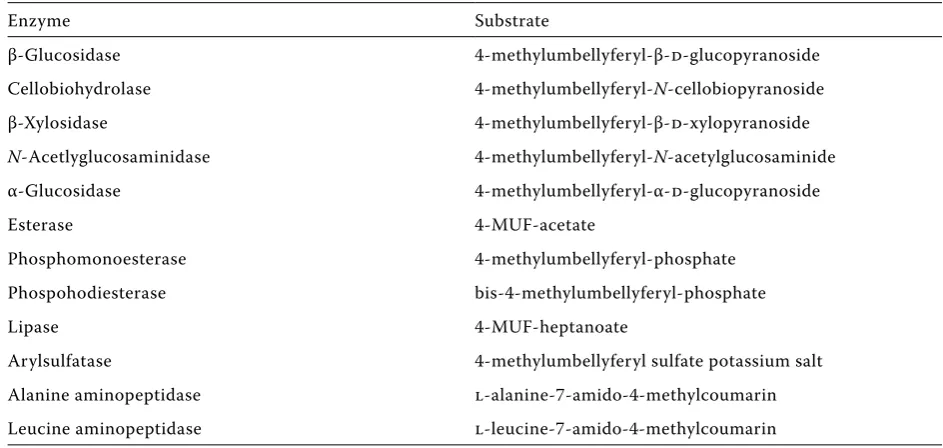
[image:4.595.60.532.535.759.2]Direct Assay. For the enzyme assays, 1 g fresh weight of soil is homogenized in 50 ml of 50mM sodium acetate buffer, pH 5.0, using an Ultraturrax (iKa labortechnik, Germany) for 3 min at 8000 rev/ min in an ice bath. For more solid litter particles, litter must be cut into pieces before homogeniza-tion. For the alkaline phosphomonoesterase assay, the reaction buffer is 0.5M tris-acetate at pH 8.0. When adding the reagents, the soil slurry is used at final dilution of 1:100.
table 2. the enzymes determined by direct incubation of soil samples
Enzyme Substrate
β-Glucosidase 4-methylumbellyferyl-β-d-glucopyranoside
Cellobiohydrolase 4-methylumbellyferyl-N-cellobiopyranoside
β-Xylosidase 4-methylumbellyferyl-β-d-xylopyranoside
N-acetlyglucosaminidase 4-methylumbellyferyl-N-acetylglucosaminide
α-Glucosidase 4-methylumbellyferyl-α-d-glucopyranoside
Esterase 4-MUF-acetate
Phosphomonoesterase 4-methylumbellyferyl-phosphate
Phospohodiesterase bis-4-methylumbellyferyl-phosphate
lipase 4-MUF-heptanoate
arylsulfatase 4-methylumbellyferyl sulfate potassium salt
alanine aminopeptidase l-alanine-7-amido-4-methylcoumarin
the activities of soil enzymes are assessed us-ing specific artificial substrates (glycosynth, UK; table 2) by measuring the fluorescence. Substrates (100 μl, in DMSo), at a final concentration of 500μM, are added to 100 μl of diluted soil slurry samples in a 96-well plate in three to four replicates. For the background fluorescence measurement, 100 μl of the soil slurry is combined with 100 μl of 4-methylumbelliferone (MUF) or 7-amino-4-methylcoumarin (aMC) standards to correct the results for fluorescence quenching. the standards are diluted to give final concentrations of 0, 0.1, 0.5, 1.0, 5.0, 10, 25 and 50μM in final volumes of 200 μl (vepsäläinen et al. 2001).
the multiwell plate is incubated at 40°C, and fluorescence is read after 5 min and 125 min. the fluorescence can be conveniently measured by any fluorescence reader, like the infinite (tECan, austria), using an excitation wavelength of 355 nm and an emission wavelength of 460 nm (niemi and vepsäläinen 2005). the quantitative enzyme activities are calculated on the basis of fluores-cence measurements. the fluoresfluores-cence values, after subtraction of a blank, are compared with standard curves of MUF and aMC. if necessary, a substrate blank can also be used. one unit of enzyme activity is defined as the amount of enzyme forming 1μM of reaction product per min.
Enzyme extraction and measurement in ex-tracts. the highest recovery of soil enzymes is usually achieved with 100mM phosphate buffer, pH 7.0 for soil and plant litter (Šnajdr et al. 2008a) or with 50mM sodium acetate buffer for specific lignocellulose types like wheat straw and other agroresidues (lang et al. 1997). Homogenized samples of soil or litter material are extracted at 4°C for 2 h on an orbital shaker (100 rpm) with the appropriate buffer (16:1 w/v). they are then filtered through Whatman # 5 filter paper and de-salted using PD-10 desalting columns (Pharmacia, Sweden), according to the manufacturer’s proto-col, to remove inhibitory small molecular mass compounds. the desalted samples can be stored at 4°C for two to three days or at –18°C for two to three weeks until enzyme activity analysis.
Laccase activity is measured by monitoring the oxidation of ABTS (2, 2'-azinobis-3-ethylbenzo-thiazoline-6-sulfonic acid) in citrate-phosphate (100mM citrate, 200mM phosphate) buffer (pH 5.0) at 420 nm (Bourbonnais and Paice 1990). Manganese peroxidase (MnP) is assayed using succinate-lactate buffer (100mM, pH 4.5). MBTH (3-methyl-2-ben-zothiazolinone hydrazone) and DMAB (3,3-dimeth-ylaminobenzoic acid) are oxidatively coupled by
the enzyme, and the resulting purple indamine dye is detected spectrophotometrically at 595 nm. The results can be corrected by the activities of samples without manganese (for MnP), where the manganese sulfate is substituted with an equimolar amount of ethylenediaminetetraacetate (Ngo and Lenhoff 1980). One unit of enzyme activity is defined as the
amount of enzyme forming 1μM of reaction product
per min. Lignin peroxidase is usually not assayed in soils, which is due to the fact that the produc-tion of this enzymes is limited to basidiomycete fungi growing on wood. Their presence in soil is not anticipated (Hildén et al. 2008).
Endoglucanase, endoxylanase, endomannanase, endochitinase and proteases can be easily measured with azo-dyed carbohydrate substrates, includ-ing carboxymethyl cellulose, birchwood xylan, galactomannan (Megazyme, Ireland), azochitin or azocasein (Sigma, USA) following the protocols of the substrate suppliers. The reaction mixture contains 0.2 ml of 2% dyed substrate in 200mM sodium acetate buffer (pH 5.0) and 0.2 ml of the sample. The reaction mixture is incubated at 40°C for 20–120 min and the reaction is stopped by adding 1 ml of ethanol followed by 10 s of vortexing and 10 min of centrifugation (10 000 × g) (Valášková et al. 2007). The amount of released dye is measured at 595 nm, and the enzyme activity is calculated according to standard curves correlating the dye release with the release of reducing sugars.
Hydrolytic enzymes in extracts can be essen-tially measured using the same method as soil homogenate samples (see above). Alternatively,
cellobiohydrolase, β-glucosidase, β-xylosidase
and N-acetylglucosaminidase can be assayed us-ing p-nitrophenyl-β-d-cellobioside p-nitrophenyl-β
-d-glucoside, p-nitrophenyl-β-d-xyloside and p
-ni-trophenyl-N-acetyl-β-d-glucosaminide, respectively.
The reaction mixture contains 0.16 ml of 1.2mM PNP-substrate in 50mM sodium acetate buffer (pH 5.0) and 0.04 ml of the sample. Reaction mixtures are incubated at 40°C for 20–120 min. The reac-tion is stopped by adding 0.1 ml of 0.5M sodium carbonate, and the absorbance is read at 400 nm (Valášková et al. 2007).
Acid phosphatase and arylsulfatase are assayed using 2 g/l p-nitrophenylphosphate or 50mM ni-trophenylsulfate in 50 mM sodium acetate buffer (pH 5.0) (Tabatabai and Bremner 1970, Šnajdr et al. 2008a). One unit of enzyme activity is usually
defined as the amount of enzyme releasing 1μM
However, the soils with a high content of organic matter interfere with the assay due to the release of soluble colored substances, and the sensitivity of this method is lower than that based on 4-methylumbel-liferone by at least one order of magnitude.
Other methods targeting microbial processes in soils
in addition to a direct analysis of enzyme ac-tivities, enzymes are also involved in processes assayed using substrate-induced respiration. in this method, a substrate is added to soil, and pro-duction of Co2 or consumption of o2 is meas-ured. Mineralization of polymeric substrates can only be achieved by the action of extracellular enzymes (alef and nannipieri 1995). recently, a convenient multiwell plate system was developed for the simultaneous measurement of substrate-induced respiration of numerous substrates at once. the assay can be used with both standard and radiolabeled compounds (Chapman et al. 2007). Enzymes are also targets of physiological profiling methods of soil communities based on substrate oxidation, such as the Biolog™ system (Garland and Mills 1991). However, this process is based on selection and cultivation of a subpopulation of utilizers of individual test compounds, and results relate more to the potential than to the actual rate of an in situ process. Moreover, it seems to be better suited for the study of individual micro-bial isolates compared to complex communities (Garland and Mills 1991, Preston-Mafham et al. 2002). another physiological profiling device, the apiZym™ system, is directly oriented to enzyme activities, but its applicability is limited solely to individual isolates of microorganisms. it has not yet come into routine use for microbial ecology and is more often used for typing of clinical iso-lates (Gruner et al. 1992).
Molecular methods may qualitatively target the abundance of enzyme-encoding genes (Dna analysis) or transcribed sequences (mrna anal-ysis). these approaches have been combined, for example, in the study of laccase sequences in hardwood forest soils (luis et al. 2005a, luis et al. 2005b). Cloning of PCr transcripts or micro-arrays containing target sequences are typically used in combination with Dna or rna extraction. Microarrays targeting sequences for functional genes, the GeoChip, have come into use during the last few years, and they tend to target several thousands of functional genes that also cover a
significant portion of enzyme-catalyzed proc-esses (He et al. 2007). Quantitative PCr of gene sequences or mrna transcripts was recently used for quantification of some enzyme-encoding genes, including phenoloxidase-laccase (Hassett et al. 2009, lauber et al. 2009). However, the connection between transcript or gene copy level and enzyme activity is indirect and is biased by genes encod-ing inactive molecules. Proteomic methods would definitely represent a suitable tool for a direct study of enzymes and their properties. However, they are still limited to qualitative analyses and are mostly reduced to in vitro cultures since soil seems to be much too complex for routine use. in the near future, molecular tools should enable us to link the diversity and quantity of the soil nucleic acid pool that encodes for enzymes with the identity of their producers, and these data will hopefully increase our understanding of the participation of individual microbes in the transformation of nutrients in soils.
rEfErEncEs
alef K., nannipieri P. (1995): Methods in applied Soil Microbiology and Biochemistry. academic Press, london, 1200.
andersson M., Kjoller a., Struwe S. (2004): Microbial enzyme activities in leaf litter, humus and mineral soil layers of European forests. Soil Biology and Bio-chemistry, 36: 1527–1537.
Baldrian P. (2006): Fungal laccases – occurrence and properties. FEMS Microbiology reviews, 30: 215– 242.
Baldrian P. (2008a): Enzymes of Saprotrophic Basidi-omycetes. in: Boddy l., Frankland J., van West P. (eds.): Ecology of Saprotrophic Basidiomycetes. aca-demic Press, new York, 19–41.
Baldrian P. (2008b): Wood-inhabiting ligninolytic ba-sidiomycetes in soils: ecology and constraints for applicability in bioremediation. Fungal Ecology, 1: 4–12.
Baldrian P., Gabriel J. (2002): Copper and cadmium increase laccase activity in Pleurotus ostreatus. FEMS Microbiology letters, 206: 69–74.
Baldrian P., Gabriel J. (2003): lignocellulose degradation by Pleurotus ostreatus in the presence of cadmium. FEMS Microbiology letters, 220: 235–240.
Baldrian P., valášková v. (2008): Degradation of cellu-lose by basidiomycetous fungi. FEMS Microbiology reviews, 32: 501–521.
activities of ligninolytic enzymes and degradation of polycyclic aromatic hydrocarbons by Pleurotus ostreatus in soil. applied and Environmental Micro-biology, 66: 2471–2478.
Baldrian P., trögl J., Frouz J., Šnajdr J., valášková v., Merhautová v., Cajthaml t., Herinková J. (2008): Enzyme activities and microbial biomass in topsoil layer during spontaneous succession in spoil heaps after brown coal mining. Soil Biology and Biochem-istry, 40: 2107–2115.
Biely P., Puchart v. (2006): recent progress in the assays of xylanolytic enzymes. Journal of Science in Food and agriculture, 86: 1636–1647.
Bolton H., Elliott l.F., Papendick r.i., Bezdicek D.F. (1985): Soil microbial biomass and selected soil en-zyme activities – effect of fertilization and crop-ping practices. Soil Biology and Biochemistry, 17: 297–302.
Bourbonnais r., Paice M.G. (1990): oxidation of non-phenolic substrates. an expanded role for laccase in lignin biodegradation. FEBS letters, 267: 99–102. Burns r.G., Dick r.P. (2002): Enzymes in the
Environ-ment. Marcel Dekker, new York, 614.
Claus H., Filip Z. (1990): Effects of clays and other solids on the activity of phenoloxidases produced by some fungi and actinomycetes. Soil Biology and Biochemistry, 22: 483–488.
Collins t., Gerday C., Feller G. (2005): Xylanases, xy-lanase families and extremophilic xyxy-lanases. FEMS Microbiology reviews, 29: 3–23.
Criquet S., Farnet a.M., tagger S., le Petit J. (2000): annual variations of phenoloxidase activities in an evergreen oak litter: influence of certain biotic and abiotic factors. Soil Biology and Biochemistry, 32: 1505–1513.
Criquet S., tagger S., vogt G., le Petit J. (2002): Endoglu-canase and beta-glycosidase activities in an evergreen oak litter: annual variation and regulating factors. Soil Biology and Biochemistry, 34: 1111–1120.
Criquet S., Ferre E., Farnet a.M., le Petit J. (2004): annual dynamics of phosphatase activities in an ever-green oak litter: influence of biotic and abiotic factors. Soil Biology and Biochemistry, 36: 1111–1118. de Boer W., Folman l.B., Summerbell r.C., Boddy l.
(2005): living in a fungal world: impact of fungi on soil bacterial niche development. FEMS Microbiology reviews, 29: 795–811.
Dick r.P. (1994): Soil enzyme activity as indicators of soil quality. in: Doran J.W., Coleman D.C., Bezdicek D.F., Stewart B.a. (eds.): Defining Soil Quality for a Sustainable Environment. Soil Science Society of america, Madison, 107–124.
Dick r.P., Breakwell D.P., turco r.F. (1996): Soil enzyme activities and biodiversity measurements as
integra-tive microbiological indicators. in: Doran J.W., Jones a.J. (eds.): Methods for assessing Soil Quality. Soil Science Society of america, Madison, 247–271. Dilly o., Munch J.C. (1996): Microbial biomass content,
basal respiration and enzyme activities during the course of decomposition of leaf litter in a black alder (Alnus glutinosa (l) Gaertn) forest. Soil Biology and Biochemistry, 28: 1073–1081.
Effron D., de la Horra a.M., Defrieri r.l., Fontanive v., Palma r.M. (2004): Effect of cadmium, copper, and lead on different enzyme activities in a native forest soil. Communications in Soil Science and Plant analysis, 35: 1309–1321.
Garland J.l., Mills a.l. (1991): Classification and char-acterization of heterotrophic microbial communities on the basis of patterns of community-level sole-car-bon-source utilization. applied and Environmental Microbiology, 57: 2351–2359.
Gianfreda l., Bollag M.J. (1996): influence of natural and anthropogenic factors on enzyme activity in soil. in: Stotzky G., Bollag J.M. (eds.): Soil Biochemistry, vol. 9, Marcel Dekker, new York, 123–193.
Gruner E., von Graevenitz a., altwegg M. (1992): the aPi ZYM system: a tabulated review from 1977 to date. Journal of Microbiological Methods, 16: 101–118.
Hassett J., Zak D., Blackwood C., Pregitzer K. (2009): are basidiomycete laccase gene abundance and com-position related to reduced lignolytic activity under elevated atmospheric no3− deposition in a northern
hardwood forest? Microbial Ecology, 57: 728–739. Hättenschwiler S., tiunov a.v., Scheu S. (2005):
Bio-diversity and litter decomposition in terrestrial eco-systems. annual reviews of Ecology, Evolution and Systematics, 36: 191–218.
Hayano K. (1977): Extraction and properties of phos-phodiesterase from a forest soil. Soil Biology and Biochemistry, 9: 221–223.
Hayes J.E., richardson a.E., Simpson r.J. (2000): Com-ponents of organic phosphorus in soil extracts that are hydrolysed by phytase and acid phosphatase. Biology and Fertility of Soils, 32: 279–286.
He Z.l., Gentry t.J., Schadt C.W., Wu l.Y., liebich J., Chong S.C., Huang Z.J., Wu W.M., Gu B.H., Jardine P., Criddle C., Zhou J. (2007): GeoChip: a compre-hensive microarray for investigating biogeochemical, ecological and environmental processes. international Society for Microbial Ecology Journal, 1: 67–77. Hildén K.S., Bortfeldt r., Hofrichter M., Hatakka a.,
Hofrichter M. (2002): review: lignin conversion by manganese peroxidase (MnP). Enzyme and Microbial technology, 30: 454–466.
Chapman S.J., Campbell C.D., artz r.r. (2007): assess-ing ClPPs Usassess-ing Microresp™: a comparison with Biolog and multi-Sir. Journal of Soils and Sediments, 7: 406–410.
Kandeler E., tscherko D., Spiegel H. (1999): long-term monitoring of microbial biomass, n mineralisation and enzyme activities of a Chernozem under dif-ferent tillage management. Biology and Fertility of Soils, 28: 343–351.
Kilcawley K.n., Wilkinson M.G., Fox P.F. (2002): De-termination of key enzyme activities in commercial peptidase and lipase preparations from microbial or animal sources. Enzyme and Microbial technology, 31: 310–320.
Klose S., tabatabai M.a. (1999a): Urease activity of microbial biomass in soils. Soil Biology and Biochem-istry, 31: 205–211.
Klose S., tabatabai M.a. (1999b): arylsulfatase activity of microbial biomass in soils. Soil Science Society of america Journal, 63: 569–574.
lang E., Eller G., Zadrazil F. (1997): lignocellulose decomposition and production of ligninolytic en-zymes during interaction of white rot fungi with soil microorganisms. Microbial Ecology, 34: 1–10. lauber C., Sinsabaugh r., Zak D. (2009): laccase gene
composition and relative abundance in oak forest soil is not affected by short-term nitrogen fertilization. Microbial Ecology, 57: 50–57.
luis P., Kellner H., Martin F., Buscot F. (2005a): a mo-lecular method to evaluate basidiomycete laccase gene expression in forest soils. Geoderma, 128: 18–27. luis P., Kellner H., Zimdars B., langer U., Martin F., Buscot
F. (2005b): Patchiness and spatial distribution of laccase genes of ectomycorrhizal, saprotrophic, and unknown basidiomycetes in the upper horizons of a mixed forest cambisol. Microbial Ecology, 50: 570–579.
lynd l.r., Weimer P.J., van Zyl W.H., Pretorius i.S. (2002): Microbial cellulose utilization: fundamentals and biotechnology. Microbiology and Molecular Biology reviews, 66: 506–577.
Martínez a.t., Speranza M., ruiz-Duenas F.J., Ferreira P., Guillén F., Martínez M.J., Gutiérrez a., del rio C.J. (2005): Biodegradation of lignocellulosics: microbial, chemical, and enzymatic aspects of the fungal attack of lignin. international Microbiology, 8: 195–204. Marx M.C., Wood M., Jarvis S.C. (2001): a
micro-plate fluorimetric assay for the study of enzyme di-versity in soils. Soil Biology and Biochemistry, 33: 1633–1640.
Miller M., Palojarvi a., rangger a., reeslev M., Kjoller a. (1998): the use of fluorogenic substrates to
meas-ure fungal presence and activity in soil. applied and Environmental Microbiology, 64: 613–617.
ngo t.t., lenhoff H.M. (1980): a sensitive and versatile chromogenic assay for peroxidase and peroxidase-coupled reactions. analytical Biochemistry, 105: 389–397.
niemi r.M., vepsäläinen M. (2005): Stability of the fluorogenic enzyme substrates and pH optima of enzyme activities in different Finnish soils. Journal of Microbiological Methods, 60: 195–205.
niemi r.M., vepsäläinen M., Wallenius K., Simpanen S., alakukku l., Pietola l. (2005): temporal and soil depth-related variation in soil enzyme activities and in root growth of red clover (Trifolium pratense) and timothy (Phleum pratense) in the field. applied Soil Ecology, 30: 113–125.
Preston-Mafham J., Boddy l., randerson P.F. (2002): analysis of microbial community functional diversity using sole-carbon-source utilisation profiles – a cri-tique. FEMS Microbiology Ecology, 42: 1–14. Prietzel J. (2001): arylsulfatase activities in soils of
the Black Forest/Germany – seasonal variation and effect of (nH4)2So4 fertilization. Soil Biology and Biochemistry, 33: 1317–1328.
Quiquampoix H., Staunton S., Baron M.H., ratcliffe r.G. (1993): interpretation of the pH dependence of protein adsorption on clay mineral surfaces and its relevance to the understanding of extracellular en-zyme activity in soil. Colloids and Surfaces a – Physi-cochemical Engineering aspects, 75: 85–93. rao M.B., tanksale a.M., Ghatge M.S., Deshpande
v.v. (1998): Molecular and biotechnological aspects of microbial proteases. Microbiology and Molecular Biology reviews, 62: 597–635.
roy S., Bhattacharyya P., Ghosh a.K. (2004): influence of toxic metals on activity of acid and alkaline phos-phatase enzymes in metal-contaminated landfill soils. australian Journal of Soil research, 42: 339–344. Seidl v. (2008): Chitinases of filamentous fungi: a large
group of diverse proteins with multiple physiological functions. Fungal Biology reviews, 22: 36–42. Schinner F., Öhlinger r., Kandeler E., Margesin r.
(1996): Methods in Soil Biology. Springer verlag, Berlin.
Schlosser D., Grey r., Fritsche W. (1997): Patterns of ligninolytic enzymes in Trametes versicolor. Distri-bution of extra- and intracellular enzyme activities during cultivation on glucose, wheat straw and beech wood. applied Microbiology and Biotechnology, 47: 412–418.
Schomburg D., Schomburg i. (2007): Springer Handbook of Enzymes. Springer, Berlin.
litter by litter-decomposing basidiomycetes. research in Microbiology, 158: 447–455.
Šnajdr J., valášková v., Merhautová v., Cajthaml t., Baldrian P. (2008a): activity and spatial distribution of lignocellulose-degrading enzymes during forest soil colonization by saprotrophic basidiomycetes. Enzyme and Microbial technology, 43: 186–192.
Šnajdr J., valášková v., Merhautová v., Herinková J., Cajthaml t., Baldrian P. (2008b): Spatial variability of enzyme activities and microbial biomass in the upper layers of Quercus petraea forest soil. Soil Biology and Biochemistry, 40: 2068–2075.
tabatabai M.a. (1994): Soil enzymes. in: Weaver r.v., angle S., Bottomley P.J., Bezdicek D.F., Smith S., tabatabai M.a. (eds.): Methods of Soil analysis: Part 2 Microbiological and Chemical Properties. Soil Sci-ence Society of america, Madison, 903–947. tabatabai M.a., Bremner J.M. (1970): arylsulfatase
activity of soils. Soil Society of america Proceed-ings, 34: 225–229.
toberman H., Evans C.D., Freeman C., Fenner n., White M., Emmett B.a., artz r.r.E. (2008): Summer drought effects upon soil and litter extracellular phenol oxi-dase activity and soluble carbon release in an upland Calluna heathland. Soil Biology and Biochemistry, 40: 1519–1532.
trasar-Cepeda C., leiros M.C., Gil-Sotres F. (2000): Bio-chemical properties of acid soils under climax vegetation (atlantic oakwood) in an area of the European temper-ate-humid zone (Galicia, nW Spain): specific param-eters. Soil Biology and Biochemistry, 32: 747–755. valášková v., Baldrian P. (2006): Estimation of bound
and free fractions of lignocellulose-degrading
en-zymes of wood-rotting fungi Pleurotus ostreatus, Trametes versicolor and Piptoporus betulinus. re-search in Microbiology, 157: 119–124.
valášková v., Šnajdr J., Bittner B., Cajthaml t., Merhau-tová v., Hoffichter M., Baldrian P. (2007): Production of lignocellulose-degrading enzymes and degradation of leaf litter by saprotrophic basidiomycetes isolated from a Quercus petraea forest. Soil Biology and Bio-chemistry, 39: 2651–2660.
vepsäläinen M. (2001): Poor enzyme recovery by ex-traction from soils. Soil Biology and Biochemistry, 33: 1131–1135.
vepsäläinen M., Kukkonen S., vestberg M., Sirvio H., niemi r.M. (2001): application of soil enzyme ac-tivity test kit in a field experiment. Soil Biology and Biochemistry, 33: 1665–1672.
Wittmann C., Kahkonen M.a., ilvesniemi H., Kurola J., Salkinoja-Salonen M.S. (2004): areal activities and stratification of hydrolytic enzymes involved in the biochemical cycles of carbon, nitrogen, sulphur and phosphorus in podsolized boreal forest soils. Soil Biology and Biochemistry, 36: 425–433.
Zavarzina a.G., leontievsky a.a., Golovleva l.a., trofimov S.Y. (2004): Biotransformation of soil hu-mic acids by blue laccase of Panus tigrinus 8/18: an in vitro study. Soil Biology and Biochemistry, 36: 359–369.
received on July 1, 2009
Corresponding author:
Dr. Petr Baldrian, Mikrobiologický ústav akademie věd České republiky, v.v.i., vídeňská 1083, 14220 Praha 4, Česká republika