The function and purpose of core podiatry: An in-depth
analysis of practice.
FARNDON, Lisa Jane.
Available from Sheffield Hallam University Research Archive (SHURA) at:
http://shura.shu.ac.uk/20198/
This document is the author deposited version. You are advised to consult the publisher's version if you wish to cite from it.
Published version
FARNDON, Lisa Jane. (2006). The function and purpose of core podiatry: An in-depth analysis of practice. Doctoral, Sheffield Hallam University (United Kingdom)..
Copyright and re-use policy
See http://shura.shu.ac.uk/information.html
Sheffield Hallam University Research Archive
Learning and IT Services
Collegiate Learning Centre
Collegiate Crescent Campus Sheffield 810 2BP
1 0 1 8 2 6 193 1
ProQuest Number: 10700843
All rights reserved
INFORMATION TO ALL USERS
The quality of this reproduction is dependent upon the quality of the copy submitted.
In the unlikely event that the author did not send a com plete manuscript and there are missing pages, these will be noted. Also, if material had to be removed,
a note will indicate the deletion.
uest
ProQuest 10700843
Published by ProQuest LLC(2017). Copyright of the Dissertation is held by the Author.
All rights reserved.
This work is protected against unauthorized copying under Title 17, United States C ode Microform Edition © ProQuest LLC.
ProQuest LLC.
789 East Eisenhower Parkway P.O. Box 1346
THE FUNCTION AND PURPOSE OF CORE PODIATRY: AN IN-DEPTH ANALYSIS OF PRACTICE
Lisa Jane Famdon
A thesis submitted in partial fulfilment of the requirements of Sheffield Hallam University for the degree of Doctor of Philosophy
ABSTRACT
The function and purpose of podiatry and podiatrists in the UK were investigated with specific regard to the core role whilst considering current health policy and socio political issues influencing the profession.
A survey of 9.6% working members of The Society of Chiropodists and Podiatrists from both the private, commercial and public sectors, identified the constituents of current practice in the UK. Traditional podiatry was still being carried out over 50% of the time despite developments in education and training. Although the term traditional podiatry is in current use to describe long-established tasks associated with care,
respondents disagreed about its role, which suggest that it is poorly conceptualised and understood. Consequently, the term core podiatry was adopted.
Some NHS departments are reducing the provision of core podiatry care which is linked to cost improvement initiatives, as there is little evidence of its effectiveness. Patients were interviewed to determine the value of core podiatry to them and it was found to sustain foot health whilst offering some emotional support and reassurance. Utilising data provided by practitioners and patients and reappraising the literature using concept analysis, a new definition and model of core podiatry was produced. This was then assimilated into The Chronic Care Model to propose a new strategy for the design and delivery of core podiatry services within the NHS.
CONTENTS
Page
CHAPTER 1
Introduction - The Development of Podiatry
1.1 Rationale for the Study and Personal Perspective 3
1.2 The History of Podiatry 7
1.2.1 Podiatry in the United States 9
1.2.2 The Introduction of Podiatric Surgery in the UK 12
1.2.3 A change in title 14
1.2.4 Podiatry in other Countries 15
1.3 Problems Associated with the Development of Podiatric 16 Knowledge
CHAPTER 2
The Practice of Podiatry
2.1 The Traditional Role of Podiatry 28
2.1.1 Nails, Corns and Callus 28
2.2 A Review of Foot Surveys 30
2.2.1 The United Kingdom 31
2.2.2 The United States 33
2.2.3 Other Countries 34
2.2.4 Foot Surveys of People with Diabetes Mellitus 35
2.2.5 A Summary of Results 35
2.3 Resource Issues in Podiatry 36
2.3.1 Re-profiling Services 38
2.4 Evidence Based Practice 39
2.4.1 The Evidence Base of Podiatry 41
2.4.2 A review of Published Research in Podiatry Conducted over 42 A 3 year Period
2.4.3 The Hierarchy of Evidence for Articles Involving Nails, 42 Corns and Calluses
2.5 Outcome Measures 44
2.5.1 Outcome Measures in Podiatry 44
2.6 Nursing Models
Page 47
CHAPTER 3 Methodologies
3.1 The Philosophical Basis of the Study for Phases I, II and ID 51
3.2 Phase I: Background, Questions and Method 52
3.2.1 Research Questions for Phase 1 52
3.2.2 Method - Postal Survey 52
3.3 Phase II: Background, Questions and Method 55
3.3.1 Research Questions for Phase II 56
3.3.2 Method - Semi-Structured Interviews using a 57 Thematic Analysis
3.3.3 Qualitative Research Processes to Ensure Rigour 57
3.3.4 Sampling 59
3.3.5 Interviews 60
3.3.6 Thematic Analysis 61
3.4 Phase ffl: Background, Questions and Method 63
3.4.1 Research Questions for Phase IE 63
3.4.2 Method - Concept Analysis 63
3.4.3 Uses of Concept Analysis in Nursing Research 67
3.5 Ethical Considerations 70
CHAPTER 4
Phase I: What is the Current Professional Role of Podiatry?
4.1 Introduction to Phase I 74
4.2 Method 74
4.3 Findings - Part 1 75
4.4 Findings - Part 2 79
4.5 Discussion 84
CHAPTER 5
Phase H: What Effect does Core Podiatry have on Service Users?
5.1 Introduction to Phase II 91
5.2 Method 92
Page
5.3 Analysis 94
5.4 Findings 97
5.5 Discussion 104
CHAPTER 6
Phase HI: Defining Core Podiatry
6.1 Introduction to Phase m 108
6.2 Method 111
6.3 Findings-Literature Review 114
6.3.1 Definitions of Core Podiatry 115
6.3.2 Identified Attributes of Core Podiatry 116
6.3.3 Surrogate Terms 120
6.3.4 Antecedents of Core Podiatry 120
6.3.5 Consequences of Core Podiatry 121
6.3.6 Empirical Referents 122
6.3.7 Context 123
6.3.8 Related Concepts 124
6.3.9 Interdisciplinary Differences of Core Podiatry 124 6.3.10 Development of a Working Definition for Core Podiatry 125
6.4 Findings - Fieldwork Phase: 125
(Comments from Podiatrists on Traditional Podiatry)
6.4.1 Definitions of Traditional Podiatry 125
6.4.2 Identified Attributes of Traditional Podiatry 126
6.4.3 Antecedents of Traditional Podiatry 127
6.4.4 Consequences of Traditional Podiatry 127
6.4.5 Context 127
6.4.6 Related concepts 128
6.5 Findings - Fieldwork Phase 129
(The Patient Experience of Core Podiatry)
6.5.1 Identified Attributes of Core Podiatry 129
6.5.2 Antecedents of Core Podiatry 131
6.5.3 Consequences of Core Podiatry 132
6.5.4 Context of Core Podiatry 133
Page
6.6 Findings - Analytical Phase 136
6.6.1 A New definition of Core Podiatry 136
6.6.2 A Model for Core Podiatry 137
6.6.3 A Discussion of the New Definition of 139
Core Podiatry
CHAPTER 7 Discussion
7.1 Core Podiatry and its Integration into the Healthcare System 148 7.1.1. The NHS Modernisation Agenda: Influences on Podiatry 148
7.2 The Chronic Care Model 151
7.3 A Model for the Delivery of Core Podiatry Services 156 7.3.1 Informing the Community in Self Management 156
7.3.2 Changing The Health Care and Delivery 157
System to develop the Assistant Practitioner
CHAPTER 8
Conclusions 160
REFERENCES 168
APPENDICES xiii
PUBLICATIONS
LIST OF FIGURES
Page
1 Original observations & sequence of events 6
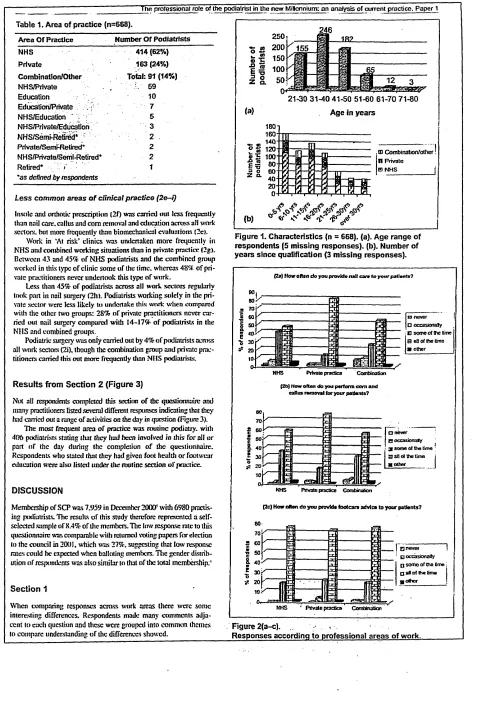
2 How often do you provide nail care to your patients? 76 Survey results
3 What did you do today or on your last working day? 79 Survey results
4 A conceptual framework identifying the current 88
professional role of podiatry
5 The experience of core podiatry 103
6 A model for core podiatry 138
7 The practice of chiropody and podiatry 143
8 Overview of the chronic care model 152
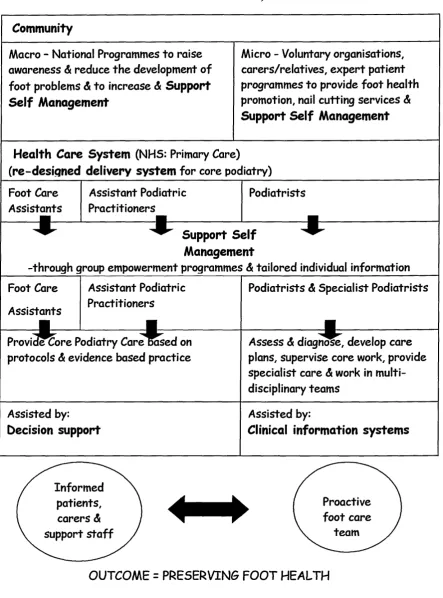
9 A model for the delivery of core podiatry services 155
LIST OF TABLES
Page
1 Approaches to concept analysis & development 64 2 Themes influencing the traditional role of podiatry 81
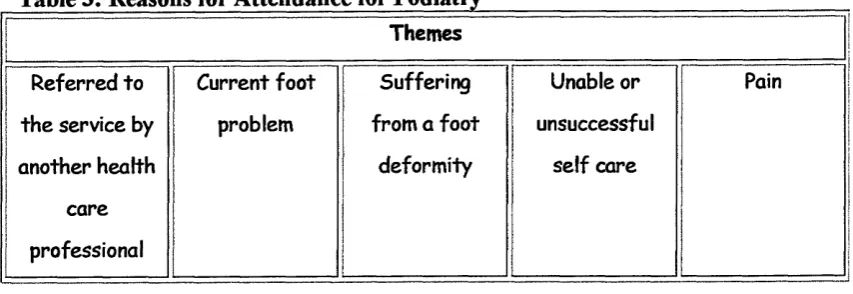
3 Reasons for podiatry referral 98
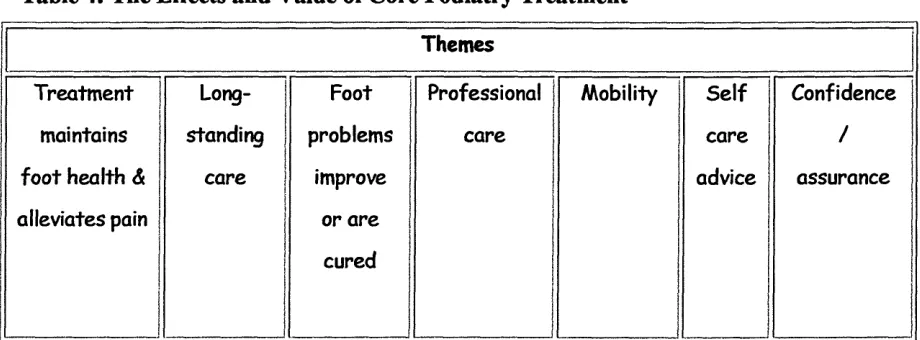
4 The effects of core podiatry treatment 99
5 Perceived effect if podiatry treatment was no longer 102 available
6 The attributes of the concept of core podiatry derived from 117 the literature
7 The attributes of core podiatry derived from patient 130 interviews
8 The antecedents of core podiatry derived from patient 131 interviews
9 The consequences of core podiatry derived from patient 133 interviews
10 The context of core podiatry derived from patient 135 interviews
APPENDICES
D:I
nn
i i m
IV:I
ivn
ivm
IV:IV IV: V IV: VIivvn
ivvm
IV:IX IV:X IV:XIivxn
Results of foot surveys
The range of subjects covered by research publications in podiatry and related subjects [1999-2002]
The journals containing podiatry related research and numbers of articles [1999-2002]
Professional role pilot questionnaire Professional role questionnaire
Letter accompanying postal questionnaire Surveyed podiatrists area of practice Characteristics of survey respondents
Most common areas of clinical practice identified from the survey
Less common areas of clinical practice identified from the survey
“Traditional podiatry is only the treatment of nails, corns and callosities”: Podiatrists’ replies to this statement
Themes identified in response to: “Traditional Podiatry is only the treatment of nails, corns & callosities”
Themes identified from positive responses to the statement and examples of narratives illustrating each theme
Themes identified from negative responses to the statement and examples of narratives illustrating each theme
Themes identified from ‘don’t know ’ responses to the statement and examples of narratives to
Page
V:I Patient letter xxxiii
V:II Patient information sheet xxxiv
V:in Patient consent form xxxvi
V:IV Interview schedule xxxvii
V:V Interview summaries xxxix
V:VI Excerpts from narratives to illustrate liii particular themes for group analysis
V:Vn Triangulation of themes using a group analysis lxi approach
V:VIII Demographic profile of subjects from Phase II lxxii V:IX Thematic framework: Reason for attendance lxxiii
to podiatry
V:X Thematic framework: The effects and value of core Ixxv podiatry treatment
V:XI Thematic framework: Perceived outcome if Ixxx podiatry treatment were no longer given
or available
ACKNOWLEDGMENTS
I would like to thank my supervisory team for their guidance, help support and encouragement throughout this journey. Professor Anne Parry for her expertise, wisdom and straight talking. Dr Julia Potter for her organisation skills, advice and podiatric knowledge. Dr Alan Borthwick for his vast wealth of in-depth knowledge on many aspects of podiatric professional issues. Professor Wesley Vernon for having a visionary view that has kept me on the right track and for being both a good friend and colleague. Without any of these people I would not have completed this marathon and I thank you all.
I would also like to thank my friends and colleagues working for the Podiatry Service, Sheffield South West Primary Care Trust for their interest and encouragement over the last six years, especially Jeremy Walker, Mandy Moore, Sandra Robson, Dawn Yates and Sally Walker. A special thank you goes to Dr Susan Nancarrow for her support and encouragement during the difficult times.
A big thank you goes to my husband, Simon who has never doubted that I would complete this work, has helped me both by reading drafts and in discussing main points and has put up with me spending many hours shut away in my study whilst he has been left to care for our son, Charlie.
CHAPTER 1 INTRODUCTION
“No matter what aptitude a Chiropodist may show in dealing with general affections of the foot, or what operating skill he may have developed, there can he no doubt that one o f his greatest assets is the capacity for being able, cleverly and painlessly, to enucleate
a com. ”
E.G.V. Runting (1934) Practical Chiropody, pg 1.
The practice of removing a com (or enucleation) is a central but rudimentary skill employed by podiatrists since the first descriptions of the profession in the 16th Century (Dagnall 1983). On average people walk between 2,000 and 6,000 steps a day (The Society of Chiropodists and Podiatrists 2004a), so walking is a necessary part of life, but the condition of feet is rarely considered unless problems occur and they become painful (Potter 2004). It is then that professional advice may be sought and it is the podiatrist’s role to diagnose, treat and advise on foot problems allowing people to remain mobile, independent and active (The Society of Chiropodists and Podiatrists 2004b); this role is also assigned to chiropodists. Though podiatry has developed from chiropody and the two terms are often used synonymously, they have disparate
etymologies. The origins and development of the words are different; chiropodist is derived from the Greek terms kheir (hand) andpodos (foot): one concerned with the hand and the foot. However more commonly, practice is exclusively associated with the foot and podiatrist coming from the Greek podos (foot) and iatros (physician): physician of the foot is a more appropriate title (Dagnall 1963). Podiatry is therefore a more accurate modem term and has replaced chiropody “/>? recognition o f the
universality o f the title ... in the English speaking world' (Quality Assurance Agency for Higher Education 2001). Throughout this thesis, podiatry and podiatrist will be used as the generic terms and chiropody and chiropodist will only be referred to when special reference is being made or in direct quotations.
treating people with systemic diseases such as diabetes mellitus and rheumatoid arthritis which cause potentially serious pathologies in the lower limb and carrying out surgery to correct nail problems, foot deformities and soft tissue lesions (The Society of
Chiropodists and Podiatrists 2004b). Though podiatrists perform nail surgery, podiatric surgeons, who have completed a large amount of post-graduate training, undertake the more complex foot surgery of the bones and associated soft tissues (The Society of Chiropodists and Podiatrists 2004c). Once trained, podiatrists can work in the public, commercial or private sectors. In 2004 approximately 64% of practising members of The Society of Chiropodists and Podiatrists (which represented 82% of the total number of podiatrists at the time), worked in the NHS, either all of the time or in combination with carrying out private or commercial work whilst 20% worked solely in the private sector (The Society of Chiropodists and Podiatrists 2005a).
1.1 RATIONALE FOR THE STUDY AND PERSONAL PERSPECTIVE
which reflected the NHS contracting system at the time (The National Health Service and Community Care Act 1990). Podiatrists were being told that the most important part of their practice was to ensure that appropriate numbers of patients were being treated according to service plan agreements otherwise budgetary cuts might be incurred. The actual treatments being undertaken or the quality of the service did not seem to be a priority.
My thinking was not only informed by observations of clinical settings and the organisations in which I work but was also based on policy documents. The
introduction of the NHS Plan (Department of Health 2000a) proposed a change in the way that we worked with an emphasis on patient-centred care pathways, evidence based practice and multi-disciplinary team working. I have seen some of these areas being incorporated into NHS podiatry departments but treatments were still predominantly based on the pathology centred model and patients were not at the heart of clinical decision making. Later policy documents (Department of Health 2000b; Department of Health 2000c) also supported my view that podiatrists needed to look at new ways of working.
I have been involved in an innovative project since working in my current post, which has changed the way the whole podiatry department works and bases care on clinical need using education to help the less needy manage their own feet (Moore, Famdon et al. 2003). This however has been a local initiative based on a reaction to current overwhelming demands from new patients wishing to receive podiatry care rather than being strategically led based on health policy and the vision of our professional bodies. This scheme has generated a huge amount of interest from other podiatry departments across the country and has been adopted by many of them to cope with the similar demands of over subscription to services. However, as the types of clients podiatrists most commonly see at the moment will continue to rise as the numbers of older people and those suffering with diabetes mellitus will increase in society, I still believe even re organised services will eventually become overloaded again and find difficulty coping with patient numbers.
core values or common practises to find out which areas are effective and beneficial for patients and look at possible ways to improve the delivery of services in the future. This was the main intention of my exploration but was helped by the people and place in which I work. The head of service where I am currently employed has a strong vision for podiatry and he considers we need to constantly change by looking at new ways of working and firmly believes in the need for a research base for the profession. This philosophy is ingrained within the whole department, has inspired and encouraged me throughout this journey and given me the time and support to carry out this study.
Original Observations and Sequence of Events
The three phases of this thesis were sequential; the findings from each section were used to inform the next phase. A variety of research methods were chosen based on their relevance to the different research questions considered during the progression of the project. The order of events at different stages of the thesis and the associated research questions are shown in Figure 1. Phase I used a postal survey and confirmed that podiatrists treat nails, corns and callus most of the time in conjunction with giving footwear and foot health advice. The term core podiatry was adopted for this
“traditional” area of practice because it reflects the beginnings of chiropodial, latterly podiatric practice and underpins developments in the profession over the last thirty years as new specialist areas have been introduced. Practice taking place in the UK is the main emphasis of this work, though the literature review does consider some different podiatric models present in other countries. Tasks performed by podiatrists across all work sectors were also included in the survey though the subsequent phase concentrated more on the podiatric role in the NHS, which is delivered primarily to older people, as current changes in health policy are influencing professional
developments. It is however, envisaged that this work could be generalized to both the private and commercial sectors in the UK and may contribute to knowledge
development of the professional at a national level.
Fi gu re 1: O RI G IN A L O BS ER V A TIO N S & SE Q U EN CE OF EV EN TS
LU O
LL)
m LL) O LAJ
LU M o E o
t t. n O LUOf LU
05 CL LU M
LU LU CL LU
LO LU
LU CD
|
QC
•3 LULOX 7
1- or
'—-/OL >
CL. \- LO <. M 1—1 n -L o z o_ lu u O <L zo p 1-zLU t—11-£J < < in or or i- h-o < LU O I
z t: o < to ^ 5 p
o o £ o
o , . o
I - h U LL £ LU < p LU ^ I- V) ? LO j—I ?-O ' — ^ < u a LU OC <
t Q . I—I
H £
LO p 2 " Z | - UJ ^ Z U 2 LU
m cy
> LU CL Q CL 3 < LU LU
z
< ^ LO' X UJ *3 5l < O LU Of I ‘
2: l u a: lu
O LO
• o
b 8
O O LO jU L0 LU < Z > O M
c c l o LU — LU LO LU LU g Lii aa ^
Q- O r-, Z CD O O p < o O a . LU a 8 ^ LU LU U 5 o a
I . LO <
LU LO
LU < LU^ a 2 < M LU
CL
no O LU
o <2
j2 uj
f c a LO Z
o
lu
> a CL
I -
<
' ‘ h-z 5 2
CL I LU 0 )
LO 3
6 O
“ Of £5 LU Z CL £5 O LU Z
CL £ O < LU ^
£= P ^ ° ° S .
^ o
_ LO CL
O Z “- U O I
9 P u < S £ LU > X U a , cl lu t ^ I- p M z o
LO H LU LO
I
LU LU
LU LU
LU LU CL
LU LU LU LU CO a LU
CL LUCL
LU
LU CL LU LU
LU CL
LO O 3 LU LU LU
CL > LU
> LU !2g LU LU
R jy LU LU LU LU
I
I
o c £ § o c CL LU H c u X V J LU 0 ) < X a . t u O LU _ ! o CL\-7 o . LU or CL
or h -< LU M LU X h -o OQ_ LO 1—1 1 -< X
[image:20.614.107.478.85.756.2]associated cost savings rather than based on patients’ views and needs.
Phase m of the study re-examined the data generated from the earlier two phases, supplemented with a new literature review. Following a recognised method, core podiatry was explored in further depth by undertaking a concept analysis, using core (traditional)1 podiatry care as the concept, to determine its exact and precise
characteristics in order to define and clarify it. A new definition and model of core podiatry was produced and a redesigned podiatry service proposed for the delivery of future core podiatry care. This includes increasing foot health promotion initiatives at both a local and national level and developing assistant podiatric practitioners who could provide some of the core treatments. The reconfiguration of core podiatry services is adapted from an existing model for the provision of long-term health care.
1.2 THE HISTORY OF PODIATRY
The evolution of the podiatry profession has been affected by a number of political^ educational and sociological issues, which has both restricted and shaped its
development. In order to fully explore the current matters affecting podiatrists, the historical beginnings of the profession will be discussed with specific reference to the UK. A discussion of professional developments in the US will be presented as some similar challenges have arisen there, though many years earlier than in Britain. The development of podiatry in other English speaking and European countries will also be briefly examined.
According to Dagnall (1970; 1983), the first practitioners of the feet were known as “co/72cutters” who carried out their trade in the streets during the 16th Century, though
foot problems and foot care are illustrated in an Egyptian tomb drawing from around 2,500 BC (Dagnall 1983). It is believed that the term chiropodist was first coined by Low in the 18th Century and derived from a French text; ‘L’Art de Soigner les Pieds’ (The art to care for the feet) by Laforest in 1781. Low published a textbook of chiropodial practises called Chiropodologia around 1785 (Seelig 1953) which was believed to be one of the first British accounts of professional practice however, it was later revealed that this was a complete replication of Laforest’s earlier book merely translated into English. In the following century a surgeon-chiropodist to George IV,
William IV and Queen Victoria called Durlacher, published a renowned book of chiropody practises. This was called ‘A treatise on corns, bunions, the diseases o f the nails and the general management of the feet ’ and Dagnall (1987) believed this led to the establishment of chiropody as a branch of medicine and surgery and chiropodists as professional men. More publications followed to build upon the knowledge base and led a stalwart of the profession to later declare: “knowledge which, as our literature proves, we hold as an independent profession - nobody else knows it, or if they do they
learnt itfrom u s” (Dagnall 1970).
As the podiatry profession began to grow, two men - Runting and Oxford founded the first British Society in 1912, which was registered as the National Society of
Chiropodists a year later. One aim of this group was to obtain parliamentary or other legal acknowledgement of the rights and status of chiropodists (Dagnall 1985). The First World War brought a change to the professional constituents of chiropody, as prior to the war, there were few chiropodists, often coming from a family tradition of the profession and mainly providing treatment to the middle and upper classes. During the war, many foot orderlies were trained to provide basic foot care to soldiers and as the war ended, these foot orderlies began to practise as chiropodists. This saw an increase in training courses, many of which were through correspondence learning and more societies, clinics and schools emerged (Dagnall 1970). As the more traditional, ‘old school’ practitioners deemed a need for regulation necessary; exams were established in 1919 for new members to the Incorporated Society. In the same year, The London Foot Hospital was opened which allowed students to gain clinical experience by providing chiropody treatment to the poor (Dagnall 1985). In 1939 the first register of
In 1945 the five bodies representing the profession at the time, joined together to become The Society of Chiropodists (Dagnall 1985), which today is known as The Society of Chiropodists and Podiatrists (SCP) 2 and is still the largest UK professional body representing approximately 65% of registered podiatrists (The Society of Chiropodists and Podiatrists 2005b).
1.2.1 Podiatry in the United States
The American podiatric model is quite different from the British one though similar external forces have shaped and influenced the scope of practice of the profession in both countries. American podiatry is more closely aligned to medicine as this definition suggests: “a branch o f medicine which medically and surgically manages care o f the lower extremity” (Ohio College of Podiatric Medicine 2002). However, an American podiatric physician is: “involved with examination, prevention, diagnosis and treatment o f foot disorders by physical, medical and surgical means” (Ohio College of Podiatric Medicine 2002), which is similar to UK definitions of podiatrists (The Society of Chiropodists and Podiatrists 2004b). There are however, a relatively small number of US practitioners. In 2005 there were approximately 15,000 licensed doctors of podiatric medicine with around 13,000 of these being represented by The American Podiatric Medical Association (American Podiatric Medical Association 2005).
Undergraduate training consists of a four-year course compared with the English model of three years and leads to a degree of Doctor of Podiatric Medicine. The core training curriculum for American podiatrists is similar to that of medicine incorporating
instruction on the basic sciences; students also go on clinical rotations where they learn how to perform examinations and therapeutic procedures, make diagnoses and interpret tests (US Department of Labor 2003). Postdoctoral education includes residency training (Levrio 1987), which can be between 1 -3 years (US Department of Labor 2003).
Historically, podiatrists in the US have concentrated on diagnosing and treating disorders of the foot and ankle (American Podiatric Medical Association 1997) but
more recently, their scope of practice has been greatly extended to include treatment between the ankle and the knee, the upper muscles of the leg and the treatment of hand conditions also found in feet, though there are differences across states (Cooper, Henderson et al. 1998). US podiatry has encountered a number of problems with the medical establishment in its quest for professional development, especially involving the use of surgical methods of treatment. Some professional gains have been made which have challenged the dominance of medical physicians (Levrio 1992) and led to more autonomy but overall professional control over the foot has still not been
achieved, as medical doctors also have the right to diagnose and treat foot problems (Skipper and Hughes 1983). Similar issues have affected UK podiatrists associated with the introduction of podiatric surgery and will be described later in this chapter.
As part of continued professional development, the US podiatry profession sought certification in 1960, to allow podiatrists to have hospital privileges and avoid regulation from the medical profession (American Podiatry Association & National Association of Chiropodists 1960). In 1962 regulations were adopted for the approval of national certifying boards to obtain certification after a two-year postdoctoral education programme was undertaken. This was proposed by the Council of Podiatry Education to improve podiatrists opportunities to obtain surgical privileges that would in turn improve the overall image of the profession and protect some areas of practice from intrusion by non-podiatrists in particular foot surgeons (Levrio 1987). As there were insufficient postdoctoral residency programmes available in specialist areas of podiatry especially surgery at the time, certification was suspended but restored in 1974 with the first specialism in podiatric surgery and the second, podiatric orthopaedics being introduced in 1976 (Levrio 1987).
The introduction of this certification brought up the issue of ‘grandfathering, a route to allow individuals to achieve a certain professional title or certification without
satisfying all of the requirements, which often includes an examination: “to protect experienced individuals who have had a long career in the practice o f a speciality and deserve appropriate recognition for their accomplishments (Levy 1996). It is
when expanding their scope of practice, aimed to avoid divisions amongst professionals to maintain union rather than to advance a few in the hope that all would eventually benefit (Levrio 1987). This was felt necessary in a small profession and was markedly different to the tactics employed by the first UK podiatric surgeons mentioned later, though this is due to the different cultural and social contexts (Borthwick 2006) plus the current antagonism from some previously state registered podiatrists regarding the HPC
‘grandparenting ’ clause (Graham and Brown 2004).
Further positive accomplishments were achieved by the American podiatry profession in the 1960s and 70s around the issues of staff privileges in hospitals (Chumbler and Grimm 1996) including; giving permission for qualified podiatric physicians to perform surgery without a physician surgeon in the operating room, allowing them to be defined as practitioners together with doctors and dentists and the inclusion of podiatry
graduates as hospital staff (Levy 1996). In 1978 changes in entry requirements for training schools added to image elevation with colleges of podiatric medicine agreeing to adopt the same requirements of entrance as those for US schools of medicine. This involved potential students taking the Medical College Admission Test (McNevin, Gill et al. 1996), which enhanced the legitimacy of podiatric medicine and improved
applications to the profession as it was on a par with medical and osteopathic schools (Levy 1996).
In the 1990s three quarters of all American states required podiatrists to undertake at least one year post-doctoral training and many hospitals required them to be residency trained (Levy 1996). This led to a change in the requirements of the colleges in 1992; they were now expected to prepare graduates for entry-level postgraduate study
(residency), usually two years of post-registration training (McNevin, Gill et al. 1996), making the process of becoming a podiatric physician identical to that of any other medical speciality - six years. According to Borthwick (2001a), this has led to American podiatrists having a wider scope of practice and greater prestige when compared with their UK colleagues however a survey of members of the American Podiatric Medical Association (American Podiatric Medical Association 2002) found that nail pathologies (fungal and ingrowing) were one of the most commonly treated conditions. This suggests that though US podiatrists can carry out a larger number of invasive procedures, due to the surgical element in their undergraduate training, traditional podiatric skills still form a large proportion of their work.
1.2.2 The Introduction of Podiatric Surgery in the UK
The beginnings of podiatric surgery in Britain began to develop during the 1970s and followed the American model. However, before any foot surgery can be undertaken, the foot must be anaesthetised, which was the first problem requiring a solution, as at the time, this was outside the training of UK podiatrists. The potential value of
anaesthetising the foot would be far reaching as it could lead to an increase in the scope of practice of podiatry with associated benefits. A member of the profession many years earlier eloquently outlines this: ‘7 think we need to be able to obtain analgesia by injection.... I f this gradually... became part o f our training it would certainly open out fields that are closed to many at the moment. Such things are linked with our status,
our relationship to the medical profession, and the limits o f the present legislation, and the need first for a ‘closed’ profession” (Dagnall 1967).
Despite no formal training, some independent practitioners began to use local
anaesthesia, which led to the introduction of unapproved courses, led by the Croydon Post Graduate group (Borthwick 2001a). Borthwick (2005) believes this organisation acted as a ‘ginger group’ as it galvanized the larger organisation of SCP into adopting a wider scope of practice, beginning with formal training in local anaesthetics. The State Board granted the right to administer local anaesthetics dependent on undertaking the appropriate training (Borthwick 2001b), after continued demands from those keen to develop podiatric surgery. Neale (1985) notes, that “evolution... is a notoriously slow process as it took ten years of negotiation before podiatrists in the UK could
legitimately use anaesthetics.
In 1974 the Podiatry Association (PA) was formed from the Croydon Post Graduate group and other like-minded regional establishments. Their aim was to “champion the cause o f surgical practice in podiatry and challenge existing limits to the scope o f practice” (Borthwick 1997). This led to some podiatrists carrying out surgical
procedures; initially of the toenails and correcting lesser toe deformities and was later expanded to corrective surgery for bunions. The practitioners involved in surgery were still working solely in the private sector and were practising within the law, as the scope of practice definition was changed as part of the Professions Supplementary to
surgical techniques and they could demonstrate that they had appropriate training to carry them out, they were legally allowed to do so. This was a direct challenge to the medical profession specifically orthopaedic surgery, radiology and anaesthesiology (Borthwick 2001a). Borthwick (2001a) states that SCP was also unhappy with the new advancements in podiatric surgery, as it was antagonising members of the medical profession and they wished to pursue advancements to the scope of practice with medical approval. The PA however, attempted an alternative strategy (Borthwick 2001a) to “eschew medical dependence.” Larkin (1983) notes that this approach to move forward the podiatry profession without medical approval would limit an
occupation to the private sector and was the complete opposite of the tactics employed by US podiatrists, which UK surgeons seemed to want to emulate. As developments continued, the scope of podiatric surgery was not restricted to private practice, due to changes in NHS policy at that time leading to the creation of an internal market for competition (Department of Health 1989). This gave an opportunity for cost-effective, efficient treatments to be incorporated into the ‘new’ market economy of the health service. Podiatric surgery services were then slowly introduced into some NHS Trusts using the purchaser/provider system (Borthwick 2000a).
The PA now had good grounds to further their surgical course within the legitimate arena of the NHS. They were able to prove that their procedures were easily accessible, and they believed them to be clinically and cost effective when compared with
orthopaedic surgery (Ariori, Graham et al. 1989). The Department of Health also promoted podiatric surgery, as waiting lists were smaller when compared with orthopaedic surgery (NHS Executive 1994). Podiatric surgeons have now been appointed in some health care trusts to carry out foot surgery under local anaesthesia and the introduction of general practitioner fund-holding which later became primary care groups and then devolved to primary care trusts, has seen this trend continue. Some surgeons now hold a ‘consultant’ post reflecting their role as lead clinicians within a podiatric surgery department (The Society of Chiropodists and Podiatrists
1999b) and there are currently 52 NHS podiatric surgery units (The Society of Chiropodists and Podiatrists 2005a).
be looking towards working more closely with orthopaedic surgeons to ‘share out’ surgical work rather than competing for it. Whether this will be possible is debatable considering the continual restriction of the podiatric scope of practice by the medical profession (Larkin 1983) and in some instances and locations, the professional rivalry that exists between orthopaedic and podiatric surgeons. This is highlighted by an article in a podiatry professional journal that discussed the bad press consultant podiatric surgeons have received (Podiatry Now 2004), based on results from a small poll conducted by the British Orthopaedic Trainees Association, that showed the general public associated the terms consultant and surgeon with medical training which is incorrect. In defence of podiatric surgery is evidence to support both its cost effectiveness (Carter, Farrell et al. 1997) and practitioner satisfaction. The latter
information is based on a study by Helm and Ravi (2003) who surveyed GPs to find out their opinions of orthopaedic and podiatric surgery. The majority of respondents said they referred patients with foot problems to podiatric surgery and they were pleased with the quality of this service. Regardless of the conflicts that podiatrists have caused by encroaching into the surgical arena, the introduction of podiatric surgical techniques into the professional scope of practice has been a key issue in improving the podiatric role and associated status (Chumbler and Grimm 1996).
1.2.3 A Change in Title
In the US the terms podiatrist and podiatry were introduced to replace chiropodist and
chiropody, for two reasons according to Skipper and Hughes (1983): the original words are inappropriate as they infer care of the hands as well as the feet and they are similar to chiropractic, which could cause confusion amongst the public. These replacement terms were first coined in 1914 by Dr M. Lewi (Goldstein 1991), but were not adopted by the whole of the American profession until 1957 (Levrio 1987). This was followed by a change in professional title from Doctor of Surgical Chiropody to Doctor of Podiatric Medicine (Gibley 1974), which saw the American profession further evolve.
To reflect the increase in scope of practice that the inclusion of surgical techniques brought to UK chiropody and to conform to other English speaking and European countries, a change in professional title was proposed in 1994 (Morris). Podiatry and
changed their titles to incorporate podiatry and students study for degrees in podiatry
not chiropody (The Society of Chiropodists and Podiatrists 2006).
Though the professional titles adopted are now the same, surgical training is still different in the two countries. US training incorporates a surgical element at an undergraduate level whereas the UK model has only begun to train podiatric surgeons since the 1970s and it is still carried out at a postgraduate level. With the introduction of podiatric surgery into the UK and the initiation of pre-registration degree level training courses in the late 80s, many practitioners who did not carry out podiatric surgery also began to adopt the term podiatrist. Non-state registered practitioners however, also assumed these terms, and were legally allowed to do so, as closure of title remained unobtainable at the time.3
1.2.4 Podiatry in other Countries
According to Kippen (2006) the first podiatrists (then called chiropodists) were
tH
described in Australia in the 19 Century, with a number of men who had originally worked in the medical corps, training in the profession after both the Great War and the Second World War had ended. Numbers were swelled further in the 60s by emigrating podiatrists from the UK and other countries (Kippen 2002). An Australian three-year full-time training course was established in 1965 and current degree training can take place at one of eight universities (Australasian Podiatry Council 2006a). As there is limited state health care available in Australia, the majority of podiatrists work in private practice (over 73% in 1999) (Australasian Podiatry Council 2006b). New Zealand also established the first training course in podiatry in the 1960s, though South Africa only introduced an education programme based on the UK model in 1977. The South African training route now offers a Bachelor of Technology degree in Podiatry, and again, the majority of practitioners work in the private sector (Technikon
Witwatersrand 2006). To link countries where podiatry is practised, The Federation Internationale des Podologues was founded in 1947, which currently represents 19 member countries from five continents (Federation Internationale des Podologues 2006).
1.3 PROBLEMS ASSOCIATED WITH THE DEVELOPMENT OF PODIATRIC KNOWLEDGE
Podiatric Biomechanics as an example of an Evolving Professional Knowledge-Base Colin Dagnall (1970), a prominent podiatrist with a special interest in the historical development of the profession, believed that podiatry could justify its own knowledge base but Larkin (1983) disagrees with this as chiropodists: "...have not developed a science o f their own which is distinct from that o f medicine” and have borrowed terms from medicine and surgery both limiting its autonomy and restricting its competition with medicine.
This responsibility to generate and describe its own original knowledge or theories underpinning practice is a requirement of a profession according to Eraut (1994) and Higgs and Titchen (1995) and the knowledge can be generated through research, which in turn can also generate theory. Scientific knowledge or empiricism is knowledge that is measurable and can be tested (Chinn and Jacobs 1987) and evolved via logical deduction utilizing the scientific method (Rutty 1998).
The following statement was made in the mid 20th Century:
"... the chiropodist should be reminded that the bulk o f his scientific knowledge is derivedfrom the studies and researches o f anatomists, physiologists, and pathologists and, therefore, that it behoves him to defer to the opinion and pronouncements o f medical practitioners” (Runting 1934).
It illustrates that the beginnings of podiatric knowledge are tied up and have been controlled by medicine, which is similar to many other health related professions such as physiotherapy and nursing. Fawcett (1984) cites the development of a “distinct body o f knowledge” as a way to advance nursing, and unique and specific knowledge can allow a profession to declare a genuine status believe Behi and Nolan (1995). Recent developments in podiatry have challenged medical dominance by introducing
and knowledge (Borthwick 1999a). It was begun with the work of Root, Orien and Weed (1971) who published a theory for foot function based on a ‘neutral’ position of the foot during the gait cycle. They believed that any variation from normal alignment could cause abnormal foot function known as compensation, and this would result in a particular set of signs and symptoms dependent on the nature of the variation (Payne
1998). Using this theory they proposed that realigning the foot, specifically the sub talar joint, to its ‘neutral’ position using shoe inserts known as functional foot orthoses, would improve foot function and alleviate symptoms. Sub-talar neutral is a reference position which Root believed represented “osseous segmental relationships (where) abnormal pronation and supination can be measured’ (Mathieson 2001). Foot orthoses aim to put the sub-talar joint into a ‘normal’ or neutral position during part of the gait cycle to reduce some functional abnormalities, which are thought to lead to the development of some foot pathologies (Bevans 1992).
This new paradigm was not based on pre-existing podiatric or medical knowledge and was widely accepted by the podiatry and physiotherapy community (Norris 1993), though Lee (2001) states it was initially met with opposition and criticism when introduced into professional practice and the medical profession described it as
“nonsense and non-science ” (Mcguire 1995). The work of Root et al was based on clinical practice rather than research evidence and as no data has been presented to explain how the theory was formulated (Harradine, Bevan et al. 2003), criticisms from non-podiatrists may be justified but according to a former head of a podiatry school:
“Root is almost revered as a God because basically. . . he established a scientific basis for chiropody/podiatry*'(Borthwick 1999a). Borthwick (1999a) believes this was used
to improve the professional status of podiatry and the fact that it was almost universally accepted amongst podiatrists may indicate a problem with core clinical values.
Podiatrists adopted a new theory without a firm evidence-base derived from research to support it. Recently, some new knowledge has become available which recognises the inconsistencies in the Root model (Lee 2001), however Payne (1997) states that texts on podiatric biomechanics published in the last decade still do not adequately discuss such discrepancies which Lee (2001) views as an “avoidance o f knowledge to preserve the status quo”.
Over the last decade, some podiatrists have challenged the “Rootian” theory further and argued that the neutral position is not the ideal as deviations from this have been found
in a number o f‘normal’ subjects (Pierrynowski and Smith 1996). Payne (1998) cites the lack of randomized controlled trials to support Root’s theory as a major criticism while Menz (1998), questions the validity and reliability of Root’s method of foot measurement. A study of published work using biomechanical theory advocated by Root (Pratt 2000) also found low scientific evidence in the majority of articles, though the theory has been widely used in clinical practice for many years.
Recently, new models have been presented that are “biologically plausible and
theoretically coherent’ (Payne and Dananberg 1997). Payne and Dananberg’s (1997)
sagittal plane facilitation is a new theory based on logical thought and was
recommended to provide a framework for future experimental studies. It varies from Root’s model of motion control as it focuses on motion enhancement according to Lee (2001). The only published studies using this theory to date though, have been
conducted on patients with lower back pain not foot pain (Dinapoli, Dananberg et al. 1990; Dananberg and Guiliano 1999). A detailed protocol of the methods used in assessing patients has also not yet been produced which has made replication difficult for practitioners (Harradine, Bevan et al. 2003).
An alternative model first described by Kirby (1987) and built upon by Fuller (2000a; 2000b) challenges Root’s sub-talar joint neutral position for correct foot function as not representing a normal foot. Kirby (2000) believes a foot that is moderately pronated represents normality. However, Kirby’s theory has also been criticised, due to a lack of reliable research underpinning the method of determining the correct anatomical
position of the sub-talar joint axis (Harradine, Bevan et al. 2003) and the use of a static rather than dynamic measure which is seen to be unreliable in gait analysis (Knutzen and Price 1994). There is also currently no outcome study assessing the efficacy of foot orthoses designed solely using this theory (Harradine, Bevan et al. 2003). A further tissue stress theory based on the laws of physics involving stresses placed on the anatomical structures of the foot (Harradine, Bevan et al. 2003) has been described by McPoil and Hunt (1995) and Demp demonstrates another geometric model but this is still purely theoretical at the moment (Lee 2001).
varied and often non-standardised across the profession, only serves to contuse the debate and has weakened advancements in clinical knowledge (Weinder 1955). Lee (2001) views this present dilemma for podiatric biomechanics as representing a pre science phase as described by Kuhn (1996) where ideas may be disorganized with debate and disputes over the rudiments taking place before a normal science phase can be entered where a single paradigm dominates. Advancements in future research should therefore aim to gain a consensus of opinion from practitioners and academics in order to promote a central theory for podiatric biomechanics according to Lee (2001).
The fact that there is a debate taking place regarding the elements of podiatric
knowledge, illustrates that the profession is becoming more aware of the need to justify some areas of practice. In the past podiatrists have been criticised for following new trends that have not been fully validated (Keenan and Redmond 1999). For the future development of the profession, podiatrists need to be encouraged to continually develop, be aware of the evidence underpinning clinical interventions, implement appropriate research into practice in order to improve patient care and look at new ways of working to fit into the requirements of health policy.
The whole profession of podiatry including podiatric biomechanics has a large armoury of pre-scientific knowledge that is acquired through practise and experience. This has been referred to in the nursing literature as expert, intuitive clinical knowledge that cannot be identified or measured by propositional theories (Benner 1984) but is an important consideration in professions that are essentially humanistic in nature (Holmes
1990). Higgs and Titchen (1995) divide professional knowledge into three sectors: propositional, professional craft and personal. Professional craft knowledge is derived from professional experience (knowing how) and personal knowldge is gained from work and life experiences.
Podiatry has a smaller amount of propositional knowledge, derived through research and scholarship and a larger amount of craft and non-propositional knowledge. Many podiatric textbooks used to inform the profession according to Payne (1999), are based on accumulated experience rather than empirical work. This is because of the practical nature of the profession and is similar to other allied health professions, such as
physiotherapy. Root’s biomechanical model illustrates the problem of propositional knowledge in podiatry, as it is based on an experiential and observational premise rather
than being grounded on researched facts. This may have allowed this particular area of knowledge development to be open to error.
The evidence base of all aspects of current podiatric practice, including the specialist areas such as surgery and biomechanics must be nurtured via the research process in order to lay a firm grounding for future professional developments. The rudiments of core podiatry and its associated tasks must also be investigated through the research agenda to demonstrate if this area of practice is beneficial to those who receive it, most commonly older people.
Identity Crisis
Podiatry is a clinical profession involving the diagnosis and treatment of the whole foot without medical referral (The Society of Chiropodists and Podiatrists 1999a) and possesses and utilises a corpus of knowledge and skills. Neale (1985) believes podiatry adds to its knowledge through research, whilst having a monopoly in its field of work, autonomy in organising and defining its nature of work and possesses a code of ethics. These factors according to Freidson (1970) in part define a profession; however, as with other allied health professions, modem podiatry still has to work within a degree of freedom permitted by the medical profession and much of its knowledge is derived from medicine which has contributed to the problem of recognition in modem healthcare (Larkin 1983).
The lack of professional closure until July 2005 has led to competition with the non registered sector and has continually caused problems both with other health care professionals and the general public, both of whom are not always clear on the
as a major issue for podiatrists. Skipper and Hughes (1984) conducted a small American survey asking podiatrists to rank themselves against other health
professionals on a number of status indicators. Podiatrists placed themselves lower than many other medical workers on income, authority and prestige. A British investigation of work stress and burnout in podiatrists found that this was associated with a number of key issues including work overload, isolation, lack of career structure and lack of public understanding of the professional scope of practice (Mandy 2000; Mandy and Mandy 2000). A comparative study of burnout in newly qualified British and Australian podiatrists (Mandy and Tinley 2004) found higher levels of occupational stress than indicated by published data for health workers. This was associated with geographic and professional isolation. The lack of professional status was also a major theme and was linked with patients’ poor understanding of the podiatric role and scope of practice. These results are corroborated by another recent UK study which reports that podiatry is a poorly understood and isolated profession and recommends an urgent need to deal with the public, professional and managerial lack of awareness of its role (Vernon 2004). These issues contribute to status believe Chumbler and Brooks (1993) who found that occupations with difficult training routes and that are important to society such as medicine, are afforded a higher prestige and associated rewards.
The use of two terms chiropody and podiatry to describe the occupation, has also led to confusion and debate both within the profession and by others. One member of SCP (Foxall 1999) suggested the general public view chiropody as a practice involving nail and com cutting and are unsure as to the definition of podiatry. He believed this is further confused by the introduction of under graduate-training courses in podiatry but the continued use of the terms chiropody and chiropodist by some at the time.
Specialist titles denoting specific professional roles have also caused some debate. Though podiatric surgeons are allowed to use the term consultant if they hold a substantive NHS post at the appropriate grade (the Society of Chiropodists and
specialist has been controlled as UK podiatrists have been advised that this title should be limited to those practitioners who have undergone specific training in an area, beyond that required to practise (The Society of Chiropodists and Podiatrists 1999a).
The Introduction of an Assistant Role
Foot care assistants (FCAs) were introduced into NHS podiatry services in 1977 to help deal with a high demand for foot care and the shortage of podiatrists working in the public sector at that time (Borthwick 1997). They were employed to cany out simple foot treatments whilst supervised by a podiatrist (House of Commons 1977) after undertaking specific in-house training. Much of this training was based on a structured package developed by The Association of Chief Chiropody Officers (ACCO) who represented some NHS podiatry managers at the time (Beech 1994). Though the continued and increased use of assistants was recommended after a large review of podiatry services (NHS Executive 1994) to allow podiatrists to concentrate on providing more specialist treatments. Some professional bodies representing podiatrists were opposed to their introduction, as it was felt assistants might leave the public sector and work in private practice, competing with registered podiatrists (Borthwick 1997). This resulted in strict control over the assistants scope of practice as they were only allowed to provide foot care that individuals could provide for themselves (Council for
Professions Supplementary to Medicine 1981). Any attempt to increase their role including using scalpels was fiercely contested (Editorial 1994) as the general
professional opinion at the time appeared to be that scalpel use was solely in the remit of the podiatrist (Webb, Famdon et al. 2004). Strict and confusing supervisory arrangements for assistants also appeared to restrict their use in some departments (Webb, Famdon et al. 2004) though over recent years their scope of practice appears to have developed significantly, as many now assist with surgical procedures and
contribute to many other aspects of service provision (Famdon and Nancarrow 2003).
State Registration and Professional Closure
Early in the last century, the issue of state registration for podiatrists became an important debate and was felt to be necessary to protect the public and set down a minimal qualification for competence. A campaign was launched to achieve this in
1928 but did not reach fruition until 1960 with the Professions Supplementary to
closure (protection of the title chiropodist), or functional closure (protection of the scope of practice) (Editorial 1984). Thus allowing practitioners without state
registration to still work in the private sector. Some podiatrists were concerned about the implications offunctional closure as this could lead to a limitation in the scope of practice (Jenkins 1984) and it did prove to be a useful omission, as it allowed future developments specifically surrounding the introduction of podiatric surgery, to confront existing professional boundaries associated with orthopaedic medicine (Borthwick 1999a).
The advancement of podiatric practice through surgery challenged to a degree, medical dominance but did not lead to overall professional closure. Borthwick (2000b) cites Weber’s (1968) definition of social closure, that is “the attainment and enhancement of social status through the creation o f criteria to exclude non-members o f the group” as a significant factor within the podiatry profession. It was believed by some that closing the profession would not only offer protection from the un-registered sector but would also increase professional standing. The journey for professional closure finally began to gain some momentum in 1995/96 when JM Consulting (1995) carried out the review of the Professionals Supplementary to Medicine Act (1960) and recommended its abolishment and replacement with the Health Act (1999). This new Act saw the
original individual boards representing each professional group being replaced with one board for all allied health professions - The Health Professions Council (HPC). It is responsible for setting and monitoring standards to ensure patient safety, which includes having increased authority in coping with clinicians who are unfit to practise and to ensure registration is linked with continual professional development (Department of Health 2000c; Health Professions Council 2005a).
In 2002 the HPC began to tackle the issue of professional closure in the allied health professions by introducing ‘grandparenting’ procedures for non-registered practitioners including podiatrists. The podiatry profession was finally closed in July 2005 with the terms chiropodist and podiatrist being protected (Health Professions Council 2005b). Before the grandparenting process began, there was an average annual increase of approximately 548 podiatrists on the professional register, accounting for those who had recently qualified. A similar comparison with the physiotherapy and occupational therapy professions shows average increases in registered members o f2800 and 1393 respectively (Health Professions Council 2005b). Comparing the pre-closure figures
with the current number of HPC registered practitioners in these three professions indicates that whilst the overall numbers of physiotherapists and occupational therapists has not risen above that expected from annual increases reflected by new graduates entering these professions, the overall number of podiatrists has grown dramatically. Using pre-closure figures the total number of registered podiatrists if grandparenting had not been introduced would be around 9221, though the exact number is now 12,357 (Health Professions Council 2005b). This may be a reason why the podiatry profession were initially reluctant to join the HPC, as they perceived the numbers of previously non-state registered practitioners wishing to register with the new council would be far greater than other similar allied health professions. Issues of self-regulation were also given by SCP as a potential problem (De Lyon 2001), before the professions were integrated into the new council. This suggests an isolation tendency, which is in opposition to the Government’s strategy of smarter working and their recommendation that professionals “support the new arrangements for professional regulation ”
(Department of Health 2000c). Some members of the profession are still calling for a general podiatry council (Anonymous 2004) though SCP appear to agree now with current policy as they have stated that a separate “council would run completely counter to the government’s approach ” (Brown 2004).
SCP also proposed at the 2005 Annual General Meeting that previously non-state registered podiatrists who have been accepted onto the HPC list could join the society as a frill member. One reason for this may be to ensure SCP still represents the majority of clinicians as since the grandparenting procedure was introduced, they have seen their overall professional representation fall from 92% to 65% (The Society of Chiropodists and Podiatrists 2005b), a result of the extra 2000-3000 podiatrists being accepted onto the register. There is however, opposition to this by some podiatrists as it is seen as potentially diluting the status afforded to existing members of SCP who need to have undertaken a three year training programme to Diploma or Degree level in Podiatry (The Society of Chiropodists and Podiatrists 2005a). As functional closure was not agreed, private practitioners who are not enrolled with the HPC are still able to practise by an alternative professional name such as foot health practitioner (Foot Health School 2005), which may add further confusion over roles and titles for the general public.
infancy. The NHS Plan (Department of Health 2000a) advises ‘smarter’ working across professional boundaries, but in order to do this, each profession must identify its core skills, determine what it can ‘let go’, and what skills it shares with other health care professions. With the expansion of podiatric practice over the last twenty years, nail care has become a skill that, although representing part of a podiatrist’s role, can be passed onto others (Famdon and Nancarrow 2003). Recent changes in services due to dis-investment have seen a trend for this work to be carried out by non-podiatrists, whether assistants working alongside podiatrists, carers or the patients themselves (Moore, Famdon et al. 2003). Podiatry however, still has to define through empirical work, what are its core skills and specialist areas, what work it shares with others and what tasks could be delegated.
All of these issues formed the basis of this thesis, the purpose of which was to
investigate and define the core podiatric role through an in-depth analysis of practice, set in the context of contemporary requirements of care. The following research questions were considered:
• What is the core role of podiatry?
• What are service users experiences of core podiatry?
• If core podiatry is defined and clarified, would this allow for a model of care to be developed which is suitable for the current NHS?
Summary
The historical context of the emergence and development of chiropody is described in this chapter, as is the change in professional title to highlight the increased scope of practice of modern podiatry and to conform with other English speaking countries. The issues of state monitoring, medical dominance and the fight for professional closure have all served to both restrict and control the development of podiatry. However, the introduction of podiatric surgery to the UK served to directly challenge medical control over the profession and may have increased the image and status of podiatrists.
Podiatrists work in the public, private and commercial sectors, but the recent changes in government policy as part of the new NHS reforms, has called for health professionals to employ more evidence-based practice and puts the patient at the centre of clinical decision making. Changes to the NHS therefore have an influence on the profession as a whole regardless of the work sector. The lack of empirical work to provide an
CHAPTER 2
2.1 THE TRADITIONAL ROLE OF PODIATRY
Redmond et al (1999), believe a large part of podiatric practice involves the treatment of nails, corns and calluses. These are skills that were most common during the early development of the profession but are still carried out today though new specialist areas have been incorporated into modem practice (Famdon and Nancarrow 2003; Webb, Famdon et al. 2004). This area of practice can therefore be described as the traditional or core role (Chumbler and Grimm 1993).
2.1.1 Nails, Corns and Callus
A podiatrist often treats nail problems, which have resulted from trauma, infection or a systemic disease. Thickened or deformed nails are often associated with damage though Dawber and colleagues (1996) state that some skin conditions such as psoriasis can also result in a thickened nail plate. Fungal infections of the nails can lead to a deformed and thick nail, which is often discoloured (Roberts, Evans et al. 1993) whilst ingrowing nails may also be associated with trauma or result from a curved nail and can cause extreme pain (Johnson 2002, p. 264). Toenails are primarily to serve and protect the underlying constituents of the toes (Johnson 2002, p. 260) and it is the nail plate, which is most often affected by pathology (Dawber, Bristow et al. 1996).
The majority of nail conditions are treated conservatively with cutting and filing, though some require more intensive treatments according to Johnson, (2002, p. 262). Fungal nails often require the administration of a local or systemic antifungal medication to resolve the problem (Poliak and Billstein 2001; Ricketti 2001), and ingrowing toenails, if severe may need a surgical intervention (Rounding and Hulm 1999). All of these treatments are in the scope of practice of the podiatrist, though some more simple treatments are now delegated to assistants (Famdon and Nancarrow 2003).