Development of Honey comp Structure with
Composite Material
Jabir PP1, Naseem Majid K2, Muhammed Midlaj K3, Shibin V4, Riyas M5, Muhammed Ajwad P6 1
Lecturer, Department Of Mechanical Engineering, Orphanage Polytechnic College, Edavanna, Kerala, India. 2, 3, 4, 5, 6
Diploma students, Department Of Mechanical Engineering, Orphanage Polytechnic College, Edavanna, Kerala, India.
Abstract: Honey Comb Structures are natural or man-made structures that have the geometry of a honey comb to allow the minimization of the amount of used material to reach minimal weight and minimal material cost. The geometry of honey comb structures can vary widely but the common feature of all such structures is an array of hollow cells formed between thin vertical walls. The cells are of ten column arand hexagonalin shape. A honey comb shaped structure provides a material with minimal density and relative high out of plane compression properties and out of planes hear properties Coconut shell rein forced composite was prepared by compacting polyester matrix with coconut shell particles by weight percentage of 20% ,30% and 40%. The effect of the particles on the mechanical properties of the composite produced was investigated. The result shows that the tensile strength, modulus of rupture and compressive strength is obtained maximum for 30% CSP. This study there fore explores the potential of reusing a gro-based waste products in India as an alternate particulate material or the development of a new composite.
Keywords: Honey comb, Coconut shell, Composite, Reinforced, Gro-based product
I. INTRODUCTION
India endowed with an abundant availability of natural fiber such as Jute, Coir, Sisal, Pineapple, Ramie, Bamboo, Banana, Biogases etc. has focused on the Development of natural fiber composites primarily top lore value-added Application avenues. Such natural fiber composites are well suited as wood substitutes in the housing and construction sector. The development of natural fiber composited in India is based on two pronged strategy of preventing depletion of forest resources as well as ensuring good economic returns for the cultivation of natural fibers. Natural fillers and fiber reinforced thermoplastic composite have successfully proven their high qualities in various fields of technical applications as a substitute for synthetic fiber reinforcement plastics. 2 He proposed and patented the first honeycomb cores for aircraft applicationin1915.Hedescribedin detail his concept to replace the fabric covered aircraft structures by metal sheets and reasoned that a metal sheet canal so be loaded in compression if it is supported at very small intervals by arranging side by side a series of square or rectangular cells or triangular or hexagonal hollow bodies. The problem of bonding a continuous skin to cellular core sled Junkers later to the open corrugated structure, which could be riveted or welded together. The first use of honey comb structures for structural applications had been independently proposed for building application and published already in 1914.In 1934 Edward G. Budd patented welded steel honeycomb s and which panel from corrugated metal sheets and Claude Dornieraimed1937 to solve the core skin bonding problem by rolling or pressing as kin which I sin a plastic state into the core cell walls. The first successful structural adhesive bonding of honey combs and which structures was achieved by Norman de Bruyne of Aero Research Limited, who patented an adhesive with the right viscosity to form resin fillets on the honeycomb core in 1938.TheNorth American XB-70 Valkyrie made extensive use of stainless steel honeycomb panels using a brazing process they developed.
[image:1.612.245.348.625.725.2]II. DESIGN AND DEVELOPMENTOF COMPOSITE AND SPECIMEN
A. Composite Material
Polyester resins are one of the most important classes of thermosetting polymers which are widely used as matrices for fiber-reinforced composite materials and as structural adhesives. They are amorphous, highly cross linked Polymers and this structure results in these materials possessing various desirable properties such as high tensile strength and modulus, uncomplicated processing. good thermal and chemical resistance, and dimensional stability. However, it leads to toughness and poor crack resistance, which should be upgraded before they can be considered many end-use applications. Coconut fruit is very useful for our life.
It not only gives us fruit to eat but left out of fruit is very useful for developing natural composites. Coconut shell is one of the most important natural fillers produced in tropical countries like India Malaysia, Indonesia, Thailand, and Sri Lanka. Many works have been devoted to Use of other fibers in composite in recent past and coconut shell filler and husk fiber are potential candidates for the development of new composites because of their high strength and modulus properties. The objective of this work is to study the mechanical behavior of polyester composite based on coconut shell filler particles Over the last thirty years composite materials, plastics and ceramics have been the Dominant emerging materials.
The volume and number of applications of composite materials have grown steadily, penetrating and conquering new markets relentlessly. Modem composite Materials constitute a significant proportion of the engineered materials market ranging from everyday products to sophisticated niche applications. While composites have already proven their worth a weight- saving materials, the current challenge is to make them cost effective?
The efforts to produce economically attractive composite components have resulted in several innovative manufacturing techniques currently being used in the composites industry. It is essential that there be an integrated effort in design material process, 17 tooling, and quality assurance. Manufacturing and even program managements for composites have to become Competitive with materials.
B. Honey Comb Structure
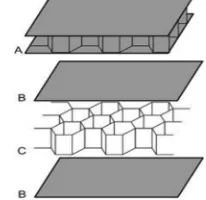
As the name implies, honeycomb materials resemble the structure of beehives. This unique material is an excellent solution for various aerospace applications.
Although honeycomb production requires multiple steps a combination of expansion, corrugation, and molding the process is quite simple and straightforward. process is quite simple and straightforward. Also, because less metal is needed to produce honeycomb than solid products, the process is relatively inexpensive. Honeycomb is most commonly used as the center of sandwich-structure composites, wherein the honeycomb is sandwiched between two thin panels of material.
This sandwich form effectively combines the light-weight and high-strength qualities of honeycomb both of which are essential for the aerospace industry with the smooth, flat surfaces of the panels to allow for easy installation.
The panels also eliminate openings and unwanted airflow Honeycomb can be designed and manufactured with any number of cell shapes, sizes, and configurations. From added flexibility to high strength, any specification can be accommodated with the proper honeycomb design.
III. MECHANICAL AND PHYSICAL TESTS
The characterization of the reveals that the weight % of fibers having significant effect on the mechanical properties of composites. Mechanical test includes testing of compression; tensile strength and physical test include density.
A. Compression Tests
The compressive strength or compression strength of any material is defined as the resistance of failure under the action of compressive forces. Compressive strength is on effective way of measuring how much load a surface or material can bear. The test for this sort of strength is performed buy exerting force downward on top of the object, paired with an equal and opposite force exerted upward on the bottom.
Compressive strength was calculated on the formula, CS =F/A
Where,
CS=Compression strength
B. Tensile Strength
Tensile strength indicates the ability of a composite material to withstand forces that pull it apart as well as the capability of the material to stretch prior to failure The commonly used specimens for tensile test are the rode type and the straight side type During the test a mi axial Bond is applied through hoth the end of the specimen The tensile strength was conducted according to the machine standard on universal testing machine. The value of gauge length (L), width (d) and thickness for the test specimen used in the experimentation as 30 cm, 5 cm and 2 cm. The tests were performed with a constant strain rate of 0.5 mm/min
Tensile strength was calculated by the formula:
σ = P/A
where,
P= Is the maximum load (in N) A= is the area of the specimen
Tensile modulus and modulus of elasticity was determined as E=PL/AS
where.
L =is the distance between supports S is the deflection (in mm)
IV. TEST RESULTS AND DISCUSSIONS
A. Solid Structure
Fig.2 Solid structure Area of cross section A= 90mm x 75mm = 6750 mm3
Compression load σ = P/A = 830000/6750 = 122.9629 Mpa
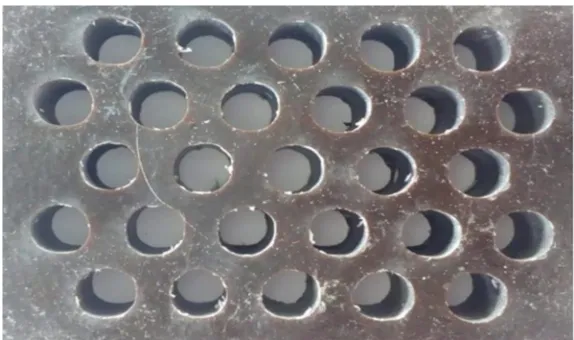
[image:3.612.158.445.553.723.2]B. Round Structure
Area of cross section A = π/4 d2 x no. Holes
= π/4 x 102 x 27
= 2120.57 mm2
Area of square – Area of round = 6750 – 2120.57= 4629.27 mm2
Compression load σ = P/A = 848000/6750=125.62 MPa
[image:4.612.188.441.175.332.2]C. Square Structure
Fig.5 Square structure Area of cross section A = a 2 = 100 mm2
Total area = Area of square x no. of square = 100 x 23 = 2300 mm2 Area of solid - Area of square = 6750 – 2300 = 4450 mm2
Compression load σ = P/A = 465000/6750=68.88 MPa
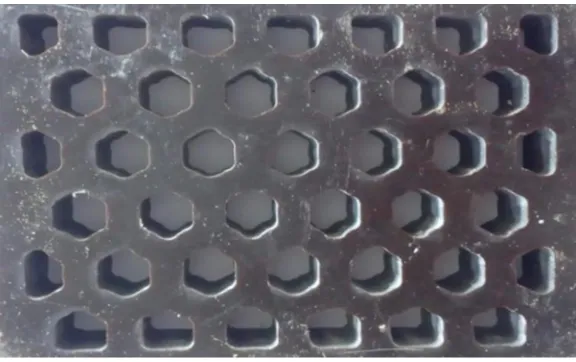
D. Hexagonal Structure
Fig .6 Hexagonal structure Area of cross section A = (3 x √3 / 2) a2 x no. of hexagon
= (3 x √3 / 2) 102 x 30
= 7794.22 mm2 Total area = Area of solid – Area of hexagon = 7794.22 – 6750= 1044.22 mm2
[image:4.612.169.457.449.630.2]V. OBSERVATION
Table I Tension Test
SLNO. COMPOSITION
(WEIGHT%OFCSP)
ULTIMATELOAD P(N)
ULTIMATE
STRESSσ(MPa)
1 20 28000 28
2 30 28800 28.8
3 40 26000 26
VI. CONCLUSION
Honeycomb structures are natural or man-made structures that have the geometry of a honey comb to allow the minimization of the amount of used material to reach minimal weight and minimal material cost. The honey comb structure have more stronger than other structure. It is because of the hexagonal is most efficient, the compressive characteristics of the shape allow it to be one of the strongest structures in the world The natural fiber reinforced polyester resin composite find application in the field of automobile and air craft’s. Honeycomb structure composite with polyester as matrix with varying weight percentages of coconut shell powder were fabricated and studied. The experimental investigation should that the mechanical and physical properties of honeycomb structure in composite material have high strength than other structures. A common aim of material scientist and engineers is to create materials with the greatest strength and the minimum weight and minimum amount of materials. The composite material of honeycomb sandwich structure are often used to achieve this outcomes. This structure with composite material are best to use the applications of aerospace, automotive, housing , packaging spot-equipment and other industries.
VII. ACKNOWLEDGEMENT
We extend our deep sense of gratitude to our project guide Mr. Jabir PP, Lecturer, Department of Mechanical Engineering for providing us with valuable guidance and whole hearted encouragement throughout the project. We express our sincere thanks to Mr. Mansoor Ali PP Principal, Orphanage Polytechnic College Edavanna for the support and constant encouragement. We express our sincere gratitude to Mr. Binu. KK ,Head of Department, Department of Mechanical Engineering for the support and constant encouragement. We thank all the teaching and non-teaching staffs, our classmates and friends for sharing their knowledge and valuable suggestions.
REFERENCES
[1] WIKIPEDIAwww.wikipedia.com/honeycombstructure
[2] GOOGLEwww.google.com/honey comb structure
[3] Alok Singh, Savita Singh, Aditya Kumar, Study of Mechanical Properties and Absorption Behavior of Coconut Shell Powder-Epoxy Composites." International Journal of Materialsan Materials Science and Applications".Vol.2, No.5, 2013.pp.157-161.