1
IDENTITY CRISIS WITHIN THE ROLE OF THE EMERGENCY
NURSE PRACTITIONER?
AN EXPLORATION OF AUTONOMY AND IDENTITY.
SALLY MOYLE
A thesis submitted in partial fulfilment of the requirements of the
University of the West of England, Bristol for the degree of
Professional Doctorate Education.
2
UNIVERSITY OF THE WEST OF ENGLAND
ABSTRACT
FACULTY OF HEALTH AND APPLIED SCIENCE
SALLY MOYLE
Introduction: Whilst the Emergency Nurse Practitioner (ENP) role is now well established within urgent care settings in the UK, it has evolved in an ad hoc manner with a range of titles and scope of practice.
Aims: The aims of this study were to:
Explore the concept of professional identity within the role of the ENP.
Identify what factors contribute (positively or negatively) to a sense of
professional identity.
Consider the implications for managers, organisations and educationalists of changing identities within emerging roles in health care.
Methods: A qualitative approach was adopted to explore in depth attitudes and perceptions of professional identity amongst a group of ENPs from two different
settings; a nurse-led unit and a multi professional Emergency Department. A case
study methodology was chosen, and data was collected using focus groups (n= 13
band 7 ENPs) and two semi-structured interviews (n=2 Senior Managers). The data
was analysed using thematic analysis.
Findings: The study identified several key factors that influenced the ENPs’ sense of
professional identity. These fit broadly into three categories: career structure;
education; the role. Participants reported high levels of pride and self-confidence
related to the delivery of high quality care and their clinical expertise, and gained job
satisfaction from the autonomous nature of the role. Participants also reported feelings
of uncertainty, and were less confident in other areas such as relationships with other
3
Discussion: Participants in this study described moving away from their traditional nursing practice and expressed that they felt different to other nurses, although they
were clear that they were not a doctor substitute. This thesis applies the concept of the ‘third space’ to the findings of the study, and suggests that ENPs have adopted a hybrid role that is operating within a ‘third (or hybrid) space’, where new identity is
formed.
Conclusion: ENPs have a central role within the urgent care setting, and professional identity is an important facet of the role as it relates to autonomy and job satisfaction.
This in turn impacts on organisational loyalty and retention. The creation of a
standardised national framework for the development of the ACP is welcome.
However, this initiative will require support from educationalists, employers and
commissioners to develop all four pillars of advanced practice, thereby ensuring that
4
Contents
Abstract 2
Acknowledgments 11
1. Introduction to the thesis 14
1.1 Rationale for my study 15
1.2 Background and policy context 16
1.3 Historical context 19
1.4 Professional identity 20
1.4.1 Knowledge acquisition and identity 20
1.4.2 The role of the ENP and professional identity 22
1.5 Summary of research design 23
1.5.1 Aim of the study 23
1.5.2 Research methodology 24
1.5.3 Data collection methods 24
1.5.4 Data analysis 25
1.5.5 Structure of the thesis 25
1.6 Summary 26
2. Literature review 27
2.1 Introduction 27
2.2 The search strategy 27
2.3 Part 1: Advanced practice 28
2.3.1 Evolution of the ENP role 28
2.3.2 ENP scope of practice 30
2.3.3 Role title 32
2.3.4 The evolution of advanced practice 33
2.3.5 Advanced practice education 41
2.4 Part 2: Professional identity and professionalization of nursing 43
2.4.1 Professional identity in nursing 43
2.4.2 Self-concept, socialisation and professional identity 43
2.4.3 The professionalization of nursing 46
5
2.4.5 ‘Hybridity’, third space and professional identity 50
2.5 Part 3: Theoretical framework and social theory 52
2.5.1 The social context of learning 53
2.5.2 Communities of practice 53
2.5.3 Situated learning 54
2.5.4 Legitimate peripheral participation 54
2.6 Social Theory 59
2.6.1 Cultural capital 59
2.6.2 Habitus 61
2.6.3 Fields 63
2.7 Chapter summary 64
3. Research Methodology 67
3.1 Introduction 67
3.2 Research paradigm 68
3.3 Ontological assumptions 70
3.4 Epistemological assumptions 71
3.5 Qualitative research 73
3.5.1 Evaluation of qualitative approaches 74
3.6 Case study - Review of the literature and justification 75
3.6.1 Defining the case 76
3.6.2 Selecting the case 79
3.6.3 Issues of generalizability 80
3.7 Summary of chapter 82
4. Research methods 83
4.1 Introduction 83
4.2 Focus groups 83
4.2.1 Selection of participants 85
4.2.2 Advantages of using focus groups 88
4.2.3 Limitations of using focus groups 89
4.2.4 Size, location and running of the focus groups 90
4.3 Photography as a research tool 93
4.4 Interviews 95
4.4.1 Advantages of interviews 96
6
4.4.3 Other issues to be considered when using interviews 97
4.5 Ethical considerations 99
4.5.1 Consent 100
4.5.2 Confidentiality 101
4.5.3 Anonymity 102
4.6 The pilot study 103
4.6.1 Lessons learnt from the pilot study 103
4.7 Data analysis 104
4.7.1 Generating themes and subthemes 104
4.7.2 Reliability 111
4.7.3 Generalisability and transferability 111
4.8 Reflexivity 112
4.9 Summary of chapter 115
5. Case findings 116
5.1 Introduction 116
5.2 Theme 1: The key to identity: the role 119
5.2.1 Sub-theme 1: role definition 120
5.2.2 Sub-theme 2: titles 124
5.2.3 Sub-theme 3: teamwork 125
5.3 Theme 2: Value for money: perceptions 127
5.3.1 Sub-theme 1: the general public 128
5.3.2 Sub-theme 2: senior managers and employers 129
5.3.3 Sub-theme 3: other health care professional 133
5.4 Theme 3: The missing chapter: education 135
5.4.1 Sub-theme 1: undergraduate education 135
5.4.2 Sub-theme 2: knowledge 137
5.4.3 Sub-theme 3: postgraduate education and training 139
5.5 Theme 4: The meandering river: career structure 141
5.5.1 Sub-theme 1: career pathways 141
5.5.2 Sub-theme 2: role expansion 143
5.6 Theme 5: The expert practitioner: leadership and expertise 146
5.6.1 Sub-theme 1: clinical leadership 146
5.6.2 Sub-theme 2: seeing the bigger picture 148
7
6. Discussion 151
6.1 Introduction 151
6.2 Summary of key findings 152
6.3 The role 155
6.3.1 Self-esteem 156
6.3.2 Transition 157
6.3.3 Socialisation 159
6.3.4 The ‘third space’ 159
6.3.5 Perceptions 162
6.3.6 Teamwork 165
6.3.7 Organisational loyalty 167
6.4 Education 169
6.4.1 Undergraduate nurse training 169
6.4.2 New knowledge 171
6.4.3 Communities of practice to support learning 173
6.4.4 National standards for advanced practice 174
6.5 Career structure 177
6.5.1 Role expansion 177
6.5.2 A mixed picture of leadership 180
6.5.3 Influencing others 181
6.6 Summary of chapter 183
7. Conclusion 185
7.1 Introduction 185
7.2 Reflection on doctoral journey 189
7.3 Reflection on methodological approach 189
7.4 Reflection on research methods 190
7.5 New knowledge 192
7.6 Recommendations for educationalists 193
7.7 Recommendations for NHS Trust managers and commissioners 193
7.8 Future research 194
7.9 Limitations of the study 195
7.10 Concluding remarks 196
8. Appendices 197
8
List of tables
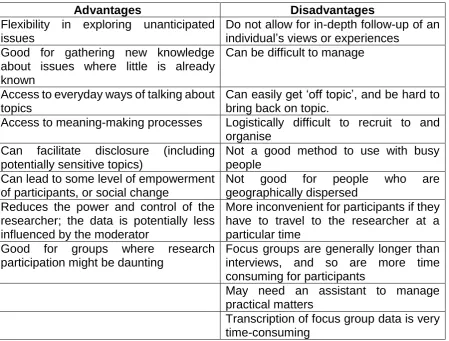
Table 1. Advantages and disadvantages of focus groups 90
Table 2. Strengths and limitations of interviews 97
Table 3. Outline of the research methods used 99
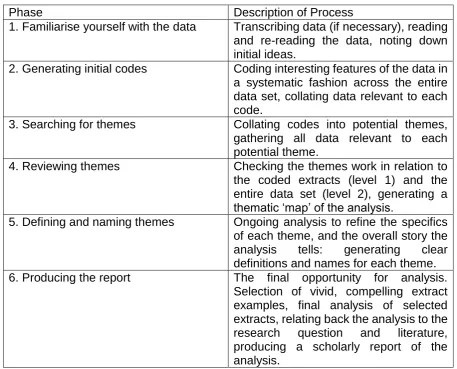
Table 4. Phase of thematic analysis 105
Table 5. Description of themes 108
9
List of figures
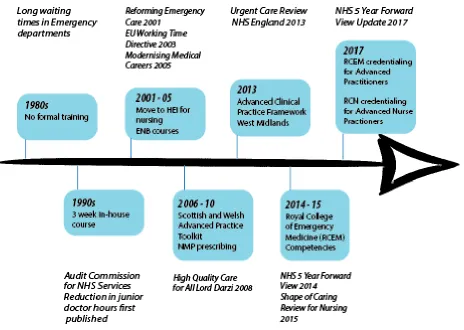
Figure 1A. Timeline of the evolution of advanced practice: education and
drivers for change 39
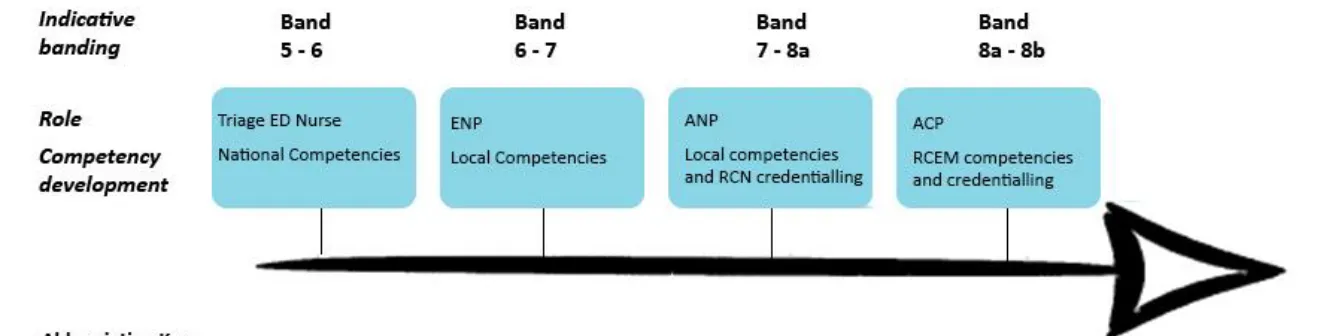
Figure 1B. Advanced practice continuum in emergency care
40
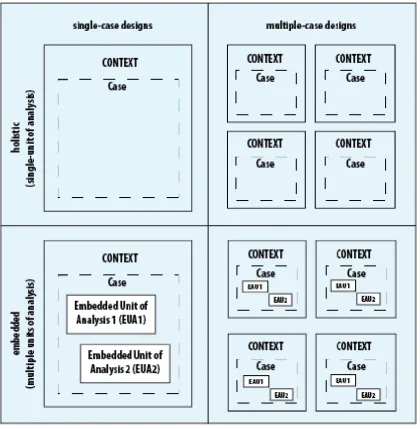
Figure 2. Basic types of designs for case studies 78
Figure 3A . Thematic map of themes and sub-themes 106
Figure 3B . Final thematic map of themes and sub-themes 110
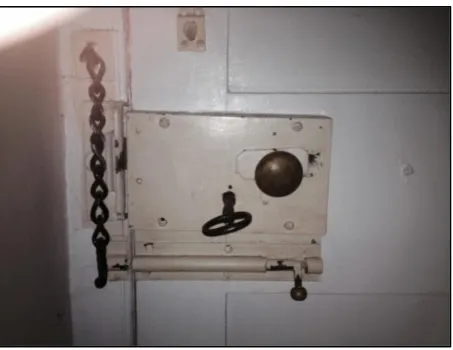
Figure 4. Photograph presented by ENP 3: ‘Keeping your registration
or professional identity closely guarded’ 119
Figure 5. Photograph presented by ENP 2: ‘We are a bargain, an
absolute bargain’ 127
Figure 6. Photograph presented by ENP 4: ‘I missed the introduction’ 135
Figure 7. Photograph presented by ENP 5: ‘Drifting around with
no pathway’ 141
Figure 8. Photograph presented by ENP 9: ‘The wise old owl’ 146
Figure 9. A conceptual framework representing the interaction of the key
themes 154
Figure 10. Interprofessional theoretical framework 173
10
Appendices
Appendix 1. Results of the literature search 197
Appendix 2. Focus group prompt sheet 198
Appendix 3. UWE ethics approval letter 199
Appendix 4. Bristol Royal Infirmary R&D approval 201
Appendix 5. Study information sheet for participants 203
Appendix 6. Consent form (focus group) 205
Appendix 7. Consent form (interview) 206
Appendix 8. Fifteen point check list for thematic analysis 208
Appendix 9. Examples of thematic analysis coding 209
Appendix 10: Photograph presented by participant 2: ‘meeting of two minds’…….220
11
Acknowledgements
I would like to thank my Director of Studies, Doctor Richard Waller and doctoral
supervisor, Doctor Rebecca Hoskins for their continued support, expertise and
guidance throughout this journey. Their constant reassurance and patience has been
invaluable. I would also like to thank the participants of the study who shared their
thoughts with me and allowed me to undertake this study. Many thanks to my work
colleagues who have also been a great support throughout, especially in the last few
months. Finally, a huge thank you to my wonderful family for their constant support
and for giving me the motivation and encouragement to carry on through some of the
12
Definitions and abbreviations
A&E Accident and Emergency.
AHP Allied Health Professional.
ANP Advanced Nurse Practitioner; generally accepted to be a nurse
practitioner who has developed a broader scope of practice.
ACP Advanced Clinical Practitioner; a practitioner educated to masters level who has a broad scope of practice.
CPD Continuing Professional Development.
CoP Community of Practice.
CCG Clinical Commissioning Groups; these commission services in
the NHS.
DH Department of Health.
ECP Emergency Care Practitioner; usually a paramedic working
within the ED or MIU over and above their normal scope of practice.
ENP Emergency Nurse Practitioner: a nurse working over and above
their normal scope of practice.
ESP Extended Scope Physiotherapist: a physiotherapist working over
and above their normal scope of practice.
ED Emergency Department.
HCA Health Care Assistant; unqualified nurse.
HCP Health Care Professional.
HEE Health Education England.
IPE Interprofessional Education.
Majors “Major end” of the ED, where more seriously ill and complex cases are seen and treated.
13
MIU Minor injury unit.
NMC Nursing and Midwifery Council.
NHS National Health Service.
RCEM Royal College of Emergency Medicine.
RCEMACP Royal College of Emergency Medicine Advanced Clinical Practitioner.
RCN Royal College of Nursing.
RCT Randomised Controlled Trial.
SHO Senior House Officer; a junior doctor.
TA Thematic Analysis.
UCC Urgent Care Centre.
UK United Kingdom.
14
1.
Introduction to the thesis
This research aims to explore concepts and perceptions around issues of identity and
autonomy within the role of the Emergency Nurse Practitioner (ENP). The ever
changing landscape of healthcare has had a significant impact on the development of
nursing roles both within the UK and internationally (Kennedy et al. 2011; Lloyd –Rees
2016), and as a consequence has seen the growth and transformation of existing
professions and the introduction of new roles in health care (McClellan et al. 2006; Hoskins 2011). Whilst the role of the ENP is now well established within urgent care
settings it has tended to evolve in an ad hoc manner responding to service demand. This has resulted in a role that has a wide ranging scope of practice with varying levels
15
1.1
Rationale for my study
My interest in this area of study is derived from a background of working in both
Emergency Care and Higher Education. My professional background is that of a nurse
working in the Emergency Department (ED), and being one of the first ENPs to deliver
the service in my hospital in the early 1990s. The training I received was brief and had
no academic accreditation attached to it. At that time nurse education was just moving
into Higher Education (HE), but there was little academic provision for those of us that had trained before the move into a University based programme. I certainly learnt ‘on the job’, guided heavily by my medical colleagues. My career progressed and I moved
into Higher Education and quickly became interested in developing a more formal
programme of study for ENPs which has since grown and developed over the years.
During this time there has been further expansion of roles across other disciplines for
example the emergence of the extended scope physiotherapist and more recently the
development of the Advanced Clinical Practitioner within emergency care with a
clearly defined competency based curriculum and whilst educationalists have
attempted to keep a pace with the evolving workforce by developing a range of
programmes to support role development, the debate around what constitutes to be
advanced practice continues and will be discussed later in this and following chapters.
Over the years my enthusiasm for the ENP role has remained, and it is with interest
and sometimes frustration that I have witnessed the pace of its evolution to support
clinical need whilst not always acknowledging the development needs of the emerging
workforce. Indeed, I have listened to ENP students recount recurring tales of mixed
levels of support, discrepancies in pay, titles and working conditions, with each
practitioner demonstrating differing levels of confidence and scope in their practice.
This varying practice is well documented (Brook & Crouch 2004; Fotheringham 2011),
with a clear acknowledgement of varying levels of scope of practice, lack of
standardisation of education and a range of titles. However, the current body of
research does not specifically address issues of professional identity relating to the
role, and if these differences in pay, education, role clarity and title have an impact on a clinician’s level of autonomy and perceived professional identity as an ENP. Whist
16
research that has addressed this from the emic perspective of the ENPs themselves,
and I therefore wish to contribute to the professional development of the profession by
building on the research in this field. Additionally, as an educationalist with a special
interest in advanced practice curriculum development, I seek to contribute to the
development of a curricula that will support the development of the ENP role.
The following section will briefly explore the difference between medical and nurse
education, and the impact this has had on the evolution of professional identity for this
workforce. However it is arguable that the differences in nurse and medical education may play a significant role in the ‘mini-doctor/maxi-nurse’ debate (Castledine 1995;
Mathieson 1996). As noted below, the differences in ideology may influence the
developing role of the ENP which comes from a nursing background and yet is moving
into a medically based role. There is a plethora of literature trying to establish the meaning of ‘advanced’ nursing practice (Woods 1999; McGee and Castledine 2003;
Thompson and Watson 2003; Bonsall and Cheater 2008; Callaghan 2007; Swan et al.
2013; Sujan et al. 2017). Brook and Crouch (2004) ask the question at what point does an expanded nurse become a doctor? And further what is the impact of this
convergence, and can there ever be true autonomy for these practitioners?
This research will go some way to addressing the above question by gaining an
understanding of professional identity within the role of the ENP, and will ultimately
have an impact on educationalists who are developing curricula to support the role,
policy makers and those involved in workforce development.
1.2
Background and policy context
Demand for NHS services continues to increase year on year. In 2013 there were over
21 million attendances to Emergency Departments (ED), Minor Injury Units (MIU) and
Urgent Care Centres (UCC) (NHS England 2013). By 2016 this figure had increased
to 23.57 million attendances with an increase of 5.2% from 2015 (NHS England 2017).
Of these attendances, 65% attended major EDs with the remaining attending MIUs
and UCCs. Demand on primary care services also continues to increase with 340
million General Practitioner (GP) consultations taking place every year. Many of these
17
term conditions than ever before. The Urgent Care Review (NHS England 2013)
highlights this ever increasing demand, reporting a 12% annual increase in the number
of attendances at Walk-In Centres (WIC) over the last decade and the number of calls
received by the ambulance service over the last decade increasing from 4.9 million to
over 9 million. This demand, coupled with rising expectations and technological
advances, points to an unsustainable urgent care service whereby demand will
outstrip supply (NHS England 2013). The review argues for a twofold restructure in provision whereby most patients can access services ‘closer to home’ with the
introduction of two levels of hospital based Emergency Centres. Fundamental to the
review is the notion that patients will be seen by the most appropriate practitioner and
that roles will need to be flexible in order to meet this demand.
The ever changing landscape of healthcare has had a significant impact on the
development of expanding nursing roles both within the UK and internationally, and
has seen the growth and transformation of existing professions and the introduction of
new roles in health care (Hoskins 2011). Of the 1.3 million staff employed within the
NHS, only approximately 130,000 (10%) are doctors (Imison et al. 2016) suggesting that a range of non-medical practitioners are delivering different models of care to
patients across the NHS. One of the key roles that has emerged from this change in
healthcare landscape is that of the Emergency Nurse Practitioner (ENP), a concept
that was first introduced in the 1960s due to a shortage of doctors in North America.
By the late 1980s ENPs were becoming established within UK Emergency
Departments in an attempt to reduce excessive waiting times for patients presenting
with minor injuries (Marsden et al. 2003). The implementation of the European Working Time Directive (EEC 2000) reduced the hours of the working week for junior
doctors, and the introduction of “Modernising Medical Careers” in 2004 (DH 2004a)
began a major reform in post-graduate medical training that further facilitated the
development of ENPs across the health care spectrum, with an emphasis in
Emergency Departments due to a recognised shortage of doctors (Carter and
Chochinov 2007; Imison and Bohmer 2013). A survey in 2006 (RCN 2006)
established that ENPs were commonplace in a range of settings such as general
practices, walk-in centres, minor injury units, medical assessment units and areas
18
Over the last 25 years policy makers and eminent authors have attempted to define
the ENP role. In 1992 The Royal College of Nursing (RCN 1992 p2) defined the
Emergency Nurse Practitioner (ENP) as:
‘an accident and emergency nurse who has a sound nursing practice base in all aspects of A&E nursing, with formal post basic education in holistic assessment, physical diagnosis, in prescription of treatment and in the promotion of health’ (RCN 1992, p2).
There is evidence that the scope of practice within these setting is vast, ranging from
managing minor injuries and illnesses to those working in urgent care settings
managing more complex acute and chronic cases (Grant et al. 2002; Rosen and Mountford, 2002). Interestingly, it is worth noting that the role description in 1992
focused heavily on managing illness and injury and promoting health and there was
little or no mention of leadership both at a local level or nationally. More recently,
however, the emergence of the Advanced Clinical Practitioner (ACP), whereby
practitioners do not limit their practice to pre-defined protocols within the realm of
minor injury and illness but manage acute and complex patients and have undergone
a comprehensive programme endorsed by the Royal College of Emergency Medicine
(RCEM) has led to a new definition of advanced practice:
‘Advanced clinical practice is delivered by experienced registered healthcare practitioners. It is a level of practice characterised by a high level of autonomy and complex decision-making. This is underpinned by a Master’s level award or equivalent that encompasses the four pillars of clinical practice, management and leadership, education and research, with demonstration of core and specific clinical competence’ (Health Education England. Accessed on 08/04/17).
This recent development further questions where ENPs sit on the ‘advanced practice spectrum’ and this will be explored further in Chapter Two. Policy documents and
initiatives from the government have consistently supported the concept that the
boundaries between nursing and medicine need to be further broken down to meet
the demands of a patient centred NHS (DH 1997, 1999, 2001, 2002, 2003, 2006, 2008,
19
care to be ‘the right care, the right time and the right place’ for patients. It outlines a review of both medical training (Shape of Training Review for the Medical Profession
2013) and nurse training (Shape of Care Review for the Nursing Profession 2015) to
ensure a flexible workforce to deliver flexible models of care. In addition to this, it is
well documented that recruitment of middle grade doctors is problematic, and that a
more flexible approach to workforce development is needed in order maintain a
sustainable workforce for the future.
Boundaries between doctor and nurse roles have been explored by Brook and Crouch
(2004), and in their review of the literature they highlight that the significant range in
educational preparedness within the UK, combined with a lack of regulation of the ENP
role, has allowed the development of an ad hoc role that has many different titles with varying degrees of autonomy and practice. Other research supports this, for example
Fotheringham et al. (2011) undertook a longitudinal study examining the evolving role of the Emergency Nurse Practitioner in Scotland. A key finding was the variation in
titles across the 55 departments that participated accounting for 446 nurses.
Differences in pay, education and practice were also observed across the
departments. Although this research was confined to Scotland, its findings are likely
to be representative of the wider United Kingdom (UK).However, despite a lack of
standardisation in role definition and scope of practice the role of the ENP, as noted
by Lloyd-Rees (2016), is a well-established role and one that continues to evolve
within all urgent care settings both nationally and internationally.
1.3
Historical context
Nurse education has traditionally focused on a humanist approach to learning. Dewey
(1915) first described the notion of nurse education as a process for facilitating
individual development and as a problem-solving activity. Traditionally, nurse
education was viewed as an apprenticeship, often undertaken in religious institutions
such as convents by young women. After the Crimean War Florence Nightingale,
widely identified as the founder of modern day nursing, set up the first training school
in London at St Thomas' Hospital. Early curricula were based on practical learning in
hospital ward settings and focused on clinical tasks, competence and hygiene. Nurses
20
nurses were not encouraged to question or take an active role in decision making by
drawing on research or evidence (Allan and Jolley 1982).
Prior to nursing becoming a university based programme nurses were not encouraged to reflect or question practice. However after 1992, and with the introduction of ‘project 2000’ and a university based teaching model, nurse education has fully embraced this
style of learning. Nursing theorists have tried to identify and capture the substantive
(and professional) uniqueness of nursing. The Royal College of Nursing (2003) makes claims that nursing has a focus on health rather than disease, that the ‘whole’ person
is their core concern and not just the pathology of illness, with an emphasis on a
problem solving approach rather than a diagnostic focus.
Medical education, on the other hand, is based on the biomedical model of illness
(Engel 1977). The literature surrounding this is unequivocal in that it assumes that
disease can be accounted for by deviations from the norm of measurable biological
(somatic) variables (Engel 1977). Medical education was devised by scientists for the
study of disease, and has historically been the dominant model in medical education.
Alongside this, medicine has adopted a master-apprentice style of education assuming that the ‘experts’ teach the novice in a transmission of knowledge acquisition
(Lauvas and Handal 2001; Woolliscroft 2002). Modelling is central to this theory, with
senior doctors and clinical teachers perceiving that they act as a role model to achieve
knowledge transfer. Role modelling is also linked to professional identity (Finn et al.
2010), and role models have been shown to contribute powerfully to identity formation
(Goldie et al. 2007). In recent years, however, the traditional medical model of education has moved toward a more problem based learning (PBL) approach, which
was first introduced into medical education in the late 1960s (Finucane et al. 2009). Recent studies have shown that students demonstrate increased problem-solving
skills, communication and critical thinking when adopting this approach (Gurpinar
2016), however the impact on developing professional identity is less clearly
21
1.4
Professional identity
The term professional identity is not always clearly defined in the nursing literature.
Johnson et al. (2012) in a review of the literature around professional identity in nursing found that professional identity is often intertwined with the theory of self-concept
(Arthur and Randle 2007). Self-concept is defined as our personal understanding of
our perceived attributes, and is about how we think and feel about ourselves (Marsh and Scalas 2010). However professional identity refers to a component of a person’s overall identity and is augmented by their ‘position in society’, ‘interactions with others’
and their ‘interpretations of experiences’ (Sutherland et al. 2010, p455).
1.4.1 Knowledge acquisition and identity
The acquisition of knowledge as a commodity has the connotation of material wealth
(Sfard 1998). As noted above, knowledge is regarded as a highly prized possession
and therefore can allow the possessor of that knowledge to become powerful and
establish identity within a professional group. Studies suggest that medical students
demonstrate a strong sense of shared identity which is often apparent even before
they start their training (Ware 2008; Cruess et al. 2009). The reliance on evidence based practice within medicine is a good example of how medicine maintains a strong
sense of professional inclusivity (Tajfel and Turner 1986; Hogg and Adams 1988 and
Weaver et al. 2011), which arguably reinforces a sense of professional identity. Moreover, the dominance of the biomedical model of illness has ensured that the
medical profession maintains its position of power within society. Foucault (1972-1979) in his observations of the ‘medical gaze’; in which medicine dominates how we
see illness and the widespread medicalisation of modern life, sits well with this analogy
of medical education and the acquisition of knowledge and identity.
Nursing theorists have been writing and attempting to identify what the true essence
of nursing is for many decades, as part of an endeavour to seek professional status.
The move to university based education resulted in proponents of nursing attempting
to further consolidate the robustness of their case for independence by developing a
body of scientific and quasi-scientific knowledge (King 1981; RCN 2003). However,
22
more like teaching than medicine, and that nursing is a shifting field of practice rather
than a discipline in its own right (Jarvis 1995). Arguably this has an impact on
professional identity, as we know that to possess knowledge which is linked to identity
is a powerful commodity. Fawcett (2003, p229) argues that ‘without the foundations
provided by conceptual models of nursing we are nothing more or less than skilled trades people’. As with medical students, nursing students enter nursing with pre-existing values and beliefs about what nursing is, and this has already shaped their
professional identity (Bolan and Grainger 2009). Studies have shown that some
students entering nursing believe that doctors will direct all care and that nursing is
‘underpaid and strenuous’ and ‘without a lot of prestige’ (Grainger and Bolan 2009, p 39). This misconception of nursing will undoubtedly have a long term impact on an individual’s self-concept or feeling of worth, and therefore professional identity.
Advances in medical technology have led to nurses becoming more technically
competent, which is seen as a key indicator of professional practice and identity.
Undergraduate nurse education has moved to a more competency based curriculum,
and most advanced practice courses within the UK focus on a medical model of
delivery, emphasising the importance of physical examination, diagnostic reasoning
and disease management. There is less emphasis on the more traditional skills of
caring and the nurse-patient relationship. Leadership, teamwork and the impact of
policy is also notably lacking in most programmes. There is no doubt that education
plays a vital role in the development of professional identity, both in the clinical and
academic setting, and it is arguable that educators are not doing enough to support
both student nurses and experienced ENPs in formulating their professional identity.
Educators themselves need to understand the drivers that develop a positive identity,
and how these drivers can influence a sense of identity within a group.
1.4.2 The role of the ENP and professional identity
A study by Williams and Sibbald (1999) examined the changing roles and identities of
a group of practitioners in primary care settings. They concluded that one of the key
factors contributing to uncertainty in the workplace was the perceived breakdown of
professional identity and working within new roles. They found that working within new
23
professional groups have been common themes emerging from the literature in
relation to ENPs (Thrasher and Purc-Stephenson 2007; Currie and Crouch 2008;
Hoskins 2011). Shirikov and Vondracek (2011) suggest that professional identity is
assembled (and disassembled) around the interpersonal relationships that are
important, and professional identity is dependent on how much an individual invests
in these relationships. A sense of belonging is also identified within the literature as an
important component of forming professional identity, since without it individuals cannot participate in the relationships that shape their professional selves (Levett–
Jones and Lathlean 2008). Lack of clarity of role and a fear of litigation are common
themes within the literature in relation to ENPs, and these have been linked to a
perceived lack of identity within the role. (Williams and Sibbald 1999). Hiscock and
Pearson (1996) agree, suggesting that a lack of professional networking can lead to
demarcation and a sense of diminished autonomy and identity. Arguably this notion of
lack of identity and diminished autonomy will have a direct impact on clinical practice,
service delivery and possibly patient safety as identity is liked to confidence and
positive performance (Ohlen and Segesten 1998; Bjorkstrom et al. 2008). This will be discussed further in Chapter Two.
1.5
Summary of research design
This introductory chapter has outlined the rationale for the study, and has introduced
the policy context and relevant supporting literature. A short summary of the research
design is outlined below including the aims of the study, the methodological approach,
the method of data collection employed and the method of data analysis used.
1.5.1 Aim of the study
The broad aims of this study were to:
Explore the concept of professional identity within the role of the ENP.
Identify what factors contribute (positively or negatively) to a sense of professional identity.
24
In order to address these aims, the following question and sub-questions were
devised:
What are the key factors that influence a sense of identity and autonomy for the
Emergency Nurse Practitioner?
Sub-questions:
1. From which sources do ENPs draw their knowledge base, and why?
2. Does the title ENP or ANP give post holders a sense of identity, and if so
why?
3. Is there a perceived link between professional autonomy and professional
identity?
4. Do medical colleagues positively or negatively influence an ENPs perceived
sense of autonomy and/or identity?
5. Does location or organisational structure have an influence on perceived
autonomy and or identity?
1.5.2 Research methodology
This research adopts a qualitative interpretive approach, since the main focus is to
explore perceptions of professional identity and autonomy from the ENP perspective using a case study methodology. Qualitative research attempts to ‘study things in their natural settings, attempting to make sense of or interpret phenomena in terms of the meanings people bring to them. (Denzin and Lincoln 2011, p3). Nursing research that has focused on perceptions and attitudes has tended to adopt a qualitative
methodology in order to interpret meaning within the participant’s natural setting,
therefore adopting a more interpretative approach.
1.5.3 Data collection methods
Data was collected using focus groups as the primary method. Two organisations
were selected to draw the focus groups from; one was from an Emergency Department
(ED) within an inner city National Health Service (NHS) Foundation Trust and the other
was a Minor Injury Unit (MIU) within an Urgent Care Centre. The ED was chosen due
25
operates as a nurse-led unit and I was interested in comparing the perceptions of the
participants from different organizational contexts. Participants in the focus groups
were all band 7 ENPs working within either of the identified units. Following the focus
groups, further data was collected from senior managers from the respective
organisations using semi-structured interviews.
1.5.4 Data analysis
The chosen method of data analysis was thematic analysis (TA). TA is a method used
for identifying, analysing and interpreting patterned meanings or themes in qualitative
data (Braun and Clarke 2006, 2012, 2013), and is a widely accepted method of
analysis (Howitt 2010; Howitt and Cramer 2008; Stainton Rogers 2011; Joffe 2012).
1.5.5 Structure of the thesis
This doctoral thesis uses a case study approach to explore concepts of identity and
autonomy within a community of ENPs, and was carried out within two urgent care
settings as outlined above. Chapter One has outlined the rationale for the study and
has introduced the policy context and literature surrounding the study. It has also
outlined the research design of the study. The relevant literature surrounding the study
is critically explored in Chapter Two and covers the following areas:
Nurse practitioners: role development. Education.
Professionalism and professions. Professional identity.
Theoretical framework which underpins this study - communities of practice. Social theory which has informed my understanding of professional identity –
Bourdieu.
Chapter Three explores the methodological approach taken and justifies this,
examining the personal and philosophical assumptions that underpin this approach. It
identifies why a case study approach was adopted, and explores the relevant literature
around case study research. Chapter Four outlines the research methods used for
26
explored and the practical aspects of gaining ethics committee approval are reflected
upon. My position as a researcher within this arena is also explored through reflexivity
and reflection.
The results of the focus groups are presented in Chapter Five using Braun and Clarke’s Thematic Analysis model. Themes and sub-themes are presented using
photographs to illustrate the themes, with an overview of each theme being presented.
Extracts from the data are used to demonstrate and underpin the themes presented.
Chapter Six discusses the implications of the findings and interrogates the themes
utilising relevant current literature. The implications of the findings are discussed in
relation to educationalists, policy development and workforce planning. The thesis
concludes by exploring whether the research questions have been answered, and
describing the areas of new knowledge that have been identified.
1.6
Summary
This chapter has introduced the literature surrounding the study, and the policy context
within the domain of the role of ENP. The rationale for the study comes from a
personal perspective of working within the field of Emergency Care and educational
delivery of an ENP programme. The chapter has set out the framework and structure
of the thesis, and outlined the chosen methodology and methods. The following
27
2.
Literature review
2.1
Introduction
The previous chapter introduced the study and outlined the policy context within which
the ENP role exists. This chapter will review and analyse the literature in three parts.
The first part will examine the literature relating to the evolution of the ENP role and
advanced practice, the scope of practice within the role and the range in titles. It will
also consider the education which underpins the role and how this has evolved. As
this role is embedded internationally, research from both within the UK and
internationally will be explored. In addition to this, policy documents that have informed
the development of the role will be considered.
The second part of the review examines the concepts of professional identity and
socialisation, and the relationship to the professionalization of nursing. This section
also explores professional identity within advanced practice roles. The final section of
the chapter will explore the theoretical framework of communities of practice (CoP) as a vehicle for developing identity within nursing and the ENP role. Bourdieu’s theory of
cultural capital and its link to professional identity within nursing and the ENP role will
be examined.
2.2
The search strategy
The literature was accessed using several databases including: MEDLINE; British
Nursing Index; CINAHL; and EMBASE. Key words, and Boolean operators such as ‘AND’, were used to combine keywords in order to narrow the search for example ‘Emergency Nurse Practitioner’ and ‘title’. Additional Boolean words were also used
such as ‘Or’ to further ensure the search was broad enough to capture terms which are often used interchangeably such as ‘Emergency Nurse Practitioner’ or ‘Advanced Nurse Practitioner’. The results of the literature search are summarised in the table in
Appendix One. Further to this, grey literature was reviewed using Google Scholar,
Department of Health resources and policy documents, professional body publications
28
abstracts to gain the initial relevant articles. From this, relevant full text articles were
selected. Only studies published in English were selected and articles were drawn
from both UK based studies and international studies. Snowballing was incorporated
into the search strategy whereby references cited within articles were searched and
where relevant included in the review. The initial search period was from 1980- 2016.
Drawing on literature from 1980 ensured that all seminal work relating to the
development of the role at that time would be included. A final search was conducted
in early 2017 during the final write up of the thesis to ensure any new studies would
be included. The appraisal of the literature focused on research studies, however,
editorial and published opinion pieces were included when deemed relevant or when
there was a paucity of primary studies. Government policy documents and
professional body publications were also included where relevant to the discussion.
2.3
Part 1: Advanced practice
2.3.1 Evolution of the ENP role
The ENP role is now a well-established and highly valued role within the Emergency
Department workforce. It is well evaluated, and provides safe and effective care whilst
contributing to the national Department of Health (DH) target of managing the whole
ED patient episode within 4 hours (DH 2001). Sakr et al. (2003) found in their seminal work that there were no significant differences between ENPs and junior doctors in the
accuracy of examination, adequacy of treatment, planned follow-up, or requests for
radiography. The accuracy of x-ray interpretation was also similar in both groups.
Further, the study found that ENPs were more effective than junior doctors at recording
medical history, and fewer patients seen by an ENP sought unplanned follow-up
advice about their injury. A plethora of studies both within the UK (Bryne et al. 2000; Barr et al. 2000; Walsh, 2001; Benger, 2002; Cooper et al.2002) and outside of the UK (Clarke, 2000; Jennings et al. 2008; Steiner et al. 2009; Chattopadhyay et al. 2015) have since indicated the benefits of an ENP service within urgent care settings citing
reduced patient waiting times, increased quality and cost effective care, reduced
patient complaints and increased staff morale.
As noted in Chapter One, the emergence of the ENP role within the Emergency
29
increasing demand on the service and in an attempt to free up doctors to see patients
with more complex conditions (Woolich 1992). The concept was initially developed in
primary care in the early 1980s by Stilwell et al. (1987), however it soon spread into the ED. The ENP service expanded in an ad hoc and sporadic manner across most EDs throughout the 1990s, with some departments having a well-established ENP tier
by the mid-1990s and others still trying to establish a service (Crinson 1995). At the
same time a range of UK policy initiatives, such as the implementation of the European
Working time Directive (EEC 2000) and the introduction of Modernising Medical
Careers in 2004 (DH 2004a), further accelerated expansion of the role. The reform in
post graduate medical (doctor) training had a direct impact on ED workforce supply as
training requirements for experience in the ED as a junior doctor were removed from
the national requirement for surgical trainees. This had the knock-on effect of fewer
doctors applying for posts within EDs, leaving a gap in the workforce (Keltie et al.1997). Meanwhile, implementation of the four hour emergency access target (DH 2001) placed even greater pressure on the ED to ensure that patients were seen,
treated and discharged within four hours. This led to the burgeoning expansion of the
ENP role throughout the UK, but without any formal standardisation of role
development, title or educational preparation (Considine et al. 2006; Thrasher and Purcell 2008).
As previously outlined, policy documents have continued to encourage the notion that
boundaries between nurses and doctors should become further broken down. The
NHS Five Year Forward View (DH 2014) demands a workforce that works ‘across
organisation and sector boundaries’ promising education and training that ‘equips the current workforcewith the skills and flexibility to deliver new models of care’ (DH 2014, p30). Resulting from this constant drive towards a more flexible workforce with less
defined boundaries is the continual role expansion of the ENP. A role that in the late
twentieth century focused on managing minor injuries under defined protocols has now
emerged in the early twenty first century as one that has developed to include the
management and care of patients with increasingly complex, acute and chronic
conditions (Grant et al. 2002; Rosen and Mountford 2002). Where once the role of the ENP within the UK was confined to the realms of the ‘minor end’ (the area of the ED
30
are managed), seeing and treating more complex conditions such as hip fractures and
chest pain (Martin 2002; Davies-Gray 2003). This recent evolution has reopened the debate around defining the role and what constitutes ‘advanced practice’. A review of
the literature on advanced practice will be presented later in this chapter.
2.3.2 ENP scope of practice
As noted above, the scope of practice within the ENP role is varied and has developed
in an ad hoc manner over the last twenty years. The following section will provide an overview of the literature on the range and scope of practice within the ENP role.
Hoskins (2011) highlighted that there is a paucity of literature pertaining to the scope
of practice for ENPs, and this is still the case to date. In a literature review evaluating
the role she found only two studies that specifically examined the scope of practice of
the ENP (Cole and Ramirez, 2000; Considine et al. 2006), although a range of studies did mention scope of practice as part of a wider discussion. Hoskins (2011) also notes
that these two studies are not UK based (one was Australian and the other from the
USA), and identifies that most of the UK studies focus on patient satisfaction and
evaluation.
Considine et al. (2006) examined the scope of practice of one ENP over an eight month period in an Australian ED During that time 476 patients were seen with an
average of six patients per shift. The most common presentations managed by the
ENP were patients with lacerations/wounds and distal limb injuries. This finding is in
line with other studies at the time that attempted to examine the scope of practice.
Cooper et al. (2002) found that within the UK the most common presenting problems that were managed by the ENP were wounds (including burns and scalds), and ankle
and foot injuries. Cole and Ramirez (2000) concur, finding that in their North American
study 52% of patients seen by an ENP presented with an injury. Hoskins (2011) notes
that the UK had the most limited range of practice, and in the review of the literature
found that minor injuries and minor illness are the most common presentations treated
by ENPs.
As highlighted above, previous studies have attempted to compare patient outcomes
31
was in keeping with other studies (Cole and Ramirez 2000), suggesting that ENPs
were working at a similar level to their medical colleagues and were safely and
appropriately requesting x-rays for a comparable group of patients. Discharge rates
between ENPs and doctors were also examined. Discharge rates for ENPs within the
Considine study were 77.2%, whereas in the Cooper et al. (2002) and Cole and Ramirez (2000) studies discharge rates were higher at 94%. It is unclear from the
literature why the discharge rates in the Considine study were lower than the other two
studies, however the Considine study took place in Australia whereas the Cooper et al. (2000) and Cole and Ramirez (2000) studies took place in the UK and USA respectively. It is possible that the scope of practice for ENPs within the UK and USA
is more comparable, which might account for the similar rates of discharge compared
to those in Australia. It is also worth noting that the studies in question do not define what is meant by the term ‘discharge’. This could also contribute to the discrepancy,
as the most common discharge referral in all studies was to the patient’s General
Practitioner (GP). In all of the studies mentioned here approximately one third of the
patients managed by ENPs required referral to out-patient or follow-up clinics,
suggesting a consistency of referral methods.
Fotheringham et al. (2011) undertook a longitudinal study to examine how the role of the ENP has developed in Scotland. The study was first undertaken in 1998, but as
the role and political landscape has shifted so rapidly the original study was replicated
ten years later. Although the study did not specifically examine the full scope of
practice for ENPs it identified a shift in trends around role expansion, titles and scope
of practice. The study found an increase in the number of ENPs across Scotland from
306 in 1998 to 446 in 2009, which meant that ENPs were practising in 89% of EDs
within Scotland by 2009. Of these, the majority (79%) managed patients where there
was a protocol or guideline to work to, which fell into the minor illness or injury
category. Interestingly, this was a clear reduction from the 1998 study which found
that 91% of ENPs used formal protocols or guidelines. Similarly there was a significant
shift in ENPs requesting and interpreting x-rays during this period. In 1998 less than
half the departments with ENPs (47%) allowed their ENPs to request x-rays, with only
14% interpreting x-rays, whereas by 2009 the majority of ENPs were requesting
X-rays (80%) and also interpreting them (73%). This study clearly demonstrated that
32
addition, the reduction in ENPs using protocols and guidelines suggested an increased
degree of autonomy within the role.
An interesting element of the Considine et al. (2006) study is that it examined the percentage of time that the ENP spent on seeing patients (direct care) and the
percentage of time spent on indirect care. In their study the majority of time (55%) was
spent on direct patient care, with the rest spent on indirect activities (clinical practice
guidelines and research development 24%, education (self and others) 17%,
administration 2% and assisting in emergency cases 2%). This finding concurs with
other studies (Knaus et al. 1997), although in a study investigating ENP and patient interactions in the USA Courtney and Rice (1997) found that ENPs spent 90% of their
time providing direct patient care. These findings are worthy of noting here as the
Health Education England (HEE) recommended definition of advanced practice (as
described in Chapter One) requires the practitioner to demonstrate four pillars: clinical
practice; management and leadership; education; research. The implications for this
and the division of time spent on each pillar will be discussed later in this thesis.
2.3.3 Role title
The ENP title is protected within Canada and the USA, and is regulated by the
regulatory bodies in those countries, whereas within the UK the role does not carry a
protected title, and therefore the range of titles is varied. In addition to this, it is unclear
how many ENPs are practising within the UK as a national register does not exist. This
lack of regulation and standardisation is well documented as a frustration amongst
ENPs, and a potential barrier to implementation of a successful ENP service (Currie
and Crouch 2008; Keating et al. 2010; Lloyd-Rees 2016). In a study by Fotheringham
et al. (2011) the titles used within fifty five departments within the UK ranged across: ‘ENP’, ‘Minor Injury Nurse’, ‘Advanced Nurse Practitioner’, ‘Specialist Nurse’ and ‘Unscheduled Care Nurse Practitioner’, to name only a few. This varied range of titles
is indicative of the range of practice that exists within the role which, as Fotheringham
et al. (2011) suggests, implies a group of practitioners who have different skills, different decision-making abilities and levels of autonomy, and who display different
characteristics. Arguably, a diverse range of practitioners such as this does not
describe a homogenous group with a shared sense of purpose and professional
33
Occupational groups such as nurses, doctors or lawyers are uniquely identified by
their name (Thupayagale and Dithole 2005). This name generally describes the nature
of the work undertaken by that group, and generates perceptions of the characteristics
of the profession. In healthcare, adjuncts to the word ‘nurse’ are often added to the
title in order to inspire greater respect and understanding of the role (Cashin et al.
2007). As outlined above, for ENPs this has resulted in a proliferation of titles which
all aim to define a similar role with the same objectives. In the early development of
the role it was recognised that the range of titles was unhelpful in trying to gain
recognition of an emerging workforce. Lorentzon and Hooker (1996) suggest that just
as a name uniquely describes an individual it should also uniquely define a discrete
group. Cashin et al. (2007) argue that this ‘add on’ development in titles has
contributed to the lack of success within the role over time, and that in order to ensure
acceptability and success in advanced practice roles a clear vision of the desired
outcomes, with a widely recognised and consistently used title to delineate the role,
is essential. MacDonald et al. (2006) go further and discuss the value of using one title (advanced practice nurse) to encompasses all roles which share a ‘sameness of character’ in order to develop a common sense of identity. Identity here is defined as the ‘sameness of essential or generic character in different instances’ (Merriam Webster Incorporated 2014, p575). MacDonald et al, (2006) argue that using one title which encapsulates many areas of ‘sameness’ will justify a common ‘advanced nursing practice’ identity.
2.3.4 The evolution of advanced practice
It is evident from the literature that the ENP role is accepted in many settings, and
commonplace within EDs both within the UK (Tye and Ross 2000; Fotheringham et
al.2011; Hoskins 2011 and Lloyd-Rees 2016) and internationally (Coopers and
Lybrand 2011; Chattopadhyay et al. 2016). Despite differences in scope of practice and discrepancies in pay and titles, research studies within the UK consistently
demonstrate no difference between ENPs and doctors in terms of clinical outcomes
and patient satisfaction (Scum et al. 2000; Horrocks et al. 2002; Sakr et al. 2003). Laurent et al. (2004) undertook a systematic review of 24 UK and international studies and found higher overall scores of patient satisfaction with nurse led care and reduced
34
practice’ is one that remains uncertain, and has many connotations within both the literature and clinical practice. ‘Advanced practice’ is often used as an umbrella term
that denotes the array of non-traditional nursing roles and practices that populate the
clinical arena (DH 2010). As noted above, the abundance of titles associated with these roles has added to the complexity in defining what ‘advanced practice’ is, and confusion between ‘specialist practice’ and ‘advanced practice’ has persisted over the
years.
Within this confusion is the concept of autonomy and what defines ‘true autonomy’ for
a profession. Policy documents have advocated the blurring of roles, and
consequently professional boundaries, with support for the development of roles that
allow practitioners to take on tasks that were previously assigned to doctors.
Responsibility and accountability within these roles are often confused with autonomy,
and the terms may be used interchangeably. Changes within roles have occurred in
many arenas across the health sector, for example, within mental health the
development of multi-disciplinary and multi-agency teamwork within mental health
provided an opportunity for the delivery of a flexible patient-centred service. However,
this also brought about some confusion around roles and responsibilities for
practitioners, medical consultants and employers. In response to this, the publication of the ‘Responsibility and Accountability best practice guide-moving on from New Ways of Working to a creative, capable workforce’ (DH 2010) sought to clarify issues
of responsibility, accountability and delegation for staff and employers within mental
health and the wider healthcare system. It drew on professional regulators from both
nursing and medicine in relation to delegation:
‘Delegation involves asking a colleague to provide treatment or care on your behalf. Although you may not be accountable for the decisions and actions of those to whom you delegate, you will still be responsible for the overall management of the patient, and accountable for the decision to delegate’
(GMC, 2006).
Similarly the NMC states that:
35
such as an employer, has the responsibility to delegate an aspect of care, the employer becomes accountable for that delegation’ (NMC 2001).
However, the picture is further clouded by the distinction between delegation and
assignment, whereby the practitioner may delegate work to a support worker (or to an
ENP from a doctor) who is deemed competent to undertake the task such as a
haematoma block. This worker then carries the responsibility for the task, however,
the employer has the responsibility to ensure that the worker to whom the task has
been delegated has the requisite training. Clearly the picture is complex, and whilst it
is not the intention of this literature review to discuss in depth the intricacies of the law,
it is worth noting that within the realm of advanced practice the legal responsibility for
patient care always resides with the medical consultant as described by the British Medical Association’s Consultant Handbook (2009):
‘Only a consultant or principal in general practice can accept ultimate medical responsibility in NHS units and the development of new working patterns and multi-disciplinary working should not alter this basic principle’ (Consultant Handbook, 2005).
Within the UK attempts to define advanced practice have only gone so far. In 1998 the United Kingdom Central Council (UKCC) introduced a ‘higher level of practice’ that
attempted to give a framework to all roles and titles under this umbrella. It was based
on competencies and defined standards, and was designed to be a generic framework that would allow practitioners to practice under this ‘higher level of practice’ (UKCC
1998). However, as the regulatory body changed and became the Nursing and
Midwifery Council (NMC) this recognised title was incorporated and diluted into the
new NMC register for nurses and midwives (NMC 2001). At the same time the majority
of the Western world was struggling to develop a coherent approach to advanced
practice, resulting in the International Council of Nurses (ICN) developing an
internationally recognised definition:
36
shaped by the context and/or country in which s/he is credentialed to practice. A Master’s degree is recommended for entry level’ (ICN 2001, p1).
This definition prompted further development of the concept within the UK, with the
NMC describing advanced practitioners as ‘highly experienced and educated
members of the team who can treat and discharge or refer to an appropriate specialist if needed’ (NMC 2005). The Skills for Health agency went further, describing advanced practitioners as ‘highly experienced professionals with highly developed knowledge
and skills, with the ability to make high level clinical decisions and have their own case load.’ (Skills for Health 2007). It appeared momentum was gathering around what advanced practitioners could do as government policy endorsed the definitions (DH 2004; DH 2010). In 2008 the Scottish Executive produced the ‘Advanced Practice Toolkit’, which was a competency based framework for practitioners to use and was
close to becoming a framework for practitioners to practice within.
However, arguably the most definitive progress was made in 2015 with the publication
of a competency based curriculum by the Royal College of Emergency Medicine
(RCEM). Whilst developed as a competency based pathway for doctors, Health
Education England in collaboration with the RCEM developed the Emergency Care
Advanced Clinical Practice curriculum for ACPs working within urgent care settings.
This curriculum has since been endorsed by the Royal College of Nursing (RCN) for
all nurse practitioners across the health care arena. The RCN curriculum allows
practitioners (through a process called credentialing) to demonstrate that they have
achieved defined competencies, and this concept is being adopted by other health
professionals such as physiotherapists and paramedics. Whilst still in the early stages
of roll-out, this could be viewed as a breakthrough in defining advanced practice and
national standardization, and has formed the basis for the RCN concept of
credentialing advanced level practice for nurses and all other disciplines. Of particular importance is that it is firmly based at Master’s level:
37
and leadership, education and research, with demonstration of core and area specific competence’ (Health Education England. Accessed on 30/04/17).
In addition to establishing a more formal definition of advanced practice, there has
also been a drive to define the difference between an advanced nurse practitioner and
those working in extended roles. The abundance of titles noted above has allowed a
vast range of ambiguous roles. The Nuffield Trust has recently attempted to define the
difference between advanced roles and extended roles suggesting that:
‘Extended roles are roles where registered professional take on tasks not traditionally within their scope of practice but which do not require training to Master’s degree level. Advanced roles meanwhile refer to those roles that require registered professional to undertake additional training at Master’s level or above’ (Imison et al. 2016, p2).
The RCN have further attempted to define roles within the emergency care arena with
the development of an Emergency Nurse Development Pathway. The pathway
identifies a clear definition between the role of the ENP and the ACP:
‘Emergency nurse practitioner (ENP): A registered nurse who has undertaken specific additional training in order to assess, diagnose and prescribe
treatment for patients who present with minor injuries or illness. The role of emergency nurse practitioner is subject to local variation in education and practice provision, therefore this framework does not provide the
competencies required for this role. Typically they would be band 6 or 7’
(RCN, 2017).
‘Advanced Clinical Practitioner (ACP): An emergency nurse or other registered allied health professional who has undergone masters level
38
Whilst this is undoubtedly a positive move towards identifying which roles require a Master’s level programme and which do not, there will inevitably be further discussion
around a plethora of roles that do not neatly sit within one camp or the other, and how
best to determine the education level that is required for each. Interestingly, the
definition also highlights the lack of educational standardisation and local variations in
practice within the ENP role and seems to firmly locate the role within the realm of
managing minor injury and illness. The literature reviewed thus far has focused on
advanced practice and the clinical aspects of the ENP role, including inconsistency in
pay and titles. The following section draws further upon the educational provision of
the role, while considering recent developments in the ACP curriculum. Figure 1A is a
conceptual map that draws together the evolution of advanced practice against the
backdrop of drivers for change incorporating the educational developments that have
underpinned the evolution of the role to date. Figure 1B demonstrates where ENPs sit
on the advanced practice continuum based on the literature and policy documents
39
41
2.3.5 Advanced practice education
As noted above, several studies have attempted to define what advanced practice is.