BioMedCentral
Methodology
Open Access
Research article
Stability of response characteristics of a Delphi panel: application of
bootstrap data expansion
Ralitsa B Akins*
1, Homer Tolson
2and Bryan R Cole
2Address: 1Quality and Patient Safety Initiatives, Rural and Community Health Institute, The Texas A&M University System Health Science Center,
College Station, Texas, USA and 2Department of Educational Administration and Human Resource Development, The Texas A&M University,
College Station, Texas, USA
Email: Ralitsa B Akins* - [email protected]; Homer Tolson - [email protected]; Bryan R Cole - [email protected] * Corresponding author
Abstract
Background: Delphi surveys with panels of experts in a particular area of interest have been widely utilized in the fields of clinical medicine, nursing practice, medical education and healthcare services. Despite this wide applicability of the Delphi methodology, there is no clear identification of what constitutes a sufficient number of Delphi survey participants to ensure stability of results.
Methods: The study analyzed the response characteristics from the first round of a Delphi survey conducted with 23 experts in healthcare quality and patient safety. The panel members had similar training and subject matter understanding of the Malcolm Baldrige Criteria for Performance Excellence in Healthcare. The raw data from the first round sampling, which usually contains the largest diversity of responses, were augmented via bootstrap sampling to obtain computer-generated results for two larger samples obtained by sampling with replacement. Response characteristics (mean, trimmed mean, standard deviation and 95% confidence intervals) for 54 survey items were compared for the responses of the 23 actual study participants and two computer-generated samples of 1000 and 2000 resampling iterations.
Results: The results from this study indicate that the response characteristics of a small expert panel in a well-defined knowledge area are stable in light of augmented sampling.
Conclusion: Panels of similarly trained experts (who possess a general understanding in the field of interest) provide effective and reliable utilization of a small sample from a limited number of experts in a field of study to develop reliable criteria that inform judgment and support effective decision-making.
Background
Since its development in the 1950's, the Delphi method has been broadly utilized in various fields of study includ-ing clinical medicine, nursinclud-ing practice, medical education and healthcare services [1,2]. Despite its wide application, however, many questions regarding this methodology still continue to intrigue researchers. One such question is
whether small expert samples are sufficient to conduct a Delphi study; sufficient in this case refers to the stability of panel responses.
In this methodological paper, the adequacy of utilization of a small number of experts in a Delphi panel is dis-cussed. Computer software (SPSS 12.5) was used to
aug-Published: 01 December 2005
BMC Medical Research Methodology 2005, 5:37 doi:10.1186/1471-2288-5-37
Received: 22 July 2005 Accepted: 01 December 2005
This article is available from: http://www.biomedcentral.com/1471-2288/5/37
© 2005 Akins et al; licensee BioMed Central Ltd.
ment the data from the first round of a Delphi survey conducted with 23 healthcare quality and patient safety experts and to study the similarities and differences between the response characteristics of the original data and the computer-generated samples.
Sample size in delphi studies
There is no agreement on the panel size for Delphi stud-ies, nor recommendation or unequivocal definition of "small" or "large" samples [1-3]. There is a lack of agree-ment around the expert sample size and no criteria against which a sample size choice could be judged. Studies have been conducted with virtually any panel size. Reid (1988) studied published articles on Delphi applications in healthcare and noted that there were from 10 to 1685 panellists utilized [4]. Delphi studies with fewer than 10 participants are rarely conducted. For example, a panel of only 5 experts was asked to identify serious drug interac-tions most likely to occur in the ambulatory pharmacy set-ting [5], and the responses of an international panel of 6 experts were used to explore competence training for pri-mary care nurses [6]. Many published Delphi studies use panels consisting of 10 to 100 or more panellists, as dem-onstrated by the following examples. A panel of 10 experts evaluated stage-tailored health promoting interventions [7], and 13 experts were utilized in studying a variety of skills in young children [8]. Two expert panels, consisting of 18 regional and 52 national experts respectively, partic-ipated in evaluating an existing pain evaluation system [9]. A multidisciplinary group of 23 participants devel-oped recommendations for the treatment of gastro-esophageal reflux disease [10]. Thirty participants were utilized to examine the factors impacting the effectiveness of continuing education in long-term healthcare environ-ment [11] and 32 experts identified the types of scientific misconduct most likely to influence the results of a clini-cal trial, such as selective reporting and opportunistic use of the play of chance [12]. Two separate studies used a panel of 60 individuals to explore issues of nurse leader-ship in primary care and priorities in cancer nursing research, respectively [13,14]. Sixty-four medical educa-tors participated in a Delphi panel to develop guidelines for bioterrorism curricula for medical students [15]. One hundred and ten panellists participated in identification of health areas with consumer involvement in research [16], and another panel of 110 pharmacists identified challenges for pharmacy executives [17]. A Delphi panel of 199 nurses explored paediatric oncology nurses' per-ceptions of parent educational needs [18]. The University of Virginia used 421 respondents in one Delphi study [19]. In another Delphi study, 2,865 participants were invited to participate and 1,142 returned their question-naires [20].
The sample size in Delphi studies has been researcher and situation specific, and more often than not, convenience samples have been chosen dependent on availability of experts and resources. Given the lack of any Delphi sam-ple size standards, there is confusion regarding how small a "small" sample can be. For example, in one Delphi study, a sample of 37 participants was considered too small for a definite conclusion [21]. In general, the confu-sion around the Delphi sample arises from the fact that there are no standards established in any methodologi-cally acceptable way. The current literature presents only empirical choices on Delphi expert sample sizes made by individual researchers, such as convenience, purposive or criterion sampling [22].
Malcolm Baldrige award criteria for performance excellence in healthcare
The Malcolm Baldrige National Quality Award (MBNQA) was established in 1987 and is the most prestigious national quality award in the U.S. It is given by the United States Department of Commerce under the authority of the Malcolm Baldrige National Quality Improvement Act of 1987. The MBNQA recognizes superior continuous improvement programs focused on achieving and sustain-ing performance excellence for the long term.
The MBNQA framework consists of core values and con-cepts embodied in seven criteria categories: (1) Leader-ship; (2) Strategic planning; (3) Focus on patients, other customers and markets; (4) Measurement, analysis and knowledge management; (5) Staff focus; (6) Process man-agement; and (7) Organizational performance results [25]. Although the criteria are results-oriented, they are non-prescriptive and adaptable, so that organizational structure and quality approaches may differ widely from one organization to another. The flexibility and adaptabil-ity of the Baldrige framework allow improvement changes and objective assessment of an organization's quest for quality.
The MBNQA has five sector categories: Manufacturing, Service, Small Business, Education, and Healthcare. The category of healthcare was added in 1998. Eligible appli-cants in the category of healthcare include hospitals, health maintenance organizations, long-term healthcare facilities, healthcare practitioner offices, home health agencies, and dialysis and ambulatory surgery centers.
ensured an advantage in its application to the field of patient safety.
Importance of the study findings
The results from the analysis of and the comparison between the original responses of the expert panel and the computer generated samples indicated that the number of selected experts utilized in this panel was sufficient to insure reliability for a Delphi study in the field of interest. This finding is important because it establishes the stabil-ity of the results from a Delphi survey conducted with a small number of experts from a defined field of study. We can hypothesize that Delphi surveys with a similar number of experts with similar training and knowledge in other fields of study would also yield stable results. Addi-tionally, this finding is important for practitioners in the field of quality training, showing that individuals with similar training, knowledge and understanding of the sys-tems approach based on the Malcolm Baldrige quality cri-teria could be utilized in a Delphi panel with a constricted number of experts. Given the fact that specialized experts in a given field may be limited, the results of this study suggest that utilization of a small expert sample from lim-ited numbers of experts in a field of study may be used with confidence.
Methods
The Delphi method
The Delphi method facilitates communication between and among a panel of experts, so that the process is effec-tive and the group as a whole can deal with a complex problem [26]. This method improves the generation of critical ideas by structured collection of information and processing of the collective input from a panel of geo-graphically dispersed experts [27]. The methodology orig-inated in the early 1950's, when an Air Force-sponsored Rand project, titled "Project Delphi" sought to reach con-sensus, through a series of questionnaires and controlled feedback, among military experts on possible U.S. indus-trial targets for attacks from Russia [26]. The Delphi meth-odology has applications in many fields, including healthcare, education and sociology.
The advantages of the method are numerous and include:
• The ability to conduct a study in geographically dis-persed locations without physically bringing the respond-ents together;
• Time and cost-effectiveness;
• Discussion of broad and complex problems;
• The ability for a group of experts with no prior history of communication with one another to effectively discuss a problem as a group;
• Participants can have sufficient time to synthesize their ideas;
• Participants can respond at their convenience;
• There is a record of the group activity that can be further reviewed;
• The anonymity of participants provides them with the opportunity to freely express opinions and positions;
• The process has proven to be effective in a variety of fields, problems, and situations [28].
Researchers use the Delphi method to translate scientific knowledge and professional experience into informed judgment, and support effective decision-making [22]. For subject matters in which the best available informa-tion is the judgment of knowledgeable individuals, the Delphi method has demonstrated decision-making advantages over traditional conferences, group discus-sions, brainstorming, and other interactive group activi-ties. The focus in a Delphi study is on the stability of the group opinion rather than on individuals' opinions, thus measuring the group result is superior to measuring indi-vidual rankings [27].
Healthcare Delphi survey
A Delphi survey with 23 experts from 18 US states was conducted to create a patient safety tool to guide patient safety improvement in US healthcare organizations. The MBNQA framework was used as a general matrix for the tool and was extended to the field of patient safety. The Delphi study was reviewed and approved by the Institu-tional Review Board – Human Subjects in Research at Texas A&M University (protocol # 2003–0071).
The MBNQA examiners are trained to have in-depth knowledge and extensive experience relevant to the seven Baldrige categories in at least one, and preferably more than one industry or service sector. Consequently, it was important that the Delphi panel members had expertise in the application of the Baldrige process, as well as in patient safety systems.
Study sample size selection
stringent criteria, including knowledge of and/or training in the Malcolm Baldrige Criteria for Performance Excel-lence in Healthcare, and knowledge and experience in patient safety. The number of experts with such qualifica-tions was fairly limited (n ~ 100) and the sample of Del-phi panel participants was small (n = 23).
The sample size for the study was based initially on an empirically selected small sample size (n = 15) and the expected response rate necessary to achieve this sample size. It was critical to consider what response rate was usu-ally obtained in surveys in the particular study area (healthcare quality and patient safety). A survey on the quality of healthcare and the problem of medical errors administered to a large random sample of Colorado phy-sicians, national physicians and Colorado households, revealed response rates of 66% for the Colorado physician sample, 36% for the national physician sample, and 82% for the Colorado household sample [23]. The psychomet-ric validation process for the Safety Attitude Question-naire conducted in 160 healthcare sites in the U.S., England and New Zealand obtained a response rate of 67% [24]. Sumsion (1998), as discussed by Hasson, Keeney and McKenna (2000), argued that in order to maintain the rigor of the Delphi technique, a response rate of 70% must be maintained [22]. Based on the healthcare study response rates as found in the literature, it was concluded that for this study a response rate of 70% could be expected. Thus, to obtain at least 15 respondents, the study should begin with 22–23 Delphi panellists, where a sample size of 15 to 23 respondents was consid-ered to be small. Responses were obtained from all 23 experts that had made a commitment to serve on the Del-phi panel.
Selection of Delphi experts
Delphi participants are not selected randomly; rather, they are purposefully selected to apply their knowledge and experience to a certain issue based on criteria, which are developed from the nature of the problem under investigation. The following criteria were utilized to qual-ify experts in healthcare quality improvement and patient safety for inclusion in the original Delphi panel:
(a) Judges, senior examiners or examiners for the Malcolm Baldrige National Quality Award in healthcare;
(b) Senior administrators in healthcare institutions that have won or have applied for the Malcolm Baldrige National Quality Award in healthcare;
(c) Senior administrators in healthcare institutions that have won a state quality award within the last five calen-dar years;
(d) Leaders in state or national organizations or programs that emphasize continuous quality improvement and/or patient safety;
(e) Experts possessing more than one of the aforemen-tioned criteria.
Based on these criteria, only about 100 healthcare experts nationwide qualified for participation in the Delphi panel. Barriers to identification and inclusion of experts were the confidentiality of MBNQA applicant names and the scarcity of healthcare quality award winners at a state level. Approximately one quarter of the qualified experts were recruited for participation in the panel.
Since the names of the healthcare institutions, which have applied for the Malcolm Baldrige Award are kept confi-dential, obtaining information regarding the application status of a healthcare institution is a subject of individual contacts and institution's willingness to share such infor-mation. The reviewers for the category of healthcare avail-able through the Malcolm Baldrige list of examiners were reached via phone and asked if they would consider shar-ing information on the applicant status of their institu-tions. Information was also solicited whether the examiners' organizations had won state quality awards within the last five years, and whether the examiners were senior administrators in their respective institutions. If the examiners and senior healthcare administrators qualified as experts in healthcare quality improvement and patient safety according to the study criteria described above, they were invited to participate in the study. In general, the study participants were recruited via telephone and/or let-ter contact and were selected from (1) the list of Malcolm Baldrige examiners, (2) senior administrators from healthcare institutions that had won national and/or state quality awards, and (3) referrals from (1) and (2). The recruitment of participants was discontinued after 23 qualified individuals confirmed their willingness to serve on the Delphi panel.
Importance rating scale
The Delphi panel utilized a four-choice Likert scale for assessing the importance of suggested critical processes for patient safety systems in healthcare institutions. The scale was modelled according to the original importance scale developed by Turoff [26]. The participants in the panel were asked to indicate the importance of the Delphi sur-vey items from 1 to 4, where "4" represented processes
survey concluded in three rounds with creation of a proc-ess-centred tool for evaluating patient safety performance and guiding strategic improvement at the institutional level, extending the MBNQA criteria to the area of patient safety [29].
Bootstrap study design
After the Delphi panel created the patient safety tool, the concern about possible group bias with small expert num-bers remained, because it has been argued that increased group size is beneficial in Delphi surveys [27]. To study possible differences in response characteristics and to explore the possibility for group bias in the study group of experts and, therefore, to assess the possible error in the creation of the patient safety tool, we generated via com-puter program (SPSS 12.5) two large samples of expert rat-ings. Since the variation in expert opinions was greatest in the first study round, encompassing the whole spectrum of possible ratings from 1 to 4, the results from the first survey round were utilized as the basis for computer gen-eration of the expanded samples. The expert responses to the survey items were randomly selected with replacement
by the computer program based on the raw data from the first round for the actual survey experts. This resampling technique is called bootstrap.
The bootstrap method was developed by Efron in 1979 and has found wide use in the field of applied statistics [30]. Bootstrap is a Monte Carlo-type data augmentation method utilizing resampling with replacement that can be used with observed data. While Monte Carlo techniques usually generate fictitious data, bootstrap resamples with replacement from the original observed values and gener-ates multiple bootstrap samples as a proxy to the inde-pendent real sample. Each bootstrap sample is a random sub-sample (with the same size as the original sample) taken with replacement from the observed values. The original sample is treated as the "virtual population" and the sample is duplicated multiple times. The procedure can be repeated as many times as desired. Resampling has proven valid for any kind of data, including random and non-random data [31]. During the last three decades, the bootstrap resampling has been used widely in applied sta-tistics [32].
Advantages and limitations of the bootstrap technique Resampling (bootstrapping) of a random sample of an unknown population is considered to model the distribu-tion of that populadistribu-tion, where the vaguer the knowledge about the population distribution is, the more valuable the bootstrapping technique proves to be [33]. Since clas-sical statistical techniques are primarily designed for para-metric statistics with normal distributions, the bootstrap technique has an advantage in distributions with no con-venient statistical formulae, overcoming the limitations of
the classical approaches in working with small sample sizes and non-normal distributions [34]. Efron and Tib-shirani proposed that the technique reduces the assump-tions required to validate analysis and eliminates theoretical calculations required to assess accuracy; its major application is in determination of confidence inter-vals, where 1,000 or more iterations are necessary to esti-mate the confidence intervals [30]. The simplicity of the method allows its application in a wide variety of studies and is considered superior to standard statistical tests of significance because it reduces the threat of multiple com-parisons bias and provides information on the distribu-tion of scores (and not parametric distribudistribu-tions); the technique is not dependent on a specific nominal size such as 5% and therefore is more accurate [34,35]. The bootstrap technique may have limited accuracy in very small sample sizes (n < 20), in extremely skewed distribu-tions, and if extreme outliers are present [34].
Data manipulation
In this study, statistics for each bootstrap resample were saved in memory and later used for estimation of sam-pling variance, confidence intervals and assessment of bias for the raw data [30]. The characteristics of the gener-ated samples, when analyzed collectively are used to pro-vide a more representative expression of the underlying population, in this study – the population of patient safety experts knowledgeable about the Malcolm Baldrige framework. The hypothesis was that strict expert inclusion criteria based on training in, and knowledge and under-standing of the MBNQA framework in the original sample of 23 experts would provide stability of responses, even if the number of responses was increased by computer gen-erated bootstrap samples.
The bootstrap samples were generated using SPSS 12.5 software. The characteristics of the SPSS 12.5 model were as follows:
NonLinear Regression
MODEL PROGRAM b0 = 2
COMPUTE PRED_ = b0
CNLR VAR00001
/OUTFILE='C:\DOC-UME~1\User\LOCALS~1\Temp\spss452\SPSSFNLR.TMP'
/PRED PRED_
¾
¾
¾
¾
¾
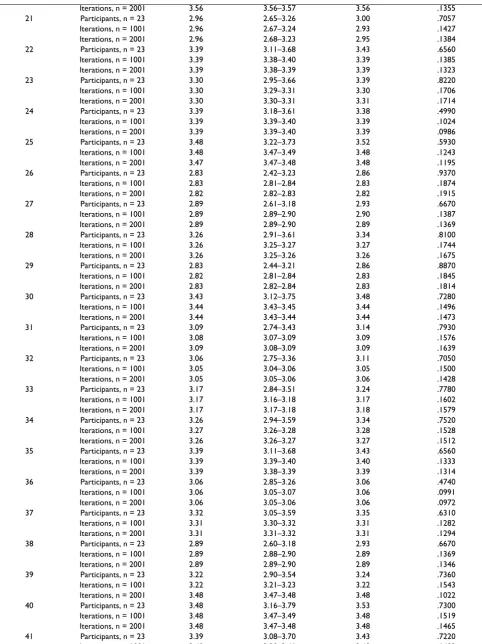
Table 1: Comparison between statistical data for the original and augmented samples
Survey Item Data Entries Mean 95% CI 5% Trim. Mean SD
Iterations, n = 2001 3.56 3.56–3.57 3.56 .1355 21 Participants, n = 23 2.96 2.65–3.26 3.00 .7057 Iterations, n = 1001 2.96 2.67–3.24 2.93 .1427 Iterations, n = 2001 2.96 2.68–3.23 2.95 .1384 22 Participants, n = 23 3.39 3.11–3.68 3.43 .6560 Iterations, n = 1001 3.39 3.38–3.40 3.39 .1385 Iterations, n = 2001 3.39 3.38–3.39 3.39 .1323 23 Participants, n = 23 3.30 2.95–3.66 3.39 .8220 Iterations, n = 1001 3.30 3.29–3.31 3.30 .1706 Iterations, n = 2001 3.30 3.30–3.31 3.31 .1714 24 Participants, n = 23 3.39 3.18–3.61 3.38 .4990 Iterations, n = 1001 3.39 3.39–3.40 3.39 .1024 Iterations, n = 2001 3.39 3.39–3.40 3.39 .0986 25 Participants, n = 23 3.48 3.22–3.73 3.52 .5930 Iterations, n = 1001 3.48 3.47–3.49 3.48 .1243 Iterations, n = 2001 3.47 3.47–3.48 3.48 .1195 26 Participants, n = 23 2.83 2.42–3.23 2.86 .9370 Iterations, n = 1001 2.83 2.81–2.84 2.83 .1874 Iterations, n = 2001 2.82 2.82–2.83 2.82 .1915 27 Participants, n = 23 2.89 2.61–3.18 2.93 .6670 Iterations, n = 1001 2.89 2.89–2.90 2.90 .1387 Iterations, n = 2001 2.89 2.89–2.90 2.89 .1369 28 Participants, n = 23 3.26 2.91–3.61 3.34 .8100 Iterations, n = 1001 3.26 3.25–3.27 3.27 .1744 Iterations, n = 2001 3.26 3.25–3.26 3.26 .1675 29 Participants, n = 23 2.83 2.44–3.21 2.86 .8870 Iterations, n = 1001 2.82 2.81–2.84 2.83 .1845 Iterations, n = 2001 2.83 2.82–2.84 2.83 .1814 30 Participants, n = 23 3.43 3.12–3.75 3.48 .7280 Iterations, n = 1001 3.44 3.43–3.45 3.44 .1496 Iterations, n = 2001 3.44 3.43–3.44 3.44 .1473 31 Participants, n = 23 3.09 2.74–3.43 3.14 .7930 Iterations, n = 1001 3.08 3.07–3.09 3.09 .1576 Iterations, n = 2001 3.09 3.08–3.09 3.09 .1639 32 Participants, n = 23 3.06 2.75–3.36 3.11 .7050 Iterations, n = 1001 3.05 3.04–3.06 3.05 .1500 Iterations, n = 2001 3.05 3.05–3.06 3.06 .1428 33 Participants, n = 23 3.17 2.84–3.51 3.24 .7780 Iterations, n = 1001 3.17 3.16–3.18 3.17 .1602 Iterations, n = 2001 3.17 3.17–3.18 3.18 .1579 34 Participants, n = 23 3.26 2.94–3.59 3.34 .7520 Iterations, n = 1001 3.27 3.26–3.28 3.28 .1528 Iterations, n = 2001 3.26 3.26–3.27 3.27 .1512 35 Participants, n = 23 3.39 3.11–3.68 3.43 .6560 Iterations, n = 1001 3.39 3.39–3.40 3.40 .1333 Iterations, n = 2001 3.39 3.38–3.39 3.39 .1314 36 Participants, n = 23 3.06 2.85–3.26 3.06 .4740 Iterations, n = 1001 3.06 3.05–3.07 3.06 .0991 Iterations, n = 2001 3.06 3.05–3.06 3.06 .0972 37 Participants, n = 23 3.32 3.05–3.59 3.35 .6310 Iterations, n = 1001 3.31 3.30–3.32 3.31 .1282 Iterations, n = 2001 3.31 3.31–3.32 3.31 .1294 38 Participants, n = 23 2.89 2.60–3.18 2.93 .6670 Iterations, n = 1001 2.89 2.88–2.90 2.89 .1369 Iterations, n = 2001 2.89 2.89–2.90 2.89 .1346 39 Participants, n = 23 3.22 2.90–3.54 3.24 .7360 Iterations, n = 1001 3.22 3.21–3.23 3.22 .1543 Iterations, n = 2001 3.48 3.47–3.48 3.48 .1022 40 Participants, n = 23 3.48 3.16–3.79 3.53 .7300 Iterations, n = 1001 3.48 3.47–3.49 3.48 .1519 Iterations, n = 2001 3.48 3.47–3.48 3.48 .1465 41 Participants, n = 23 3.39 3.08–3.70 3.43 .7220 Iterations, n = 1001 3.40 3.39–3.41 3.40 .1492
Iterations, n = 2001 3.40 3.39–3.40 3.40 .1450 42 Participants, n = 23 3.65 3.44–3.86 3.67 .4870 Iterations, n = 1001 3.65 3.64–3.66 3.65 .1041 Iterations, n = 2001 3.65 3.65–3.66 3.65 .1003 43 Participants, n = 23 3.61 3.32–3.89 3.68 .6560 Iterations, n = 1001 3.61 3.60–3.62 3.61 .1338 Iterations, n = 2001 3.61 3.60–3.61 3.61 .1362 44 Participants, n = 23 3.61 3.39–3.82 3.62 .4990 Iterations, n = 1001 3.61 3.60–3.62 3.61 .1020 Iterations, n = 2001 3.61 3.60–3.61 3.61 .1036 45 Participants, n = 23 3.30 3.00–3.61 3.34 .7030 Iterations, n = 1001 3.31 3.30–3.32 3.31 .1461 Iterations, n = 2001 3.30 3.30–3.31 3.30 .1424 46 Participants, n = 23 3.43 3.07–3.80 3.53 .8430 Iterations, n = 1001 3.43 3.42–3.45 3.44 .1814 Iterations, n = 2001 3.44 3.43–3.44 3.44 .1735 47 Participants, n = 23 3.39 3.11–3.68 3.43 .6560 Iterations, n = 1001 3.39 3.38–3.40 3.39 .1306 Iterations, n = 2001 3.39 3.38–3.40 3.39 .1368 48 Participants, n = 23 3.48 3.26–3.70 3.48 .5110 Iterations, n = 1001 3.48 3.47–3.48 3.48 .1037 Iterations, n = 2001 3.48 3.47–3.48 3.48 .1022 49 Participants, n = 23 3.61 3.39–3.82 3.62 .4990 Iterations, n = 1001 3.61 3.60–3.62 3.61 .1018 Iterations, n = 2001 3.60 3.60–3.61 3.60 .1003 50 Participants, n = 23 3.26 2.94–3.59 3.29 .7520 Iterations, n = 1001 3.25 3.25–3.26 3.26 .1490 Iterations, n = 2001 3.27 3.26–3.27 3.27 .1527 51 Participants, n = 23 3.30 3.03–3.58 3.34 .6350 Iterations, n = 1001 3.31 3.30–3.31 3.31 .1313 Iterations, n = 2001 3.30 3.30–3.31 3.30 .1316 52 Participants, n = 23 3.39 3.11–3.68 3.43 .6560 Iterations, n = 1001 3.39 3.38–3.40 3.39 .1336 Iterations, n = 2001 3.39 3.39–3.40 3.39 .1325 53 Participants, n = 23 3.18 2.85–3.50 3.25 .7530 Iterations, n = 1001 3.18 3.17–3.19 3.18 .1542 Iterations, n = 2001 3.18 3.17–3.19 3.18 .1543 54 Participants, n = 23 3.18 2.85–3.50 3.25 .7530 Iterations, n = 1001 3.17 3.16–3.18 3.17 .1556 Iterations, n = 2001 3.18 3.18–3.19 3.18 .1550
/BOOTSTRAP 1000 [2000]
/CRITERIA STEPLIMIT 2 ISTEP 1E+20.
More specifically, the regression routine and the subrou-tine of nonlinear regression were employed. Once these routines were selected, the options feature of nonlinear regression was invoked. The bootstrap option was selected and the "paste" option was used to indicate the number of bootstrap samples to be derived.
Results
The patient safety tool created by the Delphi panel was based on the seven Malcolm Baldrige categories and included 54 survey items (38 critical processes ranked directly, and one indirectly defined by 16 performance measures). For each survey item, the following inferential statistics were derived:
- Mean (average) – the measure that represents the arith-metic average for the group of experts
- 95% confidence interval – representing the upper and lower limits between which 95% of the sample expert scores will be expected to fall
- 5% trimmed mean – calculation of experts' average score with exclusion of the highest and lowest 5% of the scores; the difference between the mean and the trimmed mean shows whether there are many outliers in the rankings among the experts in the sample (real or computer gener-ated)
- Standard deviation – describes the variability of the score distribution.
These descriptive statistics were calculated for each of the following three samples:
(a) original expert responses of 23 experts in healthcare quality and patient safety (n = 23)
(b) augmented-computer-generated sample of 1000 itera-tions of resampling and the original sample (n = 1001)
(c) augmented-computer-generated sample of 2000 itera-tions of resampling and the original sample (n = 2001).
The results for each of the calculated statistics (for each of the three groups of data) are presented in Table 1.
In general, the means of the expert scores per critical proc-ess remained stable across the three data sets (one original and two augmented); the confidence intervals of the three
samples were overlapping for each of the critical processes with the confidence intervals in bigger samples being more compact; the trimmed mean exhibited stability, and the standard deviation decreased with increasing number of experts. When the standard deviation decreases, this indicates that the typical deviation of expert opinions has not increased relative to the increased number of responses. Therefore, we can conclude that the original expert sample yielded results concerning the importance of the critical processes in the patient safety tool that were comparable to the results of the expanded samples.
The Delphi survey results showed stability after bootstrap resampling data expansion. Therefore, the stability of the results of the bootstrap data expansion validated the patient safety strategic planning tool developed by the Delphi study on patient safety [29].
Discussion
Application of Delphi studies in healthcare
In the field of healthcare, the Delphi method has been used in planning for the future and formulating policies and programs in biomedical research, behavioral research, mental health, reproductive health, pharmacol-ogy, services for the elderly, family planning services, acci-dents and injuries, development of core competencies for advanced nursing practitioners and development of clini-cal care protocols [27,36-41]. The Delphi method, as a useful way of identifying and measuring uncertainty, has been widely utilized in medical and health services research to explore issues in health services organizations, to support design of educational programs, to define pro-fessionals' roles, to define effects of medical staffing levels, to develop criteria for appropriateness of clinical treat-ment, and to make long-term projections of need for patient care [42]. The Delphi methodology also has been used to modify the National Board of Medical Examiners (NBME) Medicine Subject Exam (Shelf) in order to align the national exams with the internal medicine clerkship curriculum developed by the Society of General Internal Medicine (SGIM) and the Clerkship Directors in Internal Medicine (CDIM) [43]. Consensus building through Del-phi survey technique can contribute significantly to broadening knowledge and effective decision making in health and social care [22]. Furthermore, the Delphi approach can be used as a senior management education tool, environmental planning tool, and for comparison with similar healthcare institutions. Putting together the structure of a model, developmental planning and explo-ration of policy options are among the explicit application areas identified since the early 1970's [26]. Additionally, the Delphi method has been used to delineate the barriers to performance in health services and identify three types of barriers to optimal healthcare performance: solution development barriers, problem selection barriers, and
¾
evaluation barriers. It has been argued that the forecasting accuracy of Delphi studies is strongly reliable; for exam-ple, a Delphi study with medical doctors evaluating the forecasting application of the method, revealed that in 75% of the cases the estimated values proved to be less than 10% different from the observed [26].
Challenges in selection of a Delphi panel
The questions arising around the formation of a Delphi panel are typical for selection and formation of any group – committee, task force, panel, or study group. Thus, while panel member selection is a problem that should be addressed, it is by no means unique to Delphi studies. It has been argued that the amount of bias expressed by study participants is offset by the fact that in answering the questions each participant exhibits a standard deviation which is comparable to, or greater than participant's indi-vidual mean (i.e., an optimistic panellist is pessimistic in some of his/her responses, and vice versa) [26].
The selection of criteria that would qualify an individual to participate on the Delphi panel depends on the context, scope and aims of the particular study. Some of the gen-eral criteria include:
• Knowledge and practical engagement with the issue under investigation
• Capacity and willingness to contribute to the explora-tion of a particular problem
• Assurance that sufficient time will be dedicated to the Delphi exercise,
• Good written communication skills
• Experts' skills and knowledge need not necessarily be accompanied by standard academic qualifications or degrees [44].
Delphi participants are purposefully selected to apply their knowledge and experience to a certain issue based on a criteria set. For example, the experts for a national two-round Delphi study on the effectiveness and risks of coro-nary angiography were chosen on the basis of their clini-cal expertise, community influence, and diversity of geographic location [45]. Since the Delphi method relies on repeated questionnaires to the same initially selected sample of participants, the method requires a continued commitment from the panellists and is heavily dependant on the time and continued involvement on the part of the study participants. The widespread employment of elec-tronic communications calls for consideration of the com-puter literacy and skills of the target sample before utilizing electronic means of communication [22]. Since
the sample size for Delphi panels has not been estab-lished, it is important to know whether the selected Del-phi panel for a particular study would yield stable results.
Utilization of bootstrap in healthcare research
During the last decade, the use of bootstrap data expan-sion in healthcare research became more prominent. Some examples of utilization of bootstrap in contempo-rary healthcare research include: constructing confidence intervals for treatment differences, analysing cost-effec-tiveness in randomized controlled trials, assessing pro-vider performance for propro-viders with small numbers of observed events, and studying the genetic linkages in viral genome sequences [46-51]. There is a growing validation of the value of bootstrap in medical statistics and an increasing recognition that the bootstrap technique can supplement and extend the conventional statistical think-ing. Bootstrap can be used for calculation of confidence intervals, hypothesis testing, linear regression and correla-tion in variable prediccorrela-tion, and non-linear regression in immunoassay techniques [33]. The bootstrap method, with its computational simplicity and performance simi-lar to the fully Bayesian approaches, was found to be a very useful addition to healthcare researchers' statistical toolkit [52].
Conclusion
Although experiments carried out in the 1950's and 1960's suggested that group error is reduced with increased group size, the sample size for constructing a Delphi panel is not a statistically-bound decision and good results can be obtained by a comparatively small group of homogenous experts [44]. However, the size of a "small" Delphi sample has not been unequivocally estab-lished.
The findings of this study are important because:
1. It was found that reliable outcomes could be obtained with a Delphi panel consisting of a relatively small number of Delphi experts (23) selected via strict inclusion criteria. This finding is particularly important for conduct-ing Delphi surveys in knowledge or practice fields where the population of experts (the total number of qualifying knowledgeable individuals) is limited. Experts who have similar training and general understanding in the field of interest allow for effective and reliable utilization of a small sample from a limited number of experts in the field of study.
knowl-edge, would also yield reliable results. Given the fact that the number of specialized experts in a particular field may be limited, this study validated the stability of response characteristics of a small expert sample from limited num-bers of experts. Therefore, consistency of expert training may allow utilization of small numbers of experts in fields where many experts may be available but participation of a limited number of experts on the Delphi panel may be more practical.
Competing interests
The authors declare that they have no competing interests.
Authors' contributions
RBA, HT and BRC developed the project idea and the study design. RBA collected the data. RBA and HT con-ducted the study. HT provided statistical advice and BRC provided conceptual advice. All authors contributed to the analysis of data. The manuscript was initially drafted by RBA. HT and BRC critically reviewed and edited the manuscript. All authors contributed to and approved the final version submitted for publication.
Acknowledgements
The authors would like to thank the participants in the Delphi study for their commitment and dedication. The authors would also like to express their gratitude to Ms. Xue Hu (Texas A&M University) for her skills and precision in handling survey data in support of this paper. Additionally, the authors would like to recognize one individual, who chose to remain anon-ymous, for her support in running the SPSS bootstrap model.
References
1. Williams PL, Webb C: The Delphi technique: a methodological discussion. J Adv Nurs 1994, 19:180-6.
2. Fischer RG: The Delphi method: a description, review and criticism. J Acad Librariansh 1978, 4(2):64-70.
3. Wilhelm WJ: Alchemy of the Oracle: the Delphi technique.
The Delta Pi Epsilon Journal 2001, 43(1):6-26.
4. Reid NG: The Delphi technique: its contribution to the evalu-ation of professional practice. In Professional competence and qual-ity assurance in the caring professions Edited by: Ellis R. New York, NY: Chapman and Hall; 1988.
5. Malone DC, Abarca J, Hansten PD, Grizzle AJ, Armstrong EP, Van Bergen RC, Duncan-Edgar BS, Solomon SL, Lipton RB: Identifica-tion of serious drug-drug interacIdentifica-tions: results of the partner-ship to prevent drug-drug interactions. Am J Geriatr Pharmacother 2005, 3(2):65-76.
6. Strasser S, London L, Kortenbout E: Developing a competence framework and evaluation tool for primary care nurses in South Africa. Educ Health 2005, 18(2):133-144.
7. De Vet E, Brug J, De Nooijer J, Dijkstra A, De Vries NK: Determi-nants of forward stage transitions: a Delphi study. Health Educ Res 2005, 20(2):195-205.
8. Howell S, Kemp C: Defining early number sense: a participa-tory Australian study. J Educ Psychol 2005, 25(5):555-571. 9. Nekolaichuk CL, Fainsinger RL, Lawlor PG: A validation study of a
pain classification system for advanced cancer patients using content experts: the Edmonton Classification System for cancer pain. Palliat Med 2005, 19:466-476.
10. Armstrong D, Marshall JK, Chiba N, Enns R, Fallone CA, Fass R, Hollingworth R, Hunt RH, Kahrilas PJ, Mayrand S, Moayyedi P, Pater-son WG, Sadowski D, van Zanten SJ: Canadian consensus confer-ence on the management of gastroesophageal reflux disease in adults – update 2004. Can J Gastroenterol 2005, 19(1):15-35.
11. Stolee P, Esbaugh J, Aylward S, Cathers T, Harvey DP, Hillier LM, Keat N, Feightner JW: Factors associated with the effectiveness of continuing education in long-term care. Gerontologist 2005,
45(3):399-405.
12. Al-Marzouki S, Roberts I, Marshall T, Evans S: The effect of scien-tific misconduct on the results of clinical trials: a Delphi sur-vey. Contemp Clin Trials 2005, 26(3):331-337.
13. McKenna H, Keeney S, Bradley M: Nurse leadership within pri-mary care: The perceptions of community nurses, GPs, pol-icy makers and members of the public. J Nurs Manag 2004,
12:69-76.
14. Mcilfatrick SJ, Keeney S: Identifying cancer nursing research pri-orities using the Delphi technique. J Adv Nurs 2003,
42(6):629-636.
15. Coico R, Kachur E, Lima V, Lipper S: Guidelines for preklership bioterrorism curricula. Acad Med 2004, 79(4):366-375. 16. Telford R, Boote JD, Cooper CL: What does it mean to involve
consumers successfully in NHS research? A consensus study.
Health Expect 2004, 7(3):209-220.
17. Meadows AB, Maine LL, Keyes EK, Pearson K, Finstuen K: Phar-macy executive leadership issues and associated skills, knowledge and abilities. J Am Pharm Assoc 2005, 45(1):55-62. 18. Kelly KP, Porock D: A survey of paediatric oncology nurses'
perceptions of parent educational needs. J Pediatr Oncol Nurs
2005, 22(1):58-66.
19. Cypert FR, Gant WL: The Delphi technique: A case study. Phi Delta Kappan 1971:272-273.
20. Barnette JJ, Danielson LC, Algozzine RF: Delphi methodology: an empirical investigation. Educational Research Quarterly 1978,
3(1):67-73.
21. Synnott G, McKie D: International issues in PR: Researching research and prioritising priorities. Journal of Public Relations Research 1997, 9(4):259-282.
22. Hasson F, Keeney S, McKenna H: Research guidelines for the Delphi survey technique. J Adv Nurs 2000, 32(4):1008-1015. 23. Robinson AR, Hohmann KB, Rifkin JI, Topp D, Gilroy CM, Pickard JR,
Anderson RJ: Physician and public opinions on quality of health care and the problem of medical errors. Arch Intern Med 2002,
162(19):2186-2190.
24. Sexton JB, Helmreih RL, Rowan K, Vella K, Boyden J, Neilands TB, Roberts PR, Thomas EJ: The safety attitude questionnaire: a psychometric validation. Technical report The University of Texas Center of Excel-lence for Patient Safety Research and Practice, Austin, Texas; 2003. AHRQ Grants 1PO1HS1154401 and U18HS1116401
25. Baldrige National Quality Program: 2005 Healthcare criteria for per-formance excellence 2005 [http://www.quality.nist.gov/ HealthCare_Criteria.htm]. Gaithersburg, MD: United States Depart-ment of Commerce, Technology Administration, National Institute of Standards and Technology
26. Linstone HA, Turoff M: The Delphi Method: techniques and applications
Reading, MA: Addison-Wesley Publishing Company; 1975. 27. Adler M, Ziglio E: Gazing into the Oracle: the Delphi method and its
appli-cation to social policy and public health Bristol, PA: Jessica Kingsley Pub-lishers, Ltd; 1996.
28. Rotondi A, Gustafson D: Theoretical, methodological and prac-tical issues arising out of the Delphi method. In Gazing into the Oracle: the Delphi method and its application to social policy and public health Edited by: Adler M, Ziglio E. Bristol, PA: Jessica Kingsley Pub-lishers, Ltd; 1996:34-55.
29. Akins RB: A Process-centered tool for evaluating patient safety performance and guiding strategic improvement.
Advances in patient safety: from research to implementation 2005,
4:109-125 [http://www.ahrq.gov/downloads/pub/advances/vol4/ Akins.pdf]. Rockville, MD: Agency for Healthcare Research and Qual-ity
30. Efron B, Tibshirani R: An introduction to the bootstrap. In Mon-ographs on statistics and applied probability, No 57 London: Chapman and Hall; 1993.
31. Edgington ES: Randomization tests New York: M. Dekker; 1995. 32. Good P: Permutation tests: a practical guide for resampling methods for
testing hypotheses New York: Springer-Verlag; 2000.
33. Henderson AR: The bootstrap: a technique for data-driven statistics. Using computer intensive analyses to explore experimental data. Clin Chim Acta 2005, 359:1-26.
Publish with BioMed Central and every scientist can read your work free of charge "BioMed Central will be the most significant development for disseminating the results of biomedical researc h in our lifetime."
Sir Paul Nurse, Cancer Research UK
Your research papers will be:
available free of charge to the entire biomedical community
peer reviewed and published immediately upon acceptance
cited in PubMed and archived on PubMed Central
yours — you keep the copyright
Submit your manuscript here:
http://www.biomedcentral.com/info/publishing_adv.asp
BioMedcentral
technique. Disease Management & Health Outcomes 2005,
13(3):159-167.
35. Lloyd CJ: On comparing the accuracy of competing tests of the same hypotheses of simulation data. J Stat Plan Inference
2005, 128:497-508.
36. Calzone KA, Jenkins J, Masny A: Core competencies in cancer genetics for advanced practice oncology nurses. Oncol Nurs Forum 2002, 29(9):1327-1333.
37. Wang CC, Wang Y, Zhang K, Fang J, Liu W, Luo S, Tang S, Wang S, Li VC: Reproductive health indicators for China rural areas.
Soc Sci Med 2003, 57:217-225.
38. Catlin AJ, Carter BS: Creation of a neonatal end-of-life pallia-tive care protocol. J Perinat Neonal Nurs 2002, 21(4):37-49. 39. Sharp D, Liebenau A, Stocks N, Bennewith O, Evans M, Jones WB,
Peters T, Goldberg D, Gunnell D: Locally developed guidelines for the aftercare of deliberate self-harm patients in general practice. Primary Health Care Research and Development 2003,
4:21-28.
40. Escobar A, Qintana JM, Arostegui I, Azkarate J, Guenaga JI, Arenaza JC, Garai I: Development of explicit criteria for total knee replacement. Int J Technol Assess Health Care 2003, 19(1):57-70. 41. McBride AJ, Pates R, Ramadan R, McGowan C: Delphi survey of
experts' opinions on strategies used by community pharma-cists to reduce over-the-counter drug misuse. Addiction 2003,
98:487-497.
42. Jones J, Hunter D: Consensus methods for medical and health services research. Br Med J 1995, 311(7001):376-380.
43. Elnicki DM, Lescisin DA, Case S: Improving the National Board of Medical Examiners Internal Medicine Subject Exam for use in clerkship evaluation. J Gen Intern Med 2002, 17:435-440. 44. Ziglio E: The Delphi method and its contribution to decision
making. In Gazing into the Oracle: the Delphi method and its application to social policy and public health Edited by: Adler M, Ziglio E. Bristol, PA: Jessica Kingsley Publishers, Ltd; 1996:3-33.
45. Bernstein SJ, Laouri M, Hilborne LH, Leape LL, Kahan JP, Park RE, Kamberg CJ, Brook RH: Coronary Angiography: a literature review and ratings of appropriateness and necessity The New York City Rand Insti-tute, JRA-03. Santa Monica, CA: The Rand Corporation; 1992. 46. Maetzel A, Strand V, Tugwell P, Wells G, Bombardier C: Economic
comparison of Leflunomide and Methotrexate in patients with rheumatoid arthritis. Pharmacoeconomics 2002,
20(1):61-70.
47. Manktelow B, Abrams K, Draper E: A comparison of six methods of estimating confidence intervals for an indirectly standard-ized outcome ratio. J Epidemiol Community Health :A36. 48. Peris F, Martinez E, Badia X, Brosa M: Iatrogenic cost factors
incorporating mild and moderate adverse events in the eco-nomic comparison of Aceclofenac and other NSAIDs. Phar-macoeconomics 2001, 19(7):779-790.
49. Neymark N, Adriaenssen I, Gorlia T, Caleo S, Bolla M, Brochon D:
Cost-effectiveness of the addition of early hormonal therapy in locally advanced prostate cancer: results decisively deter-mined by the cut-off time point chosen for the analysis. Eur J Cancer 2001, 37:1768-1774.
50. Chen M, Kianifard F: A nonparametric procedure associated with a clinically meaningful efficacy measure. Biostatistics 2000,
1:293-298.
51. Bredell H, Crookes RL, Heynes du PA, Schoub BD, Morris L: Molec-ular investigation of two possible cases of accidental HIV-1 transmission in South Africa. AIDS Res Hum Retroviruses 2003,
19(7):613-617.
52. MacNab YC, Farrel PJ, Gustafson P, Wen S: Estimation in Bayesian disease mapping. Biometrics 2004, 60:865-873.
Pre-publication history
The pre-publication history for this paper can be accessed here: