What is
ephemera: theory & politics in organization
?
ephemera is an independent journal, founded in 2001. ephemera provides its content free of charge, and charges its readers only with free thought.
theory
ephemera encourages contributions that explicitly engage with theoretical and conceptual understandings of organizational issues, organizational processes and organizational life. This does not preclude empirical studies or commentaries on contemporary issues, but such contributions consider how theory and practice intersect in these cases. We especially publish articles that apply or develop theoretical insights that are not part of the established canon of organization studies. ephemera counters the current hegemonization of social theory and operates at the borders of organization studies in that it continuously seeks to question what organization studies is and what it can become.
politics
ephemera encourages the amplification of the political problematics of organization within academic debate, which today is being actively de-politized by the current organization of thought within and without universities and business schools. We welcome papers that engage the political in a variety of ways as required by the organizational forms being interrogated in a given instance.
organization
ephemera 18(2), May 2018
Managing the human
Frans Bevort, Per Darmer and Sara Louise
Muhr
www.mayflybooks.org
Published by the ephemera editorial collective: Bernadette Loacker, Birke Otto, Christian Garmann Johnsen, Christos Giotitsas, Ekaterina Chertkovskaya, Helen Delaney, Justine Grønbæk Pors, Kenneth Weir, Konstantin Stoborod, Lena Olaison, Márton Rácz, Nick Butler, Ozan Nadir Alakavuklar, Randi Heinrichs, Rowland Curtis, Karolina Mikołajewska-Zając, Lisa Conrad, Emil Husted.
First published for free online at www.ephemerajournal.org and in print in association with MayFlyBooks (www.mayflybooks.org) in 2017.
ISSN (Online) 1473-2866 ISSN (Print) 2052-1499 ISBN (Print) 978-1-906948-41-2
Table of Contents
Editorial
'Managing the human' in 21st century organizations 209-220 Frans Bevort, Per Darmer and Sara Louise Muhr
Articles
Beyond happy families and authenticity: Back to work organization and mundaneness in the critique of ‘authenticating’ management
programs 221-247
Mette Mogensen
Closing the HRM scholar-practitioner gap: Turning to the aesthetic
experience in human resource selection 249-276
Iben Sandal Stjerne
Revealing the dominant anthropological consideration of humankind in the teaching of Human Resource Management: A critique of individual
performance evaluation 277-301
Laurent Taskin and Juvénal Ndayambaje
Engaged in teaching HRM: The quest for critical and reflective
practice 303-329
Tiina Taipale and Sara Lindström
Notes
The resilience of habit 331-339
Michael Pedersen
Undisclosed off-list reference checks: Violating the human to manage
the resource 341-361
Recognizing the human: A psychoanalytic engagement with HRM and
its discontents 363-370
Nathan Gerard
Note on a work life (qualifying as a new sport for the Olympic Games): When performance management and contemporary work life are in
perfect harmony 371-381
Line Kirkegaard
Reviews
Time to party? 383-395
Emil Husted
Do critical management scholars take responsibility for the
performative consequences of their concepts and methods? 397-402 Ester Barinaga
Immigrants, workers unions and gay/lesbian scenes: The not entire
Sexual Revolution 403-410
Stefan F. Ossmann
Publish and perish 411-416
ISSN 1473-2866 (Online) ISSN 2052-1499 (Print) www.ephemerajournal.org volume 18(2): 209-220
'Managing the human' in 21st century
organizations: developing a critical and
performative research agenda for HRM-studies
Frans Bevort, Per Darmer and Sara Louise Muhr
Introduction
In Alvin Gouldner’s Patterns of Industrial Bureaucracy (Gouldner, 1954) the interaction between workers and management in a gypsum mine is studied following what he saw as an attempt to introduce an efficiency and accountability oriented bureaucratic management. The reason why this classic study is relevant to frame a 21st century special issue on managing the human is the lucid way that Gouldner shows, inspired by Weber and Marx, how the relations between workers and managers develop in unpredictable ways. The workers on the surface react in one way, and the workers in the pit in another, and eventually the new management has to give in, facing the enduring resistance of workers, after extended periods of faltering productivity.
Hallett and Ventresca (2006) point out the subtlety and complexity of Gouldner’s analysis: how the ideal type of bureaucratic management is modified and the authority of management subverted by the interaction among the actors in the mine (Hallett and Ventresca, 2006: 220). Gouldner identifies three different ways that bureaucracy appears in the mine:
The purpose of reminding us of the Gouldner study is that it shows how complex the processes of ‘managing the human’ are, how local and institutional embeddedness, interests and social interaction modify structural influences coming from other places, as with the bureaucratization studied by Gouldner (Hallett and Ventresca, 2006). What Gouldner shows us and what we sometimes seem to forget is that when workers and managers interact in local contexts, we cannot take the outcome for granted.
One way to interpret the Gouldner study is to see how the ‘performativity’ of bureaucracy is contingent upon the social relations and context it is existing within. Performativity has famously been defined by Butler (1993: 2) as ‘… understood not as a singular or deliberate “act”, but, rather, as the reiterative and citational practice by which discourse produces the effects that it names’. For Butler (1993), therefore, performativity offers a framework through which one may explore and from which to challenge current conceptualizations of how humans are managed (or the attempts made to do so) in organizations, while remaining aware of the constraints and boundaries, which one’s own critique will necessarily incur. In some ways ‘Human resource management’ (HRM) constitutes itself (illocutionarily) but in most cases HRM as an actual practice is dependent on the collaboration of the involved actors (perlocutionarily) (Butler, 2010).
The main point of this special issue is to specifically analyze the performativity of HRM and investigate how it is possible to create a critical and engaged research agenda for studying the practices of managing the human. HRM has always been controversial as an object of scholarly research within the more critically inclined academic community (Legge, 2005; Storey, 1995). In fact, HRM has been seen as even more problematic as a research object than other management research programs and phenomena. We suggest that a very strong reason for this has been the ‘positive’ and management-oriented focus, which has dominated what we would call mainstream HRM thinking (Beer, 1984; Huselid, 1995; Ulrich, 1988; Walton, 1985). Mainstream HRM research has either been focused on the way HRM directly contributes to company profit and short-term organizational goal achievement (so-called Hard HRM), or on how HRM could contribute to creating long-term collaborative regimes (so-called Soft HRM) that develop the quality of working life and the long-term viability of the organization (Boxall and Purcell, 2011). In other words, this is a managerial perspective, which leaves out other stakeholder interests than the management or owners. As Karen Legge once quipped: ‘who is best practice (in HRM) actually best for?’ (Boxall and Purcell, 2011: 63).
HRM-related debates have, for instance, been covered by ephemera special issues in recent years covering topics like Self-management (Lopdrup-Hjorth et al., 2011); Employability (Chertkovskaya et al., 2013); Free Work (Beverungen et al., 2013); and Consumption and Work (Chertkovskaya et al., 2016). True to the spirit of ephemera the chosen topics have focused on problematizing how management in organizations or government in society works in ways that are essentially oppressive and exploitative of the less powerful stakeholders in society: workers, unemployed, minority groups, etc. Self-management has for example been analyzed as a process of disciplining the self in the interest of organizations (Lopdrup-Hjorth et al., 2011). The dream of freedom from work has been seen as an instance of oppression in itself (Chertkovskaya et al., 2013) and Employability as a way of transferring the burden of the contingencies and precariousness of modern work from managements or politicians to employees (Beverungen et al., 2013), and finally work has become fused with consumption in the way consumers are enrolled as co-workers in the production and the ways workers use work (compulsively) as an object of consumption in the need for identity building (Chertkovskaya et al., 2016). All these voices, which can be regarded as belonging under the broad umbrella of CMS in some way or another, address ‘the management of the human’ in various ways. In this special issue, we will explore the performativity of HRM (‘what does HRM actually produce’) in organizations, and particularly inspired by the debate of critical performativity (Cabantous et al., 2016; Christensen, 2018; Just et al., 2017; Parker and Parker, 2017; Spicer et al., 2009; Spicer et al., 2016), argue for a critical and engaged agenda on managing the human and HRM.
‘performative critique’, or rather ‘critical performativity’ (Spicer et al., 2009) point out, an ‘anti-performative’ argument risks ending up in a blind alley project. Such a position leaves us with no hope of finding cracks of creative resistance in the industrial concrete or even more importantly, no hope of contributing to making a better world of work in which people can actually live better lives, exploring and developing personal and professional opportunities. Spicer et al. (2009) define critical performativity as the ‘active and subversive intervention into managerial discourses and practices’ (538). And they further elaborate that:
CMS should seek to become more performative. This would require attempts to question, challenge and radically re-imagine management through practical and direct interventions into particular debates about management. Performativity is not bad in itself. The problem is to carefully decide what kind of performativity we want. (Ibid.: 554).
Critical performativity theory in this way argues for the transformative potential of CMS (Alvesson and Spicer, 2012; Spicer et al., 2009).
Reactions to this proposition have, however, been varied. Some argue that critical performativity theory gets the definition of performativity wrong, which has started a long debate about its basic definitions (Cabantous et al., 2016). Some even go as far as to claim that critical performativity is ‘the happy end of Critical Management Studies’ (Spoelstra and Svensson, 2016: 69). Importantly, however, the critique has cemented that a subject cannot freely ‘activate the performativity of language’, as Wickert and Schaefer (2015: 121) claimed, but it is constituted in and through this very performativity or as Butler (1993: 12) mused ‘subjected and subjectified within discourse’. CMS might then be in what Just et al. (2017: 205) call a ‘performativity crisis with notions of alterity and effectivity at the center of the debate’. Critique, therefore, as Just et al. (2017: 206) continue, ‘rests on the simultaneously enabling and constraining basic condition of “repetition with a difference”; perpetual articulations and enactments that test, bend, and expand the boundaries of the intelligible whilst inevitably producing and reproducing these very boundaries’.
With respect for the at times heated debate about critical performativity, we would argue that it should be possible for HRM scholars to stay critical and make an impact if we think of performativity as incremental and reflexive, undoing norms from within, rather than repeating a given set of (possibly new) norms. As Riach et al. (2016: 7) argue:
In a recent interview for a research project by one of the authors, a senior British HRM scholar, with a HR practitioner background, expressed a kindred sentiment:
I think that one of the things that distinguishes human resource management from other kinds of management – financial management, strategic management, marketing management and so on – is that we actually try to serve or should be trying to serve a number of different stakeholders including lower level managers, employees, the peripheral workers, the temporary part-time workers, people who’re trying to get into organisations and are currently unemployed, the families of these people and the communities that they work in. (CB in Pernkopf et al., forthcoming)
Besides this ‘idealistic’ argument, it is also a problem that a polarized criticism, which looks for managerial exploitation as the motive (and consequence) of all organizational action, tends to overemphasize the rationality and agency of management and organizational behavior. After Gouldner, 30-50 years of organizational studies show that even if management have (which they probably often have) starkly exploitative intentions, their ability to carry these intentions out in practice is at best limited. Famously, Selznick (1957) showed that organizations swiftly move from ‘the initial technical objective’ to become ‘infused with value’ as institutions integrating much more complex aims and interests, which often run counter to the original goals. The significance here is that a point of view that just refers to the intentions of management as reality may miss the potential of emancipation in the fact that managerialism is not as totalitarian when carried out in practice as critical writers sometimes seem to believe, if only because of the boundedness of rationality. Taking a point from one of the earlier ephemera debates above, ‘employability’ can be seen as a way to leave responsibility of employment to the individual worker instead of ‘the system’. It could alternatively, as is often the case in a Danish social setting, be seen as a way for workers to put demands on employers, as well as the state, for meaningful work, proper training and education. That an employer can offer to maintain the ‘employability’ of the staff becomes a way of attracting and retaining employees, etc. Thus, we don’t see HRM as solely a tool for management control and exploitation, but a complex set of activities, which are always contested in the struggles, negotiations and sensemaking that go on between stakeholders within (and outside) organizations. Another example can be seen in Moon (this issue), who analyzes recruitment processes at universities, uncovering unethical aspects of this in the use of undisclosed, unlisted reference checks when hiring academics. The issue here is that this may be seen as yet another instance of managerialist pathology influencing university management, but less comfortably, it could also be seen as an unhealthy aspect of the collegial culture of academia.
management ideology and practice, we now need to expand our view and in some ways regain a more open-minded research focus, which is sensitive to complex empirical realities as well as alternative theoretical explanations. Mogensen (this issue) for example takes issue with the claustrophobia of the more recent debates of ‘self-exploitation’ and ‘neo-normativism’ within Critical Management Studies:
When control becomes the primary focus, it diminishes the capacity of critical analyses to take into account other important aspects of organizational life. Indeed, the organization itself disappears from view. (Mogensen, this issue: 226)
How can critical HRM studies be inspired by the debate on critical performativity? How can we achieve a more engaged and pragmatic approach to studying HRM? And how can we achieve a kind of HRM that is more democratic and fulfills a broader range of social stakeholders’ interests? With these questions in mind, we could study HRM practices critically by studying the kind of behavior and action that these practices produce among actors. Many HRM practices are based on technologies, for instance tests, interview protocols or surveys. The question for a critical approach would be to investigate what kind of action, meaning and subjectivities they produce, besides the intended outcomes. Thus, instead of criticizing idealized accounts of management omnipotence, assuming this is organizational reality, maybe we should study what actually happens ‘on the ground’ (and even under the ground, like Gouldner) when organizations work with HRM concepts and models?
We think that the various ways of using (critical) performativity is a good starting point for a critical and engaged turn in HRM studies and that contributions in this special issue aim at doing exactly that. Therefore, such studies could have a more radical deconstructionist aim, i.e. analyzing the actual performativity of HRM practices in organizations. This has a constructive critical performative potential, because it short-circuits the espoused purpose of HRM policies with their actual consequences, opening up for the improvement of practices measured by their intentions. Gouldner and associates were allegedly looking for ways that bureaucracy could come to work in emancipating ways (Hallett and Ventresca, 2006). Thus in our view, critical HRM studies should approach HRM practices with similar aims. That is basically taking a position of progressive pragmatism that supports the development of organizations, which work to a larger extent to the benefit the interest of their members and the broader civil society.
The contributions in this special issue begin such an endeavor by addressing HRM critically and engaged along five important characteristics:
• Being explicit about the research interest of the author (or other stakeholder interests);
• An interest in challenging conventional wisdom in the field as well as in the debates on the topic;
• A common interest in finding ways to develop a performativity in HRM that serves all the stakeholders involved (as a minimum) and not just the privileged and powerful;
• An in-depth interest in how humans are managed in organizations; e.g. how do people get selected in a field dominated by aesthetic judgment (Stjerne, this issue)? How is (critical) HRM taught (Taipale and Lindström, this issue)? How is performance of humans measured and with what consequences (Taskin and Ndayambaje, this issue)? How are management programs used by participants (Mogensen, this issue)?
Introducing the papers
This special issue features four articles, four notes, as well as a four book reviews. Below, we give the reader a brief overview of the different contributions.
To start with, Mogensen takes a critical look at the authentic individual at work. It is, however, not authenticity as such which is at stake, she argues. Rather, the concept seems to distract the discussion from a more relevant and interesting discussion. Mogensen finds that the present critiques of HRM from critical management studies seem to shift the focus of authenticity to a matter of control and identity, that is, how the employee is not authentic but a victim of control and regulation that makes control (and authenticity) part of the individual’s self-managed identity. Mogensen both identifies with – and distance herself from – critical management studies, as she argues that the focus on control and identity should be replaced by a focus on work tasks and work coordination. According to Mogensen, this would provide an opportunity for critical management studies to get closer to the everyday practices and challenges of the modern employee.
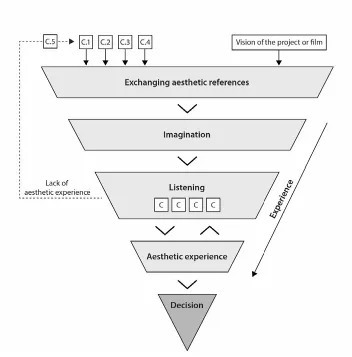
applications for both theory and practice. The paper argues that the rational selection theories are supplemented (or partly replaced by) an aesthetic element, which is a non-rational and non-measurable part of the selection process, and Stjerne argues with conviction that such an aesthetic experience is an immanent part of any selection decision. It does not imply that the aesthetic experience is and will be the same for all selection decisions. On the contrary, it will always be contextual, but aesthetic experiences necessarily influence any selection decision.
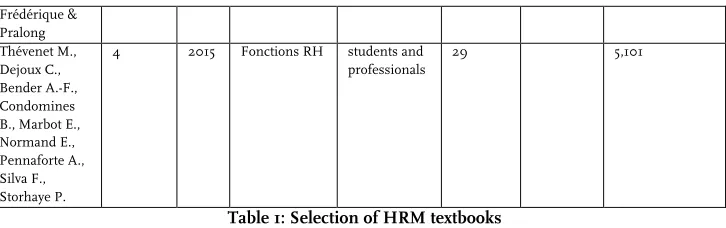
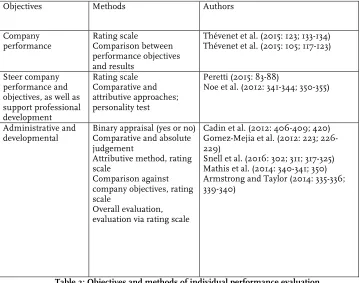
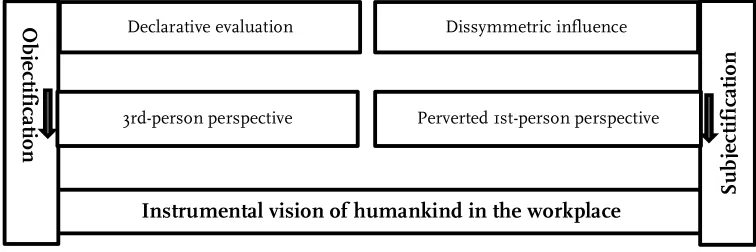
The third article, by Taskin and Ndayambaje, is based on a textual analysis of nine popular HRM textbooks (English- and French-language). The textual analysis has a particular focus on one specific HRM practice: Performance evaluation. The purpose is to analyze whether HRM is as amoral as most critics suggest. The authors suggest that HRM is the bearer of a univocal political project marked by objectification and subjectification. Objectification is about how humans are reduced to consumable objects, and subjectification is how the production of subjectivity is in line with the company strategy. In this way, the employee in the HRM textbooks become a normative foundation of the HRM theories and practices by being a resource that is and works to accomplish the strategy of the company. Taskin and Ndayambaje applies a phenomenological perspective to distance themselves from the most prevalent theories and critiques of management. The authors offer a different perspective to the normative foundation of HRM theories and practices, which both shows how humanity in HRM is currently constructed and develops the means to reflect upon it.
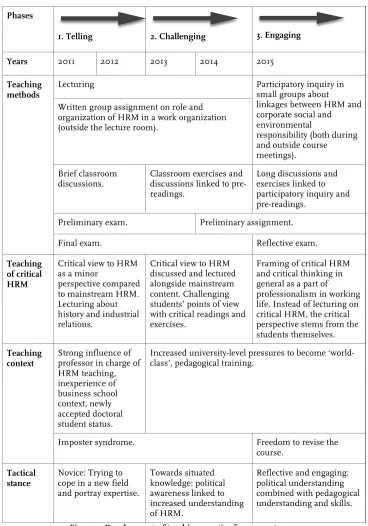
In the fourth and final paper of the issue, Taipale and Lindström depart from their own HRM teaching practice to show and discuss how their teaching has developed them as teachers, their HRM teaching and the students of the HRM teaching. The paper focuses on a teaching model in three steps: Telling, challenging and engaging, which also structures the analysis of the teaching practice and how it has developed. The teaching practices of the authors has in accordance with the ambitions of the teachers developed to be more critical and engaged, and simultaneously developed students to become more responsible professionals. The paper also discusses how the teaching practice might be developed further.
commonsense view of habits as something stable). Pedersen uses the note to highlight the following features: Habits are dispositions, habits are plastic, and habits are social to underline the dynamic aspects of habits and how the three features of habit inform contemporary employee resilience. The main learning is that a theory of resilience has to take habits into account if it is to understand the complexity of what it means to create a resilient workforce, which seems to be a major purpose for HR and organizations at the moment.
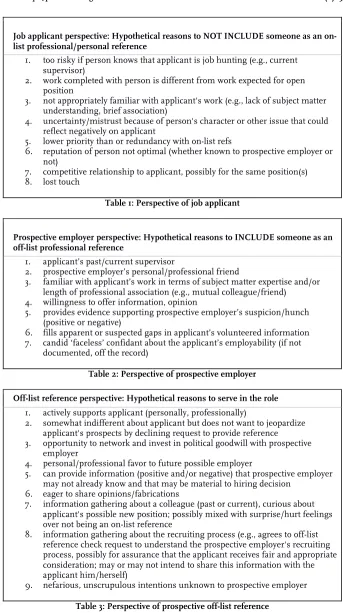
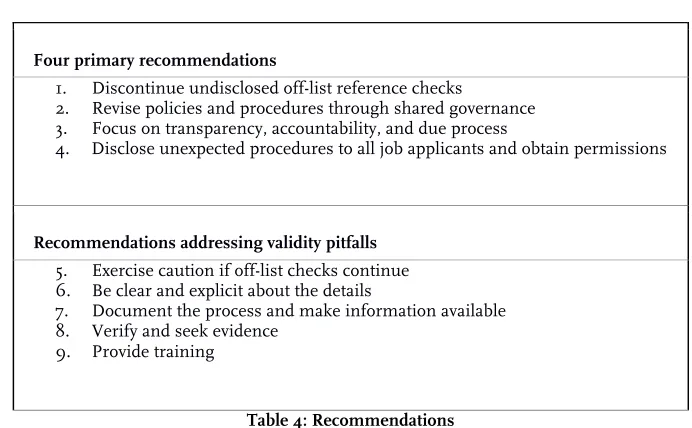
In the second note, Moon focuses on undisclosed or off-reference-list reference checks. Moon explains that off-list references are individuals not included on a job applicant’s CV list of references, but which are used by prospective employers as an instrument for background screening. Moon illustrates this briefly by examples from a university institution. Moon criticizes the HRM literature for not addressing this, as it is an immanent part of recruitment in many organizations (maybe even most organizations), and therefore ought not to be absent in the HRM literature. Moon also discusses the paradox that the information is suppressed or hidden in a process, which ought to be transparent in order to be considered ethical and legitimate. This might be more obvious in universities and public organizations than in private companies, but what it inflicts and means to the humans being ‘victims’ of this ‘procedure’ is the same.
In the next note, Gerard starts out by asking how we can ‘develop a constructive and engaged critique of HRM’ and Gerard proposes that psychoanalysis can help us with that, as it attributes the cause of inhumanity to internal forces, which ignores the ‘unspeakable’, abominable’ and ‘unfathomable’. Doing so, Gerard argues, risk ignoring a more reflective, more radical and ‘truer and deeper’ discussion of what it means to be human. Gerard finds that psychoanalysis is unique among the critical approaches to HRM, as it emphasizes experience, and the note is a rather convincing argument for this positive view on the critical potential of psychoanalysis.
consultants and how performance management is an integrated part of their very being.
Finally, this issue features four book reviews: Husted discusses the relationship between political parties and crowds in his reading of Jodi Dean’s Crowds and Party. Next, Barinaga takes us into a discussion of whether critical management scholars take responsibility for the performative consequences of their concepts and methods in her review of Jeanes and Huzzard’s Critical Management Research: Reflections from the Field. Next, Osmann takes us into the scene of immigrants, workers unions and gay/lesbian scenes of the (supposed) sexual revolution. Finally, Butler gives his take on the publish or perish dilemma in his review of Clark, Wright and Ketchen’s How to get published in the best management journals.
references
Beer, M. (1984) Managing human assets. New York: Free Press/Simon and Schuster.
Beverungen, A., B. Otto, S. Spoelstra and K. Kenny (2013) ‘Free work’, ephemera, 13(1): 1-9.
Boxall, P. and J. Purcell (2011) Strategy and human resource management. Houndmills, UK/ New York: Palgrave Macmillan.
Butler, J. (1993) Bodies that matter: On the discursive limits of ‘sex’. New York, NY: Routledge.
Butler, J. (2010) ‘Performative agency’, Journal of Cultural Economy, 3(2): 147-161.
Cabantous, L., J.P. Gond, N. Harding and M. Learmonth (2016) ‘Critical essay: Reconsidering critical performativity’, Human Relations, 69(2): 197-213.
Callon, M. (2010) ‘Performativity, misfires and politics’, Journal of Cultural Economy, 3(2): 163-169.
Chertkovskaya, E. and B. Loacker (2016) ‘Work and consumption: Entangled’, ephemera, 16(3): 1-20.
Chertkovskaya, E., P. Watt, S. Tramer and S. Spoelstra (2013) ’Giving notice to employability’, ephemera, 13(4): 701-716.
Christensen, J.F. (2018) ‘Queer organising and performativity: Towards a norm-critical conceptualisation of organisational intersectionality’, ephemera, 18(1): 103-130.
Grey, C. (2009) ‘Human relations theory and people management’, in C. Grey (ed.) A very short, fairly interesting and reasonably cheap book about studying organizations. London: Sage.
Hallett, T. and M.J. Ventresca (2006) ‘Inhabited institutions: Social interactions and organizational forms in Gouldner’s “Patterns of Industrial Bureaucracy”’, Theory and Society, 35(2): 213-236.
Hanlon, G. (2015) The dark side of management: A secret history of management theory. New York: Routledge.
Huselid, M.A. (1995) ‘The impact of human resource management practices on turnover, productivity, and corporate financial performance’, Academy of Management Journal, 38(3): 635-672.
Just, S.N., S.L. Muhr and T. Burø (2017) ‘Queer matters: Reflections on the critical potential of affective organizing’, in A. Pullen, N. Harding and M. Philips (eds.) Feminists and queer theorists debate the future of critical management studies. Bingley, UK: Emerald Publishing Limited.
Legge, K. (2005) HRM: Rhetorics and realities. Anniversary edition. Basingstoke: Palgrave Macmillan.
Lopdrup-Hjorth, T., M. Gudmand-Høyer, P. Bramming and M. Pedersen (2011) ‘Governing work through self-management’, ephemera, 11(2): 97-104.
Parker, S. and M. Parker (2017) ‘Antagonism, accommodation and agonism in critical management studies: Alternative organizations as allies’, Human Relations, 70(11): 1366-1387.
Pernkopf, K., F. Bvort and W. Mayrhofer (forthcoming) ‘The HRM academic practicioner gap: A problem for the European HRM community too?’, HRM
Review
Riach, K., N. Rumens and M. Tyler (2016) ‘Towards a Butlerian methodology: Undoing organizational performativity through anti-narrative research’, Human
Relations, 69(11): 2069-2089.
Selznick, P. (1957) Leadership in administration: A sociological interpretation. Berkeley, CA: University of California Press.
Spicer, A., M. Alvesson and D. Kärreman (2016) ‘Extending critical performativity’, Human Relations, 69(2): 225-249.
Spoelstra, S. and P. Svensson (2016) ‘Critical performativity: The happy end of critical management studies?’, in A. Prasad, P. Prasad, A.J. Mills and J.H. Mills (eds.) Routledge companion to critical management studies. New York: Routledge.
Storey, J. (2007) Human resource management: A critical text. London: Thomson Learning.
Ulrich, D. (1998) ‘A new mandate for human resources’, Harvard Business Review, 76: 124-135.
Walton, R.E. (1985) From control to commitment in the workplace. Harvard Business Review, 63(2): 76-84.
Wickert, C. and S.M. Schaefer (2014) ‘Towards a progressive understanding of performativity in critical management studies’, Human Relations, 68(1): 107-30.
the editors
Frans Bévort, PhD, is Associate Professor at the Department of Organization at Copenhagen Business School, Denmark. His research is focused on HRM, professions and management. Theoretically the he is, among other things, interested in the relations between sensemaking and institutionalization (e.g. how institutions emerge). A special interest is the tension between management as a profession and other professions in organizations. A recent project investigates the academic-practitioner gap within HRM-research and practice in Europe. During the last 30 years Frans has contributed to HRM-research, practice and debate within HRM, organization theory and management in roles as researcher, consultant and manager.
Email: [email protected]
Per Darmer, PhD, is Associate Professor at the Department of Organization at Copenhagen Business School, Denmark. Per’s research is based within organizational theory and organizational culture with empirical focus on SMEs, the music industry and the film industry. Generally, Per has a strong interest in the creative industries and the experience economy. Her he has pursued the relation between art, organizing and leading (Art-Based methods) particularly in and around the Art of Management and Organization community. Within this field he is particularly interested in poetry as a research method. Email: [email protected]
Sara Louise Muhr is a member of the editorial collective of ephemera.
ISSN 1473-2866 (Online) ISSN 2052-1499 (Print) www.ephemerajournal.org volume 18(2): 221-247
Beyond happy families and authenticity: Back to
work organisation and mundaneness in the
critique of ‘authenticating’ management
programs
Mette Mogensen
abstract
Over the past 10 years, a concern for the ‘authentic’ individual at work has taken up the agenda within HRM, as well as that of critics of HRM. Within Critical Management Studies (CMS) in particular, spirituality, fun programs and health discourses are treated as forms of neo-normative control – a sophisticated way for modern capitalism to tap into the very existence of the employee. Arguing that this kind of critique mimics rather than challenges the state of affairs, a de-dramatization and re-contextualization of the critique is suggested, based on (re)introducing a classical concern for the organization of work. Shifting the focus from control and identity to mundane matters of work tasks and work coordination produces less sophisticated analysis, but may help CMS critique out of its current state of paralysis and move it closer to the everyday challenges faced by organizational actors.
Introduction
techniques (Fleming, 2009; Fleming and Sturdy, 2009; Cederstöm and Fleming, 2012; Cederström and Spicer, 2015; Spicer, 2011; Pedersen, 2008, 2011). Critics argue that the alleged ‘win-win’ situation is, in fact, exploitative in nature. When employees are offered the chance to ‘become themselves’ in a workplace setting, whether this entails becoming healthier, freer, happier, more spiritually enlightened, a painstaking quest to tease out the inner potentialities of the single individual in the name of productivity is set in course. These various management technologies have been characterized as forms of ‘neo-normative control’, and is seen as being representative of a historic change in management control (Fleming and Sturdy, 2009). The power of capital and management is no longer an external force, as was the case in the traditional bureaucracy (Weber, 2007; Walton, 1989). It does not even seek the conformity of the single individual employee to a common culture (Kunda, 1992; Casey, 1999; Willmott, 1993), but instead has developed into an existential mechanism rooted in the ability of employees to realize their own full potential by ‘just being themselves’ (Fleming and Sturdy, 2009). However, implicit in all of this is a constant demand for the employee to become ‘someone else’: to realize their own full potential in accordance with an external norm (Cederström, 2011). As a consequence, the critical literature depicts employees as serving as mere cogs in the wheel of modern-day capitalism, left feeling perpetually guilty and facing the ever-present danger of suffering from self-exploitation or stress-related breakdowns (Spicer, 2011; Pedersen, 2008). The possibility of resistance is considered to be a frantic gesture, a decaf resistance or an act of cynicism, which serves yet another source of productivity, holding no currency or implying no power to make a change (Contu, 2008; Johnsen et al., 2009; Fleming and Spicer, 2003, 2008; Maravelias, 2007).
slumber’ (Spicer et al., 2009: 542). As such, the divide between practice and critique widens.
While the distance between critics and practice is often framed as being the main problem, the mimetic tendencies shared by HRM discourses and CMS critique have remained largely unaddressed. As this article will argue, in the context of the neo-normative analyses of employee authenticity at work, it is proximity, as much as distance, that forms an obstacle to critique being politically and practically relevant. Accordingly, neo-normative critique may not serve to counter capitalism, but in fact support its very machinery. The divide becomes an indiscernible crack.
A possible response to the double-edged challenge of distance and proximity within CMS critique could be a renewed, yet classical, focus on the organization of work. When the analysis and critique of authenticating management programs are situated within specific organizational settings, it serves to de-dramatize and re-contextualize the widely-held preoccupation with control; to specify often-abstracted individual identities and to question the explanatory power attributed to ideology within CMS. Acknowledging the organization of work in the critical analysis of management may produce less-entertaining analyses, but it offers specification, which may very well be the antidote to both sophisticated critique and high-flying HRM rhetoric.
In order to present this argument, the article proceeds in two subsequent steps. First, following the work of Gabriel (1999, 2001), the ongoing preoccupation with control within CMS is addressed, and it is argued that this preoccupation still seems to ‘blind us’. Using Gabriel as a catalyst in this critical reading, the focus will be on the theoretical repertoire and assumptions at play within the debate on neo-normative control and employee authenticity (Fleming, 2009; Fleming and Sturdy, 2009; Cederström, 2011; Spicer 2011; Pedersen, 2011; Cederstöm and Fleming, 2012; Cederström and Spicer, 2015). While this debate really only includes a few scholars, their voices have succeeded in establishing quite a solid and continuous discourse, crosscutting a range of journals, as well as finding its way into the public debate. Furthermore, these scholars have continued to address the long-standing controversy related to the essential triad of CMS: control, resistance and identity, thus also extending beyond the specific neo-normative debates.
roles and work coordination become decisive contextual components in the analysis of HRM programs. The potential of this approach is then shown in the analysis of a spiritual program made available to social workers in the Danish Probation Service. The analysis first shows how authenticating management techniques are organizationally embedded and are highly fragile activities, a far cry from the well-oiled machinery of neo-normative control and self-capitalization. Second, it suggests that attending to the mundane challenges of everyday work organization is as important to the critical and political project of CMS as is attending to the latest management discourses.
‘Mordantly entertaining’
Capitalist and management critique is no longer the exclusive concern of academics; it has become fashionable among a wider public (Piketty, 2014; Boltanski and Chiapello, 2005; Cederström and Fleming, 2012; Cederström and Spicer, 2015). Indeed, it seems that the more entrapped and cynical the take on our current circumstances the better. Reading the endorsements of ‘Dead Man Working’ by Cederström and Fleming (2012), it is difficult not to sense the almost masochistic pleasure invoked:
Cederström and Fleming’s brilliant dark and witty book tells us the truth. Working in our sleep? Dressing up as infants? Deprivation tank addiction? Fitness centers? Suicide? Email? If you didn’t already know what work has made you become then this book might have a devastating effect on your life. Read it! (Simon Critchley, Hans Jonas Professor, New School for Social Research) […] The book is mordantly entertaining. (Stephen Poole, The Guardian)
The tendency to dramatize our shared misery is not just found in the popular versions of CMS. It shows up in many journal articles on the subject of authenticating management as well. According to Spicer (2011), drawing on psycho-analyst Basterra (2004), we live in ‘authenticity traps’ that keep us struggling against outside symbolic orders in order to become authentic, while at the same time failing to recognize that these very structures are the ones that give us a sense of authenticity. The situation is tragic and there is no way out. Similarly, Pedersen (2008) describes stress management programs as being based on the ability of the employee to constantly balance, or rather capitalize on, the inner tension between full engagement and a potential stress-related breakdown. As Pedersen argues, stress management feeds on the individual’s ability to engage productively in a constant ‘tune-in, break-down and re-boot’ – process, serving not to prevent stress in the first place, but to create a machinery of perpetual productivity, with the very stress breakdown as an integral component. Again, the point is dramatic, serving to show that to modern capitalism, there is no outside, no escape. Following Contu, when we seek to escape as individuals, even our various attempts at resistance are already part and parcel of the capitalist logic itself and thus amount to no more than what Contu has coined ‘decaf resistance’ (Contu, 2008). A resistance without any real effect.
This is not to say that scholars are not supposed to write passionately and in an engaged fashion about the dangers of our current circumstances. There is every reason to be suspicious when HR programs uncritically present the employment relationship as a matter of employee self-fulfillment. Yet, if critique is intended to highlight opportunities for change and to set out alternative routes, overly dramatized writings do not seem conducive to us escaping the ‘authenticity trap’.
‘Blinded by control’
‘blinded by the discourses of control and surveillance’ (Ibid.: 192), as if control were the only concern worth mentioning in the analysis of organizations. Gabriel reflects:
That our lives are controlled by diverse forces operating both on us and through us cannot be doubted. That our lives can be reduced to these forces in a totalitarian gloom runs against what history has to tell us. (Ibid.: 192)
Sixteen years later, the debate on control has only been amplified (Mumby, 2005; Fleming and Spicer, 2008). Control comes in various forms: those running the gamut from bureaucratic to normative, as well the recent addition of the notion of neo-normative control (Fleming and Sturdy, 2009, 2011). Equally, critical researchers have found that control appears in a variety of combinations, as bureaucratic forms of control are not simply superseded by normative and neo-normative variations. Forms of control are analyzed in order to unravel their specific co-existences. Forms of control are seen as ‘hybrids’ (Fleming and Sturdy, 2011; Callaghan and Thompson, 2001), as ‘cages in tandem’ (Kärreman and Alvesson, 2004; Kärreman et al., 2006). Basically, the overall message is that organizational control is becoming more and more pervasive and, as a result, more difficult to resist. According to a more recent article by Gabriel, the control discourse has grown into ‘a safe haven’ for researchers, as well as a commodity that circulates in the market (Gabriel, 2001). Much the same as with ‘The Wellness Syndrome’ and ‘Dead Man Working’, here critique has become an aesthetic product, applauded for its ability to be ‘mordantly entertaining’.
De-contextualized critique
When control becomes the primary focus, it diminishes the capacity of critical analyses to take into account other important aspects of organizational life. Indeed, the organization itself disappears from view. As pointed out by Gabriel, within CMS, the organization tends to be conceptualized as a ‘symbolic universe’, in which the control of individual desires and drives has become a key issue, whereas economic and political features have lost traction (Gabriel, 1999: 188). This diagnosis quite closely mirrors the recent critical studies of authenticating management programs: they too, are set within a contextual vacuum, as the organization is often overlooked or treated as an empty and unspecified container. In a recent special issue of Work, Employment and Society entitled ‘Managerial control and workplace regimes’ (2010), the editors, specifically referring to the debate on neo-normative control, note that:
the contextual conditions and characteristics that give them meaning. (Thompson and Van den Broek, 2010: 9)
Gabriel discusses the de-contextualization of critique using broad-stroke labels such as ‘post-modernism’, ‘plural perspectives’ and ‘anti-essentialism’. With no clear directions and fixed normativities, critique finds itself multiplying endlessly, in an ‘unfettered unfolding of fantasy’ (Gabriel, 2001: 27). While these post-modern characteristics certainly form part of the picture, fixed normativities are, however, not entirely absent within neo-normative critique. On the contrary, there is a quite consistent preoccupation with ideology as a structural explanatory force.
Ideology trumps
Neo-normative analysis often starts, and ends, with the same overall agenda: unraveling the workings and pitfalls of the ideologies underpinning modern day capitalism. As stressed by Cederström and Spicer, ‘[o]ur concern in this book is not with wellness per se. Our concern is how wellness has become an ideology’ (Cederström and Spicer, 2015: 3). Equally, as Fleming (2009) sets out to critically address the latest tendency among managers to ‘corporatize’ employees’ personal authenticity, he states his objective as follows:
My objective in writing this book is to develop a kind of ideology critique whereby the appearance of this discursive practice is unpacked to reveal half-hidden structures, contradictions, and even unintended opportunities for real progressive change. (Fleming, 2009: viii)
Just a page later Fleming continues:
I will argue that difference, diversity and the sui generis of individual actualization become expressive instruments that reinforce the conservative politics of accumulation. (Ibid.: ix)
‘the usual suspects’, implying highly predefined roles, with ‘capitalism, managers, instrumental goals and control’ as the bad guys, and the employees as the subjugated party, with the normative promise of liberation and autonomy on the horizon (Ibid.: 22). In CMS analysis, managers as well as employees participate in what is an already tightly choreographed game of ideological control, with no apparent alternatives (see also Mogensen, 2012). However, even ideological forces appear in context.
Generic identities
In the article by Fleming and Sturdy (2009), in which the notion of ‘neo-normative control’ is framed for the first time, the authors do recognize that types of control are, and should be, studied as tightly linked to the specific work context under study. Referring to the dominant focus on identity prevalent within the critical literature, they self-critically reflect:
The focus on identity appears to be impoverished if it does not also correspond with task, job and role autonomy/creativity. Indeed, we may expect different employee responses in different contexts. (Ibid.: 580).
In the quote, the authors thus appreciate that studying control systems in a high school and those in a high-tech company is not the same. Since the contexts, as well as the ‘occupational status’ of the individuals under study, are so disparate, the interplay between identity and control cannot be considered to be generic. In principle, they invite to nuance the otherwise set choreography of ideology critique. While the importance of the organizational context is honored as a general stance, however, it remains largely absent from the analysis. Despite the differentiation according to classical sociological parameters, individuals are analyzed primarily in relation to the management program itself. In effect, the exclusive focus on managerial discourses and control renders the analysis unable to situate the notion of neo-normative control within a particular context, and consequently makes it impossible to differentiate between contexts, as well as between identities, including both employees and managers.
other words, they remain abstracted and unspecified individuals, defined by ideological forces and characterized by the universal ability to self-actualize. This approach, in effect, mimics the very management discourses the critics aim to subvert. This is where high flying ideology critique collapses into mimesis.
Now the question is what might the alternative outset be for critique? In the work of Gabriel, psychoanalysis and the ‘struggling, interacting, feeling, thinking and suffering subject’ (Gabriel, 1999: 179) is suggested as an alternative analytical starting point. In light of the above, however, this does not seem a viable solution. Despite the current hype around the (re-)introduction of Lacan to organization theory (Cederström and Hoedemaeker, 2010; Contu et al., 2010; Fotaki et al., 2012), when psychoanalysis is applied to authenticating management techniques, we still seem blinded. As we are invited to unearth the fantasies of modern work life, the focus on the symbolic imaginaries of abstracted employee subjects tends to produce the very same problems identified above (see Cederström, 2011). Furthermore, moving critique even further into Lacanian controversies and the psychodynamics of the individual simply serves to nurture the unfortunate mimetic tendency within neo-normative critique to turn the individual subject into the abstracted, yet prime nexus and battleground for both management discourse and management critique. The antidote and possible road ahead suggested here takes the work organization as its analytical starting point, thus targeting both the drama, the de-contextualized critique and the abstracted individual identities caught up in self-actualization.
A way forward: Bringing work organization back in
Bamforth, 1951), today, the organization as an object of study has changed. Using verbs instead of nouns (Weick, 1979), organizations are conceptualized as processes of ‘organizing’; as the product of social constructions and ongoing sense-making; as a defocused entity with no clear boundaries, defined in terms of a plurality of concepts like ‘discourse’, ‘power’ and ‘subjectivity’ (Lopdrup-Hjorth, 2015: 450). Indeed, as an object of study, the organization has increasingly become ‘symbolic’ (Gabriel, 1999). As Vikkelsø argues, the research agenda that goes along with this is increasingly characterized by a ‘critical disposition’, at the expense of the classical and mundane aspects of work organization: ‘[…] “task” and “purpose” are rejected as self-evident matters and displaced by analyses of power plays that can and should be critiqued’ (Vikkelsø, 2015: 423). Without going further into the historical reasons for this development, a political unease in response to the instrumental rationality and ‘life-crushing facets’ of organizations, as well as a skepticism of the positivist and functional approach in classic organization theory have been critical in producing this development (Lopdrup-Hjorth, 2015: 447, 451; du Gay, 2000, Hartman, 2014). Lopdrup-Hjorth (2015) goes so far as to refer to a veritable ‘organization phobia’. According to Lopdrup-Hjorth, the current dismay within critical organization theory, including CMS, is, in fact, related to the turn away from organizations as functional systems. The political ambition in organization theorizing to adopt ‘a critical dispostion’, implying a rejection of instrumental rationality and ‘putting the human centre stage’ (Vikkelsø, 2015: 423), has left this very same human in a vacuum. As argued by Barley and Kunda, neglecting the study of organizations without relating this to specific work activities has serious consequences when it comes to our current understanding of modern forms of organizing: ‘[…] until our images of work are updated, efforts at specifying postbureaucratic forms will continue to be seriously hampered’ (Barley and Kunda, 2001: 77). As is the argument here, this also has important implications when it comes to critique. When management critique no longer involves a notion of the organization of work, the ability to represent the reality and identities of key actors – employees and managers – is diminished. As argued by du Gay and Vikkelsø (2012), being able to pose critique and intervene in organizations requires specificity. It requires a closer look at the ‘practical realities’ of organizations (Vikkelsø, 2015), analytically implying that once again concepts such as ‘work task’, ‘work coordination’ and ‘work roles’ become important conceptual outsets for organizational theorists, critical or otherwise.
there in terms of their roles, relationships, responsibilities and, not least, the concerns they have in relation to their work situation. By asking how the program, ‘Project Peace’, was taken up by employees and management and how it was related to the specific organization of work, we are able to specify and thus qualify the kinds of effects – negative or otherwise – that we may claim emerge from the introduction of an authenticating management program.
The analysis is divided into two parts. The first lays out the overall intentions and discourse of the program, as well as the reactions of the employees vis-à-vis the program. In many respects, this follows the dimensions normally accounted for within a critical neo-normative analysis, having as its primary focus the relationship between the program and the individual. As a consequence, the employees in this section are not differentiated, but are aggregated under the common category ‘employees’. The second part then sets out to show what happens when we analyze the meditation program, as well as the employees, beyond the scope of neo-normative critique, situating both within the work setting of the Probation Services. It proceeds by discerning three displacements as a consequence of the proposed alternative analytical perspective: 1) from generic identities to specific tasks and work roles 2) From work as life to work or life, and finally 3) from powerful to powerless management.
Method and the search for black swans
interviews of employees were conducted across three different probation offices. The groups consisted of between three and eight people and included both social workers and administrative staff. Local managers at each site were interviewed and, finally, two non-participants were interviewed over the phone in an effort to get an impression of why they chose not to participate. With the exception of the interview with the HR professional, all interviews were subsequently transcribed. Finally, the author herself conducted a participant observation in the context of a peace-to mind treatment offered by an external consultant/therapist. The empirical material would no doubt have been strengthened had it also included close observations of everyday work and management; unfortunately, however, this was not possible. For the purposes of this article, the data presented here is still valid, as the interviews give us valuable insights into the mundane, yet decisive aspects of the work and its organization within the Probation Services.
As the data collection preceded the ambition to write this article, one cannot speak of a strategic choice of case (Flyvbjerg, 2004). As a state-run bureaucracy, however, it does provide us with a case that is more likely to contrast to the post-bureaucratic discourse of the meditation program; the role and status of the employee and work being the most poignant examples. As shown in the analysis, the Danish Prison and Probation Services works according to a rather classical, Weberian divide between personality/life and office. As such, the powerlessness of the meditation program could be explained by a clash between a strong bureaucratic mode of organization and a post-bureaucratic discourse less potent. As indirect support for this argument, the CMS critique around normative and neo-normative control has often taken knowledge work, consultancies and other classical, post-bureaucratic organizations as their empirical points of departure (Kunda, 1992; Alvesson and Willmott, 2002; Kärreman and Alvesson, 2004; Costas and Fleming, 2009).
the powers already assumed by ideology and managerial discourse. Does it move beyond the ‘usual supsects’ (Ekman, 2012)? If not, the choice of case organization – bureaucratic or otherwise – seems less important. Despret (2006) suggests that we let the field ‘resist’, and uses the study of sheep as an illustrative example, while Popper (1992/1959) chose the image of the black swan. No matter which animal analogy you prefer, the principle of falsification is the same. In other words, the quality and validity of a case study, including this one, depends on whether or not its empirical and analytical focus actually allow the field of study (authenticating management programs) to appear different – black instead of white – in order to create the possibility of extending beyond the accepted wisdom of CMS critique.
The Probation Services and ‘Project Peace’
The main purpose of the Probation Services is to supervise and support parolees, as well as clients that have been sentenced to community service, electronic tagging or treatment. While prison officers are the professional group within the Prison and Probation Services at large who have the most challenging work environment (Prison and Probation Services, 2015), general budget cuts and an increased workload, including an increase in potentially risky house calls brought about by an increase in the use of electronic tagging, has strained social workers within the Probation Offices considerably, as well. Furthermore, clients are generally considered to have become more complex and demanding, an issue that has increased the need for more elaborate and often difficult collaboration with the psychiatric system and other public authorities. As a consequence, sick-leave statistics show increase in short term illness in particular. ‘Project Peace’ was a seven-week program initiated by the central HR department of the Danish Prison and Probation Services and was run by the external consultancy firm ‘Peace-to-Mind’. The program’s aim was to decrease stress among employees of the Probation Services and addressed counsellors in particular. Using individual healing and so-called peace-to-mind-treatments in combination with group meditation, employees were offered the chance to (re)connect to their ‘inner peace’. As it is put in the official presentation:
The Peace to Mind Treatment helps employees recreate contact with their inner peace; a contact that will lead to greater happiness as well as performance both in their private life and their work life.
particular concern or, afterward to briefly discuss the experiences and thoughts that may have come up during the session. Outside of this, not many words were spoken. The treatment was offered during work hours. The group meditation, on the other hand, was held after work and lasted one-and-a-half hours, commencing at 4:00 pm. The locale, a large meeting room with chairs set up in a circle set the scene. First, the group of employees would be introduced to a specific meditation technique: body scanning, visualization, mental travel or specific breathing exercises. Next, they were offered the opportunity to try it out and share their experiences within the group afterward. They were then prompted to go home and practice the different techniques between sessions. A variety of techniques were offered in an effort to increase the likelihood that the employees found a method that matched their specific preferences in order to strengthen the ‘self-help’ aspect of Project Peace:
The goal is for both employees and the offices to become self-reliant – that they are able to restore the peace and focus that characterizes the optimal employee, even after the collaboration with Peace to Mind has ended.
Authenticating techniques and individualized responsibility
The employees interviewed were generally very positive about the program. This was confirmed in the official final evaluation carried out among the 130 participants and it came through in the group interviews, as well. One of the initial challenges the program faced, especially in relation to the peace-to-mind treatment, was that it was considered to be somewhat mystical in nature. When the employees described their initial reactions, terms like ‘mumbo-jumbo’, ‘hippie’ and ‘flaky’ were used and associations to popular TV programs on exorcism were made. However, with only a few exceptions, the participants said that they managed to let go of their initial skepticism. The ‘mystical’ nature of the program notwithstanding, the simple act of lying on the bench made them feel extraordinarily relaxed and calm. It was ‘super nice’, as one employee put it, while another had the feeling of being ‘in seventh heaven’. Still another referred to a sense of ‘coming home’.
When asked about specific effects of the program as they pertained to their work situation, the employees had a harder time articulating their views. Taking the results of the group interviews as a whole, however, it is clear that the program was generally considered to offer a kind of ‘protective shield’ against stress. As one employee explains:
Knowing how to breathe in this way helped the employee to avoid becoming overwhelmed by stress. She was able to defend herself against it using the breathing exercises she learned. As a result, it also makes her feel safer. She continues:
Well, I think it makes you calmer – that you know you have these tools to grab, if you end up in situations like that. This is certainly what makes me feel safer; that you are not in unknown territory if all of a sudden you find yourself in some kind of trouble.
The simple breathing technique is seen as a handy tool, something the employees carry with them ‘in their back pocket’. As another employee puts it, ‘[it is] ready to use when needed’. In line with this, a therapist is cited as saying that meditation is like saving money; it is a way to ‘put energy in the bank’. Meditating on a regular basis makes employees better equipped to resist external pressure, so the argument goes. Taking an aggregate look at the attitudes of the employees vis-à-vis the program, the employees seemed generally positive about it, as they gradually accepted the core of the program: the idea of the responsible employee who is able to self-help in response to stress and to self-reflexively evaluate the effects according to the authority of their own experience.
Speaking with the therapist, she readily confirmed this program discourse. While I was curious to know whether some employees might have felt overwhelmed by this level of intimacy in a work setting, the therapist assured me that this was not the case with Project Peace. As it was 100 % tailor made to each individual employee, it rarely led to situations that brought people out of their comfort zones. ‘What happens is exactly what you need today’, she emphasized. Referring to herself as a ‘medium’, the therapist explained that the ‘truth’ about what happens is sanctioned by the client him or herself. Contrasting her work to that of a psychologist, the therapist did not define her ‘professionalism’ in terms of a specific body of knowledge, but rather in her ability to sense the client´s needs. She added, ‘[…] it is your responsibility. It is your life. I am simply helping you’. As such, the program provided individuals with a mirror, leaving both the nature of the stress, as well as possible solutions to specific problems to be determined by the ability and will of the single employee him or herself to monitor and self-heal.
the empirical data. It would be but one side of the story. In discussing the intentions and effects of the meditation program with the employees, mundane aspects of work and work organization popped up continuously, reminding us that work stress and its possible solutions cannot be reduced to a relationship between management programs and generic authentic employees. Though both do play a role, they do so in a way that is inevitably situated, shaped and also displaced by the specific work task and work organization at hand, which calls for analysis and critique that takes this into account.
From generic identities to specific tasks and work roles
The main target of the meditation program was the counsellors within the Danish Probation Services (DPS), but interviewees in the group interviews, appointed by local managers, also consisted of administrative staff who had participated in the program. Rather than being a problem, the mixed groups helped clarify the importance of the division and coordination of work in relation to the program, as well as to work stress.
Counsellors carry out the primary task of the Probation Services, namely monitoring and supporting clients when they are on conditional probation. Typically, clients are required to visit the counsellors’ office once every two weeks in order to follow up on their action plan, which specifies the parameters of what is normally a two-year probation period, as appointed by the judicial system. In spite of the increasing number of administrative procedures and political/legal demands on case processing that have been introduced, including, for example, a checklist-guideline for conducting ‘motivating conversations’, the counsellors’ work is characterized by the reliance on professional judgement and a high degree of autonomy around work planning. While the counsellors tended to describe their work as being unpredictable as a result of the close relationship they have with complex clients, they remain flexible and define the content and flow of their work themselves, creating their own schedules and also working from home every once in a while.
the front desk. Their work and the execution of their work is, thus, far less flexible, as it is more dependent on others.
As becomes obvious from the information presented above, employees in the DPS are not generic individuals. When analytically attending to their work and their mutual work coordination, they become particular kinds of professionals with different types of tasks, roles and, not least, different conditions in terms of the coordination of work. These differences have a proximate effect when it comes to the meditation program, but they also produce fairly different work environments. In relation to the former, both counsellors and admin staff were prompted to meditate during work hours, but due to the nature of their work and its organization, the two professional groups faced very different situations. A dialogue between a counsellor and an admin staff went as follows:
Counsellor: With regard to the mornings […] you have expressed that while I go up to my office and just shut my door, you are not able to do the same.
Admin staff: No I can’t. It will take its toll on my colleagues… Even if I just have to go down to the bathroom, I have to announce: “I’m just going to run to the bathroom”.
Given the flexibility of her work, the counsellor is able to decide for herself when she wants to take time for meditation and also has the facilities that allow her to do so: a single office and a door to close. This is, however, not an option for the admin staff. Their work tasks are beyond their control and are highly dependent on coordination with colleagues. In this setting, obviously, individual meditation practices become an organizational impossibility, as even taking time off to go to the restroom is seen as an obstacle in terms of the completion of daily work. Relating this to the power – or powerlessness – of the meditation program, adequate explanations will have to extend beyond the program discourse and the individual. Whether these employees take on the program identity, reliably doing their mediation, or are unable to do so, the reasons can and should be found as much in work and its organization as in the program discourse and the individual. This begs a shift in our analytical focus from identities and self-work of the individual, to organizational and collective concerns such as the character, distribution and coordination of work.
From work as life to work
or
life
at a time, and to remain more ‘cool-headed’ when facing conflicts at work. Thus, apart from acting as a protective shield against stress, the meditation program was also experienced as supporting productivity, i.e. the ability of the employees to more effectively handle the general increase in number and complexity of cases in a normal workday. In this sense, the official win-win approach of increasing worker well-being and productivity simultaneously seemed to be readily reproduced. However, taking into consideration other statements made during employee and management interviews, the program was also seen as being in competition with demands of everyday work. This became particularly evident during discussions of the possibility of sustaining the meditation practice after the program. As a counsellor states:
When you reach the time of day where you might need it [meditation], it’s also when you realize: “my god, I only have two hours left before I go home”. Then you don´t manage to do it.
The work situation as it stands makes it very difficult for both counsellors and admin staff to prioritize meditation, even if busy times are exactly when meditation is most needed. As one employee succinctly puts it, ‘one also wants to go home’. One of the managers supports this position by expressing her concern that the program is, in fact, not alleviating work stress of her employees, but actually making things worse:
Many employees have a lot of overtime, which makes it [the meditation program] less appropriate. It is just adding things on. It becomes a vicious circle
Another manager reflects a similar concern by bluntly stating:
Well, you cannot meditate your way to everything. Now, a couple of extra hands here and there? That I wouldn’t mind.
In line with what was conveyed by the employees, the piles of work on desks, the workload present as a constant pressure at the DPS, are not considered to be resolved by the use of meditation. According to the managers, it is not peace to mind but man power that they are short of.