2017 Volume 6 Number 1, 69-82
Predicting satisfaction with life from generativity and
identity threat: The experiences of indigenous Baka Forest
People in Cameroon
Fai, Robert D.
The Chicago School of Professional Psychology, Washington DC, USA ([email protected])
Received: 2 March 2017 Revised: 24 March 2017 Accepted: 14 April 2017
Available Online: 16 April 2017 DOI: 10.5861/ijrsp.2017.1785
ISSN: 2243-7681 Online ISSN: 2243-769X
OPEN ACCESS
Abstract
This research attempts to predict satisfaction with life from generativity – the desire to leave
something for posterity and social identity threat. A randomized sample of 90 participants
from two Baka communities was surveyed using the Loyola Generativity Scale (LGS), the
stigma consciousness questionnaire (SCQ), and the satisfaction with life scales (SWLS).
Multiple regression analysis indicated that one could predict SWL from concern for
generativity and perception of identity threat. The findings stated that Baka ethnic people are
dissatisfied with their life, have elevated levels of concern for generativity, and are extremely
conscious of stigmatization by out-group members. The study has made suggestions for future
research directions and possible program intervention strategies. Future research should
embrace a bicultural comparative study of Baka and Bantu ethnic populations. Similarly,
policy reforms should focus on augmenting wellbeing amongst the Baka indigenous people
through the institution of evidence-based practices. For example, the establishments of new
laws that will create and protect ethnic minority zones, and also, authorize the formation of a
development fund which will facilitate the funding of new development initiatives.
Furthermore, an ecological management board that incorporates Baka ethnic people in
conservation projects will permit community participation in development and enhance
general wellbeing.
Fai, R. D.
Predicting satisfaction with life from generativity and identity threat: The experiences of
indigenous Baka Forest People in Cameroon
1. Introduction
Indigenous people, as well as minority groups worldwide, encounter challenges that are unlike those experienced by dominant members of any society. Populations that are disadvantaged for reasons such as sexual and gender orientation, race, religious, and ethnic affiliation to mention a few face these problems. The difficulties encountered by indigenous people are the focus of this paper. According to the United Nations, there are approximately 370 million indigenous people spread over 70 countries worldwide. Native populations have unique cultural traditions and have a keen interest in protecting their cultural ways from dominant societies. Several studies indicated that indigenous people are marginalized by dominant communities and that those who wield power subject them to conditions that are insensitive and violate their fundamental human rights. This study examines the lives of two Baka ethnic communities in southeastern Cameroon. The study attempts to predict satisfaction with life (SWL) as discussed by Diener, Emmons, Larsen, and Griffin (1985) amongst Baka Forest People currently living in the villages of Bifolon and Menzoh from two primary constructs–generativity and social identity threat (SIT). Irrespective of the challenges involved in using Western developed theories and instruments in studying nonwestern populations as postulated by Cobern (1996), ideas developed from a Western perspective, and applied to nonwestern communities, often fail to account for contextual differences, which often impact the findings of such studies. Rosen and Walker (2004) argued that it is misleading to use Western theories as an objective way of explaining phenomena in nonwestern communities. They posited that adopting such a stance assumes a position of cultural dominance which negates the current sociopolitical realities of nonwestern societies. Consequently, such theories may be full of omissions and inevitable distortions.
That said, studies that use Western approaches and instruments to study nonwestern societies introduce new knowledge in several ways. Findings clarify the challenges of adopting particular pedagogic approaches in understanding the etiology of phenomena from a cross-cultural perspective. Consequently, such studies assist scholars in reflecting the cross-cultural applicability of research instruments, theories, concepts and principles developed in different cultures. Studies using Western concepts such as generativity stand the risk of not being understood in non-western societies. Generativity is the struggle against stagnation, which increases as one advance in age. It denotes one’s ability to have concern for establishing and guiding the next generation (Kruse & Schmitt, 2012). In describing identity threat, Dalton and Huang (2014) argued that “social identity threat occurs when people encounter feedback (event, information, or social response) that is negative, and which pertains to traits deemed essential, and refers to an in-group rather than an out-group” (p. 1018). The concepts of generativity and identity threat are imperative, in studying the contingencies that influence the degree of happiness in life.
1.1 Research Objective
Predicting satisfaction with life from generativity and identity threat: The experiences of Baka Forest People
Forest People’s level of happiness with life. Baka people face challenges which have been described by Achu and Asongu (2015) as ranging from infrastructural problems, vicissitudes in lifestyles, economic difficulties, and inhuman treatments. The Global Post (2011) shared this viewpoint. According to the newspaper, Baka people are treated by out-groups as if they were "pets." Such experiences as illustrated by Achu and Asongu and the Global Post have psychological implications which can contribute to an ethnic group’s dissatisfied with life. The research makes use of the hypothesis that satisfaction with life amongst Baka indigenous people, can be predicted from generativity goals and perception of social identity threat.
1.2 Theoretical/Conceptual Framework
Three psychological concepts have guided this research. The concepts of generativity which are elaborated in the theory of the psychosocial development of Erik Erikson, identity threat as depicted by Tajfel and Turner (1979), and investigated from the standpoint of stigma consciousness as proposed by Pinel (1999), and satisfaction with life (SWL) of Diener (1985). This study was part of a mixed methods research dissertation for a Ph.D. The study was duly approved by the Chicago school of Professional Psychology IRB as well as the Ethics Review and Consultancy Committee (ERCC), Cameroon Bioethics Initiative (CAMBIN) in Cameroon. The study made use of the concept of generativity as expounded in the theory of the psychosocial development of Erik Erikson, and the idea of identity threat (using an adapted Pinel’s stigma consciousness questionnaire) as well as the concept of satisfaction with life (SWL). The scales used in the research included SWLS (Diener, Emmons, Larsen, & Griffin, 1985), the LGS for measuring generativity (as cited in Hofer, Busch, Chasiotics, Kartner and Campos, 2008), and finally, SCQ (Pinel, 1999). The entirely of these scales were adapted to fit the cultural reality of the Baka indigenous people.
Generativity is that concern one has for future generations. It is theorized as a major worry in midlife situations for adults (Lawford, Doyle, & Markiewicz, 2012). An integrative framework provided by McAdams and de St Aubin (1992) considers generativity as motivated by a social demand and an inner desire to behave in a particular manner (Hofer et al., 2008). The concept of identity threat is important in understanding intergroup relations and considered vital in understanding motivation for achievement and someone's generative goals. Generativity is a critical framework for studying the Baka indigenous people. It is used explicitly within the context of Baka relationship with the dominant Bantu neighbors, those organizations that are claiming a stake in Cameroon’s tropical rainforest (home to Baka people), as well as the Cameroon government’s prerogatives to protect the rights of Baka indigenous people. Vulnerability for this research is considered a source of psychological threat and a devaluing factor contributing to Baka Forest People’s life. For example, a report by the Global Post (2011) cited above posited that Bantu people are always maltreating their Bantu neighbors. Bantu people subject Baka people to experiences that fit the definition of slavery. Their satisfaction with life is, therefore, questionable. Satisfaction with life referring to an overall assessment of an individual’s quality of life (Lucas, Diener, & Suh, 1996). It is considered an important concept in understanding the lived experiences of the Baka people in Cameroon, and pivotal for improving their overall wellbeing.
2. Research Background
Fai, R. D.
Consequently, few opportunities exist for the Baka to preserve their culture and way of life.
Today the Baka are primarily seminomadic, partly due to government action and the influence of colonial and post-independence laws, which have denied the Baka Forest People their customary tenure rights to the rainforest (Gilbert & Couillard, 2009). Several studies locate the Forest People in several countries in the subregion. These include the countries of Cameroon, the Republic of Congo, Gabon, and the Democratic Republic of Congo (Gilbert & Couillard, 2009; Devin, 2011; Simo & Nchoji, 1995). Forest People likewise are known by other alternative names, such as Babinga, Bebayaga, Bebayaka, de l’est, Pygmee, Pygmees, and Pygmy-E (Lewis, Gary & Fennig, 2013). In the past, many Baka Forest People adorned their body with paint, filed their teeth into points, and while men wore loincloths, females wore straps and belts (Devin, 2011). A significant number of anthropologists and some other researchers from different disciplines have described Forest People as innately linked to the forest’s natural resources (Simo & Nchoji, 1995; Devin, 2011). Asking that Baka people leave the forest and limit their access to forest resources can impact their concern for generativity and perception of identity (Fai, 2016). Consequently, this will influence their satisfaction with life. Baka people and similarly other Forest People have suffered a similar fate when compared to the experiences of Native people as in the Americas. For example, Achu and Asongu (2015), as well as Pyhälä (2012) posited that Baka people had lost their motherland, were experiencing oppression in the hands of nearby Bantu neighbors, and experience a life of abject poverty. Lalonde (2006) similarly postulated that the Aboriginal people in America, following contact with Europeans, sustained assaults on their cultures and on their communities in addition to being forcefully transferred, and access to resources and lands blocked. Powerful forces beyond the control of indigenous people have undermined their traditional way of doing things. Experiences, which have influenced indigenous people’s views about concern on what to leave for posterity, their identity, and feelings about their state of satisfaction with life.
2.1 The Influence of Generativity and Social Identity Threat on Satisfaction with Life
Much has been written, about the concepts of generativity, social identity threat, and satisfaction with life. These concepts will not be extensively elaborated here in detail. However, these notions are briefly examined, to depict their significance within the paradigm of satisfaction with life and the relevance of these concepts to the well-being of the Baka Forest People of Cameroon. While Generativity is the concern for future generations, theorized as a major source of anxiety in midlife for adults (Lawford, Doyle, & Markiewicz, 2012), social identity is an individual's sense of who they are, on their membership in a particular group. People, therefore, think of themselves and others, not as unique individuals, but as team members (Ellemers & Haslam, 2012; Ashforth & Mael, 1989). Social Identity Theory (SIT) suggests that people establish self-conceptions based on two paradigms – a personal or self-identity and a collective identity. An individual or self-identity refers to personal qualities such as beliefs, skills, and abilities, whereas a collective identity denotes one’s membership in a particular group. On the other hand, satisfaction with life can be suggested to be a global assessment of a person's quality of life, based on their chosen criteria. According to Lucas, Diener, and Suh (1996), satisfaction with life stipulates an overall assessment of an individual's quality of life. It is considered an important concept in understanding the lived experiences of Baka people in Cameroon within the framework of their happiness.
Predicting satisfaction with life from generativity and identity threat: The experiences of Baka Forest People
marginalization, stigmatization, prejudice, and diverse forms of discrimination. For example, Rupp (2001) posited that a Bangando (a non-Baka ethnic group) might not allow their daughter to marry a Baka, only because they believe a Baka will not have the material wealth to afford such a marriage. Pinel and Paulin (2005) have positioned that discrimination can lead to disengagement, with people high in stigma consciousness disengaging from stigmatizing conditions, which contributes negatively to an individual’s wellbeing, as well as the society’s welfare. Social contextual variables as is argued by Jack, Ali, and Dias (2014) exposed vulnerable populations to risk factors. These subsequently unleash mental health challenges which may include depression, experiences of unembellished stress, poverty, and violence. It is therefore possible that Baka people’s concern for generativity and perception of their social identity can influence satisfaction with life.
Generativity - Generativity, as mentioned earlier, is the ability of people during adulthood to have concern for what they will leave for posterity. An integrative framework provided by McAdams and de St Aubin (1992) have argued that concern for generativity was motivated by what they termed a cultural need and an inner desire to behave in a particular manner (Hofer, Busch, Chasiotis, Kärtner, & Campos, 2008). According to Guastello, Guastello, and Briggs (2014), adults expressed generativity through nurturing their younger people. Another approach they argued was that individuals with a concern for generativity demonstrated leadership by promoting the development of youths via parenting, volunteer work, or through other means of engagement with their youth. Peterson (2006) argued further that there was an association between generativity and some life attributes. For example, he theorized that people with high concern for generativity demonstrated an interest in the values of younger people. Similarly, parents who are generative view themselves not only as parents but also as teachers and role models for their children. Fathers with generative concern for their children's social and emotional development had concern for the larger general welfare of society (Peterson, 2006). Higher generativity scores are noted as having a significant role in parents’ involvement in their children's education (Guastello et al., 2014). According to studies conducted by McAdams, de St Aubin, and Logan (1993), de Medeiros (2009), and Guastello et al. (2014) identity threat, generativity, and satisfaction with life are interrelated. Guastello et al. (2014) for example, argued that generativity has remained one of the strongest predictors of satisfaction with life. Likewise, they have also assumed that perception of social identity threat does have an influence on satisfaction with life, which is the dependent variable in this study. The notion of social identity threat is certainly not new. It can be appropriately correlated with stigma consciousness, which brings to the forefront what can be described as a stigma-induced identity threat, which according to Shelton, Richeson, and Vorauer (2006) integrates transactional models of stress and coping.
Fai, R. D.
According to Reicher (2004), it is imperative that one's social framework informs human social action. Understanding the concept of identity among an indigenous people like the Baka requires close examination of their perspective. It is only from such a perspective that the notion of being negatively assessed can be fully comprehended. Negative evaluations can and do determine how individual group members perceive issues of stigmatization orchestrated against them by an outgroup. Borton, Reiner, Vazquez, Ruddiman and Anglin (2011) hypothesized that both visible and invisible stigma could have an adverse impact on social interactions. When members of different social classes go through various psychological experiences within the same physical environment, due to the sociocultural and historical legacies the concept of social identity threat can provide a useful perspective for understanding these differences (Emerson & Murphy, 2014). It is from this point of view that Tajfel and Turner (1986) theorized that individuals have a desire to maintain a positive perception of their group as a collective. When people challenge the positive perceptions apportioned to people, individuals within that group experience a sense of intimidation, often displayed through negative emotions.
In a study carried out by Phelan (2010), groups with stigmatized social identity experienced discrimination, stereotype threat, as well as internalized prejudice. Feelings that one’s identity is susceptible can lead to stress, which is a risk factor that can consequently contribute to adverse physiological and psychological outcomes. Identity threat negatively impacts communication and individuals' capability to access services such as high-quality healthcare. Smith, Kausar, and Holt-Lunstad (2007) proposed that stigma causes stress consequently it is correlated with emotional, cognitive, behavioral, and biological responses that have negative long term implications on health. Perceived discrimination and other forms of stigma related behaviors that target an outgroup contribute to stress in that target group. Discrimination can also lead to depressive symptoms, anxiety symptoms, and social isolation (Phelan, 2010). Stigma consciousness is when individuals are aware that they are being defamed. Stigma consciousness has a direct impact on someone’s satisfaction with life, as well as their concern for generativity.
3. Research Methods
Ninety (90) individuals who participated in this study, were selected from two Baka settlements in southeastern Cameroon. These constitute the settlements of Menzoh and Bifolon. Forty-five (n=45) family units were randomly selected, with two adult members nominated from each of these households. Ages ranged between 21-80 years. The gender distribution of the sample under study consisted of men (72.2%) and women (27.8%). Ages, marital status, educational levels, occupations, income, and languages spoken were investigated and indicated in the final report. Data collected were analyzed using the Statistical Package for Social Sciences (SPSS) version 21. Multiple regression analysis determined the relationship between the dependent variable (satisfaction with life), and the independent variables (generativity, and identity threat). Instruments included the Stigma Consciousness Questionnaire (SCQ; Pinel, 1999), the Loyola Generativity Scale (LGS; McAdams, de St Aubin & Logan, 1993), and the Satisfaction with Life Scales of Diener (1985).
4. Research Results
To determine the nature of the relationship between the various variables a multiple linear regression analysis was effected. The explanatory variables configured into tables, primarily include, the summaries of the demographic information of the sample and descriptive statistics of the study.
4.1 Research Participants
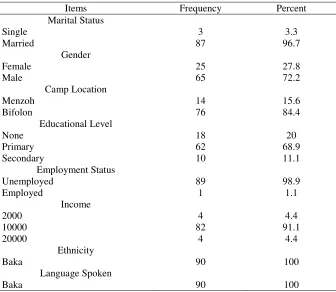
The study sample consisted of 90 Baka Forest People. Table 1. has data that include the mean age and number of children for the sample studied. The frequency and percentage summaries of the categorically measured demographic variables; marital status, gender, camp location, educational level, employment status, income, ethnicity, and language(s) spoken, are presented in Table 2.
Predicting satisfaction with life from generativity and identity threat: The experiences of Baka Forest People
of children 4.02 (SD = 2.75). The majority of those sampled were male (n=65; 72.2%). The average age of the 90 Baka Forest People who participated was 36.02 years old (SD = 13.96). The most elderly Baka person was 83 years old while the youngest was 21 years old. More than half (n=62; 68.9%) of the samples of Baka Forest People studied had completed primary education. On employment status, the vast majority (n =89; 98.9%) were unemployed. While regarding income level, a majority (n =82; 91.1%) of the 90 Baka Forest People earned 1000FCFA per month, an amount estimated at approximately 2.00 US dollars (exchange rate of $1=500FCFA). Regarding camp location, 76 (84.4%) resided in the Bifolon Baka settlement, while 14 (15.6%) lived in Menzoh. All participants are of Baka ethnicity and speak the Baka language.
Table 1
Descriptive Statistics of Age (n = 90)
N Minimum Maximum Mean Std. Deviation
Age 90 21 83 36.02 13.96
Number of Children 90 0 10 4.02 2.75
Table 1
Frequency and Percentage Summaries of Demographic Information (n = 90)
Items Frequency Percent
Marital Status
Single 3 3.3
Married 87 96.7
Gender
Female 25 27.8
Male 65 72.2
Camp Location
Menzoh 14 15.6
Bifolon 76 84.4
Educational Level
None 18 20
Primary 62 68.9
Secondary 10 11.1
Employment Status
Unemployed 89 98.9
Employed 1 1.1
Income
2000 4 4.4
10000 82 91.1
20000 4 4.4
Ethnicity
Baka 90 100
Language Spoken
Baka 90 100
4.2 Descriptive Statistics: Summary of Study Variables
Descriptive statistics of means and standard deviation were used to summarize the data of the continuous variables under study, the dependent variable (satisfaction with life) and the independent variables (generativity and identity threat). To obtained the scores of the survey variables all items in each of the survey instruments - Loyola Generativity Scale (LGS), Satisfaction with life Scale (SWL), and Stigma Consciousness Questionnaire (SCQ) were summed up. To create a continuous measure scores were summed up. Table 3 summarizes the descriptive statistics summaries of the scores among the 90 Baka Forest People who live in the tropical rain forest in Southeastern Cameroon.
Fai, R. D.
satisfied people were with their life, was 7.99 (SD = 1.61). Scores that range within 5 - 9 signpost that participants are extremely dissatisfied with life. Findings obtained from this measure consequently point to the fact that the sample of 90 Baka Forest People currently living in Bifolon and Menzoh in Southeastern Cameroon were extremely dissatisfied with their life.
The mean score obtained for generativity was 33.51 (SD = 7.68). This score was in the average range, indicating that the samples of 90 Baka Forest People who live in the rain forest of Southeastern Cameroon, Gabon, and Congo have average levels of generativity.
Third, to calculate the scores of the SCQ geared towards obtaining the measure of the independent variable of identity threat, items 1, 2, 4, 5, 6, 7, and 9 were reverse coded before getting the summed scores. The mean score obtained was 55.61 (SD = 7.11). This score falls in the higher end of the 10 to 70 range of possible scores for identity threat. Higher scores indicate higher levels of stigma consciousness. Therefore, the samples of 90 Baka Forest People who live in the tropical rain forest settlements of Bifolon and Menzoh in Southeastern Cameroon expressed high levels of stigma consciousness. Higher scores designate a high standard concern for identity threat.
Table 2
Descriptive Statistics of Scores of Satisfaction with Life, Generativity, and Identity Threat (N =90)
N Minimum* Maximum* Mean Std. Deviation
Satisfaction with life 90 5.00 12.00 7.99 1.61
Generativity 90 20.00 56.00 33.51 7.68
Identity threat 90 39.00 70.00 55.61 7.11
Note. *Denote possible average scores
4.3 Reliability of the Responses from the Survey Instruments
A test was carried out to establish the reliability and validity of the survey instruments as a means of establishing the internal consistency reliability of the survey results among the 90 samples of Baka Forest People. The Cronbach's Alpha reliability statistics for the three stated instruments were computed. Table 4 summarizes the Cronbach’s Alpha reliability statistics.
Only the LGS (α = 0.88) instrument had an acceptable Cronbach’s Alpha value (i.e., greater than 0.7, the minimum acceptable value). The responses on the SWL (α = 0.23) and SCQ (α = 0.55) instruments did not have acceptable Cronbach’s Alpha values, indicating that the replies on these surveys were not reliable.
Table 3
Cronbach’s Alpha Statistics of Survey Instruments of SWL, LGS, and SCQ
Cronbach's Alpha N of Items
SWL 0.23 5
LGS 0.88 20
SCQ 0.55 10
4.4 Multiple Regression Results
A multiple regression analysis was conducted to determine the relationship between the dependent variable (satisfaction with life), and the independent variables (generativity and identity threat). A cutoff significance value of 0.05 determined the statistical significance of relationships in the regression analysis. Table 5 summarizes the results of the regression analyses for the relationship between generativity and identity threat and satisfaction with life.
Predicting satisfaction with life from generativity and identity threat: The experiences of Baka Forest People
that concern for generativity has a negative relationship with satisfaction with life among the sample. The regression result showed that concern for generativity could be used to predict satisfaction with life amongst the Baka indigenous people.
Table 5
Regression Results of Influence of Generativity and Identity Threat on Satisfaction with Life
Model Unstandardized Coefficients Standardized Coefficients
B Std. Error Beta T Sig.
1 (Constant) 8.45 1.34 6.32 0.00
Generativity -0.06 0.02 -0.30 -2.68 0.01*
Identity threat 0.03 0.03 0.13 1.16 0.25
Note. F (2, 87) = 3.62, Sig. = 0.03, R Square (R2) = 0.28, N = 90 a. Dependent Variable: Satisfaction with life
b. Predictors: (Constant), Identity threat, Generativity *Significant at level of significance of 0.05
5. Discussion
The result of the multiple regression indicated that concern for generativity was negatively related to satisfaction with life. However, identity threat was not. Possibly, participants were upset that their circumstances were making it impossible for them to fulfill their generativity goals.
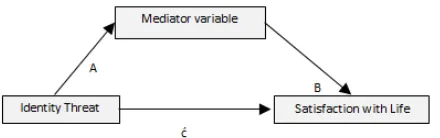
An interesting outcome of the findings was that there was not a significant relationship between identity threat and satisfaction with life. Results of the study pinpointed the fact that the sample of Baka individuals studied was extremely dissatisfied with their lives. At the same time, the results also highlighted an interesting aspect of the survey: High levels of stigma consciousness did not seem to have a significant effect on satisfaction with life. Perceived discrimination and stigma related behaviors would be expected to create depressive symptoms, anxiety symptoms, and social isolation (Phelan, 2010), and should influence satisfaction with life. However, this is not so with the Baka community studied, suggesting that there is a probable mediator or explanatory variable that impacts the relationship between identity threat and satisfaction with life. This relationship indicates that it is possible there is a mediator variable (figure 1), and for this population, it could be that resilience or coping strategies have led to a situation where identity threat is no longer impacting satisfaction with life. It is not clear, however, what may be the underlying explanation for this situation.
Figure 1. Possible mediator effect between identity threat and satisfaction with life.
Dalton and Huang (2014), Borton et al. (2011), and similarly Pinel and Paulin (2005), researched coping approaches to issues that relate to identity threat. Their results may aid understanding of why there was not a strong correlation between identity threat amongst the Baka indigenous people and their satisfaction with life. According to Dalton, and Huang (2014), when individuals feel threatened, they may use motivated forgetting as a psychological defense mechanism. Motivated forgetting involves suppressing unwanted memories from one's consciousness. Borton, Reiner, Vazquez, Ruddiman and Anglin (2011) as well as Pinel and Paulin (2005) shares this view. For example, Borton et al. (2011) posited that targeted groups or entities suppress thoughts that they are stigmatized, while Pinel and Pauline (2005) theorized that people high in stigma consciousness tend to disengage from stigmatizing situations.
Fai, R. D.
threat and satisfaction with life include what Smith, Kausar, and Holt-Lunstad (2007) have pointed out is the ability of individuals high in stigma consciousness to escape situations where they may be stereotyped or judged. Shelton, Richeson, and Vorauer (2006), argued that people from an ethnic group that is often stereotyped possibly will react to identity threat through behaviors that will help them avoid stressful situations. Also, increased in-group identification may provide a way to moderate stereotype threat effects (Guyll, Madon, Prieto, & Scherr, 2010), and this is the case amongst the Baka of Southeastern Cameroon, based on my experience in the field. These variables just mentioned can consequently build the capability for a group of people who believe there is an imminent threat to their social group to manage such threats in ways that do not translate to negative experiences with regards to satisfaction with life, as observed in the findings of this study.
The findings do, however, suggest that when people have concern for generativity, this contributes to their dissatisfaction with life. Concern for generativity for the samples of Baka individuals who participated in this study contributed to their dissatisfaction with life. By implication, this means that the fewer concern people have about meeting their generative goals, the less dissatisfied they will be with their lives.
5.1 Research Limitations
The purpose of this investigation was to understand the relationship between concern for generativity and identity threat (predictors) and satisfaction with life (outcome). However, there were limitations on the influences of other variables in this relationship. For example, there were possibilities of interviewing bias and instrument bias. Questioning bias includes the possibility that the methodology of directly administering research tools to the sample under study may have led to the interpretation of responses in ways that fitted an already existing schema of the interviewer. Also, the duration it took to administer the test instruments may have influenced the findings negatively. Due to limited time in the field, this could have led to poor translations of instruments from Baka’s original language to French the language used for interviewing the research participants. Poor interpretation of questions conceivably could have resulted in ineffectiveness in capturing the phenomenon, and consequently, there could have led to inconsistent and or unreliable results. In fact, the responses obtained from the SWL and SCQ instruments, as pointed out earlier, were found not to be reliable. These findings were significant and deserved further scrutiny. Furthermore, the results of the research could not be fully understood independently of the exigencies involving other important actors in Baka people’s lives (for example their Bantu brothers, logging companies, mining concerns, the government, etc.). In the absence of a comprehensive approach that targeted other significant stakeholders who directly or indirectly influence the well-being of the Baka indigenous people, it is problematic to appreciate the real circumstances impacting their lives based on the current findings.
An additional limitation can be considered as an inadequacy in instrument adaptation to meet the contextual reality of Baka indigenous people. To be able to overcome these limitations, future researchers are obligated to spend more time living in the communities under study to understand the Baka people's perspectives from an insider's point of view. Furthermore, adapting research instruments in ways that will meet the contextual reality of the communities was paramount in determining how reliable the research findings will be. In the case of the Baka people, translating research instruments into the Baka Language and comparing constructs to ensure these are an adequate representation of the Baka equivalent was going to cost not only time but also money, two variables that I was not privileged to have during this research process.
Predicting satisfaction with life from generativity and identity threat: The experiences of Baka Forest People
information can be triangulated to have a fair picture of the prevailing circumstances of the Baka people.
5.2 Recommendations
Several recommendations can be made on the findings of this study and include a view suggested by Cobern (1996). Cobern has extensively studied the challenges of attempting to transfer science education and curriculum developed in Western cultures and used in nonwestern communities. According to him, science concepts, theories, and instruments alien to nonwestern users pose problems because these are not understood within local cultures and contribute infinitesimally to learning. Research using such devices can only be beneficial scientifically if the instruments are proficient in meeting validity and reliability requirements. Even then, it is still questionable what validity and reliability will mean from an indigenous cultural perspective. Otherwise, from a Western scientific perspective, reliability and validity can be achieved if participants in a study have the ability to use logic when required to use common sense reasoning in responding to what they have understood as asked in a particular question, or set of questions.
Also, Cobern (1996) also suggested that to avoid the pitfalls of failure in transferring western science education, research and curriculum development to nonwestern countries, these countries can benefit from science by not accepting curricula from the West, but rather making use of a constructivist methodology. The challenges of using Western instruments in nonwestern societies is equally valid for international scientific and cross-cultural research, as is the case with this study. It is recommended, therefore, that researchers, as well as institutions teaching cross-cultural research, should develop techniques that facilitate international and intercultural learning. Teaching techniques that promote international and intercultural education will help develop instruments that are culturally sensitive and designed from a constructivist perspective, as suggested by Cobern (1996). Future research should dedicate a considerable amount of time in exploring and defining concepts under study. Identifying similar ideas within the community with their correspondent meaning, and contrasting original concepts with western concepts for purposes of ensuring that these align is important consequently will benefit research efforts and help increase the credibility of investigation results.
5.3 Future Research
Future research should find out the underlying factors that are limiting Baka people’s ability to access opportunities and resources, within and beyond their community boundaries. For instance, finding out the role of stereotypes on performance avoidance, and or performance approach goals. Examining also the effect of discrimination in Baka people’s ability to access political, economic, social, civic and educational opportunities. Smith, Kausar, and Holt-Lunstad (2007) defines performance-avoidance goals as the desire to avoid demonstrating incompetence compared to other people, while performance approach goals are considered to be a wish to show competence about others. On the Baka indigenous people, what may influence the differences in stereotype threat activation include an individual's level of education, the level of income, the level of interaction with other non-Baka ethnic populations (acculturation), and degree of access to available resources. That can allow Baka people to live an optimal life that is comparable to the lives of their Bantu neighbors. In the same manner, the lived experiences of Baka people as narrated by residents of Bifolon and Menzoh during field observations (Fai, 2016) indicated that engaging might be more detrimental to wellbeing than disengaging. According to Fai, accounts shared by Baka people authenticated the degree of abuse and discrimination currently being experienced by Baka people during interactions with their Bantu neighbors. Though Pinel and Paulin (2005) have argued disengaging as detrimental not only to the individual but society, it is evident that disengaging in the case of Baka indigenous people may be thought of as beneficial by the population and should constitute an exciting area for future research.
Fai, R. D.
absence of the ability to get an education, challenging economic circumstances and existing social disadvantages. Future research needs to explore the relationship existing between resiliency and cross-cultural adaptation. Resiliency and cross-cultural adaptation is an exciting area where future research can measure the concept of resiliency cross-culturally, with a focus on how cultural setups may determine ethnic disparities in ability to be resilient. Findings from such a research initiative will furnish further information that will provide a greater understanding of the real discrepancy that may exist between the ability of Baka both as individuals and as a collective to overcome adversities that threaten their very existence, compared to persons and organizations within Bantu communities. Also, findings can aid the determination of resiliency as a contributing mediator which may account for the weak relationship between identity threat and satisfaction with life as observed in this research.
6. Conclusions
In conclusion, this investigation assumed that Baka indigenous people were experiencing severe challenges which were negatively impacting their satisfaction with life. Based on this assumption it was thought that one could predict Baka happiness from concern for generativity and feelings of identity threat. Turnbull (2015), an anthropologist who had conducted research on the Mbuti Forest People and similar to the Baka, insinuated that the Mbuti believed the forest was like a "father" and "mother" who gave the Mbuti everything they needed in life. Without such a "father" and "mother," it was assumed Baka’s wellbeing was under threat and that Baka eviction from the forest was negatively impacting their lives.
This research together with research conducted by others can possibly open up debates which will promote indigenous people’s wellbeing. The present research can lead to possible program intervention suggestions that will remedy some of the problems being faced by indigenous populations in Cameroon. A few examples include the establishment of new laws that will create and protect ethnic minority zones, establish development funds for development initiatives, and launch an ecological management board as well as introduce policies that will facilitate social impact assessments for projects that impact Baka culturally, economically and psychologically. This research has made valuable contributions to existing psychological knowledge about the lives of Baka people. The research has provided lessons regarding the obstacles faced by researchers in transferring instruments and concepts from one culture to another in scientific inquiry.
The results of this research have supported the view that one can predict satisfaction with life amongst the Baka indigenous people from their concern for generativity and perception of identity threat. The research similarly has suggested that Baka people have high concern for generativity and that they believe existential circumstances were threatening their status as an ethnic group. However, the study found out that identity threat alone does not have a large effect on satisfaction with life, suggesting that there may be other variables that perchance may be mediating the relationship between satisfaction with life and identity threat for Baka Forest People. Interestingly too, some of the responses provided by the sample of Baka people studied were not reliable. Unreliable responses warrant further scrutiny in future research. Finally, a bicultural methodological approach, where the investigator spends more time living amongst the two groups of Baka indigenous people (nomadic forest dwellers and those who have settled on logging routes), may be relevant. A bicultural approach will enhance the understanding of the real meaning and impact of generativity and perception of identity threat on the subjective wellbeing of both groups.
Predicting satisfaction with life from generativity and identity threat: The experiences of Baka Forest People
Dr. Janet de Merode, Dr. Priscilla Dass-Brailsford, as well as Dr. Adelina Longoria all of TCSPP who one way or the other assisted me in realizing the goals of this research.
7. References
Achu, F. N., & Asongu, N. A. (2015). Development challenges amongst the Baka people of the eastern region of Cameroon: An anthropological perspective. International Journal of Innovation and Applied Studies, 12(2), 440-446
Ashforth, B. E., & Mael, F. (1989). Social identity theory and the organization. Academy of Management Review, 14(1), 20-39.
Borton, J. L., Reiner, D. R., Vazquez, E. V., Ruddiman, J. F., & Anglin, S. M. (2011). Does suppressing the thought of a self-relevant stigma affect interpersonal interaction? The Journal of social psychology, 151(3), 240-256. https://doi.org/10.1080/00224541003599050
Cobern, W. W. (1996). Constructivism and non‐western science education research. International Journal of Science Education, 18(3), 295-310. https://doi.org/10.1080/0950069960180303
Dalton, A. N., & Huang, L. (2014). Motivated Forgetting in Response to Social Identity Threat. Journal of Consumer Research, 40(6), 1017-1038. https://doi.org/10.1086/674198
de Medeiros, K. (2009). Suffering and generativity: Repairing threats to self in old age. Journal of Aging Studies, 23(2), 97-102. https://doi.org/10.1016/j.jaging.2008.11.001
Devin, L. (2011). Baka forest people. Retrieved from http://www.Forest People.org/baka/
Diener, E., Emmons, R. A., Larsen, R. J., & Griffin, S. (1985). The satisfaction with life scale. Journal of Personality Assessment, 49, 71-75. https://doi.org/10.1207/s15327752jpa4901_13
Diener, E., Suh, E. M., Lucas, R. E., & Smith, H. L. (1999). Subjective well-being: Three decades of progress. Psychological Bulletin, 125(2), 276-302. https://doi.org/10.1037/0033-2909.125.2.276
Ellemers, N., & Haslam, S. A. (2012). Social identity theory. In P. M. Van Lange, A. W. Kruglanski, E. T. Higgins, P. M. Van Lange, A. W. Kruglanski, E. T. Higgins (Eds.), Handbook of theories of social psychology (Vol 2, pp. 379-398). Thousand Oaks, CA: Sage Publications Ltd.
https://doi.org/10.4135/9781446249222.n45
Emerson, K. U., & Murphy, M. C. (2014). Identity threat at work: How social identity threat and situational cues contribute to racial and ethnic disparities in the workplace. Cultural Diversity and Ethnic Minority Psychology,20(4), 508-520. https://doi.org/10.1037/a0035403
Fai, R. D. (2016). Generativity, identity, and life satisfaction: A mixed methods investigation of the Baka in Cameroon (Doctoral dissertation). The Chicago School of Professional Psychology.
Gilbert, J., Couillard, V., Kenrick, J., & Kidd, C. (2009). Land rights and the Forest Peoples of Africa: Historical, Legal and Anthropological perspectives. Retrieved from http://ssrn.com/abstract=1403958
Global Post. (2011). Forest People in the Congo treated like "pets": Report. Retrieved from
http://www.globalpost.com/dispatch/news/regions/africa/111113/pygmy-pets-congo-Forest-People-slav ery-human-rights
Guastello, D. D., Guastello, S. J., & Briggs, J. M. (2014). Parenting style and generativity measured in college students and their parents. SAGE Open, 4(1). https://doi.org/10.1177/2158244013518053
Guyll, M., Madon, S., Prieto, L., & Scherr, K. C. (2010). The potential roles of self‐fulfilling prophecies, stigma consciousness, and stereotype threat in linking Latino/a ethnicity and educational outcomes. Journal of Social Issues, 66(1), 113-130. https://doi.org/10.1111/j.1540-4560.2009.01636.x
Hofer, J., Busch, H., Chasiotis, A., Kärtner, J., & Campos, D. (2008). Concern for generativity and its relation to implicit pro-social power motivation, generative goals, and satisfaction with life: a cross-cultural investigation. Journal of Personality, 76(1), 1-30. https://doi.org/10.1111/j.1467-6494.2007.00478.x Jack, D. C., Ali, A., & Dias, S. (2014). Depression in multicultural populations. In F. L. Leong, L. Comas-Díaz,
G. C. Nagayama Hall, V. C. McLoyd, J. E. Trimble, F. L. Leong, ... J. E. Trimble (Eds.), APA handbook of multicultural psychology: Applications and training (Vol. 2, pp. 267-287). Washington, DC, US: American Psychological Association. https://doi.org/10.1037/14187-016
Fai, R. D.
Research. https://doi.org/10.1155/2012/647650
Lalonde, C. E. (2006). Identity formation and cultural resilience in Aboriginal communities. Promoting resilience in child welfare (pp. 52-71). University of Victoria.
Lawford, H. L., Doyle, A., & Markiewicz, D. (2012). The association between early generative concern and caregiving with friends from early to middle adolescence. Journal of Youth and Adolescence, 42(12), 1847-1857. https://doi.org/10.1007/s10964-012-9888-y
Leonard, Yves. (1997). The Baka: A people between two worlds. Retrieved from http://www.collectionscanada.gc.ca/obj/s4/f2/dsk2/ftp03/MQ26821.pdf
Lewis, M. P., Gary F. S., & Fennig, D. C. (Eds.). (2013). Ethnologue: Languages of the world (17th ed). Dallas, Texas: SIL International.
McAdams, D. P., & de St. Aubin, E. (1992). A theory of generativity and its assessment through self-report, behavioral acts, and narrative themes in autobiography. Journal of Personality and Social Psychology, 62, 1003-1015 https://doi.org/10.1037/0022-3514.62.6.1003
McAdams, D. P., de St. Aubin, E., & Logan, R. L. (1993). Generativity among young, midlife, and older adults. Psychology and Aging,8, 221-230. https://doi.org/10.1037/0882-7974.8.2.221
Peterson, B. E. (2006). Generativity and successful parenting: an analysis of young adult outcomes. Journal of Personality,74(3), 847-869. https://doi.org/10.1111/j.1467-6494.2006.00394.x
Phelan, S. M. (2010). Evaluating the implications of stigma-induced identity threat for health and health care. University of Minnesota.
Pinel, E. C., & Paulin, N. (2005). Stigma consciousness at work. Basic and applied social psychology, 27(4), 345-352. https://doi.org/10.1207/s15324834basp2704_7
Pinel‚ Elizabeth C. (1999). Stigma consciousness: The psychological legacy of stereotypes. Journal of Personality and Social Psychology‚ 76(1)‚ 114-128 https://doi.org/10.1037/0022-3514.76.1.114 Pyhälä, Aili. (2012). What future for the Baka? Indigenous peoples' rights and livelihood opportunities in
southeast Cameroon. Copenhagen: IWGIA
Rablen, M. D. (2012). The promotion of local well-being: A primer for policymakers. Local Economy, 27(3), 297-314. https://doi.org/10.1177/0269094211434488
Reicher, S. (2004). The context of social identity: Domination, resistance, and change. Political Psychology, 25(6), 921-945. https://doi.org/10.1111/j.1467-9221.2004.00403.x
Rosen, W. B., & Walker, M. (2004). How connections heal: Stories from relational-cultural therapy. New York: The Guilford Press.
Rupp, S. K. (2001). I, you, we, they: Forests of identity in southeastern Cameroon.
Sarivaara, E., Määttä, K., & Uusiautti, S. (2014). Audiovisual frame story as a method of critical consciousness sharing in indigenous research. International Journal of Research Studies in Psychology, 3(3), 113-123. https://doi.org/10.5861/ijrsp.2014.773
Shelton, J. N., Richeson, J. A., & Vorauer, J. D. (2006). Threatened identities and interethnic interactions. In W. Stroebe, M. Hewstone, W. Stroebe, M. Hewstone (Eds.), European review of social psychology (Vol. 17, pp. 321-358). New York, NY, US: Psychology Press. https://doi.org/10.1080/10463280601095240 Simo, M. J., & Nchoji, N. P. (1995). Nature and human development among the Baka Forest People: Concepts
and perceptions. Retrieved from http://ignca.nic.in/ps_05020.htm
Smith, J. L., Kausar, R., & Holt-Lunstad, J. (2007). Stigma consciousness in the classroom: A comparison of Pakistani women’s motivation and well-being in science and non-science fields of study. Sex Roles, 57(1-2), 3-13. https://doi.org/10.1007/s11199-007-9217-1
Tajfel, H., & Turner, J. (1979). An integrative theory of intergroup conflict. In W. G. Austin & S. Worchel (Eds.), The social psychology of intergroup relations (pp. 33-47). Monterey, CA: Brooks/Cole.
Tajfel, H., & Turner, J. C. (1986). The social identity theory of inter-group behavior. In S. Worchel and L. W. Austin (Eds.), Psychology of intergroup relations (pp. 7-27). Chicago: Nelson-Hall