Anna Skoczyńska, Rafał Poręba, Bogusława Kreczyńska, Barbara Turczyn,
Anna Wojakowska
Postprandial Lipemia and C-Reactive Protein
in Middle-Aged Men Treated for Hyperlipemia
Lipemia poposiłkowa i białko C-reaktywne u mężczyzn w średnim wieku
leczonych z powodu hiperlipemii
Department of Internal and Occupational Diseases and Hypertension, Wroclaw Medical University, Poland
Abstract
Background. Postprandial lipoproteins enhance inflammatory activity, but the mechanisms of this action remain unclear.
Objectives. The aim of the study was to determine postprandial lipemia in hyperlipemic subjects and to study the relationship between lipids and high-sensitivity C-reactive protein (hs-CRP) in fasted and postprandial states.
Material andMethods. Blood samples were taken from 148 men (60 normolipemic, 27 hypertriglyceridemic, 49 hypercholesterolemic, and 12 with mixed hyperlipemia) in a fasted state and three hours after a standardized high-fat meal (1500 kcal) three times: before and after 6 and and 12-weeks of therapy with simvastatin (20 mg/ /day) and/or fenofibrate (267 mg/day). Triglycerides (TG), total lipoprotein, low-density lipoprotein (LDL), high--density lipoprotein (HDL), and HDL2- and HDL3-cholesterol were measured by routine methods, apolipopro-teins A and B by immunoturbidimetry, and hs-CRP by immunonephelometry.
Results. At the start of the study the mean hs-CRP level was increased (p < 0.05) in the hyperlipemic vs. the nor-molipemic men whereas the mean postprandial triglyceride increase (∆TG) was higher (p < 0.05) in the men with hypertriglyceridemia. However, fasting TG (TGo) > 400 mg/dl was associated with low ∆TG and TGo < 400 mg/dl with high TG changes. Hypolipemic therapy caused a reduction in postprandial TG changes in all the hyperlipemic men. Linear correlation between the concentrations of TG and HDL as well as HDL3-cholesterol was found. Positive cor-relation between TGo and hs-CRP concentrations coexisted with a negative relationship between HDL3-cholesterol and hs-CRP only in the control group. Statin restored the relationship between the concentrations of HDL3-C and hs-CRP in the hypercholesterolemic men.
Conclusions. Increased postprandial lipemia in hyperlipemic men was associated with increased inflammatory activity and HDL3-cholesterol seems to have anti-inflammatory properties. Hypolipemic therapy decreased post-prandial lipemia and at least partially recovered regulatory function in lipid homeostasis (Adv Clin Exp Med 2010, 19, 1, 89–98).
Key words: postprandial lipemia, C-reactive protein, statin, fibrate, hyperlipemia.
Streszczenie
Wprowadzenie. Lipemia poposiłkowa jest związana ze wzrostem aktywności zapalnej, chociaż mechanizm tego związku jest niejasny.
Cel pracy. Określenie lipemii poposiłkowej u osób z hiperlipemią i ocena zależności występujących między lipida-mi i wysoko czułym białkiem C-reaktywnym (hsCRP) w warunkach przed i po posiłku.
Materiał imetody. Badaniem objęto 148 mężczyzn (60 normolipemicznych, 27 z hipertrójglicerydemią, 49 z hiper-cholesterolemią i 12 z mieszaną hiperlipemią). Próbki krwi pobierano na czczo oraz po 3 godzinach od spożycia standaryzowanego posiłku wysokotłuszczowego (1500 kcal) 3-krotnie: przed, po 6 i po 12 tygodniach terapii sim-wastatyną (20 mg/dobę) i/lub fenofibratem (267 mg/dobę). Trójglicerydy (TG), cholesterol (całkowity, LDL, HDL, HDL2 i HDL3) oznaczano metodami rutynowymi, apolipoproteiny A and B immunoturbidymetrycznie, a hsCRP immunonefelometrycznie.
Wyniki. Na początku badania średnie stężenie hsCRP u mężczyzn z hiperlipemią było większe (p < 0,05) niż u mężczyzn z normolipemią, poposiłkowe zwiększenie stężenia trójglicerydów (∆TG) natomiast był większe (p < 0,05) u mężczyzn z hipertriglyceridemią. Jednocześnie wartościom TG na czczo (TGo) > 400 mg/dL
towa-Adv Clin Exp Med 2010, 19, 1, 89–98 ISSN 1230-025X
ORIGINAL PAPERS
The atherogenic activity of postprandial lipo-proteins is documented. Triglyceride (TG)-rich chylomicrones and their remnants deliver sub-strates to generate very-low-density lipoproteins (VLDLs) in the liver. The increased large VLDL1 particles initiate a sequence of events that gener-ates atherogenic remnants, small dense LDL and small dense HDL particles [1]. Remnant-like par-ticles (RLPs) penetrate the intact endothelium, undergo modification in the subendothelial space, and are taken up via scavenger receptors located on the surface of macrophages. In this way, RLPs can directly participate in foam-cell formation [2–4]. Consisting of high amounts of medullar TG, RLPs undergo lypolysis by lipoprotein lipase on the surface of macrophages [5]. Lysolecithin, formed from the product of lipolysis, together with free fatty acids can stimulate chemotaxis of macrophages, up-regulate the expression of adhe-sion molecules on the endothelium, and activate the expression of growth factors [6]. In this man-ner, lipolysis can indirectly stimulate foam-cell formation and inflammation [5, 7]. Postprandial lipoproteins can also stimulate an inflammatory reaction in vessel walls, activating leukocytes and the complement system [8] as well as disturbing nitric oxide metabolism [9].
Increased fasting TG level is a known factor independently associated with increased cardio-vascular risk. Increased postprandial lipemia con-tributes to the excess risk of future coronary events [1, 10] and is associated with frequent occurrence of asymptomatic carotid atherosclerosis [11] and has been shown to be an independent prognostic marker of coronary heart disease as well as the severity of the disease [12]. Hypertriglyceridemia together with decreased HDL, composing athero-genic dyslipidemia, is responsible for residual car-diovascular risk [13–16].
Hypolipemic therapy decreases postpran-dial lipemia and attenuates inflammatory activ-ity in hyperlipemic patients [17, 18]. Rosuvastatin also reduces serum lipids and high-sensitivity C-reactive protein (hs-CRP) and significantly reduces cardiovascular incidence in normolipemic
subjects, which is why the JUPITER study was interrupted [19]. Fibrates, acting as PPAR alpha agonists, reduce postprandial TG and fasting inflammatory potential in patients with athero-genic dyslipidemia [20, 21].However, the relation-ship between lipids and hs-CRP, especially in the postprandial state, is unclear.
In this study, disturbances in postprandial lipid homeostasis and changes in inflammatory activity in men diagnosed with hyperlipemia were evaluated. The aim of the study was to determine the relationship between fasting/postprandial lip-ids and hs-CRP in men diagnosed with hypercho-lesterolemia or hypertriglycerydemia before and during treatment with a statin and/or a fibrate.
Material and Methods
Patients
Men in the age 50.9 ± 9.6 years with diagnosed hyperlipemia who had not been treated with hypo-lipemic drugs for at least the past three months and normolipemic volunteers (45.6 ± 11.2 years old) were involved in the study. Exclusion crite-ria included liver, renal, thyroid, inflammatory, and neoplastic diseases. Of the 88 patients with hyperlipemia, 49 (52.1 ± 9.6 years old) were diag-nosed with hypercholesterolemia (defined by the National Cholesterol Education Program as a fast-ing total cholesterol level of > 200 mg/dl, 27 (48.7 ± ± 10.9 years old) with hypertriglyceridemia (defined by the NCEP as a fasting TG level of > 200 mg/dl), and 12 (51.4 ± 4.8 years old) with mixed hyper-lipidemia. According to the European Society of Cardiology/Polish Society of Cardiology guideline (2007), the patients were treated with a simvasta-tin (Simvasterol, Polpharma) at a dose of 20 mg and/or fenofibrate (Lipanthyl, Solvay) at a dose of 267 mg daily.
Apart from physical examination, biochemi-cal measurements in blood were carried out in fasted and postprandial states: 1) at the beginning, 2) after 6 weeks, and 3) after 12 weeks of the
phar-rzyszyły mniejsze ∆TG, podczas gdy TGo < 400 mg/dL były związane z większymi poposiłkowymi zmianami TG. Leczenie hipolipemizujące istotnie ograniczało lipemię poposiłkową. Wykazano występowanie liniowych zależ-ności między stężeniami TG a HDL lub HDL3-cholesterolu. Dodatnia korelacja między TGo i hsCRP współist-niała z ujemną zależnością między HDL3-cholesterolem a hsCRP tylko w grupie kontrolnej. Statyna przywracała zależność między stężeniami HDL3-C a hsCRP u mężczyzn z hipercholesterolemią.
Wnioski. Zwiększona lipemia poposiłkowa u mężczyzn leczonych z powodu hiperlipemii jest związana ze zwięk-szoną aktywnością zapalną, a subfrakcja HDL3 wydaje się mieć właściwości przeciwzapalne. Leczenie hipolipemizu-jące zmniejsza lipemię poposiłkową i przynajmniej częściowo przywraca prawidłowe funkcje regulacyjne w home-ostazie lipidów (Adv Clin Exp Med 2010, 19, 1, 89–98).
macotherapy. The parameters were determined in fasted and fed states also in 60 normolipemic men (control group). Each time, samples of blood were taken 12 hours after the last meal and 3 hours after the standardized lipid-rich meal (100 g of fat, 1500 kcal). The fat composition of this meal was deter-mined by gas chromatographic and mass spectro-scopic methods and they showed: C 18 : 1 41.4% oleic acid, C 16:0 24.7% palmitic acid, C 18 : 0 16.7% stearic acid, C 18:2 8.8% linolic acid, and 9.3% other.
Written informed consent was obtained from all the men taking part in the study. The study was approved by Local Ethics Committee in Wroclaw and followed the Declaration of Helsinki.
Biochemical Measurements
Serum total cholesterol, TG, and HDL- -cholesterol (HDL-C) were measured using the Spinreact enzymatic assay (Sant Esteve De Bas, Girona, Spain). LDL cholesterol (LDL-C) was cal-culated by the Friedewald formula. The Quantolip HDL test (Technoclone GmbH, Vienna, Austria) was used to precipitate HDL2- and HDL3- -cholesterol. Apolipoprotein A (apo A) and apo-lipoprotein B (apo B) were determined in serum with the immunoturbidimetric method of DADE Behring Marburg GmbH (Marburg, Germany). Serum hs-CRP was determined using the CardioPhase hs-CRP Dade Behring preparation with the molecular immunonephelometric
meth-od according to the N Rheumatology Standard SL (BCR-CRM 470).
Statistical Analysis
Statistical analysis was performed with the use of the Statistica PL 6.0 program (Stat Soft, Poland). Means (x) and standard deviations (SD) are given except for Fig. 1, in which means and standard error of means (SEM) are presented. The distribution of the variables was checked with the
Shapiro-Wilk W test. The ANOVA Friedman test
was then used because the variables had nonpara-metric distributions. Statistically significant dif-ferences between means were determined with the Scheffe or NIR post-hoc test. Values of p < 0.05 were accepted as statistically significant. Correlations between parameters were checked by Spearman’s correlation coefficient.
Results
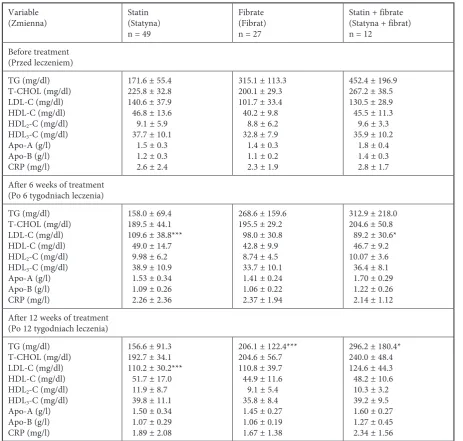
The basal characteristics of all the groups are presented in Table 1. There were no differences among the patient groups regarding body mass index and smoking habit. During hypolipemic therapy, no adverse clinical and/or biochemical symptoms were observed.
After 6 weeks of treatment with the statin, mean fasting LDL-C levels decreased (p < 0.001) and this effect was maintained up to the end of
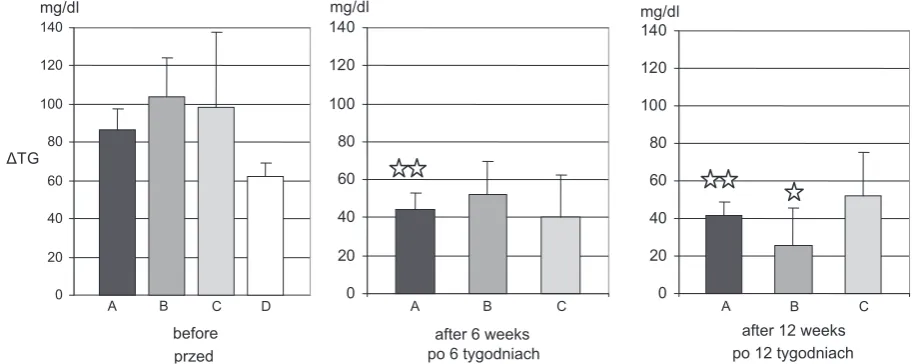
Fig. 1. Mean absolute postprandial increase in TG (∆TG = postprandial TG minus fasting TG). Results are given as means and SEM, A) in men treated with a statin (n = 49), B) with a fibrate (n = 27), C) with a statin plus fibrate (n = = 12), and D: in the control group (n = 60). In men treated with a statin, ** p < 0.01, differences statistically significant compared with the period before the treatment; in men treated with a fibrate, * p < 0.05, difference statistically signifi-cant compared with the period before the treatment
Ryc. 1. Średnie bezwzględne poposiłkowe wzrosty TG (ΔTG = poposiłkowe TG minus TG na czczo). Wyniki przed-stawiono jako średnia ± SEM. U mężczyzn leczonych statyną (A; n = 49), fibratem (B; n = 27), statyną i fibratem (C; n = 12) i w grupie kontrolnej (D; n = 60). a: w grupie mężczyzn leczonych statyną: ** p < 0,01 – różnica statystycz-nie istotna w porównaniu do okresu sprzed leczenia; w grupie mężczyzn leczonych fibratem: * p < 0,05 – różnica sta-tystycznie istotna w porównaniu do okresu sprzed leczenia
after 12 weeks
A B C
0 20 40 60 80 100 120 140
mg/dl
after 6 weeks
A B C
0 20 40 60 80 100 120 140mg/dl
before
A B C D
0 20 40 60 80 100 120 140
mg/dl
ΔTG
the 12th week. Therapy with the fibrate resulted in a gradual reduction in mean fasting TG level, so that after 12 weeks it was significantly lower (p < 0.001). Statin plus fibrate administration decreased fasting LDL-C after 6 weeks (p < 0.05) and TG concentrations after 12 weeks (p < 0.05). The effect of the pharmacotherapy on HDL-C, apo A, apo B, and hs-CRP was similar in all the groups of men with hyperlipemia (Table 2).
At the start of the study the mean absolute postprandial increase in TG (postprandial TG minus fasting TG: ∆TG = TGp-TGo) in the men
with hypertriglyceridemia (103.7 ± 107.0 mg/dl) was higher (p < 0.05) than in the normolipemic men (67.5 ± 57.5 mg/dl). Mean ∆TG in the men diagnosed with mixed hyperlipemia (98.1 ± 136.7
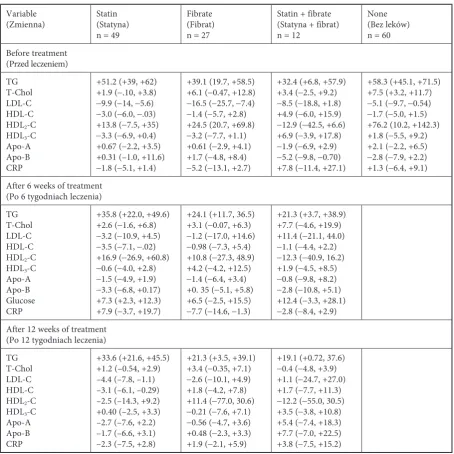
mg/dl) or hypercholesterolemia (86.7 ± 78.9 mg/ dl) was slightly higher than in the control group. Hypolipemic therapy had a significant effect on postprandial lipemia. In the men with hyper-cholesterolemia, the statin significantly (p < 0.01) reduced high-fat meal-stimulated increases in TG after 6 weeks, but in the patients with hypertrig-lyceridemia, the fibrate reduced (p < 0.05) post-prandial ∆TG after 12 weeks (Fig. 1). However, the relative effects of the drugs on postprandial lipemia (expressed as the percentage of fasting lipemia) were similar; after 6 weeks of treatment
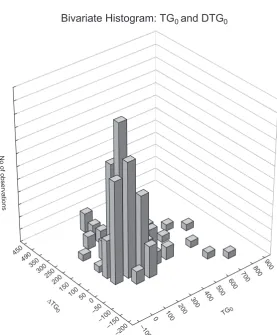
with the statin, the postprandial triglyceridemia reduction (from 51% of to 36% TGo) was similar to that induced by the fibrate (from 39% to 24% TGo) and this effect was maintained until the 12th week of therapy (Table 3). This observation needs to be completed by analysis of the dependency between fasting and inducible (postprandial) values of TG. Linear regression analysis confirmed a strong positive correlation between TGo and TGp before treatment (Fig. 2), after 6 weeks of therapy (r = = 0.882, p < 0.001), and at the end of the study (r = = 0.913, p < 0.001). However, variable distribution analysis show that high TGo values (> 400 mg/dl) were associated with low meal-induced changes in TG (∆TG), whereas normal or slightly elevat-ed TGo values (<400 mg/dl) were associatelevat-ed with higher TG changes in the fed state (Fig. 3).
Regression analysis performed for the data obtained from all the groups of men showed lin-ear relationships between apo B and LDL-C (r = =0.345, p < 0.001 and r = 0.383, p < 0.001, respec-tively, for fasting and postprandial values), apo A and HDL-C (r = 0.499, p < 0.001 and r = = 0.452, p < 0.001), and also between fasting TG and HDL-C concentrations (r = –0.256,
p < 0.001).
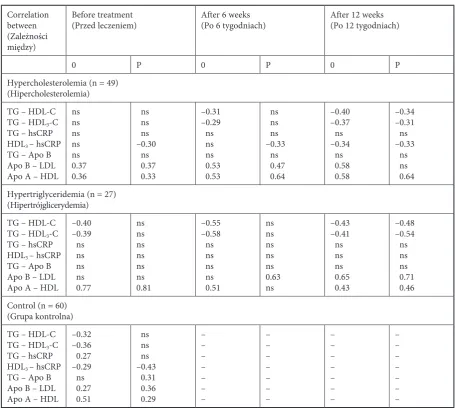
As shown in Table 4, such linear dependen-cies were found in the group of normolipemic
Table 1. Baseline characteristics of 88 men in groups intended to be treated with a statin, a fibrate, or a statin plus a fibrate and 60 normolipemic men (control group). Results are given as means ± SD. There are significant differences compared with the control group: * p < 0.05, ** p < 0.01, *** p < 0.001
Tabela 1. Wyjściowa charakterystyka grupy 88 mężczyzn mających rozpocząć leczenie statyną, fibratem, statyną plus fibratem i grupy mężczyzn normolipemicznych (kontrolnej). Wyniki przedstawiono jako średnią ± SD. Zaznaczono różnice statysty-cznie istotne w odniesieniu do grupy kontrolnej: * p < 0,05, ** p < 0,01, *** p < 0,001
Variable
(Zmienna) Statin(Statyna) n = 49
Fibrate (Fibrat) n = 27
Statin + fibrate (Statyna + fibrat) n = 12
None (Bez leków) n = 60 Before the treatment
(Przed leczeniem)
BMI (kg/m2) 29.3 ± 5.4 31.0 ± 5.2 28.9 ± 5.4 28.9 ± 5.2
Smoker (%)
(Palacze) 21 (43 %) 15 (56 %) 6 (50%) 18 (30%)
Triglyceride (mg/dl)
(Trójglicerydy) 171.6 ± 55.4 315.1 ± 113.3** 452.4 ± 196.9*** 131.9 ± 49.4 LDL-cholesterol (mg/dl) 140.6 ± 37.9 101.7 ± 33.4 130.5 ± 28.9 110.0 ± 36.7 HDL-cholesterol (mg/dl) 46.8 ± 13.6 40.2 ± 9.8 45.5 ± 11.3 44.4 ± 8.5 Apolipoprotein A (g/l)
(Apolipoproteina) 1.5 ± 0.3 1.4 ± 0.3 1.8 ± 0.4 1.5 ± 0.3 Apolipoprotein B (g/l)
men, but not in the separate groups of men with hypercholesterolemia or hypertriglyceri-demia (because of the small mixed-hyperlipemic group, the analysis is not presented). However, in each group, in the fasted and fed states, precise conjunction between two linear correlation, i.e. between TG and HDL-cholesterol and between TG and HDL3-cholesterol, was observed (the presence or lack of correlation between the levels of TG and HDL-C was connected with the pres-ence or lack a relationship between the concen-trations of TG and HDL3-C). On the other hand, only in the control group was there coexistence:
positive linear correlation between fasting TG and hs-CRP levels and negative linear correla-tion between fasting HDL3-C and hs-CRP level was shown (Table 4). This coexistence may arise from the reverse relationship between fasting TG and HDL3-C concentrations in this group. However, no correlation between fasting TG or HDL3-C and hs-CRP was observed in any group of men with hyperlipemia at the start of the study although the mean fasting hs-CRP concentration was greater than in healthy men (Table 1). The hypolipemic treatment reduced hs-CRP in all the studied groups (Table 2).
Table 2. The effect of 6-week and 12-week therapy with statin, fibrate, or both on fasting lipid, apolipoprotein, and hs-CRP concentrations in the serum of men with hyperlipemia. Results are presented as means ± SD. There are significant differ-ences compared with the basal values (measured before the treatment): * p < 0.05, *** p < 0.001
Tabela 2. Wpływ 6- i 12-tygodniowej terapii statyną, fibratem lub terapii złożonej na wskaźniki oznaczane na czczo: stężenie lipidów, apolipoprotein i hsCRP w surowicy mężczyzn z hiperlipemią. Wyniki przedstawiono jako średnia ± SD. Zaznaczono różnice statystycznie istotne w odniesieniu do wartości wyjściowych (oznaczonych przed rozpoczęciem lecze-nia): * p < 0,05, *** p < 0,001
Variable
(Zmienna) Statin(Statyna) n = 49
Fibrate (Fibrat) n = 27
Statin + fibrate (Statyna + fibrat) n = 12
Before treatment (Przed leczeniem) TG (mg/dl) T-CHOL (mg/dl) LDL-C (mg/dl) HDL-C (mg/dl) HDL2-C (mg/dl) HDL3-C (mg/dl) Apo-A (g/l) Apo-B (g/l) CRP (mg/l)
171.6 ± 55.4 225.8 ± 32.8 140.6 ± 37.9 46.8 ± 13.6 9.1 ± 5.9 37.7 ± 10.1 1.5 ± 0.3 1.2 ± 0.3 2.6 ± 2.4
315.1 ± 113.3 200.1 ± 29.3 101.7 ± 33.4 40.2 ± 9.8 8.8 ± 6.2 32.8 ± 7.9 1.4 ± 0.3 1.1 ± 0.2 2.3 ± 1.9
452.4 ± 196.9 267.2 ± 38.5 130.5 ± 28.9 45.5 ± 11.3 9.6 ± 3.3 35.9 ± 10.2 1.8 ± 0.4 1.4 ± 0.3 2.8 ± 1.7 After 6 weeks of treatment
(Po 6 tygodniach leczenia) TG (mg/dl)
T-CHOL (mg/dl) LDL-C (mg/dl) HDL-C (mg/dl) HDL2-C (mg/dl) HDL3-C (mg/dl) Apo-A (g/l) Apo-B (g/l) CRP (mg/l)
158.0 ± 69.4 189.5 ± 44.1 109.6 ± 38.8*** 49.0 ± 14.7 9.98 ± 6.2 38.9 ± 10.9 1.53 ± 0.34 1.09 ± 0.26 2.26 ± 2.36
268.6 ± 159.6 195.5 ± 29.2 98.0 ± 30.8 42.8 ± 9.9 8.74 ± 4.5 33.7 ± 10.1 1.41 ± 0.24 1.06 ± 0.22 2.37 ± 1.94
312.9 ± 218.0 204.6 ± 50.8 89.2 ± 30.6* 46.7 ± 9.2 10.07 ± 3.6 36.4 ± 8.1 1.70 ± 0.29 1.22 ± 0.26 2.14 ± 1.12 After 12 weeks of treatment
(Po 12 tygodniach leczenia) TG (mg/dl)
T-CHOL (mg/dl) LDL-C (mg/dl) HDL-C (mg/dl) HDL2-C (mg/dl) HDL3-C (mg/dl) Apo-A (g/l) Apo-B (g/l) CRP (mg/l)
156.6 ± 91.3 192.7 ± 34.1 110.2 ± 30.2*** 51.7 ± 17.0 11.9 ± 8.7 39.8 ± 11.1 1.50 ± 0.34 1.07 ± 0.29 1.89 ± 2.08
206.1 ± 122.4*** 204.6 ± 56.7 110.8 ± 39.7 44.9 ± 11.6 9.1 ± 5.4 35.8 ± 8.4 1.45 ± 0.27 1.06 ± 0.19 1.67 ± 1.38
Discussion
The greater postprandial TG changes in hypertriglyceridemic vs. normolipemic men observed in this study were also observed in other studies of patients with atherogenic dyslipidemia [22–24]. However, in the present study the rela-tive TG changes (expressed as the percentage of fasting TG) in the men with hypertriglyceridemia (39% of TGo) were lower than in the control group (58% TGo). In the men diagnosed with hypercho-lesterolemia, the direct increase in TG induced by the meal (86.7 ± 78.9 mg/dl) and the relative TG
changes (51% TGo) were similar to those of the control group (67.5 ± 57.5 mg/dl and 58% TGo). The present authors supposed that postpran-dial TG changes, regardless of the type of hyper-lipemia, depended on the fasting TG value. This can be explained on the basis of lipid homeosta-sis functioning as a system of limited capacity. Such a system allows some changes dependent on the initial values, and together with higher basal value admits smaller rises. The impaired synthe-sis and/or transport or activation of lipases (lipo-protein, hepatic, and/or endothelial lipase) can be these factors which limit the capacity TG
homeo-Table 3. Percent changes (from fasting) of postprandial concentrations of the parameters (95% confidence intervals) in men with hyperlipemia before, after 6 weeks, and after 12 weeks of the therapy with a statin and/or fibrate and in the controls Tabela 3. Procentowe zmiany (w odniesieniu do oznaczanych na czczo) poposiłkowych stężeń wskaźników (95% przedział ufności): przed, po 6 i po 12 tygodniach leczenia statyną, fibratem lub obydwoma lekami mężczyzn z hiperlipemią oraz w grupie kontrolnej
Variable
(Zmienna) Statin(Statyna) n = 49
Fibrate (Fibrat) n = 27
Statin + fibrate (Statyna + fibrat) n = 12
None (Bez leków) n = 60 Before treatment (Przed leczeniem) TG T-Chol LDL-C HDL-C HDL2-C HDL3-C Apo-A Apo-B CRP
+51.2 (+39, +62) +1.9 (−.10, +3.8)
−9.9 (−14, −5.6)
−3.0 (−6.0, −.03) +13.8 (−7.5, +35)
−3.3 (−6.9, +0.4) +0.67 (−2.2, +3.5) +0.31 (–1.0, +11.6)
−1.8 (−5.1, +1.4)
+39.1 (19.7, +58.5) +6.1 (−0.47, +12.8)
−16.5 (−25.7, −7.4)
−1.4 (−5.7, +2.8) +24.5 (20.7, +69.8)
−3.2 (−7.7, +1.1) +0.61 (−2.9, +4.1) +1.7 (−4.8, +8.4)
−5.2 (−13.1, +2.7)
+32.4 (+6.8, +57.9) +3.4 (−2.5, +9.2)
−8.5 (−18.8, +1.8) +4.9 (−6.0, +15.9)
−12.9 (−42.5, +6.6) +6.9 (−3.9, +17.8)
−1.9 (−6.9, +2.9)
−5.2 (−9.8, −0.70) +7.8 (−11.4, +27.1)
+58.3 (+45.1, +71.5) +7.5 (+3.2, +11.7)
−5.1 (−9.7, −0.54)
−1.7 (−5.0, +1.5) +76.2 (10.2, +142.3) +1.8 (−5.5, +9.2) +2.1 (−2.2, +6.5)
−2.8 (−7.9, +2.2) +1.3 (−6.4, +9.1) After 6 weeks of treatment
(Po 6 tygodniach leczenia) TG
T-Chol LDL-C HDL-C HDL2-C HDL3-C Apo-A Apo-B Glucose CRP
+35.8 (+22.0, +49.6) +2.6 (−1.6, +6.8)
−3.2 (−10.9, +4.5)
−3.5 (−7.1, −.02) +16.9 (−26.9, +60.8)
−0.6 (−4.0, +2.8)
−1.5 (−4.9, +1.9)
−3.3 (−6.8, +0.17) +7.3 (+2.3, +12.3) +7.9 (−3.7, +19.7)
+24.1 (+11.7, 36.5) +3.1 (−0.07, +6.3)
−1.2 (−17.0, +14.6)
−0.98 (−7.3, +5.4) +10.8 (−27.3, 48.9) +4.2 (−4.2, +12.5)
−1.4 (−6.4, +3.4) +0. 35 (−5.1, +5.8) +6.5 (−2.5, +15.5)
−7.7 (−14.6, −1.3)
+21.3 (+3.7, +38.9) +7.7 (−4.6, +19.9) +11.4 (−21.1, 44.0)
−1.1 (−4.4, +2.2)
−12.3 (−40.9, 16.2) +1.9 (−4.5, +8.5)
−0.8 (−9.8, +8.2)
−2.8 (−10.8, +5.1) +12.4 (−3.3, +28.1)
−2.8 (−8.4, +2.9) After 12 weeks of treatment
(Po 12 tygodniach leczenia) TG
T-Chol LDL-C HDL-C HDL2-C HDL3-C Apo-A Apo-B CRP
+33.6 (+21.6, +45.5) +1.2 (–0.54, +2.9) –4.4 (–7.8, –1.1) –3.1 (–6.1, –0.29) –2.5 (–14.3, +9.2) +0.40 (–2.5, +3.3) –2.7 (–7.6, +2.2) –1.7 (–6.6, +3.1) –2.3 (–7.5, +2.8)
+21.3 (+3.5, +39.1) +3.4 (−0.35, +7.1)
−2.6 (−10.1, +4.9) +1.8 (−4.2, +7.8) +11.4 (−77.0, 30.6)
−0.21 (−7.6, +7.1)
−0.56 (−4.7, +3.6) +0.48 (−2.3, +3.3) +1.9 (−2.1, +5.9)
+19.1 (+0.72, 37.6)
−0.4 (−4.8, +3.9) +1.1 (−24.7, +27.0) +1.7 (−7.7, +11.3)
static system. Small values of meal-induced ∆TG
in patients with initial levels of TG > 400 mg/dl (Fig. 3) may support this hypothesis.
The statin or fibrate or both, beyond their typical effects on the fasting lipid pattern, reduced postprandial lipemia in all the studied hyper-lipemic men. In other studies, statins lowered postprandial lipemia [25–28] and they appeared to be less effective than fibrate [29]. In the present study the effect of the statin was comparable to that induced by the fibrate. However, the effect of the statin was assessed in a population with lower values of TGo than in the case of the fibrate. It is supposed that in men with a high fasting TG value, the effect of hypolipemic therapy on post-prandial lipemia can be lower.
Postprandial triglyceridemia is closely related
to fasting triglyceridemia and inversely related to HDL-cholesterol [30–33]. Also in the the present study a strong positive linear correlation between fasting and postprandial TG levels (p < 0.001) as well as a negative correlation between fasting TG and HDL-cholesterol (p < 0.001) were shown. The study also demonstrated that fasting or postpran-dial TG metabolism is related rather to HDL3- than HDL2-cholesterol. The protective role of HDL in the arterial wall is undisputed. However, the HDL3 subfraction dominant in plasma displays proper-ties associated with its chemical composition. Apo A-I-poor HDL3 can accelerate atherosclerosis [34, 35]. An increased fasting HDL3 level was observed during cuprofibrate or fenofibrate treatment [36, 37] and after 12 weeks of treatment with fenofi-brate and/or simvastatin in this study (Table 2).
Table 4. Correlations between parameters measured before, after 6 weeks, and after 12 weeks of therapy in the men with hyperlipemia and in the control group (0 – in the fasted state, P – in the fed state). All correlation coefficients were statisti-cally significant (p < 0.05); ns – not significant
Tabela 4. Zależności między wskaźnikami oznaczanymi przed, po 6 i po 12 tygodniach leczenia mężczyzn z hiperlipemią oraz w grupie kontrolnej (O – na czczo, P – po posiłku)
Correlation between (Zależności między)
Before treatment
(Przed leczeniem) After 6 weeks (Po 6 tygodniach) After 12 weeks (Po 12 tygodniach)
0 P 0 P 0 P
Hypercholesterolemia (n = 49) (Hipercholesterolemia) TG – HDL-C TG – HDL3-C TG – hsCRP HDL3 – hsCRP TG – Apo B Apo B – LDL Apo A – HDL
ns ns ns ns ns 0.37 0.36 ns ns ns –0.30 ns 0.37 0.33 –0.31 –0.29 ns ns ns 0.53 0.53 ns ns ns –0.33 ns 0.47 0.64 –0.40 –0.37 ns –0.34 ns 0.58 0.58 –0.34 –0.31 ns –0.33 ns ns 0.64 Hypertriglyceridemia (n = 27)
(Hipertrójglicerydemia) TG – HDL-C TG – HDL3-C TG – hsCRP HDL3 – hsCRP TG – Apo B Apo B – LDL Apo A – HDL
–0.40 –0.39 ns ns ns ns 0.77 ns ns ns ns ns ns 0.81 –0.55 –0.58 ns ns ns ns 0.51 ns ns ns ns ns 0.63 ns –0.43 –0.41 ns ns ns 0.65 0.43 –0.48 –0.54 ns ns ns 0.71 0.46 Control (n = 60)
(Grupa kontrolna) TG – HDL-C TG – HDL3-C TG – hsCRP HDL3 – hsCRP TG – Apo B Apo B – LDL Apo A – HDL
On the other hand, the anti-inflammatory action of fenofibrate mediated by a decrease in TG and increase in HDL is well documented. An inhibi-tory effect of fenofibrate on the production of inflammatory cytokines and hepatic-synthesized inflammatory proteins was also shown [38, 39].
In this study, positive correlation between fasting TG and hs-CRP coexisting with a negative correlation between fasting HDL3-C and hs-CRP
was shown only in the group of normolipemic men. This coexistence can be due to the inverse relationship between fasting TG and HDL3-C; however, it is consistent with the pro-inflamma-tory effect of TG-rich lipoprotein and the anti-inflammatory effect of HDL [8, 34]. Interestingly, there was no correlation between TG and hs-CRP or between HDL3-C and hs-CRP in the men with hypertriglyceridemia, and treatment with fibrate
Fig. 2. Linear correlation between fast-ing (TGo) and postprandial (TGp) TG before treatment in the whole study group of 148 men
Ryc. 2. Liniowa zależność między TG na czczo (TG0) i TG po posiłku (TGp) przed leczeniem w całej grupie 148 mężczyzn TG0 vs. TGp
r = 0.85; p < 0.001; n = 148
0 100 200 300 400 500 600 700 800 900 TG0
0 100 200 300 400 500 600 700 800 900 1000 TGp
95% confidence
Fig. 3. Distribution of TGo and ∆TG in the whole study group of 148 men at the beginning of the study
Ryc. 3. Rozmieszczenie zmiennych: TGO i ∆TG w całej grupie 148 mężczyzn na początku badania
Bivariate Histogram: TG0 and DTG0
–100 0 10
0 20
0 300 400
50 0
600 700 800 900
450 490
350 300250
200 150
100 50 0 –50
–100 –150
–200
TG0
∆TG
did not restore them. Instead, the link between HDL3-C and hs-CRP existed postprandially (before pharmacotherapy) and appeared in the fasted state (during treatment) in the men with hypercholesterolemia (Table 4). Another inflam-matory mechanism induced by postprandial lipemia, i.e. activation of the complement system, was shown similarly in healthy subjects and in patients with hypercholesterolemia [8]. The HDL3 subfraction possibly participates in the inflamma-tory response of vessel walls and its role seems to be protective. The inverse relationship between postprandial HDL3 and hs-CRP in healthy men and patients with hypercholesterolemia confirms this hypothesis.
Of course, the present study has the limita-tion of being a relatively small one on well-select-ed patients, the inclusion of men only, and the
relatively narrow age range. However, the use of standardized meals in hyper- and normolipemic men points out disturbances in the lipid homeo-stasis system in hyperlipemic men. The abnor-mally high postprandial triglyceridemia indicates impaired system efficiency. It is interesting that the physiological correlations between apo B and LDL-cholesterol, apo A and HDL-cholesterol, and TG and HDL-cholesterol were restored by hypo-lipemic pharmacotherapy.
The authors concluded that increased post-prandial lipemia in hyperlipemic men was asso-ciated with increased inflammatory activity and HDL3-cholesterol seems to have anti-inflamma-tory properties. Hypolipemic therapy decreased postprandial lipemia and at least partially recov-ered the regulatory function in lipid homeostasis.
References
[1] Taskinen MR: Diabetic dyslipidemia: from basic research to clinical practice. Diabetologia 2003, 46, 733–749.
[2] Chung BH, Tallis G, Yalamoori V et al.: Liposome-like particles isolated from human atherosclerotic plaques structurally and compositionally similar to surface remnants of triglyceride-rich lipoproteins. Arterioscler Thromb 1994, 14, 622–635.
[3] Tabas I: The stimulation of the cholesterol eserification pathway by atherogenic lipoproteins in macrophages. Curr Opin Lipidiol 1995, 6, 260–268.
[4] Sposito AC, Santos RD, Amancio RF et al.: Atorvastatin enhances the plasma clearance of chylomicron-like emulsion in subjects with atherogenic dyslipidemia: relevance to the in vivo metabolism of triglyceride-rich lipo-proteins. Atherosclerosis 2003, 166, 311–321.
[5] Santamarina-Fojo S, Gonzales-Navarro H, Freeman L et al.: Hepatic lipase, lipoprotein metabolism, and athero-genesis. Artrerioscler Thromb Vasc Biol 2004, 24, 1750–1754.
[6] Goldberg IJ: Lipoprotein lipase and lipolysis: central roles in lipoprotein metabolism and atherogenesis. J Lipid Res 1996, 37, 693–707.
[7] Tsutsumi K: Lipoprotein lipase and atherosclerosis. Curr Vasc Pharmacol 2003, 11, 11–17.
[8] Alipour A, Elte JW, van Zaanen HC et al.: Postprandial inflammation and endothelial dysfunction. Biochem Soc Trans 2007, 35, 466–469.
[9] Jackson KG, Armah CK,Minihane AM: Meal fatty acids and postprandial vascular reactivity. Biochem Soc Trans 2007, 35, 451–453.
[10] Johanson EH, Jansson PA, Gustafson B et al.: Early alterations in the postprandial VLDL1 apoB-100 and apoB-48 metabolism in men with strong heredity for type 2 diabetes.J Intern Med 2004, 255, 273–279.
[11] Hallman DM, Brown SA, Ballantyne CM et al.: Atherosclerosis Risk in Communities (ARIC) Study Biomarkers 2004, 9, 190–202.
[12] Sposito AC, Ventura LI, Vinagre CG et al.: Delayed intravascular catabolism of chylomicron-like emulsion is an independent predictor of coronary artery disease. Atherosclerosis 2004, 176, 397–403.
[13] Ericsson CG, Hamsten A, Nilsson J et al.: Angiographic assessment of effects of bezafibrate on progression of coronary heart disease in young male postinfarction patients. Lancet 1996, 347, 849–853.
[14] Assmann G, Schulze H, von Eckardstein A: Hypertriglyceridaemia and elevated lipoprotein (a) are risk factor for mayor coronary events in middle-aged men. Am J Cardiol 1996, 77, 1179–1184.
[15] Hokanson JE, Austin MA: Plasma triglyceride level is a risk factor for cardiovascular disease independent of high-density lipoprotein cholesterol level: a meta-analysis of population-based prospective studies. J Cariovasc Risk 1996, 3, 213–219.
[16] Wilhelm MG, Cooper AD: Induction of atherosclerosis by human chylomicron remnants: a hypothe-sis. J Atheroscler Thromb 2003, 10, 132–139.
[17] Breuer HW: Hypertriglyceridemia: a review of clinical relevance and treatment options: focus on cerivastatin. Curr Med Res Opin 2001, 17, 60–73.
[18] Zilversmit DB: Atherogenesis: a postprandial phenomenon. Circulation 1979, 60, 473–485.
[20] Carstensen M, Thomsen C, Gotzsche O, Holst JJ, Schrezenmeir J, Hermansen K: Differential postprandial lipoprotein responses in type 2 diabetic men with and without clinical evidence of a former myocardial infarction. Rev Diabet Stud 2004, 1, 175–184.
[21] Tentolouris N, Stylianou A, Lourida E et al.: High postprandial triglyceridemia in patients with type 2 diabetes and microalbuminuria. J Lipid Res 2007, 48, 218–225.
[22] Sone H, Saito K, Ito S et al.: Fenofibrate therapy improves postprandial responses to fat and malondialdehyde-modified low-density lipoprotein (MDA-LDL) level in diabetic and non-diabetic patients with hypertrigyceri-demia. Atherosclerosis supplements 2003, 4, 176.
[23] Anderson RA, Evans ML, Ellis GR et al.: The relationships between post-prandial lipaemia, endothelial function and oxidative stress in healthy individuals and patients with type 2 diabetes. Atherosclerosis 2001, 154, 475–483.
[24] Reaven GM: Insulin resistance, the insulin resistance syndrome, and cardiovascular disease. Panminerva Med 2005, 47, 201–210.
[25] van Wijk JPH, Halkes CJM, De Jaegere PPTh, Plokker HWM, Erkelens DW, Castro Cabezas M: Normalization of daytime triglyceridemia by simvastatin in fasting normotriglyceridemic patients with premature coronary scle-rosis. Atherosclerosis 2003, 171, 109–116.
[26] Schaefer EJ, McNamara JR, Tayler T et al.: Effects of atorvastatin on fasting and postprandial lipoprotein sub-classes in coronary heart disease patients versus control subjects. Am J Cardiol 2002, 90, 689–696.
[27] Schaefer EJ, McNamara JR, Tayler T et al.: Comparisons of effects of statins (atorvastatin, fluvastatin, lovastatin, pravastatin, and simvastatin) on fasting and postprandial lipoproteins in patients with coronary heart disease versus control subjects. Am J Cardiol 2004, 93, 31–39.
[28] Kolovou GD, Anagnostopoulou KK, Salpea KD: The effect of statins on postprandial lipemia. Curr Drug Targets 2007, 8, 551–560.
[29] Iovine C, Lilli S, Gentile A: Atorvastatin or fenofibrate on post-prandial lipemia in type 2 diabetic patients with hyperlipidemia. Eur J Clin Invest 2006, 36, 560–565.
[30] van Oostrom AJ, Alipour A, Plokker TWM: The metabolic syndrome in relation to complement component 3 and postprandial lipemia in patients from an outpatient lipid clinic and healthy volunteers. Atherosclerosis 2007, 190, 167–173.
[31] Kolovou GD, Anagnostopoulou K, Pilatis ND: Fasting serum triglyceride and high-density lipoprotein choles-terol levels in patients intended to be treated for dyslipidemia. Vasc Health Risk Manag 2005, 1, 155–161.
[32] Kolovou GD, Anagnostopoulou KK, Salpea KD: Influence of triglycerides on other plasma lipids in middle-aged men intended for hypolipidaemic treatment. Hellenic J Cardiol 2006, 47, 78–83.
[33] Pownall HJ,Brauchi D, Kilinç C: Correlation of serum triglyceride and its reduction by omega-3 fatty acids with lipid transfer activity and the neutral lipid compositions of high-density and low-density lipoproteins. Atherosclerosis 1999, 143, 285–297.
[34] Barter PJ, Puranik R, Rye KA: New insights into the role of HDL as an anti-inflammatory agent in the prevention of cardiovascular disease.Curr Cardiol Rep 2007, 9, 493–498.
[35] de Souza JA, Vindis C, Hansel B: Metabolic syndrome features small, apolipoprotein A-I-poor, triglyceride-rich HDL3 particles with defective anti-apoptotic activity. Atherosclerosis 2007, Sep12, [Epub ahead of print].
[36] Hiukka A, Leinonen E, Jauhiainen M: Long-term effects of fenofibrate on VLDL and HDL subspecies in partici-pants with type 2 diabetes mellitus.Diabetologia 2007, 50, 2067–2075.
[37] Chapmann MJ: Fibrates in 2003: therapeutic action in atherogenic dyslipidaemia and future perspectives. Atherosclerosis 171, 1, 1–13.
[38] Rosenson RS: Fenofibrate: treatment of hyperlipidemia and beyond. Expert Rev Cardiovasc Ther 2008, 6(10), 1319–1330.
[39] Rosenson RS, Huskin AL, Wolff DA, Helenowski IB, Rademaker AW: Fenofibrate reduces fasting and postpran-dial inflammatory responses among hypertriglyceridemia patients with the metabolic syndrome. Atherosclerosis. 2008 Jun, 198(2), 381–388. Epub 2008 Feb 1.
Address for correspondence:
Anna Skoczyńska
Department of Internal and Occupational Diseases and Hypertension Wroclaw Medical University
Pasteur 4 50-367 Wrocław Poland
E-mail: [email protected] Phone: +48 71 784 25 22
Conflict of interest: None declared