The Journal of Threatened Taxa (JoTT) is dedicated to building evidence for conservation globally by publishing peer-reviewed articles online every month at a reasonably rapid rate at www.threatenedtaxa.org. All articles published in JoTT are registered under Creative Commons Attribution 4.0 International License unless otherwise mentioned. JoTT allows allows unrestricted use, reproduction, and distribution of articles in any medium by providing adequate credit to the author(s) and the source of publication.
www.threatenedtaxa.org
ISSN 0974-7907 (Online) | ISSN 0974-7893 (Print)
Building evidence for conservation globally
Journal of Threatened Taxa
For Focus, Scope, Aims, Policies, and Guidelines visit https://threatenedtaxa.org/index.php/JoTT/about/editorialPolicies#custom-0 For Article Submission Guidelines, visit https://threatenedtaxa.org/index.php/JoTT/about/submissions#onlineSubmissions For Policies against Scientific Misconduct, visit https://threatenedtaxa.org/index.php/JoTT/about/editorialPolicies#custom-2 For reprints, contact <[email protected]>
Note
Additional distribution records of the rare Nepal Comma
Polygonia c-album agnicula (Moore, 1872) (Insecta:
Lepidoptera: Nymphalidae) from Rara National Park, Nepal
Sanej Prasad Suwal, Biraj Shrestha, Binita Pandey, Bibek Shrestha, Prithivi Lal Nepali,
Kaashi Chandra Rokaya & Bimal Raj Shrestha
26 November 2019 | Vol. 11 | No. 14 | Pages: 14902–14905
DOI: 10.11609/jott.4899.11.14.14902-14905
Partner
Member
Threatened Taxa
Publisher & Host
PLATINUM OPEN ACCESS
pers. obs. 2018), Rasuwa (28.206
0N, 85.568
0E, 1,810m)
(Poel 2017), Humla (29.966
0N, 81.833
0E) (M.S. Limbu
pers. comm. 2017, N. Kusi pers. obs. 2014), and Ghurchi
lek, Mugu (29.466
0N, 82.136
0E, 3,515m) (N. Kusi pers.
obs. 2014).
Rara National Park (RNP) (29.511
0N, 82.05
0E) is
the smallest national park of Nepal covering an area
DOI:https://doi.org/10.11609/jott.4899.11.14.14902-14905
Editor: Monsoon J. Gogoi, Bombay Natural History Society, Mumbai, India. Date of publication: 26 November 2019 (online & print)
Manuscript details: #4899 | Received 16 February 2019 | Final received 04 November 2019 | Finally accepted 10 November 2019
Citation:SUWAL, S.P., B. Shrestha, B. Pandey, B. Shrestha, P.L. Nepali, K.C. Rokaya & B.R. Shrestha (2019). Additional distribution records of the rare Nepal Comma
Polygonia c-album agnicula (Moore, 1872) (Insecta: Lepidoptera: Nymphalidae) from Rara National Park, Nepal. Journal of Threatened Taxa 11(14): 14902–14905.
https://doi.org/10.11609/jott.4899.11.14.14902-14905
Copyright: © Suwal et al 2019. Creative Commons Attribution 4.0 International License. JoTT allows unrestricted use, reproduction, and distribution of this article in any medium by adequate credit to the author(s) and the source of publication.
Funding: The Rufford Foundation; The Mohamed bin Zayed Species Conservation Fund.
Competing interests:The authors declare no competing interests.
Acknowledgements: We would like to thank the Department of National Parks and Wildlife Conservation, Babarmahal, Kathmandu, Nepal and Rara National
Park, Hutu, Mugu, Nepal for granting research permission. We thank prof. Dr. Bhaiya Khanal, Mr. Mahendra Singh Limbu and Mr. Peter Smetachek for the species identification and providing valuable information. Our sincere gratitude goes to the Rufford Foundation, UK and Mohamad bin Zayed Species Conservation Fund for providing financial support. Special thanks go to Mr. Naresh Kusi providing valuable information from Humla & RNP and Mr. Suman Prajapati for assisting us during map preparation and printing. Last but not least, we are truly grateful to Mr. Nanda Singh Rokaya, Mr. Prem Karki, and Mr. Deepak Rawat for their support during the field study.
Bimal Raj Shrestha
71 Butterfly Watchers Nepal, Byasi, Bhaktapur, Nepal. 2 Coastal Science and Policy, University of California, Santa Cruz, 115
McAllister Way, California 95060, USA.
3 Wildlife Biologist, USAID Pani Program, Resources Himalaya
Foundation, Sanepa, Lalitpur, Nepal.
4 Ranger, Non Gazetted 1st class, Rara National Park, Hutu, Mugu, Nepal. 5 Non Gazetted Officer, 2nd class, Rara National Park, Hutu, Mugu,
Nepal.
6 Local guide, Rara Village, Mugu, Nepal. 7 Research Director, Biodiversity Research and Conservation Society,
Kathmandu, Nepal.
1 [email protected] (corresponding author), 2 [email protected], 3 [email protected], 4 [email protected], 5 [email protected], 6 [email protected], 7 [email protected]
or comma underside (Evans 1932)
hence the name. It belongs to the family Nymphalidae.
There are three subspecies of
Polygonia c-album
,
namely,
P.c. kashmira
(Evans, 1932) distributed in
Kashmir, Ladakh;
P.c. cognata
(Moore, 1899), distributed
in northwestern Himalaya; and
P.c. agnicula
(Moore,
1872) distributed in Nepal–Bhutan (Kehimkar 2008),
and Arunachal Pradesh (Gogoi et al 2015).
P.c. agnicula
is unique from other subspecies since it is uniformly
fulvous red above with narrower markings with no ashy
wing margins, submarginal area with red band, bordered
along its inner margin by a broken dark brown post
discal band (Evans 1932). The subspecies is considered
to be rare in contrast to other two subspecies in Indian
region (Evans 1932; Smith 1989) and uncommon locally
in Bhutan (Poel &Wangchuk 2007) but still could be rare.
Additional distribution records of Polygonia c-album agnicula Suwal et al.
Journal of Threatened Taxa | www.threatenedtaxa.org | 26 November 2019 | 11(14): 14902–14905 14903
of 106km
2. The park is extended in Mugu and Jumla
districts and ranges from 2,800m to 4,039m in elevation.
RNP has pleasant warm summers and very cold winters.
The park includes 170 species of floral diversity mainly
dominated by
Rhododendron arboretum, Pinus excelsa
,
fir, spruce and pine. Faunal diversity of RNP includes 241
species of birds, two species of reptiles and amphibia,
and three species of fish (Bhuju et al. 2007).
We conducted the research in RNP during monsoon
(June–Sept, 2017) and post-monsoon season (Oct–Nov,
2018). The Comma
Polygonia c-album
species was
recorded while through trail transects of 100m length
and photographed using DSLR camera (Nikon D500). We
followed the guidebook by Smith (1989) and Evans (1927)
and consulted experts in Nepal and India to confirm our
identification. The species is characterized by F dorsum
straight, H termen not produced to the same extent,
tooth at v2 projects as far as the tornus; apex not or only
Figure 1. Observation locations of Nepal Comma Polygonium c-album agnicula during 2017-2018.
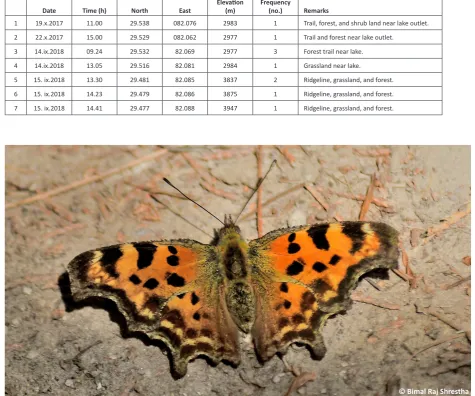
Image 1. Nepal Comma Polygonium c-album agnicula 20 October 2017.
© Bimal Raj Shrestha
slightly truncate (Evans 1927). We captured
P.c. agnicula
using insect net, handled carefully, photographed, and
released. No samples were collected.
We present seven observations of the comma
butterfly from 2017 to 2018 (Table 1). The first two
observations of
P.c. agnicula
were recorded by authors
(Sanej Prasad Suwal, Biraj Shrestha and Binita Pandey)
in RNP during their first visit in October 2017 (Table 1).
The
agnicula
species were basking on forest trail near
the western outlet of Rara Lake and the remaining five
observations were in June–Oct 2018 (Table 1). During
the first two observations it was seen feeding on nectars
of
Aster
sp.,
and
Anaphali
sp. while during the remaining
observations, it was seen basking on the Chuchemara
ridgeline trail, south-east of RNP where the habitat
comprised of grass lands dominated by
Anaphali
sp. and
Rhododendron forest (Image 3).
Studies on butterflies are scant in the western part
of Nepal. A list of butterflies from western region of the
country by Smith (1980) and Khanal (1999) does not
mention
P.c. agnicula
from RNP and adjoining areas. Our
sightings in RNP thus represents new distribution locality
of the subspecies
for Nepal obtained about 54.17km
south-east from Humla, 371.18km north-west from
Rasuwa, 213.24km north-east from Manang, 35.34km
north-west from Karnali, and 7.52km north-west from
Ghurchi lek, Mugu.
Additional distribution records of Polygonia c-album agnicula Suwal et al.
Journal of Threatened Taxa | www.threatenedtaxa.org | 26 November 2019 | 11(14): 14902–14905 14905
are no yellow spots in the submarginal area. Instead, the
submarginal area is represented by a red band, bordered
along its inner margin by a broken dark brown postdiscal
band (Evans 1932). Along with this there are clear white
coloured comma markings on the outer side of hindwing
(Evans 1932). All the features mentioned above identify
the butterfly as
P.c. agnicula
.
There has been study on butterflies of RNP with a
list of 64 species (Bhandari & Gea 2007). Butterflies like
Nepal Meadow Blue
Polyommatus nepalensis
, Dusky
Hedge Blue
Oreolyce vardhana
, Eastern Blue Sapphire
Heliophorus oda
, and Yellow Wood Brown
Zophoessa
nicetas
can be observed in the park area. The subspecies
P.c. agnicula
, however, was not recorded. It appears
that the subspecies is fairly distributed from central to
western Nepal. Studies from the missing districts along
the distribution range Rasuwa to Humla will be crucial
in ascertaining the actual distribution status of this
subspecies in Nepal.
References
Bhandari, B.B. & J.J. Gea (2007). Himalayan Wetlands: Risk, Challenges
and Opportunities. Ramsar Wetlands Center Korea, Changwon,
125pp.
Bhuju, U.R., P.R. Shakya, T.B. Basnet & S. Shrestha (2007). Nepal Biodiversity Resource Book. Protected Areas, Ramsar Sites, and World Heritage Sites. International Centre for Integrated Mountain
Development, Ministry of Environment, Science and Technology, in cooperation with United Nations Environment Programme, Regional Office for Asia and the Pacific, Kathmandu.
Evans, W.H. (1927).The Identification of Indian Butterflies. Bombay Natural History Society, Bombay, 116pp.
Evans, W.H. (1932).The Identification of Indian Butterflies – 2nd Edition. Bombay Natural History Society, Bombay, x+454pp+32pl.
Gogoi, M.J., B.B. Bhatt & A. Sarmah (2015). Notes on the Eastern Comma Polygonia c-album agnicula Moore, 1872 (Lepidoptera: Nymphalidae: Nymphalinae) from Tawang District, Arunachal Pradesh, India. Journal of Threatened Taxa 7(11): 7836–7838.
https://doi.org/10.11609/JoTT.o3775.7836-8
Khanal, B. (1999). Checklist of butterflies from Kanchanpur and Kailali districts far-west Nepal. Journal of Natural History Museum 18: 61–69.
Kehimkar, I. (2008).The Book of Indian Butterflies. Bombay Natural History Society and Oxford University Press, New Delhi, xvi+497pp. Poel, P.V.d. (2017). http://www.ifoundbutterflies.org/sp/1119/
Polygonia-c-album. (accessed in Jan 2019).
Poel, P.V.d. (2012). http://www.ifoundbutterflies.org/sp/1119/ Polygonia-c-album. (accessed in Jan 2019).
Poel, P.V.d. & T. Wangchuk (2007).Butterflies of Bhutan. Mountains,
Hills and Valleys Between 800 and 3000m. Royal Society for
Protection of Nature (RSPN), Thimpu, 71pp.
Smith, C. (1977). Some butterflies of western Nepal. Journal of Natural History Museum 1: 143–150.
Smith, C. (1980). Some butterflies of western Nepal Part II Pre and Post-Monsoon Butterflies. Journal of Natural History Museum 4(2): 41–53.
Smith, C. (1989).Butterflies of Nepal (Central Himalayas). Craftman Press, Bangkok, 352pp.
Smith, C. (1990). Beautiful Butterflies. A Colourful Introduction to
Nepal’s most Beautiful Insects. Craftsman Press, Bangkok, 7pp.
Smith, C. (2011).A Photographic Pocket Guide to Butterflies of Nepal. Himalayan Map House, Basantapur, Kathmandu, Nepal.
Image 3. Habitat of Nepal Comma Polygonium c-album agnicula 14 September 2018.
© Bimal Raj Shrestha
Image 2. Nepal Comma Polygonium c-album agnicula 19 October 2017.
© Bimal Raj Shrestha
The Sally Walker Conservation Fund -- an appeal for support – P. 14787
Communications
Complementary bat (Mammalia: Chiroptera) survey techniques uncover two new country records for Nigeria
– Iroro Tanshi, Anthony Ekata Ogbeibu & Paul Jeremy James Bates, Pp. 14788–14801
Bone fractures in roadkill Northern Tamandua Tamandua mexicana (Mammalia: Pilosa: Myrmecophagidae) in Costa Rica
– Randall Arguedas, Elisa C. López & Lizbeth Ovares, Pp. 14802–14807
Barilius torsai (Teleostei: Cypriniformes: Cyprinidae), a new freshwater fish
from the Brahmaputra drainage, India
– Kavita Kumari, Manas Hoshalli Munivenkatappa, Archana Sinha, Simanku Borah & Basanta Kumar Das, Pp. 14808–14815
Butterfly diversity throughout Midnapore urban area in West Bengal, India – Surjyo Jyoti Biswas, Debarun Patra, Soumyajit Roy, Santosh Kumar Giri, Suman Paul & Asif Hossain, Pp. 14816–14826
Plant and fungi diversity of Devi Pindiyan Valley in Trikuta Hills of northwestern Himalaya, India
– Sajan Thakur, Harish Chander Dutt, Bikarma Singh, Yash Pal Sharma, Nawang Tashi, Rajender Singh Charak, Geeta Sharma, Om Prakash Vidyarthi, Tasir Iqbal, Bishander Singh & Kewal Kumar, Pp. 14827–14844
A checklist of rust fungi from Himachal Pradesh, India – Ajay Kumar Gautam & Shubhi Avasthi, Pp. 14845–14861
The distribution of blue-green algae (Cyanobacteria) from the paddy fields of Patan and Karad tehsils of Satara District, Maharashtra, India
– Sharada Jagannath Ghadage & Vaneeta Chandrashekhar Karande, Pp. 14862–14869
Short Communications
Cordia diffusaK.C. Jacob, the Kovai Manjack (Boraginaceae):a highly
threatened steno-endemic species from Coimbatore City, Tamil Nadu, India – S. Arumugam, K. Sampath Kumar, B. Karthik & V. Ravichandran, Pp. 14870– 14875
New distribution records in the orchid flora of Tripura, India – Arjun Adit, Monika Koul & Rajesh Tandon, Pp. 14876–14885
Notes on the extended distribution of Humboldtia bourdillonii (Fabales: Fabaceae), an Endangered tree legume in the Western Ghats, India – Anoop P. Balan, A.J. Robi & S.V. Predeep, Pp. 14886–14890
Vertebrate prey handling in the Indian Grey Hornbill Ocyceros birostris (Aves: Bucerotiformes: Bucerotidae)
– James A. Fitzsimons, Pp. 14891–14894
Impact of cyclone Fani on the breeding success of sandbar-nesting birds along the Mahanadi River in Odisha, India
– Subrat Debata, Pp. 14895–14898
First record of the micromoth Ethmia lineatonotella (Moore, 1867) (Lepidoptera: Depressariidae: Ethmiinae) from Bhutan
– Jatishwor Singh Irungbam & Meenakshi Jatishwor Irungbam, Pp. 14899–14901
Additional distribution records of the rare Nepal Comma
Polygonia c-album agnicula (Moore, 1872) (Insecta: Lepidoptera:
Nymphalidae) from Rara National Park, Nepal
– Sanej Prasad Suwal, Biraj Shrestha, Binita Pandey, Bibek Shrestha, Prithivi Lal Nepali, Kaashi Chandra Rokaya& Bimal Raj Shrestha, Pp. 14902–14905
A new distribution record of the gall midge Octodiplosis bispina Sharma (Diptera: Cecidomyiidae) from the Western Ghats of Tamil Nadu, India – Duraikannu Vasanthakumar, Radheshyam Murlidhar Sharma & Palanisamy Senthilkumar, Pp. 14906–14907
New recruitment of staghorn corals in the Gulf of Mannar - the emergence of a resilient coral reef
– Koushik Sadhukhan, Ramesh Chatragadda, T. Shanmugaraj & M.V. Ramana Murthy, Pp. 14908–14911
New records of coral diseases in the Persian Gulf
– Parviz Tavakoli-Kolour & Sanaz Hazraty-Kari, Pp. 14912–134913
Crepidium aphyllum (Orchidaceae), a new record from Bhutan
– Kinley Rabgay & Pankaj Kumar, Pp. 14914–14916
Rediscovery, after over a century, of the endemic climbing vine
Argyreia lawii (Convolvulaceae) from the Western Ghats of India
– Pramod R. Lawand, Rajaram V. Gurav & Vinod B. Shimpale, Pp. 14917–14920
Linostoma decandrum (Roxb. ) Wall. ex Endl. (Thymelaeaceae):
an addition to the flora of Andaman Islands, India – L. Rasingam & K. Karthigeyan, Pp. 14921–14922
On the floral biology and pollination of a rare Twining Liana
Sarcolobus carinatus Wall. (Asclepiadoideae: Apocynaceae) in
Coringa Mangrove Forest, Andhra Pradesh, India – A.J. Solomon Raju, Pp. 14923–14926